ChatGPT stopped working for users around the world on Sunday, July 19, 2026. The failure did not announce itself with a dramatic error page. It arrived the way most modern service failures arrive: a chat that refused to load, a reply that never came, a conversation history that suddenly displayed nothing. Within minutes, reports were coming in from Europe, Asia, and the Americas, and OpenAI’s status page switched to the banner that its heaviest users have learned to dread: “We’re currently experiencing issues.”
Table of Contents
A Sunday afternoon outage that spread across continents
Independent monitoring services picked up the failure quickly. StatusGator, which tracks official status pages alongside user reports, detected the disruption at roughly 2:24 PM UTC and logged that OpenAI officially acknowledged it about 26 minutes later. The incident was filed under the now-familiar label “Elevated errors affecting ChatGPT,” with confirmed problems in ChatGPT Conversations, ChatGPT Work, and Voice mode. Hundreds of user-submitted outage reports accumulated within the first hours, and the most affected regions in StatusGator’s data included the United Kingdom, Germany, and the Netherlands, though complaints arrived from far beyond Europe.
The Ukrainian technology outlet dev.ua, publishing while the incident was still active, described a widespread failure in which users could not load chat history, could not receive replies, and could not continue existing conversations. Reports on Reddit and X came from multiple countries at once, which pointed to a problem inside OpenAI’s own infrastructure rather than a regional network fault. Downdetector, the crowd-sourced outage tracker that has become the informal referee of internet failures, registered the spike as well.
The character of the failure matters as much as its footprint. This was not a case of chatgpt.com disappearing from the internet. UptimeRobot’s automated probes, which request the site every five minutes from North America, completed their checks without unusual response times or error codes during the same window. The domain answered. The application behind it did not. That split — a reachable front door and a broken service behind it — is typical of failures in the backend layers that store conversations, route requests to models, and manage user sessions. It also explains why some users saw a partially working product while others saw nothing at all.
For anyone who lived through the earlier incidents of 2026, the pattern felt familiar. A quiet start. A trickle of complaints that becomes a flood within fifteen minutes. Screenshots of empty chat lists. Jokes about people being forced to write their own emails. Then the official acknowledgment, worded in the restrained dialect of status pages, confirming what tens of thousands of people already knew. The speed of that social feedback loop is itself a measure of how deeply ChatGPT has embedded itself in daily work. When a product with more than 900 million weekly active users stumbles, the internet notices before the company does.
A Sunday outage carries a different weight than a weekday one, and it cuts both ways. Corporate traffic is lower on weekends, which softens the immediate business damage. But Sunday is also when freelancers finish client deliverables, students complete assignments due Monday morning, and small e-commerce operators prepare the week’s product descriptions and ad copy. It is when much of Asia is already deep into Monday. The idea that a weekend outage is a harmless outage belongs to an older internet, one in which a chatbot was a curiosity rather than a load-bearing part of hundreds of millions of workflows.
At the time this analysis was written, OpenAI had not published a root cause. The company’s engineers were still investigating, and the status page offered no estimate for full restoration. That silence is standard practice during an active incident — no serious operator speculates publicly about causes mid-firefight — but it leaves users, businesses, and journalists to reconstruct the picture from monitoring data, official component lists, and their own broken sessions. This article does exactly that, and then goes further: into the technical anatomy of failures like this one, the measurable cost of downtime at ChatGPT’s scale, the sector-by-sector business impact, the contractual and regulatory dimensions, and the practical decisions that every ChatGPT-dependent team should make before the next incident, because the record of 2026 so far makes one thing plain — there will be a next incident.
One more piece of context framed the day. Hours before ChatGPT faltered, Meta’s Facebook and Instagram suffered their own international outage, with more than 23,000 Facebook problem reports in the United States alone in a single early-morning window. Two of the internet’s most used consumer platforms failing on the same Sunday is almost certainly coincidence — the technical evidence, examined later in this article, supports independent causes — but the coincidence did real work in the public imagination. It compressed into one day a lesson that usually arrives spread across a year: the services that feel permanent are running on infrastructure that is anything but.
OpenAI’s official response and the status page record
OpenAI’s communication during the July 19 incident followed the template the company has refined across a year of elevated-error events. The status page at status.openai.com flipped its global banner to the “currently experiencing issues” state, an incident entry appeared under the heading “Elevated errors affecting ChatGPT,” and the affected-components list did the real talking. Conversations — the core function of the product — was listed as impaired. So was ChatGPT Work, the umbrella for business-tier workspaces, and Voice mode, the speech interface that has become a primary way many mobile users interact with the assistant.
The choreography of these updates is worth understanding, because it is the only official record most incidents ever get. OpenAI’s incident lifecycle runs through four stages: Investigating, when engineers have confirmed a problem but not its cause; Identified, when the cause is known and a fix is being built; Monitoring, when a mitigation has been deployed and the team is watching recovery; and Resolved, when all impacted services have recovered. On July 19, the incident sat in the Investigating stage through the first hours, which told careful readers something specific: the failure was real, confirmed, and not yet understood, or at least not yet understood well enough to state publicly.
The status page also carried a second, older wound. A separate incident affecting FedRAMP workspaces — the compliance-hardened environments OpenAI operates for US government customers — had been open for a full week by July 19. Codex, workspace analytics, conversation search, custom GPT search, user invites, and the Compliance Log Platform download endpoint were all listed as degraded in FedRAMP environments, with OpenAI stating that core functionality had been restored but known issues remained. A week-long partial degradation in the government-grade tier is a quieter story than a global consumer outage, but for the audience that pays for FedRAMP assurances, it is arguably the more serious one.
The uptime figures OpenAI publishes alongside its incidents deserve attention too. For the April-to-July 2026 window visible on the status page, the company reported 99.99 percent uptime for its APIs, 99.98 percent for Codex, and 99.86 percent for ChatGPT across its fifteen tracked components. The gap between the API figure and the ChatGPT figure is not an accident of rounding. The consumer product carries far more moving parts — authentication flows, conversation storage, memory, voice, apps, search, file handling — and each part is a place where errors can become user-visible. A 99.86 percent quarterly uptime sounds strong until it is converted into time: it allows roughly three hours of downtime per quarter, and the July incidents alone were on pace to consume that budget.
OpenAI attaches a careful disclaimer to those numbers: availability is reported in aggregate across all tiers, models, and error types, and individual customer experience may vary by subscription tier and by the specific models and features in use. Translated from status-page language, that means a headline uptime figure can be technically accurate while a specific user population — free-tier users on a particular model, or business users in a particular region — experiences something much worse. During the July 14–15 incident five days earlier, the resolved notice read simply “All impacted services have now fully recovered,” with no public accounting of how many of the 900 million weekly users had been affected or for how long the median affected user was locked out.
That is the structural limit of status-page transparency, and it is not unique to OpenAI. Public incident feeds are written for two audiences at once: customers who need operational facts, and lawyers who need the company to avoid admissions. The result is prose that confirms the existence of problems while revealing almost nothing about their scale, cause, or cost. OpenAI does publish genuine post-incident detail occasionally — its status history includes entries such as a May Responses API incident traced explicitly to a rolled-back deploy — but the large consumer-facing outages of 2026 have mostly closed with a single recovery sentence. The July 19 incident, at the time of writing, had produced no cause, no scope estimate, and no timeline, and based on the pattern of the preceding months, users should not assume a detailed public post-mortem will follow.
Symptoms users reported and their technical meaning
Outages are usually described in binary terms — the service is up or it is down — but the July 19 incident, like most of ChatGPT’s 2026 failures, was a spectrum of partial breakage. Reading the specific symptoms carefully tells you more about what failed than any official statement issued during the incident window.
The most widely reported symptom was missing or unloadable conversation history. Users opened the app and found their sidebar empty, or clicked a past conversation and watched it spin indefinitely. This symptom points at the retrieval path: the layer of databases and caches that stores billions of conversations and serves them back on demand. A failure here does not necessarily mean data was lost. In almost every comparable past incident, including the mid-July event days earlier, histories reappeared intact once the incident was resolved. The distinction between inaccessible and deleted is enormous in engineering terms and invisible to a frightened user staring at an empty chat list, which is why “did my chats get deleted” reliably becomes one of the most-searched questions within minutes of any ChatGPT disruption.
The second cluster of symptoms involved replies that never arrived. Users could type a prompt, watch it send, and then wait as the response failed to stream or errored out midway. This is a different failure surface: the inference path, which routes a request through authentication, safety systems, model selection, and finally to GPU clusters that generate the answer token by token. When the status page lists “Conversations” as the affected component, this path is usually the one in trouble. Partial streaming failures — an answer that starts and dies — often indicate overloaded or unhealthy backend pools rather than a hard dependency failure, because some requests are still completing.
Third came login and session problems, echoing the July 14–15 incident in which OpenAI explicitly said it was “investigating login issues and intermittent errors.” Authentication failures are among the most disruptive symptom classes because they gate everything else: a user who cannot establish a session cannot even reach the degraded product. They are also diagnostically interesting, because identity systems tend to be shared across products. It is notable that OpenAI’s incident record for July 16 includes a separate event titled “Elevated Error Rates For SSO Login,” meaning the identity layer had already shown strain twice in the same week before Sunday’s event.
Voice mode’s appearance on the affected-components list adds a fourth dimension. Voice conversations require a continuous, low-latency, bidirectional connection — speech in, audio out — and they fail loudly when backend latency rises, because a chatbot that pauses eight seconds mid-sentence is broken in a way a text delay is not. Voice being impaired alongside Conversations is consistent with a shared upstream problem rather than a voice-specific one.
Just as informative is what kept working. The API platform, which serves developers and businesses building on OpenAI’s models directly, showed 99.99 percent uptime for the quarter and was not the centre of Sunday’s complaints. The API and the consumer app share models but not most of their surrounding infrastructure: the API has no conversation sidebar, no consumer session layer, no app shell. An outage that hits ChatGPT while sparing the API almost always lives in the product layer OpenAI built around the models, not in the models themselves. For businesses, that distinction is practical, not academic: teams that had integrated via the API often kept operating on July 19 while colleagues refreshing the chat interface could not.
The global distribution of reports carries its own signal. When failures concentrate in one country, the suspect list starts with local ISPs, national infrastructure, or a regional data-centre issue. Reports arriving simultaneously from the UK, Germany, the Netherlands, and countries across other continents — as dev.ua and StatusGator both documented — indicate a fault in centralized infrastructure that all regions depend on: a core database, a configuration change, a control-plane service, or a shared caching layer. The 2021 Facebook BGP disaster taught the public what a total central failure looks like; ChatGPT’s July 19 event was the more common modern variant, a central degradation in which the system stayed partially alive everywhere and fully reliable nowhere.
None of this amounts to a root-cause diagnosis, and it should not be read as one. It is inference from symptom patterns, and symptom patterns can mislead. What can be said with confidence is limited but useful: the failure was global, it centred on conversation storage and delivery rather than raw model availability, it touched identity and voice surfaces, and it fit a symptom profile that OpenAI’s own status history shows recurring across 2026. The honest framing for users is uncomfortable but accurate — the world’s most used AI product was, for a window of time on July 19, unable to reliably perform its single core function, and the people who understand exactly why were too busy fixing it to say.
Two incidents in five days inside a rough month for OpenAI
The July 19 outage did not happen in isolation. It landed at the end of a week in which OpenAI’s status page had barely gone quiet, and in a month that was becoming one of the most incident-dense stretches in the product’s history.
The week’s headline event before Sunday was the July 14–15 outage. Late on Tuesday, July 14, users worldwide began reporting login failures and intermittent errors. Downdetector’s report count climbed past 4,000, then 5,000, then 7,000, and eventually exceeded 10,000 before the incident was contained. OpenAI’s status page initially claimed no known issues while thousands of reports piled up — a gap examined later in this article — before switching to “We are investigating login issues and intermittent errors affecting ChatGPT.” The official incident record shows the event opening at 11:57 PM UTC on July 14, a mitigation applied at 12:25 AM, and full recovery declared at 12:39 AM on July 15, a fast turnaround once the fix was in hand. Coverage of the recovery emphasized the breadth of who had been disrupted: workers, students, coders, researchers, and businesses running content, support, and productivity workflows through the product.
The next day brought a smaller but telling event: elevated error rates for SSO login on July 16, hitting exactly the users who access ChatGPT through corporate identity systems — the enterprise audience OpenAI most needs to convince of its reliability. On July 18, the day before the global outage, enterprise users without Codex permissions spent over five hours unable to access the new ChatGPT app, per the incident log. And running underneath the whole week was the FedRAMP degradation, open for seven days and counting, affecting government workspaces across six distinct capabilities.
A five-day incident cluster, July 14–19
| Date (2026) | Incident | Duration / status |
|---|---|---|
| Jul 14–15 | Elevated errors, login failures, 10,000+ Downdetector reports | ~42 min officially; resolved |
| Jul 16 | Elevated error rates for SSO login | Resolved same day |
| Jul 18 | New ChatGPT app unavailable for enterprise users without Codex permissions | 5h 15m |
| Jul 12–19 | FedRAMP workspace degradation across six capabilities | Ongoing 1 week+ |
| Jul 19 | Global outage — conversations, ChatGPT Work, voice mode | Ongoing at publication |
The table compresses a simple point: by the time Sunday’s outage began, OpenAI had logged user-affecting incidents on at least four separate days within a single week, spanning consumer, enterprise, and government tiers. No single entry is damning on its own; the density is the story.
Zoom out further and July fits a 2026 pattern. The April 20 partial outage took ChatGPT, Codex, and parts of the API platform down for a large share of users for over two and a half hours, from roughly 10:05 AM to 12:48 PM Eastern, with Downdetector spiking past 5,000 reports and OpenAI branding the event “degraded performance” because impact varied user to user. IsDown, a status-page aggregator, counts 159 tracked OpenAI ChatGPT incidents since October 2025, with a typical resolution time of 297 minutes — nearly five hours — across the full set, though that average blends minor component blips with major outages. Whatever weight one gives any single number, the direction is consistent: incident frequency has risen as the product’s surface area has exploded, with voice, apps, memory, search, workspace features, an ads platform, and government compliance tiers all added to a system that once did one thing.
There is a fair counterpoint, and it deserves stating plainly. OpenAI is operating what may be the fastest-scaled consumer software product ever built, serving more than 2.5 billion messages per day, while simultaneously shipping features at a pace no comparable platform attempts. Its quarterly uptime figures remain high by consumer-internet standards, and its mitigation times on the largest recent incidents — 42 minutes on July 14–15 — reflect a mature incident-response operation. The problem is not that OpenAI is unusually bad at reliability. The problem is that ChatGPT’s importance has grown faster than any realistic reliability ceiling, so each incident now lands on hundreds of millions of workflows that did not exist two years ago. July 2026 is what it looks like when a product becomes infrastructure before its operations are held to infrastructure standards — and before its users have built the habits that real infrastructure dependence demands.
Meta’s outage on the same morning and the coincidence question
The strangest feature of July 19 was that ChatGPT was the second global platform to fail that day. Hours earlier, in the early morning US time, Facebook and Instagram suffered an international outage of their own. Downdetector logged more than 23,000 Facebook problem reports in the United States between 3:44 and 5:02 AM Eastern, alongside at least 18,000 Instagram reports in the same window, before the counts fell away sharply. NetBlocks, the watchdog that monitors internet access worldwide, confirmed the disruption was international and unrelated to any country-level internet shutdown. Reuters checks found intermittent access in Singapore; Pakistani users saw report spikes around midday local time; some Facebook users were greeted with a message that their accounts were “temporarily unavailable.” Meta did not immediately comment, and service recovered within one to two hours.
Two of the world’s most used platforms breaking on the same Sunday inevitably produced a wave of speculation: a shared cloud failure, a routing incident, an attack. The available evidence does not support a common cause, and it is worth walking through why, because the reasoning is a useful template for evaluating future same-day coincidences.
First, timing. Meta’s disruption peaked before dawn US Eastern time and had largely resolved by mid-morning. ChatGPT’s incident began in the early afternoon UTC — roughly eight to ten hours later. Shared-infrastructure failures, like the Cloudflare incident of November 2025 that took down ChatGPT and dozens of other services simultaneously, produce synchronized outages, not staggered ones separated by most of a working day.
Second, architecture. Meta famously runs its own global infrastructure — its own data centres, its own backbone, its own DNS, the self-hosted stack whose BGP misconfiguration caused the six-hour total blackout of October 2021. OpenAI runs primarily on Microsoft Azure capacity along with its newer dedicated compute build-outs. The two companies share the public internet and little else. A fault capable of hitting both would have to live in a layer they genuinely share — global DNS, major transit providers, a common CDN — and failures at that layer take down far more than two companies, visibly and simultaneously.
Third, symptom shape. Meta’s outage looked like an access failure: users locked out of accounts, feeds unreachable. ChatGPT’s looked like an application-layer degradation: reachable site, broken conversations, missing history. Different layers, different fingerprints.
So the sober conclusion is coincidence — but a coincidence with statistical honesty behind it. When a handful of platforms mediate a majority of global digital activity, and each of them runs incident counts in the dozens per year, same-day failures across unrelated giants stop being surprising and become an actuarial certainty. The July 19 double outage was not evidence of a connected event. It was evidence of concentration: the modern internet has consolidated onto so few load-bearing services that their independent failure clocks now regularly chime together.
The pairing still mattered, in two practical ways. It shaped attention: newsrooms and social feeds were already in outage mode when ChatGPT failed, which accelerated coverage and amplified the sense of a fragile day. And it shaped behaviour: users locked out of one service migrated activity to others, a pattern documented since 2021, when Facebook’s blackout overloaded Telegram and Signal. On a day when both a dominant social layer and a dominant AI layer stuttered within hours of each other, millions of people got an unplanned rehearsal of a question most had never asked seriously: what is my fallback when the tool I assume is always there simply is not? The rest of this article treats that question as the real story of July 19.
ChatGPT’s 2026 scale and the arithmetic of an hour offline
Every judgment about this outage depends on grasping the scale of the thing that failed, because ChatGPT in mid-2026 is not the ChatGPT of popular memory. It is, by several measures, the most rapidly adopted software product in history, and the numbers convert directly into the cost of its downtime.
OpenAI announced in late February 2026 that ChatGPT had reached 900 million weekly active users, up from 800 million in October 2025 and more than double the 400 million of a year earlier — a figure disclosed alongside a $110 billion funding round at a $730 billion pre-money valuation. By June 2026, Reuters reported Sensor Tower estimates putting the ChatGPT app past 1 billion monthly active users, the fastest any consumer app has reached that mark. India alone accounts for more than 100 million weekly users. Users send roughly 2.5 billion messages per day. On the commercial side, OpenAI has said it serves more than 1 million business customers, counts around 9 million paying business seats, holds over 50 million consumer subscriptions, and generates approximately $2 billion in revenue per month, having crossed $25 billion in annualized revenue by February 2026.
Now run the arithmetic that those numbers imply for a single disrupted hour. At 2.5 billion messages per day, ChatGPT processes on the order of 104 million messages per hour on average — and afternoon UTC on a Sunday, when Europe is active and Asia is entering Monday, is not the trough of that curve. An hour of global degradation therefore represents tens of millions of failed or abandoned interactions. Even under conservative assumptions — say only a third of affected interactions were work-related, and each cost its user just five minutes of delay or rework — the aggregate productivity loss of a single hour reaches into millions of working hours’ worth of small frictions distributed across the planet. The loss is real but invisible, because it is sliced into fragments too small for any individual ledger.
The same arithmetic works on OpenAI’s side of the table. Two billion dollars of monthly revenue is roughly $2.7 million per hour. Subscription revenue does not evaporate during an hour of downtime — subscribers do not get refunds for a broken afternoon — but the figure frames what is at stake in aggregate reliability. Churn among 50 million consumer subscribers responds to accumulated frustration; enterprise renewals among 9 million business seats respond to reliability track records; and the advertising business OpenAI launched to free-tier US users in January 2026, which reached $100 million in annualized revenue within six weeks, loses impressions the moment conversations stop, because ad-funded products monetize uptime directly.
Scale also changes the kind of dependence. OpenAI’s own usage research found the product splitting between information-seeking, work tasks like writing and coding, and idea exploration — categories that in 2026 translate into homework due Monday, customer emails promised by end of day, code reviews, medical-appointment preparation, legal-document summaries, and, per the demographic data showing the user base now majority female and spanning every age bracket, an increasingly personal set of use cases including advice and emotional processing. When a tool is woven into 900 million weekly routines, an outage is not one event. It is hundreds of millions of small, simultaneous, individually trivial disruptions, and the sum of trivial disruptions at sufficient scale is exactly what the word infrastructure means.
That is the correct lens for July 19. Measured as an engineering event, the outage will likely be recorded as a modest one: hours at most, partial for many users, no confirmed data loss. Measured against the installed base it interrupted, it was among the largest single disruptions of human-computer interaction that has ever occurred in an afternoon — not because the failure was deep, but because the dependence is now that wide. The gap between those two measurements, engineering severity versus human footprint, is the defining reliability problem of the AI era, and it will widen every quarter that adoption continues at the current rate.
Anatomy of a modern AI service failure
To reason sensibly about ChatGPT outages — this one and the next one — it helps to understand what actually sits between a user’s prompt and the answer that appears on screen. The popular mental model, “the AI is down,” obscures the reality that the AI itself is usually the healthiest part of the stack when ChatGPT breaks.
A single ChatGPT conversation traverses at least seven distinct layers. The edge layer — CDNs and DDoS protection, historically including Cloudflare — receives the connection and serves the application shell. The authentication layer verifies who you are, whether via password, Google sign-in, or the corporate SSO systems that failed on July 16. The application layer runs the product itself: the sidebar, settings, workspace logic, memory features. The conversation storage layer persists and retrieves the billions of chat histories whose disappearance defined the July 19 symptom profile. The orchestration layer decides which model serves your request, applies rate limits and safety systems, and manages the queue. The inference layer is the GPU fleet that actually runs the model, streaming an answer token by token. And the observability and control plane — deployment systems, configuration services, feature flags — governs all the others invisibly, until a bad change makes it visible everywhere at once.
Each layer fails differently, and each produces a recognizably different outage. Edge failures look like the November 2025 Cloudflare event: the site itself unreachable, alongside half the internet. Authentication failures look like July 14 and July 16: valid users bounced at the door. Storage failures look like July 19’s headline symptom: empty histories, unloadable chats. Inference failures look like slow, truncated, or erroring responses under load. And control-plane failures — statistically the most common cause of major incidents across the industry — look like whatever the bad configuration touched, which can be anything. OpenAI’s own status history contains a textbook example: the May incident in which elevated 404 errors on the Responses API were traced to a recent deploy and fixed by rolling it back.
Two structural facts make an AI product harder to keep up than a comparable web product. The first is inference cost and capacity coupling. A social network’s marginal request is cheap; ChatGPT’s marginal request occupies scarce, expensive GPU capacity for the full duration of a generated response. That means the system runs closer to its capacity ceiling than classic web services do, and it means degradation cascades in a particular way: when one backend pool sickens, retries and queued demand pile onto the survivors, which is why AI outages so often present as intermittent errors — some requests completing, others dying — rather than clean failure. The “elevated errors” phrasing OpenAI uses is not evasive; it is the technically precise description of a system in partial cascade.
The second is feature surface growth. The 2023-era ChatGPT was a text box and a model. The 2026 product spans voice sessions holding live audio connections, file libraries, memory systems that read and write user profiles on every conversation, a search product, custom GPTs, an apps platform, group and workspace features, an ads platform, and parallel compliance builds like FedRAMP. Every addition multiplies the internal dependencies, and the status page’s own component list — fifteen tracked components for ChatGPT alone — is the visible shadow of that internal graph. Reliability engineers describe this with a blunt rule: incident frequency scales with change rate times dependency count, and OpenAI is maximizing both simultaneously, shipping at startup pace on a dependency graph of enterprise complexity.
None of this excuses failure; it locates it. The pattern across 2026’s incidents — authentication events, conversation-storage events, deploy-linked API errors, and enduring degradation in a specialized compliance tier — is not the pattern of an unreliable model. GPT-5-class inference, by the API’s 99.99 percent figure, has been remarkably steady. The fragility lives in the product machinery around the models, the layers OpenAI built in three years that companies like Google and Meta hardened over fifteen. That is also the genuinely hopeful reading: product-layer reliability is a solved discipline. The techniques — progressive rollouts, dependency isolation, graceful degradation that shows cached history when the live store is sick — are well documented across the industry. The open question, taken up in the reliability-economics section below, is whether a company in a capability arms race will spend its best engineers on them.
For users, the anatomy lesson has one practical takeaway worth keeping. When ChatGPT next fails, the symptoms tell you where and roughly how bad. Site unreachable: edge problem, likely industry-wide, check whether other services are down. Cannot log in: identity layer, usually resolved in under an hour on 2026’s record. Empty history but new chats work: storage retrieval, your data is almost certainly intact. Slow or dying responses: inference or orchestration strain, often intermittent, retries sometimes succeed. That crude field guide will not fix anything, but it converts an opaque failure into a legible one — and legibility is the difference between a calm workaround and a wasted afternoon.
Conversation history and the storage layer behind vanishing chats
Of all the July 19 symptoms, vanished conversation history deserves its own examination, because it is the one that produces genuine alarm rather than mere annoyance, and because the fear it triggers — permanent data loss — has so far been consistently wrong in ChatGPT’s incident record.
Consider what conversation storage means at ChatGPT’s scale. Nine hundred million weekly users generating 2.5 billion messages daily, accumulated over years, produces one of the largest conversational datasets ever assembled — trillions of messages that must be durable, private, searchable, and retrievable within milliseconds from anywhere on Earth. No single database serves that; systems at this scale shard data across thousands of machines, replicate each shard multiple times across zones, and put caching layers in front of the whole structure so the sidebar loads instantly. The engineering consequence is a sharp asymmetry that users should internalize: the retrieval path is fragile, the durability path is not. A cache cluster failure, an overloaded index, a bad routing rule — any of these can make history unreachable within seconds while the underlying data sits safely replicated across multiple physical locations. Actually destroying that data would require simultaneous failures across independent replicas, a categorically rarer event.
The 2026 record matches the theory. The mid-July incident produced thousands of “my chats are gone” reports; histories returned when the incident resolved. The Gulf News account of an earlier worldwide disruption captured the same arc — replies seemingly vanished from all conversations, panic on social media, full restoration hours later. OpenAI’s status entries in the period include library file errors and conversation retrieval failures, none accompanied by any acknowledgment of permanent loss. As of this writing there is no confirmed case of a ChatGPT platform incident permanently destroying user conversation data. That is a factual observation about the record, not a guarantee about the future — and it comes with a real caveat, because durability and availability of your working context are different things.
The caveat is this: for a growing class of users, conversation history is no longer a log. It is a working asset. Long-running project threads function as institutional memory; the memory feature distills past chats into a persistent profile that shapes every answer; professionals maintain conversations that in practice contain months of accumulated context. When the storage layer degrades, those users do not merely lose access to old text — they lose the continuity that makes the assistant more useful than a blank one. A consultant mid-engagement whose fifty-message project thread will not load has lost real capability for the duration, even though no byte was destroyed. Availability failures of memory-bearing systems are capability failures, and they will be experienced as data loss regardless of what the replication diagrams say.
The rational responses follow directly. First, during an incident, do not thrash: repeatedly deleting the app, clearing caches, or logging in and out does nothing to a server-side problem and occasionally creates client-side ones. Second, treat anything genuinely irreplaceable — the strategy summary, the drafted contract language, the research synthesis — as content to be exported the moment it is produced, not left to live solely inside a chat thread. ChatGPT offers a full data export precisely for this; almost nobody uses it until the afternoon they cannot. Third, for businesses, recognize that conversation threads used as project memory are unmanaged single copies of work product, which would be an unacceptable practice for any other document type in the company. The July 19 outage destroyed, as far as any evidence shows, nothing. What it demonstrated is that hundreds of millions of people have quietly moved material that matters into a store they do not control, cannot back up mid-incident, and only think about when the sidebar comes up empty.
Status pages, Downdetector, and the measurement gap
The July 19 outage was measured three different ways by three different systems, and the disagreements among them are instructive, because anyone who depends on ChatGPT needs to know how to read outage evidence — and how each source lies.
The official status page is the authoritative record and the slowest, most conservative witness. Its incentives run in one direction: acknowledge only what is confirmed, describe it minimally, and close it as soon as recovery is verified. The July 14 event demonstrated the lag in its purest form — GV Wire documented that OpenAI’s status checker was still reporting no known issues while Downdetector had already collected more than 4,000 user reports, and thousands more accumulated before the official “investigating” notice appeared. StatusGator’s tracking of the July 19 incident measured the acknowledgment gap at 26 minutes from first detection. A 26-minute lag is respectable by industry standards — StatusGator itself grades OpenAI’s responsiveness highly — but it means the status page systematically tells you about outages after your own broken session already has.
Downdetector and its crowd-sourced peers sit at the opposite pole: instantaneous, global, and noisy. They measure complaints, not availability. Their strength is speed — spikes appear within minutes of real incidents, ahead of any official source. Their weaknesses are structural. Report volume tracks the affected service’s popularity and its users’ frustration, not the outage’s technical severity; ChatGPT’s 10,000-report July 14 spike and Facebook’s 23,000-report Sunday morning represent tiny fractions of affected users, filtered through who bothers to file. Baselines never reach zero, because individual connection problems generate a constant drizzle of false reports. And during high-profile incidents, media coverage itself drives reporting, inflating spikes reflexively. The practical reading rule: a sharp, sudden multiple-of-baseline spike is strong evidence something real is happening; the absolute number means almost nothing.
Third-party synthetic monitors — UptimeRobot probing chatgpt.com every five minutes, StatusGator and IsDown aggregating official pages against user signals — form the third measurement class, and July 19 exposed their central blind spot. UptimeRobot’s checks passed throughout the incident window: the site answered, response times were normal. The monitor was correct about what it measures and useless about what mattered, because modern outages are application-layer events. A probe that fetches a page cannot see that conversations fail to load for logged-in users in Germany. This is the measurement gap: official pages under-report by policy, crowd trackers over-report by design, and synthetic monitors miss the application layer entirely. The truth of any given incident lives in the triangulation, not in any single source.
The gap has commercial and behavioural consequences. An entire industry — StatusGator, IsDown, and dozens of similar aggregators — exists to sell the triangulation back to businesses as alerting, which is itself evidence that official channels are insufficient for operational needs. Social media has become the de facto fourth monitor, with “is ChatGPT down” queries and hashtag spikes now a standard journalistic sourcing tool; TechRadar’s live coverage of the April outage explicitly tracked Downdetector decline curves to call the recovery before OpenAI did. And within companies, the gap shapes incident response: a support team that waits for official confirmation before activating fallbacks loses twenty to thirty minutes of response time on every event, which across 2026’s incident frequency adds up to entire lost working days.
There is also a deeper transparency question that the measurement gap keeps politely buried. Aggregate uptime percentages — the 99.86 percent ChatGPT figure — are compatible with wildly different user experiences, as OpenAI’s own disclaimer concedes. No public metric captures user-weighted downtime: how many people were affected, for how long, at what severity. After the largest 2026 incidents, resolution notices have consisted of a single sentence. For a product this central, the informational asymmetry is stark — OpenAI knows precisely who was affected and for how long; the public gets “all impacted services have now fully recovered.” Regulated infrastructure sectors solved this decades ago with mandatory incident reporting thresholds. Whether AI platforms reach that standard voluntarily, or have it imposed — a question the regulatory section below takes up — the July 19 pattern shows the current equilibrium: the most measured product on the internet, whose failures are documented within minutes by three independent measurement classes, still discloses less about its outages than a mid-sized electric utility.
A short history of ChatGPT outages worth remembering
Sunday’s incident joins a lineage, and the lineage is worth knowing, because it converts each new outage from an anomaly into a data point on a curve — and the curve has a shape.
The early landmark is June 10, 2025, still the reference point for a truly bad ChatGPT day: elevated error rates and widespread unresponsiveness stretching more than ten hours before service largely returned, an eternity by the standards of any major platform. January 23, 2025 showed the classic morning-outage profile — bad-gateway errors across the US, UK, and beyond, a root cause identified within hours, restoration after roughly two to three hours — at a time when Sam Altman was citing more than 300 million weekly users, a third of the current base. March 24, 2025 was the short, sharp variant: a worldwide spike near 1,600 Downdetector reports, mobile hit hardest, recovery within the hour. July 21, 2025 demonstrated tier-specific failure — “Elevated errors on ChatGPT for all paid users,” free tier untouched — a reminder that subscription infrastructure is its own failure domain, and an awkward one, since it inverted the price-reliability relationship for about an hour.
Then came November 18, 2025, the most consequential entry in the list even though OpenAI’s own systems were healthy: a Cloudflare infrastructure failure took ChatGPT offline alongside a large slice of the internet, examined in depth in the next section. The 2026 record has already been covered — April 20’s multi-hour degraded performance across ChatGPT, Codex, and the API; the July 14–15 login-and-errors event with its 10,000-report spike; the SSO and enterprise-app incidents of July 16 and 18; the week-long FedRAMP degradation; and now July 19.
Reading the sequence as a whole, four patterns emerge that are more useful than any individual incident.
Resolution has gotten faster while incidents have gotten more frequent. The ten-hour June 2025 marathon has no 2026 counterpart; the big 2026 events resolved in minutes to a few hours, and the July 14–15 mitigation landed 28 minutes after the official investigation opened. But the incident count has climbed with the product’s surface area — IsDown’s tally of 159 tracked incidents since October 2025 averages more than one every two days, most of them minor component events invisible to casual users. OpenAI is winning the severity war and losing the frequency war.
The failure locus has migrated from models to product machinery. Early outages were often capacity stories — demand crushing inference. The 2025–2026 record is dominated by authentication, conversation storage, deploys, and specialized tiers. This mirrors the product’s evolution and predicts where future incidents will live: in the newest, least-hardened features.
Every outage is larger than the last, measured in humans. The January 2025 outage interrupted a 300-million-user base; July 19 interrupted 900 million weekly users sending 2.5 billion daily messages. Identical technical severity now produces roughly triple the human disruption of eighteen months ago, and the gap compounds quarterly. This is the single most important trend line in the list.
Public tolerance is quietly shifting. Coverage of the 2023–2024 outages read as novelty — the funny day the robot broke. Coverage of the 2026 incidents reads as infrastructure journalism: report counts, recovery timelines, business impact, pointed questions about silence on root causes. Gulf News framing an outage through the professionals whose work stalled, and Fingerlakes1 noting that the incident “showed how common AI tools are” and how outages ripple through businesses using AI for support, content, and code, are early samples of the accountability tone that eventually attaches to any utility. The history, in short, shows a product crossing the threshold from application to infrastructure in real time — with its reliability practices, disclosure norms, and user habits all lagging the crossing by a year or more. July 19 will be a footnote in that history. The trend it extends will not.
The Cloudflare incident of November 2025 and shared-dependency risk
November 18, 2025 deserves its own section in any serious analysis of ChatGPT reliability, because it was the day the outage came from outside — and it reframes how July 19 should be interpreted.
On that Tuesday, a Cloudflare infrastructure failure disrupted access to a large portion of the web at once. ChatGPT went down alongside major platforms across social media, productivity, and commerce, with services restored only after hours of errors and downtime. Nothing in OpenAI’s own stack had failed. The company’s models were healthy, its databases intact, its deploys clean — and none of it mattered, because the edge layer that stood between users and OpenAI’s servers had failed for everyone simultaneously. For users, the experience was indistinguishable from an OpenAI outage. The address bar said chatgpt.com; the error said nothing about Cloudflare.
The incident matters for three reasons that outlast its news cycle.
First, it established that ChatGPT’s availability is the product of a dependency chain, not a single company’s competence. The chain runs from the user’s ISP through DNS, transit providers, CDN and DDoS layers, cloud platforms — OpenAI’s core compute runs on Microsoft Azure alongside its newer dedicated build-outs — down to power grids and physical data centres. Every link is operated by a different organization with its own incident history. OpenAI’s 99.86 percent quarterly figure measures OpenAI’s links; the availability a user actually experiences is the product of every link’s reliability, which is arithmetically always worse. A user planning around ChatGPT downtime is really planning around the downtime of a consortium no one manages as a whole.
Second, it demonstrated correlated failure, the quiet killer of naive backup plans. The instinctive hedge against a ChatGPT outage is a second AI assistant. But on November 18, services sharing the same edge infrastructure failed together. A fallback is only as good as its independence from the primary’s dependency chain: two AI tools fronted by the same CDN, or hosted in the same cloud region, can and will fail on the same afternoon. Genuine resilience requires checking not just “do I have an alternative” but “does my alternative share a failure domain with my primary” — a question almost no individual user and few businesses have ever asked about their AI tooling. The multi-provider section later in this article treats this as a design requirement, not a footnote.
Third, it calibrated the coincidence reasoning applied earlier to the Meta question. Shared-infrastructure failures announce themselves: dozens of unrelated brands failing in the same minutes, monitoring sites lighting up across categories, the CDN or cloud provider’s own status page joining the casualty list. July 19 showed none of those signatures — Meta failed alone in the early morning, ChatGPT failed alone in the afternoon, and the broader internet hummed along both times. The Cloudflare event is thus the control case that lets an observer say with reasonable confidence that Sunday’s two outages were independent: we know what a common-cause day looks like, and this was not one.
The lasting lesson of November 2025 is a shift in the unit of analysis. The question “how reliable is ChatGPT” turns out to be malformed; the answerable question is “how reliable is the full path between me and ChatGPT, and what fraction of that path do my alternatives share.” Businesses that internalized this after the Cloudflare event spent 2026 mapping their AI dependency chains the way they long ago mapped their payment and hosting chains. Businesses that filed it under freak occurrence got their reminder on July 19 — gentler this time, contained to one provider, but drawn from the same underlying distribution of failures that concentration guarantees.
Reliability economics for a service earning $2 billion a month
Behind every outage sits a resource-allocation decision, and OpenAI’s decisions are shaped by an economic situation with no clean precedent: a company generating roughly $2 billion a month, valued at $730 billion, spending at historic rates on compute expansion, and locked in a capability race where shipping speed is existential. Reliability competes for the same scarce inputs — elite engineers, GPU capacity, organizational attention — as everything else. Understanding that competition explains the 2026 incident record better than any single root cause.
Start with the direct costs of an outage to OpenAI, which are smaller than intuition expects. Subscription revenue — over 50 million consumer subscribers and 9 million business seats — is not refunded for an hour of degradation; contractual service credits, where enterprise agreements include them, are bounded and rarely claimed at scale. The ads business loses impressions during downtime, but at $100 million annualized it remains a rounding error against subscriptions. The measurable hourly revenue exposure of an event like July 19 is likely in the low single-digit millions — trivial against a $25 billion-plus run rate. The direct cost of downtime, for OpenAI, is nearly zero. The indirect cost is nearly everything.
The indirect ledger has three lines. Enterprise trust is the largest: OpenAI’s growth story increasingly depends on business adoption — workplace seats grew roughly ninefold year over year into 2025 — and enterprise buyers evaluate reliability track records the way they evaluate security ones. A July in which SSO login failed, the enterprise app was inaccessible for five hours, FedRAMP workspaces degraded for a week, and the consumer product broke globally twice is a July that surfaces in competitor sales decks and procurement risk reviews. Competitive substitution is the second line: the chatbot market of 2026 is, in fatjoe’s phrasing, a genuine three-horse race, and every outage hour is a free trial of the alternatives, a pattern examined in its own section below. Regulatory attention is the third: repeated visible failures in a service governments increasingly treat as infrastructure invite disclosure and resilience mandates that are far costlier than the outages themselves.
Against those stakes, why do incidents keep happening? Because the marginal reliability improvement is bought with the same engineers who could instead ship the next model integration, and because at OpenAI’s shipping velocity, the change rate that drives incidents is the strategy. Every major platform has faced this trade — Google, Meta, and Amazon all ran through years of visible instability before reliability engineering matured into a first-class discipline internally. The difference is compression: those companies had a decade to harden before a billion people depended on them. OpenAI reached that dependence in three years, and its reliability organization is being built mid-flight, under load, during an arms race.
The honest assessment cuts both ways. The 42-minute mitigation on July 14–15 and the fast April recovery reflect genuinely strong incident response — detection, escalation, and rollback machinery that many older companies would envy. What the record does not yet show is the prevention side maturing at the same pace: the frequency curve is still rising with the feature surface. The economically rational forecast, therefore, is neither doom nor reassurance but a specific shape: major-incident severity will likely continue to fall while incident frequency stays elevated, because response is cheap to improve and prevention is expensive, and because OpenAI’s incentives reward exactly that mix — until a single incident lands hard enough on enterprise revenue or regulatory patience to reprice the trade. July 19 was probably not that incident. Its successors get statistically closer every quarter the dependence widens.
Customer service teams counting the cost of silent chatbots
The first business function to feel any ChatGPT disruption is customer service, because it is the function that most thoroughly rebuilt itself around generative AI between 2023 and 2026 — and the one where downtime is visible to customers within minutes.
The dependence takes two architectural forms with very different outage exposure. Companies that built support automation on the OpenAI API — bots embedded in their own products, ticket-triage systems, agent-assist tools drafting replies inside help desks — were largely insulated on July 19, since the API platform held its 99.99 percent line while the consumer product broke. Their risk scenario is the April 20 pattern, when the API platform was listed among affected services, or a Cloudflare-style edge event. Companies whose support teams instead rely on ChatGPT itself as a working tool — agents drafting responses in a browser tab, team leads summarizing escalations, staff using ChatGPT Work workspaces — took the Sunday hit directly. With ChatGPT Work explicitly on the affected-components list, business-tier users were not spared; in some respects they were the target audience of the failure.
The operational math is unforgiving. A support agent who has spent a year drafting with AI assistance handles a materially higher ticket volume than unassisted baseline; industry deployments commonly report double-digit productivity gains. Remove the tool without warning and the queue does not politely shrink to match — it backs up at the exact rate of the lost assistance, while handle times stretch as agents re-learn cold drafting mid-shift. On a Sunday, staffing is already at its weekly minimum, which means the smallest teams absorbed the productivity cut. E-commerce operations, which live and die on weekend order-and-inquiry flow, and travel companies, for whom Sunday is a peak disruption-handling day, sat at the sharp end.
The deeper vulnerability July 19 exposed is the absence of degradation procedure. Mature contact centres have runbooks for phone-system failures and CRM outages: fallback channels, templated holding responses, escalation trees. Very few have an equivalent for “the AI layer is down,” because the AI layer arrived recently, informally, and often bottom-up — individual agents adopting ChatGPT before management formally sanctioned it. The result during an outage is improvisation: some agents revert smoothly to manual work, others stall, quality diverges, and supervisors discover in real time how much of their team’s measured performance was actually the tool’s. More than one operations leader has described an AI outage as an involuntary audit — the hour when the org chart’s real productivity, minus its silent AI subsidy, prints in the queue statistics.
The corrective actions are neither exotic nor expensive, and July’s incident density makes the case for doing them now. Maintain a library of pre-approved response templates for the twenty most common inquiry types, stored outside any AI tool, so manual mode has scaffolding. Decide in advance which secondary AI assistant the team switches to — with the shared-dependency caveat from the Cloudflare section applied — and ensure licenses exist before the incident rather than during it. Set an explicit trigger: if the primary tool is confirmed degraded via status page or aggregator alert, the shift lead announces fallback mode within ten minutes, rather than letting each agent discover and improvise alone. And measure the delta afterward — tickets per hour, handle time, backlog depth during the outage window — because that number, multiplied by 2026’s incident frequency, is the business case that turns AI reliability from an IT curiosity into a line item the support budget takes seriously.
Developer workflows interrupted mid-task
Software teams have the most intimate dependence on OpenAI’s stack of any professional group, and July’s incident cluster touched every layer of it: ChatGPT for reasoning and debugging, Codex for agentic coding tasks, the API for AI features inside their own products, and enterprise SSO to reach any of it.
The week’s record reads like a targeted tour of developer pain. The July 18 incident locked enterprise users without Codex permissions out of the new ChatGPT app for over five hours. The FedRAMP degradation had Codex explicitly on its casualty list for a week — a direct hit on government-sector development teams. April 20 remains the template for the worst case, when ChatGPT, Codex, and the API platform degraded together for hours. And Sunday’s outage, though centred on the consumer product, interrupted the enormous population of developers who use ChatGPT itself as their primary reasoning partner — rubber-ducking architecture decisions, decoding unfamiliar stack traces, drafting migration scripts on a weekend before a Monday deploy.
By 2026, surveys consistently place ChatGPT among the most used tools in professional software work, with adoption figures around four in five developers. That penetration changes what an outage does. The pre-AI developer experiencing a tool failure lost a convenience; the 2026 developer mid-task loses externalized working memory. A long debugging conversation holds accumulated context — the error history, the attempted fixes, the constraints already established — and when the conversation becomes unreachable, resuming means reconstructing that state from scratch, whether in a fallback tool or in one’s own head. Research on interruption cost in programming has long shown that regaining deep context takes tens of minutes; an outage that costs one hour of tool access can plausibly cost a focused developer most of an afternoon of usable output.
The more consequential exposure is not the individual developer but the product built on the API. Thousands of applications — support bots, writing tools, analytics copilots, agent systems — resell OpenAI’s availability to their own customers, marked up with their own SLA promises. For them, the reliability question compounds: their uptime is their infrastructure’s uptime times OpenAI’s, and their contractual exposure to downstream customers can exceed anything OpenAI will ever credit back to them. This is precisely the gap an entire middleware category now fills — routing layers that hold credentials for multiple model providers and fail over automatically when one returns errors, a pattern visible in how monitoring vendors market directly against OpenAI’s incident history. The engineering is not hard: normalize on an OpenAI-compatible request format, maintain tested prompt variants for a second provider (model behaviour differs, so untested failover is merely a different outage), and health-check the primary continuously rather than discovering failure through customer complaints.
For individual developers, the practical adaptations are humbler but real. Keep the critical context outside the chat: paste the current working summary of any long-running AI conversation into the project’s own notes at each milestone, so an outage cannot strand the state. Maintain fluency in at least one alternative assistant — the July record shows the alternatives generally stayed up during OpenAI’s incidents — and know your own knowledge gaps well enough to recognize which tasks genuinely block without AI and which merely slow down. The uncomfortable discovery many developers reported after 2026’s outages was not lost time but lost self-sufficiency: tasks they performed unaided in 2023 now felt effortful without assistance. That skill-atrophy question is bigger than any single outage, and the psychology section below returns to it; the developer-specific version is simply that an AI outage is also a pop quiz, and July suggested a lot of the industry would prefer not to be graded.
Marketing, content, and SEO teams facing a stalled pipeline
Marketing operations absorbed generative AI faster and deeper than almost any other business function, and by mid-2026 the typical content pipeline is AI-assisted at nearly every stage: keyword and topic research, briefs, drafting, rewriting for tone, meta descriptions, ad variants, social calendars, email sequences, image prompts, and performance summaries. An agency producing client deliverables runs dozens of ChatGPT sessions in a working day. When the tool failed on Sunday, July 19, it failed in the middle of the industry’s weekly preparation rhythm — the window in which Monday’s publishing calendars, campaign launches, and client reports get finished.
The immediate impact profile differs from support or engineering because content work is deadline-batched rather than queue-continuous. An hour of downtime does not create a visible backlog; it creates silent schedule compression — the same deliverables now due in less remaining time, absorbed as evening work, rushed quality, or slipped publication. Freelancers and small agencies, who disproportionately work weekends and disproportionately lack enterprise tooling redundancy, carried the heaviest share. For solo operators whose entire production capacity is one person plus one AI assistant, the outage was functionally a staffing cut of half the team.
The event also lands on a strategic nerve that this industry, more than any other, should feel: marketing has spent two years being told to build for AI systems — shaping content so ChatGPT, Perplexity, Gemini, and AI Overviews cite it — while simultaneously building on AI systems as production infrastructure. July 19 was a reminder that both dependencies share a failure mode. When ChatGPT is down, AI-assisted production stops, and so does the referral trickle from ChatGPT’s own search surface, and so does visibility inside the answer engine where brands now compete for citations. The GEO-specific consequences get their own section later; the production-side lessons belong here.
Three of them are concrete. First, separate the pipeline’s thinking layer from its typing layer. Research syntheses, brand-voice guides, briefs, keyword maps, and prompt libraries should live in the team’s own document store, not inside chat histories — both because histories become unreachable during storage-layer incidents, and because a portable brief lets any alternative model resume the work mid-outage. Teams whose “process” exists as a long ChatGPT memory discovered on Sunday that their process had an uptime percentage. Second, hold a tested secondary model with adapted prompts. Prompt behaviour is not portable by default; a fallback provider only functions as a fallback if the team’s core prompts have been run against it before the incident, with known adjustments for tone and format drift. Third, schedule against incident reality. With OpenAI logging user-affecting events on four days of a single July week, finishing client deliverables hours before deadline with an AI-dependent workflow is not lean scheduling — it is unpriced risk. The mature practice emerging in agencies is a simple buffer rule: AI-dependent deliverables reach draft-complete a business day early, precisely so that a Sunday outage costs comfort rather than contracts.
There is a client-facing dimension too. Agencies increasingly sell AI-augmented throughput — more content, faster turnarounds, lower price points — which means agency SLAs now quietly embed OpenAI’s SLA without saying so. An agency that promises next-day copy has promised OpenAI’s uptime to its clients. The defensible posture is honesty in both directions: internally, documenting which deliverables have AI on their critical path; externally, building delivery promises that survive a half-day tool failure. The alternative posture — treating each outage as force majeure — worked as a novelty excuse in 2024 and reads as negligence in 2026, when the incident record is public, recurring, and entirely foreseeable.
Classrooms and research desks without their assistant
Education is the sector where ChatGPT’s dependence statistics are most striking and least managed, and a Sunday outage in July touches it in specific, seasonal ways that a corporate lens misses.
The scale first. Students constitute one of ChatGPT’s largest user segments worldwide; India, now past 100 million weekly users, skews heavily toward students and early-career professionals, and OpenAI’s own usage research classifies roughly half of all usage as information-seeking and learning-adjacent. For this population, ChatGPT functions as tutor, explainer, translator, editor, and study partner — often the only one available at the price of zero. July 19 fell inside summer sessions in the northern hemisphere, exam preparation cycles in several Asian systems, and, most pointedly, the Sunday-evening homework surge that precedes every school and university Monday. Assignment platforms have long observed that submissions cluster in the final hours before deadlines; an outage occupying that window does not merely inconvenience students — it lands on the single hour of the week when their dependence is highest and their alternatives thinnest.
The impact splits along a line educators have debated since 2023. For students using AI as a comprehension tool — explain this theorem again, check my reasoning, translate this passage — the outage was a genuine learning interruption, hardest on those with the fewest other supports: no tutor, no educated household help, no premium alternatives. For students using AI as a completion tool, the outage was, bluntly, an integrity event: work suddenly submitted without assistance looks different, and more than one instructor has noted that outage windows produce detectable dips in submission polish. Both observations are true simultaneously, which is why the education sector’s outage exposure cannot be reduced to either a sympathy story or a cheating story.
Researchers and academics carry a quieter version of the dependence. Literature triage, code for data analysis, drafting and language-polishing — particularly for the global majority of scholars publishing in English as a second language — have all migrated toward AI assistance. A weekend outage hits precisely the unfunded margin of academic work: the revision due to a journal, the conference deadline, the grant narrative written on personal time. None of it makes headlines, and all of it compounds.
The institutional lesson is that education has adopted AI as core infrastructure while planning for it as a novelty. Few syllabi acknowledge tool dependence; few institutions license redundant AI access the way they license redundant journal access; few students are taught the meta-skill July 19 examined — working without the assistant. The practical adaptations are modest: institutions that sanction AI use should treat provider outages like library outages, with communicated policies on deadline flexibility; students should keep notes and drafts outside chat histories for the storage-layer reasons covered earlier; and educators might treat the next outage as found pedagogy — an unplanned exercise in exactly the unaided reasoning their assessments claim to measure. The AI era’s education system will eventually formalize all of this. Until it does, every OpenAI incident quietly administers the world’s largest unscheduled closed-book exam.
Regulated professions and the compliance weight of AI downtime
Healthcare, law, and finance adopted ChatGPT later, more cautiously, and under heavier governance than other sectors — and that caution turns out to be exactly what determines how much a July 19 hurts.
In healthcare, the sanctioned uses of general-purpose AI cluster around documentation and administration: drafting patient communications, summarizing literature, preparing prior-authorization language, translating discharge instructions. Clinical decision-support tools in regulated deployments typically run on dedicated, contractually governed infrastructure rather than the consumer ChatGPT product, which is precisely the design principle a consumer outage validates. The July 19 exposure therefore concentrated in the informal layer — clinicians and administrators who quietly use ChatGPT for the paperwork burden that occupies a large share of medical working hours. A Sunday outage met weekend charting and Monday-preparation routines. Nothing safety-critical should have depended on it; the honest observation from 2026’s incident record is that “should” is doing real work in that sentence, because informal AI use in medicine consistently runs ahead of institutional policy, and every outage is a census of how far ahead.
In law, the dependence is more formalized — research memos, first-draft contracts, discovery summarization, client-update drafting — and the outage cost is billable-hour arithmetic: work that resumes at pre-AI speed during the incident window, on matters priced assuming AI-era throughput. The deeper professional-responsibility point is continuity of competence. Bar guidance across jurisdictions has converged on the position that lawyers may use AI but remain fully responsible for the output; an outage adds the corollary that a practice which cannot deliver competent work without the tool has a supervision problem, not a tooling problem. Firms with genuine AI-governance programs — approved tools lists, fallback procedures, output-verification rules — rode Sunday out as an inconvenience. Firms whose AI adoption is a partner’s personal Plus subscription discovered their operational resilience was one login page deep.
In finance, the outage intersects an actual legal regime rather than professional custom. Financial entities operating in the EU sit under DORA — the Digital Operational Resilience Act, in force since January 2025 — which requires them to inventory their ICT third-party dependencies, assess concentration risk, and maintain continuity plans for critical services. A bank whose analysts, support teams, or reporting workflows lean on a single AI provider has, in DORA’s vocabulary, a third-party dependency that belongs in the register with a tested exit-and-fallback plan attached. July’s incident cluster is the kind of evidence auditors cite: recurring, documented, multi-day disruption at a concentrated provider. The regulatory section below broadens this point; the sector-specific version is that finance is the one industry where “our AI tool went down and work stalled” can graduate from an anecdote into a compliance finding.
Across all three professions, the common thread is that the outage cost tracks governance maturity almost perfectly, and inversely. Where AI use was formal — inventoried, contracted, fallback-planned — July 19 cost minutes. Where it was informal, it cost afternoons and, more durably, exposed the gap between how work is officially done and how it is actually done. Regulated industries have a name and a process for closing that gap; the outage merely delivered the audit for free.
Enterprise contracts, SLAs, and the fine print behind uptime claims
Every business that pays for AI eventually asks the contractual question: when the service fails, what are we actually owed? The answer, for ChatGPT and its peers, is less than most buyers assume — and the July incidents make the fine print worth reading closely.
Service level agreements in the AI industry follow the template cloud computing normalized over two decades. The provider commits to a monthly uptime percentage for specified services; falling short entitles the customer to service credits — a percentage of that month’s fees, claimed through a defined process, capped at or below the month’s spend. Consequential damages are excluded. Lost productivity, missed client deadlines, downstream SLA breaches with your own customers, reputational harm: none of it is recoverable. A company that loses a five-figure sum in stalled operations during an outage recovers, at contractual best, a sliver of one month’s subscription fees — and only if it files the claim, which most never do.
Three features of AI SLAs deserve particular attention from anyone negotiating or relying on them. First, scope: uptime commitments typically attach to enterprise and API tiers, not to consumer products. An organization whose teams work in individual Plus accounts — an extremely common pattern, since AI adoption spread bottom-up — has practically no contractual availability rights at all; it is running operations on a consumer terms-of-service that promises effort, not outcomes. Second, measurement: the provider measures its own compliance, using its own definitions of downtime, which frequently exclude “degraded performance” states — precisely the partial, intermittent, elevated-error mode that characterized April 20 and July 19. An event experienced by users as a broken afternoon can be, by SLA definitions, a period of reduced-but-nonzero availability that breaches nothing. OpenAI’s own status disclaimer — aggregate reporting across tiers, models, and error types, with individual experience varying — is the public face of that measurement latitude. Third, the aggregation trap: a 99.9 percent monthly commitment permits about 43 minutes of downtime per month; 2026’s incident cadence shows how quickly partial degradations consume such budgets without any single event looking dramatic.
None of this makes SLAs worthless. It defines their real function: an SLA is not insurance against loss but a priced signal of the provider’s confidence and a lever for enterprise procurement. Buyers with scale negotiate real terms — tighter uptime floors on dedicated capacity, escalation commitments, transparency obligations such as root-cause reporting for major incidents, and in the most sophisticated agreements, multi-region or multi-model failover architecture as a contractual deliverable. The practical checklist for any organization now dependent on AI tooling runs as follows: know which tier your usage actually sits on, and move operationally critical usage onto tiers that carry commitments; read the downtime definition, not the headline percentage; document your own outage impact contemporaneously — timestamps, affected workflows, quantified delay — both to claim credits and to build the internal business case for redundancy; and negotiate incident-transparency clauses, because as the measurement-gap section showed, the public record after a major event is often a single sentence, and enterprises whose regulators demand incident detail cannot fulfil obligations with “all impacted services have now fully recovered.”
The strategic reading is blunter. The gap between what AI providers promise contractually and what businesses have come to depend on operationally is one of the widest in modern procurement — wider than cloud computing’s, because adoption outran governance faster. That gap will close from both ends: providers will offer hardened tiers at premium prices as reliability becomes a competitive axis, and buyers will stop treating consumer subscriptions as production infrastructure. Every incident in the July cluster is a small argument for accelerating both movements, and the organizations that read their contracts this month instead of after the next outage will negotiate from the better position.
Regulatory pressure from DORA, NIS2, and the AI Act
The July 19 outage occurred inside a regulatory environment that has changed decisively since ChatGPT’s early outages, and the change points in one direction: AI service reliability is migrating from a market question into a compliance question, with Europe writing the template.
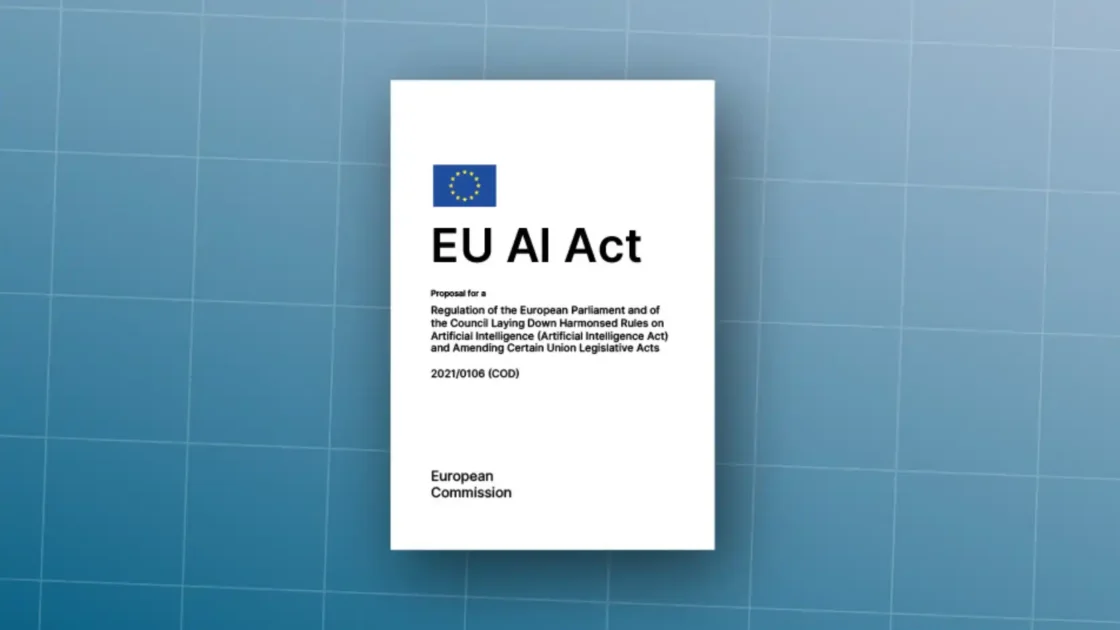
DORA, the EU’s Digital Operational Resilience Act, applicable since January 2025, is the most directly relevant regime even though it never mentions AI. It obliges banks, insurers, investment firms, and payment institutions to manage ICT third-party risk systematically: maintain a register of dependencies, assess concentration risk, contract for audit and incident-cooperation rights, and test continuity for critical functions. As AI tooling moves from experiment to embedded workflow inside financial entities, providers like OpenAI slide toward the register’s scope — and repeated, documented incidents of the July variety are exactly the input DORA-mandated risk assessments must weigh. The mechanism matters: DORA does not fine OpenAI for outages; it pressures OpenAI’s financial customers to demand contractual resilience, exit plans, and fallbacks, which converts regulatory force into procurement force. Enterprise AI contracts across European finance already reflect this translation.
NIS2, the EU’s revised network-and-information-security directive in national application since late 2024, widens the same logic beyond finance to essential and important entities across energy, health, transport, digital infrastructure, and public services — sectors whose organizations increasingly embed AI in operations. NIS2 brings mandatory incident reporting with tight timelines and management liability for cyber-resilience failures, and its supply-chain security provisions require entities to assess the resilience of their providers. Cloud and digital-infrastructure providers fall within its regulated categories; the classification of AI platform services is an evolving question national regulators will not leave unanswered for long, particularly after each new headline outage demonstrates societal reliance.
The EU AI Act, phasing in through 2025–2027, approaches from a different angle: it regulates AI systems’ risks and, for general-purpose AI models above systemic-risk thresholds, imposes obligations around risk assessment, incident reporting to the AI Office, and cybersecurity. Its centre of gravity is safety and fundamental rights rather than uptime — the Act cares more about what a model does when it works than whether it works on Sunday. But its systemic-risk framing normalizes a premise with long consequences: that the largest AI providers are entities whose failures have society-scale externalities and who therefore owe regulators structured incident transparency. Once that premise is law for safety incidents, extending it to availability incidents is a short legislative step, and precedent exists — telecommunications, energy, and payment systems all acquired outage-reporting duties after their own eras of visible failure.
Outside Europe, the picture is thinner but moving. US financial regulators press operational-resilience expectations through supervisory guidance rather than statute; sectoral rules in healthcare and government procurement — the FedRAMP framework whose OpenAI-side degradation ran for a week into July 19 — impose availability and reporting standards on specific deployments. FedRAMP is, in fact, the quiet proof of concept: where government compliance regimes apply, OpenAI already operates dedicated infrastructure with contractual accountability, demonstrating that hardened tiers are a matter of requirement, not capability.
The honest analytical framing is that no regulator required OpenAI to disclose anything about July 19, and that this is precisely the situation the next few years will change. The direction of travel across DORA, NIS2, and the AI Act is convergent: dependency mapping, concentration-risk scrutiny, mandated incident transparency, and management accountability, applied first to AI’s customers and progressively to AI’s providers. For businesses, the actionable consequence is to get ahead of the sequence — inventory AI dependencies now, contract for transparency now — because the compliance frameworks arriving mid-decade will ask for exactly that paperwork, and the firms that built it voluntarily will experience regulation as confirmation rather than crisis.
The single point of failure problem in AI adoption
Strip away the sector detail and July 19 reduces to one structural fact: an extraordinary share of the world’s cognitive work-assistance now routes through a single company, and single points of failure behave the same way in every system that has ever contained one.
The concentration is measurable. ChatGPT holds roughly three quarters of generative-AI chatbot market share by most traffic analyses, 900 million weekly users against rivals’ fractions, and a default status so strong that “ChatGPT” functions as the category’s generic noun the way Google did for search. Concentration of this kind is not an accident or a scandal; it is the standard endpoint of platform economics — network effects, data advantages, habit, and distribution compound until one provider is the presumptive choice. The same forces gave the world one dominant search engine, one dominant social graph, and a three-firm cloud oligopoly. AI assistance has simply reached the same shape faster than any predecessor.
The reliability consequence follows mechanically. When usage distributes across five comparable providers, any one provider’s outage strands a fifth of users, and the visible social event is small. When usage concentrates at three quarters, the dominant provider’s outage is a synchronized global work stoppage — the exact phenomenology of July 19, where a single company’s storage-layer trouble produced simultaneous complaints from London, Berlin, Amsterdam, and beyond within minutes. Concentration converts one firm’s incident rate into everyone’s incident rate. The Facebook outage of 2021 taught this lesson for social infrastructure; the Cloudflare event of November 2025 taught it for edge infrastructure; 2026 is teaching it for cognitive infrastructure.
What makes the AI version distinctive, and arguably more consequential, is the nature of the dependence. Social platform downtime interrupts communication and commerce — serious, bounded harms. AI assistant downtime interrupts thinking workflows: drafting, analyzing, deciding, learning. The dependence is also unusually invisible to the organizations that carry it, because it accreted bottom-up through individual subscriptions and browser tabs rather than through procurement processes that would have flagged it. Most companies can name their cloud provider dependencies instantly; ask what fraction of their staff’s daily output has a single AI vendor on its critical path, and the honest answer in 2026 is that nobody has measured. July’s outages were, among other things, a free measurement — every workflow that stalled was a dependency being discovered.
The single-point-of-failure problem has known solutions, and none of them is “hope the point stops failing.” They are redundancy, isolation, and graceful degradation — the same trio every mature infrastructure domain converged on. Applied to AI dependence, redundancy means genuine multi-provider capability, isolation means ensuring alternatives do not share failure domains (the Cloudflare lesson), and graceful degradation means workflows designed to continue, slower, without the AI layer. The next section turns those principles into practice. The point to fix here is the framing: the question July 19 poses is not whether OpenAI will become reliable enough to depend on exclusively — no provider in the history of computing has cleared that bar — but whether the depending world will keep pretending the bar is clearable. Infrastructure maturity begins on the customer side, with the admission that the single point of failure is a choice, renewed daily, by everyone who builds on it without a fallback.
Multi-provider strategy and practical fallback design
Redundancy is easy to recommend and easy to do badly. A second AI subscription that nobody has tested, bought after the last outage and forgotten before the next, is resilience theatre. Real multi-provider capability is a design exercise with a handful of decisions, and July’s incident cluster provides the requirements document.
The first decision is what actually needs a fallback. Not every AI use is critical; most is not. The useful exercise is a dependency triage across three tiers. Tier one: workflows where AI is on the critical path of a revenue- or deadline-bound deliverable — client content production, support drafting at volume, AI features inside your own product. These justify full redundancy. Tier two: workflows where AI adds speed but manual completion is realistic — internal documents, analysis assistance, code review support. These justify a warm alternative: licensed, occasionally used, prompts adapted. Tier three: convenience uses that can simply pause for an afternoon. Mapping real usage into these tiers is an afternoon’s work, and most organizations discover their tier one is smaller and more specific than their anxiety suggested.
The second decision is provider independence, the Cloudflare lesson operationalized. A fallback delivers nothing if it shares the primary’s failure domains. The relevant checks: different model provider, obviously; but also different edge and CDN layer where discoverable, different authentication path (a corporate SSO outage like July 16 takes down every tool behind the same identity provider), and for API workloads, ideally different underlying cloud regions. Perfect independence is unachievable — everything shares the public internet — but each severed shared dependency removes a correlated-failure mode, and the biggest ones are cheap to check.
The third decision is switchover mechanics, where most redundancy plans quietly die. For interactive use, the mechanics are human: staff need existing logins, basic fluency, and a communicated trigger — “status page confirms incident, or aggregator alert fires: switch” — because an untrained fallback costs its own half hour of fumbling, which is most of a median outage. For API workloads, the mechanics are architectural: a routing layer that health-checks the primary and fails over automatically, with request formats normalized and prompt variants pre-tested against the secondary model, since identical prompts produce materially different outputs across providers and an unvalidated failover merely exchanges an outage for a quality incident. Middleware products now sell exactly this, marketing combined uptime across providers directly against incidents like OpenAI’s — but the pattern is buildable in-house for teams that prefer it.
The fourth decision is state portability, the most neglected. The switching cost between AI providers is not the interface; it is the accumulated context — memory, custom instructions, long project threads, prompt libraries. Teams that keep their operating context in portable form (documents, versioned prompt files, exported summaries at project milestones) can resume on any model in minutes. Teams whose context lives entirely inside one provider’s chat history have built lock-in for themselves that no contract imposed, and they rediscover it during every storage-layer incident.
Fallback design at a glance
| Design choice | Weak version | Working version |
|---|---|---|
| Scope | “Back up everything” | Tiered triage; full redundancy for critical-path uses only |
| Independence | Second chatbot, same SSO and edge stack | Checked for shared identity, CDN, and cloud failure domains |
| Switchover | Licenses exist, nobody trained | Named trigger, practiced switch, API auto-failover with tested prompts |
| State | Context lives in one provider’s history | Portable briefs, exported milestones, versioned prompt library |
| Validation | Assumed to work | Quarterly outage drill during normal operations |
The table compresses the difference between owning a fallback and having one. The final row is the discipline that makes the rest real: a quarterly, scheduled, thirty-minute drill in which a team works its tier-one flows on the secondary provider. Fire drills feel excessive until the building is on fire; July supplied four fires in one week.
Cost objections deserve a straight answer. Full redundancy roughly doubles AI tooling spend for the covered scope — but the covered scope, after honest triage, is typically a small fraction of usage, and AI tooling is itself a small fraction of the labour cost it accelerates. Against the arithmetic in this article — outage frequency exceeding one user-visible event per week across the provider’s surface in July, resolution times measured in hours across the yearly record — a low four-figure annual redundancy cost against even a single avoided deadline breach prices itself. The organizations that will look prescient after the next major outage are making that purchase now, in the calm.
A practical playbook for the next outage
Strategy sections persuade; checklists get used. What follows is the operational playbook for the moment ChatGPT next fails — written for the individual professional and the small team, the populations with the least institutional cushion and, on 2026’s evidence, the most exposure.
Minute zero to five: confirm before you thrash. The first symptom of an outage is indistinguishable from a local glitch, so verify cheaply. Open status.openai.com; if it shows the issues banner or a fresh incident, the problem is not yours. If the official page is silent — remember the 26-minute acknowledgment lag measured on July 19 and the July 14 episode where thousands of reports preceded any official notice — check an aggregator or Downdetector for a spike. A sharp multiple-of-baseline surge is confirmation enough. What not to do: reinstall apps, clear all cookies, reset passwords, or repeat-submit prompts. Server-side incidents are immune to client-side rituals, and password resets during identity-layer incidents occasionally lock you out of the recovery too.
Minute five to fifteen: protect state, then switch. If parts of the product still respond, spend the window on preservation, not production: copy anything irreplaceable from recent conversations into your own documents. Do not initiate a full data export mid-incident — export systems share the degraded infrastructure. Then execute the switch you planned in calm weather: open the secondary assistant, load the portable brief or context summary for the task at hand, and continue. If no secondary exists, this is the moment the previous section becomes personally persuasive; bookmark it.
During: triage by symptom. Use the field guide from the anatomy section. Empty history but functioning new chats means your data is almost certainly intact and retrieval is sick — work in new sessions and stop refreshing the sidebar. Intermittent errors mean partial capacity — single, patient retries sometimes land, but rapid-fire resubmission adds load and rarely helps. Full login failure means wait; identity incidents in the 2026 record resolved in under an hour more often than not. Set a re-check interval — fifteen minutes is plenty — and reclaim the attention otherwise spent refreshing.
During, if you owe someone something: communicate early. A one-line message — the tool on our production path has a confirmed global outage, deliverable moves by X hours — sent at minute twenty beats an apology at the deadline. The public, verifiable nature of major outages works in your favour precisely once per incident, and only if you invoke it before the miss rather than after.
After: capture the lesson while it stings. Three notes, five minutes: what stalled, what the stall cost in time or money, and what single preparation would have halved it. That record, accumulated over a few incidents, is the difference between an organization that experiences outages and one that learns from them. If you claimed enterprise-tier service, check whether the incident breached your SLA’s downtime definition and file for credits — less for the money than for the paper trail that strengthens the next negotiation.
Ongoing hygiene, ten minutes a month: export your ChatGPT data periodically so history loss is never total; keep custom instructions, key prompts, and active project summaries in your own files; maintain login and passing familiarity with one alternative assistant; and if your work is deadline-bound, keep the one-business-day AI-risk buffer described in the marketing section. None of this is sophisticated. That is the point. The July 19 outage divided its 900 million affected users not into technical and non-technical, but into prepared and improvising — and the membership fee for the first group is roughly one hour of setup and ten minutes a month.
Competitors and the quiet opportunity in OpenAI’s downtime
Every ChatGPT outage is a market event, because the chatbot market of 2026 is no longer a monopoly with spectators — it is, per traffic analyses, a genuine three-horse race among OpenAI, Google’s Gemini, and Anthropic’s Claude, with Perplexity growing fast on revenue and a long tail of capable alternatives behind them. An hour of ChatGPT downtime is an hour in which some fraction of 900 million weekly users tries the competition for free, at the exact moment their motivation to switch peaks.
The mechanics of outage-driven substitution are well documented from adjacent markets. The 2021 Facebook blackout produced measurable, immediate migration surges to Telegram and Signal — large enough to strain the recipients’ servers. Search-visible behaviour during ChatGPT incidents follows the same shape: queries for alternatives spike within minutes, app-store rankings of rival assistants tick upward on outage days, and audience-overlap data already showed, before July, a growing share of each major chatbot’s users also visiting rivals in the same month. The direction of the ratchet matters more than any single day’s numbers: each outage converts some exclusive users into multi-tool users, and multi-tool users are structurally harder to retain, because their switching cost has already been paid.
What the outage does not do, on the evidence so far, is produce mass durable defection. ChatGPT’s advantages — habit, memory and accumulated context, workspace integration, the sheer default status of the brand — reassert themselves the moment service resumes, and OpenAI’s own subscriber momentum through early 2026 was the strongest in its history despite the incident record. The realistic competitive effect of July 19 is marginal and cumulative: a slightly larger population that knows a second tool, a slightly weaker assumption that ChatGPT is synonymous with AI, a slightly easier pitch for every rival’s enterprise sales team. Marginal and cumulative is how platform leads erode; it took years of individually survivable stumbles before earlier incumbents in other categories noticed the compounding.
For competitors, the tactical playbook during a rival’s outage is constrained by taste — public gloating reads badly and invites karma, since every provider’s status page has its own history — but the substantive moves are standard: capacity readiness for the traffic surge, frictionless onboarding for refugees (import paths for prompts and context reduce the switching cost at its most reducible moment), and enterprise messaging that sells architecture rather than schadenfreude: multi-model resilience, contractual transparency, uptime track records presented factually. The strongest competitive artifact after any OpenAI incident is not a tweet; it is the procurement slide showing incident counts side by side.
For OpenAI, the competitive reading of July should sharpen the reliability calculus described earlier: in a three-horse race, uptime stops being an operations metric and becomes product differentiation. The company’s February statement accompanying the 900-million announcement promised users “higher reliability” as usage scales — a line competitors will quote back every time the status banner flips. And for users and businesses, the competitive pressure is simply good news to be exploited deliberately: a market with three capable providers is precisely what makes the multi-provider strategies in this article practical rather than theoretical. The rational response to July 19 is not to pick a more reliable monopolist — none is on offer — but to let the competition do what competition is for, and refuse to be any single provider’s captive audience again.
GEO consequences when answer engines go dark
For the search and visibility industry, a ChatGPT outage has a second dimension that general coverage misses entirely: ChatGPT is not only a tool businesses work with — it is a surface businesses are found on. Generative engine optimization, the discipline of earning citations and recommendations inside AI answers, treats ChatGPT as a distribution channel alongside Google. On July 19, that channel went dark, and the episode carries real lessons for how visibility strategy should price platform risk.
The direct effect of an outage on AI-channel visibility is straightforward and bounded: for the incident’s duration, zero impressions, zero citations, zero referral clicks from ChatGPT’s search and browsing surfaces. Brands that have built measurable traffic from AI answers — a fast-growing but still single-digit share of most sites’ acquisition — lose that stream for hours, and unlike a ranking loss, it returns automatically at resolution. If that were the whole story, GEO’s outage exposure would be trivial. It is not the whole story, for three reasons.
First, behavioural displacement is measurable and interesting. During ChatGPT downtime, question-shaped demand does not evaporate; it reroutes — to classic Google search, to AI Overviews, to Gemini, Claude, and Perplexity. A brand with strong classic SEO and presence across multiple AI surfaces captures the rerouted demand; a brand that tuned itself narrowly for ChatGPT visibility watches its channel and its audience vanish together for the afternoon. The outage is thus a live argument for the position serious practitioners already hold: GEO is a portfolio discipline across engines, built on the same foundation of authoritative, well-structured, citable content that classic SEO rewards — because the same content earns citations everywhere, and because no single engine’s availability, algorithm, or existence is guaranteed. Platform risk in visibility strategy did not begin with AI; every algorithm update taught it. AI merely adds uptime to the list of things a channel can lose overnight.
Second, the outage disrupts the measurement layer of GEO itself. Visibility monitoring for AI answers works by systematically querying the engines and logging citations; during an incident, those probes fail or return degraded output, punching holes in tracking data and — more subtly — occasionally recording anomalous answer sets as the service recovers through partial capacity. Practitioners reviewing July data should annotate the incident windows, both this one and July 14–15, before reading any citation-share movement as real.
Third, there is a content opportunity with a short half-life. Outage-related queries — is ChatGPT down, ChatGPT alternatives, ChatGPT status explained — spike enormously during incidents and are answered in real time by whichever publishers have standing coverage and fast publication reflexes. The monitoring industry’s aggressive SEO around outage queries, visible in how status-tracking services dominate those results, shows the demand is durable enough to build for. For agencies and publishers in the technology space, an evergreen, well-maintained explainer on AI-service reliability — updated within hours of each major incident — is among the most reliably recurring traffic assets the niche currently offers, precisely because the triggering events recur on a schedule the whole industry can now predict: often.
The strategic synthesis for visibility work is the same portfolio logic the rest of this article applies to production work. Build for AI surfaces, absolutely — the channel is real and compounding. But weight the portfolio so that no single engine’s dark afternoon, policy change, or decline can remove a load-bearing share of acquisition, and keep the classic search foundation strong, because on July 19 the oldest channel on the list was also the one that stayed up.
Trust, habit, and the psychology of AI dependence
The most revealing data from July 19 is not in any monitoring dashboard. It is in what people said and felt when the tool stopped — because outages are the rare moments when a relationship with technology becomes visible to the person inside it.
The social record of ChatGPT outages has a consistent emotional register. The jokes come first — during an earlier worldwide disruption, one widely shared post ran “ChatGPT is down. You won’t see some people today,” and its Slovak, German, and Hindi cousins circulate within minutes of every incident. Humour of this type is diagnostic: people joke about dependence precisely when the dependence has become real enough to be uncomfortable. Beneath the jokes, the same threads carry the second register — genuine distress from users mid-deadline, and a third, quieter one: people surprised by the size of their own reaction. The Fingerlakes1 recovery coverage noted users initially assuming their own devices or connections had failed — the outage revealing that ChatGPT’s constant availability had become a background assumption on the order of electricity, checked only when it breaks.
The professional version of that surprise deserves naming honestly, without the moral panic that usually attaches to it. Two years of daily AI assistance changes how work feels: drafting from a blank page, holding a debugging chain in one’s own head, structuring an argument unaided — these remain possible, but they have become effortful again for heavy users, and an outage administers the comparison without consent. Some of what users experience as lost ability is really lost speed, and some is genuine skill atrophy in tasks fully delegated for months; disentangling the two is an open research question, and the honest position is that nobody yet has longitudinal data at the scale 2026’s usage would require. What the outages establish is narrower but solid: a large population now experiences AI unavailability as a felt impairment of their own capability, and that experience — not any philosophical argument about dependence — is what will drive both individual habits and institutional policy.
There is also a trust asymmetry worth making explicit. Users extend platform-grade trust to ChatGPT — trusting it to be up, to keep their histories, to remember their context — while the relationship’s formal terms, as the SLA section showed, promise consumer-grade effort. Every outage narrows that asymmetry a little: the July incidents visibly pushed more users toward exporting data, keeping local copies, and maintaining second tools, the behavioural signature of trust recalibrating from assumed to verified. That recalibration is healthy, and it does not require cynicism. The mature relationship with any infrastructure — power, banking, cloud — combines daily reliance with quiet preparedness, and treats neither as betrayal of the other.
The cultural marker, finally, is that ChatGPT outages have become events — covered live by mainstream outlets, tracked by the same public rituals as airline meltdowns and payment failures. Societies develop those rituals only around systems that matter. In that sense the jokes, the panic, the live blogs, and the recovery cheers of July 19 are collectively a measurement more honest than any uptime percentage: they are what it looks like when a species that adopted a cognitive tool in three years discovers, one Sunday afternoon at a time, exactly how much of itself it has moved onto infrastructure it does not control.
Access tiers, pricing, and who gets protected first when systems strain
ChatGPT’s user base is stratified across access tiers, and outages interact with that stratification in ways worth understanding, because reliability is quietly becoming part of what the price ladder sells.
The 2026 tier structure runs from the free tier — the majority of the 900 million weekly users, ad-supported in the US pilot since January — through consumer subscriptions at the Plus level and the premium Pro level introduced at $200 per month for research-grade access, up to the business tiers: Team-style workspaces, Enterprise agreements, and the specialized compliance environments like FedRAMP for government. OpenAI reports more than 50 million paying consumer subscribers and roughly 9 million business seats across more than a million business customers. Each step up the ladder has always bought capability — better models, higher limits, workspace controls. The incident record shows it increasingly buys, or at least implies, differential treatment under strain as well.
The evidence is scattered but consistent. Capacity management under load has historically favoured paying tiers: rate limits tighten on free users first, and priority access during high-demand periods has been an explicit subscription benefit since the earliest Plus marketing. Yet the incident record also cuts against any simple “pay more, suffer less” rule. The July 21, 2025 outage inverted the ladder entirely — “Elevated errors on ChatGPT for all paid users” while the free tier worked — because subscription infrastructure is its own failure domain, and more product surface means more ways to break. The July 2026 cluster hit business surfaces specifically: SSO login, the enterprise app lockout, ChatGPT Work on Sunday’s affected list, and the FedRAMP tier enduring the longest degradation of all. The price ladder buys priority under capacity strain, but not immunity from component failure — and the premium tiers, being newer and more complex, sometimes carry more component risk, not less.
For buyers, three practical conclusions follow. First, the tier decision should be made on contractual grounds, not assumed reliability: as the SLA section detailed, availability commitments attach to enterprise and API agreements, and an organization running on individual Plus accounts holds capability without rights. Second, aggregate uptime disclosures do not decompose by tier — OpenAI’s own disclaimer says individual experience varies by subscription level — so a business evaluating the platform should ask its account team for tier-specific availability history rather than reading the public quarterly figure as its own expected experience. Third, the API remains the reliability outlier in the whole structure: 99.99 percent for the quarter against the consumer product’s 99.86, a gap that has held across 2026’s incidents. For any workload where reliability genuinely matters, building on the API — with its simpler surface, contractual footing, and demonstrated stability — rather than on the consumer app is the single most consequential architectural choice available, and it costs design effort rather than subscription premium.
The strategic trajectory is easy to read. Cloud computing evolved from uniform best-effort service to a menu in which availability itself is priced — multi-zone deployments, premium support, financially backed SLAs. AI platforms are visibly early in the same evolution: hardened compliance tiers exist, enterprise agreements already carry the industry’s only real commitments, and every incident that lands on business users sharpens demand for a tier whose pitch is not more intelligence but fewer bad Sundays. When that tier is formally productized — and the competitive and regulatory pressures documented in this article make it a matter of timing — July 2026’s incident cluster will be remembered as part of the sales material.
The compute build-out behind ChatGPT and capacity as a reliability variable
Underneath every layer discussed in this article sits the physical one: the data centres, GPU fleets, and power contracts that actually run the models. OpenAI’s compute story in 2025–2026 has been one of the largest infrastructure build-outs in industrial history, and it bears on reliability in two opposing ways that are worth separating.
The build-out’s outline is public. OpenAI’s core hosting has run on Microsoft Azure since the partnership’s early days, with Azure providing the training and inference backbone through ChatGPT’s entire rise. From early 2025 onward, the company moved deliberately toward compute diversification and scale: the Stargate program announced in January 2025 with partners including SoftBank and Oracle, framed around hundreds of billions of dollars of planned AI data-centre capacity in the United States; subsequent large capacity agreements across multiple infrastructure providers; and a renegotiated Microsoft relationship that loosened exclusivity while preserving the deep Azure dependence. The February 2026 funding round — $110 billion at a $730 billion pre-money valuation — exists substantially to pay for this: at 2.5 billion messages a day and a user base growing by nine figures per quarter, inference capacity is the company’s defining cost and constraint.
Capacity bears on reliability first as a buffer. Many of ChatGPT’s earliest and ugliest failures were demand events — traffic surges crushing available inference, producing the elevated-error cascades described in the anatomy section. Every gigawatt of new capacity widens the margin between normal load and the ceiling, which is one credible reason the ten-hour capacity-flavoured marathons of 2025 have no 2026 counterpart. On this axis, the build-out is straightforwardly good for uptime, and the API’s 99.99 percent quarter is partly its dividend.
Capacity bears on reliability second as a source of change, and here the sign flips. Migrations between providers and regions, new data-centre bring-ups, traffic re-balancing across a heterogeneous fleet, and the constant reconfiguration that diversification requires are all high-risk change categories — the control-plane and configuration work that, industry-wide, causes more major incidents than hardware ever does. A company simultaneously operating one of the world’s largest inference fleets and rebuilding its foundations underneath live traffic is running an elevated baseline of change risk, and an incident cluster like mid-July is consistent with that baseline even though no public evidence ties the week’s events to any specific migration. That hypothesis is offered as exactly that — a hypothesis, flagged per this article’s practice of separating inference from record.
The diversification itself, meanwhile, is a long-term reliability strategy in the same sense this article urges on OpenAI’s customers: multi-provider redundancy against concentration risk. An OpenAI spread across Azure, Oracle, and dedicated Stargate sites is structurally harder to take fully offline than an OpenAI resident in one cloud — the provider applying to its own supply chain the lesson its outages teach its users. The irony is symmetrical and instructive: the world’s dominant AI company does not trust a single infrastructure provider with its availability, and neither should anyone whose single infrastructure provider is the world’s dominant AI company.
For readers tracking the reliability race, the compute build-out thus offers a concrete leading indicator. Watch whether incident frequency subsides as the major migrations complete and the new capacity matures — the pattern every previous hyperscaler traced, with stability arriving after the years of heaviest construction. If 2027’s status history is quieter than 2026’s, the build-out will deserve much of the credit. If it is not, the problem was never capacity.
Voice, memory, and apps widen the blast radius of every incident
One detail from July 19’s affected-components list deserves separate treatment: Voice mode failing alongside Conversations. It is a small entry with a large implication, because it illustrates the mechanism by which each new ChatGPT capability changes not just what the product can do, but what an outage of the product means.
Consider what the product’s expansion since 2024 has added to the failure surface, feature by feature. Voice mode turned ChatGPT into a real-time conversational partner — used while driving, cooking, walking, and increasingly by users for whom typing is impractical: children doing homework aloud, elderly users, people with visual or motor impairments. For this population, a voice outage is not a degraded interface but a total one; there is no falling back to the text box you cannot comfortably use. Accessibility-mediated dependence is the least discussed and least substitutable kind, and every incident that lists Voice among its casualties disrupts it silently. Memory turned the assistant from stateless to personalized: preferences, ongoing projects, personal context accumulated across months now shape every answer. An outage touching memory infrastructure degrades answer quality even when answers still arrive — the system responds, but as a stranger — a failure mode invisible to uptime metrics entirely, since the request technically succeeded. The apps and custom GPT ecosystem turned ChatGPT into a platform whose failures propagate to third parties: every business that built a custom GPT for its customers, every app running inside the ChatGPT surface, inherits OpenAI’s incidents as its own without any contractual recourse of its own. And search integration made ChatGPT an information gateway whose downtime now resembles, for its heaviest users, a search-engine outage — a category of failure that a decade of Google stability had taught the public to consider extinct.
The pattern generalizing across these examples is what reliability engineering calls blast radius: the scope of what a given failure reaches. A 2023 ChatGPT outage interrupted text generation. A 2026 outage of the same nominal duration interrupts text, speech, personalization, third-party applications, information retrieval, and — through ChatGPT Work — collaborative workspaces, simultaneously, for a user base three times larger. The product’s blast radius has grown along two axes at once: more users, and more of each user’s life per incident. Uptime percentages capture neither axis. A service holding a constant 99.86 percent while tripling its users and quintupling its per-user surface has, in human terms, become dramatically less reliable at constant measured reliability — which is the single most under-appreciated fact in the entire AI-dependence discussion, and the quiet answer to anyone who reads the status page’s steady quarterly figures as evidence that nothing is changing.
The blast-radius lens also clarifies where the next categories of outage pain will come from, because the expansion has not stopped. Agentic features that act on users’ behalf — booking, purchasing, executing multi-step tasks — convert outages from interrupted conversations into interrupted transactions, with real-world state left half-changed. Ads infrastructure ties revenue directly to uptime for the first time in the product’s history. Deeper enterprise workspace adoption moves the product from assisting work to hosting it, making conversation history the system of record the storage section warned against. Each of these raises the stakes of an identical technical failure, on a schedule set by OpenAI’s shipping velocity rather than by anyone’s risk appetite.
For OpenAI, the blast-radius trend argues for a discipline that high-stakes platforms eventually adopt: isolation between features, so that voice trouble cannot ride shared infrastructure into conversations, and a new app-platform component cannot destabilize the core loop. The status page’s fifteen ChatGPT components suggest the monitoring for such isolation exists; the July 19 pattern of multiple surfaces failing together suggests the isolation itself remains partial. For users and businesses, the lens supplies the right question to ask of every new capability they adopt — not “what does this let me do” but “what does its absence now take from me” — and the honest answer, applied feature by feature, is the true dependency inventory this article has been arguing everyone should hold. The features are worth adopting; most of them are remarkable. Adopting them with the second question answered is the entire difference between using a platform and being hostage to one.
Small businesses and solo operators at the sharp end of AI downtime
Enterprise impact gets the analyst attention, but the population that absorbed July 19 with the least cushion sits at the other end of the economy: solo professionals, micro-agencies, and small businesses for whom ChatGPT is not a productivity tool but a headcount substitute.
The dependence profile of a small operation differs from an enterprise’s in kind, not just degree. A ten-person e-commerce company does not have an AI-assisted support team; it has one person doing support, marketing, and supplier email, at AI-augmented speed that makes the workload survivable at all. A solo consultant does not use ChatGPT to accelerate a research department; the conversation thread is the research department. Surveys of small-business AI adoption through 2025–2026 consistently found a majority of small firms using AI tools, with generative assistants the most common entry point — and, critically, near-zero formal redundancy, because redundancy planning is enterprise behaviour and small operators adopt tools the way consumers do: one login, no contract review, no fallback.
For this population, the outage arithmetic from earlier sections concentrates brutally. An enterprise losing an hour of AI assistance loses a diffuse percentage across thousands of workflows; a solo operator loses the same hour from a production capacity of one. The Sunday timing sharpened it further — weekends are when small operators do the work the week does not allow: the newsletter, the product descriptions, the proposals, the bookkeeping queries. And the tier structure compounds the exposure: small businesses overwhelmingly run on consumer subscriptions, the tier with no availability commitments, no account team to call, and no SLA credits to claim. When ChatGPT Work appeared on July 19’s affected-components list, enterprises had contracts to consult; the freelancer refreshing a Plus account had Downdetector.
Yet the small-business story is not purely one of vulnerability, because smallness cuts the other way on recovery. A solo operator can switch tools in the time an enterprise schedules the meeting about switching. The full multi-provider apparatus described earlier collapses, at this scale, into an afternoon of setup: a second assistant account, core prompts saved in a document, project context summarized outside any chat history, and the habit of finishing AI-dependent client work a day early. Total cost: a few euros a month and an hour of discipline. The asymmetry between that cost and the exposure it removes is larger for small operators than for anyone else in this article, precisely because their AI dependence per capita is the economy’s highest.
There is also a client-relations dimension specific to small suppliers. Enterprises miss internal deadlines during outages; small operators miss client deadlines, and a missed deadline is existential in a way a slipped sprint is not. The communication playbook from earlier — early, factual notice citing a public, verifiable incident — matters most here, and so does the buffer habit that makes the notice unnecessary. The small operators who came through July’s cluster untouched were not the ones with the least AI dependence; they were the ones who had quietly stopped treating a consumer subscription as a guaranteed employee. That adjustment, multiplied across the millions of micro-businesses now built on AI assistance, is where the aggregate resilience of the AI economy will actually be decided — not in enterprise procurement, but in whether the smallest and most exposed users learn the lesson while it is still cheap.
Incident response inside the companies that depend on ChatGPT
OpenAI’s incident response is only half of any outage; the other half happens inside every organization that depends on the service, and July’s cluster made visible how immature that half remains almost everywhere.
Mature IT organizations have long-standing machinery for third-party outages: monitoring that watches vendors’ status feeds, severity classifications, escalation paths, communication templates, and post-incident reviews. Payment processor down, cloud region degraded, CRM unreachable — each triggers a known dance. AI tools, in most organizations, sit entirely outside this machinery, for a structural reason documented throughout this article: they arrived bottom-up, as individual subscriptions and browser habits, and never passed through the vendor-onboarding gate where dependencies get registered and runbooks get written. The result on July 19 was organizationally identical almost everywhere: no alert fired, no owner existed, and the “incident response” consisted of employees individually googling whether ChatGPT was down while their output quietly slowed.
Closing that gap is procedural work, not technical work, and the template is short. Register the dependency: AI tools in production use belong in the vendor inventory with a named owner, exactly like every other SaaS dependency — this is also the DORA- and NIS2-aligned move for organizations in scope. Instrument the watch: subscribe the owner, or a shared channel, to the provider’s status feed and one aggregator, so confirmation arrives in minutes rather than through hallway consensus; the 26-minute official acknowledgment lag measured on July 19, and the July 14 episode where official silence outlasted thousands of user reports, are the arguments for pairing sources. Pre-write the two messages: an internal one — incident confirmed, fallback mode active, expected impact — and where relevant a client-facing one, because composing under pressure produces either silence or over-apology, and both cost more than a template. Define fallback mode per team, using the triage from the multi-provider section, so “the AI is down” translates into specific instructions rather than improvisation. Review afterward in fifteen minutes: impact, response time, one improvement. Organizations that ran even this minimal loop across July’s four incidents ended the month with a tested capability; everyone else ended it with anecdotes.
The deeper organizational question the outages surface is ownership. AI tooling in 2026 commonly sits in a governance void — too operational for the innovation team, too novel for IT, too individual for procurement — and voids do not write runbooks. The companies handling this well have made a simple assignment: AI tools that touch production workflows belong to whoever owns SaaS operations, full stop, with the same lifecycle — onboarding, monitoring, continuity planning, offboarding — as any system of record. It is unglamorous, and it is the entire difference, visible in the July record, between organizations that experienced a vendor incident and organizations that experienced chaos. The next outage will administer the same exam. The syllabus, after a month like this one, can no longer be called a surprise.
Open questions the July 19 incident leaves unanswered
Serious analysis owes readers a clear boundary between what the evidence establishes and what it cannot yet reach. As this article is completed, the July 19 outage leaves a specific set of questions open, and each has a test attached — a way to know more as facts emerge.
The root cause is unknown. OpenAI had disclosed no cause at the time of writing, and the symptom-based reasoning in this article — a product-layer failure centred on conversation storage and delivery, with identity and voice surfaces touched — is inference, clearly labelled as such. The pattern is consistent with several distinct causes: a bad deploy, a storage or cache-cluster failure, a configuration change, a capacity cascade. The test: whether OpenAI publishes any root-cause detail in the incident’s resolved notice or a follow-up post-mortem. The base rate from 2026’s major incidents says it will not; the FedRAMP audience and enterprise customers may extract private detail regardless.
The full duration and scope are not yet final. This analysis was written during and immediately after the incident’s acute phase, from monitoring data and contemporaneous reporting. The final official record — total duration, whether recovery held without relapse, which components were listed in the end — belongs to the status page’s history entry, and readers checking after the fact should treat that entry as the authoritative timeline over any mid-incident snapshot, including this one’s.
The relationship among the week’s incidents is unestablished. Four user-affecting events in six days — login errors, SSO failures, the enterprise-app lockout, and Sunday’s outage — may be independent failures in unrelated components, or symptoms of a common stressor: an infrastructure migration, a major rollout wave, capacity strain from growth. Clustering is suggestive, not probative. The test is whether the incidents’ eventual descriptions share components, and whether the cadence continues into August or subsides — a continuing cluster would point toward systemic strain rather than coincidence.
The Meta coincidence is judged, not proven. The independence argument made earlier — staggered timing, disjoint architectures, different symptom shapes — is strong circumstantial reasoning, and no evidence of a common cause has surfaced. But neither company had published causes for its Sunday event at the time of writing, so the conclusion rests on inference from public signals. The test: both companies’ eventual statements, and whether any shared-dependency reporting emerges from the infrastructure press.
The behavioural aftermath is unmeasured. Did July’s cluster measurably accelerate multi-tool adoption, enterprise redundancy spending, or churn? App-ranking movements, audience-overlap data in the following months, and OpenAI’s next subscriber disclosures will answer this better than any outage-day anecdote. The prediction embedded in this article — marginal, cumulative erosion of exclusivity rather than visible defection — is falsifiable on exactly that data.
Whether any user data was affected remains formally unverified. The strong prior from every comparable incident — retrieval failure, durable storage intact — says conversation histories survived July 19 untouched, and no credible loss reports had surfaced at the time of writing. But priors are not confirmations, and OpenAI’s resolution notices have never included an explicit data-integrity statement for these events. The test is simple and worth watching for: whether the resolved notice, or any follow-up, states plainly that no user data was lost or corrupted. Providers in regulated sectors make that statement routinely after storage incidents; its consistent absence from AI-platform post-incident language is a disclosure norm that enterprise customers, at minimum, should be pressing to change.
And the largest question is structural, not incidental: whether AI-platform reliability improves faster than AI dependence deepens. Everything in this analysis reduces to that race. The incident record answers it one month at a time, and July 2026’s entry, whatever the final root cause turns out to be, was a month in which dependence won.
The reliability race that will define AI through 2027
Pull the threads of this analysis together and the July 19 outage resolves into a single strategic picture, one that will govern how the AI platform era unfolds over the next eighteen months.
On one side of the race is dependence, and its trajectory is not in dispute. Nine hundred million weekly users, a billion monthly on mobile, 2.5 billion daily messages, nine million paying business seats, AI woven into support desks, code review, content pipelines, classrooms, clinics, and law firms — every one of those numbers was smaller a year ago and every credible forecast has them larger a year from now. Dependence compounds automatically: each new integration, each habit formed, each workflow redesigned around assistance raises the human cost of the next identical outage without any change on the provider’s side.
On the other side is reliability, and its trajectory is genuinely mixed. The severity trend is favourable — 2026’s major incidents resolved in minutes to hours where 2025’s worst ran ten; mitigation machinery is visibly world-class. The frequency trend is not — incident counts scale with a feature surface that OpenAI is expanding as fast as any product in software history, and July’s four-events-in-a-week cluster is what that trade looks like from the outside. The transparency trend is flat: one-sentence resolutions remain the norm, and the public learned nothing about July 19’s cause that its own broken sessions had not already taught it.
The forces that will move the race are identifiable. Competition makes uptime a selling point in a three-provider market, and every incident writes a rival’s sales slide. Enterprise procurement, translating DORA- and NIS2-style obligations into contract language, will pull hardened tiers, transparency clauses, and tested-fallback architectures into the standard deal. Regulation proper will arrive on the usual schedule — after the outage that is bad enough, long enough, or ill-timed enough to become a political event, a threshold July 19 did not cross but which the arithmetic of scale brings closer each quarter. And on the customer side, the quiet professionalization documented throughout this article — dependency inventories, portable context, drilled fallbacks, buffer scheduling — will spread from the burned to the observant, as such practices always do.
The realistic 2027 equilibrium, on current evidence, looks like this: AI platforms bifurcating into consumer surfaces that remain fast-moving and occasionally brittle, and enterprise-grade tiers sold on contractual reliability at premium prices; incident response continuing to outpace incident prevention; disclosure improving under contractual and regulatory pressure rather than voluntarily; and a user base that has learned, one Sunday at a time, to treat AI the way it treats every other utility — indispensable, imperfect, and never trusted alone with anything that cannot wait a few hours. That is not a pessimistic forecast. It is what infrastructure maturity has looked like in every previous domain, and the speed at which AI is being forced through the curve is itself the strongest evidence of how much the technology now matters.
The July 19 outage will not be remembered individually; it entered a list that grows too fast for individual memory. What deserves to be remembered is what it demonstrated while it lasted — that a single company’s Sunday-afternoon infrastructure trouble can now pause a measurable fraction of the world’s written thinking, and that the distance between that fact and any adequate response to it, contractual, regulatory, or personal, remains the widest gap in the entire AI economy. The next incident is not a possibility to be debated. On the record of 2026, it is a scheduling question — and the only decision available to the 900 million is whether it finds them prepared.
Questions readers are asking about the July 19 ChatGPT outage
The fastest reliable check is OpenAI’s own status page at status.openai.com, which lists active incidents and affected components. Because official pages sometimes lag real conditions, pair it with a crowd-sourced monitor such as Downdetector, StatusGator, or IsDown, which surface user reports within minutes. If the status page shows green but you see errors, the problem may be regional, tier-specific, or on your side — but if thousands of reports are spiking, it almost certainly is not you.
ChatGPT suffered a global disruption on Sunday afternoon UTC. Monitoring services detected the failure at roughly 2:24 PM UTC, and OpenAI acknowledged it about 26 minutes later under the incident heading “Elevated errors affecting ChatGPT.” Affected components included Conversations, ChatGPT Work, and Voice mode. Users reported chats that would not load, replies that never arrived, and conversations that could not be continued, with reports concentrated in Europe but arriving worldwide.
There is no evidence of data destruction. The symptom users saw — empty sidebars and unloadable conversations — is characteristic of a storage or retrieval layer that is unreachable, not erased. In past incidents of this shape, histories returned intact once service recovered. That said, the episode is a reminder that anything irreplaceable inside a chat thread should be exported to your own storage, because during an incident you cannot reach it at all.
Almost certainly not. Meta’s disruption hit in the early US morning and was resolved within about two hours; ChatGPT’s began hours later in the UTC afternoon. The two companies run largely separate infrastructure stacks, and no shared-dependency failure — of the kind the November 2025 Cloudflare incident produced — was reported by any monitoring service. The overlap appears to be coincidence, though the same-day pairing understandably fed speculation.
At the time of writing, OpenAI had not published a root cause. The symptom pattern — intermittent errors, unloadable history, degraded Voice and Work surfaces while the website itself stayed reachable — points to an internal application-layer or storage-layer failure rather than an edge or network event. Historically, most major incidents across the industry trace to configuration and deployment changes rather than hardware, but that is a base rate, not a finding about this event.
The acute phase spanned the Sunday afternoon and early evening UTC hours, but the final duration belongs to the status page’s history entry, which is written after full recovery is confirmed. OpenAI’s average incident resolution time across the past year runs to roughly five hours per IsDown’s tracking, though mitigation of the worst symptoms typically comes much faster — the July 14–15 event was mitigated in under half an hour after acknowledgment.
Not necessarily, and on July 19 the API appeared largely unaffected. The consumer product and the API share models but differ in surface: the API skips the web app, the account session machinery, and the conversation-history storage that failed most visibly on Sunday. Across the April-to-July quarter, OpenAI’s own status data showed 99.99 percent uptime for APIs against 99.86 percent for ChatGPT — a persistent gap that makes the API the more dependable foundation for anything operational.
Status pages are updated by humans after internal confirmation, which introduces lag — during the July 14–15 incident, thousands of Downdetector reports accumulated while the official page still showed green. Automated uptime probes add to the confusion because they often test whether the website loads, not whether the application works; on July 19, simple reachability checks passed while the product failed. Crowd-sourced monitors close this gap, which is why serious teams watch both.
StatusGator’s report data showed the United Kingdom, Germany, and the Netherlands as the most affected regions, with complaints arriving from well beyond Europe. The Sunday-afternoon UTC timing meant Europe was in its active evening hours while much of North America was mid-morning, which shapes where reports concentrate as much as where the failure technically landed.
More often than most users assume. IsDown counted 159 incidents on OpenAI’s status page in the roughly nine months before July 2026, and the mid-July week alone logged user-affecting events on four separate days. Most incidents are short and partial rather than total blackouts — the ten-hour marathon of June 2025 remains the outlier — but the frequency is high enough that any workflow depending on ChatGPT should assume several disrupted afternoons per year.
Payment buys priority under capacity strain — tighter rate limits hit free users first — but not immunity from component failure. The July 21, 2025 incident affected all paid users while the free tier kept working, and the July 2026 cluster hit business surfaces specifically: SSO login, the enterprise app, ChatGPT Work, and FedRAMP workspaces. Contractual uptime commitments exist only on enterprise and API agreements, not on Plus subscriptions.
Confirm the incident externally first — status page plus a crowd monitor — so nobody wastes an hour debugging their own setup. Then trigger the fallback that should already exist: a secondary model with pre-tested prompts for interactive work, or automatic failover routing for API workloads. Log timestamps and affected workflows contemporaneously, both for potential SLA credits and for the internal case for redundancy. And do not thrash: reinstalling apps and clearing caches does nothing to a server-side failure.
Consumer subscribers effectively cannot; Plus terms promise effort, not availability. Enterprise and API customers may hold SLA credits, but the fine print matters: providers measure their own compliance, definitions often exclude degraded-performance states like July 19’s intermittent errors, and credits are typically service credits rather than damages. Documenting your own impact with timestamps is the prerequisite for any claim.
Google’s Gemini, Anthropic’s Claude, and Perplexity are the standing alternatives, and classic Google search absorbed much of the rerouted demand on July 19. The practical caveat is that prompts are not portable by default — the same instruction produces different tone and structure across models — so an alternative only functions as a fallback if your key prompts have been tested against it before the incident, not during one.
Yes, in a way most coverage misses. ChatGPT is a distribution surface: brands earn citations and referrals inside its answers. When the platform goes dark, that visibility channel goes dark with it, and question-shaped demand reroutes to Google, AI Overviews, Gemini, Claude, and Perplexity. Brands present across multiple engines and strong in classic search capture the rerouted demand; brands tuned narrowly to ChatGPT lose the channel and the audience together.
Increasingly, yes — for their business customers if not for themselves directly. In the EU, DORA obliges financial entities to manage and report ICT third-party incidents, NIS2 imposes incident-notification duties on essential and important entities, and both push outage accountability up the supply chain to providers like OpenAI. A one-sentence resolution note does not satisfy a regulated customer’s incident-reporting obligations, which is why enterprise contracts now negotiate root-cause transparency explicitly.
No. The June 10, 2025 event — more than ten hours of elevated errors and widespread unresponsiveness — remains the reference point for severity. July 19’s distinction is context rather than duration: it hit a service with 900 million weekly users, arrived as the second global incident in five days, and capped a week with user-affecting events on four separate days, which is what made it feel like a pattern rather than an accident.
OpenAI announced 900 million weekly active users in February 2026, alongside more than 50 million paying subscribers, over a million business customers, and roughly 2.5 billion messages processed per day. Third-party trackers put the mobile app past a billion monthly active users by mid-2026. At that scale, even one offline hour translates to over a hundred million disrupted interactions.
The realistic forecast is that severity keeps falling while frequency stays elevated. OpenAI’s incident response has measurably improved — mitigation in under an hour is now typical — but the feature surface generating incidents keeps growing, and the compute build-out underneath the service is itself a source of change risk. Users and businesses should plan on the assumption that several disrupted afternoons per year are a standing feature of AI dependence, and price that into their workflows accordingly.
Author:
Jan Bielik
CEO & Founder of Webiano Digital & Marketing Agency
This article is an original analysis supported by the sources cited below
OpenAI Status OpenAI’s official status page, the primary source for the July 19 incident banner, the affected-components list, and the aggregate quarterly uptime figures cited throughout this analysis.
OpenAI Status — Incident History The official incident log used to reconstruct the July 14–19 cluster, the SSO login event, the enterprise app lockout, and the ongoing FedRAMP degradation.
OpenAI Status — Elevated errors affecting ChatGPT The specific incident entry for the July 19 outage, listing Conversations, ChatGPT Work, and Voice mode among affected components.
dev.ua — ChatGPT global outage report Contemporaneous reporting confirming the global character of the July 19 failure and the core user symptoms: unloadable chat history, missing replies, and conversations that could not be continued.
StatusGator — ChatGPT status Independent monitoring data for the July 19 event, including the 2:24 PM UTC detection time, the 26-minute acknowledgment gap, and the regional distribution of user reports.
StatusGator — OpenAI status Aggregated OpenAI incident tracking used for cross-checking official acknowledgments against user-report timing across 2026.
IsDown — ChatGPT status and incident statistics Source for the 159-incident count since October 2025 and the average resolution time of roughly 297 minutes cited in the reliability analysis.
GV Wire — ChatGPT down for thousands Tuesday Coverage of the July 14–15 incident, including the Downdetector report surge from 4,000 to more than 10,000 and the gap between user reports and the official status page.
FingerLakes1 — ChatGPT returns online after global outage Reporting on the resolution timeline of the July 14–15 event, including the mitigation and recovery timestamps used in the incident table.
TechRadar — ChatGPT down, April 2026 live coverage Live coverage of the April 20, 2026 partial outage affecting ChatGPT, Codex, and the API, used for the incident-history section.
GV Wire — OpenAI’s ChatGPT down for thousands of users Downdetector-based reporting on the April 20 incident, including the report volume exceeding 5,000 at peak.
CNN — Facebook and Instagram outages Coverage of Meta’s same-day disruption, including the Downdetector figures of 23,000-plus Facebook reports and 18,000-plus Instagram reports used in the coincidence analysis.
Rappler — Meta outage report, July 19, 2026 International reporting on the Meta outage timeline, confirming the early-morning US window and rapid recovery.
Dawn — Facebook, Instagram hit by global outage Reporting confirming the international footprint of the Meta disruption via NetBlocks monitoring.
Newsweek — Is Facebook down? What we know Coverage of Meta’s silence during and after the July 19 disruption, used in the communications comparison.
TechCrunch — ChatGPT reaches 900 million weekly active users The February 2026 announcement covering 900 million weekly users, 50 million paying subscribers, and the funding round context that frames the scale arithmetic in this article.
Wikipedia — 2021 Facebook outage Reference for the historical benchmark of platform-scale outages used to contextualize infrastructure failure modes.
Tom’s Guide — ChatGPT outage, January 2025 Live coverage of the January 23, 2025 outage, including the bad-gateway symptoms and the two-to-three-hour restoration window.
Tom’s Guide — ChatGPT down, March 24, 2025 Coverage of the short March 2025 spike near 1,600 Downdetector reports, used in the outage-history section.
TechRadar — ChatGPT down for paid users, July 21, 2025 Coverage of the tier-inverted incident in which paid users lost service while the free tier kept working, cited in the access-tiers analysis.
NordVPN — Is ChatGPT down? Third-party availability checker used to illustrate the ecosystem of independent monitoring tools that grew around ChatGPT’s incident record.
UptimeRobot — Is ChatGPT down? Automated probe data showing reachability checks passing during the July 19 event, the basis for the measurement-gap discussion of site-up-app-down failures.
fatjoe — ChatGPT statistics Market-share and usage statistics, including the roughly 76 percent chatbot market share and the three-horse-race characterization cited in the competitive analysis.
DemandSage — ChatGPT statistics Aggregated usage data including daily message volume, business-seat counts, and revenue run-rate figures used in the economics section.
Gulf News — ChatGPT outage hits users worldwide Reporting on the July 19 event’s user-facing symptoms, including missing chats and login glitches across regions.
| Citing this article? Brief excerpts are welcome. Please credit Webiano.digital, name the author where stated, and include a link to https://webiano.digital and to this original article. Full or substantial republication requires prior written permission. Read our Copyright and Content Use Policy. |
This article was prepared with the assistance of artificial intelligence tools. The content underwent expert human review, and Webiano Digital & Marketing Agency assumes editorial responsibility for its final version and publication.