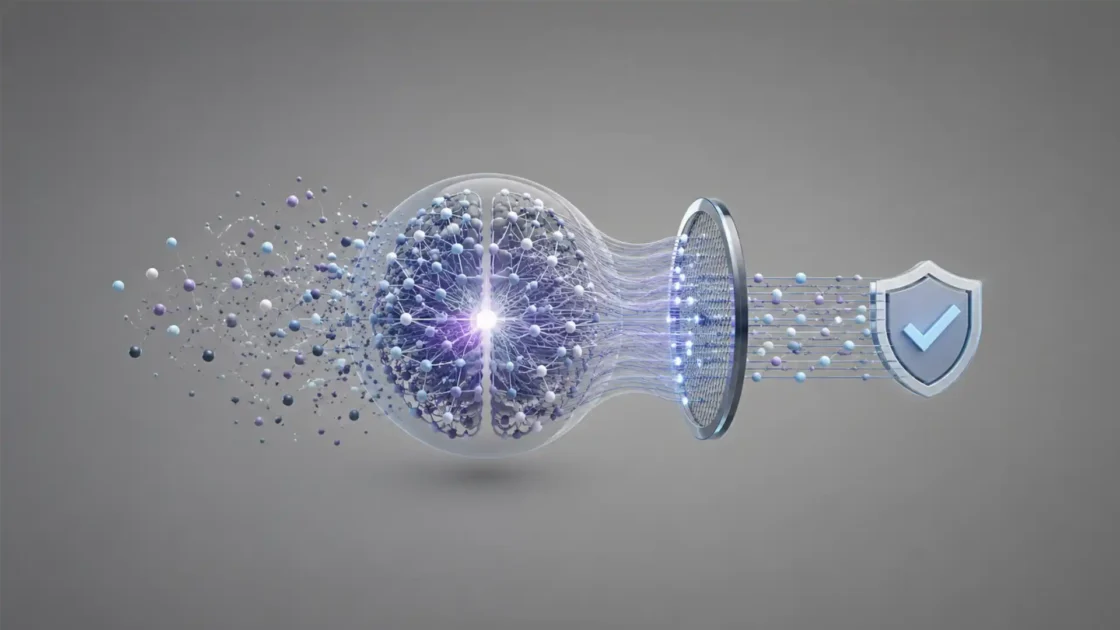
Anthropic is applying machine-readable marks to supported Claude output worldwide as the EU AI Act’s Article 50 transparency rules take effect. The decisive issue is not whether the watermark is invisible, but what it actually proves: Claude processing, not authorship. That distinction will matter for employers, publishers, schools and developers deciding how to interpret AI provenance.
Table of Contents
Anthropic has made a European transparency requirement a worldwide product choice. Claude models launched on or after August 2, 2026 support machine-readable marking at launch, and Anthropic says supported models will carry those marks across Claude, its API, Claude Code, Claude Cowork, Claude Tag and supported access through major cloud partners, wherever Claude is offered. The important correction is that not every older Claude model is marked yet: Anthropic is still adding support to models released before August 2, using the transition period that runs to December 2, 2026.
The EU rule itself does not order Anthropic to use this particular invisible watermark. Article 50(2) requires synthetic text and other generated media to be marked in a machine-readable way and detectable as artificially generated or manipulated, while leaving room for different technical methods. Anthropic chose an imperceptible text watermark and signed provenance metadata for supported files.
That distinction defines the real stakes. The watermark is a provenance signal, not a verdict about who wrote, owns or deserves credit for a passage. Anthropic expressly warns that a mark can survive proofreading, translation or summarisation. Claude’s new global default therefore tests whether institutions can distinguish AI processing from AI authorship before a compliance tool becomes an unreliable social label.
The EU rule became a worldwide Claude default
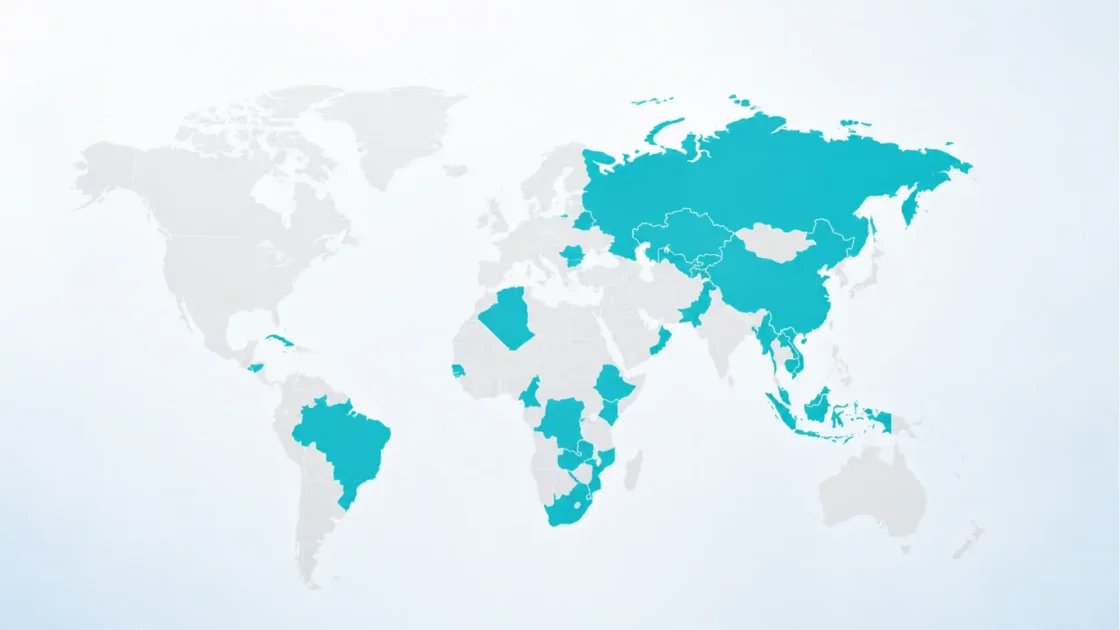
Anthropic’s implementation is broader geographically than the law that triggered it. Its support documentation says marking applies to output from supported models “wherever Claude is offered, worldwide,” rather than only to EU users or requests routed through European infrastructure. The same model-level approach covers Claude’s consumer product, Claude Platform API, Claude Code, Claude Cowork and Claude Tag. Supported Claude models accessed through AWS, Google Cloud or Microsoft Foundry also receive embedded text watermarks, although signed file provenance can vary by platform.
That does not mean a switch was flipped across the entire Claude catalogue on August 2. New Claude models launched on or after that date support marking at launch; older models are still being brought into the scheme. The EU’s current implementation timetable gives providers of AI systems placed on the market before August 2 until December 2, 2026 to meet the Article 50(2) marking and detection obligation. The 2026 Digital Omnibus added that four-month transition to avoid disruption for systems already on the market.
Independent coverage initially described Anthropic’s announcement as a move to watermark generated text, but the company’s own documentation is more precise: it marks content generated and processed by supported Claude models, and it is still publishing the technical details for detection. TechCrunch reported the change on August 11, while The Verge noted the distinction between day-one support for new models and a work in progress for existing ones.
The strategic decision is therefore not simply “EU compliance.” Anthropic has selected one global provenance architecture instead of maintaining a visible regional boundary around the EU rule. That reduces geographic ambiguity for downstream users, but it also exports the consequences of European regulation to customers whose contracts, classrooms or workplace policies may have been written around very different assumptions about AI detection.
Article 50 requires detectability, not Anthropic’s exact watermark
Article 50(2) of the EU AI Act places the provider-side obligation on systems that generate synthetic audio, image, video or text. Outputs must be machine-readable and detectable as artificially generated or manipulated, and the technical solution must be effective, interoperable, robust and reliable as far as technically feasible. The statute sets a performance obligation, not a single watermarking recipe. It also tells regulators to consider content characteristics, implementation costs and the state of the art.
There is an important boundary that is easy to lose in headlines. The provider marking obligation does not apply to the extent an AI system performs an assistive function for standard editing or does not substantially alter the user’s input or its semantics. That legal exception matters because Anthropic’s product documentation separately says Claude output can carry a mark after proofreading, translation, summarisation or file conversion. The safest reading is not that Anthropic is violating the exception, but that its global model-level implementation can produce a broader practical signal than the minimum legal category a reader may have in mind. Exact applicability can depend on the system and use.
Provider marking is also different from a visible label shown to a human reader. Under Article 50(4), deployers have disclosure duties for deepfakes and for AI-generated or manipulated text published to inform the public on matters of public interest, subject to specified exceptions. For public-interest text, the disclosure duty does not apply where the content underwent human review or editorial control and a person or legal entity holds editorial responsibility. The Commission’s optional EU icons are one way to make covered disclosures, not a universal badge that every AI-assisted sentence must carry.
The Commission published Article 50 transparency guidelines on July 20, 2026 and says the obligations became applicable on August 2. Its Code of Practice is voluntary, even though the underlying legal duties are mandatory. Anthropic signed Section 1 of that code alongside companies including Google, Meta, Microsoft, Mistral and OpenAI. Signing can help demonstrate a compliance approach, but it is not conclusive evidence of compliance.
Claude’s mark follows processing rather than authorship
The most consequential sentence in Anthropic’s support page is its warning about interpretation. A detected Claude mark means the content may have been processed by Claude; it does not establish the full provenance of the material or prove that Claude was its original author. Anthropic gives familiar examples: a person can bring their own text to Claude for proofreading, translation, summarisation or conversion, and the resulting output can still carry the mark.
That makes the watermark materially different from plagiarism evidence, a copyright determination or an authorship certificate. A document can contain a Claude signal while its ideas, data and most of its language came from a human or another source. It can also be changed, excerpted or blended with other material after Claude touched it. Conversely, Anthropic says the absence of a detectable mark does not show that a text is human-written: an older model, heavy paraphrasing, translation, short passages or unsupported surfaces can all make a mark unavailable or undetectable.
The institutional risk is a category error. An employer that treats “Claude processed this” as “an employee secretly had Claude write this,” or a university that treats it as proof of prohibited generation, would be making a stronger inference than Anthropic says its own mark supports. The same problem can run in reverse: a clean detector result cannot certify human authorship. Any policy that converts the mark into a binary innocence-or-guilt test would therefore be poorly matched to the evidence.
This is already more than a theoretical concern. Business Insider reported on August 14 that it had spoken with four Claude users who said they cancelled subscriptions, with some citing anxiety that code, documentation or edited writing could carry a Claude marker in professional or academic settings. Anthropic told the publication that it had not seen a trend of increased cancellations following the announcement. The episode is anecdotal, not evidence of broad customer flight, but it shows why provenance semantics can affect product trust before detector tooling is even fully documented.
Global marking shifts compliance into product architecture
Anthropic could have treated Article 50 as a regional compliance layer. Instead, the company says watermarking is applied at the model level and travels with supported output regardless of the Claude product from which the text comes. That architecture turns a jurisdiction-specific obligation into a default characteristic of the product.
There is a straightforward business logic to that choice, although Anthropic has not publicly presented it as a cost calculation. A single model-level implementation can reduce the need to determine, request by request, whether a user is in scope for an EU-specific output treatment. It can also give cloud and API customers a more consistent provenance signal across deployment surfaces. This is editorial inference from Anthropic’s stated worldwide, model-level design, not a disclosed internal rationale.
The regulatory incentive is real. Article 50 breaches sit within the AI Act’s penalty framework, where non-compliance with listed transparency obligations can be subject to administrative fines of up to €15 million or 3% of an undertaking’s total worldwide annual turnover for the preceding financial year, whichever is higher, with the Act’s enforcement and proportionality rules governing application. The point is not that Anthropic faces such a fine today; no such finding is established here. It is that provider-side provenance is no longer a voluntary trust feature once Article 50 applies.
The Code of Practice sharpens that incentive without becoming a safe harbour. The Commission calls the code an adequate EU-wide tool for demonstrating compliance, but expressly says adherence is not conclusive evidence. The 2026 Digital Omnibus likewise describes these codes as having limited legal effect and not granting a presumption of conformity.
This is regulatory spillover by product design. A rule written for the EU is now shaping the baseline behaviour of supported Claude models used outside it. The spillover may simplify Anthropic’s operations, but it also means non-EU customers inherit a provenance mechanism whose social meaning will be decided by employers, schools, clients and platforms far beyond the institutions that wrote the law.
Enterprise workflows inherit a new provenance signal
For enterprise buyers, the watermark is not confined to the Claude chat window. Anthropic says supported text generated through Claude Platform and through AWS, Google Cloud and Microsoft Foundry carries the embedded mark. That makes provenance relevant to software products, internal agents, code workflows and document pipelines built on Claude, not only to individual users copying prose from a chatbot.
The practical governance problem is downstream interpretation. A company may allow Claude for grammar correction but prohibit it from drafting legal conclusions; it may permit code review but require developers to author production logic themselves. A later detector that finds a Claude mark cannot, by itself, reconstruct which of those activities occurred. Anthropic tells developers to assess their own Article 50 duties independently and says it will publish more technical guidance on marking and detection.
That should push procurement and policy teams away from one-bit rules. Contract clauses that say “no AI-generated content” need definitions: does translation count, does linting count, does summarisation count, and is the restriction about authorship, confidentiality, reliability or disclosure? A process signal is useful only when the policy names the process it cares about. Otherwise, a detectable watermark can create disputes without resolving the underlying question.
File workflows add another layer. For supported .svg, .png and .jpg files, Anthropic says Claude attaches signed provenance metadata based on the C2PA standard. C2PA defines a technical architecture for cryptographically verifiable provenance information and uses digital signatures to enable tamper-evidence. That is a different mechanism from the embedded text watermark, and the distinction matters because a file can lose metadata through conversion, re-saving or screenshots.
Enterprises should therefore treat Claude marks as one audit input, not the audit system itself. Prompt logs, version history, source records, human approvals and contractual attestations can answer questions a watermark cannot: what the human supplied, what Claude changed, who reviewed it, and whether the final use was allowed.
Publishers and schools face a classification problem
Publishers have two separate questions to answer. The first is whether a machine-readable provider mark exists in the text. The second is whether the publisher itself has a visible disclosure duty under Article 50(4). Those are not interchangeable. The Commission says public-interest AI text is within the deployer disclosure rule when it has not undergone human review or editorial control and no person or legal entity has assumed editorial responsibility. A Claude watermark does not automatically create a visible “AI-generated” label requirement for every edited article.
Schools and employers face a different problem: their internal rules may be stricter than the AI Act, but their evidence still needs to support the conclusion they draw. If a course permits spelling correction but forbids AI-written analysis, a Claude mark on a submitted passage cannot establish which occurred. If a newsroom permits translation but bans machine-written reporting, the same ambiguity remains. Anthropic’s own documentation says marks can survive both light assistance and more generative transformations.
That ambiguity is likely to be felt most sharply where sanctions are attached to labels. A detector result can be useful for asking a question, preserving provenance or triggering a review. It is much weaker as standalone proof of misconduct. The user concern reported by Business Insider is revealing precisely because the affected people were not only worried about being caught outsourcing work; some said they used Claude for code review, translations, corrections or documentation and feared clients or institutions would infer more from the marker than it proves. Anthropic disputed the idea that the announcement had produced a broader cancellation trend.
The safer institutional model is evidentiary rather than punitive. Define which AI uses are allowed, keep records where stakes are high, let people explain workflow, and use watermark detection as corroborating information. That approach is slower than a binary detector, but the law itself separates provider marking, deployer disclosure and human editorial responsibility. Institutions that collapse those concepts will create false certainty the regulatory framework does not supply.
Text watermarking still carries technical limits
Anthropic has disclosed the existence and intended behaviour of its text watermark, but not the algorithm. It says the signal is imperceptible, travels with copied text and may survive some editing; it also says detection tooling and fuller technical documentation are forthcoming. As of August 14, the public material does not allow an independent reader to evaluate Claude’s detector thresholds, false-positive behaviour or robustness across transformations.
Other text-watermarking research shows why those details matter without telling us how Anthropic’s system works. Google DeepMind’s SynthID, for example, embeds imperceptible watermarks in generated text and other media. A peer-reviewed Nature paper on SynthID-Text describes a scheme that alters the token-sampling process so a detector can measure statistical correlations using a watermark key. The researchers reported preserved text quality in a live assessment involving nearly 20 million Gemini responses. That is evidence that production-scale text watermarking is feasible, not evidence that Claude uses the same method.
The same research literature frames watermarking as a trade-off among quality, detectability and computational efficiency. Anthropic’s own limitations are more immediately relevant to Claude: heavy editing, paraphrasing, translation or mixing with other writing can make its mark undetectable, and very short passages may not contain enough signal. File metadata can also be stripped. The Verge highlighted these limits and noted that the robustness of Anthropic’s text solution was not yet clear from the announcement.
That creates a structural asymmetry. A positive detection can indicate Claude processing, while a negative detection cannot reliably establish the absence of AI assistance. This is not a flaw unique to Anthropic; it is a consequence of trying to preserve a signal through text that humans can freely edit, paraphrase, translate, quote and combine. The value of the system will therefore depend as much on calibrated claims about what detection means as on raw detection accuracy.
Policy teams need rules for evidence, not a binary AI badge
Businesses using Claude should start by separating four concepts that are often collapsed: generation, assistance, provenance and disclosure. Generation asks who or what produced the substantive expression. Assistance asks what an AI system changed. Provenance records the processing history that can be established. Disclosure asks what a law, contract or policy requires the final publisher to tell someone else. Claude’s watermark principally contributes to provenance; it does not settle the other three.
That distinction should change policy language. A procurement rule aimed at protecting confidential information should focus on what data may be sent to a model. An academic integrity rule should define which cognitive work must be the student’s. A client-authorship clause should specify whether machine translation, proofreading or code review is permitted. A public-information workflow should separately assess Article 50(4) disclosure requirements and the human-review exception. One label cannot do all of those jobs.
For high-stakes workflows, retain evidence that explains the transformation, not merely the final text. Version histories, approved source material, prompt or change logs where appropriate, and named human reviewers can show why Claude was used and what it contributed. This is a governance recommendation, not a statutory checklist. It follows from Anthropic’s warning that a mark does not establish full provenance and from the Commission’s separation of provider and deployer duties.
Developers building on Claude have an additional decision. Anthropic says they should independently assess how Article 50 applies to their own products and services. The company’s global watermark may help with provider-side traceability, but a downstream product can still have its own disclosure or interface obligations depending on what it does and how content is published. Do not outsource compliance interpretation to the presence of Anthropic’s mark.
Finally, organizations should write appeal paths before they deploy detection. If a watermark can reflect proofreading or translation and can disappear after substantial editing, any consequential decision based on it needs room for context. The marker can be useful evidence. Treating it as an authorship oracle would turn a transparency mechanism into a source of avoidable error.
The standard will succeed only if its meaning stays narrow
Anthropic’s decision gives Article 50 an influence well beyond the EU because the company has chosen to apply marking worldwide to supported Claude models. It also places Anthropic among a larger group of providers that signed the Commission’s Section 1 code, including several of its biggest competitors. The near-term opportunity is interoperability: provenance signals that can be detected consistently across tools rather than proprietary badges understood only inside one platform. The AI Act itself calls for technical solutions that are interoperable, robust and reliable, and the Commission plans further work with code signatories on implementation and the state of the art.
The near-term risk is semantic inflation. If employers, schools, publishers or platforms start using “watermarked” as shorthand for “written by AI,” they will contradict the limitations Anthropic has already published. If a missing mark is treated as proof of human authorship, they will make the opposite error. The system earns trust only if institutions preserve the narrower claim: a detectable mark is evidence of supported Claude processing, with context still required.
There is also an unresolved technical condition. Anthropic has not yet published the full detector documentation needed to judge how its signal performs under ordinary editing, adversarial rewriting or short-text conditions. Google’s SynthID work shows one way text watermarking can be deployed at scale while preserving quality, but it cannot substitute for evidence about Claude’s own implementation.
The forward judgment is therefore conditional. If detector access becomes practical, implementations converge around interoperable standards, and organizations resist treating provenance as authorship, Anthropic’s global choice could make AI processing more auditable without demanding visible labels on every sentence. If detector fragmentation, easy signal loss or overconfident institutional use dominates instead, the same architecture will produce disputes faster than clarity. The decisive test will not be whether Claude can hide a mark in text. It will be whether the surrounding institutions learn exactly what that mark can—and cannot—prove.
Questions Claude users and organizations are asking
No. Anthropic says Claude models launched on or after August 2, 2026 support marking at launch, while support for earlier models is still being added. For supported models, marking applies wherever Claude is offered worldwide. Existing systems placed on the EU market before August 2 have a transition period until December 2, 2026 for the Article 50(2) marking and detection obligation.
No. Anthropic describes the text watermark as imperceptible and embedded directly in generated text. It says the mark does not change the meaning, quality or readability of the response and can travel when text is copied and pasted.
No. Anthropic says a detected mark indicates that content may have been processed by Claude; it does not establish full provenance or prove Claude was the original author.
Yes, according to Anthropic. Its documentation specifically says output can carry a Claude mark when Claude has been used to proofread, translate, summarise or convert material whose underlying ideas, text or data originated elsewhere.
Yes. Anthropic says heavy editing, paraphrasing, translation or mixing with other writing can make a mark undetectable, and very short passages may not provide enough signal. A negative detector result therefore does not prove that AI was not involved.
Article 50(2) requires providers of systems generating synthetic audio, image, video or text to ensure outputs are machine-readable and detectable as artificially generated or manipulated, subject to stated exceptions including certain standard-editing functions. The law does not mandate Anthropic’s specific watermarking algorithm.
No. The visible deployer disclosure rule for text is narrower. It concerns AI-generated or manipulated text published to inform the public on matters of public interest, and the AI Act provides an exception where the content underwent human review or editorial control and a person or legal entity holds editorial responsibility.
Anthropic says supported .svg, .png and .jpg files receive signed provenance metadata following the C2PA standard. C2PA uses cryptographically verifiable information and digital signatures to support provenance and tamper-evidence.
They should not assume Anthropic’s watermark settles their own legal or contractual duties. Anthropic tells developers to assess Article 50 requirements for their products independently. Operationally, organizations should distinguish AI generation from editing, document allowed uses, retain workflow evidence where stakes are high and avoid treating a watermark as standalone proof of authorship.
Author:
Jan Bielik
CEO & Founder of Webiano Digital & Marketing Agency
This article is an original analysis supported by the sources cited below
How Claude marks AI-generated content
Anthropic’s primary documentation for the worldwide scope, model-level text watermark, supported products and cloud partners, C2PA file provenance, detector plans, transition status and limitations of what a detected or missing mark can prove.
Regulation (EU) 2024/1689 of the European Parliament and of the Council
The official AI Act text establishing Article 50 provider marking duties, deployer disclosure rules, the standard-editing exception, technical requirements and the applicable administrative-fine framework.
Regulation (EU) 2026/1744 of the European Parliament and of the Council
The official Digital Omnibus on AI, used for the four-month transition for systems already on the market before August 2, 2026 and for the legal status of transparency codes.
Code of Practice on Transparency of AI-generated Content
European Commission documentation confirming the August 2, 2026 application date and explaining the voluntary code that supports compliance with Article 50 marking and disclosure duties.
Strong backing for the Code of Practice on Transparency of AI-generated Content
The Commission’s current signatory list, used to verify Anthropic’s Section 1 commitment and the participation of other major AI providers.
Commission opinion on the assessment of the Code of Practice on Transparency of AI-generated Content
The Commission’s assessment that the code is an adequate compliance tool while explicitly stating that adherence is not conclusive evidence of compliance.
Guidelines on transparency obligations for providers and deployers of AI systems
The Commission’s July 2026 guidance on the scope and practical implementation of Article 50 duties for providers and deployers.
The EU AI Act Service Desk source for the August 2, 2026 enforceability date and the December 2, 2026 transition deadline for pre-existing systems.
EU Icons for labelling AI-generated content
Commission guidance used to distinguish machine-readable provider marking from visible deployer disclosure and to verify the human-review and editorial-control exception for public-interest text.
Content Credentials: C2PA Technical Specification
The C2PA specification supporting the explanation of cryptographically verifiable provenance information, digital signatures and tamper-evidence for supported files.
Google DeepMind’s primary description of an existing production watermarking system for AI-generated text and other media, used as an industry comparison rather than as evidence about Anthropic’s algorithm.
Scalable watermarking for identifying large language model outputs
Peer-reviewed research on SynthID-Text, used to explain how one text-watermarking approach works, its production-scale feasibility and the trade-offs around detectability, quality and efficiency.
Anthropic says it will watermark text generated by its AI models
Independent reporting that confirmed Anthropic’s August 2026 announcement and its connection to European transparency requirements.
Claude will apply invisible watermarks to AI text and images
Independent reporting used for scrutiny of the rollout timetable, the still-undisclosed text-watermark mechanism and known limits around removable provenance signals.
Claude users are canceling their subscriptions, citing Anthropic’s new AI watermark
Reporting on individual user cancellations and concerns about professional and academic interpretation, alongside Anthropic’s statement that it had not seen a broader increase in cancellations.
| Citing this article? Brief excerpts are welcome. Please credit Webiano.digital, name the author where stated, and include a link to https://webiano.digital and to this original article. Full or substantial republication requires prior written permission. Read our Copyright and Content Use Policy. |
This article was prepared with the assistance of artificial intelligence tools. The content underwent expert human review, and Webiano Digital & Marketing Agency assumes editorial responsibility for its final version and publication.