A domain name is not a line item to settle after the logo is approved. It is the address people type, the label they remember, the sender identity behind email, the anchor Google associates with a site, the asset attackers imitate, and often the first proof that a brand is real. For a company that sells, hires, raises capital, publishes, books appointments or builds authority online, the domain is part of the brand system itself. The choice is therefore closer to naming than procurement.
Table of Contents
The timing makes the issue sharper. The internet had 392.5 million domain name registrations across all top-level domains at the end of the first quarter of 2026, according to the Domain Name Industry Brief, while .com and .net together accounted for 176.1 million registrations. New generic TLDs grew faster year on year, but their renewal rates remained much lower than .com and .net, a useful reminder that novelty and durability are not the same thing.
Domain competition is not only a marketing problem. WIPO reported that 2025 was its record year for domain name disputes, with more than 6,200 cases, and over 80,000 cases handled across 25 years. That volume says something practical: brands that do not think about domain strategy early often pay later through disputes, rebrands, defensive registrations, customer confusion or lost traffic.
A domain is the public handle of the business
A brand name can live in a pitch deck, on packaging, in an app store listing and in a founder’s head. A domain has a harsher job. It must work in the open web. It must be typed, copied, spoken aloud, remembered from a podcast, printed on an invoice, trusted in an email address and judged in less than a second on a search results page.
That makes the domain more than a web address. It is the public handle of the business. It compresses identity into a few characters and asks the market to believe that this string belongs to the company behind it. When the string is clear, it removes doubt. When it is awkward, overlong, misleading, hard to spell or sitting on a suspicious extension, it introduces doubt before the visitor sees the site.
The domain also has an unusual permanence. A logo can be updated without breaking every link on the internet. A tagline can be retired. A brand voice can mature. A domain change, by contrast, touches search visibility, email deliverability, analytics history, backlinks, customer bookmarks, paid campaigns, social profiles, legal documents, support workflows and internal systems. Google provides a site-move process for domain changes because a move with URL changes is a real migration, not a cosmetic edit.
That is the first serious reason domain selection should sit beside brand naming. A weak domain does not stay contained. It spreads into operations. It appears in invoices, contracts, ads, recruitment messages, CRM records, investor updates, security policies and customer support scripts. If the domain is hard to explain, every team inherits that friction.
A strong domain does the opposite. It reduces explanation. It makes the company easier to quote. It gives customers a cleaner mental path from memory to action. It gives partners one version to use. It gives search engines, answer engines and security tools a stable identifier around which signals can accumulate. A good domain is not magic, but it lowers the cost of recognition every day.
The domain market has become crowded, not mature
The domain market is sometimes treated as old infrastructure because domain names have existed for decades. That is misleading. The system is mature; the market is still moving. The Q1 2026 DNIB data shows total registrations rising 6.5% year on year, while new gTLD registrations grew 31.3% year on year to 49.6 million.
The practical meaning is simple: founders now face more choices, more scarcity, more resale pricing, more lookalike risk and more temptation to compromise. A brand can choose .com, a country-code domain such as .de, .uk, .fr or .eu, a specialist extension such as .app or .shop, or a newer generic ending that tries to say something about the product category. The IANA Root Zone Database is the authoritative record for top-level domain delegations and includes generic and country-code TLDs, showing how broad the namespace has become.
More choice does not always produce better decisions. It often produces plausible mistakes. A founder sees the exact brand name unavailable in .com and registers a longer variant. A marketing team likes a clever extension that looks memorable in a launch post but sounds awkward in sales calls. A local business chooses a global-sounding name but cannot secure the matching domain in the market where customers search. A SaaS startup picks a domain that looks fine visually but fails the email test because recipients mistype it or assume the .com version belongs to the real company.
Crowding also changes the economics. The best short names were taken long ago, but the secondary market is not always irrational. A premium domain may look expensive until compared with years of paid-search spend, brand confusion, migration cost or lost direct traffic. The reverse is also true: some premium domains are vanity purchases with no strategic payback. The discipline is not to buy the most expensive address. The discipline is to evaluate whether the domain reduces future friction enough to justify the price.
The market is crowded enough that domain strategy now requires trade-offs. The right answer may be a .com, a respected country-code domain, a short invented name, a category modifier, a carefully chosen new gTLD, or a phased plan that starts with one domain and acquires the better one later. What no serious brand can afford is treating the decision as an afterthought.
Brand naming and domain selection are now the same conversation
A name that cannot be owned online is not finished. It may be clever, emotionally right and visually strong, but if the matching domain creates legal risk, forces an ugly workaround or sends customers to someone else, the brand system has a hole in it.
This is where naming workshops often fail. Teams fall in love with a name in isolation. They test pronunciation, tone and category fit. They check social handles. They may run a quick trademark search. Domain availability becomes a late-stage constraint, handled by someone tasked with “finding something close.” That order is backwards.
The domain should be part of the naming filter from the start. A brand name needs four forms of availability: linguistic, commercial, legal and digital. Linguistic availability means the name can be said, spelled and remembered by the intended audience. Commercial availability means it fits the category and does not confuse positioning. Legal availability means trademark conflicts have been reviewed in relevant markets. Digital availability means the core domain, nearby variants and key defensive registrations are understood before launch.
A name can pass one test and fail another. A coined word might be legally easier to protect, but if it is visually confusing it may produce mistyped domains. A descriptive name may communicate the product fast, but it may be hard to trademark and expensive to own across extensions. A local-language name may build trust in one market while creating pronunciation problems abroad. A short acronym may look premium but fail in search because it collides with many existing meanings.
The domain is where these tensions become concrete. The browser does not care whether the brand deck was elegant. The registrar does not care whether the founder likes the sound. Search results do not care whether the name felt distinctive in a meeting. Customers see a string, compare it with their expectations and decide whether to click, trust, copy, pay or leave.
That is why domain choice belongs in brand strategy. It forces the team to answer questions that vague naming conversations avoid: Can we own this? Can people spell it? Can sales say it on a call? Can support read it over the phone? Can it survive international expansion? Can an attacker imitate it easily? Can we protect the brand without buying hundreds of useless variants? Can search and AI systems connect the domain with the entity we are building?
The SEO value is indirect, but still real
Old SEO folklore treated exact-match domains as shortcuts. Buy a domain packed with the target keyword, publish enough content and wait for rankings. That approach belongs to another search era. Google says its ranking systems may consider words in domain names as one of many relevance factors, but its exact-match domain system is designed to prevent low-quality sites from gaining too much credit simply because the domain matches a query.
That does not mean domains have no SEO value. It means the value is mostly indirect. A clean domain may increase brand recall. Better recall may increase branded search. A trustworthy domain may improve click confidence. A concise domain may attract cleaner backlinks because publishers are less likely to mistype or avoid it. A domain that aligns with the brand name may reduce ambiguity in search results and knowledge systems. A stable domain accumulates signals over time because the site does not keep moving.
Google’s site-name documentation also matters here. Google Search supports one site name per site, where a site is defined by domain or subdomain, and it does not support site names at the subdirectory level. That makes the domain boundary meaningful for how a site is understood and displayed. The domain is not just a technical folder. It is part of the site identity that search systems interpret.
Search strategy should therefore reject two weak extremes. The first is believing that a keyword-stuffed domain will compensate for poor content, weak authority or a bad product. The second is believing that the domain does not matter because Google does not rank sites by domain cleverness. Both views miss the practical middle.
A domain supports SEO when it makes the brand easier to recognize, cite, trust and revisit. It harms SEO when it creates confusion, splits signals across variants, causes unnecessary migrations, attracts low-quality associations, or makes users hesitate in search results.
A good domain is not a ranking trick. It is a signal container. It gives every future piece of content, every link, every branded mention and every search impression a stable place to land. The longer the company intends to build authority, the more that stability matters.
Search engines read entities, and domains help anchor them
Search has moved far beyond matching pages to keywords. Google, Bing, AI search systems and answer engines increasingly try to understand entities: companies, people, products, places, publications, software tools, organizations and relationships among them. The domain is one of the most visible anchors for that understanding.
Google’s Organization structured data documentation recommends using structured information about a business or organization, including properties that help Google understand identity, logo, contact information and related profiles. Structured data does not replace a strong domain, but it works better when the domain, brand name, logo, legal entity, social profiles and external references all point in the same direction.
This matters for AI search and answer engines as much as classic search. Systems that summarize the web need to identify which source belongs to which entity. If the brand name, domain, author profiles, corporate pages, schema, social handles and citations are consistent, the entity becomes easier to retrieve and attribute. If the domain is a workaround, the brand operates with an identity mismatch.
Consider a company called Northline Analytics that uses northlineanalytics.com. The name, domain and product category are aligned. Now compare northline-data-solutions.io, northlinehq.com and getnorthline.ai. Each can work, but each introduces a small interpretation problem. Is the brand Northline, Northline Analytics, Northline Data Solutions or NorthlineHQ? Does the company own the .com? Is the .ai domain central to the brand or just a startup convention? Which string should customers search? Which string should journalists cite?
None of these questions is fatal alone. Many great companies use non-perfect domains. The problem is accumulation. Every identity mismatch becomes a small tax on recognition. In competitive categories, small taxes matter.
Entity clarity is also defensive. Fraudsters exploit ambiguity. If the public does not know which domain is official, lookalike domains have more room to work. If a brand operates across inconsistent domains, attackers can imitate the pattern. A domain strategy that gives customers one obvious official source reduces the space in which confusion grows.
Trust begins before the landing page loads
A user often judges a domain before reading the page. The judgment may happen in search results, in an email sender line, in a WhatsApp message, in a QR code preview, in a calendar invite, or in the browser bar after a redirect. The domain carries trust before design, copy or product proof can speak.
That trust is partly cultural. In some markets, .com still reads as the default business address. In others, a country-code domain carries local trust. A German customer may see .de as familiar. A UK user may trust .co.uk or .uk. An EU-facing public institution or cross-border organization may prefer .eu when eligibility and audience fit. EURid’s rules allow .eu registration for EU citizens, residents, EU/EEA undertakings and qualifying organizations, making the extension tied to a defined regional eligibility framework rather than a purely decorative suffix.
Trust is also shaped by category. A bank, law firm, medical clinic or public-service platform has less room for playful domain choices than a design studio or experimental media project. A crypto product using an obscure extension may look native to one audience and risky to another. A children’s health platform using a cheap-looking domain creates avoidable doubt. A local restaurant can thrive on a country-code domain; a global B2B platform may need broader credibility.
Security signals sit beneath this perception. The Domain Name System translates human-readable domains into IP addresses so browsers can load resources, as Cloudflare’s DNS explainer describes. Most customers never think about that machinery, but they respond to its visible outcomes: Does the site load? Does the address match the brand? Does the browser show a secure connection? Does the email domain match the website? Does the domain look like a clone?
Trust is built through consistency. The same brand name in the domain, the same domain in email, the same domain in search, the same domain on invoices, the same domain in social profiles and the same domain in structured data all tell the user: this is the official source. A mismatched domain forces the user to work harder. Many will not do that work.
The email address may matter more than the website address
Founders often judge a domain by how it looks in the browser. Customers often meet it first in email. That changes the evaluation.
A domain that seems acceptable as a website can fail as an email identity. Long names create ugly addresses. Hyphens create spelling problems. Unusual extensions trigger hesitation or filtering concerns. Abbreviations make the sender harder to connect with the brand. A domain that looks clever in a logo may look suspicious after an @ sign.
Email is also where spoofing, phishing and impersonation risks become visible. Attackers register lookalike domains because people scan sender names quickly. A missing letter, a swapped character, a plural form or a different extension may be enough to deceive a rushed customer or employee. Google Safe Browsing says it examines billions of URLs per day and discovers thousands of new unsafe sites daily, showing the scale of malicious web activity that surrounds ordinary domain use.
A company’s primary domain should therefore pass the inbox test. Can a customer instantly connect jane@brand.com with the official site? Can a procurement department trust invoices from billing@brand.com? Can a candidate distinguish recruiting@brand.com from a lookalike sender? Can support ask a user to whitelist a domain without spelling it three times?
Email also exposes internal complexity. Some companies use one domain for the website, another for transactional emails, another for marketing automation, another for support, and another for product notifications. That may be technically convenient, but it should be governed. Without clear policy, the customer sees a spray of sender domains and learns to accept inconsistency. Attackers benefit from that training.
A good domain strategy includes email identity from day one. It defines the primary sending domain, subdomain usage, authentication practices, renewal ownership, DNS control and customer-facing sender rules. The brand name and domain name must work not only on a billboard but in a finance department inbox.
Trademark rights and domain rights are different assets
A dangerous misunderstanding sits beneath many domain decisions: registering a domain does not grant trademark rights. The USPTO states that a domain name and a trademark differ; a trademark identifies goods or services as coming from a particular source, and registering a domain name with a registrar does not give the registrant trademark rights.
That distinction matters. A company may own a domain but lack the right to use the name as a brand in a target market. Another company may own the trademark but not the matching domain. Two businesses may use similar names in different classes or regions. A domain may have been registered before a trademark existed. A domain may be descriptive and therefore hard to protect. A brand may be protectable in one jurisdiction and weak in another.
The domain decision therefore needs a legal screen, not merely an availability check. Search the relevant trademark databases. Review similar marks, classes, goods and services. Consider phonetic similarity, translation risk and visual similarity. Check whether the domain itself could be interpreted as bad-faith targeting of an existing mark. For companies with European ambitions, EUIPO is the European Union office responsible for EU trade marks and registered Community designs, and its guidance notes that trade marks identify and differentiate products or services.
International growth adds another layer. WIPO’s Madrid System allows businesses to file a single international trademark application and seek protection across member countries covered by the system, with each designated member’s laws determining scope. That is not the same as domain ownership, but brand and domain decisions should be coordinated because the customer experiences them together.
The legal lesson is not “buy every domain.” It is “do not name blindly.” A brand should avoid launching on a domain that cannot support the trademark strategy, and it should avoid filing a mark without understanding the domain field around it. Either mistake creates future leverage for someone else.
Domain disputes are a cost of weak planning
The domain world has a formal dispute system because brands and registrants collide. ICANN’s Uniform Domain-Name Dispute-Resolution Policy states that most trademark-based domain-name disputes must be resolved by agreement, court action or arbitration before a registrar cancels, suspends or transfers a domain. WIPO’s UDRP guide notes that the policy was created by WIPO and adopted by ICANN in 1999, and that registrants under covered domains consent to it.
UDRP is useful, but it is not a substitute for strategy. It takes time, money and evidence. It does not solve every case. It may not help when the domain owner has legitimate rights or registered the domain before the complainant developed a mark. It cannot repair all customer confusion after a fraud campaign. It cannot recover traffic that leaked to another site for months. It cannot replace a clean launch.
The record WIPO caseload in 2025 should be read as a warning, not just a statistic. More than 6,200 WIPO domain name cases in a year means disputes are routine enough to affect businesses of different sizes and sectors.
Small companies often underestimate this. They assume cybersquatting is a problem for global brands. It is not. A local clinic, SaaS startup, education provider, agency, e-commerce shop, hotel group or finance app can face lookalike registrations. The cheaper the attacker’s setup cost and the more trust the brand earns, the more attractive the target becomes.
Weak planning usually appears in three forms. The first is late acquisition: the brand launches, gains visibility, then tries to buy the obvious domain after the market price rises. The second is defensive neglect: the company owns the main domain but misses obvious variants that later host scams or parked pages. The third is legal neglect: the company builds on a name that another party can challenge.
A dispute won is still a cost. A domain strategy should aim to prevent the dispute, not merely prepare to win one.
A domain must survive being spoken aloud
The spoken test is brutally useful. Say the domain once. Ask someone to write it down. If they hesitate, ask questions, add a hyphen, choose the wrong extension or misspell the brand, the domain has a problem.
This matters because domains travel through speech more often than digital teams assume. A founder says the website on a podcast. A sales rep gives it on a call. A customer recommends it to a friend. A receptionist spells it to a supplier. A conference speaker mentions it from stage. A radio ad reads it quickly. A hiring manager repeats it in an interview.
Domains that fail the spoken test usually contain one of these problems: ambiguous spelling, repeated letters, numbers, hyphens, trendy dropped vowels, homophones, unclear foreign words, awkward extensions, or a mismatch between brand and domain. Some of these choices are workable for digital-native audiences. Many become expensive at scale.
A domain like novahealth.com is easier to say than get-nova-health.io. A domain like typely.com may be short, but it invites “type ly or typely?” A name with a number may force “is that 4 or four?” A hyphen demands “dash” every time. A non-.com extension may require “not dot com” when the audience assumes .com.
None of these rules is absolute. Some brands succeed with hyphens, country codes, unusual spellings and non-.com endings. The point is not purity. The point is fit. The more a business depends on referrals, offline mentions, sales calls or mainstream trust, the less room it has for domain friction.
The spoken test should happen before purchase. It should involve people outside the founding team. It should include native and non-native speakers if the brand will cross borders. It should include customer-support scripts and email addresses, not only the homepage.
Short is useful, but clarity beats compression
Short domains are prized for good reasons. They are easier to type, print, remember and place in ads. They often look more established. They reduce the chance of truncation in interfaces. They make email addresses cleaner. They can carry premium resale value.
But shortness alone is not strategy. A four-letter domain with no connection to the brand may create more confusion than a longer but clearer domain. An acronym may be short and forgettable. A compressed spelling may save characters and lose trust. A short new-gTLD hack may look neat to insiders and strange to buyers.
The better goal is not the shortest possible domain. The better goal is the shortest clear domain that supports the brand’s future. That phrase matters. “Clear” includes spelling, pronunciation, category fit, audience expectations, legal defensibility and email use. “Future” includes expansion beyond the first product, first country or first campaign.
A descriptive modifier can be acceptable when the pure brand domain is unavailable. getbrand.com, brandapp.com, brandhq.com, brandgroup.com, brandhealth.com and branddigital.com can work if the modifier matches the business and does not create a second brand. The risk appears when the modifier is temporary, narrow or misleading. A startup that begins with getbrand.ai may outgrow the “get” and “ai” signals. A company that uses brandshop.com may later move into services and feel boxed in.
A domain should not solve today’s availability problem by creating tomorrow’s positioning problem. That is the trap. The team chooses a workaround because it can launch this month, then spends years explaining why the workaround is the official domain.
Clarity also matters for acquisition. If a company hopes to buy the exact-match .com later, the starting domain should not make that future migration harder. It should be chosen with redirects, customer education, trademark filings and email continuity in mind.
The extension sends a market signal
The top-level domain is not neutral. .com, .org, .net, .io, .ai, .app, .shop, .co, .eu and country-code domains carry different associations. Some associations are stable. Some change. Some are strong in one community and weak elsewhere.
.com still benefits from habit. It is the assumed default in many markets and the most familiar business extension for global companies. The Q1 2026 DNIB numbers show .com alone at 163.6 million registrations, far larger than any single alternative in the global namespace.
Country-code domains can create local trust. A Slovak business may use .sk as a clear local signal. A German company may benefit from .de. A UK organization may prefer .uk or .co.uk. The top 10 country-code TLDs by registration base as of March 31, 2026 included .cn, .de, .uk, .ru, .nl, .br, .fr, .au, .in and .eu, according to DNIB’s Q1 2026 release.
Newer generic domains can sharpen positioning, especially for apps, stores, communities, AI tools or category-native products. They can also signal youth, experimentation or niche focus. That can be an advantage or a problem. A premium consultancy may not want a playful extension. A developer tool might benefit from one. A regulated finance product should be careful.
The extension also affects defensive strategy. If the brand uses .io but the .com belongs to a parked page, customers may drift. If the brand uses .ai but the exact .com hosts a competitor, the brand risks leakage. If the company uses a country-code domain while targeting global customers, it must decide whether the local signal is an asset or constraint.
The extension tells the market where the brand thinks it belongs. It can say global, local, nonprofit, technical, experimental, commercial or regional. The company should choose that signal deliberately.
Country-code domains can build local trust and limit future reach
Country-code TLDs are powerful when geography is part of the brand promise. A local law firm, medical practice, trades business, public-sector project, real estate agency, restaurant, educational institution or regional e-commerce operation may gain trust from a national extension. Customers recognize the domain as local. Searchers may see it as relevant. Partners may treat it as a sign that the organization serves their market.
The risk appears when the company’s ambition grows faster than its domain. A brand that starts on a country-code domain may later want to expand across Europe, the United States or global markets. The original domain may still work, but it now carries a local signal. That signal may not be wrong, but it must be managed. International visitors may wonder whether the service is available to them. Investors may see the company as more local than it intends. Search and content architecture may need country-specific subfolders, subdomains or separate domains.
The choice depends on strategy. A company can build a global brand on a country-code domain if the name becomes strong enough and the market accepts it. Many have done so. But relying on exceptions is not strategy. A founder should ask whether the country signal supports the brand’s likely five-year market, not only the first launch market.
For European companies, .eu is a different kind of regional signal. It does not belong to one country; it signals European presence or eligibility. EURid’s eligibility rules tie .eu to EU/EEA citizenship, residence or establishment, which can make the extension useful for cross-border European projects.
A local domain should be chosen because locality is an asset, not because the preferred global domain was unavailable. If a company chooses a ccTLD as a compromise, it should document whether and when it may acquire the .com, .eu or other relevant variant.
New gTLDs widen choice and raise the strategy bar
The next wave of domain choice is not theoretical. ICANN’s New gTLD Program 2026 Round opened its application submission period on April 30, 2026 and is scheduled to close on August 12, 2026. The expected evaluation fee is USD 227,000, before the broader operational and advisory costs that serious applicants should expect.
This matters beyond the handful of organizations that will apply for their own top-level domain. New gTLD rounds change the environment in which brands think about namespace, defensive registrations, category ownership and trust. A large company may consider .brand. A city, sector group or platform ecosystem may consider a community or category extension. Smaller companies will see more retail domain options over time if approved TLDs reach the market.
A .brand domain can create a controlled namespace. Google uses domains such as about.google, and other large companies have used brand TLDs for corporate, product or trust pages. The appeal is clear: if the company controls the extension, every second-level name under it can be governed. That can reduce phishing space and create strong authenticity signals. The limits are also clear. A .brand TLD is costly, operationally serious and mostly relevant to large organizations with strong trademarks and long-term governance capacity.
For ordinary businesses, the 2026 gTLD round reinforces a basic point: extensions are no longer a static list. The name choice should be made with awareness that more options will appear, more defensive questions will arise and more customer education may be needed.
New gTLDs are neither automatically weak nor automatically smart. Some are credible because they fit category behavior. Others attract speculative registrations, parked pages or low trust. The renewal data is a caution: DNIB’s Q1 2026 report estimated the most recent combined renewal percentage for ngTLDs at 30.9%, far below .com and .net’s preliminary combined renewal percentage of 76.3%. That gap does not condemn every new gTLD. It does show that many registrations are experimental, promotional or disposable.
A new extension should be chosen only when it strengthens the brand more than it complicates trust.
Domain decision signals by business stage
| Business stage | Domain priority | Common mistake | Better decision |
|---|---|---|---|
| Pre-launch | Name, trademark and domain fit | Falling in love with a name before checking ownership | Screen domain and trademark options together |
| First market launch | Clarity and trust | Choosing a clever workaround customers cannot spell | Use the clearest credible domain available |
| Growth stage | Signal consolidation | Splitting content and email across too many domains | Standardize the official domain and redirect variants |
| International expansion | Market fit | Letting a local domain limit global perception | Add a global domain plan before expansion |
| Mature brand | Defense and governance | Owning the main domain but ignoring lookalikes | Monitor variants, disputes and registrar security |
This table does not replace legal or technical review. It shows the pattern that experienced brand teams learn: the right domain problem changes as the company grows, but early shortcuts keep returning as operational costs.
Hyphens, numbers and altered spellings create hidden costs
Hyphens, numbers and altered spellings are tempting because they unlock availability. They also create hidden costs that rarely appear in the launch budget.
A hyphen can make a domain technically readable, but it adds friction in speech and memory. A number can make a name shorter, but it forces users to ask whether the number is written as a digit or word. A dropped vowel may look startup-friendly, but it can make the brand harder to search or protect. A plural may seem minor, but it can send users to the singular version if someone else owns it. A doubled letter may be distinctive in a logo and frustrating in typing.
These issues show up in analytics as direct traffic leakage, wrong-domain visits, failed email delivery, customer support questions, paid-search brand bidding, and higher dependence on autocomplete. They also show up in security reviews because attackers exploit predictable mistakes.
The best way to evaluate these compromises is not taste. It is evidence. Run a spelling test. Say the domain aloud to people who do not know the brand. Ask them to type it into a note. Test it in email addresses. Show it in lowercase, because domains are usually seen that way. Remove the logo, because customers often see the domain without design. Put it next to competitor domains. Ask whether the altered spelling looks intentional, cheap or confusing.
A domain should not need a permanent explanation. A brand can teach the market a new word, but it should be careful about teaching the market a mistake.
The best domain protects future product architecture
Many companies choose a domain around the first product. That can be smart when the company will always be that product. It can be limiting when the product is only the first expression of a broader brand.
A product-led startup may launch with a domain that describes one feature. A year later it expands into a suite. The domain now sounds narrow. A local service provider may launch with a city in the domain, then open in other regions. The domain now limits perception. An e-commerce shop may use a product-category domain, then add services, subscriptions or media. The domain now mislabels the business.
Product architecture is not always predictable, but some questions can be asked early. Is the brand a company brand, product brand or campaign brand? Will the domain host all products or only one? Could the same business enter adjacent categories? Will the domain support a knowledge hub, customer portal, developer documentation, investor pages, careers and support? Will subdomains such as app., help., docs., careers. or partners. look natural?
A domain that is too narrow can force expensive restructuring. A domain that is too broad can feel vague. The balance depends on business model. For a venture-backed platform, the company-level domain usually deserves more weight than a product-specific one. For a single-purpose tool, the product domain may be enough. For a portfolio group, a parent domain may need to coexist with product domains.
Good domain strategy protects naming room. It leaves space for new products without making the original promise meaningless.
Domain migration is possible, but never free
Some companies reassure themselves that they can change the domain later. They can. Google’s migration documentation exists because domain moves happen. But possible is not the same as free.
A domain migration touches every URL. Redirects must be mapped. Canonical signals must be cleaned. XML sitemaps must be updated. Search Console properties must be configured. Internal links must be corrected. Paid campaigns must be revised. Email templates, legal pages, analytics filters, API callbacks, app links, tracking pixels, social bios, partner listings and third-party integrations must be audited. Users must be told. Staff must be trained.
Search impact is not the only risk. Email reputation may need rebuilding or careful transition. Customers may distrust a new sender domain. Old links may remain online for years. Some partners may never update records. App stores, review platforms, marketplaces and directories may display stale domains. Offline printed materials may circulate after the change.
A migration can be worth it when the new domain is much stronger. Moving from a clumsy workaround to a clean brand domain can improve trust, simplify marketing and consolidate authority. The mistake is assuming the move is a small technical job.
The cheapest time to choose the right domain is before the brand is public. The second-cheapest time is before the company has many links, customers, email workflows and legal documents. After that, every month adds switching cost.
Defensive registrations should be selective, not paranoid
Defensive domain registration is often misunderstood. Some founders register every extension they can find. Others register only the main domain and hope for the best. Both approaches can fail.
The purpose of defensive registration is to reduce likely confusion and abuse. It is not to own the entire namespace. A sensible defensive set includes the main domain, obvious plural or singular variants, common misspellings, high-risk extensions in key markets, relevant country-code domains, and domains needed for future expansion. It may include negative or fraud-prone variations if the brand is sensitive. It should include domains attackers are most likely to use, not random extensions with no audience.
Monitoring matters as much as buying. New lookalike domains can appear after launch. Domain abuse can happen under extensions the company never considered. WIPO’s record dispute numbers show that reactive enforcement remains a normal part of brand protection.
Defensive strategy also needs renewal discipline. A company can register the right variants and then lose them through expired cards, missing owner records or departed employees. The registrar account becomes a brand-security asset. It should sit under company control, use strong authentication, have clear renewal ownership and avoid personal email accounts.
The recent research direction on registrar security reinforces this point. A 2026 paper on registrar security described domain names as key organizational assets that anchor online presence and reputation, and argued that domain takeover can have damage comparable to ransomware in some scenarios. That is not a marketing claim. It reflects the operational reality that a domain controls web, email and identity routes.
Defensive domains are useful only when paired with governance. A forgotten defensive portfolio can become its own risk.
Registrar choice is a brand-security decision
Many businesses choose a registrar based on price or convenience. That is understandable at the beginning and dangerous later. The registrar controls the account through which domains are renewed, nameservers are changed, transfer locks are set, contact data is managed and security features are applied. A weak registrar account can put the brand’s main address at risk.
Registrar security should be reviewed like any other critical vendor. The questions are practical. Does the registrar support strong multi-factor authentication? Does it offer registry lock where available? Are account changes auditable? Can access be role-based? What is the recovery process if an account is compromised? How are transfer requests handled? Are renewal notices reliable? Does the registrar have business support for urgent incidents? Who inside the company owns the relationship?
ICANN’s Registrar Accreditation Agreement governs accredited registrars, and the 2024 global amendment became effective on April 5, 2024. Policy compliance matters, but business buyers still need to evaluate operational security. An accredited registrar can meet baseline obligations while offering different security controls, support quality and account-management practices.
DNS configuration adds another layer. DNSSEC provides a cryptographic way to help protect DNS data from unauthorized modification, and ICANN describes it as one layer in defense in depth. Not every organization will manage DNSSEC perfectly, and poor configuration can create availability problems, but ignoring DNS security entirely is not a mature option for brands that depend on the web.
A domain is not fully owned if it is poorly governed. Ownership on paper means little when an attacker, former contractor or expired payment method can disrupt the address.
The domain has to work with DNS, not merely exist
A domain registration is only the beginning. The brand depends on DNS records that tell browsers, mail servers and other systems what to do. Cloudflare describes DNS records as instructions in authoritative DNS servers that provide information about a domain, including IP addresses and mail settings.
Marketing teams do not need to become DNS engineers, but they should understand the stakes. A typo in DNS can break a website. A bad MX record can interrupt email. A mismanaged CNAME can expose a subdomain. A neglected TXT record can hurt email authentication. A nameserver change can redirect traffic. A forgotten staging subdomain can leak private information. A domain is not just a word; it is a control plane.
This is why brand and IT ownership need to be joined. The brand team knows the public identity. The technical team knows the infrastructure. Legal knows the ownership and dispute risks. Finance often controls renewals. If these teams operate separately, the domain becomes everyone’s asset and no one’s responsibility.
A practical domain governance model should define the official domain list, owner, registrar, DNS provider, renewal schedule, authentication controls, access rights, approval process for DNS changes, incident contacts and monitoring tools. It should also define which domains are customer-facing and which are internal. That prevents accidental public use of domains that were bought only for defense or testing.
The brand value of a domain depends on technical reliability. A beautiful name that fails email, breaks redirects or suffers a takeover becomes a liability.
AI search makes source identity more important, not less
AI search does not make domains obsolete. It makes source identity more important. When answer engines summarize, compare and cite sources, they need to decide which domains represent authoritative entities. A vague or inconsistent domain footprint makes that harder.
Classic search sends users to links. AI systems may answer directly, cite a page, summarize a brand’s offering or compare it with competitors. In that environment, entity confidence matters. The official domain, structured data, author pages, brand profiles, consistent naming and external citations all contribute to retrievability. If a brand is split across multiple domains without a clear hierarchy, answer systems may misattribute, ignore or flatten its content.
Google’s structured data documentation says structured data is a standardized format for providing information about a page and classifying page content, while Google’s Organization documentation explains how to provide organization information. This is not a promise of AI visibility. It is a reminder that machine-readable identity and web architecture matter.
A domain that exactly matches the brand makes that work cleaner. A domain that differs from the brand requires stronger supporting signals. A company named BrightLedger using brightledger.com gives systems a direct identity link. A company using trybrightledger.co can still succeed, but it should be more disciplined with schema, sameAs links, Google Business Profile data where relevant, social profiles, press mentions, Crunchbase-style listings, app store metadata and author information.
AI retrieval rewards clarity because unclear entities are harder to cite with confidence. That does not mean every company needs a perfect .com. It means every company needs a coherent identity graph, and the domain is a central node.
A domain can support authority or dilute it
Authority on the web accumulates unevenly. Links, mentions, citations, reviews, branded searches, user behavior and historical publishing all create signals around a domain. Splitting those signals across too many domains can dilute authority unless there is a deliberate architecture.
Companies often dilute themselves by launching microsites, campaign domains, product domains, country domains and content hubs without a long-term plan. A campaign domain may seem useful for a launch but later attract links that should have strengthened the main site. A blog on a separate domain may build authority that does not support the commercial site. A country-specific domain may be necessary for legal or operational reasons, but it should be integrated with international SEO strategy. A help center on a third-party subdomain may be convenient but can separate support content from the brand’s core web identity.
Sometimes separation is correct. A regulated business may need separate domains for legal entities. A media brand may separate editorial and commerce. A product ecosystem may require developer documentation on a subdomain. A parent company may own independent product brands. The problem is not multiple domains. The problem is accidental fragmentation.
A strong domain strategy defines the canonical brand home. It decides which content belongs on the main domain, which belongs on subdomains, which belongs on separate domains and how authority should flow through links and redirects. It also decides whether local markets use subfolders, subdomains or country domains.
A domain is an authority container. The more serious the content strategy, the more carefully that container should be chosen and protected.
The domain should match the brand promise
Every domain makes a promise, even if the company does not intend one. A premium one-word .com promises scale or ambition. A country-code domain promises local relevance. A .org often suggests mission or nonprofit character. A .ai suggests technical association with artificial intelligence, whether or not the product deserves that association. A .shop points toward commerce. A .app suggests software. A playful extension suggests a certain informality.
A mismatch between domain and brand promise creates friction. A sober financial advisory firm on a novelty extension may look less credible than it is. A local artisan using a generic global name may lose the warmth that customers value. A B2B infrastructure company using a gimmicky domain may weaken enterprise trust. A creative studio using a perfectly conventional domain may lose none of its creativity if the rest of the brand is strong.
The domain should also match pricing and customer risk. The more money, data, health, legal exposure or career importance involved, the more conservative the trust signal should be. Users will tolerate more playfulness when the cost of being wrong is low. They become stricter when the domain asks for payment details, medical information, financial records, identity documents or strategic business data.
This is one reason brand teams should not choose domains solely by internal taste. Internal teams may love cleverness because they already trust the company. New users do not. They judge from the outside.
The right domain reduces the distance between the promise and the proof. It should feel like the natural address for the kind of organization the brand claims to be.
Premium domains can be cheap compared with confusion
A premium domain price can look irrational. Five figures, six figures or more for a string of characters feels extravagant to teams that compare it with annual hosting costs. That is the wrong comparison. The correct comparison is the lifetime cost of not owning it.
Not owning the best domain may increase paid-search dependence. It may require constant clarification in campaigns. It may send direct traffic to another party. It may weaken email trust. It may make the company look smaller than it is. It may complicate fundraising or enterprise sales. It may force a later migration. It may expose the brand to a competitor or squatter who gains leverage after the company grows.
Premium purchase is not always justified. A startup with uncertain product-market fit should not spend irresponsibly on vanity. A local business may not need a global .com. A niche brand may gain more from content, product and customer service than from an expensive upgrade. A non-.com domain may be fully appropriate if the audience accepts it.
The decision should be financial, not emotional. Estimate the annual cost of confusion: extra paid search, lost type-in traffic, lower conversion from hesitant users, support clarification, sales friction, enforcement risk and future migration. Estimate the domain’s resale value and strategic value. Compare that with the purchase price and opportunity cost.
The premium domain question is not “is this address expensive?” It is “is the current compromise more expensive over time?” Mature teams ask the second question.
Cheap domains can attract the wrong neighbors
Some domains are cheap because registries or registrars use promotional pricing. Low first-year prices can encourage legitimate experimentation. They can also attract spam, throwaway sites and malicious registrations. The reputation of a TLD or registrar ecosystem can affect user perception and security risk, even when a legitimate brand uses the domain cleanly.
Academic and technical research has studied DNS abuse as activity that uses domain names or DNS protocols to carry out harmful or illegal activity, including maliciously registered domains and compromised legitimate domains. A 2025 paper on malicious domain registrations reported that pricing, free bundled services, restrictions and registrar practices can affect abuse patterns, with lower registration fees associated with higher malicious-domain activity in its model.
A business does not need to read every abuse report before choosing a domain, but it should understand neighborhood effects. If a TLD is widely associated with spam, phishing, disposable landing pages or aggressive promotions, some users may hesitate. Some security systems may scrutinize it more closely. Some partners may block or flag unfamiliar sender domains. Perception can lag behind reality, but it still shapes behavior.
This does not make expensive extensions automatically safe or cheap ones automatically bad. Abuse happens across the namespace. Strong brands can build trust on newer domains. The question is audience fit and risk tolerance.
A domain’s price is not only a cost signal. It can also be an ecosystem signal. If the extension looks disposable, the brand may have to work harder to prove it is not.
The official domain should be unmistakable in search results
Search results are often where users resolve brand uncertainty. They type the brand name and scan. The official domain should be obvious. If the brand’s domain does not match the brand name, if a reseller outranks the company, if a competitor owns the exact .com, or if review sites dominate the result, the brand loses control of its first impression.
A good domain helps by aligning the title, site name, URL and brand entity. Google’s site-name system can use several sources to determine site names, and it treats the site at the domain or subdomain level. The clearer the domain-brand relationship, the less ambiguity search systems and users face.
This is especially important for brands with common words. A company named Alloy, Tide, Bolt, Linear, Mercury or Notion must compete with dictionary meanings and other entities. A clean domain does not eliminate the challenge, but it helps define the official source. If the exact brand domain is unavailable, the chosen modifier should strengthen identity rather than add confusion.
For local businesses, the search result may include maps, review platforms and directories. The domain still matters because users compare the official site with third-party profiles. A mismatched or weak domain may make the third-party listing feel more authoritative than the company’s own page.
A domain should make the official result easy to recognize without thinking. That is a high bar, but it is the right one.
Social handles matter, but they should not overrule the domain
Brand teams often check social handle availability early. That is sensible. But a social handle is not equal to a domain. Platforms change rules, visibility, verification systems, algorithms, account access and naming policies. A domain is a more durable web asset if it is owned and governed properly.
The best brand systems align domain, social handles and app names where possible. Exact consistency is not always available. The priority should be: legal right to use the name, strong domain, coherent social handles, clear search identity and customer understanding. A perfect social handle does not compensate for a poor domain. A perfect domain can often tolerate a small social handle modifier.
The danger comes when teams choose a brand name because the Instagram handle is clean while the domain is weak or legally risky. Social availability feels visible and immediate; domain strategy feels administrative. That bias produces bad decisions.
Social platforms also create false security. A brand may secure handles on major platforms and still face lookalike domains used for phishing, fake invoices or counterfeit shops. Domain impersonation is often more dangerous because it can combine websites, email and ads.
The domain should be treated as the primary owned identity. Social handles support distribution. They should not dictate the core brand address.
International brands need language, script and pronunciation checks
A domain that works in one language may fail abroad. It may resemble an awkward word in another language. It may be hard for non-native speakers to pronounce. It may include letter combinations that some audiences confuse. It may rely on wordplay that does not translate. It may use a country-code extension that signals the wrong market.
Internationalized domain names allow non-Latin scripts in domain labels, widening access for users whose languages do not fit ASCII-only naming. That is a major accessibility and localization issue, especially for markets using Arabic, Cyrillic, Chinese, Devanagari and other scripts. But internationalized domains also require careful security and usability review because visually similar characters can be exploited in homograph attacks.
For many companies, the practical question is whether to use one global Latin-script domain and localize content, or to use local domains for specific markets. There is no universal answer. A consumer brand may benefit from local-language domains. A B2B software company may prefer one global domain with localized subfolders. A public-service site may need language-specific clarity.
The domain should be tested with speakers from target markets before launch. Ask them to pronounce it, spell it, identify unintended meanings and judge credibility. Review search results in local markets. Check trademark databases in relevant jurisdictions. Check whether local extensions have restrictions. Review whether transliteration creates competing spellings.
International expansion is easier when the domain was not chosen only for the founder’s native language. A name that travels poorly can still succeed, but it will require more marketing force.
The domain should not trap the company in a category
Category terms can make a domain immediately understandable. They can also trap a company. A brand that includes “seo,” “hosting,” “crm,” “analytics,” “shop,” “ai” or “health” in the domain may benefit from clarity at launch and suffer when the business expands.
This is not an argument against category terms. Descriptive domains can be powerful for local services, media properties, affiliate projects and specialist tools. They tell users exactly what to expect. They may attract links because the subject is obvious. They may support search relevance, although not as a shortcut.
The question is whether the category term describes the durable business or only the first offer. A company that will always sell running shoes can use a running-shoe domain. A company that might become a broader sports platform should be careful. A startup that begins with AI copywriting but may become a full marketing operating system should avoid a domain that sounds locked to one feature.
The same applies to geography. A domain with “bratislava” or “london” can help local intent. It can also become narrow if the company expands. The same applies to audience terms such as “forcreators,” “forlawyers” or “forstudents.” Useful if durable, costly if temporary.
A domain should describe the brand’s durable center, not the first landing page headline.
Startups face a different domain calculus than established brands
Startups often lack cash, certainty and time. They also face the highest risk of future change. That makes domain decisions more difficult.
A startup does not always need the perfect domain at incorporation. It does need a domain that will not embarrass, confuse or legally endanger the company if the product works. The first domain should be good enough to sell, recruit and test without creating a migration crisis after traction. The team should also know what the better domain would be, what it may cost, who owns it and whether acquisition is realistic.
This creates a staged approach. At pre-seed, a clean modifier domain may be acceptable. At seed or Series A, the company may need to upgrade if the domain is causing sales or credibility friction. Before major brand campaigns, international expansion or enterprise push, the domain should be re-evaluated. The mistake is not starting with a compromise. The mistake is pretending the compromise has no cost.
Established brands face the opposite problem. They often have legacy domains, country sites, product microsites and acquired brands. Their challenge is consolidation, governance and defense. They may not need a new domain, but they may need a domain portfolio audit.
The right domain decision depends on business stage, but the strategic principle stays the same: reduce future friction without overspending on vanity.
Domain choice affects fundraising and enterprise sales
Investors and enterprise buyers judge details. A weak domain will not kill a strong business, but it can create small doubts in moments where confidence matters.
For investors, a strong domain suggests seriousness, brand ambition and planning. A weak domain may raise questions about availability, defensibility, category fit or future acquisition cost. Investors know domain upgrades can be expensive after traction. They may ask whether the company owns the .com, whether there are trademark conflicts, and whether obvious lookalikes are controlled.
Enterprise buyers care about trust, security and procurement. A vendor asking for sensitive data from an unfamiliar or awkward domain may face additional scrutiny. Security teams may inspect domain age, registrar details, DNS configuration, email authentication and lookalike risk. Procurement teams may compare the domain with the legal entity and invoice details. A mismatch can slow deals.
A clean domain cannot replace compliance, product quality or references. It can remove one source of doubt. In long B2B sales cycles, removing doubt has value.
Domain credibility compounds with other trust signals. It works with case studies, certifications, security pages, legal documents, founder reputation, third-party reviews and search visibility. If one signal looks off, buyers look harder at the rest.
The domain is part of conversion, not only acquisition
Marketers often focus on traffic acquisition: search rankings, paid campaigns, social posts and referrals. The domain also affects conversion. Users decide whether to click an ad, trust a checkout, create an account, download a file, book a consultation or share an email address partly by reading the domain.
A suspicious domain can lower click-through rate. A confusing domain can reduce direct return visits. A domain that does not match the ad or brand name can raise bounce rates. A checkout hosted on a strange domain can trigger abandonment. A booking link on a third-party domain can feel less trustworthy unless it is clearly branded.
The impact is hard to isolate because domain trust blends with design, offer, copy, reviews and price. But marketers see it in qualitative research. Users ask: “Is this the official site?” “Why is the email from that address?” “Is this safe?” “Is this the same company?” Every such question is conversion friction.
Domain clarity is especially important for high-intent traffic. Someone who searches the brand name is close to action. Sending that person through a confusing domain path wastes intent. Someone clicking a retargeting ad already has some memory of the brand. If the domain does not match that memory, the ad loses force.
A domain earns money when it makes the next action feel safe and obvious. That is why it belongs in conversion analysis as well as brand strategy.
Bad domains create support and operations debt
Every avoidable customer question has a cost. A poor domain creates questions that repeat across the business.
Support teams answer whether an email is legitimate. Sales teams explain why the company uses a different domain from its brand name. Finance teams handle invoices sent to wrong addresses. IT teams chase failed email deliverability. Marketing teams buy paid search against brand misspellings. Legal teams monitor confusing variants. HR teams tell candidates which recruiting emails are real. Executives explain the domain in investor meetings.
These costs rarely sit in one budget line. That makes them easy to ignore. The domain fee is visible. The operational drag is scattered.
A domain audit can reveal this debt. Count how often staff explain the domain. Search support tickets for “is this real,” “wrong email,” “cannot access,” “link not working,” and “different domain.” Review branded-search queries for misspellings. Check paid-search spend on brand variants. Review lost traffic to common mistakes if data is available. Ask sales whether prospects mention the domain. Ask security whether lookalikes have appeared.
A bad domain becomes a script everyone in the company has to memorize. A good domain disappears into use.
Brand architecture needs a domain hierarchy
Companies with multiple brands need rules. A parent company, product brands, country sites, investor pages, content hubs and support portals cannot each make domain decisions independently. Without hierarchy, the customer sees clutter.
A domain hierarchy answers several questions. Which domain is the corporate authority? Which domains represent product brands? Which subdomains are allowed? Which country domains are active? Which domains redirect? Which domains are defensive only? Which domain should appear in email? Which domain should journalists cite? Which domain should partners link to?
Large companies often grow through acquisition, which adds legacy domains. Some should remain independent because the acquired brand has equity. Some should redirect after migration. Some should become landing pages explaining the relationship. Some should be retired carefully. The wrong move can destroy search visibility or customer trust. The right move can consolidate authority.
Even small companies need hierarchy once they launch multiple products. A product domain may make sense for a standalone tool. But if every feature gets its own domain, the brand fragments. Subdirectories or subdomains may be stronger when the goal is to build one authority base.
Domain architecture is brand architecture made visible. It should be governed with the same discipline as naming, logo use and messaging.
The legal name, brand name and domain name do not have to match perfectly
Many companies have a legal entity name that differs from the public brand. That is normal. The legal name may include suffixes, holding-company language or local requirements. The brand name should be customer-facing. The domain should usually match the customer-facing brand, not the full legal entity.
Problems arise when the differences are unexplained. An invoice from one legal name, a website under another domain and an email from a third sender create trust gaps. These can be handled through clear footer information, legal pages, privacy policies, email authentication, account portals and consistent brand presentation.
The domain does not need to include “Ltd,” “GmbH,” “Inc,” “s.r.o.” or “LLC.” It should be the simplest credible public identity. Legal disclosures can carry the full entity information. For regulated sectors, that relationship must be especially clear.
Trademark strategy also differs from company registration. A trade name, domain name and trademark can overlap but are not identical. USPTO materials note that a domain name or trade name can also be a trademark depending on use, but it does not have to be.
The domain should match how customers know the brand, while legal pages should make ownership transparent. That balance supports trust without burdening the address.
Domains shape memory through repetition
A domain is a memory device. It appears every time the brand asks someone to act. Repetition turns it into a mental shortcut. If the shortcut is clean, it supports brand recall. If it is messy, repetition reinforces confusion.
Memory favors simplicity, distinctiveness and consistency. A domain with too many words is hard to retain. A domain too close to a competitor is hard to separate. A domain that differs from the brand name forces users to remember two things instead of one. A domain with a non-obvious extension asks users to remember a caveat.
The memory effect matters most when the customer is not ready to buy immediately. A user may see a brand in an article, hear it on a podcast, receive a recommendation, notice an ad, then return days later. If the domain matches the brand and the brand is memorable, return is easier. If the domain is a workaround, the customer may search, click a competitor, or give up.
Brand strategists often talk about distinctiveness in visual and verbal assets. The domain should be treated as one of those assets. It is not as expressive as a name or design system, but it is repeated more often than many campaign lines.
A domain that people remember accurately reduces the distance between awareness and action.
Domains influence link behavior and citation quality
Writers, journalists, bloggers, analysts, partners and customers link to domains that look official and stable. A clean domain is easier to cite. A confusing domain may still get links, but it increases the chance of wrong links, inconsistent anchor text or avoidance.
Backlinks matter for search authority, but citation quality matters beyond SEO. When industry reports, media articles, comparison pages and community discussions refer to a company, the domain becomes part of the public record. If the domain changes later, those references may remain stale. If the domain is not the obvious official address, some citations may point to social profiles, marketplaces or app stores instead of the company site.
A domain that aligns with the brand name makes external mentions cleaner. The anchor text often becomes the brand name. The URL reinforces the entity. Search systems see consistent association. Users who encounter the link trust it faster.
This is another reason microsites should be used sparingly. Campaign domains can attract links that would be more valuable on the main domain. If a campaign domain is necessary, the link and redirect strategy should be planned before launch.
Domains do not only receive traffic. They receive public references. A strong domain makes those references work harder for the brand.
Exact-match domains are not a substitute for brand
Exact-match domains still attract interest because they appear to offer instant relevance. A domain such as bestaccountingsoftware.com or cheapflightsparis.com tells users what the site covers. In some niches, that can be useful. But exact-match naming can also limit trust, defensibility and long-term brand value.
Google’s exact-match domain system exists because low-quality sites once used query-matching domains to gain too much search advantage. That history should caution founders against choosing a domain only for keyword reach. Search systems are built to reward usefulness, authority and relevance beyond the string in the address.
A descriptive domain may work for a media property, local lead-generation site or single-purpose service. It may not work for a company that needs emotional distinction, trademark strength, product expansion, investor confidence or enterprise trust. Generic terms are often harder to protect legally and easier for competitors to imitate.
A coined or distinctive brand domain may require more initial education, but it can build ownable meaning. That meaning becomes valuable over time. The strongest domains often balance distinctiveness with clarity: memorable enough to own, clear enough to understand.
A domain should support the brand the company wants to build, not only the query it wants to rank for this quarter.
The domain should be checked against competitors, not only availability
Domain availability tools show whether a domain can be registered. They do not show whether it is strategically safe. Competitor context matters.
A name may be available because it is too close to a competitor’s brand. A domain may differ by one letter from a market leader. A new extension may create confusion with another company’s .com. A brand may be legally usable in one class but still confusing in search results. A domain may be available because it previously hosted spam or expired after abuse. Availability is a weak signal.
Before purchase, search the name and likely variants. Review the first several pages of results, not only the top result. Search in target countries. Check social platforms. Check app stores. Check review sites. Check trademark databases. Check whether the .com, country-code domains and common extensions are used by competitors, parked pages or adult/spam content. Use ICANN Lookup or RDAP tools to inspect publicly available registration information where appropriate. ICANN’s lookup tool provides access to current registration data for domain names and internet number resources, subject to policy and privacy limits.
Also check pronunciation similarity. A domain that looks different may sound close to another brand. Spoken confusion can be as damaging as visual confusion.
A domain is safe only in context. The market around it decides whether it feels distinctive, credible and ownable.
Former domain history can affect trust
Domains have histories. A domain that is available today may have hosted a different site years ago. It may have backlinks, spam traces, archive snapshots, search associations, blocklist history or user memories. Buying an aged domain without checking its past can import problems.
This is especially relevant in secondary-market purchases. A short domain with a low price may have hidden baggage. It may have been used for spam, adult content, counterfeit goods, malware, doorway pages or aggressive affiliate campaigns. Search systems may have historical signals. Security tools may have records. Users may have memories. Backlinks may be irrelevant or toxic.
A domain history check should include web archives, backlink tools, search queries, Safe Browsing status, blocklist checks where available, and review of prior ownership patterns. For high-value purchases, legal and technical due diligence should be formal.
Not every prior use is a problem. Many domains have harmless histories. Some aged domains carry useful authority if their history is relevant and clean. But a brand should know what it is buying.
A domain is not a blank asset just because the registration is new to you. Its past can follow it.
Privacy rules changed domain transparency
Years ago, WHOIS data often exposed registrant details. Privacy regulation and policy changes have altered access to registration data. ICANN’s Registration Data Policy for gTLDs became effective on August 21, 2025, replacing the interim policy framework and setting a consistent framework for handling registration data in line with privacy regulations.
RDAP has replaced the older WHOIS model as the protocol for accessing registration data in many gTLD contexts, with ICANN describing RDAP as a replacement created by the technical community in the IETF.
For brand owners, reduced public data changes enforcement and due diligence. It can be harder to see who owns a confusing domain. Legitimate privacy rights matter, but brand protection teams may need better monitoring, evidence collection and registrar processes. For buyers, less visible data means escrow, broker verification and legal documentation become more important in domain acquisitions.
Transparency is not gone. Public lookup tools still provide data elements where available, and dispute processes can reveal more through proper channels. But the era of casually identifying every registrant through public WHOIS is over.
Domain strategy must account for a privacy-aware registration environment. Monitoring and enforcement need process, not guesswork.
The right domain decision has a checklist, but not a formula
No checklist can produce the perfect domain. Brand strategy includes judgment. Still, a disciplined review prevents obvious mistakes.
The core checks are straightforward. Does the domain match the brand name? Is it easy to say and spell? Is the extension credible for the audience? Are relevant trademarks clear enough for the intended use? Is the exact .com, local ccTLD or regional domain needed? Are obvious variants controlled? Does the domain work in email? Does it have clean history? Is the registrar secure? Can the company renew and govern it? Does it leave room for future products and markets? Does it avoid competitor confusion? Does it support search and entity clarity?
The answer may involve trade-offs. A company may choose a slightly longer .com over a shorter unfamiliar extension. Another may choose a category-specific new gTLD because its audience trusts it. A local firm may choose the national ccTLD over .com. A startup may begin with a modifier domain and plan an upgrade. A nonprofit may choose .org because the signal fits.
The checklist should expose trade-offs, not hide them. Teams should write down the reason for the choice. That record becomes useful when the business grows and someone asks whether to upgrade, migrate or defend.
A good domain decision is one the company can explain under pressure. If the explanation sounds like “it was available,” the decision is probably weak.
Domain risk checks before launch
| Risk area | Question to ask | Warning sign | Action |
|---|---|---|---|
| Legal | Could this conflict with an existing mark? | Similar name in same category or market | Run trademark review before launch |
| Trust | Will customers assume another extension is official? | The .com belongs to a competitor or parked page | Consider acquisition, modifier change or defensive plan |
| Usability | Can people spell it after hearing it once? | Hyphen, number, dropped vowel or unclear extension | Test with real users |
| Security | Could attackers imitate it easily? | Obvious misspellings and variants available | Register high-risk variants and monitor |
| Operations | Who controls renewal and DNS? | Personal registrar account or single employee owner | Move to company-controlled governance |
These checks are compact because the decision must be usable. The value is not in producing a perfect score; it is in identifying the risks the business knowingly accepts.
Founders should evaluate domains before they name the company
The cleanest process starts before the brand name is chosen. A founder or brand team should generate naming territories, screen domain options, check trademark risk, test pronunciation and evaluate market fit together. The domain should not be a postscript.
A practical early process might look like this in narrative form. Generate names in distinct directions: coined, descriptive, metaphorical, founder-led, category-led and local. For each promising name, check .com, relevant ccTLDs, .eu if applicable, category extensions, social handles and trademark databases. Search the name in target markets. Say it aloud. Put it in email format. Sketch the domain in lowercase. Compare it with competitors. Estimate acquisition cost if the best domain is taken. Drop names that require ugly domain compromises unless the name is truly worth it.
This process may feel slower than grabbing an available domain. It is faster than rebranding after customers arrive.
Brand agencies and marketing teams should also treat domain constraints honestly. A beautiful proposed name with no usable domain is not a complete recommendation. A naming presentation should include domain status, legal caveats, pronunciation risk and digital-identity notes. Otherwise the client is being sold an incomplete asset.
A name without a domain plan is not ready for market.
Agencies should stop treating domains as implementation detail
Agencies often shape brand identity while leaving domain procurement to the client. That division is convenient, but it can be irresponsible. A brand identity that cannot be owned online is not finished.
This does not mean every creative agency must become a domain broker or legal adviser. It means domain reality should inform creative work. Agencies should ask about target markets, budget for acquisition, risk tolerance, trademark review, preferred extensions, defensive strategy, migration constraints and email requirements. They should show naming options with domain implications. They should avoid presenting names that create obvious digital conflict unless the client is told plainly.
SEO teams also have a role. They should assess migration risk, existing domain authority, backlink profile, international architecture and technical requirements. Paid media teams should consider brand search leakage. Email specialists should review sender domain strategy. Security teams should review registrar and DNS controls. Legal should review trademarks and disputes.
A good agency process treats the domain as a strategic asset shared across disciplines. A weak process says “we’ll find a domain later.”
The domain is where brand, search, legal, security and operations meet. Agencies that ignore that intersection leave clients with avoidable risk.
Rebranding often starts with a domain problem
Many rebrands are presented as positioning changes. Underneath, a domain problem may be one of the triggers. The company cannot own the category it wants. The old domain is too narrow. The name conflicts with another brand. The domain is hard to spell. International expansion exposes pronunciation issues. A competitor owns the better version. The company’s content is split across domains. Customers keep landing on the wrong site.
Rebranding can solve these problems, but it is expensive. It resets memory, requires communication, moves search signals, updates legal materials and trains the market again. A domain upgrade without a full rebrand may be preferable when the brand name is strong but the address is weak. A full rename may be necessary when the name itself cannot be defended or scaled.
The domain should be a central part of rebrand planning. The new name should not be approved until the domain path is clear. Redirects should be mapped. Email transition should be staged. Customer communications should explain the change. Old domains should remain controlled. Search Console and analytics should be prepared. Press, directories, partners and app stores should be updated.
A rebrand that fixes the logo but leaves domain confusion untouched has not solved the identity problem.
The cost of delay rises with attention
Domain price often rises when a brand gains attention. A name that was affordable before launch may become expensive after press coverage, funding announcements or product traction. Owners of matching domains notice. Brokers notice. Squatters notice. Competitors notice.
This does not mean every startup should overpay early. It means timing matters. If a domain is strategically central and realistically acquirable, buying before a public launch may save money. If the budget cannot support purchase, the company should at least avoid announcing a name before registering core variants and reviewing exposure.
Stealth does not guarantee safety. Some domain searches may be logged by third parties, and while reputable registrars should not front-run searches, founders often fear that available domains disappear after repeated checking. The safer approach is decisive: when a domain passes the screen and the price is acceptable, register it through a reputable registrar under company control.
For premium acquisitions, use professional escrow, verify ownership and avoid informal transfers. The domain should move to the company’s registrar account with proper locks and renewal settings. Legal documents should reflect the purchase.
Attention turns domain weakness into leverage for someone else. The earlier the company resolves its domain path, the less leverage outsiders have.
Domain choice has a real opportunity cost
Every domain decision spends something. Buying a premium domain spends cash. Choosing a workaround spends clarity. Using a local domain spends some global flexibility. Using a new extension spends some mainstream familiarity. Using a descriptive name spends some distinctiveness. Using a coined name spends some immediate comprehension.
The correct decision depends on which cost the business can afford. A bootstrapped local service may value cash more than global flexibility. A venture-backed fintech may value trust more than thrift. A consumer app may accept a non-.com if the name is memorable and app-store discovery dominates. A B2B security platform may need the safest possible trust signal. A media project may benefit from a descriptive domain because the topic is the brand.
The mistake is pretending there is no cost. Domain compromises are not free just because registration is cheap. Premium domains are not wise just because they are clean. The brand team should name the trade-off and decide consciously.
The best domain is the one whose costs match the company’s strategy.
A strong domain gives the brand a home base in a fragmented web
Brands now live across search, social platforms, marketplaces, app stores, review sites, newsletters, podcasts, maps, AI answers and partner ecosystems. The web is fragmented, but the official domain remains the home base. It is the place the brand controls most directly. It is the destination external platforms should point to. It is the archive of truth when social accounts change, platforms decline or algorithms shift.
That home-base role is why domain choice still matters in 2026. The domain is not old-fashioned infrastructure. It is one of the few durable identifiers a company can own. It connects brand memory, search authority, email trust, legal identity, content publishing, technical infrastructure and customer action.
A weak domain makes every channel carry extra weight. The company has to explain more, spend more, monitor more and migrate more. A strong domain does not guarantee success, but it gives success a cleaner address.
Choosing the right domain is as important as choosing the brand name because the market experiences them together. The name creates meaning. The domain gives that meaning a place to live, a path to return, a source to cite and a signal to trust.
Practical rules for choosing the right domain before launch
A serious domain decision should end in action, not theory. The following rules are practical enough for founders, marketers and brand teams.
Choose a domain that matches the brand as closely as possible. Prefer clarity over cleverness. Test speech, spelling and email use. Check trademarks before launch. Review competitor proximity. Understand the signal sent by the extension. Use a country-code domain when locality is part of the promise. Use a new gTLD only when the audience will understand it and the extension strengthens the brand. Avoid hyphens, numbers and altered spellings unless there is a strong reason. Check domain history. Register obvious variants. Secure registrar access. Define DNS ownership. Plan for future products and markets. Treat migration as serious if a later upgrade is likely.
The rule that matters most is simple: do not choose a domain you will have to apologize for. If every pitch includes a domain explanation, the address is not doing its job. If customers ask whether it is official, the trust signal is weak. If the domain forces legal uncertainty, search fragmentation or email confusion, it is not a bargain.
A strong domain is quiet. It works. It feels obvious. It lets the brand name carry the emotional and strategic load without making the customer solve a puzzle.
Domain choice questions founders and marketers ask before they register
Yes. The brand name creates identity, but the domain turns that identity into an address people can trust, type, search, cite and receive email from. A weak domain can make a strong name harder to use.
Yes, especially for global commercial brands. .com remains the most familiar business extension and had 163.6 million registrations at the end of Q1 2026. Other extensions can work, but .com still carries strong default recognition.
No. A new extension is not automatically bad for SEO. The risk is usually indirect: user trust, click confidence, link behavior, spam associations, memorability and brand clarity.
Google says words in domain names may be one relevance factor, but its exact-match domain system limits excessive credit for query-matching domains. A keyword domain cannot replace quality, authority and useful content.
Not always. A startup should compare the domain price with the long-term cost of confusion, lost trust, paid-search leakage and future migration. Premium domains are worth it when they remove strategic friction.
Often, yes. A country-code domain can signal local presence and trust. The company should still consider whether it may later need a global domain for expansion.
It can be, especially for businesses or organizations that want a European regional signal. Eligibility rules apply, so the domain should fit the holder’s legal and market position.
Not necessarily. The domain should usually match the public-facing brand. The legal entity can be disclosed in the footer, terms, privacy policy and invoices.
No. Registering a domain does not automatically create trademark rights. Trademark rights depend on use, registration, jurisdiction and whether the mark identifies goods or services.
Check trademark conflicts, competitor similarity, spelling, pronunciation, extension trust, domain history, email usability, relevant variants, registrar security and future business fit.
Usually they add friction. Hyphens are harder to say aloud, easier to forget and often look less established. They can work in some markets, but they should not be the first choice.
They can be. Users may not know whether to type the digit or the word. Numbers also create spoken confusion unless they are central to the brand.
Register the high-risk variants, not everything. Focus on obvious misspellings, plural or singular forms, key market extensions and domains attackers or competitors could realistically exploit.
Yes, but it is never free. A domain migration affects redirects, SEO, email, analytics, ads, links, customer trust, partner records and internal systems.
Yes. Customers often see the domain first in email. A clean sender domain that matches the website and brand reduces phishing confusion and improves credibility.
A .brand domain is a top-level domain controlled by a brand owner, such as a company operating its own extension. It can improve control and authenticity, but it is costly and operationally serious.
Yes. A proposed brand name without a realistic domain path is incomplete. Domain availability, trademark risk and digital identity should be reviewed before the name is approved.
A memorable domain is short enough, clear, easy to spell, easy to say, distinctive, aligned with the brand and free from unnecessary punctuation, numbers or confusing extensions.
It can if the extension is associated with spam, throwaway sites or low trust in the target market. Cheap registration is not the problem by itself; poor audience fit is.
Use one clear official domain, control obvious variants, secure registrar access, align email and website identity, keep content architecture coherent, and revisit the domain before major expansion.
Author:
Jan Bielik
CEO & Founder of Webiano Digital & Marketing Agency
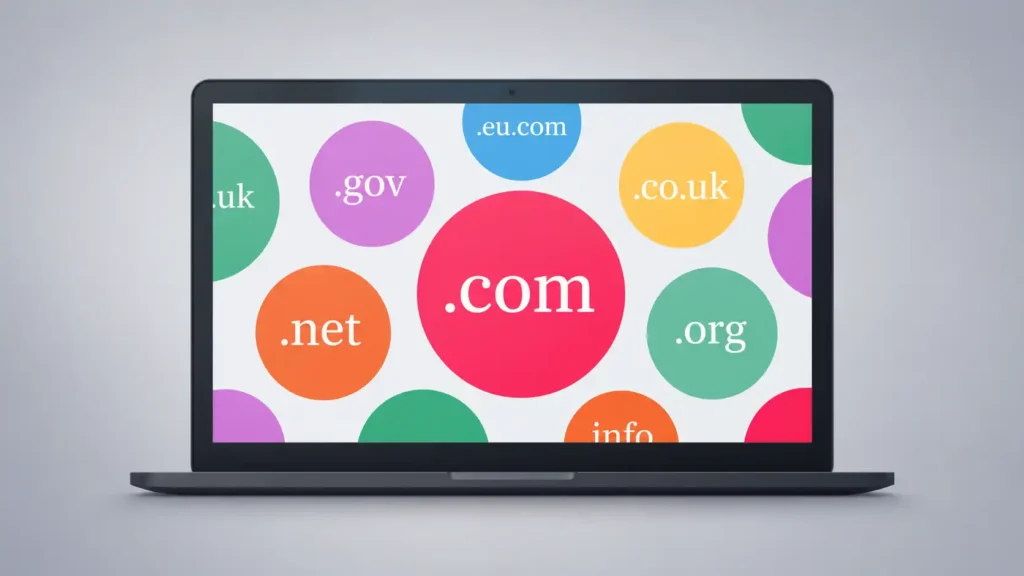
This article is an original analysis supported by the sources cited below
The Domain Name Industry Brief Q1 2026
Current industry data on global domain registrations, .com and .net registrations, ccTLDs, new gTLDs and renewal percentages.
DNIB.com reports internet has 392.5 million domain name registrations at the end of the first quarter of 2026
Public release summarizing Q1 2026 domain registration totals and top country-code TLDs.
New gTLD Program 2026 Round
ICANN’s official page for the 2026 new generic top-level domain application round.
How much will it cost to apply for a new gTLD
ICANN’s official fee information for new gTLD applicants in the 2026 round.
Uniform Domain-Name Dispute-Resolution Policy
ICANN’s policy governing many trademark-based domain name disputes.
WIPO guide to the Uniform Domain Name Dispute Resolution Policy
WIPO’s official guide explaining UDRP origins, scope and use.
2025 marks record-breaking year for WIPO domain name disputes
WIPO’s 2026 report on its record 2025 domain-dispute caseload.
Google Search ranking systems guide
Google Search Central documentation explaining ranking systems, including the exact-match domain system.
Site names in Google Search
Google documentation on how site names are supported at domain and subdomain level.
Site moves and migrations
Google Search Central guidance for changing URLs and domain names while minimizing search impact.
Organization structured data
Google documentation on structured data used to describe organizations and support identity clarity.
Introduction to structured data markup in Google Search
Google’s overview of structured data as a standardized format for page information.
Trademark process
USPTO guidance explaining the difference between a domain name and trademark rights.
Trademark basics
USPTO resource explaining trademark fundamentals and protection.
Trade marks
EUIPO’s official resource on EU trade marks and their role in identifying products or services.
Trade mark search
EUIPO guidance encouraging trademark availability checks before application.
Madrid System
WIPO’s official page explaining international trademark registration through the Madrid System.
Rules for domain names
EURid’s official eligibility rules for .eu domain registration.
Root Zone Database
IANA’s authoritative database of top-level domain delegations.
ICANN Lookup
ICANN’s lookup tool for current registration data on domain names and internet number resources.
Registration Data Policy
ICANN policy on the handling of gTLD registration data, effective from August 21, 2025.
Registration Data Access Protocol
ICANN information on RDAP as the replacement protocol for WHOIS-style registration data access.
Registrar Accreditation Agreement
ICANN materials on registrar accreditation and related amendments.
What is DNS
Cloudflare’s plain-language explanation of the Domain Name System.
DNS records
Cloudflare’s guide to DNS records and how they direct domain behavior.
DNSSEC what is it and why is it important
ICANN’s explanation of DNSSEC and its role in DNS security.
Domain Name System Security Extensions now deployed in all generic top-level domains
ICANN announcement on DNSSEC deployment across generic top-level domains.
Safe Browsing site status
Google Transparency Report resource on Safe Browsing checks for unsafe websites.
Study on Domain Name System abuse technical report
Research paper analyzing DNS abuse and how malicious activity uses domain names and DNS.
INFERMAL inferential analysis of maliciously registered domains
Research paper studying drivers of malicious domain registrations, including pricing and registrar practices.
Domijn the security of domain registrars and the risk of a domain name takeover
Research paper examining registrar security controls and the organizational impact of domain takeover.
| Citing this article? Brief excerpts are welcome. Please credit Webiano.digital, name the author where stated, and include a link to https://webiano.digital and to this original article. Full or substantial republication requires prior written permission. Read our Copyright and Content Use Policy. |
This article was prepared with the assistance of artificial intelligence tools. The content underwent expert human review, and Webiano Digital & Marketing Agency assumes editorial responsibility for its final version and publication.