ChatGPT Ads have moved from a distant experiment to a real buying channel in Slovakia. Our first tests show delivery works, conversion optimisation exists and context matters more than keywords. They also expose a harder truth: marketers are entering an auction with thin planning data, immature controls and no public learning benchmarks, so early participation should be treated as disciplined research rather than proven expertise.
Table of Contents
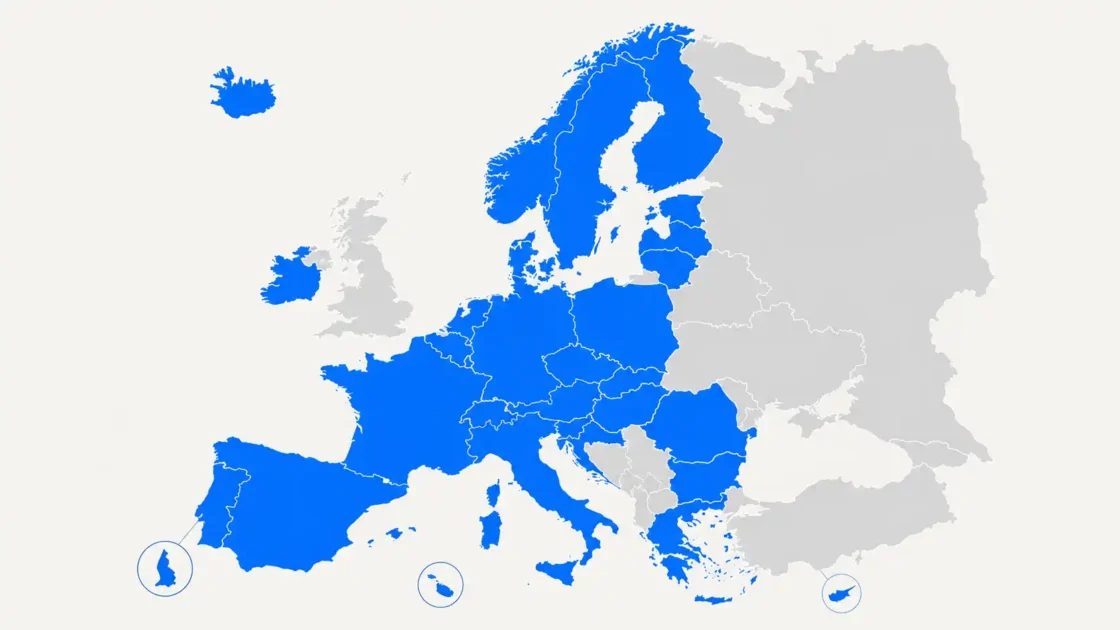
ChatGPT Ads are no longer theoretical for Slovak advertisers. OpenAI says self-service Ads Manager access became available across its 31 newly announced European markets on August 31, and its current availability list explicitly marks Slovakia as available. Ads can therefore be bought and delivered here through a platform that, only months ago, was still a U.S.-focused pilot.
Our first Slovak tests confirm the practical part: campaigns can serve, clicks can be bought and conversion-oriented campaigns can be configured. They also expose the part that matters more to performance marketers. The channel is live before the operating playbook is mature. Contextual matching is less controllable than keyword buying, conversion optimisation lacks the public learning thresholds marketers have learned to expect elsewhere, planning data is sparse, and the interface still feels like a beta product rather than a finished performance platform.
Those observations are first-party and early, not a statistically representative market benchmark. We do not yet have enough volume to publish a universal Slovak CPC or conversion rate. That limitation is precisely the point. The rational case for entering ChatGPT Ads now is not that somebody already knows the winning formula. It is that the market is young enough for careful advertisers to build their own evidence before competition, tooling and pricing settle.
Slovakia is no longer a hypothetical ChatGPT Ads market
OpenAI’s European expansion changed the status of ChatGPT advertising in Slovakia from watchlist item to executable media plan. The company announced 31 European markets on August 18 and updated that announcement on August 31 to say self-service Ads Manager was available across them. Its country-level Help Center list names Slovakia as available. OpenAI also says tens of thousands of marketers have advertised on ChatGPT, while its August 31 update put the ad business at a $1 billion annualised revenue run rate less than 200 days after launch. Reuters independently reported the same company figure and noted that direct Ads Manager buying had opened across Europe.
That scale matters, but it should not be confused with local maturity. Availability is not the same as a stable Slovak benchmark. OpenAI does not publish country-level advertiser density, auction depth, average CPC, conversion rate or impression inventory for Slovakia. The company’s public documentation explains the mechanics of bidding and delivery, but it does not give a market planner the equivalent of years of Google Ads or Meta benchmark history. The absence of those numbers means a Slovak advertiser starts with access, not certainty.
Our tests add one useful piece of evidence: ads are actually being delivered to Slovak users. That is more meaningful than a country appearing on a support page because it confirms that the supply side is functioning in-market. Yet a few working campaigns cannot establish reach potential, seasonality or category-level economics. The first operational conclusion is therefore narrow but important: Slovakia is open, delivery is real, and almost everything beyond that still needs to be measured account by account. That is enough to justify testing, not confident forecasting.
Context hints replace the keyword certainty marketers expect
The biggest conceptual mistake is to treat ChatGPT Ads as another search engine with a different interface. OpenAI’s own creative guidance says the system does not simply match ads to search queries. It considers conversational intent and other relevance signals. At ad-group level, advertisers provide “context hints” describing the conversations, needs or topics where an offer may be useful, but OpenAI explicitly says those hints are not exact-match controls and do not guarantee delivery for particular words or situations.
That distinction explains what we saw in early testing. Targeting is primarily contextual rather than keyword-led, which gives the system more semantic freedom but gives the advertiser less deterministic control. A Google Search campaign can be built around explicit query data, match types, negatives, auction diagnostics and a long history of search behaviour. ChatGPT Ads asks the advertiser to describe relevance and then lets the platform infer when a conversation fits. That can capture needs expressed in language no keyword list would anticipate, but it also makes debugging harder when delivery feels broad or inconsistent.
OpenAI says ad selection considers the current conversation, the landing page, title, copy, advertiser context hints and, where personalised ads are enabled, selected signals from the user’s broader ChatGPT experience. In the European Economic Area, however, OpenAI says personalised ads are not initially available, so contextual signals in the current thread carry greater practical importance for European delivery.
The control gap is not merely our impression. Adweek reported that OpenAI was testing exclusion-targeting guidance after buyers complained about limited controls and poor visibility into where ads appeared. The opportunity is richer intent interpretation; the cost is weaker explainability. Until reporting exposes more of the contexts that triggered delivery, campaign structure and creative variation have to do work that keyword reports traditionally did.
Conversion optimisation works without a published learning map
ChatGPT Ads has already moved beyond basic traffic buying. OpenAI documents conversion-optimised cost-per-click campaigns, or oCPC, that use a selected conversion event such as a purchase, sign-up or lead submission. The system uses predicted conversion likelihood to influence per-click auction bids while billing remains based on valid clicks. Conversion tracking can be supplied through the OpenAI Pixel, the Conversions API or both.
That confirms an important part of our testing: conversion optimisation is real, not just roadmap language. The system is designed to distinguish clicks by their predicted chance of producing a downstream action. In practical terms, that implies an attempt to recognise stronger commercial intent. What the public documentation does not establish is how accurately that prediction works in Slovakia, by category, with small datasets or during the first days of a campaign. OpenAI describes the mechanism, not its local calibration.
The missing piece for experienced performance teams is a published learning framework. Meta has conditioned buyers to think in terms of learning phases and conversion-event volume; Google exposes learning-status concepts and says calibration can depend on conversion volume, conversion cycles and bid strategy. OpenAI’s current oCPC documentation instead advises advertisers to use an event with “enough signal,” allow enough volume before major changes and avoid events that happen too rarely. It does not publish a universal minimum conversion count, a formal learning-phase label or a guaranteed stabilisation threshold. It also says there is currently no recommended bid amount for oCPC.
This matters because those missing thresholds affect decisions about budget, event selection and patience. If a campaign produces four conversions in a week, is that useful learning or statistical noise? If a marketer changes the bid after two days, does that reset anything? Public documentation does not answer those questions. The correct response is not to invent a rule borrowed from Meta or Google. It is to treat oCPC as a functioning optimiser whose evidence requirements remain under-disclosed.
The auction gives bid guidance but little price discovery
OpenAI describes ChatGPT Ads as a relevance-weighted, second-price auction. For standard CPC campaigns, advertisers set a maximum bid at ad-group level, and OpenAI’s advertiser guide recommends starting with a maximum bid of $3 to $5 per click. Ads Manager can also show bid-strength guidance indicating whether a bid is likely to compete or constrain delivery. That is enough to launch a campaign, but not enough to know what a rational clearing price should be in a specific Slovak category.
Second-price mechanics add another reason not to equate a bid cap with the price actually paid. A high cap can improve eligibility without becoming the realised CPC on every click, while relevance also affects which ads compete. That makes the useful question less “What bid does OpenAI recommend?” and more “At what bid does qualified delivery improve enough to justify the extra cost?” The platform does not yet publish the local response curve needed to answer that before spending.
In our early Slovak setup, the interface recommended a CPC around €2.60, while actual realised CPC was materially lower. At the same time, the CPCs we observed were often above the costs we were seeing in our own Google and Meta activity. Those are first-party observations from an early sample, not a market-wide benchmark, and they should not be generalised across industries. They do, however, show why a platform recommendation should be treated as an input rather than as an economically optimal bid.
The deeper problem is that there is still very little external price discovery. OpenAI does not publish auction-volume curves, category benchmarks or a planner showing how bid changes alter expected reach in Slovakia. Its own oCPC guide goes further and says there is no recommended bid amount for conversion-optimised campaigns. The economically correct CPC is therefore unknowable in advance; it has to be discovered experimentally against marginal conversion value.
That makes bid discipline more important, not less. A marketer should distinguish the platform’s ability to spend from the business’s willingness to pay. The bid that maximises delivery can be a bad bid if post-click economics do not support it. OpenAI’s daily-budget system can also spend above the selected daily amount on an individual day while pacing across seven days, another reason to monitor total exposure rather than assume a familiar platform rhythm. Early-market enthusiasm is not a substitute for unit economics.
The audience is large in theory and opaque in practice
The user-side eligibility rules are unusually clear. OpenAI says ads may appear to people on Free and Go plans, while Plus, Pro, Business, Enterprise and Edu accounts are ad-free. It also says ads do not appear to accounts identified as belonging to people under 18, and Temporary Chats do not show ads. In Europe, personalisation is initially more restricted than in markets where personalised ads are enabled.
The size of the addressable audience is much less clear. OpenAI said on August 31 that ChatGPT had more than one billion weekly active users, but the company does not break that figure down publicly by plan and country in a way that lets a Slovak media buyer calculate the ad-eligible pool. A billion weekly users is not the same thing as a billion advertising impressions, and it says almost nothing about Slovak commercial inventory. Paid users are excluded, minors are excluded, some free users can choose an ads-free experience with reduced limits, and ad delivery depends on eligible contexts.
This creates a planning problem that mature platforms usually solve with reach estimators or historical audience tools. A Slovak advertiser can choose the country and launch, but cannot yet infer with confidence whether a narrow B2B category has enough eligible conversations to absorb €50 a day, €500 a day or much more. The answer will vary with topic, season, user plan mix, brand-safety rules and the platform’s own relevance thresholds.
The practical implication is that budget ceilings should be earned by observed inventory. If delivery is slow, raising a bid may help, but it may also mean the relevant audience is simply thin. Earlier U.S. reporting from Digiday described advertisers whose committed budgets materially under-delivered during the pilot, illustrating that available spend and available inventory are different things. Slovakia may behave differently; the lesson is to separate audience scarcity from bid weakness before reacting.
Planning starts without a keyword planner or demand map
Google Ads trained an industry to expect query volumes, keyword forecasts, competitive estimates and historical demand before money moves; Google’s Keyword Planner explicitly provides monthly-search estimates, cost estimates and performance forecasts. ChatGPT Ads currently offers no public equivalent of Keyword Planner for conversational topics. OpenAI’s campaign and ad-group documentation explains how to choose goals, locations and context hints, but it does not provide searchable Slovak topic volumes or forecast the number of conversations matching a hint.
That changes the starting point for research. There is no authoritative topic-volume map to tell an advertiser where ChatGPT demand is concentrated. In our current workflow, the initial context-hint set has to come from business knowledge, observed customer language, existing search data, landing-page structure and experiments inside the platform. Google data can be useful inspiration because it reveals commercial language people already use, but it should not be mistaken for ChatGPT demand. A search query and a multi-turn conversation are different behavioural objects.
OpenAI’s own guidance reinforces the need for breadth. It recommends multiple creative variations and says advertisers should build for coverage rather than rely on one message. That is a sensible response to semantic matching, but it also shifts workload toward hypothesis generation. Instead of choosing from a planner’s list of known queries, the advertiser has to propose use cases, needs and constraints that the system may recognise.
The lack of demand data is one reason confident “ChatGPT Ads strategy” packages should be viewed cautiously. An agency can know the interface, tracking setup and campaign structure. It can build a disciplined testing method. It cannot truthfully claim to possess a mature Slovak demand model that the platform itself does not publish. Method is available; market knowledge is still being created.
Early performance signals are too mixed for mastery claims
OpenAI’s rapid product development is real. Ads Manager is explicitly labelled beta, yet it already supports campaign creation, bulk workflows, performance reporting, conversion measurement and several buying objectives. OpenAI’s European announcement says it has added conversion optimisation, geo-targeting, custom audiences, the OpenAI Pixel, Conversions API and third-party measurement integrations. A product can be immature and still improve quickly.
The external evidence is also mixed rather than uniformly bullish. Digiday reported early under-delivery problems among some U.S. advertisers, then separately reported that OpenAI’s ads leadership viewed third-party measurement as a natural next step because independent verification remained an important gap. Adweek’s reporting on exclusion targeting similarly pointed to buyer frustration with current control and visibility. These reports do not prove that Slovak campaigns will underperform, but they weaken any claim that the platform has already reached the diagnostic maturity of Google Ads or Meta.
Our interface judgment is harsher. Ads Manager currently feels unfinished, especially in information density, workflow polish and mobile usability. The comparison to an old Google Ads environment is subjective, not a measured product benchmark, but the operational effect is concrete: fewer mature planning and troubleshooting tools means more manual interpretation. TikTok’s advertiser tooling entered the market with conventions familiar from Meta; OpenAI is taking a more distinct route, and that route currently asks buyers to tolerate more ambiguity.
Rapid feature releases also make yesterday’s operating knowledge perishable. A workflow learned in May can be incomplete by September because objectives, measurement integrations, targeting options and budget behavior are still changing. That rewards close documentation reading, but it also lowers the value of confident rules that are not tied to a date and campaign type.
The strongest evidence against “expert” claims is not aesthetic. It is epistemic. OpenAI itself calls Ads Manager a beta and says capabilities remain limited while more functionality is added. Nobody has years of ChatGPT Ads auction history because the auction itself is months old. There can already be skilled operators. There cannot yet be the same depth of validated playbook that exists on platforms built over a decade or more.
A sensible first-mover strategy looks more like research than scaling
Being early can still be valuable. A new auction can offer periods of lighter competition, a chance to learn before rivals and access to users at a point where conversational discovery may influence consideration. OpenAI’s own positioning is built around people exploring options, comparing alternatives and making decisions inside ChatGPT. But early does not automatically mean cheap. Our first Slovak tests have sometimes shown CPCs above our Google and Meta baselines, so the first-mover thesis has to be tested rather than repeated as advertising folklore.
The better strategy is to buy information deliberately. Start with a budget small enough that wrong assumptions are affordable, but large enough to produce interpretable delivery. Separate materially different products or intents into distinct ad groups. Write context hints around real customer situations, not keyword dumps. Use several creative variants. Install both clean analytics tagging and OpenAI conversion measurement where legally and technically appropriate. OpenAI supports the Pixel and Conversions API, and its measurement documentation notes that platform-reported conversions can differ from third-party analytics because attribution, consent, deduplication and modelling may differ.
Keep a change log as part of that test. Record context-hint versions, bid caps, creative swaps, budget changes and conversion-tracking changes with dates. Without that record, a young platform’s volatility can make ordinary campaign edits look like algorithmic discoveries, and teams can mistake coincidence for a repeatable tactic.
Then define success outside Ads Manager. For traffic campaigns, compare qualified-session behaviour and downstream value, not just CPC. For oCPC, choose one conversion event that represents genuine business value and resist changing bids or creative before enough observations accumulate to show a pattern. OpenAI itself advises reviewing performance over enough volume before making large changes.
A useful early test should answer specific questions: Which contexts actually deliver, what effective CPC clears the auction, what share of clicks become qualified actions, and how much incremental value appears beyond existing channels? Until those answers exist, scaling is a guess. The first-mover advantage is learning speed, not merely being first to spend.
The advantage belongs to teams that learn faster, not claim expertise
The strongest conclusion after the first Slovak tests is deliberately uncomfortable for anyone trying to sell certainty. ChatGPT Ads is real, self-service buying is open, contextual matching works, CPC auctions work and conversion optimisation is documented. OpenAI has also built a substantial ad business quickly, with a reported $1 billion annualised revenue run rate by August 31. None of that establishes a mature operating formula for Slovakia.
The honest expert position today is to know what is known, expose what is unknown and design tests that reduce the unknowns. We know context hints are not keywords. We know oCPC uses predicted conversion likelihood. We know ad eligibility excludes several paid plans. We know OpenAI recommends a starting maximum CPC range for standard click campaigns. We do not have a published Slovak topic planner, a public local plan-mix breakdown, a universal oCPC learning threshold or a stable category-level CPC benchmark.
The forward judgment is conditional. If OpenAI adds stronger query/context diagnostics, clearer optimisation-state reporting, richer reach forecasting and independent measurement while advertiser demand grows, early datasets built now could become genuinely valuable. If auction prices rise before those controls mature, the cheap-learning window may close quickly. If local inventory remains thin, some Slovak categories may never support large budgets regardless of enthusiasm.
That is why the sensible posture is neither dismissal nor hype. Enter early if you can afford to learn, not because someone claims the channel has already been solved. The durable advantage will belong to advertisers that record bids, contexts, creatives, conversion quality and downstream revenue from the beginning. In a platform this young, disciplined evidence compounds faster than confident slogans.
Questions Slovak advertisers are asking about ChatGPT Ads
Yes. OpenAI’s current Ads Manager availability page lists Slovakia as available for self-service access, following the European rollout announced in August 2026.
OpenAI says ads may appear to users on Free and Go plans. Plus, Pro, Business, Enterprise and Edu accounts are ad-free, and accounts identified as belonging to users under 18 do not receive ads.
Not in the same way. Advertisers can supply context hints, including topics or words that describe relevant situations, but OpenAI says these are not exact-match controls and do not guarantee delivery for specific terms.
Yes. OpenAI supports conversion-optimised CPC campaigns that optimise toward one selected standard conversion event while charging for valid clicks.
Its current public oCPC documentation does not specify a universal minimum conversion count or formal learning-phase threshold. It advises using events with enough signal and waiting for enough volume before making large changes.
There is no verified universal Slovak CPC benchmark. OpenAI recommends a $3–$5 maximum CPC starting range for standard click campaigns, while actual auction CPC can be lower; our early Slovak tests should be treated as account-specific rather than market-wide evidence.
OpenAI’s current public campaign tools and documentation do not provide a Keyword Planner-style public database of Slovak topic volumes or forecasts. Planning therefore depends more heavily on context hypotheses, existing customer/search data and live tests.
There is not enough public Slovakia-specific evidence to make that claim. In our initial tests, CPC was often higher than our own Google and Meta baselines, but the sample is too early and account-specific to generalise.
A practitioner can already become skilled at setup, tracking, creative testing and early optimisation. Claims of a settled, universally proven playbook are harder to defend because Ads Manager remains a beta and key planning and diagnostic benchmarks are still limited.
Author:
Jan Bielik
CEO & Founder of Webiano Digital & Marketing Agency

This article is an original analysis supported by the sources cited below
ChatGPT Ads expands across Europe
OpenAI’s August 2026 announcement and August 31 update established the 31-market European rollout, self-service availability and the expansion of conversion optimisation and measurement.
OpenAI’s country list confirmed that Slovakia is currently available for self-service Ads Manager access.
OpenAI’s advertiser guide documented ad eligibility, contextual delivery signals, the relevance-weighted second-price auction and its $3–$5 starting maximum-CPC guidance.
Create Ad Groups for ChatGPT Ads
OpenAI’s documentation defined context hints and stated that they are not exact-match controls or delivery guarantees.
OpenAI’s creative guidance explained that ChatGPT Ads uses conversational intent and recommends multiple distinct creative variations for coverage.
Create Campaigns for ChatGPT Ads
OpenAI’s campaign guide documented CPM, CPC and oCPC objectives, budget controls, location targeting and platform selection.
Conversion-optimized Campaigns
OpenAI’s oCPC guide documented conversion-event optimisation, predicted conversion likelihood, click billing and the absence of a current recommended oCPC bid amount.
OpenAI’s measurement guide documented the Pixel, Conversions API, attribution conditions, modelled conversions and reasons platform totals can differ from third-party analytics.
OpenAI’s product overview confirmed that Ads Manager remains a beta with limited capabilities that are still evolving.
OpenAI’s consumer FAQ documented which plans can see ads, European personalisation limits, privacy controls and the ads-free option for eligible Free users.
A milestone in expanding access to AI
OpenAI’s August 31 update supplied its one-billion-plus weekly-user claim, advertiser count and $1 billion annualised ad-revenue run-rate claim.
OpenAI’s budget documentation explained seven-day pacing and the possibility of daily spend exceeding the selected average daily amount.
EXCLUSIVE: OpenAI Is Testing Exclusion Targeting for ChatGPT Ads
Adweek reported buyer concerns about targeting controls and visibility, and OpenAI’s test of negative targeting guidance.
ChatGPT ad delivery struggles are testing advertiser patience
Digiday reported under-delivery complaints from some early U.S. advertisers, providing context on inventory and scaling risk.
OpenAI ads boss David Dugan on third-party measurement: ‘it’s a natural step’
Digiday examined the gap between platform-reported metrics and independent verification in the early ad product.
OpenAI’s ad business hits $1 billion annualized revenue run rate
Reuters independently reported OpenAI’s August 31 revenue-run-rate announcement and the opening of direct Ads Manager buying across Europe.
Duration of the learning period for campaigns and what affects it
Google Ads Help supplied the comparison point for mature bidding diagnostics, including learning status and factors that affect calibration time.
Google Ads Help documented monthly search estimates, cost estimates and forecasts, providing the comparison point for the planning data ChatGPT Ads currently lacks.
| Citing this article? Brief excerpts are welcome. Please credit Webiano.digital, name the author where stated, and include a link to https://webiano.digital and to this original article. Full or substantial republication requires prior written permission. Read our Copyright and Content Use Policy. |
This article was prepared with the assistance of artificial intelligence tools. The content underwent expert human review, and Webiano Digital & Marketing Agency assumes editorial responsibility for its final version and publication.