From Monday, August 24, OpenAI is extending ChatGPT Ads to 31 new European markets, including Czechia and Slovakia. Free and Go users may see sponsored placements below answers, while higher tiers remain ad-free. The deeper test is whether OpenAI can monetize conversational intent across the EEA and Switzerland without giving advertisers control over answers or access to private conversations.
Table of Contents
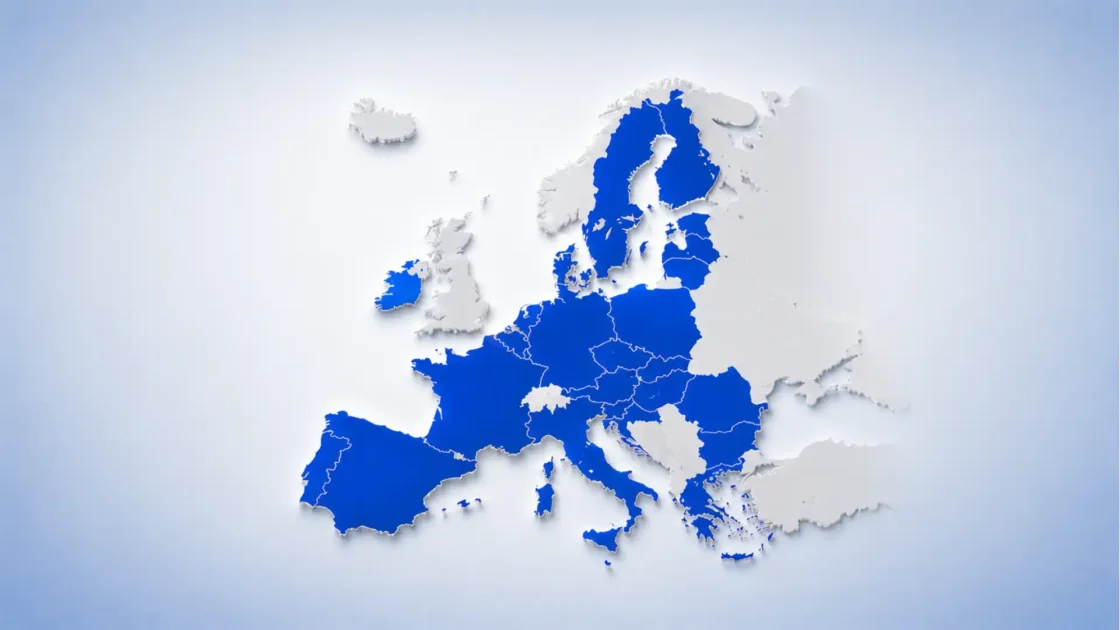
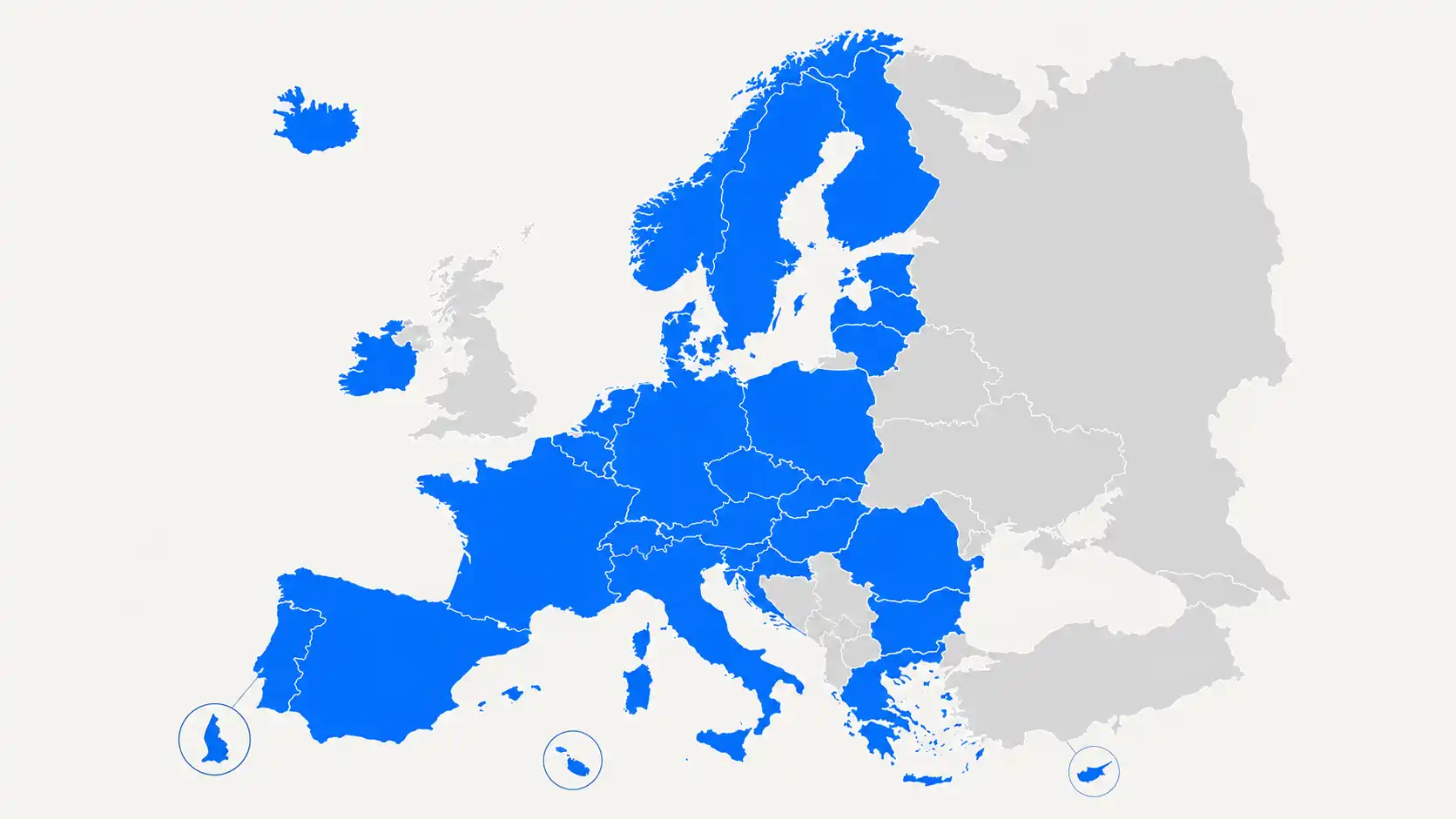
OpenAI will begin serving ChatGPT ads across 31 additional European markets on Monday, August 24, 2026, according to Digiday, following the company’s August 18 announcement of its largest geographic advertising expansion so far. Czechia and Slovakia are part of the same regional wave: the footprint corresponds to the 30 states of the European Economic Area plus Switzerland, based on European user notices and the official EEA membership roster.
For users, the immediate change is deliberately narrow. Ads may appear on ChatGPT Free and Go, below a response and visually separated from it; Plus, Pro, Business, Enterprise and Edu remain ad-free under OpenAI’s current policy. OpenAI says advertisers cannot pay to shape, rank or alter an answer, and an ad is a paid placement rather than an endorsement.
The larger change is economic. OpenAI is turning conversational intent into advertising inventory while trying to keep the answer itself outside the auction. That distinction matters more in a chat interface than on a conventional search page because the same conversation that helps the assistant understand a user’s goal can also help determine which sponsored placement is relevant. Whether European users trust that boundary will decide whether the model feels like subsidized access or commercial intrusion.
Czechia and Slovakia enter the same European rollout
OpenAI’s formal announcement names Germany, France, Spain, Italy, Sweden, Norway, Denmark, the Netherlands and Austria as examples from the 31-market expansion. Separate reporting on notices sent to users in the European Economic Area and Switzerland establishes the wider regional footprint, while the European Commission confirms that the EEA contains all 27 EU member states plus Iceland, Liechtenstein and Norway. That combination puts both Czechia and Slovakia inside the same launch group, rather than treating either country as a later add-on.
The timing is also clearer than the broad wording in OpenAI’s corporate post. OpenAI said the expansion would happen “next week”; Digiday reported that ad serving begins Monday, August 24. The same reporting lists Poland and Ireland among the participating markets, filling in countries not named in OpenAI’s short example list. The result is a continental rollout that reaches large advertising economies and smaller Central and Eastern European markets at the same time.
For Czech and Slovak users, there is no separate local ad format described in the reviewed material. The governing product rules are the same: Free and Go accounts can receive sponsored placements, higher subscription tiers remain outside the ad product, and sensitive conversations or Temporary Chats are excluded. Country changes distribution, not the basic separation between the answer and the ad.
That shared launch does not mean the two markets will immediately produce identical ad volume, pricing or advertiser demand. OpenAI has not published Czech- or Slovak-specific benchmarks, and its advertiser FAQ says the beta still lacks broad performance benchmarks across industries and campaigns. Local outcomes will depend on advertiser participation, auction competition, user activity and relevance. The verified fact is availability; comparable local economics remain unknown.
Six months turned a pilot into a European platform
The European expansion arrives roughly six months after OpenAI began testing ChatGPT ads in the United States in February 2026. The company subsequently moved into Canada, Australia, New Zealand, the United Kingdom, Mexico, Brazil, Japan and South Korea before adding the 31 European markets. OpenAI itself calls the August expansion its largest to date, turning a sequence of national tests into a regional advertising business.
The product has matured alongside the geography. OpenAI’s Ads Manager beta lets advertisers create and manage campaigns and monitor impressions, clicks and spend. The platform supports CPM and CPC buying, while its auction uses relevance as well as bids. Conversion-optimized campaigns can use events such as purchases, sign-ups or lead submissions when measurement is configured. These capabilities move the system beyond a static sponsored card attached to a chatbot.
Distribution, however, is not the same as unrestricted self-service access. OpenAI says advertisers in the new European markets will initially work through its Ads Solutions team, agency partners and technology partners, with self-service Ads Manager access to follow later in the summer. Digiday reported that Publicis, Omnicom, WPP, Havas, Dentsu and MediaPlus are among the agency routes available from launch. The audience opens before the buying market is fully democratized.
That sequencing matters in Czechia and Slovakia, where smaller advertisers are used to mature self-service platforms. A business can encounter competitor ads in its home market before it can necessarily buy the same inventory with equal ease. OpenAI says tens of thousands of marketers have already advertised on ChatGPT, but that is a company-reported adoption figure, not proof of local effectiveness. The platform has enough infrastructure to scale geographically, but not enough public evidence to call the channel mature.
The answer stays separate while the context drives relevance
OpenAI’s most important trust promise is architectural. Its documentation says ads can appear below the end of a ChatGPT response, clearly labeled as sponsored and visually separated from the answer. The company says the ad system and the model response are separate, and advertisers cannot pay to shape, rank or change an answer. Buying an ad does not buy a recommendation inside the answer.
The separation does not make the conversation irrelevant to advertising. OpenAI says ad selection can consider the context and intent of the current conversation, together with the advertiser’s landing page, title, copy, context hints and targeting choices. If several ads qualify, relevance and bids can help determine ordering. The commercial system therefore uses meaning extracted from the conversation even though the advertiser is not supposed to influence the substantive response.
Context hints show how this differs from a conventional keyword auction. Advertisers describe conversations, needs or situations in which an offer may be useful; OpenAI says those hints are not exact-match keywords and do not guarantee delivery. A running-shoe brand, for example, can describe a first-time 5K runner without purchasing a literal phrase that forces placement. The scarce asset is interpreted intent, not a string of words.
A user can tell ChatGPT a budget, destination, company size or product constraint in ordinary language. The assistant uses those details to answer; the ad system can use current-thread context to judge commercial relevance. Our analysis is that OpenAI is monetizing the point at which a goal becomes specific while trying to prevent monetization from changing the guidance above it. Clear labeling and restrained ad placement are therefore part of the economic product: if users suspect the answer itself is for sale, the conversational signal becomes less valuable.
The 31-market footprint makes this a regional system
The August expansion is broader than a launch in a handful of Western European economies. Reporting on OpenAI’s European notices describes the rollout as covering the European Economic Area and Switzerland. The Commission’s EEA roster consists of the 27 EU member states plus Iceland, Liechtenstein and Norway; adding Switzerland produces 31 markets. The United Kingdom is absent from this new group because ChatGPT ads had already launched there.
All 31 European rollout markets
| Austria | Belgium | Bulgaria | Croatia |
| Cyprus | Czechia | Denmark | Estonia |
| Finland | France | Germany | Greece |
| Hungary | Iceland | Ireland | Italy |
| Latvia | Liechtenstein | Lithuania | Luxembourg |
| Malta | Netherlands | Norway | Poland |
| Portugal | Romania | Slovakia | Slovenia |
| Spain | Sweden | Switzerland |
OpenAI’s public announcement names only a subset of countries. The complete table above is derived from the reported EEA-plus-Switzerland scope and the European Commission’s official list of the 30 EEA states.
Treating these countries as one rollout simplifies the announcement, but their advertising markets are not uniform. Language, purchasing power, advertiser density and agency coverage vary sharply from Germany or France to Malta, Slovakia or Liechtenstein. Geographic availability therefore does not guarantee similar inventory, costs or campaign performance across borders.
The common layer is regulatory. The Digital Services Act requires online platforms presenting ads to make each placement identifiable, disclose on whose behalf it is shown and provide meaningful information about the main parameters used to determine the recipient. It also prohibits profiling-based advertising using special categories of personal data and restricts profiling-based ads to minors under specified conditions. Europe gives OpenAI scale and a stricter transparency baseline at the same time.
For Czech and Slovak businesses, a regional launch makes cross-border testing possible, but results should stay segmented by market. A Czech campaign may not predict Slovak, Polish or Austrian performance. OpenAI also has to make moderation, contextual matching and advertiser review work across dozens of languages. The strategic benefit is scale; the execution risk is inconsistency.
The all-at-once footprint also removes one excuse for regional brands: they no longer need to treat conversational advertising as a U.S.-only experiment. Yet availability should not be confused with reach. An eligible market may still have little inventory if few local ads qualify for a user’s conversation, while heavily contested categories may develop faster. The 31-country map defines where the system can operate, not what every national auction will look like.
Free access now has an explicit attention price
Advertising changes what “free” means inside ChatGPT. On the standard Free plan, users may see ads. OpenAI also offers Free users an Ads-Free option with no monetary charge, but it comes with lower message limits and reduced access to some tools, including examples such as image generation and deep research. A user who wants both higher access and no ads can move to a higher ad-free subscription tier.
Go occupies the more complicated position. It is a paid lower-cost plan with more access than Free, yet OpenAI’s ad policy says Go can still receive ads. The free Ads-Free configuration is available only on Free. A Go subscriber who does not want ads therefore cannot retain Go’s access level and use that same no-cost option. Payment for Go buys capacity, not guaranteed removal of advertising.
This creates three economic prices for consumer access. One is money: pay for a higher tier that remains ad-free. Another is attention: use an ad-supported Free or Go experience. The third is capability: choose Free without ads and accept tighter limits and fewer tools. The design lets OpenAI monetize different preferences while preserving a no-cost route, but it also means “paid” and “ad-free” are no longer synonymous.
The structure has a strategic logic. Subscription revenue works for users who value frequent or advanced use enough to pay. Advertising can monetize people who will not buy a premium plan, while Go can combine a lower subscription price with ad eligibility. OpenAI framed ads as a way to support broader access. For Czech and Slovak users, the practical choice is now among money, attention and capability rather than simply free versus paid.
Privacy depends on a boundary between OpenAI and advertisers
OpenAI says advertisers do not receive users’ conversations, chat history, ChatGPT memories, names, email addresses, precise location, IP addresses or sensitive information. Advertisers receive aggregated, non-identifying performance information such as views and clicks, and OpenAI says it does not sell user data to advertisers. Those promises concern what leaves ChatGPT for the advertiser, not whether OpenAI’s own systems process conversational context for ad selection.
Inside ChatGPT, the current conversation can still matter. OpenAI says context and intent from the active thread may help select a relevant ad, alongside limited signals such as general location or language. Where personalization is enabled, broader signals can be used, but OpenAI says personalized ads are not initially available in the EEA or Switzerland. Czech and Slovak users therefore begin under a more constrained contextual model rather than one based on earlier chats and memory.
The distinction is important. “Advertisers cannot see your chat” is consistent with OpenAI using the current chat internally to choose which advertiser’s placement to display. The accurate description is that the conversation can generate a relevance signal while the underlying chat and identifying information remain unavailable to the advertiser under OpenAI’s stated rules. A user who directly sends information to an advertiser through an ad experience creates a separate, user-initiated disclosure.
Users also have controls. OpenAI says people can manage personalization where available, clear ad data, hide or report irrelevant ads and ask ChatGPT about a sponsored placement. Deleted ad data is removed from OpenAI’s servers within up to 30 days, according to the Help Center. Temporary Chats are excluded from advertising altogether.
The remaining issue is institutional trust. OpenAI is asking users to accept a one-company boundary: its systems may interpret a conversation for relevance, but advertisers are kept outside it and cannot purchase influence over the answer. European transparency rules add an external baseline, but the commercial model still depends on technical separation and credible enforcement.
Sensitive conversations remain outside the ad inventory
OpenAI says ads are not eligible to appear near sensitive or regulated topics such as personal health, mental health and politics. Its advertising policies also identify excluded areas including suicide or self-harm, political content, weapons, fraud and graphic violence. The company separately prohibits political advertising in ChatGPT. The rule concerns both advertiser eligibility and the context in which an otherwise legitimate ad can appear.
The policies allow some nuance for regulated industries, but the details are restrictive. OpenAI says some approved advertisers can be reviewed case by case, while its current policy generally prohibits financial-services and health-services ads outside the United States and prohibits legal-service ads. That is separate from placement safety: personal-health conversations remain ineligible for ads regardless of whether an advertiser itself is otherwise permitted.
Accounts that OpenAI identifies as belonging to users under 18 are also excluded from ads. The company uses age-prediction mechanisms as part of its teen-safety system and provides an age-verification route for adults who believe they were incorrectly classified. OpenAI acknowledges that age prediction can make mistakes. The protection is a policy backed by classification, not a guarantee that age will always be inferred correctly.
These safeguards depend on systems correctly understanding conversations, users and advertisers. OpenAI’s policies describe review and continuing monitoring, but the existence of controls does not prove zero errors. The DSA adds legal limits on profiling-based advertising using special-category data and to minors under specified conditions. For OpenAI, classification quality is therefore tied to legal exposure as well as trust across all 31 markets.
The multilingual rollout raises a practical test that policy documents cannot answer in advance: whether a sensitive topic expressed in Czech, Slovak, Maltese or another local language is classified as reliably as the same topic in English. No reviewed source provides comparative error rates by language. That uncertainty should be treated as an evidence gap, not filled with assumptions about uniform performance.
Czech and Slovak advertisers should treat launch as a test
For users in Czechia and Slovakia, August 24 is primarily a distribution event. For advertisers, the launch is more conditional. OpenAI says businesses in the new European markets will initially gain access through its Ads Solutions team, agency partners and technology partners, with broader self-service access later. Being able to reach Czech or Slovak users does not automatically mean every local business can open Ads Manager and start buying immediately.
The right early experiment follows the mechanics OpenAI actually offers. Advertisers can use context hints to describe conversations and needs in which an offer is relevant, while campaign buying supports impressions or clicks. Conversion-optimized campaigns can target defined downstream actions once measurement is in place. That makes it possible to test whether placement after a high-intent conversation produces qualified traffic or sales rather than merely impressions.
The weak point is benchmarking. OpenAI’s advertiser FAQ says it does not yet provide broad performance benchmarks across advertisers, industries and campaign types, and an agency buyer quoted by Digiday described the platform as new and unproven. There are no reviewed public benchmarks establishing a normal Czech or Slovak CPC, conversion rate or acquisition cost. Any local forecast presented as settled market data would therefore be speculation.
That argues for controlled budgets and country-level measurement. A regional advertiser can separate Czech, Slovak, Polish, Austrian or Hungarian performance instead of pooling Central Europe. It should also record the organic answer above the paid unit. Because an advertiser cannot buy its way into that answer, a brand can pay for a placement beneath a response that favors a competitor. Paid presence and organic visibility are separate assets on the same screen.
The first weeks may reveal more about fit than scale. Large agencies and partner-connected advertisers have an access advantage, while smaller businesses may wait for self-service. Early auction conditions could therefore reflect a narrow buyer pool rather than mature market economics. For Czechia and Slovakia, the disciplined question is not whether ChatGPT Ads are fashionable, but whether measured incremental value appears once comparable access and sufficient data exist.
Trust will decide whether conversational advertising can scale
OpenAI has strong incentives to make advertising work. Reuters reported in April that investor materials cited by Axios projected $2.5 billion in OpenAI advertising revenue for 2026 and $100 billion by 2030; OpenAI did not comment on those projections. They are forecasts, not realized revenue, but they show how material advertising could become to the company’s long-term business model.
Europe increases both the opportunity and the constraint. Thirty-one new markets expand the available audience, while EEA users begin without personalized ads based on prior chats and memory. The DSA imposes transparency and targeting rules, and OpenAI is promising answer independence, conversation privacy and user control. The company is trying to prove that commercial relevance can grow without turning assistance into sponsored ranking.
Our analysis is that the decisive variable will not be whether ads generate clicks. The harder problem is preserving the reason users reveal detailed intent. People tell an assistant more about a decision because they expect useful guidance. If they suspect the guidance is steered toward whoever pays, they may change what they disclose or how much they trust the response, degrading the signal the ad business depends on.
OpenAI’s current architecture gives it a defensible starting position: ads below the answer, sponsorship labels, advertiser exclusion from private conversations, no paid influence over responses, sensitive-topic exclusions and an ad-free route for users who reject the trade. A future move that blurred the answer-ad boundary would weaken the central promise of the model, even if it increased short-term inventory.
For Czechia, Slovakia and the other 29 new markets, the observable tests are now concrete: ad density, placement, any future EEA personalization based on past chats, regulatory findings and credible performance evidence. None should be predicted in advance. If commercial value stays downstream from the answer, ads can plausibly subsidize wider access without selling editorial control; if that boundary erodes, the user trust that creates valuable conversational intent becomes the asset most at risk.
Questions European ChatGPT users will ask about the rollout
Digiday reports that OpenAI will begin serving ads across the 31 new European markets on Monday, August 24, 2026. OpenAI’s own August 18 announcement described the expansion as beginning the following week.
The rollout footprint corresponds to Austria, Belgium, Bulgaria, Croatia, Cyprus, Czechia, Denmark, Estonia, Finland, France, Germany, Greece, Hungary, Iceland, Ireland, Italy, Latvia, Liechtenstein, Lithuania, Luxembourg, Malta, the Netherlands, Norway, Poland, Portugal, Romania, Slovakia, Slovenia, Spain, Sweden and Switzerland. The list combines the reported EEA-plus-Switzerland scope with the Commission’s official EEA roster.
Free and Go can show ads under OpenAI’s current policy. Plus, Pro, Business, Enterprise and Edu remain ad-free.
OpenAI says no. Advertisers cannot pay to shape, rank or alter answers, and sponsored placements are kept separate from the response.
OpenAI says advertisers do not receive chats, chat history, memories, name, email address, precise location, IP address or sensitive information. They receive aggregated, non-identifying ad-performance information.
No under the current launch rules. OpenAI says personalized ads are not initially available in the EEA or Switzerland, although the current conversation can still inform contextual relevance.
Yes. OpenAI offers a free Ads-Free configuration on the Free tier, but it has lower message limits and reduced access to some tools, including examples such as image generation and deep research.
No. OpenAI describes the Ads-Free option as a Free-tier choice. Go remains eligible for advertising; users who want higher access without ads need an ad-free higher tier under the current plan structure.
OpenAI says ads are excluded from sensitive or regulated topics such as personal health, mental health and politics, do not appear in Temporary Chats, and are not shown to accounts identified as belonging to users under 18.
Author:
Jan Bielik
CEO & Founder of Webiano Digital & Marketing Agency
This article is an original analysis supported by the sources cited below
ChatGPT Ads expands across Europe
OpenAI’s August 18 announcement established the 31-market European expansion, its scale, eligible plans, advertiser access model and the company’s stated advertising principles.
OpenAI’s Help Center supplied the current rules on plan eligibility, answer independence, ad placement, contextual relevance, advertiser data access, EEA personalization, sensitive topics, Temporary Chats and the Free Ads-Free option.
Our approach to advertising and expanding access to ChatGPT
OpenAI’s advertising principles documented its commitments on answer independence, conversation privacy, user control, sensitive contexts and the role of ads in funding access.
OpenAI’s advertiser documentation explained CPM and CPC buying, contextual matching and the relevance-weighted second-price auction.
Create Ad Groups for ChatGPT Ads
OpenAI’s documentation explained context hints and why they describe relevant conversational situations rather than functioning as exact-match keywords.
Conversion-optimized Campaigns
OpenAI’s advertiser documentation described conversion events, bidding toward downstream actions and the measurement requirements for conversion optimization.
OpenAI’s documentation established the beta status of Ads Manager and its campaign-management and performance-reporting capabilities.
OpenAI’s advertiser FAQ established the continuing beta status of the channel and the absence of broad, settled performance benchmarks.
OpenAI’s August 2026 policies supplied the restrictions on sensitive contexts, political advertising, regulated sectors, advertiser review and ongoing monitoring.
OpenAI’s rollout history supplied the sequence of markets that received ChatGPT advertising before the August European expansion.
OpenAI’s Help Center explained the role and limitations of age prediction and the verification route for adults classified into a teen experience.
The official EU legal text supplied Article 26 advertising-transparency and targeting requirements and Article 28 restrictions concerning profiling-based advertising to minors.
FAQ Social security – Where do these rules apply
The European Commission supplied the authoritative current roster of the 27 EU states and confirmed that Iceland, Liechtenstein and Norway complete the 30-state EEA.
OpenAI’s ads business hits Europe at the six month mark
Digiday’s August 19 reporting established the Monday, August 24 start, identified additional participating countries, described the agency-led buying route and provided independent industry scrutiny of the platform’s maturity.
ChatGPT Ads Are Coming to Europe, and the EU Is Getting a Different Version
The Prompt Insider reported the notices sent to Free and Go users across the EEA and Switzerland, providing the basis for mapping the 31-market footprint beyond the subset named by OpenAI.
OpenAI projects $2.5 billion in ad revenue this year, $100 billion by 2030, Axios reports
Reuters supplied independently reported investor projections for OpenAI’s advertising revenue and noted that OpenAI did not comment on those projections.
| Citing this article? Brief excerpts are welcome. Please credit Webiano.digital, name the author where stated, and include a link to https://webiano.digital and to this original article. Full or substantial republication requires prior written permission. Read our Copyright and Content Use Policy. |
This article was prepared with the assistance of artificial intelligence tools. The content underwent expert human review, and Webiano Digital & Marketing Agency assumes editorial responsibility for its final version and publication.