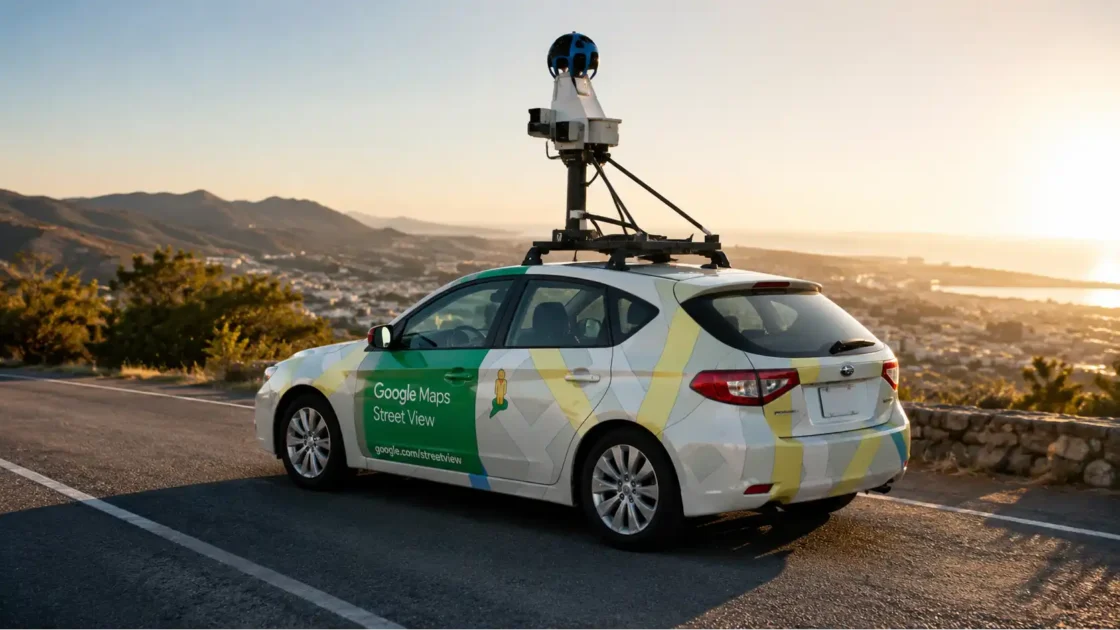
Software built with AI does not stop being software. It still breaks, ages, leaks secrets, inherits dependencies, faces attackers, confuses future maintainers, and becomes part of someone’s business risk. Vibe coding is useful when it speeds exploration, prototypes, internal tools, and learning. It becomes dangerous when people mistake generated code for maintained software. The issue is not whether AI can produce working code. It often can. The issue is whether anyone qualified understands what was produced well enough to fix it six months later, secure it after a vulnerability notice, refactor it when the product changes, and explain its behavior when money, data, customers, contracts, or regulation are involved.
Table of Contents
Vibe coding moved from joke to workflow faster than engineering culture could react
“Vibe coding” entered software culture because it named something developers were already doing: giving an AI coding system a goal, accepting large chunks of generated code, testing the visible result, then steering through follow-up prompts. Andrej Karpathy popularized the phrase in February 2025 with the now-familiar idea of “forgetting that the code even exists,” and Collins later named vibe coding its 2025 word of the year. Merriam-Webster’s current definition frames it as using an AI system to generate code in a programming language.
The phrase spread because it captured a real change. Developers no longer use AI assistants only as smarter autocomplete. Tools now read repositories, edit multiple files, run commands, produce pull requests, and work inside agent loops. GitHub describes Copilot agent mode as a way to analyze code, propose edits, run tests, and validate results across files. OpenAI describes Codex as a coding agent that can read, edit, run code, and work in a cloud environment. Anthropic presents Claude Code as a local terminal and IDE tool that understands codebases, edits files, and runs commands with permission.
That is a serious shift. A developer can now move from an idea to a functioning demo in a morning. A founder can generate an admin panel without hiring a team. A marketer can produce a landing-page experiment. A product manager can test a workflow without waiting for sprint planning. AI lowers the cost of trying an idea, but it does not remove the cost of owning the result. The ownership cost shows up later, after the demo becomes a system.
The cultural debate often gets trapped in a false choice. One side treats vibe coding as proof that programming is over. The other treats it as amateur noise. Both miss the more useful distinction. Vibe coding is a technique. Software engineering is a responsibility. A professional programmer may use vibe coding every day and still refuse to ship unreviewed code. A non-programmer may generate a working app and still have no practical way to maintain it.
The difference matters because software is rarely finished when it first works. A login flow works until a token expires unexpectedly. A payment integration works until the provider changes an API. A database query works until the customer count grows. A notification system works until a retry loop sends thousands of duplicate messages. A file upload works until someone uploads a hostile payload. The first working version is not the end state. It is the first version of future maintenance.
The phrase “we are not talking about a calculator” is the right line in the sand. A throwaway calculator, toy game, or personal script has limited blast radius. If it breaks, one person is inconvenienced. If it exposes no private data, charges no money, triggers no operational process, and has no future roadmap, casual AI coding is a reasonable way to learn. Serious software is different. It touches data, people, workflows, money, security, reputation, and contracts. It must be modified after launch. It must be understood by someone other than the model that generated it.
Professional programmers do not matter because they type better syntax. AI has already made syntax cheaper. They matter because they know which code should not be written, which shortcut will become expensive, which failure mode is hidden, which dependency is risky, which abstraction will trap the team, which test proves something real, and which product request will poison the architecture. The new professional skill is not typing every line by hand. It is judging, constraining, verifying, and maintaining software whose first draft may come from a machine.
Working code is not the same thing as maintainable code
A generated feature can pass a happy-path test and still be structurally weak. The button works. The endpoint returns data. The app loads. The screen looks right. To a non-programmer, that feels like completion. To a professional, it is only one signal. Maintainability asks a harder question: can this system be changed safely by a human under pressure after the original context has faded?
Software quality standards treat maintainability as a product quality characteristic, not a luxury. ISO/IEC 25010 is built around quality characteristics used to evaluate software products, and ISO/IEC/IEEE 14764 provides guidance for the maintenance process, including activities and tasks for maintaining software. Those standards exist because software lives inside change. Maintenance is not a cleanup phase reserved for messy teams; it is part of the software life cycle.
The simplest way to see the gap is to compare a generated solution with a maintained codebase. A generated solution answers the prompt. A maintained codebase answers the next prompt too, and the next, without collapsing into patches. It has names that carry domain meaning. It separates business rules from interface details. It handles errors deliberately. It records assumptions. It keeps dependencies visible. It makes common changes easy and dangerous changes obvious.
Vibe-coded software often fails there because the prompt rewards local success. The model is asked to “add user roles,” so it adds user roles somewhere. It may not know that the team already has a permission model. It may duplicate logic in two modules, create a second representation of the same state, skip migration concerns, or produce code that works only because the current sample data is forgiving. The user sees the new role dropdown. The future maintainer sees a second authorization system hiding behind a form.
The problem is not unique to AI. Junior developers, rushed contractors, and experienced engineers under deadline pressure have always created code that works but resists change. AI changes the scale and tempo. A human can produce technical debt one file at a time. An agent can spread it across twenty files before anyone reads the diff. Martin Fowler’s description of technical debt as internal quality deficits that make later modification harder remains a useful frame here. The debt metaphor matters because the cost is paid as interest during future work, not only when the code is first written.
Professional programmers see code as a set of future obligations. They ask whether a path will be understandable in a code review, whether a function belongs in a domain layer or a controller, whether a schema change has a rollback path, whether a new dependency is worth its maintenance load, whether a test asserts behavior or only mirrors implementation. These decisions do not show up in a screenshot. They decide whether the software remains movable.
A non-programmer using an AI tool can often get to “it works.” That is real and useful. The danger begins when “it works” becomes “ship it to customers.” Working code is a visible state. Maintainable code is a time-based property. It is proven through change, review, debugging, upgrades, incidents, and handover. A professional developer is not there to worship manual coding. A professional developer is there to protect the future changeability of the system.
The calculator exception is real, but it is narrow
A calculator app is a useful shorthand because its risk surface is small. The domain is clear. The expected behavior is easy to verify. The data is usually local. There are few integrations. The cost of failure is low. A person who generates a simple calculator, timer, personal budget toy, or one-off script learns something and maybe saves time. That is not where the hard argument lives.
Serious software has a different shape. It stores personal data. It authenticates users. It integrates with payment gateways, CRMs, email providers, analytics platforms, government APIs, internal databases, or warehouse systems. It has access control. It has background jobs. It has migrations. It has logs. It has secrets. It has dependencies. It has uptime expectations. It has people who will rely on it when the original vibe has disappeared.
The moment software becomes part of a real workflow, it stops being only a generated artifact and becomes operational infrastructure. A small booking system can double-charge. A CRM plug-in can expose customer notes. A warehouse script can overwrite inventory counts. A recruitment tool can mishandle applicant data. A medical scheduling add-on can send information to the wrong recipient. A financial dashboard can display stale numbers as if they were current. None of these cases requires “big tech” scale. The risk comes from real-world coupling.
The calculator exception is also narrow because simple projects grow. A calculator becomes a price estimator. The estimator stores quotes. Quotes need customers. Customers need accounts. Accounts need login. Login needs password reset. Password reset needs email. Email needs templates, logs, rate limits, and abuse protection. The first artifact may have been harmless; the evolved product is no longer a toy.
Many teams underestimate this transition. A founder generates a quick internal tool and the staff start using it. Someone adds a spreadsheet import. Someone else adds an approval workflow. A client asks for access. The tool gets moved from a personal account to a shared domain. Six months later the company depends on software nobody designed. The AI did not cause the organizational mistake. It made the mistake cheaper to create and easier to postpone.
Professional programmers are trained to spot when a prototype has crossed the border into product. They recognize the point at which authentication must be formal, logs must avoid sensitive data, database migrations must be versioned, backups must be tested, error handling must be explicit, and a deployment path must exist. They also know when a quick script is still only a quick script. That judgment is the value.
The right rule is not “never vibe code.” The right rule is stricter and more useful: vibe coding is fine for disposable experiments, prototypes, learning, and low-risk internal sketches; professional engineering is required when the software must be maintained, secured, extended, audited, or used by others. The difference is not aesthetic. It is the difference between an artifact and a system.
AI adoption is real, but trust is falling where accountability rises
The industry has already crossed the adoption line. Stack Overflow’s 2025 Developer Survey reported that 84% of respondents were using or planning to use AI tools in their development process, and that 51% of professional developers used AI tools daily. Yet the same survey found a trust gap: more developers actively distrusted the accuracy of AI tools than trusted it, and experienced developers were the most cautious.
That combination matters. Developers are not rejecting AI. They are using it while verifying it. The public story often frames this as hypocrisy: people complain about AI while depending on it. The better reading is professional maturity. A tool can be useful and unreliable at the same time. A compiler is trusted in one way, a search engine in another, a junior colleague in another, and an LLM in another. A professional developer must know the trust boundary for each.
The DORA State of AI-Assisted Software Development report also shows broad use and reported gains. Google’s summary of the 2025 DORA research said most respondents reported productivity gains from AI and a majority reported a positive influence on code quality. DORA’s research program has long focused on the capabilities that drive software delivery and operations performance, so its AI work is best read through that lens: AI changes delivery only inside the team system that surrounds it.
The trust gap is sharper for serious systems because accountability lives with humans and organizations. If AI writes insecure code, the model does not sit in the incident review. If a generated database migration corrupts data, the tool does not call customers. If a prompt produces a licensing issue, the assistant does not answer the legal letter. If an authorization bug exposes private records, the company owns the breach.
That is why professional developers are often more skeptical than beginners. Beginners judge an AI answer by whether it runs. Experienced developers judge it by how it fails, where it hides assumptions, whether it matches the system’s architecture, whether it increases review load, and whether the team can own it. Caution is not resistance to progress. Caution is what accountability feels like before production.
The adoption numbers do not weaken the case for professional ownership. They strengthen it. If AI coding is now part of everyday development, organizations need stronger engineering discipline, not weaker discipline. They need rules for generated code, code review practices that account for AI volume, automated tests that catch regressions, security scanning, dependency governance, and architectural boundaries that agents cannot casually break.
A professional programmer is no longer only the person who writes implementation. In an AI-assisted workflow, the professional is also the editor, reviewer, architect, security gatekeeper, domain translator, and maintenance owner. That role becomes more important as code generation gets faster. Speed without ownership turns software delivery into code accumulation.
The productivity evidence is mixed because software work is not one task
AI coding tools shine in some contexts and disappoint in others. Early GitHub Copilot research found large speed gains on a constrained programming task, with developers completing an HTTP server assignment faster when using Copilot. That result became one of the most cited arguments for AI coding productivity. It was real, but it was also bounded: a defined task, a limited environment, and a focus on completion time.
Later evidence made the picture more complicated. METR’s 2025 randomized trial studied experienced open-source developers working on mature repositories they already knew. In that setting, AI tools made tasks take 19% longer on average, even though developers expected and later perceived a speedup. METR later updated its broader productivity experiment, but the early study remains important because it tested work closer to professional maintenance: real codebases, experienced maintainers, and tasks inside existing systems.
This apparent contradiction is not surprising to software engineers. Building a small feature in isolation is different from modifying a living system. A model can produce boilerplate fast. It can scaffold APIs, convert syntax, generate tests, explain unfamiliar code, or suggest refactors. It struggles more when success depends on tacit repository knowledge, hidden product rules, deployment constraints, performance tradeoffs, historical decisions, undocumented edge cases, and social agreements inside a team.
AI productivity is highest where the cost of being wrong is low and the feedback loop is clear. It falls when the codebase carries history. Mature systems are full of history. A strange pattern may exist because of a customer contract. A weird null check may protect a legacy migration. A seemingly redundant service may isolate an integration that failed in the past. A missing abstraction may be deliberate because premature abstraction already hurt the team once. AI can read files, but it does not automatically know the scar tissue.
The mixed evidence also exposes a measurement problem. Lines of code, commits, pull request counts, and task completion time do not equal business value. A tool that writes 500 lines quickly may make the system worse. A tool that deletes 200 lines after a careful refactor may create more value. A tool that makes developers feel faster may still increase review time, debugging time, or incident risk. Professional engineering has always suffered when managers measure motion instead of maintainable progress.
This is another reason serious vibe coding belongs with professional programmers. They know when AI saves time and when it creates review debt. They know when to let an agent draft a migration and when to write it manually. They know when generated tests are useful and when they merely assert the current implementation. They know when a model’s answer is plausible but inconsistent with the system’s architecture.
The lesson from the evidence is not anti-AI. It is anti-naivety. AI coding tools are not magic productivity multipliers across all work. They are uneven instruments. The skill is matching the tool to the task and refusing to confuse fast output with reduced responsibility.
Generated code increases the need for architecture, not the opposite
Architecture is the set of decisions that make future decisions easier or harder. It decides where logic belongs, which boundaries matter, which dependencies are allowed, which data flows are trusted, which modules can change independently, and which parts of the system must stay boring. Vibe coding without architecture is fast because it skips these decisions. That speed is borrowed.
A professional developer does not need heavyweight diagrams for every project. Architecture can be light, verbal, and practical. The point is not ceremony. The point is constraint. AI agents are strongest when they operate inside clear boundaries: “use this service layer,” “do not bypass authorization middleware,” “all writes go through this repository,” “never call external APIs from rendering code,” “use existing telemetry,” “preserve the public contract,” “add tests at this layer.” Without those constraints, the model invents a local solution.
Modern AI coding tools increasingly acknowledge this. Anthropic’s Claude Code documentation and ecosystem emphasize project instructions, local execution, and permissioned actions. OpenAI’s Codex documentation describes agents that read, edit, and run code inside configured environments. Research on agentic coding manifests has found that configuration files such as CLAUDE.md often contain operational commands, technical notes, and high-level architecture. Those files exist because agents need project context and rules.
The existence of these manifest files is a quiet admission: vibe alone is not enough. The agent needs a map. Someone must write the map, keep it current, and judge when the map is wrong. That person needs software engineering skill. A non-programmer can write a product wish. A professional programmer writes an operational constraint that preserves a codebase.
Architecture also protects teams from AI’s tendency to solve the same problem multiple ways. Without a strong boundary, a generated feature might add a second validation library, a new logging pattern, another date helper, a separate data-fetching style, or a parallel error format. Each addition may work. Together they make the system harder to reason about. Entropy is the default state of AI-assisted development unless architecture pushes back.
Good architecture does not make AI irrelevant. It makes AI safer and more productive. A well-factored codebase gives an agent clearer local tasks. A strong test suite gives faster feedback. Consistent patterns make generated code easier to review. Typed interfaces narrow ambiguity. Documented boundaries reduce accidental coupling. Boring conventions free AI to handle routine changes without inventing a new style each time.
This is where professional programmers should be less defensive and more assertive. The profession’s value is shifting from handcrafting every line toward designing systems that humans and AI can safely modify. That is not a demotion. It is a harder role. When code generation becomes cheap, architectural judgment becomes more expensive.
Security turns casual coding into organizational risk
Security is where the “it works” test fails most brutally. An insecure feature often works perfectly for the legitimate user. The login succeeds. The upload completes. The API returns the expected data. The vulnerability sits in an edge case, a missing permission check, an overly broad token, a flawed dependency, a dangerous deserialization path, a forgotten debug endpoint, or a secret committed to a repository.
OWASP’s Top 10 remains a standard awareness document for critical web application security risks, and OWASP’s GenAI Security Project identifies risks for large language model applications and agentic AI systems. NIST’s Secure Software Development Framework recommends secure development practices that organizations can integrate into their software development life cycle. CISA’s Secure by Design guidance pushes the responsibility for security toward software manufacturers rather than leaving customers to absorb it.
Those frameworks are not academic decoration. They describe the work that casual vibe coding often skips. Threat modeling. Secure defaults. Dependency review. Input validation. Least privilege. Secrets handling. Logging that avoids sensitive data. Build integrity. Code scanning. Review. Incident readiness. A model can generate code that resembles secure code, but resemblance is not assurance.
Salt Security’s 2026 research found that 90% of surveyed security leaders had active concerns about AI-generated code, 67% said AI coding assistants were widely adopted across development teams, and 38% still relied primarily on manual review for AI-generated code. That is a governance gap: the volume and speed of generated code are rising faster than the controls around it.
The security risk is not that AI is uniquely bad. Human developers write vulnerabilities too. The risk is that AI makes insecure production cheaper, faster, and more convincing. It can generate a complete authentication flow with subtle flaws. It can add dependencies without understanding the organization’s risk policy. It can suggest outdated patterns from old training examples. It can confidently explain a security-sensitive change in language that sounds plausible enough to pass a rushed review.
Professional programmers bring pattern recognition and skepticism. They notice when authorization is checked in the interface but not on the server. They notice when a token is stored where JavaScript can read it. They notice when a generated SQL query assumes escaping that is not present. They notice when a route exposes another tenant’s data. They notice when a dependency has too much reach for the problem being solved.
Security also requires knowing when not to use an AI tool. Sensitive codebases, regulated data, proprietary logic, and customer secrets raise questions about tool configuration, telemetry, retention, access control, and model provider terms. A professional environment must decide which tools are allowed, what data can be sent, which repositories are excluded, and how generated code is marked or reviewed. Without governance, vibe coding turns every developer workstation into a policy boundary.
The security argument is not fear-based. It is operational. Software that reaches users must survive hostile inputs and hostile people. A prompt does not carry liability. A company does. A professional programmer’s job is to close the gap between generated possibility and secure operation.
Secrets, credentials, and agents make the blast radius larger
AI coding agents often need tools. They read files, run commands, call package managers, inspect logs, open browsers, update configuration, and sometimes interact with cloud services. That makes them more useful. It also makes mistakes more dangerous. A coding assistant with access to a local environment can expose credentials, write unsafe configuration, or reproduce secrets in files where they do not belong.
GitGuardian’s 2025 State of Secrets Sprawl report tracks exposed secrets in GitHub activity, and related reporting on the 2026 findings described tens of millions of secrets exposed in public commits during 2025. CISA describes a software bill of materials as a building block for software security and supply-chain risk management because visibility into components and dependencies is central to understanding exposure.
Secrets are a practical example of why non-professional vibe coding becomes risky. A user asks an agent to “connect Stripe” or “add OpenAI API support.” The generated code may place a token in an environment file, a frontend bundle, a README snippet, a sample config, or a committed test fixture. The app works. The secret leaks. The user may not know the difference between a server-side environment variable and a browser-exposed variable. The AI may not enforce the distinction unless the prompt or project rules are explicit.
The risk grows when agents operate across files. A credential may be safe in one location and unsafe when copied into another. A local .env file may be fine if ignored by Git, dangerous if committed, and catastrophic if posted in a support issue. A professional developer checks ignore rules, secret scanning, key scope, rotation plans, and runtime access. A vibe coder often checks only whether the integration returns a successful response.
Secrets are only one part of the blast radius. Agentic tools can install packages, alter lock files, change CI scripts, relax linting rules, add broad permissions, or create service accounts. Each action may look minor. Together they modify the supply chain and operating environment. Professional programmers understand that code is not only source text. It is build scripts, permissions, dependencies, pipelines, infrastructure, logs, release artifacts, and credentials.
This is why sandboxing and permission systems matter. Claude Code’s public materials emphasize local operation and permission before file changes or command execution. OpenAI’s Codex cloud runs tasks in its own cloud environment. These design choices recognize that an agent is not just a text generator; it is an actor inside a development environment.
A professional setup treats agents like powerful contributors with limited rights. They get scoped credentials, disposable environments, reviewed changes, restricted commands, and automated checks. A casual setup gives them whatever the user has. The difference between those two setups is the difference between assistance and uncontrolled delegation.
Supply chains do not care whether code was written by a human or an AI
Modern applications are assembled from packages, frameworks, build tools, container images, plug-ins, and cloud services. Most of the code that runs in production was not written by the team. AI-generated code adds another layer, but it does not replace the older supply-chain problem. It often makes it more complex by adding dependencies quickly and quietly.
SLSA, the Supply-chain Levels for Software Artifacts framework, provides guidelines for software supply-chain security, including provenance and build integrity. OpenSSF Scorecard assesses open-source projects for security risks through automated checks. GitHub’s CodeQL scans code for vulnerabilities and errors. These tools and frameworks exist because software trust depends on the process that produced the artifact, not only on the artifact’s immediate behavior.
A non-programmer using vibe coding may not notice that an AI assistant added a dependency that is unmaintained, over-permissioned, license-incompatible, vulnerable, or unnecessary. The generated app still runs. The future risk is invisible. A professional developer asks why the dependency is needed, whether the standard library is enough, whether the package is maintained, whether it changes the license profile, whether it brings transitive dependencies, and whether it belongs in the threat model.
AI tools sometimes prefer installing a library because it is the shortest path to a working answer. That can be reasonable. It can also turn a simple feature into a dependency chain the organization now owns. The more generated code enters a codebase, the more important dependency hygiene becomes. Lock files must be reviewed. SBOMs must be generated and kept current. Vulnerability feeds must be monitored. Build provenance must be traceable.
The CVE Program provides a common reference method for publicly known information-security vulnerabilities and exposures, and NIST’s National Vulnerability Database explains CVEs as identifiers for vulnerabilities in specific codebases. The point is practical: when a package in your system receives a vulnerability identifier, someone must know whether you use it, where you use it, which version is deployed, whether the vulnerable path is reachable, and how to patch or mitigate.
Vibe-coded projects often lack that map. They are generated around immediate function, not lifecycle traceability. Professional programmers build the map as part of the work. They know that “we can generate it again” is not a maintenance plan. You need to know what is running now, not what might be regenerated later.
Supply-chain discipline also protects AI-assisted teams from hidden drift. An agent may update a package to satisfy one task and break another. It may rewrite a build command. It may accept a transitive dependency change that alters runtime behavior. Automated tests catch some of this. Professional review catches the intent. Supply-chain risk is indifferent to vibes. It follows artifacts, versions, permissions, and provenance.
Code review changes when AI can produce a large diff in minutes
Code review used to be limited by human typing speed. AI changes the volume. A developer can ask an agent to implement a feature and receive a multi-file diff before lunch. That diff may include correct code, redundant code, clever code, insecure code, missing tests, irrelevant changes, and formatting noise. The reviewer’s burden rises.
Manual review is still necessary, but manual review alone is no longer enough. Salt Security’s finding that many organizations still rely primarily on manual review for AI-generated code points to a structural problem. Human review does not scale linearly with generated output, and tired reviewers miss things.
Professional teams need a different review posture. AI-generated changes should arrive smaller, more constrained, and easier to validate. Agents should be told to make minimal diffs, use existing patterns, include tests, avoid drive-by refactors, and explain architectural choices. Reviewers should reject large unstructured changes even if the app appears to work. A 2,000-line AI diff is not productivity if nobody can review it with confidence.
Code review also needs more automation before human eyes. Static analysis, type checking, linting, secret scanning, dependency scanning, test coverage, mutation testing where appropriate, and security rules should run before review. The reviewer should spend attention on design and intent, not on errors machines can catch. GitHub’s code scanning with CodeQL is one example of automated analysis that flags vulnerabilities and coding errors in repositories.
The professional reviewer also looks for model-shaped mistakes. These are often plausible, not absurd. An AI may copy a pattern from a nearby file but miss the business exception. It may handle one error path but not the retry path. It may produce tests that mock away the failure. It may add comments that explain what the code appears to do rather than why it belongs. It may use a library correctly but in the wrong layer. It may preserve naming style while violating domain meaning.
Non-programmers are poor judges of these issues because the code’s surface looks convincing. Even programmers can be fooled if the diff is too large or the context too thin. This is why serious AI-assisted development must favor smaller commits. The agent should not be allowed to roam freely through a codebase for a vague request. It should work from a clear ticket, a bounded scope, and an expected test plan.
A strong review culture also protects the human developer using AI. If the rule is “you own every line you merge,” the developer must understand the generated code. That norm discourages blind acceptance. It keeps professional accountability attached to the person and team, not displaced onto the tool. AI can draft code. It cannot sign off on maintainability.
Testing is where vibe-coded software meets reality
A generated app can pass a visual check and fail every important edge case. Testing is the discipline that forces software to prove behavior beyond the happy path. It also creates a safety net for future maintenance. Without tests, every AI-assisted change becomes a guess.
Professional programmers know that tests are not decoration. They define expected behavior, protect against regressions, document edge cases, and make refactoring possible. In AI-assisted development, tests gain another role: they constrain the model. A good test suite gives an agent immediate feedback when a change violates existing behavior. A weak test suite gives the agent permission to invent.
Generated tests are useful but dangerous when accepted blindly. AI often writes tests that confirm its own implementation. It may mock the exact function it should be testing, assert superficial output, ignore failure paths, or reproduce the same misunderstanding present in the production code. The test passes because the code and test share the same wrong assumption. A professional developer reads tests as critically as implementation.
A strong test strategy separates levels. Unit tests check local rules. Integration tests check boundaries between components. Contract tests protect APIs. End-to-end tests cover critical user flows. Security tests target known risk areas. Performance tests catch slow paths. Migration tests protect data changes. Not every project needs the same mix, but serious software needs a conscious mix.
The best use of AI in testing is not “write all tests for me.” It is “help me find the cases I might miss, then let a professional decide which tests prove the behavior.” AI can suggest boundary values, generate fixtures, draft property-based tests, or explain missing coverage. It can also hallucinate requirements. The human still has to know the domain.
Testing also reveals whether a project is still a toy. A calculator has obvious cases. Addition, subtraction, decimals, division by zero, rounding. A real pricing engine has discounts, tax rules, currencies, invoice states, legacy contracts, refunds, concurrency, time zones, permissions, audit logs, and failure handling. The test burden grows because the domain grows. Vibe coding does not erase that burden.
Professional programmers also test maintenance operations. Can the app be deployed twice? Can a migration run safely on production data? Can it roll back? Does a background job retry without duplicate side effects? Does a failed payment leave a consistent state? Does a user deletion remove or anonymize all required data? Does logging expose private data? These questions are invisible in a demo.
Testing is not proof of perfection. It is a disciplined way to reduce uncertainty. AI lowers the cost of creating code. Professional testing raises the confidence that the code should exist. A vibe-coded feature without a test plan is a screenshot, not a maintained capability.
Debugging requires a mental model, not only a prompt loop
Vibe coding often turns debugging into conversational trial and error: paste the error, ask the model to fix it, run the app, paste the next error, repeat. This works surprisingly often for shallow issues. Missing imports, syntax mistakes, misnamed variables, simple configuration errors, and common package conflicts are well within the reach of AI assistants.
The method breaks down when debugging requires a mental model of the system. A production-only race condition, a memory leak, an authorization edge case, a data corruption bug, a slow query, a deadlock, a distributed trace, or a failed migration cannot be solved by vibes alone. The developer must form a hypothesis, isolate variables, reproduce the issue, inspect state, understand timing, and know which fix will not create another problem.
Research on vibe coding has described workflows where developers alternate between prompting AI, evaluating generated code, rapid scanning, application testing, and manual edits. The researchers found that vibe coding does not remove programming expertise; it redistributes it toward context management, rapid evaluation, and decisions about when to switch between AI-driven and manual manipulation.
That is exactly the professional line. Debugging is not only getting rid of an error message. It is understanding why the error happened. A non-programmer can keep prompting until the message disappears while leaving the root cause intact. A professional asks whether the fix is local or systemic, whether the same bug exists elsewhere, whether a test should be added, whether the logs need improvement, whether monitoring would have caught it earlier, and whether the design made the bug likely.
AI can be a strong debugging partner when used by someone who can challenge it. It can suggest hypotheses, explain stack traces, find similar patterns, generate diagnostic scripts, or compare two code paths. It can also chase the wrong cause with confidence. The professional skill is knowing when the model is helping and when it is producing plausible noise.
Debugging also depends on observability. Logs, metrics, traces, alerts, correlation IDs, feature flags, and structured errors let teams understand software in production. Vibe-coded apps often omit these because they are not part of the visible feature request. A prompt says “build a booking form,” not “emit structured logs for failed reservation attempts without exposing personal data.” A professional programmer knows to add or at least plan for the second part.
The deeper the system, the less debugging looks like prompt repair and the more it looks like investigation. AI can support that investigation. It cannot replace the need for someone who understands the code path, the data, the infrastructure, and the business consequence of the fix.
Maintainability is mostly about future people
Code is read more than it is written, and AI makes that imbalance stronger. If a model writes code quickly, humans may spend proportionally more time reading, reviewing, debugging, and changing it. The audience for code is not only the compiler. It is the next developer, the incident responder, the security reviewer, the auditor, the support engineer, and sometimes the founder who needs to understand why a feature is late.
Maintainability is therefore social. Clear names reduce meetings. Consistent structure reduces onboarding time. Small modules reduce fear. Good tests reduce argument. Architecture records reduce archaeology. Comments that explain decisions prevent repeated debates. A professional programmer writes for future humans because future humans are the ones who pay for ambiguity.
Vibe coding can damage this social layer if teams accept code they do not understand. A model may produce a solution that is clever but alien to the team’s style. It may mix paradigms. It may add abstractions nobody asked for. It may create names that sound technical but do not match the domain. It may comment obvious lines and ignore the real reason for a tradeoff. A non-programmer may not notice. A professional maintainer will notice immediately, often with dread.
AI-generated code also creates a handover problem. If the original creator cannot explain the system without asking the model again, the organization has not acquired knowledge. It has acquired an artifact. That artifact may be useful, but it is brittle. A codebase nobody understands is not an asset. It is a liability with a user interface.
Professional programmers protect knowledge transfer. They document decisions, keep designs simple, remove dead code, use familiar patterns, and avoid unnecessary novelty. They know that boring code is often better code. AI tools sometimes prefer elaborate answers because prompts reward apparent completeness. Professionals prefer enough code, not impressive code.
Future people also include the AI agents that will modify the project later. AI performs better when code is consistent, modular, typed, and well documented. Messy code is not only harder for humans; it is harder for models to edit safely. That means professional maintainability practices become even more useful in AI-assisted teams. The codebase becomes a shared working surface for humans and machines.
The social cost of unmaintainable vibe coding shows up during staff changes. A contractor generated the first version. The founder kept adding prompts. A junior developer patched emergencies. Then a professional team is hired and discovers a tangled system with no tests, unclear data rules, and production users. The rewrite quote feels expensive, but much of that cost was already incurred. It was hidden in the gap between “working” and “understood.”
Professional programmers are not gatekeepers against creativity. They are stewards of future readability. Software that must live needs a maintainer’s empathy before it needs another generated feature.
The business cost appears after the cheap launch
Vibe coding is attractive because it cuts the visible cost of the first version. That is a real business advantage. A startup can test demand. A small company can automate a repetitive process. A team can explore ideas without tying up scarce engineering time. The mistake is to treat lower initial cost as lower lifetime cost.
The lifetime cost of software includes maintenance, support, hosting, security, compliance, performance tuning, user onboarding, bug fixes, dependency upgrades, feature changes, migrations, monitoring, incident response, and eventual replacement. Professional developers think in these terms because they have seen cheap launches become expensive systems.
A badly maintained internal tool can cost more than a custom professional build if it creates manual cleanup, duplicate data entry, failed processes, and staff mistrust. A customer-facing tool can cost sales if it behaves inconsistently. A security issue can cost contracts. A brittle integration can slow every future product decision. A codebase that only one AI-fluent founder can operate can become an operational bottleneck.
The cheapest code to generate may be the most expensive code to keep. That sentence is not anti-AI. It is the central economic warning. AI lowers marginal production cost, which tempts organizations to produce more code than they can govern. The bottleneck moves from writing to owning.
Business leaders should care because software debt changes strategic options. If the codebase is maintainable, the company can respond to customers. If it is fragile, every product change becomes negotiation with past shortcuts. If it has tests, releases are less frightening. If it has no tests, every fix carries hidden risk. If dependencies are known, vulnerabilities can be patched. If dependencies are accidental, security work becomes excavation.
A professional programmer also protects product strategy from implementation drift. Vibe-coded features often reflect what was easiest to prompt, not what the business needs. A model may implement a workflow exactly as described even when the description is incomplete or inconsistent. A professional asks the annoying questions before code exists: who owns this data, what happens when approval is revoked, which state is authoritative, what must be audited, what should be impossible, what happens on failure?
Those questions save money. They prevent features that look done but fail in operations. They reduce rework. They make future integrations less painful. They keep the product aligned with the business model rather than with a prompt history.
The right business posture is not to ban vibe coding. It is to budget for professionalization. A prototype that proves demand should be reviewed, refactored, tested, documented, and secured before becoming a product. A generated internal tool should be assessed before it becomes mission-critical. A founder-built app should get engineering due diligence before customers depend on it. AI makes the first draft cheaper; professional engineering decides whether the draft deserves a future.
AI code can hide domain mistakes behind clean syntax
Syntax errors are easy to notice. Domain errors are not. A generated function can look clean, use modern framework patterns, pass type checks, and still encode the wrong business rule. In serious software, domain mistakes often cost more than technical mistakes.
A pricing system that rounds at the wrong step may undercharge thousands of invoices. A permissions system that confuses “team admin” with “organization owner” may expose settings. A medical workflow that treats a rescheduled appointment as canceled may create risk. A tax calculation that ignores jurisdiction-specific rules may create compliance trouble. A logistics tool that updates inventory before payment confirmation may create stock errors. None of these mistakes necessarily looks like bad code.
AI models are strong at producing plausible implementations from stated intent. The weak point is incomplete intent. Business rules are often tacit, contradictory, or discovered through conversation. A professional programmer knows to question requirements because code freezes ambiguity into behavior. A non-programmer vibe coder may assume the model “understood” the intent because the generated screen looks right.
Professional software work is partly the art of refusing premature certainty. The developer asks for examples. They test boundary cases. They separate policy from mechanism. They name domain concepts. They avoid burying business rules in interface code. They make invalid states hard to represent. They ask who can override a rule and how that override is audited.
AI can assist with domain modeling when guided. It can list edge cases, compare workflows, draft user stories, or generate acceptance tests. But it cannot know which rule your company actually uses unless the rule is stated, represented in existing code, or available in the project context. When the rule is missing, the model guesses. The guess may be reasonable and wrong.
Domain mistakes are also harder to detect through standard tools. Linters do not know your refund policy. Static analysis does not know your SLA. Type systems do not know that a “pending” order should not trigger shipment. Automated tests help only if someone writes the right tests. That someone needs domain understanding and engineering skill.
This is why professional programmers should be involved before the AI generates too much. They can shape the prompt, the architecture, the data model, and the acceptance criteria. They can turn vague product language into testable behavior. They can decide which rules belong in configuration, which in code, which in documentation, and which require human approval.
Vibe coding can make domain mistakes look finished. Professional programming makes domain decisions explicit enough to maintain. The danger is not ugly code. The danger is beautiful code that does the wrong thing.
Serious software needs boring infrastructure around the exciting feature
Users notice the feature. Maintainers live with the infrastructure. Authentication, authorization, logging, configuration, backups, migrations, deployment, rollback, monitoring, error reporting, rate limiting, input validation, secret management, dependency updates, and environment parity are not glamorous. They decide whether the feature can survive production.
Vibe coding prompts usually focus on visible behavior. “Build a dashboard.” “Add file upload.” “Create a booking system.” “Make a CRM.” The model can generate screens and routes. It may add some basic error handling. But serious infrastructure requires explicit standards. A professional developer knows that the unseen parts must be designed, not hoped for.
NIST’s Secure Software Development Framework groups secure software practices into the development process, and CISA’s Secure by Design work emphasizes building security into products rather than treating it as a customer burden. These ideas align with daily engineering practice: reliability and security must be built into the workflow, not patched in only after a demo gets traction.
Boring infrastructure also gives AI safer rails. A mature project has a CI pipeline that runs tests. It has formatters and linters. It has code owners. It has feature flag patterns. It has migration rules. It has dependency policies. It has staging environments. It has observability. It has a way to deploy and roll back. If an AI agent makes a bad change, the system catches more of it early.
A vibe-coded project without this infrastructure can move fast until it cannot. The first deploy is manual. The second deploy overwrites a setting. A migration is run directly in production. A secret is copied into the wrong place. A dependency update breaks the build. Error logs are missing. Nobody knows which version is live. Users report a bug that cannot be reproduced. The business calls this a “technical problem.” Engineers call it the predictable result of shipping without foundations.
Professional programmers are not always perfect at infrastructure. They skip steps under pressure too. The difference is that they know what they are skipping and what risk they are accepting. They can create a phased plan: what must exist before private beta, before first customer data, before payment, before public launch, before enterprise contracts. This sequencing matters.
The boring layer is where software becomes a service. Without it, an app is a fragile artifact. With it, AI-generated features can be evaluated, shipped, monitored, and improved. That is why professional ownership is so central. The value is not only in the feature code. It is in the operating discipline around the code.
Prompting is not a substitute for engineering judgment
Prompting is a skill. Good prompts produce better outputs. Clear constraints, examples, test cases, context files, and iterative feedback improve AI coding. But prompting is not the same as engineering. A person can learn to ask for a login system without knowing how authentication should work. They can ask for “secure code” without knowing what secure means in that context.
The phrase “English is the new programming language” captured the excitement of natural-language interfaces. It also hides a trap. Programming languages are precise because computers are literal. Natural language is flexible because humans infer context. AI bridges that gap through probability, not certainty. That is powerful, but it means the prompt is only part of the system. The rest is model behavior, project context, tool access, tests, and review.
Professional developers turn prompts into engineering tasks. They specify constraints that matter: existing architecture, data ownership, error behavior, performance targets, security rules, testing expectations, migration requirements, and rollback needs. They break work into smaller units. They ask the model to inspect before editing. They require plans before implementation. They reject changes that do not fit.
Non-professional vibe coding often treats the prompt as a wish. The model becomes an implementation oracle. If the output fails, the user asks for a fix. This loop can build impressive demos. It is weak for systems where correctness depends on unstated rules and future maintenance.
The quality of AI-generated code is bounded by the quality of the surrounding judgment. Prompting can express judgment, but it cannot replace it. Asking for “clean architecture” is not the same as knowing whether the result is clean. Asking for “best practices” is not the same as understanding which practices fit the project. Asking for “production-ready” is not a certification.
The professional role therefore expands into prompt design, context design, and agent instruction. A good team writes project-specific guidance: coding conventions, test commands, architecture boundaries, prohibited patterns, security requirements, naming rules, and review expectations. Research on agent configuration has found that these files often specify architecture, operational commands, and engineering practices because agent behavior depends heavily on such configuration.
This makes AI-assisted development more like managing a very fast, very literal, sometimes brilliant, sometimes careless junior contributor. You give context. You assign bounded work. You review. You test. You correct. You do not merge because the contributor sounds confident.
Prompting is part of the craft now. Professional programmers should master it. But the central claim remains: prompt skill without software engineering skill creates convincing artifacts without reliable ownership.
AI agents make junior habits more expensive
A junior developer learns by making mistakes in a controlled environment. They misunderstand abstractions, copy patterns too broadly, miss edge cases, overfit to examples, and struggle with debugging. Good teams use review and mentorship to turn those mistakes into learning. AI agents can amplify similar mistakes at greater speed.
A non-programmer using an agent may not know that a generated solution is using a bad pattern. They may not know that the model created two sources of truth. They may not notice that the test suite is shallow. They may not understand why a dependency is risky. They may not recognize that a frontend permission check is not security. The agent lets them move faster than their understanding.
This is not an insult to non-programmers. It is the nature of expertise. A person outside accounting can use a spreadsheet, but that does not make them a tax professional. A person can use a medical symptom checker, but that does not make them a clinician. A person can draft a contract with AI, but serious legal work still needs legal review. Software is no different once consequences rise.
Professional programmers are also still learning how to use agents well. The tools are new, and their behavior changes. Research on AI agent systems identified recurring developer challenges around runtime integration, dependency management, orchestration complexity, and evaluation reliability. Those are not beginner-only problems. They are hard problems for experienced teams too.
The difference is that experienced developers have diagnostic frameworks. They can isolate a bad dependency. They can reason about orchestration. They can inspect runtime behavior. They can build evaluation harnesses. They can decide when to abandon the AI path and write the code directly. Junior habits become expensive when the user lacks these brakes.
AI also risks flattening learning. A beginner who always accepts generated code may skip the struggle that builds intuition. They may learn prompts but not execution models, data structures, HTTP semantics, transactions, security boundaries, or deployment behavior. Then the first serious failure becomes overwhelming. Professional mentorship should use AI as a teaching tool, not as a shortcut around fundamentals.
The most dangerous AI coding workflow is one where nobody in the loop can tell the difference between a good answer and a plausible answer. Serious software needs at least one person with that judgment. Ideally it needs a team culture that spreads it.
The professional developer should not mock people who build with AI. The better stance is stewardship. Help them prototype. Help them identify when risk rises. Help them convert a working experiment into maintainable software. Help them keep ownership real. That is healthier than pretending the old gatekeeping model will return.
The role of the programmer moves from typist to maintainer of intent
AI changes the visible work of programming. Less time may be spent writing boilerplate. More time may be spent specifying intent, reviewing generated changes, shaping architecture, writing tests, and managing context. This does not eliminate the programmer. It shifts the center of gravity toward intent maintenance.
Intent is fragile. Requirements drift. Product language changes. A bug fix reveals a hidden rule. A customer exception becomes policy. A performance constraint appears after growth. A regulator changes expectations. A third-party API removes a field. A professional programmer keeps code aligned with intent through each change.
Vibe coding can capture immediate intent in a prompt. It does not preserve intent by default. Prompt histories are not architecture records. Chat transcripts are not requirements. Generated comments are not design decisions. If the team does not formalize intent in tests, names, documents, schemas, and code boundaries, it disappears.
Research describing vibe coding as intent mediation is useful here. It frames the shift from deterministic instruction toward probabilistic inference, where humans and generative AI co-create software through dialogue. The risk is a responsibility gap: the machine infers, but the human organization owns.
Professional programmers close that gap. They translate business intent into durable structures. They decide which invariants must be enforced by the database, which by the domain layer, which by the interface, and which by human process. They make intent testable. They remove ambiguity from the places where ambiguity becomes expensive.
The programmer’s value moves upward, but it does not disappear. Syntax becomes cheaper. Intent stewardship becomes more important. A professional programmer in an AI-assisted organization is less like a typist and more like an editor, architect, investigator, and custodian of system meaning.
This has hiring implications. Companies should not look only for people who can manually implement features quickly. They need developers who can review AI output, design maintainable systems, write strong tests, understand security, communicate with non-technical stakeholders, and make tradeoffs explicit. They need people who can say no to generated complexity.
It also has education implications. Learning to code still matters, but the learning path should include AI review, code reading, debugging, security basics, dependency hygiene, architecture, testing, and operational thinking. Beginners should use AI, but they should not outsource understanding. The programmer who survives the AI shift is not the one who refuses tools. It is the one who owns intent better than the tool can infer it.
Professional developers make AI better by narrowing the problem
AI coding works best when the problem is well bounded. “Build my SaaS” is vague. “Add server-side validation to this endpoint using the existing validation schema, return the same error shape as other endpoints, and add tests for these three cases” is a professional instruction. It gives the agent a box.
Narrowing the problem is an engineering skill. It requires knowing which layer should change, which behavior matters, which tests prove it, which files are relevant, which risks are out of scope, and which existing patterns must be followed. A non-programmer often cannot supply that context because they do not know what context matters.
Professional developers also know when to ask the AI to inspect before changing. A useful workflow is to have the agent summarize current behavior, identify relevant files, propose a plan, then wait. The developer reviews the plan, corrects assumptions, and only then allows edits. That is different from handing over the goal and hoping.
OpenAI’s example of “harness engineering” described a repository scaffold, CI configuration, formatting rules, package setup, framework selection, and agent guidance files generated with Codex under templates and direction. The instructive part is not that Codex generated the scaffold. It is that the work was guided by structure, existing templates, and repository rules.
Professional narrowing reduces review burden. A small, well-scoped diff is easier to evaluate. Tests are clearer. Rollback is simpler. The model has fewer chances to invent. The reviewer can focus on intent. The AI becomes a force multiplier rather than a source of entropy.
The best AI coding workflow looks less like magic and more like disciplined delegation. Give a clear task. Provide context. Set constraints. Require a plan. Let the agent draft. Run checks. Review. Refine. Merge only what the team understands. This is ordinary engineering management applied to a non-human contributor.
The same principle applies to non-technical founders. If they use AI to prototype, they should still bring in a professional before the scope expands. The professional can narrow the next phase: stabilize authentication, replace fragile data handling, add tests, design deployment, remove accidental dependencies, and document the architecture. That conversion step is where a demo becomes a codebase.
AI tools will improve. They will handle more context, write better tests, and catch more mistakes. Narrowing will still matter because real software is full of judgment. Better agents do not remove the need for clear intent. They punish vague intent at larger scale.
Two compact tables that separate useful vibe coding from risky software ownership
Practical boundary between vibe coding and professional engineering
| Project situation | Vibe coding alone may be reasonable | Professional programmer should own it |
|---|---|---|
| Personal learning demo | Yes | Optional |
| Disposable prototype | Yes | Useful before reuse |
| Internal script with no sensitive data | Sometimes | Needed if business-critical |
| Customer-facing app | No | Yes |
| Payments, identity, or private data | No | Yes |
| Regulated workflow | No | Yes |
| Long-term product roadmap | No | Yes |
| Multi-person maintenance | No | Yes |
This boundary is intentionally strict. The issue is not whether AI can generate the first version; the issue is whether the system will need safe change, security review, handover, and operational support.
Maintenance checks before AI-generated code reaches production
| Check | Reason it matters | Professional question |
|---|---|---|
| Architecture fit | Prevents accidental parallel systems | Does this follow existing boundaries? |
| Tests | Protects future changes | Which behavior is proved? |
| Security review | Catches invisible failure paths | Where could trust be bypassed? |
| Dependency review | Reduces supply-chain risk | Why is this package needed? |
| Secrets handling | Limits credential exposure | Could this leak in code, logs, or builds? |
| Observability | Makes production diagnosable | Will we know when it fails? |
| Rollback path | Reduces release risk | Can we undo this safely? |
| Documentation | Preserves intent | Will another maintainer understand why? |
These checks are not bureaucracy. They are the minimum professional translation layer between generated code and software someone else must rely on.
The “AI wrote it” excuse will not survive compliance or contracts
Businesses increasingly need to prove how software is built, secured, and maintained. Customers ask about security practices. Enterprise buyers ask about SOC 2, ISO programs, data handling, secure development, vulnerability management, SBOMs, and incident response. Regulators ask whether personal data is protected. Insurers ask about controls. Investors ask whether the product can scale without rewriting.
“AI wrote it” answers none of these questions. It may even create more. Which tool was used? What code or data was sent to the provider? Was generated code reviewed? Were dependencies approved? Are licenses compatible? Are secrets scanned? Is there an audit trail? Can the company patch vulnerabilities? Does the team understand the system?
NIST SSDF and CISA Secure by Design guidance point toward accountable development practices. They do not exempt generated code. CISA’s SBOM work treats component transparency as a building block of software security and supply-chain risk management. SLSA focuses on build integrity and provenance. These frameworks fit a world where software buyers want evidence, not vibes.
Professional programmers help produce that evidence. They set up repositories, reviews, CI logs, test reports, dependency manifests, release notes, and deployment records. They keep changes traceable. They know which artifacts a customer or auditor may ask for. They can explain a design decision without hiding behind a prompt.
Compliance is not only a large-enterprise issue. A small SaaS that handles customer data may face contract clauses about breach notification, data location, access control, and vulnerability remediation. A vibe-coded MVP that becomes a paid product can hit these requirements quickly. Retrofitting evidence after the fact is painful because the early choices were not made with traceability in mind.
Professional engineering turns “trust me, it works” into “here is how we know, here is how we monitor it, and here is how we fix it.” That shift is central for serious software. Customers do not buy code. They buy confidence that the code will behave, be supported, and be corrected when needed.
AI coding tools may eventually generate more of the compliance artifacts too. That will be useful. It will not remove accountability. Someone must verify that the artifacts match reality. A generated SBOM is useful only if it is accurate. A generated security checklist is useful only if the controls exist. A generated test report is useful only if the tests matter.
Companies that use vibe coding without professional oversight may launch faster and then stall at the first serious buyer, audit, incident, or integration. The market will not care that the prototype was cheap. It will ask whether the software can be trusted.
Legacy systems show the real difficulty of software work
Most professional software work is not building from zero. It is changing systems that already exist. Legacy code may be old, but age alone is not the problem. The problem is missing context, hidden coupling, outdated dependencies, fragile tests, unclear ownership, and business rules embedded in strange places.
AI coding tools are often most impressive in empty projects. They can create a structure, pick a framework, write files, and produce a demo. Mature systems are harder. They contain exceptions. They contain scars. They contain patterns that are not ideal but are consistent. They contain data migrations that cannot be replayed casually. They contain customers.
The METR study’s finding that AI slowed experienced developers in familiar mature repositories is a warning against demo-driven thinking. It suggests that the hard part of software is not always producing code. It is fitting change into a real codebase without breaking the accumulated knowledge inside it.
Professional programmers are valuable because they can read legacy code with respect. They do not assume every oddity is stupidity. They trace history. They check blame carefully. They ask why a workaround exists. They create characterization tests before refactoring. They improve seams. They avoid rewriting stable parts for aesthetic reasons. They know that a clean-looking rewrite can destroy hidden behavior users rely on.
AI can help with legacy work. It can summarize files, explain old APIs, draft tests around current behavior, propose refactors, translate languages, or find duplicated patterns. But it needs a professional operator. A model may recommend a “clean” change that removes a necessary workaround. It may update dependencies without understanding breaking changes. It may rewrite code in a modern style that conflicts with deployment constraints.
Legacy software punishes shallow understanding. That is why vibe coding alone is dangerous once a project has real users or history. The AI sees current text and surrounding context. The professional developer sees operational memory, user impact, and risk.
Legacy work also reveals why maintainability must be designed early. Today’s vibe-coded MVP is tomorrow’s legacy system. If the first version has no tests, unclear boundaries, and scattered business rules, every future change becomes harder. Professional involvement at the start is cheaper than professional rescue later.
A mature codebase is a negotiation between past decisions and future needs. AI can participate in that negotiation. It should not conduct it without a professional who understands what is being traded away.
Performance and scalability are not visible in the first demo
A generated application may feel fast with one user and ten records. Production changes the physics. Data grows. Users overlap. Queries compete. Background jobs pile up. APIs rate-limit requests. Files get larger. Caches go stale. Memory usage rises. A feature that worked in a demo becomes the slowest part of the system.
Performance is one of the easiest areas for non-programmers to underestimate because the early app feels responsive. A local environment hides network latency, concurrency, production data volume, cold starts, and database contention. A model may generate code that is reasonable for a tutorial and terrible for real traffic.
Professional developers think about performance as design, not only tuning. They notice N+1 queries. They choose indexes. They batch work. They avoid loading full tables. They understand pagination, caching, queueing, idempotency, backpressure, and timeouts. They know when not to add complexity too early, but they also know which choices will be hard to reverse.
Scalability does not mean preparing for millions of users. It means avoiding design choices that fail at the first ordinary growth step. A small business does not need hyperscale architecture. It does need database queries that survive real data, file uploads that do not block the server, background work that retries safely, and integrations that fail gracefully.
AI can suggest performance improvements, but it often lacks production measurements. It may optimize the wrong path. It may add caching without invalidation. It may introduce concurrency bugs. It may suggest indexes without understanding write load. It may use a queue where a simple transaction is enough. Professional programmers use measurement to guide performance work.
Observability matters here again. Without metrics and traces, performance debugging becomes guesswork. A vibe-coded app with no instrumentation leaves the maintainer asking users for screenshots. A professional system records enough information to locate slow paths without exposing sensitive data.
Performance also connects to cost. Inefficient generated code may increase cloud bills, API usage, database load, and support effort. A model that writes a loop calling an external API 1,000 times may pass a small test and create a large invoice. Professional review catches these patterns before they become business costs.
The first demo answers “does it work now?” Performance engineering asks “what happens when real life arrives?” Serious software needs the second question from the beginning.
Data modeling is where amateur vibe coding often breaks hardest
Data outlives interfaces. Screens change. Frameworks change. Business workflows change. The database remains, often for years. A weak data model creates long-term pain because every feature must work around it.
AI can generate schemas quickly, but data modeling requires domain understanding. Which entity owns which relationship? Which fields are historical facts and which are current state? Which values need audit trails? Which records can be deleted? Which need soft deletion? Which identifiers are stable? Which constraints belong in the database? Which state transitions are legal? A prompt rarely contains all of that.
A common vibe-coded mistake is storing derived or duplicated data without clear ownership. The app works until two values disagree. Another mistake is treating business states as loose strings, making invalid states easy to create. Another is skipping constraints because the interface validates inputs. Another is mixing tenant data without strict boundaries. These mistakes may not show in early use. They become severe when data grows and features interact.
Professional programmers know that databases enforce reality. They use constraints, migrations, transactions, indexes, and careful schema evolution. They know that changing a column type in production is not the same as editing a model file. They know that user data must be migrated, backed up, and sometimes retained or deleted according to policy.
Bad code can be refactored. Bad data can haunt a company. This is one of the strongest arguments for professional ownership. A non-programmer may generate a clean interface on top of a flawed schema. The cost appears later when reporting is wrong, migrations fail, or customers need data that cannot be represented.
AI can support data modeling if guided by a professional. It can draft entity diagrams, suggest constraints, produce migration files, compare normalization choices, and generate seed data. But someone must judge whether the model reflects the business. Someone must think through the future reports, permission boundaries, and lifecycle states.
Data also intersects with privacy and compliance. Personal data needs purpose, retention, access control, export, deletion, and protection. A generated app may store more than needed because it is convenient. A professional developer asks whether the field should exist at all. That question is often more important than how to store it.
A serious system’s data model is a long-term contract. Vibe coding can draft it. Professional engineering must own it.
Legal and licensing risks do not disappear because code is generated
AI-generated code raises legal questions that many casual users do not see. The immediate issue in most business settings is not abstract copyright panic; it is practical governance. What licenses entered the project through dependencies? Were copied snippets compatible? Did generated code introduce a package with restrictive terms? Are notices required? Can the company show where code came from?
Stack Overflow research predating the vibe coding wave found long-standing risks around copied snippets, outdated code, and licenses. AI did not invent reuse risk. It made reuse feel less visible because the source appears as a generated answer instead of a copied block.
Professional programmers are used to dependency and licensing review, at least in organizations with mature practices. They know to check package licenses, avoid unnecessary dependencies, and follow company policy. They understand that “the model generated it” does not automatically make legal questions disappear. They also know when to involve legal counsel rather than guessing.
Licensing risk is especially relevant for startups preparing diligence. Investors, acquirers, and enterprise customers may ask about open-source components, license obligations, and development practices. A vibe-coded product with unmanaged dependencies creates friction. It may be fixable, but fixable does not mean cheap.
The legal risk is rarely one dramatic stolen function. It is usually unmanaged provenance. Nobody knows which dependencies are present, why they were added, whether their licenses fit the business model, or whether generated files include copied headers or incompatible examples. This uncertainty slows deals and increases review cost.
SBOM practices help because they create a structured inventory of components. CISA describes SBOMs as a key building block in software security and supply-chain risk management. They also support license visibility, even though security is often the main public focus.
AI tools may one day integrate stronger license and provenance controls directly into coding workflows. Until then, professional teams need policy. Which tools are allowed? Which repositories may use them? How are generated contributions reviewed? What dependency scanners run? Which licenses are blocked? Who approves exceptions?
A non-programmer does not need to master every legal detail to use AI for prototypes. But serious product code needs someone who knows the questions. Professional developers do not replace lawyers. They prevent avoidable legal mess by keeping software provenance visible.
AI-assisted development needs governance, not panic
Organizations should not respond to vibe coding with blanket fear. Employees will use AI tools because they are useful. Developers will use them because they reduce friction in many tasks. Non-technical staff will prototype because the tools let them. The question is whether the organization creates safe paths or leaves everyone to improvise.
Governance begins with classification. Not every AI-generated artifact needs the same controls. A disposable prototype is different from customer-facing code. A personal script is different from a production integration. A public marketing microsite is different from software handling health data. Good governance distinguishes experimentation from deployment.
A useful policy defines allowed tools, prohibited data, repository rules, review requirements, security scanning, dependency approval, documentation expectations, and escalation points. It should also define when a professional developer must be involved. The policy should be short enough to follow and specific enough to matter.
AI governance also needs technical support. Secret scanning should be automatic. CI should run tests and static analysis. Dependency tools should flag risky packages. Code owners should protect critical files. Agents should operate in disposable environments where possible. Permissions should be scoped. Logs should show what changed. These controls reduce the burden on individual judgment.
CISA’s Secure by Design framing is useful because it rejects shifting the burden to users. In an internal company context, that means leadership cannot tell employees to “use AI responsibly” and then provide no standards. Responsibility requires infrastructure.
Governance must avoid theater. A policy that bans AI while managers demand AI-speed delivery will fail. A policy that requires manual review of huge generated diffs without automation will fail. A policy that assumes all developers have the same security skill will fail. The goal is not paperwork. The goal is controlled use.
Professional programmers should help design this governance because they understand where risk enters the codebase. Security teams understand threats. Legal teams understand obligations. Product teams understand business need. Developers connect those concerns to daily workflow. Without developer input, governance becomes either too vague or too slow.
The winning posture is disciplined adoption. Let AI accelerate low-risk work. Require professional review for production code. Build automated gates. Teach people where the boundary lies. Treat generated code as untrusted until verified. The right response to vibe coding is not panic. It is engineering discipline at the speed of AI.
The agency problem grows when non-programmers ship generated systems
AI coding gives non-programmers new agency. That is a good thing. People with domain knowledge can prototype ideas directly. They can test workflows. They can communicate requirements through working examples instead of long documents. This can reduce waste and improve collaboration with developers.
The problem appears when agency becomes unsupervised production power. A person who understands a business process may not understand software failure. They may ship an internal app that bypasses access controls, stores sensitive data insecurely, or creates inconsistent records. They are not reckless; they are operating outside their expertise.
Professional programmers should treat non-programmer vibe coding as a source of discovery, not as a threat. A prototype made by a sales manager may reveal the right workflow. A script made by an operations lead may expose a real automation need. A generated mockup may help customers react. These artifacts are useful input. They should not automatically become production systems.
The healthiest handoff is prototype to professionalization. The non-programmer brings domain insight and a working sketch. The developer turns it into maintainable software, preserving the useful behavior while fixing architecture, data, security, tests, and deployment. This is often faster than traditional requirement gathering because the prototype makes intent concrete.
Organizations can formalize this handoff. Internal AI builders can create prototypes in sandbox environments. Anything that handles real data, triggers business processes, or reaches customers must go through engineering review. The review should not shame the builder. It should classify risk and decide whether to rebuild, refactor, wrap, or discard.
This pattern also protects professional developers from being asked to “just clean up” a dangerous production mess after the fact. If the boundary is clear early, teams avoid resentment. Non-programmers retain creative speed. Developers retain ownership of systems that matter.
The agency shift is real and irreversible. People outside engineering will build more software-like artifacts. The professional programmer’s role becomes one of partnership and guardrails. The worst response is contempt. The second-worst response is laissez-faire. The right response is a clear path from idea to safe system.
Vibe coding democratizes first drafts. It does not democratize production accountability. Domain experts should help create software. Professional programmers should own the code that must endure.
Professional programmers must change too
The argument for professional ownership is not a defense of old habits. Developers who dismiss AI entirely will become less useful. Teams that treat every generated line as suspicious but keep slow, manual, poorly tested workflows will frustrate the business and lose credibility. Professional programmers must adapt.
The new professional standard includes AI literacy. Developers should know how to use coding agents, how to constrain them, how to write project instruction files, how to ask for plans, how to split tasks, how to review generated diffs, how to use AI for tests and explanations, and how to detect model-shaped errors. Refusing to learn these tools is not craftsmanship. It is avoidance.
At the same time, developers should not become passive supervisors of code they cannot explain. The standard must remain ownership. If you merge it, you understand it. If you deploy it, you can debug it. If it affects users, you know how it fails. This norm is more important with AI than without it.
Professional programmers also need better communication. Non-technical leaders see AI demos and ask why everything cannot be built that fast. Developers must explain the difference between a demo and a maintained system without sounding defensive. They should show concrete risks: missing tests, insecure data flow, dependency issues, lack of rollback, unclear ownership. They should offer paths, not only objections.
The professional response to vibe coding is to become better at turning speed into durable software. That means stronger architecture, faster review loops, more automation, clearer standards, and better collaboration with domain experts. It also means admitting where AI genuinely improves work.
Developers should use AI for code reading, test scaffolding, migration drafts, documentation updates, refactoring suggestions, repetitive transformations, and prototype exploration. They should measure where it helps. They should share patterns. They should build internal playbooks. They should teach juniors how to verify, not only how to prompt.
The profession has survived many abstraction shifts: assemblers, high-level languages, frameworks, package managers, cloud platforms, infrastructure as code. Each shift made some manual skill less central and made system judgment more important. AI is a larger shift, but the pattern is familiar. The programmer who only types syntax loses ground. The programmer who understands systems gains leverage.
Professional ownership remains necessary, but it must be earned through adaptation. Developers cannot demand trust merely because they are developers; they must show that their judgment makes AI-generated work safer, clearer, and more maintainable.
Teams need an AI coding standard before they need more AI tools
Buying another AI coding tool is easier than defining how software should be changed. Many organizations now have overlapping tools: Copilot, Cursor, Claude Code, Codex, Devin, internal agents, IDE plug-ins, browser chatbots, and local scripts. Without a coding standard, these tools create inconsistent work.
An AI coding standard should answer practical questions. Which files can agents edit? Which commands can they run? How should they handle tests? Should they produce a plan before edits? How small should diffs be? What must be included in a pull request description? How are generated dependencies approved? Which security checks are mandatory? When must a human write code manually?
The standard should also define acceptable use by risk level. Low-risk experimentation can be loose. Production changes need strict review. Security-sensitive code needs tighter rules. Critical infrastructure may require pair review or manual implementation. Regulated systems need audit trails.
Agent configuration files can encode some of this. Research on Claude Code configuration found that teams use these files to specify architectural constraints, coding practices, and tool policies. This is a practical direction: put the rules where the agent and developer both see them.
A team without standards will get the average of every tool’s defaults. That is not engineering. Defaults are designed for broad usability, not for your domain, risk profile, architecture, or customer commitments. Professional programmers must convert team knowledge into explicit constraints.
The standard should be tested against real work. If developers ignore it because it is too slow, it needs revision. If it allows dangerous changes, it needs tightening. If it produces huge review burden, tasks need to be smaller. AI governance should be iterative, like the software process itself.
A good standard also protects innovation. Developers are more likely to use AI productively when they know the rules. Non-programmers are more likely to prototype safely when the boundary is clear. Security teams are more likely to trust AI-assisted work when evidence exists. Leaders are more likely to fund AI adoption when risk is managed.
More tools will arrive. The specific interface will change. The need for standards will not. The competitive advantage is not having access to AI coding. Everyone has that. The advantage is turning AI coding into maintainable delivery.
Serious software needs a named owner
Every production system needs an owner. Not a vague team. Not “the AI built it.” Not “the founder knows the prompts.” A named owner or owning team must know what the system does, how it is deployed, where the data lives, which dependencies matter, how to respond to incidents, and who approves changes.
Ownership is the missing piece in much vibe-coded software. The artifact exists because someone could create it. But who patches it? Who reviews dependencies? Who rotates secrets? Who handles user reports? Who checks logs? Who decides whether a requested feature fits the architecture? Who deletes data when required? Who responds when an integration changes?
Professional programmers are trained for this kind of ownership. In healthy teams, ownership includes documentation, monitoring, on-call paths, release procedures, and support boundaries. It is not glamorous, but it is what separates software from a demo.
A system without an owner is already broken; it just has not failed visibly yet. AI makes ownerless systems easier to create because the initial build no longer requires a formal project. Someone can generate a tool, share a link, and watch it spread. The organization may not notice until the tool becomes critical.
The owner does not need to write every line. In AI-assisted development, the owner may guide agents, review diffs, merge pull requests, and maintain standards. But ownership means understanding. If the owner cannot explain a subsystem, they must learn it or replace it. If no one can learn it, the system should not be trusted.
Ownership also implies retirement. Not every generated tool deserves maintenance. Some prototypes should be deleted. Some internal automations should be replaced with existing platforms. Some generated apps should be rebuilt professionally. A named owner can make those calls. Ownerless tools linger until they become risk.
Business leaders should require an owner before any AI-generated system handles real data or real users. This is a simple governance rule with large benefits. It forces a conversation about maintenance before launch. It also prevents the common trap where engineering inherits a system only after it becomes urgent.
Professional programmers should welcome clear ownership because it gives authority along with responsibility. If they are accountable for a system, they must be able to set standards. They must be able to reject unsafe generated changes. They must be given time for maintenance, not only feature output.
Vibe coding produces artifacts. Professional ownership produces systems. The difference is visible the first time something breaks.
AI-generated pull requests need product context, not just code context
AI coding agents are improving at code context. They can read files, search repositories, inspect errors, and run tests. Product context is harder. The model may not know which customer segment matters, which workflow is strategic, which edge case is contractual, which behavior support has promised, or which feature must remain simple for onboarding.
Professional programmers often serve as the bridge between product context and code. They translate business priorities into technical constraints. They know when a requested shortcut undermines a future feature. They know when a “small change” crosses a boundary. They know when product language needs clarification before implementation.
A generated pull request can look technically adequate while missing product intent. It may add a filter that works but confuses the user model. It may implement settings at the wrong level: user instead of organization, project instead of workspace, global instead of tenant. It may expose configuration that should remain internal. It may solve the immediate ticket and block a planned roadmap item.
Code context tells the agent what exists. Product context tells the developer what should exist. Serious software needs both. The more code generation is delegated, the more intentional product-technical collaboration must become.
Professional developers should include product context in AI workflows where possible. Tickets should contain acceptance criteria, non-goals, examples, state transitions, permissions, analytics needs, and failure behavior. Agents can use this context, but humans must still verify the result. A vague ticket plus a powerful agent is a recipe for plausible wrongness.
This also changes the role of product managers. They can no longer assume implementation detail is “just engineering” if an AI can turn vague words into code immediately. Ambiguity now ships faster. Product teams need clearer examples and sharper non-goals. The professional programmer helps define what clarity is needed before code generation begins.
AI may eventually connect more deeply to product systems, support tickets, design files, analytics, and customer feedback. That will improve context. It will also raise privacy and governance questions. More context means more power and more risk. Professional judgment remains the limiting factor.
A good AI-generated pull request should answer not only “does the code pass?” but “does this change match the product decision we intended?” That question belongs to humans, and professional programmers are central to making it concrete.
Small companies need professional engineering even more, not less
Large companies have security teams, platform teams, compliance departments, code review rules, and incident processes. They can absorb some mistakes, though not all. Small companies often have none of that. This makes casual vibe-coded production software especially risky for them.
A small business may think professional programming is too expensive. AI appears to offer a way around the cost. For prototypes, it often does. For serious systems, the risk is that the company saves money upfront and creates an unowned technical core it cannot repair. A small company has less margin for a data leak, broken booking system, failed payment flow, or unreliable internal tool.
Small does not mean simple. A five-person company can handle sensitive customer data, process payments, manage regulated records, or depend on a fragile integration. The blast radius may be smaller than a global platform, but the company’s ability to recover is also smaller.
Professional engineering for small companies does not always mean hiring a full team. It may mean paying for an audit before launch, using managed platforms instead of custom code, hiring a senior contractor for architecture, setting up basic CI and backups, using well-supported frameworks, and keeping scope narrow. The professional decision may be to build less custom software, not more.
AI can help small companies by making professional developers more productive. A senior engineer can use AI to deliver a lean, maintainable solution faster than before. That is a better model than replacing the engineer with unchecked generation. The business still benefits from speed, but it keeps accountability.
Small companies should also resist building custom software when a proven product exists. Vibe coding makes custom tools tempting. But every custom tool becomes a maintenance obligation. A professional programmer can advise when to use off-the-shelf software, when to integrate, when to automate with low-code, and when to build. That advice may save more money than any generated code.
For startups, the calculation is similar. A vibe-coded MVP can validate demand. Once users, money, or data enter the picture, professionalization must begin. Investors and customers will care whether the product can be maintained. The earlier a startup treats generated code as a draft rather than a foundation, the easier the transition.
The promise of AI for small organizations is real: faster experiments, cheaper prototypes, more accessible automation. The risk is also real: production systems with no engineering spine. Professional programmers give small companies a spine before the software becomes load-bearing.
Education should teach vibe coding and code responsibility together
The rise of vibe coding changes how programming should be taught. Banning AI in learning environments is increasingly unrealistic. Students and beginners will use it. The better educational goal is to teach responsible use: read the code, test the behavior, explain the design, identify risks, and know when help is needed.
A beginner who uses AI to build a project can learn faster if they treat the output as material to study. Ask why the code is structured that way. Change it manually. Write tests. Break it. Debug it. Compare alternatives. Remove unnecessary parts. Trace data flow. Inspect dependencies. This builds understanding.
A beginner who only prompts until the app works may learn less than they think. They may become skilled at request phrasing but weak at reasoning. The first time the AI fails, they have no fallback. The first time a production issue appears, they cannot diagnose. The first time security matters, they do not know what to inspect.
AI should become part of programming education, but not as a replacement for mental models. Learners still need variables, control flow, data structures, HTTP, databases, state, concurrency, security basics, testing, and debugging. They need to understand what the machine is doing well enough to question the assistant.
Professional programmers can mentor this new learning style. Instead of saying “do not use AI,” they can ask students to annotate generated code, write tests before prompting, explain each dependency, identify failure modes, and refactor for readability. They can require that learners demonstrate ownership, not authorship.
This matters for hiring too. Employers should not ask only whether candidates can code without AI. They should ask whether candidates can use AI responsibly. Give a generated diff and ask for review. Ask what tests are missing. Ask where security risks sit. Ask how they would reduce complexity. Ask when they would reject the AI output. These questions measure professional judgment.
Education should also teach the ethical boundary. If software affects users, the builder has responsibility. “I used AI” is not an excuse. Beginners should learn this early. Tools change; accountability remains.
Vibe coding can invite more people into software creation. That is good. The profession should welcome the broader doorway while making the responsibility visible. The lesson is simple and hard: you may not have written every line, but you own the consequences of shipping it.
The future programmer will manage systems of people, code, and agents
The direction of travel is clear. Coding agents will become more capable. They will hold more context, run longer tasks, coordinate subagents, integrate with issue trackers, generate tests, inspect runtime behavior, and submit pull requests. Research on AI coding agents at GitHub is already tracking agent-authored pull requests across many repositories and tools.
As agents improve, the professional programmer’s job becomes more orchestration-heavy. But orchestration is not passive management. It involves task decomposition, risk classification, architecture, review, testing strategy, security controls, and incident learning. The programmer becomes a manager of change across humans and machines.
This future makes maintainability more important, not less. Agents need well-structured repositories. Humans need readable code. Security teams need traceability. Product teams need predictable delivery. Customers need stable behavior. The faster code can be generated, the more the system depends on discipline around change.
The scarce skill will be reliable judgment under accelerated output. Many people will be able to create code. Fewer will be able to decide which generated changes belong in a serious system. Fewer still will be able to keep that system healthy for years.
This future also changes team design. Companies may need AI platform engineers who build internal agent workflows. They may need codebase librarians who maintain project context files. They may need stronger staff-level architecture roles. They may need security engineers embedded in AI-assisted delivery. They may need product managers who write clearer acceptance criteria because vague tickets now become code too quickly.
Professional programmers should embrace this shift without surrendering standards. The point is not to preserve the old identity of hand-written code. The point is to preserve the engineering responsibility that made software reliable enough to run businesses. AI can take over more mechanical work. It cannot become the accountable organization.
There will still be room for non-programmer builders. There will still be room for playful vibe coding. There will still be tiny tools made entirely through prompts. That creative layer is healthy. The boundary remains: when software becomes load-bearing, professional ownership must begin.
The future is not “AI versus programmers.” It is “AI plus programmers, or AI plus unmanaged risk.” Businesses that understand the difference will move faster and break less.
The professional case against casual production vibe coding
The strongest argument is not cultural. It is operational. Serious software requires maintenance, security, architecture, tests, data modeling, dependency control, observability, and ownership. Vibe coding can generate parts of that software, but it cannot guarantee those properties by itself.
A professional programmer should own serious vibe-coded work because someone must understand and maintain the code after the prompt session ends. Someone must decide whether the generated solution fits the architecture. Someone must verify security. Someone must write or approve tests. Someone must review dependencies. Someone must explain the system to the next maintainer. Someone must be accountable when production behaves differently from the demo.
AI makes code easier to produce and harder to excuse. If code can be generated quickly, there is less reason to tolerate messy, untested, insecure production systems. The standard should rise. Generated code should be treated as a draft that earns trust through review, tests, and maintenance discipline.
The calculator exception remains. Use AI freely for small, disposable, harmless projects. Learn with it. Prototype with it. Explore with it. Build quick internal sketches. But do not confuse a working toy with a maintained product. A calculator does not need an incident process. A system handling users, payments, private data, business operations, or long-term roadmap does.
The professional programmer is not threatened by vibe coding when the organization understands the boundary. They become more useful. They can turn ideas into maintainable systems faster. They can guide agents. They can help non-programmers prototype safely. They can reduce the gap between business imagination and reliable software.
The danger is not that AI writes code. The danger is that organizations ship code nobody understands because the first version looked cheap. Software does not care how it was born. It only cares whether it can be changed, secured, debugged, and trusted.
Search-focused answers about vibe coding, programmers, and maintainable software
Vibe coding is not automatically bad. It becomes risky when AI-generated code is shipped without professional review, tests, security checks, architecture fit, and a maintenance owner. Serious software needs accountability beyond the prompt.
Vibe coding is useful for developers, founders, designers, product managers, students, and domain experts who want to prototype or explore ideas. Production systems should be owned by professional programmers or professional engineering teams.
No. It changes their work. AI can draft code, but professional programmers still handle architecture, security, debugging, tests, data modeling, code review, deployment, and long-term maintenance.
It is acceptable for low-risk projects such as learning exercises, disposable demos, small personal tools, and experiments that do not handle sensitive data, money, real users, or business-critical workflows.
A calculator has a small risk surface, simple behavior, limited data, and easy verification. Real software often has users, authentication, integrations, databases, secrets, dependencies, incidents, and future feature changes.
The biggest risk is unowned complexity. The app may work at launch, but nobody may understand it well enough to fix bugs, patch vulnerabilities, migrate data, or extend it safely.
Yes. AI-generated code can be maintainable when a professional developer constrains the task, reviews the output, writes or approves tests, checks architecture fit, and keeps documentation and ownership clear.
Yes. The value moves from typing code to judging code. Professional programmers decide what should be built, how it should fit the system, how it should be tested, and how it will be maintained.
Companies should require code review, automated tests, security scanning, dependency review, secret scanning, rollback planning, observability, documentation, and a named owner for the system.
AI coding tools can support production development, but their output should be treated as untrusted until verified. Reliability comes from the engineering process around the tool, not from the tool alone.
It can. Vibe coding creates technical debt when generated code duplicates logic, ignores architecture, adds unnecessary dependencies, lacks tests, hides business rules, or cannot be understood by future maintainers.
They can build working apps and prototypes. For real apps used by customers or employees in important workflows, professional engineering review is needed before the software becomes depended upon.
Programmers need AI literacy, code review skill, architecture judgment, testing discipline, security awareness, debugging ability, data modeling skill, and the confidence to reject plausible but weak AI output.
Startups can use vibe coding to test ideas quickly. Once the MVP handles real users, payments, private data, or customer commitments, it should be professionalized by experienced developers.
A prototype proves an idea. Production software must be secure, monitored, tested, deployable, maintainable, and supportable. Vibe coding often helps with the first; professional engineering is needed for the second.
AI can draft tests, but professional review is needed. Generated tests often confirm the implementation rather than proving the required behavior, especially when business rules or security boundaries are involved.
Experienced developers know that code can look correct while hiding security flaws, bad architecture, weak data modeling, poor performance, or maintenance traps. Their distrust reflects accountability.
Use it for bounded tasks, require the AI to inspect and plan before editing, keep diffs small, run automated checks, review every change, and merge only code the owning developer understands.
AI can reduce the cost of first drafts and prototypes. It does not remove lifetime costs such as maintenance, security, support, deployment, compliance, and future changes.
Use vibe coding to accelerate exploration, but require professional engineering ownership for any software that handles real users, sensitive data, payments, operational workflows, compliance, or long-term product plans.
Author:
Jan Bielik
CEO & Founder of Webiano Digital & Marketing Agency

This article is an original analysis supported by the sources cited below
Andrej Karpathy post on vibe coding
Original social post that popularized the term “vibe coding” in February 2025.
Collins Word of the Year 2025
Collins’ official Word of the Year page naming “vibe coding” as the 2025 selection.
Merriam-Webster definition of vibe coding
Dictionary definition of “vibe coding” as AI-generated computer code practice.
Stack Overflow 2025 Developer Survey AI section
Survey data on AI tool adoption, daily use, and declining trust among developers.
GitHub Copilot features
Official GitHub Copilot product page describing AI coding assistance and repository-context behavior.
GitHub Copilot AI code editor
GitHub page describing plan mode and agent mode for larger coding tasks.
OpenAI Codex web documentation
OpenAI documentation for Codex as a cloud coding agent that reads, edits, and runs code.
OpenAI harness engineering with Codex
OpenAI article describing agent-first engineering practices, repository scaffolding, CI, and agent instructions.
Claude Code by Anthropic
Anthropic’s official Claude Code page describing local coding agent capabilities, permissions, and workflows.
DORA research program
Official DORA site for software delivery and operations performance research.
2025 DORA AI-assisted software development report
Google Cloud resource page for DORA’s AI-assisted software development report.
Google blog on the 2025 DORA report
Google summary of DORA findings on AI adoption, productivity, and code quality perceptions.
METR study on early-2025 AI and experienced developers
Randomized controlled trial on AI coding tools and experienced open-source developers working in mature repositories.
METR developer productivity experiment update
METR update discussing later productivity experiment results and comparison with the early 2025 study.
NIST Secure Software Development Framework SP 800-218
NIST’s secure software development framework for reducing software vulnerability risk.
CISA Secure by Design
CISA guidance emphasizing manufacturer responsibility for secure software design.
OWASP Top Ten Web Application Security Risks
OWASP’s standard awareness document for critical web application security risks.
OWASP Top 10 for Large Language Model Applications
OWASP GenAI Security Project resource on risks in LLM and agentic AI applications.
SLSA supply-chain framework
Supply-chain Levels for Software Artifacts framework for provenance and build integrity.
OpenSSF Scorecard
OpenSSF project for automated security health checks in open-source projects.
GitHub CodeQL code scanning documentation
GitHub documentation on using CodeQL to find vulnerabilities and coding errors.
CISA Software Bill of Materials
CISA resource defining SBOMs as a building block for software security and supply-chain risk management.
CVE Program overview
Official CVE Program overview for public vulnerability identification.
NIST CVE and NVD process
NIST explanation of CVEs and their role in vulnerability tracking.
ISO/IEC 25010 software quality model
Software product quality model used to discuss characteristics such as maintainability.
ISO/IEC/IEEE 14764 software maintenance
ISO standard page describing guidance for software maintenance processes.
Martin Fowler on technical debt
Foundational explanation of technical debt as internal quality deficits that make future change harder.
Salt Security research on AI-generated code risks
Salt Security release summarizing enterprise concerns and governance gaps around AI-generated code.
GitGuardian State of Secrets Sprawl 2025
GitGuardian report page on exposed secrets in GitHub activity and secrets management risk.
Vibe coding as programming through conversation with AI
Research paper analyzing vibe coding workflows, debugging, expertise, and human-AI interaction.
Vibe coding as intent mediation in software development
Research paper defining vibe coding through intent mediation and examining risks such as responsibility gaps.
Good Vibrations qualitative study of vibe coding
Qualitative study of co-creation, flow, trust, reliability, debugging, and review burden in vibe coding.
On the use of agentic coding manifests
Empirical study of Claude Code manifest files and their role in project context and operational rules.
Decoding the configuration of AI coding agents
Research on configuration files for AI coding agents and the engineering concerns they encode.
What challenges do developers face in AI agent systems
Empirical Stack Overflow study identifying challenges in AI agent development, integration, dependency management, and evaluation.
AIDev study of AI coding agents on GitHub
Large-scale research dataset on agent-authored pull requests across GitHub repositories.
| Citing this article? Brief excerpts are welcome. Please credit Webiano.digital, name the author where stated, and include a link to https://webiano.digital and to this original article. Full or substantial republication requires prior written permission. Read our Copyright and Content Use Policy. |
This article was prepared with the assistance of artificial intelligence tools. The content underwent expert human review, and Webiano Digital & Marketing Agency assumes editorial responsibility for its final version and publication.