A 2025 podcast episode argues that getting mentioned across many sources beats ranking first in ChatGPT, and that AI visitors convert far better than search visitors. Independent 2026 data supports the mention pattern and the conversion premium, then adds three limits: the channel is about 0.3% of web visits, citations churn daily, and Google’s own guide calls the discipline SEO.
Table of Contents
AI assistants now send about 0.32% of website visits, according to SE Ranking’s analysis of 101,574 sites for January to April 2026. That is up from 0.02% in 2024, while organic search still sends about 134 times as many visits. The people who do arrive convert well: Ahrefs reported in June 2025 that AI search supplied 0.5% of its own visits and 12.1% of its signups. Answer engine optimization, or AEO, the work of getting a product named in ChatGPT, Gemini or Perplexity answers, is therefore a small, fast-growing, high-intent channel, and the open question is how much of it differs from ordinary SEO.
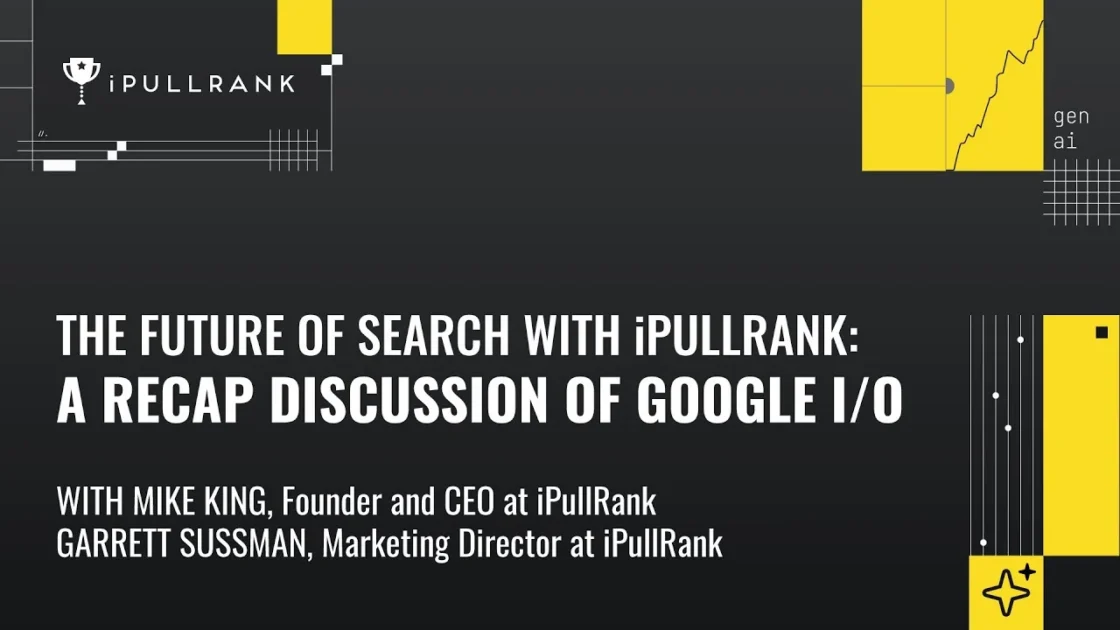
The best-known case for treating it as a separate discipline is a 72-minute episode of Lenny’s Podcast, published on 14 September 2025 and viewed about 189,000 times on YouTube. Its guest, Ethan Smith, runs the growth agency Graphite, and the episode description promises a seven-step playbook and says ChatGPT traffic converts six times better than Google search. This article tests those claims against data published since, much of it from 2026.
The episode’s claims, and the firm behind them
According to the episode description and Graphite’s own summary page, Smith makes five linked claims. An AI answer blends many sources, so being cited often beats holding one top slot. Young companies can win quickly, because a new Reddit thread can surface in ChatGPT the next day. AI-referred visitors convert far better. Help-center and landing pages deserve new investment. AI-generated content does not work. Graphite compresses the first claim into a line it attributes to Smith: “Being mentioned most often beats ranking first.” The description, by contrast, promises a playbook to “rank #1 in ChatGPT”, a framing the guest’s own point undercuts, since a blended answer has no single top slot to hold.
Two relationships sit beside those claims. Smith is CEO of Graphite, an SEO growth agency by the description’s own label, and Graphite hosts the episode on its own site, so a finding that AEO is a distinct, urgent discipline suits its business. The host also notes that he may be an investor in the companies discussed. Graphite’s summary adds that the long tail is four times larger than in search, because people put 25 or more words into ChatGPT against about six in Google. That is Graphite’s figure, and no independent study cited in this article tests it.
The conversion premium is real, on a small base
The 6x figure belongs to one company. In a newsletter published in November 2025, Kyle Poyar reports from an interview with Webflow’s VP of growth that ChatGPT traffic converts at 24% for Webflow, six times the Google rate, and that AI discovery supplies 10% of its signups, with ChatGPT behind 91% of AI referrals. Webflow appears in Graphite’s own list of companies it has worked for. Ahrefs measured a wider gap on its own site, 23x, so the two companies differ by a factor of about four, and the multiple tracks the business, not the channel. Ahrefs’ author also estimated that AI search users click links about 75% less than search users, and doubted that the premium would hold at scale.
Volume is the constraint. AI platforms supplied 0.32% of visits in SE Ranking’s data, which also shows ChatGPT’s share of that traffic slipping from 79.7% in 2025 to 74.8% in 2026 as Gemini and Claude grew, and ChatGPT’s share of all web traffic growing only 1.5% between January and April 2026. SE Ranking and Ahrefs both sell AI visibility tracking, which gives them reason to call the channel worth watching. A channel can convert at 6x or 23x and still be a rounding error in total traffic.
Reddit mentions carry the strongest support for the playbook
Ahrefs’ study of 10,000 brands and 260 million prompts, published on 3 November 2026, comes closest to testing the central claim. Brands mentioned on more outside sites showed up more often in answers from ChatGPT, Google AI Mode and AI Overviews. Reddit threads naming a brand correlated most strongly, at 0.75 on a scale where 1 is identical rank order, ahead of general web mentions at 0.70, news articles at 0.67 and YouTube videos at 0.64. Ten times the Reddit mentions went with about 5.5 times the AI mentions, against 3.7 times for web mentions at large. Press coverage did not beat ordinary web pages, and Ahrefs reads that as a case for a wide spread of mentions as well as big-name coverage.
The study carries three limits that its authors state. The relationships are correlations, brand size explains part of the pattern, and ChatGPT tracked off-site mentions least closely: ten times the web mentions went with only 2.2 times the AI mentions there. Ahrefs, which sells Brand Radar for this tracking, also notes that Reddit licenses its content to Google and OpenAI, which explains part of its pull. Nothing in the data tests the episode’s recipe of one real account giving helpful answers, because the study counts threads that already name brands. Webflow’s VP of growth told Poyar that Reddit remains a strong signal after citations reportedly dropped when Google removed a results-per-page setting, and Ahrefs now ranks Reddit second among sources cited across ChatGPT, AI Mode and AI Overviews, behind Wikipedia.
Citations churn faster than a campaign can respond
Graphite’s summary stresses speed: a mention today can surface tomorrow. Ahrefs’ 20-day tracking of about 37,500 citations across five AI tools, published on 29 October 2026, shows the other side of that speed. At least half of the websites cited on day one were gone by day two, and Gemini and Copilot lost about 80%, partly because many of their answers cited nobody. About 75% of dropped citations returned within the 20 days, and those that had lasted eight days or more almost always came back, at 96% to 99%. Citations that lasted a single day never returned in 34% to 41% of cases on Google’s tools and ChatGPT.
Brand-name mentions proved steadier: about one in five brand names appeared on a single day, against 50% to 70% of cited websites. Ahrefs concluded that citations make a weak KPI and that brand mentions suit better, and it advised counting how many of the last seven days a page was cited. Webflow’s VP of growth had described the same behavior to Poyar, saying every query is a fresh model run that reshuffles sources. A one-off check proves little in either direction.
Google says the whole field is still SEO
Google’s guide to generative AI features, last updated on 10 July 2026, addresses the vocabulary head-on. From the standpoint of Google Search, it says, working on AEO or its sibling term GEO, generative engine optimization, is working on the search experience, “and thus still SEO”. It tells site owners they can ignore llms.txt files, splitting content into small chunks, rewriting pages for AI systems and seeking inauthentic mentions, and it warns that no third-party tool sees Google’s internal ranking or AI systems. Webflow’s team reported no clear lift from llms.txt, which fits. Still, the guide covers Google’s own AI features, not ChatGPT, and Google has an interest in discouraging attempts to game its results; that last point is an inference, not a statement in the guide.
Ahrefs’ tracking shows where the SEO link holds. Pages that ranked in Google for a question were about seven times likelier to keep a citation for a week in AI Overviews and AI Mode (28% to 29% against 4%), but only 11% against 4% in ChatGPT, and roughly 75% of pages cited by AI Mode and ChatGPT did not rank for the same question. That ranking sample covered 230 questions. The long-tail claim meets a limit too. Google says site owners need not worry about missing query variants and that pages made mainly to manipulate results by matching them can breach its scaled content abuse policy. Both views can hold if ChatGPT users ask longer questions than Google users, but that premise is Graphite’s and untested.
The AI-content claim needs its qualifier
The description says AI-generated content does not work. Graphite’s October 2025 study supports a narrower statement. In a June 2025 sample of 31,493 keywords, 86% of articles ranking in Google and 82% of articles cited by ChatGPT and Perplexity were written by humans, and only 7% of number-one results were AI-generated. Graphite did not test AI-assisted articles with heavy human editing, and its authors wrote that they believe such content may be effective. Axios, which reported the study, added that researchers cannot count AI-made content reliably because people now mix the two, and a Google spokesperson said not all AI-assisted content is spam. The detector had a 4.2% false-positive rate in the authors’ own test.
The episode’s reference list also cites a 2024 Nature paper on model collapse. As described on Oxford’s machine learning group page, it finds that training models indiscriminately on model-generated text causes irreversible defects in the resulting models. It concerns what goes into training, not which pages Google or ChatGPT rank, so it cannot support a ranking claim by itself.
A reading for marketers, and what would change it
For a software company with a high-intent product, the evidence supports a measured test, not a budget shift. Track the share of recent days a page is cited and brand-name mentions, not single citations. Keep pricing and feature pages accurate, because Ahrefs found that a brand’s own site dominates citations for factual questions about it while third-party pages win reviews and comparisons in Google’s tools, though that rests on 22 questions about one brand. Put real people into threads where the product is already discussed. Skip purchased mentions: in an October 2026 conversation published by Graphite, consultant Gaetano DiNardi called such services link building 2.0 and said most paid placements are gone within a year, with Smith taking part.
The mechanism and the conversion premium hold up in independent data; the scale does not yet. The description says most companies are completely missing this opportunity, yet AI referrals are about 0.3% of visits and ChatGPT’s share of web traffic barely moved from January to April 2026. The uncertainty that matters most is whether that share rises well beyond 0.3%. A sustained rise in SE Ranking’s next reading, or a fall in citation churn, would favor the episode’s urgency; flat referrals would favor Google’s view that this is SEO with extra tracking.
Author:
Jan Bielik
CEO & Founder of Webiano Digital & Marketing Agency
This article is an original analysis supported by the sources cited below
The ultimate guide to AEO: How to get ChatGPT to recommend your product | Ethan Smith (Graphite)
Gave the publication date of 14 September 2025, the 72-minute runtime, the claims in the episode description, the sponsor list and the host’s note about possible investments.
Google’s Guide to Optimizing for Generative AI Features on Google Search
Established Google’s position, last updated 10 July 2026, that AEO and GEO are still SEO for Google Search, with its list of tactics site owners can ignore.
AI Features and Your Website
Confirmed that Google lists no extra technical requirements for AI Overviews or AI Mode and reports that traffic inside ordinary Search Console data.
The Ultimate Guide to AEO on Lenny’s Podcast
Supplied Graphite’s own summary of the episode: the mentions-over-ranking claim, the 6x conversion claim, the 25-word query claim and the Reddit playbook.
How Does AI-Generated Content Perform in Search and Answer Engines?
Provided the 86% and 82% human-authorship figures, the 7% share at number one, and the authors’ note that heavily edited AI-assisted content was not tested.
Gaetano DiNardi: Offsite AEO Is Broken
Recorded the October 2026 discussion in which a consultant calls paid brand-mention services link building 2.0 and says most paid placements disappear within a year.
Traffic is no longer a reliable growth metric
Supplied Webflow’s figures: 24% conversion, 6x Google, 10% of signups from AI and 91% of AI referrals from ChatGPT, plus its views on volatility and llms.txt.
Which Types of Mentions Correlate the Strongest With AI Visibility? (260M AI Prompts Analyzed)
Gave the correlations by mention type, the diminishing returns of mentions and the stated caveats on causation, brand size and ChatGPT.
How Stable Are AI Citations? 10 Things We Learned Tracking 37,500 Citations
Measured how fast citations vanish and return across five AI tools, and how Google rankings relate to citation stability.
Does AI Search Traffic Convert Better Than Traditional Search? For Ahrefs, Yes: 0.5% of Visitors Drove 12.1% of Signups
Showed the 23x conversion gap, the 0.5% traffic share, the estimate that AI users click links 75% less, and the author’s doubt that the premium would scale.
Analysis of Top AI Search Engines: Who Is Catching Up to ChatGPT?
Provided the 0.32% AI share of website traffic in 2026, the 134x gap with organic search and the slowdown in ChatGPT’s referral growth.
Exclusive: AI writing hasn’t overwhelmed the web yet
Gave independent reporting on Graphite’s AI-content study, including the detector error rates and Google’s point that not all AI-assisted content is spam.
AI models collapse when trained on recursively generated data
Confirmed that the Nature paper cited in the episode concerns the effect of model-generated text on model training, not on search ranking.
How to get ChatGPT to recommend your product | Ethan Smith
Listed the episode’s chapters and reference list, including the Nature paper, and showed that the transcript and the host’s takeaways sit behind a paywall.
| Citing this article? Brief excerpts are welcome. Please credit Webiano.digital, name the author where stated, and include a link to https://webiano.digital and to this original article. Full or substantial republication requires prior written permission. Read our Copyright and Content Use Policy. |
This article was prepared with the assistance of artificial intelligence tools. The content underwent expert human review, and Webiano Digital & Marketing Agency assumes editorial responsibility for its final version and publication.