The claim that artificial intelligence could mean the full end of HR departments sounds extreme until a CEO says the quiet part out loud. In May 2026, Bolt CEO Ryan Breslow told Fortune that he had eliminated the company’s HR team during a wider reset, arguing that the team had been “creating problems that didn’t exist” and that Bolt had moved back into a leaner start-up mode. Fortune’s report said the HR cut sat inside a broader workforce reduction of roughly 30 percent.
Table of Contents
The sharper lesson is not that every company will fire HR. The lesson is that HR departments are now being split into two different kinds of work. One kind is administrative, repetitive, rules-based, data-heavy and increasingly easy to absorb into software. The other kind is judgment-heavy, legally exposed, culturally sensitive and tied to trust. AI attacks the first kind quickly. It makes the second kind more visible, more difficult and harder to outsource to a chatbot.
HR is facing an execution crisis, not only a technology crisis
The phrase “end of HR” hides a more uncomfortable question: which parts of HR still justify a dedicated department when employees, managers and AI agents can perform large parts of the workflow themselves? That is now a board-level question, not a side conversation among HR technologists.
For years, HR teams defended their size through volume. Hiring generated requisitions, interviews, offer letters, onboarding tasks, benefits questions, policy updates, performance cycles, learning reminders, employee relations cases, payroll escalations and reporting requests. A growing company meant more people, more process, more exceptions and more HR headcount. That logic is breaking. AI systems now draft job descriptions, answer employee questions, summarize policy documents, schedule interviews, prepare performance-review notes, flag pay anomalies, recommend learning paths and pull workforce data from systems that once required a specialist to navigate.
The danger for HR is not only that AI performs these tasks faster. The danger is that AI makes the old HR service model look structurally expensive. A department built around ticket handling, form routing and policy interpretation is now compared with a 24-hour employee-support layer that does not sleep, does not queue cases in the same way and does not need another HR coordinator every time the business expands.
This shift arrives when companies are already under pressure to justify staff functions. Challenger, Gray & Christmas reported that in April 2026 artificial intelligence was the leading reason cited for U.S. job cuts for the second consecutive month, accounting for 21,490 announced cuts that month and roughly 26 percent of all announced cuts in April. Those numbers do not prove that AI is technically ready to replace whole corporate functions. They do show that executives have started using AI as a restructuring language. Once that language enters the cost base, HR is not exempt from it.
The irony is obvious. HR is the function supposed to guide workforce change. Yet HR itself is one of the cleanest targets for workforce change because so much of its operating history has been built around handling internal demand at scale. When the internal demand becomes self-service, agent-assisted and embedded into enterprise platforms, the department has to answer a direct question: what does HR do that cannot be automated, delegated to managers or handled by a shared service platform?
That answer exists. It is just narrower, harder and more strategic than the traditional department has often been allowed to be. HR’s future is not guaranteed by the existence of employees. Finance was not protected from automation because companies still had money. Legal was not protected because companies still had contracts. Marketing was not protected because companies still needed customers. Functions survive automation when they control judgment, governance, risk and strategy. They shrink when they mainly move information from one box to another.
The Bolt case became a symbol because it compressed a larger corporate mood
The Bolt story spread because it gave a name and a face to a sentiment many executives rarely state in public. Breslow did not merely describe automating HR tasks. He framed HR as a source of friction. That framing matters. The political threat to HR is not only that AI can do HR work; it is that some leaders believe HR work has become too slow, too procedural and too detached from business urgency.
Bolt is not a safe template for large employers. A start-up under financial pressure is not a bank, hospital, retailer, public agency or multinational manufacturer. Small companies sometimes survive with informal people practices because the founder still knows many employees, decisions move quickly and compliance complexity remains limited. That does not scale cleanly. Even Breslow’s reported remarks acknowledged a difference between “peacetime” larger-company HR and a smaller “wartime” operating mode.
Yet the headline landed because it matched a wider frustration. Many managers experience HR as a place where requests slow down: a hiring approval waits, a compensation exception disappears into review, a disciplinary issue becomes a documentation exercise, a policy seems written for legal cover rather than good judgment. Some of that frustration is unfair. Much of HR’s caution comes from law, precedent, employee expectations and risk created elsewhere in the business. A manager who wants to move fast may still be trying to make a decision that violates policy, creates disparate treatment or leaves the company exposed.
Still, perception matters. If HR is seen as the owner of delay rather than the owner of better decisions, AI becomes attractive not only as a tool but as a political weapon. Executives can say, “We will replace bureaucracy with systems.” Employees can say, “I would rather ask an AI than wait three days for HR.” Managers can say, “Give me the policy engine and let me act.” That is the ground on which departments lose authority.
The deeper issue is that HR has often absorbed contradictory expectations. Companies ask it to be employee advocate, management adviser, compliance gatekeeper, culture builder, recruiter, therapist, data analyst, policy owner, payroll escalation path and cost-control partner. When budgets tighten, the same leaders who ask HR to keep the company legally safe may resent the limits HR imposes. AI exposes this contradiction because it separates the visible administrative work from the invisible risk work.
A company can remove an HR team and still have employment risk. It can automate recruitment and still create discrimination exposure. It can answer policy questions with an AI assistant and still mis-handle harassment, disability accommodation, retaliation, union activity, pay equity, working time, privacy or terminations. The work does not vanish. The department may disappear faster than the accountability.
AI is strongest where HR is repetitive, documented and high-volume
AI enters HR through the easiest doors first. It does not begin by replacing a skilled investigator in a harassment case or a senior adviser negotiating a complex leadership exit. It begins with questions like “How many vacation days do I have?”, “What is the parental leave policy?”, “Can I move my interview?”, “Write a job description for this role,” “Summarize these interview notes,” “Which candidates meet the stated criteria?”, “Which employees have not completed training?” and “Prepare a first draft of this performance review.”
Those workflows share the same features. They are frequent. They draw from existing documents. They follow a repeated pattern. They involve language generation, classification, routing, summarization or matching. They sit inside systems of record. They are measurable. They irritate employees when slow. They are expensive when handled manually. That is the exact territory where AI systems are most attractive to CFOs.
Enterprise vendors are now building around this assumption. Workday describes Sana AI agents as systems that understand context, reason through situations, plan toward a goal and take action within human-defined limits. It positions these agents across HR, finance, IT and other workflows. Oracle announced role-based AI agents inside Oracle Fusion Cloud HCM in February 2025, describing systems that automate end-to-end workflows across employee experience and workforce productivity. SAP says its Joule assistant is integrated into SAP SuccessFactors for HR tasks such as job descriptions, time-off requests and employee information updates.
This is not a side feature market. HR technology is becoming an AI delivery channel for the whole employee lifecycle. Recruiting, onboarding, internal mobility, learning, performance, compensation, workforce planning and employee support are being rebuilt around prompts, assistants, agents and workflow automation. The word “agent” is important because it shifts expectations. A chatbot answers. An agent acts. Once a system can open a requisition, schedule an interview, send a reminder, update a record, trigger a workflow and notify a manager, HR is no longer the only operational bridge between policy and action.
The first casualty is the HR generalist model built around handling routine employee and manager needs. A strong HR generalist with judgment, trust and business context still matters. A generalist mainly forwarding questions, interpreting basic policy, chasing forms and preparing routine documents is exposed. The same is true in talent acquisition. Recruiters who advise on labor markets, assess role design, sell candidates and challenge weak hiring managers remain useful. Recruiters who mostly screen resumes, schedule interviews and draft outreach are now competing with software.
AI does not need to be perfect to shrink those roles. It only needs to reduce the volume enough that one person handles work previously spread across three or four people. Klarna’s customer-service case showed how this logic travels: the company said its AI assistant handled two-thirds of customer-service chats in its first month and did work equivalent to 700 full-time agents. Reuters later reported that Klarna’s headcount fell from 5,000 to 3,800 over a year, largely through attrition, while the company credited AI with productivity gains. HR leaders should study that example, not because customer service is identical to HR, but because both functions have large volumes of repeat questions and scripted resolution paths.
The new HR stack turns employees and managers into self-service operators
The classic HR department sat between employees and corporate systems. Employees asked HR for answers because the systems were fragmented, policies were hard to read and managers were not trained to handle every situation. AI changes the interface. The employee no longer needs to know which system holds the answer; the assistant becomes the front door.
This front-door change is deceptively powerful. In the old model, HR preserved authority partly because it knew where things were. It knew the policy, the form, the workflow, the approval path, the exception history and the person to call. In the AI model, much of that hidden navigation becomes visible through natural language. An employee asks a question in Teams, Slack, a portal or an HCM system. The agent retrieves the policy, checks eligibility, opens the right workflow and drafts the next step. The employee experiences HR as software.
Managers go through the same shift. Instead of asking HR to draft a performance-improvement plan, a manager may ask an AI assistant to produce a draft based on role expectations, prior feedback, performance data and company policy. Instead of asking HR for interview questions, the manager gets a structured interview guide aligned to the job description. Instead of waiting for HR analytics, the manager asks for attrition risks, engagement patterns or internal candidates with a skill match.
This changes the role of HR from handler to designer. The department becomes less valuable for answering every question and more valuable for deciding which answers the system is allowed to give, which actions require approval, which data the model may use, which decisions require human review and which exceptions need escalation. A future HR team that does not own the design of employee-facing AI will lose control of the employee experience to IT, finance, vendors and local managers.
Self-service is not new. HR portals have existed for decades. The difference is that earlier self-service often pushed complexity onto employees. People had to search, click through menus, decode policy language and fill out clumsy forms. AI self-service hides complexity. That makes adoption easier and reduces the emotional cost of avoiding HR. Employees who once tolerated slow HR service because there was no alternative now compare it with the instant response of a workplace assistant.
This is where HR can either shrink or rise. If it treats AI as a way to reduce tickets, it becomes a smaller service desk. If it treats AI as a way to redesign work, decision rights, employee trust and manager accountability, it becomes a governance function for the human side of the enterprise. The difference is not the software. It is the mandate.
Recruitment is the first battlefield because hiring already runs on filters
Hiring has always used filters. Job requirements, degree screens, keyword searches, referral preferences, assessment scores, interview panels and manager judgments all narrow the field. AI intensifies that old reality by turning more of the funnel into automated ranking and decision support. Recruitment is where AI promises the fastest savings and creates some of the clearest legal danger.
The appeal is easy to understand. Talent acquisition teams face high application volumes, inconsistent hiring-manager behavior, slow scheduling, repetitive candidate communication and pressure to fill roles faster. AI tools can draft job posts, search candidate databases, match resumes to job descriptions, score applications, schedule interviews, summarize candidate responses, produce interview guides and generate rejection letters. A recruiter who once spent large parts of the week on coordination can focus on role strategy and candidate relationship work.
Yet the same tools can magnify old biases. If a system learns from historical hiring data, it may reproduce preferences embedded in past decisions. If it uses proxies that correlate with age, gender, race, disability, socioeconomic status or nationality, the employer may not see the discrimination until rejected applicants or regulators investigate. If a vendor cannot explain how a score was produced, HR may be left defending a decision it does not understand.
The legal record is already forming. The EEOC’s iTutorGroup case, settled in 2023, alleged that the company’s hiring software automatically rejected older applicants, and the company agreed to pay $365,000 and accept other relief. The Workday litigation, involving allegations around AI-powered hiring tools, has drawn close attention because the EEOC argued in 2024 that Workday could be covered by anti-bias laws in the case, even though Workday argued its clients make the hiring decisions.
The Workday case matters beyond one vendor. It asks a question that every HR buyer must now face: who is accountable when a system influences employment decisions at scale? The employer? The vendor? The manager? The HR team that bought it? The compliance team that approved it? The answer will not be simple, and it may vary by jurisdiction. Yet from a governance point of view, HR cannot hide behind procurement. If a tool screens candidates, ranks employees or influences promotion, it belongs inside a serious employment-risk process.
This is why recruitment automation will not mean “no HR.” It will mean fewer recruiters doing coordination, more HR technologists configuring tools, more legal review, more audit work, more data documentation and more pressure on hiring managers to justify decisions. The headcount may fall, but the stakes rise.
The EU AI Act makes employment AI a regulated people risk
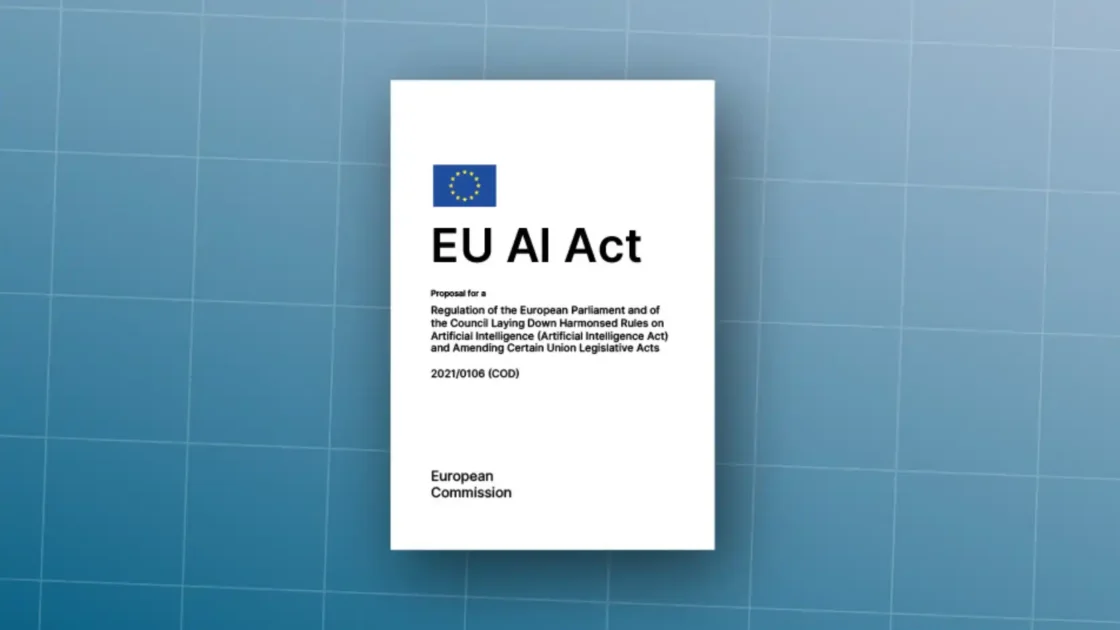
Europe has already rejected the idea that workplace AI is just another software purchase. The EU AI Act creates a risk-based framework for AI and treats many employment and worker-management systems as high-risk. The European Commission describes the AI Act as the first legal framework on AI, with rules for developers and deployers tied to specific uses and risk levels. The Commission’s guidance work on high-risk systems is meant to clarify how systems are classified under the Act and to give practical examples for providers and deployers.
For HR, the message is direct. AI used in recruitment, selection, worker management, access to work, performance evaluation or decisions affecting work relationships is not merely an IT question. It touches fundamental rights, livelihoods and power imbalances. An AI tool that decides who gets seen, hired, promoted, monitored, disciplined or dismissed is not an ordinary productivity app.
This matters because many companies still buy HR technology through a feature-and-price lens. They ask whether the system reduces time to hire, improves employee service, produces better analytics or lowers cost per transaction. Under stricter AI governance, they must also ask whether the system is high-risk, whether it requires documentation, whether human oversight is real, whether data quality is adequate, whether bias testing is sufficient, whether affected people receive required information and whether records exist for audit.
The compliance burden may sound like a reason to keep larger HR teams. It is more likely to change the shape of HR. Administrative headcount may decline while governance headcount rises. HR will need people who understand labor law, data protection, model risk, vendor contracts, employee relations and workforce analytics. The old separation between “HR operations” and “HR compliance” will weaken because AI systems embed decisions into operations.
European regulation also creates a global spillover. Multinationals do not want separate AI governance for every country if one stricter framework can become the baseline. A U.S. or Asian company using the same recruiting platform across Europe may choose to apply stronger documentation and audit practices across the group. That makes HR AI governance a cross-border discipline. It also means the future HR leader must speak both human and technical language.
The EU AI Act does not save HR from automation. It does the opposite in one sense: it makes weak automation more dangerous. The department that survives is the one that can say, with evidence, “This system is lawful, tested, explainable enough for its use, monitored, limited and under human control.”
American regulators are building pressure through discrimination, disclosure and audits
The United States does not have a single AI law equivalent to the EU AI Act, but employers should not mistake that for an empty field. U.S. pressure is coming through civil-rights law, state and local rules, agency guidance, litigation and procurement expectations. The EEOC launched its Artificial Intelligence and Algorithmic Fairness Initiative in 2021 to examine how employment technologies affect decisions and to guide employers, employees, applicants and vendors on compliance with federal equal employment laws.
The EEOC has also emphasized that AI and automated systems may violate discrimination laws when used in employment decisions. Its 2024 “What is the EEOC’s role in AI?” document states that AI and other technology may offer benefits but also may violate anti-discrimination laws when used in employment decisions. The agency’s iTutorGroup settlement gave employers a concrete warning that automated rejection rules do not become lawful because they are embedded in software.
Local regulation adds another layer. New York City’s Local Law 144 prohibits employers and employment agencies from using automated employment decision tools unless the tool has had a bias audit within one year, the audit information is publicly available and notices have been provided to candidates or employees. A New York State Comptroller audit published in December 2025 later criticized enforcement of the law, which is a reminder that rulemaking and enforcement quality are separate problems.
The regulatory pattern is clear even without a single federal statute. AI hiring and worker-management tools are moving from “HR innovation” into the zone of evidentiary accountability. Employers will need to show what a tool does, how it was tested, how it affects protected groups, what notice was given, who reviewed the output and how humans can override or correct the system.
This creates a strange future for HR. A company may need fewer recruiters, coordinators and employee-service staff, but it will need more people who can defend workforce decisions in a world where the decision path is partly algorithmic. The HR function that disappears is the form-processing department. The HR function that grows is the human-risk control tower.
AI agents change the economics of HR shared services
Shared services were the first big attempt to industrialize HR. Companies moved routine work into centralized teams, case-management systems, offshore centers and standardized processes. AI agents are now the second wave. They do not merely centralize work. They remove some of the need for human case handling at all.
A typical HR shared-services center handles policy questions, benefits issues, onboarding tasks, payroll corrections, leave administration, employment letters, data changes and process guidance. Much of that work is language plus workflow. An AI agent can read a policy, ask clarifying questions, retrieve data from the employee record, apply eligibility rules, draft a response, open a ticket, route an exception and record the interaction. If the system is well built, it can also know when not to answer and send the case to a human specialist.
That last condition is where many projects succeed or fail. A badly designed HR AI system treats all questions as answerable. A good one understands risk tiers. “Where is the holiday calendar?” is not the same as “My manager is retaliating against me after I reported harassment.” “How do I update my address?” is not the same as “I need an accommodation for a disability.” The value of HR does not lie in answering every question; it lies in knowing which questions are dangerous.
Shared-services economics will still push hard toward automation. Companies measure cost per case, time to resolution, first-contact resolution, employee satisfaction and backlog. AI will improve enough of those metrics that the staffing model will shrink. A twenty-person service desk may become six human specialists supervising an AI front end, handling exceptions, auditing responses and improving the knowledge base. Larger companies may reduce regional HR operations teams by pushing more work into global workflows.
The remaining work will be less forgiving. Human HR staff will receive escalations, edge cases, angry employees, broken workflows and legally sensitive matters. That means the job becomes more skilled, not less. It also means companies may underestimate the emotional and cognitive load on the smaller team left behind. If AI takes simple cases and leaves humans with only difficult ones, HR burnout may rise even as headcount falls.
This is a lesson from customer service that HR should not ignore. Removing easy tasks can make the remaining human job more stressful. HR leaders planning automation should redesign roles, staffing ratios, training and escalation authority around that reality. Otherwise the company saves money on one line and creates turnover, errors and risk in another.
HR business partners face the clearest identity test
No HR role is more exposed to the AI era than the HR business partner. In theory, the HRBP is the strategic adviser to leaders: someone who understands the business, reads organizational dynamics, challenges weak decisions, interprets workforce data and supports leaders through change. In practice, many HRBPs spend too much time on tactical firefighting, policy explanation, performance documentation, compensation exceptions, employee complaints and process chasing.
AI will strip away the excuses. If managers can get policy guidance from a system, retrieve headcount data instantly, draft a performance note through an assistant and ask an analytics tool for turnover patterns, the HRBP must prove value beyond access to information. The future HRBP has to be a judgment partner, not a human search bar.
This raises the bar sharply. A strong HRBP will understand business model pressure, team design, incentives, leadership behavior, skills gaps, employee trust, regulatory risk and change fatigue. They will know when the data is misleading, when a manager is hiding behind “performance,” when a reorganization solves a cost problem but damages capability, when a culture issue is really a leadership issue and when AI output needs to be challenged.
A weak HRBP will be squeezed from both sides. Managers will use AI for routine answers. Central HR operations will handle process. Legal will handle complex investigations. People analytics will provide dashboards. The weak HRBP becomes a meeting attendee with no clear decision rights.
This does not mean companies should remove HRBPs. It means they should stop pretending the title itself creates strategic value. Many companies copied the HRBP model without giving the role enough business training, data access, authority or time to think. AI now forces a cleanup. HRBPs who cannot interpret workforce risk in business terms will be hard to defend. HRBPs who can prevent bad leadership decisions, improve organizational design and guide AI adoption responsibly will become more important.
The old HRBP question was “How do we support the business?” The new question is sharper: which human decisions remain too important to leave to managers and machines without expert challenge? That is the HRBP’s territory, if the role earns it.
Employee relations will not disappear because conflict is not a ticket
Employee relations is one of the least automatable areas of HR because it deals with conflict, fear, motive, evidence, context and trust. AI can assist with documentation, timeline reconstruction, policy retrieval, interview preparation and pattern detection. It should not be treated as the investigator, judge or moral authority.
Workplace conflict rarely arrives as clean data. An employee reports bullying but cannot provide dates. A manager claims performance problems, but the record shows praise until the employee became pregnant or requested leave. A team complains about a leader, but half the evidence is informal messages and tone. A termination seems justified in isolation but looks different when compared with similar cases. These are human judgment problems with legal consequences.
AI may make employee relations more demanding by changing what evidence exists. Workplace assistants, productivity tools, communication platforms and monitoring systems produce more data about employees. More data does not mean clearer truth. It may create selective visibility. A system may measure message volume but not emotional labor, meeting quality, mentoring, invisible coordination or the effect of a toxic leader. Employee relations teams will need to understand not only policy but data provenance: where information came from, what it captures, what it misses and how it may bias a decision.
There is also the question of trust. Employees may be willing to ask an AI about benefits. They may be less willing to report harassment, discrimination, retaliation, mental-health issues or ethics concerns to an AI system owned by the employer. Even if the system is secure, perception matters. People need to believe that sensitive concerns will be heard, protected and handled with care. A company that removes human access points may drive problems underground.
AI can still improve employee relations if used carefully. It can help ensure consistent documentation, flag missing steps, remind investigators about policy requirements, compare proposed actions with precedent and detect case clusters. It can reduce administrative burden around investigations. Yet the final responsibility must remain human because employee relations involves credibility assessment, proportionality, empathy and organizational consequences.
The companies most likely to damage themselves are those that confuse silence with health. Removing HR may reduce complaints if employees no longer trust the system. That does not mean conflict disappeared. It may mean conflict became invisible.
Performance management is ready for automation but not for automatic judgment
Performance management has long been one of HR’s most disliked rituals. Annual reviews are late, vague, biased, inflated, inconsistent and often disconnected from actual work. AI can improve parts of that system. It can summarize feedback, remind managers to document, turn goals into measurable milestones, identify missing evidence, compare review language for bias and help employees prepare development plans.
The risk is that performance systems become automated narratives. A manager asks the tool to draft a review. The tool uses project updates, messages, goals and prior notes. The manager edits lightly. The employee receives a polished document that appears objective because it is data-rich. Yet the underlying data may be partial, biased or skewed toward work that leaves a digital trace. A beautifully written AI-generated review can still be unfair.
Performance judgment needs context. Did the employee inherit a broken project? Did priorities change? Was the manager available? Did the employee do unrecorded mentoring? Did a teammate take credit? Did disability, caregiving or health issues require accommodation? Did the metrics reward visible busyness over valuable work? AI can process available evidence, but it does not know whether the available evidence is the right evidence.
The legal risk is also real. If AI tools influence performance ratings, promotion, pay, discipline or termination, they become part of employment decision-making. That pulls performance management into the same regulatory field as hiring. Employers will need to know whether AI-generated summaries produce different outcomes for different groups, whether managers over-rely on suggestions and whether employees can challenge incorrect data.
The best use of AI in performance management is not to make the rating. It is to force better human discipline. It can ask: What evidence supports this claim? Which goals changed? Which feedback was shared before the review? Does this language contain vague personality judgments? Are similar cases treated consistently? Have accommodations or leave periods been considered correctly? That is useful because many performance systems fail from laziness, inconsistency and memory gaps.
HR’s role, then, is not to own the calendar invite for annual reviews. It is to own the fairness architecture of performance. If HR cannot do that, AI will make bad performance management faster.
Learning and development becomes the center of workforce survival
AI threatens administrative HR, but it raises the value of learning and development if L&D moves beyond course catalogs. The workforce problem is not only that some tasks will be automated. It is that roles are changing faster than job descriptions, managers and training budgets can keep up.
The World Economic Forum’s Future of Jobs Report 2025 surveyed more than 1,000 employers representing over 14 million workers and examined job and skill changes expected through 2030. McKinsey’s 2025 State of AI survey reported that 88 percent of respondents said their organizations were using AI regularly in at least one business function, up from 78 percent a year earlier, while many companies had still not scaled the technology across the enterprise. That gap between adoption and scaling is a learning problem as much as a technology problem.
Many employees now face a cruel instruction: use AI, but do not know exactly how; become more productive, but do not know which tasks to redesign; protect your job, but do not know which skills matter next. A weak L&D function responds with generic AI literacy modules. A strong one maps tasks, roles, decision rights and workflow changes. It teaches people where AI is useful, where it fails, how to verify output, how to protect data, how to redesign work and how to preserve judgment.
LinkedIn’s 2025 Workplace Learning Report surveyed L&D and HR professionals and learners, focusing on career growth, retention and adaptability. The direction is clear: learning is no longer a soft benefit. It is workforce infrastructure. If AI changes work faster than employees learn, organizations will create a split labor market inside their own walls: people who know how to work with AI and people managed by AI.
This is where HR has a strong claim to relevance. No CIO can solve adoption by deploying tools. No CFO can realize savings if employees resist or misuse systems. No CEO can rebuild operating models without people learning new skills and letting go of old habits. The company that cuts HR administration but underinvests in learning may save money while weakening its future talent base.
The strategic L&D question is not “Which AI courses should we buy?” It is “Which human capabilities become more valuable as machines take more routine work?” The answer includes judgment, domain knowledge, communication, conflict handling, systems thinking, ethical reasoning, customer understanding and the ability to question machine output. L&D should become the function that turns AI from a tool rollout into a work redesign program.
People analytics will grow, but measurement can become a trap
AI feeds on data, and HR has more workforce data than many companies realize. Employee records, compensation, performance, learning, engagement, retention, internal mobility, skills, recruiting pipelines, absence, productivity tools and communication patterns can all be joined into workforce models. That makes people analytics central to the AI-era HR function.
The upside is real. Better analytics can identify skills gaps, pay inequities, retention risks, hiring bottlenecks, manager effectiveness issues, learning needs and workforce-planning scenarios. It can show which roles are exposed to automation and which teams need redesign. It can replace intuition-heavy debates with evidence.
The trap is that workforce data feels more objective than it is. HR data is full of human decisions. Performance ratings reflect manager bias. Job titles reflect organizational politics. Skills data may reflect self-reporting or outdated profiles. Attrition data may hide bad leadership. Engagement scores may reflect fear or survey fatigue. Productivity signals may reward digital noise. AI built on weak people data scales the weakness.
This creates a new HR capability requirement: data skepticism. HR teams need people who can ask where a data point came from, who created it, what incentives shaped it, what it excludes and whether it should be used for a particular decision. That is not traditional HR administration. It is closer to model governance, research design and organizational diagnosis.
People analytics also raises privacy and trust questions. Employees may accept data use for payroll or benefits. They may not accept opaque scoring of flight risk, productivity, sentiment or promotion potential. The UK Information Commissioner’s Office has warned AI recruitment developers and providers to better protect job seekers’ information rights, and in 2026 said automated hiring tools require the right safeguards, transparency and fairness.
Analytics will not save HR if it becomes surveillance. It will save HR if it helps leaders make better workforce decisions while respecting employees as people rather than data exhaust. The line between insight and intrusion will be one of the central HR battles of the next decade.
The CFO case for shrinking HR is becoming easier to make
CFOs do not need a theory of HR’s future. They need a cost case. AI gives them one. If a company can reduce recruiting coordinators, employee-service agents, HR operations analysts and parts of HR administration while maintaining service levels, the financial argument is simple. The larger the company, the more tempting the numbers become.
The pitch often starts with visible metrics: lower cost per hire, faster time to fill, fewer HR tickets, shorter onboarding cycles, reduced external recruiter spend, lower call-center volume, fewer manual payroll corrections, faster document generation and smaller shared-services teams. AI vendors sell into these metrics because they are concrete and easy to present in budget meetings.
The harder costs are less visible: system integration, data cleanup, change management, governance, audits, legal review, employee trust, model monitoring, vendor management and exception handling. Many business cases understate these costs. They compare a mature human process with an idealized AI process, then ignore the work needed to make the AI process safe and usable.
HR work most exposed to near-term AI compression
| HR work area | Reason it is exposed | Likely human role left behind |
|---|---|---|
| Candidate screening and scheduling | High volume, repeat criteria, heavy coordination | Recruiter as market adviser and decision challenger |
| Employee policy questions | Documented answers and repeat requests | HR specialist for exceptions and sensitive cases |
| Onboarding administration | Checklist-driven workflows across systems | Experience designer and escalation owner |
| Performance-review drafting | Language generation and data summarization | Manager coach and fairness reviewer |
| Learning reminders and matching | Rule-based nudges and skills data | Capability strategist and curriculum owner |
| HR reporting | Standard dashboards and recurring requests | Analyst interpreting risk and data quality |
This compression does not mean the work has no value. It means the human value shifts from doing the transaction to governing, interpreting and improving the transaction. Companies that ignore that shift may cut too deeply and rebuild capability later at higher cost.
A CFO will also ask whether HR ratios can change. Traditional benchmarks often look at HR staff per employee. AI invites leaders to test lower ratios, especially in companies with standardized systems and fewer physical sites. The risk is that ratios are blunt. A remote software company with low employee-relations complexity is not the same as a unionized manufacturer, hospital system or multinational retailer. Headcount models must reflect regulatory complexity, workforce type, turnover, geography, risk profile and growth stage.
The future finance conversation should not be “How many HR people can we remove?” It should be “Which HR work should be automated, which should be centralized, which should sit with managers, which needs specialists and which risks become unacceptable without human oversight?” A CFO who asks only the first question may get short-term savings and long-term mess.
The employee experience argument is more complicated than HR wants to admit
HR often assumes that employees want more human contact. Sometimes they do. Often they want a fast, accurate answer and the ability to get on with their day. This is uncomfortable for HR because it means automation may improve parts of the employee experience.
Many employees do not enjoy waiting for HR. They do not enjoy searching policy pages, opening tickets, sending follow-up emails or being transferred between payroll, benefits, IT and local HR. A well-built AI front end can make routine work easier. It can answer after hours, in multiple languages, with links to policy and next steps. It can reduce the embarrassment of asking basic questions. It can guide a new hire through onboarding without requiring a human to repeat the same explanation.
The employee experience problem begins when companies treat every employee need as a service transaction. People do not only need answers. They need voice, fairness, judgment and psychological safety. An AI assistant can tell an employee how to file a complaint. It cannot guarantee the employee believes the complaint will be handled without retaliation. It can explain a policy. It cannot repair a broken relationship with a manager. It can summarize benefits. It cannot replace trust in leadership during layoffs.
The future employee experience will be hybrid by necessity: automated for clarity and speed, human for trust and consequence. HR departments that resist automation in the name of humanity may annoy employees with slow service. HR departments that automate everything in the name of speed may create a cold and fearful workplace.
The design challenge is to know which moments need which mode. A vacation-balance question should not require a human. A bereavement issue may need one. A payroll address update can be automated. A pay inequity concern should have a human path. A learning recommendation can be algorithmic. A career-stagnation conversation may need a manager and HR adviser. A policy explanation can come from AI. A harassment report must have trusted human escalation.
The best HR teams will not defend human involvement everywhere. They will defend it where the cost of getting it wrong is high. That distinction is how HR earns credibility with executives and employees at the same time.
Managers will inherit more HR work, whether they are ready or not
AI does not only replace HR tasks. It pushes people decisions back to managers. Once managers have tools that draft documents, answer policy questions and guide workflows, companies will expect them to handle more. That may be healthy if managers become better people leaders. It may be dangerous if companies use AI as a substitute for management training.
Many managers are already underprepared for people responsibilities. They struggle with feedback, conflict, documentation, inclusion, workload design, mental-health conversations, career development and poor performance. HR often compensates for that weakness. AI may remove some of the administrative support while leaving managers with more direct authority.
The result could be a stronger manager-led people model. A manager uses AI to prepare a fair interview, document performance clearly, find internal candidates, build a learning plan and answer routine questions. HR steps in for complex matters and audits decisions. Employees get faster answers and managers build capability.
The darker version is easy to imagine. A manager uses AI-generated language to disguise weak evidence. They copy a performance-improvement plan without understanding the policy. They rely on a candidate score without challenging it. They ask an AI for advice on a sensitive employee issue and act before escalating. They create a record that looks professional but rests on poor judgment. AI can make bad managers look procedurally competent.
This is why HR cannot disappear from manager enablement. It must build the guardrails for manager use of AI. Which prompts are approved? Which decisions require escalation? Which documents need human review? Which employee categories require additional care? What training is mandatory? What logs are kept? What happens when a manager relies on AI output that is wrong?
HR should also redesign manager accountability. If managers gain more tools, they should own more outcomes: team turnover, internal mobility, engagement, performance quality, hiring fairness and development. AI should not become a way for managers to outsource responsibility. It should make responsibility more visible.
The legal department cannot replace HR
Some executives may think that if HR shrinks, legal can handle the risk. That view misunderstands both functions. Legal can advise on law, contracts, litigation risk and investigations. It cannot run the daily human operating system of a company.
Employment risk is created in ordinary moments: a manager’s comment, a hiring screen, a skipped accommodation, inconsistent discipline, unclear overtime practices, a biased promotion pattern, a mishandled leave request, a poor restructuring process. Legal usually sees these issues late or in escalated form. HR sees them, or should see them, before they harden into claims.
AI widens that gap because risk is embedded earlier in systems. A selection tool may influence thousands of applicants before anyone complains. A scheduling algorithm may create hardship for caregivers. A performance model may penalize employees who work differently. A sentiment tool may chill protected activity. Legal can review policies and contracts, but HR must monitor lived practice.
The U.S. Department of Labor’s 2024 AI Best Practices emphasized worker well-being, transparency, human oversight, protection of labor rights and support for workers affected by AI. NIST’s AI Risk Management Framework gives organizations a structure to manage AI risks to individuals, organizations and society. These frameworks point toward a shared governance model. HR, legal, IT, privacy, security, procurement and business leaders all have roles.
The future HR function should therefore become more legally literate, not replaced by legal. HR must understand enough law to spot risk, enough technology to ask the right questions, enough data to challenge analytics and enough human behavior to know when a system is failing quietly. Legal protects the company in disputes; HR should prevent avoidable disputes from becoming disputes.
If a company cuts HR without building this preventive layer elsewhere, it is not becoming lean. It is moving risk into the dark.
AI exposes the weakness of policy-heavy HR
Many HR teams have relied on policy as their main instrument. They write rules, update handbooks, issue guidance, build approval workflows and tell managers what is allowed. AI makes policy easier to access. That sounds good for HR, but it also reduces the premium on HR as the keeper of the handbook.
A policy-heavy HR function is exposed because AI can retrieve and explain policies quickly. If the department’s value is “we know the policy,” a well-indexed AI assistant can compete. If the value is “we know how to apply the policy fairly in messy circumstances,” HR remains needed.
This distinction matters because policies often fail at the edges. A policy can state leave rules. It cannot know whether a manager is subtly discouraging leave. A policy can define performance steps. It cannot know whether the manager delayed feedback for months. A policy can describe anti-harassment standards. It cannot decide credibility in a conflict. A policy can define remote-work eligibility. It cannot resolve resentment between teams with different work patterns.
AI may actually improve policy quality. It can identify contradictions, outdated language, gaps and unclear wording. It can help employees understand rights and obligations. It can make managers more consistent. The risk is overconfidence. People may assume that because the AI gives an answer, the answer fits the situation. Policy clarity is not the same as judgment.
The best HR teams will use AI to remove low-value policy explanation from their workload, then spend more time on application, precedent, exceptions and manager education. The worst teams will celebrate fewer tickets without noticing that poor policy application has moved into local management decisions.
Policy-heavy HR must become judgment-rich HR. AI will handle the handbook. Humans need to handle the hard case.
Culture work becomes harder when AI reduces human contact
Corporate culture is often described vaguely, but it becomes concrete during decisions about hiring, promotion, conflict, layoffs, rewards, flexibility, performance and leadership behavior. HR has traditionally influenced culture through those systems. AI now enters each of them.
If AI reduces HR contact, culture may become more manager-dependent. Employees will experience the company through their manager, their team tools, the AI assistant and the rules embedded in workflows. That could make culture more consistent if systems are well designed. It could also make culture colder, because fewer human moments interrupt the machinery.
A company’s AI choices send cultural signals. Automating candidate rejection without feedback says something. Monitoring productivity signals says something. Replacing HR support with a bot says something. Using AI to identify internal career paths also says something. Using AI to reduce administrative burden for managers says something. AI is not culturally neutral because it changes where employees feel seen, trusted, watched or ignored.
HR’s cultural role must therefore move upstream. Instead of planning engagement campaigns after decisions are made, HR should shape the design principles behind workplace AI. Does the company use AI to remove drudgery or to intensify surveillance? Does it use AI to widen opportunity or to narrow the funnel invisibly? Does it tell employees when AI is used? Does it give people appeal paths? Does it train managers to use AI responsibly? Does it share productivity gains or only cut roles?
This is where HR can claim strategic authority. Culture in the AI era is not office perks or slogan work. It is the moral design of human-machine management. If HR cannot speak credibly about that, another function will decide it by default, usually through cost, security or system convenience.
The risk is that HR tries to own “culture” in abstract language while IT and finance own the actual systems shaping daily work. That would leave HR with messaging and events while AI rewrites power in the organization. The people function must be close to system design or it will become decorative.
The labor-market data does not support a simple apocalypse story
The fear that AI will wipe out HR and many other white-collar functions is understandable, but the evidence is mixed. Some roles are being cut. Some tasks are being automated. Some companies are using AI as a restructuring rationale. Yet broad labor-market effects depend on adoption quality, business demand, regulation, worker skills and whether productivity gains create new work.
The ILO’s 2025 refined global index of occupational exposure to generative AI updated its earlier work using task-level data and worker surveys, finding that exposure varies by occupation, country income level and job tasks. The OECD has warned that workers subject to algorithmic management or working with AI report less positive outcomes for job quality than some other groups, while AI’s impact differs across worker categories. PwC’s 2025 Global AI Jobs Barometer, based on close to a billion job ads, argued that jobs have continued to grow even in more AI-exposed roles, while skills sought by employers are changing quickly.
These findings point away from a clean replacement story. The bigger pattern is task recomposition. A job loses some tasks, gains others and changes its skill profile. HR is a classic example. Administrative tasks decline. Governance, data interpretation, vendor oversight, manager coaching and change work grow.
The problem is that task recomposition still hurts people. If 40 percent of a recruiter’s work is automated, the company may not redesign the role upward. It may reduce headcount. If an HR service team receives 60 percent fewer tickets, some jobs may vanish. If AI makes one HR analyst as productive as three, the team may shrink. Workers do not live inside academic distinctions between task automation and job replacement. They experience budgets.
A serious analysis must hold both truths. AI is unlikely to produce the full disappearance of HR everywhere, but it is very likely to reduce headcount in HR teams that remain built around repeatable administrative work. The apocalypse story is too crude. The displacement story is real.
HR will not vanish in complex, regulated and people-intensive industries
The idea of a full HR-free company is most plausible in small, simple, software-heavy organizations with low physical risk, limited union exposure, few jurisdictions and a workforce comfortable with digital tools. It becomes far less plausible in healthcare, aviation, manufacturing, logistics, retail, banking, public services, education, energy, construction and other complex sectors.
These industries have dense rules, physical safety issues, shift work, certifications, unions, labor scheduling, licensing, immigration, training mandates, wage-and-hour complexity, frontline employee relations, high turnover, dispersed managers and serious reputational risk. AI can improve HR operations in these sectors, but the need for human people infrastructure remains strong.
A hospital cannot treat workforce management as a chatbot problem. Staffing, fatigue, credentialing, patient safety, union rules, harassment, retention and professional standards interact. A manufacturer cannot automate away the need for safety culture and shop-floor relations. A bank cannot ignore conduct risk, compensation governance and regulated roles. A retailer cannot replace local people leadership with a central assistant when thousands of frontline workers face scheduling, conflict and customer pressure.
This matters because much of the “HR is dead” narrative comes from technology companies. Tech firms have unusual workforces: more digital work, more measurable workflows, more remote capability, higher AI adoption, more tolerance for tool changes and often less frontline physical complexity. Lessons from tech matter, but they are not universal.
The future is likely to split by operating model. Some companies will run very lean people teams supported by AI platforms. Others will keep larger HR footprints because their workforce complexity demands it. The question is not whether HR disappears; it is which operating environments allow HR to be compressed without creating unacceptable risk.
This is why benchmark comparisons will mislead. A 300-person AI start-up and a 30,000-person hospital network should not have the same HR model. AI will reduce waste in both. It will not make them the same.
The vendor market is selling a smaller HR future, even when it avoids saying so
HR technology vendors rarely advertise “buy this and fire your HR team.” They use softer language: productivity, employee experience, faster workflows, smarter service, better decisions, less manual work. The commercial direction is still clear. AI agents are being built to absorb work that HR employees used to do.
Workday, Oracle, SAP and ServiceNow are not fringe players. They sit inside the core systems companies use to manage employees. When these platforms add AI agents, they do not need to persuade companies to install a separate experimental tool. They can place AI inside existing workflows. That is far more powerful than a standalone chatbot.
Vendor consolidation may also change control. If the HCM platform becomes the AI layer for employee work, the vendor gains influence over how HR processes are designed. A company may adopt the “standard” AI workflow because it is cheaper than customization. That could improve consistency, but it may also flatten local judgment and make HR dependent on vendor assumptions.
This creates procurement responsibilities HR has not always handled well. Buying AI HR tools requires deeper questions than feature demos. What data trains or tunes the system? Does customer data improve the model? What logs are kept? Can decisions be explained? Can the employer audit outputs? How are bias tests performed? What happens when laws differ by jurisdiction? Who owns errors? Can the system be configured for human approval? Can employees contest outputs? What security controls apply? What happens if the vendor changes the model?
The vendor market is not only selling automation; it is selling an operating philosophy for managing people. HR must be mature enough to inspect that philosophy. If it is not, finance and IT will buy tools for cost and integration while HR inherits the consequences.
The vendor promise will be strongest where HR is already weak. If employees dislike HR service, an AI assistant looks like rescue. If recruiters are slow, automated screening looks obvious. If managers complain about bureaucracy, AI workflows look liberating. Vendors do not need to defeat great HR. They need to outperform mediocre HR on speed and convenience.
AI governance may become HR’s most important new mandate
The future HR department may be smaller, but it may also carry a bigger governance burden. AI governance in the workplace cannot sit only with IT because the main harm is often not technical failure. It is unfair treatment, loss of dignity, discrimination, privacy intrusion, de-skilling, unsafe work intensification or silent exclusion from opportunity.
NIST’s AI Risk Management Framework focuses on managing risks to people, organizations and society. The U.S. Department of Labor’s AI Best Practices point to worker input, human oversight, transparency, labor rights and support for workers affected by AI. These principles belong deeply inside HR because they concern power at work.
A serious workplace AI governance model needs clear ownership across the AI lifecycle. Before purchase, HR should define the employment use case and risk level. During procurement, it should review vendor evidence. Before deployment, it should test outputs and prepare employee communication. During use, it should monitor outcomes, complaints, drift and manager reliance. After incidents, it should investigate harm and change the system.
This is different from writing an AI policy and putting it on the intranet. Governance requires inventory, classification, approvals, documentation, audits, training, escalation and board reporting. It also requires courage. HR must be able to say no when a tool is too risky, too opaque or too intrusive, even when the business wants savings.
If HR owns AI governance well, it becomes harder to eliminate. If HR ignores AI governance, it becomes easier to replace. This is the strategic fork.
Governance also gives HR a chance to rebuild trust with employees. Workers are anxious about AI not only because of job loss but because they fear being judged by systems they cannot see. Transparent governance can reduce that fear. It will not remove every conflict, but it can show that the company treats AI as a serious workplace power, not a toy.
The future HR department may look more like a product and risk team
The HR department of the AI era may be smaller and more technical. It may have fewer coordinators and more people who resemble product managers, data analysts, risk officers, organizational designers, workforce planners and employee-relations specialists. The service-center model will not vanish everywhere, but its center of gravity will move.
Think of the future HR operating model as four layers.
The first layer is employee and manager self-service, powered by AI agents and embedded into daily work tools. This handles routine questions, forms, scheduling, reminders, first drafts and simple workflows.
The second layer is human escalation, staffed by specialists who handle exceptions, sensitive cases, legal-risk issues, complex benefits questions, employee relations, accommodation, investigations and high-stakes decisions.
The third layer is workforce strategy, including skills planning, organizational design, leadership advisory, internal mobility, learning architecture, talent markets and change programs.
The fourth layer is governance, covering AI risk, data quality, vendor oversight, audit, fairness testing, privacy coordination, policy design and decision-rights architecture.
The likely shape of a lean AI-era people function
| Future HR capability | Main question it answers | Strategic value |
|---|---|---|
| AI-enabled employee service | How do employees get fast, accurate support? | Reduces friction and routine HR workload |
| Employee-relations expertise | Which conflicts need human judgment? | Protects trust, fairness and legal defensibility |
| Workforce strategy | Which roles, skills and structures will the business need? | Links people decisions to business direction |
| AI governance for work | Which systems may influence employment outcomes? | Controls bias, privacy, compliance and accountability |
| Manager enablement | How do managers make better people decisions? | Moves people leadership closer to daily work |
| People analytics | Which workforce signals matter and which are misleading? | Turns data into accountable decisions |
This model does not require a large department by default. It requires a capable one. Some companies will outsource parts of it. Some will centralize it. Some will embed people experts in business units. The label “HR” may even fade in some firms, replaced by “people,” “talent,” “workforce,” “organization” or “employee experience.” The name matters less than the work.
The fatal mistake is to confuse HR’s old form with HR’s necessary function. Companies can remove HR titles. They cannot remove the need to hire, pay, develop, govern, discipline, protect, listen to and sometimes exit people. If those decisions are made badly, the cost returns through turnover, lawsuits, low trust, poor execution and reputational damage.
A smaller HR team needs stronger ethics, not softer language
The language around AI in HR is often too pleasant. Vendors and executives talk about freeing people for strategic work. That can be true. It can also become a polite way to describe job cuts. Workers are not naïve. When a company says AI will remove manual work, employees hear that fewer humans may be needed.
Ethical HR leadership requires plain speech. If AI will reduce roles, say so. If the company expects job redesign rather than immediate cuts, explain the path. If workers need new skills, fund the training and give time to learn. If AI will be used in hiring, performance or monitoring, tell people what is used and where human review sits. Trust erodes when companies use soft language to hide hard decisions.
The Department of Labor’s AI principles emphasize worker engagement, transparency and support for workers affected by AI. Those ideas are not only public-policy language. They are practical management advice. A workforce that believes AI is being done to it will resist, conceal workarounds or disengage. A workforce that understands the purpose, limits and appeal routes is more likely to adapt.
This is another reason HR cannot be reduced to administration. Someone must represent the human consequences of automation inside executive decision-making. That does not mean blocking every cut. It means making sure leaders understand what they are cutting: capability, trust, entry-level pathways, mentoring, institutional memory or resilience.
A company that uses AI only to reduce headcount may weaken the very learning system it needs to compete. Entry-level roles are a clear example. If AI absorbs junior administrative work, companies may hire fewer early-career employees. That saves money now but reduces the pipeline of future experts. The work no one wants junior people to do was often how they learned. HR should force that issue into the strategy conversation.
Entry-level HR work is at risk, and that creates a pipeline problem
HR departments have traditionally trained people through operational work. A junior recruiter learns by scheduling interviews, reading resumes, handling candidate questions and watching hiring managers. An HR coordinator learns by processing changes, answering basic questions and seeing how policies work in practice. A junior employee-relations specialist learns by preparing files, documenting meetings and observing senior investigators.
AI threatens these learning paths because it automates exactly the simpler work that teaches context. The same pattern appears across white-collar professions. If entry-level tasks vanish, the profession must create new apprenticeship models. Otherwise companies will expect mid-level judgment from people who never had a safe way to build it.
This is a serious issue for HR because the function already struggles with credibility. If fewer people enter HR through operational roles, where will future HRBPs, employee-relations leaders, compensation experts and talent strategists come from? Vendors cannot supply all judgment. Legal cannot teach every human nuance. Managers cannot replace the professional pipeline.
The answer is deliberate apprenticeship. HR teams should redesign junior roles around supervised AI use, case observation, analytics interpretation, manager support and controlled decision-making. Instead of spending six months manually scheduling interviews, a junior recruiter might learn labor-market mapping, candidate engagement, structured interviewing, bias review and AI-assisted sourcing quality. Instead of answering repetitive policy questions, a coordinator might audit AI responses, analyze case patterns and support sensitive escalations.
This requires investment, which is exactly what companies may resist during AI-driven cost cuts. But cutting the bottom of the HR pyramid without rebuilding the development path creates a future capability shortage. AI can remove training tasks faster than it creates trained people.
The same warning applies across the company. HR should be the function asking how automation changes career ladders. If it fails to ask that for itself, it will lack authority asking it for others.
AI will punish HR teams that cannot quantify their contribution
HR often argues from values, relationships and culture. Those matter, but in a cost-cutting AI era, HR must also show evidence. Departments that cannot quantify their contribution will lose budget to functions that can.
This does not mean reducing HR to simplistic metrics. It means building a disciplined evidence base: time-to-fill quality, new-hire performance, turnover cost, internal mobility, regretted attrition, pay equity, manager capability, case resolution quality, training transfer, absenteeism, engagement risk, workforce productivity, leadership bench strength and compliance outcomes. HR must connect these to business results without pretending every human variable can be reduced to a clean number.
AI may help HR measure better, but it also raises expectations. If the company invests in AI tools, leaders will ask whether HR productivity improved. How many tickets were deflected? Did employee satisfaction rise? Did hiring quality improve? Did bias risk fall? Did managers act faster? Did turnover change? Did the tool produce errors? Did the department shrink? HR needs answers before finance asks.
The risk is choosing easy metrics over meaningful ones. A chatbot may deflect 70 percent of cases, but if employees stop reporting sensitive issues, the metric lies. Time to hire may fall, but if quality drops or candidate fairness worsens, speed is not success. Performance reviews may be completed faster, but if employees distrust them, completion is administrative theater.
The future HR scorecard must measure both productivity and trust. That is harder than counting transactions, but it is the only way to avoid automation that looks successful while damaging the organization.
HR should also quantify the cost of bad people decisions. A poor manager, a mishandled complaint, a biased hiring funnel, a failed reorganization or a broken pay practice can cost far more than an HR salary. If HR cannot show prevention value, leaders will see only overhead. Prevention is always hard to prove, but mature risk functions do it through leading indicators, audit results, case trends and scenario analysis. HR must learn from them.
Full automation of HR fails on accountability
A company can automate many HR activities. It cannot automate accountability. When a candidate is rejected unfairly, an employee is disciplined incorrectly, a disabled worker is denied accommodation, a harassment report is mishandled or a layoff process discriminates, the organization cannot point to the machine and walk away.
This is the core limit of “HR without HR.” AI systems do not bear legal, moral or managerial responsibility. They produce outputs inside a chain of human choices: who bought the system, what data it used, how it was configured, which thresholds were set, who reviewed results, which appeals existed and how errors were corrected.
Accountability becomes more difficult when AI is embedded deep in workflows. A human decision may depend on a score, summary or recommendation produced earlier in the process. By the time a manager acts, the AI’s influence may feel invisible. That is why documentation and audit trails matter. The organization needs to know when AI influenced a decision and how.
The EU AI Act, New York City’s AEDT law, EEOC guidance and worker-protection principles all point toward this accountability problem from different angles. The details differ, but the direction is common: employers must not treat algorithmic influence as a private black box when it affects work opportunities.
HR’s future authority may rest on owning this accountability map. Which systems influence employment outcomes? Which decisions are fully human? Which are AI-assisted? Which require documented review? Which outputs can employees challenge? Which vendors provide evidence? Which models are monitored for drift? Which managers are trained? Which regulators require notice?
A company that answers those questions well can run a leaner HR function with confidence. A company that cannot answer them is not ready to remove HR. It may only be removing the people who would have noticed the problem.
The best HR teams will use AI to challenge managers, not only serve them
Much HR automation is framed as manager support. The system helps managers hire, review, plan and answer questions. That is useful. Yet HR’s strategic value often comes from challenging managers, not serving them.
Managers create many people risks because they operate under pressure. They want to fill a role quickly, exit a difficult employee, reward a favored performer, avoid conflict, protect a team member, hide a leadership failure or simplify a messy situation. HR earns its keep when it slows down the wrong decision and speeds up the right one.
AI can strengthen this challenge function if designed well. It can flag inconsistent discipline. It can show that a proposed termination differs from similar cases. It can detect biased language in feedback. It can compare a hiring slate with labor-market availability. It can ask for missing evidence before a performance action. It can show that a reorganization removes critical skills. It can reveal that a manager has unusually high attrition.
This is a better use of AI than turning HR into a faster help desk. The highest-value HR AI may be the AI that makes bad people decisions harder to hide. That will not always make managers happy. It will make the company safer and fairer.
The political question is whether HR has the authority to use AI this way. If the business sees HR as a service provider, tools will be built for convenience. If the board and executive team see HR as a workforce-risk and capability function, tools will be built for better decisions. The same technology can serve either purpose.
HR leaders should be careful not to sell AI only through efficiency. If they do, finance will own the goal and headcount reduction will dominate. They should also sell AI through decision quality, risk reduction, internal mobility, skills visibility and employee trust. That broader business case is harder, but it protects HR from becoming a victim of its own automation program.
HR’s future depends on whether it owns work design
AI does not only change HR processes. It changes the design of work across the company. Tasks move from people to machines. Decision rights shift. Teams reorganize around AI agents. Roles become broader or narrower. Entry-level work changes. Productivity expectations rise. New failure modes appear. This is work design, and it should be a central HR domain.
Microsoft’s 2025 Work Trend Index argued that AI agents were becoming part of workforce strategy and that organizations were beginning to think in terms of human-agent teams. Microsoft’s 2026 work research also discussed agents, human agency and organizational opportunity, based on Microsoft 365 productivity signals and surveys of workers using AI. Whether one accepts every vendor conclusion or not, the direction is plain: companies are no longer only giving employees AI tools. They are designing work around AI actors.
If HR does not own work design, it will be reduced to cleaning up after it. IT will deploy agents. Operations will redesign workflows. Finance will set savings targets. Managers will change roles. Employees will feel the impact. HR will be asked to update job descriptions, handle complaints and run training. That is too late.
Work design includes questions such as: Which tasks should remain human? Which tasks should be automated? Which outputs require human verification? How does AI change spans of control? What happens to junior roles? Which skills become scarce? How should incentives change? How should jobs be evaluated if AI raises output? How do we prevent work intensification? How do we protect learning?
These questions are not technical details. They define the future organization. HR can become the function that leads them, but only if it moves beyond process ownership. The people function must become the work architecture function. That may be the most important reinvention available to HR.
Layoffs blamed on AI may hide weaker business decisions
Not every AI-related layoff is truly caused by AI. Some companies use AI as a cleaner story for cost cutting, overhiring, weak demand, investor pressure, failed strategy or management mistakes. AI gives executives a modern rationale. It sounds forward-looking rather than defensive.
This matters because HR must separate real automation from narrative cover. If a company cuts workers before the technology is ready, it may damage service, lose knowledge and overload remaining employees. If it attributes cuts to AI without evidence, it may weaken trust. If it removes HR capacity because “AI will handle it” but the AI does not handle it, risk returns quickly.
Klarna offers a useful caution. Reuters reported in 2025 that Klarna shifted its AI focus from cost cuts to growth, with its CEO admitting the lender had gone too fast on AI after large job and vendor cuts. The lesson is not that AI failed. It is that aggressive automation narratives may need correction when customer experience, growth or operational resilience become more important than immediate savings.
HR should demand a hard automation case before supporting AI-linked cuts. Which tasks have been automated? What evidence shows quality is maintained? What exceptions remain? What human workload increases elsewhere? What controls exist? What happens if the system fails? How will service be measured after cuts? Which employees can be retrained? Which roles should be redeployed rather than eliminated?
This is especially important when companies cut people functions. If HR is reduced too far, the organization may lose the very team needed to manage restructuring fairly. Layoffs are not only spreadsheets. They involve selection criteria, notices, consultation, severance, communications, manager training, retained-employee morale, legal compliance and reputation. AI can assist. It cannot carry the human responsibility.
AI should not become a mask for managerial impatience. HR’s job is to force evidence into the room.
The “people ops” rebrand will not save weak HR
Many start-ups prefer “people operations” to “human resources.” The phrase can signal a more modern, employee-centered, systems-oriented function. It can also become a cosmetic rebrand. The name does not matter if the work remains unclear.
The Bolt case is interesting partly because Breslow reportedly replaced HR with a smaller people operations team. That is not the end of people work. It is a restructuring of people work. Training, employee support, compliance, hiring, compensation, policy and culture still exist. The question is who owns them, how deeply and with what authority.
A lean people ops team can work in a small company if managers are capable, systems are clean and risk is limited. It can also become a fragile patch. Two people cannot provide deep employee relations, workforce planning, pay governance, recruiting strategy, learning architecture, AI oversight and manager coaching for a complex company. The model must match the operating reality.
The rebrand can also hide an ideological shift. “HR” is sometimes associated with compliance, process and employee protection. “People ops” is sometimes associated with speed, manager enablement and company culture. Both contain useful ideas. A healthy function needs operational speed and protective authority. If people ops becomes only a speed function, employees lose a guardrail. If HR becomes only a guardrail, the business loses momentum.
The future is not HR versus people ops. It is whether the people function has a clear mandate to improve decisions about work and workers. Names will change. Accountability remains.
Workers will judge AI-era HR by fairness, not slogans
Employees do not need perfect AI policy language. They need to know whether the system treats them fairly. Fairness shows up in small and large ways: whether a candidate can understand why they were rejected, whether an employee can challenge incorrect data, whether a manager uses AI-generated feedback responsibly, whether monitoring is proportionate, whether training is available, whether job cuts are honest and whether human review is real.
The OECD’s work on AI and job quality shows that outcomes differ across worker groups and that workers subject to algorithmic management report less positive effects. This is a warning. AI at work is not judged only by productivity. It is judged by power. Employees ask: Does this tool make my job better, or does it watch me, score me and make me disposable?
HR should not dismiss that fear as resistance. It is a rational response to opaque systems in a dependent relationship. Work is not a consumer app. Employees cannot easily opt out of tools their employer uses. That creates a higher duty of care.
Fairness also affects adoption. Workers who distrust AI will avoid it, game it or use it defensively. Managers who distrust it will ignore it or use it only for paperwork. Candidates who distrust it may abandon applications. A company that wants productivity from AI needs legitimacy. HR is one of the few functions positioned to build that legitimacy if it acts early.
This requires more than communication campaigns. It requires appeal paths, audits, worker input, manager training, transparency, proportionality and correction mechanisms. Trust is not an announcement; it is a system design choice.
The HR department that survives will be smaller, sharper and harder to enter
The likely future is not a full HR extinction event. It is a harsher selection process inside the profession. Companies will keep HR people who can do work AI cannot easily perform or work that AI makes more important. They will reduce roles built around transactions, coordination and generic advice.
The surviving HR department will probably have fewer layers. It will use AI for employee service, drafting, analytics and workflow. It will employ specialists for employee relations, workforce planning, rewards, learning, leadership, AI governance and organizational design. It will expect managers to carry more people responsibility. It will rely on vendors for core systems but keep stronger internal oversight. It will be judged on business outcomes and risk control, not activity volume.
This will make HR careers more demanding. Entry-level pathways will change. Generalist roles will require more data, law, technology and consulting skill. Senior HR leaders will need credibility with boards on AI risk, labor strategy and operating-model redesign. The profession may become smaller but more expert.
That is good for strong HR professionals and threatening for weak ones. The old safety of being “the person who knows the process” will fade. The new value is being the person who knows whether the process should exist, how it affects people, what risk it creates and how it connects to business strategy.
AI will not end human resources as a business need. It may end HR as a comfortable administrative career. That distinction is the heart of the story.
Companies that remove HR too quickly may rediscover it after damage
Corporate history is full of functions that were cut, centralized or outsourced too aggressively, only to be rebuilt after failures. HR may follow that pattern in some companies. A leader cuts the people team, installs tools, pushes responsibility to managers and celebrates speed. For a while, the dashboard improves. Tickets fall. Costs decline. Decisions move faster.
Then hidden costs appear. Managers make inconsistent decisions. Employees stop raising concerns. Hiring quality drops. Candidate complaints rise. A pay issue becomes public. A regulator asks for documentation. A harassment case was mishandled. Turnover rises in a critical team. The AI assistant gave wrong guidance. No one owns the vendor. The company realizes that the old HR team did more invisible work than leaders understood.
This does not mean HR should resist change by warning of disaster. Fear-based defense rarely works. It means companies should cut with understanding. Before reducing HR, leaders should map the work. Which tasks will stop? Which will move to managers? Which will be automated? Which will remain human? Which risks need controls? Which skills will be lost? Which employee access points will remain?
If the answer is vague, the cut is not a redesign. It is a bet.
A well-run company can reduce HR headcount responsibly. It can automate routine support, improve manager tools, build governance and keep specialists for high-risk work. A poorly run company can cut HR because it dislikes friction and then discover that friction was sometimes the sound of risk being contained.
The board should treat workplace AI as a human-capital control issue
Boards are increasingly expected to understand AI risk, but workplace AI deserves special attention because it affects the company’s own people. It shapes who is hired, promoted, monitored, trained, disciplined and exited. That makes it a governance issue, not an HR technology project.
Boards should ask management for an inventory of AI systems used in employment and worker management. They should ask which systems influence decisions, which vendors are involved, which jurisdictions apply, what audits have been done, how bias and privacy risks are managed, how workers are notified, how human review works and how incidents are reported. They should also ask how AI changes workforce strategy: headcount, skills, entry-level hiring, leadership capability and culture.
This is where HR can regain strategic relevance. A CHRO who can brief the board on AI workforce exposure, regulatory obligations, talent risks, automation plans, governance controls and employee trust will not sound like an administrative leader. They will sound like a risk and strategy leader.
The board should also resist simplistic savings narratives. AI-driven HR reduction may look attractive, but directors should ask whether the company has enough capability to manage employee relations, compliance, culture and workforce change. A smaller function is not necessarily a weaker one. A smaller function without clear controls is a problem.
Workplace AI turns human capital into a board-level control environment. HR leaders who understand that shift will have a stronger future than those who speak only about engagement and service.
The practical roadmap for HR leaders starts with work, not tools
HR leaders do not need to begin with vendor demos. They should begin with a map of work. List the tasks across recruiting, onboarding, employee service, payroll support, learning, performance, employee relations, compensation, workforce planning and analytics. Classify each task by frequency, risk, data sensitivity, legal exposure, need for judgment, employee trust impact and automation readiness.
This reveals where AI belongs. Routine, low-risk, high-volume tasks can move quickly. Medium-risk tasks need human review. High-risk tasks need controlled assistance, not automation. Some tasks should not use AI beyond administrative support.
Next, HR should build an AI use inventory. Many tools already contain AI features, sometimes turned on quietly. Recruiting platforms, HCM suites, learning systems, engagement tools, productivity software and manager assistants may all influence work. HR cannot govern what it does not know exists.
Then HR should define human-review standards. Which decisions require a person? What does review mean? A rubber stamp is not review. The human must have enough information, authority and time to challenge output.
HR should also create employee-facing transparency. People should know when AI is used in hiring, performance, scheduling, monitoring or other consequential processes. They should know where to ask questions and how to challenge errors.
Finally, HR must redesign its own roles. Do not automate tasks and leave job descriptions untouched. Decide which HR roles shrink, which grow, which require reskilling and which new roles are needed. AI governance lead, HR product owner, workforce data steward, employee experience designer and manager enablement lead may become more common than traditional HR coordinator roles.
The roadmap is not glamorous. It is disciplined. HR survives by doing the hard redesign on itself before someone else does it to HR.
The end of HR is really the end of low-accountability HR
The phrase “AI may end HR departments” is useful only if it shocks leaders into precision. AI will not remove the need for human judgment at work. It will not remove employment law, conflict, ambition, fear, bias, leadership failure, learning needs, pay disputes, workforce planning or culture. It will remove the protective fog around HR work that is slow, repetitive, poorly measured or disconnected from business outcomes.
The HR department that waits for protection will shrink. The HR department that becomes the owner of work design, AI governance, manager accountability, employee trust and workforce capability has a serious future. It may be smaller. It may have a different name. It will not look like the old personnel office or the process-heavy HR function many employees know.
The real ending is narrower but still dramatic. AI is ending HR as a department that can justify itself through activity. The future people function must justify itself through better decisions, lower risk, stronger capability and a fairer employee experience. That is a harder bargain. It is also a better one.
Questions leaders and employees are asking about AI and the future of HR
No. AI will replace and compress many administrative HR tasks, but it will not remove the need for employee relations, legal-risk judgment, workforce planning, leadership advice, culture work and AI governance. The likely outcome is smaller and more specialized HR, not no HR at all.
The most exposed roles are built around repeatable coordination and information work: recruiting coordination, resume screening, routine employee-service support, onboarding administration, HR reporting and first-draft document creation. Roles involving judgment, conflict, compliance, organizational design and governance are less exposed.
No. Bolt is a high-profile example of a company eliminating its HR team during a wider reset, but it does not prove that large or complex employers can remove HR safely. It shows that some leaders are willing to test leaner people models when they believe HR has become a source of friction.
Recruitment has high application volume, repeatable screening steps, scheduling tasks and text-heavy workflows. That makes it attractive for AI. It is also legally sensitive because automated screening may create discrimination risk if not properly tested and monitored.
AI in hiring can be legal, but employers remain responsible for complying with discrimination, privacy, notice and audit rules. In some jurisdictions, such as New York City, automated employment decision tools have specific bias-audit and notice requirements.
The EU AI Act treats many employment and worker-management AI systems as high-risk. That means companies using AI for recruitment, selection, performance, worker management or decisions affecting employment relationships may face stricter obligations around risk management, documentation, transparency and human oversight.
Yes, for low-risk routine questions if it uses approved sources, gives accurate answers, logs interactions properly and escalates sensitive issues. It should not be the only path for complaints, harassment reports, accommodations, retaliation concerns or complex employee relations matters.
Yes, but the role must change. HRBPs who mainly explain policy or chase process are exposed. HRBPs who advise leaders on workforce strategy, risk, organizational design, manager behavior and AI-era work redesign will remain valuable.
It could, if used to detect inconsistent decisions, biased language, pay inequity, missing evidence and manager patterns. It could also scale bias if trained on flawed data or used without oversight. Fairness depends on design, testing, governance and human accountability.
Employees worry because AI may influence hiring, promotion, performance, monitoring, discipline or job security in ways they cannot see or challenge. Workplace AI is different from consumer AI because employees may not have a real choice to opt out.
Harassment investigations, discrimination complaints, accommodation decisions, complex terminations, retaliation concerns, high-stakes performance decisions and sensitive employee-relations cases should not be fully automated. AI may assist with documentation or policy retrieval, but humans must remain accountable.
Yes. AI tools will give managers more direct access to policy guidance, documentation support, candidate materials, performance drafts and workforce data. Companies must train managers because AI can make poor judgment look polished.
It reduces the need for human handling of routine HR service cases. Shared services may shrink, but the remaining human work will involve exceptions, sensitive cases, audits, knowledge-base quality and escalation management.
They should map HR tasks by automation readiness and risk, create an inventory of workplace AI tools, define human-review rules, improve data quality, train managers, redesign HR roles and build a governance process for AI systems that affect workers.
New roles may include HR AI governance lead, workforce data steward, people analytics translator, HR product owner, employee experience designer, manager enablement lead, AI audit coordinator and work design strategist.
No. Legal teams are necessary, but they cannot manage the daily people operating system. HR needs to work with legal, IT, privacy and procurement while owning the workforce impact, employee trust and management practices around AI.
Often yes, especially in routine service, recruiting coordination and reporting. The savings may be offset partly by costs for integration, governance, audits, training, vendor oversight and specialist roles. Cheap HR is not the same as safe HR.
The biggest mistake is treating AI as a headcount-cutting tool before understanding the work, risks and human consequences. Cutting HR too fast may hide conflict, weaken compliance, damage trust and leave managers unsupported.
The future of HR is a smaller, sharper people function that uses AI for routine work while owning human judgment, workforce strategy, manager accountability, employee trust and AI governance.
Author:
Jan Bielik
CEO & Founder of Webiano Digital & Marketing Agency

This article is an original analysis supported by the sources cited below
Bolt CEO says he let go of his entire HR team for creating problems that didn’t exist
Fortune report on Ryan Breslow’s remarks at the Workforce Innovation Summit and Bolt’s decision to eliminate its HR team during a wider restructuring.
April job cuts rise 38 percent from March
Challenger, Gray & Christmas report detailing April 2026 U.S. job-cut announcements and the share attributed to artificial intelligence.
The Future of Jobs Report 2025
World Economic Forum report based on employer survey data covering expected job and skill changes through 2030.
Generative AI and jobs, a refined global index of occupational exposure
International Labour Organization study updating global task-level exposure estimates for generative AI.
Artificial intelligence, job quality and inclusiveness
OECD analysis of AI’s effects on job quality, algorithmic management and differences across worker groups.
Microsoft 2025 annual Work Trend Index
Microsoft report on AI agents, digital labor and changing workforce strategies.
Agents, human agency and the opportunity for organizations
Microsoft WorkLab research on AI agents, human agency and workplace adoption patterns.
AI Act
European Commission overview of the EU AI Act and its risk-based rules for AI developers and deployers.
Guidelines for providers and deployers of AI high-risk systems
European Commission guidance page on classifying high-risk AI systems under the AI Act.
Automated employment decision tools
New York City Department of Consumer and Worker Protection page explaining Local Law 144 requirements for automated employment decision tools.
Enforcement of Local Law 144
New York State Comptroller audit of enforcement around New York City’s automated employment decision tool law.
iTutorGroup to pay 365000 dollars to settle EEOC discriminatory hiring suit
EEOC release on its settlement involving alleged automated age discrimination in hiring.
EEOC launches initiative on artificial intelligence and algorithmic fairness
EEOC announcement describing its initiative on AI, algorithmic tools and employment discrimination law.
Department of Labor releases AI Best Practices roadmap
U.S. Department of Labor release on AI best practices for developers and employers focused on worker well-being.
AI Risk Management Framework
NIST page describing its framework for managing AI risks to people, organizations and society.
Sana AI agents from Workday
Workday product page describing Sana AI agents and their use across enterprise workflows including HR.
Oracle AI agents help HR leaders reshape the employee experience
Oracle announcement of role-based AI agents within Oracle Fusion Cloud HCM.
AI-enhanced human resources software
SAP page describing Joule and AI features within SAP SuccessFactors for HR tasks.
The State of AI, global survey 2025
McKinsey survey on AI adoption, scaling and organizational use in 2025.
The Fearless Future, 2025 Global AI Jobs Barometer
PwC analysis of AI’s effect on jobs, skills, wages and productivity using global job-ad data.
Automation, generative AI and job displacement risk in HR employment
SHRM research on automation, generative AI and worker displacement risk.
People profession key to helping organisations adopt AI
CIPD article on the people profession’s role in organizational AI adoption and workforce impact.
Sweden’s Klarna says AI chatbots help shrink headcount
Reuters report on Klarna’s AI assistant, customer-service automation and headcount reduction.
Sweden’s Klarna shifts AI focus from cost cuts to growth
Reuters report on Klarna’s later shift in AI strategy after aggressive cost cutting.
ICO intervention into AI recruitment tools leads to better data protection for job seekers
UK Information Commissioner’s Office update on recommendations for AI recruitment providers and job-seeker data protection.
Automated decisions can streamline the hiring process with the right safeguards in place
UK Information Commissioner’s Office statement on automated hiring tools, transparency and safeguards.
| Citing this article? Brief excerpts are welcome. Please credit Webiano.digital, name the author where stated, and include a link to https://webiano.digital and to this original article. Full or substantial republication requires prior written permission. Read our Copyright and Content Use Policy. |
This article was prepared with the assistance of artificial intelligence tools. The content underwent expert human review, and Webiano Digital & Marketing Agency assumes editorial responsibility for its final version and publication.