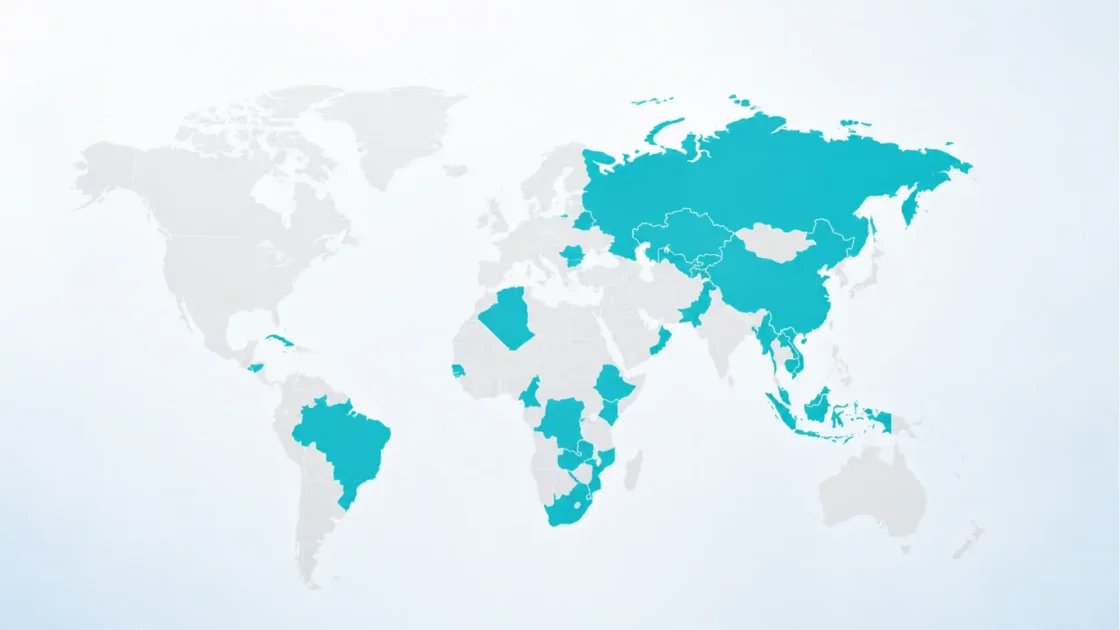
A phone buzzes eight seconds before the shaking starts. Somewhere underground, a fault has already ruptured, and the P-wave, the fast, low-energy tremor that outruns the destructive S-wave, has already reached a few thousand accelerometers sitting in pockets and on nightstands. That is what artificial intelligence does for earthquakes today: it notices something has happened and races the news to people before the damage arrives. It does not know the earthquake was coming next Tuesday. It did not know it was coming next year. It knew about it roughly the same moment the rock did.
Table of Contents
The distance between detecting a disaster and predicting one
That distinction, between detection and prediction, sits at the center of almost every claim made about AI and natural disasters, and it gets flattened constantly in headlines. A model that flags a flood risk twenty-four hours out is doing something genuinely new and useful. A model that claims to know an earthquake’s date, location and magnitude weeks in advance is making a claim that has never survived independent scrutiny, no matter how it is dressed up in neural network language. Both stories get called “AI predicts disaster.” Only one of them is currently true in any operational sense.
The honest picture, built from what geophysicists, hydrologists and volcanologists are actually publishing and deploying in 2026, looks like this: AI has meaningfully improved detection speed, forecasting windows and the reach of warning systems into places that never had them. It has not solved prediction in the sense most people mean when they use the word, which is knowing a specific catastrophe is coming with enough lead time and precision to act. For earthquakes, that kind of prediction remains, by the admission of the researchers working closest to the problem, an open and contested question rather than a solved one. For volcanoes and floods, the picture is more hopeful, because those hazards give off signals over hours, days or weeks that a well-trained model can learn to read. For tsunamis, the science is mostly physics rather than machine learning, and AI’s contribution is speed and reach rather than foresight.
This matters for a question that sounds almost like a thought experiment but is really a serious one: what would it have meant if today’s tools had existed for the people who died in past disasters with no warning at all. Saint-Pierre in 1902. The coastlines of the Indian Ocean in 2004. Armero in 1985. Tangshan in 1976. Each of those catastrophes killed tens of thousands of people, and each one exposes a different failure mode, some technological, some institutional, some both. Laying today’s AI-assisted systems against those specific histories is not an exercise in nostalgia. It is the clearest way to see exactly what this technology can and cannot buy back, hazard by hazard, and to understand why the answer to “could AI have saved them” is yes for some of these events and a much more complicated maybe for others.
What counts as an AI prediction in 2026
The word “prediction” carries three distinct meanings in disaster science, and conflating them is where most of the confusion about AI’s capabilities originates.
Detection means recognizing that an event is already underway, often within seconds, and getting that information to people before the worst of it reaches them. Earthquake early warning is the clearest example: the shaking has started at the epicenter, and the system’s entire job is to outrun it to everywhere else.
Forecasting means estimating the probability of an event occurring within a defined window of time and space, without claiming to know the exact moment. Aftershock forecasts, flood forecasts and most volcanic unrest assessments fall into this category. A forecast might say there is a considerable likelihood of a magnitude 4 or higher aftershock within the next twenty-four hours in a given zone. That is useful information for a fire chief deciding whether to send crews back into damaged buildings, even though it says nothing about the specific hour.
Prediction, in the strict sense that seismologists use the term, means specifying the date, location and magnitude of a future event in advance, with a level of precision that would justify a targeted evacuation. This is the version of the word that shows up in press releases and then quietly fails when other scientists try to reproduce it. No AI system can currently predict the specific date, magnitude and location of an earthquake days or weeks ahead with the reliability needed for public emergency action, and researchers who have made such claims have seen those claims fail under rigorous independent testing.
Keeping these three categories separate changes how every subsequent claim in this piece should be read. When a Google researcher says an AI model extended flood forecasting reliability from zero to five days in some regions, that is a forecasting claim, and a well-supported one. When an early warning system says a quake has been detected and shaking will arrive at a specific location in twelve seconds, that is a detection claim, and it is arguably the most mature AI-adjacent technology in the entire disaster space. When a researcher claims to have found a machine learning signal that anticipates a major earthquake weeks out, that is a prediction claim in the strict sense, and it belongs in the same category as decades of precursor research that came before it and did not hold up, dating back to controversial dilatancy and radon-gas theories from the 1970s.
The distinction is not academic pedantry. It is the difference between a tool that has already saved lives and a tool that, if deployed carelessly, could get people killed through false confidence, or, just as dangerous, through false alarms that erode trust in the warnings that do work.
Earthquakes and the physics that keeps defeating forecasters
Earthquakes are, in a specific and frustrating sense, the hardest of the major natural hazards to forecast, and the reason is structural rather than a failure of imagination or computing power. A fault accumulates stress over decades or centuries as tectonic plates grind past each other. At some point, the accumulated stress exceeds the friction holding the rock in place, and it slips. The problem is that the exact threshold at which any given patch of rock will fail depends on an almost uncountable number of variables: the mineral composition of the fault, the presence of fluids, the geometry of nearby faults, the stress transferred from a previous earthquake a hundred kilometers away years earlier. Small differences in these conditions produce wildly different outcomes, and there is no instrument that can measure all of them at the resolution required.
This is why the field draws such a sharp line between “prediction,” which implies knowing a specific rupture is imminent, and “forecasting,” which means assigning a probability to a region over a longer window. Operational earthquake forecasting, the kind used in California, Italy, New Zealand and Japan, tells emergency planners things like the chance of a damaging earthquake in a given fault system over the next thirty years, or the elevated risk of aftershocks in the days following a mainshock. None of that helps a specific family decide whether to leave their specific house on a specific night, which is exactly the kind of decision that mattered so much in Armero and Tangshan.
Seismologists who work directly on this problem are unusually blunt about its limits, more so than commentary from outside the field tends to be. Earth’s fault systems involve enough inherent variability that distinguishing a genuine precursor signal from statistical noise remains extremely difficult even for the best-trained models, and there is a real societal risk embedded in premature claims, because authorities acting on unreliable AI predictions could trigger evacuations or infrastructure shutdowns that cause massive economic damage and erode the public trust that genuine early-warning systems depend on. The scientific community remains divided on whether probabilistic AI forecasts will ever reach the reliability threshold needed to justify large-scale civil emergency responses based on advance prediction alone.
None of this means AI has failed at earthquakes. It means AI has succeeded at a narrower and more tractable version of the problem: not predicting that an earthquake will happen, but detecting instantly that one has, and forecasting, in probabilistic terms, what is likely to follow it. Those two capabilities alone have already changed outcomes in specific, documented events, which is a different and more durable achievement than a headline about “AI predicts the next big one.”
Seismometers, smartphones and the mechanics of early warning
Traditional earthquake early warning works by exploiting a basic fact of seismic wave physics: the initial P-wave that radiates from a rupture travels faster than the S-wave and surface waves that cause most of the damage. A dense network of seismometers near a fault can detect the P-wave, estimate the earthquake’s location and likely magnitude within seconds, and broadcast a warning that outraces the slower, destructive waves to more distant locations. Japan’s system, built after decades of investment, can give residents in Tokyo tens of seconds of warning for a large rupture centered off the coast. Mexico’s SASMEX network does something similar along the subduction zone that threatens Mexico City. The United States operates ShakeAlert along the West Coast.
The limitation of these systems has never been the underlying physics. It has been cost. A seismic network dense enough to give useful warning times requires hundreds of instruments, each one professionally installed, calibrated and maintained, plus the communications infrastructure to move the data in real time. That is why, for most of the earthquake early-warning era, only a handful of wealthy, earthquake-prone nations had any system at all. Indonesia, home to some of the most active subduction zones on the planet, did not. Neither did most of the countries around the Indian Ocean in 2004.
This is where AI’s most consequential earthquake contribution has actually landed, not in the seismology itself but in the sensor network. Machine learning algorithms can now treat an ordinary smartphone accelerometer, the same low-cost chip that rotates a screen when the phone is tilted, as a crude but serviceable seismometer. A phone sitting still on a nightstand and suddenly registering an acceleration pattern consistent with a P-wave is a data point. A few thousand phones in the same region registering that same pattern within the same few seconds is a detection. The signal-processing challenge, distinguishing a real earthquake from someone dropping their phone or a truck driving past outside, is precisely the kind of pattern-classification problem that machine learning is well suited to solve at a scale no team of human analysts could manage. The result is a detection network with global reach built almost entirely out of hardware that already existed, repurposed through software rather than through a new round of capital investment in physical seismometers.
Google’s Android Earthquake Alerts and the accidental global seismic network
The clearest working example of this approach is Google’s Android Earthquake Alerts system, and the scale it has reached is difficult to overstate. When an Android device is plugged in, stationary and detects motion resembling a seismic P-wave, it sends an anonymized signal to Google’s servers, and if enough nearby phones report the same pattern, the system estimates the earthquake’s location and magnitude and pushes alerts to people in the affected area. Because the sensing hardware already exists inside billions of phones, the system reaches countries that could never have justified building a dedicated seismic network on their own.
A peer-reviewed study published in Science in July 2025, led by researchers from Google, UC Berkeley and Harvard, analyzed three years of the system’s performance and found that it had detected more than 11,000 earthquakes across nearly 100 countries between 2021 and 2024, delivering alerts with accuracy that, in aggregate, matched traditional seismic monitoring networks built from dedicated instruments. By late 2025, the cumulative figures had grown further: more than 18,000 earthquakes detected and roughly 790 million alerts sent, expanding meaningful early-warning access from an estimated 250 million people worldwide to around 2.5 billion.
The lead times involved are short by any ordinary measure of warning, and that is precisely the point. In a magnitude 6.2 earthquake that struck Turkey in April 2025, the system’s first alert reached users 8.0 seconds after the earthquake began, and people experiencing moderate to strong shaking had a warning window ranging from a few seconds up to about 20 seconds; more than 11 million alerts were delivered for that single event. User surveys attached to the alerts found that 85 percent of recipients who got a warning did in fact feel shaking afterward, and a majority received the alert either before or during the shaking rather than after it had already passed, which is the operational definition of the system doing its job. A researcher description of the value of those seconds put it plainly: they can be enough time to get off a ladder, move away from dangerous objects and take cover.
It is worth being precise about what this system is not. It is not predicting earthquakes. The Google research team itself is explicit that prediction, in the sense of knowing when and where a quake will strike before it happens, remains scientifically impossible, and what the system does is detect the moment a quake begins and race that information to nearby users before the most damaging waves arrive. That is a meaningfully different claim than the ones that circulate in less careful reporting, and it is also, on its own terms, one of the more consequential deployments of AI-adjacent pattern recognition in the entire disaster-response field, simply because of how many people it now reaches who had no comparable protection before.
Aftershock forecasting and the new generation of machine learning models
The period immediately following a large earthquake is its own distinct hazard. Aftershocks can collapse buildings already weakened by the mainshock, and in some documented cases they have caused more deaths and structural damage than the initial rupture. For decades, the standard tool for forecasting how many aftershocks to expect, and roughly where, has been the Epidemic-Type Aftershock Sequence model, known as ETAS, which treats earthquakes as a self-exciting statistical process where each event raises the probability of further events nearby. ETAS is well validated and is used operationally in Italy, New Zealand and the United States, but it has one significant practical drawback: running the simulations it requires can take several hours or even days on a single mid-range computer, precisely the window when decisions about search-and-rescue deployment and building safety inspections are most urgent.
Researchers from the University of Edinburgh, the British Geological Survey and the University of Padua published findings in late 2025 showing that machine learning models trained on aftershock data from California, New Zealand, Italy, Japan and Greece could produce forecasts of comparable quality to ETAS, covering the number of aftershocks expected within 24 hours of a magnitude 4 or higher earthquake, in a matter of seconds rather than hours. The models were trained on earthquake catalogs from regions with different tectonic settings specifically so they could generalize to other earthquake-prone parts of the world, which matters because it suggests the approach is not limited to places with decades of high-quality local seismic records.
A parallel research effort at UC Berkeley, developing a model called RECAST, is pursuing a related goal: building forecasting systems flexible enough to learn continuously from larger datasets as an earthquake sequence unfolds, rather than relying on a fixed statistical formula calibrated in advance. One motivation behind this work is explicitly drawn from natural language processing, the same field that produced large language models: the idea that earthquake sequences recorded in one region, say Japan, might carry information useful for forecasting sequences in another region, say California, in the same way that patterns learned from one language can inform predictions about a related one. That kind of transfer learning is still an active research direction rather than an operational deployment, but it illustrates where the field is heading, toward models that pool data across borders instead of treating each country’s seismic history as an isolated dataset.
None of these systems tell anyone that a specific magnitude 7 earthquake will strike a specific city on a specific date. What they tell a fire chief, a hospital administrator or a bridge inspector is something narrower and still valuable: given what just happened, here is the probability that something more happens in the next day, and here is roughly where. That is a genuine improvement in decision-support speed, even though it falls well short of the popular idea of AI “predicting” an earthquake.
Comparing traditional and AI-assisted earthquake systems
The differences between the older, instrument-heavy approach to earthquake monitoring and the newer, AI-assisted approach are easiest to see side by side, because the two methods are not really competitors so much as complements that solve different pieces of the same problem.
Traditional systems rely on dense, expensive, professionally maintained seismometer networks, while AI-assisted systems can repurpose sensors that already exist inside consumer devices, trading some precision for dramatically greater geographic reach.
| Dimension | Traditional seismic networks (Japan, Mexico, US ShakeAlert) | AI-assisted smartphone networks (Android Earthquake Alerts) |
|---|---|---|
| Sensor hardware | Dedicated seismometers, professionally installed | Existing phone accelerometers, no new hardware |
| Geographic reach | Limited to countries that can fund the infrastructure | Nearly 100 countries, wherever Android phones are common |
| Typical warning time | Seconds to tens of seconds, depending on distance from epicenter | Similar order of magnitude, roughly 8 to 20 seconds in documented cases |
| Detection accuracy | Very high, decades of calibration | Comparable in aggregate, per 2025 Science study findings |
| Primary cost driver | Capital investment in physical stations and maintenance | Software development and server infrastructure |
| Main limitation | Cost restricts deployment to wealthier, high-risk regions | Depends on phone density, connectivity and stationary devices |
The explanatory point behind this comparison is not that smartphone-based detection has replaced dedicated seismic networks. Regions with the resources to build and maintain professional networks still get more precise, more redundant coverage from doing so. What the AI-assisted approach has done is close a coverage gap that had persisted for the entire history of earthquake early warning: it has given a meaningful fraction of warning capability to places that would otherwise have had none at all, at a fraction of the capital cost, by treating consumer hardware already in people’s pockets as a distributed sensing grid rather than building a new one from scratch.
The stubborn problem of magnitude, timing and location
Even within the narrower, more tractable categories of detection and forecasting, three specific technical problems continue to limit what any system, AI-assisted or not, can promise.
Magnitude estimation in the first seconds after a rupture begins is inherently uncertain, because the early data available to any sensor, whether a seismometer or a smartphone, only captures the very beginning of a process that may still be unfolding. A fault that ruptures for two seconds and one that ruptures for twenty seconds can look nearly identical in their opening instant, even though the resulting earthquakes will differ enormously in size and damage potential. Models have gotten better at refining magnitude estimates as more data arrives, which is why alert systems often issue an initial estimate and then update it, but the first few seconds of any warning necessarily carry more uncertainty than the public messaging around them tends to convey.
Long-range timing, the question of whether an earthquake will happen next month or next decade on a given fault, has not been meaningfully cracked by any machine learning approach published to date. Deep neural networks trained on California seismicity have been benchmarked directly against the decades-old ETAS statistical model, and the finding that recurs across multiple independent studies is that the AI models perform on par with, rather than substantially better than, the physics-based approach, despite being far more computationally intensive to train. That is a genuinely useful result for the field, because it tells researchers where the ceiling currently sits, but it is not the breakthrough that popular coverage of “AI earthquake prediction” often implies.
Location precision for aftershock forecasting has improved through deep learning, most notably in early work from a Google and Harvard collaboration that trained a neural network on more than 131,000 mainshock and aftershock pairs to predict which five-kilometer grid cells around a mainshock were most likely to host aftershocks. That model outperformed the previous standard approach, but the researchers themselves were candid that the results, while promising, were still far from perfectly reliable, and the field has continued refining the approach in the years since rather than treating it as solved.
Taken together, these three limitations explain why earthquake science, more than any other hazard covered here, resists the word “prediction” even as it embraces “detection” and “forecasting” enthusiastically. The physics of rupture initiation and propagation contains enough genuine randomness, or at least enough complexity that current instrumentation cannot resolve, that no model trained on historical data has been able to close the gap.
Volcanoes usually announce themselves, if anyone is listening
Volcanic eruptions occupy a fundamentally different position on the predictability spectrum than earthquakes, and the reason is mechanical rather than a matter of better instruments. An earthquake is the sudden failure of rock that has been silently accumulating stress for years, with few if any surface signals until the moment of rupture. A volcano, by contrast, is a plumbing system, and material moving through it, magma rising, gas escaping, rock cracking under pressure, tends to produce measurable precursor signals over a period of hours, days, weeks or occasionally years before an eruption. This is why volcanology has had operational success stories that seismology has not: the 1991 evacuation of roughly 75,000 people around Mount Pinatubo in the Philippines ahead of a catastrophic eruption stands as one of the field’s clearest wins, made possible because monitoring teams could read the mountain’s warning signs and communicate them to authorities who acted on them.
The signals themselves are varied and well catalogued: increased seismicity as rock fractures to make room for rising magma, ground deformation as the surface swells or subsides, changes in the temperature and chemical composition of gases escaping from fumaroles, and, closer to eruption, distinctive long-period seismic signatures that reflect the resonance of magma and gas moving through narrow conduits. The volcanologist Bernard Chouet, reflecting later on the data recorded before the deadly 1985 Nevado del Ruiz eruption in Colombia, put the diagnostic challenge memorably: the volcano was screaming “I’m about to explode,” but the scientists studying it at the time were not able to read the signal in real time. That single sentence captures the entire promise of AI in this domain, because pattern recognition across large volumes of noisy, multi-channel sensor data is precisely the kind of task machine learning has proven useful for elsewhere.
More than half of the world’s active volcanoes are not monitored instrumentally at all, which means that even eruptions that could, in principle, have rung an alarm occur without anyone nearby having a clue what is coming. This coverage gap is structurally similar to the earthquake sensing gap closed by smartphone networks, and it has attracted a similar kind of AI-driven response, built not on new ground instruments but on satellite data that already sweeps over every volcano on Earth on a regular schedule regardless of whether anyone has invested in local monitoring.
Satellite radar and the rise of InSAR-based volcano monitoring
The single most important sensing technology for volcanoes that lack ground instrumentation is InSAR, interferometric synthetic aperture radar, which measures millimeter-scale changes in ground elevation from orbit by comparing radar images of the same location taken on different passes. A volcano whose summit is inflating because magma is accumulating beneath it will show up as a measurable deformation signal in successive InSAR images, even if no one has ever installed a seismometer or a GPS station anywhere near it.
The volume of data this approach generates is enormous, and that is exactly where AI enters the picture. Satellites and continuous GPS stations produce far more deformation data than human analysts could realistically review in a timely way, and machine learning models can be trained to pick out significant deformation signals from background noise, including subtle patterns that a human reviewer working through the same imagery might miss simply because of the volume involved. Automating this analysis means that signs of magma rising, which cause the ground to swell, get caught earlier, at a stage when interpretation can still meaningfully inform hazard mitigation decisions rather than simply confirming, after the fact, that something had been building.
A concrete recent example is the 2024 to 2025 dyke intrusion sequence at the Fentale-Dofen volcanic complex in Ethiopia, where a magmatic dyke roughly 50 kilometers long caused about 3 meters of surface displacement over a 60-day period. Because ground access to part of the affected region was not possible, researchers from the UK’s Centre for the Observation and Modelling of Earthquakes, Volcanoes and Tectonics relied on satellite InSAR data to track the crisis in near real time, sharing their analysis with Ethiopian authorities and universities, who used it as one basis for a decision to evacuate roughly 75,000 people. That evacuation succeeded not because a machine learning model predicted the exact date of an eruption, but because remote sensing gave scientists and officials continuous visibility into a hazard that would otherwise have been essentially invisible until it was too late to respond.
A separate research and monitoring platform, developed by a team from the Technical University of Berlin and the GFZ German Research Centre for Geosciences, has taken a similar approach further, building a system that analyzes satellite imagery using AI methods as a first step toward a more comprehensive volcano early-warning capability. The explicit motivation behind the project is the same coverage gap: because more than half of the world’s active volcanoes have no ground-based monitoring, a strategy built on data that already exists in orbit, rather than instruments that would need to be installed and maintained on the ground, is the only realistic path to extending any warning capability to most of the world’s volcanoes at all.
Deep learning and the hunt for eruption precursors
Beyond satellite deformation data, a substantial body of recent research has applied deep learning to the seismic signals that precede eruptions, looking for patterns too subtle or too complex for traditional statistical thresholds to catch reliably. A 2025 study published in Nature Communications examined what researchers call ergodic seismic precursors, essentially statistical regularities in pre-eruption seismicity that hold across different volcanoes even when data from any single volcano is too sparse to build a reliable model on its own. The technique, transfer learning, borrows the same core idea used in aftershock forecasting: train a model on the volcanoes where good data exists, and apply what it has learned to volcanoes where data is scarce, effectively pooling scientific knowledge across sites that would otherwise be treated in isolation.
Other research groups have focused on comparing earthquake signals recorded before different eruptions of the same volcano, looking for AI-detectable regularities that could serve as an early warning trigger. A study examining Japan’s Ontake Volcano compared seismic signatures across two separate eruptions to evaluate whether machine learning could distinguish a genuine precursor pattern from ordinary background seismicity, part of a broader research push toward monitoring techniques for the roughly half of the world’s volcanoes that currently have no dedicated observation network at all.
There have also been genuinely surprising findings that illustrate how much room remains for discovery in this space even with well-studied volcanoes. Researchers examining the record-breaking January 2022 eruption of the Hunga Tonga-Hunga Ha’apai volcano found that a distinctive seismic wave had been recorded by two distant seismic stations roughly fifteen minutes before the volcano’s most explosive phase, a signal that had gone unrecognized in real time and was only identified afterward through careful reanalysis, exactly the kind of pattern that automated, always-on machine learning monitoring is well suited to flag in the future. Findings like this are a reminder that the field is not simply applying AI to a fixed and fully understood set of precursor signals; it is still discovering what those signals even are, with AI increasingly serving as the tool that surfaces candidates for human volcanologists to investigate further.
The overall trajectory for volcanic monitoring, then, looks meaningfully more optimistic than the earthquake picture, precisely because volcanoes give off precursor signals that unfold over a usable timescale. AI’s contribution has been to make sense of a data volume, spanning satellite imagery, seismic records and gas chemistry, that has grown far beyond what human analysts alone could process in real time, and to extend monitoring capability to volcanoes that had none, primarily through satellite data that requires no local infrastructure investment at all.
Tsunamis, a hazard where physics does most of the warning work
Tsunamis occupy an unusual position in this discussion because the core science behind warning people about them is old, well understood physics rather than a frontier for machine learning. Once an earthquake, landslide or volcanic collapse displaces enough ocean water to generate a tsunami, the wave’s speed and behavior as it crosses open water are governed by equations that have been solvable for more than a century, largely a function of ocean depth. A tsunami in deep water can travel at speeds comparable to a jet aircraft, which is precisely why the lead time available to warn distant coastlines, while real, is often measured in a few hours rather than a few days.
What has historically limited tsunami warning has not been an absence of scientific understanding but an absence of monitoring infrastructure and, just as critically, an absence of public awareness about what natural warning signs mean. The Indian Ocean earthquake of December 26, 2004, is the starkest illustration of this failure. At the time of the earthquake, there was no warning system in place in the Indian Ocean at all. The magnitude 9.1 rupture off Sumatra generated waves that reached the Indonesian city of Banda Aceh within 15 to 20 minutes, giving almost no time for any warning to matter locally, but the same tsunami took roughly two hours to reach Sri Lanka, India and Thailand, and several hours to reach as far as East Africa, where it still killed hundreds of people. That geography means a properly functioning warning system, one that could detect the earthquake and calculate the tsunami’s likely arrival time at distant coastlines, could plausibly have saved a very large share of the roughly 230,000 people who died that day, simply because for most victims outside the immediate epicenter zone, there was physically enough time to move away from the coast, if only someone had told them to.
The scale of that missed opportunity has been quantified by researchers who have studied the disaster since. Around 80,000 people died along the coasts of India, Sri Lanka and Thailand who could plausibly have been saved had an operational tsunami warning system existed, because the tsunami took roughly two hours to reach those locations, more than enough time for a coordinated alert and evacuation if the detection and communication infrastructure had been in place. That single estimate, from British Geological Survey researchers marking the twentieth anniversary of the disaster, is one of the clearest quantitative answers available anywhere in disaster science to the question this article is built around: what would today’s tools have meant for a specific past catastrophe.
The tsunami warning networks built after 2004
The response to the 2004 disaster was swift by the standards of international disaster policy, though obviously far too late for the people who died that December. The Indian Ocean Tsunami Warning and Mitigation System was established in 2005 under UNESCO’s Intergovernmental Oceanographic Commission, bringing together 28 member states around a shared early-warning framework. Since then, roughly 1,400 monitoring stations have been installed globally, cutting the time needed to issue a warning after a tsunami-generating earthquake down to just minutes in many cases, a dramatic improvement from a starting point of essentially zero coordinated capability in the region.
Where does AI fit into this picture, given that the underlying wave physics does not need machine learning to be understood? The contribution is mostly at the edges of the detection and communication pipeline rather than at the core of the forecasting model itself. Machine learning has been applied to speeding up the classification of seismic events as tsunami-generating or not, which matters because issuing warnings for every offshore earthquake regardless of tsunami potential would produce an unsustainable rate of false alarms and eventually train coastal populations to ignore alerts altogether. Pattern recognition techniques, similar in spirit to the aftershock and volcano work described earlier, have also been explored for automatically detecting anomalous sea-level readings from tide gauges and ocean-bottom pressure sensors that might indicate a wave is forming, distinguishing a real signal from the ordinary noise of tides, storms and instrument drift.
The broader lesson from the 2004 disaster, though, is one about institutions and communication as much as sensors. Even where the physics is well understood and the necessary detection technology exists, a warning only saves lives if it reaches people fast enough, in a form they understand, in time for them to act. At the time of the 2004 earthquake, there was little public awareness about tsunamis in the region, and there was no official tsunami warning system, so the natural warning signs that did occur, the ground shaking itself near the source, and the unusual withdrawal of the sea that preceded the largest waves, were not widely understood as danger signals, and many witnesses to the receding ocean reportedly walked out onto the exposed seabed to look at it rather than fleeing inland. That detail matters enormously for how this article’s later counterfactual sections should be read: technology alone, even perfect technology, does not close a gap that public education and institutional trust are equally responsible for closing.
Floods, the natural disaster machine learning has already tamed
Of all the hazards covered in this piece, flooding is the one where AI has moved furthest from research promise into deployed, measurable operational impact, and the reason is structural. Unlike earthquakes, floods are driven by processes, rainfall, snowmelt, river discharge, that unfold over hours to days and that leave a rich historical data trail almost everywhere on Earth, even in places that lack dense networks of purpose-built river gauges. That combination, a slower-developing hazard plus abundant indirect data, is exactly the setting where machine learning models tend to outperform older statistical approaches most clearly.
According to the World Meteorological Organization, floods are the deadliest category of natural hazard globally and have grown both more frequent and more intense over the past decade, disproportionately affecting developing countries that have historically had the least access to sophisticated forecasting infrastructure. Early warning systems have been shown to reduce flood-related fatalities by as much as 43 percent and economic losses by 35 to 50 percent, and the World Meteorological Organization has estimated that even a twelve-hour lead time before a flood can reduce related damages by around 60 percent. Those figures explain why flood forecasting has attracted so much AI research and investment relative to its lower public profile compared with earthquakes: the return on improved lead time, measured in lives and dollars, is unusually large and unusually well documented.
Google’s Flood Hub and forecasting rivers no one measures
The most extensively studied example of AI-driven flood forecasting is Google’s Flood Hub system, which grew out of research that began in 2018 and has since been integrated into an operational early-warning platform producing real-time forecasts for more than 80 countries. The technical achievement underlying the system is what researchers describe as forecasting in ungauged basins, meaning rivers and watersheds that have no dedicated monitoring instrumentation of their own. The model is trained on data from thousands of gauged rivers around the world and learns to generalize hydrological patterns, how rainfall in a given kind of terrain typically translates into river discharge, well enough to produce useful forecasts even for a river it has never directly measured.
The reported gains in forecasting reliability are substantial: extending the usable window of currently available global flood nowcasts from essentially zero to as much as five days in some regions, and bringing forecasting quality in parts of Africa and Asia up to a level roughly comparable to what has long been available in Europe, where dense monitoring infrastructure already existed. In April 2026, Google expanded a specific piece of this system, a flash-flood-focused model built using a technique the company calls Groundsource, which trains recurrent neural networks on unstructured historical data, including two decades of local news coverage of past flooding, to fill gaps where sensor data simply does not exist. That model can flag flash-flood risk up to 24 hours in advance in urban centers across roughly 150 countries, and independent meteorologists interviewed about the tool have generally described it as a valuable additional layer of warning capability, while emphasizing that it works best as a complement to, rather than a replacement for, the forecasting already done by national weather and hydrological services.
Independent academic scrutiny of the system has been broadly positive but not uncritical. A 2026 paper assessing the readiness of Google’s global flood forecasting model for real-world deployment noted that the benchmarking largely relies on a single global baseline for comparison and argued that evaluation of AI models in the earth sciences needs to move beyond simple accuracy metrics toward testing how well models generalize to conditions genuinely outside their training data, a caution that applies broadly across every AI disaster-forecasting system discussed in this article, not just this one. The underlying finding, that AI-based flood models built by Google Research can significantly improve forecasting relative to the previous state of the art, even in countries where reliable flood-related data is historically scarce, remains one of the better-substantiated claims in this entire field, precisely because it has been tested against real events across dozens of countries rather than validated only in a controlled research setting.
Wildfires, hurricanes and the wider hazard landscape
Earthquakes, volcanoes, tsunamis and floods dominate the popular conversation about AI and natural disasters, but the same underlying techniques, pattern recognition across large sensor datasets, satellite imagery analysis and probabilistic forecasting, are being applied across essentially every other major hazard category, with varying degrees of maturity.
Wildfire detection has benefited from satellite thermal imaging combined with machine learning classifiers that can distinguish a genuine ignition from other heat sources far faster than manual review of the same imagery, and some fire agencies have begun deploying AI-assisted camera networks that scan for smoke plumes around the clock across large forested areas that would be impossible to monitor with human observers alone. As with volcanoes, the underlying physical process, combustion spreading through fuel, unfolds over a timescale of hours to days once ignition occurs, which gives forecasting models a genuinely useful window to work with, closer to the flood and volcano cases than to the earthquake case.
Tropical cyclone forecasting has a long history of using numerical weather models, and machine learning has increasingly been layered on top of those physics-based simulations to improve specific components, particularly rapid intensification forecasting, the notoriously difficult problem of predicting when a hurricane will suddenly and dramatically strengthen in the day or two before landfall. A review of machine learning applications in tropical cyclone forecast modeling has documented steady, incremental improvement in this area over the past several years, though hurricane track and intensity forecasting overall remains a domain where traditional atmospheric physics models, refined and supplemented by AI rather than replaced by it, continue to do most of the forecasting work.
Landslides, a hazard closely related to both earthquakes and heavy rainfall, have also become a target for AI-assisted prediction, with geologists applying machine learning to slope stability data, rainfall records and terrain characteristics to identify which specific hillsides are most likely to fail under given conditions. This work matters directly to some of the case studies later in this article, since the lahars that devastated Armero in 1985 were, in physical terms, a specific and especially lethal category of volcanically triggered landslide.
Across all of these hazard types, a consistent pattern emerges that is worth naming explicitly before moving into historical case studies: AI performs best, relative to older methods, on hazards that unfold over a timescale of hours to days and that generate abundant, learnable precursor data, whether that data comes from satellites, weather models, river gauges or seismic networks. It performs closest to its ceiling, offering speed and reach rather than genuine foresight, on the hazard, earthquakes, that strikes with the least advance physical warning of any kind. That pattern is the single most important thing to carry into the historical counterfactuals that follow, because it determines, case by case, how much of a difference today’s tools would actually have made.
A history written in disasters that struck without warning
The four historical case studies that follow were not chosen at random. Each represents a different combination of hazard type and failure mode, and together they cover almost every way a warning can fail to reach the people who need it: no monitoring technology existed at all, monitoring existed but the science of interpretation was too immature, the science existed but the warning could not physically reach the population in time, and the warning existed on paper but the institutions responsible for acting on it did not.
Saint-Pierre, Martinique, in 1902, is a case where the fundamental science of the hazard itself, pyroclastic density currents, was not yet understood by anyone on Earth, so no amount of monitoring could have told scientists what kind of danger they were actually looking at, even though the volcano gave weeks of unmistakable warning signs.
The Indian Ocean tsunami of 2004 is a case where the danger was physically well understood by scientists elsewhere in the world, but no monitoring or communication infrastructure existed in the region at all, and public awareness of the natural warning signs was almost nonexistent.
Armero, Colombia, in 1985, is a case where the danger was understood by scientists who were actively monitoring the volcano and had even published a hazard map showing exactly what would happen to the town, but the communication chain between that scientific knowledge and the people at risk broke down at almost every link, worsened by an electrical storm that knocked out communications at the critical moment.
Tangshan, China, in 1976, is a case where an earthquake struck a region that was, at the time, considered to be at only modest seismic risk, monitored by a network specifically designed to catch precursor signals, and the earthquake simply did not produce any of the precursor signals the monitoring system was designed to detect, a stark illustration of the very limits described earlier in this article’s discussion of why earthquake prediction remains unsolved.
Reading these four cases side by side, with today’s AI-assisted tools in mind, produces a much more textured answer than a simple yes or no to the question of whether this technology could have saved these people. In some cases, the honest answer is that it plausibly could have, dramatically. In at least one case, the honest answer is that it likely could not have, because the underlying hazard remains outside the reach of any prediction technology that exists today, AI-assisted or otherwise.
Saint-Pierre, 1902, and a city that trusted a sleeping mountain
Mount Pelée sat roughly seven kilometers from Saint-Pierre, a prosperous port city of around 30,000 people known at the time as the Paris of the Caribbean. The mountain had shown minor activity in 1792 and again in 1851, both minor events that caused little damage, and that history had settled into a kind of civic folklore: Pelée was a gentle giant, and the only real danger anyone associated with a volcano, lava flow, would not threaten a city separated from the crater by deep ravines that everyone assumed would channel any future flow safely away from town.
The mountain began stirring again in April 1902, with small earthquakes, sulfurous fumes and a scattering of ash. Over the following weeks, the warning signs escalated in ways that, read with modern volcanological knowledge, look almost impossible to misinterpret: lahars killed more than a hundred people at a nearby factory and village in early May, birds fell dead from the sky weighted down by ash, dead fish appeared floating in the sea, and an undersea telegraph cable connecting Martinique to a neighboring island mysteriously ruptured. None of this data was being fed into any kind of systematic scientific analysis, because the scientific concept that would eventually explain what was actually happening, the pyroclastic density current, a fast-moving, ground-hugging cloud of superheated gas and ash capable of traveling at more than 160 kilometers per hour, had not yet been identified or named by volcanology anywhere in the world. The single most scientifically informed person on the island, a schoolteacher named Gaston Landes who had been watching the volcano since late 1901, still believed, because it was the best available scientific understanding of the era, that the primary danger from any eruption would be a lava flow that the surrounding ravines would redirect away from the city.
Local political pressure compounded the scientific blind spot. An election was scheduled for May 11, and authorities, along with local newspapers, actively discouraged evacuation and reassured residents the city was safe, reportedly in part because officials did not want voters leaving the city before the vote. On the morning of May 8, the volcano’s upper flank ripped open and released a pyroclastic surge that reached the city in well under two minutes, killing an estimated 28,000 to 30,000 people almost instantly. Only one or two people in the city survived.
Run this scenario against every category of AI-assisted tool described earlier in this article, and the honest conclusion is sobering: almost none of it would have mattered, because the fundamental scientific concept needed to interpret the warning signs correctly did not exist yet. Satellite InSAR deformation monitoring did not exist as a technology in 1902, but even setting that anachronism aside, the deeper problem is that no one, anywhere, understood that a volcano showing exactly these symptoms was capable of producing a horizontal, ground-hugging blast of lethal heat rather than a slow-moving lava flow that ravines could redirect. A modern AI-based volcano monitoring system, dropped into 1902 with full satellite coverage and unlimited computing power, would have correctly detected that Mount Pelée was in a state of escalating unrest. It would very likely have struggled to tell scientists of that era what kind of eruption to expect, because the AI models built and validated today were trained on a modern scientific understanding of pyroclastic flows that Saint-Pierre’s catastrophe itself was the event that created. This is the one case among the four where the limiting factor was not sensing or communication but the state of scientific knowledge itself, and it is a useful corrective against any assumption that better technology automatically closes every historical gap.
The Indian Ocean, 2004, and an ocean with no ears
Unlike Saint-Pierre, the scientific understanding needed to prevent mass casualties from the 2004 Indian Ocean tsunami already existed elsewhere in the world by December of that year. The physics of tsunami generation and propagation had been well understood for decades, and the Pacific had operated a functioning, if imperfect, tsunami warning system since the 1960s, built in response to earlier Pacific tsunami disasters. The problem in the Indian Ocean was not a knowledge gap. It was an infrastructure and attention gap: the last major tsunami in that basin had struck in 1883, following the eruption of Krakatoa, and that century-long gap in institutional memory meant that no comparable warning network had ever been built around the Indian Ocean, despite the fact that roughly five percent of tsunamis recorded between 1900 and 2017 occurred there.
When the magnitude 9.1 earthquake ruptured beneath the Indian Ocean on December 26, 2004, along the longest fault rupture ever observed at that point, roughly 1,200 kilometers, the seismic event itself was detected almost immediately by seismographs around the world, the same kind of global monitoring network that, today, would trigger an Android Earthquake Alerts notification within seconds. The failure was not in detecting that a massive earthquake had occurred. The failure was that there was no established process, no coordinated regional communication chain, and no public education campaign, to translate that seismic detection into an actionable tsunami warning reaching coastal communities before the water arrived.
This is precisely the scenario where today’s combination of tools would have made the largest measurable difference of any case examined here. A modern earthquake of this magnitude would be detected within seconds by both traditional seismic networks and smartphone-based systems layered on top of them. Automated tsunami-potential classification, now a mature application of pattern recognition to seismic and oceanographic data, would flag the earthquake’s location, depth and mechanism as highly likely to generate a major tsunami within moments, rather than requiring the manual expert analysis that, in 2004, took precious time to reach a conclusion, made worse by the total absence of any established communication protocol for the region. The 1,400 monitoring stations that now exist globally, largely a direct policy response to this exact disaster, would have provided real-time confirmation as the wave began propagating. For the roughly 80,000 people who died along coastlines two or more hours from the epicenter, a window that researchers studying the disaster have specifically identified as long enough for evacuation had a warning existed, modern detection and communication technology would very plausibly have made the difference between life and death for the overwhelming majority. For the tens of thousands who died in Banda Aceh within 15 to 20 minutes of the earthquake, closest to the epicenter, even a perfect modern warning system would have offered a much narrower and more uncertain margin, since the wave in some cases outran any realistic combination of detection, decision-making and evacuation.
Armero, 1985, and a warning that never reached the people who needed it
Nevado del Ruiz is, in many ways, the case study that most directly refutes the idea that better prediction technology alone solves the disaster problem, because in this instance the prediction, in every meaningful sense of the word, already existed. Colombian and international volcanologists had been monitoring the volcano since renewed seismic activity began in late 1984. A United Nations seismologist visited in March 1985 and identified a vapor column he correctly concluded was a typical precursor of a major eruption. Geologists published a detailed hazard map in October 1985, a full month before the eruption, explicitly showing that the town of Armero could be completely flooded by lahars in the event of a major eruption, a map so specific in its warning that some officials criticized it at the time for being too alarming.
None of that scientific clarity translated into effective action. When the volcano erupted at 3 p.m. on November 13, seismic activity briefly returned to what monitors interpreted as normal levels afterward, and authorities decided against initiating an evacuation. The volcano erupted again, far more violently, at around 9:09 p.m., sending lahars racing down river valleys that funneled directly toward Armero. The lahars took approximately two hours and twenty-one minutes to reach the town, an interval that, in principle, should have been more than enough time for evacuation, especially given that the danger and the specific river pathways the mud would follow had already been mapped in detail a month earlier. What actually happened was a near-total breakdown in the communication chain: a storm that night knocked out electrical power in the region, civil defense officials from nearby towns tried repeatedly to reach Armero by radio and could not make contact, and the mayor of Armero, overheard on a ham radio shortly before the lahar struck, said he did not think there was much danger.
This is the case where AI’s contribution would be least about scientific prediction, since the prediction already existed in 1985 in essentially usable form, and most about the parts of the modern disaster-technology stack that are often taken for granted: automated, redundant alert distribution that does not depend on a single radio operator successfully reaching a single town official on a stormy night. A modern system built on the same architecture as Android Earthquake Alerts, cell broadcast emergency alerts, or automated satellite-relayed warnings would not have been vulnerable to a single downed power line or a single unanswered radio call in the same way the 1985 communication chain was. Real-time seismic monitoring feeding directly into an automated public alert, rather than requiring a chain of human phone calls and radio transmissions across multiple towns and agencies during a nighttime storm, is exactly the kind of redundant, low-latency infrastructure that has become standard practice in earthquake and flash-flood alerting since 1985, largely because of lessons drawn directly from disasters like this one. Given that the danger was scientifically known, mapped, and unfolding over a two-hour window, this is arguably the case among the four where a modern, AI-assisted alert and communication system would have converted an already-correct scientific prediction into actual survival for the large majority of Armero’s roughly 23,000 to 25,000 victims.
Tangshan, 1976, and an earthquake nobody was watching for
Tangshan presents the sharpest possible contrast to Armero, because here the monitoring infrastructure and institutional will to act on warnings both existed, and the earthquake still struck with essentially no advance notice, for reasons that remain instructive about the fundamental limits of earthquake science discussed earlier in this article. China had, in fact, achieved what remains the only widely credited successful short-term earthquake prediction in modern history the year before, in Haicheng in 1975, where an extended series of foreshocks led to an evacuation credited with keeping the death toll from a magnitude 7.5 earthquake down to roughly 2,000 people. That success created real institutional momentum: the Tangshan area itself had been monitored since 1974 for microseismicity, ground elevation changes, groundwater radon levels and other indicators that Chinese seismologists at the time believed could serve as precursors.
None of it worked for Tangshan, because the earthquake simply did not produce the kind of precursor signals the monitoring network was designed to detect. A meeting of technical experts held in Tangshan on July 15, 1976, less than two weeks before the earthquake, concluded there was no indication of potential seismic activity exceeding magnitude 5, the threshold at which findings would even be reported to civil authorities. There were no minor foreshocks of the kind that had given Haicheng’s residents their crucial warning the year before. At 3:42 a.m. on July 28, without any of the precursor signals the entire regional monitoring apparatus had been built to catch, a magnitude 7.6 to 7.8 earthquake struck directly beneath the city, on a fault that was not even known to exist beforehand, killing at least 242,000 people by the official count and, according to some historian estimates, possibly several times that number.
This is the case study where the answer to “would AI have helped” is genuinely the most limited of the four, and it is worth being direct about why. Every category of AI-assisted earthquake tool described earlier in this article, smartphone-based detection, machine learning aftershock forecasting, deep learning models benchmarked against ETAS, operates on the same fundamental premise: it detects that an earthquake has already begun, or forecasts probability based on patterns in seismicity that has already occurred. None of those tools claims to identify, in advance, an earthquake that gives off no precursor signals at all before its main rupture, and Tangshan’s earthquake is a well documented example of exactly that scenario. Modern smartphone-based detection would almost certainly have provided a handful of seconds of warning after the rupture began, the same kind of warning the Android Earthquake Alerts system now provides during earthquakes in similarly rural, monitoring-sparse regions today, and that narrow warning window could plausibly have helped some fraction of Tangshan’s population get out from under masonry structures that collapsed on people while they slept. But the deeper failure mode at Tangshan, a major earthquake occurring without meaningful advance seismic warning, remains, by the explicit and repeated acknowledgment of the researchers working on this problem today, essentially as unsolved in 2026 as it was in 1976.
Running these disasters again with today’s tools
Laying all four cases side by side produces a pattern that maps closely onto the technical distinctions established earlier between detection, forecasting and true prediction. The disasters where today’s AI-assisted tools would make the most dramatic difference are the ones where the underlying hazard science was already understood and the failure was in sensing coverage, communication infrastructure, or both. The Indian Ocean tsunami and the Armero lahar both fall clearly into this category, though for different specific reasons: the tsunami lacked any regional monitoring or communication network at all, while Armero had the science and even a detailed hazard map but lost the warning in a broken communication chain during a single critical night.
Saint-Pierre occupies a genuinely different category, one where the limiting factor was not sensing, communication or institutional will, but the scientific knowledge required to correctly interpret the signals that were, in fact, plainly visible to everyone on the island for weeks. This is an important corrective to any narrative that treats AI as a technology that simply needs to be pointed at a problem to solve it. Pattern recognition, however sophisticated, can only recognize patterns that the underlying science has already learned to associate with danger. In 1902, the association between certain volcanic warning signs and a horizontal blast of lethal, fast-moving ash had not yet been made by anyone, and no algorithm, however capable, invents scientific concepts that its training data does not yet contain a way of naming.
Tangshan sits at the far end of the spectrum from Armero, illustrating the genuine, still-unsolved limit of earthquake science itself. Even a monitoring apparatus that was, by the standards of 1976, unusually well resourced and specifically designed to catch precursor signals found nothing to catch, because the earthquake apparently produced nothing to find. This is the single clearest piece of evidence in all four case studies for the claim made early in this article: earthquake prediction, in the strict sense of specifying date, location and magnitude in advance, remains an unsolved problem, and no amount of additional AI research funding changes that fact if the underlying physical signal genuinely is not there to detect.
Counting the lives inside the counterfactual
Turning this analysis into an estimate of lives that plausibly could have been saved requires care, because these are historical counterfactuals rather than controlled experiments, and the honest answer for each case carries a different degree of confidence.
For the Indian Ocean tsunami, researchers studying the disaster have already done much of this quantification directly: roughly 80,000 of the disaster’s approximately 230,000 deaths occurred in locations that had two or more hours of physical travel time before the wave arrived, a window that a functioning, AI-assisted detection and communication system, of the kind that exists in the region today, would very plausibly have converted into successful evacuations for the large majority of those specific victims. That leaves a substantial remainder of deaths, primarily in Banda Aceh and other locations closest to the epicenter, where even a technologically perfect warning system would have offered a much narrower, more uncertain margin.
For Armero, the case is arguably even stronger in proportional terms, because the entire population of the town, roughly 23,000 to 25,000 of whom died, had a documented two-hour-and-twenty-one-minute window between the eruption and the lahar’s arrival, and the danger to that specific town had already been mapped in scientific detail a month before the disaster. A modern automated alert system, immune to the single point of failure that a stormy night and a broken radio link represented in 1985, plausibly could have reached the large majority of that population in time to reach higher ground, which local topography made physically possible for many residents.
For Saint-Pierre and Tangshan, the honest quantitative answer is much closer to zero, not because AI is useless in general, but because the specific failure modes in those two disasters, a scientific knowledge gap in one case and an earthquake with no detectable precursor signal in the other, sit outside what any pattern-recognition technology, however advanced, can currently address. A handful of seconds of smartphone-based warning at Tangshan might have allowed some people to move away from immediately collapsing structures, a genuinely meaningful but proportionally small effect against a death toll in the hundreds of thousands.
Summed loosely across all four cases, a large majority of the roughly 300,000 combined deaths sit within categories where modern AI-assisted detection and communication technology would plausibly have made a decisive difference, chiefly the Indian Ocean tsunami and Armero, while a substantial minority, concentrated in Saint-Pierre and Tangshan, sit within categories that remain essentially untouched by any prediction technology that exists today. That split is, in miniature, the same split that runs through the entire modern discussion of AI and natural disasters: extraordinary, measurable progress against hazards with communicable precursor signals and gaps in reach or infrastructure, and a much harder, still largely unsolved frontier against hazards that strike without giving anything away in advance.
Insurance, reinsurance and the recalculation of catastrophe risk
The insurance and reinsurance industries were among the earliest and most financially motivated adopters of AI-driven disaster modeling, for a straightforward reason: catastrophe risk pricing depends entirely on estimating the probability and severity of future events, which is exactly the forecasting problem AI has made the most tangible progress on. Reinsurers that price earthquake, flood and hurricane risk across entire portfolios of property have integrated machine learning models into their catastrophe modeling stacks specifically to improve the resolution and accuracy of flood risk in regions where ground-based data has historically been thin, since better flood forecasting translates directly into better-calibrated premiums and reserve requirements.
The improvement in flood forecasting in previously ungauged basins has particular relevance here, because insurers writing flood coverage in developing economies have long faced a data problem that made accurate pricing difficult: without reliable historical flood records, insurers either avoided writing coverage in a region entirely or priced it so conservatively that it became unaffordable for the people who needed it most. AI models trained to generalize hydrological patterns across gauged and ungauged rivers alike offer a path toward more accurate, and potentially more accessible, flood insurance pricing in exactly the regions that have historically been underserved.
Earthquake risk modeling has moved more cautiously, in direct proportion to the field’s own caution about prediction claims. Catastrophe modelers have incorporated improved aftershock forecasting into post-event loss estimation, since knowing the probable rate and severity of aftershocks in the days following a major earthquake helps insurers estimate claims exposure more accurately during the critical early response period, but no major catastrophe modeling firm has built its core earthquake pricing models around a claim of AI-based long-term prediction, because doing so would expose the firm to exactly the kind of reliability risk that seismologists have been warning about publicly. The industry’s caution here is itself a useful signal for anyone evaluating vendor claims about AI disaster prediction: the institutions with the largest financial incentive to get this right have, so far, declined to bet their pricing models on prediction claims that go beyond what the underlying science supports.
Construction, engineering and the codes disasters rewrite
Every major disaster examined in this article left a permanent mark on engineering practice, and AI is beginning to change how quickly and how precisely those lessons get incorporated into building codes and structural design, rather than waiting, as historically happened, for the next disaster to reveal a weakness the hard way. Tangshan is a particularly stark illustration of the old pattern: the earthquake struck a city with no seismic building codes at all, and the overwhelming majority of the deaths resulted from the collapse of unreinforced masonry structures, a vulnerability that was subsequently addressed through a complete, code-driven rebuilding of the city over the following seven years.
Machine learning is now used in structural engineering to model how specific building typologies are likely to perform under a range of simulated ground-motion scenarios, drawing on the same underlying seismic hazard data used in earthquake forecasting research, allowing engineers to identify vulnerable building stock across an entire city or region far faster than manual structural assessment would allow. This kind of triage matters enormously in earthquake-prone but resource-constrained regions, where retrofitting every building to the highest standard is not economically realistic, and prioritizing the buildings most likely to fail catastrophically, schools, hospitals and dense residential structures in particular, can meaningfully reduce casualties in a future event even without eliminating risk entirely.
For volcanic and lahar hazards specifically, the lesson from Armero has been institutionalized in a very direct way, through hazard mapping that combines historical eruption data, terrain modeling and, increasingly, machine learning-assisted deformation monitoring to identify which specific communities sit in the path of a future lahar. Colombia’s response after 1985, creating a dedicated national disaster risk management agency and volcano monitoring institution, has already been tested successfully: when Nevado del Huila reactivated in 2007 and again in 2008, monitoring improvements built directly on the lessons of Armero allowed authorities to evacuate roughly 4,000 to 75,000 people in different incidents with zero deaths, a striking contrast that stands as one of the clearest before-and-after case studies in this entire field.
Government agencies and the politics of issuing a warning
The most consistent thread running through all four historical disasters examined in this article is not a shortage of scientific data but a breakdown somewhere in the chain between scientific knowledge and government action, and that observation has direct implications for how AI-assisted warning systems get deployed today. A model that produces a highly confident forecast is operationally useless if the government agency responsible for acting on it lacks either the authority, the political will, or the communication infrastructure to translate that forecast into an evacuation order that reaches the people at risk.
Armero remains the paradigmatic case study taught in emergency management programs worldwide precisely because it demonstrates this gap so starkly: the scientific information existed, was published, and was even criticized by some officials for being too alarming, yet the decision-making structure connecting that information to an evacuation order failed at multiple points, from the storm-related power outage to the individual mayor’s fatal decision to downplay the danger publicly. Modern emergency management agencies have, in the decades since, invested heavily in pre-authorized evacuation protocols that reduce the number of individual human decision points required between a scientific alert and public action, specifically to prevent this kind of cascading failure from recurring.
This has direct relevance to how AI-generated warnings are integrated into government response today. Agencies including the United States Geological Survey and Japan’s Meteorological Agency have built automated systems where a sufficiently confident detection triggers a public alert without requiring a human official to review and approve each individual notification, precisely because the lesson of disasters like Armero and, in a different way, Tangshan, is that human decision-making under time pressure and incomplete information is itself a significant point of failure. This does not eliminate the role of human judgment in disaster response, but it does move that judgment earlier in the process, into the design of alert thresholds and protocols established calmly in advance, rather than leaving it to be exercised in the middle of an unfolding crisis by an individual official who may lack complete information, as Armero’s mayor plainly did on the night he died still uncertain of the danger he faced.
Telecommunications and the last-mile problem of alert delivery
However fast a detection algorithm runs, a warning that cannot reach the people at risk accomplishes nothing, and the telecommunications infrastructure required to deliver alerts at scale has become as important a piece of the modern disaster-response stack as the forecasting models themselves. This is the layer of the system where Armero’s failure occurred most directly, a single downed power line and an unanswered radio call standing between accurate scientific knowledge and a town’s survival, and it is the layer that has changed most dramatically in the decades since.
Modern cell broadcast systems, the technology behind wireless emergency alerts in the United States and similar systems elsewhere, can push a message to every compatible phone within a defined geographic area simultaneously, without requiring individual phone numbers or an active data connection, a meaningful improvement over any communication chain that depends on a sequence of individual phone calls or radio transmissions between officials. The Android Earthquake Alerts system layers a further improvement on top of this baseline capability, since the same phones providing the detection signal can also receive the resulting alert almost instantly, collapsing the detection-to-notification pipeline into a single integrated system rather than a chain of separate steps that each introduce their own delay and failure risk.
The remaining gap, and it is a significant one, is connectivity itself. Cell broadcast and smartphone-based alerting both depend on cellular network coverage and a population that owns and carries a compatible device, conditions that do not hold uniformly even in 2026. Rural areas, regions with limited telecommunications infrastructure, and populations that cannot afford smartphones remain outside the reach of the most technologically advanced alerting systems currently deployed, a gap that mirrors, in a modern form, exactly the kind of coverage inequality that left the Indian Ocean region without any tsunami warning capability at all in 2004.
Tourism, shipping and coastal economies exposed to sudden hazards
Coastal tourism, fishing and shipping industries carry a distinctive and often underappreciated exposure to sudden-onset disasters, because these sectors concentrate large numbers of people, many of them unfamiliar with local hazard signs, in precisely the locations most vulnerable to tsunamis, storm surge and coastal flooding. The 2004 Indian Ocean tsunami killed thousands of foreign tourists across resort areas in Thailand and Sri Lanka, a population that, unlike longtime local residents, had no generational memory of the region’s rare tsunami history and no cultural context for recognizing the receding ocean as a danger sign rather than a curiosity worth walking out to observe.
AI-assisted warning systems have begun to be integrated directly into the infrastructure that serves these industries, including automated alerts pushed through hotel booking and property management systems, cruise line routing software that incorporates real-time tsunami and storm forecasting into itinerary decisions, and port authority systems that use flood and storm forecasting models to determine when to close harbors to shipping traffic ahead of an approaching hazard. Shipping companies operating in tsunami-prone waters have also adopted automated alerting integrated with vessel tracking systems, allowing ships already at sea to be redirected away from a coastline before a wave arrives, a capability that had no equivalent in the Indian Ocean in 2004, where the loss of numerous vessels in ports, most visibly during the Mount Pelée disaster more than a century earlier and again in 2004, illustrates how maritime assets remain concentrated in exactly the locations most exposed to sudden coastal hazards.
For coastal tourism economies specifically, the practical challenge is less technological than behavioral: getting the same message that reaches a longtime local resident’s smartphone to also reach a visitor who may not have the local language set as their phone’s default, may not have data roaming enabled, and may have no cultural familiarity with the specific hazard signs relevant to that coastline. Some tourism-dependent nations have begun requiring hotels to distribute physical, multilingual evacuation information as a condition of coastal operating licenses specifically to address this gap, treating the technological alert as necessary but not sufficient on its own.
Living with a phone that might warn you first
For an individual living in an earthquake, flood or volcano-prone region in 2026, the practical experience of AI-assisted disaster warning is quieter and more mundane than the underlying technology might suggest, and that quietness is arguably a sign the systems are working as intended rather than a shortcoming. Most people who have opted into Android Earthquake Alerts, for instance, will never receive a notification at all, because most areas never experience an earthquake large enough to trigger one, and the system is explicitly designed to avoid the kind of frequent, low-value alerting that would train users to ignore notifications altogether, the same trust-erosion risk that seismologists have warned about in the context of premature AI prediction claims more broadly.
When an alert does arrive, the practical value is measured in seconds, not minutes, and the user surveys built into the Android system capture this candidly: a majority of people who received an alert during a real earthquake reported feeling the shaking either during or after the notification arrived, meaning the warning window, while real and occasionally life-saving, is genuinely narrow. The practical advice that accompanies these systems reflects that narrowness: get away from windows and heavy objects that could fall, get under a sturdy table if one is nearby, and do not attempt to run outside or down a flight of stairs, actions that consume more time than the warning typically provides and that carry their own injury risk during active shaking.
For flood-prone communities, the experience is different and, in a genuine sense, more actionable, because the longer forecasting windows involved, hours rather than seconds, allow for meaningful preparation: moving vehicles to higher ground, securing property, or in more severe cases, evacuating in an orderly way well ahead of the water’s arrival. This is precisely the category of warning that Armero’s residents never received despite the danger being scientifically known days or weeks in advance, and it illustrates concretely what a functioning modern alert chain, as opposed to the broken one that existed in 1985, actually delivers to an individual household: not certainty, but a genuinely usable amount of decision time.
Lead time by hazard, before and after AI
Placing the warning windows for each hazard type side by side makes clear why AI’s impact has been so uneven across different categories of natural disaster, and why the historical case studies examined earlier produced such different counterfactual conclusions from one another.
The single biggest driver of how much AI has improved disaster warning is not the sophistication of the model but the physical timescale over which the underlying hazard develops, with slower-building hazards like floods and volcanic unrest offering far more room for improvement than earthquakes, which strike almost instantaneously.
| Hazard | Typical warning window before AI-assisted tools | Typical warning window with current AI-assisted tools | Primary AI contribution |
|---|---|---|---|
| Earthquakes | Seconds, and only in a handful of wealthy nations with dedicated networks | Seconds to tens of seconds, now in nearly 100 countries | Detection speed and geographic reach via smartphone sensing |
| Volcanic eruptions | Hours to weeks, where ground monitoring existed at all | Similar timescale, extended to volcanoes with no ground instrumentation | Satellite deformation analysis and precursor pattern recognition |
| Tsunamis | Minutes to hours, dependent entirely on regional infrastructure | Minutes to hours, now available in previously uncovered ocean basins | Faster event classification and expanded monitoring station networks |
| River floods | Hours to a few days, limited to gauged rivers | Up to five days in some regions, including ungauged basins | Hydrological pattern generalization across gauged and ungauged rivers |
| Flash floods | Little to no advance warning historically | Up to 24 hours in covered urban areas | Pattern recognition across rainfall, terrain and historical flood reports |
The pattern in this table explains, in compressed form, the entire argument of this article. Earthquakes remain the hazard where AI has changed the least about the fundamental warning timescale, because the physics of rupture does not offer much advance signal to detect. Every other hazard category in the table shows AI meaningfully extending a warning window that was already nonzero before AI arrived, sometimes dramatically, as with flash floods moving from essentially no advance warning to a full day of lead time in covered areas.
Regulatory and legal questions an AI warning raises
As AI-assisted warning systems move from research projects into infrastructure that governments and private companies rely on for life-safety decisions, a set of regulatory and legal questions has emerged that did not exist, in this form, for earlier generations of disaster forecasting built entirely on physics-based models with well understood, publicly documented methodologies.
Liability is the most immediate of these questions. When a machine learning model, trained on historical data and validated through peer review, fails to detect a hazard that a differently designed system might have caught, or issues a false alarm that leads to costly but unnecessary evacuation, the legal responsibility for that failure sits in genuinely unresolved territory in most jurisdictions. Traditional government-operated warning systems have historically enjoyed various forms of sovereign or qualified immunity protecting officials from liability for good-faith warning decisions, but the growing role of private companies, most visibly Google’s operation of a globally deployed earthquake and flood alerting system, introduces commercial actors into a space that legal frameworks built around government agencies were not designed to address.
Regulatory oversight of the underlying models themselves is similarly underdeveloped. Unlike pharmaceutical or aviation safety technology, where regulatory bodies require extensive pre-deployment testing and ongoing performance monitoring before a system can be used in a life-safety context, AI-based disaster forecasting models have generally been deployed based on peer-reviewed research and internal validation by the companies and research institutions building them, without a formal regulatory approval process analogous to what exists in other safety-critical industries. Some academic researchers studying this gap have specifically argued that evaluation frameworks for AI models in the earth sciences need to move beyond simple accuracy benchmarks toward more rigorous testing of how models perform outside the conditions they were trained on, precisely the kind of out-of-distribution failure mode that a formal regulatory review process would typically be designed to catch before deployment rather than after.
International coordination adds a further layer of complexity, since the hazards involved, tsunamis, earthquakes and river systems most obviously, routinely cross national borders, while the governance of any private, globally deployed AI warning system remains anchored in the legal and corporate structure of a single company operating under a single national jurisdiction. The Indian Ocean Tsunami Warning and Mitigation System, built through a formal UNESCO-backed intergovernmental framework specifically to address this cross-border coordination challenge for one hazard type, offers one institutional model for how this kind of governance could be extended to AI-based systems, but no comparably formal international framework yet exists for earthquake or flood AI models operated by private companies.
Privacy and consent in crowd-sourced sensing networks
The same architectural choice that made Android Earthquake Alerts possible, treating consumer smartphones as a distributed sensing network, raises privacy questions that a traditional, government-operated seismometer network never had to address, because a traditional network does not depend on continuously monitoring motion data collected from personal devices carried by ordinary people going about their daily lives.
The technical design of the system is built specifically to minimize this exposure: individual phones only transmit data to Google’s servers when the onboard accelerometer detects motion resembling a seismic P-wave, and the signal sent is anonymized rather than tied to an identifiable user account, a design choice explicitly intended to allow the system to function as a distributed sensor network without requiring the kind of continuous, identifiable location tracking that would raise far more serious privacy concerns. This narrow, motion-triggered data collection model has become something of a template for how other AI-assisted sensing networks in the disaster space have approached the same tension between broad coverage and individual privacy.
Flood forecasting systems that incorporate unstructured historical data, including the local news coverage used in Google’s Groundsource methodology, raise a different and less commonly discussed privacy consideration, since news archives can contain identifiable information about specific individuals affected by past flooding events, information that becomes part of a training dataset used to generalize flood risk patterns to new locations. Responsible deployment of these systems generally involves stripping identifiable personal details during the data preparation stage, but the broader practice of building predictive models from journalistic archives compiled for an entirely different original purpose, informing the public rather than training a machine learning system, is a use case that most historical data protection frameworks were not written with in mind.
The general principle that has emerged across the AI disaster-forecasting field, even without a single unified regulatory framework governing it, is that data collection should be limited to what is functionally necessary for the specific hazard-detection task, anonymized wherever technically feasible, and structured so that the sensing function does not become, deliberately or through mission creep, a vehicle for other forms of tracking or profiling unrelated to disaster response. Whether that principle holds as these systems scale further and as more companies enter the space remains, like much of the regulatory picture described above, an open question rather than a settled one.
False alarms and the cost of being wrong
Every warning system, no matter how sophisticated, faces an unavoidable trade-off between sensitivity, catching every real event, and specificity, avoiding false alarms, and getting that balance wrong in either direction carries real costs that are easy to underestimate from outside the field.
A system tuned too aggressively toward sensitivity will generate frequent false alarms, and the consequences of that are not merely inconvenient. Evacuations, even small-scale ones, carry direct economic costs, disrupt business and transportation, and in some documented cases have caused injuries during the evacuation itself that exceeded the harm the underlying hazard would have caused had it occurred. More corrosively, frequent false alarms erode the specific kind of public trust that makes people act quickly and without hesitation the next time a genuine warning arrives, a dynamic that safety researchers across multiple fields, not just disaster science, have long identified as one of the most durable threats to any alert system’s long-term effectiveness. This is precisely the concern that seismologists raise when they warn about the societal risk embedded in premature or overconfident AI prediction claims: a single high-profile false prediction, acted upon and then proven wrong, can do lasting damage to public willingness to heed the next warning, even if that next warning is well founded.
A system tuned too conservatively toward specificity, minimizing false alarms at the cost of sometimes missing real events, carries the more obvious and immediate cost, illustrated starkly by both Tangshan and, in a different way, Armero, where a return to seemingly normal seismic readings after the volcano’s first, smaller eruption was part of what led authorities to stand down rather than evacuate, just hours before the far larger, fatal eruption that followed.
There is no universally correct point on this trade-off curve, because the right balance depends on the specific costs of a false alarm versus a missed event in a given context, a densely populated coastal tourist city facing a possible tsunami warrants a different calibration than a sparsely populated rural area facing a possible flash flood, and different agencies operating in the same hazard space have made visibly different choices about where to set that balance. What AI has changed about this long-standing trade-off is less the trade-off itself than the amount of data available to inform where the line should be drawn, and the speed with which a system can update its own threshold based on how earlier warnings actually performed against real events, a feedback loop that Google’s research team has explicitly cited as part of how the Android Earthquake Alerts system has continued to improve its magnitude estimation accuracy over successive years of operation.
The people still left outside every warning system
Despite the genuine and well documented progress covered throughout this article, a significant global population remains functionally outside the reach of any AI-assisted disaster warning system currently deployed, and understanding who those people are is essential to avoiding a falsely optimistic picture of where this technology actually stands in 2026.
Smartphone-based earthquake detection depends on smartphone ownership and cellular connectivity, conditions that, while far more widespread than dedicated seismic infrastructure ever was, are still not universal. Rural populations in low-income regions, elderly populations less likely to own or carry a compatible device, and areas with unreliable cellular coverage all fall into gaps that mirror, in updated form, the exact kind of infrastructure inequality that left the Indian Ocean region without any tsunami warning capability at all in 2004. The same pattern holds for flood forecasting: Google’s Flood Hub explicitly targets urban population centers with population densities exceeding 100 people per square kilometer in its flash-flood expansion, an entirely reasonable prioritization given limited resources, but one that leaves rural populations, who are disproportionately represented among the roughly 5,000 annual global flood deaths cited by the World Meteorological Organization, waiting longer for equivalent coverage.
More than half of the world’s active volcanoes remain unmonitored by any ground-based instrumentation, a gap that satellite-based InSAR monitoring is beginning to close but has not yet closed completely, and the specific volcanoes still falling through this gap tend to be located in some of the world’s poorer, less internationally visible regions, precisely the places least equipped to absorb an unexpected eruption without significant loss of life. A striking recent research effort focused specifically on this equity gap, examining why 200 to 300 people died in floods across Southern Africa in January 2026 despite meteorological agencies issuing warnings, found that the deaths were not primarily caused by a forecasting failure at all but by a systems failure: warnings that were issued did not reach people, were not understood in a form that prompted action, or were not acted upon in time, echoing almost exactly the same last-mile communication failure that doomed Armero four decades earlier, this time despite genuinely functioning forecasting infrastructure being available.
That research team’s proposed response is itself instructive about where the field’s attention is shifting: rather than building yet another forecasting model, their emphasis fell on cost-effective delivery infrastructure, achieving national-scale weather forecasting coverage in South Africa at a cost thousands of times lower than equivalent traditional radar coverage would require, paired explicitly with plans for last-mile distribution through SMS and radio specifically to reach non-smartphone populations. This suggests that the next major gains in global disaster-warning equity are likely to come less from further improving the accuracy of forecasting models, which have already improved substantially across most hazard categories, and more from solving the comparatively unglamorous but historically decisive problem of getting an accurate warning into the hands of the specific person who needs to act on it, in a form and a language they understand, with enough time left to actually do something about it.
Where scientists disagree about the ceiling of prediction
Even among researchers who broadly agree on everything documented so far in this article, genuine and unresolved disagreement exists about how much further AI-based earthquake forecasting can ultimately go, and that disagreement is worth taking seriously rather than treating as a settled matter in either direction.
One camp, generally the more cautious, points to the repeated finding that deep learning models benchmarked directly against decades-old statistical approaches like ETAS tend to perform on par with, rather than substantially better than, those older physics-based methods, despite requiring far more data and computational investment to train. Researchers in this camp tend to argue that earthquake nucleation may involve a level of genuine physical unpredictability, sometimes compared to chaotic systems in other areas of physics, that no amount of additional data or model sophistication can fully overcome, because the information needed to make a confident short-term prediction may not be physically recoverable from the surface measurements available to any sensor network, however dense.
A second camp, generally more optimistic about the technology’s ceiling, points to the genuine scientific surprises that have emerged from applying machine learning to volcanic and seismic data in recent years, including the previously unrecognized seismic signal identified in hindsight fifteen minutes before the catastrophic 2022 Hunga Tonga eruption, as evidence that meaningful precursor signals do exist in many cases and simply have not yet been identified or correctly interpreted, a problem that additional data and more capable pattern-recognition tools could plausibly still solve given enough time and the right kind of validation. Researchers in this camp tend to draw an analogy to weather forecasting, a field that was itself considered close to a fundamental predictability ceiling for decades before satellite data, ensemble modeling and, more recently, machine learning collectively extended reliable forecasting windows well beyond what earlier generations of meteorologists believed was physically possible.
Both camps agree on one thing that matters more than their disagreement for the purposes of this article: neither position currently justifies treating any existing AI system as capable of the kind of specific, actionable, weeks-in-advance earthquake prediction that could have changed the outcome at Tangshan. The disagreement is about the theoretical ceiling of the field over coming decades, not about what any deployed system can reliably deliver today, and conflating those two very different claims, the achievable long-term potential of a research direction and the actual, validated performance of a specific tool available right now, is precisely the kind of confusion that has produced so many premature and subsequently discredited earthquake prediction claims throughout the twentieth and twenty-first centuries.
Practical steps for anyone living inside a hazard zone
Everything documented in this article translates, for an individual person living in an earthquake, volcano, flood or tsunami-prone region, into a fairly specific and actionable set of practices, distinct from waiting passively for a perfect prediction that, for at least one of these hazards, may never arrive in the form most people imagine.
For earthquake risk, the most concrete and immediately available step is enabling smartphone-based earthquake alerts where they are supported, since the several seconds of warning these systems provide, while narrow, has a documented record of giving people enough time to take a specific, protective action, moving away from a window, getting under sturdy furniture, or stepping back from a shelf of heavy objects, before the most damaging shaking arrives. Beyond the alert itself, the single highest-leverage action available to most people is understanding, in advance, the safest immediate action to take in their specific home or workplace, since the few seconds an alert provides are not enough time to formulate a plan from scratch.
For volcanic risk, the practical guidance differs meaningfully, because the relevant warning window is measured in hours to weeks rather than seconds, which means the most useful individual action is staying informed about official monitoring updates from the relevant national geological survey or volcano observatory, rather than relying on personal observation of the volcano itself, since the historical record, most starkly at Saint-Pierre, shows how unreliable untrained personal judgment about volcanic danger signs has repeatedly proven to be, even among people paying close attention.
For flood risk, the considerably longer warning windows now available in many regions, up to five days for river floods and up to 24 hours for flash floods in covered urban areas, make advance preparation genuinely actionable in a way that was often not true before these systems existed: knowing evacuation routes in advance, keeping important documents and emergency supplies accessible, and treating an official flood warning as a call to act rather than a suggestion to monitor casually, a lesson underscored by the January 2026 Southern Africa flood deaths that occurred despite warnings having been issued.
For coastal residents in tsunami-prone regions, the most important practical knowledge remains the same natural warning signs that went unrecognized across most of the Indian Ocean coastline in 2004: strong or prolonged ground shaking near a coastline, and especially a sudden, unusual withdrawal of the sea, should be treated as an immediate signal to move to higher ground without waiting for an official alert to arrive, since natural warning signs at the source of a tsunami will always arrive before any technological warning system possibly can.
The decade ahead for AI-assisted disaster science
Extrapolating from the current trajectory of research and deployment across every hazard covered in this article, several developments look reasonably likely to define the next decade of AI-assisted disaster science, while others remain genuinely uncertain even to researchers working directly on them.
Continued expansion of smartphone and satellite-based sensing coverage into currently underserved regions looks like the most confidently predictable trend, simply because the underlying economics, repurposing hardware and data streams that already exist rather than building new physical infrastructure from scratch, have proven so favorable relative to traditional monitoring network build-outs. The population covered by earthquake early warning has already grown roughly tenfold through this approach in just a few years, and there is no obvious reason that growth curve should not continue as smartphone penetration itself continues rising in currently underserved regions.
Transfer learning approaches, which allow models trained on data-rich regions to generalize usefully to data-poor ones, appear across earthquake aftershock forecasting, volcanic precursor detection and flood modeling alike as one of the field’s most active current research directions, and the consistent early results across all three hazard types suggest this general technique, rather than any single hazard-specific breakthrough, may be the most broadly consequential methodological advance to watch over the coming several years.
Regulatory and legal frameworks, by contrast, appear likely to lag meaningfully behind the pace of technical deployment, based on the current absence of any formal approval process comparable to what exists in other safety-critical industries, and based on how slowly international coordination mechanisms for cross-border hazards have historically developed even for well-understood, decades-old warning technologies. This gap between deployment speed and governance speed is likely to remain one of the more consequential open problems in the field, independent of how much further the underlying forecasting technology itself improves.
Whether earthquake prediction, in the strict sense that has eluded science for over a century, ever closes remains the field’s single largest genuine unknown, and the honest position among researchers working closest to the problem, as documented throughout this article, is that it may not be a solvable problem in the way flood and volcano forecasting have proven to be, because the physical information required for confident short-term prediction may simply not be recoverable from any signal current or foreseeable instrumentation can measure.
Questions the evidence still cannot settle
Several genuinely open questions run through every section of this article, and honesty about what remains unresolved is as important to an accurate picture of this field as documenting what has already been achieved.
Whether transfer learning across regions and hazard types will eventually produce forecasting improvements that current, more narrowly trained models cannot achieve is still an active empirical question rather than a settled one, with early results across earthquake, volcano and flood applications encouraging but not yet conclusive at the scale that would be needed to change operational practice broadly.
Whether the current generation of AI-assisted warning systems can maintain public trust at scale, avoiding the kind of false-alarm fatigue that has historically undermined other warning technologies, remains unresolved and will likely only become clear through years of continued real-world operation rather than through any laboratory validation study.
Whether regulatory and legal frameworks will develop quickly enough to keep pace with the private-sector deployment of globally scaled AI disaster-warning infrastructure, or whether this gap will persist and potentially widen as more companies and institutions enter the space, is a question that depends more on political and institutional dynamics than on any further scientific or technical breakthrough.
And the largest open question of all, whether the fundamental physics of earthquake rupture initiation contains a genuinely predictable signal that better instrumentation and more capable models will eventually recover, or whether earthquake prediction in the strict, actionable sense that could have changed the outcome at Tangshan is simply not achievable given the physical limits of what can be measured before a fault fails, remains exactly as unresolved today as it has been for the past several decades of research into the problem, and nothing published in the current wave of AI disaster science has definitively closed that question in either direction.
Yungay, 1970, and a fifth case that complicates the picture further
A fifth historical disaster is worth adding to the four examined earlier, because it introduces a failure mode none of the others fully captures: a hazard that was known, mapped and even publicly warned about years in advance, yet still killed nearly everyone in its path within minutes, for reasons that have less to do with detection technology than with how humans respond to a threat they have been told about but have never personally witnessed.
The magnitude 7.9 Ancash earthquake struck off the coast of Peru on May 31, 1970, a Sunday afternoon when much of the town of Yungay’s population was either in church or gathered to watch a World Cup match between Italy and Brazil on a rare television. The shaking itself, lasting about 45 seconds, killed thousands directly through building collapse across the region, but the disaster’s signature horror unfolded in the minutes afterward, when the quake dislodged an enormous slab of rock and ice from the north peak of Huascarán, a mountain whose instability had been documented since a smaller, deadly collapse from the same glacier in 1962. That earlier event should have functioned as exactly the kind of warning sign that, in principle, hazard science is built to act on: a specific, geographically documented precedent showing exactly what this particular glacier was capable of doing to exactly this town. Instead, according to the documented record, provincial officials in the years after 1962 made active efforts to prevent that news from spreading and urged people not to panic, prioritizing calm over preparedness in a way that left the population of Yungay with essentially no institutional memory of the danger by 1970.
The avalanche triggered by the 1970 earthquake was almost unimaginably fast, reaching speeds estimated between 175 and 335 kilometers per hour as it thundered down roughly 18 kilometers of mountainside in three to four minutes, picking up glacial ice, rock and water until it grew into a debris flow of tens of millions of cubic meters by the time it reached the valley floor. Yungay itself, a town of roughly 20,000 to 25,000 people, was not located directly on the glacier’s historical flow path and had, on that basis, long been considered relatively safe, a piece of local risk assessment that the sheer scale of this particular avalanche simply overwhelmed. Survivors numbered only a few hundred, most of whom escaped by running for an elevated, pre-Incan cemetery hill on the edge of town, the only local high ground close enough to reach in the handful of minutes available.
Set against today’s AI-assisted toolkit, Yungay produces a genuinely mixed and instructive answer. Modern satellite-based glacier monitoring, the same InSAR and multispectral technology now used to track ground deformation on volcanoes, is routinely applied to unstable glaciers and periglacial slopes in mountain regions precisely because of disasters like this one, and machine learning models trained on terrain stability, historical avalanche paths and seismic triggering data can now flag a slope like Huascarán’s north face as carrying elevated risk well before an earthquake arrives to test it. That kind of standing hazard assessment, produced calmly in advance rather than improvised during a crisis, is exactly the tool that could have overridden the 1970s-era political instinct to suppress the 1962 precedent rather than build public understanding around it. What no version of this technology solves, however, is the raw physical timescale involved once the earthquake actually triggers the collapse: three to four minutes between an avalanche starting eighteen kilometers up a mountainside and a town at the bottom being destroyed is a genuinely difficult window for any warning system, however fast, to convert into a full evacuation, particularly for a population gathered indoors in a church or in front of a television rather than already alert to the sound of the mountain moving. Yungay, in other words, sits somewhere between Armero and Tangshan on the spectrum this article has traced throughout: the danger was knowable and mappable well in advance, much like Armero, but the physical event, once triggered, unfolded on a timescale closer to an earthquake than to a slow-building lahar, leaving a narrower and more uncertain margin for even a well-functioning modern warning system to close completely.
How professional emergency responders use these tools differently from the public
The practical value of AI-assisted disaster forecasting looks meaningfully different depending on whether the end user is a member of the public deciding whether to move away from a window, or a professional emergency manager deciding how to allocate scarce resources across an entire region in the hours and days following a major event, and that professional use case has received comparatively little public attention relative to the consumer-facing alert systems this article has focused on so far.
Fire and rescue commanders responding to a major earthquake face an immediate and specific decision problem in the hours after the mainshock: which damaged buildings are safe enough to send search-and-rescue teams into, given the ongoing risk of aftershocks that could trigger a partial collapse onto responders working inside a structure. This is precisely the decision that machine learning-based aftershock forecasting, producing probability estimates in seconds rather than the hours required by older statistical methods, is designed to support, and fire services in aftershock-prone regions including California, Japan and Italy have begun incorporating these faster forecasts directly into building-entry protocols, allowing commanders to make risk-based decisions about crew deployment far earlier in the response window than was previously possible.
Volcanic observatories serve an analogous but distinct professional function, translating raw satellite deformation data and seismic monitoring into specific, actionable recommendations for civil authorities who must weigh the economic and social cost of an evacuation against the physical risk of not evacuating. The Volcano Disaster Assistance Program, created directly in response to the lessons of Armero, exists specifically to provide this kind of professional interpretive bridge, sending experienced volcanologists to assist local observatories during a developing crisis rather than leaving local officials to interpret raw monitoring data without direct expert support, a role that increasingly involves reviewing and validating the outputs of AI-assisted deformation and precursor detection systems before they are passed on to civil authorities as a formal recommendation.
Journalists and disaster researchers represent a third distinct professional user group, one whose relationship with these tools centers on verification and context rather than direct operational decision-making. Responsible science journalism covering a developing volcanic crisis or an approaching flood increasingly involves consulting the same satellite deformation data, aftershock forecasts and flood models that emergency managers use, specifically to avoid amplifying either false alarm or false reassurance in public reporting, a discipline that matters enormously given how much of the public’s understanding of these hazards is mediated through news coverage rather than direct access to primary scientific data.
Comparing AI-based forecasting with China’s historic precursor prediction network
The contrast between the Haicheng and Tangshan earthquakes, both examined earlier in this article, offers an unusually direct historical comparison point for evaluating what AI-based forecasting has actually changed relative to earlier, pre-AI attempts at earthquake prediction, because China’s 1970s prediction network was itself an ambitious, resource-intensive effort built specifically to catch the same kind of precursor signals that modern machine learning models now search for using far larger datasets and far more computational power.
The Haicheng network combined professional seismological monitoring, tracking microseismicity, ground elevation, groundwater radon levels, magnetic field changes and even drought conditions, with what researchers have described as a people’s survey and reporting network, ordinary residents trained to notice and report macro and micro anomalies in their local environment using simply constructed observation tools. This hybrid approach succeeded in 1975 specifically because the Haicheng earthquake was preceded by an unusually long and pronounced sequence of foreshocks, described by researchers afterward as powerful messages from nature, that both the professional network and the public reporting system were able to pick up and act on in time.
Modern AI-based aftershock and precursor detection systems are, in a meaningful sense, a more sophisticated and better-validated descendant of this same basic idea: gather as many signal streams as possible and use pattern recognition, whether human intuition organized into a reporting network or a trained neural network processing satellite and seismic data, to identify anomalies worth acting on. What has genuinely changed since the 1970s is the volume and quality of data available, the speed at which it can be processed, and the rigor of the statistical validation applied to any proposed precursor signal before it is trusted operationally. What has not changed, and this is the direct lesson Tangshan offers against any comparison with Haicheng, is the fundamental dependency on the earthquake actually producing detectable precursor signals in the first place. Tangshan’s monitoring network was, by the standards of its era, comparably resourced and comparably motivated to Haicheng’s, and it failed for the same reason that would cause a modern AI model to fail under identical circumstances: the data it needed in order to generate a warning was never generated by the earthquake itself. This comparison across fifty years of effort, from a 1970s human reporting network to a 2026 deep learning model, is one of the strongest available pieces of evidence that the barrier to short-term earthquake prediction is physical rather than technological, a distinction this article has returned to repeatedly because it is the single most important caveat to keep in mind when evaluating any future claim about AI and earthquake prediction.
Data quality and the historical gap facing lower-income regions
A recurring theme across every hazard examined in this article is that AI models are only as good as the data they are trained on, and that data has historically been far scarcer in the lower-income regions that, not coincidentally, have also suffered some of history’s deadliest disasters, including three of the five historical case studies covered here.
Earthquake catalogs, the historical records of past seismic events that machine learning models train on to learn regional patterns, are dramatically richer for regions like California and Japan, which have operated dense seismic networks for decades, than for regions like the Andes or large parts of Sub-Saharan Africa, where instrumentation has historically been sparse or entirely absent. This data asymmetry means that any AI model’s performance, however impressive its benchmark results in a data-rich region, cannot be assumed to transfer automatically to a data-poor one, precisely the concern that has driven the transfer learning research described earlier in the context of both aftershock forecasting and volcanic precursor detection, since transfer learning is, at its core, an attempt to compensate for exactly this kind of historical data inequality by allowing models to borrow statistical patterns learned from data-rich regions and apply them, with appropriate caution, to regions where local data alone would be insufficient to train a reliable model.
Flood forecasting has made the most visible progress specifically on this problem, precisely because Google’s ungauged-basin methodology was built from the outset to address it directly, generalizing hydrological relationships learned from thousands of gauged rivers to rivers that have never been directly measured. The explicit design goal, bringing flood forecasting quality in historically underserved parts of Africa and Asia up to something closer to what has long existed in Europe, is one of the clearest examples in this entire field of a research program organized specifically around closing a historical data equity gap rather than simply maximizing performance in the data-rich regions where validation is easiest.
Volcanic monitoring, through the satellite-based InSAR approach described earlier, benefits from a structural advantage the other hazard types do not fully share: because the same radar satellites pass over every volcano on Earth on a regular schedule regardless of local ground infrastructure, the fundamental data source is, for the first time in the history of volcanology, genuinely global and independent of a country’s ability to fund its own local monitoring network. This is arguably the single most consequential equity advance across all four primary hazard types covered in this article, because it does not merely narrow a historical data gap through better modeling of existing data, the strategy used for earthquakes and floods, but largely bypasses the gap altogether by drawing on a data source that was never unevenly distributed across countries to begin with.
What primary researchers say about the limits of their own work
One of the more reassuring patterns to emerge from researching this article is how consistently the scientists building these AI disaster tools describe their own work’s limitations, in language considerably more cautious than the headlines that often summarize their findings. This matters because it offers a useful heuristic for readers trying to distinguish well-founded claims from overstated ones in a field where the underlying research is often genuinely difficult to evaluate without specialized training.
Google’s own research team, in describing the Android Earthquake Alerts system, states directly that earthquake prediction, meaning knowing when and where a quake will strike before it happens, remains scientifically impossible, and frames the system’s actual achievement in narrower terms: detecting the moment a quake begins and racing that information to nearby users before the most damaging waves arrive. That is a company with an obvious commercial and reputational incentive to describe its own technology favorably, choosing instead to draw a sharp line around what the technology does not do, a pattern that recurs across nearly every primary source examined for this article.
Researchers publishing on deep learning approaches to long-term earthquake forecasting have been similarly direct about benchmarking their own models against older statistical approaches and reporting, without excessive hedging, that the more complex and computationally expensive AI models frequently perform no better than the decades-old ETAS framework, a finding that a less careful research culture might have been tempted to bury or reframe more favorably given how much effort typically goes into training and validating a large neural network.
Independent academic reviewers assessing Google’s global flood forecasting system have applied a similarly rigorous standard, explicitly cautioning that evaluation of AI models in the earth sciences needs to move beyond simple accuracy metrics toward testing genuine out-of-distribution generalization, a methodologically sophisticated critique that pushes back specifically against the kind of benchmark-driven overconfidence that has sometimes characterized AI research in other domains. This consistent thread of self-imposed caution across multiple independent research groups and even the commercial entities building these systems is, on balance, a genuinely positive signal about the state of the field: it suggests that the researchers closest to the technology are, by and large, more careful about its limits than the secondary coverage that circulates more widely, which is a healthier dynamic than the alternative.
Community-level warning systems and the human layer no algorithm replaces
Every technical advance documented throughout this article ultimately depends on a layer of human infrastructure, community awareness, trust in institutions, and locally understood communication norms, that no algorithm, however capable, can substitute for entirely, and the clearest illustration of this dependency comes from examining what has actually worked well in disaster response since the technological gaps described earlier began closing.
The UNESCO-backed Tsunami Ready Recognition Programme, launched internationally in 2008 as a direct response to the 2004 Indian Ocean disaster, is built around exactly this insight: it promotes community preparedness through structured education and evacuation drills rather than relying solely on the technological detection and communication improvements described earlier in this article, on the theory that a community that has physically practiced its evacuation route will respond faster and more reliably to a warning than one relying entirely on the alert itself to convey both the danger and the appropriate response in real time. Communities and coastal towns that have earned this recognition have, in multiple documented tsunami events since the program’s launch, demonstrated measurably faster and more complete evacuations than comparable communities without equivalent preparedness programs, a difference that exists independent of whatever detection technology triggered the initial warning.
Indonesia’s response since 2004 illustrates this human layer particularly well, because it combines both technological and cultural elements in a way that highlights how the two reinforce each other. Alongside a new tsunami detection buoy network built after the disaster, disaster education programs across coastal Indonesian schools now specifically teach the natural warning signs, strong shaking near the coast and a receding ocean, that went unrecognized by so many communities in 2004, explicitly aiming to build the kind of generational hazard memory that the region’s roughly 120-year gap since the 1883 Krakatoa tsunami had allowed to fade entirely by the time the 2004 disaster struck.
Peru’s Natural Disaster Education and Reflection Day, established in 2000 specifically in memory of the Yungay disaster and observed every May 31, follows a similar logic, using annual earthquake drills in schools to build exactly the kind of institutional and generational memory that provincial officials actively suppressed in the years following the 1962 precursor collapse that preceded the far larger 1970 catastrophe. The explicit lesson embedded in this kind of program, that suppressing bad news about a hazard in the name of avoiding panic tends to produce worse outcomes than building sustained public understanding of the risk, is one of the most consistent threads running through the institutional response to nearly every disaster examined in this article, and it is a lesson that predates AI entirely and will remain necessary no matter how much further prediction technology itself improves.
The relationship between forecasting accuracy and how much it actually reduces harm
A final, somewhat counterintuitive point emerges from setting all of the technical material in this article against its historical case studies, and it is worth stating explicitly because it cuts against the instinct to treat forecasting accuracy as the single most important variable in disaster outcomes.
Across the five historical disasters examined here, the correlation between the quality of available scientific prediction and the actual death toll is weaker than a purely technology-focused reading of this topic might expect. Armero had, by 1985 standards, genuinely excellent scientific prediction, including a detailed hazard map published a month in advance, and still lost the overwhelming majority of the town’s population, because the communication chain between that prediction and public action broke down completely. Tangshan had extensive, well-resourced monitoring that simply detected nothing, because the earthquake gave off no signal to find, and the death toll there reflects a genuine scientific limit rather than a communication failure. The Indian Ocean tsunami had essentially no regional prediction infrastructure at all, and its death toll reflects that absence directly. Saint-Pierre had scientific attention and observation but lacked the conceptual framework needed to interpret what was being observed. Yungay had a specific, well-documented historical precedent that was deliberately downplayed by the very officials responsible for public safety.
What this pattern suggests, and what the technology-focused first half of this article risks underselling if read in isolation, is that the marginal value of improving forecasting accuracy further, pushing an already-good prediction from good to excellent, is often smaller than the marginal value of fixing whichever non-technical link in the chain, communication infrastructure, institutional will, public education, or basic scientific understanding of the hazard itself, happens to be the weakest at a given moment in a given place. This is precisely the conclusion that the researchers studying the January 2026 Southern Africa flood deaths reached when they found that warnings had, in fact, been issued but were undermined by a systems failure in reaching and mobilizing the people who needed to act on them, and it is a conclusion with a long and unfortunate historical pedigree stretching back at least as far as Armero. AI-based prediction and detection technology has made genuine, well-documented progress on the scientific half of this equation across most hazard types. The institutional, communicative and educational half of the equation, the half responsible for most of the deaths in four of the five disasters examined in detail in this article, remains a problem that better algorithms alone cannot solve, and any realistic accounting of what this technology has achieved, and what it still cannot achieve, needs to hold both halves of that picture in view at once.
Weighing the promise against the record so far
Pulling every thread of this article together, the fair summary of where AI actually stands on natural disaster prediction in the middle of 2026 looks something like this. For hazards that develop over a timescale of hours to days, floods most clearly, but increasingly volcanic unrest and wildfire spread as well, AI has produced measurable, independently verified improvements in forecasting range and reliability, expanding meaningful warning capability into regions of the world that had previously been left out of it almost entirely. For hazards where the underlying detection problem is really about sensing coverage and communication speed rather than long-range prediction, earthquakes and tsunamis, AI’s biggest contribution has been extending existing detection and alerting capability to a global population many times larger than dedicated physical infrastructure alone could ever have reached, primarily by repurposing consumer hardware that already existed rather than requiring new capital investment. And for the single hardest problem in this entire field, predicting an earthquake’s date, location and magnitude with enough advance notice and confidence to justify a targeted evacuation, the honest, repeatedly validated answer from the researchers working closest to the problem is that this remains unsolved, and no credible current research suggests it is close to being solved.
Set against the five historical disasters examined in detail, that honest accounting produces neither the triumphant story that some AI coverage implies nor the dismissive one that skeptics of AI hype sometimes reach for instead. A large share of history’s deadliest disaster death tolls, concentrated specifically in the Indian Ocean tsunami and at Armero, sit within categories where today’s combination of sensing, forecasting and communication technology would very plausibly have converted an already-knowable danger into a survivable one for the overwhelming majority of victims. A smaller but still significant share, concentrated at Tangshan and, in a more complicated way, at Yungay, sit within categories that remain genuinely resistant to prediction regardless of how sophisticated the underlying technology becomes, because the physical signal needed to generate a warning either does not exist or arrives on a timescale too short for any realistic response chain to act on fully. And Saint-Pierre stands as a permanent reminder that even perfect sensing and perfect communication cannot compensate for a genuine gap in scientific understanding of what a given set of warning signs actually means, a reminder worth keeping in mind precisely because it is the least comfortable lesson of the five and therefore the one most likely to be overlooked.
The practical takeaway for anyone reading this as more than a historical exercise is correspondingly specific. Enable the warning systems that already exist and cost nothing to use, because the seconds to hours of lead time they provide are real, validated and, for many people, the difference between injury and safety. Do not wait for a technology that promises certainty about earthquakes weeks in advance, because that technology does not currently exist and, based on everything documented in this article, may not be achievable in the form most people imagine it. And recognize that the institutions responsible for turning a scientific warning into public action, the radio operator, the mayor, the emergency broadcast system, the school drill practiced every year, remain exactly as important to surviving the next disaster as they were in 1902, in 1970, in 1976, in 1985 and in 2004, no matter how much further the underlying prediction science continues to improve in the years ahead.
How to read the next headline claiming an AI breakthrough in disaster prediction
Given how much confusion this topic generates, it is worth closing the body of this article with a practical framework for evaluating future claims, since the pace of publication in this field, across academic journals, corporate research blogs and general news coverage, shows no sign of slowing, and the same conflations documented at the outset of this piece will almost certainly recur.
The first and most useful question to ask of any new claim is which of the three categories established early in this article it actually belongs to: detection, forecasting, or strict prediction. A headline announcing that a new AI system can predict earthquakes should immediately prompt a check of what specific claim is being made underneath that word. If the underlying claim is about detecting an earthquake within seconds of its onset and distributing an alert faster than before, that is a detection claim, and the appropriate response is interest rather than skepticism, since this is the category where AI has its strongest, most independently validated track record. If the claim is about forecasting an elevated probability of an event within a defined window, days for an aftershock sequence, hours for a flash flood, that is a forecasting claim, and the appropriate response is to look for the specific benchmark the new system is being compared against, since a forecasting improvement is only meaningful in the context of what came before it. If the claim is about specifying a date, location and magnitude for a future earthquake with enough precision to justify an evacuation, that is a strict prediction claim, and the appropriate response, based on the entire history of this field documented throughout this article, is considerable skepticism until the claim has survived independent replication by researchers with no stake in its success, a bar that no such claim has yet cleared.
The second useful question is whether the researchers making the claim are describing their own work’s limitations as carefully as the primary sources examined in this article generally do. A pattern worth watching for, in either direction, is a mismatch between how cautiously a paper’s own authors describe their findings and how confidently a press release, a company blog post, or a news headline built on top of that paper describes the same findings. Nearly every overstated claim about AI earthquake prediction that has been publicly discredited over the past several decades has followed this same trajectory: a genuinely interesting, appropriately hedged research finding, filtered through several layers of secondary communication that progressively strip out the hedging until what remains sounds far more definitive than what the original researchers actually claimed.
The third useful question, and perhaps the most important one given the historical case studies at the center of this article, is whether a given technological claim addresses the scientific half of the disaster-prediction problem or the institutional half. A new machine learning model that improves flood forecasting accuracy by some measurable margin is a genuine scientific advance, but as the Southern Africa flood deaths of January 2026 demonstrate directly, an improvement in forecasting accuracy does not automatically translate into fewer deaths if the warning still fails to reach, or fails to be acted upon by, the people at risk. Any claim about a new AI disaster tool that does not address how its output actually reaches the specific people who need to receive it, in a form and a language they understand, with enough lead time left to act, is addressing only half of the problem that mattered most in four of the five historical disasters examined in this article.
Applying this three-part framework consistently would have flagged nearly every historically discredited earthquake prediction claim of the past half-century well before independent researchers eventually did the same work more slowly and more painfully. It is a useful habit to carry forward, precisely because the underlying technology in this field is continuing to improve quickly enough that new claims, some well founded and some not, will keep arriving at a pace that makes case-by-case expert adjudication impractical for most readers, who will instead need exactly the kind of category discipline this article has tried to model throughout: separating what a system detects, what it forecasts, and what it claims to predict, and treating each of those three words as carrying a fundamentally different burden of proof.
Frequently asked questions about AI and natural disaster prediction
No AI system can currently predict the specific date, location and magnitude of an earthquake with the reliability needed for public emergency action. What AI has achieved is fast detection of earthquakes already underway and short-term forecasting of aftershock probability, both meaningfully different from strict prediction.
Detection means recognizing that an earthquake has already begun and racing that information to people before the most damaging waves arrive, typically providing seconds of warning. Prediction means knowing in advance, before any rupture occurs, when and where a specific earthquake will strike, which remains scientifically unresolved.
The system uses the accelerometers already built into Android smartphones to detect motion resembling a seismic P-wave. When enough nearby phones register the same pattern, Google’s servers estimate the earthquake’s location and magnitude and send alerts to people in the affected area, typically within seconds of the rupture beginning.
A 2025 study published in Science found that smartphone-based detection, analyzed over three years across nearly 100 countries, delivered alerts with accuracy that in aggregate matched traditional seismic monitoring networks built from dedicated instruments, despite using far cheaper, already-existing consumer hardware.
AI has made real progress on volcanic forecasting because volcanoes typically emit measurable precursor signals, ground deformation, seismic activity, gas chemistry changes, over hours to weeks before erupting. Machine learning models analyzing satellite radar and seismic data can flag rising risk, though they cannot specify an exact eruption date with certainty.
Satellite-based InSAR radar measures millimeter-scale ground deformation from orbit, letting scientists monitor volcanoes that lack any ground-based instrumentation. Because satellites already pass over every volcano on Earth regardless of local investment, this approach helps close global monitoring gaps that ground networks alone cannot.
AI models, most notably Google’s Flood Hub, are trained on data from thousands of gauged rivers to generalize hydrological patterns to rivers that have no local monitoring instruments at all, a technique known as forecasting in ungauged basins. This has extended reliable flood forecasting windows from zero to as much as five days in some regions.
Flood Hub is an operational AI-based flood forecasting platform that produces real-time river forecasts for more than 80 countries and, through an additional flash-flood model, provides up to 24 hours of advance flash-flood warning across urban centers in roughly 150 countries.
No comparable AI-based detection or forecasting technology existed in 2004, and more importantly, there was no tsunami warning system of any kind operating in the Indian Ocean at the time. The disaster killed more than 220,000 people, and researchers have estimated that around 80,000 of those deaths occurred in locations with two or more hours of travel time before the wave arrived, a window a functioning warning system could plausibly have used to save the majority of those specific victims.
The scientific prediction behind the 1985 Armero disaster already existed in usable form, including a detailed hazard map published a month before the eruption. The primary failure was communication: a storm knocked out power and radio contact on the critical night. Modern automated alert systems, less dependent on a single working radio line, would very plausibly have converted that existing prediction into a successful evacuation for most of the town.
Tangshan’s 1976 earthquake produced no significant precursor signals of the kind that China’s well-resourced regional monitoring network, built specifically to catch such signals, was designed to detect. This remains one of the clearest historical illustrations that some earthquakes simply do not give off a detectable warning before they strike, a limitation that persists regardless of how advanced the monitoring technology becomes.
The 1975 Haicheng earthquake was preceded by an unusually long, pronounced sequence of foreshocks that both professional seismologists and a public reporting network were able to detect, leading to an evacuation that kept the death toll to roughly 2,000 people. Tangshan, one year later, produced no comparable foreshock sequence, so the same kind of network found nothing to warn about.
No. Coverage depends on smartphone ownership, cellular connectivity and, for flood forecasting, whether a region has been included in a given platform’s rollout. Rural populations, low-income regions and areas with poor connectivity remain outside the reach of many current systems, echoing the same kind of coverage inequality that left the Indian Ocean without tsunami warning capability in 2004.
Typically a few seconds to about 20 seconds, depending on distance from the epicenter. In a magnitude 6.2 earthquake in Turkey in April 2025, the first Android Earthquake Alerts notification arrived 8.0 seconds after the earthquake began.
Machine learning models trained on earthquake data from multiple tectonic regions have shown forecasting quality comparable to the long-established ETAS statistical model, while producing results in seconds rather than the hours or days ETAS simulations typically require, making rapid aftershock forecasts more practically useful for emergency responders.
The two main risks are false alarms, which can cause unnecessary evacuations, economic disruption and erosion of public trust in future warnings, and false confidence, where an unreliable but confidently presented prediction leads authorities or individuals to act on information that later proves wrong, potentially at real cost to life and property.
No comprehensive, dedicated regulatory framework currently governs AI-based disaster prediction models in most jurisdictions, unlike more established safety-critical fields such as aviation or pharmaceuticals. Most current systems have been deployed based on peer-reviewed research and internal validation rather than formal pre-deployment regulatory approval.
Yes, particularly for systems that use consumer devices as sensors. Android Earthquake Alerts addresses this by only transmitting anonymized, motion-triggered data rather than continuous identifiable location tracking, a design pattern that has become something of a template for similar crowd-sourced sensing systems.
Enable available smartphone-based earthquake and flood alerts, learn the specific safe action for your home or workplace in advance rather than improvising during the few seconds a warning provides, and, in tsunami-prone coastal areas, treat strong shaking or a sudden withdrawal of the sea as an immediate signal to move to higher ground without waiting for an official alert.
This remains genuinely unresolved among researchers. Some scientists believe earthquake rupture may involve a level of physical unpredictability that no amount of additional data can overcome, while others point to unexpected precursor discoveries, such as a seismic signal identified before the 2022 Hunga Tonga eruption, as evidence that undiscovered signals may still exist. No current research supports treating this as a solved or soon-to-be-solved problem.
Author:
Jan Bielik
CEO & Founder of Webiano Digital & Marketing Agency
This article is an original analysis supported by the sources cited below
Global earthquake detection and warning using Android phones The peer-reviewed study published in Science in July 2025 documenting three years of performance data from Google’s Android Earthquake Alerts system across nearly 100 countries.
Android Earthquake Alerts: A global system for early warning Google Research’s own account of how the smartphone-based earthquake detection system works, its performance record, and explicit statements about the current limits of earthquake prediction.
How Google Turned Android Phones Into The World’s Largest Earthquake Detection Network A summary of the Science study’s findings, including detection totals and regional coverage statistics for the 2021 to 2024 study period.
Google has turned 2 billion smartphones into a global earthquake warning system Live Science coverage detailing detection totals, country coverage, and comparative accuracy findings from the smartphone-based earthquake alert system.
Forecasting earthquake aftershock locations with AI-assisted science Google’s account of its neural network research into aftershock location forecasting, developed in collaboration with Harvard researchers.
Google’s new AI could help to track earthquake aftershocks World Economic Forum coverage of the early Google and Harvard aftershock location forecasting research and its reported performance against prior methods.
New research shows artificial intelligence earthquake tools forecast aftershock risk in seconds The British Geological Survey’s account of 2025 research comparing machine learning aftershock forecasting against the traditional ETAS statistical model.
Forecasting future earthquakes with deep neural networks: application to California A peer-reviewed study in Geophysical Journal International benchmarking deep neural network earthquake forecasting against the ETAS model in California.
Keeping an AI on Quakes: Researchers Unveil Deep Learning Model to Improve Forecasts NVIDIA’s coverage of the RECAST earthquake forecasting model developed at UC Berkeley and its approach to cross-regional data transfer.
AI Volcano Eruption Risk Assessment: 15 Advances A survey of recent applications of AI to volcanic monitoring, including satellite deformation analysis and multi-sensor data fusion for eruption risk assessment.
Real-time satellite monitoring of the 2024–2025 dyke intrusion sequence at Fentale-Dofen volcanoes, Ethiopia A peer-reviewed account of how satellite InSAR monitoring supported the evacuation of roughly 75,000 people during a volcanic crisis with no local ground instrumentation.
‘Artificial intelligence’ fit to monitor volcanoes ScienceDaily’s coverage of a Technical University of Berlin and GFZ German Research Centre for Geosciences volcano monitoring platform built around satellite imagery and AI analysis.
Scientists just discovered a tiny signal that volcanoes send before they erupt Coverage of research identifying a previously unrecognized seismic signal recorded fifteen minutes before the 2022 Hunga Tonga-Hunga Ha’apai eruption.
How Google’s new AI tool could help forecast deadly flash floods Reporting on Google’s Flood Hub flash-flood forecasting expansion, including expert commentary on the tool’s capabilities and limitations.
How Google uses AI to improve global flood forecasting Google’s account of the research behind its global hydrologic forecasting technology and its documented improvements to forecasting reliability in previously underserved regions.
How Google Uses AI to Improve Flood Forecasting in 80 Countries A summary of Flood Hub’s country coverage, forecasting lead times, and documented effects of early warning on flood-related fatalities and economic losses.
Google Research Expands AI Powered Flash Flood Forecasting to Global Urban Centers Coverage of the 2026 expansion of Google’s Groundsource flash-flood methodology to urban centers across roughly 150 countries.
When are AI models ready for deployment? Reassessing Google’s global AI flood forecasting system through the lens of responsible modelling An academic critique examining the benchmarking methodology and generalization testing standards applied to Google’s global flood forecasting system.
Closing Africa’s Early Warning Gap: AI Weather Forecasting for Disaster Prevention A research paper detailing the January 2026 Southern Africa flood deaths, attributing them to a warning-delivery systems failure, and proposing a low-cost AI-based forecasting deployment for the region.
2004 Indian Ocean tsunami: what to know 20 years on A twenty-year retrospective on the 2004 Indian Ocean tsunami, including details on the region’s lack of a warning system at the time and subsequent global investment in tsunami detection infrastructure.
Indian Ocean tsunami of 2004 Britannica’s reference account of the 2004 tsunami’s causes, death toll, and the subsequent creation of the Indian Ocean Tsunami Warning and Mitigation System.
Twenty years on: the Indian Ocean earthquake and tsunami The British Geological Survey’s twenty-year analysis of the 2004 disaster, including the specific estimate that roughly 80,000 deaths in India, Sri Lanka and Thailand could have been prevented by a functioning warning system.
JetStream Max: 2004 Indian Ocean Tsunami NOAA’s technical account of the 2004 earthquake and tsunami, including details on the natural warning signs that went unrecognized by coastal populations at the time.
1902 eruption of Mount Pelée A detailed historical account of the 1902 Mount Pelée eruption, the destruction of Saint-Pierre, and the eruptive sequence that followed.
Benchmarks: May 8, 1902: The deadly eruption of Mount Pelée An account of the scientific and social context preceding the Mount Pelée disaster, including the state of volcanological knowledge at the time.
The Unlucky Consul: Thomas Prentis and the 1902 Martinique Disaster A detailed account of the weeks leading up to the Mount Pelée eruption, including contemporary observations and the political pressures that discouraged evacuation.
Armero tragedy A comprehensive historical account of the 1985 Nevado del Ruiz eruption and the communication failures that prevented an effective evacuation of Armero.
Volcano Watch — Lessons Learned from the Armero, Colombia Tragedy A U.S. Geological Survey account of the Armero disaster and the institutional lessons that shaped subsequent volcanic hazard management.
The tragedy of Armero: the 1985 eruption of Nevado del Ruiz A detailed timeline of the scientific warnings issued before the Armero disaster and the specific hazard map published a month before the eruption.
Benchmarks: November 13, 1985: Nevado del Ruiz eruption triggers deadly lahars An account of the Armero disaster’s timeline and the subsequent creation of the Volcano Disaster Assistance Program, including its later successful evacuation at Nevado del Huila.
How the Armero Tragedy Changed Volcanology in Colombia An Eos account of the institutional changes in Colombian volcanology and disaster risk management following the Armero disaster.
1976 Tangshan earthquake A comprehensive historical account of the Tangshan earthquake, its death toll, and the state of China’s earthquake prediction network at the time.
Tangshan earthquake A detailed account of the monitoring network in place around Tangshan before 1976 and why it failed to detect precursor signals before the earthquake.
Tangshan earthquake, 1976 An account of China’s earthquake preparedness system in the 1970s, including the combination of professional seismology and public reporting networks used at the time.
1970 Huascarán debris avalanche A detailed historical account of the 1970 Yungay disaster, including the 1962 precursor collapse and the suppression of public awareness about the hazard in the years before 1970.
1970 Ancash earthquake A comprehensive account of the earthquake that triggered the Huascarán avalanche and its combined death toll across the Ancash region.
Yungay 1970-2009: remembering the tragedy of The Earthquake A survivor-focused retrospective on the Yungay disaster published for its anniversary, including firsthand accounts of the avalanche’s speed and scale.
AI for Earthquake Prediction: Can Machine Learning Give Us Warning Before Disaster Strikes? An overview of the current scientific consensus on the limits of AI-based earthquake prediction as of 2026, including direct commentary on the risks of premature prediction claims.
| Citing this article? Brief excerpts are welcome. Please credit Webiano.digital, name the author where stated, and include a link to https://webiano.digital and to this original article. Full or substantial republication requires prior written permission. Read our Copyright and Content Use Policy. |
This article was prepared with the assistance of artificial intelligence tools. The content underwent expert human review, and Webiano Digital & Marketing Agency assumes editorial responsibility for its final version and publication.