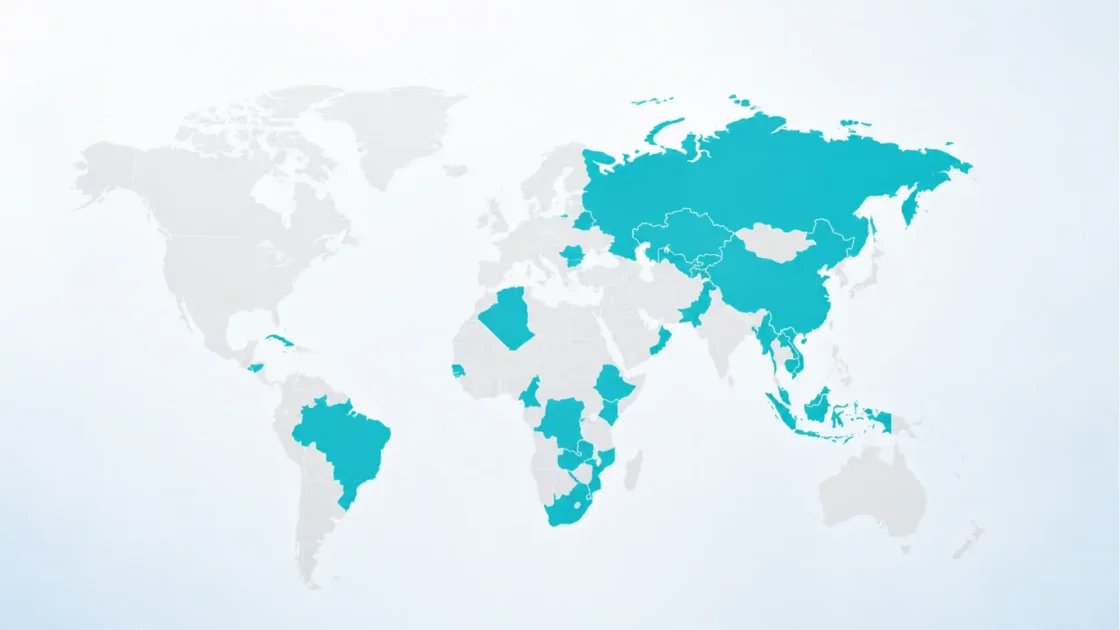
OpenAI moved GPT-5.6 out of a tightly controlled preview and into general use on Thursday, July 9, 2026. Sam Altman posted a short “happy building” note on X late on Tuesday, and the company confirmed that its Sol, Terra and Luna models would reach ChatGPT, Codex and the API on Thursday after roughly two weeks locked to a small group of approved organizations. The release matters less because a version number ticked upward and more because of how the two weeks in between played out. For the first time, a leading American lab held a finished frontier model off the market at the request of the United States government, ran a coordinated review, and only then let the public in.
Table of Contents
The public release and what changed today
The model family itself was announced on June 26, 2026. On that day OpenAI published its preview post, shared a preview system card, and said the models would arrive broadly “in the coming weeks.” The company did not name a date. What filled the gap was a mix of prediction-market betting, developer log traces referencing a “gpt-5.6” identifier, and a steady drumbeat of coverage trying to pin down when access would widen. Polymarket contracts on a July public release swung between roughly 68 and 80 percent through early July before OpenAI’s Tuesday confirmation settled the question.
Three things changed the moment the gate lifted. The naming convention is new: the number identifies the generation and the words Sol, Terra and Luna identify durable capability tiers that can each advance on their own schedule. The pricing spread is wide: the flagship costs six times what the cheapest tier costs per output token, which pushes buyers toward matching a model to a workload rather than defaulting to the top. The safety posture is heavier than any prior OpenAI launch, with layered runtime checks, account-level review and a phased rollout that the company itself described as a short-term step it does not want to see become permanent.
There is a second product riding alongside the model release. On July 8, one day before the GPT-5.6 general availability push, OpenAI launched GPT-Live, a new generation of full-duplex voice models that replace Advanced Voice Mode inside ChatGPT. The two announcements are separate systems with separate architectures, but they landed within a day of each other and share a common thread: OpenAI is trying to widen the surface area of how people reach its models, through code, through the API and now through a voice interface that can listen and speak at the same time.
For anyone deciding whether to act on this news, the honest framing is that the headline benchmark numbers are real but partial, the pricing is confirmed, the access rules are still settling, and the government coordination behind the release is the part that will shape the next year of model launches more than any single evaluation score. The sections that follow work through each of those threads with the sourced detail behind them.
From limited preview to broad availability
The two-week window between June 26 and July 9 was not a soft launch in the usual sense. During the preview, GPT-5.6 was reachable only through the API and Codex, and only by a select group of trusted partners and organizations whose participation had been shared with the government. Reporting placed that group at roughly 20 approved organizations. Ordinary ChatGPT users could not select the model. OpenAI’s own Help Center stated plainly during the preview that GPT-5.6 was not available in ChatGPT and that no general-availability date had been announced.
That restriction was deliberate and, by OpenAI’s account, requested. In the preview post the company wrote that it previewed its plans and the models’ capabilities to the U.S. government ahead of the launch, and that at the government’s request it started with a limited release to a small partner group before releasing more widely. OpenAI paired that description with a clear statement of discomfort. It said it does not believe this kind of government access process should become the long-term default, arguing that gating keeps the best tools away from developers, enterprises, cyber defenders and global partners who need them. The company framed the two-week hold as the strongest available path to broad access while it worked with the administration on a repeatable process.
The Tuesday confirmation reframed the timeline. OpenAI said it would publicly release the Sol, Terra and Luna models on Thursday, and began expanding preview access globally in the days before that. The July 9 date is best read as the start of broader access rather than an instant switch that put every tier in front of every user, developer, enterprise account and region at the same moment. Staggered rollouts are normal for OpenAI, and several outlets noted that the model picker, final API model identifiers, regional availability and enterprise deployment timing could still shift as the rollout reached different accounts.
That distinction between a reported rollout and a fully documented general-availability milestone is worth holding onto. Preview names and production API names can differ. Developers who saw “gpt-5.6” strings in Codex logs during the preview were looking at internal identifiers, not confirmed production model names. Teams planning to build on the models should confirm the final identifiers, rate limits and access tiers in their own account console rather than assuming the preview configuration carried over unchanged.
The practical effect of the phased approach is a market split into two speeds. A small set of partners has had hands-on time with the models since late June, running real workloads and feeding results back to OpenAI. Everyone else starts on July 9 with vendor-published benchmarks, a pricing sheet and a set of access rules that are still being finalized. For most buyers, the first job is not to chase the flagship but to work out which tier fits which task, because the release was designed around exactly that choice.
The Sol, Terra and Luna naming system explained
GPT-5.6 introduces a naming change that OpenAI framed as a fix for years of confusion. Under the old scheme, a decimal number carried almost all the meaning, and words like “Instant,” “Thinking” and “Pro” tried to signal both speed and reasoning depth at once. The result was a model picker that few users understood. The new system splits the job in two. The number, 5.6, marks the generation. The names Sol, Terra and Luna mark durable capability tiers that can move forward at their own pace. A future Sol could advance without forcing a rename of Terra or Luna, and each tier keeps a stable identity across generations.
The three names borrow from the sun, the earth and the moon, and the ordering runs from most to least capable. Sol is the flagship, the strongest and most capable model in the series, and the tier OpenAI led with on every benchmark in the release. It is the only tier that opens the new max reasoning effort and the new ultra mode, and it is where the gains in coding, biology and cybersecurity are most pronounced. Terra is the balanced middle, positioned for everyday work where cost and speed carry more weight than absolute capability. OpenAI says Terra performs competitively with the previous generation’s GPT-5.5 while costing about half as much. Luna is the fast, low-cost option, built for high-volume, low-latency work where throughput matters more than topping a leaderboard.
This structure changes how a buyer should think about model selection. Instead of a single model launch, GPT-5.6 is closer to a product lineup. A developer might reach for Sol on a hard autonomous coding job that runs for hours, pick Terra for routine business workflows, and route high-volume, latency-sensitive traffic to Luna. A ChatGPT user may eventually see those choices abstracted behind a simpler label, but the underlying split still drives price, quality and latency in ways that matter once usage scales.
The tier names also carry a strategic message about how OpenAI plans to compete. By decoupling capability tiers from the generation number, the company can release a stronger Sol, a cheaper Luna or a rebalanced Terra without the awkward version inflation that has dogged the whole field. It mirrors, in spirit, the way Anthropic separates Opus, Sonnet and Haiku and the way Google separates Pro and Flash. The difference is that OpenAI is layering these tiers on top of a fast-moving decimal cadence, having shipped GPT-5.4 in March, GPT-5.5 in late April and now GPT-5.6 in late June, all within roughly sixty-day increments.
There is a subtle risk in the new scheme worth naming. Durable tier names imply stability, but the models behind them will keep changing. A team that standardizes on “Terra” is standardizing on a moving target whose behavior may drift as OpenAI updates the underlying weights. The naming buys clarity at the model-picker level while pushing versioning discipline back onto the buyer, who now has to track not just which tier they use but which iteration of that tier they tested against.
Pricing across the three model tiers
OpenAI published GPT-5.6 pricing per one million tokens across the three sizes, and the spread is the most informative part of the release for anyone running the models at scale. Sol costs 5 dollars for input and 30 dollars for output. Terra costs 2.50 dollars for input and 15 dollars for output. Luna costs 1 dollar for input and 6 dollars for output. Output tokens dominate cost in most real workloads, so the practical gap between the tiers is closer to the output figures than the input figures suggest. Sol’s output is five times Luna’s.
Terra’s position is the most interesting. OpenAI describes it as competitive with GPT-5.5 while costing roughly half as much, which reframes the mid-tier as a straight price cut for buyers who were already satisfied with the previous generation. If a workload ran acceptably on GPT-5.5, moving it to Terra should hold quality while cutting the bill, at least on the tasks where Terra’s reported parity holds. That is a rare offer in a market where new generations usually cost more, and it puts pressure on competitors whose mid-tier pricing sits above Terra’s line.
Set against rivals, the numbers land in a crowded band. Claude Opus 4.8 sits at about 5 dollars input and 25 dollars output, close to Sol on input and slightly cheaper on output. Gemini 3.1 Pro remains the low-priced flagship at 2 dollars input and 12 dollars output, undercutting Sol on both. Claude Fable 5, Anthropic’s Mythos-tier safety-gated model, sits far higher at roughly 10 dollars input and 50 dollars output, which makes Sol look moderate by comparison. Claude Sonnet 5, launched June 30, runs an introductory 2 dollars input and 10 dollars output through the end of August before rising to 3 and 15.
A three-tier pricing comparison at launch
| Model | Input per 1M tokens | Output per 1M tokens |
|---|---|---|
| GPT-5.6 Sol | $5 | $30 |
| GPT-5.6 Terra | $2.50 | $15 |
| GPT-5.6 Luna | $1 | $6 |
| Claude Opus 4.8 | $5 | $25 |
| Gemini 3.1 Pro | $2 | $12 |
| Claude Sonnet 5 (intro) | $2 | $10 |
These figures come from each vendor’s published rates around the launch window and exclude negotiated enterprise discounts, prompt-caching savings and regional variation. Prices in this market change often, so any cost model built on them should be verified in a live account rather than hardcoded.
The pricing design rewards routing. A team that sends every request to Sol will pay a heavy premium for the fraction of tasks that actually need frontier reasoning. A team that classifies traffic and sends easy requests to Luna, mid-weight work to Terra and only the hardest jobs to Sol can cut spend sharply while keeping quality where it counts. OpenAI clearly built the lineup with that pattern in mind, and the prompt-caching changes discussed later reinforce it.
Max reasoning effort and the new ultra mode
Two new controls arrived with the flagship, and both change how Sol spends compute at inference time rather than what it knows. The first is a max reasoning effort setting. OpenAI already offered a reasoning-effort control that let developers trade latency and cost for deeper deliberation. The max level extends that ceiling, giving Sol the most time to reason through a problem before it answers. In practice this is aimed at long-horizon work where a wrong early step compounds, such as multi-file refactors, extended debugging, or scientific derivations that must hold a chain of logic across many steps.
The second control is more ambitious. Ultra mode goes beyond the behavior of a single agent by using subagents to accelerate complex work. Rather than one model instance working a problem front to back, ultra mode spins up multiple coordinated instances that divide the task, work in parallel and combine their results. This is the same architectural idea that has driven a lot of recent agentic tooling, where a planner delegates subtasks to workers, but here it is packaged inside the model tier itself rather than assembled by the developer.
The benchmark evidence for these controls shows up most clearly in coding. On Terminal-Bench 2.1, OpenAI’s published chart places plain Sol at 88.8 percent and Sol running in ultra mode, labeled Sol Ultra, at 91.9 percent. That roughly three-point gap is the visible payoff of the subagent approach on a hard agentic coding benchmark. The trade is compute and latency. Ultra mode runs more inference to reach its answer, which costs more and takes longer, so it is not the setting for interactive chat or high-volume automation. It is the setting for the small share of problems where a better answer is worth a heavier bill.
There is a design philosophy embedded here that separates OpenAI’s approach from a pure “bigger model” strategy. Instead of training a single larger network and hoping capability scales with parameters, OpenAI is spending inference-time compute in structured ways, first by letting the model think longer, then by letting it coordinate copies of itself. This shifts some of the capability story from training to deployment, and it means the same underlying model can present very different performance and cost profiles depending on how a developer dials the controls.
For teams, the arrival of these controls raises a planning question that benchmarks alone will not answer. A leaderboard cell for Sol Ultra tells you what the mode can do on the vendor’s task distribution under the vendor’s setup. It does not tell you whether the extra latency fits your product, whether your users will tolerate the wait, or whether the quality gain survives contact with your specific prompts and tools. The right way to read max effort and ultra mode is as levers to test on real work, not as settings to leave permanently at maximum. The heavier the setting, the more the cost and latency arithmetic has to justify itself.
A related caution concerns predictability. Multi-agent orchestration inside a single model tier can make behavior harder to reason about, because the path from prompt to answer now involves internal coordination the developer cannot fully see. When something goes wrong in ultra mode, debugging is harder than with a single deterministic pass. That opacity is a fair price for many teams given the capability gain, but it is a real cost that should be weighed rather than assumed away.
Terminal-Bench 2.1 and the coding claims
Coding is where OpenAI led its GPT-5.6 pitch, and Terminal-Bench 2.1 is the benchmark that carried the headline. The test measures command-line workflows that require planning, iteration and tool coordination, which is closer to how an autonomous coding agent actually works than a single-shot code-generation task. OpenAI presented Sol as setting a new high-water mark on this benchmark, and the published field, ordered by score, puts the GPT-5.6 modes at the top.
The full chart as published tells a more textured story than the headline. Sol Ultra leads at 91.9 percent and plain Sol reaches 88.8 percent. Just behind Sol sits Claude Mythos 5 at 88.0 percent, a gap of eight-tenths of a point that is well inside the range where benchmark noise and test-setup differences can flip an ordering. The mid-tier tells its own story: Terra reaches 84.3 percent, matching Claude Fable 5 at the same 84.3 percent and edging out the prior-generation GPT-5.5 at 83.4 percent. Luna lands at 82.5 percent. The publicly available Claude Opus 4.8 sits at 78.9 percent, and Gemini 3.1 Pro Preview, the lowest charted model, at 70.7 percent.
Two readings follow from those numbers, and both deserve airtime. The optimistic reading is that the GPT-5.6 modes hold the top of the table, that Sol Ultra’s lead over the field is real, and that Terra delivering Fable-5-class coding at a fraction of Fable 5’s price is a genuine value story. The skeptical reading is that the top of the table is a photo finish, that a sub-one-point margin between Sol and Mythos 5 is not a durable lead, and that the largest gaps in the chart are not between the frontier models but between the flagship modes and the budget and public-reference rows below them.
Independent analysts flagged a specific limitation that buyers should carry forward. Sol’s coding lead is concentrated on Terminal-Bench-style agentic command-line work and does not automatically transfer to in-repository file editing. On SWE-bench-style tasks, which test practical changes inside a real codebase judged by unit tests, the Claude family has held an edge in verified data, with Claude Sonnet 5 reported around 63.2 percent on SWE-bench Pro against GPT-5.5’s 58.6 percent. A team that reads “best at coding” as a single fact will misroute work. The accurate statement is narrower: Sol leads on long-horizon terminal agentics, while repo-editing agents are a different contest.
There is also a version-and-access caveat that colors every one of these figures. During the preview, most of these Sol numbers were partial, gated and not runnable on a public API, which meant independent testers could not reproduce them. GPT-5.5 by contrast had complete, verifiable, generally available scores. As GPT-5.6 reaches broad availability on July 9, the value of vendor benchmarks drops and the value of running the models on your own tasks rises. A small in-house evaluation setup on your real workload will tell you more than any leaderboard cell, because the vendor’s setup, task mix, prompts and acceptance criteria will never match yours exactly.
Biology gains on GeneBench and SecureBio
Coding drew the headlines, but OpenAI put roughly equal weight on biology, and the framing there is more careful because the stakes are higher. On GeneBench v1, a benchmark that evaluates long-horizon genomics and quantitative-biology analyses, OpenAI reports that Sol achieves stronger results than GPT-5.5 while using fewer tokens. The lower-token-use point matters as much as the accuracy point: a model that reaches a better answer with less generation is cheaper and faster on exactly the kind of multi-step scientific analysis that used to run long and expensive.
Alongside GeneBench, OpenAI pointed to a set of SecureBio evaluations, and the naming is a signal in itself. These are not framed as pure capability benchmarks but as measures tied to biosecurity, where the company is tracking how well the model performs legitimate scientific reasoning without becoming a practical aid to harm. The dual-use tension is sharpest in biology. The same reasoning that helps a genomics researcher interpret a long analysis could, in the wrong hands and with the wrong prompt, edge toward information that carries real-world risk. OpenAI’s decision to report biology gains and biosecurity evaluations together is an attempt to show capability and restraint in the same breath.
The evidence base here is thinner than the coding numbers, and OpenAI acknowledged as much by promising an expanded evaluation suite when the model reaches broad availability. During the preview, the biology results were shared as directional highlights rather than a full accounting. That is a reasonable posture for a lab that wants to signal progress without publishing a detailed roadmap of sensitive capabilities, but it means outside scientists could not yet stress-test the claims. Anyone in a life-sciences setting weighing GPT-5.6 for research support should treat the biology gains as promising and unverified rather than settled.
For working scientists, the practical relevance is concrete even with the caveats. Long-horizon genomics analysis is the kind of task where a model that can hold context, plan a multi-step workflow and self-check its derivations saves real hours. If Sol’s reported improvements in maintaining a thread of logic across derivations hold up, the payoff shows up in fewer human corrections and less manual quality assurance on quantitative work. The right way to adopt it is the same as everywhere else: run it against analyses where you already know the answer, measure how often it needs correction, and expand its role only where it earns trust.
The biology story also feeds directly into the regulatory picture. The Trump administration’s executive order that shaped this release is written around cyber capability, but the same logic of pre-release government review applies to any capability that carries national-security weight, and biology sits squarely in that category. OpenAI’s careful framing of the biology gains is not only a scientific choice; it is a posture calibrated for a world where the government is now watching frontier capability closely.
Cyber capability and the ExploitBench and ExploitGym results
Cybersecurity is the capability that reshaped the entire release, so it deserves precise treatment. OpenAI called Sol its most capable model yet for cybersecurity and said it shifts the performance-versus-cost frontier for long-horizon security tasks including vulnerability research and exploitation. Two benchmarks anchor the claim. On ExploitBench, OpenAI reports that Sol is competitive with Anthropic’s Mythos Preview while using only about one-third of the output tokens, a lower-token-use result that says the model reaches comparable security outcomes with far less generation. On ExploitGym, a benchmark built by UC Berkeley researchers in collaboration with OpenAI and other frontier labs, Sol, Terra and Luna all show strong improvements as reasoning effort increases.
The direction of the capability is worth stating carefully, because OpenAI drew a specific line. The company says Sol is better at helping people find and fix vulnerabilities than at reliably carrying out end-to-end attacks. In evaluations involving the Chromium and Firefox codebases, the model identified bugs and exploitation primitives, the building blocks of an exploit, but did not autonomously produce a functional full-chain exploit under the conditions tested. That distinction between finding the pieces and assembling a working weapon is the hinge on which OpenAI’s entire risk argument turns.
OpenAI’s stated priority is that these capabilities reach defenders. A model that can find weaknesses, develop patches and strengthen systems is a gain for the security teams that protect software, and the company frames the whole safeguard design around preserving that defensive value while making prohibited offensive use harder, more uncertain and more detectable. The optimistic case is straightforward: defenders are chronically outnumbered and out-resourced, and a capable model that accelerates vulnerability research and patch development shifts the balance toward the people trying to protect systems.
The pessimistic case is equally clear and OpenAI did not pretend otherwise. The same capability that helps a defender find a bug helps an attacker find the same bug. Lower token use cuts both ways: a model that does security work with one-third the output is cheaper for an attacker to run at scale, not only cheaper for a defender. Benchmark thresholds cannot capture every way a model might be combined with other tools, and a capability that stops short of a full-chain exploit in a controlled test may not stop short when chained with human expertise and other systems in the field.
That uncertainty is precisely why OpenAI paired the capability with its heaviest safeguards and a phased release. The cyber capability is what made GPT-5.6 the kind of model the government wanted to see before launch, and it is what made the two-week hold something other than theater. The release is best understood as a bet that the defensive gains outweigh the offensive risks, backed by a safeguard stack designed to tilt the odds toward defenders, and hedged by a rollout slow enough to catch problems before they reach scale. Whether that bet pays off is an empirical question that the preview period was built to probe and that broad availability will now test in the open.
The layered safeguard stack in detail
OpenAI’s central safety argument is that no single safeguard holds against a determined or adaptive attacker, so protection has to come in layers that each catch what the others miss. The company described the GPT-5.6 stack as its strongest to date, with exact configurations varying by model, and it laid out the layers in enough detail to evaluate. Understanding the stack matters for two audiences: security teams trying to judge the risk, and ordinary users who may occasionally hit a safeguard mid-task and want to know why.
The first layer lives inside the model. GPT-5.6 is trained to refuse prohibited cyber assistance, including cases where a user tries to disguise intent or jailbreak the model into helping. This is the boundary that establishes, at the level of the weights themselves, what the model should and should not help with. It is also the layer most exposed to adversarial pressure, because jailbreaks are attacks on exactly this trained behavior, which is why the other layers exist.
The second layer runs during generation. Real-time cyber and biology misuse classifiers evaluate output as it is produced. For higher-risk cases, if a classifier detects a potential violation, generation can be paused while a larger reasoning model reviews the conversation and its full context. If that review assesses the output as disallowed, the content is withheld before it reaches the user. This is a consequential architectural choice: rather than filtering only the prompt or only the final answer, the system can interrupt itself mid-stream and escalate to a more capable reviewer, trading latency for a closer look when the stakes warrant it.
The third layer looks beyond a single conversation. Flagged activity can trigger account-level review across relevant conversations and risk signals, consistent with OpenAI’s terms and content-review policies. The reasoning is that persistent malicious behavior looks different from legitimate dual-use security work when you can see a pattern across sessions, even when any single message looks similar in both cases. A defender researching a vulnerability and an attacker weaponizing it may write nearly identical prompts in one turn; the difference often only emerges across a whole account’s activity.
The fourth layer is differentiated access. The most sensitive capabilities are not made broadly available by default, which is the design principle behind the entire phased rollout. Together, OpenAI argues, these layers make the combined approach more resilient than any one of them alone: trained refusals reduce the chance of a harmful response, real-time systems can intervene during generation, account-level review can spot broader patterns, and access controls keep the sharpest capabilities away from casual reach while preserving defensive work.
There is an honest cost to this design, and OpenAI stated it directly. Users may hit safeguards that block or refuse some requests, and some requests may take longer because generation is paused for review. Safeguards may sometimes intervene on legitimate work, particularly in dual-use areas where defensive and offensive activity look similar at first. The company framed the preview period as a test of exactly this tension, wanting to learn not only whether the safeguards constrain misuse but whether legitimate users can still finish normal work reliably. For a security professional, that means expecting occasional friction and treating it as a known trade rather than a malfunction. For OpenAI, it means the false-positive rate on legitimate work is now a product metric it has committed to reducing.
Automated red-teaming at industrial scale
The most striking single figure in the GPT-5.6 safety disclosure is a compute number. OpenAI said it dedicated over 700,000 A100-equivalent GPU hours to automated red-teaming aimed at finding universal jailbreaks, attacks that work across many prompts or contexts rather than in one narrow setting. That is an enormous allocation of scarce compute to the specific job of attacking the company’s own model before anyone else could, and it signals how seriously OpenAI is treating the jailbreak problem for a model with real cyber capability.
The strategic logic behind targeting universal jailbreaks is sound. A protection that only defends against a fixed list of known attacks is brittle, because attackers adapt and the list is always out of date. By hunting for general attack patterns that transfer across contexts, OpenAI is testing the safeguards against a harder and more realistic threat than a static test suite would represent. Using the company’s own models to generate these attacks lets it explore far more attack patterns than human testers could cover, spot failure patterns earlier and shorten the path from finding a weakness to fixing it.
Automated red-teaming did not replace human testing. OpenAI said it worked with third-party testers on extensive human expert red-teaming and planned to continue that work through the preview period. The two approaches complement each other. Automated systems cover breadth, running vast numbers of attack variations at machine speed. Human experts cover the creative, unexpected angles that a system trained on known failure modes might not anticipate. A skilled human attacker thinks about the model differently than another model does, and that difference is where novel jailbreaks tend to come from.
OpenAI also described a rapid-response process for the attacks that slip through, which is the realistic admission underneath the confident numbers. No evaluation can represent every product configuration, multi-step attack or real-world workflow. When a new jailbreak surfaces after launch, the company’s stated process is to reproduce it, assess and prioritize it, remediate it and then add it to the ongoing evaluation suite so future models are tested against similar failures. This is a maturity signal: the company is treating safety less as a one-time gate and more as a continuous engineering discipline with its own incident-response loop.
For anyone assessing the model’s real-world resilience, the 700,000-hour figure is impressive but not a guarantee. Compute spent on red-teaming raises the floor; it does not prove the ceiling. The honest conclusion is that OpenAI has invested heavily in making the model hard to break and has built a process to fix breaks quickly when they happen, which is a stronger posture than a static safety gate, but the true test is adversarial contact at scale after broad release. The preview was a rehearsal. July 9 begins the real exam.
The Preparedness Framework and the cyber critical threshold
OpenAI’s decision to release GPT-5.6 at all rested on a specific finding under its own risk framework. The company said Sol does not cross the Cyber Critical threshold under its Preparedness Framework, the internal system OpenAI uses to classify model capabilities by risk level and decide what deployment conditions apply. That single sentence carried a lot of weight, because a model that crossed the critical threshold would trigger far heavier restrictions, and OpenAI’s judgment that Sol falls below it is what justified a public release paired with safeguards rather than a decision to hold the model back.
The Preparedness Framework is worth understanding as a structure rather than a slogan. It sorts capabilities into tiers of concern across categories that include cybersecurity and biology, and it ties each tier to required mitigations. The framework is OpenAI’s attempt to make its own risk decisions legible and consistent rather than ad hoc. When the company says Sol sits below Cyber Critical but still warrants its heaviest safeguards, it is placing the model in a middle band: capable enough to demand serious protection, not so capable that release becomes irresponsible under the framework’s own rules.
The evidence for that placement was the Chromium and Firefox testing. Sol found bugs and exploitation primitives but did not autonomously produce a working full-chain exploit under the tested conditions. In the framework’s logic, autonomous end-to-end exploitation is closer to the kind of capability that would push a model over the line, while finding building blocks is a capability that defenders also need and that falls short of the critical bar. The line OpenAI drew is defensible, but it is also the exact place where reasonable people can disagree, because the gap between finding primitives and chaining them into an exploit can be closed by a competent human working alongside the model.
OpenAI was careful to flag the limits of its own conclusion. Benchmark thresholds cannot capture every way a model might be used or combined with other tools, and the company said as much. A capability that stops short of full autonomy in a controlled evaluation may not stop short when a skilled operator supplies the missing steps. This is why the framework finding was paired with, not substituted for, the layered safeguards and the phased rollout. The threshold judgment answered whether the model could be released; the safeguards and phasing answered how to release it responsibly given that the judgment carries uncertainty.
For the wider field, the Cyber Critical finding sets a reference point that competitors and regulators will watch. It establishes, in public, roughly where one leading lab draws its release line on cyber capability, and it gives the government a concrete example to calibrate against as it builds the classified benchmarking process that the executive order requires. The framework and the executive order are now on a collision course of sorts, because the government is building its own definition of a covered frontier model, and OpenAI’s Preparedness placement is one of the few public data points that definition can be measured against.
GPT-Live and the shift to full-duplex voice
One day before the model release, on July 8, OpenAI shipped a separate product that changes how millions of people talk to ChatGPT. GPT-Live is a new generation of voice models, and its defining feature is architectural: it is full-duplex, meaning it can listen and speak at the same time. The old Advanced Voice Mode was half-duplex, the audio equivalent of a walkie-talkie, where one side speaks and the other waits. GPT-Live processes incoming audio while it is still talking, which lets a user interrupt, interject or overlap the way people do in real conversation.
Two versions rolled out globally starting July 8: GPT-Live-1 and GPT-Live-1 mini. The tier split is straightforward. GPT-Live-1 becomes the default voice model for Go, Plus and Pro subscribers, and GPT-Live-1 mini becomes the default for free users, replacing Advanced Voice Mode automatically with no settings change. The rollout covers iOS, Android and the web, though business, enterprise and education workspaces were not included at launch, and API access for developers was promised soon rather than delivered on day one. OpenAI said more than 150 million people talk to ChatGPT each week using Voice and Dictation, which gives the change immediate scale.
The behavior the new architecture makes possible is subtle but recognizable to anyone who has fought with a voice assistant. GPT-Live can wait through a pause instead of filling the silence, add listening cues like “mhmm” or “yeah” while you think, and stay quiet when you need a moment. OpenAI described the model as making decisions many times per second about whether to speak, pause, interrupt or call a tool, rather than processing one turn at a time. The result, in the demos reporters saw, is a conversation rhythm closer to a phone call than a voice menu. It also enables live translation for the first time inside ChatGPT, because a model that listens and speaks at once can render speech in another language as it arrives.
OpenAI reported internal benchmark gains to back the pitch. In head-to-head human evaluations measuring pleasantness and conversational flow across matched five-to-ten-minute conversations, testers strongly preferred GPT-Live-1 and its mini over Advanced Voice Mode on aggregate preference, turn-taking, interruptions, flow and naturalness. On GPQA, which tests expert-level scientific reasoning, GPT-Live-1 substantially outperformed the old voice mode. On BrowseComp, which tests agentic web search, it showed large gains, with one third-party writeup citing a jump from near zero to roughly 75 percent on that web-search measure. On an internal telecom-support benchmark it again came out ahead.
OpenAI framed a boundary around the product that is worth noting given the moment. It said GPT-Live is designed for conversation, not voice impersonation, using a set of predefined voices with safeguards to prevent imitating a real person. It also emphasized that it is not trying to build an AI companion, and that the models carry safeguards for age-appropriate responses to teenagers and for surfacing resources if a conversation turns toward sensitive topics. Those choices read as a deliberate attempt to capture the naturalness of human conversation without inviting the criticism that has followed products marketed as emotional companions.
GPT-Live’s hidden hand-off to a frontier model
The cleverest part of GPT-Live is not the voice itself but what happens behind it. A full-duplex voice model tuned for natural conversation is not the same kind of system as a frontier reasoning model, and OpenAI did not try to make one model do both jobs. Instead, GPT-Live handles the live back-and-forth while offloading anything that needs web search, deeper reasoning or agentic steps to a separate frontier model, which at launch is GPT-5.5. When a user asks something hard, GPT-Live keeps the conversation flowing with a phrase like “let me check that for you,” runs the query against the stronger model in the background, and brings the answer back into the spoken conversation when it is ready.
This decoupling solves a problem that dogged every previous voice assistant. Older cascaded systems chained a speech-to-text model, a language model and a text-to-speech model in sequence, and information was lost at each handoff, which is part of why voice assistants felt less capable than their text counterparts. By separating the conversational layer from the reasoning layer, OpenAI can keep the voice experience fast and natural while routing the genuinely hard work to whichever frontier model is strongest at the time. The company said it will keep swapping in newer frontier models behind GPT-Live as they ship, which means the voice product inherits capability improvements without a rebuild.
The architecture has a strategic payoff that goes beyond user experience. It lets OpenAI upgrade intelligence and upgrade interaction on separate schedules. The GPT-5.6 family can improve reasoning while GPT-Live improves conversation, and the two can advance independently and then compose. It is the same modular instinct visible in the Sol, Terra and Luna naming: build durable components that can each move forward on their own cadence rather than one monolithic system that has to be replaced wholesale.
For developers, the interesting question is when the full-duplex behavior reaches the API with documented pricing and latency guarantees, because that is the moment the pattern reshapes what independent teams can build. Many teams currently stitch together separate speech-to-text, language and text-to-speech services. If OpenAI exposes full-duplex behavior through its realtime API at a competitive per-minute rate, a lot of those stacks will consolidate. The specifics that matter before any migration are per-minute input and output pricing for both GPT-Live models, latency and rate limits under real load rather than demo conditions, how interruption and barge-in are exposed to the developer, and language coverage beyond English.
That last point is the honest weak spot. OpenAI tuned GPT-Live for some of the most popular languages in ChatGPT and admitted that for certain languages the model may have a non-native accent or gaps in fluency. Expressive full-duplex conversation in English is one achievement; parity across languages is a separate and harder one, and vendors rarely lead with the gaps. For a global user base, and for markets outside the English-speaking world, the real measure of GPT-Live will be how it holds up in the languages people actually speak, not in the launch-day English demo.
The executive order that reshaped the release
None of the release choreography makes sense without the executive order behind it. On June 2, 2026, President Trump signed an order titled “Promoting Advanced Artificial Intelligence Innovation and Security.” It is the administration’s most substantial step toward federal oversight of frontier AI, and it is framed almost entirely around cybersecurity and national security rather than the broader governance concerns that dominated earlier debates. The order arrived the same day Anthropic announced it was widening access to its Mythos model, and the timing was not lost on anyone watching the field.
The order is organized around three pieces. First, it directs federal agencies to strengthen cyber defenses across government and critical infrastructure, including an AI cybersecurity clearinghouse coordinated by the Treasury Department and expanded access to AI-enabled defensive tools for state and local authorities and for operators such as rural hospitals, community banks and local utilities. Second, it establishes a voluntary framework for developers of frontier models to engage the government before broad release. Third, it directs the Attorney General to prioritize enforcement of existing criminal statutes against people who use AI to illegally access or damage computer systems.
The second piece is the one that shaped GPT-5.6. Under the framework, a developer may, on a voluntary basis, submit a model for federal evaluation, and if the model is designated a “covered frontier model,” provide the government access to it for up to 30 days before releasing it to other trusted partners. Earlier drafts reportedly set that window at 90 days, and the reduction to 30 days was the most consequential change in the final version, reflecting a compromise between the national-security faction that wanted oversight and the anti-regulation faction that wanted speed. The order also lets participating developers collaborate with the government to select which trusted partners get early access, which is how OpenAI’s roughly 20-organization preview cohort came to be shared with the government.
The order is emphatic about what it is not. It states directly that nothing in it authorizes a mandatory governmental licensing, preclearance or permitting requirement for developing, publishing, releasing or distributing new models, including frontier models. Participation is voluntary. There is no approval gate that a model must pass before release. This matters for interpreting OpenAI’s public discomfort: the company chose to participate in a voluntary process and then said publicly that it does not want that process to become the default, which is a coherent position only because the process is not compulsory. OpenAI complied because it judged compliance the fastest path to broad access, not because the law required it.
The practical effect on the GPT-5.6 timeline maps cleanly onto the framework. OpenAI previewed the model and its capabilities to the government ahead of the June 26 announcement, started with a limited partner release whose membership was shared with the government, ran a review period of roughly two weeks, and then went public on July 9. That sequence is in practice the voluntary framework in action before the framework’s own detailed mechanics were even finalized, since the order gave agencies until August 1, 2026 to design the classified benchmarking process and the engagement channel. OpenAI was, in effect, an early live test of a process still being written.
For the industry, the order sets expectations even though it binds no one. A voluntary framework backed by the weight of the federal government tends to become a norm, and norms tend to harden into procurement requirements and contractual terms even without new legislation. Developers of frontier models now have an immediate decision to make about whether, when and on what terms to participate, and critical-infrastructure operators have new CISA directives to track. The order is light on specifics, but its direction is unmistakable: the government now expects a seat at the table before the most capable models ship.
The covered frontier model designation and the NSA process
The linchpin of the executive order is a term it deliberately leaves undefined: “covered frontier model.” The order does not say substantively what qualifies. Instead it directs a multi-agency group to develop, by August 1, 2026, a classified benchmarking process to assess the advanced cyber capabilities of AI models and to set the threshold at which a model earns the designation. The determination itself is assigned to the Director of the National Security Agency, in consultation with the National Cyber Director, the Assistant to the President for Science and Technology, the Director of CISA and other officials. This places one of the most consequential judgments in American AI policy inside a classified process run by the country’s signals-intelligence agency.
The choice to keep the benchmark classified has a clear rationale and a clear cost. The rationale is that publishing the exact threshold for dangerous cyber capability would hand a roadmap to adversaries and to anyone trying to build a model that skates just under the line. The cost is that developers will have little visibility into where the line falls. A company building a frontier model cannot easily plan around a threshold it cannot see, which introduces a new kind of regulatory uncertainty: not whether the rules will be enforced, but whether a given model even falls within them.
The designation is oriented around cyber capability rather than raw compute, which is a notable departure from earlier regulatory instincts that used training-compute thresholds as a proxy for capability. The order’s logic is that a covered frontier model is one so capable it could pose serious cybersecurity risks, such as finding and exploiting software weaknesses on its own. That is a capability-based test, and it aligns with what actually worried policymakers: not the size of a model but what it can do to critical systems. It also means a smaller, cheaper-to-run model could in principle qualify if its cyber capability crossed the line, while a larger but less cyber-capable model might not.
There is a governance concern in the fine print that deserves attention. The order lets participating developers collaborate with the government to select the trusted partners who get early access, and it provides no criteria for that selection. This in practice gives the federal government a role not only in deciding which models warrant special treatment but in deciding who gets early access to them and on what terms. In the GPT-5.6 case, that meant a roughly 20-organization cohort whose membership was shared with the government. The precedent is real: a voluntary framework that shapes who reaches the frontier first, with the selection logic undisclosed.
The open-weight problem is the framework’s most obvious gap. Participation is voluntary, and open-source or open-weight models that researchers have shown can replicate frontier-level hacking capabilities are not captured by a process that depends on a developer choosing to engage. A capable open model can spread without any government review at all and end up in a supply chain unnoticed. The framework can slow the release of the most capable proprietary models through the participating labs, but it does little about the capabilities that are already diffusing through open channels. That asymmetry, where the most compliant actors face the most oversight, is a known weakness of voluntary regimes and one the order does not solve.
The Anthropic backdrop and the export-control clash
OpenAI’s careful choreography looks different once you place it against what happened to its closest rival weeks earlier. Anthropic spent the second half of June in a public clash with the government over its own frontier models, and OpenAI was clearly watching. The contrast between the two companies’ experiences is the best available evidence for why OpenAI chose to hand over the keys up front rather than risk having a model pulled after it shipped.
Anthropic’s Mythos-tier models were the trigger for much of the policy alarm. Its Claude Mythos Preview, announced in April, demonstrated that a model could autonomously identify and exploit hidden vulnerabilities in widely used software, and its later Mythos releases sharpened the concern. Reporting connected the arrival of these cyber-capable models to the administration’s shift from a hands-off AI posture toward the national-security framing of the June executive order, though officials never formally confirmed that causal link. The timing, with the executive order landing the same day Anthropic expanded Mythos access, made the inference hard to avoid.
The clash turned concrete in mid-June. A United States export-control directive forced Anthropic to disable access to its Claude Fable 5 and Mythos 5 models for every customer worldwide. Anthropic first released those two models on June 9, then suspended access on June 12 to comply with the Department of Commerce directive. The Department lifted the controls late in the month, on June 30, and Anthropic restored access on July 1. For roughly three weeks, two of the most capable models on the market were simply unavailable, pulled offline by government action after they had already reached customers. That is the outcome OpenAI appears to have structured its release to avoid.
The government’s posture toward Anthropic went beyond export controls. The Department of Defense had labeled Anthropic a supply-chain risk shortly before the Mythos release, a designation that treats the company as a purported national-security threat and bars defense contractors from using its technology in their government work. Anthropic sued the administration to reverse the designation, and that litigation was ongoing. Set against that backdrop, OpenAI’s decision to preview its model to the government, accept a two-week hold and coordinate its partner list reads as a calculated choice to stay on the cooperative side of a government that had shown it would act forcefully against a lab it viewed as a risk.
The comparison should not be drawn too neatly, because the two situations differ in their legal mechanics. Anthropic’s suspension came through export-control law, a mandatory instrument, while OpenAI’s hold came through the voluntary pre-release framework. One company was compelled; the other participated. But the strategic lesson OpenAI seems to have drawn is that voluntary early cooperation is cheaper than involuntary later disruption. Handing the government a supervised preview window is less costly than having a shipped model yanked, and it buys goodwill with an administration that has demonstrated both the will and the tools to intervene.
For buyers and developers, the Anthropic episode carries a durable lesson that outlives this news cycle. Access to frontier models can change by government action, not just by vendor choice. A model that is available today can be pulled tomorrow, whether through export controls, a supply-chain designation or a shift in the voluntary framework’s norms. The practical response is to build for provider flexibility rather than betting a critical workflow on a single gated model. Teams that wired a fallback into their stack sailed through Anthropic’s three-week outage; teams that did not lost access to their primary tool with little notice.
GPT-5.6 measured against Claude and Gemini
The frontier in mid-2026 is a three-way contest so tight that the composite scores have lost much of their power to separate the leaders. On the traditional academic tests the models have converged inside the margin of noise. GPQA Diamond, a set of PhD-level science questions, shows GPT-5.5 near 94.0 percent, Gemini 3.1 Pro near 94.1 percent and Claude Opus 4.8 near 93.6 percent, a three-way photo finish. MMLU is saturated. Mock competition math is nearly solved by several models. When the standard benchmarks all cluster at the top, the deciding factors move to cost, context window, ecosystem and the specific task a buyer cares about.
Against that backdrop, GPT-5.6’s differentiation is sharp on a few axes and modest on others. On agentic command-line coding, the Terminal-Bench 2.1 numbers give Sol and Sol Ultra a real edge, with Sol Ultra at 91.9 percent leading the charted field. On in-repository file editing, the Claude family has held its ground, with Sonnet 5 reported ahead of GPT-5.5 on SWE-bench Pro. On price, Gemini 3.1 Pro remains the cheapest flagship, undercutting Sol on both input and output. On long context, both Gemini 3.1 Pro and Claude Opus 4.8 offer confirmed million-token windows, while OpenAI has not officially confirmed a context figure for GPT-5.6 at all.
The three labs are running visibly different strategies. OpenAI is pushing a tiered family with new inference-time controls and a heavy safety-and-government posture, betting on agentic capability and on staying close to Washington. Anthropic ships a coding-and-reasoning specialist that quietly tops human-preference leaderboards and now sits at the sharp end of the cyber-capability and government-friction story. Google plays the price-and-scale game, with Gemini 3.1 Pro generally available, a faster Flash tier live and a strong showing on abstract-reasoning benchmarks like ARC-AGI-2. Three labs, three philosophies, and a quality gap at the very top that is the smallest it has ever been.
The access dimension separates these models as much as capability does, and it cuts in OpenAI’s favor for reach and against it for immediacy. Gemini is the most accessible, generally available through Google’s cloud with clear pricing and enterprise plans. Claude’s Mythos-tier models spent part of June offline and its Opus and Sonnet tiers are broadly available. GPT-5.6 spent two weeks locked to a tiny cohort and only reached the public on July 9, with a rollout still settling. For a team that needs to build today, availability and verifiable scores can matter more than a fractional benchmark lead, which is why several analysts recommended treating GPT-5.5 or Claude as the production default and Sol as a frontier signal to track rather than an immediate migration target.
Frontier model positioning in mid-2026
| Model | Released | Strongest axis | Availability at July 9 |
|---|---|---|---|
| GPT-5.6 Sol | Public July 9, 2026 | Agentic command-line coding | Rolling out broadly |
| Claude Opus 4.8 | May 28, 2026 | In-repo engineering, human preference | Generally available |
| Claude Sonnet 5 | June 30, 2026 | Agentic coding at lower cost | Generally available |
| Gemini 3.1 Pro | February 19, 2026 | Price, long context, multimodal | Generally available |
The table simplifies a fast-moving field and omits each family’s other tiers, but it captures the shape of the contest: OpenAI leading on a specific coding axis while trailing rivals on same-day availability and confirmed context.
The realistic conclusion for most teams is that picking a single winner is the wrong exercise. The capability profiles differ enough that the sensible pattern is a primary model plus targeted use of others: a daily driver for most work, a stronger agentic model for autonomous jobs, and a cheap high-context model for volume. Multi-model routing, with a generally available fallback wired in, is the strategy that survives both a benchmark surprise and a government-driven outage. GPT-5.6 earns a place in that rotation on coding strength; it does not, on the July 9 evidence, earn the right to be the only model in the stack.
Context window claims and the figures OpenAI has not confirmed
Context window is the one headline capability OpenAI stayed quiet about, and the silence is itself informative. GPT-5.5 offered a context window that most production applications treated as usable up to roughly a million tokens, with developers reporting around 400,000 tokens as the practical ceiling for complex tasks. For GPT-5.6, OpenAI has not officially confirmed any context figure. The number that circulated during the preview, roughly 1.5 million tokens, came from unofficial early-access configurations and developer reports, not from an OpenAI specification.
The source of the 1.5-million figure is worth being precise about, because it is the kind of number that hardens into fact through repetition. A subset of ChatGPT Pro users invoking Codex in extended sessions reported context windows exceeding 1.4 to 1.5 million tokens in what were described as unofficial early-access setups. Those reports are directional evidence that GPT-5.6 may push context beyond GPT-5.5, but they are not a confirmed product capability. Treating an unofficial early-access observation as a guaranteed specification is exactly the kind of mistake that leads teams to design workflows around a ceiling that may not hold in the generally available product.
Context matters more than it used to because long-context handling has become one of the clearer capability signals in the frontier race. A model that can hold a whole codebase, a long legal filing, a research archive or a book-length document in a single context avoids the accuracy loss and engineering overhead of chunking and retrieval. Both Gemini 3.1 Pro and Claude Opus 4.8 confirm million-token windows and have used long context as a public differentiator. If OpenAI has a larger window and chose not to lead with it, that is a curious omission for a capability rivals are advertising.
The uncertainty has a practical cost for anyone planning a long-context workflow on GPT-5.6. Until OpenAI publishes the figure, the safe assumption is that the model matches rather than exceeds GPT-5.5’s usable window, with anything beyond that treated as a bonus to verify in a live account. Designing a document-analysis or whole-repository workflow that depends on 1.5 million tokens, on the strength of preview reports, risks building on a number that could shrink at general availability. The disciplined move is to confirm the actual window in the console, measure retrieval fidelity at the length you need, and only then commit.
The broader lesson is about how to read a launch. Vendors lead with their strongest numbers and stay quiet about the rest. OpenAI led with coding and safety and said nothing firm about context. That pattern usually means the unmentioned capability is either not a lead over rivals or not yet stable enough to promise. Reading the silence is part of reading the release, and on context, the honest status is unconfirmed.
Prompt caching changes that matter to developers
Buried in the pricing section of OpenAI’s announcement is a set of prompt-caching changes that will affect real bills more than most of the headline capabilities. Prompt caching lets a developer reuse the model’s processing of a repeated block of context, such as a long system prompt or a fixed document, instead of paying to process it fresh on every request. GPT-5.6 introduces more predictable caching, including support for explicit cache breakpoints and a 30-minute minimum cache life.
The explicit cache breakpoints are the more useful of the two changes. They give a developer direct control over where a cached segment begins and ends, rather than relying on the system to guess which prefix of a prompt is stable. For applications with a large fixed context, a long instruction set, a knowledge base, a code repository summary, that control means the stable part can be cached deliberately and the variable part processed fresh, which is exactly the split that maximizes savings. Predictability here is worth as much as raw discount, because a caching system whose behavior a developer cannot predict is hard to build a cost model around.
The pricing mechanics attached to caching are specific and should be modeled carefully. For GPT-5.6 and later models, cache writes are billed at 1.25 times the model’s uncached input rate, while cache reads continue to receive the 90 percent cached-input discount. The write premium is new to reckon with: the first time a segment is cached, it costs a quarter more than a normal input token. That premium is recovered quickly if the cached segment is read many times, since each read is ninety percent cheaper, but for a segment that is written and read only once or twice, caching can cost more than it saves. The 30-minute minimum cache life sets a floor on how long a cached segment persists, which helps applications with bursty traffic keep a cache warm between requests.
The interaction between caching and the tiered pricing is where the real cost tuning lives. A high-volume application that sends a large fixed context with every request, and that runs on a lower tier like Luna or Terra, can drive its real per-request cost far below the sticker rate by caching the fixed portion aggressively. The write premium is paid once, the read discount applies to every subsequent request within the cache window, and the base rate is already low on the cheaper tiers. That combination, cheap tier plus aggressive caching, is the pattern that makes high-volume production economics work, and it is clearly the pattern OpenAI designed the lineup to reward.
For teams migrating from GPT-5.5, the caching changes are a reason to re-model costs rather than assume the old numbers carry over. A workflow tuned for the previous caching behavior may leave savings on the table under the new breakpoint control, or may pay unnecessary write premiums if it caches segments that are read too few times to justify the cost. The disciplined migration step is to profile which context is truly stable, place breakpoints there, and measure the read-to-write ratio, because that ratio determines whether caching helps or hurts on any given workload.
Cerebras and the push for raw inference speed
Alongside the model and the pricing, OpenAI slipped in a hardware note that points at where the competition is heading. The company said it would launch GPT-5.6 Sol on Cerebras hardware at up to 750 tokens per second in July, describing it as bringing frontier intelligence to customers at unusual speed, with access initially limited to select customers as capacity expanded. Cerebras builds wafer-scale processors designed specifically for fast inference, and 750 tokens per second is a rate far above what typical GPU deployments deliver for a frontier model.
Raw generation speed is easy to underrate until you run an interactive or agentic workload. For a chatbot, faster tokens mean less waiting. For an agent that generates, evaluates and revises across many steps, speed compounds: a task that involves dozens of internal generations finishes in a fraction of the time when each generation is several times faster. Ultra mode’s subagent approach in particular benefits from fast inference, because coordinating multiple model instances multiplies the total tokens generated, and a high per-token speed keeps the wall-clock time of that coordination tolerable.
The Cerebras arrangement also signals a diversification of the compute supply behind frontier models. The field has been dominated by a single accelerator vendor, and any dependency that concentrated creates both cost pressure and supply risk. Running a flagship model on specialized inference hardware from a different vendor gives OpenAI a second path to serve demand and a lever on the speed dimension that pure GPU scaling does not easily match. For customers, it introduces a new axis of choice: the same Sol model could be available at different speed and cost points depending on the hardware behind the endpoint.
The limits on the Cerebras rollout are as telling as the speed figure. Access starts with select customers as capacity expands, which mirrors the phased approach to the model itself and reflects the reality that specialized inference hardware is not yet available at the scale of commodity GPUs. A 750-token-per-second endpoint that only a handful of customers can reach is a demonstration of what is possible more than a broadly available product. Teams that would benefit from that speed should register interest but should not design a launch around capacity that is still being built.
The strategic read is that speed is becoming a product tier of its own. Capability, cost and now latency are three separate axes a buyer can tune, and OpenAI is building offerings along each. The Sol, Terra and Luna tiers address capability and cost. The reasoning-effort and ultra controls address the capability-latency trade within a single tier. The Cerebras endpoint addresses raw speed for the workloads where it dominates. A sophisticated buyer in 2026 is no longer choosing a model; they are composing a configuration across capability, cost and speed to fit each specific workload.
Software engineering teams and the coding frontier
Software engineering is the sector where GPT-5.6 lands with the most immediate weight, because coding is where the model claims its clearest lead and where OpenAI’s Codex product already has a foothold. A team evaluating the model should start by separating the two coding contests that GPT-5.6 competes in, because conflating them leads to bad routing decisions. The first is long-horizon agentic work at the command line: planning a multi-step task, running commands, reading output, iterating and coordinating tools. This is Terminal-Bench 2.1 territory, and it is where Sol and Sol Ultra lead. The second is in-repository file editing: understanding a real codebase, making the right change across the right files, and passing the existing tests. This is SWE-bench territory, and the Claude family has held an edge there.
The practical implication is that a team’s routing should follow the task, not the brand. Autonomous jobs that run for a long time and touch many tools, such as scaffolding a service, migrating a build system or working through a backlog of terminal tasks, are a strong fit for Sol, with ultra mode reserved for the hardest of them where the extra latency and cost pay for themselves. Focused code review and multi-file refactors inside an existing repository may still route better to a Claude model, at least until independent testing confirms whether Sol closes the repo-editing gap in the generally available product.
Cost discipline is where the tiered lineup earns its place in an engineering budget. Most of the coding requests a team sends are not frontier-hard. Autocomplete-style suggestions, boilerplate generation, simple bug fixes and routine refactors run acceptably on a mid or low tier. Reserving Sol for the genuinely hard autonomous jobs and routing the routine bulk to Terra or Luna can cut the model bill sharply without hurting output quality, because the easy work never needed the flagship. The prompt-caching changes reinforce this: an engineering assistant that carries a large fixed context of coding standards and repository structure can cache that context and drive its per-request cost down further.
There is a workflow risk that engineering leaders should plan for deliberately. As models get better at autonomous multi-step coding, the temptation grows to hand them longer and less-supervised runs. Ultra mode’s subagent coordination makes that even more tempting, because the model can now divide and parallelize work that used to need human orchestration. The danger is not that the model fails loudly but that it produces plausible, confident work that is subtly wrong in ways that pass a quick review and fail in production. The discipline that protects against this is unchanged by the model upgrade: strong tests, tight review of anything the model touches, and clear boundaries on what an autonomous run is allowed to change without human sign-off.
The safeguard friction discussed earlier has a specific edge for security-adjacent engineering. A team doing legitimate defensive work, writing exploit tests for its own systems, researching a vulnerability to patch it, probing its own infrastructure, may occasionally trip the cyber misuse classifiers, since defensive and offensive activity can look similar in a single request. OpenAI built the account-level review to distinguish the two across a pattern of activity, but individual requests may still be paused or refused. Engineering teams in security contexts should expect occasional friction, document their legitimate purpose, and treat a blocked request as a known cost of a model built with heavy cyber safeguards rather than a reason to abandon the tool.
The honest bottom line for engineering teams is that GPT-5.6 strengthens an already strong field rather than upending it. The coding frontier moved, but it moved by fractions on the axes where the models were already close, and the right response is measurement, not migration. Run the model on your real repositories and your real tasks, compare it against your current stack on the work you actually do, and let the results rather than the leaderboard decide where it fits.
Security operations and defensive work
Security teams are the audience OpenAI most wants to reach with GPT-5.6, and the model’s cyber capability is genuinely relevant to defensive work. Vulnerability research, patch development, code review for security flaws, debugging, security education and defensive testing are all use cases OpenAI named as ones the safeguards are designed to preserve. A model that can find bugs and exploitation primitives faster than a human, at one-third the token cost of a comparable competitor, is a real accelerant for a defensive team that is chronically outnumbered by attackers.
The value shows up most in the volume-and-speed part of defensive work. A security team cannot manually review every line of a large codebase for weaknesses, and the vulnerabilities that matter often hide in code no human has looked at closely in years. A model that can scan for exploitation primitives, flag suspicious patterns and suggest patches lets a small team cover far more ground than it could alone. The AI cybersecurity clearinghouse that the executive order establishes is built on exactly this premise: coordinated scanning for software vulnerabilities, validation of discoveries and prioritized patch distribution, with capable models doing the scanning.
The hard problem for defenders is not finding vulnerabilities but getting them fixed, and a model does not solve that. The executive order’s clearinghouse can speed the search for weaknesses, but the chronic failure in security has always been the gap between discovery and remediation, especially for data-rich organizations without well-resourced security teams. A hospital or a community bank that suddenly has access to AI-enabled vulnerability detection still has to patch what the tool finds, and patching is a human and organizational process that a model does not accelerate. Teams adopting GPT-5.6 for defensive work should be clear-eyed that the model shifts the discovery bottleneck, not the remediation one.
The dual-use reality means defensive teams operate in the same capability space as the attackers they defend against, which creates the friction discussed earlier. A defender researching how an exploit works, in order to detect and block it, is doing something that looks, in a single request, much like an attacker building the same exploit. The layered safeguards will sometimes pause or refuse this work, and the account-level review that distinguishes legitimate patterns from malicious ones takes time to build a picture. Security teams should expect this, build their workflows to tolerate occasional interruption, and feed OpenAI feedback during the period when the company is explicitly trying to reduce false positives on legitimate work.
The strategic question for a security operation is whether the defensive gain outweighs the risk that the same capability strengthens attackers. OpenAI’s bet is that keeping the capability in defenders’ hands, behind safeguards that make offensive use harder, tilts the balance toward protection. That bet is plausible but unproven, and a security leader should hold it as a hypothesis to monitor rather than a settled fact. The model that helps your team find bugs faster is the same class of model that, if misused elsewhere, helps attackers find them faster too. The defensive value is real and worth capturing; the systemic risk is real and worth watching.
Healthcare and life sciences under new scrutiny
Healthcare and life-sciences organizations sit at an unusual intersection of GPT-5.6’s capabilities and its risks. The biology gains on GeneBench and the SecureBio evaluations point at real research value, while the same biology capability is exactly the kind that draws government and regulatory attention. An organization in this sector is adopting a tool that is both genuinely useful for legitimate science and specifically watched because of what that science could enable in the wrong hands.
The research value is concrete for organizations doing quantitative biology. Long-horizon genomics analysis, the kind GeneBench measures, is time-consuming work where a model that can plan a multi-step analysis, hold context across it and self-check its derivations saves real human hours. If Sol’s reported low token use and accuracy gains hold up under independent testing, a research team can run more analyses, iterate faster and spend less on the compute behind each one. For a life-sciences company where analysis throughput gates the research pipeline, that is a direct contribution to the pace of work.
The regulatory scrutiny is the counterweight, and it is heavier in this sector than almost any other. The executive order that shaped GPT-5.6’s release is written around cyber capability, but its logic of pre-release government review extends naturally to biology, and OpenAI’s careful framing of the biology gains alongside biosecurity evaluations reflects a lab operating in a world where capable biology models are a national-security concern. A healthcare or life-sciences organization adopting these tools is adopting them into an environment where the government is paying close attention to exactly this capability, and where the rules are still being written.
Data handling adds a third dimension that healthcare organizations cannot ignore. The layered safeguard stack includes account-level review that can look across a user’s conversations to distinguish legitimate work from misuse. For an organization handling protected health information, that review capability intersects directly with privacy obligations under regimes like HIPAA. The account-level review is a safety feature, but any system that reviews conversations across an account is a system a healthcare organization must reconcile with its own confidentiality and data-governance requirements before it routes patient-related work through the model.
The practical adoption path for this sector is narrower and more careful than for others. The disciplined approach is to start with clearly non-sensitive research support, measure the model’s reliability on analyses where the answer is known, keep protected data out of the model until the data-governance questions are resolved, and treat the regulatory environment as a moving target that could tighten. The research value is real enough to justify serious evaluation; the sensitivity of the domain is real enough to demand that evaluation happen inside a strong governance framework rather than through casual adoption.
Marketing, media and content production
Marketing and content teams are the least exotic adopters of GPT-5.6 and, for that reason, among the most affected in day-to-day terms. Most content work does not need frontier reasoning or cyber capability; it needs reliable, fast, cost-controlled generation and revision at volume. That profile points these teams toward the middle and lower tiers rather than the flagship, and it makes the pricing structure more relevant to them than the benchmark scores.
The tiered lineup maps cleanly onto how a content operation actually runs. High-volume, low-stakes work, first drafts, variations on a template, metadata, short-form social copy, routes naturally to Luna, where the low per-token cost makes volume affordable. Mid-weight work that needs more judgment, long-form drafts, editorial revision, structured briefs, fits Terra, which OpenAI positions as competitive with the previous generation at half the cost. The rare piece that needs genuine analytical depth, a technical explainer, a research-heavy analysis, a piece where accuracy across a long argument matters, can justify Sol. A team that routes by stakes rather than defaulting to one tier will produce more for less.
The arrival of GPT-Live changes a specific corner of content and media work that text models did not touch. Full-duplex voice with live translation opens practical uses in podcasting, interview transcription and multilingual content that were awkward with turn-based voice. A media team can hold a natural voice conversation with the model, have it translate in real time, and route the hard research parts to a frontier model in the background. For teams producing audio or working across languages, GPT-Live is arguably the more consequential of the two July releases, even though the model got the headlines.
The quality-control discipline for content teams is the oldest one in the field and the model upgrade does not change it. A more capable generator produces more plausible output, which raises rather than lowers the stakes of review, because plausible-but-wrong is harder to catch than obviously-wrong. Content teams that lean on the model for factual or technical material still need human verification of claims, and the temptation to skip that step grows exactly as the output gets more convincing. The model is a drafting and revision accelerant; it is not a substitute for editorial judgment, and treating it as one is how content operations damage their credibility.
For agencies and in-house teams that produce content about AI itself, there is a meta-consideration worth naming. The field moves fast enough that a model, a price or an access rule can change between drafting and publishing, as the GPT-5.6 rollout itself demonstrated across two weeks in which the story shifted repeatedly. Content that states current facts about the model, its availability or its pricing should be dated, sourced and written to be updated, because the specifics are moving targets. The durable value is in explaining what the model does and how to think about it; the perishable value is in the exact numbers, and those need a maintenance plan.
Regulated buyers and enterprise procurement
Enterprise buyers in regulated sectors, finance, insurance, healthcare, defense contracting, critical infrastructure, face a version of the GPT-5.6 decision that has as much to do with governance as with capability. For these buyers, the executive order, the safeguard architecture and the government-coordinated rollout are not background context; they are procurement variables. A model that ships under a voluntary federal framework, with account-level review and a phased release history, has a compliance profile that a procurement team must evaluate alongside its benchmark scores.
The executive order creates concrete obligations for a subset of these buyers. Critical-infrastructure operators, which the order names to include hospitals, community banks and utilities, should track the CISA Binding Operational Directives that the order directs, because those carry real compliance weight even though participation in the voluntary clearinghouse is itself optional. An enterprise in one of these categories cannot treat the executive order as someone else’s problem; it shapes the cyber-defense expectations the organization will be measured against, whether or not the organization uses GPT-5.6 at all.
The government’s role in trusted-partner selection introduces a procurement consideration with no clear precedent. In the GPT-5.6 preview, the federal government collaborated with OpenAI to select the roughly 20 organizations that got early access, with no published criteria. For an enterprise, this means access to the most capable models may in future depend on factors outside a normal commercial negotiation, including a government judgment about who counts as a trusted partner. That is a new kind of supply risk, and a procurement team building a long-term AI strategy should account for the possibility that early access to frontier capability becomes partly a matter of government-shaped eligibility.
Vendor lock-in is the risk that regulated buyers should weigh most heavily, and the Anthropic episode is the cautionary tale. An enterprise that standardized entirely on Anthropic’s gated models lost access for roughly three weeks when export controls forced a suspension. A regulated buyer with a critical workflow cannot absorb that kind of outage, which argues strongly for a multi-provider architecture with a generally available fallback. The disciplined procurement posture treats any single frontier model, however capable, as a component that can become unavailable through vendor choice or government action, and it builds provider flexibility into the contract and the architecture from the start.
The confidentiality questions attached to account-level review need to be resolved before a regulated buyer routes sensitive work through the model. OpenAI described working with enterprise customers on privacy-preserving detection, customer-operated safety controls and access calibrated to the risk of a customer, user or workload. Those are the right features for regulated buyers, but they are framed as work in progress rather than shipped guarantees. A procurement team should get specific commitments on how account-level review interacts with the organization’s confidentiality obligations, how conversation retention works, and what customer-operated controls are actually available, rather than accepting the general assurance that enterprise privacy is being worked on.
The realistic enterprise conclusion is that GPT-5.6 is a serious candidate that comes with a governance checklist longer than usual. The capability is real, the safety posture is more developed than prior launches, and the government coordination cuts both ways, offering some assurance about the model’s risk review while introducing new access and compliance considerations. A regulated buyer should evaluate it on capability, but should make the adoption decision inside a governance framework that accounts for the executive order, the confidentiality questions and the demonstrated risk that access can change.
A practical playbook for professionals this week
For an individual professional deciding what to actually do in the days after the July 9 release, the useful advice is concrete and short of the hype. The first step is to resist the pull to migrate anything critical immediately. A rolling release that is still settling, with unconfirmed context figures and vendor-only benchmarks, is not a stable base for a workflow you depend on. The professionals who came through the Anthropic outage and the GPT-5.6 preview well were the ones who treated new frontier releases as candidates to test rather than defaults to adopt.
The second step is to match the tier to the task rather than reaching for the flagship. Most work does not need Sol. A professional who routes routine drafting, summarizing and simple analysis to Terra or Luna, and reserves Sol for the genuinely hard problems, will get most of the benefit at a fraction of the cost. For ChatGPT users rather than API developers, the equivalent discipline is to notice which work benefits from the strongest reasoning and which does not, and to not assume that the newest and most capable option is the right one for every query.
The third step, for anyone whose work touches voice, is to actually try GPT-Live, because it changes a real interaction rather than a benchmark. The full-duplex conversation, the ability to interrupt and be interrupted naturally, and live translation are the kind of features that either fit a workflow or do not, and the only way to know is to use them on real tasks. A professional who does interviews, works across languages or thinks out loud may find the voice change more useful than the model upgrade. One who works entirely in text will not notice it.
The fourth step is to build in redundancy before you need it. The single clearest lesson of mid-2026, from the Anthropic suspension to the GPT-5.6 government hold, is that frontier model access is less stable than it looks. A professional who relies on one model for critical work is one export-control directive or one policy shift away from losing their primary tool. Keeping a working familiarity with more than one model family, and structuring important work so it can move between them, is cheap insurance against an outage that arrives with little warning.
The fifth step is to keep verifying. A more capable model produces more convincing output, and the discipline of checking claims, testing code and reviewing analysis matters more, not less, as the output improves. The professional who treats the model as a fast, capable collaborator whose work still needs review will get the benefit without the embarrassment. The one who treats a confident answer as a correct one will eventually publish, ship or decide on something plausible and wrong. The upgrade raises the ceiling on what the model can do; it does not remove the need for the human judgment that catches what it gets wrong.
Access conditions and rollout mechanics
The mechanics of who can reach GPT-5.6, and how, are more tangled than a normal launch and worth mapping precisely. During the preview from June 26 to July 9, access was limited to the API and Codex for a select group of roughly 20 trusted partners, with the model unavailable in ChatGPT and no general-availability date published. The July 9 release widened that to ChatGPT, Codex and the API, but a rolling release means the widening reached different accounts, tiers and regions at different times rather than all at once.
The distinction between a reported rollout and a fully documented general-availability milestone is the one buyers keep tripping over. OpenAI’s July 8 confirmation gave a public launch date, but the company’s own materials had used preview language and “broader availability” phrasing rather than a clean general-availability declaration. Until OpenAI updates its release notes, API documentation and help pages, details such as final access tiers, production API model identifiers, regional availability, rate limits and enterprise deployment timing can still shift. A team that needs certainty on any of these should confirm them in a live account rather than inferring them from launch coverage.
The API identifier question is a specific trap for developers. During the preview, developers reported seeing “gpt-5.6” strings in Codex system logs, but those were internal identifiers, and OpenAI cautioned that preview names and production API names can differ. A developer who hardcodes a model string observed in a preview log risks calling an identifier that changes or disappears at general availability. The safe practice is to read the final model identifiers from OpenAI’s published API documentation once general availability is confirmed for the API tier, and to treat anything observed during the preview as provisional.
GPT-Live’s access rules run on a separate track from the model’s and are worth stating alongside. The voice models rolled out globally from July 8 across iOS, Android and the web, with GPT-Live-1 as the default for Go, Plus and Pro users and GPT-Live-1 mini as the default for free users. Business, enterprise and education workspaces were not included at launch, and developer API access for the voice models was promised soon rather than delivered. A professional wondering why their workspace voice mode has not changed may simply be on an account type that the launch did not yet cover.
The realistic posture on access is patience with verification. The rollout is happening, the direction is clear, and most users and developers will get access over days rather than instantly. Rather than assume access on July 9 or panic at its absence, the sensible move is to check the console and the model picker, confirm what is actually available on your specific account and tier, and plan around confirmed availability rather than around the launch narrative. The gap between “released today” and “available in my account right now” is a normal feature of OpenAI rollouts, widened in this case by the phased, government-coordinated approach.
Compliance angles beyond the executive order
The executive order dominates the compliance conversation around GPT-5.6, but it is deliberately narrow, and the wider compliance picture includes areas the order does not touch. The order focuses on cybersecurity and national security. It says nothing about algorithmic bias, AI’s impact on jobs, transparency or data-subject rights. Those questions remain governed by the existing patchwork of law: state privacy statutes, sector rules like HIPAA and the financial-sector Gramm-Leach-Bliley Act, and enforcement by bodies like the Federal Trade Commission. An organization that reads the executive order as the whole of AI compliance will miss most of what actually applies to it.
The order’s own structure reflects a specific policy philosophy that shapes what it leaves out. It is the administration’s third major AI order and marks a turn toward national-security concern after earlier orders focused on removing regulatory barriers and asserting federal preemption of state AI laws. Even so, it stays narrower and less prescriptive than the regulatory regimes the European Union and China have adopted. It relies on voluntary participation and incentives rather than statutory enforcement, and it explicitly disclaims any mandatory licensing or preclearance. An organization operating internationally faces a genuinely fragmented compliance environment, with a light-touch, security-focused United States approach sitting alongside heavier regimes elsewhere.
The criminal-enforcement provision is a compliance signal that organizations should read carefully even though it creates no new crimes. The order directs the Attorney General to prioritize enforcement of existing computer-fraud statutes against people who use AI to unlawfully access or damage computer systems, or who deploy AI agents to unlawfully access data for criminal purposes. This is a prosecutorial priority rather than a new offense, but it puts organizations on notice that AI-enabled cyber activity is now a focus of federal enforcement, which matters for any organization whose use of capable models could stray near the line, including in security research and testing.
The privacy dimension of the order is indirect but real. The covered frontier models the order concerns are, by definition, systems that can find security holes in software, and those holes are doorways to the personal data the software protects. When the order talks about hardening systems and patching vulnerabilities, it is also talking about protecting the personal data inside those systems. Yet the order is silent on AI-specific privacy threats like prompt injection, model inversion and data poisoning, attacks where a security flaw directly exposes personal data. An organization’s privacy compliance around AI has to address those threats through frameworks the executive order does not provide.
The forward-looking compliance concern is that voluntary norms harden into requirements. A voluntary federal framework, once established, tends to shape contractual terms, procurement standards and eventually the baseline expectations that regulators and courts apply, even without new legislation. An organization that treats the current voluntary framework as optional-and-ignorable may find that, within a year or two, participation or its equivalent has become a de facto condition of doing business with the government or in regulated sectors. The disciplined compliance posture is to monitor the framework’s development, prepare for the possibility that it tightens, and avoid designing processes that assume the current light-touch approach is permanent.
Privacy and data handling under account-level review
The account-level review layer in OpenAI’s safeguard stack is a safety feature with a privacy cost that deserves direct examination. To distinguish persistent malicious behavior from legitimate dual-use security work, the system can review activity across a user’s conversations and risk signals, consistent with OpenAI’s terms and content-review policies. Looking across a whole account, rather than at a single message, is what lets the system tell a defender apart from an attacker when their individual requests look alike. That cross-conversation view is exactly what makes the layer useful and exactly what makes it a privacy consideration.
For an individual user, the practical meaning is that flagged activity in one conversation can prompt review of others. This is not continuous surveillance of every message, but it is a capability to look beyond the single conversation when a risk signal fires. Users doing sensitive but legitimate work, security researchers, people handling confidential material, professionals in regulated fields, should understand that the safeguard architecture includes this cross-conversation review and factor it into what they route through the model. The safety rationale is sound; the privacy implication is that the boundary of a single conversation is not the boundary of the review.
For organizations, the account-level review intersects with data-governance obligations in ways that need explicit resolution. An organization subject to confidentiality rules cannot simply accept that its conversations may be reviewed across an account without understanding how that review works, what triggers it, how long conversations are retained and who can see them. OpenAI has said it is working with enterprise customers on privacy-preserving detection, customer-operated safety controls and risk-calibrated access, which are the right directions, but an organization needs specific answers rather than a general commitment before it routes confidential work through a system with cross-conversation review.
The retention question sits underneath all of this and the order sharpens it. The executive order’s criminal-enforcement priority means that records of AI-enabled activity could become relevant to investigations, which raises the stakes of how long and how conversation data is retained. An organization’s data-retention posture for its model usage is now a consideration with a law-enforcement dimension, not only a privacy one. The disciplined approach is to understand the retention and review policies in detail, to minimize sensitive data sent to the model, and to treat conversation data as potentially discoverable rather than ephemeral.
The tension at the center of this is honest and not easily resolved. Powerful safety monitoring and strong privacy are in genuine tension: the more a system can review to catch misuse, the more it can see that a privacy-conscious user or organization would rather it did not. OpenAI has chosen a design that leans toward catching cyber and biology misuse, which is defensible given the model’s capabilities, but it is a choice with a privacy cost that users and organizations should weigh rather than ignore. The right response is not to reject the model but to route sensitive work deliberately, resolve the enterprise data-governance questions before relying on it, and treat the safeguard architecture as one input into where the model belongs in a workflow and where it does not.
Risks, limits and failure modes to watch
A clear-eyed adopter should hold a specific list of risks rather than a general sense of caution, because the failure modes of GPT-5.6 are concrete and mostly foreseeable. The first is the gap between vendor benchmarks and real-world performance. Every number OpenAI published was run under its own setup on its own task distribution, and several of the Sol figures were partial and gated during the preview. A benchmark lead of a few tenths of a point is not a durable advantage, and a lead on one benchmark does not transfer to a different kind of task. The failure mode is a team routing work based on a headline number that does not describe its actual workload.
The second risk is over-reliance on autonomous runs. Ultra mode’s subagent coordination and the max reasoning effort make longer, less-supervised runs more tempting, and the danger is confident, plausible output that is subtly wrong. A model that fails loudly is easy to catch; one that produces polished work with a buried error is not. The failure mode is a team that extends the model’s autonomy faster than it extends its verification, and ships or decides on work that looked right and was not.
The third risk is the safeguard friction on legitimate work. OpenAI was explicit that the safeguards may block or refuse some legitimate requests, particularly in dual-use areas, and that some requests may run slower because generation is paused for review. For teams doing security research or biology work, this is not a bug but a designed cost, and the failure mode is a team that treats the friction as a malfunction, works around it in ways that draw account-level scrutiny, or abandons a genuinely useful tool over interruptions it should have planned for.
The fourth risk is access instability, which the year has demonstrated twice over. Anthropic’s models went offline for three weeks under export controls, and GPT-5.6 itself was held for two weeks under the voluntary framework. Frontier model access can change through vendor choice or government action with little warning. The failure mode is a team that built a critical workflow on a single gated model and lost it when the model became unavailable, with no fallback wired in.
The fifth risk is the unconfirmed-specification trap, with the context window as the clearest example. Numbers that circulated during the preview, like the 1.5-million-token context, came from unofficial early-access reports rather than OpenAI specifications. The failure mode is a team that designed a long-context workflow around a preview number that shrinks or fails to materialize at general availability. The discipline against all five failure modes is the same: verify in a live account, measure on real work, keep a fallback, and treat confident output and preview numbers as claims to test rather than facts to build on.
The systemic risk sits above the operational ones and cannot be managed by any single team. GPT-5.6’s cyber capability is a genuine step, and OpenAI’s own testing showed it finding exploitation primitives even as it stopped short of full autonomous exploitation. The safeguards are designed to keep that capability with defenders, but the same capability, if misused or replicated in an open model, helps attackers. This is not a risk an individual adopter can mitigate; it is a property of the field’s trajectory that the executive order and the safeguard architecture are both attempts to manage. An honest assessment holds it as a real and unresolved concern rather than a solved problem.
Independent and critical reactions
The reaction to GPT-5.6 split along predictable lines, and reading the criticism is as useful as reading the praise. The most consistent critical theme concerned the government coordination. Analysts noted that this was the second time in a month the United States government reached into a frontier model launch, after the export-control action against Anthropic, and several read OpenAI’s cooperation as a calculated choice to avoid Anthropic’s fate rather than a principled endorsement of the process. The observation that OpenAI publicly stated its discomfort with the very process it participated in was widely noted as a revealing tension.
A second critical theme questioned the benchmark framing. Independent writeups pointed out that the headline Terminal-Bench lead was a photo finish, that Sol’s coding advantage was concentrated on one kind of task and did not transfer to in-repository editing, and that the strongest Sol numbers were partial and gated during the preview while competitors had complete, verifiable, generally available scores. The recurring advice from analysts was to treat Sol as a frontier signal to track rather than a production default, and to run in-house evaluations on real tasks rather than trust the leaderboard. That is a measured criticism, not a dismissal, and it reflects a market that has learned to read vendor benchmarks skeptically.
The GPT-Live reaction was more mixed and more interesting. Reviewers who saw demos generally found the full-duplex conversation notably more natural, and the live-translation capability drew genuine enthusiasm. But several noted that OpenAI’s edge is distribution rather than technical novelty, since competitors have shown expressive low-latency and overlapping voice, and that the demo already stumbled outside English-heavy use. The sharpest analytical point was that GPT-Live’s real advantage will show up in retention data over time, not in a same-day demo, and that the gated API reads as a consumer-first move that buys time on the developer story.
The competitive commentary framed the release inside the tight three-way frontier race. Reviewers who had tested the field hands-on tended to conclude that no single model wins outright, that the sensible pattern is a primary model plus targeted use of others, and that GPT-5.6 earns a place on coding strength without displacing the incumbents. The consistent message was against switching a daily driver every time a release lands, and in favor of matching each model to the workloads where its profile fits. That is a mature market reaction, more interested in fit than in a winner.
The praise, where it was strongest, focused on the safety investment and the pricing. The 700,000 GPU-hour red-teaming figure and the layered safeguard stack drew credit as a more developed safety posture than prior launches, and Terra’s positioning as GPT-5.5-class capability at half the price was welcomed as a rare price cut in a market used to premium-priced upgrades. The balance of reaction, weighed together, was neither hype nor dismissal but a wary respect: a capable release, seriously safeguarded, wrapped in a government process that made everyone in the field a little more uncertain about what the next launch will require.
Strategic outlook and realistic scenarios
The strategic question GPT-5.6 raises is not whether it is a good model but what its release tells us about where the field is heading, and three scenarios are worth holding in mind. In the first, the government coordination that shaped this launch becomes the norm. The voluntary framework hardens, the classified benchmarking process comes online after its August 1 deadline, and pre-release government review becomes a standard step for frontier models with cyber or biology capability. In this world, the labs that cooperate early gain smoother releases and the ones that resist face Anthropic-style friction, and access to the frontier becomes partly a function of government-shaped eligibility.
In the second scenario, the voluntary framework stays voluntary in practice as well as name, and its reach erodes. Open-weight models continue to diffuse frontier-level capability outside any review process, the asymmetry between compliant and non-compliant actors becomes obvious, and the framework’s inability to capture the capabilities that worry policymakers most undermines its authority. In this world, the government process becomes a formality that the largest labs observe and the wider field routes around, and the real capability frontier moves through channels no framework governs. The open-weight problem the order does not solve becomes the story.
In the third scenario, the tension resolves toward a more formal regime. The current light-touch, voluntary approach proves inadequate to the pace of capability, a high-profile misuse incident or a capability jump forces the issue, and the United States moves toward something closer to the mandatory frameworks it has so far avoided. In this world, the disclaimers about no mandatory licensing that the current order emphasizes give way, and the frontier labs operate under a genuine regulatory regime. This is the scenario the current administration says it does not want, but it is the one that a serious enough incident could produce regardless of stated intent.
The capability trajectory sits underneath all three scenarios and points in one direction. GPT-5.6 is more capable than GPT-5.5, which was more capable than GPT-5.4, and the roughly sixty-day cadence shows no sign of slowing. Cyber and biology capabilities are advancing fastest along the axes that draw government concern, and the inference-time controls like ultra mode suggest the labs have more capability to extract from existing models through better deployment, not only through bigger training runs. The frontier will keep moving, and the governance question is whether the process built around this release can keep pace with a capability curve that is not waiting for it.
The competitive outlook favors optionality over loyalty. The frontier is a tight three-way race with different labs leading on different axes, access can change through vendor or government action, and the pricing structures reward matching models to workloads. The organizations best positioned for the next year are the ones that build for provider flexibility, run their own evaluations rather than trusting leaderboards, and treat every frontier model as a component that can be swapped rather than a foundation that cannot. GPT-5.6 is a strong entry in that rotation. It is not, on the evidence of its release, a reason to bet everything on one lab.
The most durable strategic insight from this launch is that the model and its governance are now inseparable. The story of GPT-5.6 is not just a benchmark chart; it is a benchmark chart wrapped in an executive order, a two-week government hold, a rival’s three-week outage and a safeguard stack built for a capability the government wanted to review before release. Anyone planning around frontier AI has to plan around both halves, because the technical frontier and the political frontier are advancing together, and neither one alone explains what happened on July 9.
Open questions the evidence cannot settle yet
Several questions central to GPT-5.6’s importance remain genuinely open, and an honest analysis names them rather than papering over them. The first is the context window. OpenAI has not confirmed a figure, the 1.5-million-token number circulating came from unofficial preview reports, and until the company publishes a specification the true window is unknown. This is not a minor detail for anyone planning long-context work, and it is unresolved as of the July 9 release.
The second open question is whether Sol’s coding lead survives independent testing at general availability. The strongest Sol numbers were partial and gated during the preview, run under OpenAI’s own setup. Whether the Terminal-Bench lead holds when outside testers run the generally available model on their own tasks, and whether Sol closes the in-repository editing gap where the Claude family has led, cannot be answered from vendor benchmarks alone. The evidence to settle it will only accumulate now that the model is broadly available.
The third open question is how the voluntary framework actually operates once its mechanics are finalized. The classified benchmarking process, the covered frontier model threshold and the trusted-partner selection criteria were all still being designed, with an August 1 deadline, when GPT-5.6 shipped. OpenAI’s release was in effect an early live test of a process not yet written down. How that process settles, how the undisclosed threshold is drawn and how trusted-partner selection works in practice are consequential unknowns that this release previewed rather than resolved.
The fourth open question is the real-world resilience of the safeguards. The 700,000 GPU-hour red-teaming investment raised the floor, but the true test is adversarial contact at scale after broad release, and that test only begins on July 9. Whether the layered stack holds against determined attackers, how often it interferes with legitimate work, and how quickly OpenAI’s rapid-response process closes the jailbreaks that surface are all questions the preview could only rehearse. The answers will come from the field, not from the launch.
The fifth open question is the one that matters most and can be settled least by any single party: whether the bet at the center of this release is right. OpenAI wagered that GPT-5.6’s cyber and biology capabilities do more good in defenders’ hands than harm in attackers’, that its safeguards tilt the balance toward safety, and that a phased, government-coordinated release manages the risk responsibly. That wager is plausible and carefully hedged, but it is a wager, and the evidence to judge it will accumulate over months and years of real use rather than arriving with the launch. The most important thing to say about GPT-5.6 on the day it went public is that its central question is not yet answered, and honest analysis holds it open.
The sixty-day cadence and how the field reached this point
Understanding GPT-5.6 means understanding the pace that produced it. OpenAI shipped GPT-5.4 in March 2026, GPT-5.5 on April 23, promoted GPT-5.5 to the default ChatGPT model on May 5, and announced GPT-5.6 on June 26, with public release on July 9. That is three generations in roughly four months, each landing at intervals near sixty days. The cadence itself is a strategic weapon. A lab that ships a stronger model every two months forces competitors to respond continuously, and it makes any single release less of an event and more of a step in a relentless sequence.
The sequence also explains why GPT-5.6 feels different from its immediate predecessor. GPT-5.5 was a broadly available default-model update focused on conversation quality, fewer hallucinations and personalization, a natively omnimodal architecture where text, image, audio and video flow through one model. It shipped fast and reached everyone. GPT-5.6 is a different kind of release: a new generation with a three-tier family, new inference-time controls, gains concentrated in coding, biology and cybersecurity, a heavier safety stack, and a cautious government-coordinated rollout. The contrast shows OpenAI running two release patterns at once, fast broad updates for the mainstream and carefully gated frontier releases for the capabilities that draw scrutiny.
The competitive context that shaped this cadence is a field where the quality gap at the top has narrowed to almost nothing. When GPT-5.5, Claude Opus 4.8 and Gemini 3.1 Pro sit within a few points of each other on composite intelligence indices and cluster inside roughly fifty-five Elo points on human-preference leaderboards, no lab can rest on a single strong model. The response has been to compete on cadence, on price, on specific capability axes and on ecosystem rather than on a decisive quality lead that no longer exists. GPT-5.6’s tiered pricing and coding focus are moves in that game.
The naming history matters here too. OpenAI’s decimal versioning had become a source of confusion, with “Instant,” “Thinking” and “Pro” labels layered on top of numbers in ways users struggled to parse. The Sol, Terra and Luna system is a reset, and it arrived at a generation where OpenAI wanted to signal that its release process had matured. A cleaner naming scheme, a tiered family and a heavier safety posture together present a company trying to look like a disciplined frontier lab rather than one shipping confusingly named models as fast as it can train them.
The trajectory suggests the cadence will continue. Nothing in the release pattern indicates a slowdown, the inference-time controls show OpenAI extracting more capability from deployment rather than only from training, and the competitive pressure that drove three generations in four months has not eased. For anyone planning around these models, the practical implication is that GPT-5.6 is not a destination but a waypoint, and that a workflow built rigidly around one generation’s exact capabilities will be out of date within months. Building for change is not caution; it is the only realistic posture toward a field moving this fast.
Codex and the developer ecosystem around the model
GPT-5.6’s reception among developers runs largely through Codex, OpenAI’s agentic coding tool, which was one of only two surfaces, alongside the raw API, where preview partners could reach the model at all. That placement is a signal about where OpenAI sees the model’s value landing first. The coding gains that led the launch are most usable inside a tool built for autonomous software work, and Codex is that tool. Developers who saw “gpt-5.6” identifiers in their Codex logs during the preview were the leading edge of the model’s real-world use.
Codex has grown into more than a code generator. It supports agentic sessions that plan, execute and iterate, and recent additions let it operate across environments, including computer-use capabilities that let it see, click and type in applications while testing and debugging. A developer can start work on one machine and steer it from a phone, with the host machine holding the project files, shell and local context. GPT-5.6’s long-horizon coding strength and ultra mode’s subagent coordination map directly onto this kind of extended, multi-step agentic work, which is why Codex is the natural home for the model’s coding capability.
The developer question that matters most is when the full range of GPT-5.6 capabilities reaches the API with documented behavior. The consumer and Codex launch is the marketing moment; the API availability with confirmed model identifiers, rate limits, pricing and latency guarantees is what reshapes what independent teams can build. During the preview, API access was limited to the approved partner cohort, and general API availability was part of the July 9 widening rather than something guaranteed to every developer on day one. A team planning to build on the API should confirm its own access and the final identifiers rather than assume the preview configuration carried over.
The prompt-caching changes are aimed squarely at this developer audience and reward the patterns that production coding assistants use. An assistant that carries a large fixed context of a codebase summary, coding standards and project structure can cache that stable context with explicit breakpoints and pay the read discount on every subsequent request, driving per-request cost down. Combined with tier routing, sending routine completions to a cheaper tier and reserving Sol for hard autonomous jobs, the caching gives developers real levers on the economics of a coding product built on the model.
The ecosystem risk for developers is the same access instability that runs through the whole release. A developer who builds a product on a single gated model inherits that model’s availability risk, and the year has shown that risk to be real. The disciplined developer architecture abstracts the model behind an interface that can route to more than one provider, so that a government-driven outage or a policy shift does not take the product down with the model. That abstraction costs some engineering effort up front and saves a product from an outage it cannot otherwise survive. For developers, GPT-5.6 is a strong option to route to, not a foundation to weld a product onto.
The economics of inference-time compute
GPT-5.6 makes a shift in AI economics visible that has been building for a while: the move from paying mostly for training to paying increasingly for inference. The max reasoning effort and ultra mode both spend more compute at the moment of answering rather than at the moment of training, which means the cost of a given answer now depends heavily on how hard the model is asked to think. This changes cost modeling from a fixed per-token calculation into something closer to a variable that a team controls through its choice of tier, reasoning effort and mode.
The arithmetic of ultra mode is the clearest example. By coordinating subagents, ultra mode generates far more tokens than a single pass to reach its answer, and every one of those tokens is billed. The three-point Terminal-Bench gain from plain Sol to Sol Ultra comes at a cost that is not three percent higher but potentially several times higher, depending on how many subagents run and how much they generate. For a team, this means the decision to use ultra mode is an economic decision made per task, weighing the value of a better answer against a bill that can be a large multiple of a normal run.
This variability is why the tiered lineup and the caching changes matter together. A team that understands its workload can build a cost model where easy requests run cheaply on Luna, mid-weight work runs on Terra, hard work runs on Sol at normal effort, and only the rare hardest problems justify Sol Ultra. Layer aggressive prompt caching on the stable context of each request, and the real cost per request can sit far below the sticker rate. The teams that will run these models economically are the ones that treat cost as an engineering problem with levers, not a fixed rate they pay on every call.
The Cerebras speed offering adds another dimension to the economics. Faster inference does not directly reduce the per-token price, but it reduces the wall-clock time of agentic workloads, which can matter more than raw cost for time-sensitive work. A task that runs three times faster finishes three times sooner, which for an interactive product or a time-critical agent is worth paying for even at a similar token cost. Speed, cost and capability are becoming three separate things a team optimizes, and the sophisticated buyer composes across all three rather than picking a single model at a single price.
The broader economic signal is that the marginal cost of intelligence is now something a team actively manages rather than passively accepts. In the era of a single model at a single price, cost control meant sending fewer requests. In the era of tiers, reasoning controls, caching and specialized hardware, cost control means matching the exact configuration to the exact task, which is a more powerful lever and a more demanding discipline. OpenAI built GPT-5.6 as a set of economic choices as much as a set of capabilities, and the teams that treat it that way will get far more value per dollar than the ones that default everything to the flagship.
International markets and the divergence in AI governance
GPT-5.6 arrived into a world where AI governance is diverging sharply by region, and that divergence shapes how the model reaches users outside the United States. The American approach embodied in the June executive order is deliberately light: voluntary, security-focused, explicitly free of mandatory licensing or preclearance. The European Union and China have adopted heavier, more prescriptive regimes. A model released under the American framework does not automatically fit the rules of the markets it enters, and that mismatch is now a structural feature of deploying frontier AI globally.
The practical consequences already show in how features roll out. Some capabilities in the broader OpenAI product line have launched with regional carve-outs, with certain functionality unavailable in the European Economic Area, the United Kingdom and Switzerland at launch, reflecting the heavier regulatory environment those markets impose. GPT-Live’s language limitations point the same way: a system tuned for the most popular languages in ChatGPT, with admitted accent and fluency gaps in others, serves a global user base unevenly. For users outside the English-speaking, lightly regulated core, the frontier arrives later, thinner or subject to local constraints.
For an organization operating across borders, this divergence is a compliance and strategy problem rather than a background fact. A workflow that is compliant under the American voluntary framework may run into stricter requirements in the European Union, where the regulatory regime addresses transparency, risk classification and data rights that the American order does not touch. An organization cannot assume that a model’s American release conditions describe its obligations everywhere, and it has to build its AI governance for the strictest regime it operates under rather than the most permissive.
The competitive picture internationally also differs from the American one. Gemini’s general availability through Google’s global cloud infrastructure gives it reach that a gated American release does not immediately match, and the accessibility that makes Gemini attractive to a team that needs to build today is amplified outside the United States, where the government-coordinated rollout of GPT-5.6 offers less assurance and more friction. A non-American organization weighing the frontier models is weighing not just capability and price but which model actually reaches its market, in its languages, under rules it can comply with.
For a European market specifically, and for regions with strong data-protection traditions, the account-level review layer in OpenAI’s safeguard stack raises questions that the American framework does not force. Cross-conversation review sits uneasily with strict data-protection expectations, and an organization in such a market has to reconcile the model’s safety architecture with local privacy law before routing sensitive work through it. The honest position for a globally operating organization is that GPT-5.6’s American release tells only part of the story, that the model’s fit varies sharply by region, and that the governance divergence between the major markets is now a first-order consideration in any serious international AI strategy rather than a detail to sort out later.
The consumer stakes and the assistant category
Most of the GPT-5.6 analysis focuses on developers and enterprises, but the larger population affected is ordinary ChatGPT users, and their experience of this release runs mostly through voice rather than the model. For a typical user who does not touch the API or Codex, the GPT-5.6 model family will eventually surface behind a simplified label in the model picker, abstracting the Sol, Terra and Luna distinction away. What that user will actually notice on the day of release is GPT-Live, because the voice change is immediate, automatic and visible in a way the model upgrade is not.
The consumer bet embedded in GPT-Live is that voice can become a primary interface to computing rather than a convenience for hands-free moments. OpenAI’s voice product lead described having thirty- to forty-minute conversations with the feature during walks, and the company framed the full-duplex architecture as a foundation for longer, more agentic voice work. The claim that voice could be the future interface to complex work is ambitious, and it depends less on the launch-day demo than on whether people actually change how they interact with the assistant over weeks and months. Retention data, not a same-day impression, will tell whether the bet lands.
The move puts pressure on the entire voice-assistant category. If ChatGPT can hold a genuinely fluid, interruptible conversation that searches the web and reasons through hard questions by delegating to a frontier model, the bar for what people expect from a phone assistant moves sharply. Apple’s assistant reset, built around a partnership with Google’s Gemini and announced at its summer developer conference, suddenly has more to prove, and the older generation of voice assistants that top out at timers and weather looks further behind. OpenAI’s advantage here is not primarily technical, since competitors have shown expressive low-latency voice, but distributional: GPT-Live drops into an app hundreds of millions of people already open, and for most consumers the best voice AI will simply mean the one already in the app they use.
The everyday user should understand the delegation architecture even without the technical vocabulary, because it explains the behavior they will see. When the voice assistant says something like “let me check that for you” and pauses briefly before answering a hard question, it is handing the query to a stronger model in the background and bringing the answer back. That is a feature, not a stall, and it is why the new voice mode can answer questions the old one could not, including anything that needed a live web search. The user gets the naturalness of a conversational model and the intelligence of a frontier model without having to choose between them.
There is a consumer-protection dimension that OpenAI addressed deliberately, and it reflects lessons the field has learned the hard way. The company emphasized that GPT-Live is not designed as an AI companion, uses predefined voices with safeguards against imitating real people, and includes protections for age-appropriate responses to teenagers and for surfacing resources when a conversation turns toward sensitive topics. Those choices read as an attempt to capture the appeal of natural conversation without inviting the criticism that has followed products marketed around emotional attachment. For a consumer, and especially for parents of teenage users, those safeguards are part of what the release actually delivers, not a footnote.
The honest consumer takeaway is that the model upgrade and the voice upgrade will feel very different in daily life. The GPT-5.6 model family raises the ceiling on what ChatGPT can do on hard problems, but most everyday queries never reached that ceiling and will not feel dramatically different. GPT-Live changes a concrete daily interaction, and for the substantial population that uses voice, it is the more noticeable of the two July releases. A user who wants to feel what changed should open voice mode and have a real conversation, because that is where the July 2026 releases land most directly on ordinary use.
Common questions about the GPT-5.6 release
OpenAI previewed GPT-5.6 on June 26, 2026 as a limited release to roughly 20 approved organizations, then confirmed on July 8 that the Sol, Terra and Luna models would reach ChatGPT, Codex and the API publicly on Thursday, July 9, 2026. The July 9 date marks the start of broader access through a rolling release rather than instant availability for every user and region.
They are capability tiers. The number 5.6 identifies the generation, while Sol, Terra and Luna identify durable tiers that can each advance on their own schedule. Sol is the flagship, Terra is the balanced mid-tier positioned as competitive with GPT-5.5 at about half the cost, and Luna is the fast, low-cost option.
Per one million tokens, Sol is $5 input and $30 output, Terra is $2.50 input and $15 output, and Luna is $1 input and $6 output. Prompt caching can reduce real cost, with cache reads receiving a 90 percent discount and cache writes billed at 1.25 times the uncached input rate.
It depends on the task. Sol leads on Terminal-Bench 2.1 agentic command-line coding, with Sol Ultra at 91.9 percent, but the Claude family has held an edge on in-repository file editing, and Gemini 3.1 Pro remains the cheapest flagship with a confirmed million-token context. The top of the field is separated by fractions of a point on most benchmarks.
Ultra mode is a setting on Sol that uses multiple coordinated subagents to work a problem in parallel rather than a single model instance working front to back. It improves results on hard tasks, shown by the roughly three-point Terminal-Bench gain from Sol to Sol Ultra, at the cost of higher latency and more compute.
The United States government requested a limited preview under a voluntary framework established by a June 2, 2026 executive order. OpenAI previewed the model to the government, released it first to a small partner group whose membership was shared with the government, and then went public on July 9. OpenAI stated it does not want this kind of process to become the default.
No. The framework is explicitly voluntary and does not create a mandatory licensing or preclearance requirement. OpenAI chose to participate in a pre-release review, but no government approval was legally required to release the model.
It is a designation from the June executive order for the most cyber-capable AI systems. The order does not define it substantively; instead it directs a classified benchmarking process, with the threshold set by the Director of the National Security Agency, due to be designed by August 1, 2026.
GPT-Live is a new generation of voice models launched July 8, 2026, that replace Advanced Voice Mode in ChatGPT. It uses a full-duplex architecture, meaning it can listen and speak at the same time, handle interruptions, pause naturally and translate live. GPT-Live-1 is the default for Go, Plus and Pro users and GPT-Live-1 mini is the default for free users.
It delegates. GPT-Live handles the live conversation while offloading anything that needs web search, deeper reasoning or agentic work to a separate frontier model, which at launch is GPT-5.5, then brings the answer back into the conversation. This is why the new voice mode can search the web and reason through hard questions that the old voice mode could not.
OpenAI designed the safeguards to preserve legitimate defensive work such as vulnerability research, patch development and security testing, while making prohibited offensive use harder. Security teams should expect occasional friction, since the safeguards may pause or refuse requests that look like dual-use activity, and account-level review distinguishes legitimate patterns from misuse across a whole account.
OpenAI has not officially confirmed a context figure. A number around 1.5 million tokens circulated during the preview, but it came from unofficial early-access reports, not an OpenAI specification. Until OpenAI publishes the figure, the safe assumption is that it matches rather than exceeds GPT-5.5’s usable window.
The main ones are Terminal-Bench 2.1 for coding, GeneBench v1 and SecureBio evaluations for biology, and ExploitBench and ExploitGym for cybersecurity. OpenAI promised an expanded evaluation suite at broad availability, and independent testers could not fully reproduce the Sol numbers during the gated preview.
Anthropic’s Claude Fable 5 and Mythos 5 models were pulled offline for roughly three weeks in June under a United States export-control directive before access was restored on July 1. Analysts read OpenAI’s cooperative, government-coordinated release as a calculated choice to avoid a similar disruption.
Most should not migrate critical workflows immediately. The rolling release is still settling, some specifications are unconfirmed, and the benchmarks were vendor-run and partly gated. The disciplined approach is to test the model on real tasks, route work by tier to control cost, and keep a generally available fallback wired in.
It is a control that gives Sol the most time to reason through a problem before answering, extending the existing reasoning-effort control. It suits long-horizon work where an early wrong step compounds, at the cost of higher latency and compute.
The safeguard stack includes account-level review that can look across a user’s conversations and risk signals when flagged activity fires, in order to distinguish legitimate work from misuse. This is not continuous review of every message, but it means the boundary of a single conversation is not the boundary of the review.
OpenAI said it would launch Sol on Cerebras hardware at up to 750 tokens per second in July, offering unusually fast inference to select customers as capacity expands. Faster generation matters most for interactive and agentic workloads where speed compounds across many internal steps.
Match the tier to the task rather than defaulting to the flagship, try GPT-Live if your work touches voice, build in a fallback to a second model family, and keep verifying the model’s output, since a more capable model produces more convincing work that still needs review.
Author:
Jan Bielik
CEO & Founder of Webiano Digital & Marketing Agency
This article is an original analysis supported by the sources cited below
Previewing GPT-5.6 Sol: a next-generation model OpenAI’s official preview announcement, the primary source for the Sol, Terra and Luna tiers, pricing, max reasoning effort, ultra mode, benchmark claims, safeguard stack and the government-coordinated rollout.
Introducing GPT-Live OpenAI’s official announcement of the full-duplex GPT-Live and GPT-Live-1 mini voice models, including the delegation architecture, tier defaults and the GPQA and BrowseComp evaluation framing.
Promoting Advanced Artificial Intelligence Innovation and Security The full text of the June 2, 2026 executive order that established the voluntary pre-release framework, the covered frontier model concept and the cybersecurity clearinghouse.
GPT-5.6 Encyclopedic overview of the GPT-5.6 release, including the initial June 26 limited release, the general release timing and the tiered benchmark comparisons.
GPT-5.6 buzz builds around OpenAI’s new Sol model Axios reporting on the surge of anticipation ahead of the Sol Ultra release date and the competitive framing against Anthropic and Grok.
OpenAI to publicly release GPT-5.6 and rolls out conversational AI models CNBC coverage confirming the July 9 public release, Sam Altman’s announcement, the GPT-Live launch and the connection to Anthropic’s restored model access.
OpenAI releases new voice models for more natural live conversations TechCrunch reporting on the full-duplex GPT-Live models, the replacement of Advanced Voice Mode, the 150-million weekly voice users figure and the delegation to GPT-5.5.
ChatGPT’s smartest voice model is rolling out to everyone today TechRadar’s hands-on impression of GPT-Live, including the delegation behavior, the wait-through-pauses design and the live-translation capability.
OpenAI upgrading ChatGPT and Codex with new GPT-5.6 models in limited release 9to5Mac’s launch-day coverage of the three-tier family, the max and ultra reasoning modes and the limited-partner preview approach.
GPT-5.6 Sol, Terra, and Luna: OpenAI’s next-gen model family DataCamp’s breakdown of the naming system and the Terminal-Bench 2.1 comparison figures across GPT-5.6 modes, Claude models and Gemini.
President Trump signs executive order establishing AI cybersecurity and frontier model framework Latham & Watkins legal analysis of the executive order’s three components, the 30-day access window and the August 1 framework deadline.
New AI executive order Skadden’s client alert on the frontier model framework, the classified benchmarking process and the practical implications for developers and infrastructure operators.
White House issues executive order on AI and cybersecurity A&O Shearman analysis detailing the reduction of the access window from 90 to 30 days, the NSA designation role and the connection to Anthropic’s Mythos model.
Trump signs AI executive order asking companies to give government early access to models CNBC reporting on the executive order signing, the voluntary benchmarking process and the Department of Defense supply-chain designation of Anthropic.
Executive order on artificial intelligence expands cybersecurity, federal oversight Holland & Knight analysis of the covered frontier model designation process and the elevation of the NSA and Treasury into oversight roles.
Trump’s new AI frontier Foley Hoag’s privacy-focused reading of the order, including the open-weight gap, the privacy implications of vulnerability-finding models and what the order omits.
New executive order addressing early government access to frontier AI models WilmerHale’s analysis of the voluntary disclosure framework, the clearinghouse and the industry buy-in the administration sought at signing.
New AI executive order addresses frontier models and cybersecurity vulnerabilities Wiley’s breakdown of the order’s cybersecurity mandates, the benchmarking timeline and the criminal-enforcement provisions.
Trump executive order on AI Freshfields analysis emphasizing the classified NSA threshold, the voluntary nature of participation and the 30-day pre-release access window.
Claude Sonnet 5 vs GPT-5.6 Sol vs Gemini 3.1 benchmarks and pricing Eden AI’s comparison of production availability, pricing and coding performance, including the SWE-bench distinction between Sol and the Claude family.
Claude vs ChatGPT vs Gemini 2026 An analysis of the converged frontier, including GPQA Diamond parity, competitor pricing and the release dates of GPT-5.5, Claude Opus 4.8 and Gemini 3.1 Pro.
GPT-5.6 Sol benchmarks analysis A detailed reading of the Terminal-Bench 2.1 field, including the Sol versus Mythos 5 photo finish and the Terra parity with Claude Fable 5.
OpenAI rolls out GPT-Live voice for ChatGPT on web and mobile TestingCatalog’s coverage of the global GPT-Live rollout, the tier defaults, the workspace exclusions at launch and the intelligence-level selector.
ExploitGym benchmark The UC Berkeley research paper describing the ExploitGym cybersecurity benchmark that OpenAI cited for GPT-5.6’s cyber capability evaluations.
| Citing this article? Brief excerpts are welcome. Please credit Webiano.digital, name the author where stated, and include a link to https://webiano.digital and to this original article. Full or substantial republication requires prior written permission. Read our Copyright and Content Use Policy. |
This article was prepared with the assistance of artificial intelligence tools. The content underwent expert human review, and Webiano Digital & Marketing Agency assumes editorial responsibility for its final version and publication.