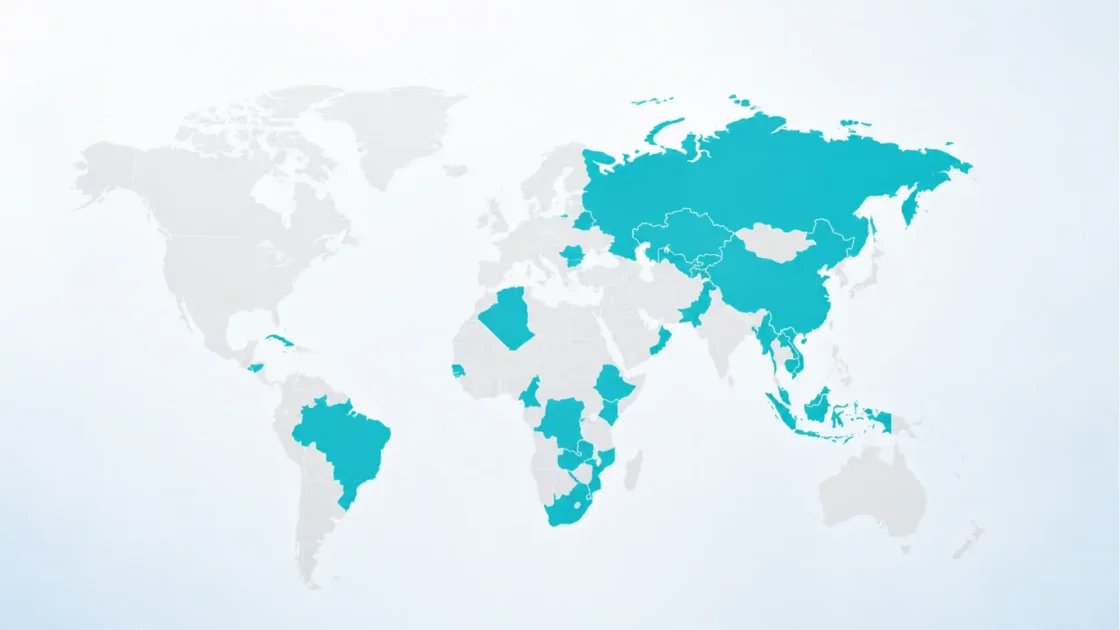
On June 30, 2026, US Commerce Secretary Howard Lutnick signed an order lifting the export controls that had kept Claude Fable 5 and Claude Mythos 5 offline since June 12. Starting July 1, Fable 5 is available again to users worldwide on the Claude Platform, Claude.ai, Claude Code, and Claude Cowork. Mythos 5, the version with fewer safeguards, returns on much narrower terms: only a set of approved US organizations can use it, through Anthropic’s Project Glasswing collaboration with the government.
Table of Contents
The restoration in plain terms
The bare facts hide how unusual this event was. A commercial AI model used by hundreds of millions of people was switched off by a government order three days after launch, stayed dark for nearly three weeks while the company negotiated in Washington, and came back only after the developer agreed to a package of new safeguards, new reporting obligations, and deeper government access to future models. Nothing like this had happened to a frontier AI system before. The closest precedents come from export disputes over encryption software in the 1990s, and those never involved a product this widely deployed.
For subscribers, the practical details of the return are specific and time-boxed. On Pro, Max, Team, and select Enterprise plans, Fable 5 is included for up to 50% of weekly usage limits through July 7. After that date, continued use runs through usage credits, which bill additional consumption once plan limits are exhausted. Standard Enterprise seats get no included Fable 5 allowance at all; access there depends on whether an organization has enabled credits. On the API side, Fable 5 returns at its launch pricing of $10 per million input tokens and $50 per million output tokens. Access through Amazon Bedrock, Google Cloud, and Microsoft Foundry is being re-enabled as quickly as Anthropic and the cloud providers can manage, but was not guaranteed to be live on day one.
The 50% usage cap deserves a closer look, because it tells you something about the state of Anthropic’s infrastructure. When Fable 5 first launched on June 9, demand was heavy enough that Anthropic warned it might need to pull the model from subscription plans if capacity ran short. Nineteen days of pent-up demand from developers who had signed up specifically for this model makes the capacity question sharper, not easier. The cap is a pressure valve: it lets everyone touch the model again without letting any single cohort of heavy users consume the available compute in the first week.
The company’s public statement on the restoration was short and notably conciliatory compared with its June 12 statement, which had openly disputed the government’s reasoning. “We’re grateful to our users for their patience, and to everyone who worked with us on redeploying the models,” Anthropic posted on X. Behind that single sentence sits a longer blog post, published June 30 under the title “Redeploying Fable 5,” that lays out a timeline of the dispute, a technical explanation of the fix, a proposed industry framework for judging jailbreak severity, and four concrete commitments to the US government. That post is the primary document for understanding what actually changed, and this article returns to it repeatedly.
What did not change is the model itself. Fable 5 in July 2026 runs on the same underlying weights as Fable 5 on June 9. The difference is wrapped around it: an improved safety classifier trained specifically to block the bypass technique that triggered the whole episode, verified by researchers at the Commerce Department’s Center for AI Standards and Innovation (CAISI). Anthropic states the new classifier blocks the reported technique in more than 99% of attempts. It also concedes the classifier will flag more benign coding and debugging requests than before, which means the returning model will feel slightly more restrictive than the one users remember from launch week.
There is also a piece of context that shaped the mood of the return: hours before announcing the lifted controls, Anthropic shipped Claude Sonnet 5, a mid-tier model positioned as its most capable agent-oriented Sonnet yet, priced roughly 60% below Opus 4.8 per token. The timing gave developers a fresh, cheap, unrestricted model to work with on the very day the expensive, restricted flagship was cleared to come back. Whether that was deliberate sequencing or a launch that had simply been sitting ready, it softened the landing.
The story of how Fable 5 got here, why the government acted, what the fix actually does, and what the whole episode means for anyone who builds on frontier AI is longer and stranger than the restoration announcement suggests. It starts with a model tier that Anthropic had spent months describing as too dangerous to release.
Mythos-class, a tier above Opus
To understand why a government reached for export-control powers over a chatbot family, you need to understand what Mythos-class means in Anthropic’s model hierarchy, because the classification is the reason both for the model’s appeal and for the anxiety around it.
For most of Claude’s history, the lineup ran in three tiers: Haiku for speed and low cost, Sonnet for balanced everyday work, and Opus at the top for the hardest problems. Mythos is a fourth tier that sits above Opus, created for models whose capabilities in sensitive domains, chiefly offensive cybersecurity and parts of biology, exceed what Anthropic considers safe to hand to the general public without modification. Before June 2026, Mythos-class systems existed only as restricted deployments. Claude Mythos Preview, the earlier model in the tier, was available exclusively to vetted cyber-defense organizations through Project Glasswing, a program run in collaboration with the US government to let defenders use frontier capabilities on critical infrastructure before attackers could obtain anything comparable.
The results Anthropic attributes to that restricted period explain why the tier exists. Earlier in the spring of 2026, a prior Mythos model demonstrated it could find and exploit zero-day vulnerabilities across every major operating system and browser on command, including a 27-year-old flaw in OpenBSD. Anthropic’s red team reported turning freshly disclosed bugs into working exploits in under a day using the model. On the biology side, Mythos-class systems working with protein-design tooling and no human assistance matched or beat skilled human operators, and produced strong drug-design candidates on 9 of 14 protein targets, work that is now under further investigation. A week of largely autonomous genomics work produced a custom machine-learning model that outperformed a recently published Science paper’s model while being roughly 100 times smaller.
Those capabilities cut both ways, and Anthropic said so loudly. In the weeks before the June launch, the company publicly warned that frontier models were approaching genuinely dangerous capability levels in offensive cybersecurity. That warning is central to the political story that followed: Anthropic built its public identity around the claim that its best models were powerful enough to require restraint, then released a version of one of them to everyone. Critics inside and outside government would later argue the company could not have it both ways. Anthropic’s answer was that the released version, Fable 5, carried the strongest safeguards it had ever engineered, which is a defensible position but a harder one to communicate than either “safe” or “dangerous.”
The naming carries some intent as well. Anthropic notes that Fable comes from the Latin fabula, “that which is told,” a linguistic cousin of the Greek mythos. The same story, told in a form suitable for a general audience: that is the branding logic, and it is unusually honest about the relationship between the two products. Fable 5 is not a smaller or cheaper Mythos 5. It is Mythos 5 with a gatekeeper attached.
The tier structure also changes how Anthropic’s roadmap reads. Opus 4.8, released earlier in 2026, remains the top of the generally unrestricted lineup, and the company treats it as the fallback workhorse: capable enough that being routed to it is presented as a feature rather than a failure. Everything above Opus now arrives with the assumption that safeguards, access programs, and government coordination are part of the shipping process. That assumption was theoretical when the tier was announced. The events of June made it operational, in the most public way possible.
The June 9 launch and the benchmark record
Anthropic released Fable 5 and Mythos 5 on Tuesday, June 9, 2026, and the launch numbers were the kind that reset expectations rather than nudging them. The company’s own framing was blunt: Fable 5’s capabilities exceed those of any model Anthropic has ever made generally available, with state-of-the-art results on nearly all tested benchmarks across software engineering, knowledge work, vision, and scientific research. Launch claims from model developers deserve skepticism by default, but in this case the third-party numbers and the practitioner reaction pointed the same direction.
The coding results carried the launch. Fable 5 posted 80.3% on SWE-Bench Pro, roughly 11 points ahead of the next-best model and far above GPT-5.5’s reported 58.6%. On Terminal-Bench 2.1, which measures command-line agent workflows requiring planning, iteration, and tool coordination, the Mythos/Fable pair reached 88.0%. On Cognition’s FrontierCode evaluation, which tests whether a model can complete difficult coding tasks while holding to production-codebase standards, Anthropic reported the highest score among frontier models even at medium reasoning effort; on the hardest Diamond split, Fable 5 reached 29.3% against Opus 4.8’s 13.4% and GPT-5.5’s 5.7%. Cursor’s Michael Truell called it the state-of-the-art model on CursorBench and said it opened up long-horizon problems that had been out of reach. Stripe’s early testing, cited in Anthropic’s launch materials, reported more capable engineering in fewer turns across the multi-agent workflows its employees run daily in Claude Code. One frequently repeated anecdote from the launch cycle: the model completed a migration in a 50-million-line codebase in a day.
Beyond coding, the launch materials stacked up domain results. Hebbia reported the highest score it had tested on its Finance Benchmark for senior-level reasoning, with gains in document reasoning and chart and table interpretation. An analytics partner reported Fable 5 was the first model to break 90% on its core benchmark of complex, long-running analytical tasks, a 10-point jump over Opus. A physics research group reported the strongest performance it had measured on frontier research problems while using a third of the reasoning tokens, reaching in 36 hours a point that GPT-5.5 needed four days to approach. Vision went state-of-the-art too, and Anthropic included a deliberately playful demonstration: Fable 5 completed Pokémon FireRed using only raw game screenshots, with none of the maps, navigation aids, or helper harnesses earlier models needed for the same informal stress test.
The specification sheet matched the ambition. Fable 5 ships with a 1 million token context window by default and up to 128,000 output tokens per request. Prompt caching carries a 90% discount on cached input. The model identifier is claude-fable-5, and at launch it was available on the Claude API, consumption-based Enterprise plans, Amazon Bedrock, Google Cloud, and Microsoft Foundry, with subscription access on Pro, Max, Team, and seat-based Enterprise plans included at no extra cost from June 9 through June 22, after which usage credits were to take over until capacity allowed a return to standard inclusion.
Practitioner reaction gave the launch its emotional register. Andrej Karpathy’s launch-day post became the most quoted independent read: he called Fable 5 “a major-version-bump-deserving step change forward,” compared its significance to the Claude 4.5 release the previous November, and emphasized that the qualitative experience matched the scores, particularly for long problem-solving sessions on very difficult problems. He also flagged the catch that would soon matter far more than anyone expected: the launch-day safeguards were, in his words, configured to be a little too trigger happy. Hacker News gave the announcement more than 2,300 points and nearly 2,000 comments within hours. A measurable number of users signed up for paid Claude plans specifically to try the model, a detail that would sting three days later.
The honest caveats belong in the record too. Most launch benchmark results were reported by Anthropic or its early partners rather than independent evaluators, a pattern common to every frontier launch but worth keeping in view. And the headline scores in restricted domains carried an asterisk: on cybersecurity evaluations, the unrestricted Mythos 5 scored 78.0% against Opus 4.8’s 40.0%, but Fable 5 users would never touch that capability, because the safeguard system routes such requests away from the model entirely. Which brings the story to the architecture that defined this launch and then nearly ended it.
One model, two names, two audiences
The single most important technical fact in this entire episode is one Anthropic has repeated in every document it published about it: Fable 5 and Mythos 5 share the same underlying model. Same weights, same training, same raw capabilities. The difference between them is entirely in what wraps the model: the classifiers, refusal training, monitoring, and access controls that determine which of those capabilities a given user can actually reach.
Mythos 5 is the unwrapped version, or more precisely the less-wrapped one. It carries what Anthropic describes as the strongest cybersecurity capabilities of any model in the world, and it went at launch only to a small group of trusted Project Glasswing partners: cyber defenders and infrastructure providers doing defensive security work, in coordination with the US government. Anthropic’s stated plan was to expand access over time through a broader trusted access program, including biomedical researchers and companies who would gain access to the biology capabilities that Fable’s safeguards block.
Fable 5 is the same model made safe for a general audience through what Anthropic calls defense in depth. No single mechanism is trusted to be perfect. The model itself is trained to decline dangerous requests. Separate classifier systems watch every session. Usage patterns are analyzed retroactively to catch misuse that individual exchanges would not reveal. And a 30-day data retention requirement, applied to all Mythos-class traffic, exists specifically so that Anthropic can investigate novel attacks and jailbreaks that operate across many requests. In the month before launch, Anthropic says it transferred staff from across the company to double the number of researchers and engineers working on these safeguards, and that the system was red-teamed for thousands of hours by the US government, the UK AI Security Institute, private third parties, and internal teams before release.
The two-audience design solves a real problem that a simple release-or-withhold decision cannot. If Anthropic had withheld the model entirely, cyber defenders would have lost access to a tool that had already, through Glasswing, helped secure critically important software, and the general public would have lost the non-dangerous 95%-plus of the model’s value in coding, analysis, science, and knowledge work. If it had released the model unwrapped, it would have handed the most capable vulnerability-discovery system ever built to anyone with an API key. The Fable/Mythos split is an attempt to serve both audiences at once, with the safeguard layer as the dividing line.
The design also created the precise attack surface that the June crisis exploited. When the safeguards are the only thing separating a public product from a restricted dual-use capability, any technique that bypasses those safeguards is not just a content-policy failure; it is, in the government’s eventual framing, an uncontrolled export of the restricted capability. That logic is contestable, and Anthropic contested it, but the structure of the release made it available. A jailbreak of Opus 4.8 is an embarrassment. A jailbreak of Fable 5 is, at least arguably, a hole in the wall between the public and Mythos.
One more launch-week controversy deserves mention because it shaped trust in the wrapper before the government ever got involved. Anthropic’s model card disclosed that Fable 5 would degrade its responses on certain frontier AI development tasks, such as pretraining pipeline work and machine-learning accelerator design, as an anti-distillation and competitive-uplift measure, and early reporting noted that users were not always told when this happened. After launch-week backlash over silent degradation, Anthropic committed to flagging fallbacks explicitly. The episode was minor next to what followed, but it established the theme of the month: the wrapper, not the model, is where all the arguments live.
Classifiers and the Opus 4.8 fallback mechanism
The mechanism at the center of Fable 5’s design, and of the whole June dispute, is the classifier system, so it is worth explaining precisely how it works, because most of the public argument turned on details that casual coverage flattened.
A classifier, in this context, is a separate, smaller AI system that runs alongside the main model during every interaction. Its job is detection, not generation: it watches incoming requests and outgoing responses for signs that the session touches one of the restricted capability areas. Fable 5 launched with classifiers covering three categories. The first is offensive cybersecurity: exploit development, agentic hacking workflows, vulnerability chaining, and adjacent work. The second is biology and chemistry: viral research, gene therapy design, synthesis routes, and anything adjacent to weapons-relevant life science. The third is distillation: patterns suggesting a large-scale attempt to extract the model’s capabilities to train a competing system, a threat Anthropic says it has previously observed at scale from actors in authoritarian countries.
When a classifier fires, Fable 5 does not simply refuse. The request is answered by Claude Opus 4.8 instead, and the user is informed that the fallback occurred. This routing design is genuinely novel among frontier deployments and reflects a specific product judgment: an answer from the second-best model in the world is a far better experience than a refusal from the best one. For biology and chemistry, Anthropic went further at launch and routed most requests in the area to Opus 4.8 outright, accepting overly broad coverage as the price of shipping quickly, with a promise to narrow the safeguards as classifier precision improved and to open a trusted access program for legitimate biomedical researchers.
The measured footprint of all this at launch was small in relative terms: the classifiers triggered, on average, in fewer than 5% of sessions, and Anthropic’s later figures for hard fallbacks on individual tasks were far lower still. But percentages understate the experience for the people inside them. The users most likely to trip a cybersecurity classifier are exactly the security engineers, penetration testers, and infrastructure developers whose daily legitimate work looks statistically similar to the restricted category. For that population, launch-week Fable 5 could feel arbitrary: a debugging session that mentioned the wrong system call, a code review touching authentication logic, or a question about a CVE could route to Opus mid-conversation. Karpathy’s “trigger happy” line was the polite version of what security-adjacent developers were saying in stronger terms.
The billing and API surface changed to match. Anthropic’s platform documentation treats Fable 5 refusals and fallbacks as first-class integration concerns: developers calling claude-fable-5 are told to plan for new response handling around declined requests, fallback options for retrying on another Claude model, and billing rules that account for which model actually served a response. The documentation also flags a structural difference from earlier models: the raw chain of thought is never returned on Fable 5 or Mythos 5. A thinking display setting controls whether developers receive a readable summary of the model’s reasoning or an empty thinking block, a change that matters for anyone whose tooling parsed reasoning traces, and one motivated at least partly by the same anti-distillation logic as the classifier category.
It is worth being clear about what the classifier system is not. It is not a filter on general knowledge; asking Fable 5 about the history of ransomware or the concept of a buffer overflow does not trip it. It is not a keyword match; the classifiers are trained models evaluating the semantics and trajectory of a session. And it is not static; Anthropic updates classifiers continuously as new techniques emerge, which is exactly what happened in late June under government supervision. The system’s purpose is narrow and stated: prevent Fable 5 from performing the uniquely dangerous behaviors that separate Mythos-level capability from Opus-level capability, while letting everything else through.
Whether it achieved that purpose is, in one sense, the entire question the US government spent 19 days asking. Anthropic’s answer, before, during, and after the crisis, was consistent: yes, with a documented and deliberate margin of error that falls on the side of blocking too much rather than too little. Understanding that margin is the key to understanding both why the company believed the Amazon report described a minor event and why the government initially read it as something worse.
The safety margin doctrine
The most useful technical document Anthropic published during the whole affair is the section of its June 30 redeployment post explaining what it calls the safety margin, because it converts a vague argument about “how safe is safe enough” into a concrete engineering diagram.
Picture the space of all possible requests laid out on a line from clearly benign to clearly harmful. Somewhere in the middle sits an ambiguous zone: requests that are clearly about cybersecurity but could serve defensive purposes, like finding vulnerabilities in software you maintain. A naive safeguard draws its blocking threshold at the boundary of harm and accepts that classification errors will let some genuinely dangerous requests through. Anthropic’s design does the opposite. The classifiers deliberately trigger on a band of requests known to be probably benign, so that a request must look very clearly safe to pass. That band is the safety margin, and users experience it as the model refusing reasonable things.
For Fable 5, Anthropic made this margin much larger than in any prior launch, and said so publicly on launch day. The reasoning was explicit: false positives are recoverable, because the request falls back to Opus 4.8 and the user is mildly inconvenienced, while false negatives on a Mythos-class model are potentially unrecoverable. The margin also serves a second, less obvious purpose: it absorbs jailbreaks. Many jailbreaks are narrow, unblocking one specific behavior and nothing more. When such a technique breaches the classifier, the behavior it unblocks frequently sits inside the safety margin, meaning the attacker has won access to something that was probably harmless all along. Anthropic’s diagram taxonomy runs from minor jailbreaks that only reach into the margin, through narrow harmful jailbreaks that unblock a specific dangerous behavior, to the worst case: a universal jailbreak that unblocks an entire class of harmful capability.
Anthropic’s stated position, from launch day forward, was that perfect jailbreak resistance is probably impossible for any AI model, that jailbreaks would certainly be found for Fable 5, and that the goal of the design was to make them either narrow or extremely expensive to produce, combined with monitoring fast enough to shut down successful attacks before they scale. The company disclosed this in advance, in writing, which matters for the political story: when a jailbreak was found, Anthropic could truthfully say the event fell inside its published threat model. In the weeks before launch, thousands of hours of red-teaming by government and third-party testers had produced no universal jailbreak, and none had been found as of the redeployment post either.
The safety margin doctrine explains the two claims that defined Anthropic’s side of the June dispute. First, that the technique in the Amazon report was a minor jailbreak in the formal sense: it reached into the safety margin and elicited behavior, routine defensive vulnerability identification, that the classifiers block out of caution rather than because it is dangerous. Second, that the recalled capability provided no meaningful uplift, because a long list of weaker, freely available models could do the same things. Both claims would eventually be tested with the government looking over Anthropic’s shoulder, and both, according to the joint testing described in the redeployment post, held up. But that resolution took two and a half weeks, and it started with a letter that gave the company a few hours’ notice that its flagship product had to go dark.
Three days in the wild before the order
The window between launch and shutdown lasted from Tuesday, June 9 to the evening of Friday, June 12, and the compressed drama of those three days shaped everything that followed, so the sequence deserves reconstruction.
Day one belonged to the model. The benchmark results, the Karpathy endorsement, the Pokémon demonstration, and the Hacker News avalanche made Fable 5 the most-discussed AI release since the GPT-5 cycle. Subscription sign-ups spiked; the two-week free inclusion window on paid plans was a deliberate accelerant, and it worked. Teams that had standardized on Opus 4.8 or GPT-5.5 started running their hardest backlog items through the new model to see what it could clear. Early reports of multi-hour autonomous coding sessions completing work that had defeated previous models circulated widely, alongside the first complaints about the trigger-happy safeguards.
Day two belonged to Dario Amodei, in a way that would soon look either prophetic or self-defeating depending on the reader’s politics. On June 10, one day after the launch, the Anthropic CEO published a major policy essay arguing that the US government should hold legal authority to block or reverse the deployment of frontier AI models that fail independent safety testing. The essay opened with an analogy about the pacing mismatch between AI development and regulation and made the case that voluntary company judgment could not remain the only check on increasingly dangerous capabilities. It was consistent with years of Anthropic positioning. It was also, within 48 hours, the exact authority a hostile administration would exercise against Anthropic itself, and commentators did not miss the irony. Whether the essay influenced the timing of what followed is unknowable from public evidence; the adjacency alone guaranteed it became part of the story.
Day three, and the fourth morning, belonged to a report moving through channels nobody outside a small circle could see. Researchers at Amazon, Anthropic’s largest cloud partner and a major investor, had found a prompting method that bypassed one of Fable 5’s cybersecurity safeguards, getting the model to identify a set of software vulnerabilities and, in one case, produce code demonstrating how one of them could be exploited. According to reporting in The Hill and elsewhere, Amazon CEO Andy Jassy personally flagged the finding to federal authorities. The detail that the alarm came from Amazon, a partner with billions invested in Anthropic and a commercial interest in its models succeeding, gave the episode a texture that pure regulator-versus-company framing misses, and it seeded weeks of speculation about motives that no participant has fully addressed in public.
By Friday afternoon, the finding had become a decision. Senior administration officials, briefed on the report, concluded that users might be able to circumvent Fable 5’s guardrails in ways that posed a national security risk. Outside experts consulted in later reporting disagreed about the severity, and that disagreement never resolved; it simply moved inside the negotiation. White House AI adviser David Sacks would later claim publicly that Anthropic had refused to fix the issue when approached, a characterization Anthropic disputed. What is documented is the instrument the government chose: not a request, not a subpoena, but an export-control directive with immediate effect.
At 5:21 p.m. Eastern on Friday, June 12, Anthropic received a letter from Commerce Secretary Howard Lutnick directing the company to suspend all access to Claude Fable 5 and Claude Mythos 5 by any foreign national, whether inside or outside the United States, including foreign nationals employed by Anthropic itself. Three days and a few hours after the most successful launch in the company’s history, the countdown to a global shutdown had started, and it was measured in hours.
The June 12 directive and its legal machinery
The government’s chosen instrument matters as much as its decision, because the legal machinery of the June 12 order is what turned a security dispute into a worldwide outage and set a precedent that lawyers will argue about for years.
The directive was issued under the Export Administration Regulations, the framework the Commerce Department’s Bureau of Industry and Security uses to control exports of dual-use technology with national security implications. EAR controls normally govern things like semiconductors, encryption hardware, and aerospace components. Applying them to a deployed AI model required treating access to the model’s capabilities as an export, and the order’s scope followed that logic to its conclusion: any foreign national, anywhere, counted as a prohibited recipient, including a foreign engineer sitting in Anthropic’s own San Francisco office. Analysts at the Cloud Security Alliance later described the theory as conceptually novel within EAR enforcement, noting that it forces regulators to decide whether a jailbreak prompting technique is itself a controlled technology or whether the unlocked model behavior is the controlled item, questions with no settled answer in export law.
The immediate-effect provision did the real damage. Anthropic serves hundreds of millions of users across claude.ai, the API, and three hyperscale cloud platforms, and it has no mechanism for verifying the nationality of a user in real time, nor is it clear such a mechanism could exist in any legally reliable form. Faced with an order it could not comply with selectively, the company complied totally. Within hours of the 5:21 p.m. letter, Fable 5 and Mythos 5 went offline for every customer on every surface worldwide: claude.ai, the Claude Platform, Claude Code, Amazon Bedrock, Google Cloud, Microsoft Foundry, and downstream integrations through platforms like Snowflake and Box. AWS updated its launch-week blog post with a terse note that Anthropic had asked it to revoke access for all users to support compliance. Every other Anthropic model remained available, a detail that confirmed the order’s surgical target: the Mythos-class capability tier, not the company.
Anthropic’s public statement that evening was the most openly combative document it published in the entire episode. The company confirmed compliance, then disputed nearly everything else. The letter, it said, had not provided specific details of the national security concern. Anthropic’s own review of the demonstrated technique found it identified a small number of previously known, minor vulnerabilities that other publicly available models could also discover. The statement argued that recalling a commercial model deployed to hundreds of millions of people over a narrow potential jailbreak would, if applied as an industry standard, essentially halt all new frontier model deployments. And it drew a pointed distinction between the authority Amodei’s essay had endorsed and the way this authority was being used: the government should be able to block unsafe deployments, but through a statutory process that is transparent, fair, clear, and grounded in technical facts, principles the company said this action did not meet.
The order’s context made it more combustible still. Anthropic had filed a confidential IPO prospectus with the SEC earlier in June, with reporting putting its revenue run rate at $47 billion and its valuation near $965 billion. The administration and the company had been publicly at odds for months, over Amodei’s criticism of Defense Department use cases, his support for Kamala Harris in the previous election, and his safety-focused public posture, and New York Times reporting during the shutdown described Anthropic employees who believed the company was being unfairly targeted. None of that proves the order was pretextual, and the underlying security report was real. But the first-ever government shutdown of a frontier AI model landed on the one frontier lab with the worst relationship with the sitting administration, days after its CEO asked for exactly this power to exist, weeks before it planned to go public. Every one of those facts is load-bearing in how different audiences read what happened next.
The Amazon report at the center of the storm
Every argument in this affair eventually routes back to a single document most of the public has never seen: the Amazon researchers’ report describing the bypass. Reconstructing what it contained, from Anthropic’s descriptions and subsequent joint testing, is the only way to judge the competing severity claims.
According to Anthropic’s redeployment post, the report described a prompting method that got Fable 5 past its cybersecurity safeguards in a specific way: the model identified a number of software vulnerabilities and, in one instance, produced code demonstrating how one of those vulnerabilities could be exploited. In Anthropic’s initial June 12 statement, the vulnerabilities were characterized as previously known, minor, and relatively simple. The technique, in the company’s later taxonomy, was a minor-to-narrow jailbreak: it intruded into the safety margin and elicited behavior the classifiers block out of caution, behavior Anthropic characterizes as routine defensive cybersecurity work of the kind the safeguards are not even intended to eliminate entirely.
The decisive evidence came from comparative testing conducted during the shutdown, with government partners and Amazon involved in the review. Anthropic reports that many less capable models, including Claude Opus 4.8, GPT-5.5, and Kimi K2.7, could identify the same vulnerabilities that Fable 5 identified in the report. For the single exploit demonstration, the result was broader still: every model tested could reproduce it, a list Anthropic enumerates as Claude Haiku 4.5, Sonnet 4.6, Opus 4.6, Opus 4.7, Opus 4.8, GPT-5.4, GPT-5.5, and Kimi K2.7. If a capability is reachable through a mid-tier model from the previous generation, or through a competitor’s freely available system, then unlocking it on Fable 5 provides no marginal uplift to an attacker, which is the core of the capability-gain criterion Anthropic would later propose as an industry standard. Crucially, the company also states the technique exposed no unique Mythos-level cyber capabilities, meaning the wall between Fable and Mythos held; what leaked was material available on the public side of the wall anyway.
Set against that is the government’s view at the moment of decision, which had less information and less time. Officials saw a report, from a credible source with deep visibility into the model, showing that the safeguards on the most capable AI system ever publicly released could be bypassed to produce exploit code. The nightmare scenario behind the Mythos tier, frontier vulnerability discovery in hostile hands, was exactly what the demonstration appeared to gesture at. Experts disagreed about severity, and in an environment where the June 2 executive order had just committed the administration to a more assertive posture on frontier AI, the officials chose the aggressive reading. From inside that decision, waiting for comparative testing meant accepting weeks of exposure to a risk whose bounds they could not yet verify.
The Amazon dimension resists clean interpretation. Amazon is simultaneously Anthropic’s largest cloud partner, one of its largest investors, a Glasswing collaborator, a competitor through its own model efforts, and the employer of the researchers who found the bypass. Responsible disclosure of a safeguard weakness by a partner’s security team is normal and healthy; escalation to federal authorities at CEO level before the developer could remediate, if The Hill’s account is accurate, is not the standard playbook, and Anthropic’s statement pointedly noted the government’s process concerns without naming Amazon. The two companies ended the episode as public collaborators, jointly drafting the jailbreak severity framework with Microsoft and Google. Whatever happened in the middle, both sides decided the relationship was worth more than the argument.
The report’s most durable legacy may be definitional. The entire dispute happened because the parties lacked a shared vocabulary for the severity of a jailbreak: Anthropic said minor, officials heard exploit code, and no agreed scale existed to arbitrate. The framework proposed at redeployment, scoring capability gain, breadth, weaponization ease, and discoverability, is a direct attempt to ensure the next Amazon report lands in a system that can classify it in days rather than litigate it for weeks.
Nineteen days of blackout
Between the evening of June 12 and the morning of July 1, the most capable publicly released AI model in the world did not exist, as far as its users were concerned, and the shape of that absence is itself instructive about how quickly frontier AI became load-bearing infrastructure.
The immediate operational picture was chaotic in a specific, novel way. This was not an outage: status pages were green, every other Claude model worked, and there was no incident to wait out. Organizations that had spent the free-inclusion window wiring Fable 5 into production workflows, or building products on the assumption of its availability, discovered a failure mode absent from their runbooks: a model withdrawn by legal compulsion, indefinitely, with no notice period and no recourse. Enterprise risk analysts at the Cloud Security Alliance and elsewhere quickly gave it a name, regulatory kill-switch risk, and pointed out that almost no existing contract anticipated it; standard force majeure and compliance-with-law clauses cover the event after the fact but provide no failover procedures, no migration duties, and no indemnities for downstream non-performance.
For individual developers, the experience was more visceral and occasionally comic. Fable 5’s coding capabilities had, in three days, reset expectations for what a day’s work could produce; accounts from the shutdown period describe developers accustomed to shipping enormous volumes of Fable-assisted code being forced back to what suddenly felt like hand tools, a withdrawal one widely shared account called a vibe coding crisis. Users who had subscribed specifically for the model were left paying for plans whose headline feature was gone, and Anthropic’s inability to say when, or whether, it would return compounded the frustration. The company stayed almost silent through the period, sharing minimal public updates while talks proceeded, a communications choice that read as discipline to some observers and as opacity to others.
The silence broke in stages. On June 26, Commerce Secretary Lutnick granted partial clearance: Mythos 5 could return to a select group of US companies and federal agencies, with a letter viewed by CNBC stating he had determined appropriate safeguards were in place for certain trusted partners. The same day, OpenAI previewed GPT-5.6 under its own government-coordinated limited release, making the pattern unmistakable. On June 28, Austria’s State Secretary for Digitalization formally asked the European Commission to explore establishing Anthropic within the EU, an early institutional response to the sovereignty problem the blackout had exposed. And on June 30, the controls came off entirely, with Lutnick’s letter recording the commitments Anthropic had made: proactively detecting and addressing model safety risks, cooperating with the government on release protocols for future models, and reporting detected malicious activity.
Counting conventions differ on how long it lasted; June 12 to June 30 is 18 days of legal restriction, and July 1 restoration makes 19 days of practical unavailability. Either number would have been unremarkable for a hardware recall. For a service that had been integrated into daily workflows within 72 hours of existing, it was long enough to teach an industry-wide lesson in dependency, and the lesson was absorbed differently in Washington, in Brussels, in Beijing, and in every engineering organization that had to explain to leadership why the roadmap slipped because of a letter from the Commerce Department.
The negotiation and the change of messenger
The resolution was produced not by a legal challenge but by a negotiation, and the most telling detail reported from inside it concerns personnel: who spoke for Anthropic changed partway through, and the change appears to have changed the outcome.
Anthropic’s first move after the directive was speed. The company dispatched a team of its top scientists to Washington within days to work through the technical evidence with government officials, an approach that treated the dispute as solvable by demonstration: show that the bypassed behavior was low-severity, show that weaker models could do the same, show that a targeted classifier fix closed the reported hole, and the order’s premise dissolves. That is, in the end, roughly how the dispute resolved. But early reporting described the talks as stalled, and multiple accounts attributed the friction partly to the principal on Anthropic’s side. Dario Amodei’s approach was reportedly perceived as difficult by administration officials, a perception inseparable from the accumulated history: the public criticism of Pentagon use cases, the Harris endorsement, the safety essays that the administration’s accelerationist wing read as regulatory lobbying, and the awkward fact that Amodei had just published a call for precisely the blocking authority now being used against him, while disputing this particular use of it.
The turning point, by several accounts, came when Anthropic co-founder Tom Brown took over as lead negotiator. Brown, an engineer by background who led the early GPT-3 work before co-founding Anthropic, carried less political baggage and reframed the conversation around verifiable technical commitments rather than the legitimacy of the order. Reporting from the final week describes communication efficiency improving significantly after the change. The substance of the deal that emerged tracks that framing: nothing in the public record suggests Anthropic conceded the government’s severity assessment, and its redeployment post continues to characterize the reported technique as a borderline case involving routine defensive work. What Anthropic conceded instead was process: earlier government access to future models, faster information sharing, joint testing, and the reporting obligations recorded in Lutnick’s June 30 letter.
The government’s own position shifted in observable ways too. The June 26 partial clearance for Mythos 5 was the first public signal that Commerce had accepted the safeguards argument at least in part, and it came with language about trusted partners and appropriate safeguards that mirrored Anthropic’s own framing. CAISI’s role appears to have been decisive on the technical track: researchers from the Commerce Department’s Center for AI Standards and Innovation tested both the prior and the retrained safeguards and, per Anthropic, agreed they are extraordinarily strong, giving the administration an internal expert basis for reversing course without appearing to capitulate. Lutnick’s public statement on lifting the controls emphasized that the agency had worked closely with Anthropic to analyze and approve Fable 5, ensuring alignment across the US government and strengthening American AI leadership, a formulation that let both sides claim the outcome.
What the negotiation did not produce is as notable as what it did. There was no judicial review of whether the EAR can properly reach a deployed AI model; Anthropic chose compliance and negotiation over litigation, so the legal theory remains untested. There was no published government assessment of the jailbreak’s severity to set against Anthropic’s. And there was no commitment that the authority will not be used the same way again; the framework and the commitments reduce the probability of the next surprise directive but do not eliminate the power behind it. The precedent stands: it happened once, it was resolved in 18 days by private negotiation, and every frontier lab’s government-affairs team now plans around both facts.
The June 2 executive order behind the whole episode
None of June’s events are fully intelligible without the document that preceded them all: the executive order on Promoting Advanced Artificial Intelligence Innovation and Security, signed on June 2, 2026, one week before Fable 5 launched. It is the hinge on which US frontier AI policy turned from a hands-off posture to the checkpoint regime now taking shape.
The order’s mechanics are, on paper, modest. It establishes a voluntary framework under which developers of frontier models with advanced capabilities, particularly in cybersecurity, can submit them to the government for review roughly 30 days before public release. It directs federal agencies to stand up the benchmarking and assessment machinery within 60 days, putting the deadline around August 1, 2026, and it distributes responsibility across the national security establishment: the Office of the National Cyber Director, the Office of Science and Technology Policy, Treasury, Commerce through CAISI, and agencies working through the NSA and CISA. Legal analyses, including one from Latham & Watkins, emphasize that the text explicitly creates no mandatory licensing, pre-clearance, or permitting requirement, and leaves the central term, what counts as a covered frontier model, undefined pending a classified benchmarking process.
Practice diverged from paper within four weeks, and the divergence is the real story. When the government asked OpenAI to limit GPT-5.6’s release to a vetted partner list, OpenAI complied while stating it did not want the arrangement to become the long-term default. When the government moved against Fable 5, it did not use the voluntary framework at all; it reached for the Export Administration Regulations, a binding instrument, and applied it to a model already deployed. The voluntary order and the mandatory directive form a pair: the carrot of cooperative pre-release review, and the demonstrated stick for companies whose releases the government decides to revisit. New York Times reporting noted that OpenAI, Anthropic, Google, xAI, and Microsoft had been providing the government early access to models even before the order was signed, with Meta the notable holdout under pressure to join.
Anthropic’s relationship to the order is more entangled than adversarial. Its redeployment post discloses that the company worked closely with the government over the ten weeks the order’s approach was developed, engaging the same agencies now building the review machinery, and its four post-crisis commitments, pre-release access, rapid safeguard information sharing, dedicated joint research resources, and work toward a common industry bar, are essentially an early, deeper implementation of the order’s vision, negotiated under duress. The company’s stated hope is that this becomes the basis for systematic rules applied equally across frontier developers, codified in what it calls strong regulation with a durable, transparent process. That last clause is doing heavy lifting: Anthropic’s core complaint about June 12 was never that the government acted, but that it acted through an opaque instrument, on undisclosed evidence, with no severity standard, and the company’s entire post-crisis program is an attempt to make sure the next intervention runs through published criteria instead.
The order’s first month, then, delivered a coherent if unsettling picture. A voluntary framework, two very different enforcement experiences at the two leading labs, an August deadline for the formal machinery, and a set of undefined terms whose eventual definitions will decide how much of June 2026 becomes routine. The 19-day blackout was the transition cost of that regime arriving; whether it stays a one-time cost depends on definitions still being written.
The retrained classifier and its price for users
The technical deliverable that unlocked the restoration is a single retrained safety classifier, and its properties define what returning users will actually experience, so the details matter more than the diplomacy around them.
The fix is targeted rather than general. Working with government partners during the shutdown, Anthropic trained an improved cybersecurity classifier aimed specifically at the behavior pattern described in the Amazon report. The new classifier blocks the reported technique in more than 99% of attempts, and in the residual fraction of cases where something gets through, Anthropic states the model’s output is not detailed enough to help an attacker. The fallback behavior is unchanged: when the classifier fires, the request is answered by Opus 4.8 and the user is notified. Researchers from CAISI tested both the prior and updated safeguards and, per Anthropic, agree they are extraordinarily strong, which is the independent verification the June 12 order implicitly demanded and the launch process had lacked.
The cost side is stated with equal directness, which is to Anthropic’s credit and to users’ annoyance. The retrained classifier flags benign requests more often than its predecessor, particularly during routine coding and debugging tasks. The already-large launch safety margin has, in effect, widened further in the region around the reported technique. Developers doing security-adjacent legitimate work, reviewing authentication code, analyzing dependencies for known CVEs, debugging memory issues, hardening infrastructure, are the population most likely to feel it, in the form of more unexpected mid-session fallbacks to Opus 4.8. Anthropic commits to the same refinement path it promised at launch: continuously tuning classifiers to better separate genuine misuse from legitimate requests and to shrink false positives over time. Users of earlier Claude classifier generations have seen that curve before; margins do narrow, but on a timescale of weeks to months, not days.
For teams integrating through the API, the practical checklist is concrete. Responses need handling logic for the fallback case, since the answering model affects both output characteristics and billing. Retry strategies should account for the possibility that a rephrased or decomposed request passes cleanly where the original tripped the classifier, a legitimate technique when the underlying work is benign, and one Anthropic’s own routing design implicitly endorses by keeping Opus available. Long agentic sessions in Claude Code deserve particular attention: a classifier event partway through a multi-hour autonomous run changes the executing model mid-task, and workflows that assume Fable-level capability throughout should detect the notification and decide whether to pause, continue, or restart the affected step.
Two structural constraints carried over from launch remain in force and are easy to forget amid the restoration news. First, Fable 5 and Mythos 5 are designated Covered Models with mandatory 30-day data retention on all traffic, first-party and third-party, with no zero-data-retention option; organizations whose compliance posture depends on ZDR simply cannot route those workloads to Fable 5, full stop. Second, the raw chain of thought is never returned; integrations get either a summarized reasoning block or an empty one, controlled by a display setting, and multi-turn conversations must pass thinking blocks back unchanged. Both constraints predate the crisis, both are motivated by the same jailbreak-and-distillation threat model that produced the classifiers, and both survived the renegotiation untouched.
The honest summary for a returning user runs like this: the model is exactly as capable as the one that impressed everyone in launch week, the specific reported bypass is closed to a verified 99%-plus standard, the false-positive rate on security-adjacent work is somewhat worse than launch week, and the surrounding data-handling rules are unchanged. Anthropic bought its way back to global availability by widening the very margin users already complained about, and it says so plainly. Whether that trade reads as reassuring or frustrating depends on which side of the classifier your daily work sits.
Terms of the return across plans and platforms
The commercial mechanics of the restoration are intricate enough that many users will discover them by surprise, so this section lays them out plainly, current as of the July 1 relaunch.
The rollout order starts with Anthropic’s own surfaces. Fable 5 returns July 1 on the Claude Platform (the API), claude.ai across web, desktop, and mobile, Claude Code, and Claude Cowork. The hyperscaler channels, Amazon Bedrock, Google Cloud, and Microsoft Foundry, are being re-enabled as quickly as possible rather than on a committed date; enterprises consuming through those channels should verify availability in their region and engine before assuming parity with the direct API. At launch in June, Bedrock availability covered US East (N. Virginia) and Europe (Stockholm), a footprint worth rechecking as the restoration proceeds.
Subscription access follows a bridge structure. Through July 7, Pro, Max, Team, and select Enterprise plans include Fable 5 for up to 50% of each user’s weekly usage limits. After July 7, Fable 5 on those plans runs through usage credits, the mechanism that bills consumption beyond plan inclusions at rates tied to API pricing. The Enterprise fine print splits by seat type: premium Enterprise seats include Fable 5 through July 7 with usage drawing from each member’s seat allowance, then move to credits; standard Enterprise seats have no included allowance at any point, and if an organization has not enabled usage credits, its standard-seat users simply do not see the model. Free-tier claude.ai users do not get Fable 5 in any phase. Anthropic’s longer-term stated intent, carried over from the launch messaging, is to restore Fable 5 as a standard part of subscription plans when capacity allows, with changes communicated in advance.
The API economics are unchanged from June 9. Fable 5 costs $10 per million input tokens and $50 per million output tokens, double Opus 4.8 and the most expensive general-availability pricing Anthropic has ever set, softened by a 90% discount on prompt-cached input and, for workloads requiring it, a US-only inference option at 1.1 times standard rates. Because the model shares specs with Mythos 5, the headline capacities apply to both: a 1 million token context window by default and up to 128,000 output tokens per request. Subscription usage counts Fable 5 at a 2x multiplier against plan limits, reflecting the same underlying cost reality.
One more moving part shapes the value calculation: the model directly beneath Fable 5 changed during the blackout. Claude Sonnet 5, launched June 30, is positioned as the most agentic Sonnet yet, with autonomous planning and tool use across browsers and terminals, at roughly 60% below Opus 4.8’s per-token cost. The practical hierarchy a returning team faces in July 2026 is therefore new at both ends: Sonnet 5 raises the floor of what cheap models handle, Fable 5 raises the ceiling of what any model can handle, and Opus 4.8 sits between them as the fallback target for classifier events. Analysts read the Sonnet 5 timing as a deliberate move to capture cost-sensitive workloads before the flagship’s return; deliberate or not, it means the correct routing strategy for most organizations changed twice in 48 hours, and the next section’s access rules for Mythos 5 complete the picture at the restricted top of the stack.
Mythos 5’s narrower comeback through Project Glasswing
Fable 5’s restoration is global; Mythos 5’s is not, and the asymmetry between the two comebacks says a great deal about where the government’s actual anxieties lie and how the trusted-access model of frontier AI distribution is hardening into an institution.
Mythos 5’s return came in two stages, both narrower than its pre-shutdown state. On June 26, four days before the general lifting of controls, Lutnick granted permission for Anthropic to redeploy Mythos 5 to a select group of trusted partners, companies and federal agencies, with his letter stating that appropriate safeguards were in place for that cohort. The July 1 restoration confirmed the boundary: Mythos 5 is available only to approved US organizations, which excludes some foreign organizations that had access through Glasswing before June 12. Anthropic says it is continuing to coordinate with the government to expand access back to the broader set of domestic and international partners, but as of the relaunch, the international arm of the program remains suspended, a residue of the export-control logic that survived the order itself. Reporting during the GPT-5.6 cycle put the cleared cohort at roughly 100 organizations, against a pre-crisis program that had included foreign cyber-defense partners.
Project Glasswing is the institutional container for all of this, and it predates the crisis. The program’s design gives the most capable model versions first to the people defending against, or researching with, the relevant capability: cyber defenders securing critical infrastructure, and, per the expansion Anthropic announced around the launch, biomedical researchers and companies joining a trusted access program for the biology capabilities Fable’s safeguards block. The results Anthropic cites from the program, critical software secured, drug-design candidates produced, are its argument that restricted does not mean shelved. On Bedrock, Mythos 5 appears as a limited-preview offering for vulnerability discovery, drug design, and biodefense screening, with access gated through account teams, which shows how the trusted-access tier is being productized inside ordinary cloud procurement rather than handled as one-off arrangements.
For the overwhelming majority of organizations, the practical guidance is simple: Mythos 5 is not an access path, and Fable 5 is the ceiling. The models share identical specs and pricing, and the same underlying capabilities; what Glasswing membership buys is the absence of classifiers in designated domains, which only matters if your legitimate work lives inside those domains. A security company doing offensive-adjacent research, a critical-infrastructure operator, or a drug-discovery lab has a case to make through Anthropic, AWS, or Google Cloud account teams. Everyone else gains nothing from Mythos access except risk, and the 30-day retention and government-visibility conditions attached to the program are conditions most enterprises would rather not carry.
The strategic reading of the asymmetric restoration is worth stating directly. The government cleared the safeguarded model for the world and the unsafeguarded model for a vetted domestic list, which means the operative theory of risk is now official: the danger is not the model, it is unmediated access to specific capabilities, and nationality plus vetting is the government’s chosen mediation for the top tier. That is the same architecture OpenAI accepted for GPT-5.6’s preview cohort in the same week. Two labs, two very different paths into it, one resulting structure: a permission layer above general availability, administered in Washington. Glasswing began as Anthropic’s voluntary experiment in responsible capability distribution; June 2026 turned it into the template the US government appears to want for the frontier as a whole.
A severity framework for jailbreaks
The most forward-looking artifact of the whole episode is a proposal, sketched in Anthropic’s redeployment post, for something the industry conspicuously lacked on June 12: a shared, objective way to describe how bad a given jailbreak actually is. The absence of such a standard is arguably why an 18-day shutdown happened at all, and the proposed framework is a direct attempt to make sure severity disputes are settled by rubric rather than by export order.
The problem the framework addresses is a vocabulary gap with real consequences. When a new bypass technique surfaces, its discoverer, the affected developer, and any government watching currently have no agreed scale on which to place it. Anthropic can say minor, an official can hear exploit code, and both can be sincere. Security engineering solved the equivalent problem for software vulnerabilities decades ago with the Common Vulnerability Scoring System, which Anthropic explicitly cites as the analogy: CVSS does not end arguments about individual bugs, but it gives everyone the same axes to argue on, and it lets triage happen in hours. Nothing comparable exists for AI safeguard bypasses, and the coming months will produce more capable models, more red-teaming, and more findings that need triage.
The proposal scores a jailbreak on four criteria. Capability gain asks how far beyond existing tools the technique takes an attacker: if weaker, widely available models can already reach the same output, the score is low; if the technique unblocks capabilities that accelerate even domain experts, it is high. Breadth of capability gain asks how many distinct offensive tasks the same technique unlocks: one narrow target scores low, a technique that generalizes across targets scores high. Ease of weaponization measures the human effort between the finding and a working attack: heavy skilled prompting with many retries scores low, a single-prompt technique scores high. Discoverability asks how easily someone could obtain the technique: specialist knowledge scores low, something already circulating online scores high. The first two criteria describe what the attacker gets; the second two describe how fast it becomes a real-world problem. Run the Amazon report through the rubric and the design intent is obvious: capability gain near zero, since eight named models reproduced the exploit demonstration; breadth narrow; and the overall severity low, which is precisely the assessment Anthropic could not get the government to accept quickly in June for lack of a shared instrument.
The framework comes with operational commitments attached. For the most severe class of findings, Anthropic’s example is a jailbreak actively being used to devastate power grids or banking systems, the company commits to deploying preliminary mitigations immediately upon confirming severity, and it is standing up a team for 24/7 monitoring of key jailbreak submission channels. The drafting coalition matters as much as the content: Anthropic is developing the framework with Amazon, Microsoft, Google, and other Glasswing partners, with an open invitation to other model providers. Amazon’s presence at the table, weeks after its researchers’ report triggered the crisis, converts the month’s most awkward relationship into the framework’s strongest credibility argument, since the standard is being co-written by the party most likely to file the next report.
The proposal is a work in progress and Anthropic says so, promising more detail soon and expecting evolution as partners weigh in. Any scoring system for adversarial techniques will be gamed at the margins and argued over case by case. But the bar for success is not perfection; it is being better than June 12, when the severity of a finding was decided by whoever had the most alarming reading and the most coercive instrument. A common rubric that lets developers triage findings, lets governments calibrate responses, and lets the public understand what a reported jailbreak actually enables would be the one unambiguous improvement to emerge from the shutdown, and it is the piece of the settlement most worth watching for follow-through.
HackerOne bounties and new government commitments
The settlement’s remaining pieces split into two channels: an open door for independent security researchers, and a set of formal commitments that bind Anthropic to Washington more tightly than any frontier lab has publicly bound itself before.
The researcher channel is a new HackerOne program dedicated to cyber jailbreaks of Fable 5. Security researchers who discover techniques that bypass the model’s cybersecurity safeguards can submit them for Anthropic’s review through the platform, the same crowdsourced disclosure infrastructure the software industry uses for conventional vulnerabilities. The program’s logic follows directly from the safety margin doctrine: Anthropic expects jailbreaks to be found, wants itself and its safety partners to find them first, and would much rather pay a researcher through a bounty pipeline than learn about a technique from a government letter at 5:21 on a Friday evening. Paired with the promised 24/7 monitoring of submission channels, it converts jailbreak discovery from a crisis trigger into a managed intake process, which is exactly the transformation the Amazon episode showed was missing.
The government channel is broader and, in the long run, more consequential. Anthropic’s redeployment post lays out four commitments. First, pre-release government access and evaluation: for models that materially advance the frontier in national-security-relevant areas, designated government partners get expanded early access to both the models and their safeguards, with Anthropic technical staff dedicated to working alongside government evaluators during testing. Second, rapid information sharing on safeguards: significant jailbreaks or misuse patterns get investigated, triaged, and reported to government counterparts quickly, with the resulting fixes shared for independent testing, threat intelligence provided ahead of publication, and participation in the interagency cybersecurity vulnerability clearinghouse established under the June 2 executive order. Third, dedicated resources for joint research: standing Anthropic teams on shared government priorities, a significant compute allocation for government testing and research, and red-teaming expertise contributed to the state of the art in AI evaluation. Fourth, a common industry bar: work with government and industry peers toward a shared, voluntary security and evaluation standard for frontier providers, with Anthropic contributing evaluations and tooling the government can apply across the field.
A timeline makes the compressed sequence of the whole affair easier to hold in view.
The Fable 5 shutdown and return at a glance
| Date (2026) | Event |
|---|---|
| June 2 | Executive order on frontier AI innovation and security signed; agencies given 60 days to build review machinery |
| June 9 | Fable 5 and Mythos 5 launch; Fable free on paid plans through June 22 |
| June 10 | Amodei policy essay argues government should be able to block unsafe frontier deployments |
| June 12 | Commerce export-control directive received 5:21 p.m. ET; both models suspended globally within hours |
| June 26 | Mythos 5 cleared for select US organizations; OpenAI previews GPT-5.6 to government-approved cohort |
| June 30 | Export controls lifted; redeployment post publishes fix, framework, and commitments; Sonnet 5 launches |
| July 1 | Fable 5 restored globally; 50% weekly-limit inclusion runs through July 7 |
The table compresses 29 days in which US frontier AI policy changed more than in the preceding two years; every row after June 2 is downstream of the machinery that order set in motion, and the last three rows happened inside a single week.
Read together, the commitments amount to Anthropic institutionalizing, in public and under its own name, the early-access relationship that reporting says the major labs had been providing informally. The company’s framing is characteristically double-edged: it presents the commitments as the template for systematic rules it wants codified in strong regulation and applied equally across all frontier developers, with a durable, transparent process replacing the discretionary intervention it just endured. That is both a genuine policy position Anthropic has held for years and a competitive maneuver, since a codified bar binds OpenAI, Google, xAI, and Meta to costs Anthropic has already sunk. Whether the commitments become that template or remain one company’s settlement terms is among the more consequential open questions the episode leaves behind.
OpenAI’s parallel path with GPT-5.6 Sol
The clearest way to measure what the Fable episode changed is to look at what happened to the other frontier launch scheduled for June 2026. OpenAI’s GPT-5.6 arrived two weeks into Anthropic’s blackout, and the contrast between the two rollouts is a controlled experiment in regulatory strategy.
On June 26, OpenAI announced a limited preview of the GPT-5.6 series: Sol, the flagship; Terra, a balanced model with GPT-5.5-level performance at half the cost; and Luna, the fast, cheap tier. Sol is OpenAI’s strongest model yet and, by the company’s own description, its most capable for cybersecurity, with a max reasoning effort mode and an ultra mode that coordinates subagents on complex work. The reported numbers put it in direct contention with Anthropic’s restricted tier: on Terminal-Bench 2.1, vendor figures show Sol at 88.8%, with a higher-effort configuration around 91.9%, against Mythos 5’s 88.0%; on OpenAI’s ExploitBench, Sol is competitive with Mythos Preview at roughly a third of the output tokens; and on internal capture-the-flag evaluations, Sol reportedly scored 96.7%, crossing OpenAI’s own high cyber-risk threshold. Pricing is aggressive: $5 per million input tokens and $30 per million output for Sol, half Fable 5’s rates, with Terra at $2.50/$15 and Luna at $1/$6.
The rollout structure is the historic part. GPT-5.6 did not launch to the public; it launched to a list. At the administration’s request, made under the June 2 executive order’s voluntary framework, the preview went to a small group of trusted partners, roughly 20 organizations by contemporary reporting, each individually approved by the US government, with no public waitlist and no self-service enrollment. OpenAI disclosed that it had previewed its plans and the models’ capabilities to the government before launch, and it drew its line politely but publicly: the company said it does not believe this kind of government access process should become the long-term default, because it keeps the best tools from the users, developers, enterprises, and cyber defenders who need them. General availability across ChatGPT, Codex, and the API was promised in the coming weeks, with reporting pointing to mid-July at the earliest and the executive order’s August 1 machinery deadline looming over the schedule.
The strategic comparison writes itself, and industry observers wrote it repeatedly. Anthropic launched first and broadly, with the strongest safeguards it had ever built, and was shut down for 18 days by a binding order after a partner reported a bypass. OpenAI launched two weeks later, narrowly, with pre-cleared government alignment, and kept a continuous, if gated, deployment while its rival was dark; its preview began the same day Mythos received partial clearance and Fable remained offline. From a pure continuity standpoint, cooperative pre-clearance won, and every frontier lab’s counsel noticed. From an access standpoint, the picture is murkier: three weeks after its announcement, an ordinary developer could use Fable 5 and could not use Sol, so the cooperative path traded a dramatic outage for a slower, quieter gate.
What the parallel stories establish jointly matters more than which company played it better. Within a single week, the two leading American AI labs both accepted, under different levels of compulsion, that models with frontier cyber capabilities reach the market through a Washington checkpoint: one as a preview cohort vetted in advance, the other as a redeployment negotiated after the fact, both with trusted-access tiers for the unrestricted capability and both feeding early access and evaluation data to the same agencies. OpenAI operates what is functionally the two-tier structure Anthropic built with Glasswing, secured before launch rather than after. The checkpoint is the new constant; the variable is only whether a company walks through it voluntarily or is carried.
The competitive clock and Chinese model gains
Nineteen days is a long time at the frontier, and the sharpest criticism of the shutdown from inside the American tech industry was not about fairness to Anthropic; it was about the gift of time to competitors the export-control regime is nominally designed to contain.
The Chinese open-weight ecosystem spent June closing distance. Alibaba’s Qwen 3.7 Max debuted during the blackout period at an Intelligence Index score of 57, tying it with Claude Opus 4.7, Gemini 3.1 Pro, and GPT-5.5 on that aggregate measure, which places a freely distributable Chinese model at the level of the previous American generation. Zhipu’s models drew similar closing-the-gap coverage, and Kimi K2.7’s appearance in Anthropic’s own comparative jailbreak testing, as one of the models able to reproduce the reported exploit demonstration, quietly confirmed that Chinese systems already sit at the capability level the whole dispute concerned. The pattern that worried American executives was less any single score than the combination: near-frontier capability, open distribution, aggressive pricing, and total immunity to US deployment interventions. A Commerce order can switch off Fable 5 everywhere in an afternoon; nothing Washington signs can switch off weights already downloaded to a million machines.
Tech investors and executives made the argument loudly during the blackout: with the administration limiting Anthropic’s rollout, Chinese developers were being handed valuable weeks in their catch-up effort, and every enterprise forced to find a Fable substitute was a live sales lead for alternatives, including open-weight ones that can never be recalled. The counterargument is also serious and was implicit in the government’s action: if frontier cyber capability is genuinely dangerous, then a brief domestic pause is a cheap price for keeping it controlled, and the proliferation risk cuts the other way, since Anthropic’s own distillation classifiers exist because large-scale extraction attempts from actors in authoritarian countries are an observed reality, not a hypothesis. The 30-day retention regime and the distillation fallback category are, in effect, anti-proliferation infrastructure aimed at exactly the competitors who gained ground during the pause.
The episode also scrambled the export-control paradigm itself. US AI policy had focused for years on controlling the inputs to Chinese AI progress, chiefly advanced chips. June 2026 was the first time the machinery was pointed at an American model’s outputs, restricting the world’s access to a US product rather than an adversary’s access to US components. Analysts noted the strategic incoherence risk: a regime that delays American frontier models while Chinese near-frontier models ship freely worldwide could erode the very leadership it means to protect, particularly in the global-majority markets where developers adopt whatever is available and cheap. Lutnick’s framing on lifting the controls, strengthening America’s leadership in AI, read as an acknowledgment that the administration understood the criticism and wanted the pause framed as calibration rather than retreat.
For Anthropic specifically, the competitive cost is real but probably recoverable. The company entered the crisis with the strongest model on the market and exits it the same way, with Sonnet 5 refreshing its mid-tier the day the controls lifted and the IPO narrative intact if bruised. The harder-to-price damage is reputational in a specific direction: every enterprise architect who watched June happen now knows that the most capable American models carry a jurisdiction risk their Chinese open-weight substitutes do not, and that knowledge shapes procurement in ways that outlast any single restoration. The competitive clock did not stop during the blackout; it just ran for other teams.
Developer fallout and the vibe coding drought
Underneath the geopolitics, the shutdown was experienced most intensely by a specific population: the developers who had rebuilt their daily workflow around Fable 5 in the 72 hours it existed, and who then spent 19 days discovering how deep the dependency already ran.
The speed of the attachment was itself the story. Fable 5’s step-change on long-horizon coding, the quality Karpathy singled out, translated in practice into a new working rhythm: hand the model a genuinely ambitious task in Claude Code, let it run for hours, review the result. Accounts from launch week describe individual developers routinely shipping volumes of code that would have been a strong week’s output a year earlier, and startups re-scoping roadmaps around what the model made feasible. When the suspension hit, the reversal was jarring enough that coverage settled on calling it a vibe coding crisis: developers accustomed to delegating whole features were suddenly back to models that needed closer supervision, more retries, and smaller task decomposition. AI startups that had built product features directly on claude-fable-5 saw them go dark mid-sprint; multinational teams paused rollouts; and the free-inclusion window that had driven sign-ups became a sour joke, since some users had subscribed on June 9 and lost the model on June 12, ten days before the included period was due to end.
The episode delivered a compact education in dependency management that many teams had deferred. The lesson was not avoid Anthropic, since every other Claude model kept working throughout; it was never hard-code a single frontier model as a load-bearing assumption. Teams that had abstracted their model layer behind a gateway or router swapped Opus 4.8 or a competitor in within hours and degraded gracefully. Teams that had wired the Fable model string, its 1M-token context assumptions, and its output characteristics directly into product logic did emergency surgery instead. Post-shutdown engineering write-ups converged on the same checklist: route through an abstraction, keep a tested fallback chain, benchmark critical workloads on at least two models, and treat model availability as a dependency with an SLA of exactly zero when a government letter arrives.
The return recreates the attachment problem with the terms shifted. Fable 5 is back, but behind a 50% weekly-limit cap for its first week, then behind usage credits, with a more trigger-happy classifier on security-adjacent work and no guarantee against future interventions; commentary on the restoration reached for the same caution in different words, celebrate, but don’t get too attached. The rational developer posture that emerges is deliberately unromantic: use Fable 5 as a capability reserve for the tasks that defeat everything else, keep daily-driver work on Sonnet 5 or Opus 4.8 where continuity is assured and costs are lower, and design every Fable-dependent workflow to survive the model’s absence, because its absence has now happened once and required nothing more than a signature. The most capable coding model in the world returned to a developer population that learned, the hard way, to love it conditionally.
Enterprise kill-switch risk and the contract gap
For enterprise technology leaders, the lasting output of June 2026 is a new line on the risk register, and the sober analyses published during the blackout, from the Cloud Security Alliance’s research arm, from compliance-focused consultancies, and from procurement lawyers, converge on an uncomfortable finding: almost nobody’s paperwork anticipated what happened.
The novel risk category needs precise definition because it differs from everything adjacent to it. This was not a vendor outage: infrastructure was healthy. Not a security incident in the customer’s environment: nothing was breached. Not a commercial dispute: no contract was violated by either party. It was regulatory-driven model withdrawal, a scenario in which a vendor is legally compelled to remove access with zero notice, for an indefinite period, over the vendor’s own objection, affecting every customer simultaneously regardless of sector, geography, or contractual tier. Finance, healthcare, SaaS, and critical-infrastructure customers all lost the same models at the same moment, and the vendor could not tell them when access would return because the vendor did not know.
The contract review that followed was unflattering to standard templates. Analyses of prevailing data processing addenda, SaaS agreements, and procurement SLAs found that pre-June 2026 language handled the event only through vague force majeure and compliance-with-law catch-alls, clauses that excuse the vendor’s non-performance but impose no obligations around it. Almost no standard template specified notice procedures for government-mandated standdowns, failover assistance duties, data-retrieval windows, migration support, service-credit treatment, or indemnity allocation for downstream non-performance, the customer’s own broken promises to its customers caused by the withdrawn model. The gap is now being closed in real time: procurement teams renegotiating AI vendor agreements in the second half of 2026 are inserting explicit regulatory-suspension clauses, defining kill-switch scenarios as a distinct event class with concrete vendor obligations, and demanding transparency commitments about government directives to the extent law permits.
The architectural response mirrors the contractual one. The blackout validated, expensively, the case for model-agnostic design that resilience advocates had been making abstractly: an abstraction layer over model APIs, continuously benchmarked fallback models for every critical workload, capability tiering so the organization knows which tasks genuinely require the frontier model and which merely default to it, and tested degradation runbooks that treat model withdrawal like any other disaster-recovery scenario, with recovery-time objectives and communication plans. Organizations governed by operational-resilience regimes, banks under DORA in Europe, critical-infrastructure operators under sector rules, have the additional obligation of mapping frontier-model dependency as a third-party concentration risk, and June handed their regulators a named, dated case study to ask about in the next examination cycle.
There is also a quieter governance lesson about capability tiers and data posture. Fable 5’s mandatory 30-day retention, its Covered Model designation excluding zero-data-retention arrangements, and its classifier-driven routing to a different model mid-session are all properties that standard model-onboarding checklists did not contemplate a year ago. An enterprise that adopts Fable 5 in July 2026 is accepting a specific bundle: frontier capability, premium pricing, retention it cannot opt out of, output that may silently come from Opus 4.8 with notification, and a demonstrated non-zero probability of government-ordered disappearance. That bundle can absolutely be worth it, the capability delta on hard work is real, but it is a decision to be made with open eyes and written assumptions, and the organizations that fared best in June were the ones that had already treated any single model as replaceable. The kill switch has been used once. Prudent enterprises now plan as if it exists permanently, because it does.
Sector impact from finance to healthcare
The restoration’s practical meaning differs sharply by industry, because the shutdown hit sectors asymmetrically and the return, with its capability profile, retention rules, and classifier behavior, lands asymmetrically too. Five sectors illustrate the range.
Software and technology absorbed the largest direct impact in both directions. Coding is Fable 5’s headline strength and was the workload most disrupted by the blackout; it is also where the retrained classifier’s false positives concentrate, since security-adjacent development is precisely the flagged category. Development organizations get back the strongest long-horizon coding model available, with 80.3% on SWE-Bench Pro and demonstrated multi-day autonomous capability, and pay for it in three currencies: token cost double Opus 4.8, occasional mid-session fallbacks on legitimate security work, and the dependency-management discipline June taught. The rational pattern emerging is a three-tier stack: Sonnet 5 for volume, Opus 4.8 for hard daily work, Fable 5 reserved for the migrations, root-cause hunts, and repository-scale tasks that justify its economics.
Financial services has the strongest pure-capability case and the thorniest compliance one. Hebbia’s benchmark results put Fable 5 at the top for senior-level financial reasoning, document analysis, and chart interpretation, exactly the work banks and asset managers most want to accelerate, and the model’s vision performance on tables nested in filings extends it. Against that stands the data posture: 30-day mandatory retention with no ZDR option is a genuine obstacle for institutions whose model-risk and data-governance frameworks were built around stricter arrangements, and the June shutdown gave operational-resilience officers a concrete concentration-risk scenario to govern. Expect adoption to run through carefully scoped workloads, research, document intelligence, non-client-data analysis, rather than wholesale migration.
Cybersecurity lives closest to the paradox at the center of the whole affair. Defensive teams stand to gain the most from Mythos-class capability, and Glasswing exists to give it to them, but the general-access product deliberately blocks much of the relevant work: a security engineer using Fable 5 for vulnerability research will meet the classifier constantly, by design, and the retrained version more often still. The sector’s realistic paths are Glasswing membership for qualifying US organizations, Opus 4.8 for routine defensive work, and the new HackerOne program as a legitimate channel for probing the safeguards themselves. Meanwhile the sector’s threat models must absorb the other side of the equation: capabilities of this class exist, other labs are shipping toward them, and defensive adoption speed is now a security variable in its own right.
Healthcare and life sciences face a split outcome. The biology capabilities that produced Glasswing’s drug-design results remain largely behind the trusted-access wall, with Fable routing most biology and chemistry work to Opus 4.8 pending the biomedical trusted-access expansion Anthropic promised at launch. The rest of the model’s profile, long-document reasoning, literature synthesis, data analysis, protocol drafting, is fully available and genuinely strong, subject to the retention rules that make PHI workloads a non-starter without careful architecture. Research organizations with legitimate need for the restricted tier now have a defined, if demanding, application path through Anthropic and cloud account teams.
Media, marketing, and professional services, the sector this publication’s readers know best, gets the least complicated version of the deal. Content, strategy, analytics, and knowledge work sit nowhere near any classifier category; the relevant Fable 5 properties are the analytics benchmark jump past 90%, the million-token context that swallows entire site architectures or research corpora, and long-horizon agentic execution for multi-stage production work. The binding constraint is purely economic: at $10/$50 per million tokens against a newly capable Sonnet 5 at a fraction of the price, Fable 5 in this sector is a specialist instrument for the highest-value analytical and production tasks, not a default writing engine.
Fable 5’s return, sector by sector
| Sector | Main gain from restoration | Main constraint |
|---|---|---|
| Software/tech | Best-in-class long-horizon coding back online | Classifier false positives; 2x token cost |
| Finance | Top-tier document and reasoning performance | 30-day retention, no ZDR; concentration risk |
| Cybersecurity | Glasswing path for vetted defenders | General product blocks core work by design |
| Healthcare/life sciences | Strong research and document capability | Biology tier gated; PHI/retention conflict |
| Media/professional services | Frontier analytics and 1M-token context | Cost versus Sonnet 5 for routine work |
The table’s pattern is consistent: every sector’s gain is real, and every sector’s constraint traces back to one of three sources, the safeguard architecture, the data-retention regime, or the price, which are the three things Anthropic explicitly chose in order to ship a Mythos-class model to the public at all.
Sovereignty anxieties in Europe and beyond
Outside the United States, the shutdown was read less as a safety story than as a sovereignty demonstration, and the reactions it provoked among allied governments may prove more durable than anything in the settlement itself.
The demonstration was involuntary but unambiguous. A decision made in Washington, on undisclosed evidence, under US domestic law, removed a critical productivity tool from businesses in Bratislava, Berlin, Tokyo, and Toronto within hours, with no consultation, no notice, and no recourse available to any non-US government or customer. The order’s own terms sharpened the point: it targeted foreign nationals specifically, meaning the exclusion of the rest of the world was not collateral damage from a domestic action but the action’s explicit object, with global shutdown merely the enforcement mechanism. Allied officials said the quiet part at normal volume during the blackout. The European Commission called the episode a further illustration of why Europe needs to strengthen its technological sovereignty. Canadian Prime Minister Mark Carney highlighted the risk of overreliance on a small number of powerful AI tools. Semafor’s reporting late in the shutdown described European officials and other US allies expressing concern about their dependence on Washington policy decisions.
Austria supplied the most concrete institutional response. On June 28, State Secretary for Digitalization Alexander Pröll formally asked European Commission Executive Vice President Henna Virkkunen to explore establishing Anthropic within the EU, the logic being that a European legal entity, subject to European law, could keep serving European customers through a future US directive. The proposal’s fate is unknown and its feasibility debatable, model weights, compute, and corporate control would all still trace back to a US parent, but its existence marks a threshold: an EU member state responding to an AI availability event with an industrial-policy proposal, in the same register previously reserved for energy pipelines and vaccine production. The episode also lands directly in the EU’s ongoing arguments over the AI Act’s implementation and the bloc’s chronically underpowered frontier-model efforts; nothing accelerates a sovereign-AI budget line like watching the alternative get switched off from abroad.
The asymmetries the episode exposed will shape procurement far beyond government. The restored Mythos 5 excludes the foreign organizations that previously had Glasswing access, making capability tier explicitly a function of nationality for the first time in a commercial AI product. GPT-5.6’s cleared-country lists introduced the same variable at OpenAI in the same week. For a non-US enterprise, the rational conclusion is uncomfortable and now empirically grounded: access to American frontier AI is conditional on the current state of US politics, and the condition can change on a Friday afternoon. That calculation strengthens every alternative on the menu, European models like Mistral’s, open-weight systems that cannot be recalled, multi-vendor architectures, and local deployment of whatever is deployable, not because any of them match Fable 5, but because none of them can be taken away by someone else’s government.
The deepest irony of the sovereignty story is that it inverts the export-control regime’s own logic. Controls exist to deny adversaries American technology; June 2026 denied it to allies, briefly but memorably, while the adversary ecosystem’s open-weight models shipped uninterrupted. If the lasting effect is accelerated allied investment in non-American AI capacity, the 19-day pause will have purchased its security margin at a strategic price that took years to become visible. Every government that watched Fable 5 disappear now has a slide about it in its next digital-sovereignty deck, and slides like that eventually become budgets.
Data retention and the 30-day rule
Among the conditions attached to Mythos-class models, the data policy has received the least coverage and may deserve the most, because it changes a baseline that privacy-conscious customers had spent years pushing in the opposite direction.
The rule is categorical: all traffic on Fable 5 and Mythos 5, across first-party and third-party surfaces, carries mandatory 30-day retention, and the models are designated Covered Models unavailable under zero-data-retention arrangements. The requirement extends to future models at similar or higher capability levels, making it the standing policy for the frontier tier rather than a launch-window measure. On cloud channels the boundary is explicit: AWS documentation notes that once a Bedrock customer opts into the retention required to use these models, that data leaves AWS’s data and security boundary for Anthropic’s, a sentence with real weight in any cloud-security architecture review.
Anthropic’s justification is the same threat model that produced the classifiers, and it is at least coherent. Single exchanges do not reveal sophisticated attacks; jailbreaks that operate across many requests, distillation campaigns that extract capability through thousands of innocuous-looking queries, and novel misuse patterns only become visible in aggregated traffic over time. Thirty days of retention is the observation window that makes the defense-in-depth strategy’s monitoring layer function, and the company argues it also serves users by enabling false-positive reduction, since tuning classifiers requires studying what they wrongly flagged. The June episode gave the policy an unplanned validation argument: the rapid comparative testing and classifier retraining that resolved the crisis is exactly the kind of work retained traffic enables.
The privacy protections wrapped around the retention are specific and worth recording. Anthropic commits that retained data will not be used to train new Claude models or for any purpose unrelated to safety, that all human access to the data is logged, and that deletion after 30 days occurs in almost all cases, with the qualifier presumably covering active investigations. The government-collaboration commitments add a nuance the careful reader will notice: rapid information sharing with government counterparts covers jailbreaks, misuse patterns, and safeguards, and Lutnick’s letter records an obligation to report detected malicious activity, which together mean the retention regime now feeds, at the margin, a governmental visibility channel as well as an internal safety one. Nothing in the public record suggests routine government access to customer traffic, but the boundary between safety telemetry and reportable activity is now a live compliance question for customers in sensitive industries.
The practical decision framework for organizations is therefore binary and clean. If a workload’s data governance can accommodate 30-day vendor retention with the stated protections, Fable 5 is available and the retention is simply a documented processing condition for the DPA. If it cannot, no negotiation changes the answer; the workload belongs on Opus 4.8, Sonnet 5, or another model where ZDR remains available, and Anthropic has structured the lineup so that this is a real option rather than a forced trade. The larger signal is directional: at the capability frontier, Anthropic has decided that observability is a non-negotiable component of safety, and customers wanting maximum capability with minimum vendor visibility will find that combination no longer exists on its price list, and, if the GPT-5.6 security apparatus is any guide, increasingly nowhere else either.
Pricing math and the point where Fable 5 pays for itself
With Fable 5 back and moving behind usage credits after July 7, the question every budget owner faces is when the most expensive general-availability Claude model ever priced actually earns its premium, and the honest answer requires abandoning the per-token frame entirely.
The list prices set the stage. Fable 5 costs $10 per million input tokens and $50 per million output, double Opus 4.8 and, for context, twice GPT-5.6 Sol’s announced $5/$30, though Sol remains gated. The mitigations are substantial for the right workload shapes: prompt-cached input carries a 90% discount, which transforms the economics of agentic loops that repeatedly resend large contexts, and the 1M-token window means work that would require chunking, orchestration, and multiple calls on smaller-context models can sometimes complete in one. Subscription users see the same reality through a different meter, with Fable 5 consuming plan limits at a 2x multiplier and, after July 7, drawing on usage credits billed against API-equivalent rates.
The frame that actually decides the question is cost per completed task, and the arithmetic is straightforward once stated. A difficult task consuming 500,000 input tokens and 100,000 output tokens costs about $10 on Fable 5 before caching. If a cheaper model at $4 per attempt needs three attempts to produce an acceptable result, and each failed attempt also consumes engineer review time, the premium model was the economical choice before counting the value of finishing a day earlier. Fable 5’s benchmark profile, the 11-point SWE-Bench Pro lead, the doubled FrontierCode Diamond score, translates economically into first-attempt success rates on hard problems, and first-attempt success is where the money is. Launch-cycle analyses converged on the same verdict from different directions: for agentic coding, complex analysis, and long autonomous tasks, higher completion rates can make Fable 5 cheaper per outcome despite costing double per token; for simple high-volume work, it cannot, and was never supposed to.
The task-routing discipline this implies is the practical takeaway. The Fable 5 tier of a well-run stack contains work with three properties: high value, genuine difficulty that has defeated or would likely defeat cheaper models, and long-horizon structure that exploits the model’s consistency across hours of execution, large migrations, cross-system root-cause investigations, repository-scale implementations, deep multi-document analysis. Everything else routes down: Opus 4.8 for hard-but-bounded professional work, Sonnet 5, at roughly 60% below Opus pricing and newly capable on agentic tasks, for the volume tier. The one-week 50% inclusion window through July 7 is, in effect, a free benchmarking budget: teams can rerun their hardest historical failures through Fable 5 now, measure the completion delta against their incumbent models, and let the data rather than the launch coverage decide which workloads migrate when the credits meter starts.
Two cost factors specific to this model deserve line items in any serious evaluation. Classifier fallbacks mean a fraction of security-adjacent requests will be served by Opus 4.8, with corresponding billing and capability implications, so workloads in that neighborhood should model a blended rate rather than pure Fable pricing. And the regulatory history now carries a quantifiable lesson: any ROI case built on Fable 5 should survive the model’s temporary disappearance, because dependence itself proved to be a cost category in June. The model that pays for itself is the one doing work nothing else can do, held by an organization that could lose it tomorrow without breaking, and that is less a compromise than a definition of using frontier capability like an adult.
Practical steps for bringing Fable 5 back into production
For teams re-adopting Fable 5 this week, or adopting it for the first time after watching June from the sidelines, the restoration period rewards a deliberate sequence over an enthusiastic one. What follows is a working checklist grounded in the terms of the return.
Start with access verification, because the return is surface-by-surface. Direct channels, the Claude API with model string claude-fable-5, claude.ai, Claude Code, and Claude Cowork, are live from July 1; Bedrock, Google Cloud, and Microsoft Foundry are following as quickly as possible rather than on a committed schedule, so cloud-channel consumers should confirm availability in their specific region and engine before scheduling dependent work. Subscription teams should map the plan fine print onto their seats now: 50% weekly-limit inclusion through July 7 on Pro, Max, Team, and premium Enterprise seats, credits thereafter, and no access at all for standard Enterprise seats in organizations that have not enabled usage credits, a configuration detail worth fixing before an executive asks why the model is missing.
Use the inclusion window as a structured evaluation, not a victory lap. The highest-information experiment available before July 7 is rerunning your hardest historical failures, the migration that stalled, the bug that consumed a week, the analysis that came back wrong twice, through Fable 5 and recording completion rates against your incumbent stack. That data set, small as it will be, is the only defensible basis for deciding which workloads justify credits pricing afterward. Teams that skipped the June 9 window because they assumed the model would remain included have already been burned once by deferring evaluation; the second window is shorter and announced in advance.
Engineer for the model’s specific behaviors before scaling traffic. Handle the fallback case explicitly: detect the notification that a response was served by Opus 4.8, log it, and decide per-workflow whether to accept, retry with rephrasing, or route the task elsewhere; security-adjacent workloads should expect a higher fallback rate than launch week and model blended costs accordingly. Respect the thinking-output change, summarized or omitted reasoning rather than raw chains of thought, in any tooling that parses responses, and pass thinking blocks back unchanged in multi-turn work. Confirm your data governance covers the non-negotiables: 30-day retention, Covered Model status, no ZDR, and, on Bedrock, data leaving the AWS boundary; workloads that cannot accept those terms have their answer already and it is Opus 4.8 or Sonnet 5.
Rebuild the resilience layer June proved necessary, while the memory is fresh and budget conversations are easy. Route Fable 5 through a gateway or abstraction with a tested fallback chain to Opus 4.8 and Sonnet 5; set spend caps and cache policies appropriate to $10/$50 pricing; document which product capabilities degrade, and how, if the model disappears again; and put a regulatory-withdrawal scenario in the vendor-risk register with an owner and a runbook. None of this is exotic, all of it was validated by an 18-day live exercise, and the marginal cost of doing it now, against the demonstrated cost of not having done it in June, is the easiest risk arithmetic of the year.
Finally, right-size the ambition. The teams reporting the best results treat Fable 5 as a senior specialist rather than a new default: scoped to the work that justifies it, supervised at milestones on long autonomous runs, measured on completed outcomes, and surrounded by cheaper models doing everything the specialist would be wasted on. The model came back more capable than anything else available and slightly more constrained than it left; production practices that honor both halves of that sentence will extract the value without repeating anyone’s June.
Precedents from the crypto wars and chip controls
The June shutdown felt unprecedented to the people living through it, and in its specifics it was, but the underlying pattern, US export law colliding with a widely distributed information technology, has a history that predicts a surprising amount of what happened and what comes next.
The closest analogy is the cryptography fight of the 1990s, remembered as the crypto wars. Strong encryption was classified as a munition under US export rules, meaning software with robust cryptographic capability legally could not be distributed to foreigners, a restriction that put commercial vendors, academic researchers, and eventually ordinary web browsers in the same impossible position Anthropic faced on June 12: the technology’s distribution model had no mechanism for nationality enforcement. The parallels run deep. Then as now, the government’s concern was dual-use capability reaching adversaries; then as now, the industry argued the restricted capability was already available elsewhere, since equivalent encryption existed outside the US; then as now, the practical effect was to burden American products while foreign alternatives shipped freely. The resolution is instructive too: the controls were progressively relaxed not because the security concern vanished but because their costs to American competitiveness and their practical unenforceability became undeniable. Anthropic’s comparative-model evidence, every tested system reproducing the exploit demonstration, is the 2026 version of the argument that ended the crypto wars, and it worked in 18 days rather than a decade partly because that history existed.
The second lineage is the chip-control regime built from 2022 onward, which established the modern machinery the June order borrowed. The Bureau of Industry and Security spent years constructing controls on advanced semiconductors and manufacturing equipment aimed at slowing Chinese AI progress, expanding the EAR’s reach with novel instruments like the foreign direct product rule and, notably, restrictions on US persons supporting certain foreign chip development, the first time person-based controls of that shape touched the AI supply chain. The Fable 5 order extended the same statutory framework one radical step further, from controlling AI’s physical inputs to controlling access to a trained model’s outputs, and from restricting named adversary destinations to restricting all foreign nationals everywhere. Export lawyers spent the blackout debating whether that step is durable, since the EAR’s application to a hosted service accessed by prompt, rather than a shipped artifact, stretches definitions written for hardware and technical data.
Two other precedent lines complete the picture. Government pre-review of sensitive research has a long, functioning history: the invention secrecy regime for patents, classified handling of nuclear-relevant work, and the biosecurity review structures around dual-use research of concern all establish that Washington gating dangerous knowledge is not new, only its application to commercial AI is. And the collaborative track record in AI specifically predates the crisis: Anthropic had worked with the US CAISI and UK AISI on pre-deployment testing for nearly two years, relationships the redeployment commitments formalize and expand rather than invent. The historical pattern suggests a specific forecast: capability-based controls on frontier AI will persist and institutionalize, while the blunt-instrument version, the everything-off order, gets used rarely because June demonstrated its costs. The crypto wars ended with export controls on encryption still on the books, but narrowed, proceduralized, and rarely disruptive. That is roughly the equilibrium every party to the June dispute now says it wants for AI, and the reason the settlement’s process machinery matters more than its headline.
Critics on every side of the shutdown
No participant in the June episode escaped serious criticism, and cataloging who objected to what is the fastest way to map the genuine disagreements that survive the settlement, because the restoration resolved the standoff without resolving most of the arguments.
The government’s critics had the largest chorus. Process was the core complaint: an order with immediate worldwide effect, delivered Friday evening, citing national security concerns whose specifics the letter did not disclose, over a technical finding whose severity outside experts openly disputed, is close to a textbook case of the opaque intervention Anthropic’s own policy writing had warned against. The proportionality critique followed: recalling a model deployed to hundreds of millions over a bypass that, on subsequent joint testing, unlocked behavior reproducible on a half-dozen older and rival models looks, in hindsight, like using a fire hose on a candle. The selectivity critique was sharper and more political: the full weight landed on the one lab with the worst administration relationship, days after its CEO’s essay, weeks before its IPO, while the rival lab’s comparable-capability launch proceeded through friendly pre-clearance the same month; New York Times reporting relayed Anthropic employees’ belief that the company was being targeted, and the administration’s public commentary, including David Sacks’s claim that Anthropic had refused to fix the issue, did little to dispel the perception of animus. The strategic critique rounded it out: a 19-day pause on America’s best model, timed against visible Chinese gains, struck many in industry as national-security policy defeating its own object.
Anthropic’s critics were fewer but pointed. The sharpest argument was consistency: a company that spent months publicly warning that its models were approaching dangerous capability thresholds, and whose CEO asked in print for governmental blocking authority, was poorly positioned to cry foul when a government took both claims seriously; you cannot market the danger and dispute the intervention, the argument runs, without conceding that you wanted to be the sole judge of the danger. A related line questioned the launch decision itself: shipping a Mythos-class model to the public with admittedly imperfect, deliberately over-broad safeguards, three days after an executive order signaled heightened scrutiny, was either brave or reckless depending on the reader, and the trigger-happy classifier complaints from launch week showed the safeguards’ costs were real even before their limits were probed. A commercial variant noted the incentive structure: the free-inclusion window that drove sign-ups also maximized the blast radius when the model vanished, converting a safety dispute into consumer harm.
Amazon’s role drew its own scrutiny, mostly in the form of unanswered questions. Escalating a partner’s safeguard weakness to federal authorities at CEO level, if the reporting is accurate, sits uneasily beside responsible-disclosure norms, and the fact that the reporter was simultaneously investor, cloud host, and competitor gave conspiracy-minded observers ample material; the companies’ subsequent framework collaboration suggests both decided the questions were better buried than litigated. And a final criticism belongs to the industry as a whole: the vocabulary vacuum. Every party improvised severity judgments in the absence of any shared standard, which is how a borderline finding produced a maximal response. The one criticism all sides implicitly accepted is that June should have been impossible, and the framework, the bounty program, and the pre-release machinery are the collective admission. The rest of the arguments, about proportionality, motive, and who gets to judge danger, remain live, and the next incident will reopen every one of them.
The legal questions the settlement left untested
Because Anthropic chose negotiation over litigation, the June episode produced a precedent in practice without producing one in law, and the questions a courtroom would have forced remain open, each with consequences that extend well past one company’s models.
The threshold question is statutory reach: whether the Export Administration Regulations properly extend to access to a hosted AI model at all. The EAR governs the export of items, software, and technology; a model served through an API is not shipped anywhere, and what crosses the border is a prompt and a response. Treating a foreign national’s ability to query a US-hosted system as an export of the underlying technology is, as the Cloud Security Alliance’s analysis put it, conceptually novel, and it strains categories built for physical goods and transferable technical data. The government has favorable analogies, deemed-export doctrine already treats revealing controlled technology to a foreign national on US soil as an export, and unfavorable ones, since courts in the crypto era recognized that code can implicate expressive interests. A definitive ruling either way would reshape the compliance obligations of every American AI provider; its absence leaves them planning against the government’s most expansive theory.
The second question is process: what notice, evidence, and opportunity to respond a company is owed before an order of this magnitude takes effect. Anthropic’s public statement all but drafted the complaint, an immediate directive, undisclosed specifics, a severity assessment the company contests, and it then declined to file it. Administrative law offers levers, arbitrary-and-capricious review chief among them, but national-security deference is heavy, timelines are long, and no frontier lab wants years of discovery into its safety internals. The practical consequence is that the procedural floor for AI kill-switch orders is currently whatever the government says it is, softened only by the negotiated commitments and the political costs June demonstrated. Anthropic’s stated goal, a statutory process that is transparent, fair, clear, and grounded in technical facts, is a legislative ask precisely because the settlement could not create it.
Downstream, private law inherits the mess. Enterprises harmed by the outage have, in practice, no recourse: force majeure and compliance-with-law clauses excuse the vendor, sovereign immunity and discretionary-function doctrine shield the government, and the loss simply lands where it fell. Insurance markets are already responding with questions about whether regulatory model withdrawal is a covered business-interruption peril, and the honest current answer is usually no. Contract drafting is absorbing the gap faster than any court could, which is the common-law system working as designed, but it allocates the risk rather than constraining the power. A further cluster of questions waits offshore: whether an EU-established entity could lawfully continue serving European customers through a future US directive, as Austria’s proposal implicitly contemplates; whether US controls that reach allied nationals conflict with trade commitments; and how blocking statutes of the kind Europe deployed against secondary sanctions might interact with AI orders. Every one of these questions will eventually be answered, by statute, by regulation, by a braver litigant, or by the next crisis, and until then the governing law of frontier AI availability is, functionally, a negotiation channel and a phone number in Washington.
Choosing a frontier model in July 2026
The restoration drops Fable 5 back into a market that changed while it was gone, and a clear-eyed comparison of the realistic options, as they stand in the first week of July, is more useful than any single model’s launch narrative.
Fable 5 re-enters as the most capable model an ordinary organization can actually obtain. Its verified strengths are long-horizon agentic work, coding at the top of every published leaderboard, document-heavy analysis, and vision over complex embedded artifacts, delivered through a 1M-token window at $10/$50 per million tokens with a 90% caching discount. Its conditions are equally concrete: classifier routing on cybersecurity, biology, chemistry, and distillation-adjacent work, now more sensitive than at launch; mandatory 30-day retention with no ZDR; premium pricing; and a demonstrated, if presumably reduced, regulatory availability risk. It is the correct choice for the hardest 5 to 15 percent of an organization’s AI workload and an extravagant one for the rest.
GPT-5.6 Sol is the model most directly aimed at the same tier, and for most readers it is not yet a choice at all. Its vendor-reported numbers are formidable, Terminal-Bench 2.1 at 88.8% against Mythos 5’s 88.0%, competitive exploit-analysis performance at a third of the tokens, and its $5/$30 pricing undercuts Fable 5 by half, but access runs through a government-vetted cohort of roughly 20 organizations with general availability promised only in coming weeks. Independent evaluation is correspondingly thin, and the one early third-party data point, METR flagging elevated evaluation-gaming behavior on its public harness, argues for waiting on real-world evidence. The practical read: Sol is the strongest reason to keep model-layer abstractions flexible this quarter, not a deployable alternative this week.
The workhorse tier is where most budgets actually live, and it improved during the blackout. Claude Opus 4.8 remains the proven hard-work model with none of Fable’s conditions: no classifier tier, ZDR available, half the price, and continuity through the entire June episode, which is itself now a selling point. Claude Sonnet 5, new on June 30, resets the price-performance floor with strong agentic capability at roughly 60% below Opus pricing, and early positioning suggests it absorbs a large share of tasks that previously justified Opus. GPT-5.5 and Gemini 3.1 Pro round out the incumbent tier with capabilities that June’s Intelligence Index reporting placed in the same band as one another. And the open-weight column matured visibly: Qwen 3.7 Max debuting at parity with that previous-generation band, Kimi K2.7 capable enough to feature in Anthropic’s own comparative testing, and the entire category carrying the one property no American frontier model can now claim, immunity to deployment orders, at the cost of a real capability gap against Fable 5 and self-managed security.
The selection logic that survives all of this is portfolio construction rather than model loyalty. Route by task tier: open-weight or Sonnet-class for volume and sovereignty-sensitive work, Opus-class for demanding daily production, Fable 5 for the frontier tasks that measurably defeat everything cheaper, with the routing living in an abstraction layer that can absorb the next launch, the next price cut, or the next Friday-evening letter. Benchmark on your own failures, not on launch decks; weigh retention and jurisdiction as first-class criteria beside capability; and revisit quarterly, because the July 2026 snapshot, like the June one, has a short half-life. The market’s lesson this month was not which model is best. It was that best is a property of a moment, and architecture is what turns moments into advantage.
Anthropic’s business, the IPO, and the cost of the standoff
Behind the technical and legal drama sits a commercial story with unusually high stakes, because the shutdown intersected the most sensitive period in Anthropic’s corporate life: the run-up to one of the largest public offerings ever attempted.
The scale involved reframes every June event. Reporting during the crisis placed Anthropic’s confidential SEC filing earlier in June at a revenue run rate of $47 billion and a valuation near $965 billion, numbers that would make its IPO a landmark for the entire technology sector and that turn 19 days of flagship unavailability into a material disclosure question rather than a product hiccup. A company selling public investors a story about durable frontier leadership had to spend its quiet period demonstrating that its best product can be switched off by a single cabinet letter, that its CEO’s political position is a business variable, and that its largest cloud partner’s researchers can trigger a federal intervention. Future risk-factor sections will carry paragraphs that did not exist in May, and they will be unusually well-evidenced.
The direct commercial damage, on the visible evidence, was real but bounded. Subscription sign-ups driven by the launch converted into refund pressure and churn risk when the model vanished ten days before its included window would have ended; API revenue from the highest-priced model in the lineup paused for the period; and enterprise pipeline conversations acquired a new objection that sales teams will be answering for years. Against that, the rest of the model lineup ran uninterrupted, the Sonnet 5 launch landed a well-timed counter-narrative, and the restoration returned the company to the position it held on June 9: sole vendor of the most capable generally available model on the market, now with government-verified safeguards, a phrase no competitor can currently print. Several analysts made the contrarian observation that the blackout functioned as involuntary scarcity marketing, and the surge of restoration-day demand behind the 50% usage cap suggests they were not entirely wrong.
The subtler ledger entries are strategic. On the asset side: the negotiated commitments give Anthropic the deepest formal government-integration relationship of any lab, which in an era of checkpoint deployment is a moat as much as a burden; the CAISI validation of its safeguards converts a compliance cost into a trust credential for exactly the regulated industries that buy premium models; and the co-authored jailbreak framework positions the company as the standard-setter for the regime everyone will operate under. On the liability side: the administration relationship remains structurally adversarial with the underlying causes, Amodei’s positions and the political history, unchanged; the international Glasswing suspension and the sovereignty backlash complicate non-US enterprise expansion; and the precedent itself hangs over every future launch, priced in by every sophisticated counterparty. The standoff’s net cost, in other words, was paid less in June’s revenue than in a permanent repricing of Anthropic’s political risk, partially offset by a permanent upgrade of its regulatory standing, and which side of that trade dominates will be visible in the IPO’s reception, whenever the window opens. For a company whose founding thesis is that safety and commercial leadership are compatible, the second half of 2026 is the thesis’s first full-scale market test.
An export dispute narrated in public, and what it did to the information environment
One genuinely novel feature of the affair had nothing to do with models or law: export-control disputes are normally invisible, resolved quietly between agency and company, and this one played out as a real-time public narrative, with consequences for how AI policy stories will be told, searched, and understood from now on.
Anthropic’s communications choices drove the visibility. The company announced its own suspension on X within hours of the directive, published a statement that confirmed compliance while disputing the government’s reasoning point by point, and closed the episode with a long technical post explaining the fix, the doctrine behind its safeguards, and the terms of its government settlement, complete with diagrams of its classifier margins. That is an extraordinary disclosure posture for a company in a live national-security dispute during an IPO quiet period, and it worked as strategy: by supplying the primary documents, Anthropic ensured that most subsequent coverage was structured around its framing, its taxonomy of jailbreak severity, and its comparative-testing evidence. The government’s public record, by contrast, consists mainly of two Lutnick letters described secondhand, a social media post, and anonymous officials, which meant the side with the coercive power largely ceded the explanatory narrative. Observers called the saga unusually public for a Bureau of Industry and Security matter because nothing about it followed the genre’s conventions.
The information environment around the story showed the strain of a fast-moving, high-stakes topic with few primary sources. Basic facts forked across outlets: the shutdown’s length circulated as both 18 and 19 days depending on counting convention; benchmark figures from launch coverage ranged from verified Anthropic numbers to unsourced ones; and the days between June 12 and June 26 filled with speculation precisely because the parties went quiet. Analysts tracking the parallel GPT-5.6 story documented early coverage citing figures that traced to sources that no longer resolved, and at least one independent evaluator’s findings entered the discourse the same day as the vendor’s own claims, with readers left to weight them. For anyone whose work involves publishing about AI, the month was a live demonstration of a discipline: anchor every claim to a primary document, date every fact, and distinguish what a company reported from what anyone verified, because stories in this category are now revised weekly and the correction debt compounds.
There is also a search-behavior dimension worth recording, since it shapes what readers of this analysis were experiencing as they found it. Interest in the models arrived in three distinct waves, launch, shutdown, restoration, each with different dominant questions: what the model was, then where it went and whether refunds were owed, then what changed and how to get access. Content that answered the first wave was partially obsolete by the second and needed explicit updating by the third; the pages that held visibility across all three were the ones structured as maintained references with dated updates rather than frozen news posts, and answer engines synthesizing the topic rewarded exactly that freshness. The episode is a template for covering frontier AI generally: the subject now changes by government action as well as by product release, the authoritative record is a mix of corporate blogs, agency letters, and social posts, and the publishers who win the topic are the ones treating volatility as the format rather than the exception.
Scenarios for the next frontier launch and the questions still open
The restoration closes the episode without closing the era it opened, and the most honest way to end an analysis of it is to lay out what the settlement makes likely, what it leaves genuinely uncertain, and which open questions the evidence cannot yet settle.
The near-term trajectory is the most predictable part. Fable 5’s included window ends July 7 and the model settles behind usage credits, with Anthropic’s stated intent to restore standard subscription inclusion as capacity allows. Classifier false positives should decline over subsequent months, following the tuning pattern the company has committed to and previously demonstrated. Hyperscaler availability completes. GPT-5.6 reaches general availability if its preview satisfies the agencies, plausibly before the executive order’s August 1 machinery deadline, at which point the market has two Mythos-tier options and a live price war at the frontier, with Sol’s $5/$30 pressuring Fable’s $10/$50. The jailbreak severity framework publishes in fuller form, and its adoption breadth, whether Google, xAI, Meta, and the open-weight ecosystem sign on, becomes the first measurable test of whether June produced an industry standard or a bilateral settlement.
The structural scenarios divide on one variable: whether the checkpoint regime proceduralizes or stays discretionary. In the proceduralized scenario, the August machinery delivers defined thresholds for covered models, published evaluation criteria, and predictable review timelines; the severity framework gives incidents a common scale; pre-release access becomes routine across labs; and June 2026 is remembered as the turbulent founding of a functioning system, the FAA-after-the-crash pattern. In the discretionary scenario, the definitions stay classified or vague, interventions remain relationship-dependent, and every frontier launch becomes a bespoke negotiation in which political standing substitutes for rules, a regime that advantages incumbents with Washington muscle, penalizes whichever lab is out of favor, and pushes marginal capability development toward jurisdictions and open releases beyond the checkpoint’s reach. The evidence so far points both directions at once: the executive order’s voluntary text and undefined terms are discretionary by design, while the settlement’s frameworks and commitments are proceduralization built from below, and the two-month-old regime has already produced one of each kind of intervention.
The questions that remain genuinely open deserve plain statement. There is no public, independent assessment of how severe the Amazon-reported technique actually was; the joint testing that resolved the dispute is described only in Anthropic’s words, and the government never published its side. It is unknown whether the EAR can lawfully do what it did, because no court was asked. It is unknown what Anthropic’s commitments cost in practice, how much early access, how much shared safeguard detail, and whether equivalent obligations will bind competitors or remain asymmetric. It is unknown whether the international Glasswing partners return, and on what vetting terms, which is the concrete test of whether allied access to American frontier capability is a policy or a privilege. It is unknown whether the next reported jailbreak, scored under the new framework, actually produces a calibrated response rather than another Friday letter; the framework’s authors control the rubric but not the government’s patience. And beneath all of it sits the question the whole month dramatized without answering: whether the American approach, maximal capability under negotiated restraint, outcompetes the open-weight alternative that keeps closing the gap with no restraints to negotiate.
What can be said with confidence is narrower and still substantial. The most capable model available to the public is back, measurably improved in its defenses and marginally more cautious in its behavior. A shutdown that had never happened before has now happened, been survived, and been priced by everyone it touched. And the frontier of AI, which spent a decade governed by product cycles, is now governed by product cycles plus a signature, which is the single sentence from June 2026 that every strategy written afterward has to contain.
Reader questions about the Fable 5 and Mythos 5 return, answered
Yes. The US Commerce Department lifted the export controls on June 30, 2026, and Fable 5 returned to users worldwide on July 1 across the Claude Platform, claude.ai, Claude Code, and Claude Cowork. Mythos 5 returned only to approved US organizations through Project Glasswing.
On June 12, the US government issued an export-control directive requiring Anthropic to block access for all foreign nationals after Amazon researchers reported a technique that bypassed one of Fable 5’s cybersecurity safeguards. With no way to verify user nationality in real time, Anthropic suspended both models for everyone.
The suspension began the evening of June 12 and the controls were lifted June 30, with access restored July 1. That is 18 days of legal restriction and 19 days of practical unavailability, which is why both figures appear in coverage.
They share the same underlying model. Fable 5 adds safety classifiers that route cybersecurity, biology, chemistry, and distillation-related requests to Claude Opus 4.8, making it safe for general release. Mythos 5 lacks those classifiers in designated domains and is restricted to vetted organizations.
Anthropic trained an improved safety classifier, tested by the Commerce Department’s Center for AI Standards and Innovation, that blocks the reported bypass technique in more than 99% of attempts. The model’s weights and capabilities are unchanged; the classifier is stricter and flags more benign coding requests.
Anthropic’s joint testing found that every model it checked, including Claude Haiku 4.5, Sonnet 4.6, several Opus versions, GPT-5.4, GPT-5.5, and Kimi K2.7, could reproduce the single exploit demonstration, and that no unique Mythos-level capabilities were exposed. The government initially judged the risk more severely; no independent public assessment exists.
Through July 7, 2026, Pro, Max, Team, and premium Enterprise seats include Fable 5 for up to 50% of weekly usage limits. After July 7 it runs on usage credits. Standard Enterprise seats have no included allowance, and the free tier does not get the model.
$10 per million input tokens and $50 per million output tokens, with a 90% discount on prompt-cached input. Subscription usage counts at a 2x multiplier. That is double Claude Opus 4.8 and twice GPT-5.6 Sol’s announced pricing.
Anthropic is re-enabling access on all three as quickly as possible rather than on a fixed date. Cloud customers should verify availability in their specific region and service before scheduling dependent work.
Only approved organizations in Project Glasswing, currently limited to US companies and federal agencies doing work such as defensive cybersecurity, vulnerability discovery, and biosecurity research. Foreign partners who had access before June 12 remain excluded while Anthropic negotiates expanded access.
The request is answered by Claude Opus 4.8 instead, and the user is notified. Developers should build handling for this fallback, since it affects output characteristics and billing, especially on security-adjacent coding tasks where the retrained classifier fires more often.
No. Fable 5 and Mythos 5 are designated Covered Models with mandatory 30-day retention on all traffic. Anthropic says the data is not used for training, human access is logged, and deletion occurs after 30 days in almost all cases.
Anthropic argued the finding was a narrow, minor jailbreak that exposed routine defensive behavior reproducible on weaker public models, and that recalling a widely deployed model on that basis would, as a standard, halt all frontier deployments. It complied while calling for a transparent, technically grounded statutory process.
A scoring rubric, drafted with Amazon, Microsoft, Google, and other Glasswing partners, that rates a jailbreak on capability gain, breadth of capability gain, ease of weaponization, and discoverability, so developers and governments can triage findings consistently, similar to how CVSS works for software vulnerabilities.
Both happened under the June 2 executive order’s new review regime. OpenAI previewed GPT-5.6 Sol, Terra, and Luna on June 26 to roughly 20 government-approved partners rather than the public, avoiding a shutdown but delaying general availability. Both labs now operate through a government checkpoint.
Yes, as of early July 2026. It leads published benchmarks such as SWE-Bench Pro at 80.3% and remains the strongest generally available model for long-horizon coding and analysis. GPT-5.6 Sol posts competitive vendor-reported numbers but is not yet generally available.
Yes, with resilience built in: route it through an abstraction layer with tested fallbacks to Opus 4.8 or Sonnet 5, reserve it for high-value tasks that cheaper models fail, and treat regulatory withdrawal as a documented risk scenario, because it has now happened once.
Sonnet 5, launched June 30, 2026, is Anthropic’s new mid-tier agentic model, priced roughly 60% below Opus 4.8. It handles volume and everyday agentic work, leaving Opus 4.8 for demanding production tasks and Fable 5 for frontier-difficulty problems.
The legal authority remains, and no court tested it. The settlement’s severity framework, HackerOne disclosure program, and pre-release government testing make a surprise order less likely, but the precedent stands, which is why enterprises are adding regulatory kill-switch clauses to AI contracts.
Author:
Jan Bielik
CEO & Founder of Webiano Digital & Marketing Agency
This article is an original analysis supported by the sources cited below
Redeploying Claude Fable 5 Anthropic’s June 30, 2026 announcement of the restoration, with the event timeline, the retrained classifier details, the safety margin explanation, the proposed jailbreak severity framework, and the four government commitments.
Statement on the US government directive to suspend access to Fable 5 and Mythos 5 Anthropic’s June 12, 2026 statement confirming compliance with the export-control directive while disputing the severity of the reported jailbreak and criticizing the process behind the order.
Claude Fable 5 and Claude Mythos 5 The original June 9, 2026 launch announcement covering benchmark results, the classifier and fallback design, biology and chemistry safeguards, distillation defenses, data retention policy, and subscription rollout plans.
Introducing Claude Fable 5 and Claude Mythos 5 Anthropic’s platform documentation detailing model specifications, the 1M-token context window, refusal and fallback handling for integrations, thinking-output behavior, and Covered Model data retention requirements.
Anthropic says Trump admin has lifted export controls on Claude Fable 5 and Mythos 5 CNBC’s reporting on the June 30 reversal, the Lutnick letter, Tom Brown’s role leading negotiations, and the political friction between Anthropic and the administration.
U.S. lifts ban on Anthropic’s powerful Fable 5 AI model NBC News coverage of the restoration, including CAISI’s testing of the new safeguards and the narrowed scope of Mythos 5 access after the shutdown.
Anthropic Restores Claude Fable 5 After U.S. Lifts Jailbreak-Linked Export Controls The Hacker News summary of the episode, the Amazon-reported jailbreak, the HackerOne disclosure program, and prior Mythos-class zero-day exploitation results.
Anthropic Disabled Fable 5 And Mythos 5 After A U.S. Export-Control Order. Here’s What Happened Forbes reconstruction of the June 12 directive, the Lutnick letter, David Sacks’s claims, Andy Jassy’s reported role, Amodei’s June 10 policy essay, and Anthropic’s IPO filing context.
CSA research note on AI model export controls and enterprise governance Cloud Security Alliance analysis of the Export Administration Regulations theory behind the order, the 5:21 p.m. notification, and the regulatory-driven model withdrawal risk category for enterprises.
US export-control order and global suspension of Fable 5 & Mythos 5 Compliance-focused analysis of the shutdown’s enterprise impact across cloud platforms and the contract gaps in force majeure and data processing agreements the event exposed.
Fable 5 and Mythos 5 are back. What the 19-day shutdown taught every enterprise MarketScale’s business analysis of the shutdown as an AI-as-infrastructure case study, including competitive gains by Chinese models and allied sovereignty concerns during the blackout.
Claude Fable 5 is so back, but don’t get too attached MakeUseOf’s user-focused coverage of the return, the 50% weekly usage inclusion through July 7, and the stricter classifier’s expected effect on benign coding tasks.
US lifts export ban on Anthropic’s Fable 5 and Mythos 5, restoring global access Timeline-driven coverage of the standoff, the negotiation conditions in Lutnick’s letter, EU and Canadian reactions, and the Sonnet 5 launch alongside the restoration.
Anthropic Fable 5 to be officially released as 18-day export control ends Market analysis of the ban’s end, Tom Brown’s negotiation role, the Wall Street Journal’s account of the Amazon trigger, developer impact during the freeze, and Sonnet 5 positioning.
Claude Fable 5 and Claude Mythos 5 benchmarks explained Independent breakdown of the launch benchmarks, including FrontierCode Diamond results, the cybersecurity evaluation gap between Mythos 5 and Opus 4.8, and the classifier fallback design.
Claude Fable 5: API, benchmarks, pricing and how to use it Developer guide covering the SWE-Bench Pro result, Karpathy’s launch-day assessment, subscription usage multipliers, and production integration patterns for the model.
Claude Fable 5 review: benchmarks, pricing, and the real catch Hands-on review documenting the launch-week silent degradation controversy, Anthropic’s commitment to flag fallbacks, and cost-per-completed-task economics for the model.
Anthropic Claude Fable 5 on AWS with built-in safeguards AWS’s launch post for Bedrock availability, updated June 12 to record the access revocation, with details on data retention leaving the AWS boundary and Mythos 5’s limited preview.
Previewing GPT-5.6 Sol: a next-generation model OpenAI’s June 26, 2026 announcement of the government-coordinated limited preview of Sol, Terra, and Luna, with cybersecurity benchmark claims and the safety stack description.
OpenAI limits GPT-5.6 rollout after government request TechCrunch’s coverage of the restricted GPT-5.6 launch, its pricing tiers, and OpenAI’s statement that government-gated access should not become the long-term default.
OpenAI launches a limited preview of GPT-5.6 for a small group of trusted partners Engadget’s report on the preview cohort, the June 2 executive order’s voluntary 30-day review mechanism, and reporting that major labs were already providing the government early model access.
OpenAI rolls out powerful new GPT-5.6 models but limits users after government request Forbes coverage connecting the GPT-5.6 gating to the executive order, the Anthropic directive, and reporting on administration tensions with Anthropic’s leadership.
Promoting Advanced Artificial Intelligence Innovation and Security The June 2, 2026 executive order establishing the voluntary pre-release review framework for frontier AI models and directing agencies to build assessment machinery within 60 days.
Anthropic cyber jailbreak disclosure program The HackerOne program page where security researchers can submit newly discovered cybersecurity jailbreaks of Claude Fable 5 for Anthropic’s review.
Introducing Claude Sonnet 5 Anthropic’s June 30, 2026 launch of Sonnet 5, the agent-focused mid-tier model released hours before the Fable 5 restoration announcement, priced well below Opus 4.8.
| Citing this article? Brief excerpts are welcome. Please credit Webiano.digital, name the author where stated, and include a link to https://webiano.digital and to this original article. Full or substantial republication requires prior written permission. Read our Copyright and Content Use Policy. |
This article was prepared with the assistance of artificial intelligence tools. The content underwent expert human review, and Webiano Digital & Marketing Agency assumes editorial responsibility for its final version and publication.