Dola.com is now the public home of a broad consumer AI assistant rather than a narrow scheduling tool. Its own product positioning is plain: chat, write, translate, program, search, create images, summarise material, and hold conversations through a web and mobile interface. The Android listing places the app in productivity, while the iOS page describes it as an all-in-one assistant for work, study, and creative tasks. That is the right starting point for anyone trying to understand Dola in 2026. It is a general-purpose AI application whose value rests on turning one conversational interface into a place for many everyday tasks.
Table of Contents
The product behind the name
That description sounds familiar because the market is full of assistants promising the same breadth. ChatGPT, Gemini, Copilot, Claude, Perplexity, and a long tail of regional apps all compete for the same scarce resource: the moment a person decides whether to type a question into a search engine, open a document, ask a colleague, or ask an AI. Dola is part of that contest. Its product claim is not that it replaces every specialist tool. Its claim is that a phone-sized, conversational service can sit near the center of a person’s work, learning, planning, and creative routine.
Dola should be understood as an interface layer before it is understood as a model. That distinction matters. Most users do not select a consumer AI service after reading a model card. They choose the service that feels available, speaks their language, accepts the kind of input they already have, and produces a usable first draft quickly. A user who wants to reword a message, study a topic, extract points from a long text, generate a social image, or turn a voice note into structured text judges the product by friction and trust, not by a benchmark table.
The official pages leave important technical questions unanswered. Dola’s terms disclose that the service may include third-party large language models and services. Its privacy policy says that certain user content and automatically collected information may be shared with developers of integrated AI tools, including Gemini, for output generation, improvement, and personalisation. That tells users that Dola is not best viewed as a single, fully disclosed proprietary model. It is a product environment that may route work through more than one model or provider depending on the feature being used.
That opacity does not automatically make the product poor. It does change the due-diligence question. A person using Dola for a birthday invitation has different concerns from a school administrator uploading student data or a small business employee pasting unpublished commercial plans into a chat. The correct question is not “Is Dola safe?” in the abstract. The useful question is: safe enough for which task, under which settings, with which data, and under which organisational rules?
Dola’s scale makes that question more consequential than it would be for a niche tool. Google Play currently displays more than 100 million downloads and hundreds of thousands of reviews for the Android app, while the iOS listing shows a sizable rating base and broad language availability. Store numbers are not a clean measure of active usage, retention, or satisfaction. They do show that Dola is not a small experiment. It has reached a population large enough that product decisions about content controls, data use, languages, and defaults have public significance.
For readers who remember an earlier Dola, one warning belongs at the front of the discussion. The name has also been used in public reporting for a separate AI calendar assistant that worked through messaging-style scheduling. The current Dola.com product is a general AI assistant and uses the “formerly Cici” identity across app-store material and related web properties. Treating every reference to “Dola AI” as evidence about the same product would create a misleading picture.
Dola at a glance
| Area | What the current public material indicates | Practical interpretation |
|---|---|---|
| Core role | General AI chat assistant | Built for broad personal and knowledge tasks |
| Main inputs | Text, voice, images and uploaded material depending on feature | Multimodal use increases both convenience and data exposure |
| Platforms | Web, mobile apps and browser extension | The assistant follows users across several work surfaces |
| Data posture | Training use is permitted by default unless a user opts out | Sensitive work requires deliberate settings and restraint |
| Model stack | Dola refers to third-party LLMs and integrated tools | Users should not assume one fixed underlying model |
The compact picture is useful because it strips away a common misunderstanding. Dola is not a single-purpose calendar bot, nor is it a transparent model laboratory. It is a large consumer AI product with a wide feature promise and a limited public technical disclosure record.
A rebrand that needs careful reading
The current Dola identity carries the residue of Cici. That history is visible without relying on rumor: the Cici domain now presents Dola AI, the Dola Digital Services Act page links to both a Dola 2025 transparency report and a Cici 2024 transparency report, and third-party store material labels the application “Dola: Formerly Cici.” The continuity is strong enough that a user searching old reviews, tutorials, or privacy discussions should treat Cici as part of Dola’s product history rather than as an unrelated application.
Rebrands matter in AI because names are not decorative. They shape search results, legal documents, app-store reviews, model-training choices, and the user’s understanding of who operates a service. A person who installed Cici in 2024 may not realise that the app now appears under a different name. A journalist searching for Dola may encounter the legacy calendar assistant instead of the current general chatbot. A procurement officer may find a product listing with one brand and terms naming a different legal entity. Those are manageable problems, but only when the reader takes the time to separate the strands.
The current terms name SPRING (SG) PTE. LTD. as the contracting entity. The Android listing also identifies that developer and provides a Singapore address. The product’s legal materials use “Dola” as the service name, while some official surfaces continue to operate through cici.com. This is a normal enough pattern for a renamed digital product, but it demands precision. It is not appropriate to assert a corporate ownership story that Dola’s own public materials do not clearly spell out.
Reports published in late 2025 described Dola as an overseas ByteDance AI assistant and stated that it had passed 10 million daily active users after a rebrand from Cici. Those reports are useful as market reporting, not as a substitute for direct corporate disclosure. The public legal and app-store materials reviewed here identify Spring (SG) Pte. Ltd.; they do not, on their face, provide a detailed ownership map. The responsible phrasing is therefore that public reporting has linked Dola to ByteDance, while Dola’s own current terms identify Spring (SG) Pte. Ltd. as the contractual operator.
The difference may sound pedantic until a user asks where their data goes, who answers a regulatory complaint, or which company’s policies apply. AI products increasingly combine an app brand, a local legal entity, cloud providers, model providers, analytics vendors, browser integrations, and public-facing bot creators. The brand on the home screen is only one part of the system. Good consumer AI analysis starts by keeping the layers separate.
The rebrand also alters the way product trust accumulates. Old Cici reviews may refer to functions, policy language, interface choices, or app behavior that has since changed. New Dola users may rely on a title and icon that feel unfamiliar even though the underlying account, data practices, or distribution footprint have continuity. Neither instinct is sufficient. A rebrand is a reason to re-check the current privacy policy, terms, permissions, account settings, and app listing—not a reason to assume continuity or discontinuity without evidence.
That is particularly true because Dola’s terms reserve the right to amend the service and explain that product functionality may change when the company combines apps or services operated by it or its affiliates. A fast-moving AI assistant is not a static product. Feature pages, app-store copy, and legal text are snapshots. The most careful way to describe Dola is therefore date-specific: this article assesses public information available on June 28, 2026.
The current Dola proposition
The public proposition is deliberately broad. Dola positions itself as an assistant for conversation, writing, translation, programming, and creative work. The iOS description expands that into daily tasks: drafting reports, generating images, planning a trip, holding a chat, summarising meetings or articles, learning languages, planning meals, and finding recipes. The Android listing uses similar language. The product is selling a habit, not a single transaction.
That habit has three parts. First, Dola reduces the effort required to begin. A blank document asks the user to formulate an idea before receiving any support. A conversational assistant lets the user start with fragments: “Turn these notes into an email,” “Explain this chapter like I am 14,” “Find gaps in this proposal,” or “Give me five ways to organise this trip.” Second, the assistant reduces switching costs. The same interface claims to handle prose, translation, questions, idea generation, and images. Third, the assistant invites iteration. A user does not need to accept the first answer; they can ask for a shorter version, a more formal tone, a different language, a table, a checklist, or a challenge to the original reasoning.
The proposition is powerful because much daily knowledge work is not deep research or expert judgement. It is low-stakes transformation: reorganising, summarising, reframing, translating, drafting, comparing, extracting, outlining, and turning vague requests into a first usable object. People tend to overstate the importance of a chatbot’s first answer and understate the importance of the second, third, and fourth turns. The real test of an assistant is whether it keeps useful context long enough to reduce work without quietly introducing errors.
Dola’s marketed scope creates another consequence: the service crosses categories that users usually evaluate separately. A writing assistant raises questions about accuracy and authorship. An image tool adds rights, consent, and synthetic-media concerns. A browser assistant touches browsing history and page content. A study companion affects assessment integrity. A voice interface may process audio. A planning tool can shape personal choices even when it never executes an action in the outside world. The more functions one assistant collects, the less sensible it becomes to use a single rule such as “never paste anything private” or “AI is fine for brainstorming.”
The proper approach is a task classification system. At one end sit disposable prompts: generic meal ideas, a better headline, a plain-language explanation of a public concept, or a fictional image prompt. At the other end sit prompts containing regulated data, confidential business information, private health details, employment decisions, legal advice, client records, passwords, access tokens, or politically sensitive personal information. Dola’s usefulness may span both ends of that range, but the permission to use the service does not erase the difference in risk.
There is also a gap between advertised capability and dependable capability. “Writing” can mean grammar correction, original drafting, factual research, editing, tone adaptation, citation support, or document analysis. “Programming” can mean explaining code, producing a small script, debugging a stack trace, reviewing an architecture, or operating a production system. “Search” can mean answering from internal model knowledge, browsing current web pages, retrieving sources, or summarising a supplied page. Users should insist on this specificity. A broad AI assistant is useful precisely because it accepts vague requests; it is safe only when the user turns vague requests into clear verification steps.
The product’s breadth also creates a commercial challenge. A general assistant competes not only with other AI assistants but with every established habit that has a specialist product behind it: Google Search for discovery, Microsoft Word and Google Docs for writing, Canva for visual material, Duolingo for language practice, Stack Overflow and documentation for coding, calendar software for scheduling, and human colleagues for judgement. Dola’s opportunity is to become the first stop before those tools. Its difficulty is proving that the first stop deserves to become a trusted routine.
The app footprint and market signal
Dola’s distribution is one of the clearest signals in its public record. Google Play lists more than 100 million downloads, a 4.4 rating, and more than 800,000 reviews. Apple’s UK storefront lists the app as a productivity product, rates it 13+, and notes support for iPhone and iPad with iOS 15 or later. It also lists 19 language options when English is included. These numbers do not establish quality, but they establish reach.
Scale changes the product question. A small experimental assistant may survive by serving enthusiasts who enjoy testing prompts and tolerate inconsistency. A service with a mass-market installation base has to function for people who do not know what a model hallucination is, do not inspect terms of service, and may assume a fluent answer is a verified one. This is one reason app-store framing matters. “Smart AI assistant” is a consumer-friendly label. It does not teach users when the product is predicting language, when it is retrieving information, when it is using a third-party service, or when it is generating an image.
The app-store information also points toward Dola’s target market. The service supports languages including Arabic, Filipino, French, German, Indonesian, Italian, Japanese, Korean, Malay, Portuguese, Russian, Simplified Chinese, Spanish, Thai, Traditional Chinese, Turkish, Uzbek, and Vietnamese. That is a different emphasis from products whose public image is shaped mainly by English-speaking office work. A broad language list is not proof of equal quality across languages, dialects, or writing systems. It is proof that Dola sees multilingual use as central rather than incidental.
Language reach is commercially useful because the first wave of consumer generative AI was often discussed as though it belonged to English-language knowledge workers. In practice, people use AI to rewrite messages, translate family documents, learn unfamiliar terms, compose job applications, understand school material, and navigate forms in languages that have received less product investment. The interface becomes most useful where it saves a user from switching between language tools, search engines, and a human intermediary.
Yet multilingual reach is also a quality problem. An assistant might write polished English while mishandling regional legal terminology, gendered grammar, code-switching, indigenous place names, non-Latin names, or context embedded in a local institution. It might translate a phrase correctly in isolation while choosing the wrong level of formality for a school, workplace, government office, or elder. Users should not treat “available in a language” as identical to “reliable for consequential work in that language.” The first claim concerns access. The second concerns evaluation.
The Android and Apple listings also reinforce the app’s positioning around multimodal use. Apple describes voice input and image creation or restyling; its privacy disclosure indicates that user content, audio data, and product interaction may be handled for app functionality, while identifiers may be used to track users across apps and websites owned by other companies. This does not describe every Dola feature or every jurisdiction. It does show that the product’s convenience is connected to a substantial data surface.
One practical reading of the market signal is simple: Dola is not merely competing for “AI users.” It is competing for people who want a single mobile assistant and do not want to learn several specialist systems. Its future depends on whether it makes that simplicity feel trustworthy. A lower-friction interface gains users fast. A lower-explanation interface can also create a trust debt when a result is wrong, a permission is broader than expected, or a seemingly private conversation has a wider data path than the user assumed.
Conversation as the primary interface
The core interaction is conversational. That sounds obvious, but it defines what Dola can be good at. Chat is a flexible user interface because natural language is already the medium people use to explain intentions. A user does not need to locate “summarise,” “translate,” “draft,” or “brainstorm” in a menu. They can state the goal and add constraints. “Rewrite this in plain English for a worried customer.” “Turn this messy list into a two-week study plan.” “Give me the risks I am missing.” “Translate this but keep the tone formal.” Those prompts are not software commands in the traditional sense. They are compact work instructions.
The advantage of chat is not intelligence alone. It is reduced interface design. One text box can absorb dozens of jobs that previously required separate apps, templates, or workflows. The disadvantage is ambiguity. A menu system reveals the scope of its action. A chat system leaves much of the scope implicit. When a user says “fix this contract,” do they want grammar, a legal risk review, a summary, or a rewrite? A human colleague would ask clarifying questions. A model may guess, produce plausible prose, and create the illusion that the task is complete.
That is why strong Dola use depends on framing. Good prompts include the audience, objective, facts that must remain unchanged, words to avoid, desired length, format, and what to do when unsure. A prompt such as “Rewrite this email” encourages generic output. A better version says: “Rewrite this as a 140-word email to a supplier. Keep the requested delivery date, ask for confirmation by Friday, remove apologetic language, and flag any ambiguity rather than inventing a fact.” This does not turn the assistant into an expert. It turns a vague task into a reviewable task.
Conversation also changes the nature of memory. A multi-turn exchange lets the user refer to “the second option,” “that customer,” “the policy point above,” or “make it warmer but not casual.” This is the most satisfying part of an AI assistant when it works. It is also one of the hardest areas to judge from public marketing. Users need to know which context is held inside a current chat, whether it persists beyond that chat, how it is used for personalisation, and whether it enters model-improvement pipelines. Dola’s privacy policy says it uses information to customise experiences and may use user-provided information to train and improve AI models unless the user opts out. That makes conversation history a data-governance issue, not merely an interface convenience.
The product’s terms make another important point: Dola does not guarantee that output will be correct, reliable, complete, or unique. This is standard but important language. It means Dola itself acknowledges that the result must not be treated as an authoritative record without checking. Fluency is not verification, and a conversational tone does not turn an answer into advice.
A productive habit is to treat Dola as a collaborator for structure, not a final authority for facts. Ask it to turn a source pack into an outline. Ask it to create questions for an expert interview. Ask it to explain rival interpretations. Ask it to identify what would need checking. Ask it to write a first draft that names its assumptions. Then validate the claims against primary documents, direct reporting, statutes, data, source text, or subject-matter expertise.
That approach preserves the reason people use AI in the first place: speed. It does not demand a manual review of every adjective. It demands a review that matches the risk. A travel itinerary needs current opening times and route checks. A tax answer needs authoritative guidance. A policy memo needs source verification and human approval. A fictional story may need none of those. The chat interface does not know the stakes unless the user supplies them.
The web, mobile and browser surfaces
Dola is not confined to one device. Its public pages point to browser access, mobile downloads, and a browser extension. This matters because an assistant changes character depending on where it appears. A stand-alone chat app is a destination: the user opens it with a question. A browser extension can become an ambient layer on top of web activity. The latter may feel more convenient, but it also changes the privacy calculation because a browser extension can interact with what users view, search, and type on the web.
The browser extension’s public page describes Dola as an AI browser assistant powered by GPT that can answer questions, summarise complex websites, and translate full text. That makes it useful in a straightforward way. People do not read web pages as clean documents; they read long reports, product terms, confusing government notices, technical documentation, and poorly structured articles. A summarisation layer can save time when it extracts headings, key claims, decisions, definitions, and open questions.
The risk is that browser summarisation rewards speed over source contact. A user may accept an AI summary of a policy page without reading the qualifications that change its meaning. They may miss a date, exception, jurisdiction, footnote, or limitation. They may ask the assistant to summarise a paywalled source or a long document without knowing whether the model has seen the entire text. They may copy a summary into a briefing and lose the trail back to the original source.
A browser assistant should shorten reading, not erase reading. The right use is to create a map of a page, then verify the passages that carry legal, financial, medical, safety, or contractual weight. For a long report, ask for the central thesis, the most important numbers, the author’s assumptions, and a list of paragraphs that deserve direct reading. For a contract, ask for a neutral plain-language index of obligations and then have a qualified person review the actual clauses. For software documentation, ask for an implementation outline and then test it against the official API reference.
The web surface also makes prompt injection a more practical concern. A page may contain text that tries to manipulate an AI system: hidden instructions, fake system messages, or content designed to make a tool reveal data, ignore the user’s task, or generate an unhelpful answer. A user browsing a page alone may ignore a suspicious sentence. An AI assistant processing that page may treat it as part of the task context. The risk becomes sharper where an extension can connect browsing content with account information, third-party services, or user instructions.
Dola’s public privacy policy gives some indication of the data involved. It says the company may receive browsing-history information when a user uses its browser plug-in and may use data to operate, tailor, secure, develop, and improve its services. The same policy describes sharing with service providers and business or advertising partners, and says information can be shared with integrated AI tools or third-party services when a user chooses such integration. That does not mean a browser extension should never be used. It means it deserves a tighter permission and data review than a generic chat session.
For individuals, the practical rule is to install extensions only when the benefit is specific. “It might be useful” is a weak reason to give a service access to browsing context. “I need it to translate supplier documentation in a language I cannot read” is stronger. Turn off or avoid the extension on pages involving banking, health records, client portals, internal administration, source code repositories, legal databases, and systems containing confidential communications unless the organisation has explicitly approved the use.
For organisations, the extension should be treated as software deployment, not a personal preference. It needs owner approval, documented permissions, an inventory of data types likely to appear in the browser, user guidance, offboarding rules, and a review of whether the vendor offers appropriate business controls. A browser extension is often the point where an AI assistant moves from being a text generator into being part of the operating environment.
Voice and multimodal input
Voice makes an AI assistant feel less like software and more like an available companion. Apple’s Dola listing says the app supports fast voice input. The product description also promotes image creation and photo restyling. These are not ornamental features. They expand the range of material a user can put into the assistant and lower the barrier to doing so.
Voice input is valuable when hands and attention are occupied. A user can dictate a rough note after a meeting, capture a question while commuting, speak an outline while walking, or ask for a translation before a conversation. The assistant can then turn spoken language into structured prose, a checklist, a summary, or a draft. In many cases, voice is the most natural way to capture early thoughts because people speak more freely than they type.
Voice also changes error patterns. Speech recognition can confuse names, figures, technical terms, accents, homophones, dates, and code. The model may then build a polished response on a faulty transcript. A user who reads a typed prompt notices many errors before sending it. A user who speaks a prompt may never see the transcript closely enough to catch them. Voice is excellent for capture; it is weak as a final record unless the transcript is checked.
The privacy stakes are different too. Audio can include the speaker’s voice, the voices of other people nearby, background conversations, location hints, company names, meeting details, health information, and accidental recordings. The iOS app privacy disclosure says audio data and user content may be handled for app functionality. It also says the developer has indicated that certain identifiers may be used to track users across apps and websites owned by other companies. The disclosure is feature-dependent, but it is a clear reason not to treat spoken input as casual by default.
Images introduce another step change. A photo can contain more than a face. It can show a child, a house number, a car registration plate, a whiteboard, a document, a computer screen, a location, a medical device, a school uniform, or a company badge. A screenshot may contain a confidential customer list or access token. An image of a handwritten note may reveal personal data the user would never type into a normal chat. The ease of attaching an image can hide the fact that the information density is much higher than in a short text prompt.
The use case still has genuine value. A user may photograph a menu and ask for dietary options, capture a public sign and ask for translation, upload a public worksheet and ask for an explanation, or ask for a plain-language description of an object. Those are sensible consumer uses. The distinction is whether the material contains someone else’s information or something that would cause harm if retained, shared, or surfaced outside the original context.
A multimodal assistant should be treated as a data collector with creative powers, not as a camera filter with a chat box. That mindset leads to simple behavior: crop sensitive parts before upload, remove metadata where appropriate, avoid identifiable images of other people without a legitimate basis or consent, do not use it for confidential documents unless authorised, and inspect the output for invented details. A model can misread an image with confidence. It can identify the wrong object, infer a scene that is not present, or turn an uncertain visual guess into a definitive sentence.
For organisations, image and audio use needs a separate policy from ordinary text use. Text may be easy to classify and redact. A photo of a whiteboard or voice note from a meeting can contain unstructured personal and business data that a user cannot easily inventory. The policy should make clear that “do not upload confidential files” includes screenshots, recordings, photos, scans, and screen shares.
Writing as a drafting system
Writing is probably the most immediate reason people will open Dola. The app-store descriptions mention reports, emails, social posts, essays, resumes, and general drafting. Those tasks share a useful characteristic: they are often difficult because the writer cannot find a starting sentence, organise scattered information, match a tone, or cut unnecessary words. An assistant can provide a first structure quickly.
The strongest use of Dola for writing is not automatic authorship. It is controlled drafting. Give the assistant the raw material, the audience, the decision you want the reader to make, facts that must not change, tone boundaries, length, and a defined output format. That is enough to turn a blank page into something editable. The user remains responsible for the argument, claims, evidence, and final voice.
A good drafting sequence looks less glamorous than a one-line prompt, but it produces much better work. First, ask for an outline based only on supplied facts. Second, ask the assistant to identify information gaps and unsupported claims. Third, write a draft with placeholders for facts not yet verified. Fourth, revise for the actual audience. Fifth, check every factual claim, quotation, number, date, and attribution. Sixth, remove wording that overstates certainty. Seventh, make the final style sound like a person who has a reason to write it.
This process exposes an important distinction between fluency and judgement. Dola may write a smoother sentence than a rushed human. It cannot independently know the commercial relationship with a customer, the political history of an institution, the legal risk of a claim, the cultural implication of a phrase, or which fact a manager considers non-negotiable. It sees the text that enters the conversation. It does not see the silent context that a human reader brings.
The user should never hand an AI assistant a responsibility that depends on hidden organisational knowledge. A recruiter should not let it decide who deserves an interview. A manager should not let it write a disciplinary message without review. A company should not publish a product claim because the assistant made it sound persuasive. A student should not submit an essay whose argument they cannot explain. A newsroom should not accept a generated source list without opening every source. These are not anti-AI rules. They are basic standards of authorship and accountability.
Dola can still contribute to difficult writing in concrete ways. It can generate alternative subject lines, convert a hostile paragraph into neutral language, summarize a meeting into action items, explain a complex concept at several reading levels, find repetition, propose headings, turn a rough outline into a draft, translate a message while preserving formality, and create a checklist for a document review. The safe boundary lies at the point where it begins supplying unverified facts, citations, quotes, or professional advice.
The product’s terms state that outputs may not be correct, reliable, complete, or unique. The “unique” point deserves attention in creative and commercial work. Language models may produce similar outputs for different users, and a generated passage may echo common patterns or supplied material. A marketing team should not assume that a generated slogan is cleared for trademark use. A writer should not assume that an AI-produced paragraph is original in the legal or ethical sense that matters to a publisher. A student should not mistake paraphrase generation for permission to avoid citation.
Dola’s community rules explicitly prohibit plagiarism and academic dishonesty. That public policy does not solve the practical problem of assessment, but it marks the intended boundary. Educational institutions still need their own rules: what assistance is permitted, which tasks demand disclosure, what work must be completed without AI, and how students demonstrate understanding. UNESCO’s guidance on generative AI in education makes a similar point at a wider level: the technology needs human-centred policy, capacity building, and safeguards rather than a simple ban-or-embrace choice.
Research without false certainty
Research is where a general AI assistant becomes most useful and most dangerous at the same time. A tool like Dola can turn a broad subject into a starting map: definitions, subtopics, competing views, a chronology, questions for interviews, terms worth searching, and a reading plan. Those are genuine gains. The risk begins when the user mistakes the map for the territory.
A language model generates a plausible continuation of a prompt. It may retrieve or integrate information in some features, but a user should not infer that every sentence is backed by a current source merely because it sounds precise. The model can produce an invented study, a misdated regulation, a non-existent quotation, a real publication paired with the wrong claim, or a correct answer that becomes outdated after a policy change. Dola’s own terms warn that output may be inaccurate, incomplete, or unreliable.
The safe research role for Dola is question generation, explanation, organisation, and source triage—not unreviewed factual authority. Ask it to suggest terms and institutions to check. Ask it to distinguish a primary source from a commentary source. Ask it to explain an official document after you provide the text. Ask it to create a table of claims that need verification. Ask it to show the assumptions behind a conclusion. Those tasks make the human researcher faster without hiding the need for a source.
A poor use looks different. “Give me the latest legal requirements in five countries, with citations, and write a client memo” is likely to produce a polished but hazardous result unless every jurisdiction, date, source, and exception is verified. “Tell me whether this drug interaction is safe” is a medical question whose answer can harm someone if context is missing. “Which shares should I buy?” is not merely a research prompt; it is a financial decision. “Write a history paper with sources” can generate references that look real but do not survive inspection.
The user can force a more reliable workflow with a few prompt rules. Require the assistant to separate confirmed facts from inference. Ask it to say “I do not know” rather than filling a gap. Ask for a list of sources it would want to consult, not an invented bibliography. Ask it to quote supplied text exactly only when the source is in the conversation. Ask it to produce a confidence note for each claim, then verify the low-confidence and high-stakes ones first. Ask it to identify the date to which an answer applies.
For current events, the date should be stated in the prompt. “As of June 28, 2026, compare the official policies of these agencies using only their current websites.” That instruction does not guarantee a correct answer, but it makes stale information easier to detect. A vague question such as “What is the latest?” invites the assistant to treat its knowledge as current even when it is not. The responsibility to define “latest” rests with the user and, for serious work, with the researcher who checks the source directly.
Dola’s product positioning around search and conversation encourages a useful but sometimes misleading feeling: that the user has one answer engine for every fact. No universal assistant is a substitute for a source hierarchy. Public filings, legislation, official statistical agencies, original research, court decisions, technical documentation, company announcements, and direct interviews should sit above secondary summaries for claims that matter. The assistant earns its place by helping the user move through that hierarchy faster. It fails when it persuades the user that the hierarchy no longer matters.
NIST’s Generative AI Profile frames many of these risks as matters of governance, measurement, and human oversight rather than mysterious AI defects. It points to risks such as confabulation, harmful bias, information integrity, privacy, security, and human-AI configuration. A person using Dola alone cannot implement a corporate risk program, but the framework is still useful because it directs attention toward the failure modes that fluent chat interfaces can hide.
Learning, translation and study
Dola’s study proposition is easy to understand. People need explanations at the right level, practice questions, examples, language support, summaries of difficult material, and help turning a vague assignment into a workable plan. The current app description explicitly mentions learning new languages, summarising material, explaining difficult subjects, and solving maths questions.
The strongest educational use is active, not passive. Ask Dola to quiz you after you read a chapter. Ask it to create examples that test a principle. Ask for a counterargument to your answer. Ask it to explain the same topic at beginner, intermediate, and advanced levels. Ask it to make an error-filled solution that you then correct. Ask it to turn lecture notes into flashcards and then verify the flashcards against the source material.
An assistant should create productive friction, not remove all friction. Learning requires retrieval, practice, error, and correction. An AI that instantly supplies an answer may reduce the work that turns information into knowledge. A student who uses it well gets a tutor-like structure. A student who uses it badly gets a fluent shortcut that leaves them unable to explain the material in their own words.
Translation sits in a similar category. Dola’s language coverage and translation marketing make it appealing to users who move between languages at work or home. For low-stakes use, an AI translation may be an excellent first pass. It can explain a phrase, offer a formal and informal version, identify ambiguity, make a message shorter, or translate a public notice quickly. Apple’s listing alone does not prove translation accuracy in every supported language, but it confirms the product places multilingual interaction at the center of its appeal.
The risk comes with sensitive tone and legal meaning. A phrase that translates literally may sound rude, patronising, vague, or overly intimate. A legal, medical, technical, or financial term may have an accepted translation that an assistant does not choose. A poorly translated contract may create a false sense of clarity. A business email may damage a relationship because the model chose a form of address inappropriate to the culture or hierarchy involved.
The best practical workflow is bilingual review. Use Dola to generate a draft translation. Ask it to annotate ambiguous phrases and explain choices. Then have someone fluent in the relevant language and context review the message when the stakes justify it. For a routine personal exchange, this may be unnecessary. For immigration papers, health communication, employment terms, safety instructions, contracts, government forms, or public statements, it is not optional.
The service also has implications for language learning itself. It can provide on-demand conversation practice, explain grammar without embarrassment, switch between languages, and generate topic-specific exercises. That creates access for people who cannot afford a tutor or do not have a conversation partner. Yet a conversational model may quietly reinforce errors if it fails to correct them, produce unnatural phrasing, or present simplified explanations as complete grammar rules.
A good prompt makes the assistant more useful as a tutor: “Correct my Spanish, explain each error in English, give a natural alternative, then ask me to rewrite it without seeing the correction.” This forces the user to participate. Another strong prompt is: “Ask one question at a time, wait for my answer, and do not reveal the solution until I have tried.” Such instruction turns the assistant from an answer machine into a practice environment.
UNESCO’s guidance warns that generative AI in education needs policies that protect privacy, equity, and human agency. That message applies to Dola as much as to any other consumer assistant. Schools and universities should not respond only with detection or punishment. They need clear assessment design, disclosure rules, staff training, age-appropriate access, and methods that let students demonstrate their own reasoning.
Programming and technical problem-solving
Dola promotes programming as part of its core use case. That places it in a crowded but important category. AI assistants now write snippets, explain errors, produce tests, refactor functions, draft documentation, translate between languages, and suggest architecture. For a learner or a developer facing an unfamiliar library, these are real time savers.
Programming is also a domain where fluent wrong answers fail in a concrete way. Code may not run. It may run but corrupt data. It may expose secrets, create security vulnerabilities, violate a license, use an outdated API, fail under load, or perform the wrong business action quietly. A good engineer already knows that code found in a forum needs review. AI-generated code needs the same discipline, plus a sharper awareness that the assistant can produce an entire plausible solution that has never been executed.
Treat Dola-generated code as a proposal, not as a deployment artifact. Ask for an explanation of every non-obvious line. Ask for tests before accepting the code. Ask it to state dependencies, version assumptions, input validation, error handling, and security considerations. Run the code in a controlled environment. Use linters, type checkers, dependency scanners, security tools, and code review. Never paste production secrets, customer data, private keys, access tokens, or proprietary source code into a consumer AI service unless the use has been authorised and the data terms are appropriate.
The presence of third-party models and services makes this warning stronger. Dola’s legal materials say the service may include third-party LLMs and that the user may need to follow the terms and policies of those providers. Its privacy policy refers to sharing certain user content and automatically collected information with developers of integrated AI tools, including Gemini, for output generation, improvement, and personalisation. A developer who pastes code into a chat should therefore think not only about whether the model can solve the problem but about where the code may travel.
There are safer programming tasks. Ask Dola to explain a public API document. Ask it to generate a toy example using fictitious data. Ask it to explain the difference between two algorithms. Ask it to turn a test failure into hypotheses. Ask it to write a checklist for reviewing a pull request. Ask it to convert internal requirements into a generic pseudocode outline without copying sensitive implementation details. These uses capture much of the productivity value while keeping protected material outside the prompt.
There are riskier tasks. Do not use a general consumer assistant as the final authority for cryptographic design, production security, incident response, medical device software, safety-critical code, financial controls, access management, or infrastructure changes. Dola’s terms explicitly bar use for certain high-risk activities, including critical infrastructure and high-risk economic determinations. The policy language is a legal boundary, but it also reflects a sound engineering instinct: these contexts require accountable systems, verified controls, and domain expertise.
The best effect of a coding assistant may be educational. Junior developers can ask for an explanation of an error in their own terms, request a comparison of approaches, or practice turning requirements into tests. Senior developers can use it as a rapid reviewer of edge cases and documentation. Neither group should confuse the assistant’s speed with understanding. The most valuable question is rarely “Write the code.” It is “What could go wrong with this code, and what evidence would show that the approach is sound?”
Image creation as a separate risk tier
Dola’s iOS listing says users can turn ideas or photos into AI art, explore styles, and edit or restyle pictures. That makes image generation part of the core consumer proposition, not a marginal add-on.
Images deserve a separate section because they create different risks from text. Text output can be inaccurate or plagiaristic. Synthetic images can mislead viewers about events, people, products, evidence, or endorsements. Photo restyling can create a likeness that no longer reflects reality. A generated image of a public figure can become political misinformation. An edited image of a private person can become harassment or non-consensual sexualised content. A realistic illustration can be mistaken for a photograph if it is presented without disclosure.
Dola’s community guidelines prohibit certain harmful uses, including misleading claims in sensitive areas, deceptive synthetic media involving private figures without prominent disclosure, and content that violates personal confidentiality. The guidelines also prohibit political campaigning, advocacy, or lobbying bots. Those rules matter, but policies do not automatically prevent every harmful prompt or every harmful distribution. The user still bears responsibility for what they generate and publish.
The most useful rule is to separate illustration from evidence. Use Dola-generated imagery for concept art, generic presentation visuals, mood boards, fictional scenes, abstract backgrounds, internal creative exploration, and clearly labelled marketing drafts. Do not present it as documentation of a real event, a real product result, a customer testimonial, a medical outcome, a location, or a person’s conduct. Do not use it to imply endorsement. Do not use an image of a real person without checking the legal and ethical basis for doing so.
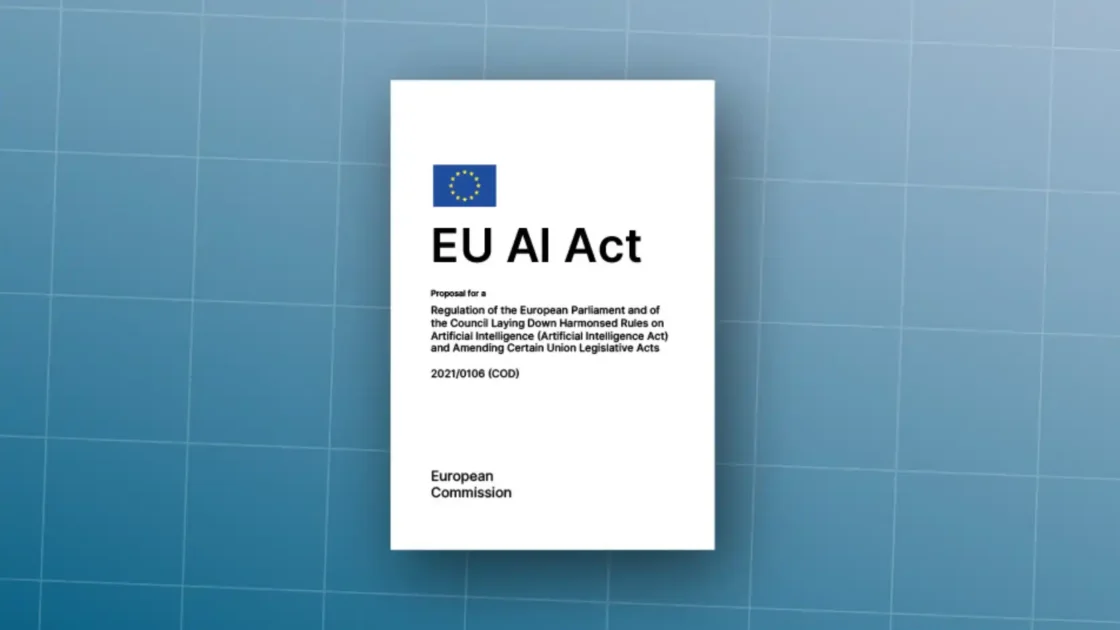
The European Union’s AI Act adds a regulatory reason to be cautious. The Commission states that Article 50 transparency obligations for certain AI-generated content apply from August 2, 2026. The exact obligations depend on the actor and context, but the direction is clear: synthetic content that could mislead people about reality will face stronger transparency expectations. This is not merely a compliance issue for large platforms. Smaller businesses that use AI-generated images in advertising, public information, or political communication should start building habits around disclosure and provenance now.
The privacy aspect is just as important. Uploading a photo for restyling may involve a person’s face, biometric-like features, location, clothing, workplace, children, and other contextual data. The user should obtain permission from people depicted, avoid uploading photos of children unless there is a clear lawful reason and appropriate safeguards, and treat any image from a workplace or school as potentially sensitive. A harmless-looking background may contain a screen, badge, address, or document.
The intellectual-property question remains unsettled in many jurisdictions and varies by context. Users should not assume that an AI-generated image is free of legal risk merely because the assistant produced it. A prompt might request a recognisable artist’s style, a protected character, a branded product, or a copyrighted composition. An output might resemble protected work without the user intending it. A commercial user should maintain a record of prompts, source assets, human edits, and review decisions, particularly where the image will be used publicly.
For newsrooms, educational institutions, public bodies, and businesses, image use needs a written rule. State when generated images are allowed, how they are labelled, whether real people may be depicted, who approves sensitive visual material, and how users report errors or harm. The image tool is not a neutral paintbrush. It is a publishing system that lowers the cost of producing persuasive visuals.
Planning and personal organisation
Dola’s marketing includes planning trips, meals, recipes, and everyday organisation. That is a natural fit for conversational AI. Planning is often a matter of combining constraints: budget, time, preferences, dietary needs, travel distance, weather, opening hours, accessibility, group size, and competing priorities. A chat interface lets a person describe those constraints in ordinary language rather than fill out a rigid form.
The assistant is strongest when it turns an unstructured intention into a structured plan. “I have four free evenings, a limited budget, two children, and I do not want to drive more than 30 minutes” is a meaningful request even before it becomes a calendar. Dola can produce a draft itinerary, a grocery list, a study plan, a meeting agenda, a meal rotation, a decision checklist, or a project breakdown. The output gives the user something to criticise and adjust.
Planning output should be treated as a draft scenario, not as a promise that the world will behave as described. Travel plans depend on live information. Restaurant recommendations depend on current availability and local context. A meal plan may ignore allergies or medical restrictions. A schedule may assume impossible travel times. A budget may omit taxes, fees, or currency changes. The assistant can organise constraints but it cannot absorb responsibility for a missed flight, unsafe route, or unsuitable recommendation.
A robust planning prompt includes a verification boundary. “Create a first-pass two-day itinerary, but mark every detail that needs current confirmation.” Or: “Give me a meal plan using these ingredients; do not give medical or nutritional advice beyond basic cooking suggestions.” Or: “Turn these project notes into milestones, but do not invent deadlines, owners, or dependencies.” This moves the assistant away from false certainty and toward transparent drafting.
The concept of “personal assistant” can invite overreliance. A user may begin to speak to Dola as though it understands their long-term interests, priorities, relationships, and wellbeing. It understands only the context and data available to it. It may be able to mirror language, remember parts of a conversation, and produce empathetic responses. That is not the same as care, responsibility, or human judgement.
The Federal Trade Commission’s 2025 inquiry into AI chatbots acting as companions shows why this distinction is becoming a policy issue. The FTC asked companies about safety evaluation, risk mitigation, and possible impacts on children and teens. Dola’s consumer positioning includes friendly conversation, and its app-store rating is 13+. This does not place Dola in the same category as a dedicated companion bot, but it does mean users and parents should be alert to the relational pull of a conversational assistant.
For personal planning, the best approach is to maintain human control over decisions that carry emotional, financial, health, or relational consequences. Use Dola to list options, clarify trade-offs, prepare questions, and turn notes into actions. Do not use it as the sole arbiter of major life choices. A system that generates persuasive language can easily sound more certain than the evidence warrants.
Calendar confusion and the product people remember
The name “Dola AI” has a confusing public history because a previous product with that name was widely covered as an AI calendar assistant. Fast Company described that product in 2024 as a system that could generate information and attach it to agenda events. Other coverage described messaging-based scheduling through text, voice, and images. Those references remain prominent in search results.
The current Dola.com product should not be described as that calendar assistant without direct proof. Its current site and app-store descriptions focus on general chat, writing, translation, programming, images, learning, summaries, and planning. The older calendar product may be historically relevant to search confusion, but it is not enough evidence to assert that the current Dola.com assistant offers the same scheduling architecture, calendar integrations, or messaging workflows. Name overlap is not product continuity.
This distinction matters because calendar access is unusually sensitive. A calendar reveals work patterns, medical appointments, school schedules, travel, family obligations, private meetings, and sometimes the names of customers or colleagues. An assistant that can create or modify calendar events needs a clear permission model, reliable timezone handling, conflict detection, recurrence rules, cancellation behavior, and auditability. A product that merely helps draft a plan has a much lower operational burden.
Users searching for “Dola calendar assistant” should therefore check the current official feature pages and permissions rather than rely on old articles, video tutorials, or social posts. An old tutorial may show a phone number, messenger integration, or calendar connection that no longer exists or belonged to a different service. A rebrand can make these confusions more likely because brand terms remain indexed long after the interface changes.
The deeper lesson reaches beyond Dola. Consumer AI names often travel faster than product identities. A product can shift from a niche tool to a general assistant, merge features, alter model providers, move legal entities, or change its data policy while old content stays online. Search engines may rank the most linked explanation, not the most current explanation. For AI tools, a publication date is part of the fact.
A careful buyer or user should ask a short set of questions before enabling any scheduling or organisational integration: What exact data will be accessed? Is the access read-only or read-write? Can the assistant create, edit, or delete entries? Does it need full account access or only a specific calendar? What happens when an event is ambiguous? Is there an activity log? How are recurring events handled? What is the revocation path? Does the integration involve a third party?
Dola’s own privacy policy says information can be shared with third parties where a user chooses an integrated service and that such information may then be treated under the third party’s policies. That is a general warning applicable to future or current integrations, even where the public product page does not give a detailed feature inventory.
The cleanest conclusion is simple. Dola.com should be judged by its current public proposition, not by every historical result attached to the word “Dola.” Users who need an AI calendar assistant should verify current calendar-specific capability directly. Users who need a general AI assistant should assess Dola’s chat, writing, study, image, browser, voice, privacy, and governance features on their own merits.
Multilingual reach and regional strategy
Dola’s supported-language list hints at a strategic choice. The iOS listing includes English alongside Arabic, Filipino, French, German, Indonesian, Italian, Japanese, Korean, Malay, Portuguese, Russian, Simplified Chinese, Spanish, Thai, Traditional Chinese, Turkish, Uzbek, and Vietnamese. This is not a narrow English-first footprint.
A multilingual assistant gains relevance in settings where users live across languages instead of switching between them one task at a time. Someone may speak Filipino at home, read English technical documentation, write messages in Tagalog and English, and need a formal letter in another language. A shop owner may need a product reply in Spanish and an invoice note in English. A student may need an explanation in a first language before engaging with course material in a second. A single chat interface can reduce the social and cognitive cost of that movement.
Language availability is an access feature; linguistic reliability is a quality question. The distinction deserves repetition because AI marketing often collapses the two. A model may accept a prompt in a language but respond in an unnatural register. It may translate grammar while losing the formality expected in a government letter. It may perform well on widely represented web languages but poorly on low-resource languages or local variants. It may misunderstand a phrase that blends English with another language in everyday speech.
Dola’s scale and language reach make regional cultural review a serious product issue. The assistant needs to avoid treating English norms as neutral. Dates, names, honorifics, units, public holidays, law, food, religion, family structures, and professional etiquette vary by place. A bad answer in a consumer context is annoying. A bad answer in an immigration, health, employment, finance, or public-services context can exclude people or cause material harm.
Users can improve results by stating the country, audience, and register. “Translate into Mexican Spanish for a small-business customer, formal but warm.” “Explain this German public-service letter for a Slovak resident, but do not interpret legal obligations.” “Rewrite this in Indonesian for a school parent group, using simple language.” These requests constrain the model in ways a one-word “translate” prompt does not.
For businesses, multilingual output creates a new review challenge. A central marketing team may generate campaign copy in a language it cannot read. A translated slogan may carry an unintended meaning. A customer-support message may imply a guarantee the business cannot make. A local reviewer or trusted language service should check customer-facing content, regulated notices, legal information, and crisis communication.
The same caution applies to local facts. Dola may offer recommendations, explanations, or planning advice that are plausible but not current. It may not know that a public office has changed hours, a local service has moved, a holiday affects availability, or a law differs between regions. A multilingual assistant can make a user feel close to local knowledge without having a verified local source.
This is where the product’s general-assistant nature becomes a strength and a weakness. It can explain unfamiliar language and help a user formulate better questions. It cannot replace a local professional, official site, or community source when the answer depends on a current local rule. The best multilingual AI use improves a person’s ability to participate; it should not encourage them to make irreversible decisions on a translation alone.
The model stack Dola does not fully disclose
Dola’s public materials describe an assistant, not a model laboratory. The company does not provide, on the pages reviewed here, a detailed public model card explaining the full architecture, training data, evaluation methods, benchmarks, versioning, context limits, or routing logic for every feature. Its terms say the service may include third-party LLMs and services. Its privacy policy identifies Gemini as an example of an integrated AI tool that may receive certain user content and automatically collected information for output generation, optimisation, and personalisation.
That disclosure gives users one clear conclusion: Dola should not be assumed to have a single fixed intelligence layer. A chat request, a specialised bot, a browser summarisation task, an image prompt, and a voice feature may involve different components. A product may change those components over time without changing the consumer-facing name. The user sees one conversation window; the technical path may be more complex.
This matters for quality. An assistant’s tone, factuality, refusal behavior, speed, multilingual performance, and tool use can change when the underlying model or routing logic changes. A workflow that worked well last month may behave differently after a feature update. A company that uses the service for repeated tasks should retain examples of acceptable and unacceptable output rather than relying on memory.
It matters even more for data. When content passes into an integrated AI tool or third-party service, the relevant policy may not be only Dola’s. Dola’s terms say third-party services can have their own terms and policies, and users may be responsible for complying with them. Its privacy policy says users who choose an integrated third-party service agree that shared data may be handled under that party’s rules.
A consumer can respond with basic data minimisation. Do not put more into the prompt than the task requires. Replace real names with roles. Remove account numbers, contact details, identifiers, health data, passwords, source code, and confidential financial data. Use synthetic examples when asking for a template. Ask for a structure based on a description rather than uploading the original file. Use settings that limit training where available.
A business needs a stronger response. Create an approved-use register that names the Dola features permitted for staff. Define prohibited data categories. Require staff to use approved accounts rather than personal ones. Evaluate data-processing terms, security controls, identity management, retention, export, deletion, audit logs, and vendor subprocessors. Train people on prompt injection and social engineering. Keep a human sign-off for externally published or operationally consequential output.
The lack of a public model card is not proof of wrongdoing. Many consumer assistants provide limited technical disclosure. It is, however, a valid reason to avoid claims such as “Dola uses model X,” “Dola is trained on Y,” or “Dola has benchmark score Z” unless the company publishes evidence. Consumer AI analysis should distinguish between what the interface claims, what the legal documents disclose, what app stores declare, what third parties report, and what remains unconfirmed.
NIST’s risk-management guidance is helpful here because it treats documentation, testing, monitoring, and governance as part of trustworthy AI use. The framework does not require every consumer to become an auditor. It does reinforce a common-sense rule: when a system’s internal operation is not fully visible, raise the standard of review for the tasks that depend on it.
Third-party models and integrations
Dola’s privacy policy is unusually useful because it names a concrete example: when users interact with standard chatbots, certain user content and automatically collected information may be shared with third-party developers of integrated AI tools, including Gemini, to generate, optimise, and personalise output. The policy also says that independent user-generated chatbots may use third-party plugins and APIs whose developers operate under their own policies.
The practical message is not “Dola always sends all prompts to Gemini” or “every feature uses a third party.” The policy does not say that. The proper message is that some product experiences may involve external AI providers or integrations, and users should not assume all processing stays within one brand boundary.
This is a familiar architecture in the AI market. A consumer assistant may combine in-house interfaces, several model providers, search tools, speech services, image models, safety classifiers, analytics vendors, and plugin ecosystems. The user benefits from feature breadth. The operator gains flexibility. The cost is a more complicated question of accountability. When an output is wrong, private, biased, copied, or harmful, which layer caused the problem? When user content is processed, which entity controls it? When terms change, who communicates that change?
Dola’s terms say that disputes or issues involving a third-party service are generally between the user and that provider, except where Dola has not met its own obligations. That legal allocation is a reminder that integrations are not invisible plumbing. They create separate obligations and risks.
For an ordinary user, the right behavior is to look for signals at the moment of connection. Does the feature request a login? Does it ask for access to a cloud drive, calendar, email, browser data, or external account? Does it identify the third party? Is the integration optional? Is data needed for the task or merely convenient? Can access be revoked afterward? If the answer is unclear, the user should assume the broadest reasonable data exposure and choose a lower-risk method.
For companies, third-party model routing creates a procurement question. The vendor relationship may need more than a standard software review. The organisation may need to identify the actual subprocessors, data locations, training commitments, retention periods, legal bases for processing, audit rights, breach notification rules, and security certifications. A generic consumer terms page usually does not offer the same control as an enterprise agreement.
The privacy policy also mentions YouTube API services for certain Dola services. That is another example of a feature-specific ecosystem. A user who asks an assistant to work with a video may trigger data flows governed by another platform’s terms. The only safe assumption is that a general AI assistant sits inside a network of policies rather than outside it.
This does not erase the consumer value. Integration is exactly what makes many assistants useful. A model that cannot reach outside its own chat window may be safer in one sense but less capable. The choice is not between pure safety and pure capability. It is between known, bounded data sharing for a defined benefit and casual, poorly understood sharing because a feature looks convenient.
Reliability under ordinary pressure
Reliability is not an abstract AI debate. It appears in ordinary moments: a parent needs a clear school message, a worker needs a meeting summary, a student needs a concept explained before an exam, a small business owner needs a customer reply, or a traveler needs a plan. Dola’s value rises when the user is rushed. That is exactly when the user is least likely to verify the answer.
The assistant’s terms say that output may be incorrect, unreliable, incomplete, or non-unique. This should not be treated as legal fine print that users can ignore. It is a concise statement of the product’s operating reality. A language model can create a coherent answer without a reliable factual basis. It can also omit decisive information because the prompt did not contain it.
Reliability has at least five layers: factual accuracy, instruction following, context retention, temporal accuracy, and calibrated uncertainty. A response may be factually correct but fail the requested format. It may follow the format but forget an earlier constraint. It may remember context but use outdated information. It may have current facts but state them with more confidence than the evidence warrants. People often judge only the first layer because it is easiest to notice.
A simple way to improve Dola’s reliability is to use “verification prompts.” Ask: “List the claims you are least certain about.” Ask: “Which facts in this answer may be time-sensitive?” Ask: “Separate direct facts from your interpretation.” Ask: “What would a skeptical expert challenge?” Ask: “Give me a version with placeholders instead of invented details.” These instructions reduce a common failure mode: the assistant filling silence with polished invention.
The second layer is external checking. A user should open the source. They should verify a date against the official calendar, a rule against the official text, a quote against the transcript, a statistic against the underlying dataset, and a product claim against the company’s own documentation. An AI answer may point in the right direction. It is not a substitute for the thing being described.
The third layer is reproducibility. When a prompt matters, save it. Save the input material, the response, the model or feature context if known, the date, and the human changes made afterward. This practice is useful for teams creating content, code, research summaries, and customer communication. It lets people identify errors, refine instructions, and explain how a decision was reached.
Reliability also includes refusal. A safe assistant should refuse or limit harmful requests rather than produce an answer that creates avoidable risk. Dola’s community guidelines restrict harmful, deceptive, illegal, politically manipulative, and privacy-violating uses. The terms restrict high-risk activities including critical infrastructure, weapon-related use, controlled substances, some high-risk economic decisions, and certain political purposes. These rules are not a guarantee that bad output will never appear. They do provide a visible policy boundary for users and moderators.
The final layer is human judgement. A human needs to decide whether a result makes sense. This is not a romantic claim that people are always better. People make mistakes too. It is a claim about accountability. A person can explain why a choice was made, recognise a local exception, understand a relationship, and accept responsibility for correcting a wrong decision. Dola can generate a recommendation. It cannot carry the consequences.
Privacy as the central adoption decision
Dola’s privacy policy says the company collects and uses information to operate, provide, develop, improve, tailor, secure, and administer its services. It says Dola may receive third-party platform information such as a username, email address, access token, or browsing-history information through its browser plug-in. It also describes information received from advertising, analytics, and measurement partners, government authorities, public sources, and other users or third parties.
This deserves direct attention because privacy is not a side issue in an AI assistant. The product’s usefulness comes from accepting the details people ordinarily keep scattered across messages, documents, images, browsing sessions, and voice notes. A service that knows nothing about the user may be less personal. A service that knows a great deal has a larger duty to handle that information responsibly.
The privacy choice is not binary. It is a series of smaller choices about what to disclose, what features to enable, what permissions to grant, what history to retain, and whether to opt out of training. A user who avoids providing sensitive material can still benefit from generic drafting, study help, translation, and ideation. A user who connects accounts, uploads files, uses voice, installs an extension, and leaves training enabled makes a different choice.
Dola’s privacy policy says it may use user-provided information to train and improve AI models, and its training FAQ states that questions and generated responses may be used to train models developed by Dola and its affiliates unless a user opts out. The FAQ says users can turn off the relevant training toggle in account settings, after which new conversations will not be used for model training.
That is an important control, but it needs careful reading. An opt-out from model training is not necessarily the same thing as immediate deletion, no processing, no retention, no safety review, or no use for service operation. Dola’s privacy policy lists multiple purposes for data processing, including safety, security, product improvement, customisation, and legal compliance. Users should read the full policy and their local supplemental terms instead of treating one setting as a complete privacy solution.
The European data-protection framework supplies useful principles even for people outside Europe. The GDPR treats personal-data protection as a fundamental right and requires processing to be tied to lawful, fair, and transparent practices. The European Data Protection Board has also examined data-protection issues related to AI models. These frameworks do not tell an individual exactly whether to use Dola. They explain why data minimisation, clear purpose limitation, security, and user rights are practical concerns rather than legal decorations.
A sensible personal rule is to divide prompts into three bins. Green prompts contain public or invented information: a generic email template, a fictional story, a public concept, a language exercise. Yellow prompts contain private but non-critical material: a personal note, a résumé draft with redacted contacts, a private travel outline. Red prompts contain protected or high-impact data: medical information, financial records, passwords, confidential work documents, children’s data, client information, legal strategy, employment files, security data, access tokens, or politically sensitive personal information. Dola may be appropriate for green prompts, used cautiously for yellow prompts, and avoided for red prompts unless a formal approval and appropriate protection are in place.
Training controls, retention and account deletion
The training question is where many users stop reading too early. Dola’s training FAQ says that user questions and outputs may be used to train models developed by Dola and affiliates unless the user opts out. The policy describes a user-setting control and says new conversations will not be used for model training after that setting is turned off.
The word “new” matters. A setting that applies to future conversations does not necessarily change the treatment of earlier conversations. A careful user should look for the current language explaining whether past data is excluded, deleted, retained, anonymised, or subject to a separate request process. Legal documents can change. Screenshots from an old policy are not enough. The account settings and current privacy notice should be checked at the moment a person makes a high-stakes decision.
Dola’s terms say that users may delete their account through the service settings or contact the support address for assistance, and warn that deleted accounts cannot be reactivated or restored. This is useful but not the same as a detailed retention schedule. The privacy policy says personal data will be deleted or anonymised beyond the applicable retention period unless law permits or requires otherwise. The phrase “applicable retention period” is common but broad. It means that a user who needs a specific answer about backups, legal holds, security logs, or third-party processors may need to contact the company rather than infer the result from general wording.
Account deletion, chat deletion, training opt-out, and permission revocation are four different actions. They should not be treated as interchangeable.
A chat deletion may remove content from a user-facing history but not necessarily erase all operational records immediately. A training opt-out may limit the future use of content for model improvement without ending service processing. A permission revocation may stop future access to an account or browser feature but not undo prior processing. An account deletion may end access and start a deletion workflow but leave retention obligations or technical backups subject to policy and law.
The practical checklist is therefore simple. Before using Dola for anything private, locate the account’s training setting. Review connected third-party accounts. Remove integrations that are not needed. Check browser extension permissions. Delete sensitive chats from visible history where relevant. Keep a copy of important work outside the assistant. Read the current account-deletion instructions before closing an account. Use the company’s support route for requests that need a documented response.
For an employer, training controls require policy rather than user discretion. Employees should not be asked to remember whether a personal setting was on when they processed company information. A business should define which accounts are permitted, whether training is disabled by default, which features are approved, whether browser access is allowed, and how employees document a request to remove data.
The broader lesson is that privacy is an ongoing configuration task. The assistant’s capabilities change. The policy may change. A user may change how they use the product. The right level of caution should change too. A person who uses Dola only for generic copywriting can tolerate a different posture from a person who uses it daily for drafts involving work, study, and personal planning.
Advertising, analytics and browser data
Dola’s privacy policy explicitly references advertising, analytics, and measurement partners. It says the company may receive information from those partners and may use information to promote the service through marketing communications and third-party advertising platforms. Apple’s app privacy label says identifiers may be used to track users across apps and websites owned by other companies.
This is not unusual in consumer software. It is still important. Users often assess an AI assistant only through the narrow lens of whether prompts train a model. The wider picture includes product analytics, measurement, sign-in data, device identifiers, browser activity in extension contexts, and marketing attribution. A person can opt out of model training and still have a broader privacy profile created by normal app use.
The browser plug-in deserves particular caution because the privacy policy mentions browsing-history information in connection with its use. Browsing data is intimate even when individual pages are public. It can reveal work projects, health concerns, financial research, political interests, family matters, travel plans, education, and professional responsibilities. A series of pages is often more revealing than any one page.
The best response is not panic. It is permission hygiene. Before installing a browser extension, read what it can access. Keep extensions to a minimum. Use a separate browser profile for work if your organisation permits it. Disable an extension when it is not needed. Do not use it on sensitive internal systems. Periodically review installed extensions and revoke permissions from services you no longer use.
Consumer AI products increasingly combine chat, content generation, web access, and recommendations. That structure creates a financial incentive to understand users better. It can also create a safety incentive: data helps detect fraud, abuse, and harmful behavior. The user does not need to accept every use of data as equally justified. They should expect a service to explain its purposes in understandable language, offer controls where law and product design permit, and avoid collecting more than the function requires.
The OECD AI Principles emphasise human rights, transparency, accountability, and responsible stewardship. Those principles are broad, but they make a concrete consumer demand reasonable: a person should be able to understand the basic data trade-off involved in using an AI assistant.
For Dola, the practical privacy decision is therefore not only “Do I trust the model?” It is “Do I trust the product ecosystem enough to let it sit on my phone, in my browser, near my documents, and inside my daily routines?” Each person will answer differently. The responsible answer depends on the content they intend to bring into the service.
Safety rules and the limits of guardrails
Dola’s terms and community guidelines draw visible boundaries around harmful use. The rules restrict illegal activity, fraud, scams, phishing, disinformation, certain dangerous activities, political campaigning, privacy violations, and some forms of synthetic media. The terms also prohibit use involving military and warfare, weapons, dangerous materials, critical infrastructure, controlled substances, high-risk economic harm, and other unlawful uses.
These policies are useful because they tell users what the company considers out of bounds. They also help explain why an assistant may refuse a request, add a warning, or provide a safer alternative. A policy is a governance signal. It shows the operator has decided that some requests should not be treated as ordinary customer service.
A policy is not a full safety system. It does not prove that every harmful request will be blocked or that every benign request will be treated fairly. AI safety has at least four layers: the written rule, automated detection, human review or escalation, and the user’s own behaviour. Any one layer can fail. A model may miss a malicious intent hidden inside a neutral prompt. A classifier may overblock a harmless request. A user may rephrase a request until it bypasses a guardrail. A harmful output may be redistributed outside the platform.
Guardrails reduce risk; they do not transfer moral or legal responsibility from the user to the assistant. A person who uses Dola to write deceptive claims, generate harassment, facilitate fraud, or mislead others cannot plausibly claim that the existence of a chat interface made the conduct harmless.
The political boundary is worth noting. Dola’s terms and community guidelines prohibit bots for political campaigning, advocacy, or lobbying. That is stricter than many users may expect from a general assistant. It reflects the importance of information integrity in a time when generative systems can produce persuasive content cheaply and at scale.
The community guidelines also address academic dishonesty. This creates a more subtle challenge than outright fraud. A student may use Dola to brainstorm, improve grammar, translate a phrase, generate practice questions, or reorganise notes. Those uses may be compatible with learning. A student may also use it to submit work they do not understand or to fabricate citations. Institutions need clear rules because the tool itself cannot infer the educational purpose of a prompt.
For businesses, the safety boundary is partly reputational. A marketing team may generate a claim that is not illegal on its face but is misleading. A customer-support worker may send an AI-written answer that inadvertently promises a refund. A manager may use a summary that omits a complaint or a safety issue. Human review is therefore not only for extreme content. It is for ordinary language that has commercial or interpersonal consequences.
The DSA compliance page shows that Dola has a European reporting route for suspected illegal content and names a designated legal representative for DSA purposes. This does not settle every moderation question, but it demonstrates that the product operates within a public accountability framework in Europe.
Underage users and companion dynamics
Apple’s listing rates Dola 13+ and describes in-app controls. It also says the app may include user-generated content and health or wellness topics. Google Play lists a 12+ rating in the version reviewed. Age labels vary by store and jurisdiction, but the shared point is clear: Dola is not framed as an unrestricted tool for young children.
Age matters for more than content filters. Younger users may be more likely to interpret a responsive, friendly AI as a reliable authority or emotional relationship. They may share private information, rely on health or wellbeing suggestions, use generated material for schoolwork, or become upset by a conversation that feels personal. A general assistant does not have to market itself as a “companion” to create companion-like behavior. Conversational fluency is enough to invite attachment.
The FTC’s September 2025 inquiry into AI chatbots acting as companions focused on safety evaluation, child and teen impacts, risk mitigation, and communications to users and parents. The inquiry does not accuse Dola of misconduct. It provides a regulatory signal that conversational systems used by minors are no longer viewed as merely entertainment or search.
Parents and educators should teach a simple rule: an AI assistant may sound caring, but it does not know you, cannot keep you safe, and cannot replace a trusted adult. Children should not share identifying details, school records, passwords, home addresses, private photos, or family problems in a chat. They should understand that generated answers can be wrong and that a school assignment still requires their own thinking.
Schools should set age-appropriate access rules and choose tools with more than convenience in mind. They should ask whether data is used for training, whether there are education-specific protections, how content is moderated, whether the service supports parental controls, how accounts are created, and what the rules are for disclosure and assessment. A consumer AI assistant may be useful for supervised learning, but it should not be introduced as a substitute for teaching.
The problem is not that young people will use AI. They already do. The problem is whether adults give them a vocabulary for understanding it. They need to know the difference between a suggestion and a fact, a model and a person, a private thought and data sent to a company, and a polished answer and genuine understanding.
Dola’s own community guidelines prohibit content that creates harm in sensitive areas including health, finance, legal topics, misinformation, and privacy. That is a useful baseline. Minors and their guardians still need a human support route when a conversation touches distress, self-harm, bullying, abuse, or urgent health concerns. A consumer assistant is not an emergency service.
The business case for individuals
For an individual, Dola’s strongest value is not a grand claim of “productivity.” It is the removal of small bottlenecks. A person can turn notes into a message, describe a problem before it is forgotten, get a first explanation of a difficult idea, compare options, reframe a difficult conversation, write a rough plan, or translate a short passage. Each task may save only a few minutes. The compound effect can be real because the assistant reduces the cost of starting.
The best individual workflows have clear boundaries. A freelancer might use Dola to draft a project brief from generic notes, then add real client details in a local document. A job seeker might ask for a résumé structure using anonymised experience, then write the final version personally. A student might use it to generate practice questions, then answer without assistance. A traveler might create a provisional itinerary, then verify bookings and opening times on official sources. A creator might generate visual concepts, then produce a final asset with a clear rights review.
Dola is most useful when it changes the shape of a task without becoming the custodian of the user’s most sensitive material. That principle keeps the convenience while reducing the data risk.
The assistant also provides a form of cognitive scaffolding. People often need help breaking an intimidating job into smaller parts. “I need to prepare for a difficult meeting” becomes an agenda, a list of facts to gather, questions to ask, possible objections, and a brief follow-up email. “I need to learn this topic” becomes a reading plan, a vocabulary list, practice questions, and a self-test. “I have too many ideas” becomes a decision matrix and first draft. These are not trivial gains. They can make a task feel possible.
The risk is that a person begins to outsource the part of the task that gives it meaning. A writer may stop developing their own voice. A student may stop wrestling with a concept. A manager may stop forming an independent judgement. A person may rely on the assistant for emotional reassurance rather than addressing a problem with someone who can actually act. The productive relationship with Dola is active: the user questions, revises, rejects, and verifies.
A practical personal setup involves four defaults. Keep training controls aligned with your comfort level. Avoid connecting services you do not need. Maintain a separate place for important originals and final documents. Create a prompt habit that asks the assistant to state assumptions and uncertainties. Those defaults make the product less magical but more trustworthy.
The business case for teams
For teams, the attraction is easy to see. Dola can create meeting agendas, turn rough notes into drafts, generate outlines, translate internal material, summarise non-sensitive public research, propose FAQ structures, rephrase customer-facing language, and support routine ideation. These tasks absorb time precisely because they are repetitive and unglamorous.
A team can gain speed without giving Dola authority. Consider customer support. An assistant can draft a calm, clear response from a template and known policy. A human agent can verify the account details, apply the actual policy, and send the message. In marketing, the tool can generate headline variants and audience-specific angles, while a human checks facts, brand voice, legal claims, and local sensitivity. In research, it can create an interview guide, organise public source notes, and identify questions, while the analyst verifies the evidence.
The business value lies in shortening the first-draft cycle, not in eliminating review. Organisations that try to replace all human work with a generic assistant often discover that review costs move downstream. A bad draft may be fast to produce but expensive to correct after it reaches a customer, regulator, employee, or public audience.
The deployment question is more demanding than the individual question. A company needs to know whether it is using a consumer service, an enterprise service, or an approved internal environment. Dola’s public terms and privacy policy provide important general information, but a business should not assume that consumer settings meet contractual, regulatory, or security needs. The company should request or review the relevant commercial documentation before allowing sensitive use.
Data classification is the first control. Green data might include public material, generic templates, and fictional examples. Yellow data might include internal process descriptions with identifying details removed. Red data includes customer records, employee data, protected health information, financial details, proprietary code, unpublished strategy, access credentials, security incidents, and legal advice. The default rule should prevent red data from entering an unapproved public AI tool.
The second control is role design. Not everyone needs the same level of access. Marketing may need copy ideation. Developers may need a separate approved coding environment. Customer support may need tightly constrained templates. Researchers may need source and citation rules. Human-resources staff may be prohibited from using general consumer AI for employee decisions. A single “AI policy” that says “use responsibly” does not provide enough direction.
The third control is output governance. A business should require human review for external claims, legal and regulatory communication, financial material, health-related content, recruitment and performance decisions, security guidance, public statements, and code entering production. The policy should say who owns that review and what evidence must be checked.
Dola’s terms restrict use for high-risk economic decisions involving credit, employment, or educational institutions. That makes it especially inappropriate to use the product as an automated decision maker in hiring, admissions, eligibility, or similar contexts.
Governance for business users
AI governance does not need to start with a 100-page policy. It needs to begin with a truthful inventory of what people are already doing. Employees often bring consumer AI into work before the company approves it because the tools are fast and accessible. The first governance task is not punishment. It is finding the real use cases, the data involved, the value created, and the failure modes.
A sensible Dola governance program has five parts. First, define approved use cases. Second, define prohibited data and prohibited decisions. Third, require human review for defined outputs. Fourth, train people on privacy, factuality, prompt injection, and intellectual property. Fifth, monitor changes in the product, policy, and regulation.
The company should also identify the owner of each AI workflow. If Dola drafts customer emails, who checks the content? If it summarises public research, who opens the source? If it produces code, who reviews it? If it translates material, who checks legal terminology? Governance fails when responsibility is shared so widely that no one owns the final decision.
The right unit of governance is the workflow, not the chatbot. A single assistant may be harmless in one process and unacceptable in another. “Use Dola for brainstorming public campaign ideas” is different from “Use Dola to analyse unredacted customer calls.” “Use Dola to explain a public technical standard” is different from “Use Dola to process a proprietary incident report.” The feature is the same; the risk is not.
NIST’s AI Risk Management Framework and its Generative AI Profile provide a useful vocabulary for this work. They encourage organisations to govern, map, measure, and manage risks rather than search for a single universal safety label. An organisation can apply that thinking without adopting every formal framework term. Identify the intended use. Identify the people affected. Identify the data. Test the output. Set limits. Document decisions. Watch for drift.
A business should also prepare for errors. This means an incident route for a harmful output, accidental data upload, incorrect customer message, misleading public post, or suspected security issue. Staff need to know whom to contact, what evidence to preserve, whether a message can be recalled, and how to correct affected people. AI governance becomes credible when error handling exists before a crisis.
Vendor monitoring belongs in the same process. Dola’s terms say they may be amended as functionality, combined services, or regulations change. The privacy policy may change. A new feature may add an integration or alter the data path. A browser extension may gain capabilities. Governance therefore needs a periodic review, not a one-time approval.
Regulation now around the product
The regulatory setting for a tool like Dola is becoming more concrete. The European Union’s AI Act entered into force on August 1, 2024. The European Commission states that the Act will be fully applicable from August 2, 2026, subject to staged exceptions, while rules for general-purpose AI models applied earlier in the timeline.
Dola is a consumer-facing AI service rather than a simple passive website. That means several regulatory layers may matter depending on where it operates and which features a user chooses: data protection, platform accountability, consumer protection, AI transparency, intellectual property, child safety, advertising rules, and sector-specific laws. It would be misleading to assert that every AI Act obligation applies to Dola in the same way. The application depends on the role played by the service, the models involved, the territory, and the feature in question.
Regulatory relevance does not begin only when a regulator issues a fine. It begins when a product’s design affects people’s rights, choices, information environment, or access to services. A general AI assistant affects all four. Its outputs may influence a consumer decision. Its data practices may affect privacy. Its images may affect information integrity. Its language support may affect access. Its moderation may affect speech and safety.
The EU’s general-purpose AI guidance says the Commission’s enforcement powers for GPAI obligations apply from August 2, 2026, and the voluntary Code of Practice addresses transparency, copyright, and safety and security. The policy focus on transparency is relevant even where an end-user service does not itself publish a model card. Users, businesses, and regulators increasingly expect clearer information about AI content, data practices, and model responsibility.
For Dola’s image features, the transparency rules around AI-generated content are especially important. The Commission’s June 2026 information says Article 50 obligations for certain AI-generated content apply from August 2, 2026. Businesses using generated media should not wait for a legal dispute to adopt clear labels where a viewer could mistake synthetic content for reality.
The Digital Services Act also matters because Dola has a dedicated compliance page for European users, including a reporting channel for suspected illegal content and a designated EU legal representative. This does not make the product legally simple. It shows that the assistant is already operating in a regulated platform environment where content reporting and transparency have formal procedures.
Data protection remains central. The GDPR applies to personal-data processing and gives people rights that may include access, correction, deletion, transfer, objection, and complaint, depending on the situation. Dola’s privacy policy describes such rights in jurisdiction-dependent terms. A person in Europe should use those rights where appropriate rather than treating a consumer AI privacy setting as the only available control.
Competitive position in the AI assistant market
Dola competes in a market where the largest names have strong advantages. ChatGPT has brand recognition and an expanding tool ecosystem. Gemini has proximity to Google’s consumer and productivity surfaces. Copilot sits near Microsoft’s enterprise stack. Claude has a strong reputation among some users for writing and analysis. Perplexity has built a distinct identity around answer-oriented search and citations. Dola needs a reason for a user to choose it before any of those options.
Its strongest potential differentiator is not necessarily raw model superiority. It is product accessibility: a broad assistant that feels mobile-first, multilingual, available across web and app surfaces, and comfortable with writing, chat, translation, images, study, and everyday planning. The current descriptions make clear that Dola is trying to occupy the role of an “everyday AI assistant,” not a narrow office copilot.
The problem is that generality is easy to promise and hard to defend. A user who wants a better model can switch assistants in seconds. A user who wants citations can use a search-focused tool. A user who wants code can use a developer-specific assistant. A user who wants office integration may use the software already supplied by work. A user who wants image generation may choose a dedicated visual tool. Dola must therefore create stickiness through interaction quality, languages, speed, trusted workflows, and a coherent product identity.
The competitive contest is moving from answers to routines. The winning assistant may not be the one that writes the most impressive paragraph. It may be the one a person trusts to use every morning for simple tasks without creating a privacy, accuracy, or complexity burden. That is a much harder product target than a benchmark score.
Dola’s public disclosure about third-party models creates a second competitive tension. Multi-model or integrated architectures can improve flexibility and feature breadth. They can also make it harder for the company to tell a clean story about performance, privacy, and provenance. A transparent explanation of which feature uses what class of service, which data leaves the core product, and which settings users control would strengthen trust.
The current product also carries brand confusion from the old calendar assistant and the Cici rebrand. This can be a disadvantage in search and user understanding. It can also be an opportunity if Dola makes the current proposition clearer: what the assistant does, where it works, how it uses data, what it does not claim to do, and how users can exercise control.
The most credible market position is not “Dola does everything.” No AI assistant does everything well. The stronger position is: Dola is a wide, conversational consumer workspace for low- and medium-stakes cognitive tasks, provided the user applies sensible privacy and verification rules. That is less dramatic than a promise of an autonomous agent. It is closer to the product evidence.
Areas where Dola is likely to be strongest
Dola’s public feature set points toward a set of tasks where a general assistant has a natural advantage. First is first-draft writing. Drafting an email, outline, summary, alternate wording, social post, résumé structure, or plain-language explanation is a language transformation task. It benefits from rapid iteration and does not require the assistant to be an authoritative source if the user supplies and checks the facts.
Second is explanation. A user can ask for a concept to be rewritten at a different level, illustrated with examples, broken into steps, or compared with a related concept. This is useful in learning, onboarding, and technical communication. The quality depends on the topic and prompt, but the interaction is inherently suited to conversational AI.
Third is translation and language practice. Dola’s broad language support gives it relevance for people moving across linguistic contexts. The strength is greatest where the user uses it to understand, practice, or draft, and weakest where the exact legal or cultural effect of wording carries high stakes.
Fourth is creative ideation. Generating image ideas, campaign angles, story prompts, titles, names, visual directions, or alternative framings is less dependent on a single factual truth. The user still needs to check rights and appropriateness, but the model’s ability to produce variants is genuinely useful.
Fifth is organising unstructured material. A long note can become a checklist. A list of concerns can become questions. A brainstorm can become categories. A meeting record can become action items. A vague project can become a sequence of possible steps. This is often the quietest but most durable value of a chat assistant: it turns mental clutter into an object that can be reviewed.
Sixth is practice. A person can ask Dola to act as a skeptical reader, an interviewer, a language partner, a customer, or a quizmaster. The assistant does not need to be right about every fact to be helpful in role-play, provided the user does not confuse simulated feedback with genuine audience research.
The common feature of these strengths is that the user retains control. The assistant creates options, language, structure, and prompts for thought. The user supplies the goal and accepts or rejects the result. These are tasks where Dola can save time without requiring the user to surrender professional judgement.
Areas where Dola is likely to be weak or inappropriate
Dola is weakest when a task depends on verified current facts, accountable professional judgement, confidential data, or irreversible action. This follows from the product’s own terms, which state that outputs may be inaccurate, unreliable, incomplete, or non-unique, and from the broad data practices described in the privacy policy.
Legal advice is an obvious example. Dola can explain general legal concepts or turn publicly available rules into plain language. It should not be the final authority on a person’s legal rights, deadlines, contract obligations, immigration status, employment dispute, or litigation strategy. Legal questions turn on jurisdiction, facts, interpretation, and current law. A fluent answer can be dangerously reassuring.
Medical and mental-health use deserves equal care. An assistant can help a person prepare questions for a clinician, explain public educational material, or organise a symptom diary without identifying details. It should not diagnose, triage a crisis, determine medication, interpret test results as a final authority, or replace professional care. A user in immediate danger should contact local emergency services or an appropriate crisis resource, not a chatbot.
Financial decisions fall into the same category. Dola can explain terms, create a budgeting template, compare public concepts, or suggest questions for a financial adviser. It should not be treated as personalised investment advice, credit eligibility assessment, tax advice, or a source of current market facts without verification. Dola’s terms themselves prohibit certain high-risk economic uses such as automated determinations of eligibility for credit, employment, or educational institutions.
Confidential business work is also risky in a consumer setting. The user may have training controls enabled or disabled, but the privacy policy still describes processing for service operation, safety, personalisation, and other purposes. It also describes third-party services and integrated AI tools. A company should not rely on an individual employee’s personal judgement to decide whether proprietary material belongs in a public assistant.
The final weak area is autonomous action. Public material reviewed here presents Dola as a conversational assistant, not as an independently accountable agent authorised to act in external systems. Users should be skeptical of any assumption that a general chatbot can safely book, buy, delete, approve, deploy, negotiate, or make decisions on their behalf. The more a task changes the outside world, the more the human should remain visibly in control.
A practical fit test for prospective users
A person deciding whether to use Dola does not need a universal verdict. They need a fit test. Start with the task. Is it generative, explanatory, organisational, or exploratory? Or does it require confidential data, current facts, professional judgement, or an external action? Then look at the data. Is it public, fictional, personal, sensitive, or legally protected? Finally, look at the review. Will a human check the output before it matters?
A practical fit test
| Proposed task | Fit for Dola | Minimum safeguard |
|---|---|---|
| Rewrite a generic email | Strong | Check facts and final tone |
| Summarise a public article | Strong | Read the original for key claims |
| Explain a school concept | Moderate to strong | Test understanding without AI |
| Translate a sensitive legal document | Weak without expert review | Use a qualified human translator |
| Draft code from a toy example | Moderate | Test, scan and review before use |
| Analyse customer records | Weak in a consumer workflow | Use an approved protected environment |
| Generate a public-facing image | Moderate | Label when needed and review rights |
| Make a health, legal or financial decision | Weak | Consult qualified sources or professionals |
The table is not a list of guarantees. It is a way to match the assistant’s role to the stakes. Dola fits best where the user needs a fast first pass and can review it. It fits poorly where the answer itself becomes the decision.
The second part of the fit test concerns habit. Will the user open the assistant only for defined tasks, or will it become the place where every private thought, work document, and browser session ends up? The latter pattern creates a much larger data and dependence risk. A useful assistant should reduce friction without becoming an unexamined repository of a person’s life.
The third part concerns settings. Before regular use, inspect the account’s training option, privacy controls, connected accounts, browser extension permissions, and deletion route. These are not exciting setup tasks. They are the difference between using an assistant deliberately and merely accepting its defaults.
The strategic meaning of Dola’s product design
Dola represents a larger shift in consumer software. The next generation of interfaces will not be defined only by menus, buttons, and search boxes. They will be defined by systems that accept a goal in ordinary language and return a draft, answer, plan, image, translation, or action. This changes the value of software from “what features exist” to “how quickly a person can express intent.”
Dola’s broad approach is well suited to that change. A user can move from a question to a draft, from an image to a caption, from a voice note to a plan, from a confusing text to an explanation, or from a foreign-language phrase to a reply. The service’s ambition is visible in that breadth.
The hard part is trust. People will allow an assistant into more of their daily life only if they understand its limits. They need clearer information about what happens to their data, where third parties are involved, what settings change training use, how browser permissions work, what content rules apply, and how to contest or report harm. Dola’s public privacy policy, training FAQ, terms, community guidelines, and DSA page provide parts of that picture. The challenge is whether ordinary users can turn those documents into an informed decision.
The future of a general assistant will not be decided only by model quality. It will be decided by whether the company can make context useful without becoming intrusive, make output fluent without overstating certainty, make feature breadth understandable, and make safety controls real in the ordinary moments when people are tired, rushed, or uncertain.
For Dola, the most persuasive product story is not that it will replace human work. It is that it can remove low-value friction from human work, learning, planning, and creative expression. That claim is credible when users keep the assistant inside a disciplined role: generate, organise, explain, translate, and rehearse—then let people verify, decide, and take responsibility.
Questions users are already asking about Dola
Dola.com is a general consumer AI assistant for chat, writing, translation, programming, image creation, summaries, learning support, and everyday planning. Its current public positioning differs from older references to a separate Dola calendar assistant.
Current Dola web properties and app-store references indicate continuity with Cici, including use of “formerly Cici” wording and DSA transparency material referencing both brands.
Dola’s current terms name SPRING (SG) PTE. LTD. as the contracting entity.
Late-2025 media reports linked Dola to ByteDance, but Dola’s own current public legal materials reviewed here name SPRING (SG) PTE. LTD. as the contractual operator. The ownership relationship should not be overstated without direct corporate disclosure.
Dola’s terms say the service may include third-party LLMs and services. Its privacy policy names Gemini as an example of an integrated AI tool that may receive certain content and data in relevant interactions.
Dola’s training FAQ says questions and generated responses may be used to train models unless you opt out in account settings. It says new conversations will not be used for training after the relevant toggle is turned off.
No. A training opt-out concerns future model-training use. It is not automatically the same as deleting chats, revoking permissions, or deleting an account.
Dola’s terms state that users can delete an account through settings or contact support for help. The account cannot be reactivated after deletion.
A consumer AI workflow is not the right default for confidential documents. Dola’s privacy policy describes processing for several purposes and possible third-party integrations. Use only an employer-approved environment for sensitive business data.
Yes. Dola has public browser-extension pages describing web-page summaries, question answering, and full-text translation. Its privacy policy mentions browsing-history information when the browser plug-in is used.
Yes, especially for drafts, editing, outlining, summarising, tone changes, and idea generation. Check every factual claim, quote, number, date, and source before publication.
Dola markets translation and supports a broad set of languages. It is useful for drafts and everyday understanding, but expert review remains necessary for legal, medical, financial, or sensitive public communication.
The iOS listing says Dola can create AI art from ideas or photos and edit or restyle images. Users should avoid presenting synthetic images as real evidence and should check privacy, consent, and rights issues.
Use it to create a research plan, explain concepts, surface questions, and organise notes. Do not treat its output as verified evidence without checking primary or authoritative sources. Dola’s terms explicitly warn that output may be inaccurate, incomplete, or unreliable.
It can explain concepts, draft snippets, and assist with debugging ideas. Generated code should be tested, security-reviewed, and checked against official documentation before deployment.
The current Dola.com product is marketed as a broad AI assistant. Older reporting about “Dola AI” often refers to a separate calendar assistant, so users should verify current scheduling features directly instead of relying on historical articles.
Store age ratings reviewed here are 12+ or 13+, depending on the platform. Parents and educators should supervise use, teach privacy and fact-checking, and avoid treating the assistant as a substitute for trusted adult support.
No. Dola’s terms and community guidelines prohibit political campaigning, advocacy, and lobbying bots.
Begin with low-risk tasks: generic writing, public-information summaries, language practice, brainstorming, and fictional image ideas. Review the privacy settings and training option before making it part of a daily workflow.
Avoid passwords, access tokens, medical records, financial information, confidential work documents, unredacted client data, private images of others, children’s data, legal strategy, and security-sensitive information.
Author:
Jan Bielik
CEO & Founder of Webiano Digital & Marketing Agency
This article is an original analysis supported by the sources cited below
Dola AI
Official product page used for Dola’s current positioning as a general AI assistant.
Dola Privacy Policy
Primary source for data collection, training, browser plug-in, third-party integration, sharing, and user-rights discussion.
Dola Terms of Service
Primary source for the contracting entity, output limitations, high-risk restrictions, third-party services, and account deletion.
Dola Model Training FAQ
Primary source for the opt-out control and the stated treatment of new conversations for model training.
Dola Community Guidelines
Primary source for prohibited uses, information integrity, political-bot restrictions, synthetic-media rules, and academic dishonesty policy.
Dola DSA compliance page
Primary source for European reporting channels, the designated legal representative, and references to Dola and Cici transparency reports.
Dola browser extension
Official product page for Dola’s browser-assistant positioning.
Dola mobile download page
Official distribution page used to confirm the current mobile product surface.
Dola on Google Play
App-store source for Android downloads, ratings, developer identity, category, and public support details.
Dola on the App Store
App-store source for iOS functionality, languages, age rating, privacy label, and device availability.
Dola AI on Cici.com
Official continuity source showing the Dola identity on the former Cici web domain.
Dola browser assistant on Cici.com
Official legacy-domain page describing browser summaries, question answering, and translation.
Dola is the AI calendar assistant you’ve been waiting for
Independent reporting used only to explain the separate, older Dola calendar-assistant reference that still appears in search results.
ByteDance’s overseas AI assistant Dola surpasses 10 million daily active users
Market reporting cited with attribution for late-2025 claims about the Dola and Cici rebrand narrative.
AI Act regulatory framework
European Commission timeline for the AI Act’s entry into force and staged application.
Guidelines for providers of general-purpose AI models
European Commission guidance on GPAI provider obligations and the 2026 enforcement timetable.
The General-Purpose AI Code of Practice
European Commission explanation of the transparency, copyright, and safety-and-security code chapters.
**[Code of Practice on transparency of AI-generated content](https://digital-strategy.ec.europa.eu/en/policies/cod e Commission source for Article 50 transparency obligations relevant to AI-generated content.
General Data Protection Regulation
Primary legal text used for the data-protection principles discussed in the privacy analysis.
European Data Protection Board AI materials
Institutional source on data-protection issues related to AI models.
NIST Generative AI Profile
Technical risk-management source used for discussion of confabulation, information integrity, privacy, and governance.
NIST AI Risk Management Framework
Institutional framework used for workflow-level AI governance and risk review.
OECD AI Principles
International policy source for human rights, transparency, accountability, and responsible stewardship principles.
Recommendation of the Council on Artificial Intelligence
Primary OECD instrument supporting the accountability and trustworthy-AI discussion.
UNESCO guidance for generative AI in education and research
Institutional education source used for the sections on learning, assessment, human agency, and school policy.
FTC inquiry into AI chatbots acting as companions
U.S. regulator source used for the discussion of conversational AI, youth safety, and companion dynamics.
| Citing this article? Brief excerpts are welcome. Please credit Webiano.digital, name the author where stated, and include a link to https://webiano.digital and to this original article. Full or substantial republication requires prior written permission. Read our Copyright and Content Use Policy. |
This article was prepared with the assistance of artificial intelligence tools. The content underwent expert human review, and Webiano Digital & Marketing Agency assumes editorial responsibility for its final version and publication.