AI veganism is a loose label for people who choose to avoid artificial intelligence entirely, or to restrict their use of it sharply, because they object to its social, environmental, legal, or personal costs. It is not a formal movement with a membership card, a doctrine, or a single set of rules. It is a way of saying that the convenience of AI does not settle the question of whether people should use it.
Table of Contents
The term started gaining wider attention in 2025, after commentators and researchers used it to describe people who abstain from AI for reasons that resemble the motives behind ethical veganism: concern for harms hidden behind ordinary consumption, discomfort with systems of extraction, and a belief that individual habits can express a moral boundary. Georgia Tech described an “AI vegan” as someone who abstains from AI, while coverage in The Guardian placed the idea in a wider debate over environmental costs, labour, and human wellbeing.
That definition needs care. AI veganism does not mean a person refuses every digital system that uses machine learning. A bank’s fraud filter, a car’s emergency braking system, a spam classifier, a search ranking system, a phone camera’s image processing, a medical image-analysis tool, and a conversational chatbot all involve different technical methods, risk profiles, and degrees of human control. The phrase usually points most directly at generative AI: systems that produce text, images, audio, code, video, or synthetic conversation from prompts.
The label emerged because generative AI moved from specialist settings into routine life at unusual speed. A person may use a chatbot to draft a message, ask a search engine to summarize the web, have a phone generate an image, use an employer’s writing assistant, or encounter a synthetic voice while calling customer support. The shift is partly visible in public data: the OECD said that more than one-third of individuals across its member countries used generative AI tools in 2025, though uptake remained uneven.
AI veganism is therefore less a rejection of “technology” in the abstract than a response to the normalization of systems that many people did not knowingly choose. Someone may decide not to paste private work into a chatbot, not to commission generated illustrations, not to use AI search summaries, not to let an assistant write their messages, or not to interact with companion bots. Another person may refuse only the large, commercial models trained on indiscriminate web data. The category holds these differences together without resolving them.
The central claim is modest but disruptive: a tool being widely available does not make its use morally neutral. That claim becomes more urgent when the tool sits behind an interface built to feel weightless. A prompt appears on a screen; an answer appears seconds later. The physical infrastructure, training data, people who labelled content, creators whose work was absorbed into datasets, electricity demand, water use, and business incentives remain mostly out of view.
The vegan metaphor carries more than a dietary comparison
The word “vegan” is not merely shorthand for refusal. The Vegan Society defines veganism as a philosophy and way of living that seeks, as far as practicable, to exclude exploitation of and cruelty to animals. Its definition includes an explicit recognition that complete purity is impossible in a society built around animal use.
That last part matters. People who describe themselves as AI vegans often borrow the structure of the word more than its literal subject. They are saying: the question is not whether they can remove every algorithm from their lives, because that would be unrealistic. The question is whether they can avoid direct, discretionary participation in systems they believe impose harms on others. The focus is on what is possible and practicable, not on performing absolute purity.
The metaphor also frames AI as a consumption issue. That can sound strange because using a chatbot does not resemble eating a meal. Yet both activities share a feature that moral campaigns often target: the product reaches the consumer in a finished, convenient form while the costs of production are scattered across distant places. A supermarket package hides an industrial supply chain. A chatbot hides data centres, contract labour, training corpora, model evaluation, electricity grids, hardware supply chains, and legal disputes over the material that made the system possible.
There is a sharper side to the analogy. Ethical veganism challenges the assumption that a familiar pleasure or convenience outweighs harms done elsewhere. AI veganism asks an equivalent question of automated convenience: is a frictionless draft, image, answer, or summary worth participation in a system whose costs are not fully disclosed or fairly distributed? That question does not require a belief that all AI use is wrong. It requires only a belief that the default answer should not always be yes.
The analogy has limits, and those limits should not be brushed aside. Animals are living beings with interests, capacities, and vulnerability. AI systems are not animals, and ordinary objections to AI do not depend on treating them as such. For many ethical vegans, the use of the word “vegan” outside animal ethics risks thinning a hard-won concept into fashionable shorthand for any lifestyle preference. Critics argue that calling a person an “AI vegan” may turn a serious animal-rights tradition into a branding device.
That criticism is fair. A careful use of the phrase must acknowledge that AI veganism is a metaphor, not an extension of animal rights by default. Its value lies in directing attention to hidden externalities and patterns of abstention. Its weakness lies in the possibility that it borrows ethical weight without carrying the original commitment to animals.
A label without a central organization or settled doctrine
AI veganism should not be mistaken for a disciplined political movement. There is no widely recognized manifesto, no governing institution, no established test for who qualifies, and no common line on which tools are acceptable. The same term can describe a software engineer who refuses large language models, a teacher who will not use AI writing assistants, an artist who rejects image generators, a climate-conscious consumer who limits prompts, or a privacy advocate who avoids cloud AI services.
That looseness is part of the idea’s appeal. It gives people a phrase for a feeling many already have: I do not want every activity in my life translated into prompt-and-response automation. Yet it also makes the term easy to misuse. A person who does not use ChatGPT but relies on recommendation algorithms, automated transcription, AI-enhanced photography, and machine-generated customer-service systems may still call themselves an AI vegan. Another may argue that the label should apply only to people who make a broad ethical refusal.
Neither position has won because there is no authority capable of settling it. This is common in early cultural vocabulary. Words gain force before they gain precision. “Digital detox,” “slow fashion,” “ethical consumer,” and “screen-free” all began as loose descriptions and later acquired competing meanings. AI veganism is in that early stage. It signals a stance before it specifies a programme.
The phrase also contains a tension between identity and practice. Someone may avoid AI because they dislike it, not because they hold a developed moral position. Someone else may use AI at work under pressure while opposing its expansion. A hospital employee may work with AI systems that speed triage but reject the idea that a chatbot should replace human counselling. A freelance editor may use automated transcription but refuse generative writing tools. The identity label can flatten these distinctions.
A more accurate description is that AI veganism names a family of refusals. The refusals share a basic pattern: declining a form of AI use in order to withhold attention, data, money, creative labour, or social legitimacy from an AI system. The reasons differ. One person worries about copyright. Another worries about energy. Another worries that their own writing will become less deliberate. Another has seen automated systems harm people in their workplace.
The lack of a doctrine is not evidence that the concern is empty. It is evidence that the systems being refused are themselves diverse. A general-purpose chatbot, a predictive-policing model, a recommender system, a diagnostic aid, and a synthetic-video generator raise different ethical questions. A person may be right to object to one and wrong to object to another. AI veganism is most useful when it keeps that complexity visible.
The boundary problem begins with the word AI
A strict rejection of “AI” becomes difficult as soon as the term is examined. Artificial intelligence is used to describe systems that learn from data, systems that classify information, systems that generate content, systems that make predictions, systems that follow fixed rules, and products that use the label mainly for marketing. The word is broad enough to cover a scientific instrument and a novelty app.
That breadth creates a practical boundary problem. If every algorithmic function counts as AI, a person trying to abstain will struggle to use modern banking, navigation, search, social media, photography, online shopping, or even basic office software. If only generative AI counts, the term may ignore older automated systems that have already caused serious harms in hiring, welfare decisions, policing, insurance, advertising, and credit.
A useful distinction separates embedded AI from discretionary AI. Embedded AI operates in infrastructure that a person may not be able to avoid: fraud detection, routing, translation features, accessibility tools, anti-spam systems, logistics, and safety controls. Discretionary AI is chosen more directly: asking a chatbot to write an essay, generating a marketing image, using a synthetic voice to narrate a video, relying on an AI companion, or commissioning an AI-generated song.
This distinction does not turn embedded systems into harmless systems. It recognizes power. An individual consumer has far more control over whether they ask for an AI-generated headshot than whether their phone carrier uses automated network management. Ethical refusal must account for the difference between a consumer choice and an imposed system. Otherwise, the burden of resistance falls mainly on people with the fewest alternatives.
A second distinction separates general automation from generative production. Generative models can create plausible new text, images, audio, video, and code. Their outputs may look original even when they draw statistical patterns from vast training datasets. Their risks include hallucination, mimicry, synthetic deception, copyright conflict, and the substitution of low-cost generated content for human work. These features make them the main target of most current AI-vegan arguments.
The U.S. National Institute of Standards and Technology defines generative AI as a class of models that emulates features of input data to generate derived synthetic content, including text, images, video, audio, and other digital material. NIST’s generative-AI profile treats risks as extending across the lifecycle, from design and development to deployment and use.
A person who wants to adopt an AI-vegan stance therefore needs a boundary statement, not a vague promise to “use less tech.” They might say: “I avoid consumer-facing generative AI for creative, informational, and interpersonal tasks.” Or: “I do not feed personal or client information into public models.” Or: “I refuse AI-generated visual work but use accessibility features.” The clarity matters because it turns a mood into a practice.
The ethical case has several separate roots
AI veganism is often discussed as one idea, but it rests on different moral claims. Some people care primarily about consent. Others focus on energy and water. Others care about worker displacement, cultural imitation, privacy, misinformation, or the quality of human attention. These concerns can overlap, but they should not be treated as interchangeable.
A refusal based on copyright is not identical to a refusal based on climate. A person who objects to image generators because of training-data disputes may accept a carefully governed medical model. A person who avoids all cloud AI because of privacy may still admire AI research in climate science. A person worried about their own writing habits may have no view on data-centre water use. The phrase holds together a coalition of concerns rather than a single argument.
The motives that sit beneath the label
| Motive | Core concern | Typical form of refusal |
|---|---|---|
| Consent and ownership | Training data or likenesses were used without clear permission | Avoid generative art, writing, voice, and music tools |
| Labour | AI can conceal low-paid data work or weaken bargaining power | Reject tools that replace or deskill creative and clerical work |
| Environment | Data centres require electricity, water, land, and hardware | Limit high-volume or frivolous generative use |
| Privacy | Prompts and uploads may expose personal or confidential material | Keep sensitive information out of public AI services |
| Human agency | Reliance may weaken writing, research, memory, or judgment | Preserve AI-free zones for learning and creative work |
| Public trust | Synthetic media and confident errors can corrupt information | Avoid AI-generated news, images, voices, and political material |
The table is not a checklist for moral purity. It shows why two people who use the same label may behave differently. AI veganism is best understood as a refusal shaped by one or more specific harms, not as a universal theory of every automated system.
The distinction matters for public debate. If critics answer every concern with a list of AI’s benefits, they may miss the argument. A person who says “my client’s unpublished work should not enter a public model” is not asking whether AI can write code faster. A person who says “our town’s water system cannot carry another data centre” is not arguing about chatbot personality. Good arguments begin by identifying the actual moral object.
Training data turned convenience into a consent dispute
Large generative models do not emerge from empty space. They are trained on immense quantities of text, images, code, audio, and video, collected through a mix of licensed material, openly available content, public datasets, user data, and web-scraped material. The scale is one reason people struggle to understand what a model has absorbed and whether creators had a realistic chance to consent or object.
For AI vegans who focus on consent, the objection is straightforward: a system should not turn other people’s work, identities, or traces of life into commercial input without clear permission or fair terms. The point is not that every use of public material is automatically unlawful. Copyright, database rights, contracts, fair use, data-protection law, and jurisdiction differ. The point is that legality and legitimacy are not the same question.
The UK Information Commissioner’s Office has examined how data-protection principles apply across the generative-AI lifecycle, including purpose limitation. Its consultation response warns against simplistic claims that models cannot contain personal data and notes that generative systems may raise data-protection implications even when personal information is not stored in a conventional database format.
The concern is sharper when people upload new material. A prompt can contain a child’s school records, a patient’s symptoms, a confidential business strategy, a customer list, an unpublished manuscript, a legal dispute, or a private conversation. Users often treat a conversational interface as a blank notebook. It is not. The terms, settings, retention practices, model-improvement policies, and enterprise agreements determine what happens to submitted information. Those details vary by provider and product tier.
An AI-vegan response is often precautionary rather than technically exhaustive. The person does not need to prove that every prompt will be retained forever or every model will reproduce private data. They may decide that the uncertainty itself is enough to avoid putting sensitive material into systems they do not control. This is not paranoia. It is a practical rule: do not treat a commercial model as a confidential human relationship unless its legal and technical safeguards justify that trust.
The consent issue also reaches beyond personal data. A novel, illustration, voice recording, song, photograph, or public post can be legal to view and still be ethically contentious as model-training material. Creators may feel that their work was not merely read or seen, but transformed into a competitor’s raw input. Their objection is often not only financial. It concerns attribution, artistic identity, and the dignity of being able to set conditions for one’s work.
Creative work became the public face of the conflict
Artists, writers, musicians, photographers, actors, and designers were among the first groups to make AI-vegan arguments visible. Generative systems can produce images in seconds, draft copy at volume, imitate familiar aesthetic patterns, generate voice-like audio, and create plausible promotional material with a tiny fraction of the cost and time required for commissioned human work.
The technology changes the market even when its outputs are imperfect. A client who once hired an illustrator for a rough concept may now generate dozens of images internally. A publisher may ask a writer to use AI for early drafts. A small business may replace entry-level design work with a prompt. A manager may see generated text as “good enough” for routine communication. The pressure is not only replacement. It is the lowering of budgets, expectations, and time available for human craft.
The U.S. Copyright Office has addressed several parts of this terrain. Its 2025 report on copyrightability stated that existing U.S. principles can address whether AI-assisted outputs receive copyright protection, with the crucial inquiry focused on human authorship. The Office’s broader AI study has also published a pre-publication report on the legal and policy questions around generative-AI training.
Legal uncertainty does not erase the daily experience of creators. A working illustrator may not be able to wait for lawsuits or legislation to clarify a dataset’s status. A voice actor may not know whether a sample will be used to build a synthetic substitute. A writer may see their work summarized, remixed, or mimicked by a system that gives no credit. For such people, avoiding generative tools is a form of solidarity as much as self-protection.
AI veganism in creative fields often means refusing to consume generated work when a human commission would be possible. It can mean declining an AI portrait instead of hiring a photographer, refusing to generate a book cover, avoiding AI music in a video, or choosing paid human editing over automated prose. None of these actions solves the training-data dispute alone. They make a different claim: commercial demand should not move automatically toward the cheapest synthetic substitute.
The strongest version of this argument does not say that all algorithmic assistance is theft or that all artists who use AI are acting in bad faith. It says that a market built on opacity asks creators to carry too much of the risk. The ethical burden should not rest solely on artists who try to opt out after their work has already circulated. It should rest on companies, buyers, regulators, and institutions that decide what kinds of systems deserve support.
The human labour hidden inside automated systems
The language of automation often makes AI sound like an independent machine intelligence operating without people. That picture is misleading. AI systems depend on workers who collect, clean, label, rank, translate, moderate, test, and evaluate data. They also depend on the people who build the hardware, maintain data centres, write software, review outputs, and correct errors when models fail.
The International Labour Organization has described this gap between the image of automation and the work beneath it as an “AI illusion.” Its analysis points to the risks of deskilling, contingent work, lower labour shares, and rising inequality where automated systems rely on dispersed human labour without stable protections.
Some tasks are repetitive: deciding whether an image contains a particular object, transcribing audio, comparing model answers, sorting harmful content, or rating whether a chatbot response is safe. Some are psychologically heavy, especially content moderation involving violence, abuse, self-harm, or sexual material. The fact that an interface appears intelligent can conceal the workers who make its intelligence usable, clean, and marketable.
This matters because one AI-vegan argument is not simply “machines take jobs.” It is more precise: AI can reorganize work so that visible, professional tasks are automated while invisible, precarious tasks expand elsewhere. The result can be a transfer of power rather than a reduction in labour. A company may celebrate a chatbot’s efficiency while relying on contractors to repair its mistakes, audit harmful outputs, or train its safety filters.
The ILO’s 2025 global index found that clerical occupations remained the most exposed to generative AI, while exposure had grown in some professional and technical fields as the technology’s capabilities broadened. The ILO also stresses that exposure does not equal immediate job loss; jobs contain many tasks, and the likely effects include transformation and reorganization as well as automation.
An AI-vegan response may therefore take the form of labour solidarity. A person may refuse to use a tool designed to replace entry-level copywriters, translators, customer-service workers, paralegals, or artists. They may push an employer to consult staff before introducing automated systems. They may oppose performance systems that use AI to intensify monitoring and target. They may choose suppliers that disclose how human reviewers and data workers are treated.
The ethical point is not that work must remain unchanged. New tools have always altered jobs. The concern is about who decides, who benefits, who bears the risk, and who is left accountable when automated decisions harm someone. A refusal becomes more credible when it is linked to demands for better labour conditions rather than nostalgia for a past that often had its own inequalities.
Electricity made AI use a public resource question
Every AI prompt may feel small, but the infrastructure behind AI is not. Generative models run in data centres filled with servers, networking equipment, cooling systems, and power infrastructure. Training frontier models requires long periods of intensive computation. Inference, the process of answering prompts after a model is trained, becomes substantial when millions of people use a system every day.
The International Energy Agency reported in 2025 that data-centre electricity use was expected to grow rapidly, driven in large part by AI-related demand. In its 2026 update, the agency said global data-centre electricity consumption was expected to roughly double from 485 terawatt-hours in 2025 to around 950 terawatt-hours by 2030, reaching about 3% of global electricity demand. AI-focused data centres were projected to grow much faster than data-centre demand as a whole.
Those figures should not be turned into an accusation against every individual prompt. A person asking a chatbot to edit an email is not personally responsible for the entire data-centre buildout. Yet the figures change the moral framing. AI use is not only a private interaction with software; it participates in a contested allocation of electricity, grid capacity, public infrastructure, and capital.
The burden is uneven by place. A large data centre may draw power comparable to a city or industrial facility. The IEA has said that a typical AI-focused data centre can consume as much electricity as 100,000 households, while the largest facilities under construction are far larger. Local grids may need new transmission, generation, and backup capacity. Communities may face higher costs, slower connections for other projects, or political battles over whether power should serve homes, factories, hospitals, public transit, or data processing.
AI companies and data-centre operators argue that clean-energy contracts, more efficient chips, improved cooling, load shifting, and new generation will reduce harm. Those measures matter. Yet they do not remove the underlying issue: an efficiency gain can be overwhelmed by rising demand. A model that uses less energy per task may still drive a larger total footprint when it becomes embedded in search, office software, phones, customer service, entertainment, and advertising.
AI veganism does not require an exact energy calculation for every prompt. It begins from a simpler discipline: do not mistake digital output for zero-cost output. A generated image, a long conversational exchange, or an automated video is an industrial service delivered through a consumer interface. Once that is understood, people can ask better questions about whether the task merits the resource use.
Water made the environmental argument local
Energy is only part of the environmental story. Data centres often require water for cooling, and electricity generation itself may use water depending on the power source. The result is a water-energy relationship that becomes especially contentious in regions already experiencing drought, water stress, or infrastructure limits.
A 2026 report from Berkeley Law’s Center for Law, Energy and the Environment described a rapid expansion of data-centre development in California and argued that public information about water use remained incomplete. It noted that the state lacked a dedicated regulatory system focused specifically on data-centre water impacts and called for better reporting and planning.
The problem is not the same everywhere. A facility using recycled water in a water-abundant region raises different questions from one relying on potable water in an arid area. Cooling designs differ. Climate conditions differ. Power mixes differ. A simple global water number can hide these distinctions. The ethical question is therefore local: whose water is being used, under what terms, in a place where what competing needs exist?
This is where AI veganism becomes more than an individual lifestyle statement. A person may refuse AI use because they see it as part of a development model that asks communities to absorb infrastructure costs while distant companies capture value. The concern resembles debates over industrial agriculture, mining, warehouses, and energy projects: the benefits and harms are distributed unequally.
The language of “cloud” can obscure this. Clouds have no address, but data centres do. They occupy land, require substations, create construction demand, produce noise, rely on backup generators, and draw on local systems. A community may welcome them for tax revenue and jobs. Another may oppose them because it sees a poor exchange between resource use and local benefit. Neither response is irrational.
A careful AI-vegan argument does not claim that every data centre is environmentally irresponsible. It says environmental legitimacy depends on transparent reporting, local conditions, energy sources, cooling choices, water sources, community consent, and public accountability. A person who chooses not to generate disposable AI content is making a small demand for restraint in a sector whose infrastructure decisions are increasingly large.
Hardware and extraction complicate the clean-digital story
The environmental debate around AI often stops at electricity and water. That leaves out hardware. AI depends on servers, accelerators, memory, networking equipment, chips, batteries, transmission systems, cooling equipment, and data-centre buildings. Each involves materials, factories, transport, and eventual disposal.
A more complete view treats AI as a physical supply chain. Advanced chips require specialized manufacturing processes and complex global logistics. Data centres need steel, concrete, cabling, transformers, backup power, and cooling equipment. Devices that deliver AI services require their own production cycle. The more AI is integrated into consumer products, the more its footprint extends beyond a few famous model providers.
This does not mean AI is uniquely material. Every digital service has physical infrastructure. Streaming video, cryptocurrency, cloud storage, search, gaming, social media, and e-commerce all rely on data centres and networks. The point is comparative, not exceptionalist. AI veganism is strongest when it resists the false contrast between “physical consumption” and “digital consumption.” Digital services consume matter and energy even when the object being delivered is only text on a screen.
The hardware question also complicates claims that AI will automatically reduce emissions. AI may support energy forecasting, grid management, materials research, weather modelling, and industrial optimization. The IEA recognizes both sides of the relationship: AI creates demand for data-centre electricity while also offering uses that could reduce costs, improve systems, and cut emissions in energy sectors.
The ethical question is whether useful applications justify indiscriminate expansion. A model used to improve grid balancing or detect equipment failures is not morally equivalent to a model used to generate endless novelty images for advertising feeds. Treating them as identical blurs the practical debate. AI veganism does not have to reject every machine-learning application to oppose high-volume, low-value uses that intensify material demand.
A person can therefore adopt a priority rule: reserve compute-intensive AI for tasks with a defensible public or personal purpose, and refuse its use as casual entertainment, synthetic clutter, or a substitute for ordinary effort. That is not a perfect metric. It is a way of restoring judgment to a system designed to make use feel effortless.
Hallucination exposes the cost of confident wrongness
Generative AI systems can produce answers that sound coherent, specific, and authoritative while being false. This is often called hallucination, though the term can be misleading because it sounds like a human experience. The practical issue is simpler: a model predicts plausible output without possessing a reliable internal method for distinguishing fact from fabrication in every case.
This matters because a conversational interface encourages trust. People are used to asking questions and receiving answers from teachers, colleagues, librarians, doctors, journalists, search tools, and official institutions. A fluent chatbot feels like another member of that group. But its fluent tone does not establish source quality, factual accuracy, or accountability.
NIST’s generative-AI risk profile identifies risks including confabulation, harmful bias, information integrity problems, privacy concerns, and the difficulty of measuring and managing model behaviour across settings. Its framework does not present these as theoretical side notes. It treats them as risks organizations must govern, map, measure, and manage.
For AI vegans, hallucination is often less about a single mistaken answer and more about the change in information habits. A person who asks a model for legal, medical, financial, historical, technical, or political guidance may receive a smooth answer with invented citations, missing qualifications, or out-of-date claims. If they do not verify it, the falsehood may travel into a report, email, classroom assignment, contract, health decision, or public post.
The social cost expands when generated text is reused at scale. One mistaken answer in a private chat is limited. Thousands of polished wrong answers, summaries, product descriptions, reviews, or local-news posts can pollute search results and public knowledge. The problem is not only deception by bad actors. It is volume. Systems built to generate quickly can outpace the human attention required to check them.
An AI-vegan response treats fluent output as a temptation to outsource verification. It refuses not because every answer is wrong, but because the interaction trains users to accept an answer before they have identified the source, checked the evidence, or understood the limits. In high-stakes settings, that habit is dangerous. In ordinary settings, it can still weaken the social norm that claims need traceable support.
Human agency is part of the case, not a romantic afterthought
Some people avoid generative AI because they fear it will erode their own skills. This concern is sometimes dismissed as nostalgia: people once worried about calculators, spellcheck, word processors, and search engines. Those comparisons carry a warning against panic, but they do not settle the question. Tools change cognition. The relevant issue is which capacities people lose, which they gain, and whether they have a realistic choice.
Writing is a clear example. Writing is not only a method for producing sentences. It is a way of noticing gaps in thought, organizing evidence, making decisions about emphasis, testing claims, and developing a personal voice. When a system generates an initial answer, it can spare effort. It can also remove the productive friction through which people discover what they actually think.
A 2025 Stanford study examining ChatGPT use in academic writing reported lower cognitive engagement among participants assigned to AI assistance than among a control group, though such findings should not be treated as a universal verdict on every use case. Another Stanford education source argues that students need a deliberate balance between their own input and AI output if the tool is to support rather than supplant thought.
The key distinction is between assistance and substitution. A dictionary assists a writer who has chosen their meaning. A calculator assists someone who understands the operation. A navigation system assists a driver who still sees the road. A chatbot may assist research or brainstorming. It may also produce the very reasoning, structure, phrasing, and conclusion that the user was meant to develop.
AI veganism treats some forms of friction as educational and humanly useful. The blank page can be uncomfortable. So can the slow process of reading sources, sorting an argument, revising a sentence, making a sketch, or struggling through a problem. The point is not that difficulty is always good. It is that not every difficulty should be automated away.
The agency argument also reaches into conversation. A person may decide not to use AI to write apologies, love letters, condolence notes, performance reviews, personal statements, or messages to friends. The objection is not merely aesthetic. In such cases, effort and ownership are part of the content. A polished message generated in seconds may communicate information, but it can fail to communicate presence.
Education is becoming an early test of AI restraint
Schools and universities are where the difference between use and dependence becomes hardest to ignore. Students are often told that AI will be part of their future workplace, yet teachers need ways to assess individual learning. Institutions also face questions about privacy, unequal access, academic integrity, disability support, language learning, and the role of human judgment in teaching.
UNESCO’s guidance on generative AI in education and research argues for a human-centred approach, with attention to data privacy, age-appropriate use, teacher preparation, and human agency. Its later competency frameworks for students and teachers place critical reflection and responsible use alongside technical understanding.
An AI-vegan student may choose to write drafts without a chatbot, conduct research through primary sources and libraries, avoid generated summaries, or disclose any automated assistance. An AI-vegan teacher may design assignments that build foundational skills without AI, keep some classrooms tool-free, or require students to annotate their reasoning and sources rather than submit polished prose alone.
This does not mean teachers must ban every tool. Accessibility features, translation support, grammar assistance, and adaptive learning systems may provide real support. The issue is whether a tool builds understanding or covers its absence. A student who uses a chatbot to receive feedback after writing a draft is in a different position from a student who submits a generated essay they have barely read.
The education debate reveals a wider truth: the value of AI use depends heavily on what task is being delegated. In some settings, a model may reduce administrative work and leave more time for human interaction. In others, it may remove the very activity through which learning occurs. A person who refuses AI in education may be protecting a practice, not rejecting knowledge.
The pressure to use AI can be strongest for students who feel they will fall behind if they do not use every available tool. Institutions should recognize that a choice not to use generative AI may carry a cost. If assignments, hiring systems, or assessments silently assume AI use, abstainers can be penalized for a moral preference they did not choose lightly. Fair policy requires room for both carefully governed use and genuine refusal.
The workplace can make refusal costly
A consumer can close a chatbot tab. An employee may not have that freedom. Employers are integrating AI into writing, coding, support, sales, recruitment, analysis, design, logistics, and internal knowledge systems. A worker who declines may be seen as slow, resistant, or unwilling to “keep up,” even when their concerns involve confidentiality, accuracy, or professional responsibility.
The International Labour Organization’s work on generative AI emphasizes that occupational exposure is about tasks rather than an immediate verdict on jobs. Still, exposure is uneven. Clerical work remains highly exposed, while professional and technical tasks are increasingly affected.
This creates a difficult moral problem. AI veganism is easiest for people with autonomy, status, and financial security. A freelance designer may refuse AI-generated briefs and lose clients. A junior employee may be told to use an internal model to draft reports. A call-centre worker may be monitored through automated quality scores. A teacher may face an AI-powered curriculum platform selected by administrators. A job seeker may encounter an automated screening system with no human contact.
Refusal cannot be treated only as a consumer virtue when workplaces make AI use compulsory. The more relevant questions become collective: Were workers consulted? Is use voluntary? Is there a non-AI route? What data enters the system? Who reviews output? How are errors handled? Does the system intensify surveillance or cut staffing? Does the employer provide training and time for verification?
The OECD has found that generative AI is already used by a sizeable share of small and medium-sized enterprises, with firms reporting performance gains and support for skill gaps while also raising concerns about copyright, legal issues, and regulation. The mixed picture matters. Workers may recognize practical benefits while still objecting to the way a tool is introduced.
An AI-vegan workplace policy would not have to ban all automation. It might establish a right to know when AI is used, a right to avoid entering confidential material into public tools, a right to challenge automated decisions, a requirement for human review in high-impact tasks, and a promise that generated content is never presented as unverified professional judgment.
Such policies move the discussion away from individual purity and toward governance. They recognize that people need a meaningful choice before their work, voice, data, and professional responsibility are reorganized by systems they did not design.
Privacy begins with the prompt box
People tend to think of privacy as a question of passwords, tracking, and data breaches. Generative AI adds a quieter risk: people voluntarily disclose information because the interface invites them to talk. A chatbot asks follow-up questions, mirrors tone, and offers suggestions. It can feel less formal than a form and less exposed than a public post.
That feeling is often misleading. Prompts can contain names, addresses, phone numbers, health details, legal facts, financial records, personnel issues, confidential strategies, family conflicts, and proprietary code. Even when a provider offers strong contractual protections, users may not know which version of a product they are using, whether a setting is enabled, or whether data-sharing rules apply to their account.
The United Nations human-rights office has warned that generative AI raises privacy concerns because systems may ingest vast quantities of web data, collect information through user prompts, create persuasive false material, and amplify surveillance. Its taxonomy also identifies risks where people lack informed consent over the collection, use, or storage of data.
A privacy-led AI vegan may set a simple rule: no personal, client, student, medical, legal, or confidential information enters a general-purpose model unless the system has been assessed and explicitly approved for that purpose. This is stricter than many standard workplace reminders, but it reflects the fact that prompt boxes make disclosure unusually easy.
The rule matters even when the model does not train on a particular input. Data can be logged for operational purposes, reviewed for safety, stored under retention policies, or processed through third-party infrastructure. Enterprise products may offer stronger protections than consumer versions, but those protections must be read, verified, and matched to the actual use case.
AI veganism frames this as a dignity issue, not only a compliance issue. People should not have to become privacy lawyers before using a writing assistant. They should not discover after the fact that a child’s data, a customer complaint, or a draft contract passed into a service with terms they never understood. A refusal can be an act of caution when informed consent is thin.
Surveillance becomes easier when AI reads at scale
Generative AI also changes surveillance. A system that can summarize thousands of emails, categorize support tickets, transcribe calls, identify recurring themes in employee messages, or generate profiles from data makes it easier to process information at a scale that would once have required far more human labour. The capability does not automatically make the surveillance legitimate.
In workplaces, AI can be used to rank performance, monitor communication, flag behaviour, predict attrition, evaluate customer calls, or measure activity. In schools, systems can scan student communications and school-issued devices. In public services, automated systems may be used to identify risk, screen applications, or prioritize investigations. These tools can create pressure even when their outputs are framed as “advice” rather than decisions.
The UN human-rights office notes that AI systems may reinforce existing inequalities and that generative systems can heighten privacy, discrimination, and freedom-of-thought risks. The concern is not only that a system may be inaccurate. It is that an institution with power may act on an output that a person cannot inspect, contest, or understand.
AI veganism offers one response at the individual level: do not casually feed colleagues’ messages, meeting transcripts, student work, client files, or community conversations into models. But personal restraint cannot address institutional surveillance on its own. It needs procedural limits: purpose restriction, human oversight, notice, appeal routes, independent audit, and a presumption against using sensitive data for speculative prediction.
The ethical line is crossed when people become raw material for automated interpretation without a meaningful chance to refuse. A manager may call it efficiency. A school may call it safety. A government agency may call it innovation. The human experience can still be one of being watched, scored, and misunderstood by a system whose logic remains hidden.
AI veganism therefore overlaps with a broader demand for data dignity. The goal is not merely to keep one’s own prompts private. It is to resist a culture in which every conversation, image, purchase, movement, document, and behaviour becomes available for automated inference.
Synthetic media puts trust under pressure
Generative AI has made it easier to create convincing text, images, audio, and video. That changes the information environment even when no single piece of content is obviously fraudulent. People now encounter product reviews, news-style posts, local guides, campaign material, customer-service messages, and social-media accounts that may be partly or entirely synthetic.
The danger is not only deepfakes. It is the erosion of ordinary evidence. A photograph used to be imperfect evidence, but it carried a presumption of connection to an event. An audio recording had a similar role. Synthetic media makes those assumptions weaker. A believable image can be generated without a camera. A plausible voice can be created without a speaker. A polished article can appear without reporting.
The UN human-rights taxonomy identifies the risk that false or synthetic material can interfere with people’s ability to form opinions, especially where they cannot distinguish genuine from generated content. Public concern is not limited to specialists. Pew Research Center reported in 2025 that Americans wanted more control over how AI was used in their lives and that many worried about its social effects.
An AI vegan may therefore avoid sharing AI-generated images, audio, or text without clear disclosure. They may refuse to use synthetic headshots, invented testimonials, generated political graphics, fabricated “before and after” visuals, or cloned voices. This is not a claim that generated media must never exist. It is a demand that people do not make trust more expensive for everyone else in exchange for cheap content.
Trust is a shared resource. Every deceptive synthetic post can raise the verification burden for real photographers, reporters, eyewitnesses, artists, and ordinary people. When audiences learn that anything may be fabricated, truth does not automatically win. It can become one more claim among many.
The business implications are direct. Brands that use undisclosed AI-generated spokespeople, reviews, imagery, or customer messages may gain short-term volume while weakening long-term credibility. Institutions that depend on public trust—newsrooms, schools, hospitals, courts, nonprofits, and public agencies—have a special reason to set stricter standards than the law’s minimum requirements.
Political persuasion is becoming cheap to manufacture
Political communication has always used persuasion, selective framing, emotional appeals, and strategic repetition. Generative AI does not invent those practices. It lowers the cost of producing tailored messages at scale and increases the ease of creating fake material that can travel faster than a correction.
A campaign can use AI to draft messages for different audiences, translate material, create synthetic visuals, test slogans, or flood social media with variations of the same narrative. Bad actors can create fake endorsements, false recordings, fabricated local-news pages, impersonation campaigns, or automated replies that make a fringe view appear popular. The problem is not only the existence of a deepfake. It is the ability to produce many versions cheaply.
AI veganism in political life means declining to use generative tools for deceptive persuasion and refusing to spread synthetic material whose origin is unclear. It may also mean rejecting the use of chatbots as an unexamined political authority. A model can summarize policies, but it can also mix current facts with outdated information, invent sources, flatten disagreements, or present an answer shaped by training data rather than accountable civic judgment.
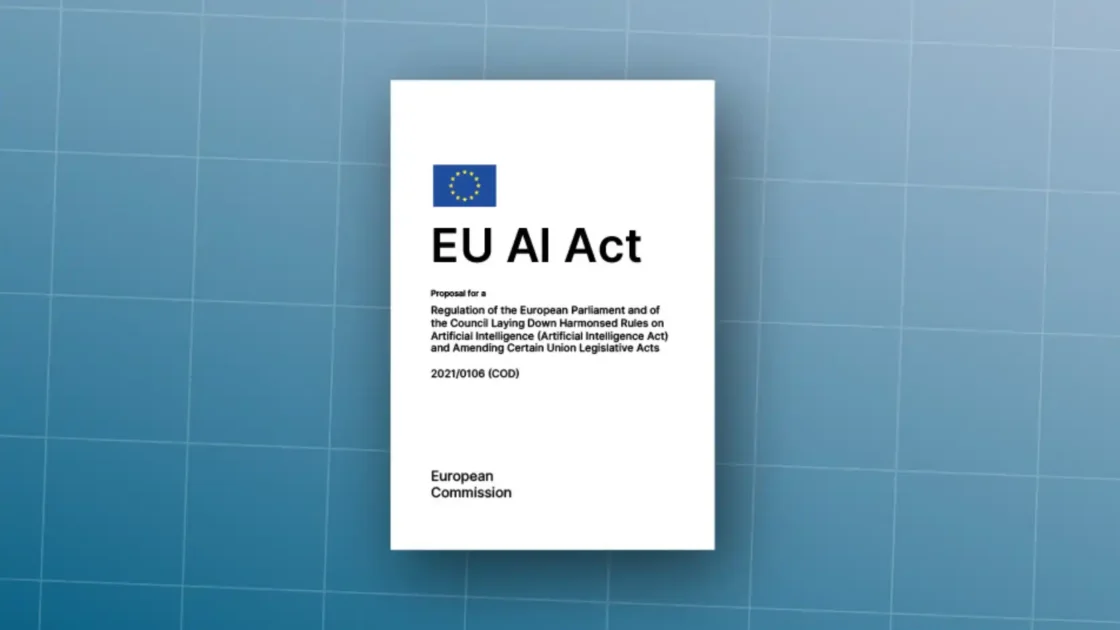
The European Union’s AI Act places transparency obligations on certain AI systems and creates rules for general-purpose AI, high-risk systems, and prohibited practices. The regulation is not a complete answer to political manipulation, but it signals that AI governance is moving from voluntary principles toward binding rules in important areas.
A person does not need to be anti-technology to see the democratic problem. Political speech is valuable partly because citizens can ask who made it, what evidence supports it, and what interests sit behind it. Synthetic political content blurs each of those questions. It can create the appearance of speech without the accountability of a speaker.
AI veganism treats political persuasion as an area where restraint should be stricter, not looser. The convenience of generated content is especially weak as a justification when the price is public confusion about who is speaking and whether an event happened.
Emotional reliance is a different kind of AI use
The most personal form of AI use is not drafting a work email or generating an image. It is conversation. Companion bots, roleplay systems, and general chatbots can offer reassurance, warmth, availability, and apparent patience. For people who feel isolated, anxious, bored, or misunderstood, that interaction can become emotionally important.
This is not trivial. A system designed to keep a conversation going may reward disclosure and dependence. It may mirror a user’s language, validate their interpretation, or offer advice with a tone that feels intimate. The model does not have a life, a stake, professional duties, or genuine concern. The user can still experience the interaction as real.
Reporting and research have raised questions about how chatbots respond to mental-health and self-harm-related queries. An Associated Press account of a study in Psychiatric Services reported that major chatbots generally avoided the most explicit high-risk questions but gave inconsistent answers to lower-intensity prompts that could still be harmful.
AI veganism in this setting is often a boundary around emotional life. A person may decide not to seek therapy-like guidance from a chatbot, not to use AI companionship as a substitute for human relationships, not to let a model mediate conflict with a partner, and not to treat generated affirmation as neutral advice. The stance is protective rather than puritanical.
The concern is not that every person who chats with AI is being manipulated. People use tools in many ways. The concern is that business models may benefit when users return often, reveal more, and form attachments. That incentive does not align neatly with a user’s long-term wellbeing. A system optimized for engagement is not automatically a system suited to care.
Children and teenagers deserve particular caution. They are still developing judgment, identity, and social confidence. A chatbot can feel safer than a person because it never appears impatient or embarrassed. Yet that same frictionlessness may remove the cues that encourage a person to seek adult support, professional help, or a real relationship when it is needed.
The spectrum matters more than purity
The word “vegan” can create an expectation of total abstinence. In AI use, total abstinence is difficult and sometimes impossible. People encounter AI in search engines, recommendation systems, employment platforms, insurance processes, medical settings, accessibility tools, phones, classrooms, and public services. A person may not even know when a system is operating.
For that reason, it is more useful to map a spectrum than to police a label. The spectrum separates occasional unthinking use from deliberate refusal without pretending that one clean line works for everyone.
Four practical positions on AI use
| Position | Typical practice | Main ethical claim |
|---|---|---|
| Unexamined use | Uses AI wherever it is offered | Convenience is treated as sufficient reason |
| Selective use | Uses AI for defined tasks with limits | Benefits may justify bounded use |
| AI minimalism | Uses AI rarely and avoids generative systems by default | Most discretionary use is not worth the cost |
| AI veganism | Refuses direct use of targeted AI systems on ethical grounds | Participation itself conflicts with stated values |
A person may move between these positions over time. They may be an AI vegan in creative work, an AI minimalist in daily life, and a selective user of accessibility tools. The ethical value lies in making the boundary explicit, not in claiming a purity that modern infrastructure makes impossible.
This spectrum also reduces a common argument trap. Critics sometimes ask whether an AI vegan uses a smartphone, rides in a car, buys products from companies that use algorithms, or benefits from medical research. The implied conclusion is that imperfect abstention is hypocrisy. That standard would defeat almost every form of ethical consumption. Few people can remove themselves completely from the systems they criticize.
A more serious question is whether a person is reducing avoidable participation, supporting alternatives, and directing their political choices toward structural change. Someone who refuses generated art but uses a smartphone has not solved the political economy of AI. They have still made a meaningful choice about one part of it.
The strongest objections come from within vegan ethics
Some ethical vegans dislike the term AI veganism for good reason. Veganism is not a generic word for avoiding something. It emerged from a moral commitment to animals and a critique of their exploitation. Turning it into a label for rejecting a digital product may blur that history and divert attention from animals.
The objection becomes sharper when people use “AI vegan” playfully, as a way to describe a temporary break from chatbots, or as a badge of personal taste. A person who avoids AI because it annoys them is not making the same kind of ethical claim as someone who seeks to reduce complicity in animal exploitation. The metaphor can create false equivalence.
There is also a political concern. Vegan advocacy has often struggled against ridicule and trivialization. When the word is repurposed for technology culture, it can reinforce a stereotype that veganism means fussy consumer preference rather than a serious justice-based position. Some advocates have argued that the term should not be used casually for precisely that reason.
The best response is not to insist that critics are wrong. It is to use the phrase with humility. AI veganism should never be presented as morally interchangeable with animal veganism. It is a borrowed metaphor for a form of technological abstention. Its explanatory power lies in the comparison between hidden systems of consumption, not in a claim that the objects of concern are identical.
People who dislike the label may prefer “AI refusal,” “generative-AI abstinence,” “AI minimalism,” “ethical non-use,” or “algorithmic restraint.” Those phrases are less memorable but often more precise. The underlying debate does not depend on the word. It depends on whether people should have the right, information, and practical capacity to reject systems they judge harmful.
This criticism improves the conversation because it forces AI-vegan advocates to state their reasons plainly. A phrase should not do all the moral work. Someone who refuses AI should be able to say whether their concern is consent, labour, climate, privacy, human agency, public trust, or some combination.
The strongest objections from AI supporters deserve an answer
AI supporters often make a different criticism: abstention is symbolic, elitist, and inattentive to benefits. They point to translation, accessibility, scientific research, fraud detection, administrative support, coding assistance, disability tools, medical research, and systems that reduce repetitive work. They argue that refusing AI across the board may deny people tools that make life easier or more independent.
That argument has force. AI is not only a consumer chatbot or image generator. Machine learning can support research and public services. Generative tools may help someone communicate across languages, draft a message when disability makes writing difficult, or understand complex information. A broad moral rejection that ignores these uses becomes less persuasive.
The relevant question is not whether AI has benefits. It does. The question is whether benefits justify every deployment and every business model. A tool’s usefulness in one context does not settle its legitimacy in another. A translation aid is not equivalent to a system that impersonates a person’s voice. A medical research model is not equivalent to a workplace surveillance system. A screen-reader feature is not equivalent to a marketing engine that floods the web with synthetic content.
The IEA’s work makes a similar point from an energy perspective. AI may contribute to energy-system applications that improve forecasting and operations, while also driving substantial growth in data-centre electricity use. The coexistence of benefit and cost is not a contradiction. It is the condition that makes governance necessary.
Another critique is that AI refusal will not change corporate behaviour because individual users have little leverage. That is often true. A single person declining a chatbot subscription will not redirect global capital. Yet individual practices can matter when they form markets, workplace norms, educational expectations, union demands, procurement standards, and political pressure. Refusal becomes more than private symbolism when it is organized.
A final critique says that abstention can leave people less capable of understanding systems that shape their lives. There is truth in that too. People should learn enough about AI to question it, even if they choose not to use it. AI literacy and AI refusal are compatible. A person can understand a technology well enough to decide that they do not want it in particular parts of their life.
Regulation changed the terms of the argument
For years, AI ethics was dominated by voluntary principles: fairness, accountability, transparency, safety, privacy, and human-centred design. Those ideas remain useful, but the scale of AI deployment has moved the debate into law, regulation, procurement, and institutional governance.
The European Union’s AI Act is the most prominent example of a comprehensive risk-based framework. It creates obligations that vary by the type of system and the level of risk, including rules for high-risk uses and transparency obligations for certain AI systems. The Act does not decide whether people should become AI vegans. It changes the environment in which companies and public institutions must justify particular uses.
In the United States, regulation remains more fragmented, with federal agencies, state laws, sector-specific rules, consumer protection, privacy law, copyright disputes, and standards bodies all playing roles. NIST’s AI Risk Management Framework is voluntary, but it provides a common language for organizations to identify and manage generative-AI risks.
Data-protection regulators are also defining expectations. The ICO’s work on generative AI addresses how core legal concepts apply across development and use, including purpose limitation and the possibility that models themselves may carry data-protection implications. These debates matter because they challenge the idea that data collection and model training occur outside ordinary legal duties.
For AI vegans, regulation does not remove the need for individual judgment. A legal system may permit an AI product that a person still finds ethically unacceptable. A company may comply with disclosure rules while relying on a model trained in ways a creator rejects. A workplace may follow minimum standards while introducing automation that workers experience as degrading. Law sets a floor; it does not settle every moral choice.
Still, regulation matters because it can reduce the burden on individuals. Clear data rules, audit requirements, worker consultation, reporting on water use, restrictions on harmful applications, provenance tools, and enforcement against deceptive practices create conditions in which refusing AI is no longer the only form of protection.
Institutions decide whether refusal is real or merely symbolic
Individual restraint has limits when institutions make AI unavoidable. A school that requires an AI writing assistant, an employer that mandates a chatbot, a government agency that uses automated triage, or a retailer that replaces customer service with bots can narrow the space for dissent. The institution’s choice becomes the individual’s environment.
That is why procurement is central. Before buying or deploying an AI system, an organization should ask what problem it is solving, whether a non-AI alternative exists, what data enters the system, who is affected, how errors will be handled, whether humans can override output, and whether people can choose an alternative channel. These questions are not bureaucratic decoration. They determine whether technology serves a stated purpose or simply expands because it is available.
A credible institutional response to AI veganism is not “everyone must use AI responsibly.” It is “people should not be forced into AI use without a reason, a safeguard, and an exit.” That principle would look different in different sectors. A school may provide AI literacy without requiring AI-generated homework. A hospital may use carefully validated clinical tools without forcing patients to interact with chatbots. An employer may provide approved systems while protecting staff who prefer non-AI workflows for certain tasks.
The OECD’s work on AI and work points to the importance of skills, training, and worker preparation. The ILO has repeatedly emphasized that generative AI is likely to transform tasks and that outcomes depend on how adoption is managed. Governance therefore includes time. A worker who is told to verify AI output but receives no extra time is being asked to absorb a new risk without a real process.
Institutions should also avoid treating refusal as ignorance. A teacher who insists students first learn to write may be protecting learning. A lawyer who avoids public models for client information may be protecting confidentiality. An artist who declines AI generation may be protecting professional identity. An employee who questions an automated performance tool may be protecting due process. These are not necessarily anti-innovation positions.
The practical challenge is to build systems that preserve human choice without creating unfair penalties. That may require non-AI service channels, disclosure of automated involvement, human review routes, clear policies for confidential data, and procurement rules that consider labour, environment, and rights alongside price and speed.
A small question about machine moral status sits at the edge
Most AI veganism is about harms to people, creators, workers, communities, animals, and environments. A smaller and more speculative strand asks whether advanced AI systems themselves could someday deserve moral consideration. This is not a claim that current chatbots are conscious or suffer. There is no settled scientific basis for treating present commercial language models as sentient beings.
The question arises from a precautionary idea: if sentience is uncertain, should people avoid creating or using systems that might one day experience suffering? Philosophers working on animal ethics and moral uncertainty have explored related questions about how to act when evidence of sentience is incomplete. The issue is intellectually serious, but it should not be used to distract from the concrete harms already visible in present AI systems.
The danger is twofold. One is premature anthropomorphism. A chatbot that speaks warmly may appear to have feelings, even though language generation is not proof of consciousness. Users can form emotional attachments and project moral status onto systems built to simulate conversation. The other danger is dismissiveness: assuming that the question will never matter because current systems are not conscious.
For now, the practical ethical emphasis should remain on established subjects of concern: people whose data is used, workers whose jobs are changed, communities hosting infrastructure, creators facing imitation, and users exposed to unreliable or manipulative systems. Moral concern for possible future AI experience should not become an excuse to ignore existing human and environmental costs.
Still, the question exposes something important about the word “vegan.” Ethical traditions often ask people to expand their moral circle beyond familiar beings and immediate interests. AI veganism borrows that instinct, even when its present focus is not on AI welfare. It asks users to look beyond the screen and consider who, or what, bears the cost of their convenience.
Personal rules turn concern into a practice
People who agree with some AI-vegan arguments often struggle with the next step: what should they actually do? A useful approach is to make a short set of rules that reflects the reasons they care. The rules should be concrete enough to guide decisions and flexible enough to fit real life.
One rule might concern data: never enter private, confidential, client, student, financial, legal, medical, or identifying information into a public generative-AI tool. Another might concern creative work: do not use image, voice, music, or writing generators to replace a human creator when a human commission is feasible. Another might concern learning: write first, research from sources, and use AI only after forming an independent view, if at all.
An environmental rule could be: avoid high-volume image and video generation for novelty, social posting, or disposable marketing. A public-trust rule could be: do not share synthetic media without clear disclosure, and do not use AI-generated material in contexts where people may assume human authorship or real documentation. A relational rule could be: do not use a chatbot to produce intimate messages or substitute for professional mental-health care.
The point is not to create a purity test. It is to decide in advance which forms of convenience are not worth the trade. Pre-commitment matters because AI interfaces are built to make use easy. If a person has to make the ethical decision only after they see a tempting “generate” button, the default will often win.
People can also redirect spending. They can hire artists, writers, translators, designers, tutors, photographers, researchers, and editors. They can support services that disclose training practices and protect user data. They can choose organizations that offer human customer support. They can ask schools and employers about AI policy. They can vote, organize, and participate in local debates about data centres.
None of this makes an individual innocent. It makes their choices legible. A person cannot control every algorithm that touches their life. They can control some forms of direct participation and use those choices to support a wider demand for accountability.
The limits of abstinence should be stated plainly
AI veganism has real limits. It cannot solve collective problems through personal restraint alone. A person who avoids chatbots does not stop a company from building data centres. A writer who refuses an AI assistant does not settle training-data law. A student who writes without AI does not change an institution’s assessment system. A worker who opts out may still be evaluated by an algorithm.
There is also a risk of moral individualism. When the focus stays on what consumers do, companies and governments can escape scrutiny. They can encourage people to “use AI responsibly” while avoiding deeper questions about market concentration, labour rights, public infrastructure, data extraction, and enforcement. The burden shifts from those with power to those with the least.
A second limit is access. Some people rely on AI-linked tools for translation, speech assistance, reading support, navigation, accessibility, or communication. Ethical criticism should not treat all dependence as weakness. The right response is to distinguish between tools that expand a person’s access to society and systems that extract value from their data or replace human care without consent.
A third limit is knowledge. Users rarely know every model, dataset, service provider, or algorithm behind a product. Supply chains are opaque. Corporate disclosures are partial. Product labels change. The most determined AI vegan may still interact with AI constantly through services they cannot easily inspect. This is another reason the ethical goal should be harm reduction and structural reform, not impossible purity.
The phrase retains value because ethical practice often begins with imperfect action. Refusing one type of use can create space for a broader conversation. It can expose an assumption that had gone unchallenged: that the default future is one in which more thought, creativity, communication, and care are delegated to commercial models.
The argument is really about the right to say no
The deepest point in AI veganism is not that everyone should abstain. It is that people should be able to say no without being dismissed as backward, irrational, or anti-progress. A society that treats every new automation as inevitable leaves little room for democratic judgment.
Saying no can mean declining to generate a disposable image. It can mean keeping private information out of a chatbot. It can mean hiring a human illustrator. It can mean writing the difficult first draft without assistance. It can mean resisting AI surveillance at work. It can mean asking a local council for data-centre water reporting. It can mean demanding that a school preserve non-AI learning routes.
These acts differ in scale, but they share a belief: convenience is not the only value that should govern technology. Consent matters. Human work matters. Public trust matters. Privacy matters. Local resources matter. The ability to think, write, make, and relate without automated mediation matters.
AI veganism will likely remain a contested phrase. Some will find it useful. Others will reject it as an awkward borrowing from animal ethics. The underlying question will remain even if the label fades. As AI becomes woven into ordinary life, people will keep asking which uses deserve acceptance, which need rules, and which should be refused.
The answer will not be a universal ban or a universal embrace. It will be a series of choices made by people, workplaces, schools, regulators, creators, communities, and governments. The most mature version of AI veganism does not promise purity. It asks for deliberate limits in a culture trained to treat every friction as a problem to automate away.
Questions people ask about AI veganism
AI veganism is a loose ethical stance in which a person avoids or sharply limits AI use, especially generative AI, because of concerns about consent, labour, environmental costs, privacy, misinformation, or human agency.
No. It has no central organization, universal manifesto, or agreed membership standard. It is a label used by people with related but different objections to AI.
Usually not. Complete avoidance is difficult because AI is embedded in many services. Most people using the label focus on direct, discretionary use of generative AI tools.
No. A person may support medical research, accessibility tools, translation, or safety systems while refusing consumer chatbots, image generators, or AI-generated media.
The comparison draws on the idea of ethical refusal: declining ordinary consumption because of hidden harms or exploitation elsewhere in the supply chain. It is a metaphor, not a claim that AI and animal exploitation are the same issue.
Some do not. Critics argue that veganism is specifically about animals and should not be diluted into a general label for abstaining from technology.
Common targets include chatbots, image generators, voice-cloning tools, AI music tools, synthetic-video systems, AI search summaries, and workplace writing assistants.
Each prompt has a physical cost through computing infrastructure, but the impact varies by model, task, location, power source, and scale. The larger concern is the rapid growth of AI-related data-centre demand.
Data centres may use water for cooling, and electricity generation can use water as well. Local impacts differ greatly based on cooling systems, climate, water sources, and regional water stress.
Many object to unclear training-data practices, imitation of recognizable styles, loss of attribution, market pressure, and the use of generated output as a cheaper substitute for human commissions.
It reduces one source of risk, especially if you avoid putting sensitive information into public AI tools. Privacy protection also depends on provider policies, account settings, contracts, and data-governance rules.
AI can produce language and suggestions quickly, but it does not replace the process through which people verify evidence, form judgment, learn skills, and take responsibility for decisions.
It can be difficult. Employers may require AI tools. A practical approach is to ask for approved systems, clear privacy rules, human review, and non-AI options for tasks involving confidentiality or professional judgment.
Yes. A student may choose to write, research, solve problems, and learn without generative AI, while still using permitted accessibility tools or ordinary software.
No. Ethical restraint should not deny people tools that expand access and independence. Many people distinguish between assistive technology and optional generative-AI use.
Not automatically. Ethical concerns depend on training practices, disclosure, use of recognizable styles or likenesses, market effects, environmental cost, and whether human creators were displaced.
AI minimalism is a less absolute approach than AI veganism. It means using AI rarely, deliberately, and only for tasks where the benefit appears to justify the cost.
Individual abstention alone has limited power, but it can matter when it becomes part of workplace policy, creative-industry standards, consumer demand, union action, procurement rules, and public regulation.
Set one clear boundary, such as never entering confidential information into public AI tools, avoiding AI-generated images, or keeping writing and learning tasks AI-free.
Yes. AI is being built into search, office tools, phones, customer service, education, and public systems. That makes transparency, consent, and non-AI alternatives increasingly important.
Author:
Jan Bielik
CEO & Founder of Webiano Digital & Marketing Agency

This article is an original analysis supported by the sources cited below
AI veganism at Georgia Tech
Explains the emerging label and the comparison between AI abstention and ethical veganism.
Meet the AI vegans
A commentary on people choosing to avoid AI for environmental, ethical, and personal reasons.
Definition of veganism
The Vegan Society’s definition, used to clarify the limits of the AI-vegan metaphor.
Energy and AI
The International Energy Agency’s 2025 assessment of AI’s relationship with electricity systems and data centres.
Key questions on energy and AI
The IEA’s 2026 update on AI-related data-centre growth, energy demand, and infrastructure pressures.
Energy demand from AI
IEA projections for data-centre electricity demand and AI-related server growth.
Regulating data center water use in California
Berkeley Law analysis of water-use disclosure, policy gaps, and local data-centre impacts.
Artificial Intelligence Risk Management Framework
NIST’s official hub for the AI Risk Management Framework and its generative-AI profile.
NIST AI 600-1 Generative AI Profile
Details generative-AI risks and suggested practices for governing, mapping, measuring, and managing them.
EU Artificial Intelligence Act
The official text of Regulation (EU) 2024/1689, the European Union’s AI Act.
ICO response on generative AI and data protection
UK data-protection regulator’s analysis of how legal duties apply to generative-AI systems.
Copyright and artificial intelligence study
The U.S. Copyright Office hub for its reports on digital replicas, copyrightability, and AI training.
Copyright and Artificial Intelligence Part 2
The Copyright Office report on the human authorship requirement for AI-assisted outputs.
Copyright and Artificial Intelligence Part 3
A pre-publication report examining legal and policy issues around generative-AI training.
Generative AI and jobs
The International Labour Organization’s 2025 index of occupational exposure to generative AI.
The AI illusion and invisible workers
ILO analysis of the human labour that supports supposedly automated AI systems.
Guidance for generative AI in education and research
UNESCO guidance centred on human agency, privacy, policy, and education.
AI competency frameworks for students and teachers
UNESCO’s explanation of AI competencies, critical reflection, and responsible educational use.
How Americans view AI and its impact
Pew Research Center findings on public concern, control, and views of AI’s social effects.
How the US public and AI experts view AI
A comparison of public and expert attitudes toward AI’s impact and governance.
Generative AI and the SME workforce
OECD survey evidence on generative-AI adoption, skills, benefits, and legal concerns in smaller firms.
AI use by individuals surges across the OECD
OECD announcement documenting the rise of individual generative-AI use in 2025.
ChatGPT produces more lazy thinkers
A Stanford-hosted study on cognitive engagement during AI-assisted academic writing.
Beyond ChatGPT critical thinking in the age of AI
Stanford education perspective on maintaining student thinking alongside AI use.
Taxonomy of human rights risks connected to generative AI
United Nations human-rights analysis of privacy, discrimination, ownership, and information risks.
Study says AI chatbots need to fix suicide response
Associated Press reporting on research into chatbot responses to suicide-related prompts.
| Citing this article? Brief excerpts are welcome. Please credit Webiano.digital, name the author where stated, and include a link to https://webiano.digital and to this original article. Full or substantial republication requires prior written permission. Read our Copyright and Content Use Policy. |
This article was prepared with the assistance of artificial intelligence tools. The content underwent expert human review, and Webiano Digital & Marketing Agency assumes editorial responsibility for its final version and publication.