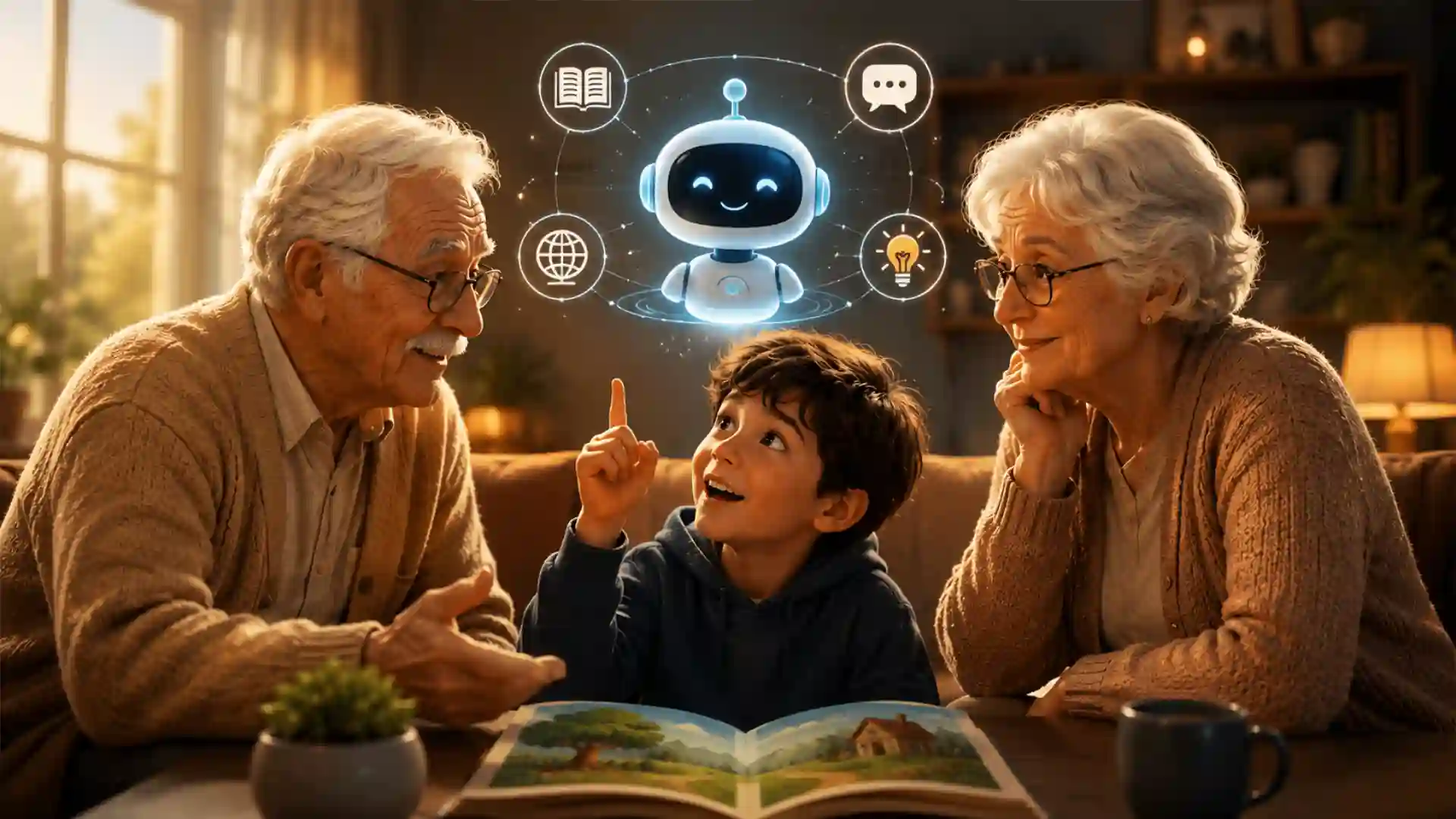
A poor explanation of artificial intelligence usually begins with the machine. It starts with “models,” “algorithms,” “data,” “cloud computing,” or “neural networks.” Those words may be correct, but they do not help a grandmother who still keeps cash in a tin box, a grandfather who trusts the village post office more than a phone screen, or a family member who has never opened a bank account because banks never felt made for them.
Table of Contents
Most AI lessons start in the wrong place
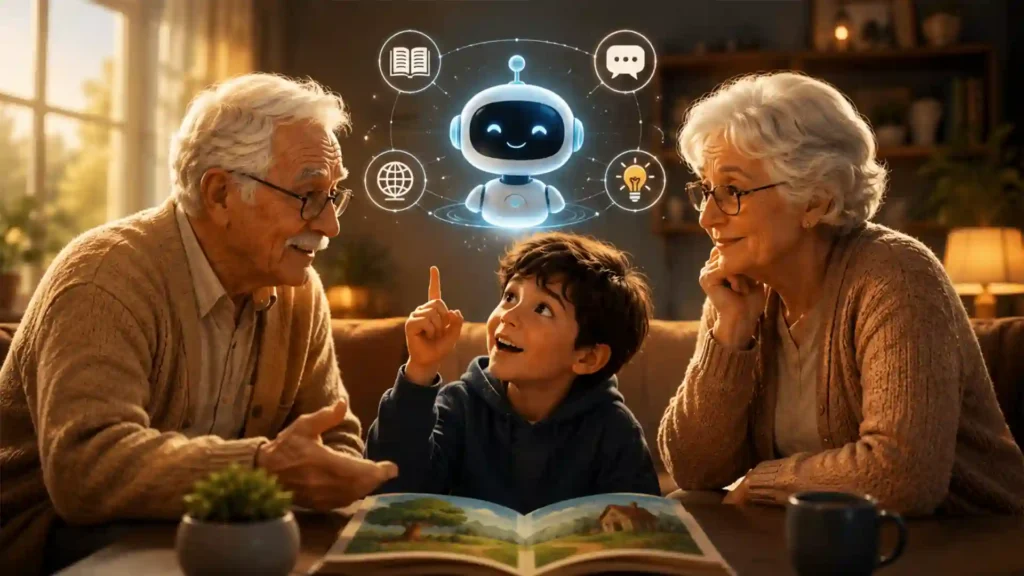
A better explanation begins with something human. AI is a trained machine that looks at examples, notices patterns, and then gives an answer, a suggestion, a picture, a translation, or a warning. That one sentence is enough for a first meeting with the idea. The rest should be built slowly, with stories.
The need for this kind of explanation is not small. The World Bank reported that about 1.4 billion adults remained unbanked in its Global Findex 2021 coverage, with unbanked people more often poor, less educated, rural, and women. The newer Global Findex 2025 database adds a Digital Connectivity Tracker because money access and phone access are now tied together in daily life. AI explanations that assume everyone uses online banking miss this reality.
The same gap appears in internet access. The International Telecommunication Union estimated that 5.5 billion people were online in 2024, while 2.6 billion remained offline. That is not a side issue for AI literacy. It means a large part of humanity hears about AI from television, radio, relatives, government notices, shopkeepers, or rumors, not from a chatbot on a phone.
So the first rule is plain: do not explain AI as a rich person’s app. Explain it as a new kind of machine helper that must be checked, questioned, and never blindly trusted. People without bank accounts understand weather, crops, animals, markets, memory, gossip, fraud, tools, and work. Those are strong bridges into AI.
The village shop story
Imagine a small village shop. Every morning, people come in for bread, rice, oil, soap, matches, tea, salt, flour, and medicine. The shopkeeper is old, but sharp. He knows who buys what. He knows that before rain, people buy candles. Before a wedding, people buy sugar, meat, and extra tea. When school starts, families buy notebooks. When the road is blocked, people buy more flour because they expect the truck to arrive late.
Now imagine the shopkeeper has a young helper. The helper does not know the village. He does not know the families. He does not know which grandmother likes strong tea or which farmer buys nails every spring. So the shopkeeper gives him an old notebook. Inside are many years of sales.
The helper reads the notebook every day. He sees that when clouds gather and the radio says storms are coming, candles sell fast. He sees that when the festival is close, sugar sells fast. He sees that when the school bell returns after summer, pencils sell fast. He begins to make guesses.
One day the sky turns dark. The helper says, “We should put candles near the front.” The shopkeeper asks, “Why?” The helper points to the old notebook. “When the sky looked like this before, people bought candles.”
That helper is not magic. He is not a prophet. He did not invent wisdom from nowhere. He learned from old examples and used them to make a guess about the next day. That is the first door into AI.
Now change the story slightly. Instead of a young helper, the shopkeeper has a machine. The machine reads many old notebooks very fast. It cannot smell the rain. It cannot care about the village. It cannot love the families. But it can find patterns in old records faster than a human. It may say, “Move the candles forward,” or “Order more flour,” or “This message looks like a trick,” or “This medicine name looks similar to another one.”
That machine is AI. AI is a pattern-finding helper. It is fast. It is not wise by itself.
This story works because it does not require a bank account, smartphone, credit card, email address, or technical background. It uses a shop, a notebook, memory, and a helper. The person listening can picture it.
The sentence that works with almost everyone
The best first sentence is not fancy.
AI is a machine that has practiced on many examples, so it can guess, answer, sort, warn, translate, or create something new.
That sentence carries the central idea without turning AI into a spirit or a human brain. It also avoids a common mistake: telling people that AI “thinks.” AI does not think like a grandmother deciding whether a child is sad. AI does not think like a farmer reading the soil. AI does not think like a nurse noticing a patient is afraid. It works by patterns.
IBM describes AI as technology that enables computers and machines to simulate learning, problem solving, decision-making, creativity, and autonomy. Google Cloud describes AI as technologies that allow computers to learn, reason, understand language, analyze data, and make suggestions. Microsoft describes AI as a computer system’s ability to mimic human-like functions such as learning and problem-solving. Those definitions are useful for experts, but most ordinary learners need the shopkeeper version first.
The word “practice” is powerful. A child practices handwriting by copying letters. A singer practices by hearing songs. A cook practices by making the same dish many times. A dog learns that one sound means food and another sound means danger. AI “practices” in a machine way: it is trained on examples.
That does not mean the machine understands life. It means the machine has been adjusted until its answers often match the examples it saw. Machine learning, a major part of AI, works by finding patterns in training data and using those patterns to make inferences on new data.
A clean explanation should repeat the same idea in three forms:
AI learns from examples.
AI gives guesses or outputs based on patterns.
A person must check whether the answer fits real life.
Those three lines give a listener enough to survive the first wave of confusion.
Patterns are the first bridge
People who do not know computers still know patterns. They know that a rooster often crows before sunrise. They know that if a neighbor’s smoke rises early, bread may be baking. They know that if a child goes quiet after breaking a cup, guilt may be nearby. They know that if a certain trader arrives after harvest, prices may be poor.
AI is built on the same human-friendly idea, but in machine form. A pattern is something that often repeats. AI searches for repeated signs inside large piles of examples. It might look for patterns in words, faces, sounds, prices, weather reports, medical images, crop photos, road traffic, or customer messages.
Use a basket of beans if the listener is sitting in front of you. Put red beans, white beans, and black beans on a table. Ask the grandparent to separate them. They will do it by sight. They may not use the word “classification,” but they understand the job. Then say: “AI does this too, but with words, sounds, pictures, or numbers.”
A person sorts beans because the eyes and mind recognize differences. A machine sorts photos because it has seen many examples and adjusted itself to separate one kind from another. It may sort tomatoes by ripeness, messages by danger, or handwriting by letter shape.
This bridge matters because it removes fear. AI becomes less like a ghost and more like a sorting tool. It also keeps caution alive. If the beans are dirty, broken, or mixed in bad light, the sorting may be wrong. If the examples given to AI are poor, biased, too narrow, or outdated, the AI’s answer may be wrong too.
A machine that learned from city examples may fail in a rural market. A system trained mostly on one language may fail in another dialect. A fraud detector trained on bank-card behavior may not understand cash-only habits. AI is only as grounded as the examples, rules, and checks behind it.
Training means practice, not childhood
The word “training” often confuses older listeners. They may picture a person training a horse, a teacher training a student, or a soldier training for duty. That is not a bad starting point. AI training is a kind of practice, but without feelings, hunger, pride, memory in the human sense, or lived experience.
A machine is given many examples. It tries to produce the right answer. When it is wrong, the system is adjusted. After many rounds, it becomes better at the task it was trained for. Training means the machine has been shaped by examples until its outputs often match the expected answer.
For a simple story, return to the shop. The helper first guesses poorly. He puts sugar near the door during a storm and candles at the back before a wedding. The shopkeeper corrects him. After many corrections, the helper becomes more useful. But he may still fail when something unusual happens, like a bridge collapse, a sudden illness in the village, or a new family with different habits.
AI behaves in a similar way. It may perform well when the new situation looks like the old examples. It may fail when the situation is strange, rare, unfairly represented, or missing from its training.
Deep learning, one of the technologies behind many modern AI systems, uses layers of mathematical operations that adjust connections inside a model. The details are not needed for grandma, but the plain lesson matters: modern AI is not hand-written rule by rule; much of it is trained from examples. IBM describes deep learning as a subset of machine learning using multilayered neural networks, and notes that many state-of-the-art AI systems rely on this approach.
For nontechnical listeners, the best phrasing is this: “People do not write every answer into the machine. They give it many examples, and the machine learns patterns from those examples.”
That sentence usually lands.
An AI answer is not the same as a promise
When AI gives an answer, it may sound confident. That is one reason people get fooled. A chatbot may write like a teacher. A voice assistant may speak politely. A translation may look clean. A fake photo may look real. A phone scam may sound like a relative. The surface can be smooth even when the truth underneath is weak.
The first safety lesson is blunt: an AI answer is not a promise. It is an output that must be checked.
OpenAI said in its original ChatGPT release note that ChatGPT sometimes writes plausible-sounding but incorrect or nonsensical answers. That warning remains one of the easiest ways to explain a central limit of generative AI: the machine may produce a sentence that sounds right without being right.
Use a neighbor story. Suppose a neighbor speaks loudly and confidently about medicine, but he is often wrong. His confidence does not make him a doctor. AI may also speak with confidence. Confidence in the voice does not prove truth in the answer.
This is especially vital for older adults and unbanked people because they may hear AI through others: a nephew using a phone, a public office using automated forms, a trader showing a generated message, or a stranger calling with a cloned voice. They may not be able to inspect the system themselves. They need a simple rule that travels well:
If AI says something about money, health, law, land, identity, family emergency, or official papers, check with a trusted human before acting.
That rule protects more than technical knowledge does. It works for cash households. It works in rural places. It works when someone cannot read well. It works when the person has no internet.
Generative AI is the storytelling clerk
Older AI often sorted, ranked, predicted, or detected. It might spot possible fraud, read license plates, recommend a song, or predict stock needs in a shop. Generative AI is different in the public imagination because it produces new-looking material. It writes text. It creates pictures. It makes voices. It answers questions. It drafts letters. It produces code. It imitates styles.
A useful story is the “storytelling clerk.”
Imagine a clerk in the village office who has read thousands of letters: apology letters, wedding invitations, school notices, complaint letters, farming requests, pension forms, and market announcements. If you ask the clerk, “Write me a polite letter to the water office,” he can produce one quickly because he has seen many letters before.
Generative AI works like that clerk, but as a machine. It has studied patterns in words, images, sounds, or other examples, then produces a new output that resembles the patterns it learned.
This does not mean it remembers like a person remembers every family story. It does not mean it has judgment. It means it can produce something that looks like the kind of thing you asked for.
ChatGPT, released by OpenAI on November 30, 2022, brought generative AI into mainstream public conversation. OpenAI’s release note explained that ChatGPT was fine-tuned from a GPT-3.5 series model and that human trainers ranked model responses during the process. For a nontechnical audience, the useful point is that the machine was shaped by examples and human feedback, not born clever.
This is where the story needs a warning. A clerk who writes fast may invent details if he does not know the truth. Generative AI may do the same. Ask it for a letter, and it may draft well. Ask it for a medical diagnosis, and the risk rises. Ask it whether a land document is valid, and it may sound official while missing the law.
Use generative AI for drafts, ideas, translation, and practice. Do not use it alone for decisions that can harm a person.
The machine does not know as a person knows
The hardest part of AI explanation is the word “know.” People say, “The AI knows my language,” “The AI knows how to write,” “The AI knows the answer.” That is ordinary speech, but it misleads beginners.
A person knows through body, memory, pain, love, work, shame, hunger, and years. A grandmother knows when soup needs salt because she has cooked for children and guests. A grandfather knows the sound of a bad engine because he has stood beside machines in cold mornings. A village elder knows when a quarrel is dangerous because he has seen quarrels become wounds.
AI does not know in that way. It connects inputs to outputs. It finds patterns. It calculates. It produces a result. AI can imitate signs of knowledge without carrying human understanding.
Use a parrot story with care. A parrot may repeat “Good morning” at the right time. The parrot may sound polite. But it does not understand the morning as a tired farmer understands it. AI is more powerful than a parrot, but the caution is similar: speech is not always understanding.
This distinction keeps people from worshipping the machine. It also keeps them from rejecting it as pure trickery. A calculator does not understand a market debt, but it still counts well. A thermometer does not feel fever, but it measures temperature. AI does not understand life like a person, but it may still sort, draft, detect, translate, and warn.
The right balance is respect without surrender. AI is a tool with strength in patterns and weakness in judgment. It is useful when the task fits the tool. It is dangerous when people treat the tool like a wise elder.
No bank account is needed to understand AI
Many AI explainers accidentally assume that the listener lives inside the digital economy. They mention online banking, digital wallets, app stores, recommendation feeds, delivery platforms, and streaming subscriptions. For people without bank accounts, those examples may feel distant or insulting.
A stronger lesson uses ordinary life:
The radio predicts rain. The shopkeeper predicts demand. The nurse compares symptoms. The bus driver recognizes engine trouble. The mother recognizes a baby’s cry. The shepherd recognizes a missing animal by silence. Each example contains pattern reading.
Then make the bridge: AI is a machine version of pattern reading. It does not need a bank account to be understood.
This matters because people outside formal finance are often inside AI decisions anyway. A person may have no bank account but still be photographed by a security camera, scored by a government welfare system, contacted by a phone scammer, translated by a relative’s app, or affected by crop-pricing tools. Financial exclusion does not mean AI exclusion. It often means less power to question AI.
The FDIC found that in 2023, 4.2% of U.S. households were unbanked, representing about 5.6 million households, and that lack of enough money to meet minimum balance requirements and distrust of banks were the top main reasons given. The details differ by country, but the lesson travels: not having a bank account is often about trust, money, documents, distance, fees, or bad past experience, not stupidity.
So speak with respect. Do not say, “AI is like online banking.” Say, “AI is like a helper who studied many old examples and now makes guesses.” That version reaches more people.
AI already appears in ordinary life
A person may say, “I do not use AI.” Often they mean, “I do not open a chatbot.” Those are not the same thing.
AI may sit behind phone cameras that sharpen faces, translation tools that turn one language into another, voice assistants that answer spoken questions, spam filters that hide dangerous messages, mapping tools that choose routes, medical image systems that flag possible problems, and customer-service chatbots that reply before a human arrives.
For people with no bank account, the most familiar encounters may be indirect. A family member asks a chatbot to write a school complaint. A clinic uses software to schedule patients. A government office scans papers. A phone company detects unusual SIM-card activity. A scammer uses a cloned voice. A radio station uses AI-generated text. A child uses AI for homework.
The Stanford 2025 AI Index reported that business AI usage rose from 55% of organizations in 2023 to 78% in 2024, and that generative AI attracted $33.9 billion globally in private investment in 2024. Those figures show why ordinary people are hearing more about AI even if they never choose to use it.
The plain lesson is this: AI is moving into services around people, not only into devices owned by people. A person may avoid smartphones and still meet AI through a bank queue, hospital desk, government form, job application, insurance call, school notice, or scam attempt.
That is why simple AI literacy is now a household safety skill. It is like knowing that not every stranger at the gate is dangerous, but not every stranger should be invited inside.
The first story to tell at the kitchen table
Here is a short story that works well when teaching grandparents.
A grandmother keeps chickens. Every evening she throws grain near the fence. After some days, the chickens come before she calls them. They have noticed the pattern: evening, grandmother, grain.
Now her grandson builds a small wooden box with a bell. Every evening, before the grain, he rings the bell. After many days, the chickens run when they hear the bell, even before they see the grain. They have learned a pattern.
Now imagine a machine that sees many examples like that. It sees signs and outcomes. It learns which signs often go together. Later, when it sees a sign, it guesses what may come next.
That is AI.
Then add the warning: One day the boy rings the bell for fun, but there is no grain. The chickens still come. Their pattern was not a guarantee. AI also follows patterns that may fail when the world changes or when someone tricks it.
This story gives two truths at once. AI learns from repeated examples. AI can be fooled by a signal that looks familiar but does not mean the same thing.
That second truth is vital for scams. A voice may sound like a grandson, but it may not be him. A photo may look like a government officer, but it may be fake. A message may look official, but it may be a trap.
Teach the story slowly. Ask the listener to retell it. If they can say, “The machine is like the chickens learning the bell,” they have understood the core idea.
The three-basket method
After the first story, sort AI into three baskets. This keeps the topic from becoming one big frightening cloud.
The first basket is AI that recognizes. It looks at something and says what it may be. A phone camera recognizes a face. A clinic system may flag an image. A spam filter recognizes a suspicious message. A crop tool recognizes plant disease from a photo.
The second basket is AI that predicts or recommends. It looks at past examples and suggests what may happen next. A shop stock system predicts which goods may sell. A map predicts traffic. A video platform recommends another video. A lender may estimate repayment risk.
The third basket is AI that creates. It writes a message, makes a picture, creates a voice, drafts a song, translates a sentence, or answers questions.
This basket method works because it gives the listener control. AI is no longer everything at once. It has jobs.
Three plain baskets for explaining AI
| Basket | Plain meaning | Everyday story | Careful warning |
|---|---|---|---|
| Recognizes | “This looks like that” | Sorting beans by color | It may misread poor examples |
| Predicts | “This may happen next” | Shopkeeper ordering candles before a storm | A guess is not a promise |
| Creates | “Here is a new draft” | Clerk writing a letter after reading many letters | It may invent details |
This table should not replace the story. It gives a teacher, journalist, family member, or community worker a neat way to repeat the explanation after the first conversation.
The baskets also reveal why one safety rule does not fit every AI system. A wrong song recommendation is annoying. A wrong medical warning, welfare decision, fraud label, or cloned voice can harm a person. The risk depends on the job.
A story for people who distrust banks
For people who do not have bank accounts, do not treat distrust as ignorance. It may come from fees, lost money, unclear paperwork, bad service, distance, fear of debt, lack of documents, past discrimination, or family history. A person who distrusts banks may understand risk better than a person who clicks every button on a phone.
Here is a story for that audience.
A woman sells vegetables at the roadside. She keeps her money in cash because she wants to see it, count it, and decide herself. One day a salesman arrives with a shiny box. He says, “This box will count customers, predict tomorrow’s sales, and tell you which vegetables to buy.”
The woman asks, “Who taught the box?”
The salesman says, “Many shops.”
She asks, “Were they shops like mine, or big city shops?”
He hesitates.
She asks, “If the box is wrong and I buy too many tomatoes, who loses money?”
The salesman says, “You do.”
Then the woman says, “The box may be useful, but I will not obey it blindly.”
That woman understands AI governance better than many executives. The right question is not only what AI can do. The right question is who trained it, who checks it, who benefits, and who pays when it fails.
This story respects people who live in cash. It shows that caution is not backward. It is rational. AI may be a tool, but tools arrive inside power relationships. A rural seller, pensioner, migrant worker, domestic worker, or market trader may face AI from the weaker side of the table.
Explain AI in a way that protects their right to ask questions.
The dignity rule for teaching older people
Never teach AI to grandparents as if they are children. Use plain words, but keep adult respect. Many older people have managed households, farms, shops, machines, illness, war, migration, debt, grief, and family conflict. They may not know digital vocabulary, but they know life.
A good AI lesson says, “You already understand patterns. I will show how machines use patterns.” A bad lesson says, “This is too hard for you.”
The dignity rule changes the tone. Sit beside them, not above them. Ask what tools they trust. Ask what tools they dislike. A sewing machine, tractor, radio, pressure cooker, landline, scale, clock, or blood-pressure monitor may be a better bridge than a smartphone.
A grandmother who mistrusts a chatbot may still understand a pressure cooker: useful, fast, dangerous if used carelessly. A grandfather who never used online banking may understand a tractor: powerful, not a replacement for the farmer, dangerous when the wrong person drives it.
Use tools they know. Then connect gently:
A calculator counts. A radio carries voices. A camera captures images. AI notices patterns and produces answers or creations.
This ladder moves from familiar to new without humiliation.
The safest words to use
The vocabulary should be short. Use words that people can repeat after one hearing.
Use machine instead of “system architecture.”
Use examples instead of “training dataset.”
Use practice instead of “model optimization.”
Use guess instead of “probabilistic inference,” but explain that some guesses are very strong and some are weak.
Use check instead of “validation.”
Use fake voice instead of “synthetic audio.”
Use made by a machine instead of “AI-generated.”
Use pattern instead of “correlation,” unless the listener asks for more.
A clean script might sound like this:
“AI is a machine helper. People give it many examples. It practices on those examples. Then it gives an answer, a warning, a translation, a picture, or a suggestion. Sometimes it is useful. Sometimes it is wrong. When it talks about money, health, papers, land, or family emergencies, we check with a real trusted person.”
That paragraph is stronger than a long technical lecture. The goal is not to make grandparents use AI. The goal is to help them recognize it, question it, and stay safe around it.
A simple explanation of data
The word “data” sounds cold. Replace it with “records,” “examples,” or “old notes.”
In the shop story, data is the old sales notebook. In the chicken story, data is many evenings of bell and grain. In a clinic, data may be past patient records. In a weather service, data may be old temperature, wind, rain, and satellite observations. In a chatbot, data may be huge collections of text used during training.
Then add a privacy warning. A notebook may contain secrets. A village shopkeeper may know who buys medicine, who owes money, who drinks too much, or who cannot pay. If that notebook is used carelessly, people can be harmed.
AI raises the same issue. Examples used to train or run AI may contain sensitive facts about people. Those facts need protection. A person without a bank account may still have sensitive data: name, face, voice, phone number, location, welfare status, land claim, health problem, family dispute, or ID document.
UNESCO’s AI ethics recommendation, adopted in 2021 and updated on its page in 2024, stresses human rights, dignity, transparency, fairness, and human oversight. WHO’s guidance on AI for health also places ethics and human rights at the center of design, deployment, and use. Those principles may sound formal, but the household version is direct: do not let machines use people’s lives without care, consent, and accountability.
For grandparents, say it this way: “The machine learns from old examples. If the examples include private things, people must guard them.”
A simple explanation of algorithms
An algorithm is a set of steps. That is all a beginner needs at first.
A recipe is an algorithm. Wash rice. Add water. Add salt. Boil. Lower heat. Wait. A knitting pattern is an algorithm. A bus route is an algorithm. A prayer routine can be described as steps. A market debt calculation has steps.
AI uses algorithms, but modern AI often uses steps that were shaped through training rather than written line by line for every situation. That is the difference between a fixed recipe and a cook who has practiced many meals and adjusts by smell.
For a nontechnical audience, say:
An algorithm is a recipe for a machine. AI often uses recipes that have been adjusted by many examples.
Then give a warning. A recipe can be bad. A route can be unfair. A rule can punish the wrong person. A machine step can repeat human bias if the old examples were unfair. If past lending favored city men over rural women, an AI trained carelessly on that history may continue the pattern. If past hiring favored one group, an AI may learn that old preference.
This is where people without bank accounts may understand quickly. They know systems can be unfair. They know paperwork may reject the poor before anyone listens. AI can make that faster. It can also detect unfairness if designed and checked well. The difference lies in human choices.
A simple explanation of chatbots
A chatbot is a machine you talk to in writing or speech. It answers like a person, but it is not a person.
Use the clerk story again. A chatbot is like a clerk who has read a mountain of writing and learned how answers usually sound. You ask a question. It predicts and produces a reply. Sometimes the reply is useful. Sometimes it is wrong. Sometimes it makes up details. Sometimes it misses local context.
Chatbots are popular because they feel natural. People do not need to learn menus or commands. They can ask, “Write a letter,” “Explain this medicine label,” “Translate this message,” or “Give me a story for my grandchild.”
But a chatbot has no eyes on the real world unless connected to trusted information or given the right documents. It may not know that the village road is closed, that a local office changed rules, that a medicine is unavailable, or that the person asking cannot read the language used in the answer.
A chatbot is a talking tool, not a witness. It did not stand in the room. It did not see the paper unless you gave it the paper. It did not meet the doctor. It did not hear both sides of the family argument.
Teach this line: “Use the chatbot for words. Use people for truth.”
That is not perfect, because people can lie too. But it warns beginners not to treat a fluent answer as proof.
A simple explanation of AI pictures
AI pictures create special confusion. Older people grew up in a world where photographs carried strong proof. A photo could still be staged, cropped, or altered, but it usually began with something seen by a camera. AI image tools weaken that habit. They can produce a picture of an event that never happened, a person in a place they never visited, or a document-like image that is not official.
Use a painter story.
A painter has seen thousands of horses. If you ask for a horse running in snow, the painter can paint one even if that exact horse never existed. AI image systems are machine painters trained on patterns from many images. They make new images from prompts.
An AI picture may look like evidence while being only a machine-made scene.
This line is crucial for family safety and public trust. A fake picture of a politician, doctor, religious leader, missing child, police notice, flood, fire, or war scene can travel fast through messaging apps. People who are offline may still see a printed copy or a phone screen shown by someone else.
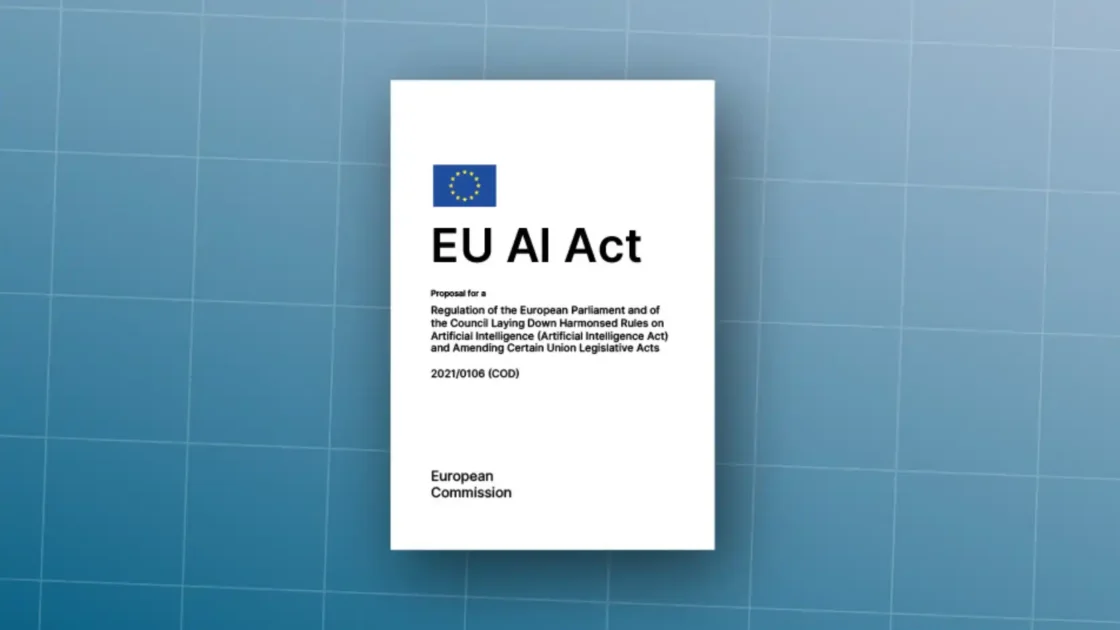
The EU’s AI Act framework includes transparency duties around AI-generated content and deepfakes, with the European Commission describing work on codes and guidelines for marking and labeling AI-generated content. The wider point for ordinary people is direct: societies are trying to build labels because fake media is now easier to produce.
A household rule works better than a law citation: Do not believe a shocking picture until a trusted source confirms it.
A simple explanation of AI voices
AI voices are one of the most dangerous examples for grandparents because the heart reacts faster than the head.
A scammer may collect a short clip of someone’s voice from a video, voicemail, or social media. AI tools may imitate that voice. Then the scammer calls a grandparent and says, “Grandma, I am in trouble. Send money now. Do not tell anyone.”
The FTC warned that scammers use voice cloning to make requests for money or information more believable, including calls that sound like a family member in an emergency. The FTC also advises people to call the loved one back using a known phone number or contact another trusted person to verify the story.
Use the bell story again. The voice is the bell. It sounds like the real signal. But the grain may not be there. The voice may not be the person.
Teach a family password. Not a bank password. A family safety word.
For example, the family agrees: if anyone calls asking for emergency money, they must answer a question only the real family knows, such as the name of a childhood goat, a funny kitchen accident, or a private family phrase. The answer should not be on social media.
When a voice asks for money, secrecy, documents, or panic, stop the conversation and verify through another route.
This is one of the most useful AI lessons for older adults.
AI and health advice at home
Health is where AI explanation must become careful. A chatbot may explain a medicine label, list questions for a doctor, translate symptoms, or prepare a family for a clinic visit. Those uses may reduce fear. But AI should not replace a doctor, nurse, pharmacist, or emergency service.
For grandparents, say: “The machine may help you write questions. It is not the doctor.”
WHO’s guidance on AI for health says AI technologies hold promise for diagnosis, treatment, health research, drug development, and public health functions, but ethics and human rights must sit at the center of design and use. That formal warning has a kitchen-table meaning: health AI touches bodies, families, fear, and survival, so mistakes matter.
Use a thermometer story. A thermometer gives useful information, but a person still needs judgment. If a child has fever, rash, stiff neck, and weakness, you do not stare only at the number. You seek help. AI is similar. It may give a useful clue, but it should not carry the whole decision.
AI health answers should be treated as notes for a human professional, not as final instructions.
For people without bank accounts, the risk may be worse because paid care, transport, and paperwork already create barriers. Cheap AI advice may feel like the only available advice. That makes cautious design and community education even more necessary.
AI and money for cash households
A person without a bank account may still face AI-linked money risk. Scammers can use AI to write convincing messages, imitate officials, fake investment offers, create false job posts, or clone family voices. Shops may use AI-driven pricing. Employers may use automated systems to screen workers. Government support may be filtered through digital forms.
The danger is not only losing money online. It is losing money through trust.
For cash households, use this rule:
Any urgent message about money is suspicious until checked.
Urgency is the scammer’s hammer. “Pay today.” “Send cash now.” “Your grandson is injured.” “Your benefit will stop.” “Your land paper has a problem.” “Your name is on a police list.” “Do not tell anyone.” AI makes those messages smoother, more personal, and harder to dismiss.
A person with no bank account may think, “This does not concern me.” But a scammer may ask for cash transfer, gift cards, mobile top-up, pawned jewelry, courier delivery, or a meeting at a bus station. The lack of a bank account does not remove fraud risk.
The lesson should be practical. Do not send money because of one call. Do not give ID numbers to a stranger. Do not trust a printed notice unless the office confirms it. Do not let a caller force secrecy. Ask a trusted family member, community worker, religious leader, local official, or shopkeeper before acting.
AI literacy for cash households must be grounded in fraud defense, not app excitement.
AI and official decisions
AI is not only a home tool. Governments and companies may use automated systems for benefits, taxes, policing, border checks, insurance, job screening, school admissions, and welfare administration. Even when those tools are not fully “AI,” people experience them as machine decisions.
For grandparents and unbanked people, the question is not “Can I use AI?” It is also “Can AI be used on me?”
The European Union’s AI Act entered into force on August 1, 2024, and its implementation runs in stages, including obligations around AI literacy, prohibited practices, general-purpose AI, and high-risk systems. The European Commission says the AI Act will be fully applicable with exceptions and extended transition periods for some high-risk uses, depending on category.
The policy details are complex. The household lesson is not: when a machine decision affects money, care, work, travel, school, land, or identity, people need a way to ask why and appeal.
This is especially true for people who already struggle with paperwork. If a pensioner cannot read a digital notice, if a rural worker cannot upload documents, or if an unbanked person has no formal transaction history, an automated system may misunderstand them. A fair AI system must account for lives that are not neatly recorded in databases.
A simple explainer should not present AI only as a helper. It must also explain AI as a decision layer that may sit between ordinary people and services.
AI does not remove responsibility
When an AI system fails, people often say, “The computer decided.” That sentence can become a hiding place. Computers do not stand trial, apologize, repay losses, or comfort families. People and institutions choose the system, set the goal, provide the examples, test it, deploy it, and decide what happens when it fails.
NIST’s AI Risk Management Framework was created to help manage risks to individuals, organizations, and society. NIST describes the framework as a structured process for addressing AI risk and reducing negative impacts while gaining benefits.
For a nontechnical audience, turn that into this: someone must be responsible for the machine.
If a shop scale is wrong, the shopkeeper cannot say, “The scale cheated you, not me.” The shopkeeper chose the scale and used it. If a bus has bad brakes, the company cannot blame the brakes alone. If an AI wrongly rejects a benefit claim, denies a service, or flags a person as suspicious, the institution behind it must answer.
This matters because people with less money often meet systems that feel faceless. A machine voice says no. A form rejects them. A code appears. A clerk shrugs. “The system won’t allow it.” AI may make that worse unless appeal rights, human review, and plain explanations are built in.
Teach grandparents to ask: “Who is responsible for this machine’s answer?”
That question is powerful.
Two kinds of fear
People often react to AI with one of two fears.
The first fear is fantasy fear: robots taking over the world, machines becoming angry, computers thinking like humans and plotting against families. Films and rumors feed this fear.
The second fear is practical fear: scams, fake voices, wrong decisions, lost jobs, confusing forms, privacy loss, and people trusting machines too much.
A simple explainer should move people from fantasy fear to practical caution. The near danger for most grandparents is not a robot rebellion. It is a convincing lie, a bad decision, or a tool used without accountability.
That does not mean long-term AI debates are foolish. Researchers, governments, and companies do need to study advanced AI risks. But household teaching should begin where harm is most likely to touch the listener.
For an older person, a fake emergency call matters more than a theoretical debate about machine consciousness. For an unbanked person, an automated welfare error matters more than a futuristic robot. For a market trader, a fake buyer message matters more than a data-center investment story.
Use fear carefully. Too much fear makes people freeze. Too little caution makes people careless. The right message is steady: AI is useful, AI is limited, AI can be misused, and people should check it.
The family safety script
Families need a shared script for AI, especially when older members live alone or handle cash.
A good family script has five parts.
First, define AI in one sentence: “AI is a machine trained on examples that gives answers, guesses, warnings, translations, pictures, or voices.”
Second, name the danger: “Some people use AI to make fake messages, fake pictures, and fake voices.”
Third, create a pause rule: “No money, documents, passwords, codes, or urgent decisions during a surprise call.”
Fourth, create a verification route: “Call back using a known number. Ask another family member. Visit the office yourself. Speak to a trusted person.”
Fifth, create a safety word: “If a family emergency call asks for money, ask for the family word.”
This script is short enough to put on paper near a landline or kitchen wall. It does not require internet access. It does not assume banking. It protects against emotional pressure.
Household AI safety rules for grandparents
| Situation | First action | Safe sentence to remember |
|---|---|---|
| A voice says a relative needs urgent money | Hang up and call a known number | “A familiar voice is not proof.” |
| A message asks for a code or ID number | Do not reply | “Private numbers stay private.” |
| A picture looks shocking | Wait for trusted confirmation | “A picture can be made by a machine.” |
| A chatbot gives health or legal advice | Ask a professional or trusted office | “Machine advice needs human checking.” |
| A caller demands secrecy | Tell another trusted person | “Secrecy is a danger sign.” |
This table turns AI literacy into household behavior. It gives older adults words they can use under pressure, when panic makes memory weak.
The script should be rehearsed. A family can practice a fake emergency call at the kitchen table. The practice should feel kind, not mocking. The goal is confidence.
Teaching AI without a smartphone
A strong AI lesson can happen with paper, beans, cards, and stories.
Use ten cards with drawings of goods: candles, bread, flour, sugar, medicine, umbrellas, notebooks, tea, batteries, and rice. Tell the listener that the village shop sold these goods for years. Put “rainy day” on the table and ask which goods may sell more. Most people will pick candles, umbrellas, batteries, maybe flour. Then say, “You just used patterns. AI does this with many more examples.”
Use family recipes. Show that a recipe has steps. That explains algorithms.
Use old notebooks. Show that records become examples. That explains data.
Use a radio weather forecast. Show that prediction is useful but not always right.
Use a forged letter story. Show that official-looking words may be fake.
Use a market scale. Show that tools need checking.
None of this requires a device. In fact, teaching without a device may be better at first because the listener is not distracted by buttons, passwords, errors, or fear of breaking something.
The first AI lesson should teach judgment, not software operation. Software can come later, or never. A person who never uses a chatbot can still learn to distrust a cloned voice.
The role of radio, churches, clinics, and local shops
AI literacy for digitally excluded people will not spread mainly through apps. It will spread through trusted places.
Radio can explain fake voices with short dramas. Churches, mosques, temples, and community centers can teach family verification rules. Clinics can warn patients not to follow chatbot health advice without professional care. Shops can put up posters about scam calls. Schools can send children home with a one-page family safety script. Post offices and local government counters can explain that official workers will not demand secret payments through surprise calls.
This is not just education. It is public protection.
The ITU’s internet data shows that billions remain offline. Offline people still need AI safety information.
A public message should not say, “Download this app to learn about AI.” That misses those who need the message most. A better message says, “A machine can now copy voices and make pictures. Do not send money after one call. Check first.”
Plain warnings save more people than technical diagrams.
AI for translation and reading
One of AI’s kindest uses is translation. A grandparent who receives a message in another language may ask a relative to translate it with AI. A migrant worker may use translation to understand a form. A patient may translate medicine instructions. A parent may translate a school notice.
But translation errors can be serious. A wrong date, dose, name, legal term, or condition can cause harm. AI translation should be treated like a helpful first reading, not the final authority.
Explain it this way: AI translation is like a neighbor who knows both languages fairly well but may miss local meaning, jokes, official words, or medical details.
For casual messages, it may be fine. For contracts, medicine, immigration papers, land records, court notices, or debt documents, a trusted human reader is safer.
This distinction respects the tool without overstating it. Many older people already use neighbors as translators. They understand that some neighbors are better than others and that official papers need care.
AI for letters and forms
A very practical use of generative AI is writing drafts. It can help a person turn rough thoughts into a polite letter. It can rewrite an angry complaint into respectful language. It can prepare questions for a doctor, school, landlord, employer, or public office.
For grandparents, describe AI as a draft writer. “Tell the machine what you want to say. It will make a first version. Then a person must check it.”
This use is especially relevant for people who speak well but do not write confidently. A market seller may explain a problem clearly out loud but struggle to write an official letter. A pensioner may know what happened at an office but not know the formal words. AI can turn spoken points into a draft if someone helps with the device.
The risk is invented facts. The machine may add dates, legal phrases, promises, or details that the person did not say. So the checking rule is: read every line before sending, and remove anything that is not true.
A draft is not a document until a responsible person checks it.
AI and children teaching elders
In many families, children will teach grandparents about AI. That can be beautiful, but it can also become disrespectful. Children may laugh when elders do not understand. Elders may feel ashamed and stop asking questions.
Give children a simple instruction: “Teach with stories, not speed.”
A grandchild can say, “Grandma, this machine is like the shop helper who read old notebooks.” Then show a chatbot writing a birthday message. Then show a fake-looking picture. Then explain the family safety word.
The child should also learn humility. Young people are often comfortable with screens, but comfort is not wisdom. They may click scams quickly because the design feels normal. Grandparents may have stronger suspicion. The best family lesson goes both directions: children explain the tool; elders teach caution.
AI literacy should be a family exchange, not a one-way lecture from young to old.
This matters in homes where the only smartphone belongs to a son, daughter, neighbor, employer, or shopkeeper. The grandparent may not control the device but still needs to understand what is being shown.
The right answer to “Will AI take my job”
Many older people ask about work. They may not say “labor displacement,” but they ask, “Will machines take people’s bread?”
The honest answer should be neither panic nor comfort. AI will change many tasks. It will remove some work, create some work, and alter much work. But the impact will differ by country, sector, language, education, regulation, and bargaining power.
For a simple conversation, say: AI is strongest at tasks with patterns in words, pictures, numbers, and repeated decisions. It is weaker at trust, care, physical repair, local judgment, and responsibility.
A person who repairs roofs, cares for children, negotiates family conflict, cooks by smell, drives difficult rural roads, or comforts the sick still uses human abilities that machines do not replace neatly. But paperwork, customer messages, translation, scheduling, stock ordering, and image checking may change.
For cash workers, informal workers, and older workers, the risk is not only job loss. It is also being managed by systems they cannot question: automated shift planning, digital ratings, identity checks, or hiring filters. AI may enter work through bosses before workers get a say.
A grounded AI explainer should tell people to watch where decisions are moving from humans to machines.
The right answer to “Is AI smarter than people”
The word “smarter” is too broad. A calculator is “smarter” than a person at fast arithmetic, but it cannot raise a child. A map app may beat a driver in traffic data, but it may not understand that a narrow road floods after rain. AI may beat a human at some pattern tasks and fail badly at common sense.
Say this instead: AI is better than people at some narrow tasks and worse than people at being responsible, grounded, and wise.
This answer avoids false pride and false worship. It lets grandparents keep their dignity while respecting the tool.
A machine may read thousands of pages quickly. A grandmother may read one face correctly. A machine may draft a letter in seconds. A grandfather may know which sentence will calm a neighbor. A machine may classify a photo. A farmer may know the smell before rain.
AI strength is speed across examples. Human strength is lived judgment.
The right answer to “Does AI have a soul”
Some people ask this directly. Others ask it through fear: “Is the machine alive?” “Does it know me?” “Does it want something?” “Can it love?” “Can it hate?”
A plain answer is safest: No evidence shows that today’s AI has a soul, feelings, hunger, pain, love, or conscience. It produces outputs from patterns.
Do not mock the question. It is a reasonable question when a machine speaks warmly, apologizes, jokes, writes prayers, or says, “I understand.” Human language triggers human instincts. When something speaks like a person, people may feel a person is inside.
Use a puppet story. A puppet may cry on stage and make the audience cry. The feeling in the audience is real. The puppet’s tears are not. AI language may stir real feelings in the user without proving feelings in the machine.
That does not mean people are foolish for feeling something. Loneliness, grief, and old age make kind words powerful. But families should protect elders from forming deep trust in a machine that cannot truly care for them.
AI may sound caring. Care still belongs to living beings.
The right answer to “Who owns AI”
There is no single owner of AI. AI is a field of technology used by companies, universities, governments, open-source communities, hospitals, banks, phone makers, schools, and scammers. Some systems are private products. Some are research tools. Some are built into public services. Some run on personal devices. Some sit in remote data centers.
For grandparents, say: “AI is not one machine in one building. It is many machine tools made by many groups.”
Then add: “When someone shows you an AI answer, ask which tool made it and who is responsible.”
This is especially useful when a person says, “The AI said so.” Which AI? Used by whom? For what task? Based on what information? Checked by which person?
The OECD AI Principles, first adopted in 2019 and updated in 2024, frame AI governance around trustworthy AI that respects human rights and democratic values. That policy language exists because AI is not only a gadget; it is infrastructure, business power, public policy, and social risk.
The household version is: do not accept “the computer said” as the end of the conversation.
The right answer to “Can AI lie”
AI does not lie in the human sense unless a person uses it to lie. A lie usually means someone knows the truth and chooses to deceive. AI can produce false information without intention. Scammers can use AI-generated words, voices, or images as part of deliberate deception.
So give two answers:
AI can be wrong. People can use AI to lie.
This distinction matters. If a chatbot invents a fact, the machine produced a false output. If a scammer uses AI to imitate a grandson and demand money, a human is lying with a machine.
The FTC’s warnings about AI-enabled voice cloning and family emergency scams show how this works in practice: the dangerous part is not only the technology, but the human fraud built around it.
For older adults, the safety behavior is the same whether the machine “lied” or a human used the machine: stop, check, and do not act under pressure.
The right answer to “Can AI be good”
Yes. But the word “good” needs examples.
AI can help read text aloud for people with poor eyesight. It can translate messages. It can draft letters. It can find patterns in medical images. It can warn of possible fraud. It can support weather forecasting. It can help farmers identify plant disease when the tool is well designed for local crops and languages. It can make public information easier to understand.
But AI is not automatically good because it is new. AI becomes useful when it solves a real problem, works for the people affected, and is checked by responsible humans.
For grandparents, compare it to a knife. A knife cuts bread, vegetables, rope, cloth, or fruit. It can also injure. No one says “knife good” or “knife bad” without asking who holds it, for what reason, and with what care.
AI is similar. A translation tool in a clinic may reduce confusion. A cloned voice in a scam may steal savings. The same broad technology family contains both.
The right answer to “Can AI be stopped”
AI cannot be uninvented. But uses of AI can be shaped, limited, audited, banned, labeled, taxed, refused, improved, or challenged. Families can set rules. Schools can teach literacy. Clinics can demand safety. Governments can regulate high-risk uses. Companies can be forced to explain systems. Communities can keep offline options.
The EU AI Act, NIST AI Risk Management Framework, OECD AI Principles, UNESCO AI ethics recommendation, and WHO health guidance all show that institutions are trying to build rules around AI, not merely celebrate it.
For a simple audience, say: “We cannot make all AI disappear, but we can decide where it is allowed, where it needs labels, where a human must check it, and where it should not be used.”
A village may not control global AI labs. But a family can control its emergency money rule. A clinic can decide not to let chatbot answers replace a nurse. A local office can keep a human counter. A school can teach children not to shame grandparents. A radio station can warn listeners about fake voices.
Power begins with small rules people can actually follow.
A short story that explains both power and danger
Here is a complete story you can tell in two minutes.
There was once a grandmother named Mara who sold eggs in a village market. She knew her hens, her customers, and the weather. Her grandson brought her a small talking machine and said, “Grandma, this is AI.”
Mara frowned. “Does it lay eggs?”
“No,” he said.
“Does it feed hens?”
“No.”
“Then why should I care?”
The boy said, “It has studied many examples. Ask it something.”
Mara asked, “What should I sell before rain?”
The machine answered, “People often buy candles, dry food, and fuel before storms.”
Mara laughed. “I knew that before your machine was born.”
The boy nodded. “Yes. But it can read many notebooks faster than us. It can help with patterns.”
The next day, the machine helped Mara write a polite letter to the market office about a broken roof. She liked that. The words were neat.
Then a call came. It sounded like her grandson. The voice said, “Grandma, I am in trouble. Send money now. Tell no one.”
Mara remembered the lesson. A familiar voice is not proof. She hung up and called her daughter. Her real grandson was at school.
That evening Mara said, “Your AI is like a clever helper. It can write a letter. It can also help a thief wear my grandson’s voice. I will use it, but I will not bow to it.”
That is the whole lesson. AI is a clever helper, not a master. It is useful when checked and dangerous when trusted blindly.
The explanation for a person who cannot read
Some people who need AI safety information may have low literacy. That does not mean low intelligence. It means written guides alone will fail.
For a person who cannot read well, use spoken rules and pictures.
Picture one: a shopkeeper with an old notebook and a machine. Message: “AI learns from examples.”
Picture two: a family phone call with a warning sign. Message: “A voice can be fake.”
Picture three: a hand stopping before giving money. Message: “Stop and check.”
Picture four: a doctor and patient. Message: “Ask a real health worker.”
Picture five: a family sitting together. Message: “Make a safety word.”
Audio lessons work too. A radio drama can show a fake emergency call. A community meeting can act out a scam. A clinic worker can repeat the same warning at medicine pickup.
AI literacy should be spoken, shown, repeated, and practiced. Written explainers are only one piece.
The explanation for a person with no documents
People without documents face special risk. They may be excluded from banking, benefits, mobile contracts, travel, or formal work. AI systems that rely on neat records may make their invisibility worse.
Explain it through a village list.
Suppose the village chief keeps a list of households. One family is missing because they moved during the census. Later, food aid is distributed by the list. The family is hungry, but the list says they do not exist.
AI can make list problems faster. If the old records are incomplete, a machine may repeat the absence. If the documents are wrong, the machine may treat wrong data as truth. If names are spelled differently, a person may be split into two records or merged with someone else.
AI does not fix bad records by magic. Bad records can produce bad decisions.
This lesson is vital for migrants, rural families, homeless people, stateless people, informal workers, widows, and people who changed names. The machine may look official while standing on weak records.
The right demand is human review. People need a path to say, “The record is wrong. Here is my real situation.”
The explanation for religious or traditional communities
Some communities may frame AI through spiritual suspicion. They may ask whether AI is demonic, forbidden, soulless, or a challenge to divine wisdom. A respectful explainer should not mock faith. The best approach is to compare AI to other tools.
A microphone carries a sermon but is not the preacher. A printed book carries words but is not wisdom by itself. A radio brings voices from far away but does not make the voice holy or unholy. A calculator helps count donations but does not decide generosity.
AI is a tool that processes examples and produces outputs. Its moral meaning depends on use, context, and responsibility.
AI should not replace conscience, prayer, counsel, elders, doctors, judges, teachers, or family care. It may assist with words or information, but final moral responsibility stays with people.
This framing allows religious communities to teach caution without panic. It also prevents the opposite mistake: treating AI’s fluent language as sacred or prophetic.
The explanation for community leaders
Community leaders need a version that is short enough for public speech.
“AI is a machine tool trained on many examples. It can recognize, predict, and create. It can translate, write, sort, and warn. It can also make mistakes and be used for fraud. A voice, picture, or message may be fake. Never send money or private information because of one urgent call. Check with a trusted person. When a machine affects your rights, ask who is responsible and how to appeal.”
That statement covers definition, use, danger, and rights.
Community leaders should avoid two traps. Do not promise that AI will solve poverty. Do not say AI is only danger. The public needs sober guidance, not salesmanship or panic.
Leaders should also insist on offline routes. If public services adopt AI chatbots but close human counters, older and unbanked people may be pushed out. If notices are sent only through apps, offline households may miss rights and deadlines. If complaint systems require email, many people cannot complain.
AI inclusion means keeping human doors open.
The explanation for journalists
Journalists covering AI for ordinary readers should stop writing only for investors, engineers, and policymakers. The public needs examples that include cash workers, elders, rural households, migrants, low-literacy groups, and people with no bank accounts.
A good AI news story should answer:
Who uses the AI?
Who is affected by it?
What examples trained it?
What happens when it is wrong?
Is there a human appeal?
Does it work in local languages?
Can people use the service without a smartphone?
Are older people protected from scams?
Are fake voices, fake images, and fake messages part of the risk?
These questions bring AI down from abstraction. They also improve trust. AI journalism that ignores unbanked and offline people gives a distorted picture of society.
The news value is clear: AI is no longer just a technology beat. It is a household safety story, a public-service story, a labor story, a fraud story, a health story, a rights story, and an education story.
The explanation for policymakers
Policymakers should treat plain AI literacy as public infrastructure. Roads need signs. Medicines need labels. Electrical wires need warnings. AI systems need understandable explanations, complaint routes, and human review when rights or safety are at stake.
The EU AI Act’s staged application, OECD principles, NIST framework, UNESCO recommendation, and WHO guidance all point toward governance, transparency, safety, human oversight, and accountability. The challenge is turning formal rules into lived protection for people who do not read policy pages.
A pensioner does not need to know the full legal text of the AI Act. She needs to know when she is speaking to a machine, when content may be machine-made, who checks a decision, and where to appeal. A rural worker does not need a lecture on model architecture. He needs protection from automated exclusion, fake job messages, and identity fraud.
Policy succeeds only when the least technical person affected by AI still has rights they can use.
That means plain-language notices, local-language support, offline complaint channels, phone verification, community education, and human counters for high-stakes services.
The explanation for companies
Companies building or deploying AI often speak about productivity and innovation. Those words mean little to a person who cannot get through a phone menu. If companies want trust, they must design for people outside the app economy.
That means no AI-only customer support for critical services. No hidden chatbots pretending to be humans. No automated rejection without appeal. No voice systems that confuse elders. No fraud warnings that assume everyone checks email. No safety notices buried in small text.
A company serving the public should ask:
Can a person without a smartphone still reach us?
Can an older person understand when AI is being used?
Can a customer appeal a machine decision?
Can people protect themselves from fake calls claiming to represent us?
Do our systems work for local names, accents, dialects, and documents?
AI can reduce workload, but it must not erase human responsibility. A company that uses AI to save time while pushing confusion onto vulnerable customers has not solved a problem. It has moved the burden.
For unbanked people, this is especially serious. If digital identity, mobile money, and AI-driven service systems become the default, people outside formal finance may face a thicker wall.
The news moment behind the simple story
AI became a household word because generative systems moved from labs into public conversation. The release of ChatGPT in November 2022 made many people feel, for the first time, that a machine could talk back in fluent paragraphs. Since then, AI has moved into search, office software, image tools, coding tools, customer service, education, entertainment, and fraud.
The investment surge reported by Stanford’s AI Index helps explain why the change feels fast. Money, competition, and business adoption are pushing AI into more places.
But speed creates a social problem. Technology spreads faster than understanding. The people most exposed to harm may be the least likely to receive clear explanations. Older adults, rural households, migrants, poor families, low-literacy communities, and unbanked people may meet AI through pressure rather than choice.
That is why the village story matters. It gives people a handle. Once a person understands “trained on examples” and “check before trusting,” the machine becomes less mysterious. Not harmless. Not magical. Understandable.
The strongest final explanation
If you have only one minute, say this:
“AI is a machine helper trained on many examples. Like a shop helper who reads old notebooks, it learns patterns. It can answer questions, translate, write letters, recognize pictures, predict what may happen, or make new images and voices. But it does not know life like a person. It can be wrong. People can use it to trick others. A familiar voice, official-looking message, or realistic picture may be fake. Use AI for help, but check it before trusting it, especially with money, health, documents, land, family emergencies, or law.”
That is enough for a first lesson.
If you have two minutes, add the grandmother story.
If you have ten minutes, use the three baskets.
If you have a family meeting, create the safety word.
If you work in media, school, clinic, church, or local government, repeat the message often: AI is a trained pattern machine. Useful, fast, limited, and in need of human checking.
Plain words beat clever words
The success of an AI explanation is not measured by how technical it sounds. It is measured by whether the listener can use it later.
A grandmother who says, “The machine learned from old examples,” has understood the root. A grandfather who says, “A voice can be fake, so I call back,” has learned the safety rule. A market seller who says, “Who trained the system, and who pays if it is wrong?” has grasped the power issue. A community leader who says, “Keep a human door open,” has understood inclusion.
AI is complicated behind the curtain. It does not have to be complicated at the kitchen table. Begin with the shopkeeper, the notebook, the helper, and the warning. That story carries the truth farther than a technical lecture.
Questions ordinary families ask about AI
AI is a machine trained on many examples. It uses patterns from those examples to answer, sort, predict, translate, warn, or create things such as text, pictures, and voices.
Use the village shop story. A helper reads years of shop notebooks and learns that candles sell before storms and sugar sells before weddings. AI is like a machine helper that learns from old examples and makes guesses.
No. AI can be explained through shops, weather, chickens, recipes, radios, and family phone calls. A bank account is not needed to understand patterns, tools, scams, or checking before trust.
No. AI can imitate some tasks linked to human intelligence, such as language, pattern recognition, and prediction. It does not understand life, love, pain, or responsibility the way a person does.
AI does not think like a person. It processes inputs, uses patterns learned from examples, and produces outputs. It may sound thoughtful, but that does not prove human understanding.
Yes. AI can give wrong answers, invent details, misunderstand local context, or sound confident while being false. AI answers should be checked when the topic matters.
Generative AI creates new-looking text, pictures, voices, music, code, or video from patterns it learned during training. Chatbots and AI image tools are common examples.
Yes. ChatGPT is a generative AI chatbot. It answers prompts in text and other formats, depending on the product version and tools available.
Yes. AI can imitate voices. Scammers may use fake voices to pretend to be relatives, officials, or trusted people.
They should hang up and call the person back using a known number. They should also ask another trusted family member. A familiar voice is not proof.
A family safety word is a private phrase used to verify emergency calls. If someone asks for money during a phone emergency, they must know the safety word.
Yes. AI can create realistic images of events, people, places, and documents that never existed. Shocking pictures should be checked through trusted sources.
Yes. AI may help with translation, reading, drafting letters, explaining notices, preparing questions for a doctor, or making information easier to understand. It still needs checking.
AI may help prepare questions or explain general information, but it should not replace doctors, nurses, pharmacists, or emergency care.
Yes. They may face AI through public services, clinics, employers, government forms, phone scams, shop systems, family members, or automated decisions.
One of the clearest dangers is fraud: fake voices, fake messages, fake pictures, and urgent requests for money or private information.
Never send money, codes, ID numbers, or documents because of one urgent call or message. Stop and verify through another trusted route.
No. People and organizations remain responsible for choosing, testing, using, and correcting AI systems. “The computer said so” should not end the discussion.
They should keep human help available. AI systems must not block older, offline, unbanked, disabled, rural, or low-literacy people from rights and services.
AI is a trained pattern machine: useful, fast, sometimes wrong, and safest when checked by a responsible human.
Author:
Jan Bielik
CEO & Founder of Webiano Digital & Marketing Agency
This article is an original analysis supported by the sources cited below
What is artificial intelligence
IBM’s explainer defining artificial intelligence and describing common AI capabilities such as learning, problem-solving, language understanding, and generative AI.
What is machine learning
IBM’s explanation of machine learning as a subset of AI focused on learning patterns from training data and applying those patterns to new data.
What is deep learning
IBM’s overview of deep learning, neural networks, training data, model layers, and the role of deep learning in modern AI systems.
What is artificial intelligence
Google Cloud’s AI explainer covering learning, reasoning, language understanding, data analysis, and the role of data, algorithms, and computing power.
What is artificial intelligence
Microsoft Azure’s plain definition of AI as computer systems mimicking human-like functions such as learning and problem-solving.
Introducing ChatGPT
OpenAI’s original ChatGPT release note from November 2022, including training approach and limitations around plausible but incorrect answers.
AI Risk Management Framework
NIST’s framework for identifying, managing, and reducing risks from artificial intelligence systems.
NIST Risk Management Framework aims to improve trustworthiness of artificial intelligence
NIST’s announcement explaining the purpose of the AI Risk Management Framework and its role in reducing negative impacts.
AI principles
OECD’s overview of its AI Principles, first adopted in 2019 and updated in 2024, centered on trustworthy AI and democratic values.
OECD updates AI Principles to stay abreast of rapid technological developments
OECD’s 2024 update explaining revisions to the AI Principles in response to general-purpose and generative AI.
AI Act
European Commission page explaining the EU AI Act, application timeline, transparency obligations, governance, and implementation details.
AI Act enters into force
European Commission news article confirming the EU AI Act entered into force on August 1, 2024.
Timeline for the implementation of the EU AI Act
European Commission AI Act Service Desk page outlining staged application dates for the AI Act.
The 2025 AI Index report
Stanford HAI’s 2025 AI Index report with data on AI investment, adoption, model development, and social impact.
The Global Findex Database 2025
World Bank database on financial inclusion, digital payments, savings, borrowing, and the new Digital Connectivity Tracker.
Global Findex Database 2021 reports increases in financial inclusion
World Bank feature highlighting global financial inclusion trends and the estimate that about 1.4 billion adults remained unbanked.
2023 FDIC National Survey of Unbanked and Underbanked Households
FDIC survey reporting U.S. unbanked and underbanked household rates, reasons for being unbanked, and banking access trends.
Facts and Figures 2024 internet use
International Telecommunication Union data on global internet access, including estimates of online and offline populations.
Americans’ use of mobile technology and home broadband
Pew Research Center report on U.S. internet, smartphone, and home broadband adoption based on a 2023 survey.
Recommendation on the Ethics of Artificial Intelligence
UNESCO’s global AI ethics recommendation emphasizing human rights, dignity, transparency, fairness, and human oversight.
Ethics and governance of artificial intelligence for health
WHO guidance on ethical and governance issues in the use of AI for health, including risks and human-rights safeguards.
Fighting back against harmful voice cloning
FTC consumer alert explaining AI-enabled voice cloning risks and practical verification steps for suspicious calls.
Scammers use AI to enhance their family emergency schemes
FTC warning on scammers using AI voice cloning in fake family emergency calls.
AI fuels new, frighteningly effective scams
AARP article explaining AI-enabled scams, including deepfakes, voice cloning, robocalls, and impersonation fraud.
How to avoid voice cloning scams
AARP video resource on avoiding AI voice cloning scams that impersonate family members or friends.
| Citing this article? Brief excerpts are welcome. Please credit Webiano.digital, name the author where stated, and include a link to https://webiano.digital and to this original article. Full or substantial republication requires prior written permission. Read our Copyright and Content Use Policy. |
This article was prepared with the assistance of artificial intelligence tools. The content underwent expert human review, and Webiano Digital & Marketing Agency assumes editorial responsibility for its final version and publication.