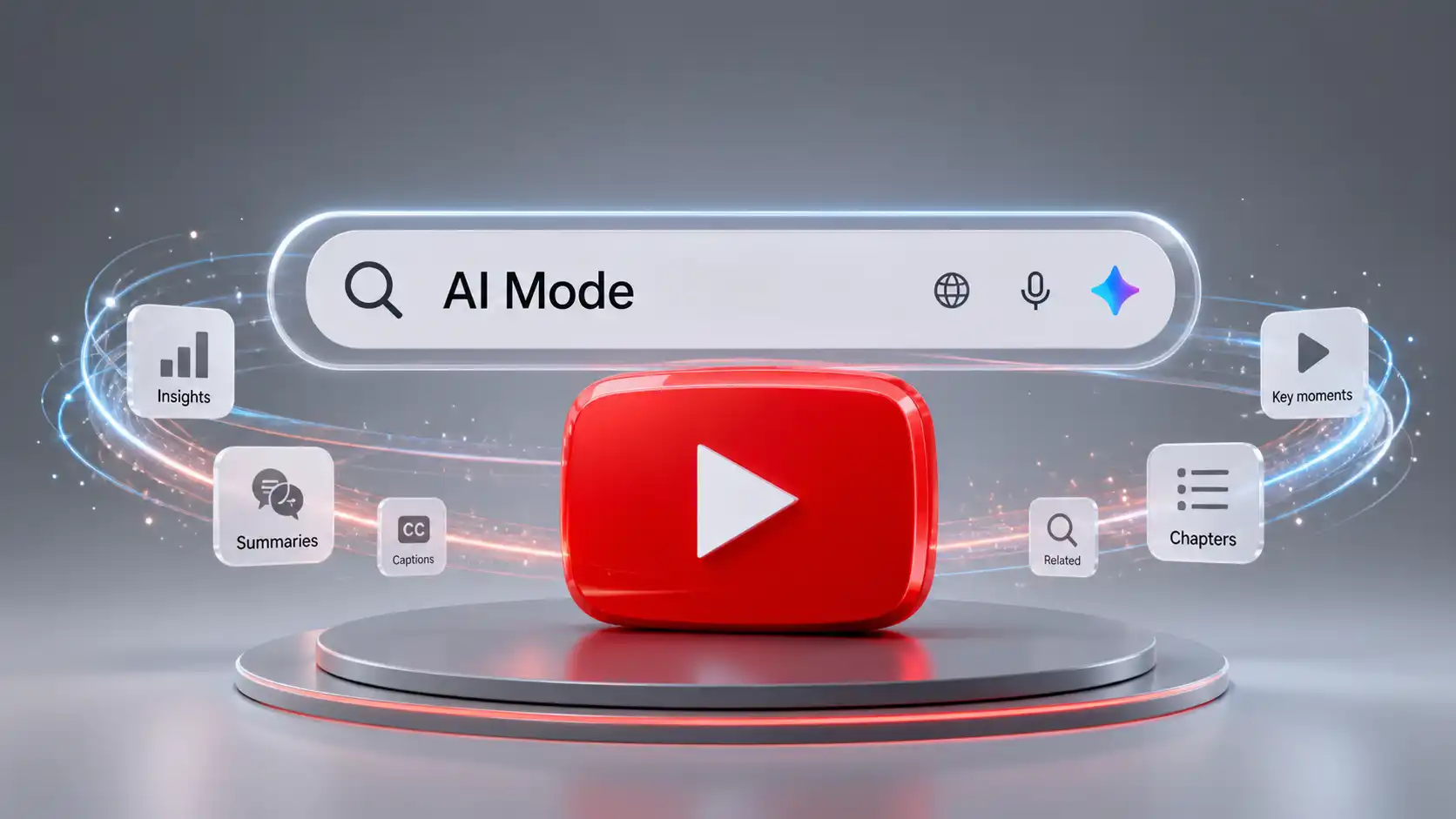
Google’s latest YouTube experiment is small in distribution and large in meaning. Ask YouTube turns video search from a list of links into an AI-generated answer page built from text, Shorts, long-form videos, clips and follow-up prompts. For now, it is limited: English, United States, desktop, eligible YouTube Premium users, opt-in only. Yet the product direction is plain. Google is extending the logic of AI Mode from web search into the world’s dominant video platform, where answers are watched, skimmed, compared, trusted, disputed and monetized in ways that ordinary search never fully captured. YouTube’s own help page says the feature draws on real-time information from the web and YouTube content, blends formats, and lets users refine the first question inside the same session. It also says generated responses may be inaccurate, may hallucinate, and should not be relied on for medical, legal, financial or other professional advice.
Table of Contents
Ask YouTube marks a shift from retrieval to guided viewing
Ask YouTube is not only a new button near the search bar. It changes the shape of search inside YouTube. Traditional YouTube search begins with a query, ranks videos, displays thumbnails, and leaves the user to decide which title, creator, duration and visual cue deserve a click. Ask YouTube starts with a question and returns a structured response. The answer can include written guidance, relevant clips, long-form videos, Shorts, channel names, video titles and suggested follow-up questions. The interface does not merely point toward videos; it tries to assemble an answer from them.
That difference matters because YouTube is not a document index. It is a living library of demos, explainers, reviews, classes, podcasts, music, comedy, news clips, product comparisons and creator commentary. Many people already use YouTube as a search engine when they want to see how something works. A recipe query on Google might return a web page, a shopping unit, a recipe card and a video carousel. The same query on YouTube often returns a row of creators, styles, durations and production qualities. Ask YouTube sits on top of that behavior and says the platform can do more than list candidate videos. It can interpret the task, break it into steps, and place different video formats into an answer path.
YouTube’s support page gives the example of planning a three-day road trip from San Francisco to Santa Barbara. That is not a narrow keyword query. It is a planning request with implied constraints: route, stops, time, meals, scenery, practical tips and perhaps personal preference. A list of videos may still be useful, but a conversational response can arrange the journey into an itinerary. The same logic applies to recipes, workouts, repairs, study topics, travel planning, product research and local recommendations. For high-intent searches, the query becomes less like a search term and more like an instruction.
The experiment also marks a shift in how Google thinks about video discovery. The platform has spent years using recommendation systems to predict what a viewer might watch next. Ask YouTube adds a more explicit layer: the viewer says the task, the system builds a response, and the response points back into videos. This does not replace recommendations, subscriptions, home feed signals or standard search ranking. It adds another discovery path. A creator may not win the top keyword slot but may still appear inside a guided answer because a clip or segment directly answers part of a user’s question.
That will alter what “discoverability” means. The old YouTube search model rewarded metadata, relevance, engagement and quality signals. The new layer still depends on those signals, according to YouTube’s support material, but it also requires the system to understand whether a specific moment in a video answers a specific sub-question. A long video may gain more value if its chapters, spoken content, captions, demonstrations and structure make it easy for AI to locate the right segment. A Short may appear not because it is the whole answer, but because it quickly illustrates one piece of the answer.
The timing is also notable. Google has spent the past two years turning Search into a more conversational, answer-led product through AI Overviews and AI Mode. Bringing that pattern to YouTube means the company is not treating AI search as a single product. It is treating it as a shared interface layer across surfaces. Search, YouTube, Gemini, Google Ads, Shopping, Lens, Maps and creator tools are all being pulled toward a model where the user describes intent and AI arranges the next step.
That is the real story. Ask YouTube is not a finished consumer product at global scale. It is a visible test of a deeper idea: Google wants its largest content surfaces to answer complex questions without forcing users to translate intent into keywords. In video, that change is especially powerful because the answer can be watched, not only read.
The limited rollout is deliberate, not accidental
The experiment’s restrictions are strict. YouTube says conversational search is currently available in English in the United States to eligible YouTube Premium users who opt in through YouTube’s experimental features page. Users must be at least 18 years old, must be Premium members, and must use YouTube on a computer. Availability may change.
Those limits are not random product friction. They are risk controls. Generative AI in search creates technical, legal, trust and business questions. YouTube is a scale product with billions of viewers, millions of creators and sensitive categories ranging from health and finance to politics, education and children’s content. A broad launch before Google understands quality, cost, latency, user behavior and creator impact would create avoidable problems.
Premium users are a useful test population. They are logged in, more likely to spend time on YouTube, easier to invite into experimental features, and less dependent on immediate ad monetization during the test. The desktop restriction also makes sense. Conversational search pages with text, clips, galleries and follow-up boxes are easier to test on a larger screen. Mobile behavior is more compressed and more habit-driven. On phones, YouTube competes with short attention spans, vertical video sessions and thumb-driven feeds. On desktop, the planning and research use cases are more natural.
Age gating also matters. YouTube has a complicated safety burden around minors. A system that generates synthetic answers from videos and web information must be tested carefully before being exposed to younger audiences, especially on topics where the system might misunderstand nuance or produce a plausible but unsafe answer. YouTube already warns that conversational search can make things up and misinterpret language. The experiment’s current age limit reflects that risk.
Opt-in design gives Google feedback from users who choose to test the feature rather than from all users who might feel a new search experience has been imposed on them. That matters for user trust. AI Overviews have already drawn complaints from publishers, users and regulators because they appear in core search results. An opt-in YouTube experiment lowers the initial pressure. It lets YouTube watch how users ask questions, which sources the answer uses, where users click, whether they play clips, whether they continue with follow-up prompts, and where answers fail.
The rollout is also a business experiment. Generating answers is more expensive than ranking links. The system has to retrieve relevant content, understand a query, identify usable video segments, produce written text, render clips and maintain a conversational session. If a user asks follow-up questions, the cost may rise. Google has the infrastructure advantage to absorb early testing, but scale economics still matter. YouTube is a revenue machine because standard search and recommendations can be monetized at huge volume. AI-generated search pages must prove they improve discovery, retention, subscription value, advertiser value, or all of those at once.
Google’s wider financial context explains why the company is willing to test. Alphabet told investors in its Q1 2026 earnings call that Search & Other revenue grew 19%, AI Mode and AI Overviews were tied to higher Search usage, paid subscriptions reached 350 million with YouTube and Google One as major drivers, and first-party models processed more than 16 billion tokens per minute via direct API use. That does not prove Ask YouTube will succeed, but it shows why Google has confidence in putting AI interfaces into more products.
The limited launch also gives YouTube room to study creator impact. If conversational answers send more viewers to more creators, the feature becomes easier to defend. If it answers user questions so completely that fewer videos get watched, the creator economy will push back. The most useful version for YouTube is not an answer box that replaces videos. It is a guide that increases the chance that users find the right video faster, watch more relevant segments, and discover creators they might otherwise miss.
The test is narrow because the stakes are wide. Ask YouTube touches search quality, creator distribution, ad formats, subscription value, AI safety, copyright, data use and user trust in one interface.
Google is extending AI Mode logic into video
Google introduced AI Mode as a more advanced version of AI-powered search, aimed at questions that need exploration, comparisons, reasoning and follow-ups. Its support page says AI Mode divides a question into subtopics and searches for each one at the same time, then returns an AI-powered response with links. Google’s Search Central documentation says AI Mode and AI Overviews may use a “query fan-out” technique, issuing related searches across subtopics and data sources to develop a response.
Ask YouTube looks like a video-native application of that logic. A planning query does not have one best video. It has subtopics. A road trip answer may need a scenic route clip, a restaurant recommendation, a hotel review, a local travel guide, a driving-time estimate, a packing tip and a map-like sequence. A recipe question may need ingredient ratios, technique, timing, substitutions, texture cues and plating. A product research question may need an explainer, a hands-on review, a durability test, a comparison and perhaps a short demo. A single ranked list struggles to express those components. A generated answer can group them.
Video makes query fan-out more complex. Web pages can be parsed by headings, paragraphs, tables and schema. Videos contain speech, captions, scenes, visual demonstrations, timestamps, comments, metadata, channel trust signals and engagement patterns. For Ask YouTube to work well, Google has to connect a user’s question not only to videos but to segments. The official help page says videos in the response can play on hover starting at the timestamp most relevant to the question. That is a large change. It turns the video timeline into a searchable answer surface.
The technology behind this does not need to be mysterious. YouTube already has transcripts, captions, chapters, comments, topic labels, watch patterns, engagement signals, visual understanding, music recognition, speech recognition and creator metadata. Google also has Gemini models with multimodal abilities and a deep search index. Ask YouTube can combine those systems. The hard part is not retrieving any relevant video. The hard part is selecting the right evidence, placing it into the right sequence, explaining it accurately, and avoiding the illusion that an AI answer is more certain than the underlying sources.
This is where AI Mode’s web-search roots and YouTube’s video-search reality meet. AI Mode is designed to reduce the burden of multiple searches. Ask YouTube reduces the burden of opening multiple videos and scanning for the useful part. The user benefit is obvious when the answer is factual, practical and well-sourced. The user risk is also obvious when the answer is wrong, when a selected clip lacks context, or when a confident text summary oversimplifies what a creator said.
Google’s Search Central documentation says no special technical requirements are needed for websites to appear in AI Overviews or AI Mode, beyond being indexed and eligible for Search with snippets. It also says the same SEO best practices remain relevant. YouTube’s equivalent is less formally documented for creators, but the direction is similar. Videos that are understandable, well-structured, clearly titled, accurately described, captioned, chaptered and trusted by viewers will be easier for an AI system to parse and cite.
The query fan-out idea also changes the definition of competition. In standard YouTube search, creators compete for the top result on a query. In guided search, creators may compete for sub-intents within a query. A travel creator may not be the best overall source for “San Francisco to Santa Barbara road trip,” but a specific clip about a coastal stop may become the chosen segment for one part of the itinerary. A cooking creator may not own “how to make ramen,” but a 45-second moment showing noodle texture may be selected as a useful proof point.
AI Mode turns search into decomposition. Ask YouTube turns video discovery into decomposition plus playback. That is the strategic bridge between Google Search and YouTube.
The product fits YouTube’s long move toward AI-native viewing
Ask YouTube did not appear in isolation. YouTube has been adding AI features across viewing, creation, advertising and creator analytics. In March 2026, YouTube said its conversational AI tool for videos had expanded to smart TVs, letting viewers select an “Ask” button while watching and use a remote microphone for questions about the video. YouTube described that earlier tool as a way to engage more deeply with the content being watched.
That matters because there are now two related but different AI paths on YouTube. One path answers questions about a video already in front of the viewer. The other, Ask YouTube, answers a broader search question before a viewer has chosen what to watch. The first path is about understanding content. The second is about discovering content. Both push YouTube away from passive playback and toward interactive video knowledge.
The creator side is also moving in the same direction. At Made on YouTube 2025, Google said AI tools were coming to Shorts, YouTube Studio, podcast clips, auto-dubbing and other creator workflows. YouTube Studio was set to get Ask Studio, a conversational tool for channel insights, along with title testing and auto-dubbing improvements. That means AI is being inserted on both sides of the platform: creators use AI to produce, analyze and package content; viewers use AI to find, understand and compare content.
Advertising is being pulled into the same system. YouTube Creator Partnerships, announced for the 2026 NewFronts, uses Gemini to help advertisers discover creators, with YouTube saying the product has access to more than 3 million creators in the YouTube Partner Program. The announcement also says Gemini will analyze audience similarity, organic brand mentions and subscriber growth to suggest creators for campaigns. In other words, AI is not just helping users find videos. It is helping advertisers find creators.
This creates a larger product pattern. YouTube is becoming less like a video archive and more like an AI-mediated media system. The platform is learning to answer questions, identify clips, power creator workflows, translate and dub content, match brands to creators, and help advertisers package campaigns. Ask YouTube is one piece, but it is highly visible because it changes the first interaction many users have with the platform: search.
The move also matches YouTube’s scale problem. YouTube’s press page says more than 20 million videos are uploaded daily, YouTube has been number one in U.S. streaming watch time for nearly three years as of January 2026, and Shorts averages more than 200 billion daily views. At that scale, discovery is not a nice product feature. It is the operating system of the platform. The harder it becomes to find the right video, the more value there is in AI-guided discovery.
The classic YouTube problem is abundance. The new problem is answer quality inside abundance. Users want the best explanation, the clearest demo, the most trustworthy review, the safest advice, the funniest clip or the most current travel tip. Standard ranking can get close, but it still asks the user to do much of the interpretive work. Ask YouTube moves some of that work into the interface.
The risk is that AI mediation may flatten creator difference. YouTube is valuable partly because creators have voices, styles, personalities, communities and points of view. An AI answer that extracts only utility from videos could reduce a creator to a segment provider. A healthy Ask YouTube experience must preserve attribution, give visible credit, drive playback, and avoid stripping away context. YouTube’s support page says responses show video title and channel details. That is the minimum. The actual test will be whether users notice creators and whether those creators gain meaningful watch time.
The AI-native YouTube is not only about smarter answers. It is about who gets surfaced, who gets watched, who gets paid, and who becomes trusted when the interface speaks first.
User intent becomes the main interface
Traditional search forces users to compress intent into keywords. A person planning a trip may type “Santa Barbara road trip,” “best stops Highway 1,” “Solvang food,” “Malibu to Santa Barbara drive,” “Channel Islands day trip,” and “coffee Santa Barbara.” Ask YouTube lets the user state the whole task. That is a different interaction model. The query becomes a prompt.
This change favors natural language. YouTube’s own example uses a full instruction rather than a keyword cluster. TechCrunch reported that Ask YouTube can return step-by-step results combining text, short videos and longer videos, with follow-up questions such as “Where can I get good coffee?” inside the same session. The product is built for multi-step intent.
Multi-step intent is common on YouTube. A person rarely searches for a repair video because they want entertainment. They may need to fix a leak, replace a part, compare tools, avoid a mistake, or decide whether to call a professional. A fitness viewer may need a workout for a specific injury, available equipment and time limit. A student may need a concept explained at a certain level of difficulty. A buyer may need a product comparison but may also care about durability, setup, noise, compatibility and price. Ask YouTube lets the user put those constraints into the first query instead of running a string of searches.
For YouTube, that gives stronger intent data. Keyword search reveals interest. Conversational search reveals context. A query like “best camera for travel” is broad. A prompt like “compare compact cameras for hiking, low light, no heavy lens, under $1,000” is much richer. It tells YouTube what content to retrieve, but it also tells Google what the user is trying to decide. That data is valuable for search quality, product development, creator matching and eventually ad targeting, even if YouTube says conversations are not being used to show ads during the experimental phase.
The follow-up box matters because it keeps the user inside a reasoning loop. Standard search sessions scatter across tabs, videos, comments and external sites. Conversational search makes the session continuous. A user can refine the answer, ask for local spots, request alternatives, narrow by budget, or ask for a beginner version. Each follow-up teaches the system which parts of the answer were insufficient. Over time, those patterns may shape ranking and answer formats.
This is why Ask YouTube is likely to matter more for practical and research-oriented queries than for pure entertainment. People may still search “funny dog video” or “new music video” in old ways. But when the query has a task, an answer page becomes more useful. Travel, food, learning, DIY, software tutorials, product research, local discovery, fitness, finance education and current event background are the natural early zones.
The product also fits how younger users already search. Many people search visually and socially, not only through web pages. They want proof, tone, personality and demonstration. A product review from a trusted creator may be more persuasive than a manufacturer page. A cooking technique may be easier to understand in a 20-second clip than in a paragraph. Ask YouTube can turn that behavior into a more structured experience.
There is a catch. Natural-language intent is harder to satisfy because it is more specific. If a user asks for “a beginner-friendly, low-sugar, high-protein breakfast meal prep video that does not use dairy,” the system has to understand nutrition terms, video content, ingredients and creator claims. If it gets the details wrong, the answer fails. Standard search can hide behind lists. Conversational search makes an explicit recommendation.
A conversational interface raises user expectations. Once YouTube answers in prose and selected clips, the user may treat the response as a judged answer, not as a neutral list. That gives Google more control and more responsibility.
The feature changes the role of thumbnails and titles
YouTube culture has long rewarded strong thumbnails and titles. A clickable title can create curiosity. A thumbnail can signal personality, quality, emotion or urgency. In standard search and recommendations, packaging is a major part of discovery. Ask YouTube may reduce the dominance of that packaging for some searches because the first screen becomes an answer, not a wall of thumbnails.
This does not mean thumbnails and titles stop mattering. YouTube’s support page says clips in conversational responses show video title and channel details, and YouTube’s standard search ranking still considers title, tags, description and video content as relevance signals. But an AI answer page puts more weight on whether the content itself contains extractable value. A title may win a click, but a segment must answer the question.
Creators should take this seriously. In a traditional feed, a title like “I tried the viral method and was shocked” can work if the thumbnail and audience relationship carry the promise. In an AI-guided search environment, vague packaging gives the system less explicit information. A video can still perform well with audiences, but the model may have a harder time knowing which sub-question the video answers. Clear chapters, captions, spoken summaries, descriptive titles and accurate descriptions become more valuable.
This is a return to substance, but not a rejection of style. YouTube’s best creators know that packaging gets a viewer into a video and delivery keeps the viewer there. Ask YouTube adds a third layer: extractability. The system must be able to identify the useful moment. A creator who makes a 25-minute repair guide with no chapters, vague section transitions and buried instructions may lose ground to a creator who clearly names each step, shows the tool, explains the mistake to avoid, and uses chapters or on-screen text.
The change may also affect Shorts. A Short can be an answer unit. If a short clip demonstrates a knife technique, a software shortcut, a travel stop, a product flaw or a historical fact, it may fit neatly into a generated response. Shorts have often been viewed as discovery bait for longer engagement. Ask YouTube could also turn them into compact evidence units inside answers. That would make Shorts more useful for practical search, not only entertainment and trend participation.
For creators, the central question becomes: Can the AI understand what this video is good for? That is not the same as asking whether the video is good. A charismatic podcast conversation may contain excellent insights, but if the relevant point is buried in an hour-long discussion with weak metadata, the system may not select it. A less famous creator with a clear, well-labeled, tightly focused explanation may surface more often for task-based queries.
Brands face the same issue. Product videos with glossy language and weak specifics may be less useful than demos that answer exact buyer questions. An AI answer may look for comparisons, use cases, limitations and evidence. A video that admits who a product is not for may become more trustworthy than a video that only praises it. Ask YouTube may reward content that is easier to verify, segment and match to intent.
That is not guaranteed. Ranking systems often produce unintended incentives. Creators may begin over-structuring videos for AI, stuffing descriptions with long prompt-like phrases, or manufacturing obvious answer blocks. YouTube will need to balance creator adaptation against spam. Still, the deeper trend is clear: the useful part of a video is becoming more searchable than the video as a whole.
YouTube’s existing ranking signals still matter
Ask YouTube does not erase YouTube search. The help page says video clips for conversational search are selected in a way similar to standard YouTube search, prioritizing relevance, engagement and quality. It also says playlists and Premium-exclusive content are not currently eligible to appear in conversational search responses.
That link to existing search systems is crucial. YouTube’s standard search documentation says the ranking system prioritizes relevance, engagement and quality, and that relevance includes how well a title, tags, description and video content match a query. Engagement includes signals such as watch time for a video on a particular query. Quality includes signals that help identify channels demonstrating expertise, authoritativeness and trustworthiness on a topic. YouTube also says it does not accept payment for better organic search placement and does not treat Google-owned content more favorably than creator content.
In practical terms, Ask YouTube likely sits above a retrieval and ranking pipeline that still depends on the platform’s long-standing signals. The AI layer may decide how to synthesize and display results, but it needs candidates. Those candidates come from systems built to detect relevance, viewer satisfaction, content quality, safety and personalization. The new layer does not remove ranking; it adds answer generation and segment selection.
This should calm one fear and raise another. It should calm the fear that Ask YouTube is pure chatbot output detached from YouTube’s search systems. It is not. YouTube explicitly says the ranking system for conversational search prioritizes the same core signals. The raised concern is that those signals now feed a more powerful presentation layer. If the answer page chooses three videos, those choices carry more weight than a ranked list of twenty thumbnails. The winners may get stronger visibility; the skipped creators may be less visible.
Engagement signals are also complicated in a clip-based answer. Suppose a user watches a 30-second extracted moment from a 12-minute video. Is that a strong signal? Does it count as watch time? Does it lead to a full video view? Does the creator gain monetizable engagement? YouTube has not fully explained how conversational search interactions will flow into creator analytics or revenue. Those details will matter to creator trust.
Quality signals may matter more for sensitive topics. YouTube already handles health, news, elections, finance and safety topics with more scrutiny than entertainment. A conversational answer that gives health or financial advice would create serious risk, so YouTube’s disclaimers are prominent. The likely path is that Ask YouTube becomes more cautious in high-stakes areas, perhaps showing more links, fewer synthetic claims, or more source diversity. Google’s AI Mode support page says AI Mode may provide web links if confidence in the quality or helpfulness of an AI response is not high enough. A similar principle would make sense on YouTube.
Personalization may also remain in the background. YouTube search results can differ by user when watch and search history are turned on. Ask YouTube responses may eventually vary by viewing habits, language, location, subscribed creators or preferred content type. That could improve relevance, but it also raises questions about filter bubbles and fairness. A user asking for political background, health explanations or product advice should not get a narrow answer only because their watch history points in one direction.
The best version of Ask YouTube would use personalization lightly for preference-sensitive tasks and carefully for factual tasks. It should personalize a travel itinerary by interests. It should not personalize medical facts or civic information in ways that distort accuracy. The ranking problem becomes a governance problem once the interface turns rankings into answers.
The first big use cases are practical, not passive
Ask YouTube is built for queries that need assembly. The strongest early use cases are practical tasks where video adds evidence and text adds structure. These include travel planning, recipes, repairs, product research, studying, software learning, fitness routines, local discovery, hobby tutorials, and comparison shopping. The common pattern is that the user wants to do something, not only watch something.
YouTube is already strong in these categories because video reduces ambiguity. A written recipe can describe texture; a video can show it. A repair guide can list parts; a video can show the exact motion. A software article can name a menu; a screen recording can show the click path. A travel blog can recommend a stop; a vlog can show what it feels like at street level. Ask YouTube packages those strengths into a guided response.
The “step-by-step” quality matters. TechCrunch and Search Engine Land both described the feature as producing structured responses for planning-style prompts, including a route example with local tips, must-see stops and follow-up questions. A list of videos is often too raw for such tasks. A user does not know whether the answer is in minute two or minute twenty. Ask YouTube can reduce that search cost.
For learning, the feature could become especially sticky. Students often search YouTube for math, coding, history, science, language learning and test prep. A conversational search answer can begin with a short explanation, then point to clips at the exact moment a concept is explained. It can also ask follow-ups. A beginner can say “explain it more slowly,” “show an example,” or “compare it with the previous concept.” If done well, YouTube becomes closer to a tutor interface while still drawing from creators.
For product research, the implications are large. YouTube is already a trusted space for reviews, unboxings, long-term tests and buyer guides. Ask YouTube could synthesize pros, cons, comparisons and creator clips. That will interest advertisers. It will also create pressure around fairness and disclosure. If an answer includes sponsored creator content, affiliate-heavy videos or brand-funded reviews, users need clear signals. Google says conversations are not being used to show ads during the experimental phase, but that does not answer how sponsored videos inside the content base are handled.
For local discovery, Ask YouTube could become a bridge between Search, Maps and video. A query about coffee on a road trip is not only a YouTube query. It overlaps with local business data, maps, reviews and creator travel content. Google has a strategic advantage here because it controls multiple surfaces. A video answer could eventually point to a creator clip, a Maps listing, a booking action and a sponsored local result. The current test is simpler, but the direction is visible.
For entertainment, the use case is weaker but still meaningful. A user might ask for “funny baby elephant clips,” a “short history of Apollo 11,” or “best behind-the-scenes moments from a film.” The Verge reported seeing suggested prompts like those in the interface. The system may work as a curator, not only a search tool. It can group videos by theme and format.
The dividing line is intent density. A dense intent has constraints, steps and decision points. Ask YouTube shines there. A loose intent may still work better through recommendations, trending videos, subscriptions or standard search. Conversational search is not the end of YouTube browsing. It is a new mode for moments when browsing is too slow.
The interface could reduce search friction but raise answer dependence
Ask YouTube solves a real user problem: search fatigue. Anyone who has opened five videos to find one clear answer knows the cost. You click a promising title, sit through an intro, skip ads, scrub the timeline, scan comments, leave, try another video and repeat. A generated answer that points to the relevant timestamp is a genuine improvement when it works.
The risk is answer dependence. When a platform summarizes for the user, the user may stop checking sources. YouTube tells users to check important information in more than one place, ask multiple versions of a question, and send feedback if something looks wrong. Those are sensible instructions, but product behavior often beats warnings. If the answer appears fluent, users may trust it.
This is the same tension that has surrounded Google AI Overviews and AI Mode in web search. Pew Research Center found that Google users in its March 2025 dataset were less likely to click links when an AI summary appeared. Users clicked a traditional search result link in 8% of visits with an AI summary, compared with 15% of visits without one, and clicked a link in the summary itself in 1% of visits. That study covered Google Search, not Ask YouTube, but the behavioral warning is relevant. When the answer is placed up front, clicks can fall.
YouTube is different because the content itself is video. If the answer includes playable clips and titles, the user may still engage with creator content. But the experience could still reduce full video exploration. A user may watch only the extracted moment and never visit the full video page. That could be good for user efficiency and bad for creators whose work depends on full-session viewing, audience connection and monetization.
Answer dependence also changes how users evaluate authority. In standard YouTube search, users can judge the channel, thumbnail, views, comments, title and presentation. In Ask YouTube, the AI response may become the primary authority. The creator becomes supporting evidence. This creates a subtle shift in trust from creator to platform. If the AI summary misstates the creator’s point, the user may never know.
The risk is higher for complex subjects. A fitness movement, medical symptom, legal process, financial decision, political event or scientific dispute may require caveats. A video clip can be removed from context. A creator may state a limitation before or after the selected segment. The AI may summarize the conclusion without the warning. YouTube’s support page explicitly says the system may miss nuance, sarcasm and irony. That is not a minor footnote. It is one of the central product risks.
The design challenge is to keep the convenience without hiding uncertainty. The answer should show sources clearly, encourage playback, reveal why a clip was selected, and make it easy to compare sources. It should use restraint in sensitive areas and avoid overconfident language. It should show when the answer is based on YouTube videos, web information, or both. A good AI search interface should make evidence easier to inspect, not easier to ignore.
The business pressure will push toward smoother answers. The trust pressure should push toward inspectable answers. Ask YouTube’s long-term quality will depend on which pressure dominates.
Accuracy is the product’s hardest editorial problem
YouTube’s own wording is unusually direct. It says generative AI “can and will make mistakes.” It says the system may make things up, may hallucinate, may invent facts not present in source videos, may misunderstand language, and may fail to recognize sarcasm and irony. That candor is useful, but it also defines the editorial challenge.
Accuracy in Ask YouTube is not a single problem. It has layers. The system must understand the user’s intent. It must retrieve the right content. It must identify trustworthy videos. It must select the right segments. It must summarize them faithfully. It must avoid adding unsupported claims. It must handle disagreement between sources. It must express uncertainty when sources conflict or when no source is strong enough. It must avoid unsafe guidance in high-stakes topics.
Errors can enter at any layer. A query about “bats” may refer to animals or sports equipment. YouTube gives that type of ambiguity as an example of possible misunderstanding. A query about a future sports event might produce a prediction framed as fact. A product query might confuse generations of a device. The Verge reported that one Ask YouTube test answer incorrectly claimed the old Steam Controller had no joysticks, although it had one. That kind of error is not catastrophic, but it is instructive. The system can sound right while being wrong.
Video adds special failure modes. A transcript may contain errors. Auto-captions may mishear names, measurements or technical terms. A creator may correct themselves later in the video. A clip may show a joke, a sponsored claim, a personal opinion, an outdated recommendation or a dangerous method. The AI may not know which parts are reliable. Even when the source video is good, the answer may compress it badly.
Google Cloud’s explanation of hallucinations says AI hallucinations are incorrect or misleading results generated by AI models, and that they can arise from incomplete or flawed training data, incorrect assumptions, biases or lack of proper grounding. It also notes that lack of grounding can cause models to generate plausible but factually incorrect outputs, including fabricated links. Ask YouTube’s design tries to ground responses in YouTube and web content, but grounding reduces risk; it does not eliminate it.
The product needs an editorial stance. Does it prefer established institutional sources for health? Does it elevate creator expertise for hands-on topics? Does it diversify viewpoints for contested issues? Does it avoid creating answers for categories where video evidence is weak? Does it explain when it is using real-time web data rather than video content? These are not only technical choices. They are editorial choices expressed through ranking and generation.
YouTube’s standard search quality signal includes expertise, authoritativeness and trustworthiness. That may be enough for ordinary rankings, but generated answers require stronger guardrails. A ranked list can include mixed quality because the user chooses. A synthesized answer can blend sources in a way that hides disagreement. If a low-quality claim appears inside a fluent response, it gains platform authority.
A cautious product would sometimes refuse to synthesize. It might return “I found videos discussing this, but the sources disagree” or “For this topic, check professional sources.” That may reduce smoothness, but it increases trust. YouTube already tells users not to rely on generated responses for medical, legal, financial or professional advice. The next step is for the product itself to embody that caution, not only disclose it.
Accuracy is not a feature added after launch. It is the product. If users cannot trust the answer enough to act, Ask YouTube becomes a novelty. If they trust it too much when it is wrong, it becomes a liability.
Creator discovery becomes more algorithmic and more answer-shaped
YouTube says Ask YouTube creates an additional path for viewers to discover creator content. That is the promise creators will care about most. If AI search sends viewers to more relevant videos, smaller creators may benefit. If it centralizes attention around a smaller set of sources, they may lose.
The impact will not be even. Creators who make practical, evergreen, well-structured content may be best positioned. A video that clearly answers a common question, uses accurate titles, includes chapters, speaks in a direct sequence and earns strong watch-time signals is likely easier to surface in an answer. Creators who rely on personality, long narrative arcs, live conversation or entertainment may see less direct benefit from Ask YouTube unless their content is also segmentable.
This could create a new form of creator SEO. Not old keyword stuffing, but answer readiness. Creators may write clearer titles, structure videos around specific questions, add chapters with descriptive labels, clean up captions, state conclusions plainly, compare options explicitly, include timestamps, and use descriptions that describe the actual value of the video. The goal is not to trick AI. It is to make the content legible.
There is also a risk of homogenization. If creators believe AI search favors step-by-step formats, they may produce more rigid content. YouTube already has many copycat formats because creators adapt to distribution incentives. Ask YouTube could create another incentive layer. The platform will need to ensure that creative, expert and original content does not disappear beneath formulaic answer blocks.
The effect on new creators is uncertain. Standard YouTube search can reward relevance even if a channel is not famous, but engagement and trust signals often favor established channels. Ask YouTube may help new creators if it identifies a highly relevant clip and credits it. It may hurt them if the system leans heavily on channels with stronger historical trust. YouTube’s support page does not give enough detail to know.
For creators, the immediate advice is practical. Make videos that answer real questions. Use spoken clarity. Avoid burying the answer. Add chapters where useful. Keep descriptions accurate. Show evidence. Correct outdated videos. Make the channel’s area of expertise clear. Treat comments and follow-up videos as signals of user need. The AI layer will likely reward videos that make usefulness easy to detect.
Analytics will become a major issue. Creators will want to know when their clips appear in Ask YouTube, how many impressions they receive, whether users watched the clip or full video, whether they subscribed, and whether revenue was generated. If YouTube cannot give creators visibility, trust will suffer. Creators already operate under opaque recommendation systems. A generative answer layer adds opacity unless reporting improves.
Attribution is just as important. If an AI answer borrows a creator’s explanation but users do not click, the creator may feel used. If the answer prominently displays the creator, starts playback at the right moment, and sends viewers into full videos, the feature may feel like a discovery win. The difference is design.
Creator economics depend on attention. Ask YouTube can redistribute attention in subtle ways. It may turn one long video into multiple answer fragments. It may surface older evergreen videos. It may route users to Shorts before long-form. It may favor videos with better captions. It may give niche experts a new path into broad queries. The winners will be creators whose content is not only entertaining or informative, but machine-readable as useful evidence.
The ad model is absent for now but not forever
YouTube says conversations in the experimental phase are not being used to show ads. That is a narrow statement, and the wording matters. It does not say Ask YouTube will never include ads. It says that during the experimental phase, user conversations are not being used to show ads.
Google’s broader AI search monetization path points in a clear direction. In May 2025, Google said it was expanding Search and Shopping ads in AI Overviews to desktop in the United States and would expand ads in AI Overviews in English to select countries. It also said it was starting to test ads in AI Mode, where relevant ads may appear below and integrated into AI Mode responses. If AI Mode can carry ads, Ask YouTube likely can too, though the format may differ.
The advertising question is not whether ads can fit. It is how they can fit without breaking trust. A conversational answer feels more editorial than a search results page. When an ad appears inside or near that answer, users need clear separation. If a user asks for “best budget camera for hiking,” a sponsored placement may be acceptable if labeled and relevant. If the answer appears to recommend a product because an advertiser paid, trust erodes.
YouTube has multiple possible ad paths. It could show sponsored videos inside an answer. It could display ads below the response. It could surface creator partnership content. It could connect to shopping units. It could let advertisers bid on AI-assisted intent categories. It could support local ads for travel and restaurants. It could eventually integrate with Maps, Shopping or Google Ads campaigns. Each path has different disclosure needs.
The most sensitive version involves creator content. YouTube is already a place where creators review products, participate in sponsorships, use affiliate links and make brand deals. If Ask YouTube summarizes creator videos for commercial queries, it must understand sponsorship context. A video that appears independent may be sponsored. A creator may disclose a partnership in the video, description or pinned comment. If the AI extracts only the praise and omits disclosure, the user receives a distorted signal.
This is why YouTube Creator Partnerships matters. YouTube is building AI-assisted tools for advertisers to find creators and run campaigns. As those tools mature, the line between organic creator discovery and paid creator distribution may become harder for users to read unless the interface is explicit. A future Ask YouTube page for a product category could include organic reviews, sponsored creator clips, Shopping ads and brand content. That would be commercially powerful and editorially delicate.
The subscription angle is also relevant. Making Ask YouTube available first to Premium users adds perceived value to the paid tier. Alphabet’s Q1 2026 call said paid subscriptions reached 350 million across consumer services, with YouTube and Google One as key drivers. If AI features become a subscription benefit, YouTube may have two monetization routes: ads for free users and AI perks for paid users. That dual model is attractive because YouTube already earns from both advertising and subscriptions.
The risk is incentive conflict. A user wants the best answer. A creator wants fair discovery. An advertiser wants placement. Google wants revenue and engagement. The interface must handle those interests cleanly. AI answers need ad transparency stronger than classic search ads because the answer itself carries implied judgment.
YouTube Premium is becoming a testbed for AI features
YouTube Premium has long been sold around ad-free viewing, background play, downloads and music benefits. AI features may give it a new role: early access to advanced discovery and interaction. Ask YouTube fits that pattern. It is available first to eligible Premium users who opt in.
This is strategically useful for Google. Premium users provide a controlled pool for testing. They are more likely to be signed in and more committed to YouTube. They may be more tolerant of experiments because the opt-in setting frames the feature as unfinished. Their behavior also helps Google understand whether AI discovery increases satisfaction for high-value users.
Premium access creates a subtle expectation. If subscribers get AI features first, they may come to see YouTube Premium as a smarter version of YouTube, not only an ad-free version. That could strengthen retention. It could also create a split experience in which advanced search and discovery tools sit behind a paid tier, at least for early phases.
Google appears aware of the growth value of subscriptions. Alphabet’s Q4 2025 release said YouTube revenue across ads and subscriptions exceeded $60 billion for the full year, and paid subscriptions across consumer services exceeded 325 million at year-end, led by Google One and YouTube Premium. By Q1 2026, the company reported 350 million paid subscriptions. AI features give Google another reason to bundle value into these subscription relationships.
The business logic is straightforward. If AI search is expensive to run, Premium users may subsidize early usage. If the feature increases YouTube engagement, Premium users become even more valuable. If the feature proves safe and useful, Google can later expand it to non-Premium users with ads, usage limits, or a lighter version. TechCrunch reported that Google is working to make the feature available to non-Premium users as well.
This pattern mirrors a wider AI industry problem. Advanced AI features cost money to compute, and companies need a mix of subscriptions, ads, enterprise licensing or hardware tie-ins to fund them. Google has an advantage because it can distribute AI across massive consumer surfaces and monetize through existing systems. YouTube Premium is one of those systems.
For users, the Premium-first rollout may be mildly frustrating but not surprising. Google often tests features with smaller audiences before broader release. For creators, the bigger question is whether Premium-only access limits early discovery benefits. If only a small pool of users can see Ask YouTube, creator impact will be limited at first. The more meaningful impact comes if the feature reaches free users on mobile.
There is also a product learning issue. Premium desktop users are not the whole YouTube audience. They may be older, more affluent, more engaged and more research-oriented than casual mobile users. Their behavior may not predict how teenagers, global users, free users, or TV viewers use conversational search. YouTube will need broader testing before drawing final conclusions.
Premium is the lab. The real disruption begins if Ask YouTube becomes a default search mode for ordinary users. That is the difference between a feature experiment and a platform shift.
The desktop-first design says a lot about the use case
Ask YouTube currently runs on computer for eligible users. That is a revealing constraint. Desktop YouTube is often used for longer sessions, research, work-adjacent learning, planning, multi-tab browsing and full-screen instructional viewing. The feature’s early examples fit that environment.
A desktop answer page can display text, clips, galleries and follow-up prompts without feeling cramped. It can support comparison and scanning. A user planning a trip or learning a skill may keep the answer open while opening videos in new tabs or copying ideas into notes. That workflow is less natural on a phone, where the user often wants quick playback or feed browsing.
Desktop also supports hover previews. YouTube’s support page says videos in the response can play on hover, starting at the relevant timestamp. Hover behavior has no direct mobile equivalent. Mobile could use tap previews, inline playback or expandable clips, but the interaction would need different design. That may be one reason the test begins on computer.
The desktop-first rollout does not mean mobile is unimportant. The opposite is true. YouTube’s long-term scale depends heavily on mobile. Shorts is mobile-native. Search behavior on phones is frequent and quick. If Ask YouTube becomes useful, Google will want it on mobile, perhaps with a more compact answer style. But mobile launch raises more pressure around speed, screen space, ads, and accidental reliance on summaries.
Television is another frontier. YouTube has already brought its conversational AI tool for videos to smart TVs, allowing viewers to ask about a video while watching. Search on TV is awkward because typing with a remote is painful. Voice-driven conversational search could be more natural there. A user might ask, “Find a 20-minute beginner yoga routine with no jumping,” or “Show me a documentary-style video about Apollo 11.” On TV, AI search could reduce input friction dramatically.
Each surface has different incentives. Desktop favors research. Mobile favors speed and short sessions. TV favors voice and passive playback. The same AI backend may power all three, but the interface must adapt. A full answer page may work on desktop. A summarized card may work on mobile. A voice response with a row of videos may work on TV.
This raises a larger point: Ask YouTube is not a single interface. It is a model of search that can be expressed differently across screens. The user asks naturally, the system interprets intent, and YouTube selects a mix of answer text and playable video evidence. The screen decides the layout.
For creators and publishers, surface differences matter. A clip selected on desktop may lead to a full video click. A mobile answer may produce a quick tap or no tap. A TV answer may autoplay a selected video. Monetization and analytics will vary by surface. YouTube will need to make those pathways visible.
The desktop launch is a cautious start. The real test will be whether the experience survives mobile constraints without becoming a shallow answer box that reduces creator viewing.
Video evidence gives AI search a different kind of authority
AI search on the open web often summarizes text sources. Ask YouTube can summarize and show video evidence. That gives the product a different kind of authority. A user can see a creator demonstrate, explain, test, react or compare. The answer is not only written. It is backed by moving images, speech and real-world context.
This is powerful for practical topics. Seeing someone repair a sink, knead dough, compare camera autofocus, visit a hotel room, test a microphone or solve a math problem creates confidence that text alone cannot. Video adds sensory detail. It can reveal hesitation, method, scale and failure. Ask YouTube can bring that evidence into the answer instead of making users hunt for it.
Video evidence also creates trust complications. A clip can be persuasive without being accurate. A creator may stage a demonstration. A product review may be sponsored. A travel video may be outdated. A health claim may sound confident. A political clip may omit context. The vividness of video can make weak evidence feel stronger. AI curation may amplify that effect if users assume selected clips are endorsed.
The platform’s design must make source inspection natural. Titles and channel details are a start. It should also be easy to open the full video, view the publication date, see chapters, read the description, check sponsorship disclosures and compare multiple sources. If the answer presents only one selected clip for a claim, users may overtrust it. If it shows several sources with clear attribution, trust becomes more grounded.
This is especially relevant because YouTube contains both expert content and casual opinion. A trained mechanic, a hobbyist, a brand spokesperson and a prank channel may all upload videos about the same product or repair. The AI system has to interpret quality signals and context. Standard search can rank them. A synthesized answer may blend them.
The best answer pages will likely feel less like a chatbot and more like a curated evidence board. Text should explain the answer. Clips should support specific points. Follow-up prompts should help refine. Source labels should tell users where the claim comes from. That structure would make Ask YouTube different from a generic assistant.
Video search has always carried a proof advantage. Ask YouTube tries to attach that proof advantage to AI answers. The upside is faster understanding. The downside is a stronger illusion of certainty when the evidence is weak.
This is why source diversity matters. A single creator’s clip may be enough for a recipe step, but not enough for a medical claim or a controversial news issue. A product comparison should not rely only on brand videos. A travel recommendation should account for date, location, season and personal context. A learning answer should show enough explanation for the user to verify.
AI systems are often judged on text quality. Ask YouTube should be judged on evidence quality. The question is not only whether the summary reads well. It is whether the selected clips prove what the summary says.
Search behavior on YouTube was already becoming conversational
Many users already search YouTube with natural phrases. “How do I fix a leaking faucet?” “Best beginner camera for YouTube.” “Explain quantum entanglement like I’m a beginner.” “Cheap meals for college students.” “Three-day itinerary in Lisbon.” Ask YouTube formalizes that behavior.
The old keyword model was never a perfect fit for video. People often come to YouTube with a problem that has context. They may not know the correct term. A beginner musician may not know the name of a chord shape. A homeowner may not know the part causing a dishwasher leak. A student may not know the formal name of a math concept. Natural-language search lowers the knowledge barrier.
YouTube’s standard search already handles many natural queries, but the result is still a list. Ask YouTube adds interpretation. It can respond to the user’s language, offer suggestions, and let the user continue. The shift is from “find videos matching these words” to “help me work through this topic.” That is the same user expectation that has made AI chat interfaces popular.
Conversational behavior also suits YouTube because video consumption often raises follow-up questions. A viewer watches a cooking step and wonders about substitutions. A viewer watches a product review and asks about compatibility. A viewer watches a coding tutorial and hits an error. A viewer watches a travel vlog and asks about cost. YouTube’s previous conversational AI tool addressed questions inside a video. Ask YouTube addresses questions before choosing the video. Together, they create a more continuous loop.
This could increase session depth. A user may begin with a broad query, follow a structured answer, watch a clip, ask a follow-up, open a full video, then ask another question while watching. That is a richer session than a standard search-result click. It also gives YouTube more chances to learn what the user wants.
The risk is that conversation becomes a trap. A user may rely on the AI interface instead of exploring sources directly. The platform may keep users in a guided loop that favors YouTube content even when outside sources would be better. YouTube’s support page says the feature draws from real-time information from the web and YouTube content, but it is still a YouTube search experience. Google must be careful not to overstate the completeness of answers when the source base is platform-shaped.
Conversational search also changes query logging and privacy. YouTube says it collects data around use of the tool, including queries and feedback, to provide, improve and develop products and services. It says conversations connected with a Google Account will be deleted automatically after 45 days, while reviewed conversations are kept separately for up to three years after being disconnected from the account. That is a lot of sensitive intent data. Users may write prompts that reveal travel plans, health worries, purchase intent, personal goals or work needs.
The product will need privacy clarity as it expands. Search keywords are already revealing, but conversational prompts are more revealing. They include constraints, preferences, and sometimes personal details. YouTube warns users not to share confidential information or anything they would not want a reviewer to see. That warning should not be overlooked.
Conversational search improves expression. It also captures expression. That trade-off will shape user trust.
Ask YouTube could change the economics of evergreen content
Evergreen content is one of YouTube’s quiet strengths. A well-made tutorial, review, recipe, explainer or travel guide can generate views for months or years. YouTube’s creator partnership materials cite third-party data saying 40% of a video’s views happen more than a month after it goes live. Ask YouTube could increase the value of evergreen videos if it surfaces older clips that answer current questions.
This would be a meaningful shift for creators. The YouTube feed often rewards freshness, personality and ongoing audience engagement. Search already rewards evergreen utility, but users still have to find and click the right video. AI-guided search can revive useful older videos by selecting relevant segments. A 2021 repair guide may still answer a 2026 user’s question if the appliance model is unchanged. A history explainer may stay useful for years. A cooking technique may be timeless.
The challenge is freshness. Some evergreen content ages well. Some becomes risky. A product review may be outdated when a new model launches. A software tutorial may be wrong after an interface update. A travel video may show a closed restaurant. A tax or legal explainer may be obsolete. Ask YouTube must distinguish stable knowledge from time-sensitive knowledge.
This creates an incentive for creators to update content. Channels may publish refreshed versions, add pinned corrections, update descriptions, or produce follow-up videos. If YouTube’s AI systems can detect those updates, creators who maintain their evergreen library may gain advantage. If not, old content could mislead users.
For publishers and brands, evergreen video strategy may become more valuable. A company that produces clear support videos, educational explainers and product comparisons may be cited in AI-guided answers. But branded content must earn trust. If the system favors independent creator reviews over brand claims, companies will need to support credible creator ecosystems rather than rely only on owned channels.
Evergreen content also intersects with AI training and grounding. A library of videos becomes not only content to watch but source material for answers. That raises rights and compensation questions. Creators uploaded videos for viewing, not necessarily for AI synthesis. YouTube’s terms likely give the platform wide rights to operate product features, but creator sentiment matters. If AI-generated answers extract too much value without watch time, creators will object.
A creator-friendly version of Ask YouTube would turn evergreen videos into durable discovery assets. It would send viewers to source videos, credit creators clearly, and surface older high-quality content when relevant. A creator-hostile version would use videos as raw material for platform answers while reducing full-video viewing. The difference will be measured in analytics, revenue and creator perception.
Evergreen content becomes more valuable when AI can find the exact useful moment. It becomes more vulnerable when AI extracts that moment without sustaining the creator relationship.
Search and recommendation are starting to merge
YouTube has historically separated search and recommendation in the user’s mind. Search is intentional: the user asks. Recommendations are predictive: the system suggests. Ask YouTube blurs that line. The user asks a question, but the answer includes curated videos, suggested prompts, Shorts, long-form content and thematic groupings. It feels partly like search, partly like recommendation, partly like an assistant.
YouTube’s recommendation system aims to identify the most relevant content for each user at a given moment and maximize long-term viewer satisfaction. It uses signals such as watch history, interests, clicks, watch behavior, feedback and engagement. Search ranking uses relevance, engagement and quality. Ask YouTube can draw from both worlds: explicit query intent and personalized viewing patterns.
That merge could improve results. A user asking for beginner guitar lessons may prefer calm instruction, short videos, certain genres, or creators they already trust. Personalization can reduce noise. A user asking for travel tips may value content from channels they watch. A user asking for recipes may prefer vegetarian or budget-friendly creators if their history signals that.
The danger is narrowing. Recommendations already shape what users see. Adding personalization to generated answers could make those answers feel objective while reflecting prior behavior. For entertainment, that may be acceptable. For civic, health, scientific or financial topics, it may be dangerous. A search answer should not simply mirror a user’s existing preferences when accuracy and source diversity matter.
The merge also changes how creators think about audience building. Search used to offer a path beyond subscriber base. A new viewer with a query could find a useful video. If Ask YouTube heavily personalizes answers, creators may need both broad relevance and audience affinity signals. The path into a user’s answer may depend not only on the query, but on whether similar users enjoyed the content.
The platform’s goal, according to YouTube’s recommendation documentation, is long-term viewer satisfaction. That is a better metric than raw clicks, but it is still hard to measure for factual search. A user may feel satisfied by a wrong answer because it is simple. A user may feel less satisfied by a cautious answer because it asks them to compare sources. For AI search, satisfaction must be balanced with correctness.
This is a known problem across answer engines. Smoothness and usefulness are not the same as truth. YouTube’s advantage is that it can show sources in video form. But if the recommendation layer selects pleasing sources over accurate ones, the answer may still fail.
Ask YouTube sits at the junction of query intent, recommendation logic and generative response. That junction is powerful, but it requires clear design boundaries.
A healthy system should vary by topic. It can personalize entertainment and style. It can personalize format preferences. It can use location for local queries. But it should preserve source quality and diversity when facts, safety or public knowledge are at stake.
The competitive context is bigger than YouTube
Ask YouTube is part of a broader battle over search habits. Google is defending its core search business against AI assistants, social search, retail search and platform-specific discovery. YouTube is one of its strongest assets because it owns both user attention and a massive content library that competitors cannot easily replicate.
AI assistants can answer text questions. TikTok and Instagram can satisfy short-form discovery. Reddit can supply community experience. Amazon can dominate product search. Perplexity, ChatGPT Search, Gemini and other answer engines compete for research queries. YouTube’s advantage is video proof at scale. Ask YouTube turns that advantage into an answer interface.
The product also protects YouTube from off-platform AI search. If a user asks an external assistant for a “three-day Santa Barbara road trip,” the assistant may summarize web pages and link to videos. Google would rather answer that query inside YouTube, where it controls the content surface, user data, playback, subscription relationship and monetization path. AI search inside YouTube keeps intent inside Google’s ecosystem.
The move also supports Google’s broader claim that AI search can increase usage rather than destroy search. Alphabet’s Q1 2026 remarks said people are coming back to Search more because of AI Mode and AI Overviews, and Search & Other Advertising revenue grew 19%. Ask YouTube extends that argument to video: AI does not replace discovery; it creates new query types and new sessions.
Competitors will watch closely. TikTok has become a major discovery tool for younger users, especially for food, travel, products and local culture. Its search experience already mixes video results with typed queries and social proof. If YouTube can offer more structured AI answers while preserving video richness, it could strengthen its position in high-intent discovery. If the AI answers feel slow, generic or wrong, users may stay with simpler video search habits.
OpenAI, Perplexity and other answer engines do not own a YouTube-scale video platform. They can cite videos, summarize transcripts, or connect to web video sources, but they do not control the full playback environment. Google does. That control is a strategic advantage and a regulatory vulnerability. When one company controls search, video, ads, AI models, mobile software and browser distribution, competitors and regulators will scrutinize each integration.
The European Commission has already designated Alphabet as a gatekeeper under the Digital Markets Act, and YouTube is among Alphabet’s designated core platform services. That does not prohibit AI features, but it means Google’s cross-product integrations will be watched. If Ask YouTube later links tightly to Search, Maps, Shopping, Ads and Gemini, regulators may ask whether rivals can compete on fair terms.
Ask YouTube is a product test, but it is also a competitive defense. Google is trying to make sure that when users shift from keywords to questions, they still ask inside Google-owned surfaces.
Regulatory pressure is already forming around AI search
Ask YouTube arrives while Google’s AI search products face growing scrutiny. Reuters reported on April 30, 2026, that Italy’s communications regulator AGCOM asked the European Commission to investigate Google’s AI-powered search features over concerns they may harm news publishers and undermine media pluralism. The report said the request followed a complaint by Italian newspaper publishers about AI Overviews and AI Mode reducing traffic to original sources and raising accuracy concerns.
That case is about Google Search, not YouTube. Still, the same logic can apply to video. If AI-generated answers reduce visits, views or revenue for original content creators, similar complaints may emerge. The legal frame may differ because YouTube creators upload directly to Google’s platform, but the economic concern is familiar: platform uses creator content to answer users, while creators worry the answer reduces downstream attention.
Reuters also reported in February 2026 that the European Publishers Council filed an EU antitrust complaint over Google’s AI Overviews, alleging that Google used publishers’ content without consent, fair compensation or realistic ways to protect journalism. Google rejected the claims and said its AI features surface content across the web and provide controls. The dispute shows the fault line. Google argues AI search helps discovery. Publishers argue it captures value.
YouTube creators may be less organized than news publishers, but the underlying question is similar. Does an AI answer create new discovery or substitute for watching? If the answer is a substitute, who is compensated? If the answer uses a creator’s explanation, how is credit measured? If the answer is wrong, who is responsible: the creator, YouTube, the model, or the user?
The Digital Services Act adds another layer in Europe. The European Commission says very large online platforms and very large online search engines with more than 45 million monthly users in the EU must comply with the DSA’s most stringent rules, including transparency around advertising, recommender systems and content moderation, and risk assessment obligations tied to systemic risks. YouTube already falls within the broad category of very large platform scrutiny. AI-generated search answers may become part of the risk assessment debate.
Regulation will likely focus on several issues: transparency, source attribution, user choice, data use, algorithmic impact, misinformation, advertising disclosure, creator compensation and competition. Ask YouTube touches all of them. The feature is still experimental and U.S.-only, but Google will need to solve these questions before a wider rollout, especially in Europe.
The United Kingdom is also relevant. Reuters reported in March 2026 that Google was developing search controls to let websites specifically opt out of generative AI features as it responded to concerns from the UK competition regulator. Publishers wanted confidence that opting out of AI uses would not reduce prominence in general search. YouTube creators may eventually ask for similar choices: Can a creator opt out of AI summaries but remain in standard search? Would that hurt discovery? Would YouTube even offer such controls?
AI search turns ranking disputes into extraction disputes. Ranking decides who is shown. Extraction decides whose work becomes part of the answer. Ask YouTube will not escape that debate simply because the content is video.
Publishers and creators face the same traffic question
The publisher debate around AI Overviews offers a warning for YouTube. Pew’s analysis found lower click behavior when AI summaries appeared in Google Search. Publishers worry that AI answers satisfy the user before the user visits the source. Creators may face an equivalent worry if Ask YouTube answers before the user watches.
The mechanics differ. In web search, the source is usually outside Google. In YouTube, the source is inside Google’s platform. If a user watches an embedded clip inside Ask YouTube, that may still count as YouTube engagement. But creators care about more than platform engagement. They care about views, watch time, subscriptions, comments, channel recognition, affiliate clicks, sponsorship value and revenue. An extracted clip may not deliver all of that.
The difference between “view” and “answer exposure” will matter. If a creator’s video is used to support an AI answer but the user never enters the video page, is the creator credited in analytics? Does the view count? Are ads served? Is the clip monetized? Does it affect recommendation signals? YouTube has not publicly answered these questions in detail.
This is not only a creator income issue. It affects content incentives. If creators see AI search as a traffic source, they will produce more useful, well-structured content. If they see it as extraction, they may resist, withhold, or push for platform controls. The health of Ask YouTube depends on creator cooperation because YouTube’s content base is the feature’s raw material.
The platform should learn from publisher complaints. Publishers argue that source links in AI answers are not enough if users do not click. Creators may make the same argument about titles and channel names if full viewing falls. A strong response would include transparent metrics and revenue pathways. YouTube should show creators when their content appears, how it performs, and how it contributes to channel outcomes.
There is also a discovery upside. AI answers may surface videos that would not rank highly in ordinary search. A small creator with a precise answer could appear beside larger channels. A niche expert could be discovered through a specific segment. A well-made older video could regain value. The creator impact will depend less on whether AI is involved and more on whether the product sends real attention back to creators.
Publishers and creators also share a second concern: misrepresentation. An AI summary may paraphrase a source incorrectly. A creator may say “do not use this method in older homes,” while the answer extracts the method without the caveat. A news publisher may report uncertainty, while the AI states certainty. Source misrepresentation can damage trust and create liability.
The safest approach is to keep answers short, evidence-rich and attribution-heavy. Let the videos carry context. Use text to guide, not replace. That design would serve users and creators better than a long synthetic answer that swallows the source.
The privacy terms deserve close reading
Ask YouTube is a conversational product, and conversational products collect richer data than keyword search. YouTube says it collects data around use of the tool, including queries and feedback. It says conversations connected with a Google Account will be deleted automatically after 45 days. It also says human reviewers may read, annotate and process conversations to improve quality, with reviewed conversations disconnected from the user’s Google Account and kept separately for up to three years.
Those disclosures are standard for many AI tools, but users often underestimate what they mean. A natural-language prompt can reveal personal details. “Plan a weekend trip for my anniversary after a recent surgery.” “Find debt advice videos for someone behind on rent.” “Show workouts for anxiety and weight loss.” “Compare divorce advice channels.” These are not just searches. They are personal statements.
YouTube warns users not to share confidential information or anything they would not want a reviewer to see. That warning is clear, but it appears inside a help page. In-product privacy cues should be equally clear, especially if the feature expands to mobile or non-Premium users. Users should understand that conversational prompts are not private diary entries.
The ad disclosure is also relevant. YouTube says conversations are not being used to show ads in the experimental phase. That leaves open future changes. If Google later uses conversational intent for ad personalization, it will need strong consent and disclosure. Search ads have always used query intent, but conversational intent can be far more granular.
Privacy also intersects with personalization. If Ask YouTube uses watch history, search history, location or account data to shape answers, users should know. YouTube search already may consider watch and search history when personalizing results. Conversational search may build on that. A privacy-respectful design would give users controls over whether the answer is personalized and which data signals are used.
There is a product tension here. The more data the system uses, the more relevant answers may become. The less data it uses, the safer and more general the experience becomes. Different users will want different trade-offs. A signed-in Premium user planning travel may welcome personalization. A user asking about a sensitive topic may prefer a generic answer with no personal data influence.
For younger users, privacy concerns are sharper. The current 18+ limit avoids some immediate issues, but broader rollout would need careful age design. Conversational prompts from minors could reveal sensitive information. Any expansion into teen accounts or supervised experiences would require stricter protections.
Ask YouTube converts search into conversation, and conversation into data. The value exchange must be clear: better answers in return for richer signals, with user control and retention limits that people can understand.
Trust will depend on visible uncertainty
A fluent answer can be dangerous when it hides uncertainty. Ask YouTube’s biggest design challenge is not making responses sound helpful. Large language systems are good at that. The challenge is making uncertainty visible.
YouTube already acknowledges uncertainty in support text. It tells users to verify important information, warns that quality and accuracy may vary, and explains that AI may make things up or misunderstand language. The product interface should make those warnings operational. It should show when sources conflict, when a topic is sensitive, when the answer is based on limited evidence, or when current information may have changed.
This matters because video content often contains opinion, experience and anecdote. A creator may say a camera is “best” because it fits their workflow. Another may disagree. A travel vlogger may love a destination in spring but not mention winter closures. A fitness influencer may demonstrate an exercise that is unsafe for some viewers. The AI answer should not flatten these into universal claims.
Uncertainty can be displayed without making the product unusable. The interface can say “Several videos agree on…” or “Creators differ on…” or “For current prices, check the seller.” It can show date labels. It can include “watch the full context” prompts. It can avoid definitive wording in categories where evidence is weak. It can show multiple clips for contested claims. It can refuse professional advice.
The NIST Generative AI Profile frames generative AI risk management as a matter of trustworthiness across the AI lifecycle, helping organizations incorporate risk considerations into design, development, use and evaluation. For Ask YouTube, trustworthiness is not only model behavior. It is interface behavior. It is source selection, ranking, attribution, feedback, data retention, escalation and refusal.
User feedback will help, but it is not enough. Thumbs up and thumbs down capture visible errors, not hidden ones. Many users will not know an answer is wrong. They may reward the answer because it is convenient. That is why automated evaluation, expert review, source quality systems and careful topic policies matter.
Google has experience here through Search quality systems, YouTube trust and safety work, and AI Mode. But YouTube adds cultural nuance. Sarcasm, jokes, reaction videos, critique, parody and creator-specific styles are common. A model that treats every spoken line as literal can fail badly. YouTube’s support page specifically warns that conversational search may miss sarcasm and irony. That warning is notable because YouTube content is full of both.
The product should not pretend that all videos are clean factual inputs. They are human media: messy, expressive, sponsored, outdated, funny, wrong, useful, expert and biased in different measures. Ask YouTube has to interpret them with that complexity in mind.
Commercial discovery may be the most lucrative path
Ask YouTube’s practical search use cases overlap heavily with commerce. Product reviews, buying guides, shopping comparisons, travel planning, local recommendations, recipes with shoppable ingredients, software tutorials and creator recommendations all sit close to spending decisions. Google’s advertising business will see that clearly.
YouTube is already a major product research platform. Its 2026 creator partnerships announcement says YouTube is the top platform viewers turn to when they want to research, vet or make a decision about a brand or product, based on Google/Kantar research cited by YouTube. Ask YouTube can make that behavior more structured. A user no longer needs to search five product videos. They can ask for a comparison and receive clips from multiple creators.
That creates a richer advertising moment than a standard pre-roll. The user has declared intent, constraints and decision stage. They may be closer to purchase. If Google can place relevant ads around that answer while keeping trust intact, the commercial opportunity is large.
The challenge is disclosure and source quality. Product searches already contain conflicts of interest. Creators may receive products, sponsorship fees or affiliate revenue. Brands may produce polished demos. Reviewers may be independent or not. An AI answer that summarizes product claims must surface disclosure where possible and avoid presenting sponsored sentiment as neutral consensus.
There is also the question of whether Ask YouTube will integrate with Shopping. Google’s AI Mode has already moved toward shopping-related exploration in Search. TechCrunch noted that Google introduced product price exploration features for AI Mode before the YouTube test. YouTube already supports shopping features and creator commerce. A future Ask YouTube answer could combine review clips, product listings, price comparisons, creator recommendations and ads.
For brands, this means video strategy must become more evidence-based. A generic launch video may be less useful than videos that answer buyer questions: durability, setup, sizing, compatibility, warranty, real use, failure cases and comparisons. Brands should assume AI systems will favor content that answers granular questions clearly. Creator partnerships may become more valuable when creator videos are structured enough to be retrieved in AI-guided search.
For affiliate marketers and review creators, Ask YouTube could be a double-edged sword. It may drive high-intent discovery to their clips, but it may also summarize their advice without a click to affiliate links. If the platform keeps users inside YouTube and routes purchases through Google surfaces, creators may need new monetization paths. YouTube will need to consider how commerce attribution works when AI answers mediate the journey.
Commercial queries will be the proving ground for Ask YouTube’s fairness. The stakes are high because user intent is valuable, creator incentives are strong, and advertiser pressure will be intense.
News, politics and civic information require a different standard
YouTube is a major source of news clips, political commentary, explainers and live coverage. If Ask YouTube expands beyond practical tasks into civic information, it will need stronger standards than it uses for recipes or travel.
News queries are time-sensitive, contested and often high-impact. A video uploaded yesterday may be outdated today. A clip may lack context. A commentator may be partisan. A channel may be credible on one topic and weak on another. A generated answer that blends video clips into a summary could accidentally create false balance, amplify misinformation, or understate uncertainty.
The regulatory environment makes this even more sensitive. The DSA requires very large platforms and search engines to identify and mitigate systemic risks linked to their services, including risks related to fundamental rights and societal impact. AI-generated answers inside a platform as large as YouTube could fall into that risk conversation, especially around elections, public health, emergencies and media pluralism.
YouTube already has systems for authoritative information in certain contexts. Search results for sensitive topics can include special handling. Standard search documentation says YouTube applies measures for potentially sensitive or graphic search queries, including blurred thumbnails and disabled inline playback by default for those query types. Ask YouTube will need equivalent or stronger handling for generated answers.
A civic search answer should do at least four things. It should cite sources clearly. It should prioritize recency and authority. It should avoid overconfident claims where facts are developing. It should separate factual reporting from opinion. These are editorial norms, but in an AI product they become design requirements.
The product may also need to decline some prompts. If a user asks for an inflammatory conspiracy, medical misinformation or election falsehood, the answer should not produce a guided set of videos that deepen the rabbit hole. The Verge observed that a suggested Apollo 11 conspiracy prompt returned a typical YouTube result list rather than an AI answer. That may signal caution, though one example is not enough to infer policy.
For creators in news and politics, Ask YouTube could change visibility. Established outlets may gain if quality signals favor authority. Independent creators may gain if their explainers answer niche questions. Partisan channels may attempt to adapt their titles and metadata to be selected. YouTube’s trust systems will be tested.
A conversational answer about public affairs carries more responsibility than a ranked list. Users may treat it as platform judgment. Google cannot hide behind “the algorithm” when the interface writes the answer.
The feature could strengthen YouTube’s role in education
Education may be one of the most constructive uses of Ask YouTube. YouTube already contains vast educational content, from school subjects to professional skills, language learning, coding, music, art, finance basics and trade skills. The problem is finding the right explanation for the learner’s level.
Conversational search can help match depth. A user can ask for a beginner explanation, a visual demo, a step-by-step coding walkthrough, a practice problem, or a comparison between concepts. Ask YouTube can return a written starting point and clips from teachers or creators. Follow-up prompts can let the learner ask for a simpler explanation or a more advanced one.
This has value because learning is iterative. A student rarely understands a concept after one video. They ask a follow-up, search another example, compare explanations and practice. YouTube’s ordinary search supports this, but the user does the orchestration. Ask YouTube can orchestrate more of it.
The danger is shallow learning. If the AI summary gives the impression of understanding, users may skip the full lesson. For some questions, a quick answer is enough. For deeper learning, the video matters. A good educational Ask YouTube response should encourage the user to watch the explanation, not only read the summary. It should surface clips as entry points into full lessons.
For educators, this reinforces the value of structure. Clear lesson titles, chapters, transcripts, worked examples and explicit definitions will make videos easier to select. Educators who explain common misconceptions may also gain visibility, because conversational queries often reveal confusion.
The system should also handle source quality carefully. Educational topics vary in stakes. A math explanation can be checked. A medical or legal education video needs more caution. Financial education can drift into advice. The answer should distinguish general education from professional guidance.
Ask YouTube could become a study companion, but only if it sends learners into source material rather than replacing it. The feature’s success in education will depend on whether it supports sustained learning, not only quick completion.
There is also a global language dimension. The current test is English in the United States, but YouTube is multilingual and global. YouTube’s press page says the platform has localized versions in more than 100 countries across 80 languages. If conversational search expands internationally, education could become a major use case in markets where YouTube is already a primary learning resource. That will require language quality, local context and safety work.
YouTube Shorts may become answer fragments
Shorts are often discussed as entertainment, but Ask YouTube may turn them into a new kind of answer fragment. A Short can show a quick technique, a product flaw, a location, a before-and-after result, a definition, a recipe step or a clip from a longer idea. In a conversational answer, a Short may be the fastest proof.
YouTube says Ask YouTube responses can blend long-form videos, Shorts and text. That format mix is important. Long-form videos provide depth. Shorts provide immediacy. Text provides structure. The answer page can use each format for what it does best.
This could change how creators treat Shorts. Many creators use Shorts for reach, teasers, highlights or trend participation. Ask YouTube gives Shorts another role: answering micro-intents. A Short titled and structured around a specific question may appear inside guided search. For example: “How to dice an onion safely,” “One mistake when installing a faucet,” “Best viewpoint in Santa Barbara,” or “Three signs a microphone is clipping.”
The opportunity is real because Shorts scale is enormous. YouTube says Shorts averages more than 200 billion daily views. If even a small portion of Shorts becomes searchable answer material, the format’s utility expands beyond feed consumption.
There are risks. Shorts can lack context. A 30-second tip may omit caveats. A health or fitness Short may oversimplify. A finance Short may make a risky claim. A product Short may be sponsored. Ask YouTube should be careful not to treat brevity as clarity. Some questions require long-form explanation.
The best response format may pair Shorts with long-form sources. A Short can illustrate one step, while a longer video provides context. This would let users get quick visual proof without losing depth. It would also help creators use Shorts as gateways into broader content.
For creators, this suggests a dual-format strategy. Use Shorts to answer precise questions or demonstrate moments. Use long-form videos to explain fully. Connect them through titles, descriptions, playlists and channel structure. If YouTube’s AI can understand those relationships, creators may gain more discovery paths.
Shorts inside Ask YouTube are not only quick entertainment units. They can become visual citations. That role will reward clarity, specificity and responsible framing.
Google’s infrastructure advantage is central
AI search at YouTube scale is expensive and technically demanding. The system must process natural-language prompts, retrieve video and web information, analyze content, select segments, generate text, render multimedia responses and support follow-ups. Doing that for a small Premium desktop experiment is one challenge. Doing it for hundreds of millions or billions of users is another.
Alphabet’s AI infrastructure investments provide context. In Q1 2026 remarks, Sundar Pichai said Google’s full-stack AI approach was driving performance, Google Cloud revenue exceeded $20 billion for the first time, backlog nearly doubled quarter-on-quarter to more than $460 billion, and first-party models processed more than 16 billion tokens per minute via direct API use. Those figures show the scale at which Google is operating.
YouTube gives Google a rare combination: proprietary content signals, massive user behavior data, AI models, search infrastructure, ad systems, cloud infrastructure and distribution. Competitors may have strong models, but they do not have YouTube’s internal video data or playback environment. That makes Ask YouTube difficult to copy directly.
The infrastructure challenge is not only model inference. Video search requires indexing, transcription, visual analysis, ranking, safety classification, policy enforcement, personalization and analytics. Each layer must operate quickly enough for a search experience. YouTube’s help page notes that conversational search may take longer to load than keyword search because generated responses analyze content types and sources to build an answer. Latency will be a key adoption factor. Users may accept a slower answer for complex planning; they will not accept delay for simple searches.
Cost will shape rollout. Google can subsidize experiments, but large-scale AI answers require a revenue model. Premium access, ads, commerce and increased engagement may all play a role. If the feature costs too much relative to the value it creates, it may remain limited. If it increases high-intent sessions and monetization, it will expand quickly.
Infrastructure also affects quality. Better models can understand video, speech and context more accurately. Better retrieval can find better sources. Better ranking can avoid low-quality content. Better safety systems can reduce harmful answers. Google’s advantage is that it can improve across the stack.
But infrastructure advantage also invites antitrust scrutiny. The more Google connects Search, YouTube, Gemini, Ads, Android, Chrome and Cloud, the more regulators may question whether rivals can compete. The EU’s DMA gatekeeper framework already puts Alphabet under obligations across core platform services. Ask YouTube sits within that broader power structure.
The product is possible because Google controls the model layer, the content layer, the distribution layer and the monetization layer. That is its strength and its political problem.
The answer engine era reaches video
Search engines used to retrieve documents. Answer engines synthesize. Ask YouTube shows that this shift is not limited to web pages. Video platforms are now answer surfaces too.
This matters because video is harder to summarize than text. A video contains voice, visuals, timing, creator style, examples and sometimes entertainment value. The answer engine has to decide what counts as the answer. Is it the spoken conclusion? The visual demonstration? The on-screen result? The creator’s opinion? The comments? The chapter title? A good system must understand all of these signals without reducing them to a weak transcript summary.
The term “answer engine” also hides a deeper change: platforms are moving from indexing content to interpreting content. A search result says, “Here are possible sources.” An answer says, “Here is what the sources mean.” That interpretive role is editorial, even if it is automated. It carries responsibility for selection, framing and omission.
For YouTube, the answer engine era could raise the platform’s value. Users may spend less time searching and more time watching relevant content. Creators with useful expertise may be discovered more often. Advertisers may find high-intent moments. Google may defend search habits against AI competitors.
It could also create resentment. Creators may feel their work is being abstracted. Users may see generic summaries where they wanted human voice. Regulators may see platform self-preferencing or content extraction. Publishers may see another example of Google turning the open information ecosystem into a controlled answer layer.
The outcome will depend on implementation. AI search is not inherently anti-creator or pro-user. It can be either. A well-designed Ask YouTube page can guide users into better videos. A poorly designed one can absorb creator value into a synthetic answer.
The answer engine era also changes SEO and GEO strategy. Brands, publishers and creators must think beyond ranking for keywords. They need to become credible source candidates for AI-generated answers. That means clarity, authority, evidence, structure, freshness, multimedia depth and entity consistency. In video, it also means captions, chapters, demonstrations and creator trust.
Google’s Search Central guidance says the best practices for SEO remain relevant for AI features and that no special schema is required for AI Overviews or AI Mode. The practical lesson for YouTube is similar: do the fundamentals well, but understand that AI systems need content they can parse and trust.
Video is no longer only watched. It is mined for answers. That is the defining shift behind Ask YouTube.
The product has a latency problem to solve
Users tolerate different speeds for different tasks. A standard YouTube search should feel instant. A complex AI answer can take longer, but only if the result justifies the wait. YouTube’s help page says conversational search may take more time than keyword searches because generated responses analyze content types and sources. That is a polite way of naming a core product constraint.
Latency affects behavior. If Ask YouTube takes several seconds, users may reserve it for complex tasks. That could be fine. The feature does not need to replace simple search. It may become the mode users choose when the query is worth the wait. The interface should make that distinction clear: standard search for quick retrieval, Ask YouTube for guided answers.
The challenge is user expectation. Once a button sits near the search bar, people may try it for everything. If it feels slow for simple queries, they may abandon it. If it feels fast but shallow, they may distrust it. Google must tune the product so users understand when the AI mode is useful.
Speed also interacts with source quality. A faster answer may use fewer sources or lighter analysis. A better answer may take longer. Google’s AI Mode work includes deep search features for more thorough research, but YouTube’s consumer interface cannot make every query feel like a research report. It needs tiers: quick guided answers for ordinary tasks, richer responses for complex ones, and standard search when synthesis is unnecessary.
Cost and latency are linked. More model calls, deeper retrieval and multimodal analysis cost more and take longer. Google’s infrastructure advantage helps, but the physics of computation still matter. At YouTube scale, milliseconds and cents become strategic.
Design can reduce perceived latency. The page can show sources as they load. It can display initial clips before full synthesis. It can let users switch back to standard search. It can explain that complex prompts take longer. But the best fix is relevance: users forgive delay when the answer saves more time than it costs.
Ask YouTube must beat the user’s manual search workflow. If it takes eight seconds but saves ten minutes of scanning videos, it wins. If it takes eight seconds to produce a vague answer, it loses.
The source mix will define credibility
Ask YouTube draws from real-time web information and YouTube content, according to YouTube’s support page. That mix raises a key question: when does the answer rely on web data, and when does it rely on video?
For some topics, YouTube is enough. A cooking technique or guitar lesson can be answered through videos. For others, web data may be necessary. A travel itinerary may need current opening hours, route conditions or local listings. A product query may need current pricing. A news query may need fresh reporting. A health query may need authoritative medical sources beyond YouTube.
The interface should reveal the source mix. If an answer uses real-time web information, users should know. If it uses YouTube videos, users should see which ones. If it combines both, it should not blur them. A video creator’s opinion and a current official source are not the same kind of evidence.
Google Search has spent years building source-link patterns. AI Overviews include links. AI Mode includes helpful web links. YouTube’s answer design will need equivalent clarity. Video title and channel details are necessary, but the answer should also make claim-level attribution possible for complex topics. Users should be able to tell which source supports which part of the answer.
Source freshness is critical. YouTube contains old videos that may still rank because they are popular. For evergreen topics, that is fine. For time-sensitive topics, it is risky. The system should weigh recency differently by query. A 2019 video may be good for a woodworking technique. It is not good for 2026 visa rules, software settings or product pricing.
Source authority is also contextual. A creator may be authoritative for a repair technique but not for legal interpretation. A government site may be authoritative for policy but not for a personal travel experience. A brand may be authoritative for specifications but not for independent review. Ask YouTube needs topic-sensitive authority rather than a single universal trust score.
Credibility will depend on showing the right type of source for the right type of claim. That is harder in video than in text because source cues are more social and less standardized.
A new kind of YouTube SEO is coming
Creators, brands and publishers will inevitably adapt to Ask YouTube. Some adaptation will improve content. Some will try to game the system. The new discipline will not be ordinary YouTube SEO, and it will not be classic web SEO. It will be video answer optimization.
The core principle is straightforward: make the answer inside the video easy to identify, trust and extract. That means specific titles, accurate descriptions, clear chapters, good captions, structured demonstrations, explicit conclusions, and visible expertise. It also means avoiding misleading titles that win clicks but confuse retrieval systems.
For long-form videos, chapters may become more valuable. A chapter title like “Step 3: torque the bracket to 12 Nm” is more useful than “The hard part.” A section that states the problem, method, tools and caveat gives AI more signal. For tutorials, creators should name materials and constraints. For comparisons, they should state criteria. For reviews, they should separate facts, tests and opinions.
For Shorts, specificity matters. A Short that answers one clear question may become a strong answer fragment. A vague Short may perform in the feed but be less useful in search. Creators should think about micro-intents: the tiny questions users ask inside larger tasks.
For brands, the answer-ready approach means producing content that helps users decide, not only content that sells. AI systems may reward balanced explanations because they are more useful. A product video that covers compatibility, drawbacks, ideal user, setup and common mistakes may be selected more often than a polished brand montage.
For news and education publishers on YouTube, source identity becomes important. Channels should signal expertise clearly. They should keep descriptions current, use consistent entity names, and correct outdated information. If AI systems rely partly on channel quality, trust signals matter.
There will also be spam. Some creators will stuff descriptions with likely prompts, create thin videos targeting every question, or overproduce formulaic answer segments. YouTube has dealt with spam in search for years. Ask YouTube will create new spam surfaces because appearing inside an AI answer may become valuable. The platform will need to reward usefulness, not mere answer-shaped formatting.
The best strategy is not to write for the machine. It is to make human usefulness legible to the machine. That distinction matters. Content that is clear, accurate and well-structured for people is usually easier for AI to understand too.
Table shows the current Ask YouTube experiment
Ask YouTube at a glance
| Area | Current status | Strategic meaning |
|---|---|---|
| Availability | English, United States, eligible Premium users, opt-in, desktop | Controlled testing before broader rollout |
| Interface | Ask YouTube button near search bar | Search becomes conversational |
| Outputs | Text, long-form videos, Shorts, relevant clips, follow-ups | Answers become multimedia packages |
| Source base | YouTube content plus real-time web information | Google blends platform and web knowledge |
| Limits | AI may hallucinate, misunderstand language or miss nuance | Trust and safety remain central |
| Ads | Conversations not used to show ads during the experiment | Monetization is deferred, not resolved |
The table shows the feature’s tension in compact form. Ask YouTube is a limited experiment with broad implications: it combines AI Mode-style interaction, YouTube’s video library, source attribution, creator discovery and future monetization questions in one interface.
The feature may reshape brand visibility on YouTube
Brands have treated YouTube as a media channel, a search channel, a creator partnership channel and a commerce channel. Ask YouTube pushes those roles closer together. A user’s question can become a research session, an answer, a set of creator clips and eventually a buying path.
For brand visibility, the old objective was often to rank or be recommended. The new objective is to be included as credible evidence in an answer. That may mean appearing through owned videos, creator reviews, support tutorials, product comparisons, Shorts, or third-party explainers. A brand may not control all of those, which makes reputation and creator relations more important.
High-intent questions will matter most. “Best running shoes for flat feet under $150,” “compare electric SUVs for families,” “how to choose a microphone for podcasts,” “is this software good for small teams,” or “how to clean a stainless steel pan without scratching it” are not passive queries. They are decision moments. Ask YouTube can organize video evidence around them.
Brands should expect less tolerance for vague claims. AI-guided answers need specifics. If independent creators repeatedly mention a product flaw, the answer may surface that flaw. If support videos are clearer than marketing videos, support content may become the brand’s most valuable search asset. If customers search for problems, repair videos and troubleshooting content may shape perception more than ads.
The creator economy becomes even more central. YouTube’s Creator Partnerships product uses Gemini to help advertisers discover creators based on signals such as audience similarity and brand mentions. Ask YouTube may create parallel pressure from the user side: creators who naturally answer buyer questions may gain visibility inside AI search. Brands will want to understand which creators appear for category prompts, not only which creators have large audiences.
This creates a new measurement need. Brands will ask whether they appear in Ask YouTube answers for relevant prompts. They will track which creators are cited, which competitors appear, which claims are summarized, and whether sponsored content is visible. This is the YouTube version of generative engine visibility.
However, brands should not try to flood YouTube with AI-generated videos. Google Search Central warns that using generative AI to generate many pages without adding value may violate spam policies for web content. The equivalent principle applies to video strategy even if the policy language differs: low-value content made only to occupy answer space will degrade trust and may eventually be suppressed.
Brand authority in Ask YouTube will come from useful proof, not louder messaging. Demonstration, clarity, creator trust and accurate metadata will matter more than polished slogans.
The line between Google Search and YouTube keeps thinning
Google Search and YouTube used to feel like distinct behaviors. Search was for web answers. YouTube was for videos. That distinction has been fading. Google Search shows videos. YouTube search handles complex informational needs. Shorts integrates visual discovery. Lens connects objects and search. Gemini connects conversational assistance. Ask YouTube continues that thinning line.
Google’s AI Mode is already built to use multiple sources and formats. Google’s AI in Search update said AI Mode uses query fan-out and can connect users to websites, videos, forums and more. YouTube is now receiving a version of that interaction model. The likely future is not one search box, but many Google surfaces that share AI reasoning patterns.
This matters for user behavior. A user may start in Google Search, move to YouTube, ask follow-ups, open Maps, compare products, and return to Search. Google wants the journey to remain inside its ecosystem. Ask YouTube is one more retention point.
For creators and website publishers, the thinning line means content strategy must span surfaces. A written article may feed AI Overviews. A YouTube video may feed Ask YouTube. A Short may feed visual discovery. A product feed may appear in AI Mode. A local listing may appear in travel answers. Search visibility becomes cross-format visibility.
The risk is that Google’s own surfaces become more self-contained. If Google can answer with web text, YouTube clips, Maps data and Shopping units, fewer journeys may reach independent websites. Regulators and publishers are already worried about this in Search. YouTube adds another powerful content reservoir.
Google argues that AI features can help users discover a wider and more diverse set of helpful links. Search Central says AI Overviews and AI Mode surface relevant links and may display a wider and more diverse set of helpful links than classic search through query fan-out. The question is whether user behavior follows the links. Pew’s data on AI summary click behavior suggests caution.
For YouTube, the question becomes whether users watch. If Ask YouTube creates more viewing, Google’s discovery argument strengthens. If it creates answer satisfaction without source engagement, creators may see the same problem publishers see.
The boundary between search engine, video platform and answer assistant is dissolving. Ask YouTube is one of the clearest signs.
Google’s disclosure language is doing quiet legal work
The help page language around Ask YouTube is carefully written. It calls the feature experimental. It says availability may change. It says generated responses are informational only and do not reflect YouTube’s views. It warns users not to rely on the responses for professional advice. It explains that AI can hallucinate and misunderstand language. It says conversations are not used to show ads during the experimental phase. It describes data retention and human review.
That language does more than inform users. It manages risk. Google is signaling that the product is unfinished, that answers are not official YouTube positions, that users must verify, and that sensitive decisions require professionals. This is standard AI product caution, but in YouTube’s case it is especially important because the platform’s content can influence real-world decisions.
The phrase “do not reflect YouTube’s views” is interesting. A generated answer is produced by YouTube’s feature, based on YouTube and web content, inside YouTube’s interface. Yet YouTube wants to avoid being seen as endorsing every answer. That tension is central to AI search. The platform generates the answer but disclaims the viewpoint.
Users may not parse that distinction. If a YouTube-branded answer appears at the top of a YouTube search experience, many users will treat it as YouTube’s answer. Disclaimers reduce legal risk but do not fully solve user perception. The interface must therefore behave responsibly, not only disclaim responsibility.
The data disclosure also has legal importance. Human review, retention periods and account disconnection practices are all part of privacy compliance and trust. As the feature expands, Google may need to adapt disclosures by region, especially in Europe under privacy and platform rules.
The ad statement is similarly precise. It avoids a broad promise. That leaves Google flexibility. If monetization changes, the company can update policies. Users and regulators will watch whether those changes are clear.
The legal language shows Google knows Ask YouTube is not just search. It is generated guidance based on third-party media. That is a more exposed position than ordinary ranking.
The feature could make YouTube more useful for complex planning
Planning tasks are a natural fit for Ask YouTube because they involve multiple steps and media types. Travel is the obvious example, but the pattern extends to home projects, event planning, learning paths, fitness routines, meal prep, software migrations and purchase decisions.
A planning answer benefits from structure. Users need sequence, options and caveats. Videos provide texture. A travel itinerary can combine route logic, local creator clips, food stops, scenic views and practical advice. A home renovation plan can combine tool lists, safety warnings, step-by-step clips and common mistakes. A learning plan can combine beginner lessons, practice exercises and follow-up topics.
Standard YouTube search struggles with planning because each video is self-contained. One creator may cover the route, another covers food, another covers lodging, another covers hidden stops. Ask YouTube can assemble pieces. That is the clearest user value.
This is also where follow-up prompts become useful. A user can start broad and narrow quickly: “Make it cheaper,” “avoid highways,” “include kid-friendly stops,” “make it vegetarian,” “use dumbbells only,” “show beginner videos,” “skip sponsored reviews,” or “give me a shorter version.” The session becomes collaborative.
The challenge is that planning often depends on current facts. Opening hours, prices, availability, product stock, weather, local closures and regulations change. YouTube videos may be outdated. Real-time web information can help, but only if the answer distinguishes current data from creator experience. A travel video from 2022 can show atmosphere; it cannot guarantee 2026 opening hours.
Planning also invites personalization. The best itinerary depends on user preference. A fitness plan depends on ability and health. A financial education path depends on goals and risk tolerance. Ask YouTube must avoid pretending a generic answer fits everyone. It should ask clarifying questions when needed or present options.
For advertisers, planning queries are valuable because they reveal future action. Travel, home improvement, shopping and education all have commercial intent. Ask YouTube’s planning strength may therefore become its monetization strength. That creates the trust challenge again: users need to know when suggestions are organic, sponsored or drawn from creator partnerships.
Complex planning is where Ask YouTube can feel genuinely better than old search. It is also where stale sources, personalization limits and commercial pressure can cause the most trouble.
The product could change YouTube’s relationship with the open web
YouTube’s support page says Ask YouTube draws from real-time information from the web and YouTube content. That is a subtle but significant statement. YouTube search is no longer only searching YouTube. It is using web information to answer inside YouTube.
This deepens Google’s ecosystem integration. The web can make YouTube answers fresher and more complete. YouTube can make web answers more visual. The user gets a richer response without leaving the platform. But the open web may receive less traffic if its information is used to enrich a YouTube answer rather than drive clicks outward.
Publishers have already objected to similar dynamics in Google Search. The European Publishers Council complaint and AGCOM’s request for EU scrutiny both center on the concern that AI search can use publisher content while reducing traffic to original sources. Ask YouTube could extend that pattern into a video-first environment. A travel blog, restaurant site, government page or product page might help ground an answer shown inside YouTube.
The source attribution model will therefore matter. If Ask YouTube uses web data, it should cite web sources visibly, not only YouTube videos. Users should be able to leave YouTube when the authoritative answer is outside YouTube. For example, a visa rule should link to an official government site. A health answer should point to authoritative medical sources. A product price should link to current retail or brand information when relevant.
The open web relationship also matters for competition. If YouTube becomes a place where users can ask broad web-informed questions and receive video-rich answers, it may compete more directly with search engines and answer engines. That could strengthen Google’s position but also intensify regulatory questions about cross-use of content and data.
For content owners, the lesson is to think in entities and evidence. If a website, channel, brand or publication wants to be represented accurately across AI surfaces, its information must be consistent, current and easy to verify. But content owners also need rights and control clarity. Being a source in AI answers is valuable only if it produces recognition, traffic, trust or revenue.
Ask YouTube is not only a YouTube feature. It is another place where the open web is being folded into AI-mediated answers.
The global rollout will be harder than the U.S. test
The current experiment is English and U.S.-based. Expanding globally will be difficult. YouTube is localized in more than 100 countries and 80 languages, according to its press page. Each market brings different languages, content norms, legal rules, creator ecosystems, safety issues, misinformation patterns, and monetization realities.
Language is the first barrier. Automatic translation and multilingual models have improved, but nuance matters. Sarcasm, slang, dialect, code-switching, regional references and local names are common in YouTube videos. A conversational answer that works in U.S. English may fail in multilingual markets unless the system understands local speech and context.
Source quality varies by region and topic. Some markets have strong institutional sources online. Others rely more heavily on creators, community knowledge or local media. Real-time web grounding may be uneven. For sensitive topics, Google will need country-specific policies and authoritative source lists.
Regulation will also vary. Europe will bring DSA, DMA, privacy and copyright questions. India will bring scale, language diversity and policy scrutiny. Other markets may have rules around political speech, media licensing, platform liability or data localization. A global Ask YouTube cannot be one-size-fits-all.
Monetization will vary too. Premium penetration differs by market. Ad rates differ. Creator monetization systems differ. If AI search is costly, Google may prioritize markets where the economics work. That could create uneven access.
Cultural expectations around video search also differ. In some markets, YouTube is a primary education platform. In others, it is dominated by entertainment or music. In some languages, creator metadata may be less structured. The product must adapt to actual local use.
Global expansion also raises safety risks around elections, public health and conflict. An AI-generated video answer can spread misinformation quickly if it selects poor sources. YouTube’s trust and safety teams already handle global moderation issues. Ask YouTube adds a generated layer on top.
The U.S. desktop Premium test is the easiest version of the problem. The global version will test whether Google can combine multilingual AI, local policy, creator fairness and source quality at YouTube scale.
The feature will pressure analytics and reporting
Creators and brands will need visibility into Ask YouTube performance. Without reporting, the feature will feel opaque. YouTube should expect questions as soon as the experiment affects meaningful traffic.
Creators will want to know:
- Whether their videos or clips appeared in Ask YouTube.
- Which prompts triggered appearances.
- Whether users watched clips, opened full videos or subscribed.
- Whether impressions counted in normal analytics.
- Whether monetization applied.
- Whether Shorts and long-form videos were treated differently.
- Whether AI answer appearances influenced recommendations.
These are not niche questions. They determine whether creators view Ask YouTube as a friend or a threat. YouTube has already taught creators to study impressions, click-through rate, watch time, audience retention and traffic sources. AI search needs its own traffic source category.
Brands will want similar reporting. They will monitor category prompts, competitor presence, creator citations, sentiment, product claims and purchase pathways. Agencies will build services around “Ask YouTube visibility” if the feature reaches scale. SEO tools did this for AI Overviews; YouTube tools will follow.
Google may resist too much detail to prevent gaming. That is understandable. But zero visibility creates distrust. A balanced approach could show aggregate appearances, source type, viewer actions and top query themes without exposing exact ranking formulas.
Reporting also helps quality. Creators can fix outdated videos if they know those videos appear in answers. Brands can correct inaccurate product information. Educators can see which lessons answer common questions. YouTube can collect feedback from the supply side, not only users.
A generative search feature without creator analytics will feel extractive. A feature with clear reporting can become a new discovery channel creators learn to serve.
The user experience must avoid becoming cluttered
Ask YouTube has many possible elements: text answer, long-form videos, Shorts, clips, hover playback, channel details, follow-up prompts, source links, warnings, ads, related searches, filters, personalization controls and feedback buttons. The danger is clutter.
A good answer page should feel guided, not crowded. The user should immediately understand the answer, see the most relevant videos, and know how to go deeper. Too much text reduces the value of video. Too many videos recreate the old search problem. Too many prompts feel like noise.
The feature should respect the query type. A simple question may need a short answer and two clips. A planning query may need sections. A product comparison may need a table-like structure. A learning query may need a sequence. A sensitive query may need caution and authoritative sources. One layout will not fit all.
The design also needs to preserve choice. Users should be able to return to standard search easily. Ask YouTube should not trap users in an AI answer when they want normal results. The feature is described as complementing existing search, not replacing it. That distinction should remain visible.
Clutter also affects trust. If ads, organic videos and AI text blend too smoothly, users may not know what is paid, selected or generated. Labels must be clear. The answer should not look like a neutral editorial page if some components are sponsored.
The best interface may be modular: an answer summary, evidence clips, source videos, follow-up refinements, and a standard results fallback. Each part should have a clear job. Ask YouTube should reduce cognitive work, not move it into a more complicated page.
The strongest version respects creator context
A video is not only information. It is a creator’s work, voice and relationship with an audience. Ask YouTube must respect that context if it wants creator support.
Respect begins with attribution. Title and channel name should be visible. The full video should be one click away. The selected clip should not strip away a creator’s caveat or setup. If a creator’s video supports a claim, the user should know that claim came from that creator.
Respect also means avoiding misleading summaries. If a creator offers a personal opinion, the answer should not turn it into objective fact. If a creator presents a sponsored product, the answer should not hide the sponsorship. If a creator debunks a claim, the answer should not quote the claim without the debunk.
Creators may also want control. Some may welcome AI search appearances. Others may not want their videos summarized. YouTube has not indicated a creator-level opt-out for Ask YouTube. If complaints grow, control options may become a debate, especially in regions where AI content use is legally contested.
The strongest version of the product would drive viewers into creator context. It would treat clips as entry points, not replacements. It would encourage watching the full explanation when the topic needs depth. It would help users discover channels, not only answers. It would produce measurable benefits for creators.
This is not sentimental. It is business logic. YouTube’s value comes from creators. If creators believe the platform’s AI layer reduces their relationship with viewers, they will push back. If they see Ask YouTube as a discovery source, they will adapt and support it.
Google needs creators to see Ask YouTube as distribution, not extraction. That perception will be shaped by design, reporting and monetization.
Strategic impact map for YouTube’s AI search shift
Stakeholder impact map
| Stakeholder | Likely benefit | Main risk |
|---|---|---|
| Viewers | Faster answers with video proof | Overtrusting generated summaries |
| Creators | New discovery path for useful clips | Less full-video viewing or weak attribution |
| Brands | Higher-intent discovery and creator visibility | More scrutiny of claims and sponsorships |
| Advertisers | Future ad formats around declared intent | Trust loss if ads blur into answers |
| Stronger AI search moat across surfaces | Regulatory and creator backlash | |
| Regulators | Clearer test case for AI platform accountability | Harder evidence gathering if reporting is limited |
The map shows why the feature matters beyond the search bar. Ask YouTube redistributes power among viewers, creators, advertisers, Google and regulators because it decides which videos become answer evidence.
The product’s success metrics should go beyond engagement
YouTube will naturally measure engagement: usage, follow-up rate, video plays, watch time, satisfaction, retention and Premium value. Those metrics matter. They are not enough.
Ask YouTube should also be measured by answer accuracy, source diversity, creator benefit, sensitive-topic safety, user verification behavior, ad transparency and privacy trust. A feature can increase engagement while lowering information quality. That would be a bad trade, especially for a platform of YouTube’s scale.
Creator benefit should be explicit. Does the feature send traffic to a wider set of creators? Does it increase full-video viewing? Does it surface smaller expert channels? Does it revive useful evergreen content? Does it reduce creator revenue by substituting clips for full views? These are measurable questions.
Source diversity should be watched by category. If the same large channels dominate all answers, Ask YouTube may narrow discovery. If low-quality channels appear too often, trust suffers. The ideal mix depends on topic: authority for high-stakes information, diversity for opinion, relevance for practical tasks, freshness for time-sensitive topics.
Accuracy evaluation must include video-specific issues. Did the answer represent the creator’s claim faithfully? Was the selected timestamp correct? Did the clip include enough context? Did the answer miss sarcasm? Did it confuse similar products or events? Text-only evaluation is insufficient.
User education is also a metric. Are users clicking sources? Watching full videos? Comparing clips? Asking for verification? Or are they stopping at the summary? The product should nudge healthy behavior, not only fast completion.
Engagement will tell Google whether people like Ask YouTube. Trust metrics will tell Google whether it deserves to scale. Both are needed.
Google’s search business gives the experiment strategic urgency
Google does not have the luxury of waiting. AI assistants have changed user expectations. People now ask full questions and expect synthesized answers. Google must bring that behavior into its own products or risk losing high-intent queries to competitors.
AI Overviews and AI Mode were Google’s response in web search. Ask YouTube is the same response inside video. The logic is defensive and expansive. Defensive because Google wants to keep users from taking video-related questions to external AI assistants. Expansive because AI interfaces can create new types of sessions that old search did not capture.
Alphabet’s earnings commentary shows that Google sees AI as a growth driver rather than only a disruption threat. In Q1 2026, the company said Search & Other Advertising revenue grew 19% and linked AI experiences to increased Search usage. That gives Google internal confidence to push AI into more surfaces.
YouTube is a natural next step because it is both a search destination and a media platform. People already use it to learn, decide, compare and plan. Ask YouTube makes those behaviors more explicit. It also gives Google a way to differentiate from text-based answer engines: YouTube can show the answer.
This is why the experiment should not be dismissed because it is limited. Many major platform shifts start as narrow tests. The question is not whether every user can access Ask YouTube today. The question is whether Google is building the interface pattern that will later spread across YouTube surfaces.
The urgency comes from user habit formation. Once users become comfortable asking AI systems for answers, they may not return to keyword lists. Google wants those questions asked inside Google products.
The risks are manageable but not minor
Ask YouTube has real upside. It can reduce search friction, improve learning, surface useful creators, make Shorts more practical, support planning and give users richer video evidence. But the risks are not cosmetic.
The first risk is accuracy. AI summaries can be wrong. Video context can be misunderstood. The system can hallucinate. YouTube admits this. The feature needs strong grounding, cautious wording and source inspection.
The second risk is creator extraction. If answers use creator content without sending meaningful attention back to creators, backlash will follow. Attribution, analytics and monetization will decide this.
The third risk is commercialization. Ads and sponsored content will likely come later. If they blur into answers, trust will fall. Commercial queries require clear labels and sponsorship awareness.
The fourth risk is privacy. Conversational queries reveal more than keywords. Human review and retention policies need visible, user-friendly controls.
The fifth risk is regulation. AI search is already under scrutiny in Europe and the UK. YouTube’s version adds platform power and creator economics to the debate.
The sixth risk is user dependence. Convenient answers can reduce source checking. The interface should encourage comparison, not blind trust.
None of these risks means Google should avoid the feature. They mean the feature must be designed with accountability from the start. AI search is not a skin on top of old search. It changes who interprets information. That is why the product deserves scrutiny before it becomes default.
Ask YouTube succeeds only if it improves discovery without weakening the people and sources that make discovery valuable.
The most likely next steps
The next phase is likely broader testing, not immediate full launch. Google will study usage, latency, error rates, source selection, follow-up behavior, creator impact and cost. It may expand to more Premium users, then non-Premium users, then mobile. TechCrunch reported Google is working on availability for non-Premium users.
Mobile will be the decisive expansion. If Ask YouTube works on phones, it can become mainstream. The interface may need to be simpler, with shorter answers, swipeable clips and quick follow-ups. Shorts integration may become more prominent.
Ads may appear later, likely after Google understands user behavior. The first ad formats may be conservative: labeled placements below responses or in related areas. More integrated formats will require care.
Creator analytics should follow if the feature scales. YouTube will face pressure to show creators how conversational search affects discovery. Without that, creators will speculate and worry.
Source controls may become a debate. Website publishers are already pushing for AI opt-outs in search. YouTube creators may eventually ask for controls around AI summaries, clip use or answer inclusion. Google may resist granular controls if they complicate product quality, but pressure will grow if creators feel harmed.
The feature may also connect with other Google products. Travel answers could integrate Maps. Shopping answers could integrate product data. Learning answers could connect to Search. TV search could use voice. Creator tools could show which questions viewers ask and suggest video topics.
The likely path is gradual expansion from a Premium desktop experiment into a cross-surface AI discovery system. The timeline will depend on quality, cost, regulation and user response.
The real meaning of Ask YouTube
Ask YouTube is easy to describe as an AI search feature. That description is accurate but incomplete. The deeper meaning is that Google is turning YouTube’s video library into an answer base.
For users, this means fewer dead-end searches and faster access to relevant clips when the system works. For creators, it means videos may be discovered by the usefulness of their segments, not only by titles, thumbnails and channel loyalty. For advertisers, it means commercial intent may become easier to understand and act on. For regulators, it means platform power is moving from ranking to synthesis. For Google, it means one more major surface can adopt the AI Mode pattern.
The feature’s limits are just as telling as its promise. It is opt-in, Premium-only, U.S.-only, English-only and desktop-only. It carries strong warnings about hallucinations and professional advice. It does not use conversations for ads during the experiment. It relies on existing relevance, engagement and quality signals. These limits show Google is testing carefully because the product sits at the intersection of AI, media, search and monetization.
The best outcome would be a YouTube search experience that feels more useful without becoming less transparent. A user asks a complex question. YouTube gives a concise answer, shows source clips, credits creators, encourages full viewing, reveals uncertainty, avoids unsafe advice, labels ads clearly and respects privacy. That would be a genuine improvement over hunting through video results manually.
The worst outcome would be a platform answer layer that extracts creator work, hides uncertainty, commercializes intent too aggressively, and reduces source engagement while presenting itself as neutral help. That would deepen the same tensions already visible around AI Overviews and AI Mode.
Ask YouTube is not only about finding videos. It is about who gets to turn video into knowledge. Google is making its case that it can do that responsibly. The limited test is the beginning of that case, not the verdict.
Reader questions about Google’s AI search move into YouTube
Ask YouTube is an experimental conversational search feature inside YouTube. It lets eligible users ask natural-language questions and receive AI-generated responses that can include text, Shorts, long-form videos, relevant clips and follow-up prompts.
As of May 2, 2026, YouTube says the experiment is available in English in the United States to eligible YouTube Premium users who are at least 18, opt in through youtube.com/new, and use YouTube on a computer.
No. Ask YouTube appears to bring AI Mode-style conversational search into YouTube, but it is a YouTube feature built around video discovery. Google AI Mode is the broader AI-powered search experience in Google Search.
No. YouTube describes it as a conversational search experience that complements how users already search. Standard YouTube search remains available.
It can provide written text, video clips, long-form videos, Shorts, channel details, video titles and follow-up suggestions. The exact format depends on the query.
No. YouTube says the feature draws from real-time information from the web and YouTube content. That mixed source base helps with broader questions but also raises attribution and freshness questions.
Yes. YouTube explicitly says generative AI can and will make mistakes. It may hallucinate, misunderstand language, invent facts or miss sarcasm and irony.
No. YouTube says generated responses are for informational purposes only and should not be relied on for medical, legal, financial or other professional advice.
YouTube says conversations are not being used to show ads during the experimental phase. That does not rule out future monetization formats if the feature expands.
During the experimental phase, YouTube says conversations are not being used to show ads. Users should watch for future policy updates if the feature expands.
YouTube says it collects data around use of the tool, including queries and feedback. Conversations connected with a Google Account are deleted automatically after 45 days, while reviewed conversations may be kept separately for up to three years after being disconnected from the account.
Yes. YouTube says human reviewers may read, annotate and process conversations to improve quality, after steps are taken to disconnect them from the user’s Google Account and remove personal information.
It could create a new discovery path by surfacing relevant clips and videos inside AI-generated answers. It could also reduce full-video viewing if users get enough information from the answer page without opening the source video.
Creators should make videos easier to understand and segment. Clear titles, accurate descriptions, strong captions, useful chapters, direct explanations and current information will likely matter more in AI-guided discovery.
Possibly. Ask YouTube can include Shorts in responses, which means short videos may become quick visual evidence for specific questions, not only feed content.
Premium users provide a controlled, logged-in, opt-in test group. The approach helps YouTube study quality, cost, latency, user behavior and creator impact before any broader rollout.
TechCrunch reported that Google is working to make the feature available to non-Premium users. YouTube has not announced a broad public rollout date.
Yes, if it scales. YouTube SEO will likely shift toward answer-ready video: clear structure, accurate metadata, visible expertise, useful segments and content that directly answers real user questions.
AI search can summarize source material before users click or watch. Publishers and regulators worry about traffic loss, media pluralism, content use without fair compensation, accuracy and platform power.
The main meaning is that Google is extending AI search from web results into video discovery. YouTube’s library is becoming a source base for AI-generated answers, not only a catalog of videos.
Author:
Jan Bielik
CEO & Founder of Webiano Digital & Marketing Agency
This article is an original analysis supported by the sources cited below
Learn about conversational search on YouTube
YouTube Help page describing Ask YouTube availability, eligibility, response formats, follow-up prompts, data use, limitations and hallucination risks.
YouTube is testing an AI-powered search feature that shows guided answers
TechCrunch report on Ask YouTube’s rollout to U.S. Premium users, natural-language prompts, mixed text and video answers, and planned non-Premium expansion.
Google is testing AI chatbot search for YouTube
The Verge hands-on report describing the Ask YouTube interface, sample prompts, AI Mode-like answer pages, Shorts and long-form video groupings, and a factual error found in testing.
Google expands AI search mode to YouTube
Social Media Today coverage framing Ask YouTube as Google’s extension of AI search behavior into YouTube.
AI Mode in Google Search updates from Google I/O 2025
Google blog post explaining AI Mode, query fan-out, deeper research features and the broader move from classic search toward AI-powered exploration.
Expanding AI Overviews and introducing AI Mode
Google announcement introducing AI Mode as an experimental Search experience with more advanced reasoning, multimodal capabilities and follow-up questions.
AI features and your website
Google Search Central documentation explaining AI Overviews, AI Mode, query fan-out, supporting links, Search Console reporting and site owner guidance.
Get AI-powered responses with AI Mode in Google Search
Google Search Help page describing AI Mode, subtopic searching, web links, factuality limits and the warning that AI responses may include mistakes.
Find information in faster and easier ways with AI Overviews in Google Search
Google Search Help page explaining AI Overviews availability, generated snapshots, supporting links and advice to verify important information.
YouTube’s conversational AI tool is now available on TVs
YouTube Blog post about the expansion of YouTube’s conversational AI tool for questions about videos to smart TVs.
How YouTube search works
YouTube Help documentation on search ranking signals, including relevance, engagement, quality, personalization and sensitive-result handling.
YouTube’s Recommendation System
YouTube Help page explaining personalized recommendations, viewer satisfaction, watch history, user feedback and content performance signals.
YouTube for Press
YouTube press page with platform scale indicators, including uploads, U.S. streaming watch-time ranking, Shorts daily views and localization.
Alphabet Investor Relations 2026 Q1 earnings call
Alphabet investor transcript containing Q1 2026 remarks on Search growth, AI Mode and AI Overviews, Google Cloud, subscriptions and AI token usage.
Q1 2026 earnings call remarks from Google and Alphabet CEO Sundar Pichai
Google blog transcript summarizing Alphabet’s Q1 2026 AI, Search, Cloud, subscription and YouTube business context.
Alphabet Q4 2025 earnings release filed with the SEC
SEC-hosted Alphabet release detailing 2025 revenue, YouTube revenue across ads and subscriptions, paid subscriptions and AI infrastructure investment plans.
Discover a new era of brand and creator partnerships on YouTube
YouTube Blog post on YouTube Creator Partnerships, Gemini-assisted creator discovery, brand collaboration tools and creator economy signals.
Google users are less likely to click on links when an AI summary appears in the results
Pew Research Center analysis of Google AI summaries and click behavior, including click rates on traditional links and AI summary links.
Italy’s media regulator asks EU to investigate Google AI search tools over publisher concerns
Reuters report on AGCOM’s request for EU scrutiny of Google AI Overviews and AI Mode over publisher, media pluralism and accuracy concerns.
Google hit by European publishers’ complaint to EU over AI Overviews
Reuters coverage of the European Publishers Council antitrust complaint over Google AI Overviews and publisher concerns about consent, compensation and search visibility.
Google developing options to allow AI opt-out in search to ease UK concerns
Reuters report on Google’s proposed AI search controls in response to UK competition concerns and publisher demands for opt-out protections.
The Digital Services Act
European Commission policy page explaining the DSA’s purpose, platform responsibilities and fundamental rights framework.
DSA very large online platforms and search engines
European Commission page explaining VLOP and VLOSE thresholds, obligations, transparency duties and systemic risk assessment expectations.
DMA designated gatekeepers
European Commission Digital Markets Act portal listing Alphabet among designated gatekeepers and explaining the gatekeeper framework.
What are AI hallucinations
Google Cloud explainer defining AI hallucinations and describing causes such as flawed data, incorrect assumptions and lack of grounding.
Artificial Intelligence Risk Management Framework Generative Artificial Intelligence Profile
NIST publication page for the Generative AI Profile of the AI Risk Management Framework, covering trustworthiness and risk management across AI systems.
Made on YouTube 2025 new YouTube tools for creators
Google blog post summarizing AI tools for Shorts, YouTube Studio, auto-dubbing, podcasts, Shopping and creator workflows.
More opportunities for your business on Google Search
Google Ads and Commerce post about ads in AI Overviews, testing ads in AI Mode, commercial search behavior and AI-powered brand discovery.
YouTube testing new search experience Ask YouTube
Search Engine Land report summarizing the Ask YouTube experiment, examples, Premium eligibility and expected implications for search marketers.
| Citing this article? Brief excerpts are welcome. Please credit Webiano.digital, name the author where stated, and include a link to https://webiano.digital and to this original article. Full or substantial republication requires prior written permission. Read our Copyright and Content Use Policy. |
This article was prepared with the assistance of artificial intelligence tools. The content underwent expert human review, and Webiano Digital & Marketing Agency assumes editorial responsibility for its final version and publication.