Google’s latest SynthID update is not a small product note. It is a scale marker. On May 19, 2026, Google said its invisible watermarking system had already been used to label more than 100 billion AI-generated images and videos and 60,000 years of audio across its own generative media products. The company also said SynthID verification in Gemini had been used 50 million times globally, and that detection would expand into Google Search and Chrome after already reaching the Gemini app.
Table of Contents
The quiet scale change behind SynthID
That number changes the tone of the debate. AI watermarking has often sounded like a future safeguard: useful in theory, fragile in practice, held back by uneven adoption. Google is now saying that the system is already operating at internet scale. The claim does not mean every AI image online is marked. It does not mean misinformation is solved. It does mean that one of the largest distribution networks for synthetic media has moved from pilot language to mass deployment.
SynthID is an invisible watermarking and detection system for AI-generated media. It embeds a signal into generated content at the point of creation. For images and video, the signal is hidden in the visual data. For audio, it is hidden in patterns humans are not meant to hear. For text, Google DeepMind’s published approach changes token sampling in a way detectors can later score. The common idea is simple enough: the content looks or sounds normal to a person, but a compatible detector sees a statistical trace.
The strategic move is larger than Google. The company now wants SynthID to function as a shared layer across the AI ecosystem. OpenAI said on the same date that it would add SynthID to images generated through ChatGPT, Codex and the OpenAI API, alongside C2PA Content Credentials. Google said OpenAI, Kakao and ElevenLabs are bringing SynthID to more AI-generated content, building on NVIDIA’s earlier Cosmos integration.
This is the real news: AI provenance is shifting from visible labels to layered technical signals. A visible “made with AI” badge is useful only when the platform shows it and the viewer trusts it. Metadata works only when platforms preserve it. A watermark works only when it survives edits and the detector is available. Google and OpenAI are now saying the answer is not one method. It is a stack: C2PA for descriptive provenance, invisible watermarking for durability, and public verification tools for access.
That stack matters because synthetic media is no longer a novelty. Images, voices, music, video clips, ads, profile pictures, product shots, social posts, scam assets and political fakes can now be generated at low cost. The web’s old trust signals — filename, upload date, account history, image sharpness, background flaws — no longer carry the same weight. The next trust signal has to travel with the media itself, or at least leave enough trace for a trusted system to detect.
SynthID is not a perfect answer. It cannot label content generated by a model that never applies the watermark. It can be weakened by aggressive transformations. It depends on industry cooperation. It raises questions about false confidence, detector access, governance, security, open models and user interpretation. Google’s own earlier DeepMind writing framed SynthID as not being a “silver bullet,” and OpenAI’s verification page says a missing signal should not be treated as proof that an image was not generated with AI.
The strongest reading is narrower and more useful: SynthID is becoming a provenance infrastructure bet. If enough major generators apply it, and enough major platforms detect it, the web gains a machine-readable way to tell some synthetic media apart from unmarked files. That does not eliminate deception. It changes the cost and workflow of deception. At scale, that may be the difference between a web where every synthetic image is contextless and a web where at least part of the synthetic supply chain has a detectable trail.
The announcement that turned a research tool into infrastructure
The May 19 announcement arrived with several linked changes. Google said SynthID had moved through its own generative media models and products, marking more than 100 billion images and videos and 60,000 years of audio. It also said verification for images, video and audio had been added to Gemini, had reached 50 million uses globally, and would expand into Search immediately and Chrome in the following weeks.
That sequence matters. Watermarking only becomes useful when three pieces exist at the same time: creation, distribution and detection. The creation side embeds the signal. The distribution side preserves enough of it. The detection side gives users, platforms, journalists or investigators a way to read it. Google is now trying to connect all three inside products people already use: Gemini, Search, Lens, Circle to Search, AI Mode and Chrome.
The company is also adding C2PA Content Credentials verification to Gemini, Search and Chrome. C2PA is different from SynthID. It stores provenance information in signed metadata. A C2PA manifest can describe who created or edited a file, which tool was used, and whether the file has been changed after signing. The C2PA technical specification describes a model for cryptographically verifiable information, including manifests and digital signatures for tamper evidence and trust.
Google’s pairing of C2PA and SynthID is not accidental. Metadata can carry richer context than a watermark. It can tell a viewer that an image was captured by a camera, edited in a named application, or generated by a specific model. Yet metadata is often stripped when media is uploaded, screenshotted, recompressed or passed through apps that do not preserve it. OpenAI made that limitation explicit in its own May 19 post, saying C2PA metadata can be lost through uploads, downloads, format changes, resizing or screenshots.
Watermarks are meant to answer that weakness. A watermark embedded into the media signal itself may survive where a metadata container does not. SynthID’s image and video watermarks are described by Google DeepMind as imperceptible and designed to stand up to cropping, filters, frame-rate changes and lossy compression. Its audio watermark is described as inaudible and resistant to changes such as noise, MP3 compression and speed changes.
The infrastructure story also includes partners. Google named OpenAI, Kakao and ElevenLabs as companies bringing SynthID to more AI-generated content. NVIDIA had already announced work with Google DeepMind to integrate SynthID into outputs from its Cosmos world foundation model NIM microservice. OpenAI separately said it would add SynthID to images generated through ChatGPT, Codex and the OpenAI API, while also becoming a C2PA conforming generator product.
The shift is from company-specific labeling to cross-company recognizability. A Google-only watermark is useful inside Google’s ecosystem. A watermark used by Google, OpenAI, NVIDIA, ElevenLabs and other major media-generation vendors starts to look like shared infrastructure. It does not need to cover everything to matter. It needs enough adoption that platforms, search engines, browsers and newsrooms begin treating detection as part of the normal media-checking workflow.
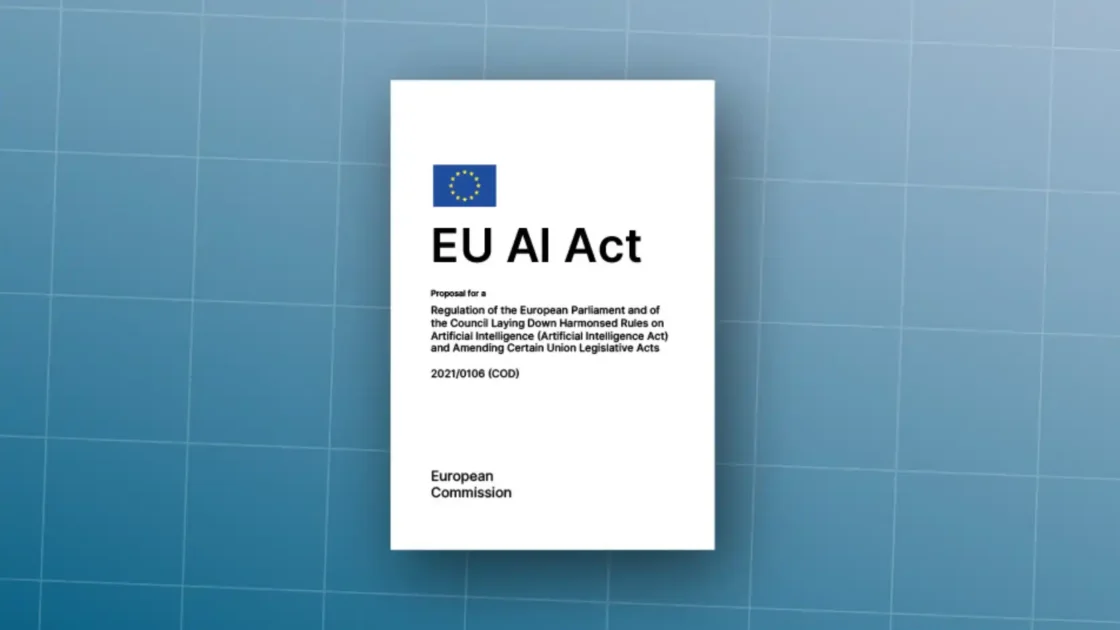
The timing is also tied to regulation. The EU AI Act requires providers of AI systems that generate synthetic audio, image, video or text content to mark outputs in a machine-readable format and make them detectable as artificially generated or manipulated, as far as technically feasible. The regulation applies from August 2, 2026, with some provisions on different schedules.
That legal pressure does not explain every product choice, but it frames the market. Large AI companies need answers for regulators, enterprise customers, news organizations, advertisers and creators. A visible badge alone is too easy to crop. A detector classifier alone is too probabilistic. A metadata standard alone is too fragile in messy upload chains. Google’s bet is that layered provenance will become the compliance and trust baseline for synthetic media.
SynthID’s core idea is hidden persistence
A watermark is old technology. Photographers, stock libraries, broadcasters and publishers have used visible and invisible marks for years to prove ownership, deter copying or identify distribution leaks. The AI version has a different job. It is less about copyright enforcement and more about content origin: was this image, clip, audio track or text output generated or altered by a system that agreed to mark its work?
SynthID’s core design is watermarking at the point of generation. That matters more than it sounds. A post-hoc label can be forgotten, removed or misapplied. A platform badge can disappear when content leaves the platform. Metadata can be stripped by routine processing. A creation-time watermark sits deeper in the file’s signal. It is meant to remain detectable even if the content is not pristine.
For images, Google DeepMind originally described SynthID as embedding a digital watermark directly into image pixels. The mark is not meant to be visible to the human eye, but a detector can look for it. That approach differs from a visible logo in the corner. It also differs from a filename or EXIF tag. It changes the image data itself in a way that, if designed well, leaves visual quality intact while carrying a machine-readable trace.
For audio, the mechanism moves into frequency patterns. DeepMind says SynthID embeds watermarks in audio generated or published through Lyria and NotebookLM’s podcast generation feature, and that the marks are inaudible to listeners. The company says common transformations such as MP3 compression, added noise and speed changes should not alter the mark enough to defeat detection.
For text, SynthID works differently because there are no pixels or sound waves. A language model generates tokens one step at a time. Google DeepMind’s public explanation says SynthID changes token probability scores during generation and later compares the resulting pattern against expected watermarked and unwatermarked patterns. The Nature paper on SynthID-Text describes a production-ready watermarking scheme that preserves text quality and supports detection with low latency overhead.
That design choice creates a useful distinction. SynthID is not a generic AI detector in the ordinary sense. Many AI detectors try to classify content by looking for artifacts, statistical patterns or model fingerprints after the fact. SynthID tries to detect a deliberate signal placed there during generation. That makes it more like reading a signed trace than guessing from vibes.
The difference matters because generic AI detection has a poor reputation, especially for text. It can mislabel human writing, fail on edited AI writing, perform differently across languages and domains, and turn into a black-box accusation machine. Watermarking is not immune to error, but it starts from a cleaner premise: a cooperating generator adds a known signal, and a detector checks for that signal.
The weakness is also clean: uncooperative generators do not add the signal. If a person generates an image with a model that does not support SynthID, there is no SynthID watermark to find. If someone uses an open model locally, an unmarked generator, a modified pipeline or a service outside the standard, the detector may return nothing. That missing signal cannot prove the content is human-made. OpenAI’s own verification language takes this cautious path, saying no detected watermark or metadata should not be read as a definitive conclusion.
This is why Google’s scale claim matters. A watermark only works as a trust layer when a large portion of generation volume is marked. Google can mark its own Gemini, Imagen, Veo, Lyria and NotebookLM outputs. OpenAI can mark images from ChatGPT, Codex and its API. NVIDIA can mark Cosmos video outputs. ElevenLabs can apply the idea in voice and music if it follows through. The method becomes stronger as coverage spreads.
The 100 billion figure changes the adoption debate
The number 100 billion has two meanings. First, it shows deployment volume. Second, it changes market expectations. Once a major AI provider says it has marked 100 billion images and videos, any competing provider that refuses watermarking has to explain why its synthetic media should remain harder to identify.
The figure also reveals how much synthetic media is already flowing through mainstream tools. Google’s public count includes images and videos, not the entire open internet. It does not cover every model, every startup, every local diffusion workflow, every image editor, every game asset generator or every face-swap app. Yet it still reaches a volume that would have sounded absurd before modern generative models became consumer products.
A number at that scale also pushes detection out of the lab. Many watermarking papers test against benchmark transformations. Product deployment faces stranger conditions: screenshots inside messaging apps, screenshots of screenshots, social media recompression, cropped thumbnails, platform filters, meme templates, reposting chains, video frame sampling, music remixes, podcast edits, background noise and file conversions. At 100 billion pieces of content, watermarking becomes an operational system, not just a research result.
Google DeepMind’s arXiv paper on SynthID-Image framed the practical challenge around effectiveness, fidelity, resilience and security at internet scale. The paper said SynthID-Image had already been used to watermark more than 10 billion images and video frames across Google services at the time of publication. Google’s May 2026 number shows the deployment has grown far beyond that earlier public research count.
Scale does not settle performance. A watermarking system can mark huge volumes and still face edge cases, false negatives, false positives, adversarial attacks and unclear user communication. Yet scale does create something research cannot: feedback from real use. Google said Gemini verification had been used 50 million times globally. Those checks generate product lessons about how people ask provenance questions, where they become confused, which file types fail, which transformations degrade confidence, and how much explanation users need.
The deployment count also makes SynthID harder to dismiss as a Google-only experiment. Google is trying to make it part of browser and search behavior, not just model output. A user encountering an image in Search, Lens, AI Mode or Circle to Search will be able to ask whether it was made with AI. Chrome support pulls verification closer to everyday browsing. If detection becomes available where content is discovered, the watermark becomes more than an archive marker.
The adoption battle now moves from whether watermarking is possible to whether it becomes expected. A synthetic-media provider can still choose not to join. Some open-source communities may resist embedded marks. Some creators may object to provenance systems that they see as surveillance or platform control. Some bad actors will use unmarked tools on purpose. Yet major platforms, regulators and enterprise buyers are likely to ask for detectable provenance by default.
For media companies, the scale number has a practical meaning. Newsrooms do not need perfect global coverage to benefit from a detectable signal on material from major generators. Fact-checkers can use it as one layer in verification. Advertising networks can use it for policy enforcement. Marketplaces can use it to distinguish AI-made product imagery from camera-captured listings. Social platforms can use it to label content without relying only on self-disclosure.
For attackers, the number creates a different calculation. If a platform begins checking for SynthID and C2PA signals, then using a marked generator leaves a trail. The attacker can regenerate with an unmarked model, strip metadata, alter files or use a custom pipeline. That is why watermarking will not remove deception. It can, however, separate casual synthetic media from deliberate evasion, which is useful for enforcement and investigation.
Watermarking is not the same as detection
The AI-content debate often mixes three ideas: watermarking, provenance and detection. They overlap, but they are not the same. Watermarking means embedding a signal into generated content. Provenance means recording the origin and edit history of a file. Detection means using a tool to assess whether content is synthetic, altered or marked. SynthID sits mainly in watermarking and detection. C2PA sits mainly in provenance. Generic classifiers sit in detection without a deliberate mark.
That distinction matters because each method answers a different question. A SynthID detector asks whether a specific hidden mark is present. A C2PA viewer asks whether a file carries signed metadata about creation and edits. A classifier asks whether the content looks statistically like something a model made. None of those questions equals the broader human question: “Should I trust this?” Trust requires context, source history, corroboration and judgment.
Google’s current move is powerful because it combines the first two. SynthID gives a persistent signal. C2PA Content Credentials give structured context. The C2PA site describes Content Credentials as a kind of “nutrition label” for digital content, while the technical specification describes signed manifests and tamper-evident trust mechanisms.
OpenAI uses similar framing. Its May 19 post says C2PA provides more information than a watermark alone, while SynthID can preserve a signal when metadata does not survive. OpenAI’s verification tool checks for C2PA metadata and SynthID watermarks in uploaded images and reports whether either supported signal is detected.
This layered approach also reduces the risk of overclaiming. A single classifier output can be dangerous if users treat it as proof. A watermark detector can also mislead if users assume missing marks prove human origin. A provenance manifest can mislead if users assume signed metadata proves truth rather than origin. A layered interface can present narrower claims: this file contains this metadata; this watermark was detected; no supported signal was found; verification is limited.
The difference is especially relevant for journalism. A newsroom verifying a photo from a conflict zone does not need one magic detector. It needs a chain of checks: original file, source identity, location evidence, timestamps, weather, shadows, other witnesses, platform upload history, metadata, reverse image search, model artifacts, watermark signals and editorial risk assessment. SynthID can be useful inside that workflow without replacing it.
For platforms, the distinction shapes policy. A social network may use SynthID to label AI-generated media created by participating tools. It may use C2PA to show a file’s creation path. It may use classifiers to flag suspicious unmarked content. It may use account behavior and distribution patterns to detect coordinated deception. Watermarking is one signal in a larger integrity system.
For users, the interface must avoid false certainty. A good detector result is not “real” or “fake.” It is “a supported provenance signal was found” or “no supported signal was found.” OpenAI’s Verify page is careful here: it says the tool is built to detect images generated with ChatGPT, the OpenAI API or Codex, and that it looks for supported signals including C2PA metadata and SynthID watermarks.
This is the editorial point many product announcements miss: AI transparency is not a truth machine. It is a set of signals that make some forms of origin and manipulation easier to read. A watermark can say something about generation. It cannot say whether a claim inside an image is accurate, whether a scene is staged, whether an account is honest, or whether a real image is being used out of context.
C2PA and SynthID solve different parts of the same problem
C2PA and SynthID are often described together now, but they come from different technical traditions. C2PA is a provenance standard. It attaches a signed record to media, built around manifests and cryptographic signatures. SynthID is a watermarking system. It hides a signal in the content itself. C2PA is stronger at explanation. SynthID is stronger at persistence after common file handling.
C2PA’s strength is that it can carry rich information. A file may show that it was captured by a camera, edited in a particular tool, exported at a certain time, or generated by an AI system. That matters for creators who want credit, journalists who need a chain of custody, advertisers who need disclosure, and platforms that need automated policy cues.
SynthID’s strength is that it does not depend on a metadata container being preserved. The mark is embedded into the content signal. Google says its image and video watermarks are designed to survive modifications such as cropping, filters, frame-rate changes and lossy compression. OpenAI says watermarking can be more durable through transformations such as screenshots, while metadata can provide richer context.
The two also fail differently. C2PA can fail if metadata is stripped, if a platform does not preserve manifests, if a user screenshots content, or if a viewer does not expose the information. SynthID can fail if content was generated by a non-participating model, if transformations are severe, if a detector is unavailable, or if an attacker intentionally tries to confuse the signal. A resilient provenance system needs both because metadata loss and watermark absence are different failure modes.
The table below compresses the difference.
SynthID and C2PA solve different verification jobs
| Layer | Main purpose | Strength | Weak point |
|---|---|---|---|
| SynthID | Invisible watermarking and detection | May survive common edits because the signal is embedded in the media | Only works when the generator applies a supported watermark |
| C2PA Content Credentials | Signed provenance metadata | Carries richer creation and edit history | Metadata may be stripped, broken or hidden by platforms |
| Generic AI classifiers | Statistical detection without a deliberate mark | Can assess unmarked content | Error rates vary across models, edits, languages and domains |
| Visible labels | Human-readable disclosure | Easy for users to notice | Easy to crop, obscure, ignore or remove outside the platform |
The practical lesson is that no single layer should carry the whole trust burden. A credible media-verification workflow should treat watermarking, metadata, platform labels and forensic review as separate signals, not as interchangeable proof.
C2PA also has a role that SynthID does not: authenticating camera-origin media. Google said Pixel 10 was the first smartphone to provide Content Credentials for images in its native camera app and that video support would expand to Pixel 8, 9 and 10 phones. That matters because the trust problem is not only “identify AI.” It is also “identify real capture.”
Authenticating real capture may become more important than labeling every synthetic file. If AI content grows faster than verification systems, platforms may shift toward positive proof of capture: this photo came from a camera, this video came from a device, this file has a signed origin. Google’s note that identifying authentic, unedited content can be as useful as knowing when a file was AI-made points toward that future.
Yet camera provenance has its own complications. Modern phones already use computational photography. Some “real” photos are shaped by AI denoising, sharpening, HDR fusion, face correction, night mode and generative edits. A C2PA manifest can document the process, but public interpretation will be messy. A viewer may ask whether a photo is real and receive an answer that is technically accurate but socially confusing: captured by a camera, processed by software, lightly edited, not generatively replaced.
This is why SynthID and C2PA are best understood as content history tools, not truth labels. They help establish whether known tools touched a file. They do not remove the need to interpret what kind of transformation occurred.
OpenAI’s adoption is the turning point
OpenAI’s adoption gives SynthID a new level of legitimacy because OpenAI is not a Google subsidiary, not a small partner, and not a marginal generator. On May 19, 2026, OpenAI said it was adding Google DeepMind’s SynthID to images generated through ChatGPT, Codex and the OpenAI API. It also said it had become a C2PA conforming generator product and was previewing a public verification tool for OpenAI-generated images.
This matters because standards often fail when every major company builds its own incompatible answer. A Google watermark detected only by Google tools would be useful but narrow. OpenAI using SynthID suggests a different path: a shared watermark layer that can cross company boundaries. It also means two of the most visible consumer AI brands are publicly aligning on layered provenance: C2PA plus invisible watermarking.
OpenAI’s framing is also technically sober. It says C2PA metadata helps content carry information about origin and editing, while SynthID helps preserve a signal when metadata does not survive. It says no detection method is foolproof. It says if no metadata or watermark is detected, the tool will not make a definitive conclusion about whether an image came from OpenAI tools because provenance signals can sometimes be stripped.
That caution is healthy. The worst version of AI labeling would be a public interface that turns complex evidence into a binary badge: “real” or “AI.” OpenAI’s Verify tool instead checks for supported provenance signals. That sounds less dramatic, but it is more honest. It lets the company say: this image appears to carry signals from our tools, or it does not carry the supported signals we can detect.
The OpenAI move also has a business layer. Enterprises that use AI image generation for marketing, product design, documentation, education or creative work need governance. They need to know what was generated, what was edited, which outputs are safe to publish, and how to satisfy disclosure rules. Adding C2PA and SynthID gives procurement teams and compliance teams something concrete to ask for.
OpenAI’s adoption turns SynthID from a Google trust feature into a cross-vendor expectation. Other companies may now face pressure to support either SynthID, C2PA or an equivalent machine-readable marking system. The EU AI Act does not mandate a specific standard, but it does require machine-readable marking for synthetic content generated by AI systems, subject to technical feasibility. That creates a market opening for provenance tools that can demonstrate reliability and interoperability.
There is also a competitive risk for OpenAI. By adopting a Google DeepMind watermarking system, OpenAI acknowledges that the industry may need shared infrastructure even among rivals. That can be read as pragmatism. The alternative would be a fragmented universe where every detector needs to know every generator’s private mark, and every platform must integrate many incompatible systems.
The move does not make OpenAI-generated images impossible to misuse. A user can screenshot, edit, crop, remix or regenerate. A bad actor can use a different model. An image can be posted without context. But if OpenAI’s own outputs carry both C2PA and SynthID, platforms and investigators have more to work with than a flattened JPG with no history.
That is a real shift in accountability. If a harmful synthetic image generated by ChatGPT spreads online, a detector may be able to identify its origin signal. If the same image lacks signals, that absence will not exonerate it, but it may suggest a different pipeline. Provenance does not stop abuse at creation. It makes some abuse less deniable after distribution.
NVIDIA, ElevenLabs and the expansion beyond flat images
SynthID’s next test is not only image generation. It is whether watermarking can follow synthetic media into the formats where AI is growing fastest: video, voice, music, 3D worlds, training datasets and multimodal outputs. Google’s announcement names partners that point in those directions.
NVIDIA’s role is tied to Cosmos, its world foundation models for physical AI. NVIDIA announced in March 2025 that it was collaborating with Google DeepMind to integrate SynthID to watermark and identify AI-generated outputs from the Cosmos world foundation model NIM microservice. That matters because physical AI systems and world models generate not just pretty video but simulated environments, driving scenes, robotics data and synthetic training material.
If watermarking works in those pipelines, the use case goes beyond misinformation. Synthetic training data needs provenance too. A robotics company may need to know which datasets were simulated, which scenes came from real capture, and whether generated environments were mixed into evaluation sets. Watermarking synthetic environments could become a supply-chain control, not merely a media label.
ElevenLabs points toward voice and music. Google said ElevenLabs is bringing SynthID to more AI-generated content, and Google DeepMind’s SynthID page already describes audio watermarking for Lyria and NotebookLM-generated audio. The audio case is especially sensitive because voice cloning can support scams, impersonation, unauthorized endorsements and fake evidence.
Audio watermarking has different pressures than image watermarking. A voice clip may be compressed by messaging apps, distorted by poor microphones, mixed with background noise, spliced into longer recordings, sped up, slowed down or converted across formats. Google says SynthID audio marks are inaudible and can survive common changes such as MP3 compression, added noise and speed adjustments. That claim will matter only if detectors can handle the messy audio people actually share.
Music adds another layer. A generated track may be remixed, mastered, sampled, looped, played over speakers and re-recorded, or included in a video. A persistent watermark could give platforms and rights holders a way to tell whether a track came from a participating AI model. Yet music workflows often include human and AI collaboration. A watermark may say an AI-generated segment is present, but it cannot decide authorship, copyright ownership or artistic credit by itself.
Video raises the hardest perception problem. A generated video can be partly synthetic, partly edited, partly real, partly overlaid with synthetic audio, and partly captioned by AI. Google says SynthID marks every frame of generated video in its video watermarking approach. That is useful because it may allow segment-level detection, but users will need clear explanations when only part of a video is marked.
This is where product design becomes trust design. A detector that says “AI detected” may be too blunt. A better system might say that the image region, video segment or audio stretch appears to contain a supported watermark. Google’s SynthID Detector page says the portal can verify if a piece of content is watermarked with SynthID and that Google is testing it with journalists and media professionals.
The future of AI provenance is granular. It will not be enough to label an entire file. Users will need to know whether a face was swapped, a background was generated, a voice was cloned, a soundtrack was AI-made, a video frame sequence was synthesized, or only a caption was produced by AI. SynthID’s multimodal expansion is an attempt to build that granularity into the media stack.
Search and Chrome may matter more than the watermark itself
A hidden watermark has no social value if nobody can check it. That is why Google’s expansion into Search and Chrome may be more consequential than the 100 billion mark count. Detection must live where people encounter content, not inside a specialist portal that only researchers remember to use.
Google said people will be able to learn about an image’s origin through Search features such as Lens, AI Mode and Circle to Search, as well as Gemini in Chrome, by asking questions like whether an image was made with AI. It said SynthID verification is expanding to Search and coming to Chrome in the following weeks.
This moves verification from a forensic workflow into a consumer behavior. A person sees an image in a feed, on a product listing, in a search result, in a messaging screenshot or on a website. Instead of downloading the file and using a separate tool, the person can ask the system they already use. Verification becomes a search action.
That has obvious limits. Users still have to care enough to ask. The interface has to be easy. The result has to be understandable. The image available to the detector has to preserve enough signal. Platforms must not block access to the file or serve degraded thumbnails that lose the watermark. But embedding verification into Search and Chrome reduces friction, and friction is often the reason safety tools fail.
The move also gives Google a powerful gatekeeping role. If Chrome and Search become common provenance readers, Google influences how millions of users interpret AI media. That brings responsibility. Detection results must avoid overconfidence, disclose limits, and separate “watermark found” from “image is false.” A bad interface could teach users the wrong lesson.
There is also a ranking and distribution angle. Google has not said SynthID detection will be used as a broad ranking factor. But once Search can read provenance signals, those signals may influence presentation, labels, user trust features, advertiser controls, or eligibility in certain surfaces. For publishers, creators and brands, provenance may become part of content hygiene.
Browsers are especially relevant because they sit above individual platforms. A social network may choose not to show metadata. A website may not provide a label. A browser-level tool can still inspect media where technically possible. Chrome support could make provenance less dependent on each platform’s willingness to build its own user interface.
The broader strategic play is to make verification ambient. Users should not need to know whether a file uses SynthID, C2PA, both or neither. They should be able to ask a trusted interface what signals exist. That is the same logic behind antivirus scanning, HTTPS indicators and password breach warnings: the technical system is complex, but the user needs a readable signal.
This does not remove institutional verification. Journalists, courts, researchers and investigators still need deeper tools, access to original files, expert workflows and audit trails. Consumer search checks are a first layer, not the final word. But first layers matter because misinformation spreads before expert review can catch up.
A watermark standard without discovery integration is a library catalog with no search box. Google’s latest move is to build the search box.
The misinformation problem will not be solved by labels
Google’s own language is careful, and it should be. SynthID does not solve misinformation. It addresses a slice of the problem: identifying content generated by participating AI systems when the watermark survives and a detector is available. Misinformation is broader. It includes real media used out of context, misleading captions, selective editing, staged scenes, altered documents, manipulated statistics, coordinated campaigns, impersonation and simple lies.
A real video can be more misleading than an AI-generated one. A genuine photo from 2019 can be posted as evidence of an event in 2026. A cropped image can hide context. A true quote can be attached to a false claim. A synthetic image can be harmless art. The origin of media is not the same as the truth of the claim attached to it.
This distinction is critical for public trust. If users are taught that “AI-generated” means “false” and “not AI-generated” means “true,” they will be easier to manipulate. A bad actor can post real footage with false context and benefit from the absence of an AI label. Another can use an unmarked generator and exploit the absence of a watermark. Provenance systems must teach narrower reasoning.
The strongest role for SynthID is evidentiary. It can tell a viewer that a file appears to contain a known watermark. It can help platforms label content. It can help investigators trace synthetic assets. It can help distinguish participating generator outputs from unknown files. It can make casual AI deception harder. It cannot settle political disputes, verify eyewitness claims, or prove that an image’s message is honest.
NIST’s synthetic content report makes the larger field clear. It examines authentication and provenance, labeling, watermarking, detection, prevention of harmful synthetic content, testing, auditing and maintenance. In other words, digital content transparency is an ecosystem of practices, not one technology.
Watermarking also faces an adversarial setting. Once a mark carries enforcement consequences, people will try to remove it, spoof it, confuse detectors or route around it. Research on text watermarking has already shown that paraphrasing, copy-paste changes and back-translation can degrade detectability for SynthID-Text. A 2026 theoretical analysis of SynthID-Text also studied removal strategies and robustness questions.
The same logic applies to images and audio. Some transformations are ordinary user behavior. Others are deliberate attacks. A system that survives cropping and compression may still be challenged by aggressive regeneration, diffusion-based editing, style transfer, print-and-scan loops, screen recording, analog playback and re-recording, or model-to-model laundering.
The easiest bypass is not breaking SynthID. It is using a generator that does not apply SynthID. That is the central limitation. If the ecosystem remains fragmented, watermarking will identify a large class of compliant content while the highest-risk actors move to unmarked tools. This does not make watermarking useless. It means policymakers and platforms should not confuse compliance among major vendors with universal coverage.
A good misinformation strategy uses provenance to raise the floor, not to declare victory. Major generators should mark outputs. Platforms should preserve and display provenance where possible. Browsers and search engines should expose detection. Newsrooms should keep forensic workflows. Regulators should avoid mandating one fragile method. Researchers should test attacks. Users should be trained to read provenance as one signal.
The web will not get back to a world where every image feels self-evident. It can still build better friction into synthetic media. SynthID is one such friction layer.
The strongest use case is not catching every fake
The public tends to judge AI detection tools by a harsh question: will they catch every fake? The answer is no. No watermarking system can catch unmarked content. No classifier can perfectly identify every synthetic file. No metadata standard can survive every platform and transformation. A better question is whether the system changes incentives at scale.
SynthID’s strongest use case is not universal detection. It is accountability for participating generators. If Google, OpenAI, NVIDIA, ElevenLabs and other major providers mark outputs, then mainstream synthetic content becomes easier to label, audit and govern. A huge amount of AI media is not produced by elite adversaries. It is produced by ordinary users, marketers, creators, students, developers, scammers, agencies and businesses using mainstream tools.
For that category, watermarking can matter. A brand may need to disclose AI-generated product imagery. A platform may need to apply labels automatically. A school may need to understand whether an image came from a known generator. A newsroom may need to check a viral asset quickly. A marketplace may need to detect AI-generated listing photos. A political ad archive may need provenance signals. These are not perfect forensic scenarios. They are workflow problems.
SynthID also supports internal governance. Companies using AI tools can track which assets came from which systems. That matters for legal review, rights management, advertising claims, records retention and brand safety. C2PA metadata can provide richer context, while SynthID can survive some downstream edits. The combination is more useful than either alone.
The system can also help platforms separate accidental non-disclosure from deliberate evasion. If a post contains a SynthID mark but no visible label, a platform can add one. If a post lacks all provenance signals but appears suspicious through other checks, the platform can route it for review or use classifier signals. If a user repeatedly posts high-risk unmarked synthetic content, account-level behavior becomes part of enforcement.
The point is not perfect attribution. The point is graduated confidence. A watermark found in a file gives one kind of confidence. A valid C2PA manifest gives another. A missing signal gives very little. A generic detector score gives a probabilistic hint. A trusted source file gives stronger evidence. Mature systems will combine these signals instead of pretending one detector decides.
This is especially useful for election integrity, public health, disaster response and financial scams. During fast-moving events, a platform may not have time for full forensic review before content spreads. A machine-readable watermark can support rapid triage. It can help decide whether to label, downrank, route to fact-checkers or ask for more context. That triage role is less glamorous than “stopping deepfakes,” but it may be more realistic.
The same logic applies to voice scams. A bank, call center or messaging platform cannot assume every cloned voice will be watermarked. But if major voice generators adopt watermarks, detection can flag at least a subset of AI-generated audio. Combined with behavioral signals, authentication protocols and user warnings, that subset matters.
A system that catches 30%, 50% or 70% of routine synthetic media still changes the environment. It makes compliant tools safer to use, gives platforms more signals, and pushes malicious actors into narrower channels. Security often works by narrowing easy abuse, not by eliminating all abuse.
The bypass problem sits at the center
The most honest criticism of SynthID is also the simplest: a bad actor can use another model. If the easiest way around the watermark is to regenerate content with a system that does not support it, then the standard depends on adoption, not only technical design.
This is a classic collective-action problem. Each generator can mark its own outputs. No single generator can mark everyone else’s. Google can make Gemini outputs detectable. OpenAI can mark ChatGPT image outputs. NVIDIA can mark Cosmos outputs. ElevenLabs can mark its voice and music outputs. But unmarked open models, modified local pipelines and offshore services remain outside the system unless law, market demand or platform rules pull them in.
That does not mean adoption is hopeless. Many safety systems start with major providers and move outward. Email authentication did not eliminate spam, but SPF, DKIM and DMARC changed how large providers handle sender identity. HTTPS did not remove phishing, but it changed the baseline for web transport security. C2PA and SynthID may play a similar role for media origin: imperfect, uneven, but increasingly expected.
The hardest category is open-source generation. Open models are not one thing. Some are released by responsible labs with documentation and safety features. Some are fine-tuned, stripped, merged, quantized and redistributed. Some run locally without centralized logging or policy enforcement. A mandatory watermarking scheme may be technically and politically difficult in that world, especially if users can remove code paths.
This creates a two-tier media environment. Outputs from major commercial systems may carry provenance. Outputs from local or non-cooperating systems may not. Platforms will then face a policy choice: treat unmarked synthetic-looking media with more scrutiny, require disclosure from uploaders, use classifiers, or accept that some content remains unverifiable.
Regulation may push adoption but cannot fully solve the bypass. The EU AI Act requires providers of AI systems generating synthetic content to mark outputs in machine-readable form when technically feasible, but enforcement across global open-source distribution will be hard. The European Commission’s code of practice process is meant to support compliance with Article 50 transparency obligations, but standards still need technical and market uptake.
A second bypass is laundering. A user can take a watermarked output and pass it through another generative model, asking it to recreate the image without the original signal. This may degrade fidelity or alter content, but models are getting better at faithful regeneration. If the second model does not apply a watermark, the output may lose the original trace. This is likely to become one of the main adversarial workflows.
A third bypass is semantic copying. A person can use a watermarked image as inspiration and prompt another model to recreate the scene. The new file may not be pixel-derived in a way that preserves the mark. Provenance systems then lose continuity even though the creative content was carried forward.
A fourth bypass is partial editing. A real image can be edited with AI, or an AI image can be edited manually. Whether a watermark survives depends on what changed, how much changed and where the detector looks. A useful system has to describe partial confidence, not just whole-file status.
The bypass problem is why public messaging should avoid triumphal claims. SynthID raises the cost of some deception but does not remove unmarked generation from the internet. That is still a worthwhile gain. A seatbelt does not stop all crashes. A lock does not stop every thief. A watermark does not stop every fake. It creates friction, traceability and standards for actors willing or required to cooperate.
False confidence may be the biggest user risk
A weak detector can fail quietly. A strong detector can fail dangerously if people misunderstand it. SynthID’s public success will depend on how well Google, OpenAI and other platforms explain the difference between “signal found,” “signal not found,” and “content is trustworthy.”
The riskiest phrase in this area is “AI detector.” It sounds like a tool that can look at any file and tell whether it is AI-made. SynthID does not do that. It detects SynthID watermarks. OpenAI’s Verify tool detects supported provenance signals tied to OpenAI-generated images. C2PA viewers read metadata if it exists. Generic classifiers estimate likelihood. These are narrower tools with narrower claims.
A missing watermark should never be framed as proof that content is real. OpenAI states this plainly: if no metadata or watermark is detected, the tool will not make a definitive conclusion because provenance signals can sometimes be stripped. That sentence should become the norm across the industry.
False confidence has several forms. A user may see “no AI detected” and share a fake. A journalist may overstate a detector result in a headline. A platform may apply labels too aggressively and mislead creators. A court may treat provenance output as stronger evidence than it is. A marketer may assume a C2PA manifest proves a photo is unedited when it only proves that a signed record exists.
There is also a fairness issue. Generic AI text detectors have already caused concern because they can mislabel students, non-native English writers or formulaic writing as AI-generated. SynthID-Text is different because it checks for a deliberate generation watermark, but if interfaces blur watermarking with generic detection, people may inherit the same distrust.
The best public language is evidence language. A result should say what was found: a SynthID watermark associated with a participating generator, C2PA metadata signed by a known tool, no supported signal, or a low-confidence detection. It should not jump from signal to moral judgment. “Watermarked by an AI tool” is not the same as “misleading.” “No watermark found” is not the same as “authentic.”
For news organizations, the user-risk problem is familiar. Verification results need context. A photo with a valid camera credential still might be staged. A watermarked AI image might be clearly labeled satire. A real audio clip might be edited deceptively. Provenance systems answer origin questions. Editors still have to answer newsworthiness and truthfulness questions.
For platforms, UI design must show confidence and scope. A label could say “AI watermark detected” and link to details. A missing-signal result could say “No supported watermark or credential found.” A C2PA panel could show capture, edits and signing history. The interface should make users slightly more informed, not falsely certain.
For AI companies, the trust burden includes publishing limits. Google DeepMind has already described limitations for SynthID text, including weaker confidence when text is thoroughly rewritten or translated, and weaker performance on short factual answers with little variation. That kind of specificity is needed for images, video and audio too.
The social goal should be modest and durable: teach people to ask better provenance questions, not to outsource judgment to a badge.
Regulation is turning provenance into a product requirement
The EU AI Act gives watermarking a legal backdrop. Article 50 requires providers of AI systems, including general-purpose systems, that generate synthetic audio, image, video or text content to ensure outputs are marked in a machine-readable format and detectable as artificially generated or manipulated. The law says technical solutions should be effective, interoperable, reliable and robust as far as technically feasible.
This does not name SynthID. It does not mandate C2PA. It sets a functional requirement. Providers need some way to mark and detect synthetic output. That creates market pressure for systems that can show durability, interoperability and practical deployment. Google is positioning SynthID as one answer, while C2PA remains the leading metadata-based provenance standard.
The timeline matters. Regulation (EU) 2024/1689 applies from August 2, 2026, with certain chapters and obligations applying on other dates. The European Commission is also running a code of practice process on marking and labeling AI-generated content to support compliance with Article 50 transparency duties.
For AI providers, this turns provenance from an ethics feature into a compliance roadmap. They need technical marking, user-facing disclosure, documentation, testing, policies for edge cases, and evidence that their method works across content types. “We label content in our app” may not be enough if the output leaves the app and loses the label. A machine-readable mark speaks directly to the regulatory requirement.
For deployers, especially companies publishing synthetic media, the AI Act’s deepfake provisions also matter. The regulation defines a deep fake as AI-generated or manipulated image, audio or video content resembling existing persons, objects, places, entities or events that would falsely appear authentic or truthful. It requires deployers of AI systems that generate or manipulate deepfake content to disclose artificial generation or manipulation, with exceptions.
That distinction between provider and deployer will matter commercially. A model provider may mark outputs. A brand, campaign, agency, publisher or app that uses those outputs may still need visible disclosure depending on context. SynthID may support deployer compliance, but it does not replace human-readable labels where law or platform policy requires them.
Provenance will become part of AI procurement. Enterprise buyers will ask whether a generator supports C2PA, SynthID or equivalent machine-readable marking. They will ask whether the output is detectable after editing. They will ask how logs are retained, how false positives are handled, and how public verification works. The companies that answer clearly will have an advantage with regulated customers.
The regulation may also shape open-source governance. Providers releasing models into the EU market may need to consider marking duties, but enforcement becomes complex when weights are redistributed and modified. The code of practice process may clarify expectations, yet the technical gap remains: a watermark embedded in a hosted service is easier to enforce than one in a local model anyone can alter.
The likely result is a layered compliance market. Hosted AI services will support standard marking. Enterprise platforms will preserve provenance. Media tools will read and display Content Credentials. Browsers and search engines will expose verification. Specialist vendors will offer audit tools. Regulators will look for reasonable technical measures rather than impossible perfection.
SynthID’s timing fits that market. Google is not only solving a social trust problem. It is preparing for a compliance environment where machine-readable AI marking becomes a standard requirement.
Publishers and newsrooms need provenance workflows, not magic buttons
Newsrooms are one of SynthID’s clearest audiences, but they should treat it as a tool inside a process. Google says it is collaborating with journalists and media professionals to test SynthID Detector and collect feedback. That is the right audience because journalists face high-pressure verification problems and know how quickly a bad label can damage credibility.
The newsroom use case starts with triage. A viral image arrives during a breaking event. A reporter or verification editor checks whether the file carries C2PA credentials, whether a SynthID watermark is present, whether reverse image search finds older copies, whether geolocation matches the claim, whether the account has credible history, and whether other sources confirm the scene. SynthID is one check among many.
A watermark finding can support a newsroom decision, but it should not write the story. If a SynthID mark is detected, the article can report that a supported AI watermark was found, with details on the tool and limitations. If no mark is found, the newsroom should not report that the file is real. If C2PA metadata exists, editors still need to inspect the signing chain and understand what it claims.
Newsrooms also need original files. Social media often strips metadata or serves recompressed copies. A screenshot passed through messaging apps may lose context. A low-resolution thumbnail may not preserve enough signal. Reporters should ask sources for original files when possible, not only rely on downloaded copies. Provenance systems work best when the media chain is preserved.
There is also a source-protection issue. Rich provenance can reveal camera models, edit tools, timestamps and possibly location-related metadata. Newsrooms working with vulnerable sources must decide when to preserve, redact or avoid publishing provenance details. C2PA can support trust, but it can also expose operational risk if handled poorly.
For public-facing journalism, the language should be exact. Instead of “Google proves this image is AI,” a better sentence is: “A SynthID watermark associated with AI-generated media was detected in the file.” Instead of “no AI found,” a better sentence is: “The tool did not detect supported provenance signals in the copy reviewed.” This is slower, but credibility depends on precision.
The same standard applies to headlines. A headline that says “Image is fake” based only on a watermark may overclaim. A headline that says “AI watermark found in viral image” is narrower and stronger. The article can then explain what the image claimed, why the watermark matters, what remains unknown, and how other evidence supports the conclusion.
Newsrooms also need internal policies for AI-generated assets they create. If a publisher uses AI images for illustrations, covers, explainers or social graphics, it should preserve provenance and label use clearly. C2PA and SynthID can support that policy, but the newsroom still needs editorial rules about when synthetic visuals are acceptable.
The best outcome is boring: provenance checks become part of editorial hygiene, like checking dates, names, locations and quotes. The tool is not a headline. It is a verification habit.
Creators will care about credit as much as truth
For creators, SynthID and C2PA raise a different set of concerns. The public debate frames watermarking as protection against misinformation. Artists, photographers, musicians, filmmakers, designers and voice actors also see questions about credit, attribution, licensing and platform control.
A creator who uses AI as part of a workflow may want transparent labeling to avoid accusations of deception. A photographer may want C2PA credentials to show camera capture and edit history. A musician may want to prove which parts of a track were human-performed and which parts were generated. A designer may want to document that an image was made with licensed tools. Provenance can support professional credibility.
At the same time, creators may fear that AI labels become stigma. A platform might reduce reach for AI-labeled work. A client might reject any content with an AI mark, even if AI use was minor. A human-edited photograph might be mislabeled because software inserted Content Credentials or AI metadata during a routine edit. Past backlash around broad “AI info” labels shows that public labels can become crude if platforms do not distinguish generation from editing.
The distinction between generated, edited, assisted and captured will become commercially important. A fully generated image is different from a camera photo with AI denoise. A human illustration with AI upscaling is different from a prompt-generated asset. A song with AI mastering is different from a synthetic voice clone. A provenance system that collapses all of these into “AI” will frustrate creators and mislead audiences.
C2PA is better suited than SynthID for that nuance because it can record process. SynthID can indicate that a supported AI system generated or altered content, but it does not by itself explain the creative workflow. Combining the two gives creators a better chance to show context: yes, AI was used; here is where; here is the edit history; here is what was captured or created manually.
For visual artists, invisible watermarking may also raise questions about ownership. A SynthID mark identifies AI generation, not copyright ownership. It does not prove who wrote the prompt, who owns the output, whether training data was licensed, whether a style was copied, or whether the work is legally protected. Provenance and rights are related but not identical.
For photographers, camera-side Content Credentials may become a selling point. Google’s Pixel move is part of a broader trend toward authenticating capture at the device level. A photographer covering a news event may be able to provide signed capture data. A brand photographer may provide provenance as part of deliverables. A creator selling prints may preserve a chain of edits.
For voice actors and musicians, audio watermarking could help identify synthetic outputs from participating models. That may support licensing and platform enforcement. Yet if clones are made with unmarked models, watermarking will not help. Rights protection still needs contracts, model policies, platform enforcement, consent rules and legal remedies.
The creator community will judge SynthID not only by technical detection but by whether labels are fair, specific and portable. A system that protects audiences while flattening creative nuance will face resistance. A system that lets creators explain their process may earn broader support.
Brands and advertisers will treat AI provenance as risk control
Brands are already using generative AI for campaign concepts, product backdrops, social posts, voiceovers, internal mockups, storyboards, packaging ideas, localized creatives and customer-facing assets. The question is no longer whether AI enters marketing. It is whether companies can track and disclose it without embarrassing themselves.
AI provenance gives marketers a risk-control layer. A brand can show which assets were generated, which were edited, which model produced them, whether C2PA credentials exist, and whether invisible watermarks remain detectable. That matters for consumer trust, platform rules, regulatory compliance, agency accountability and rights clearance.
The biggest brand risk is not using AI. It is losing control of the AI supply chain. A campaign team may use a generator, pass files through freelancers, edit them in design tools, resize them for platforms, and upload them through ad systems. Without provenance, nobody can answer basic questions later: Was this image synthetic? Which tool made it? Was a real person’s likeness generated? Did the agency disclose AI use? Was the output marked?
C2PA can provide process context. SynthID can preserve a signal when files are transformed. Together, they reduce reliance on screenshots, spreadsheets and manual notes. They also create an audit trail that legal and compliance teams can understand.
For advertisers, the EU AI Act and national rules around deepfakes, consumer deception and political advertising will sharpen the need for records. If synthetic content resembles real people, places, products or events, disclosure questions become more serious. If a political campaign uses AI-generated imagery, provenance may become part of ad archive review and platform enforcement.
Ad platforms may also demand machine-readable signals. A platform cannot manually review every creative. If AI marks are detectable, platforms can automate disclosure prompts, policy checks or advertiser attestations. Brands that preserve provenance may move faster through review. Brands that strip signals may face delays or rejected ads.
There is also a trust upside. A brand that labels synthetic imagery honestly may avoid backlash when audiences notice. Many users do not object to AI-made visual effects, fantasy scenes or conceptual ads when the use is clear. They do object to fake product performance, fake testimonials, fake news-style imagery or synthetic people presented as real customers. Provenance helps separate acceptable creative use from deceptive presentation.
For agencies, SynthID and C2PA may become part of deliverables. A client may ask for original files, Content Credentials, disclosure notes and confirmation that AI-generated assets were created in tools with watermarking. This is not glamorous, but agency workflows often mature through documentation.
AI provenance will become boring compliance plumbing in marketing. That is a sign of adoption. The more normal it becomes, the less every AI campaign has to start with a trust crisis.
Platforms will face hard choices about unmarked content
If major generators apply watermarks, platforms still have to decide what to do with unmarked content. That is the uncomfortable part. A platform can detect a SynthID mark and label content. It can read C2PA metadata and display provenance. But when neither exists, the platform cannot simply assume the content is authentic.
Unmarked content falls into many categories. It may be a real camera photo with no metadata. It may be an AI image from a non-participating generator. It may be a watermarked image that was transformed too heavily. It may be a screenshot. It may be a meme. It may be a malicious fake. It may be a harmless illustration. Treating all unmarked media as suspicious would punish ordinary users. Treating all unmarked media as safe would reward evasion.
The platform problem is confidence triage. A platform needs to combine signals: watermark detection, C2PA credentials, upload history, account behavior, visual classifiers, user reports, virality patterns, content topic, election or crisis context, and policy category. High-risk contexts may justify stricter scrutiny. Low-risk contexts may not.
This is where provenance systems meet moderation incentives. Platforms often prefer simple labels because they scale. But simple labels can mislead. A better system may show provenance details only when users tap, while using internal risk models for enforcement. That creates transparency questions: users need to know enough to trust the label, but platforms may not want to reveal detection thresholds that attackers can game.
The C2PA ecosystem also depends on platforms preserving credentials. If a social network strips metadata on upload, Content Credentials lose public value. If it preserves metadata but hides it behind a weak interface, users may never see it. If it reads credentials but converts them into vague labels, nuance disappears. C2PA adoption is not only a technical issue. It is a product commitment.
Watermark detection has a different platform burden. The detector may need to be integrated into upload pipelines, search indexing, image previews, video processing and user-report flows. The platform needs policies for low-confidence results, partial marks and appeals. It also needs to avoid exposing enough implementation detail for attackers to tune around detection.
For smaller platforms, integration cost matters. Google and OpenAI can build detection into their own products. A small forum, marketplace, local news site or education platform may need accessible APIs or browser-level checks. If provenance remains limited to large tech ecosystems, smaller publishers and communities will lag.
This is why browser and search integration matters. Chrome and Search can give users a verification layer even where platforms do little. Yet platform-level action is still needed for labels at upload, virality controls and policy enforcement.
The hardest question is whether platforms will penalize missing provenance in high-risk areas. During elections, public emergencies or financial scams, they may treat unmarked synthetic-looking media as higher risk. That may be justified, but it must be transparent and appealable. A provenance standard should not become a quiet permission system where only large-company outputs travel freely.
AI watermarking and privacy have an uneasy relationship
Watermarking sounds like a safety feature, but it raises privacy and governance questions. A hidden signal in media can reveal information about origin, tool use and sometimes model family. That may be benign for public AI-generated ads. It may be sensitive for private creative work, political speech, research, whistleblowing or personal expression.
SynthID is designed to identify AI-generated content, not individual users. Google’s public descriptions focus on whether content was generated or altered by Google AI tools, not on naming the person who created it. Still, provenance ecosystems can be expanded. C2PA credentials can include richer metadata. Enterprise systems may attach account, tool, time or workflow information. That richness is useful for trust and dangerous if mishandled.
The central governance question is who can read what. Public users may need to know whether content is AI-generated. Platforms may need more detailed information for abuse investigations. Enterprises may need internal audit trails. Law enforcement may seek data. Creators may want control over attribution. A single provenance layer can serve many interests, not all aligned.
C2PA has mechanisms for signed claims and manifests, but implementers decide what information to include and expose. A creator may want to disclose tool use without revealing location. A newsroom may want to preserve capture integrity without exposing a source. A company may want internal accountability without publishing employee identities. Provenance design has to support selective disclosure and privacy-preserving workflows.
Watermarking itself also needs security controls. If anyone can detect a mark, detection becomes widely useful. If detection is limited to trusted testers or platform partners, public accountability is weaker. If the detector is too exposed, attackers may use it to test removal methods. There is a tradeoff between access and adversarial hardening.
Google’s current approach uses Gemini, Search and Chrome as public-facing access points while SynthID Detector is being tested with journalists and media professionals. OpenAI is previewing a public verification tool. These choices suggest a gradual access model: consumer checks for common use, specialist tools for media professionals, and likely deeper integrations for platforms and enterprise systems.
Privacy also touches consent. Voice watermarking may help identify AI audio, but it does not solve whether a person consented to their voice being cloned. Image watermarking may label a synthetic portrait, but it does not solve whether a likeness was used without permission. Provenance can support enforcement, but rights frameworks must define what is allowed.
There is also a risk of chilling lawful anonymous speech. A person using AI to create political satire or safety-sensitive illustrations may not want account-level attribution embedded in public files. A good system should disclose generation without unnecessarily exposing identity. Transparency about content origin should not become universal creator surveillance.
The policy balance is delicate: enough provenance to reduce deception, enough privacy to protect legitimate speech and safety.
Technical resilience depends on real-world transformations
Watermarking claims are easy to phrase and hard to prove. A system may survive common edits in tests, yet fail under the messy chain of internet sharing. Google says SynthID image and video watermarks are designed to survive cropping, filters, frame-rate changes and lossy compression. It says audio marks can survive noise, MP3 compression and speed changes. Those are meaningful claims, but the real test is continuous.
A typical social image may be generated in one app, downloaded, cropped for a story format, compressed by a messaging app, screenshotted, reposted to another platform, overlaid with text, resized into a thumbnail, and then indexed by search. Each step can weaken signals. A watermark that survives any single step may not survive the whole chain.
Video makes this harder. Platforms transcode video into many resolutions and bitrates. Users screen-record clips. Editors cut scenes, add captions, change speed, add filters, insert reaction frames and export through consumer apps. If SynthID marks every generated frame, detection may still find enough signal in some segments, but confidence will vary.
Audio has its own chain. Voice clips may be sent through low-bandwidth messaging, played over speakerphone, recorded by another device, mixed with music, clipped into memes or converted to transcript and back into voice. A watermark that survives MP3 compression may not survive every analog and generative transformation.
The relevant standard is not whether a watermark is impossible to remove. It is whether removal creates cost, quality loss or workflow friction. If a bad actor has to use special laundering steps, regenerate content, accept artifacts or move to less convenient tools, watermarking has already changed incentives.
Academic and independent testing will be needed. Google DeepMind’s SynthID-Image paper documents deployment requirements and benchmark comparisons, but public trust grows when outside researchers test systems under realistic conditions. The 2026 debate over claimed SynthID reverse-engineering, including Google’s reported dispute of the effectiveness of the method, shows that public scrutiny will be constant.
Security through secrecy is not enough. Some details of watermark keys and detector thresholds may need protection, but the broad method, evaluation standards and limitations should be public enough for regulators and researchers to assess. This is especially true if platforms use watermark results for moderation, monetization or legal compliance.
False positives and false negatives need separate handling. A false positive wrongly marks ungenerated content as AI-produced. That can harm creators and news credibility. A false negative misses a marked or synthetic file. That can let deception spread. Different contexts have different tolerance. A newsroom may prefer cautious language. A platform may prefer higher recall in high-risk crises. A legal setting needs strict evidentiary standards.
The system also needs versioning. As models change, watermarking methods may evolve. Detectors must know which version they are checking. Old content may need future verification. A 2026 detector should ideally read watermarks from 2024 files, and a 2028 detector should not lose the ability to interpret earlier marks. Provenance is archival, not only real-time.
Technical resilience is not a one-time property. It is an arms race, maintenance burden and public communication challenge.
Text watermarking remains the hardest public category
Images and audio are intuitive watermarking targets because they contain dense signal. Text is harder. A sentence has meaning, style, grammar and word choice, but small changes can remove statistical patterns without obvious loss. A person can paraphrase, translate, summarize, reorder or lightly edit AI-generated text. That makes persistent text watermarking difficult.
Google DeepMind’s SynthID-Text approach works by modifying token sampling during generation. The Nature paper describes a production-ready scheme that preserves text quality, allows high detection accuracy and introduces minimal latency overhead. Google later open-sourced SynthID text watermarking through its Responsible Generative AI Toolkit and related developer resources.
The method is technically serious, but its limits are direct. Google DeepMind says SynthID text watermarking works best on longer, more varied outputs, such as essays, scripts or email variations. It says confidence can be greatly reduced when text is thoroughly rewritten or translated. It also says watermarking is less effective on factual prompts where there is little room to adjust token probabilities without affecting accuracy.
That means text watermarking is poorly suited for many high-stakes disputes. A student answer may be short. A news brief may be heavily edited. A legal memo may combine human and AI drafting. A translated document may lose the original mark. A factual answer may have too little token variation. Accusing someone based on text watermark absence or generic detector output would be risky.
Research also shows active weaknesses. One 2025 paper found SynthID-Text vulnerable to meaning-preserving attacks such as paraphrasing, copy-paste modifications and back-translation. A 2026 theoretical analysis studied detection performance and watermark-removal strategies. These papers do not make text watermarking useless, but they show that text is a more fragile provenance surface than pixels or waveforms.
For publishers, the best use of text watermarking may be internal governance rather than public accusation. A company can mark outputs from its own models and later detect whether large blocks of generated text remain intact. A platform can identify clearly watermarked spam at scale. A developer can trace outputs from an application. Those uses are narrower and safer than judging all writing online.
For education, caution is necessary. A watermark found in a submitted essay may be evidence that a specific tool generated parts of it. A missing watermark proves almost nothing. A paraphrased or translated AI draft may not retain a mark. Non-watermark AI detectors should not be treated as disciplinary proof on their own.
For regulation, text creates special challenges. The EU AI Act includes synthetic text in Article 50 marking duties, but technical feasibility varies by content type. A legal requirement that sounds straightforward for images may be harder for short or factual text.
The public should expect text provenance to be weaker, noisier and more context-dependent than image provenance. That does not mean abandon it. It means use it for the right jobs.
Camera-side provenance may become the premium trust signal
The AI media debate often asks how to detect what is fake. The better long-term question may be how to prove what was captured. Google’s announcement points in that direction. Pixel 10 was described as the first smartphone to provide Content Credentials for images in its native camera app, with video support coming to Pixel 8, 9 and 10 phones.
This is a major shift. If synthetic content becomes abundant, authentic capture may need its own positive signal. Instead of asking every viewer to detect fakes, devices can sign media at capture time. A viewer can then see that a photo or video came from a camera, whether it was edited, and which parts of the chain are verifiable.
Authenticity will move from “does this look real?” to “does this have a credible capture history?” That is a healthier standard because AI-generated media is increasingly photorealistic. Human visual judgment is no longer enough, especially for low-resolution images in social feeds.
Camera provenance also supports legitimate creators. Photojournalists can provide stronger evidence for original captures. Brands can distinguish real product photography from synthetic mockups. Courts and investigators can assess file history. Platforms can label camera-captured media differently from generated media if the credentials survive.
But camera-side provenance is not simple. Smartphones use computational photography. An image may be captured by a sensor but processed heavily by AI-based noise reduction, HDR merging, sharpening, depth estimation or face correction. Future cameras may include generative fill, object removal or AI zoom at capture time. C2PA credentials can document these operations, but users may struggle to interpret the result.
The phrase “unedited original” will also need care. A phone image is rarely raw sensor data. It is processed. The question is whether processing changed semantic content: adding objects, removing people, altering facial expressions, changing locations or inventing details. Provenance tools must separate ordinary image processing from generative manipulation that changes meaning.
The research community is already looking at this boundary. Work on camera authenticity in the age of generative AI notes that camera pipelines themselves may hallucinate details through AI-based processing, raising questions about what counts as faithful capture.
For newsrooms and courts, camera credentials will be useful but not decisive. A signed capture can still be staged, selectively framed or paired with false context. It may also reveal sensitive metadata. Editors will need to handle credentials as evidence, not truth.
For platforms, camera provenance may support a new label category: verified capture. Meta’s participation in C2PA and Google’s note that Instagram will label camera-captured media with Content Credentials point to that direction.
The trust system of the web may therefore split into two complementary tracks: mark synthetic media and authenticate real capture. SynthID handles the first. C2PA-enabled cameras handle the second.
The standard battle is also a power battle
Technical standards are never only technical. They decide who sets rules, who has to integrate, who controls verification, who pays implementation costs, and who gets trusted by default. SynthID’s expansion raises those questions because it is a Google DeepMind technology moving toward cross-industry use.
A shared watermark can reduce fragmentation. It can also concentrate influence. If SynthID becomes widely used, Google’s design choices, detection access rules, security model and partner program will affect the broader AI media ecosystem. That does not make the move bad. It means governance must keep pace with adoption.
C2PA has a different structure. It is a coalition-backed specification, founded around content provenance and authenticity. Its public materials describe Content Credentials as a global standard and the technical specification is openly documented.
SynthID is less open in the image and audio layers. Google has open-sourced SynthID Text through developer tooling, but image and audio watermarking involve security-sensitive detection and partnership arrangements. That may be necessary to prevent easy removal or spoofing. It also means outside parties may have less ability to audit the system fully.
The industry needs both shared standards and accountable implementations. If every company invents a private watermark, platforms face integration chaos. If one company’s private watermark becomes the default without oversight, the ecosystem inherits a governance dependency. The balance may be a combination: open provenance standards like C2PA, private or semi-private watermark schemes, public verification tools, third-party audits and regulatory testing.
There is also a competition issue. Large companies can implement provenance systems, integrate detectors into browsers, and maintain security teams. Smaller AI startups may struggle. If compliance demands become too heavy, watermarking could entrench incumbents. Regulators and standards bodies need to avoid turning transparency into a barrier that only the biggest firms can meet.
Open-source developers may have a different objection: watermarking can be seen as control over generated expression. Some will argue that users should decide whether to label outputs. Others will argue that model providers have a duty to mark synthetic media because unmarked generation imposes costs on everyone else. This tension will not disappear.
The best compromise may depend on use case. Public commercial generators should mark by default. Enterprise systems should support audit trails. High-risk media categories should preserve provenance. Local research tools may need different treatment. But platforms may still require disclosure or labels when content is published.
SynthID’s success will therefore depend on politics as much as math. Adoption by OpenAI, NVIDIA and ElevenLabs is a sign that major companies see shared watermarking as useful. The next test is whether standards bodies, regulators, researchers, creators and smaller firms trust the governance model enough to build around it.
Security researchers will keep testing the edges
Every watermarking system becomes a target once it matters. Attackers will try to remove marks, spoof marks, create false positives, confuse detectors and reverse-engineer signals. Researchers will do the same for defensive reasons. SynthID is now large enough that those tests are inevitable.
The public already saw this dynamic when a developer claimed to have reverse-engineered aspects of Google’s SynthID image watermarking. Reporting said Google disputed that the tool systematically removed SynthID marks and maintained that the system had not been broadly compromised. Whether that specific claim was strong or weak, the episode shows the direction of travel: watermarking will be treated as an adversarial security system, not a static media feature.
Security testing is not a nuisance. It is necessary. If platforms, regulators and newsrooms rely on SynthID, they need evidence about failure modes. Can a watermark be removed without quality loss? Can it be spoofed into human-made images? Can detection be triggered accidentally? Can attackers tune transformations against detector feedback? Can old versions be detected reliably? Can keys leak?
A watermark must be judged under attack, not only under normal editing. Normal editing tests answer whether users accidentally break the signal. Adversarial tests answer whether bad actors can intentionally break or forge it. Both matter.
Text watermarking research already illustrates this pattern. Papers have examined paraphrasing, translation and theoretical weaknesses. That scrutiny should improve future systems. It also gives policymakers a reality check: no watermark should be written into law as if it were permanent proof.
C2PA is facing similar scrutiny. A 2026 paper argued that C2PA specifications fall short of some security goals and should not be relied on prematurely for high-stakes uses without caution. Whether one agrees with all of its conclusions, independent analysis is healthy because provenance standards must survive hostile settings.
The industry should welcome controlled red-teaming. Google, OpenAI and C2PA stakeholders should support independent evaluation programs with clear disclosure channels. Security researchers should avoid publishing turnkey abuse methods without mitigation paths. Regulators should require evidence and audits rather than slogans.
There is also a need for benchmark realism. A watermark that survives JPEG compression in a lab may fail after social media chains. A detector that works on high-resolution files may struggle with thumbnails. An audio mark that survives MP3 compression may fail after speaker playback and re-recording. Evaluation should use real platform transformations.
Public reporting must be careful too. A claim that a watermark was “broken” may mean many things: weakened confidence, removed from one file, removed systematically, spoofed, or made unreliable at scale. Those distinctions matter. A sensational but vague claim can damage trust unfairly; a dismissive response can hide real weakness.
Security testing will not end. It will become part of provenance maintenance.
The business case for invisible watermarking is stronger than the moral case alone
Companies rarely adopt infrastructure at scale only because it sounds responsible. SynthID has a business case. It helps AI providers satisfy regulators, reassure enterprise buyers, support platform relationships, reduce abuse risk, distinguish compliant services from sketchy competitors and create trust features in search and browsers.
For Google, SynthID supports several businesses at once. It helps Gemini and generative media products appear safer. It supports Google Cloud’s enterprise story. It gives Search and Chrome a trust feature. It complements Pixel’s Content Credentials push. It strengthens Google DeepMind’s role in AI governance. It positions Google as a standards leader rather than only an AI-content producer.
For OpenAI, adding SynthID and C2PA helps answer pressure around image generation. OpenAI’s tools are widely used, and widely used tools attract scrutiny. A public verification tool and machine-readable provenance give OpenAI a clearer response when users, publishers or regulators ask how its images can be identified.
For NVIDIA, watermarking Cosmos outputs aligns with its physical AI and synthetic data strategy. World models and simulation tools will feed robotics, autonomous systems and industrial AI. Provenance can help customers manage generated outputs and distinguish synthetic data from real data.
For ElevenLabs and other audio providers, watermarking may become a trust requirement for enterprise adoption. Companies are more likely to use synthetic voice tools if they can show consent, labeling and detectability. Voice impersonation risks are too obvious for the market to ignore.
Provenance is becoming a feature customers buy, not only a safeguard companies promise. Enterprise AI buyers will ask for it in security questionnaires. Regulators may ask for it in compliance reviews. Platforms may prefer it for distribution. Insurers may price risk around it. Agencies may include it in client contracts.
There is also a defensive reputational reason. When synthetic media from a tool causes harm, the provider wants to show it took reasonable steps: watermarks, metadata, public verification, misuse policies and partner cooperation. That does not remove liability or criticism, but it strengthens the provider’s position.
The business case also explains the layered approach. C2PA alone is too fragile if stripped. Watermarking alone is too limited if it carries little context. Visible labels alone are too easy to remove. A combined system gives companies a stronger story for different audiences: users get labels, platforms get signals, regulators get machine-readable marking, enterprises get documentation.
The danger is performative compliance. A company might implement a watermark that rarely survives, a label nobody sees, or metadata platforms strip. The market will need proof: detection rates, transformation tests, independent audits, clear public tools and transparent limitations.
The strongest commercial systems will not claim perfection. They will show measurable performance and honest failure modes.
Synthetic media supply chains need audit trails
AI media is rarely a single prompt and a finished file. A modern production chain may include a text prompt, reference images, a generated background, a generated subject, manual retouching, AI upscaling, automated captioning, translation, voiceover, music generation, video editing, export presets, social resizing and platform recompression. Provenance systems must follow that chain.
C2PA is built for chain-of-custody style provenance. It can record creation and modification steps through signed manifests. SynthID adds a signal embedded in media generated by participating tools. Together, they can help answer which parts of a chain were synthetic and which tools handled the file.
The unit of trust is no longer the file. It is the workflow. A final image may be partly camera-captured and partly generated. A video may combine real footage, AI B-roll, AI voiceover and generated music. A dataset may mix real sensor logs with simulated environments. A podcast may include human narration, AI cleanup and synthetic music. Whole-file labels are too blunt.
This matters for enterprise governance. A company cannot manage AI risk by asking employees whether they used AI after the fact. It needs tools that preserve provenance as files move through software. That includes creative suites, asset managers, cloud storage, content management systems, ad platforms and social publishing tools.
It also matters for legal disputes. If a brand is accused of using a person’s likeness without consent, provenance may show which model generated the image, when it was edited and whether reference files were used. If a publisher is accused of mislabeling AI content, credentials may show the creation path. If a dataset is challenged, records may show synthetic portions.
The supply-chain view also reduces panic. Not every AI touch is equally relevant. A grammar suggestion is not the same as generated text. Noise reduction is not the same as invented speech. Upscaling is not the same as a fake event image. C2PA-style process records can help distinguish degrees of AI involvement.
SynthID alone cannot carry all that nuance. It can say a supported watermark is present. It may detect marked segments. But it needs metadata and workflow records to explain context. That is why Google’s combined move makes sense.
Platforms and creative tools will need to preserve provenance through editing. If an image generated by OpenAI carries SynthID and C2PA, then a design tool exports a flattened file with metadata stripped, the chain weakens. If the tool preserves Content Credentials and the SynthID mark survives export, the chain is stronger. This will become a product differentiator.
AI governance will move into file operations. Export settings, compression choices, screenshot behavior and metadata preservation will affect trust. That may sound small, but media history is often lost through small defaults.
The user interface must explain uncertainty without losing people
Most users will not read C2PA manifests or watermark papers. They will see a label, a panel or a short answer in Search, Chrome, Gemini or an upload tool. That interface has to compress complex evidence without lying.
A strong interface might show four states: supported AI watermark detected, verified Content Credentials found, no supported signals found, or unable to assess this file. Each state should link to plain details. The wording matters. “No supported signals found” is much safer than “not AI-generated.” “Watermark detected” is safer than “fake.”
Uncertainty must be designed, not buried. If users see ambiguous results too often, they may ignore the tool. If they see overconfident results, they may trust it too much. The interface has to be useful in seconds but honest under scrutiny.
Search integration has a special challenge because users ask natural-language questions. A person may ask, “Is this real?” The system may only know whether a watermark or credential exists. The answer should redirect the question: “This file contains a SynthID watermark associated with AI-generated media” or “No supported watermark was detected in the copy checked.” That is less satisfying, but it prevents false certainty.
Chrome integration also raises context questions. A browser may inspect an image on a webpage but not the original upload. It may see a compressed display version. It may not access cross-origin media in the same way. The UI needs to explain when it is checking the visible copy rather than the source file.
For C2PA, the interface needs to avoid overwhelming users with signatures and manifests. The Content Credentials “nutrition label” metaphor is useful because it suggests layered disclosure: a simple front label, expandable details and deeper technical information for experts.
For partial AI content, the UI should show scope. If only part of an image was generated or edited, a whole-file “AI” badge may mislead. If only a soundtrack is synthetic, the video label should say that. If a video has generated frames in one segment, the detector should indicate segment-level evidence where possible.
The interface must also support appeals and corrections. Creators whose work is mislabeled need a path to challenge labels. Newsrooms need documentation for editorial decisions. Platforms need to log detector versions and results for later review.
Bad UI can damage the whole standard. If people see labels that feel arbitrary, politicized or vague, they will distrust provenance systems. If labels become too hidden, they will not affect behavior. The product design challenge is therefore as important as the watermark design.
A good provenance interface should leave users with a sharper question: not “is this true?” but “what do we know about where this came from?”
The law will not tolerate vague AI labels forever
AI labels have often been vague: “Made with AI,” “AI info,” “synthetic,” “edited,” “generated,” or “may contain AI.” Those labels are easy to display but hard to interpret. Regulation is pushing toward more precise machine-readable marking and clearer human disclosure.
The EU AI Act’s Article 50 language requires machine-readable marking and detectability for synthetic outputs generated by AI systems, subject to technical feasibility. It also requires disclosure for deployers of AI systems that generate or manipulate deepfake content. The European Commission’s code of practice process is meant to support marking and labeling compliance.
This pressures companies to move beyond vague labels. A visible badge can satisfy user notice in some contexts, but it may not satisfy machine-readable marking. A hidden watermark may satisfy machine-readable marking, but it may not satisfy human-facing disclosure for deepfakes or public-interest content. Companies need both layers.
The legal direction favors dual disclosure: machine-readable signals for systems and readable labels for people. SynthID fits the first. Product labels, platform notices and C2PA panels fit the second. The exact mix will vary by jurisdiction and content type.
This also creates documentation duties. If a company claims its watermark is technically reliable, regulators may ask for testing. If it claims interoperability, regulators may ask who can read it. If it claims robustness, regulators may ask against which transformations. If it claims user disclosure, regulators may inspect interfaces.
The risk for companies is under-labeling and over-labeling. Under-labeling can deceive users and breach law. Over-labeling can mislead users, damage creators and trigger backlash. A photo lightly adjusted with AI denoise should not be treated the same as a fabricated image of a public official. A generated fiction illustration should not be treated the same as a synthetic news event.
The law will also have to handle mixed content. Suppose a human journalist writes an article using AI transcription, AI translation and AI grammar suggestions. Is the text “AI-generated”? Suppose a real photo is edited with generative fill to remove a distracting object. Is it a deepfake? Suppose an AI-generated chart is based on real data. What label is fair? These questions show why provenance records are more useful than binary labels.
For global companies, compliance will not stop at Europe. Once tools support machine-readable marking for the EU, they may deploy it globally because maintaining separate pipelines is costly. That is how EU rules often shape global product defaults. SynthID and C2PA may therefore spread partly through regulatory gravity.
The legal challenge is to define outcomes without freezing technology. Mandating “watermarks” too rigidly could lock in weak methods. Mandating functional detectability lets standards evolve. The AI Act’s language is closer to functional requirements than a named technology mandate, which leaves room for SynthID, C2PA and future systems.
Public trust will depend on who verifies the verifier
A provenance system asks the public to trust several layers: the generator that embeds the mark, the standard that defines the signal, the detector that reads it, the platform that displays it, and the institution that interprets it. Any weak layer can undermine the whole chain.
This creates a verification-of-verifiers problem. Who audits SynthID? Who validates C2PA implementations? Who tests detector false positive rates? Who certifies that OpenAI’s or Google’s watermarking is applied consistently? Who checks that platforms preserve metadata? Who monitors whether labels are shown correctly?
C2PA has a public specification and coalition governance, but implementations still need testing. SynthID has public explanations and research papers for some modalities, but detection systems and security details are not fully open. That is understandable for security, yet public reliance requires accountability.
Trust infrastructure needs independent assessment. Regulators, standards bodies, academic labs, civil society groups and media organizations should be able to test provenance tools under realistic conditions. Companies should publish evaluation summaries, known limits and change logs. High-stakes use should require stronger evidence than consumer curiosity checks.
There is also a need for interoperable test files. The ecosystem should include sample watermarked images, audio, video and text; C2PA sample files; edited versions; known negative examples; and documented transformations. This helps platforms and journalists learn how tools behave.
Verification also involves identity. A C2PA manifest is only as trusted as the signer and trust list behind it. A signed claim from an unknown tool does not carry the same weight as a signed claim from a recognized camera or major AI provider. Users need to know not only that metadata exists, but who signed it and why that signer is trusted.
For SynthID, detector access matters. If only Google can verify some marks, then public trust depends heavily on Google. If trusted third parties can verify under controlled arrangements, trust broadens. If detector details are fully public, attacks may become easier. There is no simple answer, but the governance model should be explicit.
Public trust also depends on error handling. When a detector is wrong, companies should say so, fix it and document the cause. Silent corrections or vague statements will feed suspicion. Provenance systems operate in politically charged contexts; credibility requires humility.
The industry should avoid presenting SynthID as a final authority. The right mental model is a chain of evidence, not an oracle. The verifier must itself be verifiable enough for the context.
The international standard question is still open
Google wants SynthID to become part of a shared industry approach, but the global standard question remains unresolved. C2PA is a documented provenance standard. SynthID is a watermarking technology gaining cross-company adoption. Other watermarking and detection systems exist. Governments may set rules that push different approaches. Open-source communities may resist mandatory marks. The result is likely to be plural rather than singular.
A plural system can work if tools interoperate. A browser or platform does not need every generator to use the same watermark if it can check several trusted signals through a common interface. It can read C2PA credentials, detect SynthID, check other watermark schemes, and show a normalized result. The user does not need to know every underlying method.
But interoperability is hard. Each watermark has different keys, detectors, confidence thresholds and failure modes. Each metadata standard has different claims, signatures and trust lists. Each jurisdiction may define synthetic content differently. A platform operating globally has to translate all of that into policy.
The AI Act language on machine-readable marking pushes toward interoperability, but it does not solve it. Standards bodies will need technical profiles, conformance tests and shared vocabulary. Companies will need to agree on minimum disclosure fields. Platforms will need to preserve provenance rather than stripping it for convenience.
The danger is a patchwork web where labels mean different things in different places. “AI-generated” on one platform may mean fully synthetic. On another it may mean AI-assisted editing. On another it may mean C2PA metadata was present. On another it may mean a classifier guessed. Without clearer semantics, users will not understand labels.
C2PA helps because it provides structured provenance rather than one badge. SynthID helps because it gives a durable detection signal. But the public-facing language still needs standardization: generated, captured, edited, AI-assisted, synthetic voice, cloned voice, altered face, composited scene, verified capture, no supported signal.
International politics will complicate adoption. Some governments may mandate watermarking. Others may not. Some may demand access to detection or provenance data. Some may use labeling rules to police speech. Companies will need safeguards to prevent transparency systems from becoming censorship tools.
The best standard outcome is layered and open enough: C2PA-style public provenance for rich claims, watermarking schemes with audited detection, public verification interfaces, clear human labels, and room for future methods. SynthID may become one of the dominant watermarking layers, but it should not be the only possible path.
The AI slop economy has made provenance commercially urgent
AI-generated low-effort media is flooding feeds, search results, marketplaces and content farms. Much of it is not malicious in a narrow sense. It is cheap filler: fake product scenes, generic inspirational images, made-up historical photos, synthetic thumbnails, shallow blog graphics, AI music loops, auto-narrated videos and engagement bait. This “AI slop” creates a trust problem even when it is not political misinformation.
Provenance is commercially urgent because platforms and users are tired of sorting junk by sight. A search result page full of synthetic product photos lowers confidence. A marketplace with AI-generated listings can mislead buyers. A social feed crowded with fake scenery and synthetic people erodes interest. A music platform filled with generated tracks needs a way to manage disclosure and rights.
Watermarking gives platforms a way to manage synthetic abundance without banning it. Not all AI content is bad. Some is useful, creative or clearly labeled. The problem is uncontextual synthetic volume. If major generators mark outputs, platforms can build filters, labels, user preferences and ranking controls. Users may choose to see AI content, hide it, or inspect it.
For search engines, provenance may influence quality systems. Google has not announced a broad search-ranking penalty tied to SynthID, and it would be risky to infer one. But Search can expose origin signals to users, and over time those signals may become part of how search products present media results. A page that preserves Content Credentials and labels AI imagery clearly may be easier to trust than one that does not.
For marketplaces, provenance can support buyer disclosure. A furniture listing that uses AI-generated room scenes should say so. A clothing listing with synthetic models should disclose it. A rental listing with AI-enhanced interiors could mislead consumers if not labeled. Watermarking and credentials make policy enforcement easier.
For education and research, provenance can help distinguish synthetic datasets and generated illustrations from captured evidence. For medicine and science communication, synthetic images must be labeled carefully to avoid misleading non-experts. For legal and insurance workflows, origin records matter because images and audio can become evidence.
The slop economy also creates a reputational divide. Brands and publishers that preserve provenance may look more credible. Sites that strip metadata, hide AI use and publish synthetic volume may look less trustworthy. This will not happen overnight, but media trust is already becoming part of product quality.
SynthID’s 100 billion figure shows why manual labeling cannot scale. If billions of AI assets are created, disclosure needs to be embedded, automated and readable by machines. The volume of synthetic media forces provenance into infrastructure.
The public will still need media literacy
Technical provenance does not remove the need for human judgment. It changes what media literacy should include. People once learned to look for Photoshop mistakes, odd shadows or strange hands. Those cues are less reliable now. The new literacy is about provenance, context, source, incentives and uncertainty.
A viewer should learn that a detected AI watermark means a participating generator likely produced or altered the file. They should learn that no detected watermark does not mean real. They should learn that C2PA credentials record provenance claims, not truth. They should learn that real media can mislead through context. They should learn that high-emotion content deserves extra caution.
The skill is not spotting pixels. It is asking provenance questions. Where did this come from? Who posted it first? Is there a signed capture record? Does a watermark exist? Do other sources confirm it? Is the caption making a claim the image itself cannot prove? Has the file been edited? Is the account trying to provoke urgency?
Search and browser tools can support that literacy if they give clear answers. If Google Search lets users ask whether an image was made with AI, the answer should model careful reasoning. A good result teaches users what was found and what remains unknown.
Schools and universities will need updated lessons. AI content should not be taught only as plagiarism risk or deepfake panic. Students should learn file provenance, metadata, watermarking, source verification and the limits of detection. They should also learn ethical AI creation and disclosure.
Journalists and creators can teach through practice. When a newsroom reports on a viral fake, it can show the verification steps. When a creator uses AI, they can disclose the workflow. When a platform labels media, it can explain the signal. Public trust grows through repeated examples.
Media literacy also means resisting cynicism. The rise of AI fakes can make people doubt everything, including real evidence. That “liar’s dividend” is dangerous: public figures can dismiss real footage as fake, and users may give up on verification. Provenance tools can counter that by authenticating capture and marking known synthetic media, but only if people understand the signals.
The worst outcome is a public that believes nothing. The second worst is a public that believes every badge. The better outcome is a public that treats provenance as evidence with limits.
The market for verification tools is about to expand
Google, OpenAI, C2PA and Content Credentials are the most visible names in this story, but they are not the whole market. Verification tools will become a product category. Newsrooms, law firms, insurers, ad platforms, marketplaces, schools, banks and governments will need tools that read multiple signals, archive results and support workflow decisions.
A mature verification tool will do more than say “AI.” It will inspect C2PA manifests, check SynthID and other watermarks, display signing chains, flag stripped metadata, compare hashes, run forensic classifiers, preserve the tested copy, log detector versions, export reports and support human review. Different customers will need different depth.
The verification market will split between consumer checks and institutional evidence. Consumer tools need simple answers inside Search, Chrome, Gemini or platform labels. Institutional tools need auditability, repeatability and documentation. A court or newsroom cannot rely on a disappearing UI answer; it needs a record of what was tested, when, by which tool, and with what limitations.
Cloud providers may offer provenance APIs. Creative suites may add credential panels. Content management systems may preserve provenance through publishing. Ad platforms may require upload checks. Social platforms may build automated labels. Security companies may add synthetic media detection to fraud products. Banks may use audio provenance alongside voice-scam detection.
This ecosystem will need standards for reporting. A verification report should identify the file tested, transformations applied, signals found, confidence level, detector version, signer identities and limits. Without consistent reporting, results will be hard to compare.
There is also an archival problem. A detector result in 2026 may need to be reviewed in 2028. The tool version may have changed. The watermark standard may have evolved. The file may no longer be available. Institutions will need preservation procedures.
OpenAI’s public verification tool is an early example for a limited scope: images generated with ChatGPT, the API or Codex, checking supported signals such as C2PA metadata and SynthID watermarks. Google’s Gemini, Search and Chrome checks are broader consumer-facing access points.
Third-party verification will become important for trust. If Google verifies Google-origin media and OpenAI verifies OpenAI-origin media, users may still want independent tools that can read signals from many providers. C2PA’s public specification supports that kind of ecosystem. SynthID’s detector access model will shape how far third-party verification can go.
The commercial opportunity is clear. The challenge is avoiding a fragmented market of opaque detectors with inconsistent claims.
The limits of watermarking should be written into policy
Good policy starts with known limits. SynthID and C2PA should be used because they improve media transparency, not because they are flawless. Rules, procurement requirements and platform policies should state the limits explicitly.
A sensible policy would say that AI-generated content from approved tools must preserve machine-readable marking where feasible. It would require visible disclosure for high-risk synthetic media. It would require teams to preserve C2PA credentials when exporting and publishing. It would forbid removing provenance signals to deceive. It would define review procedures for missing, conflicting or partial signals.
Policy should never say that unmarked content is authentic. It should say that unmarked content lacks supported provenance signals and may require other verification. That one sentence prevents many mistakes.
A policy should also separate content categories. Internal brainstorming images do not need the same disclosure as public ads. Fictional AI art does not need the same review as a synthetic image of a public official. AI-assisted spellchecking is not the same as generated public-interest text. Synthetic voice for an audiobook with consent is not the same as an impersonation scam.
For companies, this means building AI asset inventories. Teams should know which tools they use, which tools support SynthID or C2PA, what happens during export, and where signals are lost. Procurement teams should ask vendors about watermarking, metadata preservation and verification.
For platforms, policies should define label meanings. “AI-generated” should not cover every AI-assisted edit unless clearly explained. “Verified capture” should not imply truth. “No signal found” should not be displayed as exoneration. Appeals should be available for mislabeled content.
For regulators, policies should remain technology-neutral enough to allow better methods. A rule that requires “SynthID” by name would be too narrow. A rule that requires machine-readable, durable, interoperable marking with public or trusted detection is more flexible. The AI Act takes this functional direction.
For newsrooms, editorial standards should require provenance language in reporting. If a story references a watermark finding, it should name the tool, state what was detected, identify the copy tested and avoid overclaiming. This protects readers and the newsroom.
Writing limits into policy also protects SynthID itself. When a tool is oversold, every failure becomes scandal. When a tool is framed accurately, failures become part of expected risk management.
The strongest future is layered authenticity
The next phase of digital trust will not be a single badge. It will be layered authenticity: camera-side capture credentials, AI-generation watermarks, signed edit histories, visible labels, platform enforcement, search and browser verification, forensic tools, and user education.
Google’s SynthID expansion fits that future because it does not stand alone. The same announcement pairs SynthID with C2PA Content Credentials, Pixel camera provenance, Gemini verification, Search, Chrome and industry partners. OpenAI’s announcement makes the same layered argument: C2PA for detailed context, SynthID for a more persistent signal, public verification for access.
Layered authenticity accepts that every signal can fail. Metadata can be stripped. Watermarks can be absent or attacked. Classifiers can be wrong. Labels can be hidden. Sources can lie. But layered signals make deception harder and verification faster.
The strongest version of this system would look ordinary to users. A person sees an image. They tap for provenance. The system says it was captured on a camera with credentials, edited in a named tool, or generated by a participating AI model with a detectable watermark. If no supported signals exist, the system says that plainly. A journalist can open a deeper report. A platform can apply policy. A creator can preserve credit.
The hard part is mixed reality. Most media will not fit clean categories. A camera image may include computational processing. A generated image may include human edits. A video may combine real and synthetic segments. A song may mix human instruments and AI-generated stems. Provenance systems need to describe mixtures without confusing users.
The second hard part is adoption outside major companies. If only Google, OpenAI, NVIDIA and a few partners mark content, the system covers a lot but not enough. Platforms will still need classifiers and policy enforcement for unmarked media. Regulators may push providers toward marking, but technical and political gaps will remain.
The third hard part is trust governance. Users will ask who controls the detectors, who audits them, who can appeal labels, who protects privacy, and who decides which signals count. The industry should answer those questions before provenance becomes a quiet gatekeeper.
Still, the direction is clear. The internet is moving from visual trust to verifiable context. That change is overdue. Human eyes were never built to authenticate billions of synthetic files.
The strategic meaning for Google
For Google, SynthID is a trust product, a policy asset and a competitive wedge. It helps Google argue that it is not only generating AI media but also building systems to identify it. That matters for regulators, enterprise customers, publishers and users. It also strengthens Google’s role across the AI media stack.
Google controls creation tools through Gemini, Imagen, Veo, Lyria and other products. It controls discovery through Search, Lens, AI Mode and Circle to Search. It controls browsing through Chrome. It controls mobile capture through Pixel. It controls cloud enterprise channels through Google Cloud. SynthID connects all of these. Few companies can embed provenance across creation, capture, discovery and verification at that scale.
This is why SynthID is strategically powerful. It is not only a watermark. It is a way for Google to define how AI media is identified across many user surfaces. If the company gets the design right, that could improve trust online. If it gets it wrong, it could concentrate too much interpretive power in Google’s hands.
The partnership strategy reduces that risk somewhat. OpenAI’s adoption makes SynthID look less like a closed Google-only label. NVIDIA, ElevenLabs and Kakao broaden the ecosystem. C2PA integration adds an open provenance layer. But Google remains central because SynthID is Google DeepMind technology and Google surfaces will expose detection to many users.
Google also gains from authenticating camera capture. Pixel Content Credentials give the company a hardware-side trust story. In a world full of generated images, a phone that can sign captured media becomes more valuable. That could matter for journalists, creators, enterprises and ordinary users who want proof that a file came from a camera.
Search integration may also protect Google’s core product. If search results fill with synthetic media of unclear origin, users lose trust. Provenance checks give Google a way to add context without banning AI content. They may also help Google differentiate its search experience from platforms that show media without origin signals.
The risk is that users may blame Google when detection misses content or labels are confusing. A user who asks Chrome whether an image is AI-generated expects a reliable answer. If the answer is limited, the interface must say so. Google will need to manage expectations carefully.
SynthID also helps Google in policy debates. When regulators ask what the industry is doing about deepfakes and AI media, Google can point to billions of marked files, public verification, C2PA support and partners. That is a stronger answer than a safety principles document.
The strategic question is whether Google will make SynthID governance open enough for broad trust. Adoption is not the same as legitimacy. Legitimacy will require audits, transparency, fair access and clear limits.
The strategic meaning for OpenAI
OpenAI’s move is just as revealing. By adopting SynthID, OpenAI signals that content provenance is becoming too important for isolated solutions. It is willing to use a Google DeepMind watermarking layer because the benefits of interoperability outweigh the discomfort of relying on a rival’s technology.
OpenAI’s May 19 announcement frames provenance as a multi-layer approach: C2PA conformance, SynthID for images, and a public verification tool. It says images generated through ChatGPT, Codex and the OpenAI API will receive SynthID watermarking, and that the verification tool checks for C2PA metadata and SynthID watermarks.
For OpenAI, this is partly reputational defense. Its tools create media that can travel far beyond its platform. When that media is misused, the company needs a way to show origin signals. C2PA metadata may be stripped; SynthID gives a more persistent layer. A public tool lets people check supported images without relying only on OpenAI’s internal systems.
It is also an enterprise feature. Businesses want AI image generation, but they need governance. OpenAI can now tell customers that outputs carry industry-recognized provenance signals and that a public verification path exists. That supports adoption in regulated sectors, agencies, education, media and corporate communications.
OpenAI’s adoption also pressures other model providers. If OpenAI can add SynthID and C2PA, competitors may be asked why they cannot. Some may choose different systems, but they will need an answer. “We do not mark outputs” may become a weaker position for mainstream commercial providers.
The move also reveals the limits of visible watermarking. OpenAI notes it had used visible watermarks in Sora and audio watermarking in Voice Engine, but its new approach adds a durable invisible layer for images. Visible marks are useful for immediate disclosure, but they are easy to crop or obscure. The market is moving toward hidden signals plus visible disclosure.
For users, OpenAI’s cautious verification language is a model others should follow. The tool does not claim to detect all AI images. It is designed to detect supported signals from images generated with OpenAI tools. That scope matters.
OpenAI’s challenge will be consistency across products. ChatGPT, Codex, API outputs, Sora, audio tools and future multimodal systems will need coherent provenance policies. Users should not have to memorize which OpenAI model marks which modality in which way.
If OpenAI continues down this path, provenance may become part of its platform identity: powerful generation, but with detectable origin signals. That will not satisfy critics who oppose synthetic media or worry about training data. But it is a concrete step toward accountability.
The unanswered questions that will decide SynthID’s impact
Several questions will decide whether SynthID becomes a durable trust layer or a partial compliance feature.
First, coverage. How many major generators will adopt it or an interoperable equivalent? Google and OpenAI are large, but the synthetic web is bigger than two companies. Image, video, audio, music, gaming, design, productivity, local models and niche tools all need provenance paths.
Second, durability. How well do SynthID marks survive real-world sharing chains, not just isolated edits? Screenshots, recompression, cropping, filters, overlays, screen recordings, edits, remixes and model-to-model regeneration will test the system.
Third, access. Who can detect the marks? Consumers will have Gemini, Search, Chrome and OpenAI Verify for some uses. Journalists may use SynthID Detector. Platforms may need APIs. Researchers may need controlled access for audits. The access model will affect trust.
Fourth, governance. Who audits false positives and false negatives? Who handles disputes? Who decides detector thresholds? Who prevents misuse? Who ensures that provenance does not become surveillance?
Fifth, interoperability. How will SynthID results appear alongside C2PA credentials, other watermarks and classifier signals? Users need a common language. Platforms need common formats. Regulators need measurable criteria.
Sixth, open models. How will the ecosystem handle unmarked local generation? Will platforms require disclosure? Will open-source providers build optional or default watermarks? Will regulation reach redistributed models? This may be the hardest problem.
Seventh, mixed media. Can tools explain partial generation and editing clearly? A binary label will not survive real workflows. Provenance needs to describe segments, regions, layers and edit histories.
Eighth, incentives. Will platforms preserve provenance, or will they strip it? Will creators see benefits, or only penalties? Will brands adopt it because it reduces risk? Will users care enough to check?
The technology can succeed technically and still fail socially if these questions are ignored. A watermark is only useful when institutions, products and users know what to do with it.
Google’s latest announcement answers one question: scale is possible. It does not answer all the others. The next phase is adoption, governance and public interpretation.
The practical take for readers
For ordinary users, the main lesson is restrained trust. If a tool detects a SynthID watermark, the content likely came from a participating AI system or was altered by one. If no watermark is detected, that does not prove the content is real. If C2PA credentials exist, they may provide useful origin and edit history, but they do not prove the claim attached to the media is true.
For creators, the lesson is process transparency. Preserve provenance when possible. Keep original files. Label AI use honestly when it matters. Understand how your tools export metadata and whether they apply watermarks. Do not assume platforms will explain your workflow accurately.
For publishers and newsrooms, the lesson is workflow. Add SynthID and C2PA checks to verification routines, but never replace editorial judgment with a detector. Report findings precisely. Ask for original files. Preserve tested copies and document tools used.
For brands, the lesson is governance. Treat AI media provenance as part of legal and reputational risk management. Require vendors and agencies to preserve machine-readable signals. Keep records of generated assets. Use visible disclosure where context demands it.
For platforms, the lesson is interface responsibility. Labels must be specific, not vague. Missing signals must not be framed as proof. Partial AI use needs nuance. Appeals matter. Detection should feed broader risk systems, not stand alone.
For regulators, the lesson is flexibility. Require outcomes: durable marking, detectability, interoperability, human disclosure where needed, and evidence of performance. Avoid locking law to one vendor method. Demand audits and clear limitations.
SynthID’s value is not that it ends the AI authenticity crisis. Its value is that it gives the web a detectable signal where there was often none. At internet scale, that is not enough. It is also not nothing.
The next trust layer will be invisible, but it must not be opaque
The most striking thing about SynthID is that users are not supposed to see it. The signal sits inside pixels, frames, waveforms or token patterns. It is meant to be invisible until a detector reads it. That invisibility is the feature. It is also the source of the governance challenge.
Invisible trust layers need visible accountability. Users do not need to understand every technical detail, but they do need clear explanations of what was detected, what was not detected, who made the claim, and how much confidence to place in it. Without that, invisible watermarking can become either mistrusted magic or invisible control.
Google’s 100 billion figure shows that the infrastructure is no longer hypothetical. OpenAI’s adoption shows that cross-company alignment is possible. C2PA support shows that watermarking is being paired with richer provenance metadata. EU rules show that machine-readable marking is moving into law. NIST’s work shows that synthetic content risk requires several technical and governance tools at once.
The best future is not a web where every image is instantly judged real or fake. It is a web where more media carries inspectable history. A user can see when content was generated. A journalist can test a viral file. A platform can label compliant AI outputs. A creator can preserve credit. A brand can document its workflow. A regulator can ask for evidence.
The worst future is also plausible: fragmented labels, stripped metadata, proprietary detectors, weak explanations, overconfident badges, unmarked generators and public cynicism. SynthID’s technical success will not prevent that by itself. Product design, standards governance, regulation, audits and education will decide the outcome.
Google has quietly labeled more than 100 billion AI images and videos, but the quiet part cannot stay quiet forever. If invisible watermarking becomes part of the web’s trust system, the rules around it must be public enough to earn trust. The mark can be invisible. The accountability cannot be.
Practical questions about SynthID and AI watermarking
No. SynthID labels content generated or altered by participating systems that apply the watermark. Google says it has marked more than 100 billion images and videos across its own generative media products, and OpenAI is adding SynthID to images from ChatGPT, Codex and its API, but many generators still do not use SynthID.
SynthID is Google DeepMind’s system for watermarking and identifying AI-generated content. It embeds imperceptible signals into AI-generated images, video, audio and text so compatible detectors can later identify supported generated or altered media.
Google said on May 19, 2026, that SynthID had been used to watermark more than 100 billion images and videos and 60,000 years of audio across its generative media models and products.
No. SynthID watermarks are designed to be imperceptible to humans. The point is that the media looks or sounds normal, while compatible detection systems can identify the embedded signal.
Google says SynthID image and video watermarks are designed to withstand common transformations such as cropping, filters, frame-rate changes and lossy compression. Real-world durability still depends on the file, transformation and detector confidence.
No. SynthID detects SynthID watermarks. If an image was generated by a model or service that does not apply SynthID, there may be no SynthID signal to detect. A missing SynthID result should not be treated as proof that an image is real.
OpenAI says it is adding SynthID to images generated through ChatGPT, Codex and the OpenAI API as part of a layered provenance approach that also includes C2PA Content Credentials and a public verification tool.
SynthID is an invisible watermark embedded in the content signal. C2PA Content Credentials are signed metadata that record provenance information such as creation and editing history. SynthID may survive some transformations better, while C2PA can carry richer context.
No. C2PA can provide verifiable information about a file’s provenance and editing chain, but it does not prove that the scene was not staged, that the caption is accurate, or that the claim attached to the media is true. It is an evidence layer, not a truth machine.
Google says SynthID verification is expanding to Search and that users will be able to ask about an image’s origin through features such as Lens, AI Mode and Circle to Search. Chrome support is also planned.
Yes, Google DeepMind says SynthID can watermark AI-generated audio and that its audio watermark is inaudible while resisting common changes such as noise, MP3 compression and speed changes.
Google DeepMind has developed SynthID-Text, which adjusts token sampling during generation so a detector can later look for a watermark pattern. It works best on longer and more varied text, and it is weaker after heavy rewriting or translation.
They may avoid it by using models that do not apply SynthID, or they may try to weaken signals through editing, regeneration or other transformations. SynthID raises friction for participating tools, but it does not stop all misuse.
No. SynthID can help identify some AI-generated or altered media from participating systems. Deepfakes also require platform enforcement, user disclosure, legal rules, consent protections, media literacy and forensic review.
Article 50 of the EU AI Act requires providers of AI systems that generate synthetic audio, image, video or text content to ensure outputs are machine-readable and detectable as artificially generated or manipulated, as far as technically feasible.
No. The law does not name SynthID. It requires functional marking and detectability. SynthID is one major technical approach that may help providers meet those expectations.
Newsrooms should treat SynthID as one verification signal. A detected watermark is useful evidence, but editors should still check the source, context, original file, metadata, location evidence and corroborating reports.
As synthetic media grows, proving that media was captured by a real camera may become as important as detecting AI generation. Google says Pixel 10 provides Content Credentials for images in the native camera app, with video support planned for Pixel 8, 9 and 10.
Read it literally. “Watermark detected” means a supported signal was found. “No supported signal found” means the tool did not detect supported provenance in the tested copy. Neither result, by itself, proves whether the broader claim attached to the media is true.
Author:
Jan Bielik
CEO & Founder of Webiano Digital & Marketing Agency

This article is an original analysis supported by the sources cited below
Making it easier to understand how content was created and edited
Google’s May 19, 2026 announcement detailing SynthID scale, Gemini verification usage, Search and Chrome expansion, Pixel Content Credentials, and industry partnerships.
SynthID
Google DeepMind’s product page explaining SynthID watermarking across images, video, audio and text, including durability claims and Gemini verification.
Identifying AI-generated images with SynthID
Google DeepMind’s original 2023 announcement of SynthID image watermarking with Google Cloud and Imagen on Vertex AI.
Watermarking AI-generated text and video with SynthID
Google DeepMind’s 2024 explanation of SynthID for text and video, including token-probability watermarking and stated limitations.
Transforming the future of music creation
Google DeepMind’s Lyria announcement describing SynthID use for AI-generated music and audio provenance.
SynthID tools for watermarking and detecting LLM-generated text
Google AI for Developers documentation for SynthID Text and its role in watermarking LLM outputs.
Evolving the Responsible Generative AI Toolkit with new tools for every LLM
Google Developers Blog post describing the release of SynthID Text through developer tooling.
Scalable watermarking for identifying large language model outputs
Nature paper describing SynthID-Text as a production-ready watermarking scheme for large language model outputs.
SynthID-Image image watermarking at internet scale
Research paper describing SynthID-Image deployment, watermarking requirements and practical challenges at internet scale.
Advancing content provenance for a safer, more transparent AI ecosystem
OpenAI’s May 19, 2026 announcement on C2PA conformance, SynthID adoption for images, and public verification tooling.
Verify OpenAI-generated images
OpenAI’s public verification page for checking supported provenance signals in images generated by OpenAI tools.
NVIDIA announces major release of Cosmos world foundation models and physical AI data tools
NVIDIA’s announcement describing collaboration with Google DeepMind to integrate SynthID into Cosmos outputs.
C2PA
The Coalition for Content Provenance and Authenticity’s public site describing Content Credentials as a provenance standard for digital media.
C2PA technical specification
The C2PA specification defining signed manifests, cryptographically verifiable provenance information and tamper-evident media records.
Content Credentials
The Content Credentials site explaining the user-facing provenance label and how media creation and editing history can be displayed.
Regulation EU 2024/1689 Artificial Intelligence Act
Official EUR-Lex text of the EU AI Act, including Article 50 transparency obligations for machine-readable marking of synthetic content.
Code of Practice on marking and labelling of AI-generated content
European Commission page describing the code of practice process supporting AI Act transparency obligations for generated content.
Reducing risks posed by synthetic content
NIST publication page outlining technical approaches to synthetic content provenance, labeling, detection, testing and auditing.
Introducing SynthID Text
Hugging Face post explaining the developer release of SynthID Text and its integration into text-generation workflows.
Meta joins C2PA steering committee
C2PA announcement describing Meta’s steering committee role and use of Content Credentials for AI image labeling across Meta platforms.
Robustness assessment and enhancement of text watermarking for Google’s SynthID
Research paper examining robustness limits of SynthID-Text under paraphrasing, copy-paste modification and back-translation.
On Google’s SynthID-Text LLM watermarking system
Research paper analyzing SynthID-Text detection performance, watermark design and removal strategies.
Verifying provenance of digital media
Independent research paper evaluating C2PA’s security goals and limits in high-stakes provenance scenarios.
Addressing image authenticity when cameras use generative AI
Research paper examining the boundary between authentic camera capture and AI-based computational photography.
| Citing this article? Brief excerpts are welcome. Please credit Webiano.digital, name the author where stated, and include a link to https://webiano.digital and to this original article. Full or substantial republication requires prior written permission. Read our Copyright and Content Use Policy. |
This article was prepared with the assistance of artificial intelligence tools. The content underwent expert human review, and Webiano Digital & Marketing Agency assumes editorial responsibility for its final version and publication.