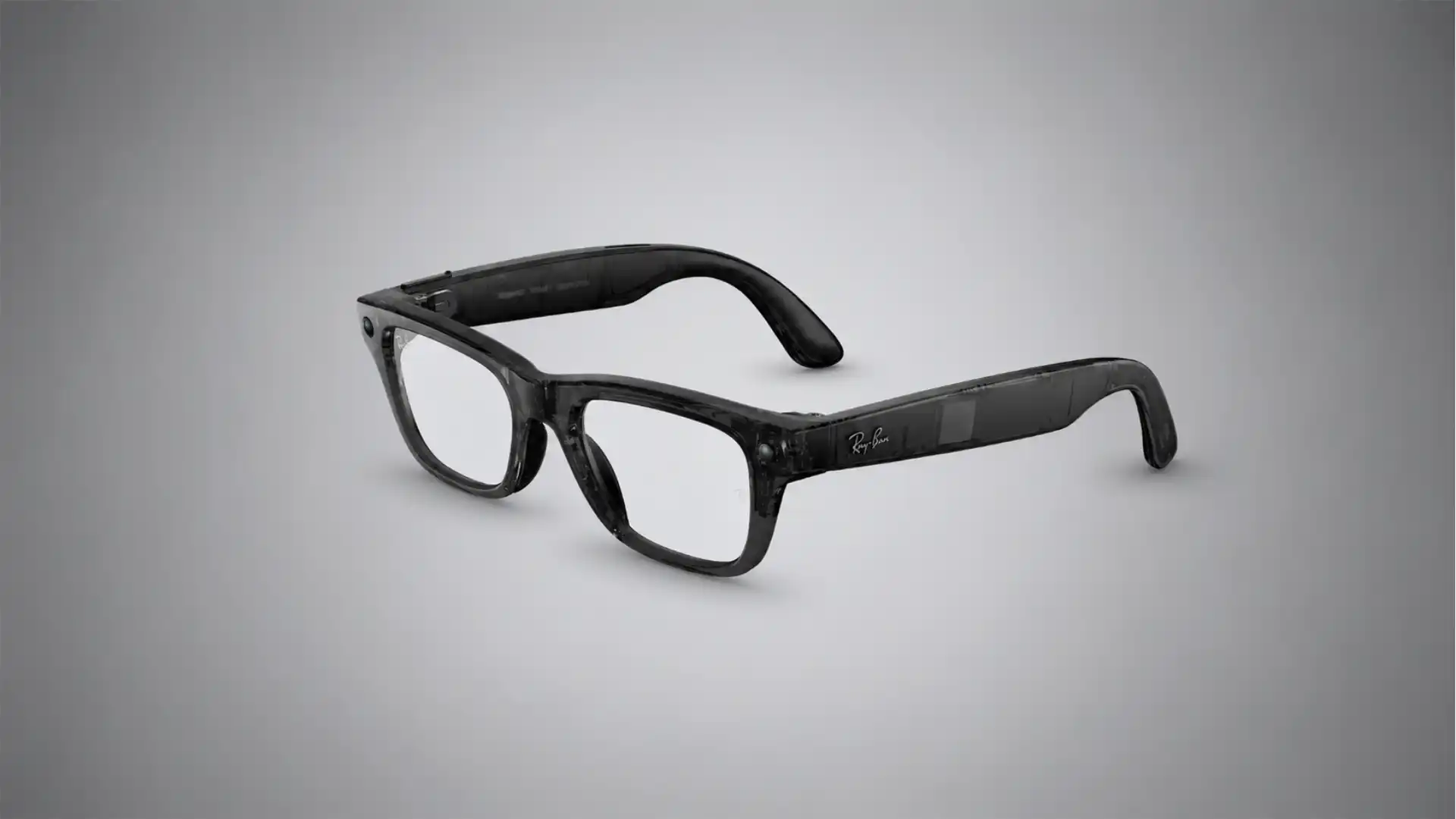
Meta’s latest face-recognition controversy is not about a feature that has been switched on for consumers. It is about a feature whose core machinery appears to have been placed inside a mass-distributed companion app before the public had a clear account of what Meta had built. WIRED reported that code for an unreleased system known internally as NameTag was embedded in Meta’s AI app, the companion app used with Ray-Ban and Oakley smart glasses, and that the app had crossed 50 million downloads on Google Play. Buchodi, the security researcher whose technical analysis sits behind much of the reporting, described a dormant but functional pipeline able to detect a face, create a biometric embedding, search a local index, and trigger a “Person Recognized” notification when manually invoked.
Table of Contents
A dormant feature can still be a public event
Meta’s defense, as reported by WIRED and other outlets, rests on a line that matters: the company says NameTag has not been released to consumers and that it has not built a central face database for the feature. That is not a small distinction. A dormant code path is not the same as an active biometric identification service. Users are not, on the available public evidence, walking around with consumer glasses that automatically identify everyone in view.
The public issue begins one step earlier. When code capable of biometric recognition is shipped inside an app used to operate camera-equipped glasses, deployment is no longer a speculative slide deck. The debate moves from “would Meta ever build this?” to “what has Meta already built, who knew, what gates exist, and what would count as consent?” That shift is why the story has spread beyond the usual cycle of product rumor and app teardown.
The timing also matters. Meta publicly ended Facebook’s broad face-recognition system in 2021, saying it would delete the face-recognition templates of users who had opted in and would limit the use of the technology across its products. The company made that move after years of lawsuits, regulatory pressure, and a wider social turn against face recognition in consumer products.
NameTag sits inside a different hardware category. A phone camera is visible in a hand. A social network photo upload has a clearer moment of action. Smart glasses fold cameras, microphones, AI assistance, and social behavior into a device designed to look ordinary. The bystander is not operating the device, has no app screen, and may not know the camera is pointed at them. That is the privacy problem that ordinary app notices do not solve.
The best reading of the evidence is narrow but serious. Meta has not publicly launched a face-recognition service for its glasses. Yet WIRED and Buchodi report that multiple parts of the pipeline were already present in shipped software, including models for detection, alignment, and recognition, local storage structures, and a notification surface.
That means the controversy should not be framed as proof that Meta is secretly identifying people in the street today. Buchodi was careful on this point, saying the system was assembled and gated, not observed running for ordinary users. The stronger point is also enough: a near-productized biometric system inside a mass app changes the trust calculus before activation.
The facts now in view
The core reported facts are direct. WIRED said it analyzed Meta’s software and found unreleased NameTag code in the Meta AI app. The app functions as a required companion for Meta’s AI glasses, according to Apple’s App Store listing, and Google Play lists the Android package with more than 50 million downloads.
Buchodi inspected version 273.0.0.21 of the Android build, known by the package name com.facebook.stella, and described three on-device models. One model detects faces, another aligns faces, and a third converts a face into a 2,048-number embedding. In face recognition, that embedding is the compact mathematical representation that lets a system compare one face with another without storing a normal photograph as the comparison object.
The technical analysis says the pipeline could be manually triggered on a test image and could fire a notification reading “Person Recognized.” Buchodi also said the public consumer user interface was not visible on a stock, unenrolled account and that no server-pushed identity data was observed in the relevant database during the test. That combination is exactly why the story is uncomfortable for Meta: the strongest evidence is not active surveillance, but readiness.
WIRED’s reporting adds another layer. It says core components were integrated into software distributed to millions of people as early as January, while Meta said in April it was still taking a thoughtful approach and “thinking through” whether to use face recognition.
That wording gap is central. Companies often prototype features, run internal builds, and ship dormant code behind flags. App stores are full of unreleased menus, test assets, and hidden experiments. Yet face recognition is not a dark-mode toggle or a draft shopping widget. It processes a person’s body into an identifier. The body belongs not only to the customer who installed the app, but to anyone the device sees.
The controversy is therefore not just whether Meta violated a rule by shipping code. The harder question is whether silent distribution of biometric-recognition capability should itself require disclosure, external review, or stronger governance when the capability is tied to wearable cameras.
A normal software company answer would be that the code is not active, the product is not released, and users will receive notice before anything changes. That answer may satisfy narrow product-management logic. It does not satisfy the social problem. Smart glasses turn every user into a possible sensor in shared space, and face recognition turns the sensor into an identity layer.
The public timeline is the story
Meta’s public face-recognition history has three chapters that now collide. In 2010 and 2011, Facebook pushed face recognition into photo-tagging workflows. In 2021, Meta shut down Facebook’s face-recognition system and said it would delete templates. In 2026, reporting says a new wearable face-recognition system is sitting dormant inside the Meta AI app.
The legal backdrop is not theoretical. Facebook’s old face-recognition practices produced a $650 million Illinois biometric privacy settlement and, later, a $1.4 billion settlement with Texas over alleged unauthorized capture and use of biometric data. Texas called its 2024 settlement the largest ever obtained from an action brought by a single state.
Meta did not admit wrongdoing in the Texas settlement, and settlements do not decide every legal question around a future glasses feature. Still, they define the company’s risk profile. No major platform has a more visible record of biometric litigation than Meta. That history makes a dormant wearable recognition pipeline more than an engineering curiosity.
The political timeline adds pressure. In February 2026, TechCrunch, citing The New York Times, reported that Meta planned to add a feature called Name Tag to smart glasses, with internal discussion around safety and privacy risks. In March, Senators Ron Wyden and Jeff Merkley demanded transparency from Meta about facial recognition in smart glasses. In April, the ACLU and 75 organizations called on Meta to cancel such plans. In June, WIRED and Buchodi reported that code was already present in the shipped app.
This sequence matters because the company’s public posture was not formed in a vacuum. Civil society groups had already warned that face recognition in smart eyewear could aid stalking, harassment, intimidation, and surveillance of vulnerable communities. Lawmakers had already asked for answers. The code discovery arrived after those warnings, not before them.
Meta may argue that app code does not reveal product intent. That is sometimes true. Yet code is also operational evidence. Internal memos can change, product roadmaps can drift, and spokesperson statements can be written broadly. A working path inside a production-distributed app tells a more concrete story about what engineers were preparing.
The narrowest conclusion is the safest: Meta had built more of NameTag than outsiders knew. The broader conclusion is interpretive, but hard to avoid: the company is testing whether face recognition can return through wearables under a different architecture and a different public story.
NameTag changes the privacy unit from user to bystander
Most consumer privacy systems assume the user is the person whose data matters. The user installs the app, accepts terms, grants camera permission, changes a setting, and can delete data later. That model breaks down when the data subject is a bystander.
A person captured by smart glasses may never see the app, never read the notice, never hold the device, never know the wearer, and never learn that an image of their face was converted into an embedding. Under many privacy laws, that person may still be the data subject. Under ordinary social expectations, that person is the one most exposed.
Wearable face recognition makes privacy relational. It is not only about what the wearer agrees to do. It is about what the wearer is allowed to do to other people’s faces in public and semi-public spaces.
That distinction is the reason smart glasses have a different privacy temperature from phones. A smartphone camera is socially legible. People see the phone come up. They can step away, object, or adjust behavior. Camera glasses are meant to be worn continuously and to blend with daily movement. Their recording indicator may help, but a small LED is a weak substitute for contextual consent.
The problem deepens when identification enters the system. A photo captures appearance. A face embedding creates a comparison-ready identifier. A notification that identifies a person turns the act of looking into a database query. The wearer no longer only sees; the device remembers and labels.
That capability might be useful in limited, consent-rich settings. A person with memory loss could identify trusted contacts. A blind or low-vision user could receive help recognizing people who opted in. A workplace could use face recognition in a controlled access setting, if local law permits and workers have real protections. Those examples should not be dismissed. Accessibility use cases are real, and wearable AI has clear value for people who need live assistance. Research and accessibility projects have shown why smart glasses attract blind and visually impaired users seeking scene description, reading support, and hands-free help.
But the same architecture changes meaning in a bar, school, clinic, protest, shelter, church, immigration office, domestic-violence support space, or workplace break room. In those settings, the bystander cannot assume the wearer’s device is passive. The device may be watching, interpreting, and eventually identifying.
This is the central policy challenge. The person who receives the benefit is not always the person who bears the risk. Consumer consent by the wearer cannot settle the rights of everyone around the wearer.
The technical finding is small enough to verify and large enough to matter
Buchodi’s analysis has value because it avoids the two common errors in biometric reporting. It does not claim ordinary users are already running NameTag in the wild. It does not reduce the discovery to “just unused code.” It describes a concrete software stack and marks what could and could not be demonstrated.
The reported stack has familiar parts. Face detection finds a face in an image. Alignment normalizes the face so that pose and position are more comparable. Embedding converts the aligned face into a vector. Matching compares that vector against stored vectors. A notification tells the wearer the system thinks a match exists.
None of that requires science fiction. Face-recognition systems have used embedding-based comparison for years. FaceNet, one of the foundational deep-learning papers in the field, described learning a compact embedding where distances correspond to face similarity. Later systems improved accuracy, speed, and deployment on lower-power hardware.
The reported NameTag components fit that pattern. The technical question is not whether this kind of pipeline can work. It can. The question is what Meta planned to do with the resulting identity layer, what datasets would populate it, where embeddings would live, whether anyone besides the wearer would consent, and whether matching would be constrained to reciprocal contacts.
Meta reportedly told WIRED it was not building a central face database. If true and enforceable, that matters. A local-only database would be less dangerous than a company-run global identity index. Yet local processing does not remove the privacy issue. A stalker does not need a central database if a device can remember a person locally. A hostile partner does not need a global face graph if the system can recognize a victim from prior captures.
On-device processing changes the threat model, not the existence of the threat. It may reduce server exposure, latency, and cloud retention. It may also make biometric recognition cheaper, faster, and easier to deploy at the edge.
The app-store scale is part of that point. Google Play’s 50M+ download label does not mean 50 million active glasses wearers. Many downloads may be ordinary Meta AI users, legacy installs, or inactive devices. But the number shows that the companion app has mass distribution. A dormant biometric pipeline inside that distribution channel is not a lab-only artifact.
NameTag reporting and verification signals
| Signal | Publicly reported detail | Privacy meaning |
|---|---|---|
| App distribution | Google Play lists Meta AI at 50M+ downloads | The code path sits in a mass-distributed app, not only an internal lab build |
| Core software | WIRED found NameTag code in the Meta AI app | The public debate now rests on shipped software, not only rumor |
| Technical pipeline | Buchodi reported detection, alignment, embedding, local index, and notification paths | The feature appears structurally close to a usable recognition flow |
| Activation status | Buchodi did not observe ordinary-user activation | The claim is readiness, not confirmed live consumer surveillance |
| Meta’s stated limit | Meta said it had not released the feature and was not building a central face database | The strongest unresolved issue is governance before activation |
This table separates confirmed reporting from interpretation. The facts support a narrower but still serious claim: Meta appears to have shipped dormant recognition machinery, while the public was still debating whether such a feature should exist.
Faceprints are not photos with a technical name
A faceprint is not just a picture stored in a strange format. It is a biometric template designed for comparison. In practical terms, a system turns a detected face into a vector of numbers and uses distance or similarity calculations to decide whether two faces are likely to belong to the same person.
That conversion is why biometric laws often treat face geometry, face templates, and similar identifiers differently from ordinary images. Illinois’ Biometric Information Privacy Act includes a scan of face geometry within its definition of biometric identifiers. Texas’ biometric law covers records of hand or face geometry and requires notice and consent for commercial capture.
The distinction matters for NameTag. If a pair of smart glasses records a video, the privacy analysis may involve recording consent, app permissions, platform policy, and data retention. If software extracts a face embedding from a bystander, the analysis becomes biometric. The data is not merely content; it is an identifier extracted from a human body.
The technical history of face recognition makes this clear. Embedding-based systems are built so that comparison becomes cheap and repeatable. A raw image may be messy: lighting, angle, motion blur, expression, and occlusion all vary. A good embedding compresses what the model considers identity-relevant features into a form that can be searched at scale or matched locally.
That is why “stored locally” cannot be the full answer. A local faceprint can still support repeated recognition, social tracking, and unwanted memory. The harm is not only breach risk. It is the creation of a persistent relationship between a person’s face and an identity label inside someone else’s device.
Meta’s old Facebook face-recognition templates were tied to photo tagging and platform accounts. NameTag, as reported, would operate through glasses in physical space. That means the boundary between online identity and offline presence starts to blur. A person’s face at a party, in a clinic waiting room, or at a protest could become the trigger for a name, profile hint, or remembered connection.
The social problem is not that the faceprint is abstract. It is that abstraction makes recognition portable. Once the system has the vector, the device does not need to store the original moment in a human-readable way to keep the power of identification.
This is why privacy advocates react so strongly to biometric templates. People can change a password, get a new phone number, stop using an app, or delete a profile. They cannot easily change their face. They also cannot reliably tell whether a stranger’s glasses have processed it.
Meta’s 2021 rollback now looks less final
Meta’s 2021 announcement was framed as a company-wide move to limit face recognition. It said Facebook’s Face Recognition system would be shut down, automatic recognition in photos and videos would stop for people who opted in, and templates used to identify them would be deleted. The company also acknowledged wider concerns about the place of face recognition in society.
At the time, the decision looked like a retreat from one of Facebook’s most controversial data practices. The company still kept room for narrower uses, such as identity verification and fraud prevention, but it stepped back from broad social recognition.
NameTag complicates that narrative. If a company says it is limiting face recognition, then later builds a recognition system for camera glasses, the public will ask whether the old practice was rejected or merely relocated. The technical setting changed. The moral question did not.
A fair analysis should separate the systems. Facebook photo tagging and wearable NameTag are not identical. The old system operated on photos and videos within a social network. The new reported system is tied to eyewear, on-device inference, and likely local or user-specific connections. Meta can plausibly argue that different design choices produce different privacy risks.
Yet difference is not absolution. Wearables may increase risk because they remove friction from capture. A Facebook photo had to be uploaded. A smart-glasses view may arrive during normal movement. The bystander’s chance to understand the event is smaller.
The 2021 rollback also shapes trust because it created an expectation. Meta did not merely say one feature was ending. It said society had many concerns and that regulators had not provided clear rules. It positioned itself as limiting use while public rules matured.
Those public rules have now matured in some places. Europe has the AI Act layered on top of GDPR. Illinois and Texas have biometric statutes with real settlement history. Civil-society groups have hardened their opposition to wearable face recognition. Against that backdrop, shipping dormant NameTag code looks less like cautious restraint and more like product preparation under reputational cover.
This is not proof of bad faith. It is a trust deficit created by sequence. Meta shut down one large face-recognition system, paid or agreed to massive biometric settlements tied to past practices, and then appears to have placed a new recognition pipeline inside the app for its AI glasses. That sequence demands a fuller public explanation than “not launched.”
The legal risk is already written into Meta’s past
Meta’s past biometric cases are not just history; they are a map of future exposure. Illinois BIPA and Texas CUBI both focus on notice, consent, biometric identifiers, retention, and use. The statutes differ, and wearable face recognition would raise new questions, but the basic risk is plain: capturing or processing face geometry without clear consent can become expensive.
The Illinois settlement matters because BIPA allows private lawsuits. The Texas settlement matters because state enforcement can produce enormous penalties even without a private class-action path. Meta’s $1.4 billion Texas agreement resolved allegations about Facebook’s old Tag Suggestions feature, not NameTag. Yet the underlying theme is close enough to alarm lawyers: biometric capture for commercial purposes without authorization.
A glasses feature would also create harder consent questions than a social-network setting. If a Facebook user turned on face recognition for their own account, at least the company could point to a user-level notice. If a glasses wearer turns on NameTag, what happens to everyone else in view? Does Meta need consent from the wearer, the recognized person, both, or only people already in a mutual contact graph? What if the person is in a state or country with stricter biometric rules? What if the glasses cross a border?
The Texas law’s wording is especially relevant because it speaks to “capturing” a biometric identifier for a commercial purpose and requiring notice and consent prior to capture. A local-only embedding created on the wearer’s phone may still count as capture depending on facts and legal interpretation. The company’s commercial purpose may be debated, but a consumer product sold by Meta and tied to its AI app will not look like private hobby use.
Illinois BIPA defines biometric identifiers to include scans of face geometry and sets duties around retention schedules, written policies, and informed written consent. Even after Illinois amended BIPA in 2024 to limit repeated-violation damages, the statute remains one of the central US biometric privacy laws.
Europe adds a different layer. GDPR treats biometric data used to uniquely identify a person as special-category data, subject to strict limits and legal bases. The EU AI Act places special controls around biometric identification and classification, especially in public spaces and law-enforcement contexts. A consumer smart-glasses feature is not the same as police real-time remote biometric identification, but Europe’s legal direction is unmistakable: biometric identification is treated as a high-risk social technology, not a normal app feature.
Meta’s lawyers know this. That is why the open question is not whether NameTag can be launched with a toggle. The question is whether any launch design can survive the combined force of state biometric statutes, EU privacy law, consumer-protection rules, product-safety expectations, app-store disclosures, and reputational harm.
Consent becomes fragile when the camera is on someone else’s face
A wearer can consent to using a device. A bystander cannot meaningfully consent to a hidden computation they cannot observe. That is the broken hinge in wearable face recognition.
Meta could require the wearer to opt in. It could show a tutorial. It could display a warning saying the user must follow local law. It could require users to add contacts manually. It could store templates only on-device. Those controls might reduce risk. They do not solve the bystander problem.
True consent has to be informed, specific, and freely given. A person walking past a wearer in public does not receive a specific request. A child in a school hallway does not negotiate app terms. A worker facing a manager wearing smart glasses may not feel free to object. A person in a domestic-abuse context may be placed at risk by the very fact of recognition.
The harder the device is to notice, the weaker consent becomes. Smart glasses are marketed partly because they fit into normal life. That same feature reduces the public’s ability to know when data collection is happening.
Recording lights are a partial answer for capture, not for recognition. A light can indicate that a camera is active. It does not tell the bystander whether the frame is being processed for face embeddings, sent to cloud AI, stored locally, associated with a contact, or used to trigger a notification.
The reported modding of Ray-Ban Meta recording lights makes the issue more concrete. 404 Media reported in 2025 that a hardware modification could disable the privacy indicator while preserving glasses functions, and TechRadar covered the concern again as part of the wider privacy debate. Even if Meta designed the LED as a safeguard, any bypass shows how fragile visual notice can be when hardware reaches the wild.
The consent problem also extends to social norms. People already tolerate some amount of public photography. They do not necessarily tolerate automated identification. A tourist taking a photo in a square is not the same as a stranger’s glasses recognizing attendees at a political meeting.
The law may eventually draw clean lines, but the social rule is already visible. People object less to being seen than to being classified, remembered, and named by someone else’s machine. NameTag, by design, points toward naming.
The accessibility argument is real but cannot carry the whole product
Any fair assessment has to address accessibility. Wearable AI can help blind and low-vision users interpret the world, read signs, understand scenes, and identify trusted people. Meta has already partnered around accessibility uses, and independent research has explored how Ray-Ban Meta glasses can become platforms for visual assistance.
Face recognition can be especially useful in narrow accessibility cases. Recognizing a friend at a conference, a coworker in a hallway, or a family member approaching from a distance may improve independence. For people with prosopagnosia, memory conditions, or vision loss, a well-designed recognition aid can reduce stress and social friction.
The mistake would be to treat accessibility as a blank check. A feature that helps some users in consent-rich settings can still endanger others in public settings. Accessibility design needs guardrails that preserve the benefit without turning every face nearby into a target.
A strong accessibility version of NameTag would look very different from a general social-recognition product. It would require reciprocal enrollment, clear indicators, narrow databases, strong deletion rights, no scraping from social profiles, no recognition of non-enrolled bystanders, no inferred identity from public web data, and hard limits on sharing. It would also need independent testing with disability communities and privacy advocates, not only product teams.
The ACLU coalition explicitly warned that Meta might present face recognition as an accessibility tool while exposing abuse victims, immigrants, protesters, and other vulnerable groups to harm. Whether one agrees with the coalition’s language or not, the tension is real. A feature can be useful to one vulnerable group and dangerous to another.
The responsible design question is not “accessibility or privacy.” It is whether Meta can build an accessibility feature that refuses to become a general-purpose identity scanner. That is much harder than shipping a model behind a toggle.
Meta could choose a narrow path. It could support opt-in recognition only for people who explicitly enroll with the wearer, perhaps through mutual contact confirmation and visible device-level cues. It could ban recognition of strangers. It could avoid pulling names, profiles, employers, or other information from Meta accounts. It could publish technical audits and retention limits before release.
But those choices reduce the magic of the product. A constrained accessibility feature will not be the same as walking through a room and knowing who everyone is. That commercial temptation is the heart of the issue.
The smart-glasses market needs trust more than spectacle
Meta has invested heavily in AI glasses because they offer something phones do not: hands-free, first-person context. The camera sees what the wearer sees. The microphone hears what the wearer hears. The assistant can answer questions tied to the surrounding world. That is the product promise.
It is also the trust problem. A phone is a device you take out. Glasses are a device you live through. The more useful they become, the more they collect. The more they collect, the more public tolerance becomes the limiting factor.
Ray-Ban Meta glasses succeeded partly because they avoided the social awkwardness that damaged earlier smart-glasses efforts. They looked like familiar eyewear. They had brand credibility from Ray-Ban. They delivered obvious consumer functions: photos, video, audio, calls, livestreaming, and AI prompts. They did not ask users to wear a bulky headset in public.
NameTag threatens that balance. A camera in ordinary glasses is already socially sensitive. A camera that can identify people is a different category. Even people who accept casual recording may reject ambient identification.
The market impact could cut two ways. A subset of users will want NameTag because it sounds powerful. Sales demos would be easy. “Remember everyone you meet” is a tempting pitch. Network effects could follow if recognition ties into Meta’s social graph.
But the backlash could damage the category. Restaurants, schools, gyms, offices, courts, hospitals, shelters, and venues may restrict or ban camera glasses if they become associated with covert identification. Regulators may draw rules that cover the entire class of devices, including privacy-preserving competitors. Trust lost by one dominant company can set the ceiling for everyone else.
The business risk is not only fines. It is social rejection. Google Glass did not fail only because of price or design; public discomfort with recording played a role in the device’s cultural stigma. Meta’s glasses have avoided that label so far by looking familiar and offering practical features. NameTag could revive the oldest fear around face computers: a person wearing them is not just present, but scanning.
This is why the feature toggle is not the core risk. Meta may never activate NameTag. It may rewrite the system. It may limit it to small trials. Yet the discovery already tells consumers, lawmakers, and venues that the capability is closer than public assurances suggested. That perception can be enough to change behavior.
App-store disclosure is becoming part of biometric governance
App stores are not biometric regulators, but they are distribution chokepoints. If a feature capable of face recognition sits inside an app downloaded tens of millions of times, Apple and Google become part of the governance picture even when the code is dormant.
The Meta AI app’s Google Play listing says the app is a personal AI assistant and shows 50M+ downloads. Apple’s listing describes the Meta AI app as the required companion app for managing AI glasses from Meta, importing and sharing media, and more.
Those listings matter because they are where users often look for permissions and product claims. A hidden or dormant biometric pipeline raises a disclosure question: at what point must an app listing, privacy label, or permission explanation tell users that face-recognition code exists?
Developers often ship dormant code. Platforms generally review active functionality and declared data practices, not every possible path. But biometric recognition tied to camera hardware may deserve a higher standard. The existence of dormant code can still create risk if activated remotely, tested with enrolled users, or exploited through bugs.
A stronger app-store rule could require clear disclosure for biometric processing capabilities present in production builds, even if unavailable to ordinary users. That would be a major shift. Companies would object that it exposes experimental work and confuses users. Privacy advocates would answer that biometric code is not normal experimentation when shipped to consumer devices.
The app-store layer is attractive because it reaches companies before harm scales. Lawsuits often arrive after data has been captured. Platform review can force explanation before deployment.
Yet platform governance has limits. Apple and Google have their own incentives, their own AI ambitions, and their own uneven enforcement histories. They are not democratic regulators. Still, when one company distributes biometric capability through another company’s store, responsibility becomes shared.
NameTag may push that debate forward. It asks whether app stores should treat dormant face-recognition systems like latent permissions. A user cannot make an informed decision if the most sensitive capability is hidden behind a future flag.
On-device AI is not automatically privacy-preserving
Tech companies often describe on-device AI as a privacy-friendly architecture. The claim has merit. Processing data locally can reduce cloud transmission, lower breach exposure, and give users faster responses. Meta and the PyTorch ecosystem have promoted ExecuTorch and related tooling for running AI models across phones, embedded systems, and Meta devices.
But on-device AI is not a privacy guarantee. It is an architectural choice. A local model can respect privacy, or it can make surveillance easier by removing the need for a server round trip.
NameTag shows the difference. If face embeddings are created and stored only on the user’s phone, that may protect against some cloud risks. It may also allow a wearer to identify people without Meta ever seeing each match. That sounds better from one angle and worse from another. The company could claim it is not centrally tracking faces, while the wearer gains a private recognition machine.
Privacy analysis cannot stop at data location. It must ask who controls the inference, who is targeted, who receives the output, and who can refuse. Local processing helps only if the surrounding product rules are strict.
A local face database can still leak if the phone is compromised. It can still be abused by the wearer. It can still be backed up, transferred, shared, or synced later if product incentives change. It can still misidentify someone and produce social consequences.
The edge-AI trend also reduces deployment friction. Models that once required cloud GPUs can now run on phones, wearables, or nearby devices. Research on efficient face detection, embedding models, and smart-glasses inference shows the technical direction clearly: perception is moving closer to the body.
That movement has benefits. It can reduce latency for accessibility, translation, navigation, safety, and context-aware assistance. It can also create a world where sensitive inference happens everywhere, by default, and outside the sight of the people being inferred upon.
For regulators, this means old cloud-centric privacy tests are incomplete. A company may say it does not upload biometric data. That answer should be followed by more questions: Does the device create biometric templates? Who can enroll someone? Can templates be exported? Can the wearer share recognition results? Are non-users processed? How are bystanders notified? Can a person opt out globally?
NameTag is a preview of those questions.
The “central database” denial does not end the debate
Meta’s reported statement that it is not building a central face database is meant to reassure. It draws a line between a feared global identity engine and a more limited, perhaps local system. The line matters, but it is not the whole privacy boundary.
A central database would be dangerous because it could allow recognition of many people across many wearers, locations, and contexts. It could tie physical presence to platform identity. It could expose non-users. It could become a target for governments, litigants, hackers, and internal misuse.
A local-only system is narrower. It may recognize only people the wearer has stored or met. It may not give Meta a live map of recognition events. It may reduce the chance of mass centralized abuse. Those are real differences.
Yet many harms do not require centralization. Stalking is local. Workplace intimidation can be local. Domestic abuse can be local. Doxxing can start with one person’s device. Harassment can begin with a name displayed to someone who should not have it. Misidentification can cause conflict even if no server receives the faceprint.
The bystander cares less about where the database sits than about whether a stranger’s device can identify them. Local storage may satisfy one engineering concern while failing the social test.
The central-database denial also leaves unanswered whether Meta accounts, contacts, social graph data, or photo libraries could feed the system. A face database does not need to be branded as one giant database to create identity power. If user-specific embeddings are derived from profile photos, contact photos, previous captures, or shared interactions, the system may still connect faces to social identity.
A careful public explanation would answer the following: no scraping from Facebook, Instagram, Threads, or WhatsApp profile photos; no recognition of people who did not enroll; no hidden enrollment from incidental captures; no cloud syncing of faceprints; no API access for third parties; no law-enforcement access path outside valid legal process; no retention after relationship deletion; no children’s templates; and no recognition in sensitive locations. Meta has not, as of the reporting reviewed here, provided that level of detail.
That is why trust remains thin. A denial of the worst architecture does not define the actual one.
Wearable recognition creates a venue problem
Public policy usually separates private space from public space. Smart glasses blur that distinction. A wearer moves through homes, streets, buses, offices, stores, hospitals, schools, airports, gyms, religious spaces, and political meetings with the same device on their face.
A venue that permits phones may not want camera glasses. A venue that permits camera glasses for photos may reject face recognition. A workplace that allows assistive devices may need to protect coworkers from biometric monitoring. A school that supports accessibility may need rules for minors. A hospital may need to protect patients whose presence itself is sensitive.
NameTag would force venues to decide whether eyewear is just eyewear or a sensor platform. That decision cannot be left to a small LED and a user policy.
The venue problem is hard because bans can harm people who need glasses for accessibility. A blanket “no smart glasses” rule may exclude blind users, disabled users, journalists, or workers who rely on hands-free assistance. A no-face-recognition rule is more targeted, but enforcement is difficult because bystanders cannot inspect code paths on someone’s phone.
This creates pressure for device-level trust signals. The public needs to know not only when a camera is recording, but which sensitive functions are active. A recording light is not enough if recognition, transcription, translation, cloud analysis, or memory are separate modes.
Some researchers are already exploring bystander privacy controls for camera-equipped devices, including systems that let bystanders signal preferences in real time. Those ideas are early, but they show the direction regulation may take: bystanders need agency, not just wearer controls.
In practice, most venues will not wait for perfect tools. They will write simple rules. If the category becomes associated with covert identification, the rule will be “take them off.” That would hurt Meta, competitors, and users with legitimate needs.
This is the commercial price of moving too quickly. When a company treats biometric recognition as a feature, venues may treat the whole device as a threat.
Children raise the hardest version of the question
Face recognition around children is especially sensitive. Children cannot fully assess biometric systems, cannot negotiate with adults wearing cameras, and may be captured in schools, playgrounds, clinics, homes, and public events. Their face data could persist for years if systems are poorly designed.
NameTag, as reported, is not active for consumers, and there is no public evidence that Meta is processing children’s faces through the system today. The policy issue is what must be true before any such system exists near children.
A safe design would need hard child protections. That means no enrollment of minors without strict guardian consent and meaningful child safeguards, no recognition of children by non-family users, no use in schools without institutional controls, no social-graph extraction from youth accounts, and fast deletion.
The challenge is that the device does not know the setting by default. A wearer can walk into a school pickup line, a youth sports match, or a family gathering. The camera sees whoever is in frame. If the system processes faces before deciding whether to recognize them, children may still be detected and embedded transiently.
That distinction matters. Some systems detect a face to decide what not to process. Others create embeddings before filtering. Privacy law and product safety need technical clarity: does the device merely detect that a face exists, or does it derive a comparison-ready identifier?
For children, even temporary biometric processing can be socially unacceptable if there is no strong need and no bystander consent. The fact that an embedding is not saved may reduce risk, but it does not erase the act of biometric processing.
Meta’s past youth-privacy controversies would make any child-related biometric issue politically explosive. A wearable face-recognition feature could quickly become a child-safety debate, not just a privacy debate. Schools and parents are likely to be far less tolerant than tech enthusiasts.
If Meta wants any face-recognition capability in smart glasses, it will need child-specific public commitments before launch. Silence will be read as avoidance.
Misidentification is not a software bug when the output is a person’s name
Face recognition systems can make mistakes. Modern systems can be highly accurate under controlled conditions, but performance depends on image quality, lighting, angle, demographics, training data, thresholds, and use case. NIST has documented demographic effects and performance differences across face-recognition algorithms, while academic work has long shown that recognition at scale and in uncontrolled conditions is technically complex.
A smart-glasses environment is not a passport booth. People move. Faces are partially occluded. Lighting changes. The wearer may glance quickly. The image may be off-angle. The model may compare against a small and messy local gallery.
Misidentification in this context has social consequences. A wearer may approach the wrong person with private information. A user may think they recognize someone who is actually a stranger. A harasser may use a false match as an excuse to engage. A workplace or school setting may treat a wrong identity as evidence.
When the output is a person’s name, the margin for error is not only technical. It is social. The device changes how the wearer behaves toward the person in front of them.
Threshold design becomes central. A system can be tuned to avoid false positives by requiring high confidence, but that creates false negatives. It can be tuned to recognize more people, but that increases the chance of wrong matches. Product teams often choose thresholds based on user experience. For biometric identification in public, the threshold should be governed by harm.
A cautious design might refuse to name anyone unless confidence is extremely high and enrollment is explicit. It might show uncertainty rather than a name. It might restrict outputs to “someone you have enrolled” rather than “John Smith from Instagram.” It might log every match for audit. It might require the recognized person to approve enrollment.
But cautious design again weakens the product pitch. The more the system hedges, the less magical it feels. That tension between safety and wow-factor is where risky consumer AI features often go wrong.
Meta would also need to address demographic performance publicly. It is not enough to say the model is accurate. The company would need to publish evaluation methods, demographic slices, real-world smart-glasses conditions, false-positive rates, and refusal rates. NIST testing can inform the debate, but product-specific deployment needs product-specific evidence.
The social graph is the hidden accelerant
Meta is not just a hardware company. It operates Facebook, Instagram, WhatsApp, Threads, Messenger, and a large advertising business. That makes any face-recognition feature more sensitive than it would be from a small assistive-device maker.
The social graph could make recognition powerful. Meta already knows relationships, contacts, profile photos, tagged images, messages, groups, events, workplaces, schools, and location-like signals across products, subject to legal and policy limits. Even if NameTag never uses most of that data, the public will assume the possibility unless Meta rules it out.
That assumption is rational. Facebook’s old photo-tagging system used facial recognition to suggest who appeared in uploaded photos. The Texas lawsuit and Illinois case were tied to that history. Meta’s 2021 rollback promised deletion of face-recognition templates for users who had opted in.
NameTag could, in theory, be built without social-graph data. Users could manually enroll people from live consent. Faceprints could stay local. Names could be nicknames chosen by the wearer. No Meta profile data would need to be involved.
But a limited local notebook is not the only possible version. A more tempting version would tie recognition to “people you met,” contacts, followers, messages, event attendees, or profile identity. Buchodi reported a “Connections” widget in the dormant stack, which is a word that naturally raises questions about social identity and memory.
The social graph turns face recognition from memory aid into identity infrastructure. That is the line Meta must not cross without public consent, legal clarity, and external review.
The risk is not only that Meta would build one giant biometric database. It is that separate systems could combine over time. A local faceprint here, a contact suggestion there, a profile link somewhere else, a memory feature in the app, a search function later. Consumer platforms often accrete capability incrementally. Privacy harm grows through connection.
For this reason, Meta should be judged not only on NameTag v1, if it ever appears, but on binding limits around future integration. A launch blog post is not enough. The company would need durable policy commitments, technical enforcement, and auditability.
Civil society has moved faster than the product launch
The public opposition did not wait for activation. The ACLU and 75 organizations warned in April that adding face recognition to Ray-Ban and Oakley glasses would threaten privacy and civil liberties, with special risks for abuse survivors, immigrants, protesters, LGBTQ+ people, workers, children, and others.
EFF’s Threat Lab later said it confirmed the presence of facial-recognition code through static analysis after WIRED’s reporting, and framed the issue as part of a broader warning about always-on smart eyewear.
Senators Wyden and Merkley demanded transparency from Meta in March, asking about its plans to integrate facial recognition into smart glasses. Senator Markey also joined public pressure around the issue, according to Senate materials and advocacy coverage.
This matters because Meta cannot credibly say the concern was unforeseeable. The warnings were specific. They named stalking, harassment, doxxing, abuse, immigration enforcement, protest surveillance, and public chilling effects. They focused exactly on the bystander problem.
A company might disagree with those groups. It might say civil-liberties organizations overstate harm, ignore accessibility benefits, or resist useful technology. But disagreement is not a substitute for governance. If a feature touches rights, the company has to answer rights-based objections directly.
The burden has shifted to Meta to show a design that cannot become the abuse case. That is a higher bar than showing a design that has friendly use cases.
The civil-society response also changes the news cycle. In older tech controversies, companies launched features and faced criticism afterward. Here, advocacy groups are trying to stop the launch before it happens. The code discovery gives those groups fresh evidence that the product path is already advanced.
Regulators may not need to prove harm has occurred to ask questions. Consumer-protection law often looks at unfair or deceptive practices before catastrophe. Biometric statutes may focus on capture and consent. App stores may focus on disclosure. The earlier a system is in the product funnel, the easier it may be to change.
That is why the dormant-code stage is exactly when scrutiny belongs.
Regulators will care about the gap between public posture and shipped code
The most legally sensitive part of the story may not be the models themselves. It may be the gap between Meta’s public statements and what was present in production-distributed software.
WIRED reported that Meta had described the technology as something it was still thinking through in April, while core components had been integrated into software as early as January. Meta can argue that thinking through a product includes building prototypes. That argument has merit. Complex technology is often built before a launch decision.
The counterargument is that consumer trust depends on candor when a sensitive capability is already shipped behind gates. If the company’s public language suggests an early deliberation stage while a near-working pipeline sits on user devices, regulators may ask whether consumers, lawmakers, and app-store reviewers received a fair picture.
This is especially relevant for AI features because companies increasingly use server-side flags, remote asset delivery, and staged rollouts. A product can be “not launched” to the public while its parts are already present, downloadable, and testable. The legal meaning of launch becomes slippery.
For high-risk AI, the law may need a concept of pre-deployment disclosure. A company should not be able to avoid scrutiny until the moment it flips the flag, especially when the code is already on consumer devices.
The EU AI Act already distinguishes providers, deployers, putting into service, and use, although applying those categories to dormant consumer code will be complex. GDPR may care about actual processing of personal data, not only code presence. US biometric statutes may focus on capture. Consumer-protection agencies may focus on representations and omissions.
Regulators could ask a factual sequence:
When was NameTag code first added to production builds? Which users received models? Were any employees, contractors, beta testers, or enrolled users able to activate the system? Were any real people’s face embeddings created? Were any embeddings derived from Meta account photos? Did app-store privacy disclosures mention the capability? Did Meta brief lawmakers accurately? Did it conduct a biometric privacy impact assessment? Did it test demographic performance? Did it seek external review?
Those questions do not assume wrongdoing. They define the minimum audit trail.
The AI Act and GDPR make Europe a difficult launch zone
Europe would be a hard place to launch wearable face recognition at consumer scale. GDPR already treats biometric data used for uniquely identifying a natural person as special-category data, which is restricted unless a specific legal condition applies. The EU AI Act adds rules around biometric identification, biometric categorization, and risk management, with particularly strict treatment for real-time remote biometric identification in publicly accessible spaces by law enforcement.
A Meta consumer product would not map neatly onto every AI Act category. It is not necessarily a law-enforcement system. It may be local. It may recognize only enrolled contacts. It may not be used for remote identification in the statutory sense if designed narrowly.
Even so, Europe’s legal culture is hostile to casual biometric identification. A feature that identifies bystanders through glasses would likely trigger GDPR questions around legal basis, explicit consent, purpose limitation, data minimization, transparency, retention, rights of access and erasure, and data-protection impact assessment.
The core European problem is consent from non-users. If a person’s face is processed to identify them, and that person did not install the app, Meta cannot rely on ordinary app consent. If the company says the wearer is the controller, Meta must still explain its own role in providing the system, designing the model, distributing updates, and possibly receiving telemetry.
Data minimization would also bite. Is it necessary to create face embeddings of people in view? Could the feature be limited to voluntary QR-style introduction, Bluetooth exchange, or mutual contact confirmation? Could accessibility needs be served through a narrower tool?
The AI Act’s broader signal is that biometric systems are not being treated as normal software. The regulation’s text and structure place identity-related AI in the most sensitive zone of the law.
Meta has a long history with European privacy regulators, and any launch would likely attract scrutiny from data-protection authorities, consumer regulators, and civil-society litigants. The company may decide that Europe is too risky for NameTag, at least at first. But geographic limits do not solve the global product issue. Devices travel. App builds leak. Users cross borders. Online tutorials spread.
A US-only or limited-market launch could still affect European bystanders if the feature remains available on a traveler’s device. That is why location-based compliance is technically hard for wearables.
US law is fragmented but dangerous
The United States does not have one federal biometric privacy law covering every NameTag scenario. That does not make the US safe for launch. It makes the risk fragmented.
Illinois BIPA, Texas CUBI, Washington’s biometric law, state consumer privacy laws, unfair and deceptive practices law, sector-specific rules, wiretapping and recording statutes, children’s privacy laws, and venue-specific policies could all become relevant. The legal map changes by state, by use case, and by data flow.
Illinois and Texas matter most because Meta has already felt their force. The Illinois settlement showed the cost of private biometric litigation. The Texas settlement showed the cost of state enforcement. The same company, the same broad technology family, and the same public suspicion now surround smart glasses.
A future NameTag launch would raise questions under both statutes if face geometry or biometric identifiers are captured for a commercial purpose without proper consent. The company could design around some risk. It could disable the feature in certain states. It could require mutual opt-in. It could avoid saving templates. It could geofence. It could use age gates. It could place responsibility on the wearer.
Each workaround creates product friction and enforcement problems. Geofencing wearable identity recognition is not simple. People move. Phones mislocate. Offline use complicates rules. A wearer can capture someone from another state. A bystander may be a resident of a stricter jurisdiction even while traveling.
Fragmented law gives Meta room to maneuver, but it also creates many tripwires. A single national launch would be exposed to the strictest states, the most aggressive attorneys general, and private litigants looking for test cases.
The Federal Trade Commission could also look at the issue through unfairness or deception, especially if disclosures were weak, settings were confusing, or biometric processing exceeded user expectations. EPIC has already urged enforcement interest around Meta’s plans, according to its public materials and coverage.
US lawmakers may not pass a biometric law quickly. But hearings, letters, state bills, and enforcement actions can still shape the market. Meta knows this pattern well.
Legal pressure points around wearable face recognition
| Legal or policy area | Core question for NameTag | Practical exposure |
|---|---|---|
| Biometric privacy statutes | Were face geometry or templates captured with proper notice and consent? | State enforcement, class actions, injunctions, damages |
| GDPR | Was biometric data processed to uniquely identify a person with a valid legal basis? | EU data-protection probes, fines, processing bans |
| EU AI Act | Does the system fall within regulated biometric identification or categorization rules? | Risk-management duties, transparency duties, market restrictions |
| Consumer protection | Did Meta’s public statements and app disclosures match the real capability shipped? | FTC or state AG scrutiny, consent orders |
| Venue and workplace rules | Can schools, employers, hospitals, and venues control recognition devices? | Bans, lawsuits, labor disputes, insurance pressure |
The legal risk is not a single statute with a single answer. The danger for Meta is overlap: biometric law, AI law, consumer law, and venue rules all point toward stricter treatment of identity recognition in public.
The abuse cases are not edge cases
Technology companies often treat harmful use cases as edge cases. With wearable face recognition, many of the most feared abuses are predictable enough to be product requirements.
A stalker wants to know whether a target is nearby. An abusive partner wants to identify people around a victim. A pickup artist wants to film and identify women in public. A political extremist wants to recognize opponents. A private investigator wants to track people. A hostile employer wants to monitor workers. A school bully wants names attached to faces. A scammer wants context to manipulate a target.
These are not rare technical fantasies. They follow from the basic capability: look at a person, receive an identity cue, act on it.
The ACLU coalition focused on these risks because face recognition changes the power balance in a public encounter. A person who does not know they are being identified cannot choose what to disclose. Their face becomes a search input.
The risk is sharper for people who rely on anonymity or selective disclosure. Survivors of domestic abuse, undocumented immigrants, trans people, protesters, journalists, labor organizers, patients, and children may all have safety reasons to keep identity context limited. Smart glasses collapse that boundary if the system connects faces to names or social profiles.
The abuse case does not require hacking Meta. It requires using the product exactly as feared. That is the hardest safety problem.
A narrow design can reduce abuse. No stranger recognition. No web search. No social-profile matching. No hidden enrollment. No recognition without reciprocal consent. No exports. No screenshots of recognition cards. No API. Strong logs. Easy reporting. Fast revocation.
But each restriction must be enforced technically, not only written in terms of service. Bad users do not stop because a policy says they should. If the model allows local enrollment from a captured face, abuse remains easy.
Meta’s past experience with unwanted recording and LED modification should make the company cautious. Once hardware is in the world, users repurpose it. Once code exists, researchers, modders, and attackers look for paths around gates. The safest abuse case is one the product cannot perform.
The feature could chill ordinary public life
A society can function with cameras. It has a harder time functioning with ambient identity checks. People behave differently when they believe strangers can identify them automatically.
The chilling effect is not limited to protests. It can affect dating, religious practice, medical visits, union meetings, support groups, nightlife, schools, and ordinary movement through cities. A person may decide not to attend an event if smart glasses could identify them. A worker may avoid conversations if a manager’s eyewear might remember faces. A teenager may feel watched in spaces that once felt casual.
The harm is partly psychological and partly practical. The psychological harm is the sense that anonymity is gone. The practical harm is that identity information can be used for harassment, discrimination, targeting, or exclusion.
Public life depends on partial anonymity. Not absolute anonymity, and not immunity from being seen, but the ordinary friction that prevents every glance from becoming a search.
Face recognition lowers that friction. Smart glasses lower it further because the capture device is worn at eye level and requires little action. AI assistants lower it again by turning recognition into conversation, memory, and suggestion.
A feature like NameTag would not need mass adoption to alter norms. A small number of devices in sensitive spaces could create suspicion. People do not know which glasses are smart, which are recording, or which have recognition. Uncertainty itself chills behavior.
This is the public-good argument against general wearable face recognition. Even if many individual users behave responsibly, the presence of the capability can make everyone else feel less free.
Meta’s business incentives point toward normalization. If enough people wear the glasses, social discomfort fades. That is how many consumer technologies enter public life. But biometric identity is not like earbuds. Normalizing it may reduce visible objection while deepening invisible risk.
NameTag arrives inside the race for ambient AI
The NameTag story is not isolated. Every major AI company is chasing more context: visual context, audio context, location context, personal memory, messages, calendar, contacts, and real-world intent. Smart glasses are attractive because they sit at the edge of perception.
Research on always-on smart-glasses agents shows the direction. VisionClaw, for example, explores smart glasses that continuously perceive real-world context and connect perception to agentic task execution. SUPERGLASSES benchmarks vision-language systems for smart-glasses question answering using real-world egocentric data.
These projects are not inherently bad. They show why wearable AI can be useful. A device that sees what the user sees can help with navigation, shopping, accessibility, translation, note-taking, maintenance, learning, and safety. The potential utility is real.
But ambient AI creates a structural appetite for sensors. The assistant becomes better when it knows more. It answers better when it sees. It personalizes better when it remembers. It predicts better when it links people, places, objects, and routines.
Face recognition is the identity layer of ambient AI. It tells the assistant not only what is in front of the wearer, but who is in front of the wearer.
That identity layer is commercially powerful. It could support social memory, networking, sales, customer service, personal relationship management, safety alerts, and advertising inference. It could turn offline encounters into platform events. It could make the glasses feel like a true companion.
It is also the layer most likely to trigger backlash. Object recognition tells you that a plant is a plant. Text recognition reads a sign. Face recognition names a human being who may not have chosen to participate.
This is where AI product strategy meets civil liberties. Companies want assistants that understand the world. People want to move through the world without being processed by every assistant nearby. The boundary between those desires will define wearable AI.
The advertising question cannot be ignored
Meta makes most of its revenue from advertising. That fact shapes how consumers interpret any new sensing feature, even when the feature is not directly an ad product.
The company may say NameTag would not feed ads. It may say biometric data would stay local. It may say recognition outputs would not be used for targeting. Those promises would need to be explicit and binding because the public will assume otherwise.
Smart glasses produce unusually rich context. What the wearer looks at, where they go, whom they meet, what products they handle, what signs they read, what conversations they have, and what questions they ask an AI assistant could reveal intent. Adding identity recognition would deepen that context.
Even if faceprints never become ad data, recognition events could become behavioral data unless prohibited. A system might know that a wearer met a colleague, attended an event, recognized a trainer, or encountered a salesperson. That information can become useful to recommendation, ranking, memory, and marketing systems.
Meta can avoid this by drawing hard product lines. It can say recognition data will never be used for ads, never for ranking, never for training general AI systems, never for social recommendations, never for contact suggestions, never for people-you-may-know, and never for location inference. It can allow independent audits to verify.
Without such commitments, NameTag will be interpreted through Meta’s business model. That may frustrate the company, but it is the cost of being Meta.
The advertising issue is not only about direct use. It is about trust in purpose limitation. Users and bystanders need to know that a feature built for recognition will not become a data source for another goal later. Privacy failures often happen through repurposing: data collected for one reason becomes useful for another.
The only credible answer is design-level separation. Not policy language alone. Separate storage, separate permissions, separate deletion, no cross-product sharing, and audit logs that regulators can inspect.
Meta’s best path is narrow, public, and externally reviewed
If Meta wants to salvage any face-recognition capability for AI glasses, it should not begin with a broad launch. It should begin with a public technical and policy design that outsiders can challenge.
A safer path would include several commitments. Recognition only for people who enroll knowingly and reciprocally. No recognition of strangers. No use of Facebook, Instagram, Threads, or WhatsApp profile photos to create templates. No cloud storage of faceprints unless the recognized person explicitly chooses it for a narrow accessibility purpose. No children’s recognition outside strict family or guardian controls. No recognition in sensitive venues. No ad use. No model training on recognition events. No law-enforcement portal. No third-party developer access. No hidden activation through remote flags.
The company should also publish a biometric impact assessment, demographic performance testing, abuse-case testing, retention rules, deletion flows, security architecture, and independent audit results before launch. It should invite disability-rights groups, domestic-violence advocates, privacy engineers, civil-liberties groups, child-safety experts, and venue operators into review.
A serious launch would look more like medical-device governance than a social app feature drop. It would be slower, narrower, and less marketable. That is the point.
Meta’s alternative is predictable. It could keep saying the feature is not active and no decision has been made. That buys time but deepens suspicion because the code is already there. It could launch with user opt-in and local storage, hoping the backlash fades. That risks enforcement and venue bans. It could shelve NameTag and say the public was heard. That would preserve trust in the glasses category.
The last option may be the smartest business move. Meta does not need general face recognition for smart glasses to succeed. The glasses can offer camera capture, AI answers, translation, accessibility, audio, messaging, and navigation without naming bystanders. The category has many useful paths that do not cross the biometric line.
If accessibility is the strongest case, Meta should build a dedicated accessibility product with strict reciprocal enrollment. If social memory is the strongest case, it should require mutual consent. If convenience is the strongest case, it is not strong enough.
Product teams should treat dormant biometric code as a governed asset
NameTag exposes a governance gap inside AI companies. Dormant code often receives less scrutiny than launched features. Engineers build it, product managers gate it, legal reviews it before release, and communications prepares statements when asked. That model is too weak for biometric systems.
A dormant biometric pipeline should be treated as a governed asset from the moment it enters a production app. That means inventory, ownership, risk classification, privacy review, red-team testing, access controls, retention limits, public disclosure triggers, and executive signoff.
The risk begins when capability is distributed, not only when it is marketed. A feature flag can fail. A test group can expand. A remote config can be mis-set. A researcher can invoke a handler. A malicious actor can look for hidden paths. An internal team can repurpose the stack.
This does not mean companies cannot prototype. It means prototypes tied to biometric identification should stay in controlled builds until governance catches up. Shipping the stack to ordinary devices raises the bar.
AI governance often focuses on models: bias, hallucination, training data, safety evals. NameTag shows the need to govern product assembly. A face detector by itself may be ordinary. An aligner by itself is ordinary. An embedding model by itself is research. A local database, vector index, write path, UI widget, notification, and smart-glasses camera together form a biometric product.
Regulators and auditors should look at combinations, not isolated components. Companies should do the same internally.
A useful test is simple: if a researcher can manually trigger the pipeline and show the product-like output, governance should treat the capability as real. Buchodi’s “Person Recognized” notification is exactly that kind of signal.
The press story shows the value of adversarial scrutiny
This story exists because outsiders looked. WIRED analyzed software. Buchodi reverse engineered the Android build. EFF reviewed code through static analysis. Civil-society groups tracked the policy implications before launch.
That is a healthy pattern. Companies often reveal less than the public needs to know about sensitive AI capabilities. External researchers, journalists, and advocates fill the gap. They are not always perfect, but they provide pressure that internal governance may not.
The reverse-engineering element is especially telling. The public learned more from app analysis than from official product communication. That should worry Meta. It should also worry regulators because it means disclosure depends on technical outsiders finding hidden systems.
A responsible AI company should not need to be reverse engineered into candor about biometric capability. That does not require revealing trade secrets. It requires plain statements about what sensitive systems have been built, where they reside, and what gates prevent activation.
The press should also avoid exaggeration. The difference between dormant and active matters. The difference between local and central matters. The difference between detection and recognition matters. Overstating the facts gives companies an easy way to dismiss real concerns.
WIRED and Buchodi’s strongest contribution is that the claim is specific. Models, app version, package name, embedding dimension, notification string, and activation limits make the debate concrete. That is more useful than dystopian language alone.
For readers, the practical lesson is to look for architecture. Does the system detect, identify, store, transmit, match, or merely classify? Does it operate on users or bystanders? Does it require enrollment? Does it create a template? Does it connect to a social graph? Those details decide the risk.
The smart-glasses category may need a biometric red line
The market can absorb many privacy compromises, but some lines define whether a category is socially acceptable. For smart glasses, general-purpose bystander face recognition may be that line.
A biometric red line would not ban all visual AI. It would allow scene description, object recognition, text reading, translation, navigation, and accessibility assistance. It would permit recognition of people who explicitly enroll and can revoke consent. It would not permit strangers to be identified by default or through hidden capture.
This line is defensible because it follows the consent problem. Objects do not consent. Text on a public sign is meant to be read. A human face is part of a person’s body and identity. Turning it into a searchable label without their participation crosses a different threshold.
Meta may resist a bright line because product teams prefer flexibility. They may argue that context matters. It does. A bright line can still allow narrow exceptions, but the default should protect the bystander.
The category will earn trust faster by refusing stranger recognition than by promising it will be careful. Clear refusal is easier to understand, easier to enforce, and easier for venues to accept.
Competitors should pay attention. If Google, Apple, Samsung, Snap, or smaller AI-wearable companies pursue similar features, they will face the same public problem. The first company to set a strong biometric boundary may gain trust.
A market standard could emerge: smart glasses may process scenes, but they may not identify non-consenting people. That standard could be voluntary, regulatory, or app-store enforced. Meta’s NameTag controversy may accelerate it.
The irony is that such a line could help Meta. It would protect the rest of the glasses product from the one feature most likely to poison public acceptance.
The user controls Meta should offer now
Even before any NameTag launch, Meta should give smart-glasses users clearer controls and bystanders clearer signals. The discovery of dormant code makes waiting risky.
For users, the Meta AI app should show a plain privacy inventory for glasses-related AI functions: camera capture, cloud media, live AI, transcription, object recognition, face detection, face recognition, memory, training, and sharing. Each should state whether it is available, active, local, cloud-based, saved, used for training, or shared across Meta products.
For bystanders, Meta should improve visible and audible signals. A recording light is not enough for AI modes. A distinct signal for live AI analysis and another for biometric recognition would be stronger, though the company should not activate biometric recognition of bystanders at all without explicit consent.
Meta should also create a public “smart glasses privacy mode” specification that venues can rely on. A school, hospital, or workplace should be able to require a mode that disables cameras, cloud AI, and recognition. The mode should be verifiable, not only a wearer promise.
Controls that only the wearer can see are not enough when the risk falls on bystanders. The interface must make the device’s state legible to people nearby or to venue administrators.
The company should also clarify whether any face detection occurs in current glasses features. Many AI systems detect faces for framing, safety, filtering, or photo processing without identifying people. Users and bystanders need to know the difference. Face detection is not face recognition, but it still deserves explanation when tied to wearable cameras.
A strong privacy dashboard would not solve NameTag. It would show Meta understands the category’s trust problem. Silence does the opposite.
A launch would need proof, not promises
If Meta ever activates NameTag, it should expect regulators and journalists to ask for proof. The company will need to show not only that the feature has controls, but that the controls work under hostile conditions.
Proof should include technical documentation for enrollment, matching, deletion, storage, and transmission. It should include independent security testing. It should include demographic performance results under smart-glasses capture conditions. It should include abuse-case red-team reports. It should include a public list of data sources excluded from the feature.
Meta should also define prohibited uses inside the product, not only in policy. A system that allows the wearer to save a stranger’s face and label it manually is still a recognition tool for strangers. A system that allows screenshots of recognition cards can spread identity data. A system that syncs templates across devices increases exposure. A system that keeps unmatched embeddings, even briefly, creates legal risk.
For biometric systems, “trust us” is not a launch plan. Meta’s history makes that especially true. The company’s own 2021 rollback acknowledged public concern. Its settlement history shows the cost of getting biometric consent wrong.
The company should also commit to independent oversight after launch. A one-time audit is not enough because AI features change through updates, models, server configs, and app builds. Ongoing reporting should track activation numbers, complaints, deletion requests, false-match incidents, law-enforcement requests, and policy violations.
That level of proof may sound heavy for a consumer feature. That is the point. Consumer face recognition through smart glasses is not ordinary consumer software.
If Meta cannot produce that proof, it should not launch.
The real competition is over the terms of public perception
Meta’s competitors are watching. The smart-glasses race is not only about hardware style, battery life, displays, voice assistants, or camera quality. It is about which company convinces the public that wearable AI belongs in shared spaces.
Public perception will be shaped by a small set of fears: secret recording, audio capture, cloud analysis, face recognition, advertising use, law-enforcement access, and social harassment. A company that mishandles one of those fears can damage the whole category.
NameTag hits the most sensitive fear. It suggests a future where a wearer’s glasses identify people nearby. That image is simple, memorable, and hard to unsee. Even if the actual implementation is local, opt-in, dormant, or limited, the public narrative becomes “Meta glasses can recognize your face.”
Consumer AI products succeed only when people who did not buy them can tolerate their presence. Smart speakers had to win trust from households. Cameras had to win venue acceptance. Drones had to face airspace and privacy rules. Smart glasses need bystander tolerance.
Meta has a strategic choice. It can maximize capability and fight the backlash. Or it can define hard limits and build trust slowly. The second path may be less dramatic, but it is more durable.
The company’s current challenge is that it may have already made the second path harder by letting outsiders find the code first. Once trust is damaged, every future statement is read defensively.
Competitors can benefit if they make clearer promises. A rival could say: no face recognition of bystanders, no biometric templates, no social-graph identity, no ad use, open audits. That promise would be commercially useful because it gives venues and users a reason to trust the device.
Meta can still do the same. But it must be explicit.
The unanswered questions Meta should answer in public
Meta’s next statement should not be another broad reassurance. It should answer specific questions.
When was NameTag first added to production-distributed builds of the Meta AI app? Which app versions included the models? Were they downloaded automatically by users or only by certain configurations? How many devices received the assets? Were any employees, contractors, testers, or beta users able to activate the feature? Were any real-world face embeddings created outside lab tests? Were any faceprints derived from Meta profile photos, contact photos, uploaded media, or prior glasses captures?
The company should also say whether the system can recognize only people who explicitly enroll, whether non-users can be enrolled, whether a recognized person can revoke consent, whether templates ever leave the device, whether recognition events are logged by Meta, whether the feature can run offline, whether it is disabled for minors, whether it is geofenced, and whether it will be available in states or countries with biometric consent rules.
The most important question is simple: can NameTag identify a person who never agreed to be identified by that wearer’s glasses? If the answer is yes, Meta has a major problem. If the answer is no, the company should prove it.
Meta should also disclose whether any face-recognition-related code remains in current builds and whether it plans to remove, gate, or document it. If the company says it is still evaluating, it should define what evaluation means and who participates.
Regulators may ask these questions formally. Meta can reduce damage by answering voluntarily. A detailed technical blog, privacy assessment, and external audit would not end criticism, but they would show respect for the public’s right to understand the capability.
Vague language will not work because the code has already made the issue concrete.
Readers should understand what is known and what is not
The known facts support caution, not panic. Public reporting indicates NameTag code and models were present in Meta’s AI app, that the app is tied to Meta’s AI glasses, that the Google Play listing shows 50M+ downloads, and that a researcher could manually run parts of the pipeline to produce a recognition notification.
The unknowns are also important. There is no public evidence in the sources reviewed here that ordinary consumers have been using NameTag to identify people in the wild. Buchodi did not observe Meta server-pushing identity data to the relevant local database on the tested account. Meta says the feature has not been released and that it is not building a central face database.
The policy concern remains strong because readiness and activation are different stages of the same product path. A system can be dormant today and enabled tomorrow. A company can say no final decision has been made while engineering work continues. The public has a right to scrutinize sensitive capability before it becomes normal.
The responsible conclusion is not “Meta is secretly recognizing everyone.” The responsible conclusion is “Meta appears to have built and distributed much of the machinery for wearable face recognition, and that deserves public, legal, and technical scrutiny before activation.”
That distinction matters because exaggerated claims can damage the credibility of legitimate criticism. The evidence is already serious enough without overstating it.
Users of Meta smart glasses should review privacy settings, cloud media options, and recording practices. Bystanders should know that current public reporting does not prove active NameTag recognition. Venues should begin drafting policies for camera glasses that separate ordinary recording from biometric identification. Regulators should ask for the audit trail now.
The issue is not only one app build. It is the future rule for AI devices that see the world through human eyes.
Meta can still choose the category over the feature
NameTag may be technically impressive. That does not make it wise. The best product decisions often involve not shipping a feature that engineers can build.
Meta’s AI glasses do not need general face recognition to be useful. The device can answer questions, capture moments, translate, play audio, assist with accessibility, support live visual prompts, and connect to Meta services without identifying bystanders. Those capabilities are enough to build a large product category if the public trusts the hardware.
Face recognition threatens that trust because it targets people who did not buy the device. It creates legal exposure in states and countries that already treat biometrics as sensitive. It invites venue bans. It gives critics a simple symbol for everything they fear about ambient AI. It reopens Meta’s own face-recognition history after the company said it was stepping back.
The smart move may be to kill general-purpose NameTag before it kills public acceptance of AI glasses. Meta could preserve narrow, consent-based accessibility work and publicly rule out stranger recognition. That would disappoint some product teams and some users. It would also send a clear signal that AI glasses are not meant to turn public life into an identity feed.
The company may resist because competitors could move first. But if a competitor ships broad wearable face recognition, it will face the same backlash. The winning long-term position may belong to the company that treats bystander consent as a product constraint, not a public-relations hurdle.
Meta has often moved fast into social data frontiers and paid later. NameTag offers a chance to reverse the pattern. The code discovery is a warning while the feature is still dormant. That is better than a scandal after launch.
The broader lesson for AI hardware
NameTag is a case study in how AI hardware changes privacy. Phones, apps, and cloud services already collect too much. Wearables make collection bodily and ambient. AI makes interpretation immediate. Face recognition makes identity automatic.
The public debate around AI often centers on text models, training data, copyright, and hallucinations. Smart glasses bring the debate back to sensors. A model that answers a question about a document is different from a model that interprets a room. A model that identifies a plant is different from one that identifies a person.
AI hardware will be judged by what it refuses to infer. The restraint matters as much as the capability. A trusted device may need hard blind spots: do not identify strangers, do not infer health status, do not classify emotions, do not profile children, do not remember sensitive places, do not turn bystanders into data subjects without notice.
Companies will say users want powerful assistants. Some do. But society also wants spaces where people are not constantly processed. The product challenge is to satisfy the first need without destroying the second.
NameTag is one of the first major tests of that balance in consumer AI eyewear. The technical pieces are no longer theoretical. The legal warnings are already public. The civil-society opposition is organized. The market opportunity is real. The trust risk is larger.
The question for Meta is not whether it can build face recognition into smart glasses. The reporting suggests it can. The question is whether a company with Meta’s history should be allowed to normalize it through a companion app used at mass scale, and under what conditions.
The answer should not come from Meta alone.
Questions readers are asking about Meta NameTag and AI glasses
NameTag is the reported internal name for an unreleased face-recognition feature tied to Meta’s AI glasses. WIRED and Buchodi reported that code and models for the system were present in the Meta AI companion app, though not active for ordinary consumers.
Public reporting reviewed here does not show ordinary consumer activation. Buchodi said the machinery was present and functional when manually invoked, but did not observe it active on a stock account.
WIRED reported that NameTag code was embedded in the Meta AI app, and Google Play lists the app at 50M+ downloads. That does not mean 50 million active glasses users or 50 million active face-recognition users.
Buchodi reported a pipeline with face detection, face alignment, creation of a 2,048-number biometric embedding, local search, and a notification surface that could show “Person Recognized” when manually triggered.
No. A faceprint or face embedding is a mathematical representation used to compare faces. It is more sensitive than an ordinary image because it is designed for identification or verification.
A photo records appearance. Face recognition can identify, remember, and label a person. Smart glasses also reduce the visible action that normally tells bystanders a camera is being used.
Yes. In 2021, Meta said it would shut down Facebook’s Face Recognition system and delete templates used to identify users who had opted in.
They show the legal and reputational stakes around biometric data. Meta agreed to a $1.4 billion settlement with Texas in 2024 and a $650 million Illinois biometric privacy settlement tied to earlier Facebook face-recognition practices.
Meta reportedly said it is not building a central face database and has not released the feature. A local-only design would reduce some risks, but it would not solve bystander consent or abuse concerns.
It could reduce cloud exposure, but local processing does not automatically protect bystanders. A local device can still identify someone without their knowledge.
The main risk is that a wearer could identify or remember people who did not consent, especially in sensitive settings such as schools, clinics, workplaces, protests, shelters, or private social spaces.
Yes, face recognition can support accessibility in narrow, consent-based cases. The challenge is preventing an accessibility tool from becoming a general-purpose stranger-identification system.
A safer design would require reciprocal opt-in, local storage, easy deletion, no recognition of strangers, no social-graph matching, no ad use, no child recognition outside strict controls, and independent audits.
Legality would depend on design, jurisdiction, data flow, consent, and use. Biometric laws in places such as Illinois and Texas, GDPR in Europe, and the EU AI Act could all create hurdles.
Groups led by the ACLU warn that face recognition in smart glasses could enable stalking, harassment, doxxing, surveillance of vulnerable communities, and chilling effects in public life.
Yes. Schools, hospitals, offices, gyms, shelters, courts, and event spaces may restrict camera glasses if they become associated with covert recording or face recognition.
Meta should disclose when NameTag code was added, who received it, whether any real faceprints were created, whether any testers used it, whether it uses social-graph data, how enrollment works, and whether bystanders can refuse.
That depends on whether they use Meta AI or Meta glasses. Current reporting does not prove active NameTag recognition, but users concerned about privacy should review app settings, cloud media options, permissions, and updates.
The biggest question is whether NameTag can identify someone who never agreed to be identified by that wearer’s glasses. If it can, the feature faces a serious public-trust and legal problem.
Author:
Jan Bielik
CEO & Founder of Webiano Digital & Marketing Agency
This article is an original analysis supported by the sources cited below
Meta Silently Added Face-Recognition Code for Its Smart Glasses to Millions of Phones
WIRED’s investigation reporting that unreleased NameTag face-recognition code was embedded in Meta’s AI companion app for smart glasses.
Meta’s smart glasses companion app ships a complete, dormant face-recognition pipeline on a stock account
Buchodi’s technical analysis of the Android build of Meta’s Stella companion app, including reported models, local storage paths, vector embedding flow, and notification behavior.
Meta AI on Google Play
Google Play listing for Meta AI, including the public 50M+ downloads marker and app description.
Meta AI on the App Store
Apple App Store listing describing the Meta AI app as the required companion app for managing Meta AI glasses.
An update on our use of face recognition
Meta’s 2021 announcement that it would shut down Facebook’s Face Recognition system and delete related templates.
Attorney General Ken Paxton secures $1.4 billion settlement with Meta
Texas Attorney General release announcing the 2024 biometric data settlement with Meta.
Historic biometric privacy suit settles for $650 million
American Bar Association analysis of the Facebook biometric privacy class-action settlement under Illinois BIPA.
Illinois Biometric Information Privacy Act
Official Illinois statutory text defining biometric identifiers and duties for private entities.
Texas Capture or Use of Biometric Identifier Act
Texas Attorney General consumer privacy page explaining CUBI notice and consent requirements.
Regulation (EU) 2024/1689 Artificial Intelligence Act
Official EUR-Lex text of the EU Artificial Intelligence Act, including provisions on biometric identification and AI governance.
Regulation (EU) 2016/679 General Data Protection Regulation
Official EUR-Lex text of GDPR, including rules for special-category biometric data when used to uniquely identify a person.
ACLU and 75 organizations sound alarm on Meta’s plans to add facial recognition technology
ACLU press release on the coalition opposing facial recognition in Meta’s smart glasses.
Move fast, surveil things
Electronic Frontier Foundation response to WIRED’s reporting and confirmation that face-recognition code was present through static analysis.
Wyden, Merkley demand transparency from Meta on facial recognition technology in smart glasses
Official Senate press release demanding transparency from Meta about smart-glasses face-recognition plans.
Meta plans to add facial recognition to its smart glasses, report claims
TechCrunch coverage of earlier reporting on Meta’s Name Tag plans and internal concerns about safety and privacy risks.
Most asked questions about Be My Eyes on Meta AI Glasses
Be My Eyes support material showing accessibility use cases and camera context for Meta AI glasses.
WhatsAI Transforming Meta Ray-Bans into an extensible generative AI platform for accessibility
Academic paper on using Meta Ray-Bans for visual accessibility tools for blind and visually impaired users.
VisionClaw Always-on AI agents through smart glasses
Research paper on always-on wearable AI agents using Meta Ray-Ban smart glasses and live egocentric perception.
SUPERGLASSES Benchmarking vision language models as intelligent agents for AI smart glasses
Research paper on smart-glasses visual question answering and egocentric AI perception.
FaceNet A unified embedding for face recognition and clustering
Foundational paper explaining embedding-based face recognition and clustering.
Sample and computation redistribution for efficient face detection
SCRFD research paper relevant to efficient face detection models of the kind discussed in Buchodi’s technical review.
SFace Sigmoid-constrained hypersphere loss for robust face recognition
SFace research paper relevant to face-recognition embedding methods referenced in technical analysis of the reported pipeline.
Demographic effects in face recognition
NIST Face Recognition Technology Evaluation materials summarizing demographic performance research and reports.
A $60 mod to Meta’s Ray-Bans disables its privacy-protecting recording light
404 Media investigation showing that the visible recording indicator on Meta Ray-Bans has reportedly been bypassed through hardware modification.
| Citing this article? Brief excerpts are welcome. Please credit Webiano.digital, name the author where stated, and include a link to https://webiano.digital and to this original article. Full or substantial republication requires prior written permission. Read our Copyright and Content Use Policy. |
This article was prepared with the assistance of artificial intelligence tools. The content underwent expert human review, and Webiano Digital & Marketing Agency assumes editorial responsibility for its final version and publication.