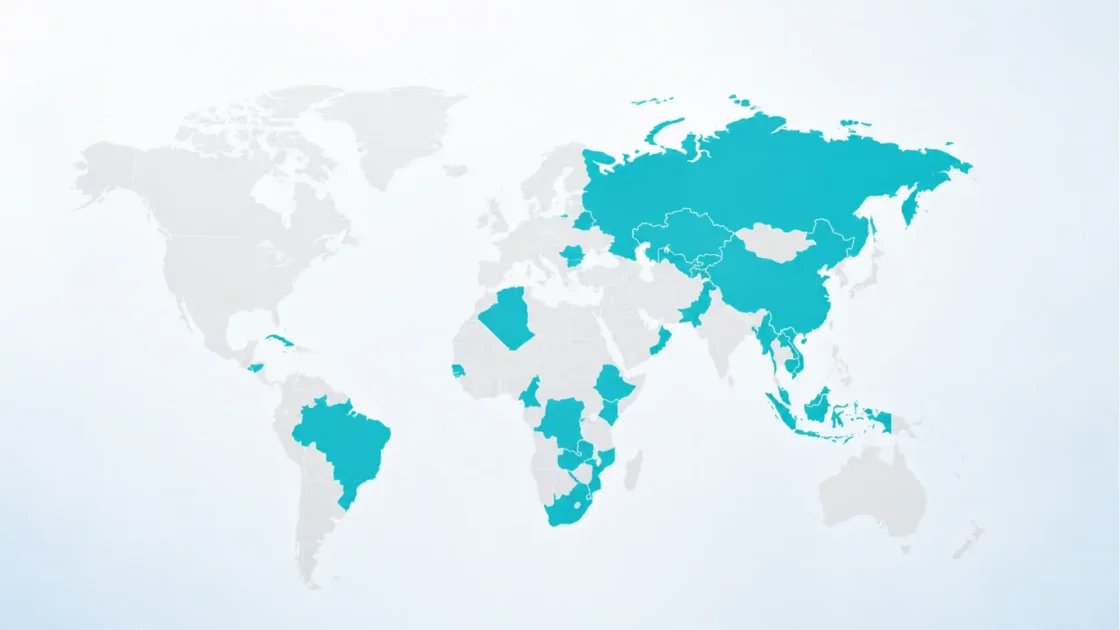
China’s surge in one-person companies is not a curiosity about paperwork. It is a labour-market signal. By June 2025, China had more than 16 million registered one-person limited liability companies, and 2.86 million new ones were registered in the first half of 2025 alone, up 47 percent year on year, according to reporting that cites the Zhongguancun Talent Association’s China OPC development trends report. The sharp point is not that one person can register a company. The sharp point is that AI is making one person look operationally larger than before.
Table of Contents
Europe should not read the Chinese boom as a copy-paste forecast. The European Union already has single-member private limited liability companies in law, tens of millions of active enterprises, strong self-employment cultures in some countries, and a dense rulebook around tax, labour, data, consumer protection and AI. Yet the underlying economic pressure is moving in the same direction: software is reducing the cost of coordination, administration, communication, design, research, coding, marketing and customer support. The real question for Europe is not whether solo companies will appear. They already exist. The question is whether AI turns them from marginal microbusinesses into a normal business unit of the digital economy.
The Chinese signal is bigger than the legal form
China’s one-person company boom is easy to misunderstand if it is treated only as a company-law story. A one-person limited liability company is not new as a concept. Many jurisdictions allow one shareholder to own a limited company. Europe has had a legal basis for single-member private limited liability companies for years. China’s story matters because of the timing, the speed, and the link being drawn between solo ownership and AI-assisted operations.
China Daily reported that AI tools, including code generators and content engines, are lowering the cost of starting and running a company, while other Chinese and China-focused outlets have described use cases ranging from digital content and design to cross-border e-commerce and consulting. The figure now circulating in Chinese media is striking: 2.86 million new one-person companies in six months, a 47 percent rise year on year, and more than 16 million such firms nationwide by June 2025.
A legal form becomes newsworthy when economic behaviour gathers around it. In China, the one-person company is being framed not only as a way to limit liability, but as a container for a new kind of work unit. One founder can use AI to draft product pages, answer customer queries, produce images, write code, analyse small datasets, translate sales material, build simple internal tools, research suppliers, create short videos and maintain a customer database. None of those tasks is new. The compression of cost, time and skill threshold is new.
The old solo business often depended on a narrow personal craft: a designer, translator, developer, consultant, seller, accountant, trainer or importer. The AI-assisted solo company is broader. One person can sell across channels, publish in more formats, maintain a basic support desk, test ideas faster and outsource fewer small tasks. AI does not remove the need for judgment, trust, compliance or customers. It changes the minimum operational scale at which a company feels plausible.
That matters for Europe because the continent has long had millions of microbusinesses, freelancers and single-member companies, but many of them are administratively small and strategically fragile. A freelancer sells labour hours. A classic microbusiness often sells a local service. An AI-assisted one-person company may sell a repeatable digital service, niche product, automated workflow, knowledge product, design package or cross-border service with far less friction than before.
China’s case is also shaped by policy. Local authorities and business platforms are using the one-person company narrative to attract talent, fill incubators, promote AI agents and present entrepreneurship as a route for graduates and young professionals. The policy message is clear: a person does not need to wait for a large employer to make use of AI. That message is attractive in an economy dealing with weaker property-sector momentum, pressure on youth employment and a national push to deepen technology self-reliance. The World Bank’s 2025 China Economic Update projected China’s growth to moderate from 5.0 percent in 2024 to 4.5 percent in 2025 and 4.0 percent in 2026, with trade restrictions and uncertainty weighing on exports, manufacturing investment and labour demand.
The Chinese solo-company boom therefore sits at the meeting point of three forces: an AI adoption story, an employment story and a private-sector confidence story. That combination is exactly why Europe should pay attention. Europe’s macroeconomic structure is different, but it also faces slow productivity growth, ageing societies, weak digital adoption among many small firms, and a debate over whether the EU’s AI policy can produce not only rules, but new companies.
A one-person company is not the same as a freelancer
The phrase “one-person company” sounds simple, but the distinction matters. A freelancer or sole trader usually operates as a natural person conducting business. A one-person limited liability company is a separate legal entity owned by one shareholder. It can sign contracts, hold assets, invoice clients, build brand equity, limit the owner’s personal exposure under company law, and in some cases be sold or transferred more cleanly than a personal freelance practice.
Europe already recognises this logic. Directive 2009/102/EC on single-member private limited liability companies created a legal instrument allowing limitation of liability for an individual entrepreneur within the EU and established rules for single-member private limited companies.
That legal architecture is not experimental. In practice, single-member companies are common across Europe: the Slovak s.r.o., Czech s.r.o., German GmbH or UG, French SASU or EURL, Polish sp. z o.o., Dutch BV, Estonian OÜ, Spanish sociedad limitada and other national variants can be formed by one owner under national conditions. The EU does not need to invent the one-person company. It needs to understand how AI changes the economics of using it.
The difference between a freelancer and an AI-assisted company lies in the unit of production. A freelancer’s capacity is usually bounded by time and expertise. A company can build assets, routines and systems. AI pushes a solo operator closer to the second model. A single person can produce a product catalogue, schedule marketing, manage email sequences, draft contracts for review, run a small web shop, assemble proposals, monitor support tickets and prepare internal analysis.
That does not make the solo founder a corporation. The founder still carries risk. They still need clients, cash flow, legal awareness and product quality. Yet the operating profile changes. AI turns many small administrative and creative tasks from outsourced jobs into in-house prompts, templates, automations and checks. The one-person company then becomes a legal shell around a human decision-maker and a stack of digital tools.
This matters for taxation and labour policy. A freelancer may be treated through personal income, social contributions and simplified regimes. A company may face corporate filings, accounting duties, beneficial ownership disclosure, VAT registration, payroll if it later hires, and stronger separation between owner and entity. Europe’s fiscal systems are already sensitive to disguised employment, false self-employment and arbitrage between labour taxation and corporate taxation. AI will not make that sensitivity disappear.
The Chinese acronym OPC is therefore only partly useful for Europe. European readers should not ask whether the continent will suddenly copy China’s OPC boom. They should ask which national systems already allow one-owner companies, whether formation is fast enough, whether social protection follows the person, whether tax incentives distort the choice of legal form, and whether AI compliance is understandable for micro-entities.
A one-person company is also not automatically a technology startup. Many will never raise capital, hire engineers or seek venture funding. They may be small cash businesses with digital reach. Some will sell to businesses. Some will sell to consumers. Some will use marketplaces. Some will be agencies with no employees. Some will become productized service firms. A few may become large companies. Most will remain small. That does not make them irrelevant. In Europe, micro and small firms already dominate company counts.
The better term may be “AI-assisted micro-company.” It avoids the false glamour of the startup label and the false modesty of the freelancer label. It says what is happening: one person, a limited entity, and an operating model that uses AI to absorb work that used to require contractors, junior staff, specialist software or more time.
China’s boom reflects AI adoption, weak hiring channels and local policy
China’s one-person company surge should be read against the country’s business and labour conditions. Beijing has been trying to strengthen confidence in private firms after a period of regulatory pressure, property-sector weakness and geopolitical tension. Data from China’s State Administration for Market Regulation, reported on the Chinese government’s English portal, said private enterprises exceeded 57 million by the end of March 2025 and accounted for 92.3 percent of all businesses nationwide.
A growing number of one-person companies fits that policy mood. They allow the state to frame AI as a tool for entrepreneurship rather than only as a threat to jobs. They also give cities a way to compete for young talent without promising that every graduate will find a stable job in a large company. Incubators, subsidies and local programmes around AI-native firms can be sold as growth policy and employment policy at once.
The technology side matters. China has a deep platform economy, strong e-commerce infrastructure, mass digital payments, fast content distribution, and local AI tools integrated into cloud, marketplace and communication ecosystems. A person setting up a small online business in China can plug into marketplaces, short-video platforms, logistics networks, supplier bases and customer-service tooling. AI agents sit on top of those systems. The one-person company is therefore less lonely than the phrase implies. It is a one-human firm embedded inside dense digital infrastructure.
This is a crucial distinction for Europe. Solo companies do not scale because a person is heroic. They scale when surrounding systems are ready. They need low-friction formation, reliable online identity, fast payments, accounting connections, usable tax interfaces, simple compliance guidance, cloud tools, digital marketing channels, contract templates, insurance, dispute resolution and customer acquisition routes. China’s platforms supply many of those elements in a concentrated way. Europe supplies them through a more fragmented mix of banks, registries, tax systems, SaaS providers, marketplaces and national agencies.
The labour-market angle is more delicate. AI-assisted solo entrepreneurship may be attractive when entry-level hiring weakens. If firms use AI to reduce junior hiring, younger workers may try to create their own AI-supported income streams. That can produce experimentation and resilience. It can also create insecurity. A graduate with AI tools is not automatically an entrepreneur. They may simply be a worker pushed into a riskier status.
China’s public narrative around one-person companies tends to present the model as energetic and modern. Europe will hear the same optimistic language from parts of the technology sector. Yet the policy test is harsher. A healthy solo-company boom creates new products, services and income. An unhealthy one merely relabels unstable work as entrepreneurship. The legal form alone cannot tell the difference.
AI also changes the way small firms use outside labour. OECD analysis of generative AI and the SME workforce found only modest reported effects on total staff needs among surveyed SMEs, with 6 percent reporting increased staff needs and 9 percent reporting decreased staff needs in one summary, while the same report found that 14.3 percent of SMEs using generative AI said it reduced reliance on external contractors and 32.7 percent said it reduced staff workload.
That finding fits the Chinese narrative. AI may first replace occasional outside services, not full-time employees. The early casualty for a one-person company is not always the staff member it never had. It may be the freelance copywriter, junior designer, low-end translator, basic web developer, virtual assistant, data-cleaning contractor or support agent. This makes the employment effect harder to measure because it appears as non-hiring and reduced contracting, not only as layoffs.
Europe’s labour statistics are not built to detect all of that quickly. If an individual starts a company and uses AI instead of hiring, the event may appear as one new enterprise and no new jobs. If many do this, business births rise but employment creation per new firm falls. Eurostat reported that in 2023, the EU business economy had more than 33 million active enterprises, 3.5 million of which were created that year, and those newly born enterprises created 3.7 million jobs. The ratio between new firms and jobs will be worth watching if AI-assisted micro-companies spread.
Europe already has the legal skeleton
Europe does not lack legal vehicles for one-person firms. The EU’s company-law framework already allows limited liability for individual entrepreneurs through single-member private limited liability companies, while national law sets the practical route. In Slovakia, for example, an s.r.o. can be founded by one or more founders up to a maximum of 50, with minimum registered capital of €5,000 and a minimum membership contribution of €750, according to the IOM Migration Information Centre’s Slovak business guidance.
This legal skeleton is one reason Europe will not experience the trend in the same way China does. In China, the sharp increase in registered one-person limited liability companies is being discussed as a distinct surge. In Europe, one-person ownership is already woven into national company systems. The spread of AI-assisted solo firms may show up less as a new legal category and more as changed behaviour within existing forms.
The EU has also spent years trying to digitalise company law. Directive 2019/1151 on digital tools and processes in company law amended EU company law to support online company formation, online branch registration and online filing for limited liability companies. The European Parliament’s briefing on the directive described it as a first step toward digitalisation in company law and a way to make procedures more cost-effective for businesses, including cross-border activity.
The European foundation is therefore stronger than it may look. The legal form exists. Digital formation is a policy goal. Electronic identity is improving in many countries. VAT and tax systems are increasingly online. Cloud accounting is common in mature markets. A person can form a limited company in Estonia, Ireland, the UK outside the EU, France, Slovakia, Czechia or the Netherlands with far less friction than in the past, though conditions differ sharply.
The weak point is fragmentation. A solo founder in the EU does not operate in a single company-law and tax environment. They operate under national incorporation rules, national tax treatment, national social-security rules, national labour-law boundaries, national consumer authorities and national accounting cultures. Cross-border selling adds VAT, consumer rights, language, data protection and platform rules. AI adds another layer.
This fragmentation is not only a burden. It also reflects different social models. Europe’s caution around employment status, privacy, consumer protection and financial transparency is not accidental. It protects people from abusive contracting, opaque automated decisions, unsafe products, tax evasion and fraud. A one-person company boom that evades those protections would not be a victory.
The EU challenge is to reduce needless friction without weakening necessary safeguards. For solo founders, the most painful friction is often not the rule itself, but uncertainty. Which AI use creates legal risk? Which customer data can be fed into an AI tool? Which invoice rules apply across borders? When does a contractor relationship become employment? Which business records must be retained? Which product claims are unsafe? Which automated customer support responses create liability? A large company can ask lawyers. A one-person company often guesses.
Europe’s answer should not be a fantasy of deregulation. It should be clearer defaults. A small founder should know what they can do safely with off-the-shelf AI, what requires documentation, what must be reviewed by a person, and what should not be done at all. The winning European model will be less about copying Chinese speed and more about making trusted solo entrepreneurship easy enough to be normal.
The AI stack changes the minimum viable firm
A startup used to need people before it had reach. A small commerce operation needed someone to write listings, someone to answer customers, someone to manage ads, someone to translate, someone to build the site, someone to prepare photos and someone to reconcile orders. A service business needed proposal writing, research, CRM updates, reporting, basic finance and content marketing. A micro-agency needed junior staff to create drafts and senior staff to review.
AI compresses those layers. It does not eliminate the work. It moves more of it into a stack that one person can direct. A solo founder can use AI for first drafts, competitor scans, customer segmentation, social copy, support macros, code snippets, spreadsheet analysis, knowledge-base articles, product descriptions, invoice reminders, translations, meeting notes, contract comparisons and scenario planning. The founder becomes less a lone labourer and more a small systems operator.
The phrase “minimum viable firm” captures the shift. A minimum viable product is the smallest usable version of an offering. A minimum viable firm is the smallest organisational setup needed to sell, deliver, support and learn from that offering. AI lowers that minimum by reducing the need for internal coordination. Fewer people means fewer meetings, fewer handoffs, fewer payroll obligations and fewer management routines. The trade-off is concentration of responsibility.
For Europe, this is a productivity opportunity. Many small firms are held back not by lack of talent, but by administrative overload, weak marketing, slow digital adoption and inability to pay for specialist support. OECD research on AI adoption by SMEs says SME AI adoption remains relatively low compared with other digital technologies and larger firms, even though AI promises productivity and innovation gains for smaller firms.
The solo-company trend attacks exactly that problem from below. Instead of waiting for SMEs to adopt AI as an enterprise programme, individuals build firms around AI from the start. The stack is not retrofitted. It is native. Accounting, customer support, research, production and distribution are designed as lightweight processes from day one.
Yet a lower minimum viable firm also means a lower barrier to low-quality market entry. The same tools that help a serious founder produce better documentation can help a spammer produce thousands of low-grade product pages. The same AI that helps a consultant analyse client data can generate misleading reports. The same translation tool that helps a craft seller reach another market can create inaccurate safety instructions. The same content engine that helps a niche expert publish can flood search and social platforms with derivative material.
Europe’s digital markets already suffer from low-trust content, fake reviews, dark patterns and marketplace arbitrage. The one-person company trend could strengthen independent entrepreneurship, or it could multiply thin companies that exist only to exploit platforms. Regulation cannot solve every quality problem, but platform governance, tax enforcement, product safety checks, payment fraud controls and consumer complaint systems will shape which version wins.
The technology stack itself will also stratify founders. A person using a free chatbot for occasional drafting is not in the same position as a founder who connects AI to inventory, CRM, analytics, finance and support systems. The second founder may build durable advantage. The first may save time but remain exposed. This means AI literacy will matter less as a vague skill and more as operating discipline: knowing what to automate, what to verify, what data not to upload, what to measure, and when human expertise is cheaper than a mistake.
A one-person company with AI is not a company without workers. It is a company where much of the invisible support work is performed by software, platforms and external infrastructure. That hidden dependency is central to the model.
China and Europe are solving different problems
China’s OPC boom is often described through the language of speed. Europe’s likely version will be shaped by trust, compliance and fragmentation. The two regions are not moving from the same starting point.
China has a huge domestic market, strong manufacturing clusters, deep e-commerce habits, platform ecosystems with massive user bases, dense logistics, and government policy that can push local experiments quickly. A solo founder selling a small consumer product or digital service can attach to those systems. The platform may supply traffic, payment, discovery, logistics, cloud tools and customer communication.
Europe has a wealthy single market, strong purchasing power, high trust in formal contracts, strong professional services, mature payment infrastructure and a deep base of SMEs. It also has 24 official EU languages, national tax systems, different business registers, different insolvency procedures, different social-security contributions, stronger data protection culture and a more cautious regulatory environment around AI.
This means Europe’s one-person company trend will be less visible as one dramatic statistical wave. It may appear as many smaller waves: consultants using AI to turn services into products; e-commerce sellers running leaner stores; software developers launching micro-SaaS tools; creators forming limited companies; accountants and lawyers offering AI-assisted packages; engineers selling niche automation; teachers selling courses; designers selling templated assets; translators moving into localisation management; researchers offering market intelligence; and small exporters using AI to handle content and support in more languages.
The European version may also be older. China’s public narrative often focuses on young entrepreneurs and graduates. Europe’s most successful AI-assisted solo founders may include mid-career professionals with domain knowledge, savings, networks and credibility. AI rewards context. A 45-year-old logistics manager with deep process knowledge may build a stronger solo automation business than a recent graduate with better prompting habits but no industry trust.
This is one reason the trend could be powerful in Europe’s B2B economy. Europe is full of niche industrial, professional, regulatory and regional markets that large platforms underserve. A one-person company with strong expertise and AI support can build tools, reports, training, compliance templates, translation packages or procurement services for these niches. The market may be too small for a venture-backed firm and too specialised for a generic SaaS product. It may be perfect for a solo expert using AI.
China’s model is often associated with platform speed and scale. Europe’s better opportunity may be specialised trust. A solo founder who understands EU product safety rules, medical-device documentation, local construction permits, food labelling, sustainability reporting, industrial maintenance, public procurement, tourism operations, or cross-border VAT can use AI to package knowledge in ways that clients will pay for.
The danger is that Europe’s compliance burden may push some of this activity into informality or non-European platforms. If incorporation is slow, accounting costly, social contributions unpredictable and AI rules unclear, founders may avoid forming companies or operate through foreign tools without building European business capacity. That would weaken the continent’s tax base and digital sovereignty.
Europe does not need to become China to see a solo-company boom. It needs AI tools, digital public services and small-business rules that make a one-person limited company a credible, low-friction, trusted vehicle for real economic activity.
The statistics Europe should watch
Europe will not understand this trend by counting only startups or venture funding. The relevant indicators are more ordinary: business births, firms with zero employees, own-account self-employment, single-member company registrations, VAT registrations, marketplace sellers, new employer rates, AI adoption by microbusinesses, and the ratio of new firms to jobs created.
Eurostat’s business demography data already show how large the base is. In 2023, the EU’s business economy had more than 33 million active enterprises and 3.5 million newly created firms. SMEs represented 99.8 percent of all enterprises in the Annual Report on European SMEs 2024/2025.
That makes Europe fertile ground for a solo-company shift, but the evidence will be uneven. A one-person limited company may be active, dormant, part-time, used for consulting, used for tax planning, created for a property holding, or used for a real AI-native business. Registries often do not show the operating model. Labour-force surveys may capture self-employment but not company ownership. AI adoption surveys may cover SMEs but undercount informal use by owners and employees.
Eurostat’s self-employment statistics also show that dependent self-employment without employees varies sharply across countries. Slovakia was reported as having the highest rate of dependent self-employed persons without employees at 12.8 percent in the cited Eurostat section, followed by Cyprus at 8.9 percent. That matters because solo-company growth can be healthy entrepreneurship or a sign of dependency disguised as autonomy. The distinction is not academic. It affects wages, bargaining power, tax fairness and social protection.
Europe should build a better measurement set around AI-assisted microbusinesses. Useful indicators would include the share of new limited companies with one shareholder and no employees, the share that remains active after one and three years, average turnover per firm, sector distribution, cross-border revenue, AI-tool expenditure, use of marketplaces, contractor payments, first-hire rates, and owner social-insurance coverage.
A fall in employment per new company is not automatically bad. If AI lets one person create more value alone, productivity may rise. If business births rise but turnover stays tiny and income is unstable, the trend may be statistical foam. The difference shows up in survival, revenue quality, tax payments, customer retention and owner income.
Main indicators for detecting an AI-assisted solo-company wave
| Indicator | Signal to watch | Interpretation risk |
|---|---|---|
| New single-member limited companies | Rising registrations among firms with no employees | Could include dormant entities and tax-planning vehicles |
| Business births per job created | More firms but fewer jobs per birth | Could mean productivity or weaker hiring |
| Own-account self-employment | Rising solo work without employees | Could mean autonomy or disguised employment |
| AI adoption by microfirms | Higher use of generative AI, automation and analytics | Surveys may miss unreported everyday use |
| First-hire rate | Fewer solo firms becoming employers | Could mean lean firms or blocked growth |
| Revenue per solo firm | Higher turnover without staff | Better sign of real productivity than registration counts |
This table matters because Europe’s likely trend will be harder to see than China’s headline figures. The most useful question is not how many one-person firms exist, but how many generate durable revenue without becoming a channel for precarious work or regulatory avoidance.
The employment effect starts with non-hiring
The common fear around AI is job loss. The one-person company trend points to a quieter mechanism: non-hiring. A founder who would have hired a junior assistant, outsourced design, paid a copywriter, used a translator, hired a bookkeeper for routine work or contracted a web developer may now do part of that work with AI and specialist software.
This does not show up as a layoff. It shows up as a vacancy that never existed, a contract never signed, a junior role never created. It is harder for policymakers to see and harder for workers to contest. It may also be economically rational for a small founder with limited cash. Hiring is risky. Labour law, payroll taxes, management time and fixed monthly costs can overwhelm a young company. AI offers a variable-cost substitute for some tasks.
The OECD’s generative AI and SME workforce findings are useful here because they suggest early adoption has not produced a simple collapse in SME staffing. Reported changes in overall staff need remain modest, while workload and contractor reliance are more visibly affected.
For Europe, the first labour-market impact may therefore hit freelancers and junior service providers before it hits employees. Basic translation, generic copywriting, low-end illustration, simple data entry, routine customer support, entry-level coding snippets, simple market research and document formatting are all exposed. Yet the higher end of those fields may become more valuable. A skilled translator becomes a localisation editor and cultural-risk reviewer. A copywriter becomes a strategist and brand voice guardian. A junior developer becomes an integrator of AI-generated code into safe systems. An accountant becomes an adviser on workflows, tax risk and controls.
The labour question is not only whether AI destroys tasks. It is whether workers can move up the value chain fast enough. Solo founders are under pressure to do more with less. Contractors are under pressure to prove why their review, expertise and accountability matter. Employees are under pressure to use AI without losing bargaining power. Policymakers are under pressure to stop false self-employment without freezing legitimate entrepreneurship.
Europe’s Platform Work Directive shows the direction of travel. Directive (EU) 2024/2831 aims to improve working conditions and personal-data protection in platform work, including measures linked to correct employment status and algorithmic management. The directive was designed for platform work, not AI-assisted one-person companies. Yet the underlying concern is relevant: digital systems can blur autonomy, control and dependency.
A solo company that sells services to one client, follows that client’s instructions, uses the client’s tools, cannot set prices, and depends on that client for income may look entrepreneurial on paper but employee-like in substance. AI can complicate this because the worker may appear more independent due to using their own tools, while economic dependency remains. Tax authorities and labour inspectors will need to examine the real relationship, not only the legal form.
There is also a social-insurance issue. If more Europeans work through one-person companies, pension contributions, sickness cover, unemployment protection and parental benefits must be portable and predictable. Otherwise, the trend will create a class of people who look like business owners but carry risks usually absorbed by employers or the welfare state.
The healthiest version of the trend gives skilled people more autonomy. The weakest version shifts risk from companies to individuals and calls it innovation.
The first European winners will be experts, not prompt hobbyists
The public imagination often treats AI entrepreneurship as a contest in prompting. That is too shallow. The strongest one-person companies will be built by people who know a market deeply enough to judge AI output. They will not win because they ask better generic questions. They will win because they know which answers are wrong, which promises are legally risky, which customer problems are worth money, and which workflow details matter.
Europe’s sector structure favours this kind of expert solo founder. The continent has specialised manufacturing, medical suppliers, engineering consultancies, tourism operators, legal and tax services, architecture, energy retrofitting, food production, industrial maintenance, public-sector procurement, education, logistics and creative industries. Many of these fields are knowledge-rich but not always software-rich. AI lets one expert package knowledge into repeatable offerings.
A former procurement manager can build supplier-screening templates and market briefings for small manufacturers. A compliance specialist can help small exporters prepare product documentation. A tourism expert can offer multilingual itinerary and booking support for niche operators. A teacher can build tutoring products for a specific exam. A mechanical engineer can sell maintenance checklists and diagnostic workflows. A lawyer cannot outsource legal responsibility to AI, but can use AI to prepare first drafts and offer fixed-fee packages with human review.
The common feature is domain judgment. AI reduces production friction, but the founder must still know what good looks like. That is why Europe’s older workforce may be an asset. Many mid-career workers have tacit knowledge trapped inside organisations. If AI lowers the administrative and technical barrier to building a micro-company, some of that knowledge can become market-facing.
This will not be limited to digital products. AI can support physical-product firms through supplier research, packaging text, regulatory checklists, customer segmentation, demand forecasting, ad testing and customer support. A small craft manufacturer or food producer may remain physically constrained, but the commercial layer becomes more professional. That can matter in Europe’s regional economies, where small producers often have good products but weak digital reach.
The risk is overconfidence. Domain experts may trust AI too much in areas outside their competence. A designer using AI for legal terms, a consultant using AI for tax advice, a seller using AI for product safety instructions, or a developer using AI-generated code in a security-sensitive context can create serious harm. The smaller the company, the fewer internal checks exist.
This is where Europe’s trust model could become an advantage. One-person companies that advertise human-reviewed AI workflows, data-protection discipline, transparent limitations and professional accountability may beat low-cost competitors in regulated or reputation-sensitive sectors. The market will not reward every AI-assisted solo founder. It will reward those who combine speed with responsibility and expertise.
Europe’s AI adoption gap may slow the trend but not stop it
Europe has a digital adoption problem among smaller firms. OECD research on SME digitalisation points to barriers around digital security, financial access and digital skills, while the European Commission’s country-level Digital Decade reporting often flags uneven adoption of advanced technologies. Slovakia’s 2025 Digital Decade Country Report, for example, says Slovak businesses show a low level of adoption of advanced technologies and many SMEs have low digital intensity.
This matters because a solo-company boom does not appear just because AI exists. It appears when people trust the tools, know how to connect them to business workflows, and can access customers. Many European microbusinesses still struggle with basic digital habits: clean websites, analytics, CRM, cybersecurity, e-commerce integration, digital payments, structured data and online marketing. AI adoption on top of weak digital foundations may produce shallow use.
Yet the trend may spread precisely because AI tools bypass some older digital barriers. A founder who could not code can now build a prototype. A shop owner who disliked writing can create product descriptions. A consultant who never learned advanced spreadsheet functions can analyse a CSV file conversationally. A small exporter can produce first-pass foreign-language material. A local service provider can create ads and landing pages faster.
This is why Europe’s AI adoption gap is not a permanent shield. It slows diffusion, but it also creates pent-up productivity. As tools become integrated into familiar software, adoption will rise without founders thinking of it as “AI strategy.” Email clients, accounting platforms, website builders, CRMs, design tools, marketplaces and office suites will embed AI features. The solo founder will not need to buy a complex AI system. They will use AI inside tools they already pay for.
The OECD has reported that SME AI adoption remains low compared with other digital technologies and larger firms, but this can change quickly because generative AI has a consumer-like interface. Small firms do not need a data-science department to use text, image, translation or coding assistants. They need training, examples, guardrails and confidence.
Public policy should therefore focus less on abstract AI evangelism and more on practical adoption packages for microbusinesses: safe prompting for customer data, basic AI procurement, cybersecurity for AI tools, invoice and tax automation, multilingual e-commerce, product safety documentation, human review routines, and responsible use of customer information. The founder should leave with a workflow, not a slogan.
Europe’s AI Factories and Apply AI initiatives could help if they reach beyond the visible startup class. The European Commission says the Apply AI Strategy aims to boost AI adoption and innovation across Europe, particularly among SMEs, and EuroHPC says the EU has established 19 AI Factories and 13 AI Factory Antennas offering free, customised support to SMEs and startups.
The policy danger is that support flows mainly to high-tech startups already connected to innovation networks. The one-person company trend will be much broader. It will include accountants, industrial consultants, content producers, training providers, niche retailers, local exporters and professional services. They may never apply to an AI Factory. They may need local chambers of commerce, banks, accountants, trade associations and municipalities to translate AI support into ordinary business routines.
Europe’s adoption gap is real, but generative AI is not spreading like old enterprise software. It is spreading through daily tools, and that makes the solo-company effect harder to contain or forecast.
Regulation will shape the European version
Europe’s AI Act is often treated as a constraint on innovation. For one-person companies, the more immediate issue is clarity. Regulation (EU) 2024/1689 lays down harmonised rules on artificial intelligence and creates a risk-based framework for AI systems in the EU. Most solo founders will not build foundation models or high-risk AI systems. They will deploy general-purpose tools in marketing, research, content, customer support, coding, workflow automation and decision support.
That distinction matters. A one-person company using AI to draft a blog post faces a different risk from a company using AI to screen job applicants, assess creditworthiness, provide medical advice or make decisions that affect access to essential services. Europe should not scare microbusinesses into thinking every AI use is legally extreme. It should teach them where the boundaries are.
The AI Act sits alongside GDPR, consumer protection, product safety, copyright, platform rules, cybersecurity duties and professional regulation. A solo founder does not experience these as separate legal instruments. They experience them as uncertainty. Can they upload customer emails to an AI tool? Can they generate product images? Can they use AI to rank job applicants? Can they produce medical or financial advice? Can they scrape competitor prices? Can they use copyrighted material in training or marketing? Can they rely on AI translations for safety instructions?
If the answers are inaccessible, founders either avoid useful tools or take reckless risks. Neither outcome helps Europe. The policy goal should be a layered compliance model: simple safe-use guides for common low-risk scenarios, sector-specific checklists for regulated fields, stronger duties for high-risk use, and clear accountability when AI output harms customers.
Regulation may also become a market signal. European customers may prefer solo companies that can say: customer data is not used to train external models without permission; AI output is reviewed by a named professional; automated recommendations do not make final high-impact decisions; sources and limitations are disclosed; cybersecurity controls are in place; and customer complaints reach a human.
This kind of trust layer could differentiate European one-person companies from low-cost global competitors. It will not matter for every product. It will matter in health, finance, education, legal support, B2B compliance, children’s products, industrial safety, sustainability claims and public-sector work.
The compliance burden must still be proportionate. A one-person company cannot maintain a corporate compliance department. This is where software and public infrastructure matter. Accounting tools, website builders, marketplaces and AI providers should embed compliance prompts and documentation. Public agencies should offer machine-readable rules, templates and official guidance. Trade associations should provide sector playbooks.
The best European outcome is a trust-by-default environment. The founder does not need to become a lawyer to act responsibly. The tools make responsible behaviour easier than reckless behaviour. If Europe makes AI compliance legible for microbusinesses, regulation can become part of the continent’s solo-company advantage rather than only a cost.
Two compact models of the AI-assisted solo firm
Not all one-person companies will look alike. Treating them as one category hides the business logic. Some will be creative. Some will be technical. Some will be professional. Some will be commerce-driven. Some will be platform-dependent. Some will sell to local clients. Some will sell across borders.
A useful way to understand the trend is to classify one-person AI firms by the asset they build. The asset may be knowledge, software, audience, workflow, product supply, local trust or regulatory expertise. AI is not the business. AI is the operating layer that helps one person build and maintain the asset.
Common solo-company models likely to grow in Europe
| Model | Typical offer | AI role |
|---|---|---|
| Expert productized service | Fixed-scope consulting, audits, reports, templates | Drafting, research, analysis, reporting |
| Micro-SaaS or automation | Narrow tool for one workflow or niche sector | Coding support, testing, documentation, support |
| Niche e-commerce | Specialised products for defined audiences | Listings, translation, support, ad testing |
| Creator-company | Courses, newsletters, media, community, paid knowledge | Editing, repurposing, research, distribution |
| Local professional firm | Accounting, design, training, legal-adjacent services | Intake, drafts, summaries, workflow automation |
| Cross-border service broker | Supplier search, localisation, procurement support | Translation, comparison, CRM, document checks |
The models differ in risk. A creator-company may face copyright, advertising and platform-dependency issues. A micro-SaaS firm faces cybersecurity and maintenance risk. A professional firm faces liability and licensing boundaries. A commerce firm faces product safety, returns and consumer law. The one-person structure does not remove sector rules. It compresses responsibility into one owner.
Platform dependence is the hidden weakness
The one-person company sounds independent. In practice, many solo firms will depend heavily on platforms: marketplaces, app stores, cloud providers, payment processors, ad networks, social media, AI model providers, website builders, accounting tools and logistics services. The founder may own the company, but the company’s reach may be rented.
China’s model benefits from deep platform ecosystems. Europe has platforms too, but many of the core AI and cloud tools are American, while e-commerce and marketplace power is unevenly distributed. This creates a sovereignty problem at the smallest business scale. A one-person company may be legally European, pay taxes in Europe and sell to European customers, yet depend on non-European AI models, cloud infrastructure and discovery channels.
This dependence affects margins. If ad prices rise, the solo founder suffers. If an AI provider changes pricing, workflows break. If a marketplace suspends an account, revenue can disappear overnight. If a payment processor flags transactions, cash flow freezes. If a social platform changes its algorithm, customer acquisition collapses.
Large companies can diversify. One-person firms often cannot. That is why platform governance matters for solo entrepreneurship. The EU’s existing digital market rules are not mainly designed around one-person AI firms, but they affect them. Fair platform access, transparent ranking, dispute procedures and portability of business data can determine whether a solo firm survives.
Platform dependence also creates a quality problem. Platforms reward speed, volume and engagement. AI makes volume cheap. This can push solo founders toward content overproduction, shallow products, aggressive ad testing and imitation. The founder who wants to build trust may compete against hundreds of AI-assisted imitators with lower standards.
Europe’s advantage could be in building trusted channels for small firms: verified professional marketplaces, sector-specific procurement platforms, public digital identities, EU-compliant payment and data services, and local networks that combine digital reach with accountability. A one-person engineering consultant should not have to compete only on a global platform designed for commodity gigs. A local food producer should not be trapped inside an ad auction against dropshippers.
The solo-company future will be shaped by who controls demand. AI helps with supply: producing text, code, designs, support and analysis. It does not guarantee customers. Distribution remains the hard part. The companies that win may be less “AI companies” than firms that pair AI-assisted operations with trusted access to a market.
The tax question will arrive early
Tax systems will not ignore a rise in one-person companies. A limited company can create opportunities for income smoothing, expense deduction, profit retention and different contribution treatment compared with employment. In some countries, policymakers have already spent years fighting false self-employment and tax-motivated incorporation. AI will add pressure because it makes the company form more attractive to individuals who previously lacked the capacity to operate independently.
Europe must avoid two mistakes. The first is treating every one-person company as suspicious. That would punish genuine entrepreneurship and push activity into informality. The second is treating company registration as proof of real business independence. That would invite disguised employment, contribution gaps and unfair competition.
The right distinction is economic substance. Does the company have multiple clients? Does it set prices? Does it bear commercial risk? Does it own tools and processes? Can it refuse work? Does it market independently? Does it build assets? Does it decide how work is performed? If the answer is mostly yes, the company is more likely to be a genuine business. If one client controls the work, schedule, price and process, incorporation may be a mask.
AI complicates this analysis because one person can now appear operationally sophisticated. A contractor may have a website, AI-generated reports, automated invoicing and polished marketing while still being economically dependent on one client. Tax authorities will need substance tests that account for digital appearance.
There is also VAT. Many one-person companies selling digital services across borders will run into VAT obligations, platform collection rules and consumer-location issues. A founder who uses AI to translate a course into five languages may suddenly sell across the EU without understanding VAT thresholds, invoicing rules or consumer rights. This is not a reason to stop them. It is a reason to make cross-border compliance easier.
The EU’s single market remains underused by many small firms because cross-border administrative complexity is high. AI can make selling across languages easier, but it does not make tax disappear. If Europe wants AI-assisted solo firms to trade across borders, it needs clearer digital tax onboarding, simpler VAT guidance, and accounting tools that handle cross-border rules reliably.
Tax policy also affects whether solo firms hire. If the jump from one person to one employee triggers large fixed costs and administrative burdens, founders may stay solo longer, using AI and contractors instead. That may be rational individually but bad for job creation. Europe should examine the “first employee cliff” closely. A solo founder may be willing to hire if payroll, social contributions, employment contracts and compliance are predictable. If not, AI becomes the safer worker.
The tax system should not punish small firms for staying lean, but it should not make hiring feel like crossing a legal minefield.
Social protection must follow the person
A one-person company boom tests social insurance. Employees receive many protections through the employment relationship. Entrepreneurs carry more risk. Europe’s social model is built on a mix of employment-based contributions, public systems and national rules. If more people move into company-owned solo work, gaps become more visible.
The owner of a one-person company may have irregular income, delayed payments, unpaid administrative time, no employer-funded training, no paid holidays, no sick pay unless separately insured, and uncertain pension contributions. Some will earn well and prefer autonomy. Others will earn less than employees while carrying business risk. The legal form hides that variation.
AI can intensify both outcomes. A skilled solo founder can earn more by using AI to multiply output. A precarious worker can be pushed into solo status and told AI will compensate for missing support. The same technology enables autonomy and exploitation.
Europe should therefore treat social protection as infrastructure for entrepreneurship. If people fear losing healthcare, pension continuity, parental rights or sickness cover, they will hesitate to start companies. If they start anyway and remain underinsured, the public cost appears later. Portable, predictable contributions and benefits make solo entrepreneurship less reckless.
This is also a competitiveness issue. The United States has a more flexible labour market but weaker social protection. China has different state and local dynamics. Europe’s promise should be different: people can start small companies without falling out of the social contract. That promise is attractive to mid-career professionals, parents, older workers, people with disabilities, rural founders and migrants with legal status.
The policy details are national, but the principle is European. Contributions should be understandable. Minimum contribution rules should not crush low-revenue founders in the first year. Pension rights should be transparent. Training support should include the self-employed and owner-managers. Sick leave and parental protection should not vanish because a person incorporated.
There is also a mental-health dimension. OECD research on SME digitalisation noted stress and burnout linked to adapting to digital tools, with the self-employed among groups affected in the reported survey. The one-person company is operationally efficient but psychologically concentrated. Every customer complaint, tax deadline, system outage and cash-flow gap lands on the same person.
AI can reduce workload, but it can also create a permanent sense that one person should be able to do everything. That expectation is dangerous. The founder may work longer hours because tools make more tasks possible. Boundaries weaken. Weekends become admin time. Customer response speed becomes relentless. Automation can become a treadmill.
Europe should not celebrate one-person companies only as productivity units. They are human livelihoods, and the social-protection design will decide whether the model is empowering or corrosive.
The first-hire cliff may become steeper
AI makes staying solo easier. That is useful, but it may make the first hire less likely. The first employee is often the hardest step in a company’s life. It changes the founder’s obligations, risk profile and management burden. The owner must handle payroll, contracts, workplace rules, insurance, supervision, performance, dismissal risk and social contributions. In many European countries, those duties are manageable for established firms but intimidating for a solo founder.
Before AI, growth pressure forced some founders to hire. Customer support overflowed, admin piled up, content needs grew, coding tasks expanded, orders increased. AI now absorbs part of that pressure. The founder can delay hiring and maintain service levels longer. This may raise productivity per founder but reduce entry-level job creation.
Europe should not assume this is bad. Some solo firms were never meant to hire. They may produce high income and tax revenue without staff. Some founders value independence more than growth. A forced hiring culture can push people into management they do not want and are not good at.
Yet a wider economy needs firms that become employers. If too many new companies remain permanently solo because the first hire is too costly or risky, Europe may see business dynamism without employment dynamism. That would matter in regions already facing weak job creation.
The answer is not to restrict AI. It is to reduce the first-hire cliff. Governments can simplify first-employee payroll, provide standard contracts, offer temporary contribution relief, subsidise training for first hires, support apprenticeships inside microfirms, and create advisory services for owner-managers. AI can also help here: payroll assistants, compliance checklists, onboarding templates and HR documentation can reduce fear.
Banks and insurers have a role. A one-person company that wants to hire needs cash-flow confidence. Invoice financing, predictable credit scoring, affordable liability cover and simple employment-practice insurance can make hiring less frightening. Accountants and chambers of commerce can identify founders who are ready to hire but blocked by uncertainty.
The EU’s AI and SME programmes should measure not only AI adoption but first-hire outcomes. If AI support helps microfirms grow revenue but never hire, policymakers should know. If AI support helps founders survive and later hire better, that is a stronger result. The goal should not be to turn every one-person company into an employer. The goal should be to make hiring a choice, not a cliff.
The creator economy will incorporate
A visible slice of the one-person company trend will come from creators. People who once treated online publishing as personal work may incorporate as revenue streams become more complex: sponsorships, subscriptions, affiliate income, digital products, courses, consulting, speaking, licensing, community membership and merchandise. AI makes this easier by reducing production time and helping one person repurpose work across formats.
Europe’s creator economy is multilingual and fragmented, but that fragmentation can be an advantage. A creator in Slovakia, Poland, Spain, Germany or France can serve a specific language market with high trust. AI translation then adds selective cross-border expansion. A niche B2B creator can publish in English for global reach while maintaining local credibility.
The creator-company model blurs media, education, consulting and commerce. A person may publish analysis, sell templates, run workshops, consult for firms, recommend software and build a paid community. This can be a strong one-person company when expertise is real. It can also become a conflict-of-interest machine when sponsorship and advice are not separated.
AI raises content volume and lowers originality barriers. Search engines, social platforms and readers will face more derivative content. The creator who wins will need authority, experience, taste and trust. Generic AI output will be cheap. Human judgment will be the differentiator.
For Europe, this has media implications. Local journalism, trade publishing and expert commentary may face competition from solo creators using AI. Some will produce poor-quality material. Some will fill gaps left by shrinking newsrooms. A single expert can now maintain a newsletter, podcast notes, charts, social posts and paid reports with less support. That can enrich public debate in specialised fields.
Regulators will care about advertising disclosure, consumer protection, financial advice, medical claims, copyright and platform transparency. A one-person creator-company may not think of itself as a regulated business, but once it sells advice or influences purchasing, obligations arise. AI-generated material does not reduce those obligations.
The creator-company wave will test whether Europe can protect audiences without crushing independent expert publishing. Clear disclosure rules, media literacy, platform accountability and fair competition with larger publishers will matter.
Cross-border micro-exporting becomes more realistic
One of AI’s most practical effects is language. Europe’s internal market is large, but language barriers still limit microbusinesses. A small firm may not afford translation, localisation, multilingual customer support or foreign-market research. AI reduces those barriers enough to make cross-border selling more plausible.
This does not mean automatic success. Translation quality varies. Cultural nuance matters. Legal requirements differ. Consumer expectations differ. Returns, warranties, taxes and delivery still matter. Yet the first step is easier. A one-person company can test product descriptions in German, French, English, Polish, Italian or Spanish; answer basic customer questions; research local competitors; and prepare draft documentation for review.
For services, the effect is even larger. A consultant can sell English-language reports outside their home country. A trainer can create subtitles. A designer can localise portfolios. A software founder can support users in more languages. A craft seller can present products professionally in multiple markets.
This could help smaller EU economies. Slovak, Czech, Baltic, Balkan or Portuguese founders can reach customers beyond their domestic markets without moving. AI can reduce the penalty of being born in a smaller language. The Digital Single Market has promised this for years; AI may make it more practical at the individual level.
The constraint is compliance. Cross-border consumer selling triggers obligations around VAT, returns, product information and dispute resolution. B2B selling brings contract and liability issues. A founder may understand the language but not the law. This is where AI can be risky: it may produce confident but inaccurate legal guidance.
Europe should build trusted cross-border business assistants connected to official sources. These should help founders understand VAT, product categories, labelling, consumer rights, data protection and invoicing. Private tools will attempt this, but public authority matters. A one-person company needs to know which guidance can be relied upon.
Cross-border micro-exporting also intersects with Europe’s strategic autonomy. If European solo firms rely on American marketplaces and AI tools to sell European products, some value leaks out. If Europe builds its own trusted infrastructure, more value stays local. That does not mean isolation. It means options.
AI makes language less of a wall, but law and logistics remain the gates. Europe’s opportunity is to make those gates navigable for firms with one owner, not only for companies with departments.
The financing model will be different from startups
Most one-person companies will not fit venture capital. They may be profitable, small, niche and owner-controlled. That is not a defect. Venture capital seeks scale, exit potential and high growth. Many AI-assisted solo firms will seek income, independence and resilience.
Europe should not measure the trend mainly through funding rounds. A one-person company may need €2,000 for software, €5,000 for a website and equipment, €10,000 for compliance and marketing, or €30,000 for inventory. It may need working capital, not equity. It may need a credit line, invoice financing, leasing, insurance or a microgrant. Banks and public agencies understand parts of this world better than venture funds do.
The financing gap will be acute for founders without savings. AI lowers costs but does not eliminate them. A serious solo company may need paid tools, professional review, accounting, legal setup, cybersecurity, domain hosting, design assets, advertising tests and time before revenue. People with wealth can absorb this. Others cannot.
If Europe wants inclusive solo entrepreneurship, it needs low-cost financing tied to training and compliance. Microloans, vouchers for accounting and cybersecurity, AI-tool credits, subsidised professional advice and first-year social-contribution smoothing may help. The goal should not be to spray money at every idea. It should be to reduce the fixed costs of doing things properly.
There is also a gender and regional angle. Solo companies can suit people who need flexible schedules or live outside major cities. But finance, networks and confidence are unevenly distributed. AI may widen gaps if only already-advantaged professionals know how to use it commercially. Public support should target practical capability, not only inspiration.
The European Commission’s AI Continent page lists €200 billion to boost AI development in Europe, €20 billion to finance up to five AI gigafactories, and 19 AI factories to support startups, industry and research. That infrastructure may be useful, but the one-person company economy also needs small-ticket support that never appears in grand investment figures. A founder does not need a gigafactory to automate invoice reminders or build a multilingual product catalogue.
The danger is policy glamour. Governments like large AI numbers, national champions and research infrastructure. The solo-company trend is quieter. It needs boring things: fast registration, simple taxes, trusted digital ID, affordable accounting, clear AI rules, cybersecurity basics, small credit, fair platforms and training.
The capital stack for one-person AI firms will be closer to small-business finance than startup finance. Europe’s banks, accountants, chambers and local agencies will matter as much as venture funds.
The quality problem will be severe
A lower barrier to company formation and AI-assisted production means more experiments. That is good. It also means more weak firms, misleading offers, poor service, copied content and customer confusion. The quality problem will become severe because AI lets one person produce the outward signs of competence: polished websites, professional logos, long reports, translated pages, chat support and fake scale.
Customers will need better trust signals. Company registration alone is not enough. A registered company can still sell bad products, misuse data or vanish. Reviews can be manipulated. AI-generated testimonials can be fake. Websites can be cloned. Professional-looking documents can be wrong.
Europe’s trust infrastructure should evolve. Verified business identity, beneficial ownership transparency, professional licensing checks, insurance badges, dispute-resolution records, platform complaint histories and secure payment systems can help. The goal is not to create a surveillance state for microbusinesses. It is to help customers distinguish real accountable businesses from disposable AI shells.
Professional sectors will face their own quality pressures. AI-generated legal, medical, tax, financial or engineering content can look persuasive. A one-person company operating near regulated advice must be clear about qualifications and limits. National regulators may need to update guidance for AI-assisted services: what counts as professional judgment, what must be reviewed, what records must be kept, and what disclosure is required.
Search engines and answer engines will play a major role. AI-assisted solo companies will compete for visibility in Google Search, Google Discover, AI Overviews, Perplexity, ChatGPT Search, Gemini and Copilot-like answer systems. High-quality niche firms may gain visibility if their content is specific and trustworthy. Low-quality firms may flood the web with thin pages. Search systems will have to assess authority, originality and real-world credibility.
This affects SEO strategy. The old microbusiness web often relied on local keywords and generic service pages. The AI era rewards deeper topical authority, original evidence, clear authorship, real experience, structured information and consistency across the web. One-person companies that publish useful, verifiable material may outrank larger but generic competitors. Those that publish AI filler may disappear.
Quality assurance will become a business function even for solo firms. Founders need checklists: source verification, factual review, legal review for regulated claims, customer-data controls, accessibility checks, product safety checks, translation review and incident response. AI can assist with the checklist, but the founder owns the result.
The market will not stay impressed by AI-generated polish. Trust will move toward proof: track record, expertise, accountability, reviews that look real, transparent policies and human responsibility.
AI agents will push the trend further
The current wave of generative AI already supports one-person companies. AI agents could push the model further by executing multi-step tasks: researching suppliers, updating product listings, responding to routine customer messages, generating invoices, scheduling social posts, monitoring competitor prices, drafting outreach emails, triaging support tickets and preparing performance reports.
China’s one-person company narrative is closely tied to AI agents and digital employees. Whether every claim is hype or not, the direction is plausible. The more software can act across tools, the more one person can supervise rather than perform each task manually.
The shift from chatbot to agent matters. A chatbot waits for instructions. An agent can operate semi-autonomously inside a workflow. It can watch for triggers, call APIs, update records, and ask for approval when confidence is low. For a solo founder, that can feel like adding operational capacity without hiring.
The risk also rises. An agent can send the wrong email, quote the wrong price, leak data, violate platform rules, make a false claim, order inventory, delete records or annoy customers at scale. The founder may not notice until damage is done. Small firms often lack monitoring systems. Agentic AI needs permissions, logs, approval thresholds and rollback options.
Europe’s AI regulatory debate will need to translate into practical agent governance for microfirms. A founder should understand which tasks can be automated safely, which require approval, and which should remain human. For example, drafting a reply may be low risk; issuing refunds automatically may be moderate risk; making employment decisions or financial eligibility decisions may be high risk or prohibited depending on context.
Cybersecurity becomes more serious with agents. A compromised AI workflow can affect emails, invoices, customer databases and payment links. Solo founders are already vulnerable to phishing and account takeover. AI agents increase the attack surface. Public support for AI adoption must include security from the start.
The business opportunity is real. European software firms can build agent tools for microcompanies: GDPR-aware customer support, invoice chasing, multilingual product content with human approval, EU VAT-aware commerce assistants, contract-risk triage, sector-specific compliance bots and safe CRM automation. These tools could become Europe’s answer to platform dependency if built with trust and local rules.
AI agents will not make one-person companies effortless. They will make supervision the core skill. The founder of the future may spend less time producing and more time checking, approving, correcting and designing workflows.
The European public sector could become a catalyst
Public administration can either slow or support the solo-company trend. Company registers, tax portals, social-security systems, grant agencies, courts, procurement platforms and labour authorities define the practical experience of running a one-person company. If these systems are confusing, founders waste time. If they are digital, clear and interoperable, founders can focus on customers.
Europe has made progress on digital public services, but the experience differs widely by country. Estonia is often cited for digital state capacity, while other countries still require fragmented interactions. A one-person AI company needs public systems that assume the owner has no administrative staff.
The public sector can support the trend in five concrete ways. First, online formation must be fast and understandable. Second, tax and social contributions must be forecastable before the founder commits. Third, official AI and data-protection guidance must be written for microbusinesses, not only legal departments. Fourth, public procurement should include small lots that one-person companies can realistically bid for. Fifth, dispute resolution should be accessible when platforms, clients or customers fail to pay or behave unfairly.
Public procurement is often overlooked. Governments buy training, design, research, translation, software, maintenance, communication and advisory services. A one-person company with expertise and AI support could deliver some of these well. But procurement rules often favour larger firms because documentation, insurance, references and cash-flow requirements are heavy. Simplifying small contracts could open a real market while keeping accountability.
Public agencies can also use AI to provide better support. A tax authority could offer guided filing explanations. A business register could generate personalised compliance calendars. A labour office could help a founder understand the boundary between contracting and employment. A data-protection authority could provide sector-specific AI data-use checklists. These tools must be accurate, reviewed and clearly limited, but they could reduce friction.
The public sector should also avoid distorting the market with vanity incubators. Free office space and grants can help, but only if tied to real capability, customers and compliance. China’s local-policy enthusiasm around OPCs may produce some strong firms and some empty activity. Europe should learn from that. Registration counts are not enough.
The best public support for one-person companies will feel boring: clear rules, fast systems, fair access, simple compliance and reliable dispute resolution. Those boring systems may decide Europe’s competitiveness more than another AI slogan.
Education and reskilling need an entrepreneurial track
AI literacy is often discussed as an employee skill. The one-person company trend requires an entrepreneurial AI curriculum. People need to learn not only how to use tools, but how to turn expertise into a compliant, sellable, repeatable business.
The curriculum should include market validation, pricing, customer discovery, AI-assisted research, workflow design, data protection, cybersecurity, accounting basics, tax planning, contract basics, product safety, content quality, sales ethics, platform risk and mental workload. Prompting is a small part of this. Business judgment is the centre.
Universities and vocational schools could build “solo venture studios” for graduates and mid-career learners. Instead of pushing everyone toward venture-backed startups, they could teach productized services, niche B2B offers, local export businesses, micro-SaaS and creator-business models. Students could learn how to use AI while documenting assumptions and reviewing outputs.
Trade associations can do this for existing professionals. Architects, accountants, engineers, teachers, tourism operators, translators, designers and consultants need sector-specific AI playbooks. Generic AI training is often too abstract. A tax adviser needs different guidance from a furniture maker. A medical translator needs different risk controls from a fashion reseller.
Reskilling must also support workers whose freelance tasks are exposed. A low-end copywriter can become a content editor, SEO strategist, research analyst or brand consultant. A translator can move into localisation QA. A virtual assistant can become an automation manager. A junior developer can specialise in testing, integration and security review. These transitions require training and proof of skill.
Credentialing may become more important. If AI makes output cheap, buyers need signals of competence. Micro-credentials tied to professional bodies, public agencies or recognised training providers could help. A one-person company with verified AI data-protection training or sector-specific compliance certification may win more trust.
Europe’s education systems tend to separate employment, entrepreneurship and digital skills. The solo-company trend blends them. A person may be employee today, contractor next year, company owner later, and employee again after that. Training should reflect this fluidity. Social protection and career services should not assume a single lifelong status.
AI entrepreneurship education should teach people how to earn responsibly, not merely how to produce faster. Faster production without market judgment and legal awareness creates weak businesses and public harm.
Geography may shift but not vanish
AI-assisted one-person companies can operate from anywhere with connectivity, but geography still matters. Local networks, reputation, language, professional licensing, customers, finance and support remain place-based. The trend may help smaller cities and regions, but it will not erase regional inequality automatically.
A founder in a smaller Slovak city can serve international clients if they have expertise, English skills, payment access and digital trust. A rural consultant can sell specialised knowledge without relocating. A parent can build a flexible business from home. A retired engineer can offer advisory services part-time. These are real opportunities.
Yet leading regions may still benefit more. They have better networks, universities, investors, clients, mentors and digital skills. AI may let a talented person outside a hub participate, but it also lets hub-based professionals produce more. Without regional support, the gap may persist.
Local governments should see AI-assisted solo companies as part of regional development. Support can include coworking spaces with serious business services, local procurement access, training through chambers, digital-export help, legal clinics, cybersecurity vouchers, and connections between solo experts and regional SMEs. A single expert can support many local firms if given the right platform.
There is also a reverse effect. Some professionals may leave large cities if they can maintain income through a solo company. This could support smaller communities, but only if housing, schools, healthcare and broadband are strong. AI does not fix weak local services.
Tourism regions may see many creator, consulting, training and remote-service companies. Industrial regions may see process automation, maintenance analytics and compliance support. University towns may produce micro-SaaS and research services. Border regions may benefit from multilingual cross-border commerce.
The geography of one-person companies will follow trust and infrastructure, not only internet access. Regions that combine local expertise, digital public services and business support can turn the trend into real economic depth.
Corporate buyers will use solo firms as flexible capacity
Large and mid-sized companies will shape the one-person company boom by buying from solo firms. Procurement departments may increasingly use AI-assisted specialists for reports, automation scripts, design systems, training modules, localisation, market scans, data cleanup, compliance preparation and niche consulting.
This can be good for both sides. The buyer gets specialised expertise without hiring. The solo firm gets revenue and references. AI helps the solo provider deliver faster and more professionally. The relationship can produce genuine value when the solo firm has expertise the buyer lacks.
It can also become dependency. If a one-person company gets most revenue from one corporate client, it may function like an employee without protections. Corporate procurement may prefer this because it keeps headcount low. AI then becomes a tool for labour flexibilisation.
Europe already deals with subcontracting chains, bogus self-employment and dependent contractors in many sectors. AI-assisted solo firms will bring those issues into white-collar and digital work. Labour authorities should watch patterns: one-client companies, long-term exclusive contracts, client-controlled schedules, mandatory tools, and pricing power imbalance.
Corporate buyers will also need to manage risk. A solo AI-assisted supplier may use external AI tools with client data. They may lack cybersecurity controls. They may produce work that infringes copyright or contains errors. Procurement should ask simple but serious questions: What AI tools are used? Where does data go? Is output reviewed? Is professional insurance in place? Who is responsible for errors? Are subcontractors or agents used?
This could create a new market for “trusted solo supplier” standards. Instead of excluding small firms through heavy procurement requirements, companies could use proportionate checks. A solo designer does not need the same compliance system as a multinational IT vendor, but they do need data and IP discipline.
Corporate buyers may also acquire successful one-person companies. A solo founder who builds a niche tool, audience or workflow may sell it. This gives individuals a route from expertise to asset value. Europe’s acquisition markets for micro-SaaS and small digital firms may grow.
The corporate demand side will decide whether solo AI firms become respected specialist suppliers or a new layer of precarious outsourcing. Contracts, procurement norms and enforcement will matter.
The professional-services market will be rebuilt from below
Professional services are fertile ground for AI-assisted one-person companies. Accounting, legal-adjacent work, HR, marketing, compliance, technical writing, training, analytics, design and consulting all contain tasks that AI can accelerate. Many clients do not need a large firm. They need reliable help with a defined problem.
The classic professional-services model sells hours. The AI-assisted solo model can sell outcomes, packages and subscriptions. A consultant might offer a fixed-price market-entry scan. An accountant might offer a monthly dashboard and compliance calendar. A lawyer may not be replaceable by a non-lawyer, but legal-tech-assisted document preparation and intake can change how services are packaged where regulation allows. A trainer can sell a course plus office hours. A marketer can sell a content system rather than isolated posts.
This threatens low-end agencies that relied on junior labour and generic deliverables. If a client can get an AI-assisted solo expert with senior judgment at a lower cost, the small agency must prove its value. Agencies may respond by becoming networks of solo specialists, using AI to coordinate projects without full-time staff.
Europe’s professional licensing rules will shape the boundaries. Some services require regulated qualifications. Others do not. AI will blur the line because non-lawyers, non-accountants or non-medical professionals can generate documents that resemble regulated advice. Authorities must enforce substance, not appearance.
The value of professional insurance may rise. Clients will want assurance that a solo adviser can stand behind work. Insurers may create products for AI-assisted microfirms, with premiums tied to sector, revenue, data practices and review controls. This could become a trust signal.
Professional education will also shift. Junior staff traditionally learned by doing drafts, research and routine work. If AI absorbs those tasks, the training ladder weakens. Large firms already worry about this. Solo firms have no ladder. The wider economy must find new ways to train professionals when entry-level work is automated or outsourced to AI.
AI-assisted one-person companies will force professional services to separate real judgment from document production. The firms and individuals with defensible judgment will survive. The sellers of generic output will struggle.
Search, reputation and answer engines will decide visibility
A one-person company can exist legally and still be invisible. Customer acquisition is the hard part. AI changes production, but search and recommendation systems shape demand. Google, marketplaces, social platforms, AI answer engines and professional directories will decide which solo firms are found.
This is where SEO and GEO become central. AI-assisted solo firms need to be understandable to both humans and machines. Their websites must state who they are, what they do, where they operate, what expertise they have, what evidence supports their claims, how they handle data, what services cost, and how customers can verify them. Vague websites will fail. Thin AI content will fail. Anonymous expertise will fail in serious sectors.
Answer engines prefer extractable, reliable information. A one-person company that publishes clear definitions, process explanations, original case examples, FAQs, comparison pages, policy notes and transparent author credentials can become visible in AI-mediated search. A company that hides behind marketing fluff may be ignored.
Reputation will be distributed. Reviews, LinkedIn profiles, company registers, trade associations, citations, podcast appearances, conference talks, GitHub repositories, public datasets, local directories and customer references all form the trust graph. Solo founders must manage this deliberately. AI can help maintain content, but it cannot fake durable credibility forever.
There is a risk of reputation fraud. AI can generate fake reviews, fake case studies, fake team pages and fake certifications. Platforms and regulators will need stronger verification. Buyers will need habits of checking company numbers, VAT numbers, professional licences, domain age, client references and refund policies.
For news and media organisations, the trend creates an editorial challenge. Some one-person companies will make exaggerated claims about AI productivity. Others will quietly build profitable businesses. Journalists should distinguish registration booms from revenue, and anecdotes from system-wide change. The China figure is newsworthy, but it should not be treated as proof that every new OPC is productive.
Visibility in the AI-search era will reward real-world signals. A one-person company may be small, but it cannot afford to look unverifiable.
Europe’s single market could help or hinder
The EU single market is Europe’s largest structural advantage. A one-person company in a small member state should be able to sell across a market of hundreds of millions. AI makes language and marketing easier. Digital company-law reforms make formation and filing easier. Payment and logistics infrastructure are strong. On paper, Europe is well positioned.
The problem is lived complexity. Founders often experience the single market as 27 sets of tax details, language expectations, consumer rules, sector registrations and administrative portals. A large company absorbs this. A one-person company may not.
The EU has tried to reduce friction through digital company-law rules, single digital gateways and harmonised consumer and data rules. Progress is real but uneven. The next phase should focus on microbusiness usability. A founder should be able to answer a few questions and receive a practical map: where they can sell, what VAT applies, what consumer information is needed, whether their product category has special rules, how to handle data, and which documents to keep.
AI itself could power this interface, but official accountability is necessary. A public “EU micro-export assistant” could combine official data with human-reviewed guidance. National versions could connect to local tax and social-security systems. This would be more useful for one-person companies than another abstract competitiveness statement.
The single market also creates competition. A solo consultant in Slovakia may compete with one in Portugal, Germany or Estonia. This can lower prices and expand choice. It can also pressure incomes. Differentiation through language, sector expertise and trust will matter.
Europe should resist protectionist instincts at the micro level. The goal is not to shield local solo firms from EU competition. It is to let them compete fairly. That means preventing platform abuse, simplifying rules, enforcing standards and supporting skill development.
If the single market becomes usable for one-person AI firms, Europe could turn fragmentation into reach. If not, founders will stay local or depend on global platforms that simplify the experience for them.
China’s figure should be taken seriously but not romantically
The Chinese data point is powerful: more than 16 million OPCs by June 2025 and a 47 percent year-on-year rise in new registrations in the first half of 2025. But registration does not equal success. Some firms may be dormant. Some may be short-lived. Some may be created for subsidies, tax reasons, platform access or policy incentives. Some may never generate meaningful revenue.
This is not a criticism unique to China. Every country’s business-register data require caution. Europe also has dormant companies, shell companies, part-time firms and tax-motivated entities. Business births are a noisy indicator. The real questions are survival, revenue, productivity, tax contribution, innovation, customer value and owner income.
China’s media narrative around AI-powered one-person companies may include genuine innovation and policy promotion. Both can be true. Local governments have incentives to present themselves as AI-friendly. Platforms have incentives to promote agents and digital employees. Entrepreneurs have incentives to tell compelling stories. The trend can be real while some claims are overstated.
Europe should therefore avoid two bad readings. The first is dismissal: “This is just Chinese hype.” The second is panic: “Europe must copy China immediately.” The serious reading is more measured. AI is reducing the operating cost of very small firms. China’s registration data suggest that legal formation can respond quickly when technology, policy and platforms align. Europe has many of the same technological drivers but a different institutional context.
The most valuable lesson from China is not a specific legal reform. It is the idea that entrepreneurship policy and AI adoption are converging. AI is not only for large enterprises, labs or venture-backed startups. It is becoming a basic production tool for individuals. That changes how business formation, labour policy, education and digital infrastructure should be designed.
China’s one-person company boom is a signal, not a template. Europe should study the mechanism, not imitate the branding.
The sectors most exposed in Europe
Some European sectors are more likely to see AI-assisted one-person companies than others. The first group is knowledge work with low physical capital needs: consulting, marketing, design, translation, training, research, technical writing, business analysis, software, data services and compliance support. These sectors have high task digitisation and low startup costs.
The second group is commerce. Niche e-commerce, cross-border sourcing, digital product sales, small export brands, print-on-demand, craft goods and specialist marketplaces can be run by one person with AI support. The physical side still requires suppliers and logistics, but the commercial layer is increasingly automatable.
The third group is local services with digital wrappers. Fitness trainers, tutors, repair specialists, real-estate advisers, tourism guides, photographers, architects and local consultants can use AI to professionalise marketing, booking, customer communication, documentation and follow-up. The service remains human, but the business infrastructure improves.
The fourth group is micro-software. Developers and domain experts can build narrow tools for specific workflows. AI coding assistants reduce the technical barrier, though maintenance, security and customer support remain serious. The most interesting micro-SaaS firms may come from people who know an industry problem intimately.
The fifth group is regulated support. Sustainability reporting, product compliance, procurement documentation, medical administration, financial operations and HR processes all contain paperwork-heavy tasks. AI can help, but the risk is higher. Human expertise and compliance controls are essential.
Sectors less likely to become truly solo include capital-intensive manufacturing, hospitality at physical scale, healthcare delivery, construction contracting and logistics operations. Yet even there, one-person companies may appear as service layers around physical sectors: compliance advisers, quoting tools, maintenance documentation, training content, supplier research and scheduling systems.
This sector map matters for policy. A single support programme cannot serve all founders. A creator needs IP and advertising guidance. An e-commerce founder needs VAT and product safety. A consultant needs liability and data protection. A micro-SaaS founder needs cybersecurity and software maintenance. A trainer needs consumer and education rules.
The one-person company wave will be broad, but the risks are sector-specific. Europe’s support must be sector-specific too.
The cybersecurity risk is underpriced
Small firms are weak targets with real value. They hold customer data, invoices, payment links, login credentials, supplier information and sometimes client confidential material. AI-assisted one-person companies may connect many tools quickly without understanding security. That creates risk.
AI tools can worsen cybersecurity exposure in several ways. Founders may upload confidential data to external services. They may install browser extensions or plugins with broad permissions. They may connect agents to email, cloud storage or payment systems. They may rely on AI-generated code with vulnerabilities. They may fall for AI-personalised phishing. They may use weak passwords across many platforms.
OECD’s SME digitalisation research found that digital security remains a barrier and that many SMEs lack strong security practices in the surveyed context. For a one-person company, even basic security failure can destroy trust. A hacked email account can send fake invoices. A compromised website can steal customer data. A lost laptop can expose client files.
Cybersecurity should be packaged as a default cost of incorporation, not an optional advanced topic. Founders need password managers, multi-factor authentication, device updates, secure backups, domain protection, limited permissions for AI tools, data classification, phishing training and incident-response steps. This sounds basic because it is. Many breaches exploit basics.
Insurers may push this. Cyber insurance for microfirms could require minimum controls. Banks and payment providers may offer security bundles. Accounting software may warn about invoice fraud. AI providers should make data retention and training settings clear.
Regulators should avoid overwhelming founders with technical jargon. A one-page security checklist for AI-assisted microcompanies would be more useful than a 100-page framework. Sector associations can add detail for higher-risk fields.
AI makes solo firms more capable, but capability without security creates fragile businesses. The smallest company can still leak real data and harm real customers.
Intellectual property will be a daily problem
AI-assisted one-person companies will run into intellectual-property questions constantly. They will generate images, copy, code, logos, music snippets, product descriptions, training materials, templates and reports. They will use model outputs trained on uncertain data. They may imitate styles, reuse competitor structures or rely on AI-generated code under unclear licence conditions.
For many founders, IP law is abstract until a platform takedown, client dispute or legal letter arrives. Europe needs clearer practical guidance. Can a founder use AI-generated images commercially? What if the image resembles an artist’s style? Can AI-generated code be inserted into client software? Who owns a logo generated by a tool? Can customer materials be uploaded into an AI system for editing? Can a course be created from AI summaries of copyrighted books?
The answers depend on law, tool terms, national rules, copyright doctrine and facts. That complexity is too much for a solo founder. Tool providers should give plain commercial-use terms. Professional bodies should provide examples. Marketplaces should enforce IP rules consistently. Founders should keep records of prompts, source materials, licences and human edits for important assets.
IP is not only a risk. It is also an asset. One-person companies can build brand names, templates, code libraries, datasets, workflows, course materials and original research. If they keep rights clean, these assets can be sold, licensed or used to grow. If rights are messy, the firm’s value collapses.
Europe has strong creative sectors. The AI solo-company trend will test whether small creators can protect their work while using AI themselves. A photographer may use AI editing but oppose unauthorised training. A designer may sell templates while using generated drafts. A writer may use AI for research but rely on original analysis. The boundaries will be negotiated through markets, law and norms.
For solo firms, IP hygiene will become as basic as bookkeeping. A company built on unclear rights is a weak company, no matter how polished its output looks.
Consumer protection will become more complex
A one-person company can now present itself like a larger business. AI chatbots can answer instantly. Websites can show professional policies. Product images can look premium. Reviews can be highlighted. Multilingual pages can imply international capacity. Consumers may not know they are buying from one person.
There is nothing wrong with a small firm looking professional. The problem arises when presentation exceeds capacity or truth. A solo seller may promise fast support but rely on flawed automated replies. They may publish AI-generated product claims without verification. They may translate safety instructions poorly. They may use synthetic images that misrepresent the product. They may sell digital products with unclear refund terms.
European consumer law will apply. The challenge is enforcement at scale. Many micro-sellers across many platforms can create small harms that are hard to police individually. AI increases volume. Product safety authorities, consumer agencies and platforms will need better detection tools, complaint channels and cooperation.
Consumers also need transparency. If a chatbot is used, they should know when they are interacting with automation in contexts where it matters. If product images are synthetic or illustrative, that should be clear. If advice is not professional advice, the limit should be stated. If a business is one person, that does not always need disclosure, but capacity-related promises should be honest.
The AI Act includes transparency obligations for certain AI systems, while broader consumer and unfair commercial practice rules cover misleading behaviour. The practical issue is making those duties understandable. A one-person company selling skincare products, training courses or financial templates may not know where AI transparency, advertising law and sector rules meet.
There is also a customer-service paradox. AI lets solo firms respond faster, but customers may become frustrated if no human can solve a real problem. The founder must design escalation. Automated support should handle routine questions, not trap customers.
The consumer-protection challenge is not that small firms use AI. It is that AI can make small firms appear more capable, more verified and more available than they are.
The environmental cost should not be ignored
AI-assisted one-person companies look lightweight. No office, no commute, no staff, fewer printed materials. Yet digital operations have energy and hardware costs. AI models require data centres, chips, cooling, electricity and network infrastructure. The environmental footprint of one small firm may be tiny, but millions of AI-assisted firms using cloud tools add demand.
Europe’s AI Continent and gigafactory ambitions include large-scale computing investment. That raises questions about energy supply, grid capacity, data-centre siting and sustainability. A solo-company boom would not be the main driver of AI compute demand compared with large model training and enterprise deployment, but mass AI use contributes.
Founders should not be asked to calculate every token’s carbon footprint. They should be encouraged to use AI purposefully. Generating endless low-value content, images and tests has costs. Efficient workflows, smaller models for simple tasks, caching, reusable templates and avoiding spam are good business and better environmental practice.
The environmental story also cuts the other way. AI-assisted solo firms can help sustainability by providing energy audits, carbon tracking support, repair documentation, circular-economy marketplaces, local production tools and compliance services. Small firms can serve niches that large providers ignore.
OECD’s SME digitalisation work notes that SMEs increasingly use digital tools for sustainability tracking in the surveyed context, though barriers remain. AI can make such tools easier, but data quality is the hard part. A solo consultant can help a local manufacturer prepare better sustainability data, but only if methods are sound.
Europe’s environmental regulation may create markets for one-person companies. Corporate sustainability reporting, supply-chain documentation, energy-efficiency rules and product passports create paperwork and advisory needs. AI can help experts serve smaller clients affordably. The risk is low-quality compliance theatre. The opportunity is practical support for firms that cannot hire sustainability departments.
The environmental question is not whether solo AI firms are good or bad by default. It is whether AI capacity is used to create real value or to multiply digital waste.
Banks, accountants and insurers will become gatekeepers
For most one-person companies, the most influential advisers are not venture capitalists or AI labs. They are accountants, banks and insurers. These institutions decide whether incorporation feels safe, whether cash flow is manageable, whether risks are priced and whether compliance becomes routine.
Accountants will be central because tax, VAT, social contributions and expense rules shape the founder’s choices. AI will automate some bookkeeping, but advisory demand may rise. Founders need help choosing legal form, setting salary versus dividends where applicable, handling cross-border VAT, documenting AI-tool expenses, managing records and preparing for growth.
Banks will see more small companies with unusual revenue patterns: platform payouts, subscriptions, digital product sales, foreign clients, creator income, micro-SaaS payments and mixed consulting revenue. Traditional credit scoring may not fit. Banks that understand AI-assisted microbusinesses can offer better accounts, credit lines, fraud protection and cash-flow tools.
Insurers will price liability, cyber risk, professional indemnity, product risk and business interruption. A one-person company using AI in advice or software may need cover. Insurers will ask how AI is used and reviewed. This could force better practices.
These gatekeepers can support or suffocate the trend. If banks treat small digital firms as suspicious by default, founders struggle. If accountants overcharge for basic compliance, founders stay informal. If insurers exclude AI-related work too broadly, professional solo firms cannot serve clients. If all three build sensible products, the market matures.
Public policy should bring these intermediaries into AI-SME programmes. Training only founders is not enough. Accountants need AI-risk literacy. Banks need better models for micro digital revenue. Insurers need proportionate underwriting. Chambers of commerce can convene these actors locally.
The one-person company boom will be operationally shaped by the boring institutions that handle money, tax and risk. Ignoring them would be a policy mistake.
Large companies may shrink at the edges
The solo-company trend will not replace large companies. Large firms have capital, brands, distribution, compliance teams, data, procurement power and complex coordination capacity. AI may strengthen them as much as it strengthens individuals. Stanford’s 2026 AI Index reported U.S. private AI investment of $285.9 billion in 2025, far above China’s private AI investment figure cited there, and noted strong entrepreneurial activity in funded AI companies. The frontier AI economy remains capital-intensive.
Yet large firms may shrink at the edges. Instead of maintaining large pools of junior support roles, they may use AI internally and contract solo specialists externally. Instead of buying from agencies with teams, they may buy from senior independent experts. Instead of building every niche tool internally, they may use micro-SaaS. This changes labour-market ladders and supplier ecosystems.
The agency model is especially exposed. Many agencies sell bundles of strategy, execution and reporting. If AI reduces execution cost, clients may question retainers. Agencies will need stronger strategic thinking, proprietary data, creative quality, technical integration or sector expertise. Some may become platforms for networks of solo experts.
Large firms may also create internal one-person “micro-units” where employees use AI to operate like mini-companies. A product manager with AI tools may run experiments that once required a team. This may improve speed but increase pressure on employees. The boundary between empowered worker and overloaded worker will be contested.
For Europe, the concern is training. Large firms have historically trained juniors who later became founders, consultants or SME leaders. If junior roles decline, the experience pipeline weakens. Solo companies built by mid-career experts may thrive for a while, but future expertise must come from somewhere.
Policy and business leaders should therefore think about apprenticeships in the AI era. How do juniors learn when AI writes first drafts? They need supervised review, simulation, client exposure, ethical training and responsibility ramps. One-person companies cannot do this alone. Larger firms, professional bodies and education systems must adapt.
AI may make companies leaner, but economies still need places where people learn. A solo-company boom without training pathways would eat its own seed corn.
Europe’s best scenario is not mass loneliness
The phrase “one-person company” can sound isolating. A future of millions of people alone at laptops, managing AI agents and chasing invoices, is not automatically attractive. Europe’s better scenario is networked independence: small firms connected to shared services, professional communities, cooperatives, marketplaces, public support and local ecosystems.
One-person ownership does not mean one-person everything. Founders can collaborate in networks, share back-office services, form cooperatives, pool marketing, subcontract to each other, join professional communities and use common infrastructure. AI may make these networks easier by handling coordination, documentation and matching.
Europe has traditions that could support this: cooperatives, chambers of commerce, professional associations, clusters, guild-like networks, public employment services, regional development agencies and sector councils. These institutions can make solo entrepreneurship less lonely and more accountable.
A networked model also helps with quality. Solo founders can peer-review work, refer clients, share compliance templates and support each other during illness or overload. Professional communities can create norms around AI use. Local clusters can connect solo experts to SMEs that need help.
The Chinese platform model may lean toward centralised ecosystems. Europe can build a more plural model: public digital infrastructure, private tools, local associations and sector-specific trust networks. This may be slower, but it could be more resilient.
The mental-health issue should be taken seriously. A founder using AI may feel pressure to be always on. Networks provide human feedback and boundaries. Coworking spaces, mentoring circles and founder groups are not luxuries. They are part of the operating environment.
The strongest European version of the one-person company is not the isolated individual. It is the independent expert connected to trusted systems.
The policy checklist Europe needs now
Europe does not need a panic package. It needs a practical checklist. The one-person AI company trend is already plausible, and legal forms already exist. Policymakers should focus on conditions that make the trend productive and fair.
First, measure the trend properly. National registers and statistical offices should track single-member company formation, employee counts, turnover, survival and sector patterns. Labour-force surveys should better capture company-owner status, dependency and AI use. AI adoption surveys should include microfirms and own-account workers.
Second, simplify company formation and early compliance. Online formation, standard articles, clear tax onboarding, beneficial ownership filing, VAT guidance and social-contribution forecasts should be designed for one person with no staff.
Third, clarify AI rules for microbusinesses. Founders need official safe-use examples, data-protection checklists, high-risk warnings, customer-support disclosure guidance, copyright basics and sector-specific notes.
Fourth, protect against disguised employment. Substance tests should remain strong. AI polish should not hide dependency. Labour authorities need tools to detect one-client pseudo-businesses.
Fifth, make social protection portable. Sickness, pension, parental and unemployment-related protections must be understandable for company owner-managers and self-employed workers.
Sixth, reduce the first-hire cliff. Standard contracts, payroll simplification, contribution smoothing and advisory support can help solo firms become employers when ready.
Seventh, invest in practical AI training. Programmes should be sector-specific and include cybersecurity, data protection, pricing, workflow design and market validation.
Eighth, support trusted infrastructure. Payment, identity, dispute resolution, platform fairness, business data portability and public procurement access matter.
Ninth, involve accountants, banks and insurers. They will translate policy into daily business practice.
Tenth, treat quality and consumer protection as central. Verification, complaint systems, professional accountability and platform enforcement must scale with the market.
The checklist is not anti-innovation. It is the difference between a productive solo-company economy and a chaotic wave of fragile entities.
Slovakia and Central Europe are exposed in both directions
The Slovak angle is not incidental. The user asking whether the trend could reach Europe is asking from a region where self-employment, small companies and cross-border work already matter. Slovakia has a familiar one-person company form in the s.r.o., and it also has digital-adoption challenges among SMEs. The European Commission’s 2025 Digital Decade reporting notes low adoption of advanced technologies among Slovak businesses and low digital intensity among many SMEs.
This creates a double exposure. Slovak founders can benefit from AI-assisted solo companies because the domestic market is small and multilingual export is attractive. A Slovak expert can sell to Czech, German, Austrian, Polish or English-speaking clients. AI can help with language, documentation and digital marketing. The cost base may be competitive.
At the same time, Slovak service providers may face competition from AI-assisted solo firms elsewhere. A German client may hire a Polish or Portuguese specialist. A Slovak e-commerce seller may compete with AI-assisted sellers across the EU. Local agencies may face pressure from solo experts with lower overhead.
Slovakia also has to watch dependent self-employment. Eurostat’s cited self-employment data flagged Slovakia with the largest rate of dependent self-employed persons without employees among the countries in that section. If AI-assisted company formation grows in such an environment, authorities must distinguish real entrepreneurship from disguised labour.
For Central Europe, the opportunity is practical B2B expertise. Manufacturing supply chains, automotive suppliers, engineering services, shared-service centres, logistics, construction, energy and public-sector digitalisation all contain problems that solo experts could address. AI can help package knowledge for export. A former factory process engineer can build audit tools. A finance professional can sell reporting templates. A language-skilled consultant can support market entry.
The barrier is not only technology. It is confidence, trust and administrative experience. Many capable professionals do not see themselves as founders. Training and support should target them directly: “You have expertise. Here is how to package it safely with AI, sell it, invoice it, protect yourself and comply.”
Central Europe could be a strong source of AI-assisted solo firms, but only if digital adoption improves and legal-economic dependency is kept in check.
The cultural shift may be larger than the technology shift
A one-person company boom changes the story people tell about work. Employment has long been the default route to stability. Freelancing has been the route to flexibility. Startups have been the route to scale and risk. AI-assisted one-person companies blur these categories. They offer the image of a small formal business with flexible work, digital reach and limited operational complexity.
This image will appeal to people frustrated with employers, blocked by local labour markets, attracted to autonomy, or seeking side income. It will also appeal to people who want to test ideas without quitting jobs immediately. Many one-person companies may start part-time.
Part-time incorporation creates its own policy questions. A person may be employed and own a company. They may use AI at night to build a business. Conflicts of interest, employer IP, non-compete clauses, tax reporting and burnout can arise. Employers may need clearer policies about side businesses and AI use. Employees need to understand what belongs to them and what belongs to the employer.
The cultural glamour of solo entrepreneurship can be unhealthy. Not everyone should start a company. Some people prefer employment and should not be pushed into risk. Some work requires teams. Some people lack savings or support. A society that treats entrepreneurship as the solution to weak labour markets may avoid fixing job quality.
Yet the cultural shift also has promise. It can let people act on expertise, serve niches, work flexibly, create assets and participate in the economy beyond local employers. For older workers, migrants, carers or people in smaller regions, this matters.
The narrative should be honest. A one-person AI company is not passive income. It is a business. It has customers, risk, taxes, errors, complaints and uncertainty. AI is a tool, not a safety net.
The cultural test is whether Europe can celebrate autonomy without romanticising insecurity.
The answer for Europe is yes, but not in China’s shape
Will this trend come to Europe? Yes, but it will not look like a single Chinese-style boom. Europe already has the legal forms, the microbusiness base and the self-employment traditions. AI will make many of those firms more capable and will encourage more people to incorporate around digital services, expert knowledge, niche commerce and automation.
The pace will differ by country. Estonia, Ireland, the Netherlands, the Nordics and parts of Central Europe may see strong digital-first solo firms. Germany and France may see growth through professional and industrial niches, though administrative culture may slow some founders. Southern Europe may see creator, tourism, design, professional and local-service models. Slovakia and neighbouring countries may benefit from cross-border B2B services if digital skills and support improve.
The trend will not be evenly good. It will create strong independent firms and fragile pseudo-businesses. It will improve productivity and reduce some entry-level opportunities. It will support cross-border trade and create compliance risks. It will empower experts and tempt amateurs into regulated work. It will reduce some contractor demand and create new advisory markets. It will make company formation easier to justify and make social protection harder to ignore.
Europe’s job is to shape the trend before it is large enough to shape Europe on its own. The tools are already here. The legal forms are already here. The missing pieces are measurement, practical guidance, trusted infrastructure, social protection, first-hire support and sector-specific training.
China’s one-person company boom should therefore be read as a warning shot, not because Europe is behind in registering one-owner firms, but because AI is changing the economics of firm size. The smallest viable company is getting smaller. The responsibilities of that company are not getting smaller with it.
Practical reading for founders
For a European founder, the lesson is not to rush into incorporation because China has a trend. The lesson is to ask whether AI changes the economics of a specific offer. Can one person now serve a customer segment that was previously too expensive to reach? Can expertise be packaged into a productized service? Can multilingual support open a new market? Can admin be reduced enough to make a side business viable? Can a workflow become software?
The founder should start with the customer, not the tool. AI can produce endless assets for a business nobody needs. A strong one-person company begins with a narrow pain point, a reachable buyer and a credible promise. The AI stack then reduces the cost of delivery.
The founder should also decide what not to automate. Customer trust often depends on human review. Contracts, regulated advice, safety claims, sensitive data, pricing disputes and complaints deserve care. AI can prepare. The founder decides.
The legal form should match risk and ambition. A sole-trader route may suit early testing in some countries. A limited company may suit liability, brand, B2B contracts, asset building or future sale. The choice affects tax and social protection. Advice is worth paying for early.
The founder should keep records. AI use should be documented for important outputs. Data sources, licences, customer permissions, prompts for critical work, human review notes and version history can matter if a dispute arises. Good records also make the business easier to sell or audit.
The founder should build distribution early. A product or service without a path to customers is a hobby. Search visibility, partnerships, direct outreach, marketplaces, local networks, content authority and referrals should be designed from the start.
The best one-person AI company is not the one with the most tools. It is the one with a clear customer, a trusted workflow, clean records and a founder who knows the limits of automation.
Practical reading for policymakers
For policymakers, the Chinese data point is a chance to act early. Waiting until tax, labour and consumer problems pile up would be costly. The trend is not hypothetical, because the underlying tools are already in the hands of citizens and firms.
The first policy action is measurement. Without better data, debate will be driven by anecdotes and platform marketing. Company registers should identify single-member firms, employee counts and survival. Tax data can show revenue bands without exposing individuals. Labour surveys can capture dependency and AI use. SME surveys should not exclude microfirms.
The second action is guidance. The EU and member states should publish plain-language AI guidance for microbusinesses. It should cover data, customer support, marketing claims, copyright, high-risk use, recordkeeping and sector examples. It should be updated often.
The third action is administrative usability. If a one-person company must spend too many hours on portals, forms and unclear obligations, productivity gains vanish. Digital public services should be tested with real solo founders.
The fourth action is enforcement against abuse. False self-employment, tax evasion, fake reviews, unsafe products and data misuse will grow if authorities look only at innovation headlines. Enforcement should be targeted, risk-based and fair.
The fifth action is support for growth. Some solo firms should hire. Reduce the first-hire cliff. Offer payroll onboarding. Help with apprenticeships. Make small public contracts accessible.
The sixth action is inclusion. AI-assisted entrepreneurship should not become a privilege for people with savings, English fluency and professional networks. Training, finance and local support should reach smaller towns, women, older workers, migrants with legal status and lower-income founders.
The policy target is not more registrations. The target is more durable, lawful, productive microbusinesses that improve incomes, serve customers and contribute tax revenue.
Practical reading for established companies
Established companies should not dismiss one-person AI firms as too small. Some will become useful suppliers, competitors or acquisition targets. Others will change customer expectations by offering faster, cheaper or more specialised services.
A mid-sized firm should map which services it currently buys from agencies or contractors and ask whether expert solo providers could do better. It should also review supplier risk: data handling, AI use, IP, insurance and continuity. A solo supplier can be excellent, but dependency on one person is real. Contracts should address availability, handover and documentation.
Companies should also watch internal talent. Employees may start side companies using expertise gained at work. Clear policies on IP, confidentiality and side projects are needed. Heavy-handed bans may backfire. Transparent rules are better.
Large firms can learn from solo-company workflows. AI-assisted microfirms are forced to reduce meetings, simplify processes and focus on outputs. Established organisations often bury AI under bureaucracy. Studying lean solo operators may reveal where internal processes are wasteful.
The talent pipeline is the harder issue. If companies automate junior tasks, they must still train juniors. Otherwise, future senior expertise declines. AI should be used as a training tool, not only a substitution tool. Juniors need to compare AI output with expert review, learn error patterns and build judgment.
Companies may also build ecosystems around solo experts: certified consultants, developer partners, implementation specialists, trainers and niche content creators. This can extend market reach without hiring everyone. The ecosystem must be fair. If the platform owner extracts too much value, solo partners become dependent.
Established companies should see the one-person AI firm as part supplier, part competitor, part talent signal and part warning about their own overhead.
Practical reading for workers
For workers, the trend raises a personal question: which parts of your skill set become more valuable when AI handles routine production? The answer is rarely “use AI faster.” It is usually domain judgment, client trust, problem framing, taste, accountability, relationship management, regulatory awareness and the ability to turn messy needs into finished work.
A worker considering a one-person company should test demand before resigning. Side projects, pilot clients, paid prototypes and clear pricing matter. AI can make preparation look like progress. Revenue is the test.
Workers should also protect themselves. Understand employment contracts before using employer knowledge or materials. Keep personal and company data separate. Do not upload confidential files to AI tools casually. Budget for taxes and contributions. Buy insurance when risk justifies it. Keep cash reserves.
Not everyone needs to incorporate. A freelancer, sole trader, cooperative member, employee with side income, or partner in a small firm may be better depending on country and situation. Legal form is a tool, not an identity.
AI can also help workers remain employees. An employee who uses AI responsibly may become more productive and valuable inside a company. The solo route is not the only route to autonomy. Negotiating better roles, flexible work or internal innovation may be wiser for many people.
The trend will pressure workers in exposed services. The answer is to move toward review, integration, strategy and accountability. If AI can produce the first draft, the human must become the person who knows whether the draft is useful, safe and commercially sharp.
The worker’s defence is not to compete with AI at routine output. It is to own judgment, trust and context.
The next phase of entrepreneurship will be smaller and more formal
The next phase of entrepreneurship is likely to be smaller in headcount and more formal in legal structure. More people will run limited companies with no employees, supported by AI and platforms. Some will grow. Many will remain intentionally small. This will challenge old assumptions that a real company hires people quickly, rents an office and builds departments.
A one-person company can be real if it has customers, revenue, accountability and assets. A company with ten employees can be hollow if it produces little value. Headcount is no longer a clean proxy for seriousness.
Europe’s statistics, finance systems and policy language should adapt. “SME” is too broad when it covers firms with one person and firms with 249 employees. Microfirms need their own AI strategy. Single-member companies need distinct measurement. Own-account workers need better social-protection design. Founder education needs to include AI operations.
China’s numbers make the shift visible because they are large and fast. Europe’s shift may be quieter but deeper, spread through millions of existing firms. The continent’s task is to make the small formal firm a trustworthy part of the economy rather than a loophole, a last resort or a bureaucratic burden.
The future company may begin with one human, many software tools and no employees. Whether that is progress depends on the quality of the market, the fairness of the rules and the strength of the safety net around the human.
The core answer
Europe is likely to see a rise in AI-assisted one-person companies, but not as a simple replay of China’s OPC boom. The legal forms already exist. The microbusiness base is huge. The AI tools are spreading through ordinary software. The economic logic is strong: one person can now perform or supervise more commercial functions at lower cost.
The trend will appear first in knowledge work, professional services, content, micro-software, niche e-commerce and cross-border services. It will be strongest where founders have domain expertise, digital skills, customer access and clear legal pathways. It will be weakest where compliance is confusing, social protection is punitive, digital adoption is low or distribution is controlled by hostile platforms.
The risks are equally clear. Registration counts may hide weak businesses. AI may reduce non-hiring and contractor demand. False self-employment may grow. Consumer trust may suffer. Cybersecurity and IP problems may spread. Social protection may lag behind working patterns.
The strategic choice for Europe is not whether to allow the trend. It is already allowed. The choice is whether to shape it. A European one-person company boom can be a productivity story if it is built on trust, skills, clear rules and portable protection. Without those, it becomes another way to transfer risk to individuals.
Questions readers are asking about AI-assisted one-person companies
A one-person company is a limited company with a single owner or shareholder. In many systems, it has a separate legal identity from the person who owns it, which can help with contracts, liability, assets and business continuity.
Chinese reporting links the surge to AI tools that reduce the cost of coding, content, customer support, design, marketing and administration. The reported figures show a strong registration increase, but registrations alone do not prove every company is AI-native or commercially successful.
Chinese media citing the Zhongguancun Talent Association reported more than 16 million one-person limited liability companies by June 2025, with 2.86 million new registrations in the first half of 2025, up 47 percent year on year.
Yes, in a European form. Europe already has single-member limited companies and a huge microbusiness base. AI will make more one-owner firms operationally viable, especially in digital services, consulting, content, e-commerce and micro-software.
Yes. EU law recognises single-member private limited liability companies, and national legal forms such as the Slovak s.r.o., German GmbH or UG, French SASU or EURL, Dutch BV and others can be used by single owners under national rules.
Yes. A self-employed person may operate directly as an individual, while a one-person limited company is a separate legal entity. The difference affects liability, tax, accounting, contracts, social contributions and how the business can build assets.
In some sectors, yes. AI can support drafting, coding, design, translation, customer support, research, reporting and automation. The founder still needs customers, judgment, quality control, compliance and cash flow.
Professional services, marketing, design, translation, training, research, technical writing, micro-SaaS, niche e-commerce, creator businesses, compliance support and cross-border digital services are among the most likely sectors.
They will not replace employment as a whole, but they may reduce some hiring and contractor demand. The first effect may be non-hiring: tasks that would have gone to junior staff or freelancers may be handled by AI-assisted founders.
Yes. A person can own a company but still be economically dependent on one client. Labour and tax authorities will need to look at the real working relationship, not only the legal form.
Some will eventually hire, but many will stay solo. The important policy issue is the first-hire cliff: if hiring is too risky or costly, founders may use AI and contractors instead of becoming employers.
It can be. If one person generates higher revenue and better services with fewer administrative costs, productivity rises. If the trend produces dormant companies, spam, low income and disguised employment, the productivity gain is weak.
They should measure single-member company activity better, simplify early compliance, publish clear AI guidance for microbusinesses, protect against false self-employment and make social protection portable.
Slovakia already allows single-founder s.r.o. structures and has a strong need to improve SME digital adoption. AI-assisted solo firms could help Slovak experts sell across borders, but dependency and low digital intensity remain risks.
They may, depending on how they use AI. Most ordinary uses of generative AI for drafting, marketing or support will not be the same as building or deploying high-risk AI systems, but data protection, consumer law, copyright and sector rules still apply.
Yes, but it should disclose automation where required, protect customer data, review risky responses, and provide human escalation for complaints or complex issues.
Cybersecurity is one of the biggest hidden risks. A solo founder may connect many tools without strong passwords, access controls, backups or data policies. A small firm can still leak sensitive customer or client data.
It can. AI lowers language and administrative barriers, making it easier for founders in smaller markets to sell expertise abroad. The benefit depends on digital skills, trust, payment systems, tax clarity and cross-border compliance support.
A founder should validate a paying customer need, choose the right legal form, understand tax and social contributions, set rules for AI and customer data, document important outputs, and build a clear route to customers.
Parts of the narrative are promotional, especially around AI agents. The deeper trend is real: AI is lowering the minimum operating scale of a formal business. The durable impact will depend on revenue, survival, trust and regulation, not registration headlines.
Author:
Jan Bielik
CEO & Founder of Webiano Digital & Marketing Agency

This article is an original analysis supported by the sources cited below
AI drives boom in one-person companies nationwide
China Daily report citing the Zhongguancun Talent Association figures on China’s registered one-person companies and first-half 2025 growth.
‘One-person companies’ taking economy by storm
China Daily analysis of AI tools lowering the operating cost of one-person companies in China.
Flying solo: the rise of China’s one-person companies
Sixth Tone article describing China’s one-person company trend across digital content, design, cross-border e-commerce and consulting.
One’s company: AI-enabled one-person startups booming
Xinhua coverage of AI-enabled one-person startups and the reported national growth of this model in China.
Number of private enterprises in China tops 57 mln by March
Chinese government portal report citing State Administration for Market Regulation data on private enterprises in China.
China Economic Update, June 2025: unlocking consumption
World Bank assessment of China’s 2025 economic conditions, growth outlook and structural pressures.
The 2026 AI Index Report
Stanford HAI report used for context on global AI investment, entrepreneurial activity and AI competition.
AI adoption by small and medium-sized enterprises
OECD publication on SME AI adoption, productivity potential and the gap between smaller and larger firms.
Generative AI and the SME workforce
OECD report on how generative AI affects SME staffing needs, workload, contractor reliance and skill needs.
SME digitalisation for competitiveness
OECD report on SME digitalisation, AI use, cybersecurity barriers, skills and digital stress.
Business demography statistics
Eurostat overview of EU active enterprises, business births and jobs created by newly born enterprises.
Self-employment statistics
Eurostat data used for context on self-employment without employees and dependent self-employment differences across EU countries.
Directive 2009/102/EC on single-member private limited liability companies
EU legal act establishing rules for single-member private limited liability companies.
Single-member private limited liability companies
EUR-Lex summary explaining the purpose of the EU framework for single-member private limited liability companies.
Directive (EU) 2019/1151 on digital tools and processes in company law
EU directive supporting online formation, branch registration and digital filing in company law.
Revision of Directive 2019/1151/EU on digital tools and processes in company law
European Parliament briefing on the digitalisation of company-law procedures in the EU.
Regulation (EU) 2024/1689 laying down harmonised rules on artificial intelligence
Official text of the EU Artificial Intelligence Act.
Apply AI Strategy
European Commission page on the Apply AI Strategy and its focus on AI adoption, SMEs and technological sovereignty.
AI continent
European Commission page setting out AI Continent investment figures, AI factories and gigafactory ambitions.
AI Factories
EuroHPC Joint Undertaking page on AI Factories and support for SMEs and startups.
Directive (EU) 2024/2831 on improving working conditions in platform work
EU directive used for context on employment status, platform work, personal data and algorithmic management.
Annual Report on European SMEs 2024/2025
European Commission Joint Research Centre publication on SME performance, enterprise counts, employment and value added.
SME Performance Review
European Commission page describing the SME Performance Review and its role in monitoring SME policy.
Slovakia 2025 Digital Decade Country Report
European Commission country report used for context on Slovakia’s digitalisation and advanced-technology adoption among businesses.
Limited liability company
IOM Migration Information Centre guidance on Slovak s.r.o. formation, single-founder rules and registered capital.
| Citing this article? Brief excerpts are welcome. Please credit Webiano.digital, name the author where stated, and include a link to https://webiano.digital and to this original article. Full or substantial republication requires prior written permission. Read our Copyright and Content Use Policy. |
This article was prepared with the assistance of artificial intelligence tools. The content underwent expert human review, and Webiano Digital & Marketing Agency assumes editorial responsibility for its final version and publication.