Google’s new Gemini 3.5 Live Translate is not a small upgrade to a translation app. It is a shift in the shape of translation itself: from written substitution, to subtitles, to a live synthetic voice that follows a speaker while the speaker is still talking. The useful question is not whether this is “magic.” It is not. The useful question is whether Google has made a version of voice-to-voice translation good enough, fast enough and widely distributed enough to change daily behavior.
Table of Contents
The product claim behind the impossible
The “impossible” part is easy to overstate, so it needs a careful frame. Human interpreters have done live translation for generations. Software has translated text and captions for years. The new step is the combination: near real-time speech-to-speech translation across more than 70 languages, with automatic language detection, continuous output, tone preservation and product distribution through Google Translate, Google Meet and the Gemini Live API. That bundle matters more than any single feature.
The release also arrives at a moment when users are less impressed by AI demos and more interested in whether AI fits into actual routines. Translation is one of the rare AI use cases where the value is obvious without persuasion. A traveler understands it. A customer support center understands it. A family split across languages understands it. A multinational team understands it. The hard part is not explaining the need. The hard part is earning trust while the system is translating live speech that people may act on immediately.
That is why this article treats Gemini 3.5 Live Translate as both a product story and an infrastructure story. The product story is the phone-in-your-ear moment: open Google Translate, choose Live translate, and hear someone else’s speech in your own language. The infrastructure story is bigger: developers can now build voice translation into calls, lessons, broadcasts and marketplaces through the Gemini Live API, while Google Meet moves from a five-language speech translation experience toward many more language combinations. The breakthrough is not that translation exists. The breakthrough is that Google is packaging live spoken translation as a reusable layer of the internet.
The shift from subtitles to spoken presence
Captions made multilingual meetings possible, but they always carried a social tax. Reading a caption means looking away from the speaker’s face, missing some timing, then rejoining the conversation half a beat late. Captions also flatten emotion. They keep the words, but they strip away the pressure, warmth, hesitation, rhythm and emphasis that make speech feel human.
Gemini 3.5 Live Translate aims at that missing layer. Google says the model preserves elements such as intonation, pacing and pitch. In practice, that means the product is trying to keep the speaker present even when the language changes. The difference sounds subtle until it happens in a meeting. A translated sentence that arrives as neutral robot speech says, “Here is the meaning.” A translated sentence that keeps some vocal shape says, “Here is the person.”
That does not mean the generated voice is the same as the original voice, or that the translation can be treated as a legal transcript. The safer reading is narrower: the system is trying to preserve prosody and identity cues well enough that listeners can follow who is speaking and how they are speaking. That is enough to change the user experience. It also raises the stakes, because voice likeness carries emotional authority that plain text does not.
The history of translation products has often moved from abstraction toward presence. Early machine translation dealt mainly in text. Mobile apps added camera translation and offline language packs. Meeting tools added live captions and translated captions. Voice translation moves the interface closer to the original human exchange. The closer AI gets to the sound of a person, the more it must be judged not only by accuracy but by consent, disclosure, misuse resistance and context.
That is the tension at the center of this release. Gemini 3.5 Live Translate makes cross-language communication feel more natural. It also makes AI-generated speech easier to accept as part of ordinary conversation. The technology may reduce distance between people, but only if users know when translation is synthetic, when it may be wrong, and when a human interpreter is still required.
The release Google announced on June 9
Google announced Gemini 3.5 Live Translate on June 9, 2026, describing it as its latest audio model for live speech-to-speech translation. The model is rolling out across three major surfaces. Developers get public preview access through the Gemini Live API and Google AI Studio. Enterprises get private preview access in Google Meet starting in June. Consumers get the model through Google Translate on Android and iOS.
That distribution pattern reveals Google’s strategy. The company is not treating live translation as a single app feature. It is putting the same core capability into a consumer app, a workplace collaboration product and a developer platform. Those channels have different risk profiles. A tourist using headphones has different expectations than a company using translated speech in a negotiation. A developer building translation into a marketplace call has different duties than a casual user following a museum tour.
Google’s own announcement says the model automatically detects more than 70 languages and generates translated speech that stays a few seconds behind the speaker. It also says the system avoids the old turn-by-turn pattern where the software waits for the speaker to stop before producing output. The continuous design is the heart of the product. It accepts that perfect context and low latency are in conflict, then tries to find a usable balance between waiting and speaking.
The consumer-facing detail that will get attention is Android’s new listening mode. Google says Android users can hear translations through the phone’s earpiece by holding the phone to the ear, like a regular call. That removes the headphone requirement in casual situations. It also makes the feature feel less like a gadget demo and more like a phone behavior. A feature becomes powerful when the interface disappears into a gesture people already know.
Gemini 3.5 Live Translate at a glance
| Area | Confirmed detail | Meaning |
| Release | Announced June 9, 2026 | Google is moving from earlier beta speech translation to a dedicated Gemini 3.5 audio model. |
| Coverage | More than 70 languages | The feature shifts from selective language pairs toward broad consumer use. |
| Products | Gemini Live API, Google AI Studio, Google Translate and Google Meet | The same capability reaches developers, consumers and businesses. |
| Meet | More than 2,000 language combinations planned in private preview | Meet moves beyond English-centered speech translation. |
| Output | Translated audio plus text transcript in the API model docs | Developers can build interfaces that combine speech and readable text. |
| Safety | Generated audio is watermarked with SynthID | Google is adding a detection layer for AI-generated speech. |
The table shows why this launch is bigger than a new button in Google Translate. Google is aligning a model, an API, consumer distribution and workplace deployment around one audio translation layer.
The technology is continuous, not turn by turn
The most technically meaningful phrase in Google’s announcement is “generates speech continuously.” Old speech translation products often felt like walkie-talkies. One person spoke, the system waited, then it produced a translation. That design gave the model more context, but it broke conversation. People had to pause longer, watch the screen, and learn the rhythm of the machine.
Continuous translation attacks the delay directly. The model processes the audio stream while the speaker talks and starts producing translated audio before the full thought has ended. This is harder than translating complete sentences. Languages do not line up word for word. Verb placement, grammatical gender, politeness markers, idioms and subordinate clauses may force the model to guess before it has all the evidence. If the model waits too long, the conversation stalls. If it speaks too early, it may choose a structure that becomes wrong two seconds later.
Google’s November 2025 research on real-time speech-to-speech translation described the earlier technical problem clearly. Cascaded systems typically transcribed speech, translated the text, then converted the translation back to audio. Each stage added delay and each stage could add errors. Google’s research team described a more direct end-to-end speech-to-speech approach with a two-second delay target for live use. Gemini 3.5 Live Translate commercializes the same broad direction: less waiting, less handoff, more direct audio generation.
This design does not remove trade-offs. It makes them product decisions. A courtroom interpreter, a medical consultation and a family dinner do not have the same tolerance for delay or approximate meaning. A model tuned for natural conversation may not be tuned for legal precision. A model tuned for low latency may make more early structural choices. Live translation is a latency-quality negotiation, not a solved state. Google’s product success will depend on whether that negotiation feels acceptable to users in enough everyday settings.
The Gemini Live API exposes a narrower model than developers might expect
The developer documentation matters because it reveals what Gemini 3.5 Live Translate is and what it is not. In the Gemini Live API, Google presents Live Translation as a different mental model from a live agent. A live agent listens, reasons, uses tools and acts on instructions. Live Translation behaves more like a real-time interpreter pipeline. It is built for low-latency translation, not for task completion.
That distinction will frustrate some developers and protect many users. The model supports audio input and translated audio output, with transcripts available. It does not support function calling, search grounding, file search, code execution, structured outputs or general tool use in this translation model. The reason is practical: every extra capability competes with the latency budget. Real-time speech translation cannot pause to browse, reason through a tool call and still feel like live speech.
The model documentation lists the preview model code as `gemini-3.5-live-translate-preview`, with audio speech input and translated audio plus text transcript output. It also lists an input token limit of 131,072 and an output token limit of 65,536. Those numbers are less useful to ordinary users than to developers building longer translation sessions, but they signal that the model is designed for continuous streams rather than one-off sentence requests.
The API design also gives developers a product responsibility. A raw translation stream is not a finished experience. Apps need controls for source and target languages, indicators that synthetic speech is active, a way to pause, a way to recover from misrecognition, sensible transcript display and clear handling of consent. The API gives builders access to the translation engine; it does not solve the social design of translated conversations.
This is where developer platforms such as Agora, Fishjam, LiveKit, Pipecat and Vision Agents become relevant. They already deal with real-time audio infrastructure. If those platforms wire Gemini 3.5 Live Translate into calling and streaming systems, live voice translation could appear in products far from Google’s own apps. The technical bottleneck then shifts from model capability to integration quality, pricing, latency management and user trust.
Google Translate becomes the everyday distribution layer
Google Translate is the natural home for the consumer version because users already treat it as a pocket interpreter. The June rollout changes the role of the app. Instead of asking users to type, speak a phrase or read a translation, Live translate asks them to keep listening. The app becomes a live audio bridge for situations where a user does not control the conversation flow: a tour guide, a train announcement, a family meal, a store interaction or a class.
Google had already moved toward this in December 2025, when it announced Gemini-powered upgrades for Google Translate and a beta version of live speech-to-speech translation through headphones. That beta began on Android in the United States, Mexico and India, supported more than 70 languages and was planned for iOS and more countries in 2026. The June 2026 release takes that direction further by tying the consumer experience to Gemini 3.5 Live Translate and making Google Translate the broad public surface on both Android and iOS.
The headphone mode is still useful because it lets a listener hear private translation while the original speaker continues speaking normally. The newer Android earpiece mode is more socially discreet. It allows someone to hold the phone to the ear without handing earbuds around or broadcasting synthetic audio in public. That matters in cultures and situations where visible translation tools may feel rude, intrusive or awkward.
The everyday product challenge is language setup. Google’s support material says the feature supports listening, conversation, text-only and custom settings. It also says the microphone automatically detects when one language stops and the other starts. Auto-detection reduces friction, but it is not magic. Similar languages, code-switching, non-native accents and noisy rooms can confuse detection. Users will need the ability to correct the system quickly when it chooses the wrong language or loses the speaker.
The more translation becomes ambient, the more the app needs to show confidence without pretending certainty. A transcript may help users catch errors. Replaying the source may help in some settings. Short warnings may be needed for sensitive contexts. The consumer product should feel simple, but it must not hide the fact that live translation can be wrong in consequential ways.
Google Meet turns translation into meeting infrastructure
Google Meet is where Gemini 3.5 Live Translate could change business behavior first. Meetings are structured, consent is easier to show, participants are known, and organizations can set policy. Google had already made speech translation generally available for selected Workspace plans in early 2026, with bidirectional translation between English and Spanish, French, German, Portuguese and Italian. The Gemini 3.5 Live Translate update pushes that feature toward a broader language system.
Google says Meet speech translation will soon use Gemini 3.5 Live Translate with more than 70 languages and more than 2,000 language combinations in one meeting. That is a major shift from translation to and from English. English-centered translation is useful for global companies, but it preserves English as the hub. Many real organizations do not work that way. A regional team may need Swedish, Mandarin and English in one meeting. A supply chain call may involve Korean, Vietnamese, German and Spanish. A customer advisory board may be multilingual without any single native English speaker at the center.
Meet also exposes the limits of “natural” voice translation. A meeting is not just alternating monologues. People interrupt, laugh, talk over each other, use jargon, refer to documents, quote numbers and rely on shared context. Google’s model card says Gemini 3.5 Live Translate can struggle with rapid multi-speaker sessions, voice shifts and language detection under some conditions. Those limitations matter more in a meeting than in a guided tour.
For enterprise administrators, speech translation is a policy surface. Google Workspace documentation says admins can turn Speech translation on or off for Meet, and that it depends on Gemini for Workspace settings. That means organizations can decide whether the feature belongs in all meetings, only in selected organizational units, or not at all. Live translation is not only an accessibility feature; it is a governance decision.
The biggest business gain may not be replacing professional interpreters. It may be reducing the number of meetings where language skill quietly decides who speaks. People who can follow but not speak fluently may participate more. Regional experts may join calls without waiting for a bilingual intermediary. Teams may stop defaulting to written follow-up for every cross-language exchange. Those are real productivity effects, but they depend on the translation being good enough for the content and transparent enough for the participants.
Language coverage changes the product category
A live translator that works for five language pairs is a feature. A live translator that claims more than 70 languages starts to look like infrastructure. The jump matters because the value of translation rises with the number of pairings and settings. A narrow feature helps a known use case. A broad one changes expectations: users begin to assume language should be negotiable wherever audio exists.
Google’s Meet claim of more than 2,000 language combinations is especially relevant. Product teams often underestimate the difference between supporting many languages and supporting multilingual interaction. A one-to-one English-Spanish translator is useful. A meeting where several participants can hear and speak across different language paths is a harder social and technical problem. It requires routing, permissions, language detection, user interface clarity and a transcript design that does not collapse into confusion.
Still, “70+ languages” does not mean equal quality across languages. Translation systems tend to perform best where training data is abundant, speech recognition is mature, accents are well represented and target-language generation has been tuned through feedback. Low-resource languages, dialects, code-switched speech and specialized vocabularies remain harder. A user may see their language listed and assume parity with English, Spanish or German. The product will need to avoid that false expectation.
This is also a geopolitical and cultural question. Translation systems can lower barriers, but they also normalize the version of a language that the system knows best. A model may favor standard forms, dominant dialects or majority accents. It may mishandle honorifics, local humor, indigenous terms or mixed-language communities. Language support is not only a count. It is a promise about who the system heard during training and testing.
Google has a strong distribution advantage, but distribution can magnify uneven quality. If a flawed translation of a widely spoken language affects millions, users complain loudly. If a flawed translation of a smaller language becomes the default because no better tool exists, errors may be harder to notice and harder to correct. Product feedback loops need to make room for those communities, not only for the largest markets.
Tone preservation changes trust and risk at the same time
Preserving tone, pacing and pitch is the feature that makes the release feel futuristic. It is also the feature that demands caution. A translated voice with emotional shape can make listeners feel closer to the speaker. It can also make listeners trust the translation more than they should. People are trained to respond to voice. A synthetic sentence that sounds confident, warm or urgent may carry more authority than a caption with the same words.
This matters in business because tone affects negotiation, conflict and leadership. A translated voice that preserves assertiveness may help a speaker retain presence. A translated voice that softens or sharpens tone may change how the speaker is perceived. In customer service, an angry customer translated into a calmer synthetic voice might reduce tension, but it might also hide urgency. In healthcare or legal settings, emotional nuance can shape decisions. No model should be treated as a neutral pipe when it is generating the voice that carries the message.
The feature also raises consent questions. Google’s Pixel Voice Translate support material says the phone call feature is off by default and that users remain in control. In meetings, indicators and admin settings matter. In developer apps, the obligation becomes less standardized. A marketplace, tutoring app or call center that uses Gemini Live Translate should disclose when speech is being translated and whether voice likeness is being used. Disclosure cannot be buried in a privacy policy. It belongs inside the conversation experience.
Voice likeness also overlaps with impersonation risks. Google’s Generative AI Prohibited Use Policy bars deceptive impersonation and misleading provenance claims in covered products and services. SynthID watermarking addresses one part of that risk by embedding detectable signals in generated audio. It does not answer every consent question. A watermark may help after the fact. Consent has to happen before or during use.
The best framing for users is simple: tone preservation makes translated speech easier to follow, but it does not make the translation infallible or the voice authentic. Product language should keep that boundary clear. The more lifelike the output, the more visible the disclosure should be.
SynthID gives generated speech a trace, not a full trust system
Google says all audio generated by Gemini 3.5 Live Translate is watermarked with SynthID. That is a serious design choice. Speech-to-speech translation creates audio that could be recorded, clipped, shared and misunderstood outside the original context. A watermark gives Google-generated audio a detectable marker, which can help identify content made by Google AI tools.
SynthID is not a visible logo. Google DeepMind describes it as an imperceptible digital watermark embedded directly into AI-generated images, audio, text or video. For audio, the watermark is designed to be inaudible to humans and resistant to common modifications. Google has also described Gemini-based verification workflows where users can ask Gemini whether an uploaded image, video or audio clip contains a SynthID watermark.
That is useful, but it is not the same as a universal truth layer. SynthID detects Google’s own watermark when it is present and readable. It does not detect every AI-generated voice on the internet. It does not prove that the translated words were accurate. It does not prove that the speaker consented. It does not preserve the surrounding meeting context. It does not tell a listener whether the source audio was itself manipulated before translation.
The broader media ecosystem is moving toward provenance systems such as C2PA, which creates standards for recording the origin and edits of digital media. Watermarking and provenance are related but not identical. Watermarking is often embedded inside the generated content. Provenance records can describe creation and editing history in a structured way. For live translation, the ideal trust stack may need both: a watermark for generated audio and contextual metadata about when, where and under what feature the audio was produced.
Google’s decision to watermark Live Translate output is still a meaningful baseline. Any product that generates lifelike translated speech should assume the audio may leave the room. The trust question starts there, not after misuse appears.
The model card is more useful than the marketing line
The most useful document for understanding Gemini 3.5 Live Translate is the model card. Marketing explains the ambition. The model card explains the boundaries. Google DeepMind says Gemini 3.5 Live Translate is based on Gemini 3 Pro, uses audio input with a context window up to 128K tokens, and produces audio and text output up to 64K tokens. It also names the evaluation categories: translation quality, latency and speech naturalness.
That trio is the right evaluation frame. Translation quality measures whether the words carry the intended meaning. Latency measures whether the translation arrives fast enough to keep the conversation alive. Speech naturalness measures whether the generated audio is stable and pleasant enough to listen to. A live translation system can fail through any of the three. Accurate but late is unusable in a conversation. Fast but wrong is dangerous. Natural but unfaithful may be the worst failure, because it sounds credible.
The model card also lists known limitations that should be repeated in any serious analysis of the product. Voices can be inconsistent. Voices may shift after long pauses, change gender or get stuck on one voice in rapid multi-speaker sessions. Language detection can struggle with non-native accents, similar languages or rapid language switches. Background noise is filtered, but not every background sound will be ignored. If target-language echo is enabled, background noise may introduce artifacts when input audio is already in the target language.
Those caveats do not make the product weak. They make it real. Every live translation model has to deal with overlapping voices, noisy rooms, accents, filler words, incomplete sentences and social interruption. The model card gives enterprises and developers a checklist for testing. If a company wants to use Live Translate in support calls, it should test noisy phone audio. If a school wants it for language access, it should test children’s voices and classroom sound. If a conference wants it for panels, it should test overlapping speakers.
The responsible way to read the release is not “Google solved translation.” The responsible reading is: Google has released a powerful live audio translation model, and its own documentation shows where human judgment remains necessary.
The old translation stack was never built for this moment
The old machine translation stack was designed around text. Even when speech was involved, the system often converted speech into text, translated the text, then synthesized speech. That cascade is easy to understand, but it is poorly suited to natural conversation. Each stage has its own errors. A speech recognizer may mishear a name. A text translator may choose the wrong idiom. A speech generator may produce a flat voice. By the time the user hears the result, the original speaker may already be two sentences ahead.
Google’s 2016 Google Neural Machine Translation work was a major step because it moved away from phrase-based translation toward neural translation that considered full sentences as units. Google said GNMT reduced translation errors by more than 55% to 85% on several major language pairs in human-rated evaluations, and it launched first for Chinese-to-English production translation. That was a text-era milestone, even though speech recognition and audio synthesis were already improving around it.
Live voice translation forces a new architecture. It cannot wait for full paragraphs. It cannot assume clean text. It cannot ignore voice identity. It cannot depend on users reading. It has to work with partial meaning, unstable timing and raw sound. That is why real-time speech-to-speech research has focused on streaming models, time-synchronized data and audio representations that allow output while input continues.
The public product now inherits decades of research progress: neural translation, speech recognition, speech synthesis, audio tokenization, multilingual modeling, latency optimization and generative audio safety. Calling the product “impossible” hides that history. It was not impossible in principle. It was impossible to package reliably enough for ordinary people on ordinary devices and in ordinary calls. The release is a productization milestone built on many earlier technical milestones.
The research path from GNMT to streaming speech translation
Google’s own research record shows the direction of travel. In 2016, GNMT attacked sentence-level text translation at production scale. By 2025, Google Research described an end-to-end speech-to-speech translation model that could translate in the original speaker’s voice with a two-second delay. That 2025 research named the core problem with cascaded systems: delays of four to five seconds, accumulated errors and lack of personalization.
The research team described a streaming encoder and streaming decoder architecture that operates on audio representations rather than only text. The model could decide when to output translated audio, with lookahead adjusted according to the latency and quality needs of the language pair. The research also described training data creation through time-synchronized audio and translation alignment. This matters because speech-to-speech translation is not just text translation plus a voice. It needs aligned timing, rhythm and target-language audio that fits the conversation.
Gemini 3.5 Live Translate appears as a product step after that research path. Google has not published every implementation detail for the commercial model, and it would be wrong to infer a one-to-one identity between the research paper and the product. The link is conceptual and strategic: Google moved from sentence-based machine translation to streaming speech translation, then placed a dedicated live translation model into products and APIs.
This is also why latency appears so often in Google’s language. Latency is not a minor performance metric. It is the difference between conversation and turn-taking. Humans tolerate some delay in translated speech, especially across languages, but they cannot hold natural rhythm if the delay becomes too long. Interruption, humor, agreement and correction all depend on timing. For live translation, latency is part of meaning.
The next research frontier will likely focus less on headline language counts and more on quality under messy conditions: overlapping speakers, low-quality microphones, regional accents, jargon, background television, children’s voices, emotional speech, sarcasm and fast code-switching. Those are the conditions where translation either becomes real infrastructure or remains a controlled demo.
Market pressure from Microsoft, DeepL and Meta
Google is not alone in chasing live spoken translation. Microsoft Teams has an Interpreter agent for meetings and calls tied to Microsoft 365 Copilot, with real-time speech-to-speech interpretation and monthly usage included for licensed users. DeepL Voice offers real-time voice translation products for meetings, conversations and APIs, with a strong enterprise security pitch. Meta’s SeamlessM4T and later Seamless research showed major academic and open-research progress in multilingual speech and text translation, including speech-to-speech paths across many languages.
The competitive picture is not a simple leaderboard. Each system reflects a different strategy. Microsoft starts from workplace meetings and Copilot licensing. DeepL starts from enterprise translation quality and business communication. Meta starts from research scale, open models and multilingual coverage. Google starts from distribution: Android, Google Translate, Google Meet, the Gemini API, AI Studio and the broader Gemini model family.
That distribution may be Google’s strongest advantage. A model can be technically impressive and still fail to change behavior if users cannot find it. Google can put Live Translate where users already go to translate, meet, build and search for help. The risk is that broad distribution makes limitations visible faster. A specialized enterprise tool can train users and constrain use cases. A consumer app has to survive travel noise, family slang and impatient people.
The market will probably split by setting. Businesses that need terminology control, support guarantees and compliance documentation may compare Google, Microsoft and DeepL carefully. Developers may choose based on latency, pricing, API stability and media-stack compatibility. Consumers may default to whatever is already on their phone. Researchers may continue to judge systems by open benchmarks, language fairness and reproducibility.
Where live translation now sits in the market
| System | Main setting | Translation shape | Notable limit |
| Gemini 3.5 Live Translate | Google Translate, Meet and developer API | Low-latency audio-to-audio translation across 70+ languages | Preview model and known limits around accents, noise and multi-speaker sessions |
| Microsoft Teams Interpreter | Teams meetings and calls | Speech-to-speech interpretation for Copilot users | Enterprise licensing and capacity constraints |
| DeepL Voice | Business meetings, conversations and API | Voice and speech translation products with enterprise security focus | Product scope varies by meeting, conversation and API mode |
| Meta SeamlessM4T | Research and open model ecosystem | Multimodal speech and text translation across many languages | Research availability does not equal a mass consumer product |
| Earlier Google Meet speech translation | Google Meet | Near-real-time translated voice across selected English-centered pairs | Initial five-language scope before the Gemini 3.5 expansion |
The comparison shows that Gemini’s advantage is not only technical. It sits at the intersection of consumer reach, workplace deployment and developer access, while rivals may be stronger in selected enterprise or research contexts.
Business uses that become realistic first
The first serious business uses will be narrow, repeatable and auditable. Customer support calls, driver-rider conversations, multilingual onboarding, short sales consultations, training sessions and internal meetings are better candidates than legal testimony or complex medical diagnosis. They involve real value, but they can also be wrapped in controls, fallback options and disclosure.
Google’s announcement says Grab is testing the model for multilingual communication between drivers and travelers at pickups, and that Grab users make more than 10 million voice calls per month through the platform. That example is a strong fit because the conversations are usually short and practical: location, arrival, gate, timing, vehicle, luggage. The cost of language friction is real, but the vocabulary is bounded enough for product testing.
Marketplaces are another natural setting. A marketplace call often fails not because the parties lack intent, but because they cannot negotiate details quickly. Live translation could turn cross-border services from text-only exchanges into spoken interactions. The risk is that disputes may later hinge on what the system translated. Platforms should store appropriate transcripts when policy allows, give users access to translated and original-language records where possible, and make clear that synthetic translation was used.
In call centers, live translation could reduce routing pressure. Companies often hire agents by language coverage rather than product knowledge. A reliable translator could let expert agents support more languages, especially for basic cases. Yet high-stakes customer issues still require caution. A refund policy, warranty term or health-related product question cannot be mistranslated without consequence. The best enterprise deployments will route by risk, not only by language.
Internal business meetings may feel like the easiest use case, but they have their own challenges. Corporate speech contains acronyms, product names, unfinished references and political nuance. A model may translate the words but miss the organizational meaning. Businesses should treat Live Translate as a communication aid, not as a replacement for documentation, human review or trained interpreters where precision matters.
Travel and public life become more conversational
Travel is the obvious consumer story because travel creates sudden language dependency. A person may need to understand a station announcement, a hotel instruction, a tour guide, a pharmacist, a taxi driver or a border-adjacent administrative process. Text translation helps when the user can control the input. Live listening helps when the world keeps speaking.
The new Android earpiece mode is particularly suited to public life. Headphones are not always available. Speaker playback can be rude or unsafe. Holding a phone to the ear is socially legible. It tells the room less about what the user is doing while still giving the user translated audio. That small interface choice may make the feature more likely to be used outside controlled demos.
Travel also exposes ambiguity. A tour guide may use jokes, local references or historical terms. A train announcement may be distorted by noise. A doctor at a clinic may use medical vocabulary. A police officer or immigration official may create a high-stakes interaction where the user should not rely solely on a consumer translation app. The same tool that is excellent for a museum tour may be inappropriate for a legal statement.
The design problem is not to frighten users away. It is to match confidence to context. The app could show transcripts, retain recent phrases locally during a session, make it easy to pause and clarify, and warn users when the system detects low confidence or loud background noise. A good live translator should know when to slow the conversation down.
Tourism may be the most visible adoption channel, but public services could be more consequential. Libraries, transport agencies, museums, local governments and hospitals all deal with multilingual visitors. Consumer Live Translate will not replace official language access policies, but it may become a bridge when formal services are unavailable. Institutions should prepare for users arriving with machine translation already in their ears.
Customer service and marketplaces become multilingual by default
Customer service is where speech translation becomes an economic tool. Language support has always been expensive because it requires staffing, training and scheduling across time zones. AI translation offers a tempting promise: let a smaller number of skilled agents talk to more customers in more languages. The promise is real enough to test, but it must be constrained by risk.
A translated voice can smooth the first minute of a support call. It can collect facts, explain simple steps, confirm an address or identify which department should help. It can make a caller feel less stranded. It can also introduce subtle errors in product names, warranty terms, dates, account numbers and medical or financial terms. A call center using live translation should design handoffs for high-risk content and let agents see transcripts in both languages.
Marketplaces face a similar trade-off. A ride-hailing platform, delivery marketplace, home services app or short-term rental platform can use live translation to reduce failed coordination. Users do not need polished prose; they need time, place, object and intent. These are strong early cases because the conversation is transactional and short. The product can also guide the vocabulary through structured prompts.
The most interesting business change may be routing. Instead of matching every call by language, platforms can match calls by expertise, availability or geography, then translate. That could raise service quality in smaller language markets. It could also push companies to reduce bilingual staffing too aggressively. Human language expertise still matters for complaint resolution, cultural trust and sensitive support.
The market winners will likely treat machine translation as a layer, not a labor strategy by itself. The strongest support systems will combine AI translation, bilingual staff, saved transcripts, terminology controls, escalation rules and clear disclosure. Google’s API gives companies a new building block. It does not absolve them of responsibility for what customers hear.
Education and live events expose the social value
Education may be one of the most socially valuable uses for live speech translation. Schools, universities, online course providers and training platforms all face language barriers that shape who participates. Captions help, but students often need to listen while looking at slides, diagrams, lab work or the teacher’s face. Spoken translation may reduce the cognitive load of reading and listening at the same time.
The feature could be especially useful for parents and schools. Parent-teacher meetings often depend on available interpreters, bilingual relatives or delayed written communication. A live translator could help with routine conversations about schedules, homework, behavior or school events. Sensitive meetings about special education, discipline or health would still need professional language support. The difference is not whether AI translation is useful; it is where the duty of care requires a human.
Live events are another natural setting. Conferences, product launches, museum talks, churches, city meetings and local community events often cannot afford full simultaneous interpretation across every language. A translation stream through headphones or a phone could broaden access. Organizers would need to manage latency, bandwidth, noise and consent, but the social value is clear.
There is also a risk of linguistic flattening. If every event assumes machine translation, organizers may invest less in multilingual materials, bilingual staff and community-specific outreach. Translation technology should widen participation, not become an excuse for institutions to stop learning the languages of the people they serve.
The strongest use of Live Translate in education and events will be transparent and layered. Use synthetic translation for access. Provide written materials where possible. Offer human interpreters for sensitive sessions. Let participants know the limits. AI translation should lower the barrier to entry, not lower the standard of care.
Low-resource languages still need more than headline coverage
Language coverage is the headline. Language quality is the hard reality. A model can list a language as supported while still performing unevenly across dialects, regions, accents and domains. That is not a Google-specific issue. It is a structural issue in machine learning. Data-rich languages receive more examples, more testing, more product feedback and more commercial pressure. Smaller languages and dialects may receive less.
This matters because live translation can quickly become a default intermediary. When a tool is convenient, people stop asking whether it is the best tool for a specific language community. A minority-language speaker may be judged by the translation output rather than by their actual speech. If the system makes them sound less fluent, less polite or less precise, the social harm lands on the speaker.
Low-resource languages also face domain problems. A model may handle greetings and travel phrases but fail on agriculture, local law, traditional medicine, religious concepts, place names or community-specific expressions. It may translate a phrase literally when the social meaning is more important than the words. It may miss honorifics or kinship terms. In some languages, tone, register or morphology carries meaning that a generic English translation cannot preserve fully.
Product teams need community feedback loops that go beyond star ratings. They need local linguists, cultural experts, field testing and reporting mechanisms that let users mark translation failures in context. Enterprise customers using Live Translate in regions with smaller languages should test with real local audio, not only clean studio samples. A language count is an invitation to evaluate, not proof of equal readiness.
The ethical challenge is that the people most helped by live translation may also be the least able to audit it. A traveler using translation into their own language can judge the output but not the source. A speaker being translated into a language they do not know cannot judge how they were represented. That asymmetry will follow every product in this category.
Accuracy is a safety issue, not just a quality issue
Translation errors have different consequences depending on setting. A mistranslated joke may be funny. A mistranslated train platform may be stressful. A mistranslated dosage instruction can be dangerous. A mistranslated consent statement can be legally serious. Live speech-to-speech translation raises the stakes because the output arrives in a voice, in real time, and often without a natural pause for review.
That is why accuracy should not be framed only as user satisfaction. It is a safety issue. A live translator needs guardrails for domains where users may over-rely on the output. Google’s prohibited use policy addresses high-risk domains and deceptive uses for generative AI services that refer to the policy. Developers building on the API need their own policies and product design. A platform cannot simply say the model translated what it heard if the platform designed the experience and invited reliance.
The biggest danger may be fluent wrongness. Users are often skeptical of awkward machine output. They may be less skeptical of smooth speech with natural pacing. A polished translated voice can hide uncertainty. Product interfaces should therefore show when the system is translating, offer a transcript, allow clarification and avoid presenting output as authoritative in sensitive settings.
Professional interpreters also do more than convert words. They understand confidentiality, ethics, turn-taking, domain vocabulary and when to ask for clarification. They may refuse to guess. AI systems can be trained to pause or signal uncertainty, but they do not share professional responsibility in the human sense. That difference matters in courts, hospitals, asylum interviews, policing, insurance claims and therapy.
The right standard is not perfection. Human interpreters also make mistakes. The right standard is fit for purpose, disclosure and recourse. A live AI translator should be judged by what users are likely to do with the output, not by demo-room fluency.
Privacy expectations will differ by product surface
Privacy will not mean the same thing in Google Translate, Google Meet, Pixel Voice Translate and third-party API apps. Users often treat all translation as one category, but the data flows can differ sharply. A consumer app, a cloud API, an enterprise meeting product and an on-device phone call feature have different storage, processing and administrative controls.
Google’s Pixel Voice Translate support material says that feature works without an internet connection and that no conversation audio or transcription is stored on the device or sent to Google servers. That is a strong privacy posture for phone calls, but it should not be assumed for every Live Translate surface. Gemini Live API integrations are cloud services. Google Meet speech translation depends on Workspace settings and product policies. Third-party developers may add logging, transcripts or analytics around the model.
Users deserve plain explanations. Where is the audio processed? Is a transcript created? Is it saved? Who can access it? Is it used for product improvement? Can an admin turn the feature on or off? Can a meeting organizer prevent translation? Can participants see that their speech is being translated? What happens when a third-party app records the output?
The privacy issue also includes bystanders. A phone held near a group may capture people who did not know translation was active. A meeting participant may enable translation for themselves while others are speaking. A marketplace app may translate both sides of a call. The product should make translation state visible enough to preserve consent without making the interface unusable.
The safest design principle is clear: live translation must disclose the data path at the point of use, not only in documentation. Trust will depend less on abstract AI promises and more on visible controls that users can understand under pressure.
Developers will have to design around latency and silence
Developers building with the Gemini Live API will learn quickly that live translation is not just a model call. It is a media experience. Microphone capture, buffering, noise suppression, network jitter, target-language routing, playback timing, transcripts, turn indicators and interruption handling all shape whether the model feels good. A strong model can still fail inside a poor audio product.
Latency deserves special design. If the translated audio trails the speaker by a few seconds, users need to know whether to wait before responding. Microsoft Teams documentation for Interpreter describes indicators that tell participants when others are still listening to interpreted audio. That kind of meeting etiquette becomes part of the interface. Without it, users will interrupt translated speech or answer before everyone hears the prior sentence.
Silence is another design issue. Live translation systems often need to decide whether a pause means the speaker is finished, thinking, searching for a word or interrupted by noise. If the app treats every pause as a turn boundary, it may produce awkward fragments. If it waits too long, the conversation slows. Developers may need visual cues that show active listening, translation in progress and confidence state.
Multilingual routing also gets complicated. A two-person call is easy compared with a ten-person meeting where several participants use different target languages. An app must decide whether each listener gets a personal translation stream, whether transcripts are shared, which language appears in captions and how recordings are handled. Those are product architecture choices, not model parameters.
The developer opportunity is large because translation can become a feature inside many existing products. The developer burden is also large. The winners will not be apps that simply pipe audio into Gemini; they will be apps that teach people how to hold a translated conversation without thinking about the machinery.
Regulation will care about generated voices
Live translated speech sits at the intersection of AI, biometrics, consumer protection, workplace monitoring, accessibility and media provenance. Regulators may not treat it as ordinary translation for long, especially when systems preserve or simulate aspects of a person’s voice. The more natural the output becomes, the more it resembles synthetic media rather than a neutral language service.
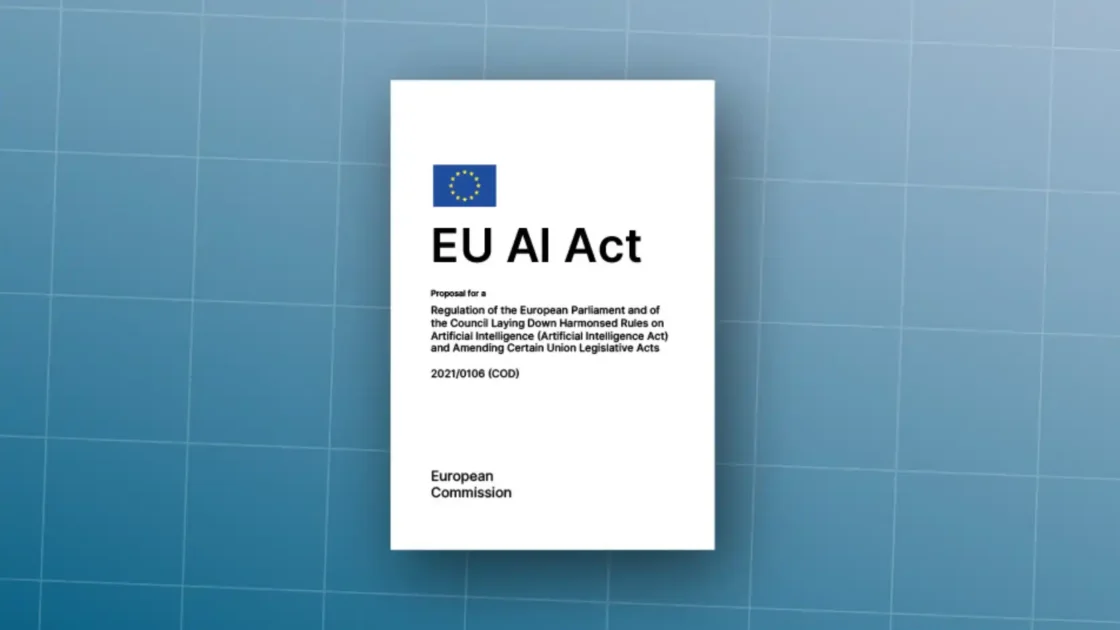
The European Union’s AI Act and similar policy efforts focus attention on transparency, risk management and high-impact use cases. Even where a live translator is not itself a high-risk system, its use inside hiring, education, healthcare, public services or law enforcement could become sensitive. A company that uses translated speech in interviews, disciplinary meetings or customer decisions should assume records and explanations may be requested later.
Voice likeness is the policy pressure point. Some jurisdictions already regulate voice cloning, synthetic impersonation or biometric data. A translation system that preserves speaker cues may not be marketed as voice cloning, but users will experience it as a likeness. Consent, disclosure and watermarking therefore become more than good manners. They are likely to become compliance requirements in many contexts.
Provenance standards such as C2PA may also become relevant when translated audio is recorded and distributed. A meeting recording containing AI-translated speech could need metadata showing which tracks were generated. A news organization using live translation in interviews may need to distinguish the original voice from translated output. Courts and regulators will care about chain of custody if audio is used as evidence.
The safest strategic posture for companies is to document use before rules force them to do so. Track where live translation is enabled. Disclose it clearly. Store original and translated transcripts only when lawful and necessary. Set limits for sensitive contexts. Generated voice translation will be judged by the same public concern that follows deepfakes, even when the use case is benign.
The near future is multilingual media, not a universal translator
The popular fantasy is a universal translator that makes language disappear. The more likely near future is multilingual media infrastructure that makes language more flexible but not invisible. Calls, meetings, videos, live streams, customer support sessions, tours and classes may carry multiple audio layers. Users may choose a target language the way they now choose captions or playback speed.
That future will be messy. Some voices will be translated in near real time. Some will be captioned. Some will remain untranslated because the language, accent or audio quality is poor. Some contexts will require certified interpreters. Some users will distrust synthetic voices. Some organizations will disable the feature. The technology will not replace linguistic skill; it will change where linguistic skill is required most.
For media companies, the release points toward live dubbing at a scale that was previously expensive or slow. Google’s announcement mentions CJ ENM among partners testing the model. Broadcasters, streamers and live event platforms will watch closely because near-real-time speech translation could extend global reach without waiting for post-production. The challenge will be editorial control. A live translated stream can spread errors instantly to large audiences.
For creators, multilingual audio could become part of publishing. A small educator might stream in one language and let listeners hear another. A podcast could offer translated listening modes. A software company could run a webinar across regions without booking multiple interpreters for low-risk sessions. This is the business upside of the technology: language access becomes less dependent on production budgets.
The phrase “universal translator” is useful as metaphor and dangerous as expectation. Gemini 3.5 Live Translate is not the end of language barriers. It is a new layer for crossing them, with all the friction, bias, error and power that layers carry.
Device interfaces will decide adoption
The model may be the headline, but the interface will decide whether people use it. Translation products fail when they ask users to perform too many setup steps at the exact moment they are under social pressure. A traveler at a ticket counter does not want to choose an input mode, select a microphone route, explain the app to the other person and wait for calibration. The feature has to begin quickly and recover quickly.
Google’s earpiece mode is therefore more than a minor Android detail. It borrows the most familiar audio posture in mobile computing: holding a phone like a call. That posture gives the user privacy, signals listening rather than recording in some social contexts, and avoids the awkwardness of speaker playback. It also lets translation enter moments where headphones would be unavailable or inappropriate.
Wearables may be the next interface. Android XR glasses, earbuds, watches and car systems all have obvious translation use cases. But each device changes the consent problem. Earbuds make translation private but invisible to bystanders. Glasses may make the system feel more intrusive because they imply sensing. Cars may translate between driver and passenger while road noise and safety constraints limit attention. Meeting-room hardware may let listeners hear translation but not have their own speech translated, as Google’s earlier Meet documentation notes.
The best interface may vary by social setting. Public listening favors privacy. Face-to-face conversation favors shared visibility. Meetings favor indicators and transcripts. Developer apps favor embedded controls. Live translation will not have one perfect interface; it will have many interfaces matched to different kinds of awkwardness.
This is where Google’s ecosystem could matter. A single translation model can be surfaced through Android, iOS apps, Meet, Pixel features and future wearables. If the controls feel consistent across those settings, users may learn one mental model for translated speech. If the controls diverge, the feature may remain powerful but confusing.
Translation quality will be measured in recoverability
Traditional translation quality is often scored by comparing output with reference translations. That still matters, but live conversation adds another metric: recoverability. When the model makes a mistake, can the participants notice it, repair it and continue? A live translator that occasionally errs but makes correction easy may be more useful than a system that sounds perfect until it fails silently.
Recoverability starts with transcripts. A transcript gives users something to point at. “Did you mean this?” is easier when the source and target text are visible. It also helps bilingual participants intervene. In a meeting, a bilingual colleague may notice a poor translation and correct it before a decision is made. In a marketplace call, a transcript can clarify whether the issue was time, place, amount or object.
Audio design also affects recovery. If the translated voice keeps speaking while the original speaker continues, users may struggle to interrupt at the right moment. If the app allows short replay or sentence-level review, repair becomes easier. If the system exposes language detection errors clearly, users can switch languages before the conversation collapses. Small interface choices will determine whether errors feel manageable or embarrassing.
This is especially relevant for idioms and named entities. Google’s December 2025 Translate update focused partly on idioms, slang and expressions in text translation. Speech translation inherits the same challenge with less time to solve it. A model might render an idiom literally, mishear a company name or flatten a culturally specific joke. The right response is not to pretend these errors vanish. The right response is to make repair normal.
The strongest products will train users to treat translated speech as a shared draft of meaning. Live translation succeeds when people can correct it without losing face. That is a social metric as much as a technical one.
Enterprise procurement will ask different questions
Enterprise buyers will not evaluate Gemini 3.5 Live Translate the way consumers do. Consumers ask whether it works in the moment. Enterprises ask how it behaves at scale, what it costs, who controls it, where data flows, which logs exist, which regions are covered and what happens when the model is wrong. The gap between demo and procurement is wide.
A company considering Live Translate for meetings will ask whether administrators can enable it by organizational unit, whether usage limits apply, whether recordings contain translated audio, whether transcripts are retained, and whether participants are notified. A company considering the API for customer support will ask about latency under load, uptime, support, privacy terms, abuse monitoring, billing predictability and data retention. A school or public agency will ask about accessibility obligations and language equity.
Google’s Workspace documentation already gives administrators some control over Speech translation in Meet, including turning it on or off. The Gemini API terms and additional documentation matter for developers. But each organization will still need internal policy. Who may enable translation? Which meetings are excluded? Are translated transcripts official records? Does a human need to review translated decisions? Is the system allowed in hiring interviews?
The adoption curve may therefore be slower in serious enterprises than in consumer travel use. Workers may try it informally before procurement approves it formally. That creates shadow translation risk: employees may use personal apps in sensitive conversations because the official tool is not ready. IT and legal teams should plan for that behavior rather than assume prohibition will work.
The procurement question is not only whether Google’s model is strong. It is whether Google and its customers can define a trustworthy operating model around it. For enterprises, live translation is a feature, a records issue, a privacy issue and a workplace inclusion issue at the same time.
The developer economy around speech translation
A public preview in the Gemini Live API gives developers a chance to build the uses Google will not build itself. That could be the most important long-term effect of the launch. Translation can become an embedded capability in tutoring platforms, virtual events, telehealth intake tools, call centers, game voice chat, creator platforms, hospitality apps and professional services software.
The developer economy will likely form around wrappers, media infrastructure and vertical tuning. Some companies will build simple user-facing translation apps. Others will build SDKs that add translation to WebRTC products. Others will specialize by industry, with terminology, compliance flows and workflow hooks for hospitality, logistics, education or customer support. The model is generic; the business value often comes from domain design.
Pricing will matter, though Google’s June pages do not by themselves settle the full economics for every use case. Audio translation can be compute-heavy. A product that translates thousands of simultaneous calls must manage cost per minute, idle time, retries, silence detection and transcript storage. A feature that feels magical in a short demo may become expensive at call-center scale if usage is not designed carefully.
Developers also need a misuse model. A live translation API could be used to misrepresent speakers, produce synthetic audio outside consent, or mask malicious calls across languages. Google’s policies apply to covered services, but downstream apps need their own controls: rate limits, abuse reporting, consent prompts, watermark handling, audit logs and restrictions in sensitive domains.
The best developer products will not treat translation as a novelty. They will treat it as a new communications primitive. When speech translation becomes an API, every audio product becomes a potential multilingual product. That is powerful, but it also means responsibility spreads beyond Google.
Search and answer engines will reshape translation discovery
Google Translate has long benefited from search behavior. Users search a phrase, a language pair or a word, and Google supplies a translation box. Gemini-powered translation changes that discovery pattern because users may search less for isolated words and more for tasks: understand a lecture, follow a meeting, translate a live call, talk to a driver, listen to a tour. Search and answer engines will need to surface not only translations but modes of translation.
This matters for SEO and product communication. People will not always know whether to search for “Gemini Live Translate,” “Google Translate headphones,” “Google Meet speech translation,” “AI interpreter,” or “real-time voice translator.” Google’s own product naming spans Gemini, Translate, Meet, Live API and Speech Translation. Publishers and businesses explaining the feature need to connect those entities clearly without stuffing keywords or blurring product differences.
Answer engines will also need precise caveats. A user asking whether Gemini Live Translate works offline needs a different answer depending on the surface. Pixel Voice Translate has on-device privacy claims. Google Translate Live translate and Gemini Live API have different assumptions. A user asking whether Meet supports 70 languages needs a date-sensitive answer because the June 2026 announcement describes private preview and later rollout, not universal availability for every tenant on day one.
For news and analysis, the best content will separate confirmed rollout from strategic interpretation. Confirmed facts include release date, supported channels, language claims, API model name, model card limitations and SynthID watermarking. Analysis includes what this means for travel, business, regulation and competition. Search systems reward clarity when the product surface is complicated. Readers do too.
The wider lesson is that AI products increasingly arrive as ecosystems rather than standalone tools. Gemini 3.5 Live Translate is a model, an app feature, a meeting feature and an API. Anyone explaining it must map the system, not only describe the demo.
Human interpreters move up the value chain
Every major translation release prompts the same fear: machines will replace human interpreters. The better reading is narrower. Machine translation will absorb more routine, low-risk, high-volume interactions. Human interpreters will remain critical where trust, stakes, culture and accountability matter. The boundary will move, but it will not disappear.
Professional interpreters do far more than map words between languages. They manage turn-taking, confidentiality, ethics, register, cultural nuance and domain vocabulary. They know when a speaker is ambiguous and ask for clarification. They can explain that a literal translation would mislead. They can adapt to social hierarchy, legal constraints and emotional intensity. A model may approximate some of this behavior, but it does not carry professional accountability.
AI translation may create more demand for human expertise in review, escalation and quality design. Enterprises deploying live translation will need linguists to test outputs, build terminology lists, define risk tiers and decide which settings require human interpreters. Media companies may use AI to create rough live translation, then employ humans for broadcast-critical language, subtitles or archived versions. Schools and hospitals may use AI for access but still rely on certified interpreters for sensitive meetings.
The profession may also split by immediacy. Routine live understanding may become cheaper through AI. High-stakes interpretation may become more specialized. Human interpreters may increasingly work alongside AI systems, correcting transcripts, supervising multilingual events or stepping in when confidence drops. That is not a simple loss story, but it is a labor change story.
The risk is that organizations use AI as an excuse to cut language access budgets without understanding the consequences. Live translation should push human interpreters toward the conversations where humans are most needed, not remove them from conversations where rights and safety depend on them.
Cultural meaning remains outside the audio stream
Even a strong speech translator does not know the full social world around a sentence. It receives audio and produces translated audio. It may infer emotion, tone and language from sound. It may use context within the stream. But culture often lives outside the words: who is allowed to speak directly, which joke is safe, which honorific signals respect, which silence means disagreement, which indirect phrase means refusal.
This is why literal correctness can still fail. A sentence may be accurately translated and socially wrong. A business speaker may soften a rejection in Japanese, a negotiator may use polite ambiguity in French, a family elder may signal authority through kinship terms, or a doctor may choose a phrase that is culturally less frightening. A model may preserve the words and lose the social act.
Tone preservation helps only part of this problem. It can carry urgency or warmth, but it cannot guarantee cultural interpretation. In fact, it can make a culturally poor translation sound emotionally convincing. A user may hear a confident voice and assume the meaning crossed intact. Sometimes it did. Sometimes it crossed as text while the social function stayed behind.
Developers and institutions should account for this in product copy and policy. Live translation is excellent for access and rough understanding. It is weaker for diplomacy, therapy, conflict resolution, religious instruction, legal nuance and sensitive family mediation. Those settings require cultural judgment, not only linguistic conversion.
A mature society will use live translation without mistaking it for shared culture. The technology can carry speech across languages; it cannot remove the work of understanding another person. That work remains human, even when the audio sounds natural.
Google’s strategic advantage is the stack
Google’s live translation push is stronger because it sits on a full stack. The company has consumer apps, workplace tools, developer APIs, AI research teams, mobile operating-system reach, Pixel hardware, media products and a long history in translation. Competitors may match pieces of that stack. Few can match all of it at once.
This matters because live translation improves when it appears in many contexts. Consumer use produces product feedback. Meetings expose multi-speaker problems. Developer adoption creates new use cases. Research improves models. Hardware creates new listening surfaces. Safety work adds watermarking and detection. Each layer informs the others, at least in theory.
The danger of a full stack is lock-in and opacity. If Google becomes the default live translation layer for many products, its choices about supported languages, pricing, policies, data handling and quality thresholds will shape global communication. Developers may build around the API. Organizations may train workers on the interface. Users may come to trust Google’s rendering of speech more than alternatives.
That creates a responsibility to publish model cards, document limitations and maintain clear controls. The Gemini 3.5 Live Translate model card is a positive signal because it names known problems. The API docs are useful because they tell developers what the model does not do. The source of concern is not that Google has a powerful stack; the concern is whether the stack remains legible to users and accountable to communities.
The strategic lesson is direct. Google is not just launching a translator. It is trying to make Gemini the audio layer for multilingual computing. That is why this release deserves deeper attention than a normal app update.
Testing should happen before rollout
Organizations that adopt live translation should not treat vendor availability as deployment readiness. A feature can be available and still be untested for a particular company, classroom, platform or community. The right first step is a translation risk map. Which conversations are routine? Which involve money, safety, health, employment, legal rights or official records? Which languages matter most? Which accents and audio conditions reflect the real users?
A sensible pilot should include real audio, not only scripted demos. Customer support pilots should include hold music bleed, cheap microphones, background traffic, emotional callers, numbers, account identifiers and product names. School pilots should include children, classroom noise, parents who code-switch, and meetings where educational rights are discussed. Workplace pilots should include overlapping speakers, acronyms, regional accents, presentation references and poor conference-room microphones. Travel pilots should include street noise, station announcements, tour guides and staff who do not know they are part of a translation session.
The evaluation should measure more than word accuracy. Teams should track latency, user confusion, repair frequency, confidence signals, transcript usefulness, speaker identification, language detection errors, consent clarity and escalation behavior. A pilot that says “users liked it” is not enough. The question is whether people made better decisions, understood each other faster and recovered from errors safely.
A serious rollout also needs a no-use list. Many organizations already have policies for recording calls, using AI note-takers or translating confidential content. Live spoken translation belongs in the same governance family. It may be allowed for casual collaboration and routine support but barred from legal negotiations, medical advice, disciplinary meetings, official complaints or hiring decisions unless a human professional is present.
Training should focus on behavior, not model mystique. Users need to know how to pause, clarify, repeat names, speak in shorter units, avoid talking over one another and check transcripts. They need to know when to stop using the tool. Managers need to know that a translated voice can sound more certain than it is. Customer agents need scripts that disclose translation and ask for consent in plain language. The product may be real-time, but responsible adoption is not instantaneous.
This kind of testing will also make the technology better. Structured feedback from real deployments can identify language pairs, acoustic settings and domain vocabulary that need work. It can reveal whether interface controls are clear under pressure. It can show whether users trust the feature too much or too little. A model release is the start of the operational work, not the end.
The economics of language access will shift
Language access has always involved trade-offs among cost, speed, coverage and quality. Professional interpretation is expensive but accountable. Bilingual staff are valuable but unevenly distributed. Written translation is accurate when reviewed but slow for live interaction. Captions are cheaper than interpreters but require reading and often lose tone. AI speech translation changes the cost curve by making rough spoken access available in more places.
That shift will have mixed effects. More people may receive some level of language support where they previously received none. A small business may speak with overseas customers. A city museum may support more visitors. A local clinic may improve front-desk communication while waiting for a certified interpreter. A school may handle routine parent questions faster. Those are real gains, especially outside wealthy institutions.
The danger is substitution without judgment. If leaders see AI translation only as a cost-cutting tool, they may replace skilled language workers in places where skill is still needed. The harm would not always be visible immediately. A patient may nod without understanding. A worker may agree to a policy they did not fully grasp. A customer may accept a bad outcome because the translated voice sounded official. Cost savings can hide transferred risk.
The more productive economic model is tiered language access. AI handles low-risk, high-volume, immediate needs. Human interpreters handle high-stakes, ambiguous and rights-bearing conversations. Bilingual staff support trust and local knowledge. Written translation handles documents that require review. Transcripts and quality audits feed back into the system. In that model, AI does not erase the budget for language access; it changes where the budget is spent.
Markets will also develop around quality assurance. Companies may pay for terminology packs, domain testing, transcript review, interpreter escalation, compliance dashboards and integration with records systems. Developers may create translation observability tools that track latency, language detection, user corrections and failure modes. A new category of “translation operations” could emerge for organizations with heavy multilingual communication.
For Google, the economic opportunity is clear: Gemini 3.5 Live Translate can drive API usage, Workspace value, Google Translate engagement and future device use. For society, the opportunity is broader and more delicate. Cheaper language access is good only when it expands understanding rather than replacing care. The economics will be judged not by how many interpreter hours disappear, but by whether more people are heard accurately in the situations that shape their lives.
The real meaning of impossible in this release
The word “impossible” belongs in the headline only if it is handled honestly. Gemini 3.5 Live Translate does not make language irrelevant. It does not guarantee perfect interpretation. It does not replace cultural knowledge. It does not make a synthetic voice equivalent to a person. It does not remove the need for professional interpreters in high-stakes situations.
The impossible thing it approaches is more practical: it makes a live cross-language conversation feel less like operating software and more like listening. That is a major human-computer interface change. The phone, the meeting room and the API stop treating translation as a document task and start treating it as an audio layer in conversation.
Google’s timing also matters. The company had already shown Meet speech translation and Gemini-powered Translate upgrades. The June 2026 release pulls those pieces into a dedicated model and a wider rollout. It gives developers a preview model. It gives consumers a global app surface. It gives enterprises a path beyond five languages. It adds SynthID watermarking. It publishes a model card with real limitations. That combination is why the release deserves attention.
The next test is ordinary use. Demos are controlled. Real life is not. Users will try Live Translate in noisy streets, kitchens, airports, classrooms, cabs, group calls and tense customer interactions. They will test it with slang, whispering, laughter, anger, accents, children, interruptions and poor microphones. The product will earn its reputation there.
If it works well enough, the habit change could be deep. People may make calls they would have avoided. Companies may serve customers they could not staff for. Families may hold conversations that were previously mediated by a relative. Travelers may listen instead of guessing. Developers may add language layers to products that never had them. The impossible is not perfect translation. The impossible is making live translation ordinary. Google is now close enough for the world to test that claim at scale.
Gemini 3.5 Live Translate questions readers are asking
Gemini 3.5 Live Translate is Google’s live speech-to-speech translation model for near real-time spoken translation. It listens to speech, translates it, and generates translated audio rather than only showing text.
Google announced Gemini 3.5 Live Translate on June 9, 2026, with rollout across the Gemini Live API, Google AI Studio, Google Translate and Google Meet.
Google says Gemini 3.5 Live Translate supports more than 70 languages. Quality may still vary by language, accent, audio quality and context.
Yes. Google says the model is rolling out in the Google Translate app on Android and iOS, including the Live translate experience.
Headphones are supported and useful for private listening. Google also announced an Android listening mode that lets users hear translations through the phone earpiece by holding the phone to the ear.
Google says Google Meet speech translation will soon use Gemini 3.5 Live Translate, starting with private preview access for selected business Google Workspace customers, followed by broader rollout later in 2026.
Meet is expected to move from a smaller set of English-centered speech translation pairs toward more than 70 languages and more than 2,000 language combinations.
Yes. Developers can access Gemini 3.5 Live Translate in public preview through the Gemini Live API and Google AI Studio.
Google’s developer documentation lists the preview model as `gemini-3.5-live-translate-preview`.
No. Google’s documentation describes Live Translation as a translation-only, low-latency audio model. It does not support function calling, search grounding, file search, code execution or general agent behavior.
Google says the model preserves qualities such as intonation, pacing and pitch. That means it tries to keep some vocal feel, but users should not treat the generated voice as the original voice.
It should not be treated as a replacement for professional interpreters in legal, medical, immigration, financial or other high-stakes contexts unless the deploying organization has tested it and built the right safeguards.
Google’s model card notes possible voice inconsistency, voice shifts after long pauses, difficulty with rapid multi-speaker sessions, language detection issues with accents or similar languages, and artifacts from background noise in some settings.
Yes. Google says audio generated by its models is watermarked with SynthID, an imperceptible signal designed to help identify AI-generated content.
No. SynthID can help detect that audio was generated by Google AI when the watermark is present and readable. It does not prove the translation was accurate or that the source audio was authentic.
Yes, especially for routine calls, marketplace coordination, travel support and lower-risk customer interactions. Sensitive or contractual conversations still need stronger review, transcripts and human escalation.
No. It may reduce language friction in many everyday settings, but trained human interpreters remain necessary where accuracy, ethics, confidentiality and domain expertise are critical.
Translated captions convert speech into written text. Gemini 3.5 Live Translate generates spoken translation, aiming to preserve some tone and rhythm so the listener can keep following the speaker without reading.
It places live speech translation across consumer, workplace and developer channels at once. That makes translation a reusable layer across Google products and third-party applications rather than a standalone app feature.
Author:
Jan Bielik
CEO & Founder of Webiano Digital & Marketing Agency
This article is an original analysis supported by the sources cited below
Fluid, natural voice translation with Gemini 3.5 Live Translate
Google’s June 2026 announcement of Gemini 3.5 Live Translate, including rollout details, language coverage, Google Translate and Meet plans, partner examples and SynthID watermarking.
Live translation with Gemini Live API
Google’s developer guide explaining Live Translation through the Gemini Live API, its audio streaming setup and the distinction between live agents and live translation.
Google’s model documentation for the `gemini-3.5-live-translate-preview` model, including supported input and output types, token limits and unsupported capabilities.
Gemini 3.5 Audio (Live Translate) model card
Google DeepMind’s model card for Gemini 3.5 Live Translate, covering model dependencies, evaluation approach, intended use, known limitations and safety context.
Hear live speech to speech translations with Live translate
Google Translate Help documentation for using Live translate, supported modes, headphone listening and face-to-face translation behavior.
Bringing state-of-the-art Gemini translation capabilities to Google Translate
Google’s December 2025 announcement of Gemini-powered Translate improvements and the earlier beta for live speech-to-speech translation through headphones.
Learn about Speech Translation
Google Meet Help documentation explaining Speech Translation availability, behavior, limitations and supported account types.
Speech translation in Google Meet now generally available for businesses
Google Workspace Updates post on the general availability of Meet speech translation for selected business plans and the initial five-language scope.
Google Workspace adds new Gemini AI features for Gmail, Meet, Vids and more
Google’s May 2025 Workspace announcement covering near real-time speech translation in Meet and early availability for AI plan subscribers.
How AI made Meet’s language translation possible
Google’s explanation of how Meet, DeepMind and Research teams built speech translation and the product challenges around latency, accents and idioms.
Real-time speech-to-speech translation
Google Research post describing end-to-end real-time speech-to-speech translation, streaming architecture, latency targets and the limits of cascaded systems.
A Neural Network for Machine Translation, at Production Scale
Google Research’s 2016 post on Google Neural Machine Translation and the move from phrase-based translation toward neural sentence-level translation in production.
Google’s Neural Machine Translation System
The technical report on GNMT, a key historical source for Google’s transition to neural machine translation at production scale.
Google DeepMind’s overview of SynthID watermarking for AI-generated images, audio, text and video, including how imperceptible watermarks are embedded and detected.
Tools to understand how content was created and edited
Google’s 2026 update on SynthID scaling, AI content detection and provenance-related tooling across Google products.
Google’s AI principles page describing its approach to responsible development, safety, privacy, testing, oversight and collaboration.
Generative AI Prohibited Use Policy
Google’s policy for prohibited uses of generative AI products and services that refer to the policy, including impersonation, misleading provenance and high-risk decision contexts.
Gemini API Additional Terms of Service
Google’s additional terms for Gemini API use, relevant to developers building on Gemini Live Translate.
Pixel Phone Help documentation describing Voice Translate, on-device privacy claims, controls and voice-likeness behavior in phone calls.
Interpreter in Microsoft Teams meetings and calls
Microsoft Support documentation for Teams Interpreter, including real-time speech-to-speech interpretation and usage limits for Microsoft 365 Copilot users.
DeepL’s product page for real-time voice translation across meetings, conversations and API use cases, with enterprise security and language coverage claims.
Introducing a foundational multimodal model for speech translation
Meta AI’s introduction of SeamlessM4T, a multilingual and multitask speech and text translation model with broad language coverage.
Joint speech and text machine translation for up to 100 languages
Nature paper on SEAMLESSM4T, including language coverage, speech-to-text and speech-to-speech performance claims and robustness testing.
Coalition for Content Provenance and Authenticity site explaining the open technical standard for digital content provenance and Content Credentials.
| Citing this article? Brief excerpts are welcome. Please credit Webiano.digital, name the author where stated, and include a link to https://webiano.digital and to this original article. Full or substantial republication requires prior written permission. Read our Copyright and Content Use Policy. |
This article was prepared with the assistance of artificial intelligence tools. The content underwent expert human review, and Webiano Digital & Marketing Agency assumes editorial responsibility for its final version and publication.