Apple’s iPhone 18 Pro can record 4K ProRes at 120 frames per second, but only to an external drive, and that rule explains the SSD on the gear list under Film Riot’s new fight-scene video. The phone is a credible action camera; the storage, filtration, stunt safety and effects planning around it decide whether a small crew can repeat the result.
The headline video mode of Apple’s 2026 Pro iPhones carries a condition: 4K ProRes at 120 frames per second records only to an external drive. Apple’s spec sheet for the iPhone 18 Pro Max lists that mode as available “with external recording”, and a separate support page adds rules for drive speed, cables and formatting. Top-end iPhone filmmaking is therefore a phone plus a fast drive and the right cable, and the headline mode works only when both meet Apple’s specifications.
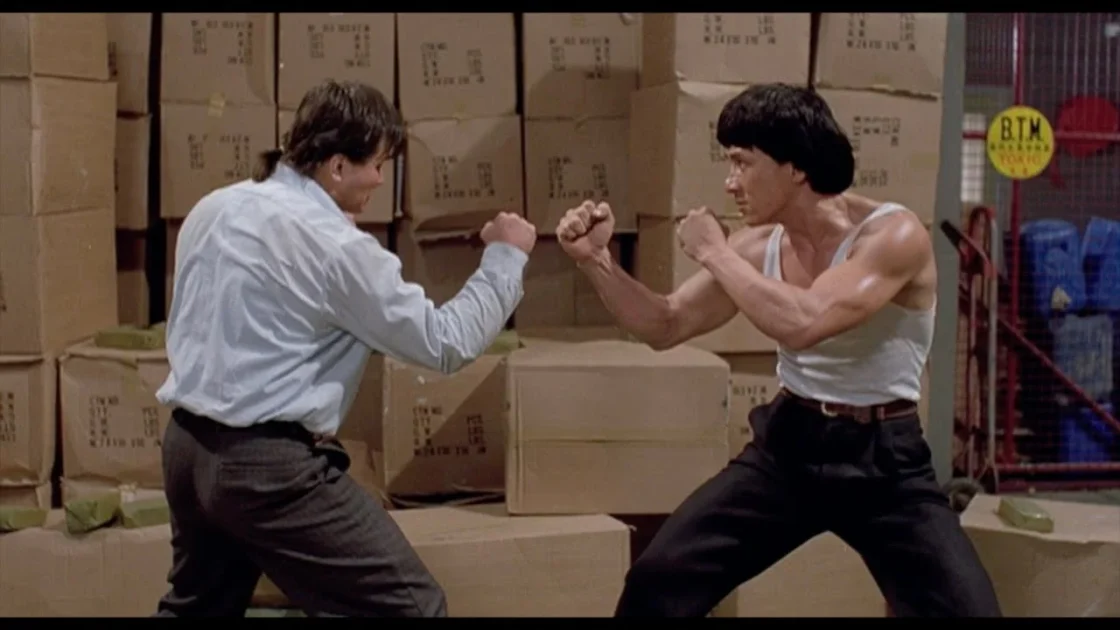
A 15-minute video that Film Riot published on 5 November 2026, “How We Shot a Fight Scene on an iPhone”, is a current example of that setup at work. Its page links SmallRig rig kits and an SSD, and YouTube marks the video as including paid promotion. This article tests the setup the page describes against Apple’s documentation, industry safety guidance and two studio productions that used iPhones. It does not report what is said or shown on screen.
Sponsored links, eleven chapters and a conflicting phone model
The video’s page is the only part of it this article can describe, and it says more about structure than content. The description opens with a block headed SmallRig Gear, which advertises a Black Friday sale of up to 40 percent off from 19 to 30 November and links two iPhone 18 kits, a phone filter and an SSD. Further down sit a Soundstripe discount code, a Hollyland product link, six earlier tutorials on energy effects and a pack of VFX assets. YouTube’s own label says the video includes paid promotion.
The chapter list points the same way. By their timestamps, the iPhone Rig chapter is the longest at about 3 minutes 24 seconds, while the Stunts and Stunt Wire Work chapters together run about 65 seconds. Timestamps measure space on the page, not the depth of what is said in each chapter, so this is a clue about emphasis and not proof.
The page also disagrees with itself about the camera. Its tags name the iPhone 18 Pro Max, which fits the SmallRig kits, while an automatic summary shown on the same page says iPhone 15 Pro Max. The description does not settle it. The 18 Pro Max is the likelier camera, as an inference from the tags and the kits, and the rest of this analysis applies to the 18 Pro generation.
4K120 ProRes makes the external SSD a requirement
Apple’s tech specs for the iPhone 18 Pro Max list ProRes at up to 4K and 120 frames per second with external recording, ProRes RAW through compatible apps, Apple Log 2 and genlock, the last enabled by third-party hardware and software. The detailed rules sit on a support page dated 10 March 2026, which covers the iPhone 17 Pro generation and earlier and does not mention the 18 Pro. For those models Apple requires an exFAT drive, a USB 3 cable rated at 10 Gbit/s or better, and sustained writes of at least 220 MB/s for 4K60 and 440 MB/s for 4K120, with a reformat before every 4K120 session. ProRes files run up to 30 times larger than HEVC, and ProRes cannot be combined with Cinematic mode, slow motion or time-lapse.
A page from the LUT publisher Bransford Media, summarizing Apple’s iPhone 18 Pro user guide, gives the same split, with internal ProRes Log up to 4K30. The SSD on a gear list is therefore a condition of the headline mode, not an accessory. That is Apple’s requirement. The cage is a different matter: the Apple pages read for this article do not mention one, while SmallRig’s own blog presents mounting threads for SSDs as a feature of its kits. A crew can meet the first requirement without buying the second product.
A four-step iris leaves the filter on the gear list
The iPhone 18 Pro’s main camera gained a mechanical iris with four positions: f/1.48, f/1.8, f/2.8 and f/4.0. CineD’s analysis of Apple’s announcement puts the whole range at a little under three stops and concludes that a bright exterior at a 180-degree shutter still needs filtration. The same piece calculates that Apple’s claimed 50 percent low-light gain is roughly the aperture change from f/1.78 to f/1.48, with no separate sensor figure from Apple. The video’s gear list includes a phone filter, and SmallRig sells a 67 mm variable ND filter for its cage. That listing is consistent with the optics, though the page does not say what conditions the crew shot in.
Exposure consistency is the less obvious issue for a fight cut from many takes. CineD’s lab test of the iPhone 17 Pro had to be abandoned as a standard test because the waveform moved by about three stops depending on where the tester tapped to focus, even with manual settings in the Blackmagic Camera app. CineD had not tested the 18 Pro when it published its announcement coverage on 9 September, and nothing in Apple’s announcement addressed that behavior.
Wire work needs qualified riggers, whichever camera films it
The stunt side of the page has nothing to do with phones, and it carries the risk. An industry-wide labor-management committee publishes Safety Bulletin 4 on stunts for film and television productions, last revised on 27 March 2025. The bulletin is a set of recommended guidelines and not law, so it describes the baseline professional sets work to, not what a small crew is obliged to do. That baseline is specific: a qualified stunt coordinator in charge of planning, rehearsal and equipment whenever a stunt happens; rigging by qualified people using inspected gear that the coordinator approves; a structural engineer where rigging attaches to buildings or stages; emergency medical personnel present or readily available at rehearsals and performances; and a safety meeting led by the first assistant director, with a walk-through, before the stunt. A performer who does not agree to a stunt may always ask for a double.
The video’s description links four IMDb profiles without stating roles, and its chapter list gives wire work about 35 seconds. Whether a coordinator was on set is not something the page says. The guidelines describe what professional sets treat as normal. They are not evidence that the video fell short.
Two studio precedents: previs on a phone, VFX trouble on a feature
Netflix’s own site documents the lower-stakes use. For The Man from Toronto (2022), director Patrick Hughes said his team shot the gym fight on an iPhone first and cut together a version with stunt doubles standing in for every role. Stunt choreographer Philip Silvera put the finished sequence at about 36 shots stitched to read as one, and Hughes said they shot it over two days. In that account the phone was a planning tool, and the stunt team, not the camera, defined the sequence. It is also Netflix describing its own film, so the tone is promotional.
The harder case is 28 Years Later, which befores & afters reports was primarily filmed on iPhone 15 Pro Max phones alongside action cameras and drones. Cinematographer Anthony Dod Mantle said the phones had to be hacked to control the image, and the production worked with Apple and Blackmagic from prep. The warning for any fight that will get an effect added comes from visual effects supervisor Adam Gascoyne, who said the footage was 4:2:0, that internal stabilization had to be switched off so shots could be tracked, and that he “wouldn’t put it near a bluescreen again”. Dod Mantle added that arrays of 8 to 20 iPhones had no linked control until a beta late in production. Apple’s 18 Pro spec sheet now lists genlock, which needs third-party hardware. A comparable production account for the 18 Pro is not yet public in the coverage reviewed.
A credible action camera, priced as a system
The evidence supports a narrower claim than the video’s tags and the sponsor’s marketing suggest. The iPhone 18 Pro generation is a credible action camera on paper: Apple documents 4K at 120 frames per second, Log 2, ProRes RAW and genlock, and two productions with real stunt and effects budgets have used earlier iPhones. The conditions are storage, light, tracking and safety. The phone solves none of them alone, and Apple’s own pages assign the first to an external drive and not to a cage.
My reading of the sources is that a small crew should spend in this order. Pay first for a stunt coordinator and qualified riggers if wires or falls are involved. Budget a drive that sustains 440 MB/s if 4K120 ProRes is the goal, and reformat it before each session. Buy filtration for daylight exteriors. If an effect goes on top, switch off internal stabilization and test the footage with the effects artist before the shoot. The Pro Max starts at $1,299 in the US, according to CineD’s report of Apple’s pricing; everything else depends on choices the video’s page does not disclose.
Two developments would change this reading. A transcript or full viewing would show which phone, modes and safety arrangements the crew used, and an independent lab test of the 18 Pro would show whether CineD’s three-stop exposure drift on the 17 Pro carried over.
Author:
Jan Bielik
CEO & Founder of Webiano Digital & Marketing Agency
This article is an original analysis supported by the sources cited below
How We Shot a Fight Scene on an iPhone
The video page established the channel, the 5 November 2026 publication date, the 11 chapter timestamps, the SmallRig gear block, the paid-promotion label and the tags that name the iPhone 18 Pro Max.
iPhone 18 Pro Max – Tech Specs – Apple Support
Apple’s specification sheet listed ProRes up to 4K at 120 frames per second with external recording, ProRes RAW through compatible apps, Apple Log 2 and genlock enabled by third-party hardware.
About Apple ProRes on iPhone – Apple Support
Apple’s ProRes support page, dated 10 March 2026, set the exFAT, cable and 220 and 440 MB/s drive requirements, the 30-times file-size note and the mode limits, for iPhone 17 Pro models and earlier.
Safety Bulletin #4: Stunts – Industry Wide Labor-Management Safety Committee
The committee’s stunt bulletin, revised 27 March 2025, set out the recommended roles for a stunt coordinator, rigging, medical cover and the pre-stunt safety meeting, and states that it is guidance only.
Inside the Epic Barbell Brawl of ‘The Man From Toronto’ – Netflix Tudum
Netflix’s 2022 interview with the director and stunt choreographer established that the gym fight was first shot on an iPhone with stunt doubles, and gave the figure of about 36 shots.
iPhone 18 Cage Ecosystem: Cinema Kit, Dual-Handle Rig & VND Filters
SmallRig’s own launch post, dated 14 September 2026, established what the kits include, the external SSD mounting threads and the 67 mm variable ND filter, as claims by the seller.
Apple iPhone 18 Pro and 18 Pro Max Announced – Variable Aperture Main Camera, New Sensor, Pro Controls, Plus the Foldable iPhone Duo
CineD’s specialist analysis established the four-step iris range, the filtration limit, the low-light arithmetic, the US pricing and the exposure problems found in its iPhone 17 Pro lab test.
What it took to film with iPhones on ‘28 Years Later’ – befores & afters
A trade magazine excerpt gave the cinematographer’s and effects supervisor’s accounts of hacked iPhones, 4:2:0 footage, switched-off stabilization, camera arrays and the late linked control.
SmallRig Wants to Turn Your iPhone 18 Pro Into a Cinema Camera
An independent launch write-up from 11 September 2026 described the Creator and Cinema kits and noted that the real test is how they perform on an actual shoot.
Apple iPhone 18 Pro / 18 Pro Max LUTs | Bransford Media
A LUT publisher’s page summarized Apple’s user guide, giving internal ProRes Log up to 4K30 and up to 4K120 to compatible external USB-C storage on the 18 Pro.
| Citing this article? Brief excerpts are welcome. Please credit Webiano.digital, name the author where stated, and include a link to https://webiano.digital and to this original article. Full or substantial republication requires prior written permission. Read our Copyright and Content Use Policy. |
This article was prepared with the assistance of artificial intelligence tools. The content underwent expert human review, and Webiano Digital & Marketing Agency assumes editorial responsibility for its final version and publication.