A 2014 video essay from Every Frame a Painting reduced Jackie Chan’s action comedy to nine filmmaking principles, and it is still the genre’s most shared primer. Twelve years later, its rules on framing and editing check out against the record. The rule that demanded endless takes and real impacts is the one Chan himself now calls reckless.
Action comedy runs on clarity and rhythm, not broken bones
Action comedy is usually treated as two genres sharing a poster: a fight here, a gag there, often shot with different instincts. The stronger argument is that one craft serves both. A punch and a punchline need the same clarity: the audience has to see cause and effect in one frame, at a rhythm it can feel. That argument has aged well. The production model that once delivered it, built on months of retakes and stunt crews without safety captains, has not.
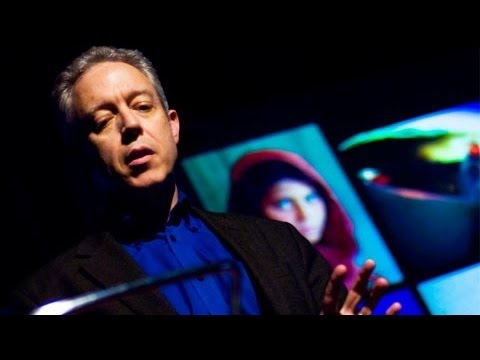
The best-known statement of the argument is “Jackie Chan – How to Do Action Comedy”, a nine-minute video essay published on 2 December 2014 by Every Frame a Painting. Tony Zhou narrates it; in a 2017 postmortem he made clear it was written and edited with Taylor Ramos. It is an independent, viewer-funded piece built from film clips and interview excerpts, not a studio promotion. Its nine principles still circulate as a checklist on film sites, so they are worth testing against what Chan, his producers and the record actually say.
Nine principles from a nine-minute essay
The list sits in the video’s description: start with a disadvantage, use the environment, keep shots clear, put action and reaction in the same frame, do as many takes as necessary, let the audience feel the rhythm, make two good hits read as one great hit, treat pain as humanizing, and earn the finish. The narration presents them as general rules that happen to be clearest in Chan’s films, and traces the underdog logic back to Chaplin, Lloyd and Keaton.
The method is comparative. The essay sets Hong Kong sequences beside Chan’s American work: a Sammo Hung shot that shows the punch, the villain and Chan’s face together, against the same gag in Shanghai Noon split into separate shots, and a car stunt that keeps every element in frame, against a weaker version in Rush Hour 3. The essay’s real target is American coverage, not Chan. Its closing complaint is that modern action directors waste performers who are among the best in the world by cutting away from them.
Framing and the cut that shows a hit twice
The most useful claims are technical, and they rest on Chan’s own interview clips. He says handheld camera movement is what directors use when actors cannot fight, and describes his own approach in seven words: “I never move my camera. Always steady. Wide-angle.” Steady, wide framing lets the stunt prove itself, because the jump, the flip and the fall stay in one shot.
The editing rule is subtler and more transferable. The essay shows Hong Kong editors deliberately breaking continuity: the end of one shot and the start of the next repeat the same blow from a new angle, with a few frames of overlap so the eye can register the cut. The audience reads two shots as one heavier hit. American editing, the essay argues, cuts on the exact frame of impact, so the hit is never actually shown and fights look like flailing. Chan adds that most directors, and even stunt coordinators, do not know how to edit.
This is the part of the essay a viewer can check on any editing timeline, and it explains why the video became a teaching tool. None of these rules requires anyone to get hurt.
A style with older roots than the essay suggests
The essay says Chan learned timing from his early collaborator, rendered in some captioned transcripts as “Yuan He Ping”. The name is Yuen Woo-ping, who made his directing debut with Snake in the Eagle’s Shadow, released on 1 March 1978, and followed it the same year with Drunken Master, both starring Chan. Those two films set the template the essay describes: an underdog trained by an eccentric master, fighting his way up.
The pairing of kung fu and slapstick was not new even then. Lau Kar-leung’s Spiritual Boxer had combined comedy, martial arts and acrobatics in 1975. Chan refined action comedy rather than inventing it, and the essay’s line that he has been the master of combining the two for 40 years is fair as praise, looser as history. The refinement was real: by the mid-1980s he worked with his own stunt team, and the essay credits that team with a rhythm nobody else could reproduce.
The takes record nobody can pin down
Rule five, doing as many takes as necessary, rests partly on legend. In the essay Chan says a fan-throwing gag took more than 120 takes and that American productions would not allow it because of money. The larger number attached to his name is 2,900 takes for one scene in Dragon Lord (1982).
That figure does not survive a close look. Kotaku’s review of the claim found sources disagreeing on which sequence it was, the opening human pyramid or a shuttlecock game; one book gives a range from 190 to 2,900; Quentin Tarantino recalled about a thousand. The firmest account comes from producer Raymond Chow, who said Chan spent 40 days on the shuttlecock scene because he wanted it as one continuous shot. The defensible fact is 40 days, not 2,900 takes. The Guinness title Chan does hold, awarded on 5 December 2012, is for the most stunts by a living actor.
The principle behind rule five still stands: time and a supportive studio buy precision. Its proof is softer than the retellings.
The bill for rule eight
The rule that pain humanizes the hero reads differently next to the medical record. The Guinness citation lists a nose broken three times, both cheekbones, most of his fingers and his skull. A 2019 CGTN profile counted at least 17 severe injuries, including two broken vertebrae and a dislocated pelvis on Police Story in 1985.
Chan’s own view has turned. In 2006 he complained that Hollywood made him wear protective gear for simple stunts and praised Hong Kong sets that had no safety captain at all. By 2019 he told CGTN: “I was such a reckless youngblood back then”. CGTN reported that he hopes young action stars do not follow his path and that he has spent years asking the industry to protect stunt performers. Chan’s later verdict undercuts the essay’s celebration of risk. The video enjoys the outtakes; it does not ask who paid for them, or what the same work cost his stunt crew.
Hollywood starts rewarding the craft
The essay complained in 2014 that action craft went unrewarded. On 12 November 2016 the Academy gave Chan an honorary Oscar at the Governors Awards, where Tom Hanks said martial arts and action comedy were often overlooked. On 10 April 2025 the Academy created a competitive award for Achievement in Stunt Design, to be presented first at the 100th Oscars for films released in 2027. The first stunt design Oscar will be handed out in 2028, and its eligibility and voting rules are due only in 2027.
The push was led by stunt performer turned director David Leitch and coordinator Chris O’Hara. Leitch’s statement named Keaton, Lloyd and Chaplin, the same lineage the essay draws. One detail in the coverage needs correcting: The Hollywood Reporter wrote that only two stunt performers, Yakima Canutt and Hal Needham, have received Oscar statuettes. That count leaves out Chan, who started as a stuntman and received his honorary award for a career built on stunts.
Lessons for editors and directors in 2026
For a director or editor working in 2026, the nine rules split cleanly. The cheap ones transfer to any budget: an underdog setup, props that create jokes only that location allows, action and reaction in one frame, shots held long enough for rhythm, and overlapping cuts that show a hit twice. The expensive ones depend on a production model that barely exists any more: months on one fight and a resident stunt team. The risky ones should stay in the past.
The essay itself proves the point about patience over budget. In the postmortem, Zhou estimated about 72 hours of editing for the nine-minute video and roughly 200 hours in total, and said much of the channel’s style was reverse-engineered from YouTube’s copyright detection. The essay was right about craft and silent about cost. The development to watch is the Academy’s 2027 rulebook: if stunt design is judged on design, clarity and safety rather than on how close performers came to harm, Chan’s best lessons will finally be the ones that get rewarded.
Author:
Jan Bielik
CEO & Founder of Webiano Digital & Marketing Agency
This article is an original analysis supported by the sources cited below
Jackie Chan – How to Do Action Comedy
The Every Frame a Painting video essay, published on 2 December 2014, whose description lists the nine principles of action comedy examined here.
Postmortem: Every Frame a Painting
The creators’ 2017 account confirming Taylor Ramos co-wrote and edited the series and estimating about 200 hours of work on the Jackie Chan video.
Feureau: Jackie Chan – How to Do Action Comedy
A full third-party transcript of the essay, used for its comparisons, Chan’s interview remarks and the editing argument.
ACADEMY ESTABLISHES STUNT DESIGN AWARD FOR 100TH OSCARS®
The Academy’s 10 April 2025 release creating a competitive stunt design award for films released in 2027, with rules due in 2027.
Most stunts by a living actor
The Guinness record page dating Chan’s title to 5 December 2012 and listing his broken nose, cheekbones, fingers and skull.
Jackie Chan Gets Honorary Oscar After Five Decades and 200 Movies
Report on Chan’s honorary Oscar at the Governors Awards on 12 November 2016 and Tom Hanks’s remark that action comedy is often overlooked.
Jackie Chan’s Most Gruelling Scene Ever
Review of the Dragon Lord takes claim, showing conflicting figures and scenes and producer Raymond Chow’s account of 40 days on one shot.
One-on-one with Jackie Chan: The evolution of a kung fu icon
A 2019 interview in which Chan calls his younger self reckless, lists major injuries and describes campaigning for stunt performers’ safety.
Hollywood’s Insurance Rules Frustrate Daredevil Actor Jackie Chan
A 2006 Associated Press report quoting Chan’s frustration with Hollywood safety rules and his praise for Hong Kong sets without safety captains.
Oscars: Film Academy Establishes Stunt Design Award
Coverage naming David Leitch and Chris O’Hara as the award’s advocates and claiming only two stunt performers had received statuettes.
Snake in the Eagle’s Shadow
Reference entry confirming Yuen Woo-ping directed Chan in 1978 and noting Spiritual Boxer combined comedy and kung fu in 1975.
| Citing this article? Brief excerpts are welcome. Please credit Webiano.digital, name the author where stated, and include a link to https://webiano.digital and to this original article. Full or substantial republication requires prior written permission. Read our Copyright and Content Use Policy. |
This article was prepared with the assistance of artificial intelligence tools. The content underwent expert human review, and Webiano Digital & Marketing Agency assumes editorial responsibility for its final version and publication.