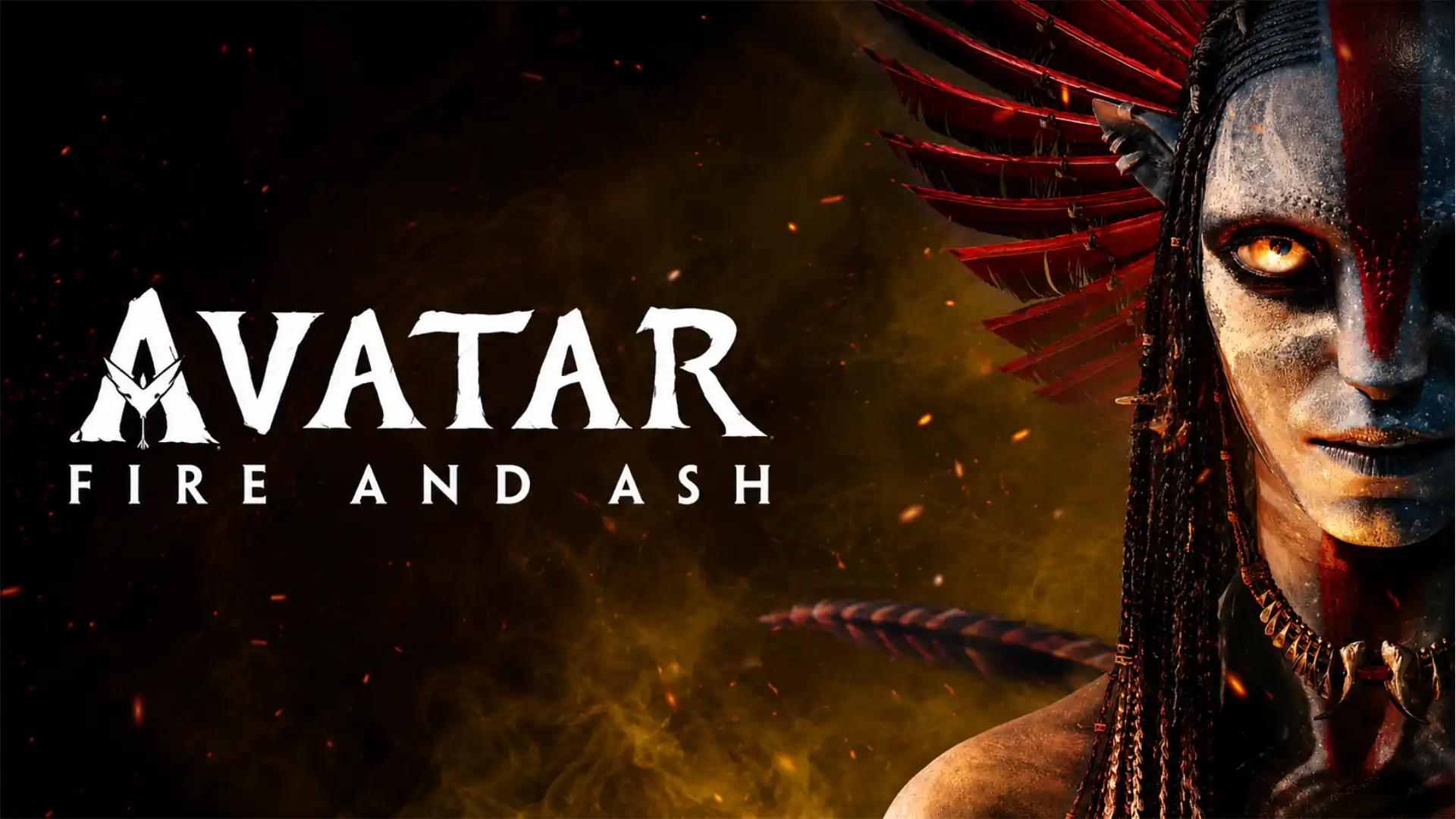
The most useful answer is also the most extreme one now in public view: Wētā FX’s work on Avatar: Fire and Ash used about 140 petabytes of disk space, generated at a peak rate of roughly 200 to 250 terabytes per day. That figure comes from reporting on Wētā FX’s visual effects work, which also says the studio delivered 3,132 VFX shots and used 1,248,087,308 render hours for final shots. For a single processor, that would equal roughly 142,000 years of computation.
Table of Contents
The answer starts with 140 petabytes
That does not mean a cinema copy of Avatar: Fire and Ash is 140 petabytes. It is not. A theatrical Digital Cinema Package is tiny by comparison. The 140-petabyte number describes a production footprint: assets, simulations, caches, lighting tests, rendered passes, compositing elements, shot versions, backups, pipeline files and the churn created by thousands of people trying to make a synthetic world feel photographed. The official 20th Century Studios page lists Avatar: Fire and Ash as a PG-13, 3-hour-15-minute release dated December 19, 2025, which gives a useful anchor for the scale of work behind a 195-minute feature.
The central point is that a modern blockbuster does not create one movie file. It creates a temporary industrial data ecosystem. A viewer sees one finished frame at a time. A studio may have stored hundreds or thousands of versions of that frame before the final one was approved.
Avatar is the cleanest public case because Wētā FX and specialist VFX publications have disclosed numbers. Other blockbusters rarely publish comparable totals. Steven Spielberg’s Disclosure Day, released in June 2026, is a useful contrast: the official site identifies it as a Spielberg film in theaters June 12, 2026, while VFX coverage says its effects work was shared between Digital Domain, Wētā FX and Storm Studios under production VFX supervisor Matthew Butler and producer Lauren Ritchie. But no public source found in this research gives a verified total data footprint for Disclosure Day.
That difference matters. Avatar lets us cite a number. Disclosure Day forces an estimate. The distinction is not cosmetic. A verified 140-petabyte figure and a reasoned estimate are not the same kind of claim.
A blockbuster is no longer one file
A feature film used to be easier to imagine as a physical object: negative, workprint, answer print, release print, reels. Digital cinema kept some of that language, but the underlying object changed. A blockbuster now exists as many linked datasets, each serving a different phase of production.
The camera department may create original camera files or exposed film negative that later becomes scanned data. The editorial department creates proxies, bins, timelines and reference exports. The visual effects department creates plates, matchmove data, animation caches, simulation caches, lighting renders, deep compositing files and final composites. The color department creates graded masters. The distribution department creates DCPs, streaming masters, trailers, subtitles, dubbing tracks and accessibility assets. Archive teams then preserve not only the finished movie but selected project material needed for future restoration, remastering, sequels, marketing and legal records.
The Digital Cinema Initiatives specification shows the final theatrical pathway in formal terms: a Digital Source Master can be converted into a Digital Cinema Distribution Master, then compressed, encrypted and packaged into a Digital Cinema Package for distribution. That chain is neat. Production is not. Production is where most data appears, mutates and is thrown away.
A blockbuster’s data footprint grows because every department stores material at the quality needed for work, not at the compressed quality needed for release. The final cinema file is an endpoint. The large number is hidden upstream, where artists and technicians need room to change their minds.
The same shot might exist as a raw plate, a cleaned plate, a tracked plate, a roto version, a layout version, five animation versions, multiple simulation passes, dozens of lighting tests, deep EXR layers, temp comps, director-review exports, stereo versions, high-frame-rate versions and final delivery versions. None of those files is the “movie” in the public sense. All of them are part of making the movie.
Avatar makes the scale visible
Avatar is a useful benchmark because the franchise is built around digital world construction rather than digital decoration. In many films, VFX replace a sky, extend a set, add vehicles or create creatures for selected sequences. In Avatar, the synthetic world is the stage. The Na’vi, creatures, vegetation, water, fire, vehicles, environments and camera grammar all depend on a production system that treats performance, animation, cinematography and rendering as linked digital processes.
For Avatar: Fire and Ash, Wētā FX’s reported numbers are unusually stark: 3,132 VFX shots, 140 petabytes of disk space, 200 to 250 terabytes generated per day at peak, and 1.248 billion render hours. Wētā FX’s awards page also lists Avatar: Fire and Ash for 2026 Academy Award, BAFTA and Visual Effects Society recognition, confirming the film’s place as a major VFX achievement in the company’s public record.
The Visual Effects Society’s 2026 winners list shows how broad that work was. Avatar: Fire and Ash won across categories that included Outstanding Visual Effects in a Photoreal Feature, Outstanding Character for Varang, Outstanding CG Cinematography, effects simulation and the Emerging Technology Award for the Kora Fire Toolset. BAFTA’s official Special Visual Effects page also lists Avatar: Fire and Ash as the 2026 winner, with Joe Letteri, Richard Baneham, Daniel Barrett and Eric Saindon credited.
Those awards do not prove a data number by themselves. They show the kind of work that drives the number. Characters, environments, CG cinematography and simulation each create different classes of data. Avatar has all of them at feature scale.
The franchise’s own technical history also matters. Wētā FX’s article on Avatar: The Way of Water says that film stored 18.5 petabytes of data, 18.5 times the amount used on the original Avatar. The same Wētā source says the longest render time for one shot reached 13.6 million threaded hours, while the five most intensive shots together took 51.6 million threaded hours. Foundry’s account of Wētā’s lighting work says the team had 101 lighting TDs working across 18.5 petabytes of data and 3,200 shots.
That progression is the story. Original Avatar sits around the 1-petabyte mark by implication from Wētā’s own comparison. Avatar: The Way of Water reached 18.5 petabytes. Avatar: Fire and Ash reached a reported 140 petabytes at Wētā FX alone. The series has become a public index of how VFX data grows when image fidelity, shot count, stereo presentation, simulation complexity and iteration pressure rise together.
Known public data points from Avatar productions
| Production | Publicly reported data point | Practical meaning |
|---|---|---|
| Avatar | About 1 PB, implied by Wētā’s later comparison | The first film already crossed into large-scale digital storage |
| Avatar: The Way of Water | 18.5 PB stored at Wētā FX | Water, stereo, performance capture and 3,200 shots pushed the workflow far beyond the 2009 film |
| Avatar: Fire and Ash | 140 PB disk space at Wētā FX | The current public high-water mark for a single blockbuster VFX footprint |
| Avatar: Fire and Ash | 200–250 TB generated per day at peak | Production velocity became a storage-management problem |
| Avatar: Fire and Ash | 1.248 billion render hours | Compute scale became inseparable from creative approval |
These figures describe public reporting and vendor-side production scale, not the complete lifetime archive for every company involved. The safest reading is that Avatar: Fire and Ash publicly demonstrates a 140-petabyte VFX footprint at Wētā FX, while the all-in studio ecosystem may differ because other vendors, marketing assets, backups, sound, localization and distribution masters are separate layers.
The Way of Water set the earlier benchmark
Avatar: The Way of Water made the storage issue visible before Fire and Ash made it feel absurd. Wētā FX disclosed 18.5 petabytes, and AWS says Wētā ran 3.3 billion thread hours on AWS across eight months after an initial 14-month workflow build. That cloud number is not the same as stored data, but the two are linked. Rendering burns compute. Rendered images, intermediate passes, failed tests and review material consume storage.
AWS framed Avatar: The Way of Water as an example of cloud’s growing role in content production, with producer Jon Landau and Wētā FX executive VFX producer David Conley discussing the production at AWS re:Invent 2022. A separate AWS post says high-end VFX and animation require compute power across imagery creation, rendering and storage, and says Wētā’s cloud strategy let it access compute resources as needed rather than rely only on local machines or a private data center.
The technical leap of The Way of Water was not only more pixels. It was the integration of underwater performance capture, native stereo photography, complex water simulation and the need to preserve actor performance inside CG characters. The American Society of Cinematographers reported that Cameron worked with Sony to integrate the Venice camera’s Rialto extension system into a redesigned Fusion system for The Way of Water, replacing materials and reducing rig weight for native 3D production. Sony’s own account says multiple VENICE cameras would be paired in 3D stereoscopic rigs for the Avatar sequels, with a detachable sensor-block system connected by cable to reduce on-board weight.
Every one of those decisions creates data pressure. Native stereo means left-eye and right-eye material. Higher frame-rate choices multiply frames. Underwater performance capture creates tracking and cleanup problems. Water simulation creates caches that may dwarf the visible frame. Character work produces animation versions long before final renders.
The Way of Water matters because it showed that cloud computing was not a luxury layer for Avatar. It was part of the delivery mechanism. Fire and Ash then showed that even with continuity, better tools and pipeline maturity, the data footprint could still explode.
Fire and Ash turned continuity into data growth
Avatar: Fire and Ash did not start from a blank slate. The production inherited actors, characters, culture design, camera systems, performance-capture methods, environments, tooling and artistic knowledge from The Way of Water. In theory, continuity should reduce waste. In practice, continuity lets filmmakers attempt more.
The Credits’ interview with the Fire and Ash VFX team says the team carried forward the rhythm from The Way of Water and extended it rather than starting again. Richard Baneham described the system as one they did not want to disrupt, and Joe Letteri pointed to multiple cultures and generations as part of the film’s expanded dramatic and visual structure. Art of VFX’s interview with Eric Saindon, Daniel Barrett and Richard Baneham frames Fire and Ash as the next chapter of Wētā’s work after The Way of Water, with fire scale and speed named as major challenges.
That shift from water to fire matters technically. Water and fire both demand simulation, but they punish different errors. Water needs mass, refraction, surface interaction, bubbles, foam and believable movement around bodies. Fire needs scale, turbulence, chemical behavior, light interaction, smoke, embers and timing. The befores & afters report says one of Fire and Ash’s major innovations was Kora, Wētā FX’s new toolset for physics-based chemical combustion simulations, used for fire-heavy imagery including flaming arrows, flamethrowers, explosions and fire tornadoes.
That is one reason the 140-petabyte number should not be read as waste. Simulation-heavy films generate enormous caches because the computer has to store states of a physical system across time. A fire tornado is not one object. It is a moving volume with changing density, temperature, light, fuel, turbulence and interaction with surrounding geometry. Artists then tune the simulation, render it, judge it, rerun it, layer it and composite it.
Continuity reduced the need to invent everything again. It also gave the filmmakers a stronger platform for more complex shots. That is a pattern across blockbuster production: mature pipelines do not always shrink data. They often let creative ambition outrun old limits.
Disclosure Day belongs to a different production class
Disclosure Day is a different kind of comparison. It is a 2026 Steven Spielberg sci-fi film from Universal and Amblin, released June 12, 2026 according to its official site. Entertainment Weekly reported a $44 million domestic and $93 million global opening weekend, while the Los Angeles Times described a production budget of about $115 million. Those figures make it a serious studio event film, but not the same production species as Avatar.
Coverage of Disclosure Day emphasizes grounded photography and practical effects. Definition Magazine’s production piece says Janusz Kamiński discussed practical effects, grounded lighting and realism in shaping Spielberg’s extraterrestrial thriller. No Film School reported that Spielberg and Kamiński shot Disclosure Day on 35mm, using film texture to ground a modern alien story that still relied on VFX. Art of VFX says the VFX work was shared between Digital Domain, Wētā FX and Storm Studios, with Matthew Butler as production VFX supervisor and Lauren Ritchie as production VFX producer.
That production profile points to a smaller data footprint than Avatar, but not a tiny one. A 35mm shoot still becomes digital data when scanned for editing, VFX and color. Practical effects reduce some simulation needs, but they do not remove plates, cleanup, environment extensions, monitor composites, invisible effects, alien work, train sequences or sky replacements. Studio films that look “practical” often contain hundreds or thousands of invisible VFX shots.
The responsible answer for Disclosure Day is that no verified total is public. Based on what is public, it is likely below Avatar: Fire and Ash by a large margin. Yet it could still produce hundreds of terabytes or low petabytes across scanned negative, VFX plates, versions, pulls, reviews, masters and backups. The range depends on shoot ratio, scan resolution, VFX shot count, EXR workflow, stereo or non-stereo requirements, retention policy and whether the public count includes only active storage or also backups and archives.
A cautious range for Spielberg’s film
A careful estimate starts with photography. Disclosure Day reportedly used 35mm film. Once scanned at 4K or higher for post, the negative becomes frame-based image data. A rough 4K 16-bit RGB frame around 4096 by 2160 pixels is about 53 megabytes uncompressed before compression or container overhead. At 24 frames per second, that is around 1.27 gigabytes per second, or roughly 4.6 terabytes per hour of footage. That is not a claim about Disclosure Day’s exact scan format; it is a physics-of-pixels estimate.
A feature does not shoot only its final runtime. A 145-minute film with a 10:1 shooting ratio would have about 24 hours of photographed material. A 20:1 ratio would have about 48 hours. At the rough uncompressed 4K rate above, the scanned-image layer alone might sit around 110 to 220 terabytes before trims, compression choices, audio, proxies, VFX pulls, duplicates and backups. If the film scanned at higher resolution, retained 16-bit log or floating-point VFX plates, or created many EXR plates, the footprint rises.
The VFX layer is harder. Art of VFX identifies Digital Domain, Wētā FX and Storm Studios as Disclosure Day vendors, but does not publish a shot count or storage total. A restrained Spielberg sci-fi film may use many invisible effects rather than world-scale CG. Still, VFX plates often become OpenEXR sequences. OpenEXR’s official documentation describes EXR as a professional-grade image format for the motion-picture industry, designed for high-dynamic-range scene-linear image data, multi-part and multi-channel use, metadata, photorealistic rendering, texture access, compositing, deep compositing and digital intermediate workflows.
That is why a moderate VFX film can become large fast. Each shot may carry beauty renders, diffuse, specular, motion vectors, depth, masks, mattes, utility passes, deep data and comps. The final audience image is a flattened version of many image layers. A reasonable public-facing estimate for Disclosure Day would be hundreds of terabytes to several petabytes across production and post, with the caveat that no official total has been published. A stricter estimate for active VFX storage alone would need vendor confirmation.
The contrast with Avatar remains strong. Avatar: Fire and Ash has a cited 140-petabyte Wētā FX number. Disclosure Day does not. Avatar constructs Pandora at scale. Disclosure Day appears to combine 35mm practical photography with VFX-driven spectacle. Those are different storage curves.
Camera originals are only the first layer
The camera is the part of the data story people understand first. Digital cameras record high-resolution, high-bit-depth material. Film productions create negative that is later scanned into data. Either way, the shoot produces the first durable layer of the film’s data footprint.
ARRI’s own Formats and Data Rate Calculator exists because productions must calculate record duration and data rates from choices such as codec, resolution, project rate, sensor speed, recording media and audio settings. That is a practical reminder: production data begins before VFX. A cinematographer’s format choice affects storage, offload time, checksum time, on-set backup, editorial transcode, archive planning and insurance against data loss.
But camera originals are often smaller than later VFX work. A camera records what was captured. A VFX pipeline records what might become the shot. That includes reference material, lidar scans, photogrammetry, texture photography, witness cameras, motion-capture data, facial capture, animation curves, camera tracks and multiple versions of CG elements that may never appear in the final movie.
On a film like Avatar, the camera layer is not even the whole “capture” layer. Performance capture is the source of character behavior. Native stereoscopic photography is part of the live-action layer. The virtual camera adds another stage, where Cameron can choose coverage after performances are captured. The visible shot is born from many kinds of recorded information, not one camera file.
For ordinary readers, the camera-original layer is the easiest to picture and the least complete. The huge petabyte numbers usually come later, when the film becomes a system of assets, simulations and renders.
Performance capture multiplies the scene before the image exists
Performance capture does not just record actors. It records a performance so it can be translated into another body, another face, another scale and another world. That creates data before the final image is even designed.
In Avatar, actors perform scenes on capture stages with body tracking, facial capture, reference cameras and a workflow that preserves performance for later virtual cinematography and animation. Coverage about Fire and Ash notes that performance-capture understanding remains a public challenge, because viewers often assume the computer “creates” the acting rather than carrying it through a technical chain.
That chain generates many linked files. Body solves need calibration and cleanup. Facial solves need dense data and artistic review. Virtual cameras need a scene that the director can frame. Animators need rigs, controls and retargeted motion. Lighting artists need assets that can be rendered believably. Compositors need passes that support the final image.
A live-action dialogue scene might have several camera angles. A performance-capture scene may have performance data, virtual camera sessions and final shot construction separated in time. That separation gives a director power, but it produces versions. Every new camera choice, character adjustment or performance solve may create more data.
Performance capture shifts filmmaking from recording finished images to recording reusable human behavior. That is creatively powerful. It is also a multiplier for storage, metadata and version management.
The render farm turns creative choice into storage
Rendering is where creative decisions become finished pixels, and where data volume becomes hard to ignore. A render farm takes scene data, lighting, shaders, animation, simulations and camera settings, then calculates images. On a film like Avatar, those images may be stereo, high frame rate, high dynamic range and layered for compositing.
The public Fire and Ash render figure—1,248,087,308 render hours—is large enough to sound unreal, but it fits the nature of the work. A single final shot might pass through many render attempts before approval. Artists may test character skin, fire scale, water contact, hair motion, atmospheric depth, stereo comfort, color response and compositing integration. Every attempt may write images to storage.
Rendering also creates two different costs. The first is compute: processor or GPU time. The second is storage: outputs, logs, temporary files and review images. The compute can be scaled through cloud, on-premises farms or hybrid systems. The storage must be close enough, fast enough and organized enough for artists to work.
AWS’s Wētā posts make that clear at the business level. Wētā adopted cloud services to access compute power as needed for artist-driven workflows, while continuing to manage the heavy demands of rendering and storage. For The Way of Water, AWS reports 3.3 billion thread hours on AWS across eight months after workflow setup.
Render hours are not a trophy number. They are a symptom of the creative approval process. A shot is not done when a computer can render it. It is done when the director, supervisors and artists agree that the image performs dramatically and visually.
Simulation caches are the silent giant
Simulation caches are among the biggest hidden data sources in VFX. They store changing physical states over time: water, fire, smoke, cloth, hair, muscles, vegetation, debris, destruction, crowds and atmosphere. A single simulation may create terabytes if it has high resolution, long duration, many particles, dense volumes or many iterations.
Avatar: Fire and Ash makes this issue visible because fire is central to its production story. Wētā’s Kora Fire Toolset won the Visual Effects Society Emerging Technology Award, and the VES winners list names Kora under Avatar: Fire and Ash. The befores & afters reporting describes Kora as Wētā’s physics-based chemical combustion simulation toolset, used for a film full of fire-driven imagery.
Simulation work is different from modeling. A model of a tree may be stored once and referenced across shots. A fire simulation changes every frame. A water surface reacting to a character changes every frame. Hair moving through wind changes every frame. If artists adjust one parameter, the simulation may need to run again and produce a new cache.
The storage problem is not only size. It is decision-making. Which caches stay? Which are deleted? Which must be preserved for final render? Which are needed for future changes? Which are only tests? A studio that deletes too aggressively may lose the ability to revise a shot. A studio that keeps everything may drown in data.
The hardest storage decision in blockbuster VFX is not saving the final frame. It is deciding which failed attempts still have production value.
Versions matter more than final frames
The final movie has one approved image per frame. The production has many images per frame candidate. That is why final runtime is a poor predictor of production data.
A director may ask for a creature to feel heavier, a fire plume to move slower, a character’s eyes to carry more emotion, an environment to read with less haze, a battle scene to be clearer in 3D, or a shot to hold longer in the edit. Each note can ripple through animation, simulation, lighting and compositing. The pipeline records those attempts because artists need comparison, review and fallback options.
Versioning is not a bug. It is the process. A film with little versioning is usually a film with little time, little flexibility or little ambition. The public often sees deleted scenes, but the more relevant hidden layer is deleted versions of shots that look almost identical to non-experts. A fingertip, eyelid, flame edge or reflection may separate one version from another.
This is where production data becomes editorial evidence. The studio needs to know which version was shown, which was approved, which was rejected, which had a technical error, which was sent to color, which was delivered to the DI, and which belongs to a trailer or international version. The data is not only image files. It is the chain of decisions attached to those files.
A blockbuster’s storage footprint is partly a memory of creative disagreement. The final movie looks singular because the production system tracked thousands of alternatives and threw most of them away.
Editorial metadata keeps the machine from collapsing
Blockbuster data would be unusable without metadata. A petabyte-sized pile of files is not a film. It becomes a film only when shots, takes, assets, versions, color decisions, editorial timelines and delivery requirements can be found and trusted.
OpenTimelineIO gives one small but telling example from the editorial side. Its project documentation describes it as an interchange format and API for editorial cut information, containing the order and length of cuts and references to external media rather than the media itself. That distinction is central. Modern workflows often move references, instructions and metadata separately from giant media files.
ACES gives another example from color management. ACESCentral describes the Academy Color Encoding System as a global standard for interchanging digital image files, managing color workflows and creating masters for delivery and archiving. A film with dozens of vendors cannot rely on informal color interpretation. It needs a common language so plates, renders, composites and final masters behave predictably across departments and displays.
OpenUSD addresses the 3D asset side. Pixar describes OpenUSD as open-source software for robust, scalable interchange of 3D scenes made from many assets, sources and animations, designed for collaborative workflows. A production does not just store a creature. It stores relationships: geometry, materials, rigging, animation, lighting, cameras, layers and overrides.
The larger the data footprint, the more metadata becomes the real infrastructure. Storage capacity keeps files alive. Metadata keeps them useful.
Distribution files are tiny by comparison
The theatrical release file is small compared with the production footprint. DCI’s specification says a 24 fps 2K distribution frame has a maximum of 1,302,083 bytes per frame, and a 4K distribution frame has the same maximum per frame; the note says that yields a maximum of 250 Mbits per second total. DCI also gives an example in which a 3-hour feature at a 250 Mbit/s image rate has 337.5 GB of image data and about 377.374 GB total when listed with audio, pre-show and subtitle components.
For Avatar: Fire and Ash’s 195-minute runtime, the same 250 Mbit/s image-rate math gives about 366 GB of image data before the exact packaging, audio, subtitles, versions and premium-format specifics. That rough cinema-delivery number is microscopic beside 140 PB. One petabyte is one million gigabytes in decimal terms; 140 PB is about 140 million gigabytes.
This is the most counterintuitive part of the topic. The cinema file is designed for distribution and reliable playback. It is compressed, packaged and controlled. The production files are designed for work. They may be uncompressed or lightly compressed, layered, floating-point, multi-channel, duplicated and temporary.
That is why a finished movie can fit on a cinema server while its production history needs data-center thinking. A DCP is the public object. The petabytes are the private machinery.
The DCP is not the archive
A studio cannot preserve only the DCP and expect to preserve the production. The DCP is a release object. It is not the camera negative, not the VFX source, not the color project, not the sound session, not the subtitle matrix, not the marketing asset base and not the materials needed to create a future restoration.
DCI’s own system framework separates the Digital Source Master, Digital Cinema Distribution Master and DCP. It says the DSM is created in post-production and can be used to convert into a DCDM, film duplication master, home video master or archival master, while the DCP is created when the DCDM is compressed, encrypted and packaged for distribution. That difference is essential.
A studio’s archive strategy must decide what to keep from the production layer. Keeping everything is expensive. Keeping too little is risky. Sequels, remasters, anniversary releases, streaming HDR versions, immersive formats and legal disputes may need older material. Avatar as a franchise makes this especially relevant because world assets, characters and performance systems can retain value across films.
The archive is where production data turns from cost into intellectual property. A creature rig, environment asset or simulation tool may outlive one release. For franchises, the archive is not only preservation. It is future production capital.
Cloud rendering changes the economics
Cloud rendering does not make data disappear. It changes where compute happens, where bottlenecks appear and how capital spending is managed. A studio can burst beyond its local capacity, but it must still move data, secure it, cache it, track it and pay for compute and storage.
AWS says Wētā’s cloud approach allowed access to compute resources as needed, including virtual workstations and EC2 resources, while supporting global collaboration. For The Way of Water, the AWS account gives a concrete scale: a two-and-a-half-year partnership, a 14-month setup phase and 3.3 billion thread hours on AWS in the next eight months.
Cloud changes the risk calculation. Building a private data center for peak production can leave expensive capacity idle after delivery. Renting cloud capacity reduces that mismatch, but network transfer, cache design, data gravity and security become central. The heaviest assets cannot be casually shuffled back and forth without planning. When a production generates hundreds of terabytes per day, data movement itself becomes a schedule risk.
The Avatar example shows a hybrid future rather than a simple move to the cloud. Local facilities, cloud render capacity, remote artists and shared pipeline tools all coexist. The question is no longer whether a blockbuster uses data-center logic. The question is which parts of the data-center problem a studio owns directly and which parts it rents.
Security and archiving shape the final footprint
Blockbuster data is valuable before it is public. Leaked footage, unfinished shots, plot details, trailers, actor scans, creature assets and unreleased marketing materials can all carry financial and reputational risk. Security increases storage complexity because access must be controlled without breaking production speed.
DCPs have formal security mechanisms. DCI’s framework describes the DCP as compressed, encrypted and packaged for distribution. Production security is less standardized because every studio, vendor and show has its own pipeline. The needs include access permissions, logging, watermarking, encrypted transfers, secure review systems, vendor segmentation and rules for what may be downloaded locally.
Archiving then adds another layer. The production must decide which material is held in fast storage, which moves to nearline storage, which goes to tape or cold storage, which is deleted and which is preserved for legal or franchise reasons. The 140-petabyte Fire and Ash figure is disk space used during Wētā’s work, not necessarily the final long-term archive.
Security wants fewer copies. Production wants fast access. Archiving wants durability. VFX wants version depth. A modern blockbuster data strategy is the compromise among those competing needs.
Data volume is a business risk
Petabytes are not only a technical fact. They affect budgets, staffing, schedules, insurance, vendor contracts, energy use, delivery dates and creative freedom. A film that cannot move, render or review its data fast enough may miss release deadlines.
The risk is not abstract. If a vendor generates 200 to 250 TB per day at peak, as reported for Fire and Ash, storage procurement and pipeline engineering become production-critical. If artists cannot retrieve assets quickly, creative time is lost. If review exports are late, supervisors cannot give notes. If backups lag, the show carries unacceptable loss risk. If render capacity is short, the edit may be locked but the image still unfinished.
Budgets also hide data costs in many departments. Storage hardware, cloud storage, render compute, network infrastructure, backup systems, data wranglers, pipeline engineers, software licenses, asset-management tools, cybersecurity and archiving all sit behind what the public calls “visual effects.” A smaller film may feel these costs more sharply because it lacks franchise-level infrastructure.
Disclosure Day’s reported production budget of about $115 million is large, but it is not Avatar-scale. That budget likely had to balance stars, locations, 35mm photography, practical effects, VFX vendors, music, editing, sound and marketing needs. Avatar’s pipeline, by contrast, functions almost like an industrial research platform tied to a franchise.
Data scale is now part of greenlight risk. A studio financing a VFX-heavy movie is financing not only shots but the ability to process, store and revise them under deadline pressure.
Artificial intelligence enters the pipeline carefully
AI is relevant to blockbuster data, but not because a model simply replaces the pipeline. The stronger near-term use is in narrow production tasks: rotoscoping support, cleanup, tracking, facial solve assistance, asset search, metadata tagging, denoising, matchmove support, upscaling tests, reference retrieval and quality control.
AWS’s 2020 Wētā post said Wētā was planning to integrate machine learning into VFX creation in areas such as camera tracking, motion capture and character animation. That statement fits the practical reality. High-end VFX work has too much artistic accountability for black-box substitution in final images, especially for a filmmaker like James Cameron or Steven Spielberg. But machine learning can reduce friction in data-heavy tasks.
The data angle is double-edged. AI tools may reduce manual labor in some areas, but they can create new data: training sets, inference outputs, alternative versions, model checkpoints, audit logs and review material. If a studio uses AI for shot assistance, it still needs provenance. Artists and supervisors must know what changed, where it came from and whether it is safe to use.
AI will not remove the need for storage discipline. It will make metadata, rights tracking and reproducibility even more central. In Hollywood, a useful AI tool is not only one that makes pixels. It is one that fits into a pipeline where every pixel has ownership, approval and delivery obligations.
The environmental question is real but incomplete
Petabyte-scale production raises a fair environmental question. Storage consumes power. Render farms consume power. Cloud data centers consume power. Networks consume power. Cooling consumes power. A billion render hours is not an invisible creative act.
But the answer is not as simple as saying digital effects are bad and practical effects are clean. Practical productions use travel, construction, materials, generators, pyrotechnics, water, transport and physical waste. Digital production shifts some environmental cost into electricity, hardware, cooling and data-center supply chains. A serious comparison would need energy source, hardware utilization, travel avoided, set construction avoided, render efficiency and retention policy.
The best near-term practices are practical: delete temporary data when safe, avoid unnecessary re-renders, use efficient simulation and render settings, cache intelligently, choose storage tiers carefully, use cloud capacity where it avoids idle private infrastructure, and preserve only what has creative, legal or franchise value. None of this sounds glamorous, but it is where the footprint can be shaped.
The environmental story is not the size of one final movie file. It is the accumulated cost of iteration. Every version has a creative reason. Not every version needs to live forever.
The useful rule of thumb for readers
A reader asking “How much data does a blockbuster create?” needs a layered answer, not one number.
For a conventional drama shot digitally with limited VFX, the working footprint might sit in the tens of terabytes to low hundreds of terabytes once camera originals, proxies, sound, color and backups are included. For a studio film with meaningful VFX, scanned film or high-resolution digital capture, the footprint can move into hundreds of terabytes or low petabytes. For a heavy VFX franchise film, the number can reach many petabytes. For Avatar: Fire and Ash, public reporting gives 140 petabytes at Wētā FX’s side of the work.
The public should separate five numbers:
The first is camera data. The second is active post-production data. The third is VFX vendor storage. The fourth is backup and archive. The fifth is final delivery. Those numbers can differ by factors of hundreds or thousands.
Practical scale estimates by production layer
| Layer | Typical data driver | Rough scale for a major film |
|---|---|---|
| Camera originals or film scans | Resolution, codec, shoot ratio, scan format | Tens to hundreds of TB |
| Editorial proxies and review files | Transcodes, temp exports, remote review | Several TB to tens of TB |
| VFX plates, renders and caches | Shot count, simulation, EXR layers, versions | Hundreds of TB to many PB |
| Backups and archives | Retention policy, duplication, legal needs | 2× to 4× active storage is common in planning logic |
| Final theatrical DCP | JPEG 2000 compression, audio, subtitles, runtime | Hundreds of GB for a long feature |
The table gives a practical reading framework, not a universal formula. The largest variable is not runtime. It is the number of complex shots multiplied by versions, layers and simulation depth.
Hollywood’s next constraint is movement, not storage
Storage capacity keeps getting cheaper over time, but data movement remains painful. Moving 140 PB is not like copying a home video. It means bandwidth, locality, cache strategy, file-system performance, permissions, naming, asset references, integrity checks and human workflow.
A single artist does not need all 140 PB on a workstation. They need the correct slice of the correct version at the correct time. That is why production architecture matters more than raw capacity. Petabytes become workable only when the pipeline knows where files are, what they mean and who needs them.
This is where formats and standards earn their keep. OpenEXR supports high-end image layers and metadata for VFX and compositing. ACES supports color consistency across production, VFX, mastering and archiving. OpenUSD supports scalable interchange of complex 3D scenes across assets and collaborators. OpenTimelineIO handles editorial cut information without pretending to be the media itself.
The real constraint is orchestration. Files must land in the right place with the right name, color space, version, permissions and dependencies. A shot that cannot find its textures is broken. A comp using the wrong plate version is dangerous. A delivery built from the wrong color transform is expensive to fix.
At blockbuster scale, data is less like a library and more like air traffic control. The risk is not only losing a file. It is routing the wrong file into a decision chain.
Disclosure Day shows the other future of spectacle
Avatar represents one future of spectacle: world-scale digital construction. Disclosure Day represents another: classical filmmaking grammar, 35mm texture, practical effects and selected VFX vendors used to support a large sci-fi premise. Both create data. They do not create it in the same pattern.
Disclosure Day’s current public profile is a studio sci-fi event film with a strong opening weekend and a production budget reported around $115 million. Its official site frames it as a Spielberg theatrical release. Production coverage points to 35mm photography, practical effects and grounded lighting. VFX coverage identifies Digital Domain, Wētā FX and Storm Studios, but not a storage total.
That combination is likely data-intensive without being Avatar-like. A film scan workflow creates large plates. VFX vendors create EXR sequences and shot versions. Marketing and distribution create many masters. But the film’s aesthetic does not require every major environment and character to be synthetic for most of the runtime.
Disclosure Day is the reminder that “shot on film” does not mean “not digital.” It means the first capture medium is photochemical. The post-production life is still data.
For readers asking whether Disclosure Day could have created petabytes, the answer is yes, plausibly across all production, VFX, backup and archive layers. For readers asking whether it created 140 PB, there is no public evidence for that, and the production profile argues against assuming it.
The real story behind the numbers
The 140-petabyte Fire and Ash figure is eye-catching, but the better story is what it reveals about filmmaking. Blockbusters have become projects of controlled instability. Thousands of artists and technicians build systems that allow directors to keep changing shots until the image works. Data is the residue of that controlled instability.
A finished film hides the process. It hides the failed fire simulation, the rejected lighting version, the facial solve that was almost right, the character pass that looked too smooth, the stereo adjustment that reduced eye strain, the comp that made an actor sit more naturally in a synthetic world, and the render that took too long to survive editorial change. The audience buys a ticket for the finished illusion. The studio pays for the versions that made the illusion possible.
Avatar: Fire and Ash gives the clearest public number: 140 PB at Wētā FX, 3,132 VFX shots, 1.248 billion render hours, 200–250 TB per day at peak. Avatar: The Way of Water gives the earlier benchmark: 18.5 PB at Wētā FX and 18.5 times the first Avatar’s data. Disclosure Day gives the caution: not every major sci-fi film discloses its data footprint, and style, workflow and vendor structure change the likely range.
So the direct answer is this: a modern blockbuster can create anything from tens of terabytes to well over 100 petabytes, depending on how much of the movie is captured, simulated, rendered, versioned and retained. Avatar: Fire and Ash sits at the extreme public end with 140 petabytes at Wētā FX. Disclosure Day likely sits far lower, but without an official disclosure, any exact number would be guesswork.
Questions readers ask about blockbuster data
Public reporting says Wētā FX’s work on Avatar: Fire and Ash used about 140 petabytes of disk space, with peak generation of roughly 200 to 250 terabytes per day.
No. It means the production and VFX workflow used that scale of disk space. The final cinema package is far smaller, usually in the hundreds of gigabytes for a long feature under standard DCP constraints.
Using decimal units, 140 petabytes is about 140 million gigabytes. It is a production-scale data footprint, not a consumer media file.
Wētā FX says Avatar: The Way of Water stored 18.5 petabytes, which it described as 18.5 times the amount used on the original Avatar.
Yes, Wētā’s comparison implies roughly 1 petabyte for the original Avatar, though the clearest public statement is the later comparison rather than a full standalone storage audit.
No verified total data footprint for Disclosure Day was found in public sources. Based on its 35mm photography, practical effects and VFX vendors, a cautious estimate would be hundreds of terabytes to low petabytes, but the exact number is not public.
Coverage says Spielberg and Janusz Kamiński shot Disclosure Day on 35mm film, while still using modern VFX and post-production workflows.
It reduces camera-original digital data on set, but the film is usually scanned for editing, visual effects, color and distribution. Once scanned, it enters a digital workflow.
On a VFX-heavy blockbuster, VFX usually creates far more data because of render passes, simulations, caches, versions and compositing layers.
Simulations store changing physical states across frames. Water, fire, smoke, hair, cloth and debris may need dense caches that are rerun many times before approval.
Stereo 3D needs separate left-eye and right-eye imagery or stereo-aware workflows. It also creates extra review, alignment, render and delivery requirements.
More frames per second means more images to process, render, review and deliver. A 48 fps sequence carries twice the frame count of a 24 fps sequence for the same duration.
A render hour is one hour of processing by a processor or thread. Large render-hour figures describe the total compute needed to calculate final images and iterations.
A DCP is compressed and packaged for playback. Production files are working assets: high-bit-depth, layered, versioned and often stored before final flattening.
OpenEXR is a professional motion-picture image format used for high-dynamic-range, scene-linear image data, multi-channel passes, metadata, rendering and compositing.
ACES is used to manage color across capture, VFX, mastering, delivery and archiving so that departments and vendors work from a consistent color framework.
Not by itself. Cloud rendering provides scalable compute, but productions still need storage, caching, data transfer, permissions, security and archive planning.
Yes. A film with many VFX shots, high-resolution scans, EXR workflows, heavy versions and backups can reach petabytes even without Avatar-scale world-building.
A major modern blockbuster may create tens of terabytes to many petabytes of production data, while Avatar: Fire and Ash publicly reached about 140 petabytes at Wētā FX.
Author:
Jan Bielik
CEO & Founder of Webiano Digital & Marketing Agency
This article is an original analysis supported by the sources cited below
Avatar: Fire and Ash
Official 20th Century Studios page used for release date, runtime, rating and film positioning.
Our Work on Avatar: The Way of Water
Wētā FX article used for the 18.5-petabyte storage figure and render-time context for Avatar: The Way of Water.
Powering a VFX Oscar winner
Specialist VFX reporting used for Avatar: Fire and Ash data scale, shot count, render hours and peak daily data generation.
From capture to compute
Technical VFX coverage used for the compute-scale interpretation of Avatar: Fire and Ash.
How Weta FX brought the villainous Ash People to life in James Cameron’s Avatar: Fire and Ash
Motion Picture Association feature used for production and VFX-team context on extending the Avatar pipeline.
Avatar – Fire and Ash interview
Art of VFX interview used for discussion of Fire and Ash’s technical challenges and Wētā FX leadership.
Visual Effects Society announces winners for the 24th annual VES Awards
Official VES winners list used for Avatar: Fire and Ash awards, including the Kora Fire Toolset recognition.
Film special visual effects
Official BAFTA page used for the 2026 Special Visual Effects win for Avatar: Fire and Ash.
Awards
Wētā FX awards page used to confirm the company’s public record of recognition for Avatar: Fire and Ash, Avatar: The Way of Water and Avatar.
Avatar: The Way of Water and the future of filmmaking
AWS Media & Entertainment post used for cloud-rendering and thread-hour context on Avatar: The Way of Water.
Weta Digital goes all-in on AWS
AWS post used for cloud workflow, compute, storage and machine-learning context in Wētā’s production pipeline.
Creating Avatar: The Way of Water CGI with Wētā FX
Foundry page used for the 18.5-petabyte and 3,200-shot lighting-work context.
James Cameron to shoot Avatar sequels on Sony VENICE camera system
Sony Cine page used for the Avatar sequels’ VENICE stereoscopic camera-rig context.
Total immersion for Avatar: The Way of Water
American Society of Cinematographers article used for Venice Rialto and redesigned Fusion camera-system context.
Digital Cinema System Specification
Digital Cinema Initiatives specification used for DCDM, DCP, compression and cinema-delivery data-rate context.
Formats and Data Rate Calculator
ARRI tool page used to explain why productions calculate storage from camera format, codec, frame rate and recording media.
OpenEXR
Official OpenEXR documentation used for the role of EXR files in high-end VFX, rendering, compositing and digital intermediate workflows.
ACESCentral
Academy Color Encoding System resource used for color-management, delivery and archive context.
OpenUSD
Pixar page used for Universal Scene Description context in collaborative 3D scene interchange.
OpenTimelineIO
Academy Software Foundation project page used for editorial timeline metadata and media-reference context.
Disclosure Day official movie site
Official film site used for Disclosure Day’s theatrical release date and studio positioning.
Disclosure Day
Art of VFX listing used for Disclosure Day’s VFX supervisor, producer and vendor information.
Production: Disclosure Day
Definition Magazine production feature used for practical-effects, lighting and cinematography context.
Steven Spielberg’s Disclosure Day takes the box office crown
Los Angeles Times box-office report used for Disclosure Day’s reported production-budget context.
Disclosure Day earns out-of-this-world $93 million at global box office
Entertainment Weekly report used for Disclosure Day’s opening-weekend performance.
Why Steven Spielberg and Janusz Kamiński chose 35mm to ground Disclosure Day in alternate realities
No Film School article used for the 35mm photography and practical-versus-digital workflow discussion.
| Citing this article? Brief excerpts are welcome. Please credit Webiano.digital, name the author where stated, and include a link to https://webiano.digital and to this original article. Full or substantial republication requires prior written permission. Read our Copyright and Content Use Policy. |
This article was prepared with the assistance of artificial intelligence tools. The content underwent expert human review, and Webiano Digital & Marketing Agency assumes editorial responsibility for its final version and publication.