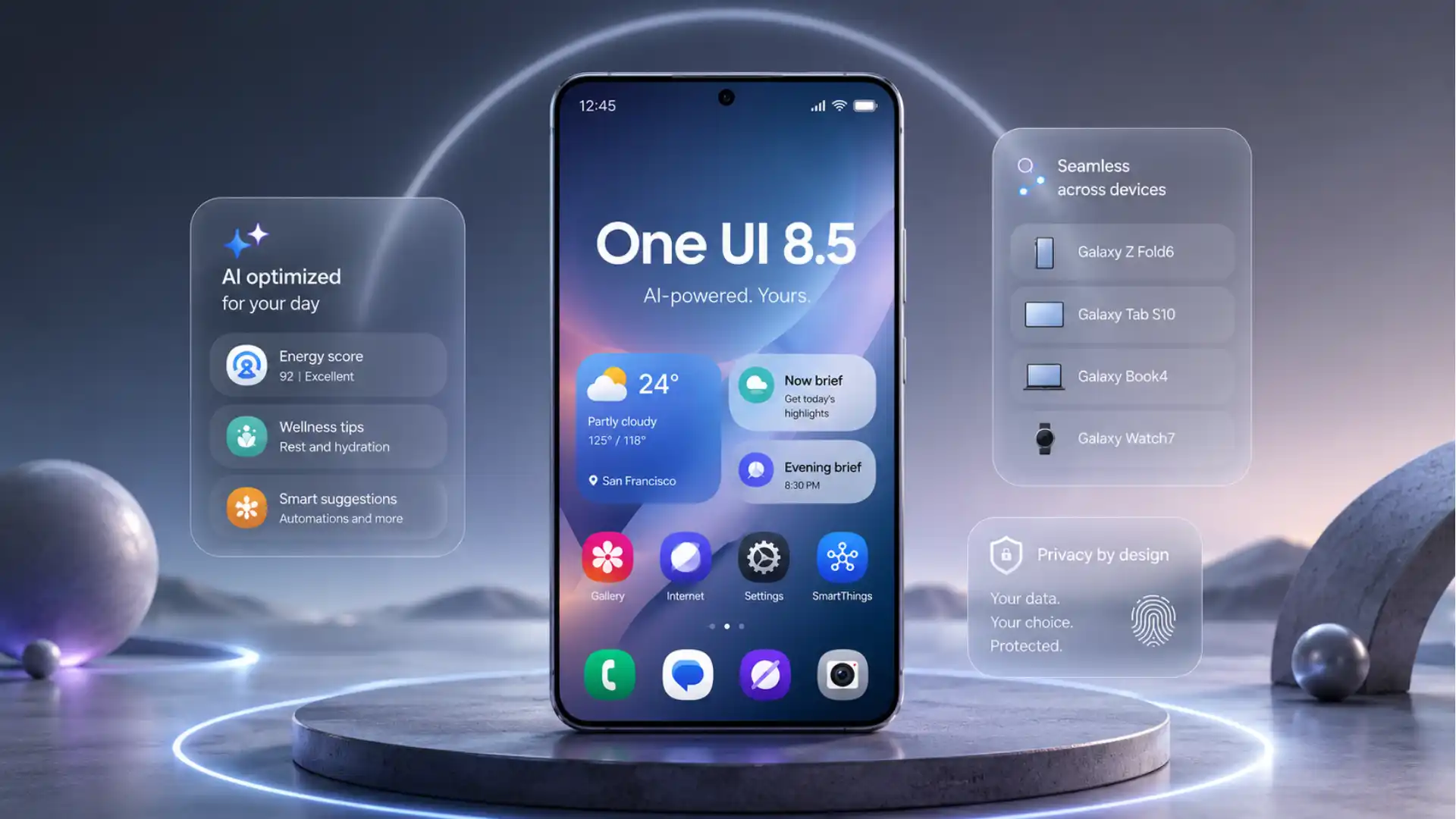
Samsung is not launching a separate phone operating system with One UI 8.5. The evidence points in the other direction. One UI 8.5 is Samsung’s most assertive Galaxy software layer yet, but it still sits on Android, depends on Android compatibility, and keeps Galaxy phones inside the Android app economy. Samsung’s own One UI page describes One UI as software for Galaxy devices, while Samsung’s rollout notes place One UI 8.5 inside the Galaxy update cycle rather than outside Android. Google’s Android compatibility rules still explain the harder reality beneath the interface: a device can be Android-compatible only when it follows Android platform requirements and passes compatibility testing.
Table of Contents
The better question is not whether Samsung has built “its own OS” in the literal sense. It has not. The more useful question is whether One UI 8.5 gives Samsung enough control over the Galaxy experience that, to ordinary users, the phone feels less like generic Android and more like a Samsung platform. On that point, the answer is yes. One UI 8.5 deepens Galaxy AI, expands Samsung’s own apps and device services, updates Bixby into a more capable device agent, and puts Samsung security systems such as Knox, KEEP, the Personal Data Engine and Knox Matrix closer to the center of everyday use.
Samsung is not breaking away from Android
One UI 8.5 is not a Samsung-made replacement for Android. It is a Samsung software release for Galaxy phones and tablets that runs on Android-based devices. Samsung’s official One UI 8.5 rollout began in Korea on May 6, 2026, with more regions to follow, and the company described the update as a way to bring the latest Galaxy AI features across the Samsung Galaxy ecosystem. Samsung named Galaxy S25, Galaxy S24, Galaxy Z Fold and Flip models, and Galaxy Tab devices as part of that rollout, which is the normal language of a mobile software update, not the language of a platform split.
The same pattern appears on Samsung’s public One UI page. Samsung says One UI is “Samsung’s innovative software” for an intuitive and connected Galaxy experience. It lists One UI 8.5 features such as Galaxy AI, Photo Assist, Now Nudge, an AI Agent, Quick Panel changes, wallpaper adjustments, and privacy features. Samsung is selling the experience layer, not declaring a new phone operating system. The company’s own phrasing matters because a true OS change would need developer guidance, app compatibility rules, migration instructions, SDK changes, carrier certification work, and clear consumer messaging. None of that is present in the One UI 8.5 positioning.
A phone operating system is not just the visible home screen, lock screen, settings design, quick panel, assistant and bundled apps. It is also the kernel, runtime, security model, app framework, permission system, hardware abstraction layers, update format, app distribution model, developer APIs and certification rules. Samsung controls large parts of the Galaxy experience, but Android still supplies the platform foundation for Galaxy phones. That distinction is why One UI can look and behave very differently from Pixel Android while still being Android underneath.
Google’s Android compatibility program draws the boundary clearly. An Android-compatible device must meet the Compatibility Definition Document and pass the Compatibility Test Suite. Compatible devices may then participate in the Android ecosystem, including possible licensing for Google Mobile Services and the Play Store. Samsung can differentiate Galaxy phones while staying compatible because Android is designed to allow manufacturer customization within a shared app and hardware framework.
That is the space where One UI 8.5 lives. It is not an escape hatch from Android. It is Samsung using Android’s manufacturer layer more aggressively. Samsung has the scale, engineering depth, app portfolio and consumer brand to make that layer feel almost platform-like. The phone still runs Android apps. It still receives Android OS security patches. Samsung’s own security update page says Galaxy firmware security updates include patches for Android OS issues released by Google as well as Samsung-specific issues.
One UI has become Samsung’s phone identity
Samsung once relied on hardware differentiation to carry the Galaxy brand. Displays, cameras, chips, foldables, stylus support and industrial design did most of the work. Software mattered, but often as a collection of add-ons layered above Android. One UI changed that. Samsung started to turn the interface itself into a Galaxy signature: a specific visual rhythm, a one-handed layout philosophy, deep settings menus, branded apps, Samsung account integration, SmartThings, Samsung Health, Knox security, Galaxy Store, DeX, Quick Share and device-to-device continuity.
One UI 8.5 pushes that identity further. Samsung’s public feature list makes the point through practical changes rather than platform declarations. The update adds deeper Quick Panel customization, a cleaner visual system, wallpaper positioning, Galaxy AI features, Photo Assist, Now Nudge and an AI Agent. It also ties privacy and security features more tightly to the same experience. For users, the home screen and system apps are where the platform is felt; Samsung is using One UI 8.5 to make that surface more distinctly Galaxy.
That matters because most users do not think about AOSP, CTS, GMS licensing or API levels. They think about the lock screen, camera, sharing panel, assistant, notifications, battery tools, call handling, gallery, keyboard, search, file manager, app drawer and update cadence. When Samsung changes those areas, the device can feel like a Samsung platform even though the underlying OS remains Android. The user’s mental model is driven by daily interactions, not by the platform stack.
This is also why the rumor that Samsung might be building “its own OS” keeps returning. The company already has enough branded software to create that impression. A Galaxy phone can route users through a Samsung account, Samsung Cloud, SmartThings, Galaxy AI, Galaxy Store, Samsung Wallet, Samsung Health, Samsung Notes, Samsung Internet, Good Lock, DeX, Bixby and Knox. A Pixel phone exposes more of Google’s preferred layer. A OnePlus or Xiaomi phone exposes a different layer again. Android permits that variety.
The risk for Samsung is that a stronger Galaxy identity can be mistaken for a split from Android. The risk for Google is the opposite: the more Samsung controls the top layer, the less visible Google becomes to users on the world’s most influential Android phone brand. One UI 8.5 is best read as Samsung’s bid to own the customer relationship on Android, not as proof that Samsung is abandoning Android.
Android remains the platform underneath
The clearest technical answer is that One UI 8.5 does not replace Android because it relies on Android’s app framework, compatibility model and release base. Android 16 is the platform generation behind Samsung’s One UI 8 family, and Google’s own Android 16 materials describe a platform release with new security, notification, accessibility and large-screen capabilities. Samsung then adapts those capabilities into the Galaxy user experience.
The Android Developers documentation lists Android 16 as the release developers must test against, including behavior changes, SDK setup, compatibility tools, migration guidance and APIs. That is the layer app developers target. Samsung can redesign menus, add AI tools, build its own system apps and modify interaction flows, but third-party Android apps still depend on Android APIs and compatibility behavior. An independent Samsung phone OS would need a developer target of its own; One UI 8.5 does not create one.
The Android Compatibility Definition Document adds a second boundary. It states that device implementations must meet Android compatibility requirements to be considered compatible with Android. The compatibility overview says compatible devices are eligible for the Android ecosystem, including possible licensing of Google Mobile Services and the Play Store. That is where the app economy lives. A phone that leaves this framework faces a distribution problem immediately: users expect WhatsApp, Instagram, banking apps, Google Maps, Uber, Netflix, Microsoft apps, games, enterprise device management and local services to work without friction.
Samsung has no short-term reason to walk away from that. Galaxy phones compete against iPhones partly because they provide Android’s app reach while giving users Samsung hardware and Samsung software extras. A fully separate OS would force Samsung to persuade developers, banks, game studios, carriers, enterprise buyers, regulators and accessory makers to support another phone platform. That would be costly, slow and commercially risky.
The smartphone market is also less forgiving than it was when Windows Phone, BlackBerry 10, Firefox OS, Ubuntu Touch and Samsung’s own Tizen phone ambitions tried to challenge Android and iOS. App expectations are higher, payments are more regulated, messaging ecosystems are stronger, and AI assistants now need deep app access. Samsung’s rational path is to control more of Android, not to leave it.
One UI 8.5 is a layer, not a fork
A phone maker can customize Android in several ways. It can build a skin, replace the launcher, modify settings, include its own apps, change system components, use its own update tools, build device services, add cloud accounts, develop companion products and layer AI features into the interface. One UI is all of that. A fork is different. A fork creates a separate Android-derived path that may no longer include Google’s services or may follow its own compatibility and app distribution rules.
One UI 8.5 does not look like a fork. It looks like a heavily developed OEM build. Samsung has not told developers to target a new Galaxy OS SDK. It has not announced a Galaxy-only app compatibility system. It has not said Play Store support is being removed. It has not told users that Android apps will need conversion. It has not framed One UI 8.5 as an operating system migration. The absence of those signals is as telling as the features Samsung did announce.
The update’s actual feature set points to user-facing differentiation. Samsung’s official One UI 8.5 beta release focused on creation, sharing, cross-device features, theft protection, identity checks and the availability of the beta for Galaxy S25 users in selected markets. The U.S. Samsung newsroom later said the beta expanded to more devices and added Quick Share support for AirDrop through Google Play services requirements on supported models. These are Android ecosystem moves, not signs of separation from Android.
The Quick Share and AirDrop detail is especially revealing. Samsung described the feature as building on collaboration with Android and noted requirements that include Google Play services version 26.11.xx or later for the “Share with Apple devices” feature. A feature that depends on Google Play services cannot be evidence that Samsung is replacing Android with a fully independent OS.
A true Samsung fork would have to reduce dependence on Google Play services, not deepen it. It would need alternative push notifications, maps APIs, payment certification, app scanning, backup, device location services, passkeys, account sign-in flows, app billing, enterprise controls and developer analytics. Samsung has pieces of that puzzle, but not the full app economy at Android scale.
The QPR2 link makes One UI faster, not independent
One reason One UI 8.5 feels larger than a normal mid-cycle update is its reported link to Android 16 QPR2. Android Authority reported in October 2025 that leaked builds showed One UI 8.5 would be based on Android 16’s second quarterly platform release, which would let Samsung deliver newer Android platform features faster than the old annual rhythm. Android Developers’ Android 16 page also lists QPR2 materials and API diffs tied to version 36.1, showing that Android 16’s update structure had more than one public phase.
That point often gets misread. A faster platform base does not make One UI its own OS. It means Samsung is moving closer to Google’s Android update cadence. If Samsung ships a One UI build on a quarterly Android platform release, Galaxy users may receive Android platform improvements sooner, and Samsung can package them with its own interface work. The QPR2 base is a sign of tighter Android integration, not a Samsung escape from Android.
This matters for Samsung’s reputation. The One UI 7 cycle drew criticism because of delays relative to Google’s Android schedule. One UI 8 and 8.5 suggest Samsung wants to close that gap. Samsung began the official One UI 8 rollout in September 2025, describing it as an update with multimodal AI, form-factor work and proactive suggestions. Samsung then pushed the One UI 8.5 beta in December 2025 and the stable rollout in May 2026.
A faster update rhythm serves several goals. It protects Samsung’s premium positioning against Pixel. It makes seven-year update promises more credible. It lets Samsung deliver AI features across more devices before hardware buyers lose interest. It reduces the perception that Galaxy phones receive Android improvements late. It also gives Samsung more chances to refresh the experience between annual hardware launches.
None of that requires a separate OS. It requires Samsung to coordinate better with Android platform releases, carriers, chip suppliers, regional testing, app compatibility checks and its own product calendar. One UI 8.5 is not Samsung stepping away from Android; it is Samsung trying to make Android updates feel more like Galaxy updates.
Samsung already has its own operating system, but not for Galaxy phones
Samsung does have its own operating system history, and that history partly explains the confusion. Tizen is real. It is a Linux-based, standards-based software platform associated with Samsung and the Linux Foundation. The Tizen project still describes itself as a platform for multiple device categories, including smartphones, tablets, netbooks, in-vehicle infotainment, smart TVs and more. Samsung also continues to use and license Tizen OS for smart TVs.
Samsung’s 2025 Tizen OS licensing announcement said the company was expanding its Tizen OS Licensing Program for smart TVs and positioning Tizen as a smart TV operating system with content discovery, Samsung TV Plus, cloud gaming, SmartThings and partner support. That is a genuine Samsung-led OS strategy, but it is aimed at TVs and connected screens, not at replacing Android on Galaxy phones.
Tizen also has a smartphone past. Samsung released Tizen phones years ago, mainly in selected markets, and used Tizen in earlier wearables. The phone effort never became a broad Android replacement. On watches, Samsung moved in the opposite direction: it partnered with Google to combine the best of Wear and Tizen into a unified Wear OS platform, and Galaxy Watch4 became the first Samsung smartwatch generation on Wear OS Powered by Samsung.
That wearable shift is a useful precedent. Samsung had an operating system it controlled more directly, yet chose partnership with Google for watches because app support, developer reach and ecosystem depth mattered. Google’s 2021 Wear OS announcement said the unified platform would combine Wear and Tizen and give developers one platform and ecosystem. Samsung’s own Galaxy Watch4 support page says Wear OS Powered by Samsung was built by Samsung and Google, with One UI Watch layered on top.
The pattern resembles Galaxy phones. Samsung prefers to put a Samsung user experience above a broader Google-linked platform when app depth matters. On TVs, where app requirements and user behavior are different, Samsung can push Tizen. On phones and watches, it benefits from Android and Wear OS compatibility.
The Galaxy software stack has three layers
A Galaxy phone is best understood as a stack. The bottom layer is Android, including the kernel-level plumbing, platform APIs, permission model, app runtime and compatibility requirements. The middle layer is Samsung’s system integration: device drivers, firmware, update delivery, Knox security, camera processing, battery controls, foldable behavior, S Pen support and hardware-specific services. The top layer is One UI: the launcher, settings, system apps, design language, Galaxy AI entry points, Bixby, Quick Panel, gallery tools, sharing features, account flows and Samsung-branded experiences.
One UI 8.5 strengthens the top and middle layers while leaving the bottom layer Android. That is the cleanest way to explain the update. The user sees Samsung. The developer still targets Android. The security team must track both Google Android patches and Samsung-specific issues. The carrier certifies a Galaxy firmware build. The app store expectation remains Play Store plus Samsung’s own Galaxy Store where relevant.
Samsung’s security update page makes the dual structure clear. Monthly, quarterly and biannual firmware security updates include Android OS patches released by Google and Samsung-specific patches. That is not how a fully separate phone OS would normally be described. It is how a large Android manufacturer manages its own devices while depending on Android platform security work.
The three-layer model also explains why users see “Android version” and “One UI version” as separate entries in settings. Android version identifies the platform generation. One UI version identifies Samsung’s user experience and system layer. A Galaxy S25 running One UI 8.5 is not the same experience as a Pixel on Android 16, but it remains part of the same Android application universe. The interface is Samsung. The foundation is Android.
That dual identity is Samsung’s advantage. It can borrow the breadth of Android while building the loyalty signals of a proprietary platform. The business value of One UI 8.5 is not independence from Android; it is differentiation inside Android.
Galaxy software layers in One UI 8.5
| Layer | Controlled mainly by | What users notice |
|---|---|---|
| Android platform | Google and AOSP compatibility rules | App compatibility, permissions, platform APIs, Android version |
| Galaxy system integration | Samsung with chipset, carrier and Google dependencies | Knox, camera tuning, update firmware, battery behavior, foldable support |
| One UI experience | Samsung | Launcher, Quick Panel, Galaxy AI, Bixby, Samsung apps, visual design |
This table separates what many users experience as one thing. A Galaxy phone feels like a single Samsung product, but the platform stack is shared, layered and partly dependent on Google’s Android ecosystem.
Galaxy AI changes the meaning of the interface
The biggest shift in One UI 8.5 is not only visual. It is the move toward an AI-centered user experience. Samsung’s public One UI page says One UI 8.5 integrates Galaxy AI more deeply and highlights Photo Assist, Now Nudge, and an AI Agent. Samsung’s Bixby announcement says the assistant is being upgraded into a conversational device agent that can understand natural language and help control Galaxy device settings and features.
AI makes the interface more strategic because it can become the layer that decides what users do next. A launcher shows apps. An AI agent can interpret context, suggest actions, search content, summarize information, control settings, edit media, coordinate services and reduce the need to open apps manually. If Samsung owns the AI layer on Galaxy phones, it owns more of the daily user relationship even while Android remains underneath.
That is why the “own OS” question feels plausible. In the AI era, control may not come from replacing the kernel or app runtime. It may come from controlling the assistant, the context engine, the personal data layer, the default system apps and the action shortcuts. One UI 8.5 gives Samsung a larger role in those areas. The phone may remain Android technically, but the decision surface increasingly belongs to Samsung.
Samsung’s Personal Data Engine is central to that shift. Samsung says the PDE was first introduced with the Galaxy S25 series and works behind the scenes to learn from habits and preferences. Samsung connects it to features such as Now Brief and natural-language Gallery search, while saying the data is processed on-device and protected by KEEP and Knox Vault.
This is platform behavior in the practical sense. A phone that knows user routines, stores personal context, suggests actions and exposes an AI agent is building a layer that app developers and services will care about. If that layer becomes powerful enough, Samsung may influence which apps users open, which services they choose, and which ecosystem they trust. That is not a new OS, but it is a new kind of gatekeeping power.
Bixby’s return is a platform signal
Bixby has carried a reputation problem for years. Many Galaxy users either ignored it or treated it as Samsung’s unwanted alternative to Google Assistant. One UI 8.5 gives Samsung a chance to reposition Bixby as a device agent rather than a general voice assistant fighting for trivia queries. Samsung’s February 2026 announcement says the new Bixby can work through natural language, control and navigate Galaxy devices, and respond without requiring exact setting names or commands.
That shift matters because device control is where Samsung has an advantage. Google can build a better web answer engine. Samsung can give Bixby deeper hooks into Galaxy-specific settings, camera modes, routines, Knox features, Samsung apps and device states. Bixby does not need to beat every AI chatbot to matter; it needs to become the fastest path into Samsung’s own device functions.
A user asking Bixby to adjust display behavior, find a hidden setting, summarize a phone state, change a privacy option, launch a camera workflow, edit a photo, manage device routines or explain a warning is not interacting with Android in the abstract. They are interacting with Samsung’s interpretation of the phone. That makes Bixby a control surface for One UI.
This strategy also gives Samsung a way to avoid being swallowed by Google’s AI layer. Android phones increasingly include Google AI features, Gemini integrations and Play services-level intelligence. If Samsung leaves the assistant layer entirely to Google, Galaxy becomes less distinct. If Samsung builds Bixby into a device-native agent, Galaxy can keep its own AI identity while still using Android as the base.
There are limits. AI agents need trust, speed, language support, app access, privacy guarantees and predictable behavior. Samsung’s own Galaxy AI footnotes warn that feature availability may vary by device, language, region and model. The stronger Bixby becomes, the more Samsung must avoid false actions, confusing prompts and privacy anxiety. Still, Bixby’s One UI 8.5 role is one of the strongest signals that Samsung wants Galaxy software to feel like its own world.
Samsung’s own data layer is the real strategic move
An operating system becomes powerful when it owns user context. Contacts, calendar, location, app usage, photos, calls, messages, health, payments, smart home devices and browsing behavior all create a picture of the user. AI makes that picture more commercially and technically valuable because personalization depends on context. One UI 8.5 sits inside Samsung’s broader move to handle more of that context through the Personal Data Engine and Knox security layers.
Samsung says the Personal Data Engine functions when the Personal Data Intelligence menu is on, and analyzed data is deleted once it is turned off. Samsung’s Galaxy AI page says the PDE currently analyzes Samsung native applications and supports selected languages. The company’s privacy explainer says the PDE powers personalized experiences such as Now Brief and natural-language Gallery search while keeping processing on-device.
This matters because Samsung native apps become more than duplicates of Google apps. Samsung Gallery, Samsung Calendar, Samsung Notes, Samsung Internet, Samsung Phone, Samsung Messages in some markets, Samsung Health and Samsung Wallet can feed a Samsung-controlled intelligence layer. The more useful the PDE becomes, the more reason users have to stay inside Samsung’s default apps.
That is not the same as replacing Android. It is a softer form of platform control. Samsung can make the Galaxy experience better when users remain within Samsung’s own app and account world. Google does the same through its apps. Apple does it through iOS and iCloud. The competition is shifting from raw operating system ownership toward context ownership.
The technical challenge is privacy. A personal AI layer must hold sensitive signals, and users will not tolerate casual data movement. Samsung’s answer is KEEP and Knox Vault. Its security announcement says KEEP creates encrypted, app-specific storage environments inside the device’s secure storage area, so each app can access only its own sensitive information. Samsung says KEEP supports the PDE and helps keep personal insights such as routines and preferences on-device, further protected by Knox Vault.
That is the kind of architecture expected from a company trying to build a long-term AI layer. It still does not make One UI an OS. It makes One UI a control system over user context, Samsung apps and device actions.
Knox makes Samsung more than an Android skin
Calling One UI a “skin” misses the depth of Samsung’s device stack. A skin changes appearance. Samsung’s Galaxy layer includes security architecture, enterprise controls, hardware-backed isolation, threat response, device management hooks and long update commitments. Knox has been one of Samsung’s clearest claims to enterprise seriousness, and One UI 8.5 continues that direction through privacy and theft-protection improvements.
Samsung’s One UI 8.5 beta announcement says the update strengthens device protection and gives users clearer control over security settings, including Theft Protection, Failed Authentication Lock and wider Identity Check coverage. Samsung’s One UI 8 security announcement adds KEEP, Knox Matrix threat response and quantum-resistant Secure Wi-Fi work for Galaxy devices.
This is one reason Galaxy phones can feel less like a generic Android device. Samsung is not only changing icons. It is adding policy layers, security prompts, data compartments, cross-device protections and enterprise-grade tools. For business buyers, the operating system question often matters less than security certification, update length, fleet controls and app compatibility. Samsung wants Galaxy to score well on all four without leaving Android.
Knox also strengthens Samsung’s bargaining position. If enterprises build policies around Knox, Samsung has a stickier customer base. If consumers trust Samsung Wallet, Secure Folder, Private Sharing, Knox Vault and device-level theft protection, Samsung owns part of the trust layer. Trust is platform power. It does not require a new OS name.
The same logic applies to AI. Personalized AI can be helpful only if users believe the device handles sensitive information safely. Samsung is trying to pair Galaxy AI expansion with security messaging because it knows the risk. A phone that reads context, suggests actions and edits personal content must be protected from misuse, accidental exposure and unclear consent. Knox is the security brand Samsung uses to make that case.
Google still matters here. Samsung’s security update scope says Galaxy firmware updates include Google Android OS security patches alongside Samsung-specific patches. The Android foundation still carries part of the security load. Samsung’s layer adds device-specific and ecosystem-specific protection above it.
Seven years of updates bind Samsung to Android, not away from it
Samsung’s long update policy is another sign that Galaxy phones remain Android phones. The Galaxy S24 series was announced with seven generations of OS upgrades and seven years of security updates. The Galaxy S25 series continued that promise, with Samsung saying it would support seven generations of OS upgrades and seven years of security updates from global launch date, although timing may vary by device, carrier and market.
Those promises are powerful only if Samsung can maintain Android platform compatibility for years. A sudden switch to a separate phone OS would complicate the promise, confuse users and create developer risk. The safer and more valuable path is to make Galaxy software more distinctive while continuing to deliver Android generations under Samsung’s One UI branding.
Samsung’s security update page reinforces the same point. It says firmware security updates include Android OS issues released by Google and Samsung-specific issues. That is a long-term maintenance model built around Android plus Galaxy-specific work. Seven-year support makes Samsung more committed to the Android platform schedule, not less.
The update policy also changes the economics of One UI. When phones last longer, software becomes a larger part of the product value. A user who keeps a Galaxy S24 or S25 for five to seven years will judge Samsung on yearly interface upgrades, AI feature backports, security patches, battery management and app support. Hardware alone cannot carry that relationship for seven years.
One UI 8.5 fits that model. It brings newer AI and design features to more Galaxy devices after the flagship launch cycle. Samsung’s May 2026 rollout statement listed not only the Galaxy S25 family but also Galaxy S24 models, foldables and tablets. Samsung’s U.S. beta expansion even pushed One UI 8.5 testing to older Galaxy S23 and A-series models in selected markets.
That kind of rollout keeps older devices feeling current and reduces churn. It also makes Samsung’s software layer the recurring news event between hardware releases. The more Samsung succeeds at this, the more Galaxy becomes a platform in user perception while remaining Android in technical terms.
The Play Store keeps Samsung inside the Android economy
The hardest barrier to a separate Samsung phone OS is not the home screen. It is app distribution. Modern smartphones are app economies. A phone without trusted access to mainstream apps is not competitive in premium markets. Android compatibility and Google Mobile Services remain a large part of why Galaxy phones can offer that app reach.
The Android compatibility overview says compatible devices may participate in the Android ecosystem, including possible licensing of Google Mobile Services and the Play Store. It also says users want a wide selection of devices and apps, developers rely on a large market, and manufacturers rely on apps to increase device value. That is the commercial logic Samsung would need to replace if it left Android.
Samsung has the Galaxy Store, but the Galaxy Store is not a Play Store replacement for general phone use. It is useful for Samsung apps, watch faces, themes, Good Lock modules, games promotions and device-specific content. It does not remove the need for Google Play in most markets. Banking apps, transport apps, streaming services, productivity tools, messaging apps and games are still expected through the broader Android ecosystem.
A forked OS could theoretically run Android apps through compatibility layers or an AOSP base. But without Google Mobile Services, many apps behave poorly or lose features. Maps, push notifications, sign-in, in-app billing, safety checks, location services and anti-abuse systems can all be tied to Google components. Replacing or emulating those pieces at global scale is not impossible, but it is a heavy undertaking with political, legal and developer-relations costs.
Samsung has little incentive to create that pain while Android remains useful. Its better move is to keep Play Store access, keep Android compatibility, and make the first-party Samsung experience strong enough that users associate daily phone value with Galaxy. One UI 8.5 is a competitive layer inside Android’s app economy, not a substitute for that economy.
Google also benefits from Samsung staying
The Samsung-Google relationship is competitive and cooperative at the same time. Samsung wants Galaxy users to see Samsung software, Samsung AI, Samsung services and Samsung accounts. Google wants Android users to see Google Search, Gemini, Play Store, Google Photos, Google Messages, Google Maps, YouTube, Google Wallet and Google cloud services. Both companies need each other.
Samsung ships Android at enormous scale. Google benefits when the largest Android phone maker keeps Android competitive against iPhone. Samsung benefits from Android’s app base, developer tools, security work, services and carrier familiarity. The relationship contains tension, but it is not easy for either side to replace.
Wear OS offers a clear example. Google’s 2021 Wear announcement said it was building a unified platform with Samsung by bringing the best of Wear and Tizen into one platform. Samsung’s Galaxy Watch4 support page described Wear OS Powered by Samsung as built by Samsung and Google, with One UI Watch as the Samsung interface layer. That is the same template: common platform, Samsung experience on top.
One UI 8.5 follows that logic on phones. Samsung pushes deeper Galaxy AI, Bixby, Knox, Quick Share, Samsung apps and visual design. Google keeps Android underneath and remains part of key services. The two sides compete over default experiences and AI entry points, but the shared platform remains commercially useful.
This arrangement is not static. AI could make the competition sharper. If Gemini becomes the default assistant layer across Android, Samsung’s own AI identity could weaken. If Bixby and Galaxy AI become strong enough, Google may become less visible on Galaxy phones. Both sides will keep negotiating defaults, services, search access, AI placement and data boundaries. One UI 8.5 is part of that negotiation, not a divorce filing.
One UI 8.5 makes Galaxy feel more like a closed ecosystem
Samsung has spent years building a Galaxy ecosystem across phones, tablets, watches, earbuds, laptops, TVs and smart home devices. One UI 8.5 leans into that strategy through sharing, cross-device access and AI features. The U.S. Samsung newsroom said the One UI 8.5 beta expansion introduced AirDrop support through Quick Share on supported devices, while the beta footnotes described cross-device feature requirements tied to Samsung accounts, updated Galaxy phones and tablets, Galaxy Books and Samsung TVs.
That is ecosystem behavior. Apple’s strength is not only iOS; it is the way iPhone, iPad, Mac, AirPods, Apple Watch, iCloud, AirDrop, iMessage, FaceTime and Apple services reduce friction between devices. Samsung cannot copy Apple’s full stack because Galaxy phones remain in Android’s world and Galaxy laptops mostly run Windows. But Samsung can build bridges across its own products through One UI, SmartThings, Quick Share, Samsung account, Galaxy Buds pairing, Samsung Notes sync, DeX and TV integration.
One UI 8.5 is Samsung’s attempt to make Galaxy continuity feel native rather than bolted on. That is where the “own OS” feeling comes from. A user who moves files between a Galaxy phone, Galaxy Tab, Galaxy Book and Samsung TV through Samsung tools may feel like they are inside a Samsung system even if each device uses a different underlying OS.
This cross-device ambition is more realistic than a phone OS split. Samsung already sells phones, tablets, watches, TVs, monitors, appliances and memory. It can connect those products through accounts, apps, protocols and AI without forcing every category onto one operating system. In fact, using multiple OS foundations may be an advantage: Android for phones and tablets, Wear OS for watches, Windows for PCs, Tizen for TVs, and Samsung software to connect them.
The hard part is consistency. Samsung must make its device links reliable, simple and available across regions. Cross-device features often depend on model, market, account state, software version and app version. The One UI 8.5 Quick Share footnotes show how complex this can get. If Samsung wants Galaxy to feel like a single platform, it needs fewer caveats over time.
The iPhone comparison explains the pressure
Samsung is under constant pressure to make Galaxy feel as coherent as iPhone. Apple controls iOS, hardware, silicon direction, App Store rules, first-party services and much of the device ecosystem. Samsung controls much of the hardware and the Galaxy software layer, but Android remains shared with competitors. That creates a structural challenge: Samsung must be different enough to command loyalty without breaking app compatibility.
One UI 8.5’s visual and AI changes should be read through that lens. Samsung wants users to notice a premium Galaxy experience, not just a large Android phone with better specs. Quick Panel customization, updated system apps, wallpaper behavior, AI editing, Bixby device control, Now Nudge, privacy alerts and deeper Galaxy AI give Samsung more of its own story.
Some reviewers and users interpret Samsung’s design direction as moving closer to iOS. Android Authority’s hands-on coverage of the One UI 8.5 beta argued that parts of the update made a Galaxy S25 feel more like an iPhone, pointing to Quick Settings and first-party app design choices. That is criticism, but it also shows Samsung’s balancing problem: users want polish and ecosystem coherence, yet many Galaxy fans do not want Samsung to imitate Apple too closely.
The strategic issue is not whether a floating bar or quick panel resembles iOS. The deeper issue is whether Samsung can build a Galaxy identity that feels mature without becoming derivative. One UI originally stood out through reachability, large headers, clear hierarchy and one-handed use. The AI era gives Samsung a chance to renew that identity through context, device control and cross-device continuity rather than only visual polish.
Samsung does not need an independent OS to compete with iPhone; it needs a more coherent Galaxy layer over Android. One UI 8.5 is a step in that direction, even if parts of the design debate remain unsettled.
The Tizen lesson still matters
Tizen is the cautionary tale behind every Samsung OS rumor. Samsung has the technical ability to build an operating system. It has used Tizen in TVs and wearables. It has licensed Tizen for smart TVs and continues to invest in the platform there. Yet Tizen did not become Samsung’s mainstream smartphone OS, because phone platforms are not won by code alone. They are won by apps, developers, services, carrier trust, consumer habits and long-term economics.
Samsung’s current Tizen strategy is sensible because TV platforms work differently. A smart TV needs streaming apps, content discovery, ads, gaming services, smart home integration and long device life. The app set is narrower than phones, user input is simpler, and consumers do not expect the same app universe as they do on a smartphone. Samsung can own more of the TV software stack and license it to partners.
Phones are harsher. A premium phone buyer expects every major app to work instantly. Developers expect clear platform incentives. Banks and governments expect security guarantees. Carriers expect network certification. Accessory makers expect stable APIs. Enterprises expect device management. A new phone OS needs all of that before consumers even care about the interface.
Tizen’s survival on TVs and retreat from mainstream phones shows that Samsung chooses platforms by category. It does not pursue independence for its own sake. It pursues control where control pays off and partnership where ecosystem depth pays off. Wear OS made sense for watches because Google app support and a unified developer platform helped Samsung compete with Apple Watch. Android still makes sense for phones for the same reason.
One UI 8.5 should be seen as Samsung applying the Tizen lesson. Do not replace Android if Android supplies the app base. Build a strong Samsung layer on top. Use Tizen where Samsung can own the platform without breaking user expectations. Use One UI to make Android feel like Galaxy.
Developers still build for Android, not One UI as an OS
A developer targeting Galaxy phones still builds an Android app. They may test Samsung-specific behavior, foldable layouts, S Pen use, Galaxy Store distribution, Galaxy Watch integration, Samsung Health partnerships or Knox enterprise APIs. But the base target remains Android SDK behavior, Android permissions and Android compatibility. Google’s Android 16 developer page tells developers to review behavior changes, test apps, update targets and use Android SDK tools.
That is the clearest practical test. When a new OS appears, developers get new platform rules. They need documentation, SDKs, app packaging guidance, store policies and migration paths. One UI 8.5 has feature announcements and beta availability, but not a new independent developer platform. Until developers are asked to target a Samsung phone OS rather than Android, One UI is not its own phone OS.
Samsung can still influence developers indirectly. If Galaxy AI becomes popular, developers may want to expose actions to Samsung agents. If Quick Share grows, apps may adapt sharing flows. If Galaxy foldables remain influential, developers may test large-screen behavior on Samsung hardware first. If Knox remains strong in enterprise, business app vendors may certify on Samsung devices. That is platform influence, but it remains inside Android.
The developer story also reveals why leaving Android would be dangerous. Samsung would need to persuade developers to support a third mobile platform after years of consolidation around Android and iOS. Even Microsoft struggled with this despite Windows, Office, Xbox, Nokia hardware and massive developer resources. Samsung would face the same cold reality: users follow apps, and developers follow users. Android already gives Samsung access to both.
The smarter route is to make Galaxy the Android device category developers cannot ignore. Foldables, S Pen devices, DeX, Knox, Galaxy AI and Samsung’s volume give developers reasons to test on Samsung without forcing them onto a new OS.
The update cadence is becoming part of the product
Software updates are now part of the phone sale. Samsung’s seven-year promise makes the calendar a product feature. A buyer is not only choosing today’s processor and camera; they are buying years of patches, Android generations, One UI features, AI backports and device protections. One UI 8.5 matters because it tests whether Samsung can keep that promise lively rather than merely formal.
Samsung’s May 2026 rollout put One UI 8.5 on a range of premium Galaxy devices, and the company said availability and timing vary by market and model. Its earlier One UI 8 rollout listed a long set of Galaxy S, Z, Tab and A devices expected to receive the update that year. The scale is large, and the complexity is real.
This cadence is one reason the “own OS” narrative can mislead. Samsung is not making an OS break; it is making updates more central to Galaxy competition. If Samsung can ship Android platform updates faster, package them with strong One UI features, and maintain older devices for longer, users may care less about whether the base is Google’s Android. They will care that their Galaxy phone keeps improving.
The QPR2 story fits here. By aligning One UI 8.5 with a quarterly Android platform release, Samsung can look more responsive and less dependent on a once-a-year upgrade model. Android Authority’s reporting framed the QPR2 base as a way for Samsung to bring newer Android features to Galaxy devices faster.
The competitive prize is not OS independence; it is update credibility. Pixel phones often get Android features first because Google controls both platform and hardware. Samsung cannot fully match that structural advantage, but it can reduce the delay, add Samsung-specific features and make Galaxy updates feel larger.
Regional and device limits keep One UI from being a single universal platform
A true operating system platform aims for broad consistency. One UI 8.5, like many Samsung updates, has device and region limits. Samsung’s rollout notes say features may vary depending on model and service region, and availability and timing may vary by market and model. Samsung’s One UI page repeats that AI feature availability may vary depending on device model, language or region.
Those limits are normal for a manufacturer update. They are less compatible with the idea of a new universal OS. A Samsung flagship may receive full Galaxy AI features, while a midrange device may receive a smaller feature set. Some sharing features may require specific app versions, Google Play services versions, Samsung account states or supported hardware. Some AI features require network access or Samsung account login.
This fragmentation is manageable inside Android because users already understand that phone features vary by model. But it complicates Samsung’s platform identity. If One UI 8.5 is marketed as a Galaxy-wide experience, Samsung must decide how much difference users will tolerate between S Ultra, S FE, Z Fold, Tab, A-series and older devices.
AI makes the problem harder. On-device AI can depend on chipset, memory, storage, neural processing capability and battery limits. Cloud AI can depend on region, language, regulation and account status. Samsung’s own footnotes repeatedly warn that availability varies. This is not a failure; it is the reality of shipping AI across a broad device range.
The practical takeaway is that One UI 8.5 is a Galaxy software generation, not a single uniform OS platform. It creates a common identity, but the actual feature set is tiered.
Foldables give Samsung a reason to stay close to Android
Samsung’s foldables are another reason it needs Android compatibility and platform cooperation. Foldable phones depend on app behavior across screen sizes, multi-window modes, taskbars, continuity, aspect ratios and input methods. Google’s Android platform work on large screens, tablets and foldables supports Samsung’s hardware strategy, even when Samsung adds its own features on top.
Google’s Android 16 materials emphasize productivity, tablets and foldables, and the Android Developers page notes Android 16 capabilities for tablets and foldables. Samsung’s One UI 8 rollout also described a UX adapted for different form factors. That overlap is useful. Samsung can push foldable hardware while Android improves the app and system base needed for foldables to work well.
A separate Samsung phone OS would make foldable app support harder, not easier. Developers already need to handle many Android screen sizes. If Samsung created a separate OS target, it would risk isolating its foldables from the broader Android large-screen push. The better path is to influence Android and then differentiate with One UI features.
One UI 8.5’s interface changes, multitasking tweaks and cross-device tools can make foldables feel more polished, but the app ecosystem must remain shared. A foldable without excellent app support becomes a hardware demo. Samsung knows this. Its foldable leadership depends on Android developers taking large screens seriously.
That is why Samsung’s closest long-term goal is probably not a new OS but a stronger voice in Android’s form-factor direction. If Android large-screen APIs, app rules and platform behavior evolve in ways that help Samsung foldables, Samsung benefits without breaking compatibility.
The AI race makes Samsung more protective of its defaults
Defaults are the new battleground. The default assistant, default search path, default gallery editor, default sharing tool, default browser, default keyboard, default cloud sync, default photo backup and default smart home control all shape user behavior. One UI 8.5 gives Samsung more default surfaces.
Samsung’s One UI 8.5 page puts Galaxy AI at the front. Its Bixby update makes natural language a device control method. Its privacy architecture supports on-device personalization. Its Quick Share work extends cross-device transfer. Its Photo Assist features keep editing inside Samsung’s Gallery experience.
This creates competition with Google inside Android. Google has Gemini, Google Photos, Nearby/Quick Share infrastructure, Google Messages, Google Search, Android system features and Play services. Samsung has Galaxy AI, Bixby, Samsung Gallery, Samsung Internet, Samsung Messages in markets where it remains relevant, Samsung Keyboard, Knox and its own device ecosystem. The same user may move between both companies’ layers daily.
One UI 8.5 is Samsung defending the most profitable parts of the interface from becoming generic Android real estate. AI makes that defense urgent because the assistant layer could become the starting point for many tasks. If the assistant chooses the app, summarizes the notification, edits the photo and suggests the reply, the owner of the assistant gains leverage.
Samsung’s challenge is to avoid overload. Galaxy phones already contain duplicate Samsung and Google apps. Adding more AI surfaces can confuse users if the roles are unclear. Samsung must make Bixby, Galaxy AI, Gemini and Android features coexist without turning the phone into a stack of competing prompts. The winner will be the layer users trust because it is fast, accurate and predictable.
That trust will decide whether Samsung’s software strategy feels strong or messy. A separate OS would not solve duplication. Clear defaults, smart integration and reliable privacy controls might.
Europe and regulation shape the options
Samsung cannot think about operating systems without regulation. The European Union’s digital rules, app store scrutiny, default-choice requirements, data protection standards and AI governance all shape what a phone platform can do. A separate Samsung OS would not free Samsung from regulation; it would add new obligations.
Android already sits inside a regulated environment. Google faces scrutiny over default search, Play Store rules, app distribution and platform access. Samsung benefits from that ecosystem but also has its own responsibilities around privacy, security, AI processing, consent and cross-device data use. One UI 8.5’s stronger AI layer makes these questions more visible.
The Personal Data Engine and KEEP messaging can be read partly as trust architecture for regulators and users. Samsung says PDE data is processed on-device and that analyzed data is deleted when the relevant menu is turned off. It also says KEEP creates app-specific encrypted storage spaces. These claims matter because personalized AI can raise concerns about profiling, sensitive data handling and data minimization.
A Samsung-controlled AI layer inside Android may be easier to defend than a whole new phone OS. Samsung can present itself as improving privacy and device control while keeping app compatibility. It does not need to become a gatekeeper in the same way Apple is with iOS or Google is with Android. That may reduce regulatory friction.
Still, the more Samsung’s AI agent controls device actions and interprets user context, the more transparency will matter. Users will need clear settings, data deletion controls, language availability notes and model limitations. Samsung’s feature footnotes already signal the complexity. One UI 8.5 is a step into more personal software; personal software attracts more scrutiny.
Enterprise buyers want stability more than novelty
Enterprise buyers do not buy phones because a company has a new OS name. They buy around device availability, security updates, management tools, repair cycles, app compatibility, compliance, procurement terms and user training. Samsung’s Galaxy business pitch depends on Android app compatibility plus Samsung’s own Knox and update policies. A separate OS would threaten that formula.
Knox, long update support and Android Enterprise compatibility make Galaxy devices easier to deploy. Samsung Knox’s supported-device materials list Android version guarantees for many Galaxy models, and Samsung’s security update scope explains its monthly, quarterly and biannual patch system. The enterprise story is built around predictable Android-based management rather than a Samsung-only app ecosystem.
One UI 8.5 can still help enterprise users. Improved theft protection, identity checks, security isolation, AI privacy controls and update speed are all relevant. But they help because they sit on a familiar platform that IT teams already manage. For enterprises, One UI 8.5 is safer as an Android-based Galaxy upgrade than it would be as an OS migration.
AI also creates enterprise tension. Device agents can save time, but they can also create compliance risk if they access sensitive data, summarize restricted content or connect to cloud services without clear controls. Samsung’s on-device PDE and KEEP messaging helps, but enterprise administrators will still need policies. The more Samsung ties AI to Knox, the stronger its enterprise pitch becomes.
This is another reason Samsung is unlikely to break away. The enterprise market rewards continuity. A Galaxy phone that keeps Android apps and management while adding Samsung security is a strong proposition. A Galaxy phone that asks enterprises to validate a new OS from scratch would be a harder sell.
The consumer answer is simpler than the technical answer
For a consumer asking whether One UI 8.5 means Samsung will have its own OS, the answer should be direct: No. Your Galaxy phone will still be an Android phone. One UI 8.5 is Samsung’s software experience on top of Android, not a new Samsung phone operating system.
That answer matters because OS confusion affects buying decisions. A user may worry that apps will stop working, Google Play will disappear, Android Auto will break, banking apps will need new versions, or future updates will be uncertain. Based on Samsung’s official materials, those fears are not justified by One UI 8.5. Samsung is rolling it out as a Galaxy update with AI, design, security and sharing features, not as a platform switch.
The more nuanced answer is that Galaxy phones are becoming more Samsung-controlled. Users may notice more Samsung AI prompts, more Bixby device control, more Samsung app features, deeper Quick Panel changes, new privacy layers and stronger cross-device links. Some will like that because the phone feels more polished and personal. Others may dislike it if they prefer a lighter Android experience or Google-first defaults.
A Galaxy user who wants the best of Samsung should use the One UI layer: Samsung Gallery, Samsung Notes, Quick Share, SmartThings, Samsung Health, Bixby where useful, and the privacy controls around Galaxy AI. A user who prefers Google services can still use Google apps heavily. Android allows that choice more than a fully closed OS would.
The phone’s identity is therefore hybrid. It is Android for apps and platform compatibility. It is Galaxy for interface, hardware features and Samsung services. One UI 8.5 strengthens the Galaxy side of that hybrid identity.
The business logic favors control without rupture
Samsung’s best business outcome is not to replace Android. It is to make Galaxy phones feel distinct enough that customers buy Samsung instead of another Android brand, while keeping the app and service depth that Android provides. One UI 8.5 fits that logic precisely.
A separate OS could give Samsung more control, but at a high cost. It would risk app gaps, developer resistance, regulatory scrutiny, carrier complications, support confusion and user hesitation. A stronger One UI gives Samsung much of the visible control without those costs. Samsung can own the experience while sharing the platform. That is the strategic sweet spot.
This approach also helps Samsung defend hardware margins. Premium phone buyers need reasons to choose Galaxy Ultra or Fold beyond processor speed. Software experience, AI tools, long updates, security, camera processing, ecosystem features and device continuity are the reasons. One UI 8.5 supplies that story.
It also gives Samsung recurring engagement. Hardware launches happen a few times a year. Software updates, AI features, security tools and app improvements can keep Galaxy in the news between launches. Samsung’s May 2026 One UI 8.5 rollout is a product event even though it is not a new phone.
The AI era makes recurring software value more lucrative. If Samsung can deliver new AI features to older devices, users may keep phones longer and stay loyal. If Samsung can make those features work best across Galaxy phones, tablets, watches, PCs and TVs, it can sell the ecosystem. None of that requires leaving Android.
One UI 8.5 also protects Samsung from becoming just hardware
Android manufacturers face a long-term risk: becoming interchangeable hardware vendors for Google’s platform. If every Android phone has the same Google AI, same Google apps, same Play Store, same services and similar hardware parts, differentiation shrinks. Samsung cannot let that happen.
One UI 8.5 is a defense against commoditization. It gives Galaxy phones a distinct interface, AI layer, security model, update story and ecosystem bridge. Samsung’s official One UI page emphasizes personalization, Galaxy AI, Now Nudge, Photo Assist, Quick Panel changes and privacy tools. Its Bixby announcement adds natural language device control. Its security announcements add KEEP and PDE.
Each feature reduces the chance that a Galaxy phone feels like any other Android phone. That is valuable even when the user never thinks about operating systems. A person who likes Samsung’s Gallery AI editing, Quick Share behavior, Knox security, Galaxy Watch integration and TV connection may buy another Galaxy phone next time. The platform foundation can remain Android.
The risk is clutter. Samsung’s software history includes periods when Galaxy phones felt overloaded with duplicate apps and features. One UI was partly a response to that. If One UI 8.5 adds AI and ecosystem tools without discipline, it could revive old complaints. Samsung must make the new layer feel helpful, not heavy.
The strongest version of One UI 8.5 is not the one with the most features; it is the one where Samsung’s features appear at the right moment and stay out of the way when they are not needed. That is hard. It is also the heart of modern phone software.
The source of the rumor is understandable
The rumor exists because Samsung uses language that sounds bigger than a skin. “Galaxy AI,” “Personal Data Engine,” “AI Agent,” “Now Nudge,” “Knox Enhanced Encrypted Protection,” “One UI 8.5,” “Galaxy ecosystem” and “Tizen OS” all point toward a company building software infrastructure, not only icons. Samsung’s own One UI page says the software understands usage patterns and needs, and the Bixby release describes a conversational device agent.
A casual reader can connect those dots and imagine a Samsung OS. The idea becomes more tempting because Samsung already operates Tizen on TVs and has a history of using Tizen in other categories. The company clearly knows how to build operating systems. It also wants more control over AI, privacy, device connections and user experience.
The missing link is phone platform economics. Building or reviving a Samsung phone OS is not the same as building a Samsung TV platform. The phone market requires unmatched app compatibility. Android gives Samsung that. One UI gives Samsung differentiation. The combination is stronger than either piece alone.
The rumor also reflects a real trend: Android brands are making their own layers more substantial. Xiaomi’s HyperOS branding, Oppo and OnePlus software convergence, Google’s Pixel-first Android features and Samsung’s One UI AI strategy all blur the line between “skin” and “platform.” The word OS gets used loosely because the visible layer is more powerful than before.
For Galaxy phones, though, the technical line remains clear. One UI 8.5 is not an independent OS. It is Samsung’s branded software layer built on Android.
Samsung’s strongest path is an Android-based Galaxy platform
Samsung’s future phone platform is likely to look like this: Android remains the base; One UI becomes more AI-driven; Bixby becomes a device and settings agent; Galaxy AI becomes more personal; Knox protects sensitive context; Samsung apps feed the Personal Data Engine; Quick Share and SmartThings connect devices; Tizen continues on TVs; Wear OS continues on watches with One UI Watch; Windows remains part of Galaxy Book; and Samsung account ties the pieces together.
That is not one OS. It is a multi-OS ecosystem held together by Samsung software. Samsung does not need every device to run the same operating system if the user experience, account layer, AI services and sharing tools create enough continuity.
This strategy is already visible. Tizen OS is being expanded through TV licensing. Wear OS Powered by Samsung exists on Galaxy watches. One UI 8.5 connects Galaxy phones and tablets and pushes AI features. Samsung’s Galaxy AI page ties PDE and Knox Matrix to supported Galaxy devices.
The advantage is flexibility. Samsung can use the best platform for each category and build Samsung experiences above them. The disadvantage is complexity. Users may face different app stores, update rules, feature availability limits and service dependencies across devices. Samsung’s job is to hide that complexity without misleading users.
One UI 8.5 is one piece of that larger effort. It does not answer “Will Samsung have its own OS?” by replacing Android. It answers by making the Galaxy layer more powerful until the user feels that Samsung, not generic Android, defines the phone.
The most likely next step is One UI 9, not a Samsung OS
The next logical step after One UI 8.5 is a future One UI version aligned with a new Android generation, not a Samsung OS launch. Samsung has already built a public rhythm around One UI numbers, Android platform versions, beta programs and staged rollouts. Its long update promises depend on that rhythm. A sudden OS break would undermine the brand trust Samsung is trying to build.
The current signs point to refinement: faster Android base adoption, more Galaxy AI features, broader device support, stronger security, better Bixby control, more cross-device features and design changes. That is a large agenda on its own. Samsung does not need to add an OS migration crisis to it.
A future Samsung phone OS is not impossible in a theoretical sense. Samsung has the money, engineers, app relationships, hardware scale and Tizen background. But “possible” is not the same as “likely.” The likely path is shaped by incentives, and the incentives favor Android compatibility. Samsung’s rational move is to make One UI so strong that Galaxy feels proprietary while keeping Android’s app economy underneath.
The only conditions that might change this would be extreme: a major breakdown in Samsung-Google terms, regulatory changes that reduce Play Store dependency, a new app model where AI agents replace app stores, or a geopolitical split that forces different mobile platforms. None of those conditions is visible in Samsung’s One UI 8.5 announcement. The public evidence points to partnership and differentiation, not rupture.
For users and buyers, the answer is therefore stable: One UI 8.5 is safe to understand as a major Samsung Android update. It is not a new OS switch.
The practical meaning for Galaxy users
Galaxy users should expect One UI 8.5 to change the feel of their phones more than a typical patch. The update brings a stronger AI layer, visual changes, device protection tools, sharing improvements and Bixby changes. Samsung says One UI 8.5 started rolling out in Korea on May 6, 2026, with more regions following, and the update spans phones and tablets across recent Galaxy generations.
Users should not expect their Galaxy phone to stop being Android. Android apps, Play Store access, Android security patches, Google services and Android compatibility remain part of the Galaxy experience. Some features may vary by region, model, language and account status, which is normal for Samsung’s broad device lineup.
The practical steps are simple. Check Software update in settings. Review Galaxy AI and privacy settings after installing. Look at Personal Data Intelligence controls if available. Test Bixby only in device-control tasks where it may now be more useful. Revisit Quick Panel customization because One UI 8.5 gives users more control over layout. Check Samsung Members for device-specific rollout timing.
Users who dislike AI personalization should not ignore the settings. Samsung says the Personal Data Engine functions when the Personal Data Intelligence menu is on, and analyzed data is deleted once the menu is turned off. That makes the privacy setting worth understanding.
The best way to read One UI 8.5 as a user is this: your Galaxy phone remains Android, but Samsung is claiming more of the experience that surrounds Android. That is the update’s real meaning.
What One UI 8.5 means and does not mean
| Claim | Accurate reading |
|---|---|
| Samsung has a new phone OS | No. One UI 8.5 is Samsung software on Android-based Galaxy devices |
| Galaxy phones are leaving Android | No public evidence supports that |
| Samsung is gaining more software control | Yes. AI, Bixby, Knox, PDE and One UI design all expand Samsung’s layer |
| Apps will need a new Samsung platform | No. Developers still target Android for Galaxy phones |
| Tizen is replacing Android on phones | No. Tizen remains active mainly around Samsung smart TV strategy |
The confusion comes from Samsung’s growing software ambition. One UI 8.5 is bigger than a visual refresh, but it is still not an Android replacement.
The final read on Samsung’s strategy
Samsung’s One UI 8.5 strategy is best described as controlled dependence. Samsung depends on Android for apps, developer reach, Play services, platform APIs and compatibility. It controls more of the visible Galaxy experience through One UI, Galaxy AI, Bixby, Knox, Samsung apps, device continuity and long-term updates. That balance is not a weakness. It is the reason Galaxy phones can be both broadly compatible and distinctly Samsung.
A separate Samsung phone OS would be a dramatic story, but the quieter story is more consequential. Samsung is turning One UI into the main place where Galaxy competes. Hardware still matters, but software now decides whether a seven-year phone feels fresh, whether AI feels useful, whether privacy feels trustworthy, whether a foldable works well, whether devices connect smoothly and whether a user buys Galaxy again.
One UI 8.5 is therefore not the birth of Samsung’s own phone operating system. It is the strengthening of Samsung’s own phone experience. The distinction is not semantic. It decides how users should understand app compatibility, updates, privacy, AI features and the Samsung-Google relationship.
The answer to the headline question is no. Samsung does not have a new independent phone OS with One UI 8.5. But Samsung is building something almost as strategically meaningful: a Galaxy software layer powerful enough to make Android feel like Samsung’s platform on Samsung devices.
Questions readers ask about Samsung, One UI 8.5 and Android
No. One UI 8.5 is Samsung’s Galaxy software layer for Android-based devices. It changes the interface, Samsung apps, AI features, privacy tools and device behavior, but it does not replace Android.
No public evidence points to that. Samsung’s official materials describe One UI 8.5 as a Galaxy update, and Galaxy security updates still include Android OS patches from Google.
The idea comes from Samsung’s stronger software branding. One UI 8.5 includes Galaxy AI, Bixby as a device agent, Knox security, the Personal Data Engine and more Samsung ecosystem features, so it feels more platform-like than older Android skins.
One UI 8 and One UI 8.5 are tied to the Android 16 generation. Reporting on leaked builds linked One UI 8.5 to Android 16 QPR2, which means Samsung may be using a newer Android platform base for the update.
Yes. One UI 8.5 does not remove Google Play. Galaxy phones remain Android-compatible devices in the normal Android app ecosystem.
No. Tizen remains relevant for Samsung’s smart TV strategy and licensing program. Samsung has not announced Tizen as a replacement for Android on Galaxy phones.
Yes, Samsung is closely tied to Tizen OS, especially on smart TVs. But Galaxy phones use Android with Samsung’s One UI software layer.
No. It includes visual changes, but the bigger story is AI, Bixby device control, privacy architecture, Quick Panel customization, sharing features and security tools.
The Personal Data Engine is Samsung’s on-device personalization layer for Galaxy AI features. Samsung says it learns from selected Samsung native applications when the relevant menu is enabled and deletes analyzed data when the menu is turned off.
KEEP means Knox Enhanced Encrypted Protection. Samsung says it creates encrypted, app-specific secure storage areas to protect sensitive data used by personalized AI features.
Yes. Samsung announced a new Bixby in One UI 8.5 as a conversational device agent that can understand natural language and control Galaxy settings and features.
It makes Samsung more visible and more influential in the user experience, but it does not remove Android, Google Play, Android compatibility or Google’s role in the platform.
No. Developers still build Android apps. They may test Samsung-specific features, but One UI 8.5 does not create a new Samsung phone app platform.
Yes, if Samsung keeps delivering updates across many models. One UI 8.5 helps Samsung show that older Galaxy devices can keep receiving new features, not only security patches.
No. Samsung says feature availability may vary by model, region, language and device capability. AI features are especially likely to vary across device tiers.
Some interface choices have drawn iPhone comparisons, especially around quick settings and app design. The deeper trend is Samsung trying to make Galaxy feel more coherent and ecosystem-driven.
Samsung is trying to build stronger Galaxy continuity across phones, tablets, watches, PCs, TVs and smart home devices. It is not as closed as Apple’s model because Galaxy phones remain Android devices.
Technically, Samsung could. Commercially, it would be risky because apps, developers, Google services, carriers and enterprise buyers all depend on Android compatibility. Nothing in One UI 8.5 suggests such a move is near.
No. One UI 8.5 is an Android-based Samsung update. Users should pay attention to rollout timing, device eligibility and feature availability, but not to an OS replacement.
No, Samsung is not launching its own independent phone operating system with One UI 8.5. It is making the Galaxy software layer stronger while staying on Android.
Author:
Jan Bielik
CEO & Founder of Webiano Digital & Marketing Agency
This article is an original analysis supported by the sources cited below
Samsung’s One UI 8.5 Official Rollout Starts May 6
Samsung’s official May 2026 global newsroom note announcing the start of the One UI 8.5 rollout and naming the first Galaxy device families.
One UI
Samsung’s public One UI page describing One UI 8.5 features, Galaxy AI integration, customization, device compatibility notes and user controls.
Samsung Launches One UI 8.5 Beta for Next-Level Ease of Use
Samsung’s official beta announcement for One UI 8.5, covering beta availability, security additions, Photo Assist, Quick Share and feature conditions.
Samsung Continues Expanding One UI 8.5 Beta Program to More Galaxy Devices
Samsung’s U.S. newsroom update on the wider One UI 8.5 beta, including supported devices, Quick Share and AirDrop support notes.
Samsung Introduces the New Bixby in One UI 8.5
Samsung’s official announcement of the updated Bixby device agent for One UI 8.5, including natural-language device control.
Android 16
Google’s Android Developers page for Android 16, covering platform behavior, SDK guidance, compatibility tools and QPR materials.
Android 16 is here
Google’s consumer-facing Android 16 announcement, including rollout context, notification changes, accessibility features and security additions.
Android Compatibility Definition Document
Google’s Android Open Source Project documentation defining Android compatibility requirements for device implementations.
Android Compatibility program overview
Google’s AOSP compatibility overview explaining Android-compatible devices, CTS, CDD, Google Mobile Services eligibility and app ecosystem rationale.
Samsung Mobile Security updates scope
Samsung’s official mobile security update scope page explaining monthly, quarterly and biannual updates and the relationship between Android OS patches and Samsung-specific patches.
Samsung Galaxy S24 Series Is Now Available Worldwide
Samsung’s official Galaxy S24 availability announcement stating seven generations of OS upgrades and seven years of security updates.
Samsung Galaxy S25 Series Sets the Standard of AI Phone as a True AI Companion
Samsung’s Galaxy S25 global announcement, including seven-generation OS upgrade and seven-year security support language.
Samsung Begins Official Rollout of One UI 8 to Galaxy Devices
Samsung’s official One UI 8 rollout announcement, used for context on Android 16-era Galaxy AI, device coverage and the path toward One UI 8.5.
Samsung Introduces Future-Ready Mobile Security for Personalized AI Experiences
Samsung’s official explanation of KEEP, Knox Matrix updates and security architecture for personalized Galaxy AI.
Your Privacy, Secured: Inside the Tech Powering Safe, Personalized Galaxy AI Experiences
Samsung’s newsroom article explaining the Personal Data Engine, KEEP, on-device processing and privacy design for Galaxy AI.
Galaxy AI
Samsung’s Galaxy AI page, used for feature availability notes, Personal Data Engine language support details and Knox Matrix support context.
Samsung Expands Tizen OS Licensing Program with New Global Partners and Enhanced Offerings
Samsung’s official announcement showing Tizen OS as an active smart TV operating system and licensing platform.
Tizen devices
The Tizen project’s device overview describing Tizen as an open source, standards-based platform for several device categories.
What’s new for Wear
Google’s 2021 Wear OS announcement describing the unified platform built with Samsung by combining Wear and Tizen strengths.
What is Wear OS on the Galaxy Watch4
Samsung’s support page explaining Wear OS Powered by Samsung and One UI Watch on Galaxy Watch4.
Samsung’s One UI 8.5 update is a bigger deal than you might think
Android Authority’s reporting on leaked One UI 8.5 builds and the Android 16 QPR2 base.
The One UI 8.5 beta turned my Samsung phone into an iPhone and I hate it
Android Authority’s hands-on critique of One UI 8.5 design choices and iOS comparisons, used as reception context.
| Citing this article? Brief excerpts are welcome. Please credit Webiano.digital, name the author where stated, and include a link to https://webiano.digital and to this original article. Full or substantial republication requires prior written permission. Read our Copyright and Content Use Policy. |
This article was prepared with the assistance of artificial intelligence tools. The content underwent expert human review, and Webiano Digital & Marketing Agency assumes editorial responsibility for its final version and publication.