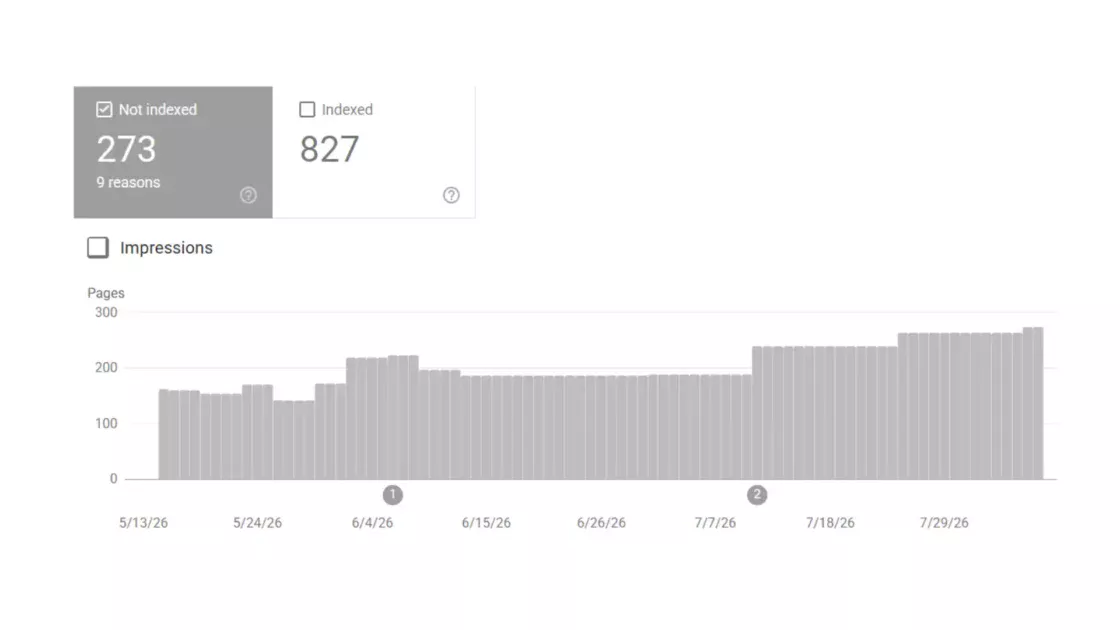
Google is not saying every short page, syndicated report, rewritten explainer, or AI-assisted article will vanish from Search. The sharper point is this: content that adds little original value is losing the margin it once had. A page that copies, paraphrases, repackages, or expands existing material without new evidence, judgment, testing, reporting, expertise, or utility is harder to defend in Google Search, Google News, Discover, AI Overviews, and AI Mode. Google’s own spam policies now describe scaled content abuse as large amounts of unoriginal content created mainly to manipulate rankings, regardless of whether it is produced by humans, automation, or generative AI.
Table of Contents
Google’s warning is really about usefulness, not word count
The phrase “Google will not show unnecessary and recycled content” sounds absolute. Search is rarely absolute. Pages are crawled, indexed, ranked, omitted, filtered, demoted, selected for rich results, cited in AI features, surfaced in Discover, ignored by News surfaces, or displayed for narrow queries with little competition. The real shift is not a binary ban. It is a harsher visibility market for content that cannot prove why it exists.
Google’s public documentation uses careful language. Its spam policies say pages or whole sites may be ranked lower or omitted when they violate Search policies. Its helpful content guidance says automated systems are built to prioritize helpful, reliable information created for people rather than content created to manipulate rankings. That distinction matters because Google is not only looking for spam in the old sense of keyword stuffing, cloaking, or link schemes. It is also evaluating whether a page brings enough user benefit to deserve a position above other available pages.
A recycled article often looks safe at first glance. It may have a headline that matches the query, headings that cover common subtopics, a few stock examples, a tidy FAQ, and a neutral tone. Yet the page may still fail because it does not reduce the searcher’s work. It repeats what stronger pages already say. It gives no first-hand evidence. It does not identify trade-offs. It does not separate confirmed facts from guesswork. It does not include data that the publisher gathered, photos the publisher took, tests the publisher ran, sources the publisher checked, or expert interpretation that changes the reader’s understanding. A page can be grammatically clean and still be useless.
The March 2024 core and spam updates gave this issue a public shape. Google said the changes were aimed at reducing low-quality, unoriginal content in Search and later updated its estimate to say users would see 45% less low-quality, unoriginal content than before that work. The update also brought new or refined policies on scaled content abuse, expired domain abuse, and site reputation abuse.
That number should not be read as a promise that all weak pages disappeared. Search quality is not solved by one update. Poor content returns in new forms because the incentives are huge. Search traffic pays for ads, affiliate commissions, lead generation, subscriptions, and brand reach. Low-cost publishing tools lower the price of producing thousands of pages. Generative AI lowers it further. The new pressure sits in the gap between volume and originality. The cheaper content becomes to produce, the more Google has to reward evidence of actual work.
This is why recycled content is now a strategic problem, not only an SEO problem. A company that has built its organic traffic on rewrites of competitor pages may find that its library carries hidden debt. A publisher that fills every minor trend with a templated explainer may see fewer impressions. An affiliate site that posts “best” lists without testing products may lose ground to pages with proof of use. A news site that republishes promotional third-party pages under its trusted domain may face manual actions or regulatory scrutiny around how Google enforces the policy.
Search visibility is still possible for new content, small publishers, local experts, and niche brands. The bar is not fame. The bar is contribution. The useful question is no longer “Can this page target a keyword?” It is “Would the web be worse if this page did not exist?”
The policy shift behind the decline of recycled pages
Google’s fight against low-quality content did not begin with generative AI. The company has spent many years trying to reduce pages that exist mainly to capture clicks rather than satisfy searchers. The language has changed because the web has changed. Older SEO spam often looked crude. Newer low-value content can look polished, structured, and plausible. It can be written in fluent English, cite public sources, include schema markup, and still add almost nothing.
The March 2024 update is the clearest public marker because Google tied ranking improvements to spam policy changes. The company described three major abuse patterns: scaled content abuse, expired domain abuse, and site reputation abuse. Each pattern attacks Search quality from a different angle. Scaled content abuse floods the web with pages that add little or no value. Expired domain abuse uses a previously reputable domain to rank low-quality new material. Site reputation abuse uses a trusted host’s ranking signals to lift unrelated third-party pages.
Those categories matter because they target business models, not only page-level flaws. A publisher can fix a typo. A site cannot solve scaled content abuse with a better intro paragraph. If the operating model depends on producing many near-duplicate pages from a template, Google may treat the pattern as the issue. This is a hard lesson for companies that confuse content operations with editorial value. At scale, weak pages stop being isolated mistakes and become a quality signal about the site.
Google’s older helpful content update from 2022 already made that site-wide logic visible. Google said content on sites with relatively high amounts of unhelpful content overall would be less likely to perform well in Search if better content was available elsewhere. It also said removing unhelpful content could improve the performance of other content.
That statement changed the economics of publishing. For years, some SEO teams treated every indexed page as an asset. More pages meant more keyword entry points. More long-tail articles meant more chances to rank. More city pages, product variants, glossary entries, and “best” lists meant a larger organic footprint. The helpful-content logic breaks that assumption. Pages can become liabilities. A site with a bloated library of weak, outdated, duplicated, or low-effort content may dilute trust in the pages that deserve attention.
The shift also moves quality work away from cosmetic fixes. Search teams often respond to ranking drops by changing title tags, adding internal links, expanding word count, refreshing dates, and inserting FAQs. Those changes may be useful when the page already has a strong reason to rank. They do little when the content problem is absence of original work. A recycled page does not become original because it is longer.
This is uncomfortable for content marketing teams because many workflows were built around efficiency in the narrow production sense. Templates, briefs, keyword clusters, AI drafts, outsourced rewrites, and bulk publishing plans were designed to reduce cost per URL. Google’s policy direction asks a different question: what is the benefit per URL? A page with a lower production cost but no distinct contribution is not efficient if it never earns durable visibility.
The current ranking environment also extends beyond classic blue links. Google’s Search Status Dashboard lists core and spam updates as recurring ranking events, including major updates through 2025 and 2026. As of May 25, 2026, the dashboard shows a May 2026 core update that began on May 21, with earlier 2026 core and spam updates listed as well.
That cadence reinforces a practical lesson. Search quality enforcement is not a one-time cleanup. It is a continuing recalibration of ranking systems. A site that survives one update with weak content has not been granted safety. It has only not been caught, outweighed, or reclassified yet.
Unoriginal content has a precise meaning in Google’s system
“Original” is often misunderstood. It does not mean every article must reveal a world exclusive. It does not mean a recipe site cannot write about tomato soup because others already have. It does not mean a local accountant cannot explain tax deadlines that are public facts. Originality in Search quality is more practical: the page must add something that helps the user beyond what already exists.
Google’s Search Quality Rater Guidelines, updated September 11, 2025, define quality of main content through effort, originality, talent or skill, and accuracy. The guidelines tell raters to consider the extent to which a human being actively worked to create satisfying content, whether the content offers unique material not available elsewhere, whether enough skill was used for the page’s purpose, and whether informational content is factually accurate.
The guidelines are not direct ranking rules. Google says rater data is used to measure and improve systems, not to manually move individual pages up or down. Still, the document gives publishers a clear view of what Google wants its systems to reward. It treats effort and originality as visible qualities, not vague ideals.
The same document is blunt about low-effort content. Pages can receive the Lowest rating when nearly all main content is copied, paraphrased, embedded, auto-generated, AI-generated, or reposted from other sources with little or no effort, originality, and added value. The guidelines also explain that generative AI use alone does not determine quality. AI can be part of high-quality creation or low-quality spam, depending on the effort and result.
That last distinction is critical. Some site owners still ask whether Google penalizes AI content. Google’s public position is more specific. It focuses on helpfulness, originality, and intent. The problem is not that a machine touched the draft. The problem is scaled production of pages that do not help users and exist mainly to manipulate rankings.
Recycled content can take many forms. It may be scraped text with a few synonyms changed. It may be a “best tools” article built from vendor pages and other reviews without any testing. It may be a medical explainer paraphrased from public health websites by someone with no medical review. It may be a local service page where only the city name changes. It may be a news article that rewrites another outlet’s reporting without credit, new confirmation, or added context. It may be an AI-generated FAQ page that repeats common answers found on the top ten results.
The common thread is not length, format, or production method. It is the absence of new usefulness. Unoriginal content is content whose main contribution is taking up another search result slot.
Originality can also be modest but real. A retailer can add measurements, photos, installation notes, failure cases, return-rate observations, or side-by-side comparisons from actual use. A B2B company can publish anonymized lessons from client implementations. A local publisher can add direct quotes, location-specific documents, and on-the-ground verification. A software site can include benchmark data, code examples, version notes, and compatibility caveats. A personal finance site can show calculations, assumptions, and named expert review.
None of this requires theatrical creativity. It requires evidence of work. The weak page says, “Here is what everyone says.” The stronger page says, “Here is what we checked, tested, saw, calculated, or know from practice.”
AI did not create the problem, but it made the volume harder to ignore
Generative AI changed the economics of low-value publishing. It did not create the incentive. Search-driven content farms existed long before modern AI writing tools. Scraping, spinning, templated affiliate pages, doorway pages, duplicate local pages, low-quality product roundups, and thin explainers were already common. AI made the same habits cheaper, faster, and more convincing.
A human writer can produce recycled content. A machine can produce useful content under human direction. Google’s guidance about AI-generated content says the company’s approach is to reward high-quality content regardless of how it is produced, while using automation mainly to manipulate rankings violates spam policies.
The temptation is obvious. A marketer can feed competitors’ articles into a tool and ask for a rewritten version. A publisher can generate 500 city pages in an afternoon. An affiliate operator can create product roundups from manufacturer descriptions and marketplace reviews. A SaaS company can fill a blog with “what is,” “best,” “alternatives,” and “how to” pages that repeat standard claims. At first, these pages may look publishable. They have headings, examples, and fluent sentences. But they often lack lived detail, source judgment, and editorial risk.
The issue becomes sharper in topics where harm is possible. Health, finance, safety, law, elections, and other sensitive areas require stronger standards because bad information can affect real decisions. Google’s rater guidelines treat Your Money or Your Life topics with higher quality expectations, including accuracy and consistency with well-established expert consensus.
AI also makes a second problem worse: sameness. When many publishers prompt tools with the same top-ranking pages, the outputs converge. They repeat the same definitions, list the same benefits, use the same examples, and avoid hard claims. The web fills with clean prose that sounds informed but has no source of authority beyond the documents it absorbed. Search systems then face a flood of pages that are topically relevant but informationally redundant.
This is why “human-written” is not enough. Human content can be generic. Human content can paraphrase. Human content can chase keywords without helping readers. The dividing line is not human versus AI. It is editorial substance versus synthetic coverage.
The better AI workflow starts with human knowledge and ends with human accountability. AI can assist with transcript cleanup, outline stress-testing, table formatting, grammar checks, source extraction from documents supplied by the publisher, or variant headline drafts. It should not be the source of judgment. A publication that has no original reporting, no expert review, no testing, no data, and no accountable editor cannot solve that absence by calling the draft “AI-assisted.”
Google’s generative AI content guidance for site owners says AI can be useful for researching a topic and adding structure to original content, but using it or similar tools to generate many pages without adding user value may violate scaled content abuse policies. That is the central line. AI is acceptable as a tool inside a real editorial process. AI becomes dangerous when it replaces the process.
For businesses, this changes the cost calculation. Cheap pages are not cheap if they consume crawl budget, weaken topical trust, trigger quality concerns, or bury stronger material under mediocrity. AI lowers the cost of words, not the cost of credibility. The scarce asset is no longer text production. It is proof.
Scaled content abuse turns duplication into a business model
Scaled content abuse is one of Google’s clearest labels for the recycled-content problem. Google defines it as generating many pages primarily to manipulate Search rankings and not help users. The abuse usually focuses on large amounts of unoriginal content that provides little or no value, regardless of whether the pages are created with automation, people, or a mix of both.
The phrase “regardless of how it is created” is doing heavy work. It prevents publishers from hiding behind production method. A network of low-paid freelancers can produce scaled abuse. A script can produce scaled abuse. Generative AI can produce scaled abuse. A semi-automated workflow with human review can still produce scaled abuse if the result is a large set of pages with no real benefit.
Scaled content often uses recognizable structures. One page targets each city. One article targets each product comparison. One glossary page targets each term. One news rewrite targets each trending headline. One “alternatives” page targets each competitor. One low-value “near me” page targets each service area. The strategy looks rational from a keyword spreadsheet. Search quality systems see a different pattern: many pages whose differences are too small to justify their existence.
The danger for site owners is that scaled content rarely looks terrible in isolation. A single templated city page may include the service name, a few local landmarks, a contact form, and a paragraph about local needs. A single product roundup may include product names, features, pros, and cons. A single glossary entry may define the term accurately. The problem appears when the site is viewed as a system. If hundreds of pages differ only by swapped entities, the site is publishing database output as editorial content.
Some scaled pages have legitimate uses. A large retailer needs product pages. A travel site may need destination pages. A weather service needs location pages. A real estate platform needs property pages. The distinction is whether the page delivers specific, useful information for that entity. A location page with actual staff, opening hours, service availability, local reviews, route details, and location-specific policies is not the same as a page where only the city name changes. A product page with specs, inventory, photos, warranty terms, compatibility, and support details is not the same as a paraphrased manufacturer description.
The Search Quality Rater Guidelines give examples of scaled content abuse, including automated tools used to produce many pages with little value, scraping feeds or search results to generate pages, stitching content from different pages without adding value, hiding the scaled nature of content across multiple sites, and creating many pages that make little sense to readers while containing search keywords.
For publishers, the lesson is direct. Scale is not the enemy. Empty scale is. A newsroom can publish many articles if each has reporting value. A knowledge base can publish many pages if each solves a real user problem. A marketplace can create many pages if each page has unique inventory and reliable details. A content farm cannot escape the abuse label merely by adding human names to machine-like output.
Scaled content abuse is also linked to crawl and index efficiency. Google has to choose what to crawl, index, and rank from a huge web. A site that publishes thousands of low-value pages asks search systems to spend resources on weak material. If Google learns that many URLs from the site are not useful, the cost may show up as lower crawl priority, weaker indexing, or ranking instability. The public documentation does not reduce this to one simple penalty, and site owners should avoid guessing at hidden mechanics. The practical result is enough: weak scale makes strong visibility harder.
Thin pages fail when they answer the query without satisfying the searcher
A thin page is not always a short page. Some short pages are excellent because the query needs a direct answer. A flight status page, store opening-hours page, calculator, definition, recipe card, or software changelog can be useful without 2,000 words. Some long pages are thin because they stretch one common fact into an article padded with background, generic advice, and unrelated questions.
Thinness is about substance per unit of attention. A thin page gives the appearance of an answer while leaving the user’s real task unfinished. It may define the topic but not explain the decision. It may list steps but not mention exceptions. It may say a product is good but not show testing. It may summarize a news event but not verify what changed. It may explain a legal rule but not identify jurisdiction or date. It may publish a “guide” that has no examples from practice.
Search engines must serve users with different levels of need. Some users want a quick fact. Others want comparison, confidence, and context. Google’s ranking systems look at relevance and quality, among other factors, to determine what results are useful for a given query. Google’s How Search Works material describes ranking as using factors such as meaning, relevance, quality, usability, and context to connect people with useful results.
Thin pages often fail because they stop at topical relevance. They include the query terms. They match the broad intent. They may even answer the obvious version of the question. But they do not satisfy the searcher who needs to act. A page about “best CRM for small business” that only repeats vendor claims is relevant but not satisfying. A page about “Google core update recovery” that says to create high-quality content is relevant but not useful unless it explains diagnosis, evidence, timing, and trade-offs. A page about “mortgage rates today” without current data, lender context, methodology, or timestamp is worse than thin; it may be misleading.
The Search Quality Rater Guidelines describe low-quality main content as content that does not meet the Lowest threshold but is still unsatisfying for the page’s purpose. They include examples such as “best” lists based on existing reviews with little original content, reposted media with little discussion, and pages with filler that make helpful information hard to find.
That “filler” point matters. Many SEO briefs have historically asked writers to include background sections because competitors do. Pages about simple conversions include long histories of measurement. Recipes bury ingredients below autobiographical text. Tool comparisons define basic categories before discussing the tools. The result is content that looks full but wastes the reader’s time. A page can fail because it contains too much low-effort material, not too little text.
Thinness also interacts with intent. A short page can satisfy a navigational query. It may fail a research query. A long guide may satisfy a complex B2B purchase query. It may frustrate a user who only needs a current price. Google’s systems are built to match result types to likely user needs. The more a page misunderstands the task behind the keyword, the more fragile its visibility becomes.
For publishers, the practical test is simple to run but hard to pass honestly. Ask what the user would still need after reading the page. If the answer is “they would need to check a better source,” the page is thin. If the answer is “they would need to verify whether this applies to their case,” the page needs clearer scope. If the answer is “they would need examples, numbers, risks, or proof,” the page needs more work. The goal is not to trap the reader on the site. It is to reduce the reader’s uncertainty.
Recycled content loses when source value matters
Recycled content often depends on a quiet assumption: users do not care who produced the information as long as the page is easy to read. That assumption breaks down whenever source value matters. Source value is the reason a reader, search engine, or AI system should prefer one page over another because of who created it, how it was made, what evidence it contains, and how accountable it is.
A rewritten news story with no original reporting has weak source value. The original outlet that attended the press conference, obtained the filing, interviewed the official, or checked the document has stronger source value. A product review based on hands-on testing has stronger source value than a roundup built from marketplace descriptions. A medical guide reviewed by named clinicians and grounded in established consensus has stronger source value than an anonymous paraphrase of health sites. A legal explainer written with jurisdiction-specific review has stronger source value than a generic AI output.
Google’s helpful content guidance asks creators to consider whether content provides original information, reporting, research, or analysis, and whether it gives substantial value compared with other pages in search results. It also asks whether readers would feel satisfied after reading the content.
Those questions are editorial questions. They cannot be fully answered by keyword tools. A keyword tool can tell you that people search for “best budget espresso machine.” It cannot tell you whether your team has tested espresso machines, measured temperature stability, photographed basket quality, compared warranty service, or spoken with repair technicians. Search demand identifies an opportunity. Source value determines whether you deserve the opportunity.
Recycled content also struggles in AI-mediated search. AI Overviews and AI Mode are built from Google’s Search index and quality systems, according to Google’s site-owner guidance. Google says there are no special technical requirements beyond eligibility for Search, and that the same SEO foundations apply to generative AI features.
That does not mean every strong page will be cited. It does mean weak pages face a harder path. When an AI response needs a source, a page that merely repeats the common answer has little reason to be selected over the original, the official source, the clearer expert explanation, or the page with better evidence. AI search raises the premium on being the page that explains, proves, or documents the answer best.
Source value can be built in several ways. Reporting creates source value by bringing new facts into public view. Testing creates source value by generating observations others do not have. Expertise creates source value by interpreting facts correctly. Experience creates source value by showing what happens in practice. Data creates source value by quantifying a claim. Documentation creates source value by making the evidence traceable. Clear authorship creates source value by making accountability visible.
This does not mean every page must be expensive. A small local business can create source value with real service photos, clear pricing boundaries, staff credentials, local project notes, common failure cases, and honest answers to customer questions. A niche consultant can create source value by showing anonymized patterns from client work. A nonprofit can create source value by publishing field observations and methodology. Originality is often less about budget than proximity to reality.
The worst content is far from reality. It floats above the subject in safe, generic language. It gives advice without scars. It lists benefits without trade-offs. It explains processes without showing failure points. It repeats public facts without confirming dates. That content may be cheap to create, but it has no defensible source value.
Search visibility now depends on editorial surplus
Editorial surplus is the extra usefulness a page brings beyond the minimum needed to match a query. It is the difference between a page that says “content should be helpful” and a page that shows how to audit 300 URLs after a traffic drop. It is the difference between a rewritten press release and a reported analysis explaining who gains, who loses, what remains unproven, and what happens next. Search visibility is increasingly won by pages with surplus, not pages with coverage.
Coverage is easy. A publisher can cover every keyword in a cluster. A newsroom can cover every announcement. A SaaS company can cover every comparison term. A retailer can cover every “best” query. Surplus is harder because it requires judgment. It asks the publisher to decide what the reader cannot get elsewhere and to build the page around that contribution.
For SEO teams, this reframes content planning. A keyword gap is not automatically a content opportunity. It is only an opportunity if the site has a credible way to produce a page with surplus. If the team has no product access, no subject-matter expert, no customer insight, no data, no original images, no useful framework, and no fresh reporting, the gap may be a trap. Publishing a weak page may create short-term impressions and long-term quality debt.
Google’s March 2024 messaging matters because it connects ranking quality with user satisfaction rather than surface completeness. The company said it was refining ranking systems to better understand whether webpages are unhelpful, have a poor user experience, or feel as if they were created for search engines rather than people.
A page with editorial surplus tends to show certain traits. It names its scope. It explains its method. It gives dates where dates matter. It acknowledges uncertainty without hiding behind vagueness. It includes examples that sound like they came from actual work. It distinguishes official facts from analysis. It uses plain language because the author understands the subject well enough not to hide behind slogans. It has a point of view, but not a reckless one.
Editorial surplus is also visible in what the page refuses to do. It does not chase every subtopic. It does not fill space with common definitions unless the reader needs them. It does not add a generic FAQ because competitors have one. It does not pretend to test products it never touched. It does not update the date without updating the substance. It does not make false claims of expertise.
The surplus test works for news as well. Many outlets report the same public announcement. The stronger article may add chronology, legal context, market reaction, affected stakeholders, documents, expert comment, or data from earlier cases. A smaller publisher can compete by being closer to a niche. Local, sector-specific, and technical publications often know details that larger outlets miss. Original reporting does not always mean being first. It can mean being more precise.
For brands, editorial surplus also builds trust outside Search. A user who lands on a genuinely useful page may remember the brand, share the article, return later, or contact sales with a clearer need. A user who lands on a recycled page may bounce, distrust the brand, or never notice the name. Search systems may not measure every human reaction directly, but the business impact is real.
The economics are harsh but healthy. Ten pages with surplus may outperform 100 recycled pages. They may also cost more per page. The better metric is not cost per article. It is cost per useful answer, qualified visit, assisted conversion, citation, link, subscriber, or returning reader. Content efficiency now means fewer pages with stronger reasons to exist.
Low-value content signals and likely search effect
Low-value content signals and likely search effect
| Pattern | Search-quality concern | Likely visibility effect |
|---|---|---|
| Large sets of templated pages | Scaled content with weak entity-level usefulness | Lower trust in the URL set or site section |
| Rewritten competitor articles | Little originality or added value | Weak ranking durability against stronger sources |
| AI drafts published without expert review | Missing judgment, verification, and accountability | Higher risk in sensitive or competitive topics |
| “Best” lists without testing | No first-hand evidence | Loss to reviewers with proof of use |
| Refreshed dates without real updates | Misleading freshness | Lower reader trust and weaker news value |
| Third-party pages on trusted domains | Possible site reputation abuse | Manual action or removal risk |
| Expired domains repurposed for unrelated content | Reputation signals used to lift weak material | Spam classification risk |
| Filler-heavy explainers | Low effort and poor satisfaction | Lower performance for intent-heavy queries |
This table does not describe a mechanical penalty checklist. It shows the practical patterns that make a page harder to defend. The risk rises when a weak page is part of a repeated publishing model rather than a one-off editorial miss.
News publishers face a tougher originality test
News is one of the hardest areas for recycled content because the basic facts of a story spread quickly. An official announcement, court filing, earnings release, product launch, policy change, or public incident can trigger dozens or hundreds of articles within minutes. Many contain the same facts. Some are necessary. Others exist only to capture the trend.
Google News policies require content to follow Google Search’s overall policies, spam policies, and News-specific rules. Google News also requires transparency and prohibits deceptive practices.
The challenge for news publishers is that speed can reward sameness. The first version of a story may be short, sourced from a statement, and updated later. That is normal. The problem begins when publishers treat rewrites as finished journalism. A rewrite can inform readers who follow that publisher, but it rarely deserves strong search visibility unless it adds source value: direct confirmation, local relevance, expert context, documents, data, chronology, or clear analysis.
Google’s Search Quality Rater Guidelines place very high quality news content in relation to original reporting and accurate coverage, including reference to primary sources and the work behind the article.
This does not mean wire stories or syndicated content have no place. Syndication serves a real public function. Google’s rater guidelines even note that licensed or syndicated content should not automatically be considered copied, using Associated Press and Reuters as examples.
The difference is transparency and purpose. A syndicated report credited to a wire service is not the same as a site scraping and paraphrasing another outlet’s work. A newsroom that adds local reporting to a national story is not the same as a site rewriting headlines for long-tail traffic. A live blog with verified updates is not the same as a chain of thin articles created from social media rumors.
News publishers also face pressure from Discover and AI features. Discover eligibility requires indexing and compliance with Discover policies, but eligibility does not guarantee appearance.
Discover is especially unforgiving because it is not driven by a user typing a query. It depends on interest, relevance, and quality signals. Recycled content may match a topic, but it may lack the freshness, authority, and reader interest needed for a personalized feed. Sensational or misleading headlines can create additional risk under quality and policy expectations. A recycled article has to compete not only against other articles, but against a user’s limited attention.
For newsroom leaders, the practical response is to decide which stories deserve original treatment. Not every public announcement needs a full staff report. Some can be briefs. Some can be curated links. Some can be ignored. The stories that matter should receive reporting muscle: primary documents, direct quotes, clear timestamps, named sources where possible, context from archives, and an explanation of what changed.
The temptation to publish everything is strong because traffic can be unpredictable. Yet a bloated feed of rewrites may harm the brand’s search and reader trust. A smaller set of sharper stories may create more durable authority. In news, originality is not decoration. It is the product.
Site reputation abuse moved from SEO tactic to regulatory flashpoint
Site reputation abuse has become one of the most controversial parts of Google’s quality push. Google defines it as a tactic where third-party content is published on a host site to take advantage of the host’s established ranking signals. The goal is to rank better than the content could rank on a different site, creating a poor search experience. Google updated its site reputation abuse policy in November 2024 and said no amount of first-party involvement changes the fundamental third-party nature of content when the practice is exploitative.
This policy hits a long-running model sometimes called parasite SEO. A trusted publisher, educational site, or other high-authority domain hosts third-party content such as coupons, gambling pages, payday loan reviews, product roundups, or sponsored commercial pages. The content may rank well because the host domain has strong signals from its real editorial or institutional work. Users may assume the material carries the host’s standards, even when it was produced mainly by an outside partner.
Google’s rationale is straightforward: users can be misled when low-quality or unrelated content rides on a trusted domain. The policy aims to stop pages from ranking because of borrowed reputation rather than their own merit.
Publishers see the matter differently in some cases. Commercial partnerships, affiliate content, coupons, licensing deals, and service journalism have become revenue tools for media companies under heavy financial pressure. In April 2025, Reuters reported that German media company Meraki Group filed an EU antitrust complaint against Google’s spam policy, with support from publisher groups that argued enforcement harmed visibility and revenue. Google defended the policy as a response to user concerns and pointed to review and reconsideration processes.
The issue escalated further when the European Commission opened a Digital Markets Act investigation into Google’s site reputation abuse policy and its application to media publishers. The Commission said it would examine whether Alphabet’s demotions of publishers’ websites and content in Google Search may affect publishers’ freedom to conduct legitimate business, innovate, and cooperate with third-party content providers.
This creates a real tension. Search quality systems need to prevent trust laundering. Publishers need revenue models. Regulators need to decide whether a dominant search platform is enforcing quality rules fairly or restricting business models in a way that violates platform obligations. The same content can be framed as spam by a search engine, monetization by a publisher, and a competition issue by a regulator.
For site owners, the safest editorial position is not legal minimalism. It is user clarity. If third-party content appears on a trusted domain, users should understand who made it, why it exists, how it was reviewed, and whether it meets the host’s standards. If the host cannot honestly defend the content as useful to its audience, the search risk is not surprising.
Site reputation abuse also sends a wider message to brands: authority cannot be rented without scrutiny. A strong domain is not a blank check. Search systems increasingly examine whether a page belongs to the site’s real purpose, expertise, and audience. Borrowed authority is fragile when the content has no organic relationship to the host.
Google News and Discover raise the stakes for trust
Search results, Google News, and Discover are connected, but they are not identical experiences. Search responds to a query. News organizes current reporting and publisher content. Discover recommends content based on user interests. All three depend on trust, but the user’s relationship to the content differs.
Google News policies require publishers to avoid dangerous, deceptive, hateful, manipulated, medical, sexually explicit, violent, and other prohibited content, while also following Search policies and spam policies.
Discover has its own content policies and eligibility rules. Google says content is automatically eligible for Discover if it is indexed and meets Discover policies, but eligibility is not a guarantee of appearance.
The trust bar is high because Discover may surface content before the user asks for it. The user did not enter a specific query demanding that page. Google is making a recommendation. Low-value, recycled, misleading, or overhyped content is a poor fit for that experience. A page that might appear somewhere in classic Search for a niche query may still struggle in Discover because it lacks freshness, originality, brand trust, or reader appeal.
For publishers, this means quality cannot be limited to articles designed for search keywords. Headlines, images, sourcing, author transparency, page experience, and topical credibility all matter. Discover traffic can be large but volatile. Sites that chase it with exaggerated headlines or shallow trending rewrites may gain bursts and lose trust. A Discover strategy built on recycled content is a volatility strategy.
Google’s September 2025 Discover update, announced on Google’s blog, focused on making it easier for users to find, follow, and engage with creators and publishers they care about. That direction places more weight on relationships, not only one-off clicks.
Recycled content weakens relationships. Readers may not detect every paraphrase, but they notice when a site feels interchangeable. They notice when the headline promises a specific answer and the article delivers common background. They notice when product guides lack proof, when news stories have no local detail, when explainers avoid the hard part, and when author names feel decorative.
Trust also matters for AI search features. If AI systems draw from Search indexes and quality systems, publishers need content that can be understood, trusted, and cited. Google says AI Overviews display links in different ways and can show a wider set of sources, but the underlying message to site owners remains tied to helpful content and search fundamentals.
A site cannot control whether a given page appears in AI Overviews, Discover, News, or classic results. It can control whether its content has the traits those systems are designed to prefer: accuracy, originality, clarity, transparency, and user value. Distribution is uncertain; quality debt is not.
AI Overviews make extractable authority harder to fake
AI Overviews and AI Mode change the search experience because users may get synthesized answers before clicking. This creates anxiety for publishers, and some of it is justified. If a user’s simple question is answered directly on the results page, fewer clicks may go to traditional pages. Yet AI features also increase the importance of being a trusted source for complex answers.
Google’s AI features documentation says AI Overviews and AI Mode are rooted in Search and that site owners do not need special schema or files to be considered beyond standard Search eligibility. Google’s guidance for generative AI features says standard SEO practices continue to matter because these features rely on core Search ranking and quality systems.
This is bad news for recycled content. If a page merely restates what many other pages say, it gives AI systems little reason to cite or display it. Extractable authority is not about writing in fragments for machines. It is about making claims clear, supported, and attributable. A page with original data, official documentation, expert interpretation, step-by-step method, or direct evidence is easier to use as a source than a page with generic commentary.
The term “extractable” should not be misread as “write for snippets only.” A page can answer direct questions while still offering deep analysis. The stronger structure is layered. It gives concise definitions where needed, then supplies evidence, caveats, examples, and interpretation. It uses headings that reflect real user tasks. It names entities accurately. It dates time-sensitive claims. It links to primary sources. It distinguishes fact from analysis. AI search rewards clarity when clarity is backed by substance.
Recycled pages often fail this test because their claims are not anchored. They say “experts recommend” without naming experts. They say “studies show” without citing studies. They say “Google prefers helpful content” without explaining which policy or update supports the claim. They say “best for small businesses” without criteria. These pages may sound plausible to casual readers, but they are weak as sources.
AI Overviews have also faced scrutiny for accuracy. The Guardian reported in 2024 that Google adjusted AI-generated search summaries after widely criticized examples, including bizarre answers drawn from unreliable or satirical material.
That episode reinforces a lesson for publishers. AI systems need better source material, not more generic text. Pages that document claims carefully have a better chance of being useful in a search environment where machines summarize, compare, and route users. Pages that add noise increase the risk of being ignored or treated as low quality.
For site owners, the response is not to create “AI Overview bait.” The response is to become a page worth quoting. A good page answers direct questions in sentences that can stand alone, but it also gives the surrounding proof. It avoids unsupported superlatives. It makes its author, method, and update history clear. It includes tables only when they clarify, not when they decorate. It removes filler because filler reduces signal density.
AI search also makes entity accuracy more important. Names, dates, roles, product versions, regulations, and policy terms must be current. If a page confuses “helpful content update” with current core ranking systems, or treats old publisher-center processes as current without checking, it loses authority. In AI search, outdated recycled content is doubly weak: it is both unoriginal and unreliable.
Experience is becoming the practical proof of originality
Google’s E-E-A-T framework stands for experience, expertise, authoritativeness, and trustworthiness. It is not a single score exposed to site owners. It is a way Google describes qualities its systems aim to reward. In practical publishing terms, experience may be the hardest part for recycled content to fake.
Expertise can be claimed. Authority can be borrowed. Trust can be signaled with design and policies. Experience shows up in detail. It appears in the small things only someone who has used the product, handled the case, visited the place, interviewed the source, managed the project, or solved the problem would know. Experience turns an article from a summary into evidence.
A product review with experience mentions setup problems, packaging, real measurements, support response, long-term wear, testing conditions, and who the product is not for. A travel guide with experience mentions transit friction, seasonal crowding, neighborhood trade-offs, ticket timing, and local norms. A B2B software comparison with experience mentions migration traps, integration limits, admin settings, training burden, and hidden costs. A health article with experience and expertise may include clinician review, patient-facing clarity, and alignment with consensus, without pretending one anecdote replaces medical evidence.
Google’s helpful-content self-assessment asks whether content demonstrates first-hand expertise and depth of knowledge, such as actually using a product or visiting a place.
Experience is not only for consumer reviews. It matters in news analysis, legal commentary, finance, engineering, education, and local services. A tax adviser who has handled audits can explain what triggers confusion. A construction firm can show how soil conditions affect foundation choices in a region. A cybersecurity team can explain incident response mistakes observed in real engagements, while protecting client confidentiality. A teacher can explain where students struggle with a concept.
Recycled pages usually lack this grain. They describe the average of existing pages. They avoid specifics because specifics require knowledge and risk. They use safe wording because no one wants to be accountable. The result is content that reads smoothly but does not earn trust.
Experience also improves internal editorial decision-making. A writer with access to subject-matter experts asks better questions. An editor with domain knowledge catches false balance, missing caveats, and weak examples. A publisher with customer data sees demand that keyword tools miss. The strongest content programs move knowledge from the organization into the page, not merely words from the web into a draft.
There is a caveat. Experience does not excuse inaccuracy. Personal experience can enrich a page, but it cannot override evidence in YMYL topics. A personal finance story may be useful, but tax, investment, or legal claims still need proper sourcing and expert review. A health recovery story may be powerful, but medical advice must align with credible medical evidence. The rater guidelines place trust at the center of quality; harmful or untrustworthy content can still be rated Lowest even if the creator has experience.
The best pages combine experience with discipline. They say what happened, what the author knows, what the evidence supports, and where the reader should seek professional advice. They do not inflate anecdote into universal rule. This is the kind of originality that search systems, readers, and AI features can use.
Duplicate coverage still has a role when it adds reporting value
The backlash against recycled content should not lead publishers to fear all overlap. The web needs multiple pages about the same topic. Users benefit from different formats, perspectives, levels of detail, languages, local angles, accessibility needs, and update cadences. A world with only one page per fact would be brittle and unfair. The problem is not duplication of topic. It is duplication of value.
News makes this clear. Many outlets should report a major election result, public safety warning, court ruling, product recall, or regulatory change. The public benefits when information is repeated by trusted sources. The quality question is whether each outlet adds something appropriate to its role. A national outlet may provide political context. A local outlet may explain local impact. A trade outlet may explain industry consequences. A legal publication may analyze statutory language. A data journalist may visualize patterns.
The same logic applies outside news. Many websites can explain “how to choose a heat pump.” A manufacturer may explain product categories. An installer may explain site surveys and mistakes. A utility may explain rebates. A homeowner may document costs. A policy group may analyze emissions. These pages overlap, but each can serve a distinct user need.
Google’s canonicalization documentation recognizes that duplicate or similar pages exist and gives site owners tools to consolidate duplicate URLs when needed. Technical duplication is not the same as editorial redundancy, but both force a choice about which URL should represent a piece of content.
Recycled content becomes harmful when a publisher does not know what role it is playing. A brand blog rewrites Wikipedia-style definitions because the keyword has volume. An affiliate site rewrites reviews because the query has commercial intent. A news site rewrites another outlet because the topic is trending. A local business copies service-area text because competitors do. In each case, the publisher is targeting demand without adding perspective, proof, or utility.
Duplicate coverage can add value through five common routes. It can add locality, by explaining how a broader issue affects a specific place. It can add method, by showing how a conclusion was reached. It can add experience, by giving first-hand detail. It can add timeliness, by updating older information with verified changes. It can add interpretation, by explaining consequences for a specific audience. These routes are not decorative. They change the page’s usefulness.
The phrase “substantial value” from Google’s helpful content guidance is a useful standard. A page does not need to be the only source. It does need to offer enough added benefit that a reader would not feel they merely read a diluted version of something else.
This is especially important for small publishers. They may not beat major outlets on speed or domain authority, but they can beat them on specificity. A small legal blog may explain a regulation better for one industry. A regional news site may understand local infrastructure better than national media. A niche product expert may test items that large review sites overlook. Originality often comes from serving a narrower reader better.
Technical SEO cannot rescue weak substance
Technical SEO still matters. A useful page must be crawlable, indexable, fast enough, mobile-friendly, understandable to search engines, and free of avoidable duplication. Structured data can clarify page type. Internal links can guide discovery. Canonicals can consolidate signals. Robots rules can prevent indexing of weak or duplicate areas. Search Console can reveal impressions, clicks, indexing issues, and query changes.
But technical SEO cannot create editorial merit where none exists. A perfectly marked-up recycled page is still recycled. Search engines need access and understanding, but ranking competition is about usefulness, trust, and satisfaction after access is solved.
Google’s SEO Starter Guide frames SEO as helping search engines understand content and helping users find a site, while warning against practices that exist mainly to manipulate rankings.
This is where many recovery projects go wrong. A site loses traffic after a core update. The team checks indexing, page speed, schema, internal links, and title tags. Those checks are necessary. They are not enough. If the pages that dropped were thin, derivative, outdated, untested, or misaligned with intent, technical fixes may produce little movement.
Core update guidance from Google tells site owners to wait until an update has finished, compare the right dates in Search Console, review top pages and queries, and assess whether content is helpful and reliable rather than looking for a specific technical fix.
That guidance is frustrating because it does not provide a quick checklist. It also reflects the nature of the issue. Core updates adjust ranking systems across many signals. A site may lose because competitors improved, user intent shifted, quality systems reweighted signals, or the site’s content no longer looks as useful as alternatives. The right response is diagnosis, not superstition.
Technical SEO can expose content problems. Crawl data may show thousands of near-identical pages. Index coverage may show many crawled-but-not-indexed URLs. Search Console may show falling impressions on pages with weak engagement or outdated information. Logs may show Googlebot spending time on low-priority sections. Internal link analysis may reveal that strong pages are buried while weak archives consume crawl paths.
The technical response should then serve editorial decisions. Noindex pages that should not appear in Search. Consolidate duplicates. Redirect obsolete pages when a better replacement exists. Rewrite pages with real source value. Delete pages that cannot be justified. Improve navigation so users and crawlers find strong material. Add structured data where it reflects actual content, not wishful thinking.
Robots controls also require care. Blocking a page with robots.txt can prevent crawling but may not remove a known URL from results if other signals exist. Noindex is a clearer exclusion method when Google can crawl the page and see the directive. Google’s documentation on robots meta tags explains these controls and their limits.
The strategic point is simple. Technical SEO is the delivery system. Editorial quality is the cargo. A cleaner pipeline does not make empty content worth delivering.
Search Console analysis needs a quality lens
Search Console is often treated as a reporting dashboard. It should be treated as an editorial diagnostic tool. The Performance report can show which queries bring impressions and clicks, how average position changes, which pages lose visibility, and how traffic shifts after updates.
The mistake is to read the data only through ranking mechanics. A page dropped from position 3 to 12. The team asks which keyword to add, which heading to change, or which internal link to build. A better question is: why would Google still choose this page over the pages now above it? Ranking loss is often a market signal about comparative usefulness.
A quality-led Search Console review starts by grouping URLs by template, purpose, and content type. Product reviews, news articles, how-to guides, location pages, glossary entries, programmatic pages, and category pages should not be mixed into one report. Each type has different quality standards. A glossary page may need clarity and authoritative sourcing. A review may need testing. A news article may need reporting and timestamp discipline. A location page may need local specificity.
Then compare winners and losers. Pages that gained during a core update may show what Google is rewarding on the site: deeper expertise, stronger freshness, better internal links, clearer intent match, more trustworthy authorship, or better user satisfaction. Pages that lost may reveal patterns: repeated intros, outdated dates, no first-hand evidence, too many affiliate links, weak author signals, or duplicate coverage.
Search Console query data also reveals mismatch. If a page ranks for queries it does not fully answer, the title may be overpromising. If impressions rise but clicks fall, the result may be less compelling or the SERP may have changed. If clicks fall after AI Overviews expand for a query, the page may need deeper value that users cannot get from a snapshot. If average position falls for a cluster, competitors may have stronger source value.
Traffic recovery work should avoid panic publishing. After a drop, some teams create more pages to regain impressions. That can worsen the problem if the new pages repeat old weaknesses. A more disciplined response is to audit existing pages first. Improve pages with real promise. Consolidate overlapping pages. Remove pages that cannot meet a useful standard. Build new pages only where the site has a credible contribution.
Google’s core update guidance recommends waiting at least a week after an update completes before comparing Search Console data, so site owners do not misread rollout volatility.
The waiting period is not passive. Teams can prepare URL groups, gather benchmark examples, document editorial standards, and identify content types likely to be affected. After the data settles, they can compare like with like.
A useful recovery report should include evidence, not guesses. It should identify the pages that dropped, the queries affected, the competing pages that gained, the content-quality gaps, the technical issues if present, and the recommended action for each URL. Actions should be explicit: keep, rewrite, merge, redirect, noindex, delete, update, add expert review, add original data, or change the page’s purpose. Search Console tells you where to look. Editorial judgment tells you what to do.
The commercial risk for affiliate and review sites
Affiliate and review sites sit directly in the path of Google’s recycled-content push. The commercial incentive is strong: rank for buying-intent queries, send users to merchants, earn commissions. The quality problem is equally clear: many affiliate pages are built from manufacturer descriptions, marketplace reviews, competitor lists, and generic pros and cons. They look useful but do not prove use.
Google’s spam and helpful-content guidance does not ban affiliate content. The issue is whether the page exists mainly to earn clicks without helping the shopper. A review page with original testing, clear criteria, photos, comparisons, limitations, and disclosure can serve users well. A page that rewrites other reviews and adds affiliate buttons is vulnerable.
The rater guidelines give examples of low-quality “best” lists based on existing reviews with little original content. They also describe an auto-generated affiliate page built from generic templates and Amazon content as Lowest quality because it offers no added value and exists mainly to drive affiliate orders.
This is a direct warning to commercial publishers. A buying guide without buying evidence is thin commercial content. It may rank for a while, especially in weak niches, but it has poor durability. Strong competitors can beat it by testing products. Retailers can beat it with inventory and user reviews. Forums can beat it with real user discussion. YouTube creators can beat it with demonstrations. Official pages can beat it with specifications and support.
Affiliate sites also face trust issues around incentives. If every product is “best,” the page looks like a commission funnel. If cons are trivial, the testing seems fake. If products are not available, the page feels outdated. If prices are wrong, trust collapses. If the site hides ownership, review methods, or affiliate relationships, users may question the entire site.
A stronger review page does not need to be fancy. It needs to be honest and useful. It should explain selection criteria, testing conditions, product versions, who tested the product, how long it was used, what failed, what surprised the reviewer, and who should not buy it. It should update recommendations when products change. It should not use stock images as proof of testing. It should disclose commercial relationships in a way users can understand.
Commercial content also needs topic discipline. A site known for kitchen testing may have little reason to publish VPN reviews. A local newspaper may have reason to publish local restaurant guides, but less reason to host unrelated coupon pages from a third party. Authority is not universal. Search systems and users both notice when a site drifts into unrelated commercial categories.
For brands that rely on affiliate revenue, the path forward is narrower but stronger. Build real review operations. Publish fewer roundups. Use original media. Create comparison tools based on real attributes. Keep old pages maintained. Remove categories where the site cannot test or evaluate properly. Affiliate SEO is moving away from content arbitrage and toward proof-backed service journalism.
Local and specialist publishers have an opening
The crackdown on recycled content does not only favor giant brands. It can help smaller publishers and specialist businesses that have real knowledge but weaker domain authority. When Search quality systems reduce the visibility of generic pages, pages with specific source value have more room to compete.
Local publishers can add detail national sites cannot. They can explain how a policy affects a city, which roads are closed, what a council vote means for residents, which businesses are affected by a development, and how local history shapes the story. A national article may rank for broad terms, but a local article can satisfy local intent better.
Specialist publishers have a similar advantage. A trade publication covering logistics, dentistry, cybersecurity, agriculture, energy, or education may understand implications that general outlets miss. A niche expert can explain mechanisms, jargon, constraints, and operational reality. Specificity is a search asset when it comes from real expertise.
Small businesses also have opportunities. A plumber, clinic, law firm, agency, or contractor may not outrank national informational sites for broad head terms. It can publish pages that answer local, practical, and service-specific questions better than generic competitors. Real project photos, pricing ranges, permits, failure cases, staff credentials, equipment details, and local regulations create originality.
The mistake many local businesses make is copying the same service-page template across locations. “We provide reliable plumbing services in [city]” is not local content. It is a placeholder. A useful local page explains service availability, local building types, common problems in that area, response times, parking or access issues, regional pricing factors, and verified contact information. It includes proof that the business actually serves the area.
Google’s business is to match users with useful results. A small page can win if it satisfies a specific need better than a broad page. The helpful-content guidance does not say only large brands deserve visibility. It asks whether the content is useful, reliable, and created for people.
Specialists should also avoid imitating mass SEO style. A deeply knowledgeable engineer, doctor, lawyer, or craftsperson may weaken their content by sanding off detail to sound like generic search results. The web already has enough general explanations. The specialist’s edge is precision. Define terms when needed, but do not remove the details that make the content credible.
There is also a distribution advantage. Specialist content may earn fewer total clicks but higher-quality engagement. A narrow page may attract users closer to action, journalists seeking context, AI systems needing precise source material, and other experts who link or cite. Durable authority often grows from clusters of specific, useful pages rather than one broad viral article.
Recycled content creates sameness. Local and specialist knowledge breaks sameness. That is the opening.
Freshness no longer excuses a recycled article
Freshness matters in news, prices, laws, product availability, software versions, rankings, events, health advisories, and any topic where facts change. Yet freshness is not a substitute for originality. Updating a date, rewriting a headline, or publishing a quick version of someone else’s reporting does not create real freshness.
Google’s rater guidelines include a section on Needs Met and freshness because some queries require current information. Search systems also use freshness signals where current results are likely to matter.
The abuse happens when publishers treat freshness as a disguise. A page says “Updated 2026” but the examples are old. A product guide keeps the current year in the title but recommends discontinued items. A news article adds a timestamp but relies on another outlet’s reporting. A legal page updates the date but does not check whether the law changed. A software article mentions a new version in the intro but leaves old screenshots and steps.
Readers dislike fake freshness. Search systems have reason to dislike it too because it misleads users about reliability. A current date should mean current verification.
Freshness also requires proportional effort. A simple factual page may need only a verified update date and a changed figure. A complex guide may need retesting, expert review, new screenshots, updated source links, and rewritten recommendations. A news analysis may need new context as events unfold. A page about Google ranking updates must check the Search Status Dashboard and official blog posts, not rely on memory.
The current pace of Google updates makes this especially relevant. The Search Status Dashboard lists several core and spam updates across 2024, 2025, and 2026, including the ongoing May 2026 core update as of this writing.
A recycled SEO article that says “Google’s latest update” without checking dates can quickly become wrong. A page that still talks about the helpful content system as a separate standalone update without explaining later integration into core ranking systems may mislead readers. A page that discusses News Publisher Center submission without current qualification may confuse publishers.
Freshness should add clarity, not churn. Some evergreen pages do not need constant updates. Changing them for the sake of date freshness may waste resources. Other pages need frequent review because facts move. A publisher should define update rules by content type. Product reviews: retest when products change. Legal pages: review after statutory or regulatory changes. Medical pages: review against current consensus. SEO pages: review after official documentation changes or ranking update rollouts.
The visible page should tell readers what changed when it matters. A short update note can build trust. It says the publisher did real work rather than changing a date silently. This is especially useful for guides where recommendations shift over time.
Freshness without substance is another form of recycled content. It borrows the appearance of currency without doing the work of verification. Search visibility in time-sensitive topics belongs to pages that are both current and useful.
The hidden cost of content calendars built for volume
Many organizations still run content calendars like factories. The plan starts with a monthly target: 20 articles, 50 glossary pages, 100 location pages, four thought-leadership pieces, eight comparisons, two reports. The calendar creates internal discipline, but it can also create content nobody should publish.
Volume targets encourage teams to fill slots. Writers receive briefs based on keywords rather than audience problems. Editors polish drafts rather than challenge the premise. Subject-matter experts review too late or not at all. Performance is judged by output count, not user benefit. Over time, the site accumulates pages that were produced because the calendar demanded them.
This is dangerous under Google’s quality direction because weak scale becomes visible. A site with hundreds of low-effort pages may send a clearer quality signal than a site with a few misses. Google’s old helpful content guidance explicitly warned that sites with high amounts of unhelpful content may see weaker performance across content if better alternatives exist.
A better content calendar starts with editorial reasons, not only keywords. Each planned page should have a contribution statement: what will this page add that users cannot get from the current results? The answer might be original data, expert commentary, product testing, local reporting, a clearer method, a better tool, or a specific use case. If the answer is “we need to target the keyword,” the page is not ready.
The calendar should also include maintenance. Many teams schedule new content but not updates, consolidation, pruning, or expert review. A site’s old library often drives more traffic than new posts. Letting it decay while publishing new recycled pages is poor resource allocation. The most profitable content work may be improving or removing old pages, not adding new ones.
Volume targets also distort writer behavior. A writer asked to produce five articles a week has little time for interviews, testing, data analysis, or original thought. The system then rewards paraphrase because paraphrase is fast. If leadership wants original content, it must budget for the work originality requires.
This does not mean every page needs a newsroom-level investigation. It means production speed should match the promise. A short answer page can be quick if the answer is verified and the page is genuinely useful. A major buying guide should not be quick if it claims to recommend products. A legal or medical page should not be quick if it affects serious decisions. A market analysis should not be quick if it claims causality.
Content calendars should also leave room for editorial judgment. Search demand changes. News breaks. Competitors improve. Internal expertise becomes available. A rigid calendar may force publication of low-value pages while better opportunities wait. A quality-led calendar has fewer slots and clearer standards.
The old model asked, “How many pages can we publish this month?” The stronger model asks, “Which pages can we defend six months from now?”
Editorial pruning becomes a ranking strategy
Deleting content can feel unnatural to teams trained to treat every URL as an asset. Yet pruning weak pages is now part of serious search strategy. Google’s helpful content guidance has long suggested that removing unhelpful content could improve the ranking of other content on a site.
Pruning does not mean deleting pages blindly after a traffic drop. It means deciding which URLs should remain indexed because they serve users and strengthen the site’s quality profile. Some pages should be improved. Some should be merged. Some should be redirected. Some should be noindexed. Some should be left alone despite low traffic because they serve customers, compliance, support, or brand trust. Some should be removed.
The first step is inventory. Group pages by purpose, traffic, links, conversions, freshness, index status, content type, and quality. A page with low traffic but strong backlinks may need updating rather than deletion. A page with no traffic, no links, no conversions, outdated facts, and duplicated topic coverage is a pruning candidate. A set of overlapping articles may be consolidated into one stronger resource. A tag archive or internal search result page may need noindex if it adds no search value.
The second step is editorial review. Automated metrics help triage; they cannot judge usefulness alone. A page may have low traffic because it serves a narrow but critical audience. Another may have high traffic but damage trust because it is outdated or shallow. Reviewers should ask whether the page has a clear audience, current facts, original value, and a reason to be indexed.
The third step is action mapping. Do not delete everything marked weak. A URL with a better replacement should usually redirect. A support page needed for users but not Search may be noindexed. A news article that is historically accurate may remain, with proper dating and context. A page that violates quality standards and has no useful replacement may be removed. Pruning is not destruction. It is editorial governance.
Pruning also affects internal links. Weak pages often receive internal links from templates, category pages, or old articles. Removing or noindexing them without updating internal links creates dead ends or wasted paths. A cleanup should strengthen links to the pages that deserve attention.
The business case for pruning is stronger than many teams expect. It reduces maintenance burden. It clarifies topical authority. It improves user paths. It helps crawlers focus on better pages. It forces teams to confront content debt. It also frees writers and editors from updating pages that should never have existed.
There is risk. Deleting pages that still attract useful long-tail traffic or links can hurt performance. Pruning should be measured. Keep records of changes, dates, reasons, redirects, and affected sections. Use Search Console and analytics to monitor effects over weeks and months, not days.
The deeper shift is cultural. A mature content operation accepts that publishing is a promise. If a page no longer meets the promise, the site should fix it or retire it. A smaller indexable library can be stronger than a bloated one.
Human editing needs evidence, not cosmetic rewrites
Many teams respond to low-quality content warnings by adding human editing to AI drafts. That sounds safe. It is often not enough. A human editor who only smooths sentences, adds transitions, changes headings, and checks grammar may make recycled content more readable without making it more useful.
Google’s quality language focuses on effort, originality, added value, accuracy, and helpfulness. Human involvement is relevant when it produces those qualities. It is not magic. A human can create low-effort content. A human can approve AI-generated fluff. A human can rewrite another source without adding value. The question is not whether a person touched the page. It is what work the person did.
Real editing starts before drafting. An editor should challenge the page brief. Does the site have authority on this topic? What source value will the article include? Which claims need verification? Who will review technical sections? What user task should the page finish? Which competitor pages are stronger, and why? What should this page avoid because it cannot support the claim?
During drafting, human work should add substance. Interview someone. Check primary documents. Test the product. Run the calculation. Pull data. Confirm dates. Add examples from real cases. Remove claims that cannot be supported. Explain uncertainty. Cut filler. Make the headline honest. Add context the reader needs to act.
After drafting, editing should check both accuracy and distinctiveness. A useful editorial question is: if we removed our brand name from the page, would anything reveal that this came from us? If not, the content probably lacks source value. Another useful question: which sentence in this page could not have been written by a generic writer after reading the top results? If none, the page is weak.
Human editing also needs accountability. Anonymous review processes make trust harder. A page should show who wrote it, who reviewed it when relevant, what credentials matter, and when it was updated. This is especially important for YMYL topics. Google’s rater guidelines place trust at the center of page quality and tell raters to consider who is responsible for the website and content.
Cosmetic rewriting can also create ethical problems. Rewriting another outlet’s reporting without credit may avoid exact duplication but still exploit original work. In news, that damages trust and may create legal or reputational risk. In product reviews, rewriting other reviewers’ findings without testing misleads shoppers. In technical guides, paraphrasing documentation without verifying implementation may create errors.
AI detection is not a reliable editorial strategy. Tools that claim to identify AI text can be wrong. Google’s policies do not reduce quality to AI detection. A better process judges the page itself. Does it help? Is it accurate? Is it original? Is it accountable? Does it serve the user’s task better than alternatives?
The strongest human editing makes the content harder to produce because it adds real work. That is the point. If a page can be created by any writer with the same prompt and the same search results, it is not editorially defensible.
Legal and regulatory pressure complicates Google’s quality push
Google’s campaign against low-quality content is not happening in a vacuum. Search is a critical distribution channel for publishers, businesses, governments, and citizens. Any policy that demotes content can affect revenue, competition, speech, and access to information. That makes quality enforcement a regulatory issue, especially in Europe.
The European Commission’s Digital Markets Act investigation into Google’s site reputation abuse policy shows the tension clearly. The Commission is examining whether Alphabet’s handling of media publishers in Google Search may breach DMA obligations by affecting publishers’ business freedom and third-party partnerships.
Associated Press reported that the EU investigation concerns whether Google unfairly demotes media publishers’ content in search results through its site reputation abuse policy, while Google defends the policy as a way to protect users from deceptive and low-quality content.
This is not a simple good-versus-bad fight. Users benefit when Google reduces spam, misleading content, and reputation abuse. Publishers may be harmed if legitimate commercial content is swept into broad enforcement or if rules are applied inconsistently. Regulators must weigh platform power against user protection. The dispute is about who gets to define quality when one search engine controls a major path to audiences.
The site reputation abuse issue is especially sensitive because publisher economics are under strain. Advertising revenue has shifted toward platforms. Subscriptions work for some brands but not all. Affiliate, coupon, licensing, and sponsored content businesses have become part of many media revenue mixes. Google’s policy may treat some of those pages as exploitative when publishers see them as commercial survival.
Still, revenue pressure does not automatically make content useful. A trusted publisher cannot expect search systems to rank unrelated third-party pages simply because the publisher needs income. The user’s expectation matters. If a reader clicks a respected news brand and lands on low-quality coupon, gambling, loan, or product-review content made by an outside partner, the experience may feel deceptive.
Regulatory scrutiny may force Google to explain enforcement more clearly, offer better appeal paths, or adjust policy boundaries. It may also force publishers to be more transparent about commercial partnerships. The outcome remains open. Site owners should not assume that regulatory pressure will restore visibility for low-value pages. A legal debate about platform fairness does not turn weak content into strong content.
The AI search debate adds another layer. Reuters reported in 2026 that European publishers filed an antitrust complaint over Google’s AI Overviews, arguing that Google uses publisher content without consent, fair compensation, or practical opt-out options, while Google says its AI features help users discover web content.
For publishers, the combined pressure is severe. They must create more original work while facing possible click loss from AI summaries and quality policies that may demote some monetization models. That is a hard business environment. Yet the strategic response cannot be to flood the web with more recycled content. That only strengthens the case for stricter filtering.
The reader’s journey is now a ranking reality
Search quality begins with user need. That sounds obvious, but many content strategies still start with publisher need: rank for this keyword, sell this product, fill this calendar, support this campaign, defend this category, capture this affiliate term. The reader’s task becomes secondary. Google’s quality direction punishes that inversion.
A reader comes to Search with a job. The job may be to learn, compare, buy, verify, diagnose, fix, locate, decide, or understand. A recycled page often meets the surface query while failing the job. It answers “what is X” when the user needs “which X should I choose.” It lists steps without explaining prerequisites. It gives a legal definition without jurisdiction. It repeats product benefits without trade-offs. It covers a breaking story without saying what is confirmed.
Google’s helpful-content guidance asks whether visitors would feel they had a satisfying experience and whether they would need to search again for better information.
That “search again” test is powerful. If readers commonly return to the results because the page lacked detail, clarity, trust, or proof, the page did not complete the journey. Even if Google does not directly use every bounce as a ranking signal in the way SEOs debate, the user reality remains. Pages that fail the task are weak products.
A quality page maps the reader’s journey. It understands the stage. A beginner needs definitions and guardrails. A buyer needs criteria and trade-offs. A professional needs details and sources. A local user needs availability and location-specific facts. A news reader needs what happened, how it was verified, why it matters, and what remains unknown. A support user needs the shortest reliable path to resolution.
Recycled content fails because it is built from existing pages rather than from the reader’s job. It may include the same subheadings as competitors because the writer looked at competitors. It may answer the same secondary questions because the brief copied “people also ask” terms. It may include the same examples because the topic cluster has become self-referential. The result is content shaped by SERP imitation, not user need.
The fix is to gather real user input. Sales calls, support tickets, site-search logs, product reviews, customer interviews, community discussions, field staff notes, and conversion objections often reveal questions keyword tools miss. These sources create content that feels specific because it is specific. The best search content often begins outside search data.
The page should also respect time. If the user needs a quick answer, give it early. If the user needs depth, structure it clearly. Do not force readers through filler. Do not hide the answer beneath generic background. Do not make the page longer than the task requires. Quality is not the same as length. It is fit.
When publishers design around the reader’s journey, originality becomes natural. Real users ask messy questions. They reveal edge cases. They expose confusion. They need judgment. Recycled content cannot meet those needs because it has no contact with them. Search visibility follows usefulness most closely when the page is built from the user’s problem, not the publisher’s keyword list.
Brands need a new definition of content efficiency
For years, content efficiency often meant publishing more at a lower cost. The rise of AI made that logic irresistible. If a company could produce ten times more pages with the same budget, why not do it? Google’s recycled-content pressure changes the answer. More pages are not efficient if they create quality debt, brand dilution, and unstable visibility.
A better definition of efficiency is output that earns durable outcomes per unit of editorial effort. Outcomes may include qualified organic visits, assisted sales, direct conversions, backlinks, citations, media pickup, customer education, lower support burden, stronger brand trust, and inclusion in AI-generated search features. Under that definition, a single deeply useful guide may be more efficient than 40 generic posts.
This shift affects budgeting. Companies need to spend less on bulk drafting and more on source work: expert time, testing, data collection, customer research, editorial review, design, documentation, and maintenance. The line item may look higher per article. The business result can be stronger because the content has a longer useful life.
It also affects team structure. A modern content team should not be only writers and SEO managers. It needs access to product experts, customer support, sales, legal or compliance when relevant, data analysts, designers, and editors with authority to reject weak briefs. Original content is an organizational output, not only a writing output.
Efficiency also means saying no. Some keywords are not worth targeting. Some topics are outside the brand’s credible expertise. Some articles should be merged into existing pages. Some trends should be ignored. Some AI drafts should be discarded. The discipline to not publish is now part of search strategy.
Measurement must change too. Page count, word count, and publishing frequency are weak success metrics. Better metrics include indexable-page quality, percentage of content with original evidence, update compliance for time-sensitive topics, ratio of maintained to stale pages, conversion by content type, branded return visits, assisted pipeline, and performance stability across updates.
Brands should also measure the cost of content debt. How many pages require review? How many are outdated? How many rank for irrelevant queries? How many receive no impressions? How many duplicate a stronger page? How many contain unsupported claims? How many have no named owner? These questions reveal hidden maintenance liability.
The finance team may resist because low-cost content looks attractive in a spreadsheet. Search teams need to show the real cost: lost visibility, update volatility, lower conversion, brand distrust, legal risk, and wasted editorial hours. Cheap content becomes expensive when it weakens the site’s ability to be trusted.
For agencies, this changes the service model. Selling article volume becomes less defensible. Clients need audits, content strategy, expert-led production, pruning plans, testing workflows, source documentation, and performance diagnosis. The agencies that survive will be the ones that can prove editorial value, not just deliver URLs.
Generative AI belongs in the workflow, not in the judgment seat
Generative AI is not going away from content production. The useful question is where it belongs. It belongs in the workflow as an assistant for defined tasks. It should not sit in the judgment seat deciding what is true, what matters, what to publish, or what the reader needs.
Google’s guidance on using generative AI content says AI can be useful when researching a topic and adding structure to original content, but generating many pages without adding value for users may violate scaled content abuse policies.
A responsible AI workflow starts with a human brief grounded in real knowledge. The brief should state the audience, user task, source value, claims to verify, sources to use, sources to avoid, expert reviewer, and publication standard. AI can then assist with outline options, question discovery, transcript summarization, grammar suggestions, and format changes. It should not invent facts, sources, quotes, product tests, legal interpretations, or expert conclusions.
AI is also useful for internal analysis. It can cluster support tickets, summarize interview transcripts, identify repeated customer objections, compare drafts against editorial standards, and detect sections that sound generic. In these roles, AI helps humans see patterns. The final judgment remains human.
The risk rises when teams use AI to replace source work. A prompt asking for “a 1,500-word expert guide to Google helpful content” will produce a plausible article. It may include outdated claims, generic advice, and no real diagnosis. Publishing that draft after light editing adds another recycled page to the web. The cost of production is low; the value is lower.
AI also creates hallucination risk. Even when a model sounds confident, it may invent details or blur old and current information. In topics affected by dates, laws, policies, product versions, or current roles, the risk is high. Publishers need source verification, especially after August 2025 or any current development. Official documentation and primary sources should anchor claims.
Transparency is useful when AI plays a material role, but disclosure alone does not solve quality. A bad AI-generated article is not redeemed by saying AI was used. A good article may use AI for editing without making the tool central. The reader cares whether the page is accurate, helpful, and accountable.
The strongest rule is this: AI may speed up tasks around the content, but it cannot supply the reason the content deserves to exist. That reason must come from reporting, expertise, experience, data, or service to the user.
Organizations should write AI content policies that define allowed uses, banned uses, review requirements, source requirements, and high-risk topics. They should train editors to spot generic AI patterns: unsupported claims, evenly weighted lists, vague examples, fake balance, old information presented as current, and a lack of lived detail. They should also track which pages used AI materially so they can review risk later.
Generative AI is a productivity tool. Treated as a publisher, it produces sameness. Treated as a junior assistant under strict editorial supervision, it can save time while humans do the work that matters.
A practical audit for low-value content
A content audit should not begin with fear. It should begin with classification. Every indexable page should have a purpose, owner, audience, status, and quality judgment. Without classification, teams argue from anecdotes.
Start with page groups. Separate news, evergreen guides, product pages, category pages, reviews, affiliate pages, location pages, glossary pages, programmatic pages, support pages, landing pages, author pages, tag archives, and internal search pages. Each group needs different standards. A tag archive does not need original reporting. A review does.
Then gather signals. Search Console data gives impressions, clicks, queries, and average position. Analytics gives engagement and conversions. Crawl tools show indexability, duplicate titles, thin templates, orphan pages, redirects, and canonical issues. Backlink data shows external value. Internal search and support data show user demand. Editorial review shows quality.
The audit should assign each page one action. Keep, update, improve, merge, redirect, noindex, delete, or investigate. Avoid vague labels such as “needs work” without a next step. A useful audit turns concern into decisions.
Quality review should focus on questions Google’s guidance repeatedly implies. Does the page provide original information, reporting, research, analysis, or a substantial improvement over other results? Does it show first-hand experience where relevant? Does it have accurate, current information? Does it identify who is responsible? Does it avoid excessive search-engine-first behavior? Does it satisfy the likely user task?
For pages suspected of scaled content abuse, review at the template level. Do not inspect only one URL. Look across dozens. Are pages genuinely different? Do they contain entity-specific information? Is there manual curation? Are they useful without the search keyword? Do they exist because users need them or because the spreadsheet generated them?
For AI-assisted content, inspect source trails. Which claims came from verified sources? Which examples came from real experience? Who reviewed the page? Are there hallucinated facts? Does the page add anything beyond the sources? AI pages without source trails should be treated as risk.
For news content, check originality. Did the article cite primary sources? Did it credit other reporting? Did it add local or expert context? Did it update as facts changed? Is the headline supported? Is the timestamp honest? Rewritten news with no source value should be merged, rewritten with context, or left to serve existing readers rather than pushed as a search asset.
For commercial content, check proof. Did the team test the product? Are affiliate links disclosed? Are prices current? Are claims supported? Are negative findings included? Does the page explain who the product is not for? If not, it may be a commission page disguised as advice.
A good audit also protects strong pages. Do not prune pages merely because they are old or low traffic. A technical documentation page with low traffic may be critical to a small group. A local civic article may have archival value. A legal update may need a historical note, not deletion. Quality work includes preserving useful records.
Publisher response matrix
| Problem found | Better editorial action | Measurement to watch |
|---|---|---|
| Many overlapping explainers | Merge into one stronger guide | Impressions and clicks for consolidated URL |
| No proof in review content | Add testing notes, photos, criteria, and limits | Conversion quality and ranking stability |
| Generic AI-assisted drafts | Rebuild around expert input and sources | Query breadth and engagement |
| Stale current-year article | Verify facts, document changes, remove fake freshness | Click-through and return visits |
| Weak location pages | Add real local service details and proof | Local query performance |
| Rewritten news | Add reporting, documents, attribution, or reduce scope | News and Discover visibility |
| Thin affiliate pages | Keep only categories with real evaluation capacity | Revenue per maintained page |
| Third-party content on trusted domain | Separate, disclose, review, or noindex | Manual action risk and user trust |
A response matrix keeps the audit from becoming a spreadsheet graveyard. Each weak pattern needs a concrete editorial remedy, not a generic instruction to “improve quality.”
The future of visibility belongs to pages with proof
The direction is clear. Google Search is becoming less tolerant of pages that exist only because a keyword exists. The web has too much content that repeats, paraphrases, expands, and rearranges existing material. Search systems, AI answer engines, and users all face the same problem: too many pages say the same thing without showing why they should be trusted.
Proof is the antidote. Proof can be official documentation, original reporting, expert review, first-hand testing, direct observation, transparent methodology, current data, named authorship, clear corrections, local detail, or accountable analysis. It does not need to be flashy. It needs to be real. The pages most likely to survive quality updates are the pages whose usefulness is visible on the page itself.
This does not mean SEO is dead. Google’s AI search guidance says SEO foundations remain relevant because generative AI features rely on Search’s ranking and quality systems. Technical accessibility, crawlability, clear structure, internal linking, page experience, and understandable content still matter.
What is dying is the idea that SEO can manufacture authority from coverage alone. A keyword map is not an editorial strategy. A publishing calendar is not a trust strategy. A prompt library is not a reporting operation. A domain with past strength is not a guarantee. A long article is not proof of depth. A human byline is not proof of expertise.
The change also affects how content should be planned. Start with the reader’s task. Decide whether the organization has source value. Gather evidence. Write with scope and precision. Cite primary sources. Use AI only where it supports human work. Edit for substance, not polish. Maintain the page. Remove what no longer deserves to be indexed.
For publishers, the future is not less content in every case. It is fewer unjustified pages. Some organizations should publish less. Others should publish more, but with stronger reporting, data, or service design. The correct volume depends on capacity to produce proof.
For businesses, the shift is a chance to stop wasting money on content that never had a chance. If a company knows its customers, products, market, local area, or technical field, it has material generic publishers cannot copy easily. The task is to move that knowledge into pages that searchers can find and trust.
For users, the promise is better results. The reality will be uneven. Spam adapts. AI-generated sludge will keep appearing. Some strong independent sites may still struggle. Some large brands may still rank with mediocre pages. Google’s systems are powerful but imperfect. Yet the direction of policy, documentation, and search product design is consistent enough for publishers to act.
Recycled content is not disappearing from the web. It is losing its claim to visibility. The sites that adapt will treat content as evidence of expertise, not as an inventory of keywords. The sites that do not will keep asking why clean, fluent, well-formatted pages stopped performing. The answer will usually be simple: the page said something the web already knew and gave Google no reason to show it again.
Practical questions about Google and recycled content
No. Google does not describe recycled content as a simple blanket ban. The risk is that copied, paraphrased, auto-generated, or low-value pages may rank lower, be omitted, or be treated as spam when they exist mainly to manipulate rankings rather than help users.
Not automatically. A short page can be useful if it fully satisfies the query. Thin content is content with too little useful substance for its purpose, even if the page is long.
No. Google says the production method is not the core issue. AI-assisted content can rank if it is helpful, accurate, original, and created for users. AI-generated pages produced at scale with little added value may violate spam policies.
Scaled content abuse is the creation of many pages mainly to manipulate search rankings without helping users. It often involves large amounts of unoriginal content, whether produced by automation, humans, or both.
Original content provides information, reporting, research, analysis, experience, testing, data, or explanation that users cannot easily get from existing pages.
Yes. Licensed syndication is not automatically treated as copied content. The issue is whether the content is properly licensed, transparent, useful, and compliant with Google News and Search policies.
Yes. Rewriting competitors without adding new evidence, analysis, examples, or expertise creates low originality and weak added value. It may perform poorly as Google’s systems favor more useful sources.
Site reputation abuse occurs when third-party content is published on a trusted host site to exploit that site’s ranking signals, especially when the content is unrelated or low quality.
Google says the practice can mislead users because low-quality third-party pages may rank due to the host’s reputation rather than their own merit.
Yes. Affiliate content can rank when it genuinely helps shoppers, discloses commercial relationships, includes original testing or evaluation, and gives honest pros, cons, and limits.
Audit them. Strong pages may need updates. Overlapping pages may need merging. Weak pages with no purpose may need deletion, redirection, or noindexing.
Only when the content itself is updated. Changing a date without verifying facts can mislead users and weaken trust.
Use AI for support tasks such as outlining, summarizing internal material, formatting, and editing. Keep humans responsible for facts, judgment, sources, expertise, and publication decisions.
A strong page contains something the user cannot get from generic search results: real experience, original data, expert judgment, current verification, local detail, or a clearer method.
Technical SEO can improve crawling, indexing, structure, and usability. It cannot make unoriginal or weak content worth ranking.
Search systems are imperfect, competition varies by query, and quality updates roll out over time. A weak page ranking today is not proof that the strategy is safe.
Discover eligibility requires indexing and policy compliance, but appearance is not guaranteed. Recycled, misleading, or low-value content is less likely to build the trust and interest needed for Discover visibility.
They should add reporting value through primary sources, local context, expert analysis, documents, direct verification, or clear attribution instead of relying on rewritten versions of other coverage.
Group indexable pages by content type, identify duplicated or low-value patterns, compare performance before and after Google updates, then decide whether each page should be kept, improved, merged, noindexed, redirected, or removed.
No. Some recycled content will still appear, especially in weak query spaces. The long-term risk is that it becomes less durable as Google continues to refine systems that reward helpful, original, trustworthy pages.
Author:
Jan Bielik
CEO & Founder of Webiano Digital & Marketing Agency

This article is an original analysis supported by the sources cited below
Spam policies for Google Web Search
Google’s official policy page defining spam practices including scaled content abuse, expired domain abuse, and site reputation abuse.
Creating helpful, reliable, people-first content
Google Search Central guidance on assessing whether content is useful, reliable, original, and created for people rather than search rankings.
What web creators should know about our March 2024 core update and new spam policies
Google Search Central announcement explaining the March 2024 core update and new spam-policy enforcement areas.
New ways we’re tackling spammy, low-quality content on Search
Google’s public product blog post on reducing low-quality, unoriginal content in Search, including the later update to 45% reduction.
Google Search’s guidance about AI-generated content
Google’s official explanation that AI-generated content is not inherently against Search guidelines when it is helpful and not created to manipulate rankings.
Using generative AI content on your website
Google Search Central documentation on using generative AI responsibly and avoiding scaled content abuse.
Google Search’s core updates
Google guidance on core updates, timing analysis, Search Console comparison, and content review after ranking changes.
Google Search Status Dashboard ranking history
Official dashboard listing ranking-related core and spam updates, including recent and current rollout history.
Search Quality Rater Guidelines
Google’s 2025 rater guidelines describing page quality, effort, originality, added value, lowest-quality content, and scaled content abuse examples.
AI features and your website
Google Search Central guidance for site owners on AI Overviews, AI Mode, and inclusion in AI search features.
Top ways to ensure your content performs well in Google’s AI experiences on Search
Google Search Central advice on visibility in AI Overviews and AI Mode, tied to core Search quality principles.
Google’s guide to optimizing for generative AI features in Search
Google’s official guide on how standard SEO and content quality practices apply to generative AI search features.
Get on Discover
Google Search Central documentation explaining Discover eligibility, indexing requirements, and the fact that eligibility does not guarantee appearance.
Discover content policies
Google’s policy page for content that may appear in Discover and related following experiences.
Google News policies
Official Google News policy documentation covering publisher eligibility, content standards, and policy compliance.
Content policies for Google Search
Google’s overall content policies for material surfaced across Search, including web results, images, video, and news content.
Google Search Essentials
Google’s baseline technical, spam, and policy requirements for eligibility in Google Search.
SEO Starter Guide
Google Search Central’s core guide to SEO foundations, crawlability, content clarity, and user-focused search practices.
How Search works with ranking results
Google’s public explanation of ranking factors such as meaning, relevance, quality, usability, and context.
Consolidate duplicate URLs
Google documentation on canonicalization and handling duplicate or similar URLs.
Robots meta tag, data-nosnippet, and X-Robots-Tag specifications
Google documentation explaining noindex, snippets controls, and related crawler directives.
Performance report in Search Console
Google Search Console documentation for analyzing clicks, impressions, queries, pages, and search performance.
Updating our site reputation abuse policy
Google Search Central post clarifying its site reputation abuse policy and enforcement logic.
Commission opens investigation into potential Digital Markets Act breach by Google for demoting media publishers’ content in Google Search
European Commission announcement of a DMA investigation into Google’s site reputation abuse policy and its effects on media publishers.
Google’s spam policy hit by EU antitrust complaint from German media company
Reuters report on publisher complaints against Google’s spam policy and the dispute over site reputation abuse enforcement.
Google is further cracking down on sites publishing parasite SEO content
The Verge report on Google’s expanded enforcement against parasite SEO and third-party content hosted on trusted domains.
Google is finally trying to kill AI clickbait
WIRED report on Google’s March 2024 actions against AI clickbait, low-quality content, and scaled content abuse.
Google Search ranks AI spam above original reporting in news results
WIRED investigation into AI-powered spam and copied reporting appearing in Google News results despite quality updates.
EU investigates Google over concerns content is unfairly demoted in search results
Associated Press report on the European Union’s investigation into Google’s demotion of media publisher content under site reputation abuse rules.
| Citing this article? Brief excerpts are welcome. Please credit Webiano.digital, name the author where stated, and include a link to https://webiano.digital and to this original article. Full or substantial republication requires prior written permission. Read our Copyright and Content Use Policy. |
This article was prepared with the assistance of artificial intelligence tools. The content underwent expert human review, and Webiano Digital & Marketing Agency assumes editorial responsibility for its final version and publication.