Google still earns more from search every quarter, yet only 38% of the pages its AI Overviews cite rank in the top 10, according to Ahrefs. A 2027 SEO video sponsored by Semrush reaches a similar verdict from data that is often more than a year old, and one headline figure has no traceable source.
Table of Contents
Google’s search revenue grew 12% to $63.35 billion in the third quarter of 2026, and the stock still fell on the report. That pairing sums up the state of SEO. The channel is not shrinking, but the page that collects the attention is changing: Semrush found Google AI Overviews on 88% of the 400 commercial keywords it tracks in US desktop results, and Ahrefs found that only 38% of the pages those overviews cite rank in the top 10 for the same query.
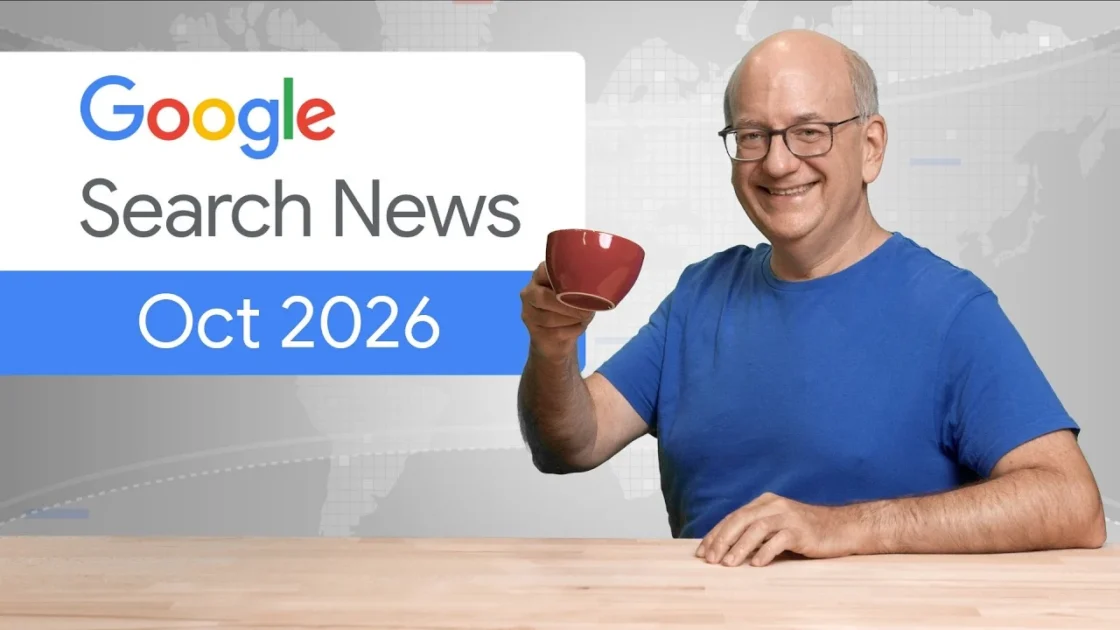
A video the agency Exposure Ninja published on 9 November 2026 asks whether SEO will still be relevant in 2027 and answers with four shifts for marketers. It is sponsored by Semrush, whose data it uses, and it closes with an offer for the agency’s own AI visibility scorecard. The direction of its argument holds up. Several of its numbers come from 2025 studies, and one has no source that can be traced.
Search revenue grows 12% while Alphabet’s shares take the hit
Alphabet’s quarterly filing puts Google Search and other revenue at $63.35 billion for July to September 2026, against $56.57 billion a year earlier, a rise of 12%. For the first nine months the figure is $187.0 billion, about 16% higher than in 2025. The video is right that growth continues and right that investors reacted badly. It puts the share drop at about 10%, while the Motley Fool’s report says only that the stock was slammed after sales missed analysts’ $64.96 billion estimate.
The detail that matters for SEO is why. Growth slowed from 17% in the second quarter, and Alphabet said query growth was the fastest in five years. The Motley Fool’s analyst reads that mix as lower revenue per AI query, while Alphabet named currency as the biggest drag. People are searching Google more, not less, and Google is struggling to earn as much from the new answer format. That reads as a monetization problem for Google, and the filing does not say where organic clicks are going.
The click data behind the fear comes from March 2025
The video’s main traffic claim is that people click an organic result about half as often when an AI summary sits above it. That matches Pew Research Center’s 8% of visits against 15%, but Pew’s data is older than the video suggests. It tracked the browsing of 900 US adults in March 2025 across 68,879 Google searches, and AI summaries showed up on only 18% of them.
Pew found more. Just 1% of visits to a page with a summary ended in a click on a link inside the summary, and 26% of such visits ended the browsing session, against 16% for pages without one. Google has disputed the method, according to PPC Land’s coverage, and Semrush’s own AI Mode guide still leans on the Pew result in 2026. The best click evidence is 18 months old, and the panels covered next point to far wider coverage by summaries today.
A 400-keyword panel stands in for all of Google
Part of the video’s coverage data checks out and part does not. The 71% growth in commercial-intent AI Overviews and the 231% jump in finance come from a Semrush study of more than 600,000 US desktop keywords between November 2025 and April 2026. Both are relative changes in the share of results pages with an overview, not percentage points, and the same study found overviews on transactional searches fell 5%.
Semrush has since published a newer panel. Across 400 US desktop keywords in banking, software and ecommerce, coverage rose from 45.75% in September 2025 to 88% in August 2026, or 97% when weighted by search volume. PPC Land notes that the study counts whether an overview appeared, not what people clicked, and that its sub-groups average fewer than 27 keywords each.
Neither study yields the video’s claim that 78.5% of Google results pages show an AI Overview. Pew found 18% of searches in March 2025, and Semrush’s panels cover only commercial queries. The video does not say which dataset produces the figure, so it should be read as unverified.
A top ranking buys an AI citation less often than the video implies
The video asks whether ranking in Google gets a site into AI answers and calls the overlap patchy. Semrush’s AI Mode guide, dated February 2026, supports part of that: 53% of the domains and 35% of the URLs cited in AI Mode match Google’s top 10. The video’s transcript attaches those two figures to AI Overviews, but Semrush assigns them to AI Mode.
Newer evidence points the same way and goes further. In March 2026 Ahrefs found that 38% of about 4 million cited URLs also ranked in the top 10 for the same query, with 31.2% ranking 11 to 100 and 31.0% outside the top 100. The same publisher measured about 76% in July 2025, and it warns that its parsing improved and Google moved AI Overviews to Gemini 3 in January 2026, so the drop is partly a change in measurement. Its explanation is query fan-out: one question is split into sub-queries, and the overview cites whatever ranks for those.
Cognizo, an AI-visibility vendor, compiled Conductor data showing that a page in position one is cited in 24.9% of AI Overviews, and Moz and Ahrefs data putting AI Mode near 12% and ChatGPT near 8%. These are secondhand figures from sellers of tracking tools, and each study measures overlap differently.
The 4.4x conversion figure dates from July 2025
The video says visitors from AI tools are worth about 4.4 times as much as organic visitors. Semrush published that number on 21 July 2025, from a study of more than 500 digital-marketing and SEO topics. It measured conversion rate for visitors tracked to a non-Google source such as ChatGPT, and the same study projected that AI visitors would overtake traditional search visitors in 2028, a forecast Semrush calls an extrapolation. The video drops the date, the topic scope and the projection’s status.
Other studies disagree on direction. A Search Engine Land review lists Amsive, Ahrefs and Seer Interactive finding that ChatGPT converts better than Google, a study of 973 ecommerce sites finding that it converts worse, and the founder of Wynter reporting poor-quality leads. The review concludes that conversion depends on industry and measurement method. Search Engine Land is owned by Semrush, which the article discloses.
ChatGPT’s web visits are flat while the video reports 35% growth
The video reports that ChatGPT’s visits grew 35% worldwide and 37% in the UK over a year, while Google’s UK visits run about 17 times higher. Those figures come from Semrush’s traffic rankings. Similarweb’s estimates, compiled by the consultancy Momentic, tell a different story: ChatGPT’s web visits stayed between 5.35 billion and 6.17 billion in each of the 16 months to October 2026, and the October figure of 6.05 billion is 2% below the previous October.
AI chat as a whole is still growing. The seven largest chatbots drew 10.68 billion web visits in October, up 27% in a year, with Gemini up 123%, and ChatGPT’s share of those visits fell from 76.5% in February 2025 to 56.6%. Web counts also miss app use, which makes up 38% of ChatGPT’s US users. The conflict does not undo the video’s point that Google still dominates, but the 35% growth figure depends on which panel a marketer trusts.
A video sponsored by Semrush leans on Semrush data
The description states that the video is sponsored by Semrush and that the agency may earn a commission on the marked links. Semrush belongs to Adobe, which agreed in November 2025 to buy it for $1.9 billion, and its charts now carry an Adobe label. It sells the AI visibility tracking its studies recommend, and its October study ends with an invitation to a free trial of those tools.
None of that makes the data wrong. Search Engine Land’s review notes that Ahrefs and Semrush drew opposite lessons from similar click data, each fitting its product. It does mean the strongest claims deserve a second source, and the second sources here are mixed. The video’s case studies cannot be checked at all: the agency says an unnamed skincare brand gained 27% organic sessions and doubled its AI Overview visibility, and that another client saw a 640% rise in conversions. Treat those client results as marketing claims, since the sponsorship, the scorecard offer and the case studies all lead to the same purchase.
Crawler access and long-tail coverage are the checks worth running
Two of the video’s four shifts survive scrutiny and cost little to test. The first is crawler access. Cloudflare announced that from 15 September 2026 its defaults for new domains block training and agent crawlers on pages that show ads, while search crawlers stay allowed, and that blocking training also blocks multi-purpose bots such as Googlebot, a default owners can opt out of, according to Help Net Security. The client the video describes could be an instance, though the video does not say which setting was active. Semrush’s 2025 study adds that many AI crawlers do not execute JavaScript, so a CDN rule and a script-heavy page can each hide a site.
The second is coverage of narrow questions. Ahrefs’s fan-out finding favors pages that answer specific sub-questions, as the video advises, and Semrush’s own recommendation is to keep comparison and pricing pages current. The evidence supports the video’s direction, that SEO is alive but rankings alone are not enough, and it does not support most of the video’s numbers as current. A click study on 2026 browsing, or Google publishing AI Mode referral data, would show whether organic clicks are falling as fast as 2025 data implied.
Author:
Jan Bielik
CEO & Founder of Webiano Digital & Marketing Agency
This article is an original analysis supported by the sources cited below
Will SEO Still Be Relevant in 2027? What the Data Says
The video itself, published 9 November 2026 by Exposure Ninja and sponsored by Semrush, which sets out the claims, figures and four recommended shifts that the article tests.
Alphabet Inc. Form 10-Q for the quarter ended September 30, 2026
Alphabet’s own filing, which gives Google Search and other revenue of $63,350 million in the quarter against $56,567 million a year earlier, and $187,020 million for nine months.
AI Overviews are expanding across commercial intent search
The 2 July 2026 Semrush study behind the video’s 71% and 231% figures, covering 600,000 US desktop keywords from November 2025 to April 2026 and a 5% fall on transactional searches.
Google users are less likely to click on links when an AI summary appears in the results
Pew Research Center’s analysis of 900 US adults’ March 2025 browsing, giving 8% against 15% link clicks, 1% clicks inside summaries and AI summaries on 18% of searches.
Update: 38% of AI Overview Citations Pull From The Top 10
Ahrefs’s March 2026 study of 863,000 SERPs and 4 million cited URLs, showing 37.9% in the top 10 against about 76% in July 2025, with its caveats on method and Gemini 3.
What Is Google AI Mode? (+ How to Optimize for It in 2026)
Semrush’s February 2026 guide, which assigns the 53% domain and 35% URL overlap with Google’s top 10 to AI Mode and repeats the Pew click finding.
We Studied the Impact of AI Search on SEO Traffic. Here’s What We Learned.
Semrush’s 21 July 2025 study, the source of the 4.4x conversion figure and the 2028 projection, based on 500 digital-marketing topics, with its note on JavaScript and AI crawlers.
Google AI Overviews now hit 88% of tracked commercial keywords, Semrush finds
PPC Land’s reading of Semrush’s 21 October 2026 panel of 400 US desktop keywords, with its limits on clicks and cell size, Google’s objection to Pew and the Adobe acquisition of Semrush.
Does Ranking #1 on Google Get You Into AI Answers? (data study)
A vendor compilation of eight studies, used here for Conductor’s 24.9% citation rate for position one and Moz and Ahrefs overlap figures for AI Mode and ChatGPT.
Why every AI search study tells a different story
A contributor’s review of conflicting conversion and click studies from Ahrefs, Semrush, Seer Interactive and others, with a disclosure that Search Engine Land is owned by Semrush.
November 2026 Top AI Chatbots by Market Share
Similarweb data compiled by Momentic, showing ChatGPT web visits of 6.05 billion in October 2026, down 2% in a year, and combined chatbot visits up 27%.
Cloudflare changes AI crawler access rules
Help Net Security’s report on Cloudflare’s Search, Agent and Training categories and the defaults for new domains from 15 September 2026, including the effect on Googlebot.
Alphabet Shares Plunge. Why Now Is a Great Time to Buy the Dip.
The Motley Fool’s account of Alphabet’s third-quarter miss, search growth slowing from 17% to 12%, record query growth and lower monetization of AI queries.
| Citing this article? Brief excerpts are welcome. Please credit Webiano.digital, name the author where stated, and include a link to https://webiano.digital and to this original article. Full or substantial republication requires prior written permission. Read our Copyright and Content Use Policy. |
This article was prepared with the assistance of artificial intelligence tools. The content underwent expert human review, and Webiano Digital & Marketing Agency assumes editorial responsibility for its final version and publication.