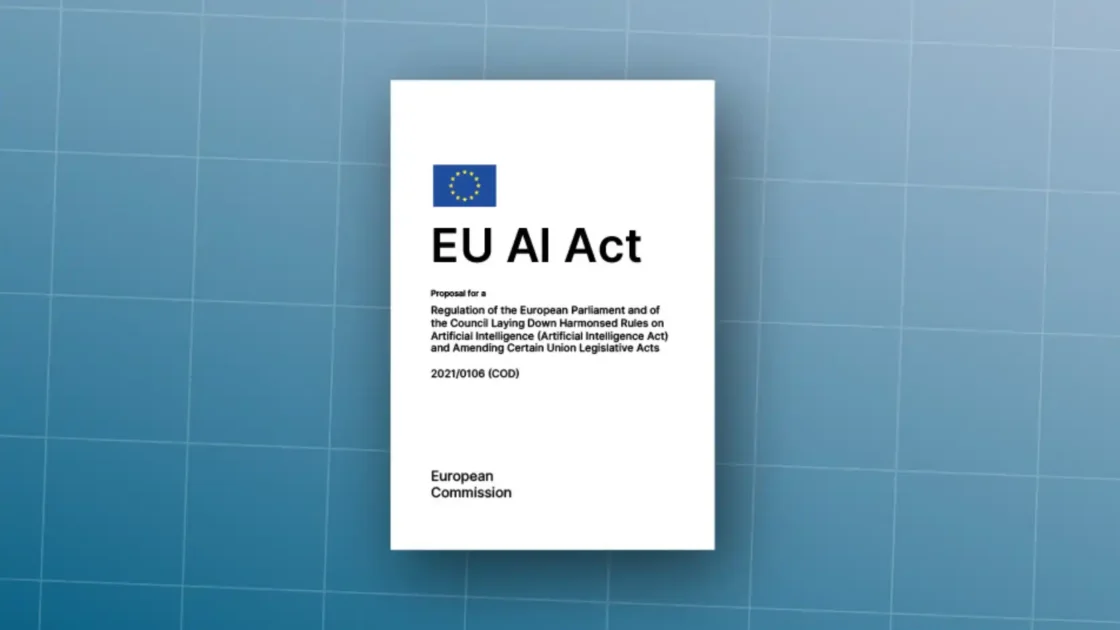
AI is no longer sitting in a lab, waiting for executives, schools, governments and workers to decide whether it matters. It is already inside search, software development, customer service, legal work, marketing, finance, logistics, education, healthcare research and daily office routines. The harder question is not whether artificial intelligence should be taken seriously. The harder question is whether institutions can adapt faster than AI changes the work, the risks, the economics and the rules around them.
Table of Contents
AI has crossed from novelty into infrastructure
Artificial intelligence used to be discussed as a future-facing technology, usually wrapped in speculation about robots, automation and distant disruption. That framing no longer fits. The main shift is that AI has become part of operational infrastructure. It sits in the software stack, the data stack, the workplace stack and the public-policy stack. It is no longer a single tool that someone adopts or refuses. It is a layer that increasingly shapes how information is searched, written, coded, classified, summarized, analyzed and acted on.
The numbers explain why the conversation has changed. Stanford HAI’s 2026 AI Index reported that U.S. private AI investment reached $285.9 billion in 2025, more than 23 times the tracked private investment in China, and that the United States had 1,953 newly funded AI companies in 2025. That does not mean the United States has a permanent lead or that private investment captures all state-backed spending. It does show that AI has become a capital-intensive industrial race, not just a software trend.
The same shift is visible inside companies. McKinsey’s 2025 global AI survey found that 88 percent of respondents said their organizations regularly used AI in at least one business function, up from 78 percent a year earlier. Yet only about one-third said their companies had begun to scale AI programs. That gap matters. It means AI is already widely present, but many organizations are still using it in fragments, pilots and side projects rather than as a redesigned operating model.
This is the practical reason AI can no longer be ignored. A company that refuses to touch AI may still find that its vendors, competitors, employees, customers and regulators have already moved. A university may ban or discourage generative AI in coursework, yet students may use it for reading support, drafting, translation, coding and exam preparation. A government office may avoid deploying AI directly, yet it must still regulate AI systems used in recruitment, credit, policing, border control, education and public services.
The mistake is to treat AI as a yes-or-no decision. AI has become a governance decision, a skills decision, a cost decision and a trust decision. Refusing to decide is still a decision. It usually means informal use grows without training, records, risk controls or clear accountability. That is the least mature form of adoption: invisible adoption.
There is also a deeper change in timing. Earlier digital shifts gave institutions years to build websites, move to cloud systems or adapt to mobile-first behavior. Generative AI compressed the adoption cycle. Chat interfaces made the technology legible to non-specialists, while APIs and copilots made it easy to embed AI into products and workflows. The adoption path became shorter. A small team can now test an AI-assisted process in days. A large organization can accidentally create unmanaged AI use overnight.
Ignoring AI once meant ignoring an interesting technology. Ignoring AI in 2026 means ignoring changes in work quality, information trust, legal exposure, employee capability, infrastructure demand and competitive speed. That is why the public debate has become more serious. The question has moved away from fascination. It has entered the realm of responsibility.
The investment race is changing the shape of the economy
AI investment is not evenly distributed. It is concentrated among frontier model companies, cloud platforms, semiconductor firms, data-center operators and large enterprises that can afford compute, talent and integration. That concentration has two consequences. First, AI development is becoming tied to capital markets and infrastructure planning. Second, smaller firms face a strategic choice: build, buy, partner or risk falling behind.
Stanford HAI’s 2025 AI Index already showed the scale of the earlier surge, reporting that U.S. private AI investment reached $109.1 billion in 2024, while generative AI attracted $33.9 billion globally in private investment. By the 2026 report, tracked U.S. private AI investment had expanded far beyond that level. This jump signals more than enthusiasm. It shows that investors now see AI as a platform shift, with effects across software, hardware, cloud services, defense, pharmaceuticals, media, finance and industrial automation.
The capital race is not only about model quality. It is also about distribution. A frontier model is powerful, but power becomes economic value when it is integrated into products people already use. Microsoft has Copilot across office workflows. Google pushes Gemini across search, Android, Workspace and developer tools. OpenAI, Anthropic and other model providers compete through APIs, enterprise deals and agentic tools. The competitive battleground is shifting from “who has the smartest model” to “who owns the workflow where decisions are made.”
This changes the economics of software. Traditional software sold fixed features. AI-assisted software sells capability that changes with the model, the data, the workflow and the user’s prompt. That makes pricing harder, procurement harder and measurement harder. A company buying AI tools must ask a different set of questions: does the system reduce time to completion, improve accuracy, cut rework, expose new risk, require human review, or shift costs from labor to compute?
AI also changes the value of proprietary data. For years, companies treated data as an asset in a vague way. AI makes that claim testable. High-performing AI systems often need access to internal documents, product information, customer histories, policies, process logs, support tickets and domain knowledge. A company with clean, governed, well-structured data can move faster than one with fragmented files, unclear ownership and weak permissions. AI exposes the true quality of an organization’s information architecture.
The investment wave also raises the stakes for national economies. Governments now see AI capability as tied to productivity, security, scientific research and industrial competitiveness. That is why AI policy is no longer only about ethics. It is about compute supply, chip access, grid capacity, national cloud infrastructure, research funding, talent migration, open-source policy and public-sector adoption.
The risk is that the investment race creates a two-speed economy. Large organizations with compute contracts, data platforms and AI teams can experiment at scale. Smaller firms may rely on consumer tools, generic SaaS features or outsourced vendors. That does not make small firms powerless. It does mean they need sharper choices. A small company does not need a frontier model strategy; it needs a workflow strategy. It must know which tasks are expensive, repetitive, knowledge-heavy, error-prone or slow enough to justify AI-assisted redesign.
The same logic applies to countries. A smaller country does not need to match U.S. hyperscaler spending to benefit from AI. It needs education, procurement standards, digital public infrastructure, AI-literate regulators, cybersecurity readiness and support for local businesses. The national AI race will not be won only by building the largest model. It will also be shaped by who can turn AI into safer public services, stronger firms and better-skilled workers.
The workplace impact is already visible
The workplace debate often swings between two extremes: AI will destroy jobs, or AI will make everyone more productive. Both claims are too simple. AI affects tasks before it affects occupations. It changes what people do inside a role, which parts of the role become cheaper, which skills become more sought after and which entry-level paths become narrower.
The IMF warned in 2024 that about 60 percent of jobs in advanced economies may be exposed to AI, with roughly half of exposed jobs potentially benefiting from AI integration and the other half facing the risk that AI performs tasks now handled by people. The IMF’s framing is useful because it avoids a false binary. Exposure is not the same as replacement. Exposure means the content of the job is open to change.
The World Economic Forum’s Future of Jobs Report 2025 gathered views from more than 1,000 employers representing more than 14 million workers across 55 economies. It identified technological change, economic uncertainty, demographic shifts, geoeconomic fragmentation and the green transition as forces expected to reshape labor markets through 2030. AI sits inside that wider shift, not outside it.
In practice, the first effects appear in knowledge-work routines. AI drafts emails, summarizes meetings, writes code, generates product copy, screens documents, produces first-pass analysis, creates images, translates text and answers internal-policy questions. These tasks once filled large parts of junior, administrative and support roles. The work does not disappear evenly. Some tasks are automated; some are accelerated; some become review work; some require more judgment because the machine can produce plausible but wrong output.
This is why entry-level work deserves special attention. Many careers start with low-risk repetitive tasks. Junior lawyers review documents. Junior analysts clean spreadsheets. Junior marketers draft variants. Junior developers fix bugs and write boilerplate code. Junior consultants prepare decks and summarize research. If AI absorbs too many of those tasks without replacing them with structured learning, companies may weaken their own talent pipeline.
A mature organization treats AI as a redesign challenge rather than a headcount shortcut. It asks which tasks should be automated, which should be augmented, which should remain human, and which junior tasks are still needed for learning. The risk is not only job loss. It is skill erosion. If new workers skip the messy early work that teaches judgment, they may struggle later with supervision, exception handling and accountability.
AI also changes performance expectations. Workers using AI may complete routine tasks faster, but they may also be expected to handle more volume, make better decisions and learn new tools continuously. That creates pressure. The productivity gain is not automatically experienced as relief. It can become a higher work tempo unless managers redesign workload, review norms and success metrics.
The strongest workers will not simply be “good at prompts.” They will combine domain knowledge, critical reading, clear writing, process understanding and tool fluency. They will know when AI output is useful, when it is generic, when it is legally risky, when it misses context and when it needs verification. AI literacy is becoming a general professional skill, but domain judgment remains the source of real value.
The productivity question is harder than the hype suggests
AI productivity gains are real in some settings, uncertain in others and often dependent on workflow design. The early mistake was to measure AI through individual task speed alone. A worker who writes a draft 40 percent faster may still create no business gain if the draft requires heavy review, does not improve customer outcomes or creates compliance risk. Productivity is not the same as faster output. It is useful output per unit of cost, time and risk.
McKinsey’s 2025 survey points to the central problem. AI use is broad, but enterprise-level value remains uneven. The survey found that high-performing organizations are more likely to redesign workflows, set growth or innovation goals alongside efficiency goals, define when human validation is needed and embed AI into business processes. That is a serious finding. It means value is not produced by tool access alone. It comes from operating discipline.
A basic example is customer support. An AI chatbot may deflect common questions. If it answers incorrectly, escalates poorly or frustrates customers, the cost saving may be offset by churn, complaints and human cleanup. A better design uses AI to triage, retrieve policy, draft responses, detect sentiment, surface prior cases and assist human agents. That may reduce handle time without handing full accountability to a system that cannot understand every edge case.
Software development shows the same pattern. AI coding assistants can write boilerplate, suggest tests, explain errors and generate prototypes. The gain is strongest when developers understand the code well enough to review it. A weak developer can create more bad code faster. A strong developer can use AI to reduce low-level friction and spend more time on architecture, testing, security and user value. AI amplifies process quality; it does not repair poor engineering culture by itself.
The cost side is also more complex than early narratives suggested. AI tools may reduce labor time but add subscription costs, API costs, integration costs, security review, governance work, model evaluation and training. For large-scale deployments, inference cost can become a recurring operating expense. For regulated sectors, documentation and auditability may be mandatory. The productivity case must include the full system, not only the user-facing tool.
Microsoft’s 2025 Work Trend Index argued that work is pushing the limits of humans alone and that AI skilling and digital labor are becoming workforce strategies. The strategic claim is clear: AI is moving from personal productivity support toward human-agent teams. The evidence is still developing, but the direction is visible. Companies are not just asking employees to use a chatbot. They are exploring AI agents that monitor tasks, retrieve information, draft actions and hand work back to people.
The danger is premature automation. If a company builds agentic workflows before it understands failure modes, access controls and review requirements, it can create quiet operational risk. An AI system with permission to send emails, update databases, approve refunds or trigger procurement can do harm faster than a text generator. Agentic AI shifts the discussion from content quality to operational control.
A sensible productivity strategy starts with narrow, measurable workflows. Good candidates have clear inputs, defined outputs, known quality standards and visible review points. Poor candidates involve high-stakes decisions, ambiguous policy, weak data, unclear ownership or heavy legal exposure. AI should be scaled where the organization can measure both the gain and the failure.
AI agents move the debate from assistance to delegation
The word “agent” is now used too loosely, but the underlying shift is real. A chatbot responds. An agent acts across steps. It may plan, call tools, search files, use a browser, write code, update a system, schedule a meeting or trigger a process. The more autonomy the system has, the more governance matters.
McKinsey’s 2025 survey found that 23 percent of respondents said their organizations were scaling an agentic AI system somewhere in the enterprise, while another 39 percent were experimenting with AI agents. That puts agentic AI beyond theory, even if most deployments remain narrow.
The agentic shift changes the risk profile. A drafting assistant produces text for review. A workflow agent may act before review. The distinction matters. A legal research assistant that summarizes cases can mislead a lawyer, but a legal workflow agent that files a document incorrectly can cause procedural damage. A sales assistant that drafts outreach can embarrass a brand, but an agent that updates pricing, changes CRM records or triggers contract terms can create financial exposure.
This is why agent design must separate recommendation from execution. Many business tasks contain both. An AI system may recommend a refund, but a human approves it. It may draft a procurement comparison, but a manager selects the vendor. It may flag compliance risk, but a trained officer makes the decision. The safest early agent deployments often keep humans at approval points while using AI to reduce search, drafting, routing and documentation work.
The real promise of agents is not that they replace whole jobs. It is that they connect fragmented systems. Office work is full of small handoffs: copy data from one platform, check a policy, summarize a thread, draft a response, update a ticket, notify a team, create a follow-up task. Human workers often spend hours moving information rather than making decisions. Agents can reduce that friction if the systems are well governed.
The challenge is that enterprises are messy. Permissions are inconsistent. Documents are outdated. Data lives in silos. Business rules are informal. Employees use exceptions, workarounds and private judgment. An agent operating in that environment may follow the wrong document, expose confidential information, mishandle a customer or create an audit gap.
Agentic AI therefore raises a basic managerial question: is the process ready to be delegated? If the process is undocumented, unstable or full of exceptions, adding an AI agent may only make confusion faster. If the process is clear, measured and reviewable, AI may remove a large amount of administrative drag.
This also changes software procurement. Buyers must ask what the agent can access, what it can change, how it logs actions, whether it can be paused, how errors are reversed, how permissions are inherited and who is accountable when it acts. A vendor demo is not enough. Agentic systems need operational testing under real constraints.
The organizations that succeed with agents will likely be those that treat them as junior process participants, not magic workers. They will give them narrow scopes, known tools, strict permissions, clear escalation rules and measurable outputs. They will watch failure patterns. They will improve the process before expanding autonomy. That is slower than the hype cycle, but safer than giving a probabilistic system broad authority in a fragile workflow.
Models are becoming stronger and more specialized
The model race has shifted from conversational fluency to reasoning, coding, long context, multimodal understanding, tool use, latency, price and safety. The most visible frontier labs are no longer competing only on whether a model can write convincing text. They are competing on whether a model can solve longer tasks, maintain state, use tools, handle documents, write software and behave reliably in constrained environments.
OpenAI’s GPT-5 announcement emphasized coding, reasoning and a safety stack for higher-risk domains, including biology-related safeguards. The company described “GPT-5 thinking” as using threat modeling, safe completions, classifiers, reasoning monitors and enforcement pipelines for biorisk-related safety. That framing shows how frontier systems are now judged not only by capability but by risk controls.
Anthropic’s Claude 4 announcement focused heavily on coding and agent workflows. Anthropic said Claude Opus 4 led on SWE-bench and Terminal-bench at launch and could work continuously for several hours on long-running tasks. The important signal is not the marketing claim itself. It is that frontier model competition is moving toward sustained execution, not just isolated answers.
Google’s Gemini 2.5 updates also show the direction. Google described Gemini 2.5 Pro as its most intelligent model at the time, with capabilities such as native audio output, advanced safeguards, computer-use capabilities through Project Mariner and an experimental enhanced reasoning mode called Deep Think. Google also highlighted long-context and multimodal performance.
This competition creates real benefits for users. Coding support improves. Document analysis gets better. Multimodal tasks become more natural. Enterprise systems can combine text, audio, images, video and structured data. Models become faster and cheaper for some workloads. Specialized models serve legal, medical, coding, cybersecurity, design and scientific uses.
Yet stronger models do not remove the old weaknesses. Hallucination, bias, brittle reasoning, hidden prompt sensitivity, data leakage, overconfidence and weak grounding still matter. A model can outperform older systems on benchmarks and still fail in a live workflow because the data is stale, the instruction is ambiguous, the context is missing or the user trusts it too much.
Benchmarks also require caution. They are useful for comparison, but they can be gamed, saturated or detached from real operating conditions. A model that performs well on coding benchmarks may still produce insecure code. A model that handles long context may still miss the decisive sentence in a contract. A model that scores well on reasoning tests may still make basic errors under time pressure or noisy prompts.
The strategic point is that the market is fragmenting. Some tasks need the strongest reasoning model. Others need a small, fast, cheap model. Some require on-premise deployment. Some need open weights. Some need privacy guarantees. Some need explainability. The best AI strategy is not “use the most powerful model everywhere.” It is matching model capability, cost and risk to the task.
Regulation has entered the execution phase
AI regulation is no longer an abstract policy debate. In the European Union, the AI Act entered into force on 1 August 2024. The European Commission says the Act becomes fully applicable two years later, on 2 August 2026, with exceptions and phased deadlines. Prohibited AI practices and AI literacy obligations applied from 2 February 2025, while governance rules and obligations for general-purpose AI models became applicable on 2 August 2025.
The AI Act matters beyond Europe because global companies rarely build completely separate governance systems for every market. A multinational deploying AI in recruitment, education, credit, customer service or biometric contexts must understand whether its systems fall into prohibited, high-risk, limited-risk or other categories. Even companies outside the EU may be affected if their AI systems are placed on the EU market or used in ways covered by the law.
The timeline has become more detailed. The EU’s AI Act Service Desk states that the law applies progressively, with general provisions and prohibitions applying from 2 February 2025 and general-purpose AI rules applying from 2 August 2025. The European Commission’s own AI Act page also notes later deadlines for high-risk systems, including rules for some high-risk areas applying from 2 December 2027 and product-integrated systems from 2 August 2028, following political agreement on simplification.
For companies, the legal risk is no longer just about avoiding obviously harmful AI. It is about documentation, classification, transparency, human oversight, data governance, technical records, quality management and post-market monitoring. The regulatory question becomes operational: who knows which AI systems the organization uses, where they are deployed, which risks they carry and which obligations apply?
The EU’s General-Purpose AI Code of Practice, published on 10 July 2025, is designed as a voluntary tool to help providers comply with AI Act obligations for general-purpose AI models. The Commission says the code has chapters on transparency, copyright, and safety and security, with the latter focused on providers of the most advanced models subject to systemic-risk obligations.
This matters because many organizations depend on general-purpose models built by vendors. They may not train frontier models themselves, but they still deploy systems powered by those models. They need vendor documentation, model cards, risk information, data-processing terms, safety commitments and audit support. AI procurement becomes a compliance function as much as a technology function.
The AI Act is not the only governance reference point. NIST’s AI Risk Management Framework gives organizations a voluntary structure to manage risks to individuals, organizations and society. ISO/IEC 42001 gives a management-system standard for organizations providing or using AI products and services. The OECD AI Principles, first adopted in 2019 and updated in 2024, set intergovernmental guidance for trustworthy AI that respects human rights and democratic values.
The practical message is direct. AI governance is becoming a normal part of corporate governance. It belongs with cybersecurity, privacy, compliance, procurement, internal audit, risk management and board oversight. Organizations that treat AI governance as paperwork will struggle. Organizations that treat it as operating discipline will move with more confidence.
Governance is the difference between adoption and exposure
Unmanaged AI use spreads quickly because the tools are easy to access. Employees paste documents into chatbots, use AI to draft client work, generate code, summarize meetings, create images, translate contracts and analyze spreadsheets. Much of this use is well intentioned. The risk is that it happens without rules.
AI governance starts with an inventory. An organization needs to know which AI tools are approved, which are blocked, which are tolerated, which data can be used, which outputs require review and which uses are prohibited. Without an inventory, risk teams are guessing. Without logs, audit teams cannot reconstruct what happened. Without clear ownership, no one can answer for failure.
NIST’s AI Risk Management Framework is useful because it treats AI risk as something to be governed across the AI lifecycle, not as a one-time legal review. It was developed to help manage risks to individuals, organizations and society associated with AI. That broad framing fits real deployments, where harms may involve privacy, safety, discrimination, misinformation, security, financial loss or reputational damage.
ISO/IEC 42001 adds another piece: a formal AI management system. ISO describes it as the world’s first AI management system standard and says it addresses challenges such as ethical considerations, transparency and continuous learning. The standard’s value is not that certification solves every problem. It is that AI governance needs repeatable management practices, not ad hoc committees.
A working AI governance model usually has several layers. The first layer is policy: permitted tools, restricted data, banned uses, review standards and escalation rules. The second layer is process: approval workflows, vendor review, risk classification, testing and monitoring. The third layer is technical control: access management, logging, data-loss prevention, model evaluation, red teaming and output filters. The fourth layer is culture: training people to question AI output instead of treating it as neutral.
Governance also needs proportionality. A spell-checking feature does not require the same controls as an AI system screening job applicants. A marketing draft tool does not carry the same risk as an AI model supporting medical triage. The goal is not to bury every AI use under bureaucracy. The goal is to match oversight to harm.
Many organizations will fail here because they confuse legal defensibility with practical control. A policy document sitting in a shared folder does little if employees do not understand it and tools are not configured around it. Governance must reach the actual point of use. That means training, embedded warnings, approved tool lists, procurement gates, manager responsibility and technical enforcement.
Vendor management is especially important. Companies often deploy AI through SaaS products where AI features are turned on by default. The vendor may change model providers, update features or alter data-use terms. A company that approves the original product may not notice that the risk profile changed. AI governance must therefore include change management, not only initial approval.
The hardest part is accountability. When AI output contributes to a decision, who is responsible? The user? The manager? The vendor? The data owner? The model provider? The answer depends on context, but responsibility cannot be left vague. Human review must be meaningful, not ceremonial. A reviewer who lacks time, expertise or authority is not a real safeguard.
The energy question has become unavoidable
AI may feel weightless to the user: type a prompt, receive an answer. Behind that exchange sits physical infrastructure: data centers, chips, cooling systems, power contracts, grids, water use, construction permits and supply chains. The more AI is used, the harder it is to separate digital convenience from energy demand.
The International Energy Agency reported that global electricity demand from data centers grew by 17 percent in 2025, while electricity consumption from AI-focused data centers surged 50 percent. The IEA also noted that major model providers reported a threefold increase in active users and a fivefold increase in revenue over the prior year, pointing to a rapid growth in demand.
The projections are striking. The IEA’s base case finds that global data-center electricity consumption could roughly double to around 945 TWh by 2030, just under 3 percent of total global electricity consumption. From 2024 to 2030, data-center electricity consumption grows around 15 percent per year in the base case, far faster than electricity consumption growth in many other sectors.
This does not mean AI alone will overwhelm global electricity systems. The IEA notes that a 3 percent data-center share of global electricity demand in 2030 remains limited in the wider energy picture. Yet local effects can be intense. Data centers cluster where power, fiber, land, tax incentives and cooling conditions align. Local grids may face connection queues, price pressure, reliability concerns and political resistance.
The energy question changes the AI debate in three ways. First, AI companies must justify the return on compute. Training and inference are not free, and the marginal value of ever-larger workloads will face scrutiny. Second, governments must decide where data centers fit into industrial policy, climate goals and grid planning. Third, users must understand that AI use has a cost beyond the subscription fee.
Efficiency gains matter. Epoch AI reports that pre-training compute efficiency is doubling roughly every 7.6 months, while the cost to train frontier language models has been doubling every seven months since 2020. Those two trends can coexist: systems become more efficient, but frontier ambitions grow even faster.
The likely future is not a simple explosion or a simple efficiency win. It is a contest between demand growth, hardware improvement, software efficiency, model routing, smaller specialized models, data-center siting and energy supply. A company that sends every task to the largest model wastes money and energy. A company that routes simple tasks to smaller models and reserves frontier systems for complex work can reduce cost without losing quality.
AI strategy now has an energy dimension. That may sound strange for a marketing team or law firm, but it will become normal for enterprises buying large volumes of AI services. Procurement teams will ask vendors about model efficiency, data-center emissions, renewable-energy claims, water use, latency trade-offs and regional hosting. AI’s physical footprint will become part of trust.
Chips and data centers have become strategic assets
The AI boom runs through semiconductors. Advanced GPUs, accelerators, high-bandwidth memory, networking equipment and specialized data-center infrastructure determine who can train, deploy and scale models. Software may be the visible layer, but hardware sets many limits.
This is why AI competition has become tied to export controls, supply-chain security, industrial subsidies and cloud capacity. Advanced chips are not interchangeable commodities. They require complex manufacturing, foundry capacity, packaging, memory supply and design talent. A shortage in one part of the chain can slow model training, raise cloud costs or delay deployments.
Data centers are now part of the same strategic picture. The IEA describes a scramble across the AI value chain for electricity, grid connections, manufacturing capacity, chips and capital. It also notes that data-center investments have become too large to be funded from company balance sheets alone, making capital markets central to buildout.
That has consequences for AI pricing. If compute remains constrained, access to the strongest models may stay expensive. If competition and efficiency improve, some capabilities may become cheaper and widely available. The cost curve will affect which AI applications become normal business infrastructure and which remain premium tools.
Chip constraints also shape geopolitics. Countries with advanced chip-design firms, fabrication capacity, packaging capacity or major cloud providers gain influence. Countries without them depend on global supply chains. This creates pressure for regional AI infrastructure projects, sovereign cloud strategies and public-private compute initiatives.
For businesses, the hardware layer may seem remote, but it affects daily decisions. API prices, latency, availability, data residency and model access all depend on infrastructure. A company building AI into customer-facing products must consider whether its vendor can serve peak demand, meet uptime expectations and maintain compliance across regions.
There is also a resilience issue. If a critical business process depends on one AI provider, one cloud region or one model family, the organization has concentration risk. The answer is not always multi-model complexity. It is conscious architecture. Some systems need fallback models, cached responses, human override or degraded modes. AI systems must be designed for failure because infrastructure bottlenecks, outages and policy restrictions are possible.
The AI stack is becoming industrial. It includes chips, energy, cooling, capital, data, models, software, policies and humans. The organizations that understand this stack will make better decisions than those that see only the chatbot interface.
Search and information discovery are being rewritten
AI is changing how people find information. Search engines are no longer only lists of links. They increasingly provide generated answers, summaries, comparison tables, shopping guidance, code snippets, travel suggestions and conversational follow-up. This shifts power across publishers, brands, platforms and users.
For users, AI answers can reduce friction. A person can ask a complex question and receive a structured response instead of opening ten pages. For publishers, the shift is more dangerous. If AI systems extract and summarize content without sending traffic, the economics of publishing weaken. For brands, the challenge is visibility: being cited, summarized or recommended by answer engines may become as important as ranking in classic search.
This matters because AI systems do not retrieve information like humans. They rely on training data, search indexes, structured data, citations, embeddings, knowledge graphs and ranking systems. They may favor clear, authoritative, well-structured, frequently cited content. They may also make errors, omit sources or blend outdated information with current facts.
The search shift is one reason companies need better content discipline. Generic marketing pages are weak material for answer engines. A company that wants to be found in AI-mediated search needs clear facts, strong topical depth, expert authorship, current dates, structured explanations, original data, citations and pages that answer real questions. AI search rewards clarity and authority more than decorative language.
News organizations face a sharper dilemma. AI tools depend on high-quality journalism, but generated answers may reduce visits to the journalism that produced the facts. That tension sits behind copyright lawsuits, licensing deals and debates about scraping. If original reporting becomes harder to fund, AI answer quality may degrade over time. The information ecosystem cannot survive only on summarizers.
Users also need new reading habits. AI-generated answers should be treated as starting points, not final authority, especially for law, medicine, finance, safety, politics and fast-moving events. A generated summary can be useful, but it can hide uncertainty. It may sound confident even when the source base is thin. It may cite a source that does not fully support the claim. It may miss local rules or current deadlines.
AI discovery also changes misinformation. Synthetic text, images, audio and video reduce the cost of producing persuasive falsehoods. Search and social platforms must detect and label manipulated content, but detection is an arms race. The user’s own skepticism remains part of the system.
The broader effect is cultural. When answers become instant, people may read less deeply. When drafting becomes easier, low-quality content floods channels. When personalization improves, people may receive narrower information diets. AI does not automatically improve knowledge. It improves access to generated explanations. Whether those explanations produce understanding depends on sources, design and user behavior.
Education faces a test of honesty
Education is one of the clearest areas where ignoring AI has already failed. Students use AI to explain concepts, write drafts, summarize readings, translate text, solve coding problems, prepare presentations and generate practice questions. Some use it responsibly. Some use it to avoid learning. Many do both, depending on pressure, incentives and guidance.
Bans alone rarely work. They may be justified in specific assessments, but broad bans often push use underground. Students then learn from peers, influencers and tool interfaces rather than teachers. The institution loses the chance to define acceptable use, teach verification and redesign assessment.
The real problem is not that AI can write an essay. It is that many educational assessments were built around outputs that AI can now produce quickly. If a student is graded only on a polished take-home text, the assessment may no longer prove what it once proved. Schools and universities need to ask what they are measuring: memory, reasoning, writing process, source evaluation, oral defense, problem solving, creativity, collaboration or domain knowledge.
AI can support learning when used well. It can explain a concept at different levels, generate examples, quiz a learner, translate difficult text, help with coding errors and provide feedback on structure. It can also mislead, over-simplify, invent sources, solve too much of the task or create dependency. The difference is pedagogy.
Google’s Gemini 2.5 update claimed strength in learning use cases after incorporating LearnLM, and said educators and experts preferred Gemini 2.5 Pro over other models in head-to-head comparisons across learning scenarios. Vendor claims require scrutiny, but they show where the market is moving: education-focused AI tutors, feedback systems and multimodal learning tools.
The teacher’s role may become more, not less, important. Students need help judging AI output, asking better questions, checking sources and recognizing when they do not understand. AI can produce fluent explanations; it cannot guarantee that the student has built durable knowledge. Learning requires friction. AI can reduce useless friction, but it can also remove the struggle that makes understanding stick.
Assessment will likely become more mixed. Oral exams, in-class writing, process logs, version histories, project defenses, applied tasks and source analysis may gain value. Teachers may allow AI for brainstorming but not final writing, or require students to disclose prompts and edits. Some assignments will be AI-free. Others will require AI use and evaluate the student’s judgment.
The equity issue is serious. Wealthier students may access better tools, private tutoring and AI-enabled study systems. Schools with weak policies may leave disadvantaged students with less guidance. Public education systems need AI literacy that is practical, not ceremonial. Students should learn what AI is good at, where it fails, how to cite or disclose use, how to protect privacy and how to keep their own voice.
Education cannot pretend AI is not there. The honest path is to teach with it, teach about it and design assessments that still mean something in its presence.
Healthcare and science show both promise and constraint
AI has strong potential in healthcare and science, but these are also domains where overconfidence can cause harm. The distinction between decision support and decision replacement is crucial. A model may help detect patterns, summarize records, identify research candidates or draft documentation. That does not mean it should make unsupervised clinical decisions.
In medical settings, AI can support imaging analysis, triage, drug discovery, documentation, patient communication, administrative coding and literature review. The value is especially clear where professionals face information overload. A clinician may need to review histories, lab results, imaging notes, guidelines and medication interactions under time pressure. AI can help organize that information.
Yet healthcare data is messy. It reflects unequal access, inconsistent documentation, coding practices, device differences and historical bias. If models are trained or deployed without careful validation, they may perform worse for some populations. A system that works in one hospital may fail in another because workflows, patient mix and data quality differ.
Regulation is also more demanding. Clinical AI may qualify as medical software, depending on jurisdiction and use. That brings requirements for validation, monitoring, safety reporting and human oversight. A hospital cannot safely adopt a model because it performed well in a general benchmark. It needs local evaluation and clear accountability.
Science is another high-potential domain. AI can help with protein structure, materials discovery, climate modeling, robotics, literature search, simulation and code generation. The benefit is not only speed. AI can help researchers explore larger hypothesis spaces and connect patterns across fields. Yet scientific AI still depends on data quality, reproducibility and expert review.
The risk in science is subtle. AI-generated hypotheses may look plausible but rest on weak assumptions. AI-assisted literature summaries may miss contradictory evidence. Automated lab systems may accelerate experimentation without improving theory. The scientific method still requires skepticism, replication and transparent methods.
Healthcare and science also show why public trust matters. People may accept AI support if they know a qualified professional remains accountable. They may reject it if it feels opaque, imposed or cost-driven. AI in high-stakes domains must earn trust through evidence, not novelty.
The business pressure will be intense because healthcare and research are expensive. AI vendors will promise efficiency. Hospitals and research institutions will seek relief from staffing shortages, paperwork and rising costs. The winning systems will not be those with the most impressive demos. They will be those that fit clinical workflows, reduce burden, improve measurable outcomes and withstand scrutiny.
Law, copyright and accountability are still unsettled
AI’s legal environment is moving, but many questions remain unresolved. Copyright is the most visible fight. Generative AI systems are trained on large volumes of text, images, code, music and video. Creators and publishers argue that their work has been used without permission or compensation. AI companies argue that training can fall under lawful use, depending on jurisdiction, purpose and facts.
The U.S. Copyright Office has been releasing a multi-part report on copyright and AI. Its AI page states that Part 1 addressed digital replicas, Part 2 addressed copyrightability of outputs created with generative AI, and a pre-publication version of Part 3 on generative AI training was released in May 2025.
Part 3 frames the central question directly: whether acts involved in developing generative AI systems using copyrighted works require consent or compensation, and how that could be accomplished. It notes that dozens of lawsuits in the United States focus on fair use in AI training.
The first major U.S. fair-use ruling in an AI-related copyright case went against Ross Intelligence. Reuters reported that a federal judge in Delaware said Ross was not permitted to copy Thomson Reuters content to build a competing AI-based legal platform, marking the first U.S. ruling on fair use in closely watched AI copyright litigation. The case involved non-generative legal AI, so it does not settle all generative AI questions, but it shows that courts will examine purpose, market harm and the nature of the use carefully.
Copyright is not the only legal issue. AI raises questions about privacy, discrimination, product liability, defamation, consumer protection, employment law, cybersecurity, trade secrets and professional negligence. A company using AI to screen applicants may face bias claims. A bank using AI in credit decisions may face explainability requirements. A consultant using AI-generated false references may face contractual and reputational consequences.
Accountability becomes difficult when multiple actors are involved. A model provider trains the system. A software vendor embeds it. A company deploys it. An employee uses it. A customer is affected. A regulator investigates. Each actor may blame another. Mature contracts and governance must address this chain before harm occurs.
The legal uncertainty is not a reason to freeze. It is a reason to document. Organizations should track where AI is used, what data enters the system, who reviews output, what vendor terms apply, which decisions are affected and how errors are corrected. Documentation is not glamorous, but it becomes decisive when disputes arise.
The legal lesson is simple: if AI touches a high-stakes decision, the organization must be able to explain the system, the process and the human role. If it cannot, it is not ready.
Trust will decide the speed of adoption
AI adoption depends on trust at several levels. Users must trust that the tool is useful. Employees must trust that management is not using AI as a hidden surveillance or layoff mechanism. Customers must trust that AI-assisted services are accurate and fair. Regulators must trust that companies can control their systems. Society must trust that AI will not amplify fraud, manipulation and discrimination faster than institutions can respond.
Trust cannot be built through slogans. It comes from performance, transparency and correction. A company deploying an AI assistant should tell users when they are interacting with AI, explain limits, provide human escalation and fix errors quickly. A manager asking employees to use AI should explain what data may be entered, how outputs should be checked and whether AI use affects performance evaluation.
The OECD AI Principles promote trustworthy AI that respects human rights and democratic values. They were adopted in 2019 and updated in 2024, with values-based principles and recommendations for policymakers and AI actors. These principles matter because trust cannot be reduced to technical safety. It also involves fairness, accountability, transparency, privacy and democratic control.
Global governance efforts show the same concern. The Bletchley Declaration, agreed at the 2023 AI Safety Summit, brought countries together around shared concern over frontier AI risks. The Seoul summit commitments focused on identifying, assessing and managing risks in frontier AI development and deployment. The G7 Hiroshima Process Code of Conduct set voluntary guidance for organizations developing advanced AI systems.
These initiatives are imperfect. Many are voluntary. Enforcement is uneven. States have different interests. Companies have commercial incentives to move fast. Still, they show that AI trust is now a diplomatic issue, not only a company policy issue.
Trust also depends on humility. AI systems fail in ways that can surprise even their makers. They may produce fabricated facts, follow malicious prompts, expose private information or behave differently under slight wording changes. Frontier labs have improved safety practices, but no system is failure-proof. A trustworthy AI culture accepts this and designs around it.
The most dangerous form of AI adoption is blind confidence. The second most dangerous is blanket cynicism. Blind confidence produces harm. Blanket cynicism produces paralysis and unmanaged shadow use. The mature position is controlled trust: use AI where it helps, verify it where it matters, and block it where failure is unacceptable.
Small businesses need practical AI discipline
Small businesses often hear AI discussed in terms that fit large enterprises: model governance boards, data lakes, agents, compliance teams and custom infrastructure. That can make AI feel inaccessible. The truth is more direct. A small business does not need to copy a global corporation. It needs to identify a few workflows where AI can save time, reduce errors or improve service without exposing sensitive data or weakening quality.
The best starting points are usually low-risk internal tasks. Examples include drafting first versions of emails, summarizing non-sensitive meeting notes, creating content outlines, generating product descriptions for review, preparing FAQs, translating internal drafts, organizing ideas, analyzing public competitor pages or producing simple code snippets. The business owner should still review the output.
Risk rises when AI touches customer data, contracts, pricing, employment decisions, medical information, legal advice, financial recommendations or confidential strategy. Those uses need stronger controls. A small company may not need a formal AI committee, but it does need rules: which tools are allowed, what data is forbidden, who reviews output and how AI-generated material is disclosed.
Small firms also need to avoid tool sprawl. The market is full of AI apps promising instant growth. Many duplicate features. Some have weak privacy terms. Some disappear quickly. A business can waste money by subscribing to too many tools without changing workflows. The practical goal is not more AI tools; it is fewer bottlenecks.
For a small marketing agency, AI may help draft content briefs, cluster keywords, analyze search intent and create first-pass social posts. For an accountant, it may help summarize regulatory updates or draft client explanations, but not replace professional judgment. For an e-commerce shop, it may improve product descriptions and customer support triage. For a local manufacturer, it may help with maintenance documentation, training materials or inventory analysis.
The owner should measure time saved and error rates. If AI drafts a weekly newsletter faster but creates generic content that customers ignore, the tool has not helped. If it reduces support response time without increasing complaints, it may be worth expanding. Small businesses need simple metrics: hours saved, rework reduced, customer satisfaction, sales impact, risk incidents and employee feedback.
Training matters even in small teams. Employees should know that AI can invent facts, misuse tone, expose sensitive data and produce copyright-sensitive material. They should learn how to ask clear questions, provide context, request sources and verify claims. A one-hour practical workshop can prevent costly mistakes.
The advantage small businesses have is speed. They can change workflows faster than large organizations. The disadvantage is weaker governance capacity. The answer is disciplined simplicity: approved tools, clear data rules, focused use cases and human review.
Public institutions cannot stay passive
Governments, schools, courts, hospitals and public agencies face a harder AI problem than private firms. They must use technology to improve services while protecting rights, fairness, transparency and democratic legitimacy. Public institutions cannot adopt AI only because it saves money. They must show that AI use is lawful, explainable and accountable.
The EU AI Act reflects this pressure by treating some uses as high risk, especially in areas such as education, employment, critical infrastructure, biometrics, migration and access to public services. The Commission’s timeline identifies specific high-risk areas where rules will apply from December 2027, following simplification agreements. These timelines give public institutions time, but not an excuse to delay preparation.
Public-sector AI has obvious use cases. Agencies can use AI to summarize documents, route requests, detect fraud patterns, translate information, improve accessibility, reduce paperwork and support frontline staff. Courts can use AI for administrative search, not judicial decision-making. Hospitals can use AI for scheduling and documentation, not unsupervised clinical judgment. Schools can use AI for lesson support and accessibility, not opaque student profiling.
The danger is automated bureaucracy. A flawed human decision can be challenged, at least in principle. A flawed algorithmic decision may be harder to see, understand or appeal. If AI affects benefits, visas, policing, housing, education placement or healthcare access, citizens need notice, explanation and a path to human review.
Public procurement is a weak point. Agencies may buy AI systems without enough technical expertise to evaluate them. Vendors may promise accuracy without local validation. Contracts may fail to require audit rights, data access, model documentation, bias testing or exit plans. Once a system is embedded, switching becomes difficult.
Public AI needs procurement rules that assume failure is possible. Contracts should specify testing, transparency, performance thresholds, incident reporting, data ownership, human oversight and termination rights. Agencies should publish information about high-impact AI systems, subject them to independent review and monitor real-world outcomes.
The United Nations’ Global Digital Compact and related AI governance mechanisms show that public AI is also a global issue. The UN describes the Global Digital Compact as a framework for digital cooperation and AI governance, and the Global Dialogue on AI Governance as an inclusive space for governments and stakeholders to address AI challenges.
For smaller countries, the public-sector challenge is capacity. They need AI-literate civil servants, regulators, judges, teachers and procurement officers. Without that capacity, they become dependent on vendors and foreign platforms. Sovereignty in AI is not only about building national models. It is about understanding enough to govern what is bought and used.
Media, marketing and content are being flooded
Generative AI lowered the cost of producing text, images, audio and video. That has immediate effects on media and marketing. The internet is filling with AI-generated product copy, blog posts, images, reviews, summaries, ads, outreach messages and social content. Some of it is useful. Much of it is thin, repetitive and untrustworthy.
For marketers, AI is tempting because it accelerates output. It can draft variants, cluster topics, summarize research and adapt tone. But more output does not guarantee more attention. Audiences already face content overload. Search engines and social platforms face synthetic content overload. The scarce asset is not text volume. It is trust, specificity, originality and usefulness.
This is where many companies misuse AI. They ask a model to produce generic thought leadership, generic SEO articles and generic social posts. The result may look polished but say nothing new. It may pass a quick internal review and still fail with readers. AI makes average content easier to produce, which makes average content less valuable.
Strong content teams use AI differently. They use it to speed research organization, generate questions, compare angles, summarize source material, identify gaps, draft outlines and test clarity. Human experts provide judgment, examples, reporting, data, opinion and voice. AI should reduce production drag, not replace the thinking that makes content worth reading.
News media faces a more delicate problem. AI can support transcription, translation, archive search and data analysis. It can also create fake stories, fake images, fake quotes and synthetic local news at scale. Newsrooms need policies for AI-assisted work, disclosure, source verification and image handling. Readers need confidence that journalism has not become automated filler.
The SEO world is also changing. Search engines may downrank low-value mass content, and AI answer systems may prefer pages with clear evidence and authority. Brands that rely on generic AI content may see little durable benefit. Brands that publish deep, current, well-structured material may gain visibility in both search and AI-mediated answers.
The copyright tension will continue. Publishers and creators want compensation when their work powers AI systems. AI companies want access to large training corpora. Courts, regulators and licensing markets will shape the outcome. Until then, companies using AI-generated content should avoid copying protected expression, verify originality and keep human editorial control.
The content flood will make human credibility more valuable. Named authors, real expertise, original reporting, clear sourcing and accountable publishing will matter more, not less. AI can imitate tone. It cannot replace a record of being right.
Cybersecurity risks are expanding
AI changes cybersecurity on both sides. Defenders use AI to detect anomalies, summarize alerts, write queries, analyze malware, triage incidents and support security operations. Attackers use AI to draft phishing emails, automate reconnaissance, generate code, translate scams, personalize social engineering and lower the skill required for some attacks.
The most immediate risk is volume and personalization. AI can produce convincing phishing messages in many languages, adjusted to the target’s role, company and context. It can generate fake invoices, executive impersonation emails and customer-support scams. Voice cloning and deepfake video make social engineering more persuasive.
AI also introduces new attack surfaces. Prompt injection can manipulate AI systems that read external content. Data poisoning can corrupt training or retrieval sources. Model extraction can steal capabilities. Sensitive data may leak through prompts, logs or poorly configured retrieval systems. Agents with tool access can be tricked into taking harmful actions.
For enterprises, AI security must be part of AI deployment from the start. A chatbot connected to internal documents is not just a productivity tool; it is an access-control system. If permissions are wrong, the chatbot may reveal confidential information. If retrieval is poorly designed, it may surface outdated or unauthorized documents. If logging is weak, incidents become hard to investigate.
Security teams need to review AI tools before deployment, but they also need their own AI literacy. Traditional security controls do not cover every model behavior. Red teaming, prompt testing, retrieval testing, role-based access checks, data-loss prevention and monitoring for abnormal usage all matter.
The Bletchley and Seoul safety efforts recognized frontier AI risks, but everyday enterprise AI risk often looks more mundane: an employee pastes confidential code into a public tool, a support bot reveals customer data, a prompt injection manipulates an internal agent, or a phishing campaign becomes cheaper and more convincing.
AI security is not a future problem. It is already part of email security, identity security, cloud security, vendor security and data governance. Companies that treat it as a separate innovation topic will miss the real exposure.
The defensive opportunity remains strong. AI can help understaffed security teams process alerts, map vulnerabilities and generate incident summaries. But defenders must avoid trusting AI-generated security advice without verification. A model may suggest unsafe commands, misread logs or miss an active exploit. Security work is high-stakes; AI should assist trained professionals rather than act unsupervised.
Bias and fairness remain central risks
AI systems learn from data, and data carries the marks of society: inequality, exclusion, measurement gaps, historical decisions and institutional bias. When AI is used in hiring, lending, education, policing, healthcare or public services, biased outputs can affect life chances. This is why fairness is not a public-relations topic. It is a core risk.
Bias can enter at many points. Training data may underrepresent some groups. Labels may reflect past discrimination. Features may act as proxies for protected attributes. Evaluation sets may be too narrow. Deployment contexts may differ from development contexts. Users may overrule safeguards or apply output inconsistently.
Fairness is not solved by removing obvious demographic variables. A system can infer sensitive attributes from location, education, language, spending patterns or work history. It can also produce unequal error rates even without explicit sensitive data. A hiring model may reject qualified candidates because their career paths differ from historical patterns. A healthcare model may underpredict risk for groups that historically received less care.
Regulators understand this. The EU AI Act treats some employment, education and public-service uses as high risk because flawed AI can affect rights and opportunities. OECD principles also emphasize human rights, democratic values, fairness and privacy.
Fairness work requires measurement. Organizations should test outcomes across relevant groups, document data sources, monitor drift and create appeal channels. They should also ask whether AI should be used at all in certain decisions. Some contexts are too sensitive for automation unless the evidence is strong and oversight is real.
The human role matters because humans can also be biased. AI is sometimes promoted as a way to remove human prejudice. That is a weak argument if the AI is trained on biased human decisions. A better claim is that AI systems can make patterns visible and measurable if designed carefully. But that requires transparency and auditing.
Fair AI is not achieved by good intentions. It requires data work, domain expertise, legal review, user training and continuous monitoring. It also requires humility about what cannot be measured. Some harms appear only after deployment, when people interact with the system in real conditions.
The fairness debate also includes language and geography. Many AI systems work best in English and in contexts with abundant digital data. Smaller languages, local dialects and underdigitized communities may receive weaker service. For countries such as Slovakia and other smaller-language markets, this matters. AI adoption must include local-language quality, cultural context and public-service accessibility.
The human skills premium is changing
AI does not make human skill irrelevant. It changes which skills carry a premium. Routine production becomes cheaper. Judgment, taste, context, accountability, relationship management, domain expertise and problem framing become more important.
A worker who can only produce first drafts may face pressure. A worker who can define the problem, guide AI output, verify sources, adapt the result to a real audience and take responsibility becomes more valuable. The distinction is not technical versus non-technical. It is shallow execution versus informed judgment.
AI literacy has several layers. The first is basic use: knowing how to ask questions, provide context and refine output. The second is verification: checking facts, sources, calculations, tone and assumptions. The third is workflow design: knowing where AI fits into a process and where it creates risk. The fourth is governance: understanding privacy, security, copyright, bias and disclosure. The fifth is strategic judgment: deciding which work should change.
Workers also need to preserve core skills. A writer who relies on AI for every sentence may weaken their own voice. A developer who accepts code without understanding it may create fragile systems. A student who uses AI to solve every problem may avoid learning. AI should be used to extend competence, not conceal its absence.
Managers need new skills too. They must know how to evaluate AI-assisted work. They must redesign jobs without destroying learning paths. They must set rules without suffocating experimentation. They must separate real productivity from performative AI use. They must handle employee anxiety honestly.
The workplace will reward people who can work across boundaries. AI projects require domain experts, data teams, security teams, legal teams, operations teams and frontline users. The best ideas often come from people who understand a business process deeply, not from people who know the newest tool. A warehouse supervisor may identify a better AI use case than a distant innovation team. A nurse may see where documentation support helps and where it endangers care.
Education and training providers will need to update quickly. AI literacy should not be a one-off course. Tools change too fast. Training should be practical, role-specific and tied to real tasks. A finance team needs different examples than a teacher, lawyer, marketer or engineer.
The human skills premium will also include ethics. Employees need permission to question AI use. If an output looks wrong, biased or unsafe, workers should not fear being seen as anti-innovation. Mature organizations reward responsible skepticism.
Two compact realities leaders must hold together
AI opportunity and AI risk by operating area
| Operating area | Main opportunity | Main risk | Practical control |
|---|---|---|---|
| Customer support | Faster triage and better draft responses | Wrong answers at scale | Human escalation and monitored knowledge base |
| Software development | Faster coding, testing and documentation | Insecure or misunderstood code | Code review, testing and security checks |
| Marketing and content | Faster research and draft production | Generic or legally risky content | Editorial review and source verification |
| HR and recruitment | Better workflow support | Discrimination and weak explainability | Bias testing and human decision ownership |
| Legal and compliance | Faster document review | False citations or missed context | Professional review and citation checks |
| Finance and operations | Faster analysis and anomaly detection | Data leakage or mistaken decisions | Access controls and approval gates |
This table shows why AI cannot be treated as one category. The same technology can be low-risk in one workflow and high-risk in another. Sensible adoption starts by mapping opportunity, harm and control at the task level.
Leaders must hold two truths at once. AI can reduce friction, increase output, improve access to information and support better decisions. AI can also create new failure modes, increase hidden dependency, spread misinformation, expose data and harm people when used in high-stakes contexts without oversight.
Bad strategy chooses only one truth. The hype camp sees opportunity and dismisses risk. The fear camp sees risk and dismisses opportunity. The mature camp builds systems that can use AI while detecting, limiting and correcting failure.
This is hard because organizations prefer clean narratives. Executives want a transformation story. Employees want job security. Vendors want adoption. Regulators want compliance. Customers want convenience without harm. These goals conflict. AI strategy requires trade-offs that should be made openly.
The table also shows why central governance must meet local expertise. A central team can set policy, approve vendors and define risk categories. It cannot understand every workflow detail. Local teams know where work gets stuck, where errors occur and where human judgment is decisive. The best AI programs combine both.
A useful operating rule is this: automate tasks, not accountability. AI can draft, route, classify, summarize and recommend. The organization remains responsible for the decision, the customer experience, the legal position and the social effect. No serious institution should outsource accountability to a model.
The boardroom conversation has changed
Board directors and senior executives no longer need to understand every technical detail of AI. They do need to ask better questions. AI is now tied to strategy, risk, capital expenditure, workforce planning, cybersecurity, data governance, compliance and brand trust. That makes it a board-level issue.
The weakest boardroom question is: “What are we doing with AI?” It invites a list of pilots. Better questions are sharper. Which business processes are being redesigned? Which AI uses affect customers or regulated decisions? Which vendors process our data? Which models are approved? Which risks have already appeared? Which skills are missing? Which AI initiatives have measurable value? Which should be stopped?
McKinsey’s 2025 survey found that high-performing organizations are more likely to have senior leadership ownership and to redesign workflows. It also found that about 51 percent of respondents from organizations using AI had seen at least one negative consequence, with AI inaccuracy among the reported consequences. That combination should guide boards: leadership matters, and failure is already happening.
Boards should also understand the difference between experimentation and scaling. Experimentation is cheap, visible and exciting. Scaling is harder because it requires data quality, integration, training, governance, change management and measurement. A company with 100 pilots and no scaled workflow may look active while making little progress.
Capital allocation is another issue. AI spending can hide inside software renewals, cloud bills, consulting budgets and innovation funds. Boards should ask how AI spending is tracked and whether returns are measured. They should also ask about vendor concentration and exit risk. A company deeply dependent on one AI platform may face pricing, availability or compliance exposure.
Workforce planning belongs in the boardroom too. AI may reduce some tasks while increasing demand for other roles. It may change hiring, training and promotion. It may create anxiety that affects morale. Leaders should avoid vague promises. Employees deserve honest, role-specific guidance on how work will change.
Reputational risk is serious. A public AI failure can spread quickly: a chatbot gives harmful advice, an AI-generated report contains fake citations, a hiring tool discriminates, a deepfake scams finance staff, or a customer discovers confidential data exposure. The board should ensure incident response plans cover AI-specific failures.
The board’s role is not to chase every AI trend. It is to make sure AI is tied to strategy, governed by risk, measured by outcomes and aligned with the organization’s duties.
Europe’s AI moment is about implementation
Europe has spent years debating trustworthy AI. The AI Act turns that debate into implementation. The question is no longer whether Europe can produce a landmark law. It has. The question is whether European institutions and companies can implement it without slowing useful adoption or drowning smaller players in complexity.
The AI Act’s risk-based structure gives Europe a clear regulatory identity. It bans certain practices, imposes obligations on high-risk systems, sets transparency duties for some AI uses and adds rules for general-purpose AI. The phased timeline gives providers and deployers a schedule, though the details are still being clarified through guidance, standards and simplification.
Europe’s strength is that it has moved from principles to legal obligations. Its weakness is that compliance can become fragmented, slow and expensive, especially for smaller firms. If the law is implemented poorly, companies may avoid useful AI or shift innovation elsewhere. If it is implemented well, Europe may build trust as a market advantage.
The General-Purpose AI Code of Practice is one tool in that implementation. It gives providers a way to demonstrate compliance with transparency, copyright, and safety and security obligations. For deployers, the code may improve access to information about models they rely on.
For Slovak, Czech, Polish, Hungarian and other Central European companies, the AI Act should not be seen only as a Brussels burden. It is also a reason to build better AI inventories, data controls and procurement discipline. Companies that prepare early may reduce legal uncertainty and gain credibility with partners.
Language is a European issue too. AI systems must work across many languages and legal cultures. A model that performs well in English may not handle Slovak legal terminology, customer nuance or public-service language with the same quality. Local validation matters. Public institutions and businesses should test AI in the language and context where it will actually be used.
Europe also needs AI infrastructure. Regulation alone does not produce competitiveness. AI factories, compute access, research funding, startup support, skills programs and public-sector adoption will matter. If Europe becomes only a rule-maker and not a builder, it risks dependency on non-European platforms.
The European AI challenge is balance: protect rights, reduce harmful use, support innovation and build enough capacity to avoid strategic dependence. That balance will be tested not in speeches, but in procurement offices, SMEs, universities, regulators and courts.
The United States remains the commercial center of gravity
The United States remains the commercial center of frontier AI because it combines venture capital, hyperscale cloud providers, leading model labs, chip design strength, top universities, large enterprise customers and a deep software ecosystem. Stanford HAI’s 2026 investment figures underline that position.
The U.S. model is more market-led than Europe’s. It has produced rapid innovation and global platforms, but it also creates governance gaps. Federal AI regulation remains more fragmented than the EU AI Act. Agencies, courts, states and voluntary frameworks shape the environment alongside executive actions and procurement rules.
NIST’s AI Risk Management Framework is one of the most influential U.S. governance tools because it gives companies a shared vocabulary and process for risk management without functioning as a binding horizontal AI law. That flexibility helps adoption, but it relies on organizations choosing to apply it seriously.
The U.S. also faces legal pressure through copyright litigation, privacy disputes, labor concerns and product-liability questions. The Thomson Reuters v. Ross ruling shows that courts may reject broad fair-use arguments in some AI-related contexts, though many generative AI cases remain unresolved.
The American advantage in AI may be strongest in commercialization. U.S. companies can embed AI into products with global reach. Microsoft, Google, OpenAI, Anthropic, Meta, Amazon and Nvidia shape much of the stack used worldwide. That gives them distribution and data advantages, but it also brings scrutiny from regulators and customers.
The risk for the United States is uneven social adaptation. AI may produce major gains in some firms and sectors while increasing insecurity in others. Workers without access to training may fall behind. Smaller businesses may depend on platforms they do not control. Public institutions may struggle to govern systems built by private firms.
The U.S. debate will likely remain messy because it reflects the country’s broader political economy: strong private innovation, fragmented regulation, litigation as a governance tool and deep tension between growth and accountability. The world will continue using U.S.-built AI systems even while questioning their power.
China’s AI position cannot be measured by private investment alone
Private investment data can understate China’s AI position because China’s state-guided industrial policy, public funding, national champions and strategic planning do not always appear in the same categories as U.S. venture capital. Stanford HAI’s 2026 report itself cautions that private investment figures likely understate China’s total AI spending because of government guidance funds.
China’s AI ecosystem is shaped by different priorities: industrial modernization, platform competition, surveillance capacity, national security, manufacturing, robotics, autonomous systems and state control over information. Chinese firms compete in foundation models, open models, chips, applications and AI-enabled hardware. The domestic market is large enough to support major AI deployment even when global expansion faces political limits.
Export controls on advanced chips have affected China’s AI development, but constraints can also drive domestic substitution, efficiency and alternative architectures. The question is not whether China can match every U.S. frontier model at every moment. It is whether China can deploy AI across industry, government and consumer platforms at scale.
China also matters in open-source AI. Powerful open-weight models can spread quickly across borders, reducing dependence on closed U.S. systems and giving developers more control. Open models can support innovation and transparency, but they also raise safety concerns because safeguards can be modified or removed.
The global AI race is therefore not a simple U.S.-China scoreboard. Different systems may lead in different areas: frontier closed models, open models, robotics, manufacturing integration, consumer apps, public-sector deployment, chips, research output or regulatory influence.
For Europe and smaller economies, the U.S.-China dynamic creates pressure. They must decide whose platforms to use, which security concerns to prioritize, how to protect data and where to build independent capacity. AI dependency is becoming a strategic question.
China’s AI role should be analyzed through deployment, state capacity, industrial integration and open-model influence, not only venture-capital comparisons.
The open-source question divides the AI world
Open-source and open-weight AI models are among the most contested parts of the AI debate. Supporters argue that openness spreads capability, reduces dependence on a few companies, supports research, improves transparency and lets smaller firms adapt models to local needs. Critics argue that powerful open models can be misused, stripped of safeguards and deployed without accountability.
Both sides have strong points. Open models can be especially useful for smaller-language markets, academic researchers, startups and organizations with data-residency concerns. A local company may fine-tune an open model for Slovak customer support, legal terminology or industrial documentation. A university may study model behavior more freely. A government may prefer systems it can inspect and host.
The risk rises as open models become stronger. If a model can assist with cyber abuse, fraud, biological knowledge or persuasive manipulation, openness changes the control problem. Closed providers can monitor usage, deny access, patch systems and enforce policies. Open-weight models, once released, are harder to control.
This does not mean all open AI is dangerous or all closed AI is safe. Closed systems can be opaque, concentrated and commercially biased. Open systems can be safer when the community audits them and when capability levels are moderate. The right policy may depend on model capability, release method, safeguards, documentation and intended use.
For businesses, open models offer control but require competence. Hosting an open model means the organization may be responsible for security, updates, evaluation, fine-tuning, monitoring and compliance. Using a closed model shifts some responsibilities to the provider but creates dependency and data-sharing questions.
The open-source debate also intersects with competition policy. If only a few firms can afford frontier closed models, the market may concentrate. Open models can keep pressure on pricing and innovation. Yet if powerful open models enable widespread misuse, the social cost may rise.
The future will likely be mixed: closed frontier systems, open specialized models, regulated high-risk uses, and hybrid deployments where companies route tasks across different model types. The strategic skill is knowing which model class fits which task and risk.
Data quality is the hidden bottleneck
AI conversations often focus on models, but many deployments fail because of data. A model connected to outdated, inconsistent or poorly permissioned data will produce weak results. The problem is not the model’s intelligence. It is the organization’s information hygiene.
Enterprise data is often scattered across email, shared drives, CRM systems, PDFs, old intranets, spreadsheets, ticketing tools and undocumented databases. Policies may exist in multiple versions. Product information may conflict across systems. Customer records may be incomplete. Access permissions may reflect old roles. AI systems that retrieve from this mess can make the mess more visible and more dangerous.
Retrieval-augmented generation, or RAG, is often used to connect models to internal knowledge. It can be powerful, but it is not magic. The system must know which documents are authoritative, which are current, who may see them and how to cite them. If the retrieval layer is weak, the generated answer may be wrong with confidence.
Data governance also affects personalization. An AI assistant that knows a customer’s history can provide better service. It can also expose sensitive information if access controls fail. A sales assistant that sees pricing exceptions may help negotiation. It may also reveal confidential terms to the wrong employee.
The move toward AI therefore revives old data-management work that many organizations postponed. Taxonomy, metadata, retention rules, access control, data lineage, document ownership and quality review become more urgent. AI does not eliminate data governance; it punishes organizations that ignored it.
Data quality is also a fairness issue. If data underrepresents certain users or records them inaccurately, AI output may be unequal. If customer complaints are logged inconsistently, AI may misread service problems. If HR records reflect biased past decisions, AI may reproduce them.
A practical AI data strategy starts by choosing priority workflows and cleaning the data needed for them. Trying to clean everything at once is unrealistic. A company might begin with customer-support knowledge, internal policy documents or product technical documentation. The goal is to create a trusted knowledge base that AI can use safely.
Data ownership must be clear. Someone must decide which document is authoritative. Someone must remove outdated material. Someone must approve access. Without ownership, AI projects become retrieval experiments with no accountability.
AI measurement needs better discipline
Many organizations cannot answer whether AI is working. They track tool adoption, prompt counts or pilot launches, but not business outcomes. That is not enough. A high usage rate may mean employees are experimenting. It may also mean they are wasting time.
Measurement should begin before deployment. What problem is the AI system meant to solve? What baseline exists? How long does the task take now? What is the error rate? What is the cost? What outcome matters to customers, employees or regulators? Without a baseline, success becomes anecdotal.
AI metrics should include both gain and harm. Time saved, cost reduced, throughput increased and customer satisfaction may show value. Error rates, escalation rates, complaint rates, bias measures, security incidents, hallucination frequency and review burden show risk. A deployment that saves time but increases serious errors is not successful.
Some AI benefits are hard to measure but still real. Better brainstorming, faster learning and easier access to information may improve work quality over time. Even then, organizations should use structured feedback and sample reviews. Managers should compare AI-assisted work with prior output rather than relying on enthusiasm.
Evaluation must be continuous because models change. A vendor may update a model. Internal documents may change. User behavior may shift. A prompt that worked last month may fail after a product update. AI systems require monitoring after launch, not only testing before launch.
Human review is also a cost. If AI output requires more checking than the original task required, productivity may decline. A legal team using AI to summarize contracts must measure not only summary speed but review time and missed issues. A coding team must measure debugging and security review, not only lines generated.
The measurement challenge is especially important for agents. An agent may complete tasks quietly in the background. Leaders need logs, success rates, failure categories, rollback mechanisms and user satisfaction. Otherwise automation becomes invisible until something breaks.
The best AI programs kill weak projects. That may be uncomfortable, but it is necessary. If a tool does not improve outcomes, stop it. If a use case creates too much risk, redesign it. If employees reject a system because it does not fit the workflow, investigate rather than blaming them.
The ethics debate is moving into operations
AI ethics once sounded like a separate conversation, often led by specialists while product and business teams moved elsewhere. That separation no longer works. Ethics now appears in operational decisions: which data to use, which model to deploy, which users to target, which outputs to block, which decisions require human review and which harms are unacceptable.
The OECD AI Principles connect trust, human rights, democratic values and practical policy guidance. The EU AI Act translates some of that logic into legal duties. NIST provides a risk-management structure. ISO/IEC 42001 provides management-system requirements. Together they show that ethical AI is becoming operationalized through standards, laws and processes.
This shift is healthy. Ethics without implementation becomes branding. Implementation without ethics becomes compliance minimalism. Organizations need both: values that guide choices and controls that make those choices real.
A practical ethical review asks direct questions. Who could be harmed? Who benefits? Is the system necessary? Is the data appropriate? Can affected people challenge decisions? Does the system work equally well for different groups? Are users told when AI is involved? Can the organization explain and correct errors?
Ethical AI also requires stopping some uses. Not every technically possible deployment is acceptable. Emotion recognition in classrooms, manipulative personalization, opaque employee scoring, mass surveillance and high-stakes automated decisions without recourse may violate public expectations even where legal rules lag.
The harder cases are not obvious abuses. They are trade-offs. A hospital may use AI to allocate scarce resources. A school may use AI to detect students at risk of dropping out. A bank may use AI to identify fraud. These uses can help people, but they can also stigmatize, exclude or misclassify. Ethical review must examine context, evidence and safeguards.
The central ethical test is whether AI increases human agency or quietly removes it. A tool that helps a doctor see more evidence may support agency. A system that denies care without explanation removes it. A tutor that helps a student practice may support learning. A system that profiles the student permanently may constrain opportunity.
Ethics will also affect brand value. Customers and employees are watching how organizations use AI. A firm that uses AI transparently and responsibly may earn trust. A firm caught using AI deceptively may face backlash even if the use was legal.
AI will not erase strategy
Some leaders talk as if AI will decide strategy for them. It will not. AI can analyze data, generate scenarios, summarize markets and draft plans. It cannot decide what an organization stands for, which trade-offs it accepts, which customers it serves or which risks it refuses.
Strategy becomes more important because AI lowers the cost of imitation. If every competitor can generate content, code prototypes, analyze reviews and automate support, differentiation must come from better choices, better data, better relationships, better execution and better trust. AI gives more people similar tools. It does not give them the same judgment.
This is visible in marketing. AI can produce endless campaign ideas. Most will be forgettable. Strong strategy selects the audience, offer, channel, message and proof. It decides what not to say. The same applies to product development. AI can generate features. Strategy decides which feature solves a real customer problem.
AI can also create false strategic confidence. A generated market analysis may look complete while missing industry nuance. A scenario plan may rest on outdated assumptions. A competitor summary may ignore private information. Leaders must treat AI as an analytical assistant, not an oracle.
The companies that benefit most will likely have clear strategic priorities before AI enters the room. They will know their cost drivers, customer pain points, data assets, bottlenecks and risk appetite. AI will help them move faster on known priorities. Companies without strategic clarity may create scattered pilots that impress internally and change little.
AI magnifies strategic clarity and strategic confusion alike. This is why copying another company’s AI use cases rarely works. A bank, manufacturer, media company, hospital and software startup face different economics, duties and workflows.
Strategy also decides the human promise. Will AI be used mainly to cut jobs, improve service, support employees, enter new markets, reduce risk, or create new products? The answer shapes culture. Employees can sense when AI rhetoric hides a cost-cutting agenda. They can also support AI when they see it removing painful work and improving outcomes.
Good AI strategy is specific. It names the processes to change, the people responsible, the data required, the controls needed, the metrics used and the time horizon. It avoids grand declarations. It turns AI from a vague priority into a set of operating choices.
The adoption gap will separate serious organizations from spectators
Many organizations are stuck between enthusiasm and action. They hold workshops, buy licenses, run pilots and publish AI principles. Then daily work remains mostly unchanged. This adoption gap is where AI value disappears.
The gap exists for predictable reasons. Legacy systems are hard to connect. Data is messy. Legal teams are cautious. Managers lack time. Employees are unsure what is allowed. Vendors oversell. Metrics are weak. Leaders announce priorities but do not fund process change. AI becomes an experiment rather than an operating shift.
Deloitte’s 2026 State of AI in the Enterprise report highlights leaders’ concerns around ROI, safe and ethical practices, workforce readiness and go-to-market moves, while noting agentic AI use cases in customer support, supply chain management, R&D, knowledge management and cybersecurity. That reflects the same transition: companies are moving from curiosity to deployment pressure.
The organizations that cross the gap tend to do several things well. They choose use cases tied to business pain. They involve frontline workers. They clean the relevant data. They test with real users. They define human review. They train managers. They measure outcomes. They stop weak projects. They scale the few that work.
The spectators do the opposite. They chase tool demos. They ask innovation teams to impress leadership. They avoid hard integration. They treat governance as a blocker rather than a design requirement. They never change incentives or workflows. Eventually, employees either ignore the tools or use them informally.
AI adoption is not a technology rollout. It is organizational change with a technology core. That means communication, training, process redesign and leadership behavior matter as much as model selection.
The adoption gap will affect competition. A company that turns AI into faster service, better product development, stronger sales support or lower error rates may pull ahead. A company that only experiments may not notice the gap until customers and employees drift elsewhere.
Yet speed must not become recklessness. The best organizations will move in controlled increments. They will build confidence through evidence. They will scale where risk is understood. They will avoid high-stakes automation until controls are mature.
The practical question for leaders is not whether they have AI pilots. It is whether any core workflow is measurably better because of AI. If the answer is no, the organization is still at the spectator stage.
The customer experience will become more automated and more fragile
Customers increasingly interact with AI whether they know it or not. Support bots answer questions. Recommendation systems shape choices. AI drafts service emails. Voice systems route calls. Fraud systems block transactions. Search assistants guide purchases. The customer experience is becoming more automated.
Automation can improve service. Customers may get faster answers, 24-hour support, better personalization and fewer repetitive forms. AI can help agents see customer history and resolve issues more quickly. It can translate messages and improve accessibility.
The fragility comes from edge cases. Customers do not remember the 20 routine answers that worked; they remember the one serious issue where the bot trapped them. A system that cannot recognize distress, urgency, vulnerability or complexity can damage trust quickly. A customer with a billing error, medical concern, travel disruption or fraud issue needs escalation, not polite loops.
Companies often deploy AI support to reduce cost. That is understandable, but dangerous if cost reduction becomes the only goal. Customer support is where brand promises are tested. A cheap bot that worsens trust may be more expensive than a human agent.
The best customer AI is honest. It states what it can do. It escalates cleanly. It does not pretend to be human. It uses current knowledge. It records context so customers do not repeat themselves. It allows customers to reach a person when stakes are high.
AI also changes personalization. A retailer may tailor recommendations. A bank may tailor financial guidance. A media platform may tailor feeds. Personalization can be useful, but it can also feel manipulative. Companies must decide where helpful relevance ends and exploitation begins.
Customer-facing AI should be measured by resolution quality, trust and complaint reduction, not only deflection rate. A high deflection rate may hide frustrated customers who gave up. A mature system measures whether customers actually solved their problem.
Regulators may increasingly scrutinize AI customer interactions, especially in finance, healthcare, insurance, telecom and public services. Disclosure, recordkeeping and fairness will matter. The customer experience team can no longer treat AI as only a UX feature. It is a risk point.
The cultural divide over AI is widening
AI adoption is not only technical. It is cultural. Some people see AI as a liberating tool that removes drudgery. Others see it as theft, surveillance, job threat or degradation of human craft. Many people hold both feelings at once.
The divide often reflects lived experience. A developer who uses AI to debug faster may see immediate benefit. An illustrator whose style is imitated without consent may see exploitation. A manager may see productivity. An employee may see monitoring. A student may see support. A teacher may see academic dishonesty. A disabled user may see accessibility. A privacy advocate may see data extraction.
This cultural tension matters because adoption depends on legitimacy. People resist systems they see as imposed, unfair or deceptive. They accept tools more readily when they understand the purpose, limits and protections.
Organizations should not dismiss employee concerns as fear of change. Some concerns are rational. AI can be used to intensify work, reduce headcount, monitor employees and deskill roles. If leaders ignore that, trust falls. Honest communication is better: which roles may change, which skills will be supported, what data will be monitored, and where humans remain accountable.
Creators’ concerns also deserve seriousness. The copyright debate is not only legal. It is about recognition, compensation and control. AI systems trained on creative work raise questions about whose labor builds the machine and who captures the value. The U.S. Copyright Office’s AI work and ongoing lawsuits show that the issue remains unsettled.
There is also a status divide. People with more education, autonomy and tool access may use AI to become more productive. People in tightly managed roles may experience AI as surveillance or replacement. This could widen workplace inequality unless organizations invest in training and redesign.
AI culture will not be solved by motivational messaging. It will be shaped by who benefits, who pays, who has control and who can challenge decisions. Leaders should assume people are watching actions, not slogans.
The healthiest culture is neither anti-AI nor AI-obsessed. It encourages experimentation, protects rights, values human craft, demands evidence and keeps people involved in decisions that affect them.
Local-language AI matters more than global demos
Most AI demos happen in English. Many of the strongest models perform best in English because training data, benchmarks, developer communities and commercial demand are heavily English-centered. For global deployment, this is a problem. People live, work, study and access public services in their own languages.
For Slovakia and other smaller-language markets, local-language performance matters. AI that handles English well may struggle with Slovak morphology, idioms, legal terminology, customer tone, dialects or mixed-language business communication. Translation can help, but it can also flatten nuance or introduce errors.
This affects public services. Citizens should not receive weaker AI-assisted service because they use a smaller language. It affects education, where students need accurate explanations in their language. It affects law, where terminology precision matters. It affects healthcare, where misunderstanding can be dangerous. It affects business, where brand voice and customer trust depend on natural language.
Local adaptation requires data, testing and expertise. Organizations should evaluate AI systems in the language and domain of use, not assume global benchmarks apply. They should test real documents, real customer questions and real edge cases. Native speakers and domain experts must be involved.
The opportunity is also strong. AI can support translation, accessibility, local content creation and cross-border business for smaller-language markets. A Slovak company can produce multilingual support faster. A local news outlet can summarize documents. A public agency can make information easier to understand. Schools can support students with different learning needs.
The risk is dependency. If smaller countries rely entirely on foreign models and platforms, they may have limited control over data, availability, pricing and cultural quality. National or regional AI strategies should include language resources, public datasets where appropriate, research support and procurement rules that value local-language quality.
AI inclusion is not only about internet access. It is about whether the system understands the language, context and rights of the people using it.
The next phase will be less glamorous and more demanding
The first wave of generative AI felt magical because anyone could type a prompt and receive fluent output. The next phase is less glamorous. It involves integration, governance, process redesign, data cleanup, evaluation, training, legal review and infrastructure planning. That is where real value will be created or lost.
This phase will disappoint people who expected instant transformation. It will reward organizations willing to do hard operational work. AI will not fix broken processes automatically. It may expose them. A company with unclear policies will get inconsistent AI answers. A government with poor data will get poor automation. A school with weak assessment design will face cheating problems. A newsroom with weak editorial standards will produce faster errors.
The next phase also brings more capable agents and multimodal systems. Models will read screens, interpret audio, generate video, control tools, write code and coordinate tasks. This expands usefulness and risk. The more AI can do, the more careful delegation must become.
Regulation will mature. The EU AI Act deadlines will continue to phase in. Courts will decide more copyright and liability disputes. Standards will become part of procurement. Insurance markets may begin pricing AI risk. Auditors will ask harder questions. Boards will demand evidence.
The energy and infrastructure debate will also intensify. If data-center electricity demand continues rising as projected, local politics around grid access, land use and climate commitments will sharpen. AI providers will compete not only for users but for power, chips and capital.
For workers, the next phase will be personal. AI skills will move from optional to expected in many roles. Some tasks will vanish. New tasks will appear. Career paths will shift. The safest response is neither panic nor complacency. It is active learning tied to domain expertise.
The age of AI spectacle is giving way to the age of AI execution. That is where ignoring AI becomes most costly. The organizations that waited for the hype to settle may discover that the serious work began while they were waiting.
A practical decision framework for organizations
AI readiness questions leaders should answer first
| Question | Weak answer | Strong answer |
|---|---|---|
| Where is AI already being used? | “People are experimenting.” | “We maintain an inventory by tool, team, data type and risk.” |
| Which workflows matter most? | “We want productivity.” | “These five processes have measurable cost, delay or error problems.” |
| Which data can AI access? | “Employees know what is sensitive.” | “Access rules are documented, enforced and tested.” |
| Who checks AI output? | “Humans stay in the loop.” | “Named roles review defined outputs before defined actions.” |
| What counts as success? | “More adoption.” | “Time saved, errors reduced, quality improved and incidents tracked.” |
| Which uses are forbidden? | “Use common sense.” | “High-risk banned or restricted uses are listed and trained.” |
This framework is deliberately simple. AI readiness begins with visibility, priority, data control, review, measurement and limits. Without those six elements, adoption becomes scattered and risky.
Organizations should begin by mapping current use. Shadow AI is common. Employees may use free tools for tasks that involve confidential data. Managers may not know. The goal is not to punish every informal use. The goal is to make reality visible and move people toward safer tools.
Next, leaders should choose workflows. AI projects should not be selected because a tool demo looked impressive. They should be selected because a process is slow, expensive, repetitive, knowledge-heavy or error-prone. The use case should have an owner and a baseline.
Data rules come before scaling. Employees need clear guidance on what may be entered into AI tools. Public information, internal non-sensitive material, customer data, employee data, trade secrets, legal documents and regulated data should not be treated the same.
Human review must be specific. “Human in the loop” is too vague. Who reviews? What do they check? How much time do they have? Can they reject the output? Are they trained? Are they accountable? If these questions are unanswered, the safeguard may be fictional.
Measurement should include negative outcomes. Inaccuracy, bias, customer complaints, data exposure, review burden and employee stress are part of the AI business case. A tool that creates hidden cleanup work is not productive.
Finally, organizations need red lines. Some uses should be banned or heavily restricted: covert surveillance, high-stakes decisions without review, uploading sensitive data to unapproved tools, AI-generated legal or medical advice without professional oversight, and deceptive synthetic media.
A framework does not need to be complex to be useful. It needs to be used. The simplest AI policy that employees follow is better than a sophisticated policy that no one reads.
The real competitive edge is learning speed
AI tools will keep changing. Model rankings will shift. Prices will fall in some areas and rise in others. Regulations will evolve. New failure modes will appear. The durable advantage is not a specific tool. It is learning speed.
Learning speed means an organization can test a use case, measure it, learn from failure, update rules and scale what works. It means employees share practical examples. It means legal and security teams are involved early, not after launch. It means leadership can distinguish signal from hype.
This kind of learning requires psychological safety. Employees must be able to admit when AI output failed. Teams must be allowed to stop weak projects. Managers must not inflate results to please executives. If every AI pilot must be declared a success, the organization will learn nothing.
Learning speed also requires external awareness. Standards, laws, model capabilities and vendor terms change quickly. Someone must track them. For regulated companies, this becomes part of compliance. For smaller firms, industry associations, trusted advisors and vendor documentation can help.
The talent market will reward learning cultures. Skilled workers may prefer organizations that use AI thoughtfully, provide training and avoid reckless automation. They may avoid companies that either ban AI irrationally or deploy it as a surveillance tool.
In a fast-moving AI environment, the strongest organizations will not be those that guess perfectly. They will be those that correct quickly. This is true for governments too. Policy should be evidence-based, updated as systems change and open to feedback from affected people.
Learning speed does not mean moving without caution. It means using shorter feedback loops. A team can pilot in a low-risk setting, evaluate output, adjust controls and expand carefully. It can compare tools. It can document lessons. It can build internal playbooks.
The opposite is brittle planning: a long AI strategy document that becomes outdated before implementation. Strategy is still needed, but it must be paired with experimentation and revision.
The decision to ignore AI now carries its own risk
Ignoring AI may feel safe. It avoids difficult choices, legal uncertainty, employee anxiety and technical complexity. But passivity has costs. Competitors may improve workflows. Employees may use unapproved tools. Customers may expect faster service. Regulators may require compliance. Vendors may add AI features by default. The world does not pause because one organization is uncomfortable.
The first risk is skill decay relative to the market. Teams that do not learn AI-assisted work may fall behind peers who use it responsibly. This does not mean every employee must become a technologist. It means professionals need enough fluency to understand how AI affects their field.
The second risk is unmanaged adoption. If leadership refuses to provide approved tools and rules, employees may use whatever is available. Shadow use can expose confidential data, create inconsistent quality and increase legal risk. A strict ban that is widely ignored is worse than a controlled policy.
The third risk is strategic blindness. AI may change customer expectations, cost structures, product features and competitive benchmarks. A company that does not study these shifts may misread its market. It may assume its old strengths are secure while AI changes the basis of competition.
The fourth risk is compliance surprise. Laws such as the EU AI Act impose obligations that require preparation. Waiting until enforcement pressure arrives may lead to rushed inventories, poor documentation and expensive remediation.
The fifth risk is reputational. Organizations that use AI badly can be punished publicly. Organizations that refuse to use AI where it could improve service may also face criticism. Patients may ask why paperwork remains slow. Citizens may ask why public information is hard to access. Customers may ask why support is poor.
The safe position is not ignoring AI. The safe position is disciplined engagement. That means learning enough to make informed choices, starting with lower-risk uses, building governance, investing in skills and refusing reckless deployments.
The phrase “AI cannot be ignored” should not be read as hype. It should be read as a practical warning. A technology that changes information work, capital spending, regulation, infrastructure, education and public trust has already become part of the operating environment. No serious institution can treat it as someone else’s issue.
People still decide what AI is for
The most important AI decisions are not made by models. They are made by people: executives setting incentives, engineers choosing architectures, teachers designing assignments, lawmakers writing rules, judges interpreting rights, workers deciding when to trust output, customers choosing services and citizens demanding accountability.
AI can be used to reduce drudgery or to intensify work. It can improve access to knowledge or flood the world with low-quality content. It can support doctors or push patients into automated queues. It can help teachers or weaken learning. It can make public services clearer or make bureaucracy more opaque. The technology does not settle those choices.
The public conversation should move beyond awe and fear. Awe is too passive. Fear is too paralyzing. The useful stance is responsibility. What should be automated? What should be assisted? What should remain human? Who benefits? Who is harmed? Who decides? Who can appeal? Who pays? Who is accountable?
AI’s arrival at scale forces institutions to examine their own weaknesses. Bad data, weak management, poor training, unclear accountability and shallow strategy become harder to hide. That may be uncomfortable, but it is also an opportunity. AI can push organizations to become clearer about their work, their values and their responsibilities.
The future will not be a clean story of humans versus machines. It will be a messy rearrangement of tasks, tools and institutions. Some jobs will shrink. Some will grow. Some will change beyond recognition. Some human skills will become more prized. Some old credentials will lose force. New forms of dependency and inequality may appear.
The choice is not whether AI enters society. It already has. The choice is whether society builds the capacity to use it well. That means better education, stronger governance, clearer laws, safer systems, fairer deployment, smarter infrastructure and honest public debate.
Ignoring AI is no longer neutrality. It is a decision to let others shape the systems that will shape work, knowledge and power. The organizations and societies that do better will be those that face AI directly, without worship and without denial.
Questions readers are asking about AI now
Yes. AI has moved into workplace software, search, customer service, coding, education, finance, regulation and infrastructure. Even organizations that do not build AI systems are affected by vendors, competitors, employees and laws.
No. The stronger evidence points to task disruption rather than instant job disappearance. Some roles will shrink, some will change, and some new roles will appear. The highest risk is for tasks that are routine, text-heavy, repetitive or easy to evaluate.
Knowledge workers with routine writing, analysis, coding, administrative or document-processing tasks are highly exposed. Exposure does not always mean replacement; it often means the role will be redesigned.
Domain expertise, critical thinking, source checking, clear writing, process knowledge, data awareness and AI tool fluency matter. Prompting alone is not enough.
No. Companies need approved tools, data rules, review standards and banned-use categories. Free use without governance creates privacy, security, quality and legal risks.
Start with low-risk workflows that have clear inputs, clear outputs and measurable pain: internal knowledge search, drafting support, customer-support triage, document summarization or coding assistance under review.
The biggest mistake is treating AI as a tool rollout instead of a workflow redesign. Buying licenses without changing processes rarely produces serious value.
A chatbot responds to prompts. An AI agent can plan and act across steps, often using tools or systems. That makes agents more useful and riskier.
Yes. It entered into force on 1 August 2024, with phased application. Some prohibitions and AI literacy duties applied from 2 February 2025, and general-purpose AI obligations began applying from 2 August 2025.
It can. Companies outside the EU may be affected if their AI systems are placed on the EU market or used in contexts covered by the Act.
AI can support marketing, but publishing generic or unverified AI content is risky. Strong SEO and answer-engine visibility still require expertise, originality, clear sourcing and useful information.
AI will not fully replace search soon, but it is changing search. More answers are generated directly, which affects publishers, brands and users.
AI runs on data centers that need electricity, chips, cooling and grid connections. The IEA projects data-center electricity demand to grow sharply by 2030, making infrastructure a major part of the AI debate.
Yes. Small businesses can use AI for drafting, support, research, translation, documentation and analysis. They should start with simple, low-risk tasks and clear data rules.
It depends on the model and use. Open models support transparency, local control and competition, but powerful open models can be misused if safeguards are removed.
AI can assist professionals, but it should not be trusted as the final authority in high-stakes advice. Expert review, source checking and accountability are required.
Schools should teach AI literacy, redesign assessments and set clear rules. Total bans are often ineffective, but unrestricted use can weaken learning.
They need representative data, bias testing, outcome monitoring, human review, appeal paths and clear limits on high-risk uses.
The safest attitude is disciplined engagement. Use AI where it helps, verify it where it matters and block it where failure would harm people.
Author:
Jan Bielik
CEO & Founder of Webiano Digital & Marketing Agency
This article is an original analysis supported by the sources cited below
The 2026 AI Index Report
Stanford HAI’s annual AI Index report provides data on AI investment, company formation, research, adoption and global AI competition.
The 2025 AI Index Report
Stanford HAI’s 2025 report provides baseline figures on AI investment and business adoption before the larger 2025–2026 acceleration.
The State of AI: Global Survey 2025
McKinsey’s 2025 global survey examines enterprise AI use, scaling, workflow redesign, agentic AI and reported negative consequences.
The State of AI in the Enterprise 2026
Deloitte’s enterprise AI report covers business concerns around ROI, governance, workforce readiness, agentic AI and physical AI.
Microsoft 2025 annual Work Trend Index
Microsoft’s Work Trend Index examines AI skilling, digital labor and the changing structure of work.
The Future of Jobs Report 2025
The World Economic Forum report analyzes labor-market shifts, employer expectations and workforce transformation through 2030.
AI will transform the global economy. Let’s make sure it benefits humanity
The IMF analysis discusses AI exposure across jobs in advanced economies and the split between productivity gains and labor-displacement risk.
AI Act
The European Commission’s AI Act page explains the EU’s risk-based AI framework, implementation timeline and governance structure.
Timeline for the implementation of the EU AI Act
The EU AI Act Service Desk provides a timeline for phased application of AI Act obligations.
The General-Purpose AI Code of Practice
The European Commission page explains the GPAI Code of Practice, its publication date and its transparency, copyright, safety and security chapters.
AI Risk Management Framework
NIST’s framework gives organizations a structure for managing AI risks to people, organizations and society.
ISO/IEC 42001:2023
ISO’s AI management system standard sets requirements and guidance for organizations providing or using AI systems.
AI principles
The OECD AI Principles provide intergovernmental guidance for trustworthy AI that respects human rights and democratic values.
Executive summary of Key Questions on Energy and AI
The International Energy Agency summarizes recent data-center electricity growth, AI-focused energy demand and infrastructure bottlenecks.
Energy demand from AI
The IEA report section provides projections for global data-center electricity demand through 2030 and 2035.
Trends in Artificial Intelligence
Epoch AI tracks trends in training compute, model cost and compute efficiency across frontier AI systems.
Introducing GPT-5
OpenAI’s GPT-5 announcement describes model capabilities and safety measures for higher-risk domains.
Introducing Claude 4
Anthropic’s Claude 4 announcement details coding, reasoning and agent-workflow claims for Claude Opus 4 and Claude Sonnet 4.
Gemini 2.5: Our most intelligent models are getting even better
Google’s Gemini 2.5 update outlines improvements in reasoning, coding, long context, audio output and computer-use capabilities.
Copyright and artificial intelligence
The U.S. Copyright Office page collects its multi-part report on copyright issues raised by artificial intelligence.
Copyright and Artificial Intelligence, Part 3: Generative AI Training
The U.S. Copyright Office report examines legal questions around copyrighted works used in generative AI training.
Thomson Reuters wins AI copyright fair use ruling against one-time competitor
Reuters reports on the first major U.S. fair-use ruling in AI-related copyright litigation involving Thomson Reuters and Ross Intelligence.
Global Digital Compact
The United Nations page describes the Global Digital Compact as a global framework for digital cooperation and AI governance.
Global Dialogue on AI Governance
The United Nations page explains the Global Dialogue on AI Governance created under the Global Digital Compact process.
The Bletchley Declaration
The UK government publication records the declaration agreed by countries attending the 2023 AI Safety Summit.
Frontier AI Safety Commitments, AI Seoul Summit 2024
The UK government page sets out voluntary frontier AI safety commitments connected to the Seoul AI Summit.
Hiroshima Process International Code of Conduct for Organizations Developing Advanced AI Systems
The G7 code of conduct provides voluntary guidance for organizations developing advanced AI systems.
| Citing this article? Brief excerpts are welcome. Please credit Webiano.digital, name the author where stated, and include a link to https://webiano.digital and to this original article. Full or substantial republication requires prior written permission. Read our Copyright and Content Use Policy. |
This article was prepared with the assistance of artificial intelligence tools. The content underwent expert human review, and Webiano Digital & Marketing Agency assumes editorial responsibility for its final version and publication.