The web is filling with material that used to be costly enough to act as its own filter. A book needed a writer, editor, cover designer, formatter, distributor, and some confidence that a reader might pay for it. A lawsuit required time, procedural knowledge, and often a lawyer. A research manuscript needed months of drafting before it reached a submission portal. An app needed a developer who could turn an idea into working code. A song needed people, equipment, performance, and production. Those barriers have not vanished. They have become porous.
Table of Contents
When creation becomes cheap, attention becomes expensive
Generative AI has cut the cost of producing a plausible first version of text, software, music, imagery, and documents to a level where the practical constraint is no longer making an item. The constraint is checking it, ranking it, finding it, trusting it, and deciding whether it deserves a place in a finite stream of human attention. The internet is not merely receiving more content; it is being forced to build a new operating system for abundance.
The evidence spans sectors that once looked unrelated. The Economist reported on June 16, 2026 that artificial intelligence is increasing creation across books, litigation, research, apps, and music. Its figures are striking, but they should be read with care. The Amazon e-book estimate is based on a specific research dataset; the litigation evidence relates to a defined set of US federal filings; the research-paper estimates rely on statistical signals of AI-influenced writing rather than a direct confession from every author; and the app figure appears to be commercial market intelligence, not an Apple audit. The common mechanism is nevertheless hard to miss: a machine that makes acceptable drafts at near-zero marginal cost changes the supply curve before institutions have redesigned their filters.
This is not a complaint about people using spellcheck, translation, code completion, or music software. Those tools have long changed creative work. The break comes from systems that can generate complete-looking outputs in seconds, then produce hundreds of variants without getting tired or needing to understand the subject. At that scale, quality control cannot remain an informal task performed after publication. It becomes infrastructure.
The central question is therefore not whether AI-generated material is “real” content. Much of it will be real in the narrow sense that it exists, functions, and may even entertain or inform. The harder question is what kind of content market emerges when publication is abundant but judgment remains scarce. Every sector in this article is facing a version of that problem. Books face discoverability and consumer deception. Courts face access to justice, procedural burden, and false legal authority. Research faces reviewer exhaustion, disclosure failures, and weaker signals of originality. App stores face a flood of barely differentiated software. Music platforms face attribution, fraud, and a royalty system built for a much smaller supply of tracks.
The answer will not be a single ban, a single detector, or a single label. It will be a combination of provenance, editorial responsibility, economic incentives, platform design, legal accountability, and reader or listener habits. The most useful starting point is to understand the difference between more creation and more public value. Those are no longer remotely the same thing.
The cost of making “something” has collapsed
The important economic change is not that AI produces masterpieces. It is that it produces enough material that looks complete enough to enter systems designed for a period when completion was evidence of effort. A cover, a title, a few hundred pages, a citation list, a functioning app screen, or a three-minute song used to signal that someone had invested labour and capital. That signal is weakening.
A language model does not need to know whether a market wants another diet guide, an exam-prep booklet, a romance novella, a legal complaint, or a literature review. It only needs a prompt, a target format, and a distribution path. A coding agent does not need a business case to create a basic iPhone utility. A music generator does not need a rehearsal room, an engineer, or a session musician to create a song-shaped audio file. The technical systems differ, but the commercial result is identical: supply expands faster than human institutions can inspect it.
This shifts the economics of production from a world of fixed costs to one dominated by selection costs. A publisher’s old problem was deciding which of many costly manuscripts deserved a budget. A platform’s new problem is deciding which of millions of cheap manuscripts deserves a search result, a recommendation, a royalty payment, or a warning label. The human work moves downstream. It is carried by readers sorting reviews, editors rejecting submissions, moderators examining abuse reports, lawyers correcting faulty filings, and engineers debugging software that was easy to generate but difficult to make reliable.
That distinction matters because a lower production cost is not automatically bad. A person who has been excluded from publishing because of money, language, disability, location, or a lack of institutional access may now make useful work visible. A researcher who writes in a second language may use an assistant to communicate more clearly. A small business owner may build a simple internal tool instead of paying for a bespoke system. A person without money for counsel may prepare a clearer account of a genuine legal problem. The same technology that produces spam can reduce barriers that were unfair in the first place.
The policy failure comes when institutions treat all volume as either fraud or progress. It is neither. Volume is a condition. The relevant questions are who is accountable for the output, whether the output is materially accurate, whether a user can tell what they are receiving, whether rights were respected, and whether a platform’s ranking system rewards work that deserves attention rather than work that merely exploits cheap production.
The old internet had a useful but imperfect friction: it was hard to make a large quantity of polished-looking material. The new internet has less of that friction, while human review remains slow, emotionally demanding, and expensive. That mismatch is the real story behind the surge in books, filings, papers, apps, and songs.
The flood is not one market
Calling all machine-made material “AI content” hides more than it explains. A fully generated e-book sold under a misleading title is not the same as a novel drafted by a person who used a language model for copyediting. A legal filing created from invented authorities is not the same as a self-represented claimant using an assistant to turn scattered notes into a chronology. A scientific paper whose authors outsource the literature review is not the same as a paper whose authors use translation support but personally verify every citation. A fully synthetic track uploaded to harvest fraudulent streams is not the same as a producer using a model to test chord progressions.
The difference is not cosmetic. It determines the right response. Rules built around the mere presence of AI are blunt; rules built around responsibility, disclosure, deception, rights, and harm are more durable. Amazon’s Kindle Direct Publishing policy already draws a practical line between AI-generated content and AI-assisted content. It requires disclosure to Amazon when AI creates text, images, or translations, but not when a human creator uses AI to edit, refine, brainstorm, or error-check material they made themselves. Amazon also says authors remain responsible for ensuring the work follows content and intellectual-property rules.
That distinction is not perfect. A person may heavily restructure machine-generated prose and still present it as entirely personal work. Another person may use AI for a small amount of polishing and fear unfair suspicion. Yet the distinction is useful because it asks a question that detection tools cannot answer on their own: who exercised judgment over the final result?
A functional taxonomy has at least five categories. First, there is AI-assisted work, in which a human retains authorship of the substance and uses software for limited support. Second, there is AI-generated work under human direction, where a person chooses goals, material, constraints, revisions, and publication. Third, there is automated commodity output, made at scale with little individual editorial judgment. Fourth, there is deceptive synthetic output, designed to impersonate a person, a source, a product, or an event. Fifth, there is fraudulent output, created to obtain money, traffic, reputation, royalties, legal advantage, or ranking benefits through misrepresentation.
These categories overlap. A machine-written travel guide can be both commodity output and deception if it invents local knowledge. A generated song can be both creative experimentation and a fraud instrument if it is paired with bot streams. A legal filing can be both a good-faith attempt at access to justice and a burden on a court if it repeats invented case law. The reason to separate them is not to excuse weak work. It is to target remedies properly.
The internet’s content machine is therefore a governance problem, not a purity test. It asks institutions to decide whether they are judging origin, process, outcome, or intent. In practice, they will need all four.
Evidence needs more care than the headline figures allow
The figures circulating around this story are valuable because they show scale. They are also easy to misuse. A claim that Amazon e-book releases rose from roughly 100,000 a month to roughly 300,000 a month describes a count of new releases in a particular dataset, not a verified count of all books that readers buy, finish, value, or even notice. The recent National Bureau of Economic Research working paper behind the book discussion examines English-language e-books offered on Amazon and reports a large post-ChatGPT increase in releases. It also treats AI-generation estimates as inferential rather than a direct disclosure record.
The litigation numbers need the same discipline. A recent paper on pro se, or self-represented, litigation finds a marked increase in federal civil cases brought without lawyers, with the share rising from a long-run average near 11% to 16.8% in fiscal year 2025 in the authors’ analysis. Reuters reported that the researchers linked the pattern to the wider availability of generative AI, especially in case types with more formulaic document production. That is a serious result. It does not mean every self-filed lawsuit doubled, nor does it prove that AI alone caused each additional filing.
Academic estimates are even more delicate. A model that identifies language statistically associated with AI assistance does not prove authors secretly pasted generated text into a paper. It may pick up editing, translation, discipline-specific style, or changes in professional norms. The large-scale studies are still important because their methods illuminate a trend that disclosure data badly understate. One 2025 preprint examining more than five million papers and 5,114 journals found that formal AI policies had not stopped growth in AI-assisted writing, while explicit disclosure was extremely rare in its sample. That is evidence of a transparency gap, not a license to accuse individual researchers.
The music figure is the strongest of the widely shared claims because it comes from a platform reporting its own detections. Deezer says it was receiving more than 75,000 fully AI-generated tracks each day as of April 2026, equivalent to more than 44% of its daily uploads. That is still platform-specific, and its detector measures material that its system can identify. It does not tell us the exact AI share across every streaming service. It does show that the volume has become operationally important enough for Deezer to label tracks, remove them from recommendations, and exclude fraudulent streams from royalties.
The reported iOS-app figure needs the greatest caution. Public, authoritative datasets for monthly global iOS releases are limited, and the claim that launches exceeded 100,000 per month appears to originate in commercial app-market tracking rather than an Apple disclosure. Apple’s June 2026 announcement does confirm the direction of travel: Xcode 27 puts coding agents from multiple model providers directly into the development workflow and gives them ways to write and run tests, check visual changes, and interact with simulators. That makes greater app output plausible. It does not independently verify a universal release threshold.
The proper editorial conclusion is not that the numbers are useless. It is that the numbers show a real structural change while demanding precise interpretation. Markets built around trust fail when their statistics are treated as slogans. The facts are strong enough without stretching them.
The evidence at a glance
| Sector | Reported signal | What it genuinely shows | What it does not prove |
|---|---|---|---|
| Amazon e-books | Releases rose sharply after ChatGPT | Publication supply has expanded dramatically in a major self-publishing market | That all new books are AI-written or low quality |
| US pro se litigation | Self-represented filings rose in the study period | Legal drafting tools may be lowering filing barriers | That every additional case lacks merit or was written by AI |
| Research publishing | AI-writing signals and submissions have grown | Review and disclosure systems face heavier pressure | That a detector establishes authorship or misconduct |
| iOS apps | Commercial trackers report rapid launch growth | Coding agents reduce the cost of producing basic software | That every new app is functional, safe, or commercially viable |
| Streaming music | Deezer detected 75,000 AI tracks daily in April 2026 | Synthetic audio has become a large operational category | That the same share applies to every platform |
The table is a reminder that supply data and quality data are different measurements. A count of outputs tells us where systems are under pressure; it does not tell us what deserves attention.
Amazon became an early mass experiment in synthetic publishing
Amazon’s self-publishing ecosystem has always operated at a scale traditional publishing could not match. That was part of its appeal. A writer could reach readers without winning an agent, a distribution deal, or a place on a corporate acquisitions list. The model created legitimate careers, niche communities, and more reader choice. It also made the book market unusually sensitive to a sudden fall in production costs.
The NBER research referenced in the current debate places the monthly volume of English-language Amazon e-book releases at around 100,000 before ChatGPT and roughly 300,000 by late 2025. A tripling of release volume changes the commercial meaning of a title page. When a new listing costs little to produce, the publisher does not need high confidence that a single book will succeed. The publisher may instead rely on a portfolio of thousands of titles, keyword combinations, cover variations, and micro-categories. The business model begins to resemble search arbitrage more than authorship.
Amazon’s KDP rules acknowledge the new reality. Publishers must disclose AI-generated text, images, and translations to Amazon when uploading or republishing. They do not have to disclose AI-assisted content. That policy is more sophisticated than a blanket prohibition, because it recognises that editorial use differs from automated production. Its weakness is that the disclosure does not automatically give buyers a clear consumer-facing signal. A platform may know that a work contains AI-generated material while the person spending money on it does not.
The consequence is not merely aesthetic. Book buyers use titles, covers, reviews, descriptions, author names, category placement, and price as shortcuts. A marketplace flooded with cheap synthetic books makes each shortcut less reliable. A generic cover can look professional. A polished description can hide a repetitive interior. A fabricated author biography can create false confidence. Reviews can be manipulated, and a listing may target searches for a newly released title by producing an imitation “summary,” “companion,” or “guide” before readers understand what they are buying.
The harms fall unevenly. Established writers have audiences, publishers, and legal resources. Independent authors, small presses, translators, and experts writing practical nonfiction often do not. A low-quality generated book can sit beside their work in search results, undercut the price, imitate the title, or crowd a narrow category. The loss is not only revenue. It is also a loss of the signals that allow readers to find the original creator.
Yet it would be a mistake to describe every cheaply made book as an attack on literature. Many human books are short, simple, utilitarian, formula-driven, or niche. A parenting checklist, a regional language workbook, a transcription of public-domain material with serious annotations, or a highly specialised guide may not look like a conventional literary product and may still be useful. The central issue is whether the buyer receives what the listing implies. Consumer protection is a better frame than aesthetic policing.
Books are becoming a discovery problem before they become a quality problem
A reader can tolerate mediocre books. A reader cannot easily tolerate a marketplace that makes it hard to find the good ones. This is the distinction that matters most for publishing. The effect of a large synthetic supply is not necessarily that every reader is fooled by every poor title. It is that reliable discovery becomes more expensive for everyone.
Traditional publishing acted as one discovery layer. It was selective, commercially conservative, and often unjust. But it gave readers an imperfect shorthand: an imprint had spent money and reputation on the work. Bookshops, librarians, reviewers, book clubs, prizes, newsletters, and informed friends supplied additional filters. Digital retail weakened those filters by making shelf space effectively unlimited. AI production now weakens them further by making publication itself almost costless.
When supply rises by three times while reader attention remains roughly fixed, visibility becomes a zero-sum contest. Search ranking, recommendation engines, advertising bids, review volume, social followers, and email lists become more decisive. The scarce good is no longer the book. It is credible discovery.
This produces a perverse result. Tools marketed as democratising may make it harder for an unknown human writer to be discovered. A person can now publish a novel more easily, but they compete against thousands of automatically generated alternatives that can target adjacent keywords, niches, cover styles, and price points. The cost of entering the market falls. The cost of being noticed rises.
The same pattern has appeared in other digital markets. Search engines became less useful when pages were written primarily to catch queries. Social platforms became less trustworthy when engagement farms learned to mimic ordinary users. App stores became harder to search when clones and low-effort utilities multiplied. The book market is joining that cycle. It needs better signals, not fewer writers.
Consumer-facing disclosure is one possible signal, but labels need care. A label that says “AI-generated” may make readers assume the work is automatically false, while no label may conceal a process that matters to a buyer. A more useful approach would distinguish fully synthetic content, human-authored content with AI editorial assistance, and content whose origin cannot be verified. It would also show meaningful provenance: the publisher’s identity, editorial claims, subject-matter qualifications, correction history, and evidence of human review.
No system will eliminate bad books. Publishing has never done that. The task is to make honesty cheaper than deception. A publisher who offers a clearly labelled machine-generated workbook, priced fairly and checked by a qualified editor, should not be treated the same way as a seller who floods categories with misleading imitations. The platform’s ranking rules must recognise that difference or its catalog will become less useful even as it becomes larger.
Legal access meets legal volume
The rise of AI-assisted self-representation in US courts is morally complicated because it sits at the meeting point of two real failures. The first is access to justice. Civil legal help is expensive, unevenly available, and often unavailable for people whose disputes are too small for a lawyer to take on contingency. The second is court capacity. Judges, clerks, opposing parties, and public systems already struggle with unrepresented litigants and a heavy volume of filings.
Generative AI enters this gap as a drafting tool. It can turn a person’s story into a complaint format, explain a procedural term, suggest a timeline, create a list of facts to gather, or flag that a landlord notice, insurance denial, employment dispute, or debt claim may involve a legal issue. For someone who has never read a civil-procedure rule, that feels close to legal empowerment. In some cases, it may genuinely improve the clarity of a filing.
A recent working paper on “Artificial Access to Justice” reports a substantial increase in federal pro se cases, particularly in categories that lend themselves to formulaic documents, and Reuters reported that the researchers found self-represented litigants represented nearly 17% of federal civil cases in fiscal 2025, compared with a long-run average near 11%. The relationship with widely available AI tools is plausible because the tools reduce the burden of producing formal text. Still, a rise in filings is not a direct measure of justice. A complaint may be better expressed but legally weak. A claimant may understand the form but not the deadlines, jurisdiction, evidence rules, remedies, or risks.
The danger is that a fluent model can create confidence without competence. Legal writing has a style that models imitate easily: numbered paragraphs, solemn phrasing, citations, headings, and requests for relief. None of those features guarantee that the court has jurisdiction, that the claim is timely, that the cited case exists, or that the facts establish a cause of action. A document can look more lawyerly while becoming less legally sound.
Courts are not the only parties affected. Defendants must respond. Clerks must process. Judges must read. If a tool makes it cheap to file many weak complaints, it may burden the very public system that people hope it will democratise. The National Center for State Courts has also examined whether generative AI may increase civil filings in high-volume categories and notes the growing relevance of AI for both unrepresented litigants and large-scale filers.
The sensible goal is not to force people back into legal silence. It is to build tools and institutions that guide them toward valid claims, accurate documents, and appropriate alternatives. That means clear warnings, links to official forms, retrieval from verified law, prompts that ask users to confirm factual assertions, escalation to human legal aid where stakes are high, and refusal to invent authority. Access to justice is not access to more text. It is access to trustworthy assistance at the point where rights, evidence, and procedure meet.
Courtrooms expose the difference between fluent language and accountable advice
A court filing is not a blog post. It can affect housing, wages, custody, immigration status, business survival, liberty, and public resources. That raises the threshold for using generative AI. The issue is not whether a person typed every sentence. Lawyers have always used templates, clerks, precedents, legal research databases, paralegals, and document-assembly systems. The issue is who takes responsibility when a generated sentence is wrong.
Judges have already sanctioned lawyers who filed documents containing fabricated authorities generated by AI tools. Reuters reported a 2025 federal decision in Wyoming in which lawyers were fined for submitting non-existent cases in a filing against Walmart. The lesson is basic but often ignored: a language model is not a legal citator. It predicts persuasive-looking text. It does not possess professional duties, malpractice insurance, a duty of candour to a tribunal, or an obligation to correct the record.
Self-represented litigants occupy a different legal and moral position. They may not know how to verify a citation, distinguish binding from persuasive authority, or identify a hallucination. Courts cannot simply assume bad faith when an unrepresented person files a flawed document. Yet the court also cannot decide cases on invented law. This creates a need for procedural design rather than moral panic.
One response is to create official, limited-purpose tools. A court or legal-aid organisation might offer an interactive system that uses approved forms, jurisdiction-specific instructions, verified statutes, and clear boundaries. It could ask structured questions, flag missing information, prepare a draft, and tell users when they need a lawyer. It should not pretend to provide personalised legal advice where it cannot do so. Its sources should be visible. Its outputs should be auditable. Its design should make the limits obvious.
A second response is to strengthen the human layer around the tools. Clinics, libraries, community organisations, court self-help centres, and legal-aid programs can use AI to expand triage while reserving scarce lawyer time for judgment, strategy, and serious risk. The model may prepare a chronology; a human can identify the missing fact that determines the case. The model may explain a form; a human can explain whether filing it is wise.
The third response is to preserve accountability for professionals. Lawyers who use AI should be held to the same or higher verification standard as lawyers who use any other research tool. A generated draft does not transfer professional responsibility to a vendor. A court system that accepts AI-assisted drafting must require human verification where legal authority, factual claims, or procedural rights are at stake.
The deeper lesson travels beyond law. High-stakes systems cannot treat polished text as evidence of competence. The easier it becomes to create convincing form, the more institutions must inspect substance.
Academic publishing is meeting a reviewer-capacity crisis
Science has always produced more material than any person can read. Journals, conferences, peer review, citation systems, editorial boards, and disciplinary norms evolved to manage that surplus. Generative AI adds pressure because it speeds up the parts of research communication that were once slow: drafting introductions, summarising literature, creating figures, translating prose, proposing experiments, producing code, and preparing responses to reviewers.
The result is not necessarily more knowledge. It is more candidate knowledge claims arriving at the gate.
AI conferences offer the clearest visible example because they already faced an extraordinary growth in submissions before general-purpose generative systems became widespread. Organisers have introduced author limits, desk-rejection practices, and other controls to deal with reviewer burden. Research on conference policies describes the pressure created by unprecedented submission volume and the risk that simple caps may discard worthy work along with weak work.
The familiar response is to focus on papers that “look AI-written.” That is a narrow view. The larger problem is that machine assistance reduces the cost of producing a submission-ready package. A team can produce more abstracts, variants, appendices, code explanations, cover letters, and rebuttals. A weak research project can be dressed in more polished prose. A researcher may create multiple incremental papers from the same underlying work. Reviewers must then spend time separating surface fluency from empirical substance.
This changes the equilibrium of peer review. If authors use AI to produce more manuscripts and reviewers use AI to draft more reviews, the system may become a machine-to-machine exchange with humans as stressed supervisors. A paper gets generated, a review gets summarised, an author response gets drafted, a meta-review gets compiled. The risk is not only error. It is the gradual loss of intellectual friction: the moment when a reviewer notices that an experimental assumption is wrong, a citation is misused, a conclusion runs ahead of the data, or a result is interesting precisely because it does not fit the usual language pattern.
Some uses are clearly constructive. Non-native English speakers may use AI to express work more cleanly. Early-career researchers may learn to organise a manuscript. A lab may automate routine administrative writing. A study of more than two million biomedical articles found AI-assisted writing growing particularly quickly among researchers facing language barriers and those with fewer established publication advantages. The authors linked higher uptake to a modest productivity increase, which may narrow some language-related publication gaps.
That benefit must not be dismissed. Science’s English-language gatekeeping has long been unfair. Yet language assistance and scientific judgment are different things. A system that makes writing easier does not make evidence stronger. Peer review needs to defend that distinction more explicitly.
The research-paper surge changes what peer review must measure
Peer review is often described as a quality-control system. That is true but incomplete. It is also an allocation system. It decides what reviewers read deeply, what editors prioritise, what conferences present, what journals publish, what funders notice, and what young researchers can list on a CV. A surge in submissions puts pressure on every one of those decisions.
The most visible consequence is higher rejection. That number can be misleading. A higher rejection rate may mean standards have improved, or it may mean editors have less time and must reject on thin signals. In crowded conference systems, desk rejection can become a logistical necessity. But it may also favour authors who already know the formatting conventions, institutional networks, and rhetorical cues that make a paper look safe at first glance.
Generative AI complicates this because it strengthens those surface cues. A model can make an abstract sound crisp. It can insert the language of novelty, benchmarks, limitations, and broad impact. It can create an appearance of literature coverage. It can produce reviewer responses that are calm, comprehensive, and superficially respectful. The material may be useful. It may also make it harder for a reviewer to find where the actual intellectual work begins.
The danger is especially acute for citations. Language models can suggest references that look plausible but are wrong, outdated, irrelevant, or fabricated. Even when a cited paper exists, a model may misstate what it found. A literature review that uses citations as decoration is not a minor editing flaw. It corrupts the map on which later research depends. ICMJE guidance says authors who use AI remain responsible for accuracy, originality, proper attribution, and checking that generated text or images do not contain plagiarism. It also says AI should not be an author because it cannot take responsibility for those obligations.
This gives journals and conferences a practical agenda. They need disclosure that is specific enough to matter. “AI was used” tells an editor little. “A language model was used to translate the introduction and edit grammar; all literature searches, data analysis, citations, and conclusions were conducted and verified by the authors” tells an editor much more. The disclosure should distinguish writing support from data analysis, code generation, image creation, peer-review assistance, and decision-making.
They also need new review routines. Random citation audits, checks on underlying data, code reproducibility requirements, conflict-of-interest scrutiny, and targeted review of claims most likely to be generated from generic patterns may matter more than broad attempts to detect an “AI style.” The aim should be to verify the research process, not to police prose texture.
Detection is useful evidence, not a verdict of authorship
The appetite for AI detectors is understandable. Editors, teachers, platforms, and employers want an answer to a practical question: did a human make this? But the technology cannot reliably provide the certainty people want, especially when text has been edited, translated, paraphrased, or generated through models that change quickly.
A detector works by looking for patterns associated with certain kinds of model output. It may use token probabilities, stylometric traits, watermark-like signals, or other statistical features. That means it produces a probabilistic judgment, not an eyewitness account. A false positive can damage a student, researcher, writer, or professional. A false negative can reassure an institution that has not actually solved its problem. Both errors matter.
The academic setting makes this obvious. Scholarly prose is already formal, repetitive, convention-bound, and often written by people working in a second language. A tool may mistake clean, cautious writing for machine assistance. It may also miss extensively edited generated material. A large-scale study may still identify a population-level shift, because aggregate patterns can be meaningful even when individual classification remains uncertain. But a university should not treat that aggregate finding as proof in a disciplinary case.
Detection does have a role. It can identify material for closer human review. It can support fraud investigations alongside metadata, drafting histories, source checks, author interviews, and factual analysis. It can work better in closed environments where a platform knows which generator produced the material and can inspect technical signatures. Deezer’s approach illustrates this: the company says its detector identifies signatures left by particular generative platforms, labels tracks, and uses the result to control recommendations and fraudulent-stream handling. That is different from asking a generic web detector to identify the origin of any paragraph pasted into a document.
The same lesson applies to images, audio, and video. Origin signals are strongest when they are created at generation time, preserved through distribution, and combined with a trusted identity system. They weaken when files are re-encoded, screenshotted, clipped, translated, remixed, or intentionally altered. The result is a difficult but important truth: proof of origin is easier to preserve than to reconstruct later.
Institutions should therefore treat detection as a forensic aid, not a governance strategy. The real governance work lies in provenance, disclosure, accountability, review, and consequence. A bad actor may evade a detector. A responsible actor should still be able to show their process.
Coding agents turn app creation into a selection problem
Software has always been closer to automation than writing or music. Compilers, frameworks, libraries, templates, low-code tools, and app-store distribution already reduced the cost of making programs. Coding agents push the next step: they can interpret a request, propose a plan, create files, edit code, run tests, read error messages, and revise the result. The developer’s role shifts from typing every line to setting constraints, judging trade-offs, checking behaviour, and accepting responsibility.
Apple’s June 2026 announcement about Xcode 27 makes the direction explicit. It says agents from Anthropic, Google, OpenAI, and others can work within Xcode, with tools for interactive planning, code changes, previews, tests, Playgrounds, simulator interaction, and device management. That does not mean an agent can safely build every kind of app alone. It means the distance between an idea and a software prototype is shrinking rapidly.
The likely effect is a much larger population of apps that are technically publishable but commercially or operationally thin. A person who once needed a small development team may now create a habit tracker, quote generator, wallpaper browser, AI wrapper, local directory, PDF converter, simple game, or niche calculator in a weekend. Some will be delightful. Many will duplicate one another. Some will contain privacy flaws, broken payment flows, inaccessible interfaces, insecure APIs, or copied assets. Others will work until an operating-system update exposes that nobody understood the underlying code.
This shifts the bottleneck to review. App-store operators need to identify malware, fraud, impersonation, policy violations, privacy failures, misleading subscriptions, and outright clones at greater speed. Users need to distinguish a useful product from an abandoned or deceptive shell. Developers need to prove that they understand the systems they ship rather than merely having a tool generate them.
The commercial effect is also important. When basic app creation becomes cheaper, defensibility moves away from code. It rests on distribution, brand trust, proprietary data, operational knowledge, user relationships, design quality, integration depth, compliance, and the ability to maintain a product over time. A generated app is a beginning, not a business.
The same applies to venture claims around “vibe-coded” software. A prototype can demonstrate demand. It cannot prove security, reliability, unit economics, customer support capacity, or legal compliance. The market may fill with products that launch quickly and disappear quickly. That can be healthy experimentation. It becomes harmful when app stores reward fast publication more than maintenance and transparency.
Software quality moves from writing code to owning the consequences
A coding agent can write a function. It cannot carry the cost when that function exposes customer data, causes a payment error, violates a licence, creates discriminatory outcomes, or breaks a hospital workflow. The person or company that ships the app still owns those consequences. This seems obvious, yet the speed of agentic development encourages a dangerous psychological shift: people may treat generated code as if its fluency were evidence of correctness.
It is not.
Software is unusually unforgiving because failures are executable. A bad sentence can confuse a reader. A bad line of code can delete a database, leak credentials, fail to validate an input, create a security vulnerability, or make a decision thousands of times per second. Automated tests reduce risk but do not eliminate it. An agent can write tests that only confirm the assumptions it made. A visual preview can show a clean interface while hiding a flawed data flow. A passing build says nothing about whether the product should exist or whether it meets regulatory obligations.
The supply shock therefore rewards organisations with strong engineering discipline. Code review, threat modelling, dependency management, secrets handling, logging, observability, accessibility testing, privacy assessments, incident response, and product ownership become more important, not less. Teams may produce more code with fewer keystrokes but need better standards for deciding which code enters production.
A simple rule is useful: the lower the cost of creating a feature, the more rigorous the acceptance test must become. A team that used to ship one feature per month after lengthy debate may now receive ten agent-generated feature proposals in a week. It should not respond by accepting ten. It should respond by becoming clearer about what merits maintenance, user exposure, and liability.
App stores need similar clarity. They may need stronger developer identity checks, disclosure around automated generation where it affects user expectations, more aggressive action against clone networks, and ranking systems that reward sustained quality indicators rather than publication velocity. Users should be able to see maintenance history, privacy practices, support responsiveness, and meaningful differentiation.
A world with abundant code does not eliminate the need for engineers. It makes engineering judgment more scarce. The valuable engineer is increasingly the person who understands systems, catches weak assumptions, evaluates trade-offs, and says no to a plausible-looking implementation that should not ship.
Music is the clearest warning about synthetic abundance
Music illustrates the problem in a form that people immediately understand. A track is easy to upload, easy to copy, easy to bundle into playlists, and easy to stream at scale. The royalty system is sensitive to volume. Recommendation systems are sensitive to engagement. Listeners often make fast judgments based on mood, voice, title, cover art, and playlist placement rather than an investigation of provenance.
That makes music fertile ground for AI-generated supply and for fraud.
Deezer says that, as of April 2026, more than 75,000 fully AI-generated tracks were being uploaded to its service each day, accounting for more than 44% of daily uploads. It says more than 13.4 million AI-generated songs were reported on its platform in 2025. The service also says it labels detected AI music, keeps it out of certain recommendations and editorial playlists, and identified up to 85% of streams on fully AI-generated tracks as fraudulent in January 2026. Those numbers are Deezer’s own claims about its own system, but they show the scale at which a streaming platform now sees synthetic music as a product and payments issue rather than a novelty.
The key point is not whether a listener can always hear the difference. Deezer’s own page says it is “nearly impossible” to distinguish AI-generated music from human works by ear. That is unsurprising. Most listening takes place in low-attention contexts: exercise, work, sleep, driving, background ambience, short-form clips, playlists, and algorithmic radio. The listener has neither the time nor the tools to inspect creation history.
The damage appears when a platform’s systems treat every upload as equivalent. A person who writes, performs, records, and markets a song competes in the same discovery channel as a generator capable of producing a huge catalogue of mood-matched tracks. A fraud network can create audio, distribute it under many names, and use artificial streaming to pull money from the royalty pool. A voice model can imitate a familiar performer and exploit audience recognition. A low-cost flood can also make it harder for genuine independent musicians to establish a profile.
There is still room for legitimate synthetic music. Composers may use models for experimentation. Game developers may generate adaptive background music. Independent artists may test arrangements or create altered versions with clear consent. The legal and ethical issue turns on training rights, identity, disclosure, payment, and deception. The music market does not need to choose between human art and technology. It needs systems that stop automated volume from extracting value meant for human creators.
The royalty pool turns spam into a direct economic threat
Many content markets are harmed by low-quality supply because it makes discovery worse. Streaming adds another injury: fraudulent or artificial activity may change how money is distributed. If royalties are calculated from a shared pool of revenue, every stream directed toward a fake or manipulated track may reduce the share available to legitimate recordings.
That creates a strong incentive for bad actors. A generated song does not need a fanbase if it can be placed into low-scrutiny channels, paired with bot activity, or repeatedly uploaded under disposable artist identities. The economics are especially attractive if the cost of generating tracks approaches zero and the cost of creating a convincing artist profile is low.
Deezer’s policy response is notable because it combines three elements: detection, labelling, and monetary consequence. It says detected fully AI-generated tracks are excluded from recommendations and editorial playlists, while fraudulent streams are removed from royalty calculations. That is a more meaningful intervention than a passive label. Labels inform; distribution and payment rules change incentives.
Other platforms will need to decide what their own rules are. A blanket exclusion of all AI-made music could punish legitimate creators using tools transparently. A laissez-faire approach could reward scale and fraud. A middle path may separate tracks by provenance and behaviour: content made with disclosed AI tools may remain available; material tied to deceptive impersonation, unlicensed voice replication, artificial streams, or coordinated account networks faces removal or demonetisation.
The legal disputes around AI music reinforce the point that commercial systems need rules before they are overwhelmed. Major labels have sued AI music companies over allegations involving copyrighted recordings used in training, while creators and lawmakers have pushed for stronger protections against unauthorised digital replicas. The US Copyright Office’s AI initiative has treated digital replicas, copyrightability, and training as distinct issues because they pose different legal questions.
The right policy will not emerge from a single technical answer. Detecting synthetic audio does not resolve whether training was lawful. A label does not decide whether a voice imitation violates publicity rights. A removal system does not determine fair compensation for licensed uses. But platforms can still act on the things they directly control: identity verification, recommendation eligibility, abuse detection, stream validity, payment rules, and a credible reporting process for rights holders.
Music demonstrates the wider lesson of the AI content era. Cheap supply becomes dangerous when it meets an automated reward system that treats volume as merit.
Search engines are no longer merely indexes
Search engines helped make the early web usable by ranking documents. Their systems interpreted links, text, authority, freshness, and user signals to decide which pages deserved attention. Generative AI changes the environment because it makes it easy to create pages targeted at nearly every possible query. A publisher no longer needs a writer to produce thousands of keyword variations. It needs a topic list and a content pipeline.
Google’s spam policies confront this directly. Its definition of “scaled content abuse” covers the creation of many pages primarily to manipulate rankings rather than help users, regardless of whether the material is made by AI, people, or a mixture. The examples expressly include using generative AI tools to create many pages without adding value. Google’s related guidance says AI can support research and original work but warns against mass-generated pages that do not meet user needs.
This framing is right because origin alone is not the problem. A human content farm can be as useless as an automated one. An AI-assisted expert guide can be genuinely useful. Search quality depends on whether a page provides information, experience, evidence, original reporting, clear attribution, and a reason to exist beyond capturing traffic.
The problem is enforcement at scale. Search engines must distinguish a useful set of programmatically generated pages, such as genuinely current flight availability or a well-maintained public database, from a set of hollow pages created to rank for slight query variations. The first gives users a service. The second wastes attention.
AI search interfaces add another layer. When a system answers a user directly rather than linking to a page, it may reduce clicks to the sites that paid for reporting, research, and expertise. At the same time, it may give users faster answers. The economic tension is sharp: if the web cannot fund original work, the source material that answer engines rely on becomes weaker.
Publishers cannot solve that only by producing more content. In fact, an AI-driven volume race may worsen their position. Google’s documentation says that creating separate pages for every possible query variation to manipulate generative responses is an ineffective long-term strategy as well as a potential spam-policy violation.
The future of search will depend on better source selection, transparent citations, clear identity, and systems that reward information with a demonstrable human or organisational basis. The web may become larger while becoming less useful unless ranking systems learn to value provenance and depth more strongly than volume.
Newsrooms face a competition for credibility, not only traffic
News organisations are exposed to the content flood in several ways at once. They compete with synthetic articles, summaries, rewritten press releases, copied reporting, fake local-news pages, and low-cost commentary. They also confront answer engines that may summarise their work before a reader visits the original source. At the same time, journalists themselves use AI for transcription, translation, data work, research assistance, and workflow tasks.
The relevant distinction is editorial responsibility. A news article is not defined by the fact that a human typed every word. It is defined by reporting, verification, source judgement, correction practices, legal accountability, and a publisher willing to stand behind it. The unit of trust is not the sentence. It is the responsible newsroom.
This is where AI content creates a severe asymmetry. A synthetic publisher can mimic the external cues of journalism—headlines, bylines, local place names, stock images, authoritative tone, even “sources”—without bearing the cost of newsgathering. It can publish quickly after an event, target local queries, and use social or search distribution to collect attention. A real newsroom may spend days confirming facts and then lose traffic to a page that was never burdened by verification.
The answer is not to hide process. It is to make process legible. Newsrooms should identify authors, explain reporting methods where appropriate, correct visibly, link to documents, label synthetic illustrations, disclose meaningful AI use, and show readers where facts come from. They should invest in direct audience relationships rather than rely entirely on platforms. That includes newsletters, membership, events, specialist reporting, local trust, and formats where reporting is visibly difficult to imitate.
Content partnerships may become part of the business response. OpenAI has announced partnerships with news organisations including Axios and Guardian Media Group, presenting them as arrangements that bring journalism into AI products while supporting publisher relationships. Such agreements may provide money and visibility, but they do not settle the larger question of who controls distribution, attribution, and audience data.
The healthy news ecosystem will not be the one with the most pages. It will be the one where readers can quickly identify which claims have an accountable source. That requires platforms to surface provenance and publishers to earn trust through work that cannot be reduced to a fluent rewrite.
Copyright is becoming a chain-of-custody question
The public debate often asks whether AI-made output can be copyrighted. That is important, but it is only one part of the chain. There are at least four separate questions: what material was used to train a model; whether the output infringes a protected work; whether a person’s voice, likeness, or style has been exploited; and whether the final work contains enough human authorship to receive copyright protection.
The US Copyright Office has structured its AI work around this complexity. Its first report addressed digital replicas, its second addressed the copyrightability of outputs created using generative AI, and its third pre-publication report addressed the use of copyrighted works in training. The office’s inquiry received more than 10,000 comments, a sign of how many competing interests are involved.
The copyrightability question matters for creators who use AI as part of a process. A person may direct a model, select outputs, revise them, combine them with original writing, arrange them in a particular way, and add creative material of their own. The legal question is not whether a computer touched the work. It is whether the work contains human-authored expression that copyright law protects. The Copyright Office’s framework emphasises human authorship rather than treating every digital tool as disqualifying.
Training is a different dispute. Rightsholders argue that copying vast corpora without permission or payment can harm the markets for their work and create substitute products. Model developers argue that learning from data may involve transformative uses and that broad licensing schemes can be impractical. Courts and lawmakers are still working through those questions. The answer may differ by jurisdiction, content type, model behaviour, and the nature of the output.
Digital replicas are different again. A cloned voice or likeness may cause harm even where conventional copyright is a poor fit. It can deceive audiences, damage a performer’s reputation, undermine negotiated licensing, and destroy control over identity. This is especially clear in music, film, politics, and advertising.
The content flood makes all these questions more urgent because volume multiplies enforcement difficulty. A writer might spot one obvious imitation. They cannot manually review ten thousand lookalike listings. A singer may identify a single fake track. They cannot track every synthetic voice across every small platform. Rights without practical detection, reporting, and remedies become aspirational.
The EU’s transparency rules are arriving at a useful moment
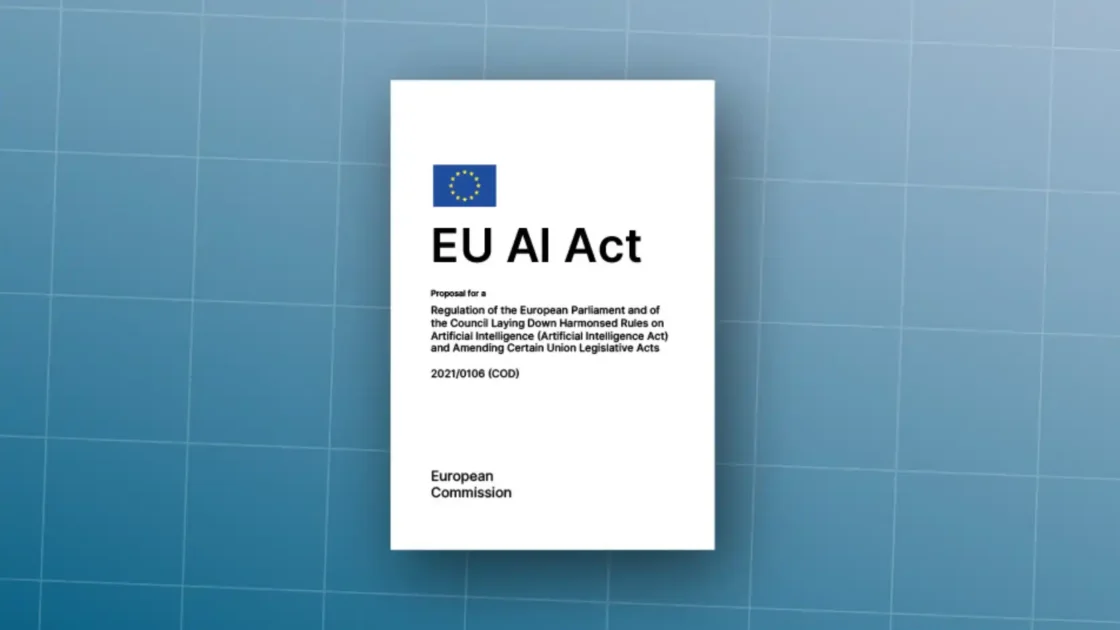
Europe’s AI Act does not solve the content-abundance problem, but its transparency requirements point in a productive direction. The European Commission’s Code of Practice on Transparency of AI-Generated Content, published on June 10, 2026, describes Article 50 obligations that apply from August 2, 2026. The code addresses machine-readable marking and detection of AI-generated or manipulated output, deepfake labelling, and disclosures for certain AI-generated text publications on matters of public interest.
The detail matters. The Commission’s explanation distinguishes between providers, who are expected to ensure outputs are marked in machine-readable ways where technically feasible, and deployers, who may need to disclose deepfakes and certain public-interest text publications. It also identifies an exception for text that has undergone human review and is subject to editorial responsibility. That exception is not a loophole. It recognises that human editorial control changes the accountability structure.
This is a better direction than demanding that every sentence touched by AI carry a flashing warning. A person who uses a grammar assistant to improve a hospital notice is not creating a deceptive synthetic publication. A newsroom that uses AI to transcribe an interview but verifies, edits, and accepts editorial responsibility is not equivalent to an anonymous site generating political “news” at industrial scale. Context matters.
The challenge will be implementation. Machine-readable marks work only if platforms preserve them, interfaces display them meaningfully, users understand them, and bad actors cannot remove them cheaply. Disclosure rules work only if enforcement is credible and if they do not impose excessive burdens on small organisations acting in good faith while large anonymous networks evade them.
Still, the EU model identifies the right principle: public-interest information deserves a higher transparency standard when it is synthetic or manipulated. A reader evaluating a political claim, health claim, market alert, or local emergency notice has a legitimate interest in knowing whether it passed through accountable human review.
The regulation will also influence global practice. Platforms serving Europe may build provenance and labelling systems that spread elsewhere. Creators and publishers may adopt disclosures as a standard feature. Technical systems such as Content Credentials may gain wider relevance. The result will not be perfect certainty. It may, however, restore some of the information that disappeared when creation became frictionless: where an item came from, what changed, and who stands behind it.
Provenance is more promising than retrospective guessing
The most durable answer to synthetic-content uncertainty is not a magical detector. It is provenance: a record that travels with a file and tells a recipient something about origin, edits, and identity. That record must be cryptographically protected, interoperable, understandable, and resilient enough to survive ordinary use.
The Coalition for Content Provenance and Authenticity, known as C2PA, develops technical standards for certifying the source and history of digital media. Its specifications cover Content Credentials, attestations, security considerations, user experience guidance, and material related to AI and machine learning. The goal is not to declare an item “true.” It is to provide verifiable information about its origin and handling.
That distinction is crucial. A provenance record may show that an image came from a known camera, was edited in a named tool, and was signed by a publisher. It does not prove the image depicts what a caption says it depicts. A credible source can still be mistaken. A fraudulent source can attach metadata that reveals it is fraudulent only if the receiving system checks identity properly. Provenance is evidence, not truth.
Even so, it is far better than the current default, where a file can circulate without any reliable record of where it came from. A reader confronted with a viral clip, a song, a press release, a product image, or a legal document should not be forced to guess based on style. The file should provide a path back to an accountable origin when possible.
OpenAI has described C2PA metadata as an important foundation for provenance while acknowledging that metadata can be stripped, lost during uploads and downloads, or broken by transformations such as resizing and screenshots. That limitation matters. Provenance must be paired with platform preservation, user-interface design, watermarking where suitable, identity verification, and social norms that value source records.
For text, the challenge is harder. Copying and pasting strips most provenance. A document may be rewritten through several tools. A claim may be derived from an original report but circulated without attribution. That is why text provenance will depend less on a hidden watermark and more on visible editorial practices: citations, source links, author identities, change logs, disclosures, and institutional accountability.
The goal is not a world in which every item has a perfect birth certificate. It is a world in which trustworthy items are easier to identify than anonymous imitations.
Labels work only when they change a decision
A label is useful when it changes what a person or system can do next. A label that sits in fine print under a song, book, image, or article may satisfy a rule while leaving distribution untouched. A better label affects recommendation eligibility, advertising access, payment treatment, search ranking, user controls, and reporting routes.
Deezer’s approach shows the difference. It does not merely tag AI-generated tracks. It says identified fully AI-generated songs are excluded from its Flow feature, recommendations, and editorial playlists. It says fraudulent streams are removed from royalty calculations. That gives provenance a commercial consequence.
Book marketplaces could do something similar without banning legitimate AI-assisted publishing. A customer could choose to include, exclude, or separately browse fully AI-generated titles. Search could prioritise works with verified publisher identity, clear editorial information, meaningful reviews, and a history of low return rates. The ranking system could downweight networks that upload near-duplicate titles, use misleading cover designs, or exploit unrelated keywords.
App stores could use labels to inform about developer identity, generation process where relevant, security review, support status, data practices, and maintenance history. A user deciding whether to install a finance app has different needs from a user downloading a novelty game. The first needs stronger signals of accountability.
Academic journals could turn AI disclosures into structured metadata rather than a vague sentence buried in acknowledgments. A reader could see whether AI was used for language editing, translation, code generation, data analysis, figure generation, or peer-review support. The purpose is not to stigmatise researchers. It is to give editors and readers enough context to evaluate the work.
Labels may also produce unintended effects. A blunt label can create a stigma that discourages legitimate accessibility or translation support. It can lead readers to assume “human-made” means verified, while humans also make errors and commit fraud. It can be gamed by people who falsely claim no AI use. A label must therefore be tied to verified process where possible, and it should describe facts rather than pass a moral verdict.
The useful question is not “Should this contain an AI label?” The useful question is “What relevant information does the buyer, reader, listener, judge, editor, or user need to make a sound decision?” The answer will differ by context.
The false promise of a single authenticity score
The content flood creates demand for a simple score: a number that tells us whether something is human, trustworthy, original, or safe. That number is tempting because it looks scalable. It is also dangerous because it compresses different questions into one vague judgment.
A human-written article may be false. A machine-assisted article may be accurate and carefully sourced. A synthetic image may be harmless art. An authentic photograph may be misleadingly captioned. A generated song may be disclosed and lawful. A human-recorded song may be fraudulently streamed. A codebase may have been written by an agent and thoroughly reviewed. A human-built app may be insecure.
Authenticity is not a single property. It includes origin, identity, permission, accuracy, authorship, intent, and context. A system that gives a single “AI probability” or “trust score” risks hiding this complexity behind an authoritative interface. Users may over-rely on it. Platforms may use it to make opaque decisions. Creators may be penalised without meaningful appeal.
A better system offers separate signals. Origin: where did this file come from? Identity: who published it? Process: was it generated, edited, or reviewed by AI? Rights: is there a credible claim of permission? Evidence: what sources support the factual claims? Behaviour: is the account or track associated with fraud or spam? Reputation: does the publisher have a record of correction and accountability?
This approach is less elegant than one score. It is more honest. It allows a user to see why an item is being labelled or downranked. It gives creators a chance to correct a mistake. It lets regulators focus on specific harms rather than trying to regulate “AI content” as a single class.
The same principle applies to automated moderation. A platform may use a detector to flag an item, but a decision with serious consequences should include context. Was the material marked at source? Does the publisher have verified identity? Is there evidence of impersonation? Are the cited sources real? Is there a complaint from a rights holder? Is the account part of a coordinated spam network? The right system does not ask software to settle every question. It uses software to direct scarce human judgment where it matters most.
Creators will compete on proof of work and proof of responsibility
The most valuable creators in an abundant-content economy may be those who can show not merely that they made something, but that they know something, experienced something, verified something, or stand behind something. This is not romantic nostalgia for a pre-digital era. It is a commercial response to a damaged information market.
A novelist may differentiate through a recognisable voice, a long relationship with readers, public readings, an editorial history, and a body of work that cannot be reproduced by a single prompt. A nonfiction writer may differentiate through original reporting, primary documents, professional expertise, field research, and transparent corrections. A musician may differentiate through performance, community, live events, identifiable collaboration, and an artistic identity grounded in consent. A developer may differentiate through reliability, support, security, and a product that solves a real operational problem. A researcher may differentiate through data, methods, reproducibility, and intellectual responsibility.
This does not mean “human-made” becomes a luxury badge in every market. Many buyers will continue to choose cheap, functional, generic content because it meets a low-stakes need. That is rational. The point is that high-trust markets will price in accountability. A person choosing a bedtime ambient playlist may not care who made each track. A person reading a medical guide, hiring legal help, installing a banking app, or relying on a policy report should care a great deal.
Creators should therefore treat transparency as part of product design. They should document process where it adds value. They should disclose material use of AI rather than wait to be exposed. They should protect their name, maintain clear public identities, keep records of drafts and sources, and build channels that are not dependent on opaque platform rankings.
There is also an opportunity for new intermediaries. Human editors, domain experts, curators, librarians, reviewers, and specialist communities may become more valuable because they reduce search costs. The old gatekeepers were often exclusionary. The next generation should be more open, transparent, and accountable. But the basic service—helping people decide what deserves attention—will become more valuable, not less.
The synthetic-content era does not make human judgment obsolete. It makes human judgment easier to recognise as a scarce product.
Platforms have to choose which behaviour they subsidise
Every platform makes an editorial choice, even when it claims neutrality. A search engine ranks. An app store approves or rejects. A streaming service recommends. A book marketplace surfaces products. A social network amplifies some posts and buries others. A court filing system sets procedural barriers. These choices shape the economics of content.
If a platform rewards upload volume, keyword coverage, cheap advertising, and raw engagement, it will attract operators who are good at producing volume. If it rewards verified identity, reader satisfaction, originality, sustained maintenance, accurate disclosure, and low abuse rates, it will attract different behaviour. The technology does not decide this by itself. Business models and ranking systems do.
Google’s policy against scaled content abuse is an explicit statement of that choice. It says creating large quantities of unoriginal content with little user value, including through generative AI, may violate policy. The rule is useful because it targets the incentive rather than the tool. A company that mass-produces hollow pages should not be rewarded simply because the pages are grammatically fluent.
The same logic should apply elsewhere. A music platform should not treat a stream from a coordinated bot network as equal to a stream from a listener. A book marketplace should not treat a network of near-duplicate generated titles as equal to a carefully edited work with credible publisher information. An app store should not treat an unmaintained clone as equal to software with clear support, privacy, and security commitments. A journal should not treat a polished but unverifiable manuscript as equal to a reproducible study.
The difficulty is that platforms also have an incentive to maximise catalog size, uploads, engagement, and transaction volume. Cheap content is attractive because it produces activity. Strong filtering costs money and may reduce inventory. Yet the long-term risk is larger. A platform that becomes known for useless search results, misleading books, fake tracks, broken apps, or unreliable advice loses the trust that makes its market function.
The winning platforms will probably not be the most restrictive. They will be the ones that make trust visible and abuse unprofitable. That may include rate limits, verification tiers, structured disclosures, stronger provenance handling, duplicate detection, independent audits, user controls, transparent appeals, and financial penalties for fraud.
The decisive business question is not whether a platform permits AI-generated content. It is whether its systems reward content that gives users a reason to return.
Public institutions need better tools, not more paperwork
Courts, regulators, libraries, universities, public broadcasters, schools, and government agencies face a distinct challenge. They cannot simply outsource judgment to private platforms, yet they often lack the technical staff and budgets needed to respond at the pace of generative AI.
The wrong response is to create vague prohibitions that staff cannot enforce. A university rule that says “AI use is forbidden” will be ignored, misapplied, or selectively enforced. A public agency rule that says “do not use AI” may prevent staff from using benign tools for accessibility or translation while failing to prevent an anonymous person from submitting synthetic material. A court warning about hallucinations may be necessary but does not give a self-represented litigant a safe alternative.
Public institutions need use-case rules. A school may permit grammar support but prohibit undisclosed AI generation in an assessment designed to measure individual writing. A university may allow AI for coding assistance but require disclosure and reproducibility for computational research. A court may provide structured legal-information tools while warning that the tool does not substitute for advice. A public agency may use AI to translate service information but require human review for legal notices, emergency communication, or public-interest claims.
They also need procurement standards. Public bodies buying AI systems should ask whether outputs are traceable, whether the provider has procedures for errors, what data is used, whether provenance is preserved, how people can appeal automated judgments, and who is liable when the system fails. “It uses AI” is not a specification.
Libraries deserve particular attention. They are among the few institutions designed to help people navigate abundance without selling them a product. A modern library can teach source evaluation, offer access to verified databases, support local creators, provide legal-information pathways, preserve local records, and help communities understand provenance. As the web becomes noisier, public literacy work becomes infrastructure.
The aim is to give people the benefits of assistive technology without asking them to become forensic analysts. A democratic information environment depends on institutions that make reliable routes easier to use than unreliable ones.
Business leaders should treat content abundance as a governance risk
For companies, the immediate temptation is obvious: use generative AI to make more marketing pages, sales emails, product descriptions, help articles, social posts, code, reports, and internal documents. The tools can reduce costs. They can also create a long tail of liabilities.
A mass-produced content strategy may damage search visibility if it crosses into scaled abuse. It may create legal exposure if product claims are inaccurate, copied, or deceptive. It may weaken customer support if generated answers sound confident but do not resolve real problems. It may make a brand look generic, especially if competitors use the same systems and prompts. It may create accessibility, privacy, or security problems in software. It may confuse employees about what is official.
The basic discipline is to identify where volume is safe and where judgment is required. Internal brainstorming, translation drafts, meeting summaries, low-risk variations of approved copy, code scaffolding, and document classification may be appropriate uses with controls. Public claims, regulated communication, legal terms, health content, financial guidance, product specifications, crisis messaging, and customer decisions need stronger review.
A useful corporate rule is: automation may draft; accountable people approve claims, commitments, and consequences. That rule should be operational, not decorative. It means clear owners, records of source material, defined review thresholds, approved tools, retention policies, and escalation paths when a model produces uncertain output.
Brands should also consider the customer’s perspective. A customer does not necessarily resent AI-assisted service. They resent being misled, trapped in a useless loop, or given inaccurate information with false confidence. Transparency works best when it is direct: explain when a response is automated, give access to a human for important issues, identify sources where the stakes are high, and correct errors visibly.
The companies that benefit most from AI will not be those that publish the largest pile of material. They will be those that use automation to remove routine labour while protecting the parts of their work that require expertise, accountability, and trust.
The human-review exception needs real meaning
Many emerging rules exempt material that has undergone human review or carries editorial responsibility. That makes sense only if “human review” means more than pressing approve after a model finishes writing. A token reviewer adds little value. A responsible reviewer changes the accountability chain.
Meaningful review depends on context. For a book, it may mean a qualified editor has checked factual claims, coherence, rights, plagiarism risk, and customer description. For a legal document, it may mean a lawyer or official self-help system has checked jurisdiction, legal authority, facts, and procedural requirements. For a research paper, it may mean the authors have verified citations, data, methods, figures, and conclusions. For an app, it may mean testing, security review, privacy checks, and ownership of maintenance. For music, it may mean verified identity, rights clearance, consent, and valid streaming behaviour.
The cost matters. Good review is expensive, and platforms will look for shortcuts. But that cost is the price of a trustworthy market. If a platform lets unlimited synthetic material enter while expecting unpaid users to review it, it has externalised the cost. If a court lets generated filings pile up without providing safe guidance, it has shifted risk to judges and opponents. If a journal accepts more submissions without strengthening review, it has shifted the cost to already overworked researchers.
There are opportunities to use AI inside the review process. Models may identify duplicate passages, check formatting, flag missing disclosures, compare references, detect image manipulation patterns, or prioritise material for human attention. They should not be treated as final arbiters where the result affects rights, livelihoods, or reputations. A model can sort; a person needs to decide.
The EU’s Article 50 discussion is useful here because it connects the human-review concept to editorial responsibility for public-interest text. The point is not to certify every word as human. The point is to ensure that somebody identifiable accepts responsibility for the publication.
The content economy will stabilise when responsibility follows distribution. Whoever gains from publishing at scale must carry a proportionate share of the cost of review.
Readers, listeners, and users cannot carry the whole burden
Media-literacy advice often tells people to check sources, look for labels, inspect URLs, compare reports, and be sceptical. That advice is sensible. It is also insufficient when content is produced at industrial scale and distributed through interfaces designed for speed.
A person should not need forensic training to find a reliable health answer, avoid a fake book, recognise a cloned voice, assess a legal template, or know whether a finance app is safe. Personal caution matters, but it cannot replace platform responsibility, institutional standards, or law enforcement.
Still, people can adopt a few useful habits. Treat unusually cheap, overly generic, or poorly sourced products with care. Look for identifiable creators and publishers. Check whether a factual article links to primary material. Avoid relying on a single generated legal or medical answer. Be wary of urgency, emotional manipulation, and claims that lack a traceable source. For music and images, consider whether the platform offers labels or provenance information. For apps, inspect the developer, permissions, privacy policy, support record, and recent updates.
The more important change is cultural. Readers and listeners need to value correction, attribution, and uncertainty. A source that says “we do not know yet” may be more trustworthy than one that offers a smooth answer immediately. A creator who discloses using AI may be more reliable than one who pretends every output emerged from a private act of genius. A platform that shows the limits of a detector may be more credible than one that claims certainty.
The synthetic-content era rewards confidence because confidence is easy to generate. Human users should learn to distinguish confidence from evidence. That is a demanding task, which is why the burden cannot rest on users alone. The design of products, ranking systems, labels, and public services must make the reliable choice easier.
A more selective internet is the likely destination
The web’s first era was defined by scarcity of publishing access. The next era may be defined by scarcity of trusted attention. That will create pressure for stronger filters everywhere: curated search, paid newsletters, verified creator tiers, expert communities, provenance badges, specialist databases, authenticated feeds, private groups, and platforms that limit supply rather than celebrate it.
This could produce an internet that is more stratified. People with money may subscribe to high-trust sources, while everyone else gets a free layer crowded with synthetic material and advertising. That would be a serious social problem. Reliable information should not become a luxury product.
The answer is not to restore old gatekeepers wholesale. Many deserved criticism. The answer is to build public and commercial systems that make quality signals broadly available. Libraries, public-interest media, open research repositories, trusted local institutions, interoperable provenance standards, strong consumer protection, and transparent platform rules all have a role.
We should also expect new forms of curation. Human recommendation will matter more in some categories because it is expensive to fake over time. A respected reviewer, subject expert, music programmer, community moderator, or editor does not solve every problem, but they offer a traceable basis for attention. Their reputation becomes part of the filter.
Search will remain important, but it may become less like a neutral catalogue and more like a chain of trusted routes. Users may prefer systems that explain where an answer came from and let them inspect the original. That creates a commercial opportunity for products that treat provenance and evidence as user features rather than compliance burdens.
The abundance of content does not require a smaller internet. It requires a more legible one.
The next contest will be over accountable distribution
The biggest battle will not be between human creators and machines. It will be between accountable distribution and extractive distribution. Accountable systems make origin, review, rights, and incentives visible. Extractive systems exploit cheap production, anonymous identity, weak moderation, and opaque ranking to collect money or attention before anyone can inspect the material.
That distinction should guide regulation. Legislators should focus on deception, fraud, impersonation, rights violations, harmful automated decisions, and failures of disclosure in high-stakes contexts. They should avoid rules that punish benign assistance or prevent useful accessibility tools. Rules should require meaningful records and consequences for actors who profit from scale without taking responsibility for harm.
It should guide platforms. They should invest in identity, provenance preservation, abuse detection, financial controls, and user-facing context. They should create appeals for creators wrongly flagged by automated systems. They should show researchers enough information to assess whether interventions work. They should stop pretending that more uploads always equal more value.
It should guide creators. They should build relationships, maintain evidence of process, disclose relevant AI use, protect their names, and focus on work that carries judgment rather than empty volume.
It should guide audiences. They should reward sources that show their work and resist the false comfort of polished certainty.
The content machine has indeed hit turbo mode. The question is whether the institutions that distribute knowledge, culture, software, and legal claims will remain on foot. The web does not need fewer ways to create. It needs better reasons to trust what creation leaves behind.
Questions readers are already asking about the AI content flood
No. Quality depends on the task, the source material, human direction, verification, and whether the output serves a real need. The problem is that cheap production makes it easier to produce large amounts of weak or deceptive material alongside useful work.
The cited NBER research reports a major rise in English-language Amazon e-book releases, from roughly 100,000 per month before ChatGPT to around 300,000 by late 2025. That measures releases in the study’s dataset, not reader value or every book published worldwide.
Amazon requires KDP publishers to disclose AI-generated text, images, and translations to Amazon. Its public policy does not mean every buyer receives a prominent consumer-facing label for that disclosure.
The current research is early and context-specific. A rise in self-represented filings does not establish that AI-written cases are equally strong, nor does it show that AI was the decisive factor in their outcomes.
It may improve access by helping people understand forms, organise facts, and identify questions to ask. It becomes dangerous when users treat it as a substitute for legal advice or fail to verify legal authority and procedural requirements.
Invented facts or citations. A filing can look formal and persuasive while relying on non-existent cases, wrong rules, or unsupported allegations. The person submitting it remains responsible.
No. More papers may reflect more researchers, more tools, stronger incentives, or lower drafting costs. Scientific progress depends on methods, data, replication, and review, not publication volume alone.
No. Detection is probabilistic evidence. It can support review but should not be treated as conclusive proof of authorship or misconduct without additional evidence.
Policies differ, but major guidance from ICMJE says authors should disclose AI-assisted technologies used in the work and remain responsible for accuracy, originality, and attribution.
No. They reduce the cost of drafting and modifying code, but they do not remove responsibility for security, reliability, privacy, maintenance, user needs, and product judgment.
The reported threshold appears to come from commercial market tracking, not a public Apple audit. Apple has confirmed expanded agentic coding capability in Xcode 27, which supports the broader direction of faster development.
Deezer says it was receiving more than 75,000 fully AI-generated tracks per day as of April 2026, representing more than 44% of its daily uploads. That figure is specific to Deezer and its detection system.
Often not, particularly in casual listening settings. That is why labelling, provenance, identity verification, and fraud controls matter more than asking every listener to make a technical judgment by ear.
Cheap generation makes it possible to create large catalogues of tracks that can be paired with artificial streaming activity. If fraud reaches a shared royalty pool, it can divert money away from legitimate artists.
Provenance is information about where a digital item came from, how it was created or edited, and who signed or published it. It is evidence about origin, not a guarantee that every claim is true.
Content Credentials are a provenance approach associated with C2PA technical standards. They are meant to preserve verifiable information about a piece of media’s source and history.
The EU’s Article 50 transparency rules are due to apply from August 2, 2026. They address machine-readable marking, deepfake labelling, and certain public-interest text publications, with context-dependent obligations.
No. Google’s policy focuses on scaled content abuse: producing many pages primarily to manipulate rankings without giving users value. The concern is abusive, low-value scale rather than AI use alone.
Set review thresholds, define accountable owners, verify factual and legal claims, keep source records, use approved tools, disclose material automation where users need to know, and avoid publishing volume that does not offer a real user benefit.
Author:
Jan Bielik
CEO & Founder of Webiano Digital & Marketing Agency
This article is an original analysis supported by the sources cited below
Did AI write this article?
The Economist’s June 2026 overview of generative AI’s effect on books, lawsuits, academic papers, apps, and music.
Have LLMs boosted creation of valuable books?
National Bureau of Economic Research working paper analysing the post-ChatGPT rise in English-language e-books offered on Amazon.
Artificial access to justice: AI and the surge in pro se litigation
Working paper examining growth in self-represented federal civil litigation and the relationship with generative AI.
No lawyer? No money? More Americans are suing with AI help
Reuters reporting on self-represented litigants, federal court filings, and the practical use of AI drafting tools.
Is GenAI revolutionizing court filings?
National Center for State Courts brief on generative AI and civil-case filing pressures.
Content guidelines
Amazon Kindle Direct Publishing policy defining AI-generated and AI-assisted content and publisher responsibilities.
ChatGPT launches boom in AI-written e-books on Amazon
Reuters report on the early growth of AI-generated e-books and Amazon’s response.
AI-generated music label and artist protection
Deezer’s disclosure of detected AI-music upload volume, labelling, recommendation policy, and fraud controls.
Apple accelerates app development with new intelligence frameworks and advanced tools
Apple’s June 2026 announcement on Xcode 27, agentic coding, testing, and model integrations.
Spam policies for Google Web Search
Google’s formal rules on scaled content abuse, scraping, and other ranking-manipulation practices.
Google Search’s guidance on using generative AI content
Google guidance on using generative tools without creating low-value content at scale.
Google’s guide to optimizing for generative AI features on Search
Google documentation explaining why mass pages built to manipulate AI search responses are ineffective and potentially abusive.
Defining the role of authors and contributors
ICMJE guidance on AI disclosure, authorship, human responsibility, accuracy, and attribution in medical publishing.
Authorship and AI tools
COPE position statement explaining why AI tools cannot take authorship responsibility.
Academic journals’ AI policies fail to curb the surge in AI-assisted academic writing
Large-scale preprint examining journal AI policies, disclosure, and AI-assisted scholarly writing.
AI-assisted writing is growing fastest among non-English-speaking and less established scientists
Study of AI-assisted scientific writing, language barriers, early-career researchers, and publication productivity.
Detecting AI-generated content in academic peer reviews
Research on AI-assisted peer-review patterns and implications for scholarly evaluation.
Copyright and artificial intelligence
US Copyright Office portal covering its reports on digital replicas, copyrightability, and AI training.
Copyright and artificial intelligence Part 2: Copyrightability
US Copyright Office analysis of human authorship and copyrightability in works containing generative AI material.
Copyright and artificial intelligence Part 3: Generative AI training
US Copyright Office pre-publication analysis of training on copyrighted works and related policy questions.
Code of practice on transparency of AI-generated content
European Commission material on Article 50 transparency obligations, labelling, detection, and public-interest text.
Regulation (EU) 2024/1689
The EU Artificial Intelligence Act, including the legal basis for transparency obligations.
C2PA specifications
Technical standards for Content Credentials and digital-media provenance.
C2PA and SynthID in OpenAI-generated images
Official explainer on C2PA provenance metadata and its limits in preserving information about image origin.
Advancing content provenance for a safer, more transparent internet
OpenAI discussion of provenance, C2PA metadata, and the limits of metadata once content is transformed or redistributed.
Partnering with Axios expands OpenAI’s work with the news industry
OpenAI announcement about an Axios partnership and local-news support.
OpenAI and Guardian Media Group launch content partnership
OpenAI announcement on a content partnership with Guardian Media Group.
| Citing this article? Brief excerpts are welcome. Please credit Webiano.digital, name the author where stated, and include a link to https://webiano.digital and to this original article. Full or substantial republication requires prior written permission. Read our Copyright and Content Use Policy. |
This article was prepared with the assistance of artificial intelligence tools. The content underwent expert human review, and Webiano Digital & Marketing Agency assumes editorial responsibility for its final version and publication.