On 23 December 2025, the Japanese cabinet approved a document called the Artificial Intelligence Basic Plan, carrying the subtitle “Japan’s resurgence through trustworthy AI.” That single decision did more to shape the country’s AI coverage than any product launch, model release, or corporate announcement of the past year. It mattered because it was the first AI plan in Japan with legal standing rather than the status of an advisory memo. The plan is a statutory instrument required by the Artificial Intelligence Promotion Act, the law passed in May 2025, and it commits the government to a posture that earlier AI strategies only suggested.
Table of Contents
The plan that reset Japan’s AI debate
The contrast with what came before is the part Japanese commentators keep returning to. Japan had AI strategies going back years, including the AI Strategy 2022 produced by an interministerial council. Those were guidance for the bureaucracy. They did not bind anyone, did not carry a budget line that ministries had to defend, and did not require annual revision. The new plan does all three. It is reviewed every year, it sits on top of a roughly ¥1 trillion near-term spending commitment, and it sets a stated national goal that government departments are now expected to organize around. Coverage in business and policy outlets framed it less as a wish list and more as the start of an execution phase, with 2026 repeatedly described as the year the plan stops being words on paper.
The structure is worth knowing because almost every later argument refers back to it. The plan is built around three principles and four basic directions. The three principles balance the promotion of innovation against the management of risk, insist on a human-centered approach, and treat AI as foundational infrastructure rather than a productivity gadget. The four directions are usually summarized as using AI, building AI, raising its trustworthiness, and cooperating internationally. None of this is radical on its own. What gives it weight is that a prime-minister-led AI Strategy Headquarters now owns the implementation, and ministries from health to economy to digital affairs have been assigned concrete tasks under it.
The timing also tells you something about why AI dominates Japanese policy writing right now. The plan was decided during a period of unusual political turnover. The AI Strategy Headquarters held its first meeting in September 2025 under one administration, and by the time the plan was finalized at the end of the year the government had changed hands, with Takaichi Sanae taking office. The second Takaichi cabinet formed in February 2026 after a general election. Through all of that, the AI plan survived intact, which Japanese analysts read as a sign that AI policy has moved beyond partisan contest into the category of settled national priorities. A change of government did not produce a change of AI direction, and that continuity is itself a story.
For readers trying to understand what Japan writes most about, the plan functions as a hub. Stories about domestic language models cite it as the reason public money is flowing to model developers. Stories about copyright cite it when arguing that the country wants permissive rules to attract AI activity. Stories about the labor shortage cite it because the plan explicitly frames AI as a response to demographic decline. Stories about data centers cite it because the infrastructure ambitions in the plan run straight into electricity constraints. The plan is not the most exciting AI subject in Japan, but it is the one that organizes the rest. A great deal of what looks like scattered AI news turns out to be different ministries and companies acting on the same blueprint, and that blueprint is the Basic Plan.
What the plan does not do is also part of the conversation. It sets direction without imposing hard obligations on private firms, which leaves a gap that other writing tries to fill. The plan tells the country where it wants to go. It says far less about what happens to a company or an individual who gets there in the wrong way. That tension between ambition and enforcement runs through nearly every serious AI discussion in Japan today.
A promotion law with no punishments and what that signals
The law underneath the plan deserves its own attention because its design choices are debated as much as its content. The Artificial Intelligence Promotion Act, often shortened in Japanese coverage to the AI Act or the AI New Law, took effect in 2025 with a deliberately light touch. It is a framework law. It sets out principles, establishes the AI Strategy Headquarters, and requires the Basic Plan, but it carries no penalties for private actors. A company that misuses AI does not face a fine under this statute, because the statute was not written to punish.
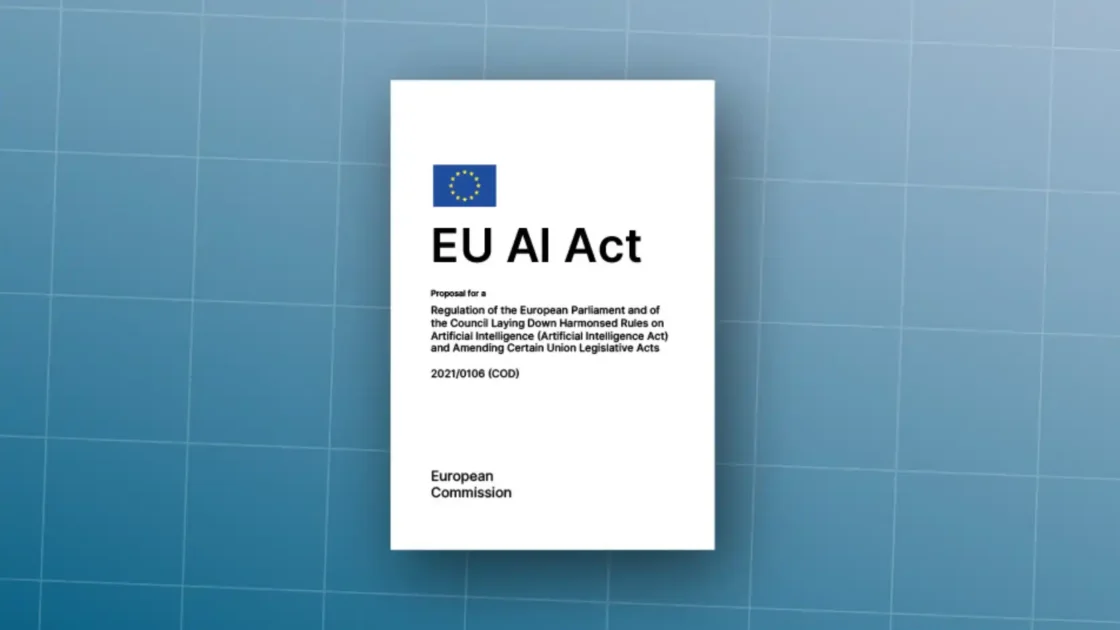
That is a sharp departure from the regulatory instinct on display in Europe, and Japanese legal writers make the comparison constantly. The European Union’s AI Act classifies systems by risk, imposes transparency duties, and threatens penalties that can reach tens of millions of euros or a percentage of global turnover. Japan chose the opposite reflex. Rather than build a cage and then invite innovation inside it, the government built a runway and trusted existing law to handle the crashes. Defamation, obscenity statutes, the copyright code, unfair competition rules, and privacy law remain the tools of first resort when AI is misused. The new law sits above them as a statement of intent, not as a new enforcement regime.
Supporters of this approach argue it fits both the technology and the country. AI changes faster than legislatures can rewrite statutes, so binding rules risk being obsolete the moment they pass. A principles-based law can adapt through guidance and revised plans without the friction of new legislation each cycle. For a country worried about falling behind in AI development, a permissive legal environment is itself a competitive instrument. The government is, in effect, advertising predictability and freedom from heavy compliance as reasons to build AI in Japan.
Critics see the same design and reach a less comfortable conclusion. A law without teeth can struggle when the harm is real and the existing statutes fit awkwardly. The clearest example is synthetic media. Japan has no dedicated law against malicious deepfakes, so prosecutors stretch defamation and obscenity provisions to cover conduct those provisions were not written for. When a victim’s likeness is convincingly faked, the legal question becomes whether old categories can absorb a new kind of harm, and the answer is often that they can only do so imperfectly. The promotion law does not help here, because helping was never its job.
The signal the law sends, then, is twofold. To developers and investors, it says Japan wants the activity and will not smother it with obligations. To everyone worried about the downside, it says the country is betting that flexibility and existing law are enough, at least for now. That bet is the quiet premise behind a large share of Japanese AI writing. Articles that celebrate domestic model development and articles that warn about fraud and disinformation are arguing, underneath the surface, about whether the bet is sound. The law’s refusal to punish is not an oversight. It is a choice, and the country is still deciding whether it was the right one.
The plan and the law together also reframe what counts as an AI story in Japan. Because the state has committed money and a legal structure, AI is no longer covered mainly as consumer technology or Silicon Valley spectacle. It is covered as industrial policy, as economic security, and as a test of whether a soft-law model can hold. That framing is distinctive. Much of the world writes about AI as something happening to them from California. Japan increasingly writes about AI as something it is trying to steer.
The road from advisory strategy to statutory commitment
The Basic Plan did not appear from nowhere, and understanding how Japan arrived at it explains why the country now writes about AI as national strategy rather than imported novelty. Japan spent years treating AI policy as a matter of guidance and aspiration before deciding, in the face of the generative-AI wave, that aspiration was no longer enough, and that shift from soft strategy to statutory commitment is the backstory to everything happening now.
For most of the past decade, Japanese AI policy lived in interministerial strategies that set direction without binding anyone. There was an AI strategy that named principles and priorities, revised over successive years, produced by councils that coordinated across ministries. These documents were serious in intent but limited in force. They could not compel a ministry to act, did not carry dedicated budgets that departments had to defend, and could be revised or ignored without legal consequence. They reflected a period when AI felt important but not urgent, a technology to prepare for rather than a force already reshaping the economy.
The release of powerful generative tools changed the calculus, and the change in Japanese policy writing from that point is unmistakable. Suddenly AI was not a future to plan for but a present that domestic firms were adopting from foreign providers, that creators were objecting to, that raised immediate questions about copyright, fraud, and dependency. The advisory approach looked inadequate to a moment that demanded commitment. The response was to put AI policy on a legal footing, which is what the Artificial Intelligence Promotion Act did in 2025: it created the AI Strategy Headquarters under the prime minister, required the Basic Plan as a statutory product, and signaled that AI had graduated from coordination exercise to national priority with the force of law behind it.
The progression matters because it explains the seriousness of tone in the current coverage. When AI policy was advisory, AI writing could treat government strategy as background. Once policy became statutory, with a headquarters, a budget commitment, and required annual revision, government strategy became a driver of real money and real ministerial action, and the writing followed. The plan’s framing of AI as foundational infrastructure rather than a productivity tool is itself a marker of this maturation, a recognition that the technology belongs in the same category as energy and transport rather than in the category of office software.
The historical arc also clarifies what is genuinely new. Japan had ambition before; what it lacked was commitment with teeth on the promotion side, even as it deliberately declined teeth on the enforcement side. The new framework supplies the former, a legal obligation to plan, fund, and coordinate, while withholding the latter, declining to punish private misuse. That asymmetry, hard commitment to promote AI paired with soft treatment of its harms, is the defining shape of the current approach, and it grew directly out of the decision that the generative-AI moment required statutory seriousness about building AI without statutory severity about controlling it.
There is continuity beneath the change that the careful coverage notes. The human-centered principle that appears in the new documents traces back to earlier Japanese articulations of AI ethics, and the emphasis on balancing innovation with risk echoes the earlier strategies even as the new framework gives it legal form. Japan did not lurch in a new direction so much as harden an existing one, converting years of advisory thinking into binding structure when the moment demanded it. That is why the approach feels coherent rather than reactive: it is the culmination of a decade of preparation meeting the urgency of a technology that finally arrived in force.
Trust as the organizing idea behind every policy document
Read enough Japanese AI material and one word appears so often it stops registering as a choice. Trustworthy. The Basic Plan’s subtitle promises Japan’s resurgence through trustworthy AI. The education guidelines invoke a human-centered principle. The corporate guidance from economy and communications ministries circles the same idea. Trust is not a slogan dropped into these documents for warmth. It is the strategic concept the country has selected as its differentiator.
The logic runs like this. Japan accepts that it will not out-spend the United States on raw compute, and it will not match the scale of American or Chinese model labs. Trying to win the brute-force race would be a losing proposition for a country with limited energy, a smaller pool of frontier researchers, and no domestic equivalent of the hyperscale cloud giants. So Japanese strategy looks for a different axis of competition. If models everywhere are becoming capable, the open question shifts from capability to reliability. Can an AI system be trusted with a hospital’s data, a bank’s compliance workflow, a government office’s documents, a factory’s safety margins? Japan is positioning itself to answer yes more convincingly than rivals, and to sell that answer.
This is why so much domestic coverage dwells on themes that sound dull next to a flashy model demo. Hallucination rates. Data governance. On-premises deployment so sensitive information never leaves the building. Audit logs and human checkpoints. Sector-specific evaluation of safety and accuracy. These are the texture of trustworthy AI, and they map directly onto industries where Japan has real strength and real anxiety: finance, healthcare, public administration, manufacturing. The trust framing lets Japan compete where its existing institutional discipline is an asset rather than a handicap.
There is also a defensive reading. Japanese society is, by survey after survey, more cautious about AI than American society. Concern about misinformation, job loss, and loss of control runs high. A government that wants rapid adoption in a wary population has to lower the temperature, and “trustworthy AI” is the phrase that does it. The education guidelines make this explicit, telling teachers not to frame AI and humans as opponents and not to be more anxious than the situation warrants. The state is managing public sentiment as much as it is setting technical standards.
The risk in leaning so hard on trust is that the word can become decorative. A plan can call for trustworthy AI without specifying what makes a system trustworthy, who certifies it, and what happens when a trusted system fails. Japanese commentators have started to press on exactly this point. A principle that everyone endorses and no one is forced to meet can drift into branding. The more rigorous writing tries to convert the abstraction into something testable, which is partly why the government’s own model-evaluation environment and the sector-specific assurance work by domestic vendors get so much coverage. They are attempts to give the word content.
For now, trust is the thread that ties Japan’s AI story together. It explains why the country built a soft law rather than a punitive one, why it funds domestic models obsessed with security over scale, why it frames AI as infrastructure to be governed rather than a craze to be ridden. Whether the strategy works will depend on whether trustworthy turns out to be a market advantage or merely a comforting adjective. The country has placed its chips on the former.
The slogan about the world’s most AI-friendly country
If trust is the means, the stated end has its own memorable phrasing. Japan says it wants to become the world’s most AI-friendly country to develop and use AI. The line appears in the Basic Plan and is repeated everywhere downstream, and it is doing more rhetorical work than a casual reader might assume. The phrase pairs development and use deliberately, signaling that Japan does not intend to be merely a consumer of foreign AI but a place where AI is built.
The ambition is a response to an uncomfortable diagnosis. Through the first wave of generative AI, Japan was largely a downstream market. The dominant tools were American. The dominant models were trained abroad. Japanese firms adopted ChatGPT and its peers enthusiastically, but the value capture sat overseas. Policy writing from this period reads as a country realizing it had become dependent on technology it did not control, in a domain its leaders consider strategically central. The slogan is the corrective ambition, the promise that Japan will move upstream.
Turning the slogan into reality runs into hard limits that Japanese analysts name without flinching. The country’s share of global semiconductor revenue has shrunk to the mid-single digits. Its energy supply is constrained and expensive. Its frontier-research talent is thin compared with the United States and China. The honest commentary acknowledges that “most AI-friendly” cannot mean “most advanced” in the near term, so it reinterprets the goal. Friendly means easy to operate in, light on compliance burden, rich in public data access, generous with computing subsidies, and clear about copyright. Japan is competing on the conditions for AI work rather than on the frontier of AI capability.
That reinterpretation is visible in the policy instruments. Permissive copyright rules for training data are sold as part of being AI-friendly. The model-development subsidy program is friendly to startups and incumbents alike. The push to open public-sector data, especially health data, is framed as a friendly environment that gives domestic developers something foreign rivals cannot easily access. Even the soft promotion law is friendly by design. The slogan is not empty. It is a coherent set of choices about which advantages Japan can actually build.
The slogan also exposes a strategic gamble. Being the most welcoming place to do AI work only pays off if the work locates there. A friendly environment with no domestic champions ends up subsidizing other countries’ AI ecosystems. This is why the fate of domestic model developers, the success of the government’s model-evaluation program, and the question of whether physical AI for robotics will be built on Japanese or American foundations all carry such weight in the coverage. A friendly country that still imports its AI brains would have achieved the conditions for sovereignty without the substance. Japan’s writers know this, which is why the slogan is celebrated and interrogated in roughly equal measure.
Sovereign models and the push to build Japanese LLMs
The single most consistent technical preoccupation in Japanese AI writing is the domestic large language model. The country talks about building its own foundation models the way an earlier generation talked about building its own semiconductors and its own automobiles, with the same mix of pride, anxiety, and economic-security logic. The argument is that a country which runs its banks, hospitals, and government offices on AI it does not control has handed a strategic dependency to foreign vendors, and Japan has decided it does not want to repeat that with intelligence the way it did with chips.
Sovereign AI, the term of art borrowed from the chip-maker pushing the idea hardest, means models trained, hosted, and governed under domestic control, ideally on domestic infrastructure. For Japan the motivation is partly linguistic and cultural. Japanese is a hard language for models trained mostly on English text, and the nuances of Japanese business writing, legal phrasing, and administrative style are exactly where generic foreign models stumble. A model tuned on Japanese data, by Japanese engineers, for Japanese institutional contexts, can fit those grooves better. The commercial pitch for domestic models leans heavily on this fit.
But the deeper motivation is control. Sensitive data should not have to leave the country or the building to be processed. Procurement should not depend on the pricing whims or policy shifts of an overseas provider. A government that wants to use AI in administration cannot comfortably route citizens’ data through foreign servers. These concerns turn the domestic-model question from a matter of national pride into a matter of operational security, and they explain why the government has put public money and its own purchasing power behind the effort.
The domestic-model field has settled into two broad camps, a split Japanese analysts describe cleanly. One camp builds foundation models from scratch, accepting the cost and time in exchange for full ownership of the result. The other takes a strong open model from abroad and continues training it on Japanese data, trading some independence for speed and lower cost. Neither is treated as the correct answer. They are different points on a tradeoff curve between cost, development time, and performance, and the coverage is unusually mature about presenting them that way rather than crowning a winner.
What unites the camps is a shared design philosophy that distinguishes Japanese models from the frontier giants. Where American labs chase scale, Japanese developers emphasize efficiency, security, and the ability to run inside a customer’s own environment. A model that needs a data center the size of a town is useless to a regional bank that wants to keep its data on its own servers. A model that runs on a single accelerator, on premises, behind the customer’s firewall, is exactly what a risk-averse Japanese institution wants. The domestic models are being engineered for a market that prizes deployability and control over leaderboard supremacy.
This is a coherent strategy with an obvious vulnerability. Efficiency-first models may simply be less capable than the frontier, and customers who want maximum capability will still reach for the foreign options. Japanese developers are betting that for the institutions that matter most, regulated, conservative, data-sensitive, capability beyond a certain threshold matters less than trust, fit, and control. The government is reinforcing that bet by becoming a customer itself, which gives domestic models a reference deployment that private buyers can point to. The whole effort is an attempt to manufacture a domestic AI industry in a market that, left alone, would have bought everything from abroad. Whether it succeeds is one of the genuine open questions in Japanese technology, and it generates a steady stream of writing precisely because the outcome is not yet decided.
tsuzumi, cotomi and the case for small efficient models
The abstract argument for sovereign models becomes concrete in two products that Japanese coverage returns to repeatedly. NTT’s tsuzumi and NEC’s cotomi are the flagships of the build-it-at-home approach, and the way they are designed tells you what the domestic strategy actually means in practice. Both are built around a claim that runs against the grain of the global AI race: that a smaller, more efficient model deployed under the customer’s control can beat a larger, more powerful one that the customer cannot fully trust.
NTT released tsuzumi 2 in October 2025, and the design priority was operational lightness. The headline feature was that it could run inference on a single accelerator, on premises, rather than demanding a large cluster. For a Japanese enterprise or government office, that is the whole point. The model can sit inside the organization’s own infrastructure, so confidential documents never travel to an outside cloud. NTT’s pitch emphasized strength in specialized domains like finance, healthcare, and the public sector, and improved performance in retrieval-augmented setups where the model answers from a curated internal knowledge base rather than from its own memory. The company reported accuracy comparable to or better than leading rivals while keeping inference fast and cheap. The credibility of that self-assessment is part of what the market is testing.
NEC’s cotomi makes a parallel case from a security angle. It is marketed as roughly twice as fast as comparable commercial models, with a distinctive emphasis on the evaluation and assurance regime around it. NEC frames cotomi as an answer to Japan’s specific pain points, the loss of expert knowledge as a generation retires and the shrinking working-age population, by helping capture institutional know-how and lighten document-heavy work. The common thread with tsuzumi is unmistakable. Both companies are selling safety, reliability, and fit to enterprises and public bodies rather than raw intelligence to consumers. That is the domestic strategy in product form.
The retrieval-augmented angle deserves a moment because it reframes what a domestic model needs to be good at. In a retrieval setup, the model does not need to have memorized everything. It needs to read a company’s own documents and answer accurately from them. That lowers the premium on enormous pretraining and raises the premium on fitting the customer’s data, formats, and language conventions, which is precisely where a Japanese-tuned model can shine and a generic foreign model can falter. The strategy quietly redefines the competition so that scale matters less and local fit matters more, which happens to be the competition Japan can win.
Other domestic builders fill out the field. Preferred Networks develops its own foundation model from scratch. ELYZA takes the continue-training path on a strong open base. Fujitsu, Stockmark, and a clutch of startups occupy adjacent niches. The diversity is itself a policy goal, because a domestic ecosystem with several credible options is more resilient than one dependent on a single national champion. Japanese coverage tends to present this as a healthy spread of approaches rather than a confusing fragmentation, and the government’s evaluation program is partly an attempt to give buyers a neutral way to compare them.
The honest counterpoint, voiced in the more skeptical commentary, is that none of this guarantees a market. A model can be efficient, secure, and beautifully tuned for Japanese, and still lose to a foreign competitor that is simply more capable and backed by a richer ecosystem of tools. The domestic models are competing on a specific value proposition for a specific customer. If that customer decides capability trumps control, the strategy stalls. The next few years of procurement decisions, especially the government’s own, will reveal which way the wager breaks.
The government’s own AI sandbox called Gennai
A government that wants domestic AI to succeed has a powerful lever that private cheerleading cannot match. It can buy. Japan’s Digital Agency has built this lever into a program that became a notable story in early 2026, and it is one of the clearest examples of industrial policy meeting AI in practice. The agency created a controlled generative-AI environment for the public sector, named Gennai, and opened a public competition for domestic models to be tested inside it.
The mechanics matter because they reveal the seriousness of the intent. In March 2026, the agency selected tsuzumi 2 as one of the domestic models to be trialed in Gennai. From fiscal 2026, the model is being evaluated on real administrative use cases: drafting government documents, powering conversational assistants for civil servants, and embedding into government business applications. The trial is not a press release. It is a structured assessment of whether a Japanese-built model can handle the formats, phrasings, and reliability demands of actual government work. The results feed a procurement decision, with government purchasing planned from fiscal 2027 onward for the models that pass.
This sequencing turns the government into a kingmaker in a way the writing does not pretend to hide. A domestic vendor whose model performs well in Gennai earns something money cannot easily buy: a public-sector validation that private buyers treat as a quality stamp. A regional bank or a manufacturer deciding which model to trust can point to the fact that the national government tested it on sensitive administrative work and chose to proceed. The evaluation effectively converts the state’s credibility into a marketing asset for the winners, and the vendors know it, which is why selection into the trial was itself treated as significant news.
The choice to test domestic models specifically, rather than simply buying the most capable foreign option, is the policy statement underneath the program. The agency could have routed government AI through whichever international model topped the benchmarks. It chose instead to give Japanese models a structured shot at the contract, accepting that they might be less capable in exchange for the sovereignty, security, and fit advantages they offer. The program is the slogan about an AI-friendly country made concrete, with the government putting its own workflows on the line to prove domestic models can carry real weight.
There is restraint in the design that prevents it from being a giveaway. Gennai trials multiple models, the evaluation is on the merits, and procurement follows only for what proves useful. A domestic model that performs poorly does not get a free pass. This matters for the program’s credibility, because a rigged competition would teach buyers nothing. By keeping the evaluation genuine, the agency makes the eventual endorsement worth something. The vendors are not being handed a contract. They are being given a fair chance to earn one in a venue that confers reputation.
For anyone tracking what Japan writes most about in AI, Gennai is a small program with outsized symbolic weight. It connects the policy ambition, the sovereign-model push, the trust framing, and the practical question of whether any of it works, all in one place. It is the test case that will partly settle whether Japan’s domestic-AI strategy produces a real industry or an expensive demonstration. The coverage treats it accordingly, less as a procurement footnote and more as a referendum on the national approach.
GENIAC and the money behind domestic foundation models
The Gennai trial answers the demand side of domestic AI. The supply side has its own flagship program, run by the economy ministry together with a national research-and-development agency, called GENIAC. The name stands for a generative-AI acceleration challenge, and its job is to make sure Japan has domestic models worth buying in the first place. GENIAC supplies the two things foundation-model development needs most and that Japanese builders most lack at scale: computing resources and money.
The program works by selecting model developers and then backing them with subsidized access to high-end accelerators, financial support, and help reaching customers. By mid-2026 it had reached a fourth cohort, with a kickoff for the latest selected developers held in June. The compute is supplied through cloud providers offering the newest generation of training hardware, and the support extends beyond raw silicon into go-to-market assistance, including marketplace placement and matchmaking with potential enterprise users. The design recognizes that a model nobody buys is as useless to national strategy as a model nobody builds.
The roster of GENIAC-backed developers reads as a map of Japan’s domestic-AI ambition. It has included universities, large incumbents, and a spread of startups working on foundation models and the technologies around them. The breadth is intentional. The government is not trying to anoint a single champion but to seed an ecosystem, on the theory that resilience comes from several credible players rather than one fragile flagship. This is the same diversity logic that runs through the model field generally, applied with public funding.
The most strategically pointed development in the recent GENIAC writing is the explicit inclusion of robot foundation models in the program’s scope. This is where the domestic-AI argument fuses with the next chapter of the technology. Japanese commentators have noticed an uncomfortable pattern: the country’s industrial robots, made by world-leading firms, increasingly run on AI brains supplied from abroad. The hardware is Japanese; the intelligence that makes it smart is often American. That is the semiconductor failure threatening to repeat itself, where Japan dominates equipment and materials but loses the high-value design and control layer. Adding robot foundation models, world models, and vision-language models to GENIAC is a deliberate attempt to break that pattern before it sets.
The candid commentary around GENIAC does not oversell it. The sums involved, while large by Japanese standards, are modest next to the tens of billions that leading American labs raise in single funding rounds. Subsidized compute helps, but it does not close the gap with rivals who can spend without waiting for a government program. The GENIAC bet is not that Japan will out-build the frontier. It is that targeted public investment can keep a domestic capability alive and competitive in the niches that matter for sovereignty and economic security, especially efficient models and physical AI. Whether that is enough is genuinely unsettled, and the program’s later cohorts are watched as evidence either way.
GENIAC and Gennai together form the two halves of a single industrial-policy logic. One funds the building of domestic models, the other validates and buys them. The pairing is what distinguishes Japan’s approach from simply hoping a national AI champion emerges on its own. The state is doing both jobs, financing creation and guaranteeing demand, which is about as activist as industrial policy gets. The open question the writing keeps circling is whether activism can substitute for the scale advantages Japan structurally lacks.
Sakana AI and a different bet on how to build models
Within the domestic-model story, one company gets a disproportionate share of attention because it represents a genuinely different theory of how a country with limited resources can compete. Sakana AI, founded in Tokyo in 2023 by researchers who had worked at a major American technology company’s Japanese arm, became a unicorn in little more than a year. Its core proposition is that you do not have to win the spending race to build excellent models, and that argument lands hard in a country that knows it cannot win the spending race.
The technique Sakana is known for is evolutionary model merging. Instead of training one enormous model from scratch at vast expense, the approach takes several existing models with different strengths and combines them using methods borrowed from biological evolution, iterating across generations to produce a model optimized for a target task. The appeal for Japan is immediate. It reuses existing model assets rather than burning compute to recreate capabilities from zero, which means high performance at a fraction of the energy and hardware cost. For a country short on cheap electricity and frontier compute, an approach that treats efficiency as the design goal rather than an afterthought is almost ideologically attractive.
The work has earned international scientific recognition, with the evolutionary-merging research appearing in a respected machine-intelligence journal, which matters for a company arguing that cleverness can substitute for scale. The validation is not just commercial hype; it is peer-reviewed. That distinction gives Sakana a credibility in the coverage that a pure startup pitch would not command, and it lets Japanese writers frame the company as evidence that the country can contribute original ideas to AI rather than merely localizing foreign ones.
The strategic framing in the business press is sharp. As leading developers pour ever more capital into GPUs in what some describe as a spending arms race, and as caution about an AI investment bubble grows among major investors, Sakana’s method offers a hedge. If the brute-force approach hits diminishing returns or proves financially unsustainable, the efficiency-first path looks less like a compromise and more like foresight. Sakana’s strategy has drawn praise from the dominant chip-maker and from large Japanese firms, which is notable because those are exactly the parties with a stake in how the next phase of AI economics plays out.
Sakana is not the whole of Japanese model innovation, but it functions as the proof point that the country’s distinctive approach is not just a polite way of describing being behind. The company shows that an explicit choice to prioritize efficiency and ingenuity can produce results the rest of the world takes seriously. That is why it appears so often in Japanese AI writing as a kind of national exhibit, the homegrown lab that competes on its own terms rather than on borrowed ones.
The sober caveat is that one celebrated startup does not make an industry, and the merging approach has its own limits. Combining existing models cannot, on its own, push past the capabilities of the best components being merged in the way that frontier-scale training can extend the frontier itself. Sakana’s bet is that for a wide range of practical tasks, smart combination beats expensive recreation, and that this is the right place for a resource-constrained country to compete. The bet is plausible and partly proven, but it is still a bet, and the writing treats it as the most interesting open experiment in Japanese AI rather than as a settled triumph.
Copyright article 30-4 and the most permissive training rule
No subject generates more sustained, anxious, and legally dense AI writing in Japan than copyright. The reason is a single provision of the copyright code, article 30-4, that has made Japan, in the phrase repeated across the coverage, the most permissive country in the world for AI training. The article allows copyrighted works to be used for machine learning, in principle, without the rightsholder’s permission, because training is treated as a non-appreciative use rather than enjoyment of the work itself.
The distinction at the heart of the rule is between two phases. During development and training, feeding copyrighted material into a model is generally permitted under 30-4, on the theory that the model is analyzing the data rather than consuming the expression for its own sake. During generation and use, however, ordinary copyright law applies in full. An output that is both similar to and derived from an existing protected work can infringe, exactly as a human-made copy would. The cultural affairs agency laid this two-phase structure out in guidance, and it has become the mental model that every serious Japanese discussion of AI copyright now uses.
The contrast with the United States is what makes Japanese commentators describe their rule as uniquely clear. American law handles AI training through fair use, a doctrine decided case by case, which leaves developers guessing until a court rules. Japan wrote the permission into statute, so the baseline is certain: training is allowed. That certainty was sold as a competitive advantage, a reason to develop AI in Japan rather than in a jurisdiction where every training run carries litigation risk. The permissive rule is, in this light, of a piece with the friendly-country slogan and the soft promotion law. It is the same instinct expressed in copyright form.
But the certainty is shallower than the slogan suggests, and the more careful writing is precise about where it breaks down. Article 30-4 contains a proviso: the permission does not apply where the use would unreasonably harm the interests of the rightsholder. What counts as unreasonable harm is the entire ballgame, and it is far from settled. The guidance and the expert reports point to specific danger zones. Deliberately collecting and training on the works of one particular illustrator or author, to build a model that mimics that creator’s style, looks like the kind of targeted use that the proviso can catch, because it competes directly with the creator’s own market and licensing income. Scraping sites that have refused access through their robots files, or large-scale collection that crosses into unfair-competition territory, sits in similar peril.
The output side carries its own sharp warnings. Prompting a model with a specific creator’s name or a specific work’s title, in order to reproduce that style, makes the resulting output far more likely to be judged as both derived from and similar to the protected work, which is the test for infringement. The practical advice that has hardened into standard guidance is to avoid naming specific creators or works in prompts, precisely because doing so establishes the derivation that turns a generation into a potential infringement. The legal exposure, crucially, falls on the user of the output, not on the model developer, which reframes the corporate risk calculus entirely.
The result is a body of law that is permissive at the entrance and treacherous in the details, and Japanese coverage has matured to reflect that. The early writing asked whether AI could be used at all. The current writing assumes it will be used and asks how to use it without getting sued. That shift, from permission to risk management, mirrors the broader movement in Japanese AI discourse from adoption to operation, and copyright is where the shift is most legally concrete.
The creator backlash that policy cannot ignore
The permissive training rule has a constituency that loathes it, and that constituency happens to be central to Japan’s cultural identity and a meaningful slice of its soft-power economy. Illustrators, manga artists, animators, musicians, and writers have watched a law written for an earlier era of data analysis become the legal basis for systems that can imitate their work, and the resulting backlash is one of the most emotionally charged threads in Japanese AI coverage. The country that exports anime and manga to the world is also the country whose law most readily permits training AI on the works that built those industries, and the contradiction is impossible to ignore.
The grievance is specific, not vague technophobia. Creators object to models that can be steered, through targeted training or pointed prompting, to reproduce a recognizable individual style, because that capability competes directly with the creator for the same commissions and the same audience. When a model can generate work in the manner of a named illustrator, the illustrator’s distinctiveness, the thing that made their labor valuable, becomes a feature anyone can summon for free. The law’s proviso about unreasonable harm to rightsholders was written for exactly this kind of injury, but the gap between a principle on paper and a remedy in practice is where the anger concentrates.
The cultural affairs agency has not been passive. It convened a study group on copyright in the age of generative AI, bringing together legal experts, technologists, and representatives from the visual, music, and publishing industries, with a comprehensive guideline targeted for completion. It published its considered views on AI and copyright and a practical checklist for users. It set up a consultation desk where creators who believe AI has infringed their rights can get help, including free legal support, and it established a stakeholder network so creators and developers can argue out the rules and track what is actually happening. The state is trying to hold a balance between a permissive regime it considers economically valuable and a creative sector it cannot afford to alienate.
The following table summarizes the two-phase structure that governs almost every Japanese AI copyright discussion.
How Japan’s copyright law treats AI in two phases
| Phase | General rule | Where it gets dangerous |
|---|---|---|
| Training and development | Use of copyrighted works generally permitted under article 30-4 without permission | Targeting one creator’s works to mimic their style; scraping sites that refused access; large-scale use that unreasonably harms the rightsholder |
| Generation and use | Ordinary copyright law applies in full | Output similar to and derived from an existing work infringes; naming a specific creator or work in a prompt raises the risk sharply |
The structure explains why the same law is praised by developers and resented by creators: it is generous at the input and strict at the output, and the two groups stand on opposite ends.
The balance is genuinely hard, and the honest commentary does not pretend otherwise. Tightening the training rule to protect creators would erode the competitive advantage Japan has staked on permissiveness and could push AI development to friendlier jurisdictions. Leaving it untouched risks hollowing out the creative industries that give Japan a cultural edge and a domestic constituency that votes. The agency’s incremental approach, guidance and consultation rather than statutory overhaul, is an attempt to thread that needle without committing to either extreme. Whether it satisfies anyone is doubtful, but it keeps both the development ambition and the creative grievance inside the same tent, which may be the most a government in this position can manage.
Where the copyright argument actually gets decided
The most clear-eyed Japanese writing on AI copyright makes an uncomfortable point that complicates the entire permissive-rule narrative. The law in the statute books is not where the question gets settled. It gets settled in courtrooms, and increasingly in foreign courtrooms whose rulings reach Japanese companies regardless of what Japanese law says. A firm that believes it is safe because article 30-4 blesses its training data can still be sued in the United States under American law, where the analysis is entirely different.
The reasoning is straightforward once stated. A Japanese company offering AI services globally is exposed to the legal regimes of every market it touches. American litigation over AI training has been developing its own contours, distinguishing between legitimately acquired training material and pirated material, and grappling with the idea that flooding a market with machine-generated substitutes can itself constitute a harm. Those distinctions do not map neatly onto Japan’s statutory permission. A company operating only within Japan’s borders might rely on 30-4 with confidence. A company with global reach cannot, because the moment its outputs are used abroad or its conduct is challenged in a foreign court, the local statute stops being the only law that matters.
This is why the more sophisticated guidance warns Japanese executives against a dangerous complacency. The belief that Japan’s clear rule makes AI training simply legal is, for a globally active firm, an incomplete and potentially expensive understanding. The statutory clarity that Japanese policy celebrates is real but jurisdictionally bounded. The permissive rule reduces domestic uncertainty without eliminating global exposure, and conflating the two is the kind of error that ends in litigation.
The proviso inside Japanese law adds a second layer of unsettledness even at home. Determining whether a use unreasonably harms a rightsholder requires weighing whether it collides with the rightsholder’s market or chokes off potential future channels for their work. The expert commentary records a real division of opinion on whether the displacement of demand for a specific creator by AI output qualifies as the kind of harm the proviso captures, especially where the AI output does not share the protected creative expression of the source. Some experts think it can; others think it cannot unless the expression itself is reproduced. That split is not academic. It is precisely the kind of question that a court will eventually have to resolve, and until it does, the supposed clarity of Japanese AI copyright law has a soft center.
The practical response that has emerged in corporate Japan is a layered defense rather than reliance on any single legal comfort. Careful tool selection, disciplined prompt design that avoids invoking specific creators, mandatory human review of outputs, retention of logs that document how content was produced, and contracts that allocate risk have become the standard operating posture. The question has shifted from whether AI may be used to how it can be used without creating liability, and the answer is a process, not a permission. This is the same maturation visible across Japanese AI discourse, the movement from a binary question about legality to a continuous practice of risk management, and copyright is where the practice is most developed because the stakes are most concrete.
SoftBank, OpenAI and the largest foreign-facing AI bet
If domestic models are Japan’s defensive AI play, the alliance between SoftBank Group and OpenAI is the country’s most aggressive offensive one, and it dominates the business coverage in a way no other single relationship does. SoftBank has tied a substantial part of its corporate future to the proposition that artificial general intelligence, and eventually artificial superintelligence, is achievable, and that OpenAI is the indispensable partner for getting there. That conviction has translated into commitments large enough to move markets and reshape how Japan figures in the global AI buildout.
The centerpiece is Stargate, the enormous AI-infrastructure program built around OpenAI, with SoftBank and a major database company among the principal partners, announced at the White House with a headline commitment of up to half a trillion dollars. Most of the physical buildout is in the United States, where data-center sites are under construction across several states, with SoftBank’s energy arm taking a direct role in developing the power and facilities that the compute requires. SoftBank’s financial exposure has grown through the program and through direct investment in OpenAI, with the group positioning itself to become one of the company’s largest backers. The scale of these numbers is part of why SoftBank’s share price swings on AI sentiment, and why its founder’s pronouncements about superintelligence get treated as market events.
The Japanese dimension of the alliance is what makes it more than a foreign-investment story. SoftBank and OpenAI created a joint venture, SB OpenAI Japan, to bring advanced AI to the Japanese market, and they are building out domestic data-center capacity to support it. The most concrete piece is the conversion of a former display-panel factory in Sakai into a large AI data center, acquired for roughly ¥100 billion, with power capacity that ranks among the largest in the country and room to expand further. That facility, alongside sites in the Tokyo area and Hokkaido, is meant to give Japan domestic compute for the alliance’s offerings rather than routing everything through American infrastructure. The Sakai conversion is a tidy symbol of Japan’s industrial transition, a flatscreen plant that once embodied an earlier technology race repurposed for the current one.
The strategic ambition voiced by SoftBank’s founder is unusually explicit, and Japanese coverage neither mocks nor merely repeats it. He has framed superintelligence as the company’s mission and positioned the group to be a leading platform for it within a decade. The framing treats the present moment as the latest turn in a long sequence of information revolutions, from personal computers through the internet and mobile to AI, with AI as the one that matters most. Whether this is visionary or overreaching is debated, but the seriousness of the capital behind it forecloses easy dismissal. When a company commits this much money, the vision becomes a fact on the ground regardless of how one judges its likelihood.
The skeptical strand in the coverage is real and worth weighing. The sums are vast, the returns are speculative, and the AI-investment cycle carries genuine bubble risk that even prominent investors have flagged. A disruptive cheaper-model entrant from abroad has, in the past, jolted markets and SoftBank’s valuation, demonstrating how exposed a scale-and-spending bet is to a sudden shift in the economics of model-building. If efficiency-first approaches like the ones Japanese startups champion turn out to define the next phase, the brute-force infrastructure bet could look ill-timed. SoftBank is the high-variance corner of Japan’s AI strategy, the place where the country has wagered the most and where the outcome is least within its control.
What the alliance unquestionably does is give Japan a seat at the table of frontier AI, even if the seat was purchased rather than earned through domestic research. Through SoftBank, Japanese capital is shaping the global compute buildout and importing the most advanced enterprise AI to Japanese customers first. That is a different kind of sovereignty than building one’s own models, closer to ownership than to autonomy, and the tension between the two visions, build it ourselves versus buy a stake in the leader, runs quietly through the whole national conversation.
Cristal intelligence and the enterprise AI land grab
The consumer face of AI gets the headlines, but the money and the most consequential Japanese coverage are increasingly about enterprise deployment, and the SoftBank-OpenAI alliance has a specific product aimed squarely at that market. Cristal intelligence is enterprise AI customized for individual companies, and the partners chose to launch it in Japan ahead of the rest of the world, which is itself a statement about where they see early demand. The pitch is a secure, company-specific AI environment that can work across a firm’s internal systems and data, sold as safe enough for the most cautious corners of corporate Japan.
The rollout strategy reveals the logic. SoftBank’s own group companies became the first users, providing both a proving ground and a reference. The partners stood up a large dedicated support organization, reported in the hundreds of staff, specifically to help Japanese enterprises adopt the system. This is not a self-service product dropped into the market; it is a high-touch enterprise offering with implementation support attached, which fits how large Japanese organizations actually buy technology. The emphasis on a secure environment tuned to each customer maps directly onto the trust framing that dominates Japanese AI strategy, and onto the same priorities the domestic models chase.
That overlap creates the most interesting competitive dynamic in Japanese enterprise AI. Cristal intelligence and the domestic models like tsuzumi and cotomi are, to a significant degree, chasing the same customers with overlapping promises. All of them tell a Japanese bank or manufacturer or government office that they offer safety, customization, and fit. The difference is provenance. Cristal is built on the frontier capabilities of a leading American lab, repackaged for Japanese enterprise security; the domestic models are built and controlled at home, trading some capability for full sovereignty. The enterprise buyer’s choice between them is the trust-versus-capability tradeoff in its purest commercial form.
For the customer, the calculation is concrete rather than ideological. A firm that needs the most capable possible model and trusts a well-secured foreign-based system leans toward Cristal. A firm whose overriding concern is that data never leave domestic control, or that wants to avoid dependence on a foreign provider’s pricing and policy, leans toward a domestic option. Many will run both, using different tools for different sensitivities. The market is not a winner-take-all contest but a sorting of customers by how they weigh capability against control, and the coverage increasingly reflects this nuance rather than treating it as a horse race.
The enterprise focus also marks the maturing of Japan’s AI economy. The first phase was about individuals discovering chat tools. The current phase is about organizations integrating AI into core operations, with procurement processes, security reviews, and measurable returns. That is less thrilling than a viral demo, but it is where value is actually created and captured, and it is where Japanese firms, with their process discipline and their wariness, may be better positioned than their reputation for slow technology adoption would suggest. The enterprise land grab, fought between a frontier-backed offering and a stable of domestic challengers, is the commercial center of gravity in Japanese AI right now, and it will shape which of the country’s two AI visions prevails.
AI as the answer to a shrinking workforce
There is a reason AI is treated in Japan less as a curiosity and more as a necessity, and it is demographic. Japan is aging and shrinking faster than almost any comparable economy, and the labor shortage is no longer a forecast but a present condition felt in hospitals, construction sites, logistics depots, and small factories. More than anywhere else, Japan writes about AI as a workforce strategy, the lever that might let a smaller population sustain the output of a larger one. This framing is so pervasive that it appears in the national plan, in research-institute analysis, and in the marketing of every domestic model.
The argument is structural, not opportunistic. Industries already cannot find enough people. Trucking faces strict limits on driver overtime that have squeezed capacity. Construction drowns in paperwork that fewer administrators are available to process. Healthcare and elder care confront demand that rises as the working-age population that staffs them falls. In this context, AI is not pitched as a way to cut costs by replacing workers but as a way to do necessary work that there are no longer enough workers to do. That reframing changes the political valence of automation. Where Western coverage often centers on job loss, Japanese coverage more often centers on filling gaps that would otherwise go unfilled.
Research from a major financial-group think tank has examined directly whether generative AI can be the breakthrough for the labor shortage, and the framing of the question is telling. It is not whether AI will take jobs but whether it can shoulder enough of the work to keep an aging society productive. The same logic drives the domestic-model marketing, which leans on the idea of capturing the knowledge of retiring experts before it disappears and lightening the document-heavy administrative load that consumes so much Japanese white-collar time. AI is positioned as institutional memory and tireless clerk, the colleague a shrinking firm can no longer hire.
The honest version of this story acknowledges that the relief is uneven and the transition is messy. AI lightens some tasks dramatically while barely touching others. The work it removes is often the routine cognitive work, document drafting, summarization, data processing, while the physical work in care and construction remains stubbornly human until robotics catches up, which is exactly why physical AI matters so much to Japan. The labor-shortage logic is strongest precisely where AI is weakest, in the hands-on care work an aging society needs most, and that mismatch is the uncomfortable core of the optimism.
There is also a distributional wrinkle that the more careful analysis raises. Even if AI keeps the economy as a whole adequately staffed, it does not distribute its relief evenly across occupations, regions, and skill levels. Some kinds of work will face a surplus of people while others face a shortage that AI cannot fill, producing mismatches that are painful even when the aggregate numbers look manageable. A society can be, on paper, adequately resourced while individual workers find their skills suddenly devalued and other roles impossible to fill. That nuance separates the serious Japanese workforce writing from the boosterish version.
What makes the demographic framing so durable is that it is not really optional. A country with Japan’s population trajectory has to find ways to produce more with fewer people, and the candidates for doing so are short. Immigration is politically constrained. Raising the retirement age and labor-force participation has limits. Productivity growth through technology is the lever with the most headroom, and AI is the most promising version of that lever currently available. This is why Japan’s AI conversation has a seriousness and a necessity to it that distinguishes it from places where AI is mainly about competitive edge or convenience. For Japan, AI adoption is bound up with the question of how the society sustains itself, and that existential edge runs through the coverage even when it is not stated outright.
The corporate rollouts that became reference cases
Abstract arguments about AI and productivity become persuasive in Japan through specific corporate examples that the coverage cites repeatedly, almost as canonical proof points. These reference deployments matter because Japanese organizations are followers in technology adoption, watching what respected peers do before committing, so a handful of credible large-company rollouts function as permission for everyone else. The most-cited cases share a common shape: a big, conservative, respected firm deploys AI broadly and reports a concrete, large number for time or money saved.
The banking example is the one that appears most often. A major bank rolled out a chat-based AI tool to its workforce of tens of thousands and estimated savings on the order of hundreds of thousands of work-hours per month. The figure does the persuasive work. A vague claim that AI helps is forgettable; a specific claim that a named institution saved a quantified mountain of hours is the kind of evidence a cautious executive can take to a board. The point such examples make is not that AI is magical but that the routine cognitive labor inside a large organization, the drafting, the summarizing, the searching, is enormous, and shaving even a fraction of it across tens of thousands of employees produces staggering aggregate numbers.
Trading houses and manufacturers supply parallel cases. A large trading company deployed an AI assistant across its entire workforce and reported annual cost savings in the billions of yen. An industrial firm’s connected-products arm introduced a company-wide AI assistant and reported saving well over a hundred thousand work-hours in a single year. The repetition of this pattern, broad deployment, big quantified saving, builds a cumulative case that AI in the Japanese enterprise is past the experimental stage and into measurable returns, at least for document-intensive office work. These numbers are the empirical backbone of the workforce argument, the bridge from demographic theory to operational fact.
The reference cases also teach a quieter lesson about what works, and the smarter coverage extracts it. The successful rollouts tend to involve broad access rather than a locked-down pilot, internal champions, and integration into existing workflows rather than a bolt-on tool nobody opens. The failures, by contrast, often involve over-engineering: a firm that builds an expensive bespoke system that the front line never adopts, or that tries to transform everything at once instead of nailing one process first. The practitioner advice that has crystallized is to start with a single task and a single process, prove value, then expand, which is a deliberately modest counterpoint to the grand-transformation rhetoric.
There is a caveat in the numbers that the careful writing flags. Self-reported savings from the companies doing the deploying are not independently audited, and the headline figures often rest on estimates of time saved rather than verified bottom-line improvement. Saved hours do not automatically become reduced costs or increased output; they become value only if the freed time is redirected to something productive. The reference cases are genuinely useful as evidence that AI handles real office work, but treating their self-reported figures as precise truth would be a mistake. The honest reading is that they demonstrate direction and plausibility more than they prove exact magnitude.
Taken together, the corporate cases convert the demographic argument from a worry into a plan. They show that the routine work an aging workforce struggles to staff can, in significant part, be handled by AI today, in real Japanese companies, at scale. That is why they recur so insistently in the coverage. They are the proof that the workforce strategy is not merely hopeful, and for a country that adopts technology by example, proof from respected peers is the most powerful argument there is.
Smaller firms and the adoption gap
The reference cases come from giants, and that is precisely the problem the next layer of coverage exposes. Japan’s economy runs overwhelmingly on small and midsize enterprises, which make up the great majority of companies and employ most of the workforce, and among them AI adoption is far thinner than the headlines from major corporations suggest. The gap between what large firms are doing and what small firms have managed is one of the most honest and least flattering themes in Japanese AI writing, because it punctures the impression of a country racing uniformly into the future.
Surveys put hard numbers on the gap. A government-affiliated body’s survey of smaller firms found AI adoption above roughly a fifth when counting both full and partial deployment, with another large slice considering it, which paints a moderately encouraging picture. A separate private survey of genuinely small companies found adoption closer to a small minority, with the single biggest barrier being not cost or skepticism but simple disorientation: not knowing where to start. That barrier is revealing. It is not that small firms have weighed AI and declined; it is that many cannot find the on-ramp, lack the internal expertise to evaluate options, and fear sinking money into a system that the front line will never use.
The sector breakdown sharpens the picture. Manufacturing, where the potential is enormous, is held back by entrenched analog habits, with fax-based ordering and paper quality records still common, so the realistic path is incremental, starting with something like optical recognition of fax orders rather than a wholesale digital overhaul. Construction is buried in permitting, safety, and site-management paperwork that AI could lighten substantially. Logistics, squeezed by the driver-overtime limits, has the sharpest motivation but also thin margins for investment. Each sector has both a clear opportunity and a specific obstacle, and the obstacle is usually organizational rather than technological.
The practical wisdom that has emerged for smaller firms is deliberately humble. Start with one task in one process rather than attempting company-wide transformation. Begin with low-cost advisory help to sort out what is worth doing before committing to expensive system development, since firms that clarify their problem first succeed far more often than those that buy a big system and hope. The most common failure is starting too big, building something elaborate that never gets adopted, while the most common success is a small win that builds confidence and spreads. This is the same lesson the large-firm reference cases teach, scaled down, and its repetition across the coverage suggests it is hard-won.
The adoption gap matters strategically because the workforce argument depends on broad uptake, not just flagship deployments. If AI relieves the labor shortage only at the largest companies, the relief misses most of the economy and most of the workers. The demographic logic that justifies the whole national push requires AI to reach the small manufacturer in a regional city and the midsize logistics firm, not just the megabank. That is why the government’s framing emphasizes social implementation across the board, and why the gap is treated as a problem to be solved rather than a natural sorting. The country’s AI strategy succeeds or fails partly on whether it can drag the long tail of small firms across the adoption threshold, and right now that tail is lagging well behind the head.
The clerical surplus and the AI-talent shortage forecast
The most striking single statistic in recent Japanese AI-and-work writing comes from a government estimate of the labor market more than a decade out, and it captures the disruption in a way no anecdote can. The economy ministry projected that by 2040 the country could face a surplus of millions of clerical workers alongside a shortage of millions of AI-capable workers, a mismatch that reframes the whole conversation about AI and jobs. The figures cited, on the order of several million clerical workers in excess and several million AI specialists short, describe not a simple loss of jobs but a violent reshuffling of which jobs exist and who can do them.
The projection’s structure is what makes it useful rather than alarming. It assumes a shrinking total workforce as the population declines, falling by a few million over the period, and concludes that with AI, robotics, and reskilling, the aggregate labor market need not face severe overall shortage. The catch is in the distribution. By occupation, education level, and region, the projection warns of deep mismatches. Routine clerical work, the kind AI handles well, faces oversupply. Work that requires building, deploying, and governing AI faces chronic undersupply. A society can be roughly balanced in total while individual workers find their roles vanishing or impossibly hard to fill.
This reframing has consequences for how Japan thinks about the transition. The policy implication is not to slow AI to protect clerical jobs, which the demographic math will not permit, but to move people from the surplus side to the shortage side through reskilling. The bottleneck identified across the surveys is talent: the shortage of people who can actually implement and manage AI is repeatedly named as the top obstacle for Japanese firms, ahead of cost or technology. The constraint on Japan’s AI strategy is increasingly human, not technical, and a country that cannot grow its pool of AI-capable workers will struggle to capture the productivity its demographics demand.
The talent gap interacts uncomfortably with the small-firm adoption gap. Large companies can hire or train AI specialists and partner with vendors. Small firms cannot easily do either, which is exactly why so many report not knowing where to start. The same scarcity of AI-capable people that the 2040 projection forecasts is already throttling adoption at the bottom of the economy. Reskilling programs, the standard policy answer, are necessary but slow, and they run against the grain of a labor market where mid-career retraining has historically been difficult. The projection is a warning that the human side of the AI transition may be harder and slower than the technological side.
The honest framing acknowledges that long-range labor projections are uncertain instruments. They depend on assumptions about investment, adoption speed, and how far reskilling reaches, any of which could prove wrong. The value of the estimate is not its precision but its shape. It tells Japan that the AI transition will not look like mass unemployment, the fear that dominates some Western discourse, but like a structural mismatch, with shortage and surplus coexisting and the dividing line running through skills. That is a different problem, and arguably a more tractable one, but only if the country takes seriously the work of moving people across the line. The projection is the statistical anchor for that argument, which is why it recurs across the workforce coverage.
Agents, physical AI and the move off the screen
The technology story that Japanese coverage treats as the defining trend of the current period is the movement of AI beyond the chat window into two more consequential forms: autonomous agents that carry out multi-step tasks, and physical AI that controls machines in the real world. The recurring claim is that 2026 marks the year AI stops being something you talk to and becomes something that acts, both in software and in physical space, and for Japan the physical half is the one that matters most.
The agent shift is the nearer-term half. Where a chatbot answers a question, an agent pursues a goal across multiple steps, gathering information, comparing options, and executing actions with limited human supervision. Japanese enterprise coverage has moved decisively toward agents as the next phase of business deployment, describing concrete uses like researching companies, comparing prices, arranging logistics, and feeding the results into decisions. The national plan itself names autonomous agents as a new technical development driving the urgency of policy. The appeal in a labor-short economy is obvious: an agent that handles a whole workflow, not just a single query, removes more human labor than a chatbot ever could.
Physical AI is where Japan’s distinctive stake becomes clear, and the coverage frames it almost as a question of national survival. Physical AI means models that perceive and act in the physical world, the intelligence inside robots, autonomous vehicles, and automated equipment. For most countries this is one trend among many. For Japan, with its world-class robotics industry and its acute need to automate physical work that an aging population cannot staff, it is the convergence of the country’s greatest industrial strength with its greatest demographic need. Major industry events have been read as marking the arrival of a physical-AI era, with the emphasis shifting from software demos to robots and AI-equipped hardware built for real deployment. Physical AI is positioned as the technology that lets Japan automate the hands-on work, in care, construction, and logistics, that software AI cannot touch.
The strategic anxiety inside the physical-AI optimism is the one already noted in the GENIAC discussion, and it is sharp. Japan makes superb robots, but the AI brains that increasingly control them are often supplied from abroad. The hardware is domestic; the intelligence is imported. Analysts draw the explicit parallel to semiconductors, where Japan held the equipment and materials but lost the high-value design and control layer, and warn that physical AI could repeat that pattern unless Japan builds its own robot foundation models. The decision to fund robot foundation models, world models, and vision-language models through GENIAC is the policy response to that fear, an attempt to own the brains as well as the bodies.
The connection to the country’s longer-running vision matters here. Physical AI slots into the idea of a deeply integrated digital-physical society that Japan has promoted for years as its model of the future, in which technology is woven through physical life rather than confined to screens. AI that acts in the world is the missing piece that vision always needed. That continuity gives Japan an unusually coherent narrative for why physical AI is not just a trend to chase but the natural next step in a path the country chose long ago. Whether the execution matches the narrative depends on whether the domestic robot-brain effort succeeds, which loops back to the same sovereignty question that runs through the entire AI conversation.
The realistic caveat is that physical AI is harder and less mature than the enthusiasm sometimes implies. Acting reliably in the unstructured physical world is far more demanding than generating text, and the gap between an impressive demonstration and a robot that works dependably in a care home or on a construction site remains wide. The labor-shortage logic is strongest exactly where physical AI is least proven, which means the technology Japan needs most is also the one furthest from delivering. The coverage that treats physical AI as imminent salvation is running ahead of the engineering, and the more careful writing keeps that distance in view.
Manufacturing tacit knowledge and the race to capture it
Inside the physical-AI and workforce themes sits a problem so specific to Japan that it has become a category of its own in the coverage: the looming loss of the tacit knowledge held by the country’s skilled industrial workers. Japanese manufacturing built its global reputation on the accumulated craft of master technicians, the feel for a machine’s off sound, the instinctive adjustment to a material’s changing state, the judgment that comes only from decades on the floor. As the generation that holds that knowledge retires and few young workers arrive to absorb it, Japan faces the disappearance of an asset that was never written down, and capturing it before it vanishes has become a defining AI challenge.
The difficulty is that this knowledge is, almost by definition, hard to articulate. It lives in the hands and intuition of the technician, not in a manual. The Japanese phrase for it, the knack or the feel, names something that resists explanation. Converting that implicit mastery into explicit data that an AI can learn from is the central task, and it is genuinely hard. You cannot simply interview a master and transcribe the result, because the master often cannot put the judgment into words. The knowledge has to be inferred from sensor data, from recordings of the expert at work, from the patterns in what they do rather than what they say.
This is where AI’s role becomes specific and valuable rather than generic. A model trained on the right data, the sounds, the vibrations, the visual cues, the timing of adjustments, can begin to capture patterns that the expert follows without consciously knowing it. The goal is not to replace the master but to preserve and propagate the master’s judgment so that a thinner, younger workforce can approach the same quality. Anomaly detection from subtle machine sounds, quality judgment from visual inspection, and adaptive control based on material state are the concrete applications, and they map onto exactly the kinds of expertise that retirement is about to remove. The race is to digitize the craft before its carriers leave, turning a generation’s accumulated intuition into a resource the next generation can use.
The national framing treats this as one of the most important industrial tasks of the period, not a niche manufacturing concern. The reasoning connects to everything else in the strategy. The tacit knowledge is what gives Japanese manufacturing its quality edge; losing it would erode a genuine competitive advantage; AI is the only tool plausibly capable of capturing it at scale and in time. Domestic models market themselves partly on this capability, the ability to help carry forward expert know-how, and the manufacturing-knowledge problem is a recurring justification for why Japan needs its own AI rather than generic foreign tools that were never built with this purpose in mind.
The honest assessment recognizes the limits. Capturing tacit knowledge is partly successful and partly aspirational. Some kinds of expertise, especially those grounded in clear sensor signals, are tractable; others, rooted in holistic judgment that resists decomposition, remain stubborn. There is also a risk of false confidence, of believing a model has captured a master’s skill when it has only learned a brittle approximation that fails in the unusual cases where the master’s judgment mattered most. The careful writing treats tacit-knowledge capture as a serious and partly achievable goal rather than a solved problem, and it warns against the comforting assumption that a retiring expert’s judgment can be banked as easily as their files.
What makes this theme so distinctively Japanese is the convergence it represents. The demographic crisis, the manufacturing heritage, the physical-AI frontier, and the sovereignty argument all meet in the workshop where a master craftsman is about to retire. No other country frames AI quite this way, because no other country combines Japan’s specific industrial strengths with its specific demographic pressures. The tacit-knowledge problem is, in miniature, the whole of Japan’s AI predicament: an aging society trying to use new intelligence to preserve the human expertise it can no longer reliably reproduce.
Data centers, electricity and an underestimated constraint
For all the ambition in Japan’s AI plans, a physical constraint keeps intruding on the coverage, and it is the one the early enthusiasm most underestimated: electricity. AI runs on data centers, data centers run on power, and Japan’s power system was not built for the surge that serious AI ambition implies. The collision between the country’s AI goals and its energy reality has become a steady theme, because no amount of policy or capital changes the fact that the compute has to be powered, and powering it is hard in a country with constrained, expensive energy.
The scale of the projected demand is the headline. Forecasts for data-center and semiconductor-plant electricity demand have been broken out separately in the national supply planning, a sign that the load is now large enough to track on its own, and the chip-maker pushing AI hardest has floated projections of Japanese AI compute demand rising many times over by the end of the decade. Whatever the exact multiple, the direction is unambiguous and steep. After years in which Japanese electricity demand was flat or falling, and generating capacity was being trimmed and optimized accordingly, AI threatens to reverse the trend and demand new capacity that the system spent the prior decade not building.
The timing is awkward because it runs against the decarbonization commitments Japan has made. New data-center load has to be met somehow, and the cleanest options, renewables and restarted nuclear, face their own constraints and timelines, while leaning on fossil generation would undercut climate goals. The country is caught between an AI strategy that demands more power and a climate strategy that demands cleaner power, and reconciling the two is not a problem money alone solves. The constraint that most threatens Japan’s AI ambition may turn out to be neither talent nor models nor regulation, but the kilowatt-hour.
The government’s response has moved toward efficiency mandates and transparency rather than simply building more, which is itself revealing about the bind. New disclosure rules require data centers to report their electricity use and efficiency, with publication expected so that performance is visible to the industry and to surrounding communities. Efficiency benchmarks have tightened, with targets for the power-usage ratio that data centers must meet, stricter still for newly built facilities, and consequences for operators who fall short. The logic is to wring more compute from each unit of power and to make the energy footprint a public, comparable metric, partly so that data centers can win the local acceptance their siting requires. A facility that drinks enormous amounts of electricity needs the surrounding community on side, and visible efficiency is part of earning that.
This is also where Sakana AI’s efficiency-first philosophy connects to national infrastructure rather than just corporate strategy. In a country where power is the binding constraint, an approach to AI that minimizes the energy needed per unit of capability is not merely clever; it is aligned with the deepest physical limit the country faces. The same logic favors the small, efficient domestic models over the brute-force frontier giants. Japan’s energy constraint quietly pushes its whole AI strategy toward efficiency, which happens to be the axis on which a resource-poor country can compete. The constraint is real and worrying, but it also nudges Japan toward the kind of AI it is best suited to build.
The candid coverage neither panics nor dismisses. It acknowledges genuine uncertainty in the demand forecasts, which span a wide range depending on how fast adoption proceeds and how much efficiency improves, and it notes that the worst outcomes, like rolling blackouts caused by AI load, are considered unlikely given the planning underway. But it treats the energy question as a real limit on how far and how fast Japan’s AI ambitions can run, a limit that capital and policy can ease but not erase. The data-center power problem is the place where the soaring rhetoric of national AI strategy meets the stubborn arithmetic of the grid, and the arithmetic does not bend.
Semiconductors, Rapidus and the hardware question underneath
Beneath the models and the data centers lies the hardware layer, and Japan’s relationship to it is a source of both ambition and unease that surfaces throughout the AI coverage. The country that once dominated semiconductors now holds only a modest share of global chip revenue, and the most advanced AI accelerators are designed and made elsewhere. Japan’s effort to rebuild domestic advanced-chip capability, centered on the venture called Rapidus, is the hardware chapter of the same sovereignty story that drives the domestic-model push, and it carries the same mix of strategic logic and steep odds.
The financial commitment is serious. The economy ministry’s budget for the relevant fiscal year directed a large sum, in the hundreds of billions of yen, toward Rapidus, and the overall AI-and-semiconductor budget rose several-fold over the prior year, a scale of increase that signals the priority the government attaches to the hardware base. The reasoning mirrors the model argument. A country that runs its future economy on AI but cannot make the advanced chips that AI requires has a dependency at the most fundamental layer, one even harder to substitute than a model or a cloud provider. Rebuilding domestic leading-edge fabrication is an attempt to close that gap.
The uncomfortable reality the analysis surfaces is that the AI boom has so far benefited Japan only indirectly at the chip level. Global semiconductor revenue has surged on AI demand, but the surge concentrated in regions other than Japan, with Japanese chip sales lagging the world’s growth and the country’s global share remaining small. Where Japan does profit is the periphery: the manufacturing equipment, the materials, the components, the cooling systems, the parts of the supply chain where Japanese firms retain genuine strength. Japan earns from the AI hardware boom mainly by supplying the picks and shovels, not by mining the most valuable ore, and closing that gap is what Rapidus is meant to attempt.
The hardware question connects to physical AI in a way that raises the stakes. If Japan loses the chip layer and the robot-brain layer both, it risks being a country that builds excellent physical machines whose every intelligent component, the chips and the models alike, comes from abroad. That is the deepest version of the dependency anxiety, and it is why the semiconductor effort and the robot-foundation-model effort are discussed as parts of one strategic problem rather than separate industrial files. Owning the bodies while renting the brains and the silicon would leave Japan exposed at exactly the layers where value and control concentrate.
The realistic appraisal of Rapidus is sober. Rebuilding leading-edge fabrication from a standing start, against entrenched incumbents with decades of accumulated process knowledge and vast scale, is among the hardest things a national industrial policy can attempt, and success is far from assured. The sums Japan is committing, while large domestically, are modest against the global capital flooding into advanced chips. The honest commentary treats Rapidus as a high-stakes, high-uncertainty bet that is strategically necessary to attempt even if its odds are long, because the alternative, permanent dependence at the hardware base, is judged unacceptable for a country that has staked its future on AI. The hardware layer is the least discussed but most foundational part of Japan’s AI predicament, the bedrock under everything else, and its uncertainty propagates upward through the whole strategy.
Deepfakes, fraud and a disinformation problem with no dedicated law
The optimistic AI coverage about productivity and sovereignty has a dark counterpart that runs alongside it, and synthetic media sits at its center. As generative tools have made convincing fakes cheap and natural-sounding Japanese fraud easy to produce, Japan faces a wave of AI-enabled deception that its legal system is poorly equipped to handle. The country has no dedicated law against malicious deepfakes, so it stretches existing statutes to cover harms they were never designed for, and the gap between the threat and the law is one of the most pointed criticisms in the coverage.
The threat is described in concrete, escalating terms. Security analysts forecast that AI will make fraud not just easier but industrial, with deepfakes and autonomous agents enabling deception at mass scale. The specific predictions are unnerving: multi-channel scams that begin on one platform and migrate across messaging apps to fake payment sites, romance and investment fraud reaching record losses, AI-driven schemes becoming the standard rather than the exception. Business email compromise, where attackers impersonate executives or partners, has risen sharply in Japan, helped by the fact that generative tools now produce fluent, idiomatic Japanese that earlier scams could not. The language barrier that once partly protected Japanese targets has fallen.
The human dimension is what makes this more than a corporate security concern. Synthetic intimate imagery, produced without consent, has become a serious enough problem to prompt parliamentary attention, with committee resolutions calling for stricter enforcement, faster removal of illegal content, and reduced burdens on victims pursuing complaints. The difficulty is legal. When a fake is convincing, prosecutors reach for defamation or obscenity provisions, but those provisions fit awkwardly. A defense that the image is obviously fabricated, or that it was labeled as synthetic, can in some readings undercut a defamation charge, because the law was built around assertions of fact about real conduct rather than around the harm of a convincing fabrication. The existing statutes can catch some deepfake harms and miss others, and the misses are exactly the cases the technology makes most damaging.
The detection arms race adds a sobering technical note. Tools to spot AI-generated content perform unevenly, strong on images and weak on video, while humans show the opposite pattern, which suggests that reliable detection will require human and machine working together rather than either alone. Content-provenance standards that cryptographically tag the origin of media are spreading, with adoption by device makers and platforms growing and Japanese telecom experiments achieving high accuracy in identifying tampered content. But provenance only helps for media that carries the credentials, and the vast ocean of untagged content remains a problem. Detection is improving but is nowhere near a solution, and the more honest writing resists the comfort of believing a technical fix is close.
The regulatory contrast with abroad reappears here in a way that cuts against Japan’s soft-law preference. The European framework imposes transparency duties on synthetic media, with penalties attached, and it reaches beyond Europe’s borders to catch foreign firms whose AI outputs are used in the European market, which means Japanese companies operating internationally cannot ignore it. American legislation has moved to require platforms to build notice-and-takedown systems for non-consensual synthetic intimate imagery. Japan, with its penalty-free promotion law, has relied on existing statutes and resolutions urging enforcement rather than new binding rules. For the productive uses of AI, the light-touch approach is an advantage; for the malicious uses, it leaves victims relying on laws that were written for a different kind of harm.
The deepfake and fraud theme is where the costs of Japan’s permissive instinct come due, and the coverage does not flinch from naming the tension. The same regulatory lightness that makes Japan friendly for AI development makes it slow to protect against AI abuse. A government betting that flexibility and existing law are enough is, in the synthetic-media domain, running a real-time test of that bet against a threat that is growing faster than the legal response. The honest reading is that the test is not going well, and that pressure for some form of dedicated rule, against the country’s general preference, is likely to build as the harms accumulate.
Medical AI and the data advantage Japan keeps citing
Among the sectors where Japan sees genuine opportunity rather than just necessity, healthcare stands out, and it recurs in the coverage with a confidence that other sectors lack. The reason is an asset the country believes it holds: deep, broad medical data accumulated under a universal health system. Japanese strategy treats healthcare data as a national competitive advantage in AI, and the framing came not from marketers but from senior officials in formal strategy discussions, which gives it unusual weight.
The applications are already partly real rather than speculative, which sets medical AI apart from more aspirational areas. Image-diagnosis support AI is in use within insured medical care, meaning it has cleared the regulatory and reimbursement hurdles that gate real clinical deployment, not just pilot studies. The forward vision extends to surgical-support robotics capable of approaching the skill of expert surgeons, which would address one of Japan’s acute problems, the uneven distribution of high-quality medical care between major cities and underserved regions. A robot that brings expert-level surgical capability to a regional hospital attacks geographic inequality in care directly, and the demographic pressure of an aging population that needs more medical care from a shrinking medical workforce makes the motivation urgent.
Drug discovery is the other frontier the strategy emphasizes, and the logic there is about efficiency and success rates. AI that can shorten the development process and improve the odds that a candidate drug succeeds attacks the central economic problem of pharmaceutical research, the enormous cost of the many failures required to find each success. For a country with a serious pharmaceutical industry and an interest in keeping that industry competitive, AI-driven discovery is both an economic and a health priority. The combination of rich clinical data, an established pharmaceutical sector, and acute demographic need makes healthcare the sector where Japan’s AI optimism is most grounded in existing capability rather than hope.
The data-advantage argument deserves scrutiny, because owning data and being able to use it are not the same thing. Japan’s medical data is abundant but fragmented across institutions, bound by privacy protections, and not easily assembled into the large, clean, consented datasets that training medical AI requires. The advantage is potential rather than realized, and converting it requires solving hard problems of data governance, consent, interoperability, and privacy that the optimistic framing sometimes glosses over. The strategy’s emphasis on opening public-sector and health data is precisely an attempt to convert the latent advantage into a usable one, but that conversion is unfinished and contested, because the same data that is valuable for AI is sensitive for individuals.
The privacy tension is sharper in healthcare than anywhere else, and the careful coverage holds it in view. Medical data is among the most sensitive a person has, and the public’s wariness about AI compounds with its wariness about health-data sharing. A strategy that treats health data as a national resource has to reconcile that ambition with individuals’ rights and reasonable fears about how their most intimate information is used. The trust framing that runs through all of Japanese AI strategy is most tested here, where the benefits are real, the data is uniquely valuable, and the potential for harm to individuals is uniquely high. Medical AI is where Japan’s AI optimism and its caution meet most directly, and the sector’s progress will depend on whether the country can build the trust the framing promises rather than merely invoke it.
The following table sketches how the dominant AI themes in Japan break down by whether the country’s writing treats them mainly as opportunity or mainly as risk.
The dominant Japanese AI themes and their balance of opportunity and concern
| Theme | Treated mainly as | The unresolved tension |
|---|---|---|
| Domestic and sovereign models | Opportunity | Capability gap against foreign frontier models |
| Workforce and labor shortage | Opportunity | Weakest where physical work is needed most |
| Copyright and training data | Both | Permissive at input, treacherous at output |
| Medical AI | Opportunity | Data is sensitive and hard to assemble |
| Data-center power | Risk | AI demand collides with energy and climate limits |
| Deepfakes and fraud | Risk | No dedicated law to address the harm |
The split shows a country that writes about AI with genuine ambivalence, neither uniformly enthusiastic nor uniformly fearful, but sorting the technology theme by theme.
Schools, guidelines and a cautious classroom rollout
Education is where Japan’s caution about AI is most visible and most institutionally formalized, and the coverage of AI in schools reads as a careful, hedged experiment rather than an embrace. The education ministry has produced guidelines for using generative AI in primary and secondary education, revised from an initial provisional version into a fuller second iteration, and the tone of those guidelines tells you a great deal about how official Japan wants AI introduced to children. The framing is deliberately measured, anchored in a human-centered principle, and explicitly warns teachers against both naive enthusiasm and excessive fear.
The guidelines do unglamorous, useful work. They divide users into teachers, students, and education boards, and lay out for each the situations where AI use makes sense, the cautions that apply, and concrete examples. They invoke the principle that AI use must not violate fundamental human rights and that AI should expand human capability rather than diminish it, language drawn from broader human-centered AI principles and applied to the classroom. The intent is to resolve confusion and anxiety in schools, giving teachers a basis for using AI without either banning it reflexively or adopting it carelessly. The guidelines treat AI as a tool that can support and extend human ability when used well, not as either a threat to be excluded or a panacea to be rushed in.
The rollout is structured as a controlled expansion through designated pilot schools, which is characteristically incremental. For the relevant fiscal year, the ministry organized pilot activities across educational use, administrative use, and teaching-material validation, spanning a substantial number of municipalities and hundreds of schools and certified institutions. The deliberate staging, test in pilot schools, gather cases, then expand, reflects an unwillingness to push AI into classrooms nationwide before understanding what works and what goes wrong. Japan is rolling AI into education the way it rolls out most things, carefully, with evidence-gathering built in, and with a strong preference for learning from controlled trials before scaling.
A revealing sub-theme is teacher workload, which connects the education story back to the labor-shortage logic that runs through everything. Japanese teachers are notoriously overworked, buried in lesson preparation, grading, parent communication, and administration that leaves too little time for actual teaching. The administrative-use track in the pilots, helping with the documentation and routine tasks that consume teachers’ time, may matter as much as the student-facing applications. AI as relief for overburdened teachers fits the same pattern as AI for understaffed hospitals and document-heavy offices: the technology’s clearest near-term value is removing the routine burden that a strained workforce cannot sustain.
The honest assessment notes the gap between guidelines and classroom reality. Issuing measured guidance and designating pilot schools does not mean AI is being used well, or much, in the average Japanese classroom. The cautious official posture can translate on the ground into hesitancy, with teachers unsure how to use AI and risk-averse about doing so wrongly, especially given the human-centered cautions baked into the guidance. The same carefulness that prevents reckless adoption can also slow beneficial adoption, and the pilot-school approach, while prudent, means the broad rollout is gradual by design. Whether Japanese education captures AI’s benefits will depend on moving from cautious guidelines to confident, well-supported practice, and that transition is still early. Education is a microcosm of the national pattern: thoughtful framework, deliberate pace, and an open question about whether caution will tip into useful adoption or settle into hesitation.
Public sentiment and how ordinary Japanese actually use AI
Beneath the corporate and policy coverage runs a quieter question about what AI means for ordinary people, and the Japanese public’s relationship with it is more ambivalent than the official enthusiasm suggests. Japan is, by repeated measure, a relatively cautious society about AI, with high levels of concern about misinformation, employment, and loss of control, and that wariness shapes both how the technology spreads and how the government talks about it. The gap between official ambition and public hesitation is part of why the trust framing exists at all.
The caution is not uniform across generations or contexts. Younger users adopt chat tools readily for study, writing, and everyday tasks, while older and more conservative segments approach them warily or not at all. In the workplace, employees often use AI tools that their employers have not formally sanctioned, creating a shadow adoption that runs ahead of official policy and raises exactly the data-leakage worries that the governance writing obsesses over. The training-and-development sector has responded with a wave of material on using AI safely, avoiding inappropriate data input, and recognizing the security risks of careless use, which tells you that everyday usage is outpacing everyday literacy.
The cultural reception has its own texture. The same society that worries about AI’s risks has also embraced AI-assisted creativity, localized AI tools, and AI features woven into consumer apps, often with less fuss than the policy debate would predict. The wariness coexists with practical adoption, which is the normal pattern for a powerful new tool: people use it while distrusting it, integrate it into their routines while voicing concern about its trajectory. The official emphasis on a human-centered approach is partly an attempt to meet this ambivalence, reassuring a public that wants the benefits without surrendering control or judgment to a machine.
What makes the public-sentiment dimension consequential rather than incidental is that adoption ultimately depends on it. A workforce that distrusts AI will use it grudgingly and badly; a public that fears it will resist the very deployments the demographic strategy requires. The government cannot simply mandate the productivity gains it needs; it has to win a cautious population’s willingness to work alongside AI. That is why so much official language is reassuring rather than commanding, and why the trust strategy is as much about public psychology as about technical standards. The honest reading is that Japanese AI adoption will be paced not only by technology and policy but by sentiment, and sentiment is moving more slowly than the strategists would like.
The startup landscape and the worry about a bubble
The domestic-AI story is not only about giants and government programs; it has a startup layer that the coverage tracks closely, alongside a growing unease about whether the whole sector is overheating. Japan’s AI startups cluster into recognizable categories, generative-AI builders, AI healthcare firms, and agent specialists among them, and the most-watched names have become shorthand for the country’s hope of building rather than just buying AI. The attention they receive is disproportionate to their size, because they carry the symbolic weight of domestic capability.
The roster that recurs in the rankings tells a story of breadth. The efficiency-focused model builder that became a celebrated unicorn anchors the generative category. Healthcare-AI firms address the sector where Japan sees its clearest data advantage. Agent-focused startups chase the automation that a labor-short economy craves. Established AI-engineering firms and the deep-learning pioneer that develops its own foundation models round out the research-heavy end, while business-software companies represent the applied, practical layer where AI gets embedded into everyday corporate tools. The diversity matters because a national AI ecosystem needs builders at every layer, from foundation models to applications, and Japan has at least the beginnings of each.
The funding environment, however, carries a warning that the more sober coverage refuses to ignore. The global AI investment cycle has reached a scale that prompts bubble comparisons even from prominent investors, and Japan is exposed to that cycle both directly, through SoftBank’s enormous bets, and indirectly, through valuations that assume continued exuberance. A sudden shift in the economics of model-building, of the kind a disruptive low-cost foreign entrant has already demonstrated can happen, could puncture valuations and dry up the funding that domestic startups depend on. The same enthusiasm that funds Japan’s AI ambitions could reverse, and a country building its strategy partly on startup vitality is exposed to a downturn it cannot control.
The bubble worry connects to the efficiency theme in a way that gives Japanese strategy an unexpected hedge. If the brute-force, spend-everything approach to AI hits a wall, financially or technically, the efficiency-first methods that Japanese developers champion look less like a compromise forced by poverty and more like a sounder model of how to build AI sustainably. A country that could never afford the spending race may find that the spending race was a trap, and that its resource constraints pushed it toward a more durable approach. That is a hopeful reading, and the careful writing presents it as a possibility rather than a certainty, but it captures why the bubble question is not purely a threat to Japan.
The realistic assessment is that Japan’s startup layer is promising but fragile, dependent on continued funding, facing formidable foreign competition, and operating in a market that, left alone, would buy from abroad. The government’s programs exist precisely to shore up that fragility, supplying compute, money, and demand that the market alone would not provide. Whether public support can sustain a domestic startup ecosystem through a possible funding downturn is one more open question, and it is closely watched because the startups are where the most original Japanese AI ideas, the efficient models and the novel approaches, are most likely to come from.
Sovereign infrastructure and the scramble for domestic compute
The sovereignty argument that drives the model push has a less visible but equally important counterpart at the infrastructure layer, and it gets steady coverage because it is where the abstract goal of control becomes physical hardware on Japanese soil. A model is only as sovereign as the infrastructure it runs on, so Japan has pushed hard to build domestic GPU cloud capacity that lets developers train and run AI without depending on foreign hyperscalers, and the firms providing it have become strategic players.
The logic mirrors the model argument exactly. A domestic AI strategy that trains its models on foreign cloud infrastructure has merely moved the dependency down a layer rather than eliminating it. Sensitive data processed on overseas servers, computing capacity subject to foreign providers’ pricing and availability, and the currency and policy risks of relying on foreign infrastructure all undercut the sovereignty the models are meant to provide. So Japan has supported the buildout of domestic GPU clouds, run by national providers in Japanese data centers, marketed explicitly on security, domestic control, Japanese-language support, and freedom from currency risk.
The providers offering this capacity have positioned themselves around exactly these advantages. They offer high-end accelerators, the latest training-grade hardware, in domestic, sometimes fully closed and air-gapped environments, with the pitch that AI development can happen entirely within Japan’s borders and under Japanese governance. Some emphasize renewable-powered data centers that address the energy-and-climate tension directly, turning the power constraint into a selling point by offering low-carbon compute. The economy ministry’s cloud-support programs have channeled backing to domestic cloud providers specifically to reduce reliance on foreign services and build up domestic computing capacity, treating compute infrastructure as strategic in the same way it treats chips and models.
The demand side of this story is the figure that the chip-maker driving the sovereign-AI concept has popularized: a projection that Japanese AI computing demand could rise many times over, by a factor cited in the hundreds, by the end of the decade. Whether or not the exact multiple holds, it captures the expectation that domestic compute need is about to explode, and that a country which fails to build its own capacity will either be starved of compute or forced back into dependence on foreign infrastructure. The infrastructure buildout is a race against that projected demand, and it runs straight into the energy constraint, since the data centers that house the compute are the same facilities straining the power system.
The honest caveat is that domestic compute capacity, however patriotically framed, has to compete on real terms. Foreign hyperscalers offer enormous scale, mature tooling, and competitive pricing that domestic providers struggle to match. A developer choosing where to train a model weighs sovereignty against capability and cost, the same tradeoff that runs through the model and enterprise stories. Sovereignty at the infrastructure layer, like sovereignty at the model layer, is a genuine value to some customers and an unaffordable luxury to others. The domestic-compute push is necessary if Japan wants real AI autonomy, but it is not guaranteed to win the customers it needs, and that uncertainty keeps it in the coverage as an unresolved strategic effort rather than a settled achievement.
How AI is reshaping Japanese media and what readers can do about it
A theme that touches ordinary readers directly is what AI is doing to the information they consume, and Japanese media organizations have moved into AI in ways that double as both opportunity and a quiet warning. Major news organizations are building their own AI tools trained on their archives, which improves the products they offer while raising questions about how AI reshapes the news itself. The development matters because it sits at the intersection of two themes already running through this analysis: domestic model-building and the trust problem around AI-generated information.
The public broadcaster’s research arm has developed its own large language model for broadcasting work, built by taking an existing model and continuing to train it on decades of the broadcaster’s own news scripts, articles, and program subtitles, amounting to tens of millions of sentences. The reported result was a meaningful reduction in the rate at which the model produced answers contradicting broadcast facts, which is the central problem for any newsroom using AI: a model that invents plausible falsehoods is worse than useless in journalism. The effort is a concrete example of the domestic, trust-focused, archive-grounded approach applied to media, using a model’s own curated knowledge to suppress the hallucination that makes generic AI dangerous for news.
A leading business publisher has gone further into the reader-facing direction, offering an AI trained on its own articles that answers readers’ questions about the news directly, a feature that turns a static archive into an interactive knowledge source. For readers, this is genuinely useful, a way to query a trusted body of reporting rather than searching the open web where reliability is uncertain. It also illustrates the broader shift in how people will get information, from reading articles to asking an AI that has read the articles for them, with all the convenience and all the risk that implies.
The risk side is where the practical guidance for readers comes in, and it follows directly from the deepfake and disinformation theme. As AI both generates content and mediates access to it, the ordinary reader faces a harder verification problem than ever. The defensive practices that make sense are concrete: treat confident AI answers as claims to check rather than facts to trust, prefer AI tools grounded in identifiable, reputable sources over open-ended ones, look for content-provenance signals where they exist, and stay alert to the synthetic media, fake voices, fabricated images, convincing scam messages in fluent Japanese, that the fraud forecasts warn are proliferating. The same skepticism that newsrooms build into their own AI tools is the skepticism individual readers now need, because the line between reliable and synthetic information is exactly what AI is blurring.
For readers wanting to act on Japan’s AI moment more constructively, the practical takeaways from the coverage are unglamorous but sound. Workers worried about disruption are pointed toward building the operational and governance skills that the talent-shortage forecasts say will be scarce, rather than the routine tasks the surplus forecasts say will be automated. Small-business owners are advised to start with one well-defined process rather than a grand transformation, and to clarify the problem before buying a system. Anyone using AI professionally is told to keep humans in the loop, avoid feeding sensitive data into tools that have not been vetted, and document how AI-assisted work was produced. None of this is dramatic, but it is the consistent, evidence-led advice that runs beneath the bigger strategic story, and it is what the coverage offers to people who have to live and work inside Japan’s AI transition rather than merely read about it.
Economic security and the international dimension of Japan’s bet
One of the four basic directions in the national plan is international cooperation, and the economic-security framing that surrounds it is a thread worth pulling on its own, because it reveals how Japan situates its AI strategy in a contested world. Japan does not treat AI as a purely domestic project; it treats it as part of economic security, woven into alliances, supply-chain politics, and the broader contest between major powers over who controls advanced technology. That framing elevates AI from industrial policy to statecraft.
The economic-security logic explains choices that pure market reasoning would not. Subsidizing domestic chip fabrication against long odds, funding domestic models that may trail foreign rivals, building domestic compute that struggles to match hyperscaler pricing, all make more sense as hedges against strategic dependency than as commercial bets. A country that views AI through an economic-security lens accepts paying a premium for control, because the cost of dependency, having a foreign power or a foreign firm able to throttle the intelligence layer of one’s economy, is judged unacceptable regardless of the price of avoiding it. This is the same instinct that drives the sovereignty argument throughout the coverage, here made explicit as national-security reasoning.
The international cooperation that the plan emphasizes is selective and aligned, not indiscriminate. Japan positions itself alongside like-minded democracies on AI governance, participates in international standard-setting, and builds technology ties through summit diplomacy and bilateral agreements that increasingly feature AI, quantum, and cybersecurity alongside traditional cooperation. The pattern in the diplomatic record shows AI moving into the substance of Japan’s foreign relationships, treated as an area where alignment with partners matters both for setting global rules and for securing access to the technology, talent, and markets that a single country cannot supply alone. Cooperation is a way to gain scale and influence that Japan lacks on its own.
The tension in this posture is between cooperation and autonomy, and the careful writing holds both in view. Japan wants to build its own AI capability for sovereignty reasons, yet it also depends on foreign chips, foreign frontier models, foreign compute, and foreign partners for the scale it cannot generate domestically. The SoftBank-OpenAI alliance embodies this tension perfectly: it is a bet on a foreign leader pursued by a Japanese champion, simultaneously a step toward influence and a deepening of dependency. Japan’s AI strategy is neither pure self-reliance nor pure openness but an attempt to be autonomous where it must and cooperative where it can, and managing that balance is a continuous act rather than a settled position.
The economic-security framing ultimately raises the stakes of every other theme in the coverage. If AI is statecraft, then the success of domestic models, the resilience of compute infrastructure, the rebuilding of chip capability, and the development of physical AI are not merely commercial questions but tests of national resilience. That is why even modest programs and uncertain startups attract serious attention, and why a change of government did not alter the AI direction. A country that has decided AI is part of its security cannot treat it as optional or partisan, and Japan has decided exactly that. The seriousness that distinguishes Japanese AI writing from coverage that treats AI as consumer spectacle traces directly to this framing: for Japan, AI is bound up with whether the country remains in control of its own economic future, and few subjects are written about with more gravity than that.
The governance shift from adoption to operation
Step back from the individual themes and a single movement underlies almost all of them, and it is the clearest answer to what Japan writes most about in AI now. The conversation has shifted from whether to adopt AI to how to operate it responsibly. The binary question that dominated the early period, should we use this, has been settled in the affirmative, and the entire weight of the discussion has moved to the harder, more durable questions of governance, safety, and integration.
The evidence for this shift is everywhere once you look for it. Enterprise writing describes generative AI being treated as business infrastructure rather than an app to try, with the live questions being how to run it behind the scenes, how to connect it to internal data, and how much to delegate to it. The legal discussion has moved from whether AI is permitted to how to use it without incurring liability. The copyright debate has moved from whether training is legal to how to manage the risks the permission leaves open. The corporate-deployment advice has moved from whether to start to how to start well, one process at a time. Across domain after domain, the same transition repeats: the question of permission is closed, and the question of practice is open.
This shift is the natural maturation of a technology moving from novelty to fixture, but Japan’s version of it has a distinctive flavor shaped by the trust framing. Because the country has staked its strategy on trustworthy AI, the operational questions are not just about efficiency but about governance: data management, the assignment of responsibility for AI outputs, internal usage rules, the prevention of information leakage, the handling of hallucination. The Japanese conversation about how to operate AI is heavily a conversation about how to govern it, which is the trust strategy expressed at the level of daily practice. The discussion has acquired a distinctly legal and procedural cast, with the texture of compliance rather than experimentation.
The governance focus produces a particular kind of expertise as the valuable one. In the adoption phase, the prized skill was knowing how to use the tools. In the operation phase, the prized skills are governance, risk management, integration, and the design of the processes and rules that let an organization use AI safely at scale. The talent shortage that the surveys identify is increasingly a shortage of this operational-and-governance capability, not just a shortage of people who can prompt a chatbot. The bottleneck has moved up the stack from usage to management, which is consistent with a technology that has become routine to use and hard to govern.
There is a maturity in this shift that distinguishes Japan’s current AI writing from the breathless coverage of a couple of years ago. The hype has not vanished, especially around physical AI and superintelligence, but the center of gravity has moved toward the unglamorous work of making AI safe, reliable, and integrated into real institutions. That is less exciting than the early wonder, but it is where value and risk both actually live. Japan’s AI conversation has grown up, trading the thrill of novelty for the discipline of operation, and the volume of writing devoted to governance, rules, and responsible practice is the clearest measure of that maturation. If you ask what Japan writes most about in AI, the truest answer is not any single technology or company but this shift itself: from whether, to how.
Where Japan’s approach diverges from the EU and the US
Japan’s AI choices come into sharpest focus when set against the two other major regulatory models, and the comparison is a recurring frame in the coverage because it clarifies what Japan is actually betting on. Japan has chosen a path between the European instinct to regulate first and the American instinct to let the market run, and that middle position is both its distinctive identity and its central gamble.
The European model leads with binding rules. Its AI framework classifies systems by risk, imposes obligations and transparency duties, attaches substantial penalties, and reaches across borders to catch foreign firms whose AI affects the European market. The philosophy is precautionary: establish the guardrails, then permit innovation within them, accepting some drag on development as the price of protection. Japanese commentators describe this as the strict approach, and they note its extraterritorial bite, since Japanese firms selling into Europe or whose outputs are used there fall under it regardless of Japan’s own lighter rules. The European model is the one Japanese companies cannot ignore even though Japan did not adopt it.
The American model, in the Japanese telling, leans the other way, toward market-led development with regulation following harm rather than preceding it, and with innovation prioritized over precaution. China is sometimes added as a third pole, characterized by state control and direction. Against these, Japan positions itself as balancing the promotion of innovation with the management of risk, refusing both the European cage and a purely hands-off stance. The soft promotion law without penalties, the permissive copyright rule, the reliance on existing statutes and guidance rather than new binding regimes, all express a preference for enabling AI while steering it gently rather than constraining it firmly.
The advantages of the middle path are real and the coverage names them. A flexible, principles-based regime can adapt to a fast-moving technology without the friction of constant new legislation. A permissive environment attracts AI activity that a heavily regulated one might repel. For a country anxious about falling behind, lightness is a competitive instrument. Japan’s bet is that it can capture the development benefits of permissiveness while managing risk through guidance, sector-specific rules, existing law, and the cultural emphasis on trust, achieving good outcomes without heavy-handed regulation.
The vulnerabilities are equally real, and the honest writing does not hide them. A regime without binding rules and penalties can struggle when harms are serious and existing law fits poorly, as the deepfake and fraud problem demonstrates. Reliance on trust and guidance assumes good faith that bad actors will not provide. And the extraterritorial reach of stricter foreign regimes means Japan’s lightness offers incomplete shelter to its globally active firms, who must comply with the stricter rules abroad regardless. The middle path’s promise is the best of both worlds; its risk is the worst, a regime too soft to prevent harm and too exposed to foreign rules to deliver the regulatory autonomy it implies. Japan is running a real experiment in whether a soft-law model can govern a hard technology, and the result is not yet known.
What the comparison ultimately reveals is that Japan’s approach is a coherent expression of its situation rather than an accident. A country that cannot win on scale, that needs AI badly for demographic reasons, that prizes trust and process, and that fears dependency, would rationally choose to be enabling but careful, permissive but trust-focused, light on binding rules but heavy on guidance and sovereignty. The middle path is Japan’s circumstances translated into policy. Whether those circumstances have produced wisdom or wishful thinking is the question the next several years will answer, and it is the question underneath nearly everything Japan currently writes about AI.
Open questions the current evidence cannot settle
For all the volume of Japanese AI writing, the most intellectually honest pieces converge on a set of questions that the present evidence simply cannot resolve, and naming them is the fairest way to summarize the state of the conversation. Japan has made a series of large, coherent bets on AI, and whether they pay off remains genuinely uncertain, which is precisely why the writing keeps coming.
The first open question is whether the sovereign-model strategy can produce a real industry. Japan is funding domestic models, validating them through government procurement, and betting that trust and fit can compensate for a capability gap against foreign frontier models. That bet could produce a durable domestic AI sector, or it could produce a subsidized set of also-rans that customers bypass for more capable foreign tools the moment capability outweighs control. The procurement decisions of the next couple of years, especially the government’s own, will reveal which, and until they do the question is open.
The second is whether the soft-law approach can hold against AI’s harms. The deepfake and fraud problem is already testing whether existing statutes and gentle guidance suffice, and the early signs suggest they strain. If the harms outpace the legal response badly enough, pressure for binding rules will build against Japan’s general preference, and the country may be forced toward the regulatory model it chose to avoid. Whether the middle path is stable or merely a way station is unresolved.
The third is whether Japan can clear its physical constraints, and these are the most stubborn because policy cannot wish them away. The energy needed to power AI compute, the advanced chips needed to run it, and the AI-capable workers needed to build and govern it are all genuine bottlenecks, and all three are hard to fix quickly. Japan’s AI ambitions are written in software and policy, but they cash out in kilowatt-hours, fabrication capacity, and trained people, and the country is short on all three. The most sophisticated bet, the cleverest model, the friendliest law all run aground if the power, the chips, and the people are not there.
The fourth is whether physical AI will arrive in time and under Japanese control. The technology that Japan needs most, robots and machines that can do the physical work an aging society cannot staff, is also the least mature and the one where dependency on foreign AI brains is most acute. If physical AI develops slower than the demographic crisis demands, or if Japan builds the bodies while importing the intelligence, the strategy’s central promise, AI as the answer to a shrinking workforce, falls short exactly where it matters most.
The honest conclusion that the best Japanese writing reaches is that the country has thought carefully about AI, chosen a coherent strategy suited to its circumstances, and committed real money and political capital to it, and that none of this guarantees success. The bets are reasonable. The constraints are real. The outcome is open. What Japan writes most about in AI, in the end, is a country trying to use a transformative technology to solve genuine national problems, aware of both the promise and the limits, and not yet knowing whether its distinctive approach will be remembered as foresight or as a well-intentioned attempt that the harder realities of compute, energy, and talent overran. That uncertainty, more than any single model or law or company, is the engine that keeps the coverage flowing.
Common questions about what Japan is doing with AI
The Artificial Intelligence Basic Plan, approved by the cabinet on 23 December 2025, is the organizing event. It is the first AI plan with legal standing in Japan, required by the 2025 Artificial Intelligence Promotion Act, and it commits the country to becoming the world’s most AI-friendly place to develop and use AI, backed by a near-term spending commitment around ¥1 trillion and reviewed every year.
Not directly. The Artificial Intelligence Promotion Act is a framework law with no penalties for private actors. Misuse is handled through existing statutes such as defamation, obscenity, copyright, and unfair-competition law. There is no dedicated law against malicious deepfakes, which is a recognized gap.
Trust is Japan’s chosen competitive axis. The country accepts it cannot win on raw scale against the United States or China, so it competes on reliability, security, and fit for regulated sectors like finance, healthcare, and government. The trust framing also reassures a cautious public and underpins the soft-law approach.
They are flagship domestic Japanese language models. NTT’s tsuzumi 2 is built to run efficiently, including on a single accelerator on a customer’s own premises. NEC’s cotomi emphasizes speed and a strong evaluation and assurance regime. Both sell safety, control, and Japanese-language fit to enterprises and the public sector rather than maximum capability to consumers.
Gennai is the Digital Agency’s controlled generative-AI environment for the public sector. The agency ran a public competition for domestic models, selected tsuzumi 2 among others in March 2026 for trial, is evaluating them on real government work from fiscal 2026, and plans procurement of successful models from fiscal 2027. It effectively turns the government into a validating customer for domestic AI.
GENIAC is the economy ministry’s program, run with a national research-and-development agency, that supports domestic foundation-model developers with subsidized computing resources, funding, and help reaching customers. By mid-2026 it had reached a fourth cohort and had expanded its scope to include robot foundation models for physical AI.
Article 30-4 of the copyright code generally allows copyrighted works to be used for AI training without permission, treating training as analysis rather than enjoyment of the work. Unlike the United States, which decides such cases through fair use, Japan wrote the permission into statute, giving developers more certainty at the training stage.
No. Article 30-4 has a proviso excluding uses that unreasonably harm a rightsholder, which can catch deliberately training on one creator’s works to mimic their style. At the output stage, ordinary copyright applies fully, so generations that are similar to and derived from existing works can infringe, and the legal risk falls on the user of the output.
SoftBank has tied much of its future to OpenAI and to Stargate, a massive AI-infrastructure program centered in the United States. In Japan, the two created a joint venture, are building domestic data centers including a converted display-panel factory in Sakai, and are selling enterprise AI called Cristal intelligence, launched in Japan ahead of the rest of the world.
Japan’s population is aging and shrinking, producing acute worker shortages in healthcare, construction, logistics, and small manufacturing. AI is pitched less as a way to cut jobs than as a way to do work there are no longer enough people to do. This demographic necessity gives Japanese AI adoption an urgency that distinguishes it from places where AI is mainly a competitive edge.
Large firms report substantial savings: a major bank estimated hundreds of thousands of work-hours saved per month from a chat tool deployed to tens of thousands of staff, and other large companies report annual savings in the billions of yen or hundreds of thousands of hours. These figures are self-reported estimates rather than audited results, so they indicate direction more than exact magnitude.
Far less than large firms. Surveys put smaller-firm adoption somewhere between roughly a tenth and a fifth depending on the survey and definition, with the biggest barrier being not knowing where to start. The practical advice is to begin with one well-defined process rather than a company-wide transformation.
Physical AI is intelligence that perceives and acts in the real world, inside robots, vehicles, and automated equipment. It matters intensely to Japan because it combines the country’s world-class robotics industry with its need to automate physical work an aging population cannot staff. The worry is that Japanese robots increasingly run on foreign AI brains, repeating the semiconductor pattern.
The government’s 2040 projection suggests not mass unemployment but a structural mismatch, with a surplus of clerical workers alongside a shortage of AI-capable workers. The challenge is moving people from surplus roles to scarce ones through reskilling, and the top obstacle firms report is a shortage of people who can implement and govern AI.
AI runs on data centers that consume large amounts of power, and projections suggest Japanese AI computing demand could rise many times over by the end of the decade. This collides with Japan’s constrained energy supply and its climate commitments. The government has responded with efficiency benchmarks and disclosure rules rather than simply building more capacity.
Rapidus is Japan’s venture to rebuild domestic advanced-semiconductor manufacturing, backed by a large government budget commitment. It reflects the same sovereignty logic as the domestic-model push, applied to hardware: a country that runs on AI but cannot make advanced chips has a dependency at the most fundamental layer.
Serious and growing. Security forecasts predict AI-enabled fraud becoming standard, business email compromise has risen sharply as generative tools produce fluent Japanese, and non-consensual synthetic imagery has prompted parliamentary attention. Japan’s lack of a dedicated deepfake law means prosecutors rely on existing statutes that fit the harm imperfectly.
The education ministry has issued guidelines for generative AI in primary and secondary education, emphasizing a human-centered approach and warning against both naive enthusiasm and excessive fear. Rollout is staged through pilot schools across many municipalities, covering student use, administrative use, and teaching-material validation, with a deliberately cautious and incremental pace.
Japan sits between the European instinct to regulate first with binding rules and penalties and the American instinct toward market-led development. Japan chose a soft promotion law without penalties, permissive copyright, and reliance on guidance and existing law, betting it can capture the benefits of permissiveness while managing risk through trust and sector-specific measures.
Whether its bets pay off. The sovereign-model strategy could build a real industry or a set of subsidized also-rans; the soft-law approach could prove sufficient or buckle under AI’s harms; and the physical constraints of energy, chips, and talent could throttle the whole effort regardless of how good the policy is. The outcome is genuinely open.
Author: Jan Bielik CEO & Founder of Webiano Digital & Marketing Agency

This article is an original analysis supported by the sources cited below
人工知能基本計画 — 内閣府 科学技術・イノベーション Cabinet Office portal for the AI Basic Plan, the primary government source for Japan’s statutory AI strategy and its cabinet decision date.
人工知能基本計画 ~「信頼できるAI」による「日本再起」~ (PDF) The full text of the AI Basic Plan, including its basic vision, principles, and the references to AI agents and physical AI as emerging technologies.
人工知能基本計画が閣議決定 「世界一AIを開発・活用しやすい国へ」 — Impress Watch News report on the cabinet decision and the plan’s central goal of making Japan the most AI-friendly country.
AI活用は国家戦略へ。政府発表の「人工知能基本計画」が企業へ示すメッセージとは — NTT東日本 Business analysis of the plan, the underlying AI Promotion Act, the AI Strategy Headquarters, and the risks the plan responds to.
AI基本計画とは?2025年閣議決定された日本のAI戦略を徹底解説 — ITトレンド Detailed explainer of the AI Basic Plan, the three principles and four basic directions, and the 2026 implementation phase.
「AI」を日経が解説・最新ニュース一覧 — 日本経済新聞 Nikkei’s running coverage of AI funding, corporate developments, and the broader Japanese AI market.
デジタル庁「ガバメントAI」で試用する大規模言語モデルに「tsuzumi 2」が選定 — NTTデータグループ Primary corporate announcement on the selection of tsuzumi 2 for the Digital Agency’s Gennai environment, with the evaluation and procurement timeline.
最適な生成AIモデルとは何か。国産LLM「tsuzumi 2」が示す新たな選択肢 — NTTデータ Vendor analysis of model-selection criteria for enterprises and the design priorities of the domestic tsuzumi 2 model.
2025年度版 国産生成AIおすすめサービスの選び方 — さくらインターネット Overview of domestic Japanese LLMs including tsuzumi and cotomi, their efficiency and security design, and retrieval-augmented strengths.
生成AIに関連する著作権侵害の成否 — 情報処理学会 Academic discussion of article 30-4, its proviso on unreasonable harm to rightsholders, and the debate over demand substitution.
OpenAIとソフトバンクグループが提携。企業向け最先端AI「クリスタル・インテリジェンス」を日本で提供へ — ソフトバンク Primary source on the SoftBank-OpenAI partnership, the SB OpenAI Japan joint venture, and the Japan-first launch of Cristal intelligence.
OpenAIとソフトバンクG、米国内に5つのAIデータセンター Stargate年内達成へ — Impress Watch Report on the scale of the Stargate program and the SoftBank-developed data-center sites.
「Stargate Project」や「クリスタル・インテリジェンス」など — MM総研大賞 Account of SoftBank’s AI infrastructure and superintelligence ambitions and its positioning of OpenAI as its key partner.
今月のグラフ(2026年4月)生成AIは人手不足の打開策となるか — 三菱UFJリサーチ&コンサルティング Think-tank analysis framing generative AI as a potential response to Japan’s labor shortage.
2040年、事務職440万人余剰・AI人材340万人不足 — ITトレンド Coverage of the economy ministry’s 2040 employment-structure estimate and its projected surplus-shortage mismatch.
中小企業のAI等の利活用に係る実態調査 (PDF) — 中小企業基盤整備機構 Government-affiliated survey data on AI adoption rates and barriers among small and midsize Japanese firms.
CES 2026現地報告:生成AIから「フィジカルAI」へ — 野村総合研究所 Analysis of the shift from generative AI to physical AI and the move into a social-implementation phase.
サカナAI、日本発ユニコーンの実像 — 日経ビジネス Profile of Sakana AI, its evolutionary model-merging approach, and its efficiency-first strategy as a contrast to the scale race.
AIデータセンターと電力需要:巨大需要家をどう抑制するか — RIETI Economic-research institute analysis of AI-driven electricity demand and the policy challenge of managing large data-center loads.
増加が見込まれるデータセンターの電力需要をどうする — 資源エネルギー庁 Government energy-agency explanation of new data-center efficiency benchmarks and disclosure requirements.
AIデータセンター需要の伸びは続くのか — 第一生命経済研究所 Macroeconomic analysis of data-center demand and Japan’s modest share of the AI-driven semiconductor boom.
経済産業省 GENIAC 基盤モデル開発支援事業(第4期)支援開始 — AWS Account of the fourth GENIAC cohort kickoff and the compute and support provided to selected developers.
「日本のAI需要は2030年までに320倍に増加する」NVIDIA AI Day Tokyo — ロボスタ Report citing the projection of a large increase in Japanese AI demand and Japan’s national AI investment commitment.
初等中等教育段階における生成AIの利活用に関するガイドライン Ver.2.0 (PDF) — 文部科学省 Primary education-ministry guideline on generative AI in schools, including the human-centered principle.
文部科学省、生成AI活用のこれまでの取り組みを公開 — こどもとIT Coverage of the education ministry’s pilot-school program and the scale of its rollout across municipalities.
ディープフェイクとは?その脅威と有用性、法的な課題 — AI総合研究所 Analysis of deepfake threats, detection limits, content-provenance standards, and the legal gaps in Japan.
2026年の日本政治:高市首相の解散判断が最大の焦点 — nippon.com Political analysis confirming the Takaichi administration and the continuity of policy direction through the change of government.
ラピダス支援に7800億円 経産省26年度予算案 — 北海道新聞 Report on the economy ministry’s budget allocation for Rapidus and the sharp increase in AI and semiconductor spending.
| Citing this article? Brief excerpts are welcome. Please credit Webiano.digital, name the author where stated, and include a link to https://webiano.digital and to this original article. Full or substantial republication requires prior written permission. Read our Copyright and Content Use Policy. |
This article was prepared with the assistance of artificial intelligence tools. The content underwent expert human review, and Webiano Digital & Marketing Agency assumes editorial responsibility for its final version and publication.