People rarely ask whether DuckDuckGo is better than other search engines because they want a chart of market share. They ask because they have a suspicion, usually correct, that the search box they use every day knows more about them than they are comfortable with, and they want to know if the alternative is any good. The honest answer is that DuckDuckGo is better at some things, worse at others, and the gap depends almost entirely on what you personally care about. That is an unsatisfying answer for anyone hoping for a verdict in one word, but it is the only one the evidence supports.
Table of Contents
Behind the deceptively simple question of which engine is best
The trap in the question is the word “better.” A search engine is not a single product. It is a privacy posture, a result-ranking system, an index of the web, a set of features, a business model, and an interface, all bundled into one page. DuckDuckGo wins decisively on the first of those and is competitive on most of the rest, but it does not own the underlying index it serves results from, which shapes everything downstream. Google, by contrast, runs one of only a handful of full-scale web indexes on Earth and pours billions into keeping it fresh, while collecting the data that makes its advertising business the most profitable in the history of search.
So the comparison is not really DuckDuckGo against Google in the way a phone-versus-phone review works. It is closer to a question of values with a quality floor attached. Almost everyone agrees that DuckDuckGo protects you more than Google does. The argument is whether it protects you enough, whether the results are good enough for your kind of searching, and whether one of the newer privacy engines does the job better than DuckDuckGo itself.
This article takes that argument seriously in both directions. It looks at where the results come from and why that matters, at the privacy claims and the one episode that tested them, at the competitors that have quietly become more interesting than DuckDuckGo on specific axes, at the AI features the company has shipped and the anti-AI product it shipped right after, at the money behind a service that refuses to track you, and at the regulatory case that could rearrange the whole market within a few years. By the end you should be able to answer the question for your own searching rather than for an imaginary average user who does not exist.
A short version, stated up front so the rest reads as evidence rather than suspense: for most people doing ordinary searches, DuckDuckGo is a clean, private, perfectly usable default, and the privacy gain over Google is real and immediate. For heavy researchers, people who live in long-tail and hyper-local queries, and anyone who needs the deepest possible index, Google still wins on raw capability, and the smart move is often to run both. And for people whose main concern is independence from Big Tech rather than convenience, DuckDuckGo is no longer the most interesting option on the board.
A short history of the duck that refused to track you
DuckDuckGo started in 2008 as a side project by Gabriel Weinberg, a programmer who had sold a previous company and was working alone out of Paoli, Pennsylvania, on a search engine with better instant answers and less spam. Privacy was not the founding idea. The decision that defined the company came on March 15, 2010, when Weinberg chose to stop storing search history at all. That single move, more than any feature, is what turned a small instant-answers engine into the brand it became.
The name comes from the children’s game duck, duck, goose, which tells you something about how seriously the founder took the branding at the start. Early investors did not expect it to beat anyone. Fred Wilson of Union Square Ventures, who backed it in 2011, later said plainly that they did not invest because they thought it would beat Google; they invested because there was a need for a private search engine, and the early audience was the internet-anarchist crowd on Reddit and Hacker News. In 2011 the company reported revenue around 115,000 dollars and had three employees. That is the scale it grew from.
Growth tracked the public mood about data. The company crossed one billion searches in 2013. It passed the one percent mark in the United States search market in 2019. The sharpest jump came during the pandemic, when daily searches climbed from roughly 63 million in mid-2020 to nearly 98 million by early 2021, as people who had spent a decade ignoring privacy suddenly started caring. By 2026 the engine handles around 3 billion searches a month, roughly 100 million a day, and somewhere near 36 billion a year, a number that has grown more than seven times over the past decade even as it remains a rounding error next to Google.
Along the way the product expanded well past the search box. DuckDuckGo built a mobile browser for iOS and Android, then a desktop browser for Mac and Windows, plus extensions for Chrome, Firefox, Safari, Edge and Opera. It added Email Protection, which strips trackers from messages forwarded to a duck.com address, and App Tracking Protection on Android, which blocks trackers inside other apps. It introduced a paid bundle, Privacy Pro, in 2024. It even leaned into a kind of playful identity it had avoided for years, rolling out hundreds of pop-culture variations of its Dax mascot logo that appear when you search for the matching character, with more than 750 of them discovered by April 2026.
The company has stayed private and, unusually for a search business, profitable on an operating basis for years, funded by contextual advertising rather than venture cash burn. It has raised somewhere in the range of 100 to 160 million dollars across its history, with a large secondary investment around the end of 2020, but it has never needed the kind of capital that running a full web index would demand. That financial shape is not a footnote. It is the reason DuckDuckGo serves most of its links from Bing rather than from an index of its own, and that single fact explains most of the engine’s strengths and limits.
Six ways to judge whether one search engine beats another
To compare DuckDuckGo with Google, Bing, Brave Search, Kagi and the rest without talking past yourself, it helps to separate the things “better” can mean. There are at least six, and almost no engine wins all of them.
The first is privacy: whether the engine logs your queries, ties them to your identity, builds a profile, and personalizes results around it. This is DuckDuckGo’s home turf and the reason most people consider it at all.
The second is result relevance: for a given query, how good are the top results, and how often do you find what you wanted without rephrasing. Relevance is partly the index and partly the ranking applied on top of it, and the two can diverge.
The third is index depth and freshness: how much of the web the engine can actually reach, and how quickly new pages appear. This is where the cost of running a real crawler shows up. Google’s index is larger and fresher than anyone else’s for obscure forum posts, brand-new repositories, and small blogs published in the last day.
The fourth is features: instant answers, image and video search, maps, shopping, shortcuts, AI summaries, and the surrounding tooling like a browser or email protection. Features are where a small company can out-design a large one because they do not depend on index scale.
The fifth is independence: whether the engine runs its own index or borrows one. An engine that serves Bing’s links is exposed to Bing’s coverage, Bing’s pricing, and Bing’s editorial choices. An engine with its own crawler is not. For most users this is invisible. For anyone worried about a single company shaping what the web looks like, it is the whole game.
The sixth is business-model incentives: how the engine makes money, and therefore what it is quietly motivated to do. An ad-funded engine has a reason to show ads and measure clicks. A subscription engine has a reason to make you happy enough to keep paying. A tree-planting engine has a reason to maximize ad revenue, which can pull against privacy. The model is not a moral scorecard, but it predicts behavior.
Hold these six axes in mind and the comparison stops being a popularity contest. DuckDuckGo wins clearly on privacy, ties or slightly trails on relevance for mainstream queries, loses on index depth for hard queries, competes well on features, sits in the middle on independence, and runs a clean non-tracking ad model. Brave and Mojeek beat it on independence. Kagi beats it on relevance for power users and on the model, if you are willing to pay. Startpage matches Google’s relevance by proxying Google. Google wins depth and loses privacy by a mile. Once you know which axes you weigh most, the answer to the headline question stops being mysterious.
The privacy promise stated plainly
DuckDuckGo’s core privacy claim is short and, by the standards of the industry, unusually clean. The company does not store your search history, does not record your IP address as part of your searches, and does not build a profile to personalize results or target ads. It keeps aggregate search terms to understand what people look for, but it does not associate those terms with individuals. The practical consequence is that there is no user-level search history sitting on a server with your name attached to it.
That stands in direct contrast to the default behavior of Google, where every search you run while signed in is logged, linked to your account and IP, and folded into the advertising profile that funds the company. The profile is not just what you searched; it is when, how often, what you clicked, and how your queries connect over time. Google’s case has always been that this personalization makes results better and that you can switch away with a few clicks. Both things can be true at once: personalization does help some queries, and most people never switch.
Because DuckDuckGo does not personalize, it does not produce the same filter bubble. Two people searching the same phrase from the same country see broadly the same results, rather than results shaped by their separate histories. For news, politics, and anything where you want to see what the web actually says rather than what an algorithm thinks you want to see, that neutrality is a genuine feature, not a marketing line.
The ads work differently too, and the difference is the heart of the model. DuckDuckGo’s search ads are contextual, matched to the keywords in your current query rather than to who an algorithm has decided you are. Search for running shoes and you may see a running-shoe ad; the ad is not following you from a profile built over months. This is the same approach the entire web used before behavioral targeting took over, and it turns out to be commercially workable at DuckDuckGo’s scale.
There is also a quieter privacy benefit in how DuckDuckGo talks to its own suppliers. When it requests data from a partner to build part of a results page, the request is proxied through DuckDuckGo’s servers, so the partner sees a request that looks like it came from DuckDuckGo rather than from you, with no unique identifier attached. That proxying is what lets the company use Bing’s links and other third-party sources without those third parties learning who is searching.
None of this makes DuckDuckGo a tool for anonymity, and the company has been careful never to promise that. Your network provider can still see that you connected to DuckDuckGo, and any site you click through to applies its own tracking once you arrive. The privacy claim is specific and worth stating precisely: DuckDuckGo does not surveil your searching, and that alone removes a large and constant source of data collection from your day. Whether that is enough depends on what you are protecting yourself from, which is a question we will come back to.
Inside the sources behind a DuckDuckGo results page
A DuckDuckGo results page looks like one thing but is assembled from several. Understanding the assembly is the single most useful piece of knowledge for judging the engine, because it explains both why the results feel familiar and why DuckDuckGo cannot simply out-innovate Google on result depth.
The traditional web links, the ten-blue-links part of the page, come largely from Microsoft’s Bing index under a long-standing syndication deal. DuckDuckGo has described its results across its history as a blend of more than 400 sources, but Bing is the dominant one for ordinary link results, and the company has never hidden this. The clearest proof came during a Bing API outage in 2024, when DuckDuckGo stopped returning results, which would not happen if Bing were a minor ingredient.
On top of the Bing links, DuckDuckGo layers several other sources. It runs its own crawler, DuckDuckBot, which is small and purposeful rather than a full web-mapping operation. DuckDuckBot verifies that URLs still resolve, checks for broken links, and gathers the structured data behind the engine’s Instant Answers. Independent crawler-traffic data from Cloudflare has placed DuckDuckBot at roughly a tenth of a percent of crawl requests across its network, an order of magnitude below the major search crawlers. That is expected: because the heavy link data is borrowed from Bing, DuckDuckBot does not need to re-index the entire web, so it concentrates on freshness and the engine’s own features.
The rest of the page draws on specialized providers. Wikipedia and other encyclopedic sources populate the knowledge boxes to the right of results. Wolfram Alpha supplies computational and factual answers. Apple Maps powers local and map results, which is why DuckDuckGo’s local search behaves differently from Google’s and why tuning a business listing in Apple Business Connect matters for visibility here. Other verticals pull from sources like Sportradar for sports data and crowd-sourced sites for particular topics. The company’s stated goal is to synthesize all of this into a single, clean page.
There is a separate AI-assist crawler, DuckAssistBot, distinct from DuckDuckBot, that gathers content for the AI-generated answers the engine can show. Keeping the two crawlers separate matters for webmasters who want to allow or block one without the other, and it reflects DuckDuckGo’s framing of AI as an optional layer rather than the core of the page.
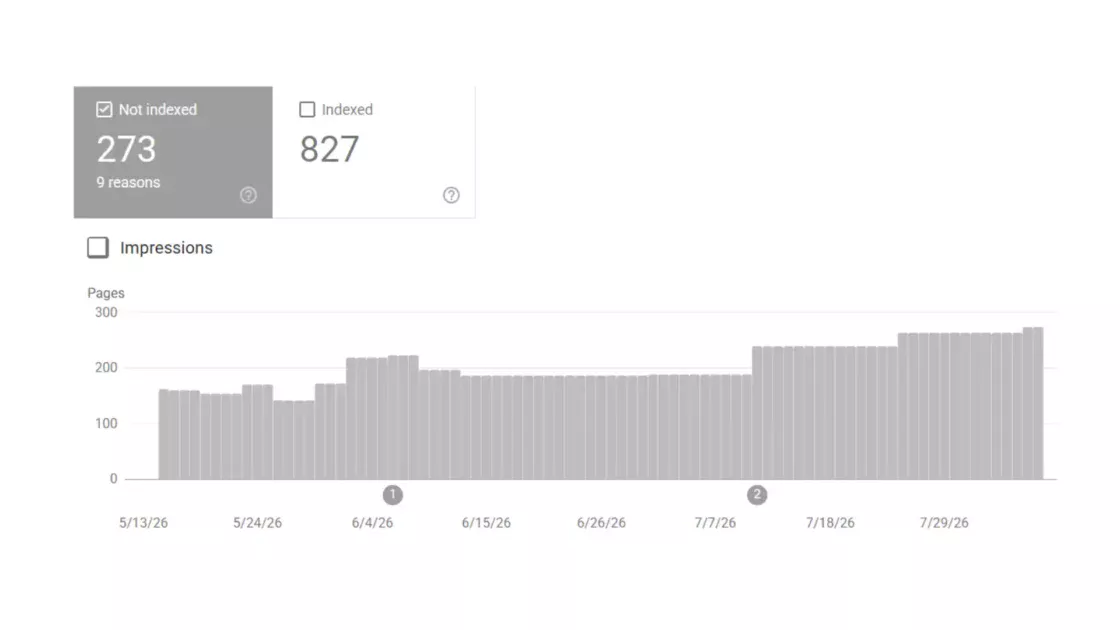
For anyone publishing on the web, the practical takeaway is blunt. If your pages are missing from DuckDuckGo, the first thing to check is whether they are indexed in Bing, not whether DuckDuckBot has visited. There is no DuckDuckGo Webmaster Tools console and there never has been; the closest control you have is the same robots.txt directives you would use for any crawler. Because the link pool is mostly Bing’s, the SEO work that helps you on Bing carries over to DuckDuckGo almost automatically, while DuckDuckBot allowances do little to move rankings.
The blend is real, though. DuckDuckGo is not a pure pass-through that relays Bing’s pages unchanged. It applies its own ranking and presentation, strips tracking, removes results from sites it considers content mills, and stitches in its own crawled content and curated verticals. The fairest description is shared plumbing with different house rules: much of the underlying link data is Bing’s, but the ranking, the privacy behavior, the instant answers, and the look of the page are DuckDuckGo’s own. That is why results can feel both recognizably mainstream and distinctly cleaner at the same time.
Leaning on Bing, and what that costs in practice
Borrowing an index is a reasonable engineering decision for a small company, and it is the only reason DuckDuckGo can offer mainstream-quality results without spending the billions a Google-class crawl would require. But the dependency has costs, and they are not theoretical.
The most direct cost is exposure to Bing’s coverage and Bing’s gaps. When Bing’s index is thin on a topic, DuckDuckGo is thin on it too, because there is no separate index to fall back on. For mainstream and commercial queries, where Microsoft’s commerce data is rich, this is fine and sometimes an advantage. For obscure technical content, niche forum threads, and very fresh pages, Bing trails Google, and DuckDuckGo inherits that lag. A power user who keeps hitting the wall on hard queries is, in effect, hitting the edge of Bing’s index rather than a flaw unique to DuckDuckGo.
The second cost is pricing and access risk. Microsoft raised the rates for its search API sharply in 2022 after ChatGPT’s debut made search data more commercially attractive. By August 2025, reporting indicated that Microsoft planned to cut off access to its search APIs for some customers as part of a push to sell AI-related APIs instead. DuckDuckGo’s view at the time was that larger partners with long-term deals would not be affected, and the syndication relationship has continued. Still, the episode underlines the structural reality: DuckDuckGo’s link supply sits on a contract with a competitor, and the terms of that contract are not fully in DuckDuckGo’s control. A search engine whose core input is rented carries a risk that an engine with its own index does not.
The third cost is the one that nearly damaged the brand, and it deserves its own section: the syndication deal came with contractual strings that, for a period in 2022, limited how aggressively DuckDuckGo’s browser could block Microsoft’s own tracking scripts. That is covered in detail later, but it belongs here as a reminder that the Bing relationship is not only about links. It has shaped product behavior in ways users did not expect.
Set against these costs is a real benefit beyond cost savings. By relying on Bing for the commodity part of search, DuckDuckGo can spend its limited engineering on the parts that differentiate it: privacy, instant answers, the browser, email protection, and the AI layer. A company with 100 to 200 people cannot win an index arms race, but it can build a better-behaved product on top of someone else’s index. The dependency is both DuckDuckGo’s enabling condition and its ceiling. It is why the engine exists at the quality it does, and it is why DuckDuckGo will never be the most independent option on the board. Whether that trade is acceptable is, again, a question about what you value, and it is the recurring theme of any honest comparison.
DuckDuckGo measured against Google on raw result quality
The fairest way to compare result quality is to stop comparing DuckDuckGo with Bing, since they share most of their link pool, and compare DuckDuckGo with Google, which runs an entirely separate crawler and index. That is where the differences are real rather than cosmetic.
For the broad middle of everyday searching, DuckDuckGo’s results are good and, for most people, indistinguishable in usefulness from Google’s. Looking up a company, a recipe, a definition, a product, a news event, a how-to, a public figure: these are queries where Bing’s index is strong and DuckDuckGo’s ranking is competent, and the privacy gain comes at no practical cost in result quality. Reviewers and long-time users consistently describe DuckDuckGo as steady and reliable for general queries, and that reputation is earned. If your searching lives in this middle, the headline question has a simple answer in DuckDuckGo’s favor, because you get the same usefulness without the surveillance.
The gap opens on hard queries. Google’s index is larger and fresher for long-tail technical content, brand-new pages, niche forum posts, small blogs, and recently published code. When you search for an error message from an obscure library, a thread from a small community, or something published in the last twenty-four hours, Google more often has it and ranks it well. DuckDuckGo, constrained by Bing’s coverage, misses these more often, and the failure mode is familiar to anyone who has switched: most searches are fine, then one stubborn query sends you back to Google. Forum reports of exactly this pattern are common and consistent across years.
Local search is the other clear gap. Because DuckDuckGo draws local and map results from Apple Maps rather than from Google’s mapping and business data, Google still wins on pinpointing local results, business hours, reviews, and tight map integration. For a quick “restaurants near me with reviews and directions” task, Google’s depth is hard to match. DuckDuckGo’s local results are usable but thinner, and the difference is structural, not a temporary deficiency.
Image search shows a similar pattern: Google’s image index and tools are deeper, and serious visual searching tends to favor it. For ordinary image lookups DuckDuckGo is fine, but it does not match Google’s breadth.
There is a category where Bing, and therefore DuckDuckGo, can actually lead: many commercial and product queries, where Microsoft’s commerce data is rich and the results are well-tuned for shopping intent. So the picture is not uniformly Google-ahead. It is Google-ahead on depth, freshness, local, and images; roughly even on the mainstream middle; and occasionally DuckDuckGo-ahead on commercial queries, with privacy as a constant point in DuckDuckGo’s column across all of them.
The sensible conclusion most experienced users reach is not loyalty to one engine but a division of labor. Run DuckDuckGo as the default for the large majority of searches, and keep Google for the specific cases where index depth or local precision matter. This is not a defeat for DuckDuckGo; it is an accurate read of what a borrowed index can and cannot do. The privacy you gain across hundreds of routine searches is real, and the handful of fallbacks to Google cost you almost nothing because you reach for them deliberately rather than living inside Google’s profile all day.
The filter bubble argument and what personalization really costs
One of the strongest arguments for DuckDuckGo has nothing to do with privacy in the data-collection sense and everything to do with what you are shown. Google personalizes results based on your history, location, and inferred preferences. That personalization can be helpful, and it can also quietly narrow what you see, a problem the writer Eli Pariser named the filter bubble more than a decade ago.
DuckDuckGo does not personalize, so everyone searching the same query from the same region sees broadly the same results. For some tasks this is neutral. For others it is the point. When you are researching a contested political topic, a health question, a company you might do business with, or any subject where you want the web’s actual answer rather than the answer an algorithm thinks will keep you engaged, non-personalized results are more trustworthy precisely because they are not shaped around you.
The cost of turning personalization off is real but smaller than Google’s marketing implies. You lose some convenience: results are not pre-shaped around your habits, so occasionally you do a little more work to refine a query. You also lose location-aware personalization, though DuckDuckGo still uses a coarse, non-stored location signal to make local queries work. What you do not lose, for the vast majority of searches, is relevance, because most queries do not actually benefit much from a personal history. Knowing that you searched for hiking boots last week rarely improves your search for a tax form.
There is a subtler benefit worth naming. Personalized search creates a feedback loop: the more you click, the more the system reinforces what it already believes about you, and the harder it becomes to see outside that frame. A search engine that does not remember you cannot trap you in its model of you. For people who use search as a research tool rather than a recommendation engine, that neutrality is a feature they would not trade.
None of this means personalization is worthless. For shopping, for repeated local tasks, and for users who genuinely want results shaped around them, Google’s approach delivers. The question is whether you want that shaping applied to everything you search, by a company whose business depends on knowing you well enough to sell ads against you. DuckDuckGo’s bet is that most people, told clearly what the trade is, would rather have neutral results and no profile. The steady growth of its search volume suggests the bet was not wrong, even if it has never threatened Google’s scale.
Instant answers, bangs and the parts of the page that are not Bing
The most underrated reason to use DuckDuckGo has nothing to do with privacy. It is the set of features layered on top of the links, several of which are better than what Google offers and most of which were the engine’s original reason to exist before privacy became the headline.
Instant Answers are the boxed results that appear above or beside the links, giving you the answer directly: weather, unit conversions, definitions, calculator results, package tracking, color codes, and hundreds of other quick facts. DuckDuckGo built these from a mix of its own crawler, Wikipedia, Wolfram Alpha, and specialized providers, and for the kinds of small lookups that make up a large share of daily searching they save you a click. This was the founding idea of the engine in 2008, and it still holds up.
The feature power users defend most fiercely is bangs. A bang is a shortcut that sends your search straight to another site’s own search. Type a query with the right prefix and DuckDuckGo redirects you to that site’s results page. Search GitHub directly, Wikipedia directly, Amazon directly, a dictionary directly, without first landing on a DuckDuckGo page. There are more than 13,500 bangs, covering an enormous spread of sites, and DuckDuckGo even includes a bang to bounce your query to Google when you want it. Once they become muscle memory, bangs turn the DuckDuckGo search bar into a universal launcher for the whole web, and many users keep DuckDuckGo as their default specifically because they do not want to give up this one feature. One honest caveat: when a bang sends you to another site, that site’s tracking applies normally; DuckDuckGo cannot mask what Amazon or Google does once you arrive there.
DuckDuckGo also keeps lightweight versions of itself that most engines abandoned. There are HTML and “lite” versions of search for browsers without JavaScript, which matter for accessibility, for slow connections, and for privacy tooling. And the engine has run an onion service over Tor since 2010, giving people in restrictive environments a way to search with an extra layer of network anonymity that Google does not offer in the same way.
Then there is the playful layer the company resisted for years: the pop-culture logo Easter eggs that swap the Dax mascot for a costumed version when you search for a matching character, with over 750 discovered by spring 2026. These are trivial, but they signal a company comfortable enough in its identity to have some fun, which it was not in its austere early years.
The point of cataloguing all this is that a search engine is not only its link quality. On features, DuckDuckGo competes hard and sometimes wins, because features do not require an index the size of Google’s. Bangs, instant answers, the lite versions, Tor access, and the surrounding browser tooling are areas where a focused team can out-design a giant. For a sizable share of users, these features, not privacy and not raw relevance, are the reason DuckDuckGo earns the default slot.
The Microsoft tracker episode that tested the brand
No discussion of whether DuckDuckGo is better than its rivals is honest without the one episode that genuinely tested the company’s central promise. In May 2022, the independent security researcher Zach Edwards reported that DuckDuckGo’s mobile browser and extensions were allowing certain Microsoft-owned tracking scripts to load on third-party websites, even while blocking trackers from Google, Facebook, and others. For a company whose entire pitch was blocking hidden trackers, this looked like a contradiction at the core of the product.
The detail that mattered was the cause. The carve-out was not a secret scheme to let Microsoft profile users. It was a contractual condition tied to the Bing search syndication deal. In exchange for using Bing’s index and advertising, DuckDuckGo had agreed to restrictions that prevented it from blocking some Microsoft scripts, including ones associated with Bing and LinkedIn ad measurement. Weinberg acknowledged the behavior publicly and said the company had essentially accepted Microsoft’s terms to keep the search partnership, that it was not happy about the restriction, and that it hoped to remove it. Reuters and other fact-checks later stressed that the relationship was an advertising and search-syndication deal, not a grant of new profiling rights, and that DuckDuckGo’s other protections, like blocking Microsoft’s third-party cookies, were still in place. The reputational damage came less from the technical scope than from the gap between the clean marketing and the messier reality.
DuckDuckGo’s response, a few months later in August 2022, was to do the thing critics demanded. The company announced it had amended terms with Microsoft and would expand its third-party tracker loading protection to include Microsoft scripts across its iOS and Android apps and its browser extensions for Chrome, Firefox, Safari, Edge, and Opera. It also published its tracker protection list on GitHub to make its blocking behavior easier to inspect. Independent researchers confirmed the change took effect in practice.
One narrow exception persisted by design. Scripts from the bat.bing.com domain, used to measure whether an ad click turned into a purchase, were still allowed to load, because that conversion measurement is part of how DuckDuckGo’s advertisers, and therefore DuckDuckGo, get paid. The company framed this as a measured tradeoff rather than a broad hole, and noted that users who do not want it can disable ads. Reasonable people disagree about whether that exception is acceptable, but it is disclosed and narrow.
Two lessons survive the episode, and both matter for the comparison. First, DuckDuckGo’s privacy guarantees are constrained by its dependence on Microsoft in ways that a fully independent engine’s would not be. The carve-out existed because the Bing deal existed. Second, the company has never produced a comprehensive, public third-party audit confirming every aspect of its privacy posture, and reviewers continue to note that absence. DuckDuckGo did the right thing once the problem was exposed, which is to its credit, but the exposure came from an outside researcher rather than from the company’s own transparency. For most users the practical risk was always small. For anyone choosing a privacy engine on principle rather than convenience, the episode is a real mark against treating DuckDuckGo as beyond question, and part of why the independent-index challengers have drawn the more committed crowd.
Reading the fine print on anonymity claims
It is worth being precise about what DuckDuckGo does and does not protect, because the brand’s success has produced a lot of loose claims that the company itself has been careful to avoid. DuckDuckGo protects your searching from DuckDuckGo and from the data economy that Google participates in. It does not make you anonymous online, and the company has said so repeatedly.
Start with what DuckDuckGo cannot hide. Your internet provider, and anyone with visibility into your network, can still see that you connected to DuckDuckGo, even if they cannot see your individual queries when the connection is encrypted. Switching search engines does nothing about network-level visibility; that requires a VPN or Tor. The DuckDuckGo browser blocks third-party trackers on the sites you visit, but the moment you click a result and land on another site, that destination applies its own analytics and cookies under its own rules, and a search engine cannot prevent it. Bangs make this concrete: send a query to Amazon with a bang and Amazon tracks you exactly as it always would.
There is also the awkward finding, surfaced by testers repeatedly, that trackers have been observed loading on DuckDuckGo’s own result pages, some of them DuckDuckGo’s own, used for functions like ad measurement. This is a smaller issue than the 2022 Microsoft episode and partly a matter of how you define a tracker, but it complicates the cleanest version of the privacy story. The most accurate framing is that DuckDuckGo dramatically reduces tracking compared with the default web, not that it eliminates it.
The company’s own language has always been measured on this point. DuckDuckGo has said plainly that it never promises anonymity when browsing, because that is not possible given how quickly trackers change to evade protection. That honesty is a point in its favor, even though it sits uneasily next to a brand built on the simple promise of privacy. The gap between the marketing impression, total protection, and the technical reality, large but partial protection, is where most criticism of DuckDuckGo lives.
For the practical question of whether DuckDuckGo is better, the fine print sharpens rather than reverses the answer. DuckDuckGo is a large, real improvement over tracking search engines for the specific threat of being profiled by your search activity. It is not a tool for hiding from a determined adversary, evading surveillance by a capable state, or achieving genuine anonymity. People who need those things need Tor, a trustworthy VPN, and operational discipline, with a private search engine as one layer among several. Sold as what it is, DuckDuckGo holds up. Sold as anonymity, it overpromises, which is exactly why the company stopped short of selling it that way.
The independent-index challengers and what they change
For years the privacy-search conversation was simply DuckDuckGo versus Google, and DuckDuckGo won it by default among privacy-minded users. That is no longer the shape of the field. The most interesting development of the past few years is the rise of engines that run their own index, which changes the comparison on the one axis where DuckDuckGo is structurally weak: independence.
The clearest example is Brave Search. Built on technology from the Tailcat project, Brave Search runs a crawler and index of its own rather than serving Bing’s links, which makes it the only major privacy engine that does not depend on Google or Microsoft for its raw results. For users worried about Big Tech shaping what the web looks like, this matters in a way convenience features do not. The argument is a sovereignty one: if Google and Bing ever coordinated to bury a domain, engines that reflect those indexes would bury it too, while an engine with its own index would not. That scenario is hypothetical, but the structural point is sound, and it is the reason a growing slice of privacy-focused reviewers in 2026 name Brave as their top pick for independence rather than DuckDuckGo.
Brave also ships features that signal a different philosophy. It publishes independence metrics showing what share of results come from its own index versus supplementary sources, an unusual piece of transparency. It offers Goggles, community-created filters that let users re-rank results according to their own rules, which is a genuinely different idea about who controls ranking. It includes an optional AI answer feature and lets users disable it. The honest weakness is coverage: Brave’s index is excellent for popular queries and thinner than Bing’s for niche, long-tail, and highly technical searches, though the gap has been closing as the index grows. A separate caution is that the Brave browser carries its own controversies, including a past episode of injecting affiliate codes into URLs, and that using Brave browser together with Brave Search combines datasets in a way some analysts flag.
The other genuinely independent option is Mojeek, a small UK-based engine that has built its own crawler and index entirely from scratch, with no third-party search provider behind it. Mojeek is one of only a handful of engines in the world with a truly independent index, and it does not store personal data, search history, or IP addresses. Its interface is utilitarian and its relevance is variable on obscure queries, reflecting a small team and a smaller index, but for users who prioritize independence above all, it is the purest option available.
What these challengers change is the framing of the headline question. DuckDuckGo is better than Google on privacy, but it is not the most independent engine, and for a specific kind of user, independence is the thing that matters most. If your reason for leaving Google is “I do not want to be tracked,” DuckDuckGo is an excellent answer. If your reason is “I do not want two American companies deciding what the web is,” DuckDuckGo only half answers it, because it is still serving you Bing’s view of the web with privacy applied on top. The rise of Brave and the persistence of Mojeek mean DuckDuckGo can no longer be treated as the automatic winner among privacy engines; it is one strong option in a field that has gotten more interesting.
Startpage and the Google-quality-without-Google approach
If Brave and Mojeek answer the independence question, Startpage answers a different one that many people actually have: how do I get Google’s results without giving Google my data? Startpage takes the opposite approach to the independent engines. Rather than building its own index, it proxies Google’s results, delivering the relevance people are used to while stripping the profiling.
The mechanism is straightforward. Startpage queries Google on your behalf from its own servers in the Netherlands, removes your IP address and identifying signals, and returns the results to you. You get Google-quality web, image, and news results without signing into Google and without Google building a profile of you. For users who left Google reluctantly, missing the result quality but not the surveillance, this is the most direct fix on the market, because the results are not merely comparable to Google’s; in many cases they are Google’s.
Startpage layers privacy features on top. Its Anonymous View opens result pages through a proxy so you can visit a site without revealing your identity to it, which is a genuinely useful tool that DuckDuckGo does not offer in the same form. The company leans hard on its European base, operating under EU data-protection law, which appeals to users who trust the GDPR framework more than US privacy norms. For someone whose threat model is “I want Google’s answers under European legal protection,” Startpage is purpose-built.
There are two real caveats. The first is ownership and trust. In 2019 Startpage took an investment from a company in the advertising-technology business, which alarmed parts of the privacy community and dented the engine’s reputation; some users have never fully regained confidence, and reviewers continue to advise checking the current ownership and privacy guarantees before adopting it. The second is that proxying is a model, not independence. Because Startpage depends on Google’s index, it inherits Google’s coverage and is exposed to Google’s choices, and critics argue that calling this privacy can feel like privacy theater if you expected freedom from Google’s influence rather than freedom from Google’s profile. Hands-on tests have also occasionally found Startpage’s results less relevant than raw Google, an artifact of its filtering and proxying.
For the comparison with DuckDuckGo, Startpage occupies a clear lane. It beats DuckDuckGo on raw result quality for users who specifically want Google’s relevance, and it offers the Anonymous View proxy, but it trails DuckDuckGo on consumer tooling, since DuckDuckGo brings a full browser, email protection, app-level tracker blocking, and a paid privacy bundle that Startpage does not match. The choice between them is a choice about what you want most: Google’s exact results routed privately, or a broader privacy toolkit built around a Bing-sourced engine. Neither is independent, and both are real improvements over signed-in Google.
Kagi and the argument for paying to remove the ads
The most pointed challenge to DuckDuckGo does not come from a free engine at all. It comes from Kagi, a paid search engine that asks a simple question: if advertising is the thing that corrupts search, why not just pay for search directly and remove ads entirely? Kagi has no advertising and no tracking, and it is funded entirely by subscriptions, with plans starting around five dollars a month.
That business model is the whole argument. An ad-funded engine, even a privacy-respecting one like DuckDuckGo, still has a structural reason to show ads and to measure whether those ads convert, which is exactly the function behind DuckDuckGo’s one remaining Microsoft script exception. A subscription engine has no such incentive. Kagi’s only reason to exist is to make the people paying for it happy enough to keep paying, which aligns the product with the user in a way ad models cannot fully match. For people who find the very presence of ads in search distasteful, this is a clean solution rather than a compromise.
Kagi also runs its own crawling alongside anonymized calls to other indexes, combining its Teclis web index and TinyGem news index with results from other engines and an AI layer for instant answers. The result, according to reviewers and heavy users, is high precision on complex and technical queries, with results that feel organized and relevant rather than cluttered. The engine offers power-user features that DuckDuckGo does not, including Lenses that narrow results to particular kinds of sites, granular control over which result types appear, and the ability to raise or lower or block specific domains in your own results permanently. For researchers and developers who run difficult queries all day, this configurability is the selling point, and many reviewers in 2026 call Kagi the better engine across the board for anyone willing to pay.
The obvious objection is price. Kagi costs money, and most people will not pay for search when free options exist, however good the paid one is. That single fact caps Kagi’s reach and keeps it a product for power users and privacy enthusiasts rather than a mass-market replacement. There is also the practical reality that a paid engine requires an account and a payment method, which is a different privacy posture than DuckDuckGo’s no-account model, though Kagi has designed its system to minimize the link between payment and search activity.
Set against DuckDuckGo, Kagi wins on result relevance for hard queries, on configurability, and on the cleanliness of its incentives, and it loses on cost and on reach. The honest framing is that Kagi is probably the better search engine for a power user who will pay, and DuckDuckGo is the better default for everyone who will not. A common pattern reviewers describe is that skeptics try Kagi for a few days expecting to dislike paying, then keep it because the relevance and the absence of ads change the daily experience more than they expected. For the question of whether DuckDuckGo is the best private search engine, Kagi is the strongest reason to answer “for free, yes; all told, it depends on your wallet.”
Ecosia, Qwant and the rest of the privacy-adjacent field
Beyond the headline rivals sit several engines that occupy specific niches, and knowing where they fit helps locate DuckDuckGo precisely rather than treating it as the only alternative to Google.
Ecosia is the green option. Based in Germany, it directs the bulk of its advertising profit into tree-planting and reforestation, and that mission, not privacy, is its selling point. Ecosia has been the more popular alternative engine in parts of Europe, with steady growth in Germany and France, and for users motivated by climate impact it is a reasonable choice. But it is the weakest of the common alternatives on privacy: it collects more data than DuckDuckGo and sources results from Bing, sometimes mixed with Google, so it is neither independent nor as protective. If strict privacy is your goal, Ecosia is not the engine; if planting trees with your search ad revenue is the goal, it is. The two motivations are different, and conflating them leads people to the wrong tool.
Qwant is the European-jurisdiction option. French-built and operating under EU privacy law, Qwant appeals to users who want a search engine governed by European rules rather than American ones, and some users prefer it for programming queries and non-English searches, where they find its relevance competitive. Like DuckDuckGo, it has relied substantially on Bing-derived results, so its independence is limited, but its legal home and its multilingual focus give it a clear constituency, particularly in continental Europe.
SearXNG is the sovereignty option for technical users. It is open-source metasearch software that you can self-host, aggregating results from many engines at once so that no single provider sees your full query history. Run on a personal server or a trusted instance, SearXNG distributes your searches across Bing, Google, Brave, and others, with no single company able to build a profile. The cost is effort: you either run it yourself or trust someone else’s instance, which is a different trust problem. For privacy purists and self-hosting enthusiasts, SearXNG offers a level of control no consumer product can match, and it is frequently recommended alongside Kagi as the serious end of the privacy-search spectrum.
There are others worth a mention for completeness. Yahoo and AOL persist as legacy engines powered largely by Bing. Yandex remains the dominant engine in Russia with its own index, but its jurisdiction makes it a non-starter for most privacy-minded users elsewhere. Baidu dominates China. None of these is a serious privacy alternative for a Western user, but they fill out the picture of how few truly independent indexes exist: realistically, Google, Bing, Yandex, Baidu, Brave, and Mojeek, and the last two are far smaller than the first four.
Seen against this field, DuckDuckGo is the broad, easy, free default in the privacy lane, Ecosia is the environmental choice, Qwant is the European choice, Kagi is the paid power-user choice, Brave and Mojeek are the independent choices, and SearXNG is the self-hosted choice. DuckDuckGo’s advantage is that it is the most polished and the lowest-friction of all of them, with a full product ecosystem behind it. Its limitation is that on any single specialized axis, some other engine does that one thing better. That is the recurring pattern, and it is the honest frame for the whole comparison.
The comparison table that frames the tradeoffs
The privacy-search field is easiest to read side by side, because the differences are not about which engine is good and which is bad but about which tradeoff each one makes. The table below lays out the engines most people actually weigh against DuckDuckGo, on the axes that decide the choice.
Private search engines compared on the axes that matter
| Engine | Where results come from | How it makes money | Privacy posture | Best suited to |
|---|---|---|---|---|
| DuckDuckGo | Mostly Bing, plus its own crawler and 400+ sources | Contextual, non-tracking ads | No search profiling; full browser and tooling; one disclosed ad-measurement exception | Most people wanting an easy private default |
| Its own full-scale index | Behavioral, profile-based ads | Logs and profiles everything; deepest results | Hard, niche, and local queries; users who accept tracking | |
| Brave Search | Its own independent index | Own ad model, separated from search; optional paid tier | No profiling; index independence; some browser controversy | Users who want freedom from Google and Bing |
| Startpage | Proxies Google’s index | Ads on results | Strips IP and profiling; Anonymous View proxy; EU base; past ownership concern | Users who want Google’s relevance routed privately |
| Kagi | Own crawl plus anonymized calls to other indexes | Subscription only, no ads | No ads, no tracking; account required | Power users and researchers willing to pay |
| Mojeek | Its own independent index | Ads and search licensing | No tracking; fully independent; smaller index | Users who prioritize independence over polish |
| Ecosia | Mostly Bing, sometimes Google | Ads funding tree planting | Collects more data than DuckDuckGo | Environmentally motivated users |
The table makes the central point visible: no engine wins every column, and DuckDuckGo’s row is strong but never first on any single axis except ease of use. It is not the most independent, not the deepest, not the most relevant for hard queries, and not the cleanest on incentives, yet it is the most balanced free option and the one that asks the least of a new user. Read across the rows and the right choice falls out of which column you care about most, which is exactly how the decision should be made rather than by asking which engine is best in the abstract.
DuckDuckGo’s move into AI without becoming an AI company
Search and AI have collapsed into the same conversation, and DuckDuckGo has navigated that collision with a careful, almost contrarian position: offer AI, but make it private and optional, and never let it become the point of the product. That stance has shaped two distinct features and one of the more interesting product stories of 2026.
The first feature is the AI answer layer on search, originally launched as DuckAssist in March 2023 and now called Search Assist. When you run a query, Search Assist can generate a short answer at the top of the results by scanning reputable encyclopedic sources like Wikipedia and Encyclopedia Britannica using a dedicated crawler, DuckAssistBot, and summarizing what it finds with large language models from OpenAI and Anthropic. Two design choices keep it consistent with the brand: the answers always link to the one or two sources they drew from, so you can verify and read more, and the feature is adjustable in frequency, with settings for never, on demand, sometimes, or often. The default is restrained. DuckDuckGo positions this as an aid to finding answers, not a replacement for the results, and the citation-first design is a deliberate contrast to AI answers that present themselves as authoritative without showing their work.
The second feature is Duck.ai, a private chat interface that lets you talk to third-party AI models without an account and without your conversations being logged or used for training. The privacy mechanism is the same proxying idea that powers DuckDuckGo’s search partnerships, applied to AI. When you send a message in Duck.ai, it routes through DuckDuckGo’s servers, which strip your IP address and identifying metadata before forwarding the request to the model provider. The provider sees a request that appears to come from DuckDuckGo rather than from you, so even if you type personal information, no one, including DuckDuckGo and the model provider, can tie it to you. DuckDuckGo states that chats are not stored and not used to train the underlying models, both as a technical practice and as a contractual term with the providers.
The model lineup shows how seriously the company takes this. As of 2026, the free version of Duck.ai offers models including Anthropic’s Claude 4.5 Haiku, Mistral’s Mistral Small 4, OpenAI’s GPT-5.4 nano and GPT-5.4 mini, and gpt-oss-120b, an open-weight model trained by OpenAI and hosted by a third party. Paying subscribers get more capable models: the Plus plan adds GPT-5.4 and Claude Sonnet 4.6, and the Pro plan adds Claude Opus 4.8, higher reasoning effort, and double the usage limits. DuckDuckGo notes that it does not filter or modify model responses, so answers can be wrong or offensive in the same way any model’s can. The free tier runs within daily limits, and the whole thing works in any browser, not only DuckDuckGo’s.
The strategic point is what DuckDuckGo did not do. It did not build its own model, did not stake the company on AI, and did not make AI unavoidable. It built a privacy wrapper around other companies’ models and an opt-in answer layer on search, and it framed both as conveniences you can turn down. For users who want to use ChatGPT-style tools but distrust handing their most sensitive questions to companies that log and train on them, Duck.ai fills a real gap, because the privacy concern around AI, where people type health fears, legal questions, and personal struggles, is arguably sharper than the privacy concern around search. DuckDuckGo’s AI is not the most capable on the market, and it is not meant to be. It is meant to be the private, optional version, which is the same thing the company has always sold, applied to a new layer of the internet.
The no-AI backlash and the subdomain that tripled in traffic
The most revealing product story of 2026 is that the same company offering private AI also became one of the most visible vendors of the right to avoid AI entirely. The sequence says something about where a sizable share of users actually stand, and it is worth telling in order.
In May 2026, Google used its I/O conference to announce what it called its largest upgrade to search in over twenty-five years, replacing the traditional blue links with AI agents, expanded text boxes, and conversational summaries that answer questions before you finish typing. Plenty of users hated it. The complaint was not that AI is useless; it was that AI was being forced into the one tool people used precisely because it gave them a list of sources to judge for themselves. DuckDuckGo’s CEO Gabriel Weinberg was openly among the critics.
DuckDuckGo’s response was fast and pointed. Over the same weekend in late May, the company launched a Chrome extension, DuckDuckGo No-AI Search, that sets your default to noai.duckduckgo.com, an AI-free subdomain of its own engine. On that subdomain you get the same search index, the same results, and the same interface, minus the AI-generated image results, the Search Assist summaries, and every other AI feature the company had added over the previous two years. A Firefox version launched the same day. The company reported that visits to its no-AI page had tripled after Google’s announcement and were still climbing. For users who want to toggle individual AI features rather than block everything, DuckDuckGo pointed to its full Privacy Essentials extension, which also blocks trackers.
The timing was not subtle, and DuckDuckGo did not pretend otherwise. The extension’s own listing carried the line that AI should be optional, which is both a product philosophy and a quiet admission that DuckDuckGo now has enough AI of its own to be worth opting out of. A company that spent the better part of 2024 building Duck.ai was, by mid-2026, shipping a tool to help you pretend AI does not exist. There is no contradiction once you see the through-line: the consistent product is choice, not a position on AI itself.
DuckDuckGo was not alone in monetizing the anti-AI mood. Brave launched Brave Origin, a roughly sixty-dollar one-time purchase that strips its browser down to ad blocking and core protections, removing the Leo AI assistant, the crypto wallet, the rewards system, the VPN, and the telemetry, free on Linux where the open-source community handles it anyway. Brave’s own CTO acknowledged the obvious tension, since the company normally earns revenue from exactly the features Origin removes. Mozilla, meanwhile, took a subtler route. What all three companies were selling, in different packaging, was the same thing: the right to use software that does not assume you want AI.
For the comparison at hand, this episode is a strong mark in DuckDuckGo’s favor on the one axis it has always owned, which is respect for user choice. Google’s bet is that AI in search is the future and that users will come around. DuckDuckGo’s bet is that a large group of people want a clean list of links with no AI and no tracking, and that serving them is a durable business. The tripling of its no-AI traffic suggests that group is real and growing, and it is precisely the group for whom DuckDuckGo, not Google, is the better search engine almost by definition.
Beyond search, the browser and email protection toolkit
Judging DuckDuckGo only as a search engine undersells what the company has become, and it misses a real part of the answer to whether it beats its rivals. DuckDuckGo describes the DuckDuckGo browser as the centerpiece of its product line now, with the search engine as one component inside it. For many users the browser, not the search box, is the reason DuckDuckGo wins the daily comparison.
The browser bundles more than a dozen privacy protections on by default, which is the opposite of the mainstream browsers where protection is opt-in and partial. It blocks third-party trackers before they load, not merely after, which the company argues is stronger than the cookie-and-fingerprint blocking most browsers default to, because stopping a script from loading prevents it from ever seeing your IP address. It enforces encryption upgrades, blocks third-party cookies, and includes a Fire Button that wipes your browsing data, tabs, and history in one tap. The practical effect most users notice first is mundane and welcome: fewer ads and pop-ups than they saw before, because so much of the web’s clutter is tracking infrastructure.
Email Protection is one of the more genuinely useful pieces. You get a duck.com address that forwards to your real inbox while stripping trackers out of the messages as they pass through, so the invisible pixels that tell senders when and where you opened an email stop working. You can also generate unlimited private duck.com addresses on the fly, which lets you sign up for services without handing over your real address and makes it easy to see which company leaked or sold your details when spam starts arriving at a single-use address. This is the kind of feature that quietly improves daily life and that Google has no incentive to build, since Google’s business is on the other side of that tracking.
On Android, App Tracking Protection extends the idea beyond the browser, blocking trackers inside other apps on the device. Phone apps are riddled with third-party trackers that run in the background regardless of what you are doing, and DuckDuckGo’s tool blocks many of them system-wide, which is a level of protection most users do not know they can get. There is also a scam and threat protection layer that warns about known malicious sites, and a privacy-respecting sync feature that lets you share bookmarks and passwords across devices without an account and without DuckDuckGo being able to read them.
The strategic significance is that DuckDuckGo has turned a search engine into a privacy platform, and that platform competes with the privacy features of Brave and Firefox rather than only with Google’s search box. A new user who installs the DuckDuckGo browser gets private search, tracker blocking, email protection, app-level protection on Android, and a one-tap data wipe, all working together without configuration. None of the pure search engines, not Startpage, not Kagi, not Brave Search on its own, matches that bundle of consumer tooling.
For the headline question, the toolkit shifts the answer. As a raw search engine, DuckDuckGo is one strong option among several. As a complete, free, default-on privacy product for an ordinary person who does not want to think about any of this, it is the easiest recommendation on the market. The browser and its features are a large part of why people who try DuckDuckGo tend to stay, and why the comparison with Google is lopsided once you count everything the company gives away rather than only the search results.
Privacy Pro and the economics of selling privacy as a subscription
In April 2024 DuckDuckGo did something a free, ad-funded company does not usually do: it started charging for a privacy product. Privacy Pro is a three-in-one subscription, priced at 9.99 dollars a month or 99.99 dollars a year, and it is the clearest signal of where the company sees its future beyond search advertising.
The bundle has three parts. The first is a no-logs VPN that covers up to five devices at once, built into the DuckDuckGo browser. The second is Personal Information Removal, which scans data-broker and people-search sites that collect and sell your name, address, and other details, and files removal requests on your behalf to combat spam and identity theft. The third is Identity Theft Restoration, which provides a dedicated advisor to help recover stolen accounts, address financial losses, and correct your credit report if your identity is stolen. The company points out that buying these services separately could cost upwards of thirty dollars a month, so the bundle is priced to look like a clear saving. Privacy Pro is available in the United States, Canada, the European Union, and the United Kingdom, with Personal Information Removal limited to the US.
The design carries DuckDuckGo’s privacy philosophy into the paid product in a way worth noting. You do not have to give DuckDuckGo personal information to subscribe; authentication uses secure tokens rather than an email address unless you add a second device. More striking, Personal Information Removal runs from your device rather than from DuckDuckGo’s servers. The details you enter, your name, age, and cities lived in, are stored locally, and removal requests go directly from your device to the broker sites, so DuckDuckGo itself never sees the data being submitted on your behalf. The only personal data it touches is the confirmation emails from brokers, which it handles automatically and deletes within seventy-two hours. For VPN activity, the company says it keeps no logs and has no way to tie your connections to you. This is consistent with the brand’s core idea: the best way to protect data is not to collect it.
The honest assessment from reviewers is that the bundle is good value but not best-in-class on any single component. The VPN is described as solid but basic: decent speeds, easy browser integration, and a no-logs design, but a small server network and missing power-user features like a kill switch in some configurations. Reviewers testing it in early 2026 found it unblocked streaming libraries well but reported sharp drops in upload speed and high latency on distant servers, which would hurt video calls and gaming. The data-removal feature works and is convenient, but dedicated services cover more broker sites, run continuous rather than periodic monitoring, add dark-web alerts, and offer family coverage that Privacy Pro’s per-user model does not. Identity restoration through a partner adds real value that standalone removal tools often lack.
For the comparison, Privacy Pro matters less as a product to rank and more as a statement of strategy. DuckDuckGo is building a paid privacy business so that it is not solely dependent on contextual search ads, which is prudent given that its ad supply rides on the Bing relationship and that AI is reshaping how search is monetized. Whether you buy it comes down to a familiar tradeoff: if you already live in the DuckDuckGo browser and want a single, simple bundle covering a VPN, basic data removal, and identity help, Privacy Pro is a reasonable, fairly priced convenience. If your specific need is the deepest possible data-broker removal or a top-tier VPN, a focused specialist will serve you better. As with the search engine itself, the pattern repeats: broad, polished, and good value, but not the leader on any single axis.
The business model that funds search without surveillance
A common assumption is that a search engine has to track you to make money, and that a private one must therefore be either a charity or a trick. DuckDuckGo’s existence disproves the assumption, and understanding how it earns its keep explains both why the privacy is real and where the model’s pressure points are.
The core revenue is advertising, but contextual rather than behavioral. A DuckDuckGo search ad is matched to the words in your current query, not to a profile built from your history. Search for car insurance and you may see a car-insurance ad; the ad is chosen by the page you are looking at, not by months of accumulated data about you. This is exactly how search advertising worked before behavioral targeting, and the point DuckDuckGo makes is that keyword intent is already a strong advertising signal, because someone searching for a product is often ready to act. You do not need to know who the person is to show a relevant ad when they have just told you what they want.
The economics are striking when you look at the numbers. DuckDuckGo’s ads cost advertisers roughly 0.41 dollars per click, compared with around 4.93 dollars on Google. That gap reflects the difference between contextual and profile-targeted advertising, and it has two consequences. For DuckDuckGo, lower per-click rates mean it needs volume, which its roughly three billion monthly searches provide. For advertisers, cheaper clicks against a high-intent, privacy-conscious, often higher-income audience can be an underused opportunity, since competition for those slots is lighter than on Google. The company has reported revenue above 100 million dollars a year since 2020 and has been profitable on an operating basis for years, which is unusual for a search company that is not Google.
DuckDuckGo has also historically earned a small amount from affiliate relationships with a couple of large retailers, where it receives a commission if a user buys after clicking through, without any personal data being shared in the process. And it is now building subscription revenue through Privacy Pro, deliberately diversifying away from pure ad dependence.
The model has two real pressure points worth naming honestly. The first is the conversion-measurement problem, which is the root of the one Microsoft script exception covered earlier. Advertisers want to know whether their ad clicks turn into purchases, and measuring that requires a small amount of tracking, which sits awkwardly against a pure no-tracking promise. DuckDuckGo’s handling of this is disclosed and narrow, but it is the seam where the ad model and the privacy promise rub against each other. The second is dependence on the Bing advertising and search relationship, which supplies both links and a share of the ad infrastructure, and which is governed by terms DuckDuckGo does not fully control.
For the comparison, the business model is a quiet point in DuckDuckGo’s favor and a reason to trust the privacy claim more than skeptics assume. The company makes money by showing relevant ads against your query, not by knowing you, and its profitability proves that model works at scale. That is a structurally healthier alignment with the user than Google’s, where the product improves by learning more about you and the revenue grows with the depth of the profile. It is not as clean as Kagi’s subscription model, which removes ads entirely, but it is far cleaner than the surveillance-advertising default, and it is the reason DuckDuckGo can give away a full privacy browser for free.
Who actually uses DuckDuckGo and what the numbers reveal
The market-share numbers for DuckDuckGo tell two stories at once, and reading them carelessly leads to bad conclusions in either direction. The honest version is that DuckDuckGo is simultaneously tiny next to Google and a genuine third-place player with a loyal, high-value audience.
The global figure is small. Across all devices, DuckDuckGo holds roughly 0.7 to 0.9 percent of the worldwide search market, depending on the source and month, against Google’s share above 90 percent and Bing’s around 4 to 5 percent. That places DuckDuckGo as the third most-used search engine globally, ahead of Ecosia, Yahoo, and Yandex, but the gap to the top is enormous. In its home market the picture is better: in the United States, DuckDuckGo’s share runs closer to 1.8 to 2.1 percent, and on US mobile it has ranked as high as third, ahead of legacy engines. Over half of its traffic, around 53 percent, comes from the US, with Germany, the UK, Canada, and France trailing.
The volume is real even if the share is small. DuckDuckGo handles around 3 billion searches a month, roughly 100 million a day, and on the order of 36 billion a year, up from about 15 billion in 2019. That growth, more than sevenfold over a decade, came largely during the privacy-awareness surge of 2020 and 2021. One sobering caveat for the bull case: several trackers show daily searches plateauing since around 2021, with month-to-month traffic that rises and falls rather than climbing steadily, so the explosive-growth narrative has cooled into something more like steady maturity.
The audience composition is where DuckDuckGo gets interesting for anyone trying to reach it. The user base skews male, by some measures roughly two-thirds, a sharper gender split than Google or Bing where the divide is closer to even. The largest age group is 25 to 34, with younger users in the 18-to-24 band slowly increasing, and the smallest group is 65 and over. Most telling for advertisers, around 60 percent of DuckDuckGo users report household income of at least 100,000 dollars a year, which makes the audience attractive precisely because it is hard to reach and inclined to act. The app and extension ecosystem reflects committed users: the iOS and Android apps have tens of millions of all-time downloads and high ratings, and the Chrome extension has more than four million users.
What the numbers reveal, put side by side, is the actual shape of DuckDuckGo’s place in the world. It is not going to displace Google, and it has stopped pretending it might. But it has built a durable, profitable business serving a specific and high-value slice of users: privacy-conscious, disproportionately professional and higher-earning, concentrated in the US and a few European markets, and loyal enough to install browsers and extensions rather than just changing a default. For the question of whether it is better than other engines, the demographics hint at the real answer: for the kind of person who chooses DuckDuckGo deliberately, it usually is the better engine, because they are weighing privacy and cleanliness above the raw index depth where Google wins. The market share is small not because the product is weak but because most people never change a default, which is a fact about human behavior and pre-installed software, not about search quality.
The SEO and GEO reality for anyone publishing for these engines
For anyone who publishes on the web, the practical question is not whether DuckDuckGo is better to use but whether it is worth doing anything special to rank on it. The answer is unusual and, once understood, freeing: you almost never need to tune for DuckDuckGo directly, because tuning rankings for Bing does the job.
DuckDuckGo serves most of its traditional links from Bing, so its rankings are largely downstream of Bing’s. The single most useful action for visibility on DuckDuckGo is to make sure your pages are indexed and ranking in Bing, which means submitting to Bing Webmaster Tools, keeping your technical SEO clean, using structured data, and following the same fundamentals that serve any search engine: clear titles, fast loading, sensible site structure, and content that answers the query. There is no DuckDuckGo Webmaster Tools console, no separate submission process, and no realistic way to influence DuckDuckGo’s ranking independent of Bing. Tuning specifically for DuckDuckBot does not move rankings, because DuckDuckBot is a small freshness-and-features crawler, not the system that ranks the web.
A few DuckDuckGo-specific details are worth knowing. Because local results come from Apple Maps rather than Google, businesses that care about local visibility on DuckDuckGo should keep their Apple Business Connect listing accurate, with consistent name, address, and phone details, in addition to the Google Business Profile that serves Google. And because the engine surfaces Instant Answers from sources like Wikipedia and structured data, clear and factual content with good markup has a better chance of being pulled into those boxes.
The larger shift is from SEO to GEO, getting content surfaced and cited by generative answer engines, and it applies across every engine in this comparison, not only DuckDuckGo. As AI answer layers spread, from Google’s AI Overviews to ChatGPT Search, Perplexity, Gemini, Copilot, and DuckDuckGo’s own Search Assist, the target is no longer only the ranked list of links but the set of sources an AI summary draws from and cites. That changes what good content looks like. Answer engines favor pages with clear, extractable, answer-style sentences, well-structured headings, concise definitions, factual claims that are easy to lift and attribute, and genuine authority signals that make a source safe to cite. Content written to be summarized accurately, with the key answer stated plainly near the top, tends to be picked up; content that buries its point under throat-clearing does not.
DuckDuckGo’s Search Assist is a useful case study in this because it always cites its one or two sources. That citation-first design means being one of the sources a summary pulls from delivers real visibility, and it rewards exactly the kind of clear, sourced, factual writing that GEO favors. The same principles that get you cited by DuckDuckGo’s AI layer tend to get you cited by the others, because they are all solving the same problem of finding trustworthy sentences to summarize.
The bottom-line guidance for publishers is simple and a little anticlimactic. Rank well on Bing for DuckDuckGo’s links, keep your Apple Business Connect listing current for its local results, structure your content to be extractable for its Instant Answers and AI summaries, and the rest takes care of itself. There is no separate DuckDuckGo game to play, which is its own kind of relief in a field full of platform-specific tactics. The engines worth a distinct strategy are the independent ones, Brave and Mojeek, which run their own crawlers and where Bing-based assumptions do not fully apply, though both are small enough that few publishers prioritize them yet.
Business impact for marketers and advertisers
For marketers, the relevant question about DuckDuckGo is not whether it is a better search engine but whether it is a channel worth buying, and the honest answer is that it is a small, specific, and underpriced one. Treated for what it is, it can pay off; treated as a Google substitute, it disappoints.
Start with the audience, because it is the whole case. DuckDuckGo’s users skew higher-income, more professional, more male, and concentrated in the United States, with around 60 percent reporting household income at or above 100,000 dollars. That profile is hard and expensive to reach on other channels, and it shows up disproportionately in segments that matter commercially: business-to-business buyers, finance, healthcare, and legal. A brand that performs well on DuckDuckGo can stand out in front of high-value users where the competition for attention is lighter than on Google.
The economics reinforce the point. Because DuckDuckGo’s ads are contextual and cost roughly 0.41 dollars per click against Google’s 4.93, the cost of reaching this audience is a fraction of what comparable Google placement costs. The catch is volume: DuckDuckGo’s total search traffic is small, so it will never deliver Google-scale reach, and a campaign built to depend on it will starve. The right framing is that DuckDuckGo is a high-intent, low-cost supplement, not a primary acquisition channel. For the right product aimed at the right audience, the cheap clicks and light competition can produce a better return than the same spend on a crowded Google auction, but the absolute numbers stay modest.
There is a real mechanical detail that the privacy model creates. Conversion measurement on DuckDuckGo works differently because the engine does not track users across sites. Advertisers using Microsoft Advertising can measure ad-click-to-purchase conversions through the same Microsoft scripts that are the root of DuckDuckGo’s one disclosed tracking exception, but the measurement is less granular than the cross-site, profile-based attribution marketers are used to on Google and Meta. Teams that live by precise multi-touch attribution will find DuckDuckGo’s measurement coarser, and they need to plan for that rather than assume parity. The privacy that makes the audience attractive is the same privacy that makes them harder to measure.
A practical approach for a marketing team is to run DuckDuckGo’s inventory through Microsoft Advertising, since the same campaigns that serve Bing serve DuckDuckGo, and to judge it on incremental high-intent reach rather than on volume. Because the SEO work that ranks you on Bing also ranks you on DuckDuckGo, the organic side requires no separate investment, which improves the total return on a Bing-focused effort.
The strategic read for marketers is that DuckDuckGo’s growth and its high-value demographic make it worth including in a serious search plan, especially for brands selling to privacy-conscious or professional audiences, but only with realistic expectations about scale and measurement. It is a sharp, narrow tool. Used as one, it rewards the few marketers who bother to set it up; used as a Google replacement, it frustrates everyone who expects it to be one. The same discipline that makes any niche channel work, matching the audience to the offer and measuring against the right benchmark, is what makes DuckDuckGo pay.
Publishers, indexing and the cost of a borrowed crawl
Publishers and site owners experience DuckDuckGo differently from end users, and the difference comes back to the borrowed index. For most sites, DuckDuckGo is a modest but welcome source of traffic that arrives almost for free, but the dependency on Bing introduces a structural exposure that is worth understanding before you rely on it.
The traffic share is small in proportion but high in quality. DuckDuckGo sends a fraction of the referral traffic that Google does, in line with its single-digit-percent market position, but the users who arrive tend to be the high-value demographic described earlier: higher-income, professional, privacy-aware. For sites serving those audiences, a visitor from DuckDuckGo can be worth more than the raw count suggests. And because ranking on DuckDuckGo follows from ranking on Bing, the traffic requires no separate effort to capture, which keeps it worthwhile even when it is not large.
The exposure is the flip side of the same coin. Your visibility on DuckDuckGo is only as stable as your visibility on Bing, and Bing’s index has its own quirks, gaps, and update cadence that differ from Google’s. A site that ranks well on Google but is poorly indexed on Bing will be nearly invisible on DuckDuckGo, and the fix is Bing-side, not DuckDuckGo-side. This is a reminder that a search engine serving a borrowed index passes the strengths and the weaknesses of that index straight through to the sites that depend on it.
There is a deeper, more abstract cost that the borrowed-crawl model imposes on the web as a whole, and it is part of why the independent-index engines matter beyond their size. When most alternative engines, DuckDuckGo, Ecosia, Yahoo, and others, all draw their links from the same two indexes, Bing and Google, the diversity of the web’s front door narrows. A page’s discoverability comes down to how a small number of crawlers and ranking systems treat it, which concentrates enormous influence in very few hands. The 2022 episode where DuckDuckGo stopped returning results during a Bing outage made the dependency literal: when the borrowed index goes down, the engine built on it goes dark.
For publishers thinking about resilience, the practical implications are straightforward. Keep your site healthy in Bing Webmaster Tools, since that is the lever for DuckDuckGo as well as Bing. Use clear robots.txt directives, because that is the only crawler control that actually applies, and remember that noindexing a page in Bing will remove it from DuckDuckGo too. Verify legitimate DuckDuckBot traffic with reverse DNS rather than trusting the user-agent string, since anyone can spoof it, and treat unverified DuckDuckBot hits as ordinary unknown bots. And do not waste effort trying to court DuckDuckBot for ranking, because it does not rank; it freshens and supports features.
The takeaway for the headline question, from the publisher’s seat, is that DuckDuckGo is a good citizen and an easy, free source of quality traffic, but it is not a search engine that publishers can build an independent strategy around, because it does not have an independent index for that strategy to target. The engines that reward distinct publisher attention are the ones running their own crawlers, and as those grow, the calculus may change. For now, serving Bing well is serving DuckDuckGo well, and that is both the convenience and the limitation of a search engine that rents its view of the web.
Defaults, choice screens and why most people never switch
If DuckDuckGo is as good as its users say for the searching most people do, why does it hold under one percent of the global market? The answer has little to do with search quality and almost everything to do with defaults, and it is one of the most important facts for understanding the whole comparison.
Most people never change their default search engine. The search box that ships with the phone, the browser, and the operating system is the one they use, not because they evaluated alternatives and chose it, but because changing a default requires knowing you can, knowing how, and bothering to. Google has spent enormous sums to be that default everywhere, which is the heart of the antitrust case against it, and the result is that inertia, not preference, keeps most users on Google. The quality of DuckDuckGo is largely irrelevant to a person who does not know they can switch.
DuckDuckGo itself produced evidence for this years ago. The company ran studies presenting mobile users with a search-engine preference menu, a choice screen offering several options rather than a pre-set default, and the effect was dramatic. With a four-option menu, DuckDuckGo’s mobile market share rose by hundreds of percent in the markets tested, and the share of other Google competitors rose too. The lesson was clear: when people are actually asked to choose rather than handed a default, a sizable number pick something other than Google. The barrier was never that users preferred Google’s results so strongly; it was that they were never given a real choice at the moment of setup.
This is why distribution and defaults matter more than features in deciding who uses what. A small improvement in result quality cannot overcome a pre-installed default backed by billions in placement deals. DuckDuckGo’s growth has come mostly from people who deliberately sought it out, installed its browser, or changed their default on purpose, which is a self-selecting and committed group. That explains both the small market share and the loyal, high-value audience: the only people using DuckDuckGo are the ones who chose to, and people who choose a privacy engine tend to value it.
The regulatory implication is direct, and it connects to the next section. If choice screens and default-deal restrictions become mandatory, as antitrust remedies and European rules push toward, the engines positioned to gain are exactly the ones that win when users are given a free choice, and DuckDuckGo’s own studies suggest it is among them. The company’s CEO has testified in the Google case precisely because DuckDuckGo has the most to gain from breaking the default lock and the most direct evidence that defaults, not quality, are what keep Google dominant.
For the question of whether DuckDuckGo is better, the defaults story reframes the market-share gap entirely. The small number is not a verdict on the product; it is a measurement of how rarely people change settings. Tens of millions of people who would be satisfied with DuckDuckGo will never try it, not because they compared and rejected it, but because the default did its job. That is a fact about software distribution and human behavior, and it is the single biggest reason the best private search engine is also a tiny one.
The regulatory backdrop that could reshape the whole market
The most consequential force in this comparison is not a product feature; it is a courtroom. The United States antitrust case against Google could change the rules that have kept the search market frozen for two decades, and DuckDuckGo has been close to the center of it.
The case reached a turning point in August 2024, when US District Judge Amit Mehta ruled that Google maintains an illegal monopoly in general search and search-text advertising, a Section 2 violation under the Sherman Act. The finding rested heavily on Google’s default-placement deals, including the agreement under which Google pays Apple a sum estimated around 20 billion dollars a year to be the default search engine on Safari and Apple devices. That single contract, one of the largest recurring payments in technology, is the clearest example of how default placement, rather than head-to-head competition, sustains Google’s position.
The remedies came in stages. A remedy decision followed in September 2025, and a final judgment in December 2025. Crucially, Judge Mehta chose behavioral remedies over structural ones, rejecting the Justice Department’s request to force Google to divest Chrome and, contingently, Android. He called divestiture a drastic remedy to be imposed with great caution, and the emergence of generative AI as a new competitive threat to Google influenced his view that less invasive measures might suffice. The remedies fall into three buckets. First, limits on Google’s default contracts: exclusive default deals are barred, the contracts are shortened to one year, tying of Google services is restricted, and device makers get more flexibility, though Google is not prohibited from paying for non-exclusive preloading of its search engine and its Gemini assistant. Second, Google must share parts of its search index and user-interaction data, though not its advertising data, with qualified competitors, under the supervision of a technical oversight committee for six years. Third, Google must offer syndication licenses so qualified competitors can access its search and text-ad feeds.
For a privacy engine like DuckDuckGo, the data-sharing and syndication pieces are the interesting part, because they could in principle let competitors tap Google’s index rather than relying solely on Bing. That would loosen the structural dependency that defines DuckDuckGo today, though the practical access conditions, the definition of a qualified competitor, and Google’s privacy objections all complicate how much it changes in reality. Google has argued that handing rivals its index and user data, even under oversight, would expose proprietary information and chill the investment that improves search, and the company has said it will appeal, which means the final shape and timing remain uncertain.
DuckDuckGo’s role was not that of a bystander. Gabriel Weinberg was called by the Justice Department to testify during both the liability trial and the remedies phase, which makes sense given that DuckDuckGo has the most direct evidence that defaults, not quality, protect Google. After the remedy ruling, Weinberg’s response was that the remedies do not go far enough, arguing that Google would still be able to use its monopoly to hold back competitors, including in AI search, and that consumers would keep suffering because of it. He called for Congress to step in and make Google compete on a level playing field. That position reflects DuckDuckGo’s read of its own situation: behavioral remedies that leave Google free to pay for placement, even non-exclusively, may not move the default needle enough to matter.
The European backdrop reinforces the direction. Under the EU’s Digital Markets Act and related rules, choice screens and default-deal restrictions have already pushed gatekeepers to give users more genuine choice at setup, and DuckDuckGo’s own studies suggest that genuine choice is exactly what helps it grow. The combined regulatory pressure on both sides of the Atlantic is the single biggest variable in whether the search market opens up in the next few years, and DuckDuckGo, along with the independent-index engines and the AI answer engines, is among the parties positioned to benefit if it does. Whether the remedies prove strong enough, or whether Google’s appeals and its freedom to keep paying for placement blunt them, will do more to determine DuckDuckGo’s future than any feature the company could ship.
Privacy, data handling and the question of legal requests
One consequence of DuckDuckGo’s no-logging design rarely gets the attention it deserves, and it sharpens the privacy comparison in a concrete, real-world way: a company that does not keep search histories has nothing to hand over when someone comes asking for them.
Most large platforms receive a steady stream of requests for user data from law enforcement, governments, and civil litigants. The volume and the response are a routine part of operating at scale, and the data exists to be requested because the platform stores it. Google logs searches tied to accounts and IP addresses, which means that, subject to legal process, that history can be compelled. The same is structurally true of any service that retains user-level activity.
DuckDuckGo’s data-minimization approach changes the calculus at the source. Because the company does not store search histories, does not record IP addresses as part of searches, and does not build user profiles, there is no per-user search history for it to produce in response to a request. It keeps aggregate search terms with no link to individuals, which is not useful for identifying a person. The only personal information it holds is what users have voluntarily handed over, such as the email address of someone who signed up for a newsletter, and its stated policy is to keep data only as long as needed for its purpose and then delete it. This is closely aligned with the data-minimization principle at the heart of the GDPR: the best protection against misuse, leak, or compulsion is to not hold the data in the first place.
There are honest limits to how far this protection reaches, and they matter. DuckDuckGo’s data minimization covers its own systems and the searching you do on it. It does not extend to the sites you visit after clicking a result, which keep their own logs under their own jurisdictions, and it does not hide your activity from your internet provider or your network. The proxying that anonymizes requests to partners like Bing protects you from those partners, but the destination of a click is outside the search engine’s control entirely. And while DuckDuckGo’s VPN and Duck.ai are designed to keep no logs and to strip identifying metadata, those protections rest on the company’s policies and engineering, which, as with any provider, you are trusting rather than independently verifying.
Jurisdiction is a relevant footnote. DuckDuckGo is a United States company, based in Pennsylvania, which some privacy-focused users weigh against European alternatives like Startpage and Qwant that operate under EU law and argue offer stronger legal protection against certain kinds of access. The counterargument is that data you never collect cannot be reached regardless of jurisdiction, and DuckDuckGo’s whole posture is to collect as little as possible. For most threat models, not retaining data is a stronger protection than the choice of legal home, though the two interact.
For the comparison, the legal-request angle is a quiet but real advantage that follows directly from the privacy design. The cleanest way to protect users from data requests is to have nothing worth requesting, and DuckDuckGo has built itself around exactly that. It is not a shield against a determined adversary targeting you specifically through other means, and it does not make you anonymous. But on the specific question of whether your routine searching can be assembled into a history and handed to someone else, DuckDuckGo’s answer, by design, is that there is no history to hand over, which is more than most of its larger rivals can say.
Common misconceptions that distort the comparison
A lot of the disagreement about whether DuckDuckGo is better than other engines comes from a handful of misconceptions that get repeated until they feel like facts. Clearing them up makes the real tradeoffs easier to see.
The first is that DuckDuckGo is just Bing with a privacy skin. This is half true and misleading. DuckDuckGo does source most of its links from Bing, but it applies its own ranking, strips tracking, runs its own crawler for freshness and features, pulls instant answers from many other sources, filters out content-mill sites, and uses Apple Maps rather than Bing for local results. The links overlap heavily with Bing’s; the page, the privacy behavior, and the experience do not. Calling it a Bing skin both understates the work DuckDuckGo does and is often repeated by competitors with an independent index to promote.
The second is that DuckDuckGo makes you anonymous. It does not, and the company has never claimed it does. It stops your searches from being logged and profiled, which is real, but your network can still see that you used it, and any site you visit tracks you under its own rules. Anonymity requires Tor, a trustworthy VPN, and discipline. DuckDuckGo is privacy, not invisibility, and conflating the two leads people to either overtrust it or unfairly dismiss it when they discover the limit.
The third is that a small market share means the product is bad. As the defaults discussion showed, market share in search measures how rarely people change settings far more than it measures quality. DuckDuckGo’s own choice-screen studies showed its share jumping by hundreds of percent when users were actually asked to pick. The one-percent figure is a fact about distribution, not a review.
The fourth is that using DuckDuckGo means worse results across the board. For the broad middle of everyday searching, results are competitive with Google and the privacy is free. The quality gap is specific, not general: it shows up on long-tail technical queries, very fresh pages, and local searches, where Google’s deeper index wins. Most people rarely hit those, so for them the gap is theoretical.
The fifth is that DuckDuckGo is anti-AI. It is not; it offers private AI through Duck.ai and an AI answer layer through Search Assist. What it is, consistently, is pro-choice about AI, which is why it can offer private AI and a no-AI search subdomain at the same time without contradiction. The product is optionality, not a stance for or against the technology.
The sixth is that the 2022 Microsoft tracker issue was a betrayal that proves the privacy is fake. It was a real problem caused by a contractual condition of the Bing deal, the company fixed it after an outside researcher exposed it, and one narrow ad-measurement exception remains by design and is disclosed. It is a legitimate mark against treating DuckDuckGo as beyond question, and it is evidence that its guarantees are constrained by the Bing relationship, but it is not proof that the core no-logging promise is false. Holding both of those at once is the accurate position.
Stripping away these misconceptions leaves the genuine tradeoffs intact and visible: strong real privacy, competitive mainstream results, a weaker index for hard queries, no independence from Bing, excellent free tooling, and one historical episode that tested the brand. That is the honest ledger, and it is more useful than either the fan’s claim that DuckDuckGo is simply better or the skeptic’s claim that it is privacy theater.
The risks and failure modes a switcher should weigh
Before making DuckDuckGo your default, it is worth being clear-eyed about where it can let you down, because a switch made on realistic expectations sticks and a switch made on hype gets abandoned at the first frustration.
The first risk is the borrowed-index dependency, which is the structural one. DuckDuckGo’s link supply rides on the Bing syndication deal, governed by terms it does not fully control, with a competitor on the other side. Microsoft raised its search-API rates sharply after the AI boom and signaled in 2025 that it would cut off some customers’ API access in favor of selling AI APIs. DuckDuckGo believes its long-term deal protects it, and the relationship has held, but a switcher should understand that the engine’s core input is rented, and that a future change in those terms is a risk an independent engine does not carry.
The second is result misses on hard queries. If your searching skews toward obscure technical problems, niche communities, brand-new content, or deep research, you will hit the edge of Bing’s index more often than you would with Google, and the failure is real even if it is occasional. The mitigation is simple, keep Google or a fallback for those cases, but you should expect the misses rather than be surprised by them.
The third is local search weakness. Apple Maps powers DuckDuckGo’s local results, and for finding nearby businesses with hours, reviews, and tight directions, Google remains stronger. If local lookups are a large part of your daily searching, this gap will be noticeable, and you may find yourself reaching for Google or a maps app for those specifically.
The fourth is the anonymity misunderstanding covered earlier. If you adopt DuckDuckGo believing it hides you from your network or your destinations, you will eventually be disappointed and may wrongly conclude the privacy is fake. Adopt it for what it does, removing search profiling, and it delivers exactly that.
The fifth is single-vendor concentration if you go all in. Using the DuckDuckGo browser, search, Duck.ai, Email Protection, and Privacy Pro together is convenient, but it concentrates a lot of your activity with one company. DuckDuckGo’s whole design is to not collect or correlate that activity, which mitigates the concern more than it would with most vendors, but it is still worth a moment’s thought, the same way using Brave browser with Brave Search combines datasets in a way analysts flag.
The sixth is the trust-versus-verification gap. Many of DuckDuckGo’s strongest protections, the no-logging policy, the VPN’s no-logs claim, Duck.ai’s no-training promise, rest on the company’s policies and engineering rather than on a comprehensive, public, independent audit, and reviewers continue to note the absence of one. DuckDuckGo’s track record and its fix after the 2022 episode support trusting it, but trusting is what you are doing.
None of these is a reason not to switch, and most affect only specific kinds of users. For the ordinary searcher, the realistic downside is occasional fallbacks to Google for hard or local queries, and the upside is private, clean, profile-free searching every other time. That is a good trade for most people. The point of listing the failure modes is not to discourage the switch but to make it on accurate terms, because the people who understand the limits going in are the ones who actually keep DuckDuckGo as their default instead of drifting back to Google after a bad week of stubborn queries.
DuckDuckGo for journalists, researchers and privacy-sensitive work
For people whose work makes them think harder about who can see their searches, the calculation around DuckDuckGo shifts in interesting ways. Journalists protecting sources, researchers on sensitive topics, activists in hostile environments, and anyone investigating a subject they would rather not have logged against their name all care about the no-profiling promise far more than the average user does, and for them DuckDuckGo offers real value with real limits that need to be understood precisely.
The strongest point in DuckDuckGo’s favor here is the Tor onion service it has run since 2010, reachable at a dedicated .onion address, which lets someone search over Tor without the traffic leaving the network at an exit node in the usual way. Combined with the no-logging policy, this means a search made over Tor through the onion service leaves remarkably little trail, which is exactly what a source-protecting workflow wants. The HTML and lite versions of the site matter for the same audience, because they work on slow or filtered connections and in environments where heavier pages are blocked or surveilled, and they strip the interface down to something that loads almost anywhere.
The bang shortcuts also earn their place in research work, because a reporter checking the same query across Wikipedia, a court-records site, a company registry, and an archive can do it through DuckDuckGo without visiting and being tracked by a search box on each one. For fast, repeated cross-referencing, that single private entry point is a small but genuine workflow advantage that the larger engines do not replicate in the same privacy-respecting way.
Where the picture gets more careful is deep research on hard topics. The borrowed-index limit that affects ordinary long-tail queries hits investigative work harder, because the obscure document, the niche forum thread, the foreign-language source, or the very recently published page is exactly the kind of result Google’s deeper index surfaces more reliably. A serious researcher should treat DuckDuckGo as one tool among several and keep Google, Kagi, or a specialist database in the rotation for the queries that need maximum recall, rather than expecting a single private engine to find everything.
The anonymity caveat becomes mission-critical for high-risk users. DuckDuckGo’s no-logging removes the search-profiling layer, but as covered earlier it does not hide your network activity from your provider or your government, and it does not make the sites you visit forget you. Anyone whose threat model includes a capable adversary needs Tor, a trustworthy VPN, compartmentalized identities, and operational discipline, with DuckDuckGo as the search layer inside that stack rather than as the protection itself. Treating private search as the whole defense rather than one component is the mistake that gets people in genuine danger into trouble.
For sensitive drafting and analysis, Duck.ai gives this audience a private route to AI models, proxying requests and stripping identifying metadata so a journalist can summarize a document or test a line of questioning without that exchange feeding a training set or sitting in a logged account. For confidential work, that is a clearly safer default than typing the same prompt into a consumer chatbot tied to an account, though the same advice about not over-trusting any single intermediary applies.
The missing comprehensive independent audit weighs heaviest precisely here, because the higher the stakes, the more a user should want verification rather than assurance. DuckDuckGo’s record, its open blocklist, and its conduct after the 2022 episode support trust, and for most privacy-sensitive professionals it is a sound choice. But a user whose safety depends on the guarantee should understand they are trusting a policy and an engineering posture, and should layer their protection accordingly. Compared with Startpage’s Anonymous View for reading results without touching the destination, or Kagi’s account-based but ad-free model, DuckDuckGo sits in a sensible middle for this audience: strong, free, well-designed, and honest about being one layer rather than a complete shield.
Practical guidance for trying DuckDuckGo as a default
Most people who are curious about switching never do, not because DuckDuckGo fails them but because the habit of typing into Google’s box is deep and the switch feels like more effort than it is. The realistic way to test whether DuckDuckGo is better for you is to make it the actual default for a couple of weeks and pay attention to where it helps and where you reach for something else, rather than trying it once and judging on a single query.
Setting it as the default takes a minute in any major browser. In Chrome, Edge, Firefox, and Safari it appears in the search-engine settings, and on mobile you can either change the browser default or install the DuckDuckGo app, which bundles the search engine with the tracker-blocking browser. The single most useful habit to build early is the !g bang, which sends a query straight to Google from the DuckDuckGo box when you suspect you need Google’s deeper index. That one shortcut removes most of the friction of switching, because it means choosing DuckDuckGo is never a trap, the fallback is always one exclamation mark away, and you keep the privacy default while retaining instant access to the deepest index when a query demands it.
Once the bang habit is there, the rest of the 13,500-plus shortcuts start to pay off. Learning the five or ten you would use most, !w for Wikipedia, !yt for a video search, !a for a shopping search, !gh for code, whichever match your routine, turns the search box into a launcher and is the feature most likely to make you prefer DuckDuckGo on ergonomics alone rather than on privacy. Many long-time users say the bangs, not the privacy, are what eventually made them stay.
Set expectations honestly on the two areas where DuckDuckGo is weaker. For local searches, finding a nearby restaurant with current hours and reviews, expect to lean on Google or a maps app, because Apple Maps powers DuckDuckGo’s local results and Google is simply stronger there. For very fresh or very obscure queries, expect the occasional miss and reach for the !g fallback without treating it as a failure of the experiment. Knowing these two limits in advance is the difference between a switch that sticks and one abandoned in frustration after a single bad result.
If the AI answer layer is not for you, the No-AI Search subdomain at noai.duckduckgo.com gives a clean, classic results page without the generated summary, and it can itself be set as a custom search engine in most browsers so that AI-free results become your everyday default. This is the clearest practical expression of DuckDuckGo’s optional-AI posture, and for anyone tired of generated answers crowding the top of the page it alone can be the reason to switch.
For people who want more than search, the wider toolkit is worth turning on gradually rather than all at once. Email Protection gives you a forwarding address that strips trackers from incoming mail, the browser’s tracker blocking works across all your browsing rather than just search, and Privacy Pro adds the VPN and broker-removal layer if you decide the subscription is worth it. Adding these one at a time lets you judge each on its own rather than being overwhelmed by a full ecosystem switch.
The honest two-week test looks like this: make DuckDuckGo the default everywhere, build the !g reflex on day one, learn a handful of bangs, keep Google for local and for the rare deep-research session, and notice at the end whether you missed anything you could not retrieve in seconds. Most ordinary users find they did not, which is the practical proof that for everyday searching DuckDuckGo is good enough that the privacy comes effectively free, and the ones who do hit its limits learn exactly where those limits are and can decide accordingly.
Choosing among the privacy engines by use case
The question of whether DuckDuckGo is better than other search engines does not have one answer, because the right engine depends on what you are trying to do. The earlier comparison laid out the engines on their own terms; the more useful exercise for someone actually deciding is to start from the task and work backward to the tool, since the same person can reasonably want DuckDuckGo for daily searching and Kagi for deep research without any contradiction.
Matching the search engine to what you actually need
| If your priority is | The strongest pick | Why |
|---|---|---|
| Easy private default for everyday use | DuckDuckGo | Free, polished, full toolkit, results good enough for the broad middle |
| Maximum result depth and freshness | Google (with tracking accepted) | Deepest index; best on long-tail, niche, and brand-new pages |
| Independence from Google and Bing | Brave Search or Mojeek | Own indexes; not reliant on a competitor’s syndication |
| Google-quality results routed privately | Startpage | Proxies Google’s index while stripping IP and profiling |
| Ad-free results and power tooling | Kagi | Subscription-funded, no ads, Lenses and ranking controls |
| Strong local and maps results | Deepest local data; DuckDuckGo uses Apple Maps and trails here | |
| Environmental impact from searching | Ecosia | Funds tree planting, though weaker on privacy than DuckDuckGo |
| Private AI chat alongside search | DuckDuckGo (Duck.ai) | Proxies major models, strips identifiers, no training on chats |
This second table reframes the whole comparison around intent, and the pattern it reveals is the same one that runs through this entire analysis: DuckDuckGo is the best answer to the most common question, which is what most people should use as an easy private default, and not the best answer to several more specialized questions. If you want the deepest index you accept Google’s tracking, if you want true independence you look at Brave or Mojeek, if you want Google’s relevance without Google’s logging you use Startpage, and if you will pay to remove ads entirely you choose Kagi. None of that makes DuckDuckGo worse; it makes it the generalist, and the generalist is exactly what the largest group of users actually needs.
The practical takeaway is that the engines are not really competing for a single crown so much as occupying different points on a map of priorities. A privacy-conscious person with ordinary needs is well served by DuckDuckGo and rarely has reason to look further. A researcher, a marketer checking rankings, an activist with a serious threat model, or a power user who lives in search will each find that one of the specialists fits their particular axis better, and the mature approach is to keep two engines rather than insisting one tool must win every job. Read the table by your own priority, not by an abstract ranking, and the choice that fits your work becomes obvious, which is far more useful than any single verdict about which engine is best.
A note on trust, transparency and the missing independent audit
Every claim a private search engine makes about what it does not do with your data rests on something in the end, and it is worth being precise about what that something is, because the gap between trusting a policy and verifying a behavior is the quiet center of the whole privacy-search debate. DuckDuckGo asks for a lot of trust, earns much of it, and has one notable hole in the evidence that supports it.
On the side of transparency, DuckDuckGo does several things well. Its tracker-blocking lists are published openly on GitHub, so anyone can inspect what the browser blocks and what it permits, which is how outside observers can confirm the one disclosed ad-measurement exception rather than having to take the company’s word for it. Several of its components are open source, its help pages describe its data handling in plain language, and after the 2022 Microsoft tracker episode it expanded both its blocking and its public documentation in direct response to outside scrutiny, which is the behavior of a company that treats transparency as part of the product rather than a liability.
The hole is the absence of a comprehensive, public, independent audit of the core no-logging promise and of related claims like the VPN’s no-logs policy and Duck.ai’s no-training pledge. Reviewers covering Privacy Pro and the broader product repeatedly note that these protections are backed by DuckDuckGo’s stated policies and engineering rather than by a third party that has examined the systems and published findings. This is common in the industry and not unique to DuckDuckGo, but it means the strongest guarantees are, in the end, promises supported by a track record rather than facts confirmed by an outside examiner.
It helps to be clear about what an audit would and would not settle. A rigorous independent audit could confirm that systems are built and configured not to retain identifying logs at a moment in time, which would substantially strengthen the no-logging claim. It could not guarantee future behavior, prove a negative across all conditions, or remove the need to trust that the audited configuration stays in place. So an audit would raise the evidence from policy to verified-at-a-point, which is real progress, without ever reaching absolute certainty, and the lack of one is a fair criticism rather than a disqualifying flaw.
Set against competitors, the transparency picture is mixed in instructive ways. Brave publishes metrics on the independence of its index, putting a number on how often its results come from its own crawl rather than third parties, which is a form of verifiable claim DuckDuckGo cannot make about a Bing-sourced index. Mojeek is unusually open about running its own index and about that index’s smaller size, trading polish for a claim that is easy to verify. Kagi’s subscription model removes the advertising incentive that creates the suspicion in the first place, which is a structural form of trust rather than an audited one. Each represents a different answer to the same underlying question of why a user should believe the privacy claim.
The honest position on DuckDuckGo is that it has earned a high degree of trust through years of conduct, open blocklists, and a credible response when caught short, and that this trust is not the same thing as independent verification of every promise. For the ordinary user, the track record is more than enough. For a user whose safety depends on the guarantee, the right posture is the one this analysis has urged throughout: trust DuckDuckGo for what it has demonstrated, layer additional protections for what it has only asserted, and keep wanting the audit that would close the gap, because a company confident in its privacy claims has every reason to welcome the examination that would prove them.
The competitive outlook as AI rewrites search
The ground under every search engine is moving, because generated answers are changing what a results page is and what people expect from one. Google now places AI overviews above the links for a large share of queries, chatbots have become a first stop for many questions that once went to a search box, and the share of searches that end without a click to any website keeps rising. This reshaping decides a lot about whether DuckDuckGo’s particular bet pays off, and its position in it is more interesting than its small market share suggests.
DuckDuckGo’s strategy reads as a deliberate wager on optionality. It offers private AI through Duck.ai and an AI answer layer through Search Assist for people who want generated help, and at the same time it runs the No-AI Search subdomain and publishes a position, voiced by founder Gabriel Weinberg, that users should be able to turn AI off. When Google’s I/O event leaned hard into AI-everywhere search, traffic to DuckDuckGo’s no-AI subdomain reportedly tripled, and Brave released a one-time-purchase AI-stripping product of its own. The pattern across the privacy-focused players is a shared read of the market: a sizable group of users is tired of generated answers crowding out links, and selling AI as optional rather than mandatory is itself a competitive position that the largest incumbent has chosen not to occupy.
The regulatory backdrop could amplify whatever momentum that bet generates. The remedies in the United States monopoly case against Google require it to share certain search-index and user-interaction data with qualified competitors and to make syndication licenses available, which over time could let engines like DuckDuckGo improve relevance from a richer data pool than a single syndication deal provides. European choice screens under the Digital Markets Act keep putting alternatives directly in front of users at setup, and DuckDuckGo’s own studies show its share rising by hundreds of percent when people are actually asked to choose rather than handed a default. If defaults loosen even modestly across the industry, the engine best positioned to convert a curious switcher into a daily user is one that is free, polished, and easy, which describes DuckDuckGo precisely.
Cutting the other way is the rented-index risk that runs through this whole analysis. Microsoft raised its search-API rates sharply after the AI boom and signaled in 2025 that it would cut some customers off from the API to prioritize selling AI services, and DuckDuckGo’s link supply depends on that Bing relationship. The company believes a long-term deal protects it, and the partnership has held, but in an era when the value of a search index is being repriced around AI, an engine whose core input is licensed from a competitor carries a structural exposure that independent-index players like Brave, Mojeek, and Kagi do not. The AI era rewards owning your data pipeline, and that is the one thing DuckDuckGo has chosen not to do.
The likeliest outcome is not that DuckDuckGo suddenly takes large share from Google, which defaults, habit, and Google’s index depth all work against, but that it consolidates as the clear default for the privacy-and-simplicity segment while the independents compete for the users who care most about owning the pipeline or removing ads entirely. Google’s AI-first direction creates an opening on the no-AI flank, the regulatory changes slowly widen the gap through which switchers can pass, and DuckDuckGo’s free, optional-AI, full-toolkit package is well shaped to catch the people who walk through it. Whether that adds up to real growth or merely a stable niche depends on how many users actively choose rather than drift, which is the same variable that has governed DuckDuckGo’s whole history and remains the one number that matters most for its future.
Outside the United States, the competitive map looks different
Almost everything written about DuckDuckGo, including much of this analysis, carries an American accent, because the company is American and a little over half of its traffic comes from the United States. The picture changes once you step outside that home market, and anyone weighing whether DuckDuckGo is better than the alternatives should understand that the answer is partly a question of where you are searching from and in what language.
In several large markets, the dominant engines are not Google or Bing at all. Russia leans heavily on Yandex and China on Baidu, both of which run their own full-scale indexes and are tuned to their local languages, content, and regulatory environments in ways no Western engine matches. For users in those markets, DuckDuckGo competes not only against Google’s depth but against a home-grown incumbent with a structural advantage in local relevance, and its Bing-sourced results can feel thinner against an engine built specifically for that language and web. The privacy argument still applies, and for some users in surveillance-heavy environments it matters more than anywhere else, but it collides with the reality that Yandex and Baidu sit in jurisdictions that make them non-starters for a privacy-minded Western user and deeply entrenched for a local one.
Language and locale shape the everyday experience even within the Western markets where DuckDuckGo is most used. Because the links come mostly from Bing, DuckDuckGo’s relevance tracks Bing’s strength in each language, which is solid in major European languages and progressively thinner in smaller ones. The instant-answer layer, the local results, and the freshness all vary with how much coverage the underlying sources give a particular country, so a German or French user often gets an experience close to the American one, while a user searching in a smaller language may notice the long-tail gaps sooner. This is the borrowed-index limit expressed geographically: it is least visible in the languages Bing serves best and most visible at the edges.
Europe is where DuckDuckGo’s prospects look strongest outside the United States, and the reasons are both cultural and regulatory. Privacy sentiment runs higher in much of Europe, the General Data Protection Regulation has made data handling a mainstream concern rather than a niche one, and the Digital Markets Act forces choice screens that put alternatives directly in front of users when they set up a device. DuckDuckGo’s own evidence that its share rises sharply when people are actually asked to choose suggests Europe’s structural nudges toward choice are precisely the conditions under which it gains ground, and several European-based rivals like Startpage and Qwant compete for the same privacy-conscious users by stressing their EU footing.
The regional picture also reshuffles the rivals worth weighing. A privacy-minded European user is more likely to consider Qwant, framed around its French and European base, or Startpage, operating from the Netherlands under EU law, as serious alternatives to DuckDuckGo than an American user typically would, because jurisdiction carries more weight in that conversation. The independence-focused Mojeek is a British project, which gives it a particular appeal to users who want both independence and a non-American home for their search data. The result is that the shortlist a user should compare against DuckDuckGo is not fixed; it shifts with geography, and the European shortlist tilts toward engines that lead with their legal home.
The honest regional summary is that DuckDuckGo travels well across the English-speaking and major-European markets, where Bing’s index is strong and where its privacy proposition lands with audiences primed to care, and travels less well into markets dominated by Yandex, Baidu, or smaller languages where the borrowed index thins out and a local incumbent owns the relevance. For the global majority of privacy-conscious users in the markets where it is realistically a contender, the earlier verdict holds with little change. For users elsewhere, the same framework applies but the weights move, and the right comparison set and the size of the index gap both depend on the language and country in which the searching actually happens.
A measured verdict on whether DuckDuckGo is better
After all the architecture, history, comparisons, and caveats, the question that started this analysis deserves a direct answer, and the honest one is conditional rather than absolute: DuckDuckGo is better than other search engines for most people, most of the time, on the things most people actually care about, and it is not better on several specific axes that matter intensely to smaller groups. Both halves of that sentence are true, and the disagreements about DuckDuckGo almost always come from someone holding only one of them.
On privacy, DuckDuckGo is clearly better than Google or Bing for the ordinary user, because it does not log or profile your searches, it blocks trackers across your browsing, and it does this by default at no cost. That protection is real, it is the product’s whole reason for existing, and nothing in the criticisms overturns it. On everyday result quality, DuckDuckGo is good enough that the broad middle of searches return answers competitive with Google’s, which means for the typical user the privacy comes effectively free rather than at the cost of worse results. On ergonomics, the bangs, the clean ad-light page, the instant answers, and the optional no-AI mode make it pleasant to use in ways that win people over independently of the privacy.
The places it falls short are specific and should not be hidden. It is not better on index depth or freshness for long-tail, technical, niche, or very recent queries, where Google’s deeper index wins and where DuckDuckGo’s reliance on Bing shows. It is not better on local search, because Apple Maps trails Google there. It is not the most independent engine, since its links are syndicated from a competitor while Brave and Mojeek run their own indexes and Startpage routes Google directly. It is not the cleanest on incentives in the way ad-free Kagi is, and it carries one disclosed ad-measurement exception and one historical tracker episode on its record. And its strongest guarantees rest on a trusted policy rather than a comprehensive independent audit.
The recurring shape of the verdict is that DuckDuckGo is broad, polished, free, and balanced, but it is never first on any single axis except ease of use. It is not the most private absolutist’s tool, not the deepest researcher’s tool, not the independence purist’s tool, and not the power user’s tool. It is the generalist’s tool, and being the best generalist is precisely what makes it the right default for the largest group of people, even as it makes it the wrong specialist for several smaller ones.
So the practical guidance falls out cleanly. If you are an ordinary user who wants real privacy without effort or cost, DuckDuckGo is very likely the best choice you can make, and the right move is to set it as your default, learn the !g fallback, and keep Google for the occasional deep or local query. If you are a researcher, an independence purist, a power user, or someone with a serious threat model, DuckDuckGo is a strong layer rather than a complete answer, and you should pair it with Google, Kagi, Brave, Startpage, or Tor depending on which axis you care about most. The mistake on both sides is insisting the comparison has a single winner. It does not. DuckDuckGo is the best answer to the most common version of the question and a partial answer to the rarer ones, and a reader who understands which version they are asking now has everything needed to decide for themselves rather than be told.
Common questions about DuckDuckGo and private search
For privacy and for ordinary everyday searches, it is better for most people, because it does not track or profile you and its results are competitive for the broad middle of queries. For maximum index depth on obscure, very fresh, or local searches, Google is still stronger. The honest answer is that DuckDuckGo wins on privacy and ties or comes close on everyday quality, while Google wins on depth and local.
No. Its traditional links come mostly from Microsoft’s Bing index under a syndication deal, supplemented by its own crawler for freshness, instant answers from more than 400 sources, Wikipedia and Wolfram Alpha for knowledge boxes, and Apple Maps for local results. It does not pull from Google at all.
Partly, but the label undersells it. The links overlap heavily with Bing’s, yet DuckDuckGo applies its own ranking, strips trackers, filters out content-mill pages, runs its own crawler, draws instant answers from many sources, and swaps in Apple Maps for local. The link supply is mostly Bing; the page, the privacy behavior, and the experience are DuckDuckGo’s own.
By its stated policy and design, yes. It does not log your search history, build a profile, or tie searches to an identity, and its apps and extensions block third-party trackers on the wider web. The main caveat is that these protections rest on the company’s policies and engineering rather than a comprehensive public independent audit.
No, and the company has never claimed it does. Your internet provider can still see that you are using it, and any website you visit can track you under its own rules. Anonymity requires Tor, a trustworthy VPN, and careful habits. DuckDuckGo gives you privacy from search profiling, not invisibility.
Mostly through contextual ads keyed to the words in your current search rather than to a profile of you, sold largely through Microsoft Advertising. It also earns small affiliate revenue and, since 2024, subscription income from Privacy Pro. It has reported being profitable with revenue above 100 million dollars a year.
A researcher found that DuckDuckGo’s browser allowed some Microsoft-owned scripts to load on third-party sites, a carve-out tied to the Bing syndication contract. The company acknowledged it, said the restriction came from its agreement, and in August 2022 amended the terms and expanded its blocking, publishing its blocklist publicly. One narrow ad-measurement exception remains by design and is disclosed.
For most everyday searches, it is close enough that the difference rarely shows. The gap appears on long-tail technical queries, very recent pages, and local lookups, where Google’s deeper index and stronger local data win. Whether the gap matters depends entirely on how often your searching lands in those categories.
Only a small one. Its crawler, DuckDuckBot, exists mainly to freshen results and power certain features, not to index the whole web. For the bulk of its links it relies on Bing, which is why a 2024 Bing API outage briefly stopped DuckDuckGo from returning results.
Bangs are shortcuts that send your query straight to another site’s search. Typing !w cats searches Wikipedia, !g sends a query to Google, and there are more than 13,500 of them. Many long-time users say the bangs, not the privacy, are what made them stay.
It is the weakest part of the experience. DuckDuckGo uses Apple Maps for local results, and for finding nearby businesses with current hours and reviews Google remains stronger. If local lookups are a big part of your searching, expect to lean on Google or a maps app for those.
Duck.ai is DuckDuckGo’s private AI chat. It lets you talk to models from companies like OpenAI and Anthropic while stripping your identifying metadata, so requests reach the model provider as though they came from DuckDuckGo rather than from you, and the chats are not logged or used to train the models.
It is a version of the engine at noai.duckduckgo.com that turns off AI-assisted answers, the chat layer, and AI-generated images. After Google leaned heavily into AI search in mid-2026, traffic to the no-AI page tripled, and DuckDuckGo released Chrome and Firefox extensions that set it as the default.
Privacy Pro is a paid bundle at 9.99 dollars a month or 99.99 dollars a year. It includes a no-logs VPN for up to five devices, a Personal Information Removal tool that asks data brokers to delete your details (US only), and Identity Theft Restoration with a dedicated advisor. You can subscribe without giving an email, since the account is tied to a random ID.
Brave and Mojeek run their own independent indexes, so they are less reliant on a competitor. Startpage proxies Google’s results while stripping your identity, giving Google-grade relevance privately. Kagi is paid and ad-free with power-user controls. DuckDuckGo is the free generalist: easy, polished, and private, but not the most independent or the deepest.
Almost nothing separate. Because DuckDuckGo’s links come from Bing, ranking well in Bing means ranking well on DuckDuckGo, so keeping your site healthy in Bing Webmaster Tools is the lever. There is no DuckDuckGo Webmaster Tools, and its own crawler does not rank pages; it only freshens results and supports features.
Mostly because few people change a default. Google pays billions to be the pre-set engine on phones and browsers, and habit does the rest. DuckDuckGo’s own studies found its share rising by hundreds of percent when users were shown a choice screen, which suggests the small share reflects distribution, not weak quality.
Yes, it is based in Pennsylvania. Some privacy-focused users prefer European engines like Startpage or Qwant for the legal protections of EU law. The counterpoint is that data never collected cannot be handed over regardless of jurisdiction, and DuckDuckGo’s whole design is to collect as little as possible.
Most ordinary users who want private, clean searching without effort or cost should switch and keep Google for the rare deep or local query. Researchers, independence purists, power users, and people with serious threat models should treat DuckDuckGo as one layer and pair it with Google, Kagi, Brave, Startpage, or Tor depending on the need.
Author:
Jan Bielik
CEO & Founder of Webiano Digital & Marketing Agency
This article is an original analysis supported by the sources cited below
DuckDuckGo Background on the company’s founding in 2008, its 2010 decision not to track searches, its architecture, and its product history.
Search Engine Market Share Worldwide StatCounter’s running measurement of global and regional search engine share, the basis for DuckDuckGo’s roughly sub-1% global and low-single-digit US figures.
DuckDuckGo Usage and Growth Statistics Detailed figures on DuckDuckGo’s daily and annual search volume, US and global market share, app downloads, and funding.
DuckDuckGo Statistics for 2026 A current breakdown of search volume, demographics, country distribution, contextual ad pricing against Google, and year-over-year trends.
DuckDuckGo Search Market Share by Region Statista’s regional view showing the United States as DuckDuckGo’s strongest market and its share staying under two percent since early 2023.
DuckDuckGo Removes Carve-Out for Microsoft Tracking Scripts TechCrunch’s report on the August 2022 amendment that let DuckDuckGo expand blocking of Microsoft scripts after the tracking controversy.
DuckDuckGo Confirms Tracker-Blocking Limit Linked to Microsoft Contract TechCrunch’s earlier coverage of the researcher disclosure and Weinberg’s explanation that the syndication agreement constrained blocking.
DuckDuckGo Caught Giving Microsoft Permission for Trackers A detailed account of the Bing and LinkedIn script findings and DuckDuckGo’s response about never promising full anonymity.
DuckDuckGo Is Soon Protecting You From Most Microsoft Scripts Coverage of the expanded blocking rollout and the ad-conversion exception that remained for Microsoft Advertising.
DuckDuckGo Privacy Pro The company’s own page describing the VPN, Personal Information Removal, Identity Theft Restoration, and its no-account subscription model.
Privacy Pro: DuckDuckGo’s New 3-in-1 Subscription Service DuckDuckGo’s launch announcement detailing the bundle, the 9.99 dollar monthly price, device limits, and US-only data removal.
DuckDuckGo Launches a New Subscription to Bundle VPN and Identity Theft Protection TechCrunch’s report on the April 2024 Privacy Pro launch, the WireGuard-based VPN, and the company’s move into subscription revenue.
DuckDuckGo Privacy Pro Review PCWorld’s hands-on assessment finding the data-removal and identity tools the strongest part of the bundle and the VPN comparatively basic.
Is DuckDuckGo Privacy Pro Worth It? A 2026 review comparing Privacy Pro’s VPN, broker coverage, and identity restoration against standalone alternatives.
DuckDuckGo Offers an All-in-One Privacy Package TechRadar’s overview of the Privacy Pro bundle, its pricing, and Weinberg’s framing of the no-tracking policy.
DuckDuckGo Makes Its No-AI Search Engine Easier to Access as Its Traffic Booms TechCrunch’s reporting on the No-AI extensions, the tripling of traffic to the no-AI subdomain, and the surge in US app installs.
DuckDuckGo Launched Duck AI. Now Their Hit Product Is ‘No AI’ Decrypt’s piece on DuckDuckGo’s optional-AI positioning, the free and paid Duck.ai model tiers, and Brave’s competing AI-stripping product.
DuckDuckGo’s ‘No AI’ Search Traffic Climbs as Users Reject Google’s AI Overhaul MacRumors’ coverage of the sustained traffic increase and what the No-AI page does and does not remove.
DuckDuckGo Makes AI-Free Search Easier to Set as Default TechRepublic’s report framing the move as a debate over whether AI in search should be configurable rather than imposed.
A Judge Lets Google Keep Chrome but Levies Other Penalties NPR’s account of Judge Mehta’s September 2025 remedies barring exclusive default deals while rejecting a Chrome divestiture.
Google Antitrust Search Ruling CNBC’s reporting that the remedies require sharing certain search-index and user-interaction data, but not ad data, on commercial terms.
Judge Finalizes Remedies in Google Antitrust Case CNBC’s coverage of the December 2025 final judgment that completed the remedy details and the data-sharing obligations.
Federal Court Orders Remedies in Google Antitrust Case, Rejects DOJ Call for Breakup DLA Piper’s legal analysis of the one-year contract limits, syndication licenses, six-year technical committee, and rejected choice-screen mandate.
Search Remedies in Google Antitrust Case Can Work Even if Company Stays on Top A policy breakdown of the three remedy categories and why allowing non-exclusive default payments may blunt their effect.
Without a Payment Ban, What Can We Expect From the US v. Google Data Sharing Remedies? The Knight-Georgetown Institute’s examination of how limited data sharing and continued default payments shape the remedies’ real impact on competitors.
| Citing this article? Brief excerpts are welcome. Please credit Webiano.digital, name the author where stated, and include a link to https://webiano.digital and to this original article. Full or substantial republication requires prior written permission. Read our Copyright and Content Use Policy. |
This article was prepared with the assistance of artificial intelligence tools. The content underwent expert human review, and Webiano Digital & Marketing Agency assumes editorial responsibility for its final version and publication.