Google’s new Search Central guidance is not an attack on SEO tools, consultants, agencies, crawlers, plugins, content platforms, rank trackers, or AI visibility dashboards. It is a warning about authority. A third-party SEO tool may be useful, but its score is not Google’s score. Its prediction is not Google’s prediction. Its approval language is not Google approval. That is the core message behind Google’s new page on using third-party SEO tools, services, and advice, added to Search Central documentation on June 5, 2026.
Table of Contents
Google’s June 2026 guidance targets a noisy SEO market
Google added the new documentation on June 5, 2026, according to its Search Central documentation update log. The same update also changed Google’s “Do you need an SEO?” page with fresh advice on evaluating an SEO provider’s recommendations and tools. Google’s stated reason was direct: it wanted to highlight considerations when evaluating third-party SEO tools and advice, while simplifying older documentation.
The timing matters. SEO advice is no longer limited to classic keyword research, technical audits, link analysis, and content optimization. The market is now full of AEO, GEO, AI visibility, LLM visibility, prompt tracking, AI citation monitoring, answer engine readiness, AI content production, and automated SEO audit tools. Some of those products have real uses. Some are measurement systems. Some are workflow tools. Some are sales language wrapped around old SEO basics.
Google’s new page is aimed at that confusion. It tells site owners to evaluate external SEO resources against official Google Search guidance and to be careful when outside advice claims to know what “Google says” or how Google ranking systems work. Google says good advice either qualifies claims as opinion based on data or experience, or supports them by citing official Search guidance.
That is a serious standard. It does not ban expert interpretation. It does not say every useful SEO point must be copied from a Google document. It says third-party inference must be labeled as inference, and claims about Google Search must be checked against Google’s own documentation.
The main warning is about false authority
Google’s strongest point is about the source of data. On the updated hiring-an-SEO page, Google says it does not evaluate or endorse third-party SEO tools, and those tools do not have access to Google’s internal ranking data. It also warns site owners to be wary of tools that claim to be “acceptable” or “approved” by Google Search.
That directly affects how SEO products are sold. A crawler may find real technical issues. A rank tracker may show useful trend data. A link tool may reveal external patterns. A content platform may help editors structure pages. An AI visibility dashboard may track whether selected prompts show a brand or source. But none of those products is reading Google’s internal ranking systems.
A proprietary SEO score is a vendor model, not a Google ranking signal. That applies to site health scores, domain authority metrics, toxicity scores, content grades, keyword difficulty scores, AI visibility scores, topical authority scores, and many other dashboard numbers.
The problem begins when teams treat these metrics as instructions from Google. A company may rewrite a strong page because a content grader says it lacks related terms. A developer team may spend sprint time chasing a perfect health score while more serious crawl problems remain unresolved. A founder may buy risky links because a dashboard frames “authority” as the missing piece. A publisher may produce hundreds of thin pages because a keyword tool shows search volume.
The tool did not necessarily cause the mistake. The mistake came from giving the tool a level of authority it does not have.
Search Console is the first-party baseline
Google’s new guidance points site owners back to Search Console because it provides information directly from Google Search. Search Console is not a complete SEO platform, but it has a unique role: it is the first-party place where verified site owners can review Google Search performance, indexing information, URL inspection data, sitemaps, manual actions, security issues, and other Search-related reports.
That does not mean third-party tools are unnecessary. Search Console does not replace a full crawler, a log analyzer, a competitive rank tracker, a content workflow system, analytics, or a business intelligence platform. It does not show every competitor’s full ranking history. It does not disclose Google’s ranking systems. It does not answer every strategic question.
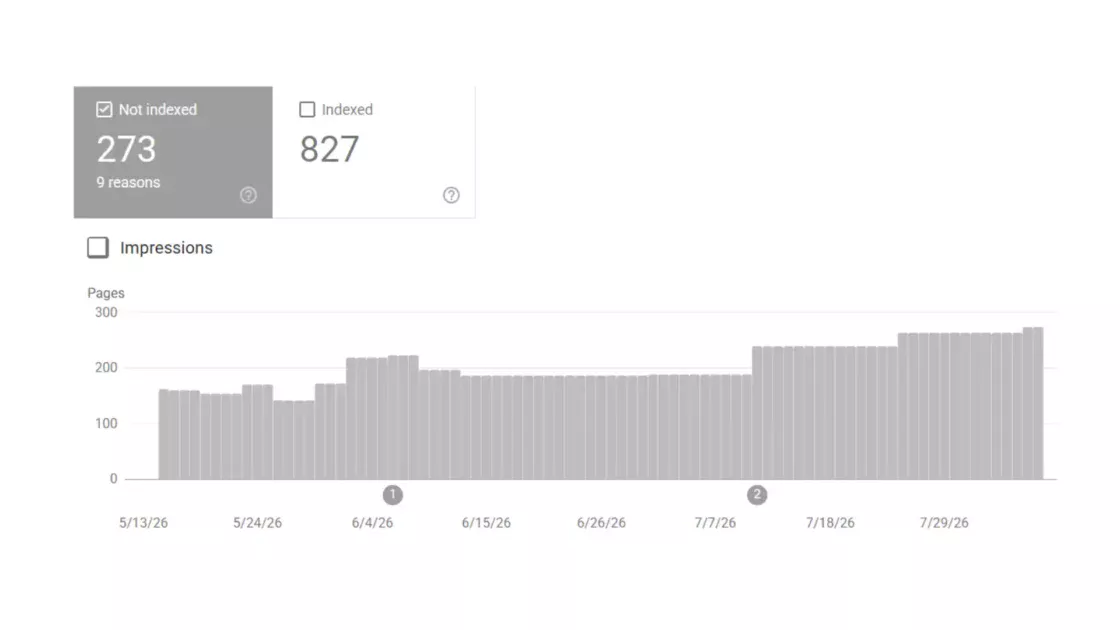
But Search Console should anchor any serious discussion about Google Search performance. If a third-party tool says traffic collapsed, Search Console can show whether clicks, impressions, queries, pages, countries, devices, or search appearance patterns changed. If a crawler says a page is indexable but Google has not indexed it, the URL Inspection tool can show what Google knows about that specific URL and test whether it may be indexable.
For agencies, this changes the trust conversation. Google’s hiring guidance says an audit should provide realistic estimates of improvement and work involved, and that site owners should grant only read access to Search Console during the audit stage. It also says that if an SEO guarantees first place in search results, the site owner should find someone else.
That is not anti-agency language. It is anti-mystery language.
Google is not telling businesses to ignore agencies
The new guidance could be misunderstood as a warning against hiring SEOs. That would be wrong. Google’s own hiring page says an SEO can potentially improve a site and save time, while also warning that an irresponsible SEO can damage a site and reputation.
The practical message is sharper: hire expertise, not secret access.
A good SEO provider should be able to explain which recommendations come from official Google documentation, which come from Search Console, which come from a crawl, which come from analytics, which come from competitor research, and which come from professional judgment. A weak provider hides behind tool scores, vague claims, and ranking guarantees.
This distinction matters because agencies often act as translators between tools and clients. The client may never see the crawler configuration, the keyword database, the AI visibility prompt set, the backlink index, or the content scoring model. The client sees the recommendation. Google is telling site owners to inspect that translation.
A serious agency should welcome the scrutiny. It should say when a tool finding is low priority. It should separate compliance fixes from experiments. It should refuse tactics that might create policy risk. It should document assumptions. It should tell a client when a forecast is uncertain.
The agencies most affected by Google’s guidance are those that sell certainty they cannot prove.
AEO and GEO are pulled back into SEO
Google’s new guidance directly names AEO and GEO. It describes AEO as “answer engine optimization” and GEO as “generative engine optimization,” and says outside advice related to SEO, search listings, and AI experiences may misinterpret what Google says or how ranking systems work.
Google’s separate generative AI optimization guide makes the point even more clearly. It says AEO and GEO are terms people may use for work focused on visibility in AI search experiences, but from Google Search’s perspective, optimizing for generative AI search is still SEO. It also tells anyone considering third-party AEO or GEO advice to review Google’s third-party SEO guidance.
That is a direct challenge to a fast-growing AI search sales category. Many vendors now pitch GEO as a new discipline with new files, new schema, new citation tactics, new prompt formulas, new mention strategies, and new dashboards. Some of those tools may measure useful things. But Google is rejecting the idea that its AI search features require a separate mythology.
For Google Search, the message is simple: AI visibility does not remove the need for crawlability, indexability, helpful content, clear structure, accurate product or local data, strong user experience, and compliance with spam policies.
That does not mean AI Overviews and AI Mode are irrelevant. It means Google is telling site owners not to buy unsupported claims about special AI optimization shortcuts.
Third-party tools are useful when they stay in their lane
The best reading of Google’s guidance is balanced. Google is not saying SEO software is worthless. Technical crawlers, rank trackers, log analyzers, link databases, content systems, structured data validators, analytics tools, page speed tools, and AI visibility monitors can all help teams see problems they would otherwise miss.
The issue is scope.
A crawler can show that important pages return 404 errors, are blocked by robots.txt, point to conflicting canonical URLs, or are buried deep in the site architecture. A log analyzer can show how Googlebot spends crawl activity. A rank tracker can monitor selected query sets across locations and devices. A content system can help editors manage briefs, updates, internal links, and quality control. An AI visibility tool can monitor sampled answer surfaces.
Those are useful functions. They become dangerous when they are described as direct windows into Google’s internal ranking systems.
Google’s SEO Starter Guide states that there are no secrets that automatically rank a site first in Google, and that not every change made to a website will produce a noticeable impact in Search results.
That sentence should sit beside every SEO dashboard. Tools can help teams discover, diagnose, prioritize, and monitor. They cannot guarantee outcomes controlled by Google’s systems, competitors, users, market demand, content quality, and implementation quality.
Sitemaps show the difference between tool output and truth
Google lists sitemap generation as one example of a third-party SEO service. That is a helpful example because sitemaps are standard technical SEO, not a controversial trick.
A sitemap tool may create XML files, split large sitemaps, update last-modified dates, remove noncanonical URLs, and submit files through Search Console. That can be useful. But the tool’s role is operational. It does not guarantee indexing.
Google’s sitemap documentation says site owners should include URLs they want to see in Google’s search results and that Google generally shows canonical URLs in search results.
The distinction matters. A sitemap can help discovery and canonical signaling, but it is not a ranking promise. A tool that says “these URLs are in your sitemap” is giving a useful observation. A tool that implies “these URLs will rank because they are in your sitemap” is overstating the case.
Good SEO advice turns tool output into a decision grounded in Google documentation. Bad SEO advice turns routine tool activity into false certainty.
Indexing directives require extra caution
Google also refers to services that help establish indexing directives. This is one of the highest-risk areas in SEO because a small mistake can remove pages from Search, block crawling, break snippets, confuse canonicalization, or hide content Google needs to see.
Robots.txt, noindex, canonical tags, redirects, sitemap inclusion, and snippet controls are not cosmetic settings. They affect whether pages can be crawled, indexed, selected as canonical, shown, or summarized.
A third-party tool may correctly find that pages are blocked, canonicalized, noindexed, redirected, or missing from a sitemap. But the recommendation still needs review. A robots.txt block may prevent Google from crawling a URL, but it is not the right method for keeping sensitive or unwanted pages out of Google’s index. A noindex tag must be crawlable for Google to see it. A canonical tag is a signal, not an absolute command.
Google’s canonical documentation says site owners can indicate a canonical URL preference using several methods, including redirects, rel=”canonical,” and sitemap signals.
The practical rule is strict: never let a third-party tool make large indexing, canonical, redirect, or robots.txt changes without human review and rollback planning.
The audit dashboard trap
SEO dashboards reduce complexity. They also create a trap. A tool has to summarize thousands or millions of observations, so it converts them into warnings, issue counts, colors, grades, and scores. That design pushes teams toward action. The question is whether the action deserves priority.
Google’s distinction between tool output and Search data
| Claim or metric | Safer interpretation | Evidence to check |
|---|---|---|
| Site health score | Vendor model, not Google score | Crawl sample, issue list, Search Console |
| Keyword difficulty | Market estimate, not ranking rule | SERP analysis, intent, competitors |
| AI visibility score | Sampled observation, not guaranteed exposure | Prompt set, location, repeatability |
| Link authority score | Vendor proxy, not Google internal data | Link context, relevance, policy risk |
| Content grade | Editorial aid, not helpfulness proof | User intent, originality, expertise |
| Indexability warning | Technical signal to inspect | URL Inspection, robots.txt, noindex, canonical |
The table shows the practical meaning of Google’s guidance. A third-party metric is safer when treated as a lead to investigate, not proof of how Google ranks the page.
The audit trap appears when a company ranks work by dashboard severity alone. A crawler may label thousands of missing meta descriptions as urgent while the site has a serious JavaScript rendering problem on revenue pages. A content tool may flag short pages even when those pages satisfy transactional intent. A link tool may produce a toxic-link list that leads to unnecessary disavow work. A performance tool may push a team from a strong score to a perfect score while bigger user problems remain unfixed.
A mature SEO workflow starts with tool findings, then checks evidence, user impact, Google documentation, implementation cost, and business value. It does not blindly obey the dashboard.
Content generation services sit in the warning zone
Google’s new guidance names third-party services that offer to generate “SEO-optimized” content. That phrase deserves scrutiny because it often hides the wrong goal.
Google’s helpful content guidance says its ranking systems are designed to prioritize helpful, reliable information created to benefit people, not content created to manipulate search engine rankings.
Google’s March 2024 spam policy update also introduced or clarified policies against expired domain abuse, scaled content abuse, and site reputation abuse. Google said sites violating spam policies may rank lower or not appear in results at all, and manual actions may be reported through Search Console.
This is crucial for AI content tools. The risk is not AI by itself. The risk is mass-producing low-value pages whose main purpose is ranking capture.
A content vendor using AI to support research, structure, drafting, editing, translation, or updates can be useful when human accountability, originality, accuracy, and editorial standards remain in place. A vendor generating hundreds or thousands of thin pages from keyword lists, city modifiers, scraped summaries, or prompt templates creates a very different risk.
Site owners should ask: Does this page deserve to exist for users even if it never ranks? If the answer is no, the content strategy is already weak.
Site reputation abuse gives the guidance sharper meaning
Google’s site reputation abuse policy helps explain why third-party arrangements matter. In November 2024, Google clarified that using third-party content on a site in an attempt to exploit the host site’s ranking signals is a violation, regardless of whether there is first-party involvement or oversight.
That policy is not the same as the June 2026 third-party tool guidance, but the logic overlaps. A site owner cannot outsource responsibility. If a coupon partner, affiliate partner, white-label content provider, AI content vendor, or programmatic SEO service publishes under the site’s domain, the domain owner carries the Search risk.
The user sees the domain. Google crawls the domain. The brand takes the risk.
This is especially important for publishers, universities, large brands, marketplaces, and enterprise sites that host third-party sections. Not every third-party page violates policy. Freelance work, user-generated content, affiliate content, partner tools, and contributed material can be legitimate. The problem appears when the arrangement exists mainly to borrow the host site’s ranking signals.
Google’s clarification also says Google may treat some starkly different sections of a site as if they are standalone, so sub-sections do not automatically benefit from the reputation of the main site.
That is a warning to any company treating domain authority as an asset to rent.
Page experience tools need the same skepticism
Page experience and Core Web Vitals tools can be useful, but they also produce score-chasing behavior. Google’s page experience documentation says its ranking systems reward content that provides a good page experience, but it also warns that good results in reports or third-party tools do not guarantee top rankings.
That mirrors the third-party tool guidance. A score can point toward useful work, but it is not a ranking guarantee.
Performance work should be judged by user improvement and business impact, not the vanity of a perfect audit. For an ecommerce site, that might mean faster product pages and checkout. For a publisher, it might mean fewer layout shifts from ads. For a SaaS company, it might mean documentation pages that work well on mobile.
A tool may show lab data, field data, synthetic performance, real-user monitoring, or Core Web Vitals grouping. Each source has value. None should be presented as a secret ranking dashboard.
Structured data is eligibility work, not a ranking shortcut
Structured data is another area where third-party tools often overpromise. Schema plugins and validators can help sites qualify for rich results, fix markup errors, and keep data consistent. But structured data should describe the visible truth of the page.
Structured data is not a shortcut around weak content, inaccurate product data, or poor user experience.
For ecommerce, product structured data should match visible price, availability, variants, ratings, and product information. For publishers, article markup should accurately reflect authors, dates, images, and paywall conditions. For local businesses, structured information should match real-world business details.
The same principle applies to AI search. Google’s generative AI guidance does not say site owners need a special hidden schema layer for AI Overviews or AI Mode. It points back to foundational SEO and high-quality, non-commodity content.
A vendor selling “AI schema” should be asked to show exactly where Google requires it.
Forecasts should be treated as scenarios, not promises
SEO forecasts have a legitimate role. Companies need planning numbers. Agencies need to estimate opportunity. Content teams need to prioritize topics. Product teams need to justify technical work.
But Google’s guidance undercuts the sales version of forecasting. Third-party tools cannot guarantee performance. Their predictions are their own.
A responsible SEO forecast should show assumptions, ranges, dependencies, and risks. It should identify the query set, volume source, CTR assumptions, ranking scenarios, implementation requirements, conversion assumptions, seasonality, competitive uncertainty, and limits of measurement.
A bad forecast gives one number and calls it likely.
This is even more important for AI visibility. A prompt-tracking tool may show that a brand appears in a sample of AI responses. That can be useful. It does not prove the brand will appear for all users, locations, query variations, or future model states.
A practical risk test before acting on SEO advice
Google says site owners should check third-party recommendations against official guidance and think critically before making major changes. That needs to become a practical workflow.
Risk test for SEO recommendations
| Question | Low-risk answer | High-risk answer |
|---|---|---|
| Which Google document supports this? | Specific official page or policy | “Google likes this” with no source |
| What data triggered it? | Search Console, crawl, logs, analytics | Vendor score alone |
| What user problem does it solve? | Clear reader, buyer, or access benefit | Pure ranking manipulation |
| What could go wrong? | Known risk and rollback plan | Risk dismissed or hidden |
| Who approves it? | Named owner with proper access limits | Vendor changes live site alone |
| How is success measured? | Defined metric and timeframe | Guaranteed ranking or vague visibility |
Advice that survives these questions is not automatically correct, but advice that fails them should not be implemented on a live site.
The first question is often enough. If a provider recommends improving crawlable links, fixing canonical conflicts, removing accidental noindex tags, improving page experience, using accurate structured data, or creating helpful content, official documentation exists. If a provider recommends a secret AI file, synthetic mention campaign, guaranteed GEO package, or “Google-approved” plugin, the buyer should demand proof.
Small businesses need protection from audit theater
Small businesses are often the easiest targets for weak SEO sales. A restaurant, clinic, law firm, local contractor, hotel, ecommerce founder, or manufacturer may receive an audit claiming the site is “failing” because a tool found many issues. The owner may not know which issues matter.
Google’s guidance gives small businesses a defense. Use Search Console. Learn the basics. Ask whether the provider follows Google Search Essentials. Avoid ranking guarantees. Grant only limited access at the audit stage. Ask for documentation. Ask what work will actually be done.
For many small businesses, the strongest SEO work is not exotic. Make the site crawlable. Explain services clearly. Use accurate business details. Keep product, pricing, opening hours, service areas, and contact information current. Improve pages that users actually visit. Earn real local mentions. Publish useful content only where the business has real knowledge.
A 90-page audit is not a strategy. A tool score is not a business outcome.
The question for a small business should be simple: will this work improve qualified calls, bookings, leads, visits, sales, or trust? If the answer is unclear, the recommendation needs more scrutiny.
Enterprise SEO needs governance, not louder dashboards
Enterprise SEO teams face the opposite problem. They often have too many tools, too many vendors, too many URLs, too many dashboards, and too many teams making changes that affect Search.
For large publishers, retailers, marketplaces, travel sites, SaaS companies, financial platforms, healthcare brands, and international businesses, Google’s guidance should become part of governance. Tool findings should not move directly into deployment. High-risk changes to robots.txt, noindex, canonicals, redirects, structured data, templates, internal linking, JavaScript rendering, or automated content production need review.
Enterprise SEO should separate detection, diagnosis, approval, deployment, and measurement.
A crawler detects. An SEO diagnoses. A product or engineering team approves. A release process deploys. Search Console, logs, analytics, and business data measure. Skipping those steps turns tool output into operational risk.
Enterprise teams should also label every metric by source. Search Console data, analytics data, crawler data, rank tracking data, link database data, content scoring, AI visibility sampling, and forecasts should not be mixed without explanation.
AI visibility tools face the hardest credibility test
AI visibility tools may become useful. Brands, publishers, retailers, and local businesses need to know whether they appear in AI Overviews, AI Mode, ChatGPT, Perplexity, Gemini, Copilot, and other answer systems. They need to track citations, competitors, prompt coverage, source overlap, and content gaps.
But this category has the hardest credibility problem. AI answers vary by query wording, location, time, interface, model, personalization, follow-up behavior, and source availability. A vendor’s prompt set may not match real user behavior. A single GEO score may hide more than it reveals.
A credible AI visibility tool should disclose what it measures, where it measures, how often it measures, which prompts it uses, which engines it covers, and what its limits are.
For Google Search specifically, Google says AEO and GEO advice should be evaluated against official SEO guidance, and optimizing for generative AI search remains SEO.
That does not mean AI visibility measurement is useless. It means the measurement must be labeled honestly.
SEO publishers and influencers are affected too
Google’s guidance also applies to advice on blogs, newsletters, podcasts, YouTube channels, X threads, LinkedIn posts, conference slides, and SEO communities. Google says some third-party advice is helpful, while some may misinterpret or overstate what Google says.
The healthiest SEO commentary labels claims clearly: official statement, observed test, correlation, opinion, case study, old guidance, new guidance, Google-specific, non-Google-specific, high-risk, low-risk.
A headline saying “Google wants X” should link to Google documentation. A claim about AI Overviews should distinguish official Google guidance from outside measurement. A case study should not pretend to prove universal ranking rules.
Search Engine Land’s coverage of the June 2026 update captured the news angle: Google added the new help document, updated the hiring-an-SEO document, and emphasized that third-party tools are not endorsed by Google and do not access internal ranking data.
That secondary coverage is useful. But site owners should still check the official page before changing a site.
Google’s guidance is authoritative, but not a full strategy
Google’s documentation is the official source for what Google says about Google Search. It is not a complete business strategy.
A site can follow Search Essentials and still fail to grow because competitors are stronger, content is generic, products are weak, brand demand is low, user experience is poor, or the company has not earned authority in the market. Google’s SEO Starter Guide says there are no secrets that automatically rank a site first and that not all changes will produce noticeable Search impact.
Google documentation defines guardrails. Strategy decides where to drive.
A serious SEO strategy still needs market analysis, user research, editorial judgment, technical skill, product knowledge, conversion data, and business priorities. The mistake is not using third-party insight. The mistake is treating third-party insight as if it came from inside Google.
Tool vendors need cleaner language
The SEO software market now has a language problem. Many products imply they show what Google wants, certify SEO readiness, calculate authority, guarantee AI visibility, or expose hidden ranking opportunities. Google’s new guidance makes that language easier to challenge.
A safer tool claim is: “We crawl your site and identify technical issues mapped to Google documentation.”
A risky claim is: “We make your site Google-approved.”
A safer content claim is: “We help editors identify missing user questions and improve page structure.”
A risky claim is: “We generate SEO content Google rewards.”
A safer AI visibility claim is: “We monitor sampled AI responses across selected prompts and engines.”
A risky claim is: “We guarantee GEO visibility.”
The best SEO tools after June 2026 will be transparent about data sources, methods, assumptions, and limits.
That transparency is not weakness. It is credibility.
In-house SEO teams should use the guidance internally
In-house SEO teams can use Google’s new guidance as a practical internal reference. It helps them push back when executives, sales teams, product teams, content teams, or vendors bring unsupported claims.
A CEO may forward a GEO pitch. A sales leader may ask for hundreds of comparison pages. A product manager may want to index internal search results. A partner team may want to publish third-party content under the brand’s domain. A content team may want to mass-generate AI pages. The SEO team can now point to a current Google document and ask for evidence.
The best internal SEO process labels every recommendation by evidence type: official Google guidance, Search Console data, crawl data, analytics data, logs, user research, competitor research, expert judgment, or experiment.
That discipline prevents weak claims from becoming live-site changes.
The safest reading for site owners
The safest reading of Google’s June 2026 guidance is calm and practical.
Do not cancel every SEO tool.
Do not distrust every consultant.
Do not ignore AI search.
Do not treat Search Console as a complete strategy platform.
Do not assume Google documentation answers every competitive question.
Do change the burden of proof.
If advice claims to describe Google’s rules, ask for official documentation. If a metric claims to reflect Google’s view, ask whether it is first-party data or a vendor model. If a service claims approval, ask where Google says it approved the service. If a forecast promises performance, ask for assumptions and ranges. If an AEO or GEO vendor promises gains, compare the claim with Google’s generative AI guidance.
The guidance does not reduce SEO to official documentation. It reduces the space for unsupported authority claims.
That is healthy for site owners, responsible agencies, honest software companies, and users.
Questions site owners are asking about Google’s third-party SEO guidance
Google added a Search Central page giving guidance on using third-party SEO tools, services, and advice. It also updated its “Do you need an SEO?” page with new advice on evaluating SEO recommendations and tools.
No. Google says some third-party tools and advice can be useful. The warning is about unsupported claims, false approval language, ranking guarantees, and confusion between vendor metrics and Google data.
No. Google says third-party SEO tools do not have access to its internal ranking data.
Google says it does not evaluate or endorse third-party SEO tools. Site owners should be wary of claims that a tool or service is “approved” or “acceptable” to Google Search.
No. SEO platforms can support crawling, monitoring, reporting, content planning, technical audits, competitive research, and workflow. Their outputs should be treated as models or observations, not Google’s own scores.
Search Console provides first-party data directly from Google Search for verified site owners, including performance, indexing, URL inspection, sitemap, manual action, security, and page experience information.
No. Search Console is the baseline for Google Search data, but most teams still need third-party crawlers, analytics, log analysis, rank tracking, content systems, and human judgment.
Google’s hiring guidance now more directly warns site owners to evaluate an SEO’s tools and recommendations, avoid first-place guarantees, and grant only read access to Search Console during an audit.
Yes. Google directly mentions AEO and GEO and says third-party advice in those areas should be evaluated against official Google Search guidance.
For Google Search, no. Google says optimizing for generative AI search is still optimizing for the search experience, and therefore still SEO.
Google’s generative AI guidance does not support the idea that special hidden schema or AI-only files are required for those features.
They can be. AI tools are not automatically a problem, but mass-producing low-value pages mainly to manipulate rankings can violate Google’s scaled content abuse policy.
The biggest risk is treating audit scores as Google instructions without checking the underlying issue, affected pages, user impact, Search Console evidence, and official guidance.
Ask which Google document supports it, what data triggered it, what user problem it solves, what could go wrong, who approves implementation, and how success will be measured.
No. A sitemap can help Google discover preferred URLs, but it does not guarantee crawling, indexing, or ranking.
No responsible agency should guarantee first-place organic rankings. Google’s hiring guidance warns against that claim.
Yes, indirectly. Publishers should review third-party sections, white-label content, coupon partnerships, affiliate sections, and AI-generated content against Google’s site reputation abuse and scaled content policies.
They should disclose data sources and methodology, label proprietary scores as vendor models, avoid implying Google approval, and cite official Google documentation where relevant.
Use tools and agencies, but demand evidence. Search Console is first-party data, Google documentation is the rule reference, and third-party metrics are inputs for judgment.
Author:
Jan Bielik
CEO & Founder of Webiano Digital & Marketing Agency
This article is an original analysis supported by the sources cited below
Google Search’s guidance on using third-party SEO tools, services, and advice
Official Google Search Central documentation explaining how site owners should evaluate external SEO advice, services, and tools.
Latest Google Search documentation updates
Google Search Central changelog confirming the June 5, 2026 addition of the third-party SEO guidance and related update to the SEO hiring page.
Do you need an SEO?
Google’s guidance for evaluating whether to hire an SEO, including warnings about guarantees, access, and third-party tool claims.
Optimizing your website for generative AI features on Google Search
Google’s guidance on AI Overviews, AI Mode, AEO, GEO, non-commodity content, and why generative AI search optimization remains SEO from Google’s perspective.
Creating helpful, reliable, people-first content
Google documentation on content created to benefit people rather than manipulate search rankings.
Google Search Essentials
Google’s core requirements and best practices for technical eligibility, spam compliance, and Search visibility.
Search Engine Optimization SEO Starter Guide
Google’s beginner-friendly SEO guide explaining crawlability, indexing, content understanding, and the absence of automatic ranking secrets.
What web creators should know about our March 2024 core update and new spam policies
Google Search Central blog post announcing the March 2024 core update and new spam policies covering expired domain abuse, scaled content abuse, and site reputation abuse.
Updating our site reputation abuse policy
Google’s clarification on third-party content published to exploit a host site’s ranking signals.
Understanding page experience in Google Search results
Google documentation explaining page experience, Core Web Vitals, and the limits of score-based assumptions.
Google Search Console
Google’s product page explaining how Search Console helps site owners measure Search traffic, performance, and site issues.
Performance report for Search results
Search Console Help documentation describing click, impression, query, page, and performance reporting.
URL Inspection tool
Search Console Help documentation explaining how site owners can inspect Google’s indexed version of a specific URL and test live indexability.
Build and submit a sitemap
Google documentation on sitemap creation, canonical URL inclusion, and sitemap submission.
How to specify a canonical URL with rel canonical and other methods
Google documentation explaining canonical URL signals including rel canonical, redirects, and sitemaps.
In-depth guide to how Google Search works
Google’s explanation of crawling, indexing, and serving in Search.
Search Engine Land coverage of Google’s third-party SEO guidance
Reputable SEO news coverage by Barry Schwartz summarizing the new guidance and its implications for tools, services, AEO, and GEO.
Google Search Central Blog
Official Google Search Central blog for Search announcements, documentation updates, and SEO guidance.
What are impressions, position, and clicks
Search Console Help documentation defining core Search Console performance metrics.
Maintaining your website’s SEO
Google Search Central documentation covering deeper SEO maintenance tasks such as site moves, multilingual sites, crawl control, and indexing management.
| Citing this article? Brief excerpts are welcome. Please credit Webiano.digital, name the author where stated, and include a link to https://webiano.digital and to this original article. Full or substantial republication requires prior written permission. Read our Copyright and Content Use Policy. |
This article was prepared with the assistance of artificial intelligence tools. The content underwent expert human review, and Webiano Digital & Marketing Agency assumes editorial responsibility for its final version and publication.