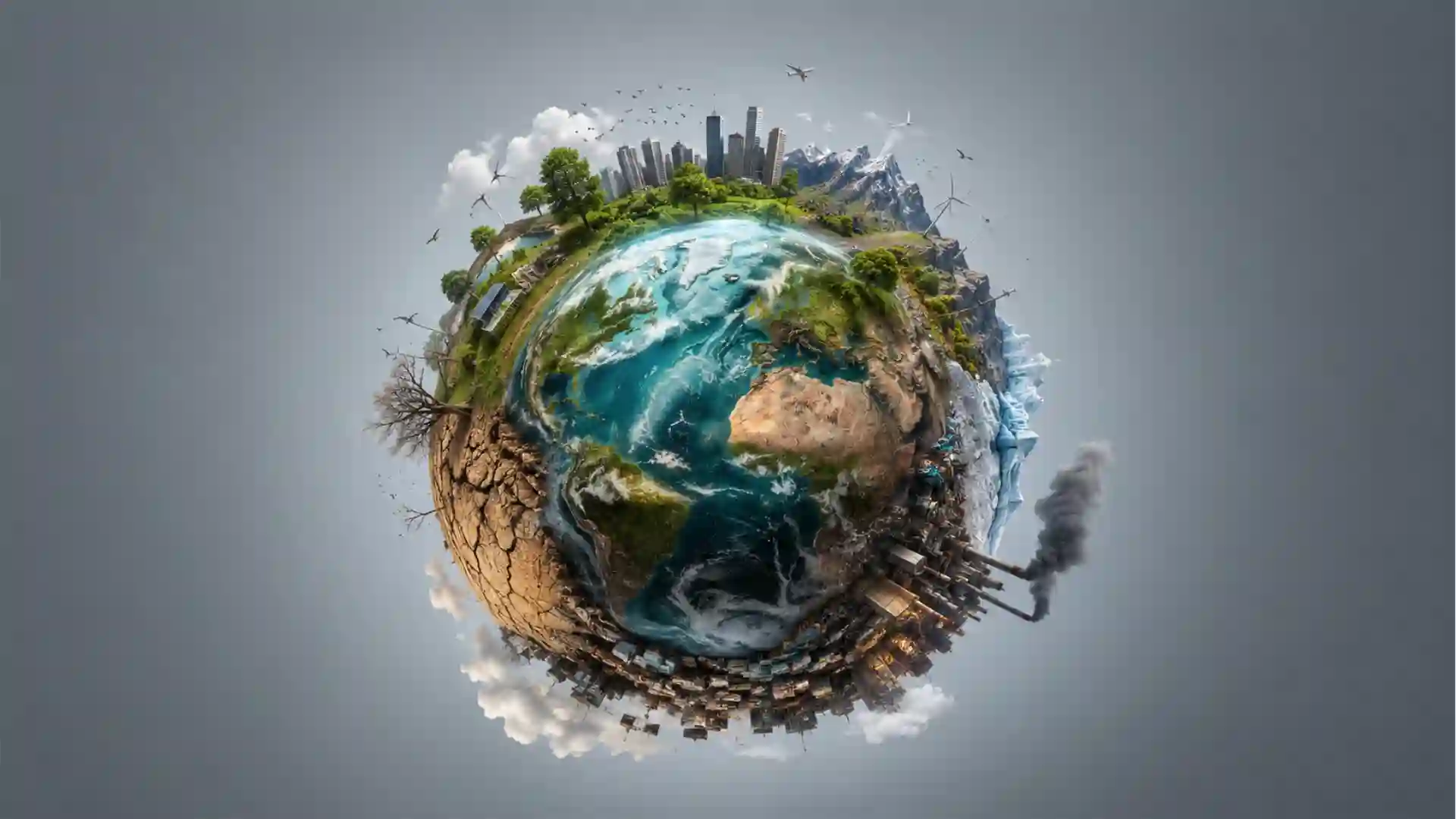
The strange thing about HOME is that it does not feel like a YouTube video, even when you find it sitting on YouTube. It feels too wide for the tab, too slow for the feed, too expensive for the accidental click. The film opens from above, with the kind of aerial image that asks you to stop behaving like a browser user and start behaving like a viewer. That alone makes it an odd internet object: a feature-length environmental documentary from 2009, built from sweeping images of Earth, still available to be opened with the same gesture we use for tutorials, clips, trailers, and background noise.
Table of Contents
Tip: Turn on captions in the video for subtitles.
A climate film hiding in plain sight
Yann Arthus-Bertrand’s film is not obscure in the usual sense. It has been seen by huge numbers of people, screened in many countries, and discussed for years by environmental educators, photographers, documentary fans, and people who collect free films online. GoodPlanet, the foundation linked to Arthus-Bertrand, says HOME was first shown publicly on June 5, 2009 for World Environment Day, later circulated free through YouTube, and seen in more than 181 countries through its free distribution since 2009. The same GoodPlanet anniversary note says the film crossed 54 countries, 217 filming days, and 488 hours of rushes.
Yet HOME still has the feeling of something half-forgotten. It belongs to a period when the web was discovering that a full film did not need to be chopped into fragments to travel. A long documentary online still felt like an event. The idea that a movie could be released across cinemas, DVD, television, and the internet on the same day was unusual enough that Kering’s archived PUMA announcement called HOME “the first movie to be released simultaneously across all media and all continents.”
That release strategy now feels almost as interesting as the film itself. We have grown used to everything being available, but HOME came from a moment when free online access still carried a public-service charge. It was not merely dumped on the web after its theatrical life. The web was part of the launch. The film was made to be seen widely, and the internet was treated as a civic broadcast channel, not only a marketing funnel.
This is why HOME belongs in Web Radar. Not because it is a hidden tool, a clever new app, or a tiny experimental site, but because it is a web artifact with unusual intent. It is a full-scale cinematic object that behaves like an open link. You can press play without a paywall, without a subscription, without a festival credential, and without needing to know the right person. The internet has many free things, but fewer free things that still carry this much cinematic mass.
The premise is direct enough to survive a decade and a half of climate discourse. HOME argues that the planet’s wounds are connected: energy, agriculture, water, forests, consumption, extraction, cities, deserts, ice, oceans, hunger, and wealth. The film’s structure is not built around one villain, one technology, or one disaster. It keeps returning to systems. The Earth is shown as a living chain, and human life as the species that learned how to pull too hard on almost every link.
The title sounds soft, but the film is not soft. HOME uses beauty as bait, then turns that beauty into evidence. A coral reef is not just beautiful. A field is not just geometric. A city is not just impressive. A desert is not just empty. From above, patterns become arguments. The aerial camera flattens borders, drains the romance out of expansion, and makes human appetite look both clever and frightening.
The web usually rewards immediacy, and HOME asks for surrender. It is not a clip that gives its point away in ten seconds. Its force builds from repetition: Earth, road, farm, mine, herd, port, city, desert, ice, Earth again. The film wants your eye to start recognizing shape before your brain starts sorting policy. That rhythm is unfashionable, which is exactly why the link still feels worth opening.
The most clickable truth is simple: HOME turns YouTube into a planetarium. Not because the interface disappears, but because the film insists on scale. Play it in a small embedded window and it shrinks into earnest educational content. Play it full screen, with the room quiet, and it becomes something closer to a public projection. That gap between the platform and the image is the hook.
The trick is the altitude
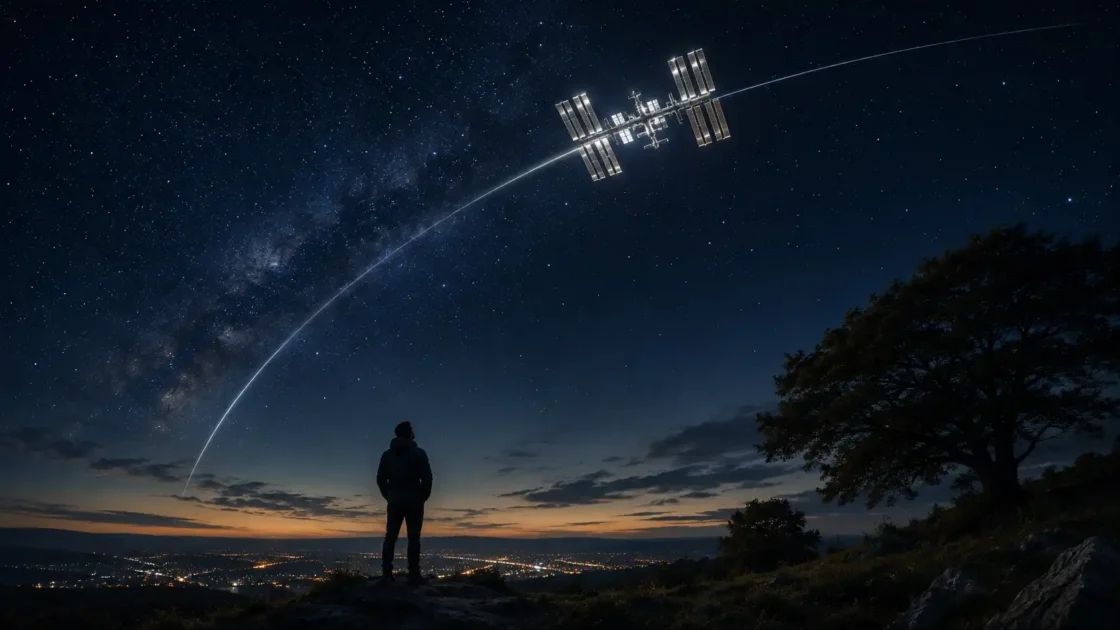
HOME is built around one visual decision, and it commits to it with rare stubbornness. The film looks down. It does not cut constantly to experts in offices. It does not keep returning to a presenter walking toward camera. It does not turn climate into a slideshow of charts. It stays above the surface, watching the planet as pattern, texture, wound, machine, garden, and home.
That altitude is not neutral. Aerial photography has power because it removes the ordinary human viewpoint. We are used to seeing streets from street level, rivers from bridges, fields from roads, and coastlines from beaches. HOME refuses that comfort. It makes the viewer hover. The result is both seductive and unsettling, because the images are gorgeous even when the subject is damage.
Arthus-Bertrand was already known for seeing the planet this way. TED’s profile describes him as an aerial photographer and says his work on Earth from Above involved photographing the planet from the sky over many years. The same profile frames his practice as a search for the story behind the image, not only the production of beautiful pictures.
That background matters because HOME is not a filmmaker trying aerial footage as a novelty. It is the extension of a long habit: look from above, find the pattern, turn distance into moral pressure. The film trusts the aerial view so completely that it sometimes feels like a single enormous moving photograph. It is not always subtle, but it is unusually coherent.
The aerial view gives the film its strongest moments. A river becomes a vein. A city becomes circuitry. Agriculture becomes a grid. Oil fields become scars. Feedlots become an argument before the narration even arrives. A highway stops looking like freedom and starts looking like a line etched into flesh. The camera has a way of making human systems appear less abstract and more physical.
This is where HOME still beats many cleaner, newer climate explainers. A chart may tell you what is rising or falling. A talking head may clarify a cause. But a long aerial pass over a landscape can make scale land in the body. The eye sees repetition before the mind defends itself. You do not need to agree with every line of narration to feel the pattern.
The best scenes are not the most dramatic ones. They are often the ones where the film simply looks long enough. The geometry of monoculture. The shine of water beside dry land. The strange neatness of industrial extraction. The tiny human systems placed against much older terrain. HOME understands that environmental damage does not always arrive as spectacle. Sometimes it arrives as order.
That is one of the film’s cleverest visual moves. It makes danger look organized. The camera does not need smoke, sirens, or collapse in every sequence. It often shows clean lines, planned spaces, and engineered repetition. The discomfort comes from realizing how much ecological harm wears the face of competence.
Aerial filming also gives HOME an almost mythic tone. The camera rarely feels rushed. It glides. It watches. It makes Earth look ancient and humanity look recent. That can become grandiose, and sometimes it does. But the scale is honest to the subject. A small, chatty documentary about planetary systems would probably feel dishonest in a different way.
The film’s beauty is the part that makes some viewers suspicious. Beautiful environmental cinema risks turning damage into wallpaper. HOME does not fully escape that problem. Some shots are so polished that the image can briefly outrun the argument. You may find yourself admiring the composition of a wound. The film knows this risk and keeps trying to pull the viewer back from admiration toward responsibility.
Still, the beauty is not decoration. It is the delivery system. HOME believes people protect what they can see and grieve what they have first recognized as alive. That belief may sound old-fashioned beside today’s sharper climate language, but it explains the film’s staying power. It does not begin by asking you to process guilt. It begins by asking you to look.
The altitude also softens borders. National lines vanish. The film moves from one country to another without the usual visual grammar of arrival. No passport stamp, no host introduction, no city-name title card doing all the work. The planet becomes continuous. That continuity is persuasive because it matches the film’s central claim: damage does not respect the categories we use to manage it.
There is a cost to that continuity. Places can blur. People can become symbols. Local histories can flatten into a single human story. HOME is sometimes guilty of that. The aerial view is powerful because it sees connections, but it can miss conflict, politics, land rights, labor, and the people who live inside the systems being shown. Distance reveals patterns and hides arguments.
The film is strongest when you hold both truths at once. From above, HOME sees what daily life often cannot see. From above, it also risks becoming too sure of itself. That tension keeps the film interesting. It is not only an environmental message. It is a lesson in what a camera position can know, and what it cannot.
The narration is where that tension gets louder. The English version is known through Glenn Close’s voice, and Open Culture identifies the film as a 2009 documentary directed by Arthus-Bertrand, produced by Luc Besson, and narrated in English by Close. Her delivery gives the film calm authority, but the script often speaks in sweeping moral language. Some viewers will find that moving. Others will find it heavy.
The voiceover belongs to its period. It has the cadence of a large public warning, not the fractured, self-aware tone that many viewers now expect. It tells rather than only suggests. It believes in collective awakening. It does not wink, hedge, meme, or undercut itself. That seriousness can feel refreshing or overbearing depending on your tolerance for cinematic sermon.
The images, though, remain harder to dismiss. Even when the narration says what you already know, the camera often shows it from an angle you have not lingered on. HOME survives its earnestness because its visual argument is stronger than its verbal one. You can mute parts of the lecture in your head and still be caught by what the helicopter sees.
That is a rare trait for an online documentary. Many web-hosted films depend on topic interest. HOME depends on the image as a hook. You might open it for climate. You might stay for photography. You might send it to someone because it makes a familiar subject feel spatial rather than abstract. The film’s argument is planetary, but its gateway is visual pleasure.
The altitude becomes a kind of interface. Instead of menus, chapters, diagrams, or dashboards, the film uses height to organize knowledge. It asks you to scan Earth the way you might scan a map, but with emotion added back in. You are not clicking layers on and off. You are watching the layers overlap.
Why the YouTube version still works as a web object
HOME’s current appeal is inseparable from its availability. A film like this locked behind a rental button would still be interesting, but it would lose part of its cultural oddness. The free full-movie link is not a minor distribution detail. It is part of the concept. The film was built around reach, and the online version keeps that promise alive.
Kering’s archived announcement makes the launch feel unusually ambitious for 2009. It says the movie would be released worldwide on June 5, 2009, on World Environment Day, in cinemas, on DVD, and free on television and the internet. It also says the simultaneous release was meant to give as many people as possible the chance to watch it together.
That language now reads like a fossil from a different web. The goal was not conversion. It was audience. The film’s backers were not pretending scarcity made the work stronger. They treated access as the point. In the streaming era, where every service turns availability into a private maze, that feels more radical than it probably did at the time.
The YouTube frame gives HOME a second life as a found object. You do not encounter it with festival context, a cinema seat, or a school auditorium. You find it through search, a shared link, a recommendation, a playlist, a rabbit hole, or an old embed. That changes the experience. The film arrives without ceremony, then tries to create its own ceremony through scale.
This is one of the web’s underrated pleasures: finding something too large for the place where it sits. A massive archive hidden behind a plain interface. A brilliant tool with a terrible name. A dead-simple page that contains years of work. A full cinematic essay living beside shorts and thumbnails. HOME has that mismatch. The container is ordinary. The object is not.
It also has a useful friction. YouTube makes leaving easy. The film makes staying morally and visually heavier. Every suggested video on the side becomes a test. The platform is built for drift, while HOME is built for attention. That conflict is part of the experience. Watching it online means noticing your own impatience.
The film’s length is part of that friction. The common runtime listed by GoodPlanet for screenings is 1h33, while Rotten Tomatoes lists the 2009 documentary at 1h30. Either way, it is long enough to require intent. You do not casually finish it between notifications unless you choose to. The film asks for an old kind of attention inside a newer kind of attention economy.
That makes HOME a useful recommendation for people tired of climate content that behaves like social media. It does not compress the planet into a carousel. It does not make the issue more snackable. It uses duration as pressure. The longer you watch, the harder it becomes to treat the images as isolated examples.
The free link also changes who the film is for. Teachers can assign it without asking students to pay. Parents can open it without hunting through streaming catalogs. Designers can study it for visual pacing. Photographers can study the aerial grammar. Climate communicators can debate its tone. Anyone can use it as a reference point in a conversation about how ecological messages travel online.
The web version is not perfect, and that is part of its texture. Depending on the upload, compression may blunt the images. The comments may drag you back into the usual public mess. The recommendation column may surround a grave film with nonsense. Yet those rough edges remind you where the film lives now: not in a sealed cultural vault, but in the same open attention market as everything else.
That open market gives the film a strange humility. HOME once launched as a global event. Now it waits like any other link. It has no control over your tab habits. It must earn attention again every time someone opens it. For a film that speaks in grand planetary terms, that smallness is almost charming.
A compact radar view
| Signal | What stands out |
|---|---|
| Best hook | A feature-length aerial climate film that still feels cinematic inside YouTube |
| Core strength | Scale, visual rhythm, and the patience to make systems visible |
| Best audience | Viewers interested in climate, photography, public media, film distribution, or internet-era documentaries |
| Main limit | The narration can feel too sweeping, and the aerial view sometimes flattens local detail |
| Best way to watch | Full screen, uninterrupted, with the sound treated as part of the experience |
The table makes the recommendation plain: HOME is not worth opening because it is new, but because it still does one thing unusually well. It converts planetary scale into a watchable web experience. The film’s flaws are real, yet they do not erase the fact that the link still carries weight.
The source of that weight is partly historical. HOME belongs to the period before streaming platforms trained us to think of access as a subscription problem. A film could still arrive on the open web with a moral purpose and a global ambition. That did not make it pure, but it did make it different. Its presence on YouTube is not an accident of neglect. It is tied to the film’s original public mission.
GoodPlanet’s 15-year note keeps emphasizing that mission. It says the film was conceived as an awareness tool, made available free on YouTube to reach as many people as possible, and shown in multiple languages. It also says the film was watched free on YouTube by nearly 90 million internet users and viewed on small or large screens by more than one billion people, phrased as a claimed estimate.
Those numbers should be read with care, but the direction is clear. HOME traveled far because it was allowed to travel. It is a reminder that distribution choices shape cultural memory. A paywalled environmental film may win prestige and vanish. A free one may keep resurfacing in classrooms, newsletters, group chats, and late-night searches.
The film is also a reminder that YouTube is not only a short-form platform, even when it behaves like one. Its archive contains lectures, documentaries, concerts, public-domain films, civic recordings, technical talks, lectures, slow experiments, and forgotten broadcast material. HOME sits inside that deeper YouTube: the one that still functions as an accidental public library.
That library quality matters more as the web gets noisier. Search results rot. Official sites disappear or change hands. Embedded players break. Old domains get repurposed. The original home-2009.com domain named in early press materials no longer presents the film project in the way that historical sources describe. The stable open link becomes more useful as the surrounding web shifts.
This is the quiet reason HOME feels like a radar find. It is not hidden by secrecy. It is hidden by abundance. Too many links, too many videos, too many climate explainers, too many thumbnails competing for urgency. The film waits behind a title that is almost too plain to notice. HOME is a huge word and a forgettable search term at the same time.
The English version also benefits from recognizability. Glenn Close’s narration gives the film a familiar voice, but the film never becomes a celebrity project. The voice supports the scale; it does not sell personality. That restraint matters. Environmental documentaries often lean on a host as a bridge. HOME leans on distance, music, and geography.
The result is unusually shareable across contexts. It can be sent as a film, as photography, as climate education, as design inspiration, or as a case study in web-first distribution. Different viewers will take different things from it. A student may remember the sequence on agriculture. A designer may remember the color fields. A teacher may remember the clarity of the systems argument. A critic may remember the contradictions.
Those contradictions make the film more, not less, worth revisiting. A perfectly frictionless climate film from 2009 might now feel dead. HOME still provokes because its method is bold enough to be challenged. The aerial view is magnificent and problematic. The corporate support was powerful and uncomfortable. The narration is stirring and sometimes blunt. The release strategy was idealistic and heavily sponsored. The object has seams.
The seams matter because the web is full of polished concern. Brands, platforms, institutions, and creators have learned the surface language of ecological care. HOME predates much of that tone and still carries its own awkward grandeur. It is earnest in a way that can embarrass modern viewers, but also in a way that refuses easy cynicism.
The YouTube version keeps that earnestness exposed. There is no museum wall to protect it. There is no premium interface to flatter it. The film stands or falls in a tab. That vulnerability is oddly fitting for a documentary about a vulnerable planet. It asks to be taken seriously in the least serious viewing environment we have.
What makes it worth opening now
HOME is worth opening now because it shows the climate crisis as connection rather than topic. That may sound obvious after years of public climate discussion, but many pieces of climate media still isolate problems for convenience. Fire here. Flood there. Plastic here. Oil there. HOME keeps insisting that the parts talk to one another. The film’s central claim is not merely that Earth is damaged. It is that the damage is networked.
That networked view fits the internet better than the film may have realized. Online, we are used to tracing links between systems: supply chains, data centers, shipping routes, financial incentives, land use, food habits, energy demand, migration, politics, and weather. HOME turns those abstract links into images. It is not interactive, but it feels hyperlinked at the level of thought.
The film’s pacing supports that feeling. It moves from origin story to agriculture, from agriculture to energy, from energy to cities, from cities to scarcity, from scarcity to responsibility. You may argue with the script’s choices, but the motion is clear. Every place is treated as connected to another place. The film refuses the comforting fantasy of elsewhere.
That refusal lands differently now. In 2009, some viewers could still treat climate change as distant future or distant geography. In 2026, the distance has collapsed for many people. Heat, drought, flood, smoke, crop stress, insurance trouble, water tension, and political conflict have made climate feel less like an issue category and more like background weather for daily life. HOME’s old warnings now feel less speculative and more blunt.
The film is not current science, and it should not be used as a current science briefing. Its facts, framing, and urgency belong to its release moment. But as a visual essay about planetary pressure, it still has bite. The film does not need to be the newest resource to be useful. It works as a time capsule and as a mirror.
The time-capsule part is important. Watching HOME now means watching how mainstream environmental messaging sounded before the climate conversation became as politically, culturally, and emotionally dense as it is now. The film speaks with broad human language. It says “we” often. It favors shared responsibility over conflict analysis. That choice now feels both generous and incomplete.
The incompleteness is worth noticing. Today, many viewers will ask sharper questions about responsibility. Which humans? Which industries? Which countries? Which class patterns? Which colonial histories? Which supply chains? Which policies? HOME does not always answer with enough precision. Its planetary “we” can blur unequal power. The film’s scale gives it force, but its moral grammar sometimes sands down difference.
That does not make it useless. It makes it a good starting point for argument. A strong web find does not need to be final. It needs to open a door, sharpen the eye, and leave the viewer with something to test. HOME does that. It is the kind of film that makes you want to pause, search, disagree, return, and look again.
The film is especially useful for anyone who works with images. Its aerial compositions show how framing changes moral perception. A close shot of a factory may emphasize labor, machinery, or pollution. A high shot of an industrial zone emphasizes pattern, spread, and proximity to land and water. The subject changes when the camera rises. HOME is almost a masterclass in that shift.
Designers may find it useful for another reason. The film shows how repetition creates recognition. It does not need to label every pattern for the pattern to register. Circular irrigation fields, gridded streets, highways, mines, ports, tanks, farms, coastlines, and crowded settlements return as visual motifs. The viewer learns the film’s language through exposure.
Climate communicators may find both inspiration and warning in it. HOME proves that beauty can pull people toward hard subjects. It also proves that beauty can soften politics. The film’s images create awe, but awe can become passive if the viewer is not given a clear place to stand. The film tries to answer that with moral appeal. Some viewers will want more specific agency.
Educators may appreciate the film’s unusual accessibility. Because the full movie is available online, it fits classrooms, workshops, and public programs more easily than films trapped in licensing trouble. GoodPlanet’s note says the film was made available in languages including French, English, Spanish, German, and Arabic, and the foundation has continued to organize screenings around its anniversary.
Casual viewers may be surprised by how watchable it remains. Environmental documentaries can become dated quickly when they depend on graphics, news clips, or policy snapshots. HOME dates itself through narration and tone, but the aerial footage ages more slowly. A beautiful image of land under pressure does not expire in the same way a statistic does.
The soundtrack helps, too. Armand Amar’s music gives the film a ceremonial quality. It can swell too much, but it gives the images room. In an online setting, where audio is often an afterthought, HOME feels composed. It asks to be heard as well as seen. Watching with laptop speakers is possible; watching with decent sound changes the weight.
The film also rewards viewers who are not usually drawn to environmental documentaries. If you like maps, urbanism, infrastructure, photography, world cinema, public-interest media, or old internet distribution experiments, there is something here. HOME is not only a climate film. It is a film about how the planet looks when human systems become visible from above.
That is why the recommendation is not “watch this because it is good for you.” That kind of framing kills curiosity. The better pitch is: watch this because it makes Earth look unfamiliar. Watch it because it turns agriculture into geometry, consumption into terrain, and the word “home” into something less sentimental. Watch it because the web rarely gives you ninety minutes of scale without demanding a subscription.
The film’s opening sections are especially strong because they move with almost religious patience. The planet is treated as old before humanity enters as an accelerant. This gives the later industrial imagery a sense of rupture. Whether or not you like the narration, the structural contrast works. Time expands, then contracts. Earth takes billions of years; human acceleration takes a blink.
That compressed time is one of HOME’s most persuasive ideas. It does not only show space from above. It tries to make history feel uneven. Geological time, biological time, agricultural time, industrial time, and digital attention time collide. Watching the film on YouTube adds another layer: the ancient planet displayed through a platform built for instant response.
The film’s title gains force through that collision. “Home” is one of those words so overused that it almost vanishes. The film tries to restore scale to it. Home is not only a house, a city, a country, or an identity. Home is the shared operating condition. The word becomes less cozy and more demanding.
That demand is the film’s emotional center. It does not ask the viewer to admire Earth from a safe distance. It asks the viewer to recognize dependence. Food, water, soil, climate, forests, oceans, energy, and settlement are not background scenery. They are the living terms of the deal. HOME’s best moments make that deal visible without needing technical language.
The film’s web presence also makes it easy to revisit in fragments. You can watch the whole thing, but you can also return to sequences. That changes its use. A scene can become a reference, a teaching clip, a visual citation, a reminder. Full-length availability does not only support full-length viewing; it gives the film a public memory.
That memory matters because environmental media often disappears into campaign cycles. A new report appears, a graphic circulates, a campaign peaks, a documentary launches, a thread goes viral, then attention moves. HOME remains useful because it is not tied to one news event. It is tied to a way of looking.
The way of looking is not innocent, but it is memorable. The helicopter eye has its own politics. It costs money. It burns fuel. It carries the privilege of distance. It risks turning the world into a surface. HOME cannot be separated from those contradictions. Still, the film uses that privileged eye to reveal a truth ordinary ground-level life often hides: modern comfort has a geography.
That geography is the film’s quiet accusation. Consumption happens somewhere. Energy comes from somewhere. Food systems occupy somewhere. Waste goes somewhere. Water is taken from somewhere. Forest loss appears somewhere before it becomes everyone’s problem. HOME’s aerial view gives those “somewheres” shape.
The film’s best online use may be as a prompt for better questions. After watching, a viewer might search for current data on deforestation, water stress, emissions, or food systems. They might compare the film’s 2009 framing with newer climate justice language. They might ask who is missing from the aerial view. They might ask how a film funded through luxury-adjacent corporate channels should be read. That afterlife is part of the work.
The critical response has never been one-note, which is another reason the film remains alive. Rotten Tomatoes currently lists a low Tomatometer score from a small critic count and a much higher audience score, while its movie page describes the film’s premise as showing Earth’s problems as interlinked through global footage. That split roughly matches the experience: viewers often respond to the scale and imagery, while critics may bristle at the sermon.
Both reactions are understandable. HOME is visually commanding and rhetorically heavy. It is hard to deny the images and easy to challenge the tone. A film can be both moving and over-insistent. It can be generous and incomplete. It can be worth recommending without being beyond criticism.
That is the sweet spot for Web Radar. The best finds are rarely flawless. They have a charge. They make you want to send them to someone with a note attached: “Open this full screen,” “Ignore the first few minutes if you need to,” “The narration is a lot, but look at the images,” “This feels weirdly relevant again.” HOME is exactly that kind of link.
The parts that have aged and the parts that have not
HOME has aged in layers. The footage still carries force. The distribution story feels newly interesting. The broad ecological warning feels painfully current. The voiceover, though, can feel trapped in a public-service register that many viewers now distrust. The film speaks as if a shared human wake-up call might be enough. We now know that knowing is not the same as changing.
That gap between awareness and action is the film’s biggest historical wound. HOME was built as an awareness machine. The backers and foundation language around it repeatedly frame the film as a tool for consciousness and responsibility. GoodPlanet’s anniversary note describes it as an awareness tool for environmental preservation. Awareness matters, but the last fifteen years have shown how easily awareness is absorbed without structural change.
The film’s tone also belongs to an era of grand environmental address. It speaks to humanity as a single audience. It wants to gather viewers into a collective moral frame. That gives it sweep, but it can dull blame. Viewers familiar with climate justice, extraction politics, Indigenous land struggles, fossil fuel lobbying, and unequal vulnerability may find the film too smooth in places.
The sponsorship context has aged in a more complicated way. The Kering page records that HOME came from a collaboration involving Arthus-Bertrand, Luc Besson, and François-Henri Pinault of PPR, the luxury group that was PUMA’s majority shareholder and the world exclusive partner of HOME. That corporate link was part of what made the wide release possible. It also makes the film’s critique of consumption more awkward.
That awkwardness should not be hidden. A film warning against excess, helped by money tied to consumer brands and luxury groups, invites scrutiny. It would be too easy either to dismiss the film as compromised or to ignore the contradiction because the images are beautiful. The more useful response is to keep the contradiction visible. Big public media often comes with messy patronage. HOME is a clear case.
The film sometimes seems aware of contradiction in general, but not always its own. It critiques the appetite for resources, the machinery of growth, and the costs of modern comfort. Yet the film itself uses high-end global production methods and a lavish visual style. That does not cancel its argument. It makes the argument less clean and more revealing.
In a way, that makes HOME more honest as an object than as a sermon. The film embodies the problem it describes: concern traveling through the same systems of money, technology, spectacle, and global distribution that helped create the crisis. It is a climate warning made inside the machinery of modern media. That is not a reason to reject it. It is a reason to read it carefully.
The aerial view has aged with similar ambiguity. Drone footage is now everywhere, which makes high-angle images feel less rare than they did in 2009. Real estate videos, travel reels, military clips, nature shows, creator footage, and news reports have trained us to see from above casually. HOME came before that saturation, and its aerial language felt more exceptional.
Yet HOME’s images still feel different from ordinary drone spectacle. The film is slower, more composed, more geographical. It does not use height only for thrill. It uses height to connect. Many modern aerial clips give us altitude as sensation. HOME gives us altitude as argument. That distinction still matters.
The film’s lack of on-screen data has also aged in an interesting way. Today’s climate media often depends on charts, counters, captions, maps, and animated explainers. HOME uses narration and image instead. That makes some claims harder to verify while watching, but it also saves the film from becoming visually stale. The images stay clean. The burden sits on the voice.
Viewers who want current facts should pair HOME with current sources. The film is not a substitute for newer climate science, policy analysis, or local reporting. It is an atmospheric and visual primer. Its strongest use is not as a final authority but as a way to reset perception before reading harder material.
The most dated part may be the film’s faith in a single global audience. Online culture has fractured since 2009. People do not arrive at climate media with the same trust, fear, politics, or vocabulary. A film that speaks to “everyone” now lands inside countless smaller publics. Some will receive it as a warning. Some will see propaganda. Some will admire the craft. Some will argue over the sponsor. Some will leave after two minutes.
That fractured reception does not weaken the discovery. It makes the film a test of attention and belief. HOME is not tuned to micro-audiences. It does not flatter your subculture. It speaks in a large register and risks sounding uncool. In a web full of content designed to match mood and identity, that risk feels oddly refreshing.
The film’s optimism has aged, too. It does not end in pure despair. GoodPlanet’s description of later screenings says the film invites viewers to reverse course, recognize the overuse of Earth’s resources, and change consumption habits. Some of that language now feels too individual, too gentle, or too hopeful. Yet despair-only climate media has its own failure mode. HOME’s insistence that action remains possible is part of its public character.
The problem is not that the film has hope. The problem is that hope needs sharper tools than a voiceover can give. HOME gestures toward responsibility, but viewers now may want pathways: policy, organizing, adaptation, litigation, technology, land rights, energy transition, repair, and local resilience. The film’s emotional arc does not deliver those pathways. It opens the appetite for them.
That makes HOME feel like a first chapter, not a manual. It shows scale, not strategy. It creates mood, not a plan. It asks for awareness, not a detailed map of power. Judged as a manual, it fails. Judged as a cinematic alarm, it still rings.
The language of alarm has changed, but the visual alarm remains strong. Melting ice, dry land, crowded settlements, industrial agriculture, and resource extraction are not 2009 concerns frozen in amber. They are still central to the story. The film’s visual categories remain recognizable because the underlying pressures did not vanish.
The release story may have aged best of all. A free, global, multi-platform film launch meant to gather attention around an environmental message now feels like a bold media experiment. It sits somewhere between cinema, public education, brand-funded activism, and open web culture. That hybrid nature is messy, but it is more interesting than a standard documentary rollout.
The current web could use more experiments with that kind of reach. Not every public-interest work should be trapped inside a platform deal. Not every film needs to spend its life fighting for rental clicks. HOME reminds us that access can be a creative decision. The audience is not only a market. Sometimes the audience is the point.
The film also exposes a weakness in how we remember online culture. We often talk about the internet through platforms, scandals, memes, creators, and software. We pay less attention to the serious long-form works that used the web as a public screen. HOME is part of that history. It shows an older belief that the internet could gather people around a shared viewing experience with planetary stakes.
That belief may look naive now, but it is not worthless. The internet did not become the civic commons many people hoped for. It became stranger, harsher, more commercial, more fragmented, and more addictive. Still, public links matter. Open archives matter. Free films matter. A link that lets anyone watch a large environmental documentary still feels like a small act against enclosure.
The visual craft has aged because craft ages differently from discourse. A dated phrase can make a viewer wince. A strong image can still stop the breath. HOME has many such images. Its best shots do not depend on novelty. They depend on vantage, color, rhythm, and the shock of pattern. Those are durable.
The film’s moral simplicity has aged less well. It sometimes moves too quickly from seeing to feeling to duty. Modern viewers may resist being guided so firmly. They may want the film to trust them more. They may want more silence. They may want more contradiction in the narration. Those are fair wishes.
Yet there is something admirable about the film’s refusal to be coy. HOME does not hide its purpose. It wants to change how people see Earth. It wants the viewer to feel responsible. It wants the images to travel. There is no ironic distance. That sincerity may be too much, but it is not empty.
A lot of online climate content now performs urgency while asking very little of attention. HOME does the reverse. It asks for attention before it asks for agreement. That alone makes it stand apart. It is not made to be skimmed, even though the platform invites skimming. It is made to be inhabited.
The film’s best defense against age is that it keeps offering new angles for different viewers. A teenager might see it as a visual introduction to climate systems. A filmmaker might see it as proof of what a single visual rule can do. A critic might see it as a case study in eco-spectacle. A historian of the web might see it as an early example of global digital film release. A teacher might see it as an accessible classroom object. A skeptical viewer might see both beauty and contradiction.
That range is why the link still deserves attention. HOME is not a relic to respect politely. It is a film to test against the present. Open it, argue with it, admire it, doubt it, use it, and notice how much of its warning has not gone away.
The web lesson inside the film
HOME is about Earth, but it also teaches a lesson about the web: access changes the meaning of media. A film released for free, in many places at once, asks to be judged partly by its reach. It becomes less like a product and more like a public gesture. That does not remove the sponsor, the branding, or the contradictions. It changes the terms of the encounter.
The film’s public gesture was unusually explicit. Kering’s announcement says the simultaneous release was meant to let as many people as possible watch as a global collective. That phrase sounds grand, but it captures something that online culture has since both fulfilled and betrayed. The web can gather attention at huge scale. It can also scatter it instantly.
HOME uses the web against scattering. The full film link is a demand for continuity. It says: stay with this. Do not only react. Do not only sample. Do not only pass through. That demand is almost hostile to platform habits, which is why the film feels larger than its container.
This makes the documentary useful for thinking about online public goods. Public goods on the web are often boring in form: archives, databases, libraries, open courses, free documentaries, manuals, maps, old government records, lecture collections. They do not always announce themselves well. They may look plain. They may be poorly indexed. Yet they quietly change who gets access to knowledge.
HOME is more polished than most public goods, but it shares their logic. It removes a gate. The film does not ask the viewer to prove seriousness with payment. It trusts that reach has worth. In a media economy built around funnels and exclusives, that trust feels almost eccentric.
The film also shows how fragile web memory can be. Official project domains can fade or change. Search rankings shift. Uploads appear in multiple versions. Context gets separated from content. A viewer may find the film without knowing the release story, the production background, or the anniversary material. The web preserves and forgets at the same time.
That is why a radar-style recommendation matters. It does not only point at a link. It restores context around the link. HOME is more interesting when you know it was not simply uploaded as leftover content. It was part of a deliberate free distribution plan tied to World Environment Day, cinema screenings, television, DVD, and online release.
The web lesson is also about patience. We often describe online discovery as speed: find, click, skim, save, share. HOME asks for a slower model. Find, stop, enlarge, listen, watch, let the pattern build. That slower model is not nostalgic. It is practical. Some subjects do not fit the speed of the feed.
Planetary subjects especially need time. Climate is not a punchline, a single graph, or a clip of disaster. It is an accumulation of systems. HOME’s long form is not a luxury. It is part of the argument. The viewer needs to feel accumulation, not only understand it.
This is where HOME remains useful to people building things online. The film reminds editors, designers, educators, and creators that format carries ethics. A ten-second climate clip creates one kind of attention. A ninety-minute aerial essay creates another. A searchable public link creates one kind of access. A gated platform release creates another. None of these choices are neutral.
The film also reminds us that beauty is a risky but powerful interface. Beautiful design can invite care, but it can also anesthetize. Beautiful photography can reveal damage, but it can also make damage consumable. HOME walks that edge for nearly its entire runtime. The viewer is never fully free from the suspicion that the film is making crisis look too good.
That suspicion is not a reason to avoid the film. It is a reason to watch with your eyes open. The internet is full of ugly claims and beautiful lies. HOME gives us something more complicated: beautiful evidence shaped by a strong editorial hand and a public moral purpose. It asks for trust, but it also rewards scrutiny.
The corporate connection sharpens that scrutiny. PUMA and PPR support gave the film reach, and the Kering archive still presents the project as a corporate-backed environmental film with public ambitions. That does not make the images false. It makes the distribution story part of the meaning. The film is both a critique of modern appetite and a product of modern institutional power.
A good web discovery often has exactly that kind of double edge. It is not clean. It is not easily sorted. It gives you the thing and the problem of the thing. HOME gives you Earth from above, then leaves you with questions about who gets to look from above, who pays for the looking, and what happens after everyone has looked.
The film’s continued availability makes those questions easier to share. A critic can assign it. A student can challenge it. A photographer can study it. A climate organizer can reject its vagueness and still use its images as a foil. A family can watch it without entering a payment flow. Open access keeps debate possible.
This is why the film still feels internet-native, even though its style is cinematic. It was built to move. It was built to be embedded, emailed, screened, translated, and revisited. It did not depend on a single controlled environment. It became a linkable film before linkable films were ordinary.
The YouTube interface adds accidental commentary. The film talks about attention to the planet while the platform offers distractions beside it. The film talks about overconsumption while the platform measures engagement. The film asks for collective care while the comments may show collective impatience. You are watching the message and the medium argue in real time.
That argument makes the viewing experience richer. In a theater, HOME would surround you. On YouTube, it must compete. The competition makes your choice visible. Staying with the film becomes a small act of refusal against drift. That may sound dramatic, but anyone who has tried to watch long work online knows the feeling.
The film also asks what “free” means. Free can mean discarded, promotional, open, public, subsidized, pirated, sponsored, or civic. HOME’s free availability is not simple. It was funded, backed, promoted, and distributed through powerful institutions. Yet the viewer’s access remains real. The cost moved elsewhere. That is often how public media works.
The web needs more honest conversations about that moved cost. Free access does not erase money; it changes who pays and why. In HOME’s case, the payment story is entangled with branding, philanthropy, environmental messaging, and global media ambition. That entanglement is uncomfortable, but it produced a film many people could watch.
The lesson is not that all public-interest media should copy HOME. The lesson is that reach should be designed, not treated as an afterthought. If a project exists to alter perception, locking it away may betray the purpose. HOME understood that. Its release was part of its argument.
The film’s online life also shows how a piece of media can outlive its campaign. Campaigns have dates. Links have afterlives. HOME’s original launch moment has passed, but the film keeps circulating because the object remains accessible. Its afterlife is quieter than its debut, but perhaps more revealing. A film that still works after the banners are gone has earned something.
This makes HOME a good antidote to novelty addiction. The web trains us to ask what is new. HOME asks a better question: what remains open, strong, and strange enough to revisit? Not every discovery needs to be fresh. Some discoveries are old objects that the web has kept within reach, waiting for a different moment to make them visible again.
The current moment gives HOME a sharper edge. Climate anxiety is no longer a niche feeling. Aerial imagery is familiar but often shallow. Free public media feels less guaranteed. Platform attention feels more hostile to long works. Against that background, this 2009 film becomes newly legible as both warning and web artifact.
The most surprising thing is how little the film needs from the viewer before it begins to work. You press play, enlarge the screen, and the first images do the rest. No sign-up. No reading list. No onboarding. No interface trick. Just the old power of a camera placed far above the ground and pointed back at the place we live.
Small notes before pressing play
Best viewing mood. HOME works best when you are not trying to multitask. The film’s power comes from accumulation, and accumulation breaks when the viewer keeps leaving. Treat it like a film, not a tab. Full screen is not cosmetic here. It is part of the point.
Best reason to send it to someone. Send HOME when you want to share a climate film that leads with visual scale rather than debate. It is especially strong for people who resist dense explainers but respond to photography, geography, and mood. The film gets through the eye first.
Best reason to be skeptical. The narration can flatten responsibility by speaking too broadly about humanity. The aerial view can turn places into symbols. The sponsorship story complicates the anti-consumption message. Those are not small issues. They are part of any honest reading of the film.
Best use in a classroom or workshop. Use HOME as a visual opener, then pair it with current data, local examples, and sharper questions about power. The film is strong at making systems feel connected. It is weaker at naming the actors, policies, and histories inside those systems.
Best use for designers and filmmakers. Study how the film commits to one point of view. HOME is a useful reminder that a strong formal rule can hold a long work together. The aerial perspective is not a gimmick. It is the film’s organizing intelligence.
Best use for web editors. HOME is a case study in why open access changes cultural reach. The film’s free online presence is not a footnote. It is central to why people can still discover, share, teach, and argue with it years later.
Best warning before watching. Do not expect a modern climate justice documentary with granular politics. Do not expect a quiet observational film. HOME is grand, narrated, polished, and direct. Its power and its weakness come from the same confidence.
Best reason it still deserves a click. It makes the planet feel large again. That sounds simple, but the web often makes even planetary issues feel tiny, flattened into posts and reactions. HOME restores size. It lets the viewer feel the difference between knowing Earth is under pressure and seeing pressure drawn across land.
Best after-viewing move. Search for current sources on the topics that stayed with you: water, forests, food systems, energy, cities, ice, or consumption. HOME should not be the last thing you watch or read. It should be the thing that changes the angle from which you continue.
Best final verdict. HOME is imperfect, earnest, visually extraordinary, politically broad, and still worth opening. Its value is not only in what it says about Earth. It is in what it shows about attention, access, and the rare internet link that still feels larger than the screen.
Viewer questions before pressing play
Yes. The English full-movie version is available on YouTube, which is part of what makes HOME such a strong Web Radar find. It is not only a documentary about access to planetary awareness; it is itself an openly accessible film object.
HOME was directed by Yann Arthus-Bertrand, the French photographer and filmmaker known for aerial images of Earth. The English version is widely associated with Glenn Close’s narration, while the film was produced by Luc Besson.
It still matters because its main idea has not aged out: Earth’s environmental problems are connected. The film’s warning about climate, consumption, land use, water, energy, agriculture, and inequality still feels recognizable, even if newer sources are needed for current data.
No. HOME should not be treated as a current science briefing. It is best watched as a visual essay and historical environmental film, then paired with newer climate research, reporting, and local context.
Its power comes from the aerial viewpoint. Instead of leaning on expert interviews or charts, HOME looks down at Earth from above and lets patterns emerge: cities, fields, rivers, deserts, forests, mines, coastlines, and industrial systems.
HOME is worth watching for climate-minded viewers, photographers, designers, teachers, filmmakers, students, and anyone interested in how the web can carry serious long-form public media. It is especially strong for people who respond to image, scale, and atmosphere.
The film’s broad “humanity” language can blur responsibility. It sometimes speaks as if everyone contributed equally to ecological damage, while modern climate discussion often asks sharper questions about industry, wealth, policy, colonial history, and unequal risk.
Full screen, without multitasking. HOME loses much of its force as background content. Its rhythm depends on accumulation, and its images need space. Treat it like a film, not a tab.
Author:
Jan Bielik
CEO & Founder of Webiano Digital & Marketing Agency
This article is an original analysis supported by the sources cited below
HOME by Yann Arthus Bertrand – Full Movie (English version) – Documentary
The YouTube version referenced as the central web object of this article, used to frame HOME as a freely accessible full-length documentary and online viewing experience.
Le film HOME fête ses 15 ans !
GoodPlanet’s 15-year anniversary article for HOME, used for details on the film’s public launch, free distribution, languages, reach, filming scale, 54 countries, 217 shooting days, and 488 hours of rushes.
Projection du film « Home » de Yann Arthus-Bertrand
GoodPlanet screening page used for runtime, access notes, and the foundation’s own framing of the film’s environmental message.
PUMA Supports Environmental Movie “HOME”
Kering’s archived announcement used for the original release strategy, sponsor context, worldwide June 5, 2009 launch, free television and internet distribution, and the claim of simultaneous release across media and continents.
Yann Arthus-Bertrand
TED speaker profile used for background on Arthus-Bertrand’s aerial photography, Earth from Above, and his approach to connecting image, ecology, and human presence.
Watch Home, Yann Arthus-Bertrand’s environmentalist documentary featuring aerial shots of Earth, narrated by Glenn Close
Open Culture’s film note used for concise production context, including direction by Yann Arthus-Bertrand, production by Luc Besson, and Glenn Close’s English narration.
Home
Rotten Tomatoes page used for runtime, release listing, cast and crew details, public synopsis, and the contrast between critic and audience response.
| Citing this article? Brief excerpts are welcome. Please credit Webiano.digital, name the author where stated, and include a link to https://webiano.digital and to this original article. Full or substantial republication requires prior written permission. Read our Copyright and Content Use Policy. |
This article was prepared with the assistance of artificial intelligence tools. The content underwent expert human review, and Webiano Digital & Marketing Agency assumes editorial responsibility for its final version and publication.