MapCrunch has one of the cleanest promises on the web: press a button, lose your bearings, and wake up inside a random Street View scene somewhere on Earth. No itinerary. No search box to fill with a famous landmark. No glossy travel package. One click, and you may be standing on a village road in Colombia, a coastal bend in Norway, a supermarket car park in Japan, or a sunburned highway that looks as if the nearest café might be three hours away.
Table of Contents
The internet still has trapdoors
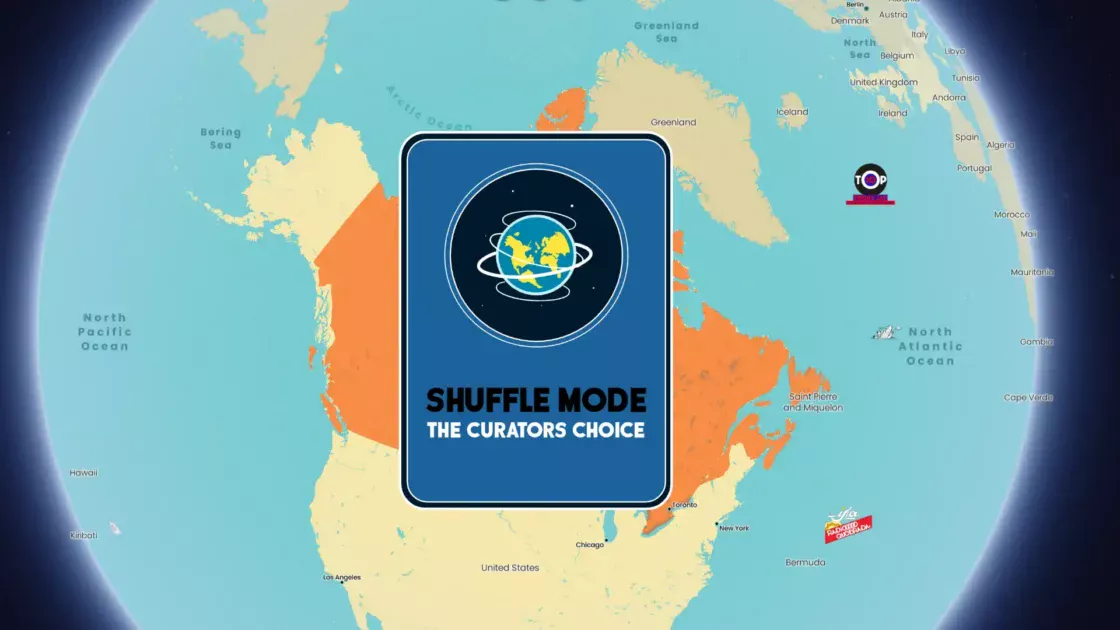
That is the whole trick, and it is enough. The official MapCrunch page describes the site as a way to “teleport” to a random point using Google Street View, with imagery drawn from Google’s vast Street View library and a gallery where the best views are added daily. It also lets users choose countries from a panel or select an area on a map, so the randomness can stay global or narrow itself to a city, country, or region.
The first surprise is how little MapCrunch asks of you. It does not frame itself as a game first, even though people have turned it into one. It does not explain the world with trivia cards. It does not decorate the screen with badges, leaderboards, or progress bars. It gives you a place and trusts your curiosity to do the rest. That restraint is rare now, especially on a web where every surface seems eager to measure, prompt, rank, or monetize your attention.
The second surprise is how quickly a random road becomes personal. You arrive somewhere with no plan, then your brain starts working. Which side of the road is traffic using? What language is on the sign? Are those mountains close or just huge? Why is there a dog in the middle of the lane? MapCrunch turns small visual scraps into a private detective game. The site does not need to tell you to look closely. You look closely because you have no idea where you are.
The best part is the lack of romance. MapCrunch is not only a shortcut to famous places. It is often a shortcut to nowhere special, which may be the more honest version of travel. You get fields, ring roads, construction fences, suburban cul-de-sacs, rainy junctions, cracked asphalt, white vans, old walls, bus stops, petrol stations, and empty turns. A random world is not curated for your mood. It includes the dull stretches between the postcard views.
That dullness is part of its charm. A conventional travel site sells the destination. MapCrunch sells the jump. It makes the web feel less like a catalogue and more like a machine with a loose wire inside it. You click, the planet blinks, and for a few seconds you are not scrolling through other people’s polished memories. You are staring at an accidental corner of the world and trying to make sense of it.
MapCrunch belongs to an older, stranger internet instinct: the joy of being thrown somewhere without a feed deciding why. Randomness used to be a stronger flavor online. StumbleUpon sent people across websites. Chatroulette paired strangers through webcams. “Random article” buttons, browser games, map toys, and weird one-purpose sites made discovery feel messy. MapCrunch still carries that spirit, but with a sharper hook. Instead of sending you to a webpage, it drops you into a place.
How the random jump changes the map
The normal map begins with intention. You open Google Maps because you need directions, want to check a restaurant, plan a trip, confirm a hotel entrance, or look at a neighborhood before you go there. MapCrunch reverses the direction. You do not start with a name. You start with disorientation. The question is not “Where is this place?” but “What kind of place have I landed in?”
That reversal changes the mood completely. A map usually makes the world feel controlled. It has labels, pins, ratings, transit lines, business hours, and little promises of certainty. MapCrunch strips away the task and leaves the sensation of arrival. You are not using geography to solve an errand. You are letting geography interrupt you.
The site’s official instructions are almost comically brief. Click the button to show a random Street View; choose countries from a list or use the map button if you want the views to come from the area shown on the map. The same page says this can generate Street Views from a city, a broader region, or somewhere like Europe. That tiny control set is smart: it lets the tool stay simple while giving obsessive users enough room to aim the dice.
Google Street View is the giant engine underneath the trick. Google says Street View began in 2007 as an attempt to build a 360-degree map of the world, and by its fifteenth anniversary it had captured more than 220 billion images across more than 10 million miles in over 100 countries and territories. MapCrunch sits on top of that scale and turns it into something playful. The sheer size matters because the next click could plausibly feel familiar, alien, boring, beautiful, or confusing.
A New Yorker piece on random Street View sites explained why the mechanic feels fairer than pure coordinate chaos. Developer Nick Nicholaou described MapCrunch as first picking a country, then generating coordinates inside it and requesting the nearest Street View imagery. Without that country step, he said, tiny places would rarely appear in a truly global random draw. That detail matters more than it sounds. It means MapCrunch’s randomness is not just a blind dart thrown at the Earth. It has a bias toward giving smaller countries a fighting chance.
That bias is what makes the experience feel lively. A mathematically pure random point on the globe would dump you into oceans, deserts, empty terrain, or the same large countries again and again. MapCrunch is random enough to surprise you but shaped enough to keep the surprise usable. You are usually somewhere you can look around, move a little, read the scene, and decide whether to keep exploring or jump again.
The result feels closer to channel surfing than map browsing. Older television had the strange pleasure of landing halfway through a film with no context. MapCrunch does the geographic version of that. You open on an unknown scene mid-sentence. You do not know what came before or what is around the bend. The site gives you just enough control to continue, leave, or narrow the world.
This is why MapCrunch is better than it first appears. A quick description makes it sound like a novelty: random Google Street View. The actual use is richer. It turns Street View from a reference layer into a discovery layer. You stop treating roads as routes and begin treating them as evidence. Every pole, curb, tree, storefront, license plate blur, road marking, hill line, and weather pattern becomes a clue.
It also slows the web down in a useful way. Not because the site is slow, but because it makes attention behave differently. A social feed moves by replacement. One post deletes the last one from your mind. MapCrunch gives you a single scene and asks for patience. You can bounce instantly, yes, but the better habit is to stay for thirty seconds longer than you planned. The weirdness often appears after the first glance.
Why the ordinary drops matter
The most memorable MapCrunch landings are not always spectacular. Spectacular is easy to understand. A road under snow-capped mountains, a dramatic coastline, a desert sunset, an old European square, a tunnel of trees: these give you an immediate reward. You know why you stopped. You might even save the link. The stranger pleasure is landing somewhere plain and realizing plainness has texture.
A regular road carries more information than it admits. A curb tells you how the place handles pedestrians. A fence tells you how people mark private space. A bus stop tells you whether public transport reaches the edge. A painted line tells you how the road expects drivers to behave. A weathered sign tells you what language shares space with what alphabet, what bureaucracy, what warning, what local habit.
MapCrunch makes these details feel visible because you did not choose them. When you search for Paris, Tokyo, Reykjavík, or Cape Town, your expectations arrive first. When MapCrunch drops you on an unnamed road, the scene gets to introduce itself. You are less tempted to confirm what you already think. You scan for the first clue that feels true.
This is where the site becomes more than a travel toy. Travelers use it to daydream. Geography fans use it to test themselves. Artists use random streets as reference material. Writers can use it for atmosphere. Teachers can use it for observation exercises. People who like maps use it the way other people use a deck of cards: shuffle, reveal, read the pattern.
The New Yorker’s Sophie Haigney captured a useful tension in random Street View browsing: much of the mapped world looks like sky, trees, and road, partly because Street View is largely gathered from vehicles moving through ordinary routes. The piece calls it a kind of “anti-travel,” where the experience often lands in the least glamorous connective tissue of the world rather than its famous attractions. That phrase fits MapCrunch well. The site is strongest when it refuses to flatter the planet.
There is a small emotional shift in seeing ordinary places without a reason. A street that locals pass every day becomes, for you, a sudden foreground. A field edge in Hungary, a service road in Australia, a wet lane in Wales, a low wall in Malta, a dusty turn in Brazil: none of it asks to be admired. That is why it sticks. It feels unperformed.
MapCrunch also makes distance feel less abstract. News, tourism, politics, and social media often compress countries into symbols. Random Street View gives you fragments instead. Not a total portrait. Not a claim to understanding. Just fragments. A neighborhood in one image. A bend in the road. A delivery van. A school sign. A line of laundry. That is not knowledge in the formal sense, but it is a useful antidote to flattened mental maps.
The site also shows how uneven digital visibility remains. Some places are richly covered; others appear only through sparse roads, landmarks, unofficial imagery, or nothing at all. MapCrunch depends on what Street View can access and what Google has photographed. The absence is part of the map too. When certain countries or regions appear less often, or not at all, the tool quietly exposes the boundaries of the visual internet.
That boundary gives MapCrunch its odd honesty. It feels global, but not complete. It feels random, but not neutral. It feels like travel, but without weather, smell, risk, cost, conversation, delay, or fatigue. The trick is to enjoy it without mistaking it for being there. MapCrunch is not a replacement for travel. It is a tiny machine for noticing places you had no reason to name.
The controls are small, but they matter
MapCrunch could have been ruined by too many features. A random Street View tool does not need a dashboard worthy of air traffic control. The site’s power comes from a button, a view, and a few filters. The more it explains itself, the less it feels like being dropped somewhere. The lighter interface keeps the first sensation intact.
The country selector is the most useful control. It lets you turn MapCrunch from pure global roulette into a focused curiosity session. Pick Japan, and you start noticing utility poles, mirrors, dense signage, hillsides, and narrow roads. Pick Iceland, and the road, weather, rock, and sky take over. Pick Switzerland, and order creeps into the asphalt. The point is not to stereotype places. The point is that repetition teaches your eye.
The map-based region tool changes the whole game. Officially, MapCrunch says you can choose views from the visible area on the map, including a city or a wider region. That turns the site into a focused explorer. Instead of asking for a known address, you can draw a loose area with your screen and let chance work inside it. A planned trip, a writing project, a geography lesson, or a simple curiosity about a country suddenly gets a random sampler.
There are also deeper options that make MapCrunch feel more flexible than its plain surface suggests. In a Hacker News discussion, Nicholaou said MapCrunch could define a region on a map, generate views inside it, and restrict generated views to indoor areas or urban areas. That is the kind of feature set a map obsessive appreciates: not flashy, not noisy, just enough to shape the randomness without killing it.
The Gallery adds another layer. MapCrunch’s gallery page shows recent “View of the day” entries and user-submitted locations, with the official page saying the best views are added daily. On April 26, 2026, for example, the gallery listed a view in Holt, Alabama, followed by entries from Switzerland, Malta, Norway, Colombia, Malaysia, Iceland, the United Kingdom, Indonesia, France, Bermuda, Tunisia, Mongolia, and more across nearby dates. The gallery turns private wandering into shared spotting.
A compact guide to the best use cases
| Use case | Best MapCrunch habit | What makes it work |
|---|---|---|
| Travel daydreaming | Start global, then narrow by country | It gives you unscripted previews beyond hotel streets and landmarks |
| Geography practice | Hide the place name and read clues | Road signs, vegetation, lanes, and architecture become evidence |
| Creative reference | Save odd streets, weather, and textures | The ordinary scenes feel less staged than stock imagery |
| Classroom warm-up | Compare two random countries | Students notice visible differences without needing a long setup |
| Pure internet wandering | Keep pressing go until a scene catches | The randomness creates momentum without a feed |
The table makes the central point visible: MapCrunch is not one activity. It is a small randomizer that changes shape depending on the person using it. A traveler, a map nerd, a teacher, a designer, and a bored browser may open the same site and end up doing five different things.
The shareability matters too. Street View scenes are easy to send because they already feel like evidence. “Look where I landed” is a simple social gesture. It asks less from the recipient than a travel album and carries more surprise than a normal map pin. The best MapCrunch finds feel like postcards from a trip nobody took.
The game hiding inside the map
MapCrunch became memorable partly because users invented rules around it. The most famous is the Airport Game: start from a random location, then navigate only through Street View until you reach an airport. The New Yorker describes the game as a recurring source of traffic for the site, with players relying on road signs and chance if they play the hard way. It is a perfect internet game because the rules are almost stupidly simple.
The Airport Game works because MapCrunch gives you uncertainty with just enough agency. You are not solving a puzzle made by a designer. You are solving the real mess of roads, signs, towns, junctions, and bad decisions. You may move toward a larger road and discover it loops away from civilization. You may follow a sign that points to a town, only to realize the airport is in the opposite direction. You may spend half an hour learning the shape of a country through frustration.
This is different from GeoGuessr-style competition. GeoGuessr asks you to infer where you are and score points. MapCrunch does not need scoring. It gives you the raw material for games, but it does not insist on turning everything into performance. That loose structure is part of why it survives. People can use it seriously, lazily, socially, or stupidly. The site does not care.
A good MapCrunch challenge has the rhythm of a walk that went wrong. At first, you look for a big clue. Then you look for any clue. Then you start building a mental model of the place. Road quality. Direction of shadows. Shop signs. A highway number. A town name. A bus route. A flag outside a school. The game turns tiny bits of infrastructure into drama.
It also creates an unusually fair kind of difficulty. You are not blocked because a designer hid a key behind a pixel. You are blocked because the world is large, signage is inconsistent, and your assumptions are weak. The frustration feels earned. When you finally hit a main road, find a city name, or recognize an airport sign, the relief feels silly and real at the same time.
MapCrunch’s randomness gives these games a social afterlife. The same random drop can become a dare, a screenshot, a story, a thread, or a private joke. One person lands beside a perfect view. Another lands on an endless rural road. Another gets trapped in a business park. The unevenness is the fun. A fair game would smooth that out. MapCrunch keeps the unfairness and lets people decide whether to laugh or suffer through it.
The airport version also reveals what makes Street View strange as a medium. It is navigable, but only along paths that were captured. It feels like movement, but it is stitched from older images. It seems open, but invisible walls appear wherever coverage stops. You are walking through a photograph of a route, not through the route itself. MapCrunch makes that tension obvious because you keep hitting the seams.
Useful answers for first-time jumpers
The official MapCrunch site is available directly in the browser, and its core random Street View mechanic is right on the homepage. The appeal is immediate: no tutorial is needed before the first jump. You open, click, and decide whether the scene deserves your attention.
Yes. The official page says MapCrunch lets users explore the world via Google Street View and uses imagery captured by Google. That means the experience depends on Street View coverage, image age, local availability, and Google’s underlying data. If a place has poor coverage or no coverage, MapCrunch cannot magically make it visible.
Yes. MapCrunch’s own instructions say users can choose countries from a list or select an area on a map, and Street Views will then be shown from the visible map area. This is the best way to use it with purpose: pick a country before a trip, focus on a city, or compare regions without typing known tourist spots.
Yes, especially when you want the curated side of the project. The Gallery page shows recent views, comments, links, and “View of the day” entries, while the About text says the best views are added daily. The Gallery is where MapCrunch becomes less lonely. It shows what other people noticed inside the same giant image maze.
It is better for serendipity, not for planning. Normal Street View is stronger when you know where you want to go. MapCrunch is stronger when you want the world to interrupt your habits. The difference is intent: Google Maps answers a place you name, while MapCrunch asks you to deal with a place you did not choose.
Yes, but not as a checklist. MapCrunch is best for widening taste. It shows the spaces between attractions: the roads outside towns, the backs of neighborhoods, the terrain around the famous view, the practical surfaces of daily life. A traveler who only uses it to preview landmarks misses the better trick.
Very. It rewards patient looking. You can train yourself to notice road markings, vegetation, architecture, scripts, signs, bollards, poles, terrain, and driving side. You can also use the country filter to build familiarity without turning the session into a formal lesson.
What MapCrunch says about the web
MapCrunch feels refreshing because it gives the internet back some risk. Not danger, exactly. More like the mild risk of wasting time somewhere unplanned. Most platforms now work hard to remove that kind of friction. They predict what you might want, then feed it to you until your curiosity becomes a pattern. MapCrunch does not predict. It rolls.
That roll is small but meaningful. A random page, a random view, a random song, a random old forum thread: these are ways of escaping the loop of preference. Recommendation systems are useful, but they are also narrowing. They show us more of what we already signal. MapCrunch ignores your taste for a moment and gives you a road in a place you did not ask for.
This is why the site still feels alive after the novelty should have faded. A single-purpose web toy usually burns out quickly. MapCrunch survives because the source material is too big to exhaust and the human response is too flexible. You can open it for thirty seconds or lose an evening. You can admire, guess, learn, laugh, or leave. The site does not force a correct use.
It also has a kind of editorial taste by absence. Many modern discovery products explain too much. They label, rank, summarize, recommend, and push. MapCrunch withholds that layer. The lack of commentary makes the scene stronger. A quiet road in rural Norway does not need a caption telling you it is quiet. You see it. You feel the road curve away. You decide whether to follow.
The visual internet often rewards polish, but MapCrunch rewards attention. A Street View frame is not composed like a professional photograph. The camera sits at car height. The weather may be bad. The light may be flat. A blur may cut through the scene. The road may be empty. Yet these flaws make the images feel useful as texture. They are not trying to seduce you.
There is also a privacy-era weirdness to the whole thing. Street View images blur faces and plates, but the scenes still contain traces of life: a person waiting by a gate, laundry outside a window, a half-built house, a dog crossing a lane, a shop shutter, a child’s bicycle near a wall. MapCrunch makes you aware that the world has been photographed at street level in pieces, then made explorable by strangers. That is fascinating and faintly uneasy.
The better way to use MapCrunch is with humility. A random image does not explain a country. It does not tell you what people are like. It does not give you cultural authority. It gives you a scene. The scene may be beautiful, dull, confusing, funny, or forgettable. Stay honest about that and the site becomes more interesting, not less.
As a Web Radar pick, MapCrunch earns its place because it is small, sticky, and hard to improve without damaging it. The premise fits in one sentence. The experience keeps producing tiny surprises. The design avoids shouting. The controls are enough. The web needs more tools like this: not bigger platforms, not louder feeds, just sharp little portals that remind you how much of the internet still has trapdoors.
Open MapCrunch when your browser feels too predictable. Give it five clicks. Do not chase only the beautiful drops. Stay with one ordinary road longer than feels sensible. Read the signs. Follow the bend. Notice the weather. Guess the country before checking. Then press go again. The site’s real gift is not that it shows you the world. It reminds you that the world is full of places you would never have thought to search for.
Author:
Jan Bielik
CEO & Founder of Webiano Digital & Marketing Agency
This article is an original analysis supported by the sources cited below
MapCrunch
The official MapCrunch site, used for its description of the random Street View experience, country selection, map-area selection, and basic use instructions.
MapCrunch gallery
The official MapCrunch gallery, used to verify the daily gallery concept, recent view entries, and the shared discovery layer around the tool.
Celebrating 15 years of Street View
Google’s official Street View anniversary page, used for the scale and history of Street View imagery.
Street View turns 15 with a new camera and fresh features
Google’s official blog post on Street View’s fifteenth anniversary, used to support the figures on Street View images, coverage, and global reach.
The pandemic-induced popularity of Google Street View
Sophie Haigney’s New Yorker article, used for context on random Street View browsing, MapCrunch’s creator, the randomization method, and the Airport Game.
Show HN: Random Street View
A Hacker News discussion used for developer context on MapCrunch’s region, urban, and indoor filtering options.
| Citing this article? Brief excerpts are welcome. Please credit Webiano.digital, name the author where stated, and include a link to https://webiano.digital and to this original article. Full or substantial republication requires prior written permission. Read our Copyright and Content Use Policy. |
This article was prepared with the assistance of artificial intelligence tools. The content underwent expert human review, and Webiano Digital & Marketing Agency assumes editorial responsibility for its final version and publication.