The IT and marketing sectors are not waiting for a distant disruption. The reset is already inside daily work: code is drafted by AI assistants, search answers are being assembled by machines, campaign production is being compressed, and executive teams are moving AI spending from experimental budgets into the core operating plan. The scale matters because the change touches both the systems that companies run on and the channels through which they grow.
Table of Contents
The change is no longer a forecast
McKinsey’s latest global AI survey found that 78 percent of respondents said their organizations used AI in at least one business function in 2024, up from 55 percent a year earlier, and 71 percent said their organizations regularly used generative AI in at least one business function. The same survey reported that AI use was most often seen in IT, marketing and sales, service operations, software engineering, and product development. Stanford’s 2025 AI Index also found that 78 percent of organizations reported using AI in 2024, while private investment in generative AI reached $33.9 billion globally.
This is not a normal software cycle. A normal cycle replaces tools. This one is replacing the relationship between people, software, knowledge, content, data, and distribution. A developer no longer only writes code; the developer increasingly reviews, constrains, tests, and integrates machine-produced work. A marketer no longer only plans messages for search engines, social platforms, email, and paid media; the marketer must also understand how answer engines, AI assistants, personalization systems, and model-generated summaries represent a brand before the user reaches the website.
The same force is moving through both sectors because IT and marketing have become inseparable. Marketing runs on content systems, analytics layers, customer data platforms, automation, CRM, attribution software, ad platforms, and search infrastructure. IT runs on user demand, product usage, customer experience, security, internal productivity, and data quality. AI has turned IT into a marketing dependency and marketing into a technology discipline. Teams that still treat them as separate departments are already slower than the market they serve.
The comparison with past shifts is useful but limited. The personal computer changed who could produce digital work. The web changed distribution. Cloud computing changed deployment and cost structures. Mobile changed consumer behavior. Social media changed attention. AI is different because it changes production, interface, analysis, software development, search, service, and decision support at the same time. It is not another channel. It is becoming a layer across channels.
The strongest signal is not the existence of impressive tools. Tools always arrive before practices. The stronger signal is that boards, CEOs, CIOs, CTOs, CMOs, agencies, developers, search teams, security teams, and regulators are all being forced to rewrite assumptions at once. IBM’s 2025 CEO study said surveyed CEOs expected the growth rate of AI investments to more than double over the next two years, while 61 percent said they were actively adopting AI agents or preparing to scale them. The same study found that half of surveyed CEOs said recent investment had left them with disconnected technology.
That last detail matters. The AI shift is not only a race to adopt new tools. It is a test of whether organizations can rebuild work without turning the company into a pile of disconnected experiments. Many firms have bought assistants, added copilots, opened chatbot access, and generated more content. Fewer have redesigned governance, workflows, incentives, knowledge management, data foundations, and measurement. The gap between adoption and operating change is where much of the pain will sit.
For IT professionals, the pressure is immediate: faster delivery expectations, AI-assisted coding, agentic systems, cloud cost tension, security risk, compliance, and the need to prove productivity gains without lowering reliability. For marketers, the pressure is just as direct: search traffic volatility, content oversupply, AI-generated answers, rising demand for personalization, weaker attribution, tighter budgets, and a market where brand trust becomes harder to win because everyone can produce more material at lower cost.
The change is not evenly distributed. Some teams will get faster. Some will produce more noise. Some jobs will be redesigned. Some roles will shrink. Some small companies will gain capabilities that once required large teams. Some large companies will move slowly because their data, legal, procurement, and legacy systems cannot absorb the pace. The winners will not be the organizations with the most AI tools. They will be the organizations that turn AI into a controlled production system with human judgment at the points where mistakes carry cost.
Software work is being pulled apart and rebuilt
Software development has absorbed automation for decades. Compilers, frameworks, package managers, cloud platforms, test suites, CI/CD pipelines, low-code platforms, and reusable libraries all reduced the amount of work required to ship. AI-assisted software development is not a clean continuation of that line. It changes the working unit. Instead of saving time only through abstraction, it produces drafts, explanations, tests, refactors, documentation, interface logic, scripts, and debugging hypotheses.
Stack Overflow’s 2025 Developer Survey reported that 84 percent of respondents were using or planning to use AI tools in their development process, and that 51 percent of professional developers used AI tools daily. GitHub’s 2025 Octoverse report described the largest shifts in software development in more than a decade, reporting that more than one new developer joined GitHub every second over the prior year and that TypeScript overtook Python and JavaScript as GitHub’s most used language in August 2025.
The practical meaning is clear. The bottleneck in software is moving from typing code toward framing the problem, evaluating generated output, enforcing architecture, securing dependencies, testing behavior, and maintaining product coherence. This is a very different competence model from the old ladder where junior developers learned through small tickets, syntax repetition, documentation searches, and incremental exposure to codebases.
AI coding tools reduce friction at the surface level. They can produce a function, draft a migration script, explain unfamiliar code, generate tests, suggest a regex, or scaffold a component. Yet production software is not a pile of correct-looking snippets. It lives in dependencies, deployment targets, data contracts, user behavior, security constraints, failure modes, team conventions, observability, and maintenance obligations. The more code AI creates, the more the organization must care about what enters the codebase.
Early controlled research gave the industry a taste of the upside. A GitHub Copilot study found that developers with access to the tool completed a JavaScript HTTP server task 55.8 percent faster than the control group. That result helped frame AI pair programming as a productivity story. Later evidence has been more mixed, especially in complex real-world settings where familiarity with a large codebase, quality standards, review overhead, and task ambiguity matter as much as raw generation speed.
The industry’s mistake would be to turn this into a binary argument: AI makes developers faster, or AI slows them down. The truth is more specific. AI is strong when the task is bounded, patterns are common, context is available, and the cost of correction is low. It is weaker when the task requires deep system knowledge, hidden business rules, careful security reasoning, or high confidence about side effects. AI changes the distribution of effort rather than removing effort.
A senior engineer using an AI coding assistant can move through boilerplate, unfamiliar APIs, test cases, and alternative designs faster. A junior developer may get useful explanations but may also accept plausible code without understanding why it fails. A team with strong review culture and automated tests can absorb AI output with less risk. A team already drowning in fragile releases may generate more surface activity while pushing defects downstream.
Google’s DORA research has warned against simplistic productivity claims. The 2024 Accelerate State of DevOps report said AI adoption was linked with higher individual productivity, flow, and job satisfaction, but also with negative effects on software delivery stability and throughput. The lesson for IT leaders is uncomfortable: developer speed is not the same as software delivery performance.
That distinction is becoming central to management. If a CTO measures AI only by lines of code, tasks closed, or time spent drafting, the organization may celebrate activity while accumulating hidden risk. Stronger measures include change failure rate, mean time to recovery, escaped defects, review quality, test coverage quality, security findings, lead time, customer impact, and the amount of code that needs to be rewritten within weeks. AI may improve some of these and worsen others.
The old software team was built around human throughput. The new team needs a stronger gatekeeping model. Code generation is cheap. Production trust is expensive. The core question shifts from “Can we produce it?” to “Can we prove this belongs in the system?” That one shift changes hiring, training, tooling, architecture, and leadership.
Coding productivity gains are real but uneven
The debate around AI coding often swings between hype and dismissal because both sides can find evidence. A developer can produce working code much faster with a good assistant. A different developer, working in a mature codebase with subtle constraints, may spend more time correcting false assumptions. Both experiences are real. AI does not create one productivity curve. It creates a spread.
Stack Overflow’s 2025 data shows the first half of the tension: adoption is high. The same survey also shows that agents are not yet as widely accepted as autocomplete-style tools. A majority of developers either did not use agents or stayed with simpler AI tools, and 37.9 percent said they did not plan to adopt agents. That difference matters because autocomplete and chat-based assistance sit close to the developer’s control. Agents ask for more delegation.
The industry is learning that AI is most useful when the task has a known destination. Draft this unit test. Convert this function. Explain this error. Compare these two APIs. Generate a SQL query from this schema. Write documentation from this code. Suggest edge cases. Build a prototype from a clear spec. In those tasks, the human can quickly evaluate the result. The risk rises when the tool is asked to infer unstated requirements, make architectural decisions, update many files, or act across a live system.
This is why AI coding works differently across companies. A clean, modular codebase with strong tests gives the assistant better guardrails. A tangled legacy system with weak documentation makes the assistant confident in the wrong places. A developer who knows the system can use AI as acceleration. A developer who does not know the system may use AI as a substitute for understanding. The same tool can be a multiplier for one team and a liability for another.
The productivity conversation also hides a management problem. Many organizations ask developers to adopt AI but do not change ticket quality, review expectations, incident budgets, or documentation practices. That creates a false speed bargain. The developer writes faster, but the reviewer works harder. The sprint looks better, but the release is less stable. The prototype arrives early, but integration stalls. The tool appears productive inside one step and costly across the chain.
DORA’s warning about delivery stability is important because it points to system-level measurement. A software team is a production system, not a collection of individual typists. If AI raises the volume of changes without improving specifications, test design, review discipline, and observability, the delivery system becomes noisier. If AI is introduced with stronger quality gates, it can reduce tedious work while preserving reliability.
The teams getting the best results tend to write clearer internal rules. They decide where AI may be used freely, where disclosure is required, where generated code needs extra review, which repositories are off-limits, how secrets and proprietary data are protected, which tools meet security requirements, and how model suggestions are evaluated. They also invest in prompts, retrieval, internal documentation, developer education, and automated checks. The gains come from the operating model, not the tool alone.
The strongest productivity gains will likely appear in tasks that combine repetition with verification. Test scaffolding, documentation, migration support, internal tooling, analytics scripts, code explanation, and prototype generation are natural early wins. The harder frontier is agentic development across full features. That requires reliable context, safe tool access, rollback paths, test execution, dependency awareness, and traceable decision logs. Without those controls, autonomy becomes risk.
A useful mental model is to treat AI coding systems as fast interns with uneven memory and no accountability. That may sound harsh, but it keeps expectations grounded. They can help. They can produce surprising work. They can also invent, misunderstand, overfit, ignore edge cases, or hide defects inside persuasive output. The human role shifts from manual production toward supervision, design, verification, and responsibility. The responsibility does not move to the model.
This shift will not remove the need for developers. It will change which developers are scarce. Teams will need people who understand architecture, product intent, security, data flow, testing, human behavior, and systems thinking. They will need fewer people who only convert straightforward instructions into routine code. That is the first career shock.
The junior role is losing its old shape
The old junior developer path was imperfect but functional. New developers handled narrow tasks, fixed bugs, wrote small features, searched documentation, asked senior engineers for help, and gradually built intuition. They learned through friction. AI removes some of that friction, which is useful for speed but risky for development. When the tool gives an answer too early, the learner may miss the struggle that creates judgment.
This does not mean junior developers become unnecessary. It means the old apprenticeship model breaks. If AI can draft the simple code, teams may hire fewer juniors for simple coding. Yet companies still need future senior engineers. That creates a pipeline contradiction: the work that trained beginners is being automated or compressed, but the need for experienced judgment grows.
The strongest organizations will redesign entry-level work rather than simply cut it. Junior developers can learn through AI-assisted code review, test creation, debugging, internal documentation, prompt evaluation, data validation, observability tasks, security triage, and product QA. These tasks teach system behavior. They also teach skepticism. A junior who learns to challenge generated output may develop better engineering habits than one who only learns syntax.
A weak organization will do the opposite. It will give juniors AI tools, reduce mentoring, raise output expectations, and assume the tooling fills the gap. That is a recipe for fragile careers and fragile code. AI-assisted learning works only when it is paired with human review, deliberate practice, and exposure to real consequences.
The hiring signal is also changing. A portfolio of code may prove less than it used to, because code is easier to generate. Employers will look harder at problem framing, debugging notes, trade-off explanations, system design reasoning, test thinking, and the ability to explain why an implementation is safe. Interviews may shift away from pure coding puzzles toward code review, failure analysis, architecture critique, and product reasoning.
This affects bootcamps, universities, internal academies, and self-taught routes. Teaching syntax remains useful, but not enough. New developers need to understand how software behaves under change. They need secure coding, data handling, testing strategy, cloud deployment basics, API contracts, accessibility, privacy, and AI limitations. They also need to learn how to use AI without outsourcing their mind.
There is a marketing parallel. Junior marketers once learned by writing social posts, drafting SEO articles, pulling campaign reports, assembling keyword lists, creating content calendars, and building simple landing pages. AI can do much of that first draft work. The junior marketer’s path also shifts toward research quality, brand judgment, audience insight, source evaluation, analytics interpretation, editorial taste, and experimentation discipline.
The common thread is apprenticeship under automation. The early-career task ladder in both IT and marketing is being cut in the middle. Leaders who do not rebuild that ladder will face a senior talent shortage later. They may enjoy short-term savings but lose the system that produces people who can handle complex work.
The new junior role should include AI literacy, but it should not be reduced to prompt writing. Prompting is useful, but it is not a profession by itself. The deeper skill is specifying intent, judging output, understanding context, and knowing when machine assistance is unsafe. The person who can do that in code, content, data, and customer systems becomes far more useful than someone who only knows how to ask for drafts.
Organizations should also be careful with productivity expectations. If AI lets a junior produce more visible output, managers may mistake volume for growth. A beginner who ships more code or content may not be developing judgment. Mentorship should examine decisions, not only deliverables. The real development question is: can this person explain the trade-offs, risks, assumptions, and limits of the work?
This is where AI creates a strange opportunity. It can make learning more personal. It can explain code, quiz a learner, simulate scenarios, generate practice tasks, and translate abstract concepts into examples. Used well, it gives beginners more repetitions. Used badly, it gives beginners shortcuts around the very thinking they need. The difference is not the model. The difference is the learning culture around it.
AI agents shift the argument from tools to delegation
The next stage of the reset is not better autocomplete. It is delegation. AI agents promise to plan steps, call tools, use data, write or edit files, interact with software, monitor outcomes, and continue work across a goal. That moves AI from answer generation toward task execution. The management question becomes much harder: what work may be delegated, under which constraints, and with what evidence?
IBM’s CEO research found that 61 percent of surveyed CEOs were already adopting AI agents or preparing to scale them. Yet developer survey data shows agents are still not mainstream among practitioners. Stack Overflow reported that most respondents either did not use agents or stayed with simpler AI tools, while a large share had no plan to adopt agents. This gap between executive appetite and practitioner caution will shape the next phase.
Executives see agents as a way to reduce coordination cost. A sales agent updates CRM records. A service agent resolves tickets. A marketing agent drafts variants, routes approvals, and updates campaigns. A developer agent opens a pull request. A finance agent reconciles invoices. An IT agent handles access requests. The promise is not one faster worker; it is fewer handoffs.
Practitioners see the failure modes. Agents may act on bad instructions, use stale data, call the wrong tool, expose sensitive information, create hidden dependencies, overrun cost budgets, or complete a task in a way that appears correct but violates policy. The risk of an AI answer is often local. The risk of an AI action can be operational.
This is why the agent debate is really a governance debate. To use agents safely, organizations need identity, permissions, audit logs, sandboxing, approval thresholds, retrieval controls, monitoring, rollback, cost limits, and incident procedures. They need to know which data an agent used, which action it took, which user authorized it, and how to stop it. A chatbot can be wrong. An agent can be wrong and change something.
The marketing sector will feel this quickly. Campaign systems already involve chained tasks: audience segmentation, creative generation, landing page changes, bidding, email setup, CRM updates, content publishing, social scheduling, reporting, and budget allocation. Agentic workflows can compress this chain. They can also create brand, legal, privacy, and spend risk if they are allowed to move without strong review.
IT teams face the deeper technical burden. Agents need integration with tools, APIs, permissions, code repositories, ticketing systems, cloud consoles, observability systems, and internal knowledge bases. That makes agent development less like buying software and more like designing a controlled internal platform. The CIO and CTO must decide whether agents are isolated assistants or part of enterprise architecture.
A useful rule is to tie autonomy to reversibility. If an action is low-risk and reversible, agents can receive more freedom. Drafting a report, summarizing notes, creating a ticket, or suggesting documentation changes may need light review. Changing production infrastructure, modifying customer records, launching paid campaigns, approving refunds, publishing regulated claims, or merging code requires heavier control. The higher the cost of reversal, the tighter the human checkpoint.
The agent shift also changes vendor relationships. Companies will no longer buy only point software. They will buy systems that act across other systems. That gives platform vendors more power and creates new lock-in risks. If an agent layer sits above CRM, analytics, content, ad platforms, product data, and support tools, switching costs rise. Vendor due diligence must examine data access, auditability, model choice, export rights, permissioning, and failure handling.
The strongest agent use cases may begin inside internal operations, where data is controlled and audiences are employees. IT support, knowledge retrieval, onboarding, internal analytics, documentation, QA, and workflow routing are safer proving grounds than public-facing, high-stakes customer interaction. Marketing teams can use agents first for research, variant drafting, tagging, brief creation, and reporting before allowing them to publish or spend.
The long-term implication is large. Work will be reorganized around intent, controls, and exceptions. Humans will set goals, define constraints, review high-risk outputs, and handle ambiguous cases. Machines will execute structured chains. That sounds neat on paper. In real companies, it will expose every weakness in process design, data quality, role ownership, and accountability.
Search is no longer only a traffic channel
Search used to be treated as a pathway. A user asked a question, scanned results, clicked a link, and entered a website. That model still exists, but it is no longer enough. AI search changes the unit of visibility. A brand may be cited, summarized, compared, or excluded before the user sees a classic result. The answer itself becomes a competitive surface.
Gartner predicted in February 2024 that traditional search engine volume would drop 25 percent by 2026 because of AI chatbots and virtual agents, with search marketing losing share to those systems. Google’s own direction shows the same structural change from the platform side. At I/O 2026, Google said AI Mode had surpassed one billion monthly users one year after debut, and that AI Mode queries had more than doubled every quarter since launch.
The point is not that websites disappear. The point is that search intent is being split. Some queries still produce clicks. Some produce answers. Some produce comparisons. Some produce AI-assisted tasks. Some produce shopping paths. Some produce local actions. Some produce follow-up conversations. A search strategy built only around rankings and clicks misses the new reality: visibility can happen without a visit.
This has direct consequences for marketing teams. First, content must become more answerable. AI systems prefer clear entities, definitions, comparisons, dates, claims, sources, authorship, structured facts, and consistent brand signals. Second, authority becomes distributed across the web. A company’s own website matters, but so do reviews, media mentions, documentation, forums, YouTube transcripts, social discussions, partner pages, public datasets, and third-party comparisons. Third, measurement becomes harder because influence may occur before the website session.
The old SEO playbook rewarded keyword coverage, technical accessibility, backlinks, content depth, and user satisfaction. Those still matter. But answer engines also reward extractable clarity. A page that contains vague brand language may rank but fail to be cited. A page that explains the product category, use cases, limitations, pricing logic, integrations, comparisons, and proof may become more useful to retrieval systems.
This is especially relevant for B2B IT and marketing services. Buyers often use search to compare vendors, understand categories, evaluate risks, and create shortlists. If AI systems begin shaping those answers, the brand that is absent from the machine’s comparison may be absent from the buyer’s mental shortlist. The competitive fight moves earlier in the journey, before the lead form, before the demo request, before the sales call.
AI search also punishes inconsistency. If a brand says one thing on its website, another in press coverage, another in review platforms, another in social posts, and another in documentation, AI systems may generate confused summaries. Human buyers already disliked inconsistency. Machines now turn inconsistency into retrieval risk. Brand governance becomes a search function.
Publishers and content teams face an even sharper challenge. If AI systems summarize answers, informational traffic may decline for some query types. That pressures ad-funded content, affiliate content, and shallow SEO pages. At the same time, high-authority original reporting, first-party data, expert analysis, tools, community, and direct relationships become more defensible. The content that survives is the content with a reason to exist beyond filling a keyword gap.
The practical response is not to abandon SEO. It is to broaden it. Technical SEO, structured data, crawlability, internal linking, page speed, and content quality remain useful. But teams must add entity clarity, source-backed claims, topical authority, answer formatting, expert authorship, citation-worthy assets, and off-site reputation work. Search is becoming retrieval strategy. That is a bigger job than ranking pages.
Marketing now competes inside answer engines
Marketing has always had to adapt to distribution changes. Print, radio, television, email, search, social, mobile apps, marketplaces, and creators each changed how brands reached customers. AI answer engines introduce a different type of gatekeeper. They do not only display messages. They synthesize, compare, and advise.
That means the marketer’s job shifts from publishing persuasive material to shaping the evidence environment from which machines and people form conclusions. A brand must become easy to understand, easy to verify, and hard to misrepresent. This is a strategic challenge, not a formatting trick.
Google’s AI Mode growth gives the issue scale. Gartner’s warning about traditional search volume gives it urgency. HubSpot’s 2026 marketing statistics page reports that more than 92 percent of marketers plan to use or already use SEO for traditional and AI-powered search engines, while nearly 30 percent reported lower search traffic as consumers turned to AI tools. The data points in the same direction: marketing teams are already adjusting, but the adjustment is uneven.
Answer engines change the economics of mediocre content. A generic article that once captured long-tail traffic may be summarized without a click, outranked by a clearer expert source, ignored because it lacks proof, or replaced by forum discussions and documentation. The content that answer systems use tends to be specific, structured, consistent, and supported. That does not guarantee citation, but it raises the odds.
The marketing task becomes entity management. A company needs a clear identity across its website, profiles, public relations, founder pages, product pages, schema, documentation, review platforms, and knowledge bases. It needs consistent naming, category language, location data, author data, product descriptions, service definitions, and evidence. If the brand has changed positioning three times in two years, the model may average the mess.
This matters for agencies as much as clients. SEO agencies that sell keyword volume without brand authority will struggle. Content agencies that produce high-volume generic material will struggle. Performance agencies that depend on last-click attribution will struggle when more evaluation happens inside AI summaries and dark social channels. The new agency opportunity is higher-level: building the evidence graph around a brand.
The shift also changes paid media. Paid search has long captured high-intent demand. AI answer engines may reduce some query volume but create new surfaces for advertising, recommendation, comparison, and commerce. Google will protect its ad business, but marketers should expect formats to change. Ads may sit inside assisted journeys rather than next to ten blue links. Measurement, creative, landing pages, and bidding logic will need to follow.
For brands, the danger is treating “GEO” or answer engine visibility as a new acronym bolted onto old SEO packages. That misses the depth. Machines cannot cite trust that does not exist. They cannot repair a weak offer. They cannot make a confused company coherent. They can only surface, summarize, and recombine what the public evidence suggests. AI search rewards substance that is already present and punishes positioning that lives only in campaign slogans.
This is where IT enters marketing again. Search visibility now depends on site architecture, structured data, content management systems, data feeds, analytics, server rendering, localization, product information management, review integrations, and page quality. The marketer needs technical infrastructure. The technologist needs to understand demand and reputation. The wall between them keeps getting thinner.
The practical playbook begins with questions that sound almost boring: What does the market call this category? What does the company actually do? Which pages prove it? Which third-party sources confirm it? Which executives or experts are accountable for the claims? Which comparisons are missing? Which customer questions are unanswered? Which product facts are inconsistent across platforms? Answer engine strategy begins there, not with prompt hacks.
Brand authority becomes machine-readable trust
Brand has always been partly emotional. It signals memory, preference, status, safety, identity, and expectation. AI does not remove that human layer. It adds a machine-readable layer. The brand must still be felt by people, but it must also be legible to systems that parse entities, claims, citations, links, mentions, reviews, metadata, and structured content.
Salesforce’s Tenth Edition State of Marketing report says it surveyed nearly 4,500 marketers worldwide and frames the era as one of agentic marketing, personalization, and data challenges. It also reports that 83 percent of marketers recognize a shift toward personalized, two-way messaging, while only one in four are satisfied with how they use data to power those moments. HubSpot’s 2026 report says 61 percent of marketers believe AI is creating the biggest disruption in marketing in 20 years, and that 80 percent use AI for content creation while 75 percent use it for media production.
The message for brand leaders is direct. When everyone can generate content, brand authority moves from volume to proof. Proof can be customer evidence, original research, expert authorship, credible media coverage, transparent pricing, documented methodology, public case studies, community trust, product depth, reviews, and consistency across touchpoints. Machines can detect and repeat some of this. Buyers can feel the rest.
The old brand model often tolerated gaps between promise and operation. A company could run strong campaigns while internal data was messy, service scripts were weak, documentation was outdated, and customer reviews were ignored. AI search, review summaries, social discovery, and agentic buying flows compress those gaps. A user may see a synthesized view of the brand’s claims and weaknesses before the brand gets to tell its preferred story.
This is especially uncomfortable for B2B marketing. Many B2B brands rely on abstract language: “trusted partner,” “end-to-end solutions,” “digital excellence,” “business growth,” “innovation,” and similar phrases that say little. AI systems have little to extract from that. Buyers have little to remember. A brand that names its methods, markets, constraints, outcomes, and trade-offs gives both humans and machines more to work with.
Brand authority also becomes a data governance issue. If product names, service descriptions, executive bios, legal names, regional office data, partner certifications, and customer proof are scattered or outdated, the brand’s machine-readable identity weakens. Marketing must work with IT, legal, HR, sales, and operations to keep public facts aligned. This is slow, unglamorous work. It may become one of the most defensible forms of marketing.
The same is true for expertise. Author pages, editorial policies, citations, date stamps, methodology notes, bylines, and content ownership are no longer only publisher details. They help establish accountability. In technical fields, medical fields, finance, legal, cybersecurity, and enterprise IT, anonymous content with unsupported claims will face rising trust pressure. The author becomes part of the asset.
AI-generated content complicates this because it can lower the cost of production while weakening distinctiveness. Many brands will publish more, sound more alike, and dilute their point of view. Strong brands will use AI for research support, drafting, repurposing, testing, and production assistance, but keep human judgment over positioning, insight, proof, tone, and final claims. The difference will be visible.
There is also a risk of overcorrecting into artificial authenticity. Consumers and buyers do not need every brand to sound casual or quirky. They need clarity, competence, and proof. A bank should not sound like a meme account. A cybersecurity firm should not sound like a lifestyle brand. Human-led marketing means the content has judgment behind it, not that every sentence performs informality.
The brands that gain in AI-mediated markets will likely share a few traits: clear category language, strong documentation, original data, visible expertise, consistent public facts, rich third-party validation, fast correction of outdated claims, and an editorial voice that does not collapse into generic AI prose. Brand will not disappear. It will become the memory layer above a much noisier content market.
Content volume is collapsing as a durable advantage
For years, content marketing rewarded production scale. Publish more pages, cover more keywords, create more lead magnets, post more often, repurpose more assets, and fill every stage of the funnel. That model was already showing fatigue before generative AI. AI has accelerated the end of volume as a defensible advantage. When production becomes cheap, attention and trust become expensive.
HubSpot’s 2026 marketing statistics show wide use of AI in content processes, including a reported 94 percent of marketers planning to use AI in content creation processes in 2026. HubSpot’s own 2026 report also warns that AI is now a baseline rather than a differentiator. That is the paradox: the tool that helps teams produce more also makes more production less valuable.
Generic content is vulnerable from three sides. Search engines and answer engines may summarize it without a click. Audiences may ignore it because it lacks a real point of view. Competitors can copy the format quickly. The result is a market full of content that is technically adequate and strategically empty. The minimum standard for publishable work rises because the cost of average work falls.
This does not mean companies should publish less by default. It means they should publish with stronger reasons. Useful content may include original research, practical frameworks, detailed comparisons, product documentation, expert analysis, customer stories with evidence, regulatory explainers, technical guides, calculators, benchmarks, templates, and opinion grounded in experience. Weak content includes recycled definitions, listicles with no insight, unverified claims, and articles that exist only because a keyword tool found volume.
The editorial discipline becomes sharper. Before publishing, teams should ask: Does this add evidence? Does it answer a real decision question? Does it contain a claim the brand is willing to stand behind? Does it reflect lived experience? Does it include facts a machine can extract and a human can trust? Does it deserve to be cited? If not, the piece may only add noise.
AI can still be useful in serious content operations. It can cluster search intent, summarize source material, generate outlines, find gaps, convert interviews into structured notes, propose questions, create draft variants, adapt content for channels, and support localization. But the strongest content teams will keep humans in charge of argument, sourcing, judgment, and final editorial responsibility. AI should reduce the cost of production, not reduce the standard of thought.
For agencies, this is a business model shock. Clients that once paid for article volume will ask why a tool cannot produce the same drafts. Agencies must move up the value chain: research, strategy, expert interviewing, brand voice, technical depth, distribution, measurement, and integrated search visibility. The agency that sells “ten blog posts per month” without deeper thinking will face price pressure. The agency that builds authority systems can defend margins.
Content teams also need to manage provenance. When AI drafts content, teams need processes for fact-checking, plagiarism checks, source review, claim approval, legal review where needed, and updates. In regulated or technical sectors, careless generation can create liability. Even outside regulated markets, false claims damage trust quickly.
The relationship between content and sales is also changing. Buyers increasingly research independently across search, AI tools, communities, review sites, social platforms, and private networks. Content must support this non-linear journey. A buyer may not fill a form, but may read comparison pages, ask an AI assistant about the company, watch a YouTube review, check Reddit, and talk to peers before appearing in CRM. If marketing only counts form fills, it misses influence.
The durable advantage is not volume. It is a body of work that makes the brand more understandable, more trusted, and more likely to be included in human and machine shortlists. That takes time. It also requires courage. Many companies will keep publishing safe, generic material because it is easy to approve. The companies willing to publish specific, useful, defensible work will stand out precisely because the web is filling with sameness.
Agencies face a margin reset
Marketing agencies, IT consultancies, software studios, SEO firms, performance shops, content teams, and design studios are all facing the same commercial pressure: clients now know that parts of production are cheaper than before. Draft copy, basic code, image concepts, research summaries, reporting commentary, presentation outlines, keyword clusters, test variants, and simple automations can be produced faster. The agency that hides behind labor hours will be exposed.
The first reaction in many agencies is to use AI internally while keeping pricing unchanged. That may work for a while. It may even be fair when the agency’s real value is judgment, not raw production. But clients will eventually ask what they are paying for. The defensible agency offer shifts from “we make the things” to “we know which things should exist, how they should work, how to prove them, and how to connect them to growth.”
This creates a split. Production-heavy agencies with weak strategy may face lower prices, faster competition, and client insourcing. Strategy-heavy agencies that cannot execute may also suffer because AI lets clients produce strategic-looking documents cheaply. The strongest firms will combine strategy, execution, measurement, and technical integration. They will not sell AI as magic. They will sell controlled improvement in business systems.
SEO agencies must absorb answer engine visibility, entity work, content quality, technical performance, schema, digital PR, brand mentions, review ecosystems, and conversion paths. Paid media agencies must manage changing search behavior, creative testing at scale, privacy constraints, first-party data, incrementality, and AI-assisted campaign systems. Content agencies must produce research-led editorial work, not keyword filler. Development shops must show architecture quality, maintainability, and security, not only faster delivery.
The agency staffing model also changes. There may be fewer pure production roles and more hybrid roles: AI workflow producer, marketing technologist, data storyteller, creative strategist, technical editor, prompt and retrieval specialist, analytics engineer, CRM architect, automation designer, and governance lead. Some of these titles will fade. The capability mix will remain.
The pricing model should change too. Hourly billing becomes harder when AI changes production time. Fixed deliverable pricing becomes risky if clients compare deliverables to AI-generated alternatives. Value-based pricing sounds attractive but requires proof. Retainers can survive when the agency owns an operating function: demand generation, search visibility, content authority, martech operations, conversion testing, or analytics. The agency must be tied to a business system, not only a deliverable list.
IT consultancies face a similar shift. Clients will expect faster prototypes, documentation, migration scripts, support tooling, and integrations. They will also need help with governance, architecture, security, and vendor selection. The consultancy that sells large teams for manual implementation may face pressure. The consultancy that can redesign workflows around AI while keeping systems safe becomes more useful.
The risk is that agencies overpromise AI savings. A campaign can be drafted faster, but approvals, brand alignment, legal review, data integration, tracking, creative judgment, audience research, and channel learning still take time. A website can be generated faster, but information architecture, positioning, accessibility, analytics, SEO, performance, and conversion quality still require expertise. A software feature can be scaffolded faster, but production readiness still takes engineering discipline.
Clients should also be wary of low-cost AI vendors offering output without accountability. Cheap content that weakens brand trust is not cheap. Cheap code that creates security risk is not cheap. Cheap automation that breaks customer records is not cheap. The cost appears later. The real commercial question is not how much AI reduces production cost. It is where human expertise must remain because mistakes are expensive.
The agencies that survive this reset will become more transparent about AI use, not less. They will explain where AI speeds work, where humans review, how claims are checked, how data is protected, and how outcomes are measured. Transparency becomes a trust signal. Hiding AI use will look increasingly amateur, especially when clients have their own tools.
Martech stacks are becoming operating systems
Marketing technology used to be viewed as a stack of tools: CRM, email platform, analytics, CMS, advertising platforms, social scheduling, customer data platform, automation, personalization, consent management, and reporting. AI pushes that stack toward something closer to an operating system for revenue work. The tools do not merely store and send. They interpret, recommend, generate, route, and act.
Salesforce’s State of Marketing report points directly to this shift by framing the market around agentic marketing, personalization, and data use. Adobe’s 2025 AI and Digital Trends report page identifies fragmented data as a blocker to real-time one-to-one personalization and frames generative AI as a force reshaping customer engagement and experiences. These are not small feature updates. They are signs that marketing operations are moving deeper into enterprise data architecture.
The CMO now depends on data plumbing. Customer identity, consent, segmentation, product data, campaign history, analytics events, sales status, service records, and content metadata must connect well enough for AI systems to act. If they do not, personalization becomes theater. The model generates a message, but the context is wrong. The customer receives a recommendation for something already purchased, an offer that violates region rules, or a message that ignores an open support issue.
AI makes marketing data debt visible. A team may believe it has a personalization strategy, but AI exposes whether customer records are unified, product feeds are accurate, consent is current, taxonomy is clean, and measurement is trusted. Without that foundation, AI simply accelerates bad segmentation and confused reporting.
This is why martech decisions are becoming IT decisions. Vendor selection now requires questions about model access, data residency, permissions, audit trails, integration depth, API limits, training data, explainability, human review, and security. Marketing leaders cannot leave these questions entirely to procurement or IT because they affect customer experience. IT leaders cannot ignore them because they affect risk.
The old stack also creates waste. Many companies have overlapping tools, unused features, disconnected dashboards, and fragmented customer data. IBM’s CEO study found that half of surveyed CEOs said rapid investment had resulted in disconnected technology. That problem will worsen if AI is added as another layer without simplification. An agent sitting on top of messy tools does not fix the mess. It may hide it until the output fails.
A more mature approach treats martech as a revenue operating system with clear layers. The data layer holds identity, consent, product, transaction, and interaction records. The intelligence layer analyzes patterns and supports decisions. The activation layer sends messages, changes experiences, and routes tasks. The governance layer controls permissions, approvals, privacy, and audit. The measurement layer evaluates outcomes. AI can sit across all layers, but only if each layer is understood.
The marketing team of the future will likely include more technical roles. Marketing operations will grow in strategic value. Analytics engineers, CRM architects, data product managers, experimentation leads, and AI workflow designers will sit closer to the CMO. Creative and strategy teams will need to understand what the systems can and cannot do. The boundary between campaign planning and system design will keep fading.
At the same time, companies should avoid turning marketing into pure machinery. Personalization can become creepy. Automation can become tone-deaf. AI-generated journeys can overfit to short-term conversion and weaken long-term trust. The role of brand, creative judgment, and customer empathy does not vanish. It becomes the counterweight to machine execution.
Martech consolidation may also accelerate. Large platforms will try to own the agentic layer because it gives them influence across the workflow. Smaller tools will survive when they offer specialized depth, open integration, better data quality, or unique channels. Buyers should resist lock-in that limits data portability or hides decision logic. A marketing operating system that cannot be audited will become a liability.
Data quality becomes the boundary of personalization
Personalization has been promised for more than two decades. The language changed, but the goal stayed the same: show the right message to the right person at the right time. AI makes the promise feel closer because it can generate variants, summarize behavior, classify intent, and automate journeys. Yet the old constraint remains. Personalization is only as good as the data beneath it and the judgment around it.
Adobe’s 2025 report page says fragmented data blocks real-time one-to-one personalization. Salesforce’s report says many marketers recognize the shift toward personalized two-way messaging but only a minority are satisfied with how they use data to support those moments. These findings show a hard truth: the market wants personalization, but many companies do not have the data discipline to do it well.
The first data problem is identity. Customers interact across devices, email addresses, browsers, apps, stores, sales calls, support tickets, partner channels, and anonymous sessions. Matching those signals is difficult and constrained by privacy law, consent rules, browser changes, and platform limits. AI can infer patterns, but inference is not the same as truth. If identity is wrong, personalization becomes misrecognition.
The second problem is consent. Marketing teams need to know not only who a customer is, but what the company is allowed to do with that information. AI systems that generate or trigger messages must respect consent, region, age, product category, and purpose. This becomes more complicated when agents act across systems. A permission error can become a privacy breach.
The third problem is taxonomy. If teams classify products, content, leads, industries, personas, and lifecycle stages inconsistently, AI systems inherit the confusion. A model cannot reliably personalize from messy labels. A brand that wants AI-powered personalization must first do the unglamorous work of naming things clearly.
The fourth problem is freshness. Personalization based on stale data can be worse than no personalization. A buyer who has already rejected a product keeps seeing the same offer. A customer waiting for support receives a sales message. A user who changed roles gets irrelevant nurture content. AI may produce warmer language, but the underlying mistake remains.
The fifth problem is value exchange. Personalization is not automatically welcome. Customers tolerate data use when it gives them relevance, convenience, savings, continuity, or service quality. They resist it when it feels invasive, manipulative, or wrong. The goal is not maximum personalization. The goal is appropriate personalization. That distinction should guide marketing and IT decisions.
AI also changes creative testing. Teams can produce many message variants quickly. That sounds useful, but it can create false learning if the experiment design is weak. Testing ten AI-generated subject lines means little if the audience segments are dirty, the sample is small, or the result is judged only by opens. Marketing teams need stronger experimentation discipline, not just more variants.
For B2B firms, personalization should often be account-based rather than hyper-individual. Industry, company size, maturity, technology stack, use case, buying committee role, and sales stage may matter more than inferred personality. AI can help assemble account briefs, identify content gaps, and tailor outreach, but sales and marketing alignment remains critical. A model cannot fix a broken handoff between teams.
IT leaders should treat personalization systems as production systems. They need monitoring, failure alerts, access controls, data lineage, model evaluation, and rollback. Marketing leaders should treat personalization as a trust contract. They need clear value, restraint, and brand consistency. The best personalization will feel useful, not uncanny.
The companies that win here will not be the ones with the most data. They will be the ones with usable data, governed data, and a clear idea of when not to use data. Restraint becomes part of quality.
The CMO budget squeeze accelerates automation
AI adoption in marketing is not happening in a world of unlimited budgets. Gartner’s 2025 CMO Spend Survey found that marketing budgets remained flat at 7.7 percent of overall company revenue, the same level as the prior year, and said CMOs were pursuing productivity gains as spending stalled. That budget pressure changes the tone of AI adoption. It is not only curiosity. It is survival.
When budgets are flat and expectations rise, automation becomes attractive. Marketers are asked to produce more content, support more channels, personalize more journeys, prove more impact, and react faster to market change. AI promises to reduce the cost of creative variants, reporting, research, segmentation, and operations. The pressure to use it will be intense.
The danger is that AI becomes a cover for underfunding. A team loses headcount, gets new tools, and is expected to maintain or increase output. Some tasks will become faster. Others will not. Strategy, customer insight, brand judgment, partner management, crisis response, legal review, and deep creative work still require human attention. Automation can remove waste, but it cannot replace a coherent marketing strategy.
CMOs must decide where automation protects value and where it damages value. Automating weekly campaign summaries may be sensible. Automating first drafts for low-risk variants may be sensible. Automating audience research summaries may be sensible if sources are checked. Automating all brand messaging without human review is dangerous. Automating customer responses in sensitive situations is dangerous. Automating paid budget changes without controls is dangerous.
Budget pressure also affects agencies. Clients will demand lower production costs or higher strategic value. In-house teams may use AI to reclaim work once outsourced. Agencies may use AI to improve margins. Procurement teams may push rates down. The result will be a renegotiation of value. The agency that brings market insight, technical execution, and measurable lift can defend pricing. The agency that sells manual output cannot.
The CMO also has to fight for investment in foundations that do not look like campaigns. Data cleanup, CMS upgrades, analytics repair, consent management, CRM hygiene, content governance, and training may not feel urgent next to a campaign launch. Yet AI depends on them. A marketing leader who spends only on visible AI tools while ignoring foundations will get faster dysfunction.
This is a hard internal sell. Boards may be excited by AI demos. They may be less excited by taxonomy cleanup, data integration, or content audits. The CMO must explain that these are not back-office details. They are the rails that allow AI to work safely. The real productivity gains come when messy processes are redesigned, not when AI is pasted over them.
Budget pressure may also push marketing toward clearer priorities. If AI makes production easier, the constraint becomes attention. Teams should stop creating assets that nobody uses, reports that nobody reads, dashboards that do not guide decisions, and campaigns that do not match strategy. AI should be paired with deletion. Faster production without sharper focus only creates more clutter.
The healthiest marketing organizations will use AI to reduce low-value labor and reinvest time into research, customer understanding, creative quality, experimentation, and sales alignment. The weakest will use AI to flood channels with cheaper material. The market will notice the difference.
Human judgment becomes the scarce layer
The phrase “human in the loop” is everywhere, but it often hides the hard question: which human, at which point, with what authority, and using what standard? Human review is not magic. A rushed employee approving AI output they barely understand does not reduce risk. Human judgment only matters when the reviewer has context, expertise, time, and the power to say no.
This is now central in both IT and marketing. A developer reviewing AI-generated code must understand architecture, security, tests, and business rules. A marketer reviewing AI-generated claims must understand the brand, the audience, the offer, legal limits, and sources. A manager reviewing AI-generated analysis must know whether the data is complete and whether the conclusion follows. Review without competence is theater.
The scarcity is not content. It is not code. It is not reports. The scarcity is judgment about what should exist, what is true, what matters, what is safe, what is distinctive, and what should be ignored. AI increases the amount of plausible material. That raises the value of people who can sort signal from noise.
This changes career value. The strong professional is not the one who refuses AI. Nor is it the one who uses AI for everything. The strong professional knows when AI is useful, when it is risky, when it is wrong, and when the problem should be reframed. That skill requires domain knowledge. A prompt without domain knowledge is a lottery ticket.
In software, judgment appears in architecture decisions, security constraints, observability, data modeling, error handling, maintainability, and user experience. In marketing, judgment appears in positioning, audience understanding, evidence quality, channel selection, creative taste, timing, and restraint. In both sectors, judgment appears in saying no to work that is fast but weak.
This creates a leadership challenge. Many executives want speed. AI gives them speed. But speed without editorial or engineering judgment becomes rework. Leaders must protect review time and expert authority even as production accelerates. That may feel inefficient. It is not. It is the cost of quality.
The organizational design may change around review. Instead of every person reviewing everything, companies may create review tiers. Low-risk AI outputs move quickly. Medium-risk outputs require trained reviewers. High-risk outputs require expert approval, legal review, security review, or executive sign-off. The system should be explicit. Otherwise every team invents its own standard.
AI also changes the emotional load of work. People may feel pressure to keep up with machines, justify their role, or approve more material faster. That can erode quality. Leaders need to say clearly that the human role is not to compete with AI on speed. It is to own outcomes. The responsible person remains human because the company, the customer, and the law need accountability.
The same applies to creativity. AI can generate options, but it does not know what the brand should become. It can imitate patterns, but it does not carry lived context. It can suggest messages, but it does not feel reputational risk. Human creativity in this era is less about making every asset from scratch and more about choosing the right angle, rejecting blandness, connecting ideas, and protecting meaning.
The market may briefly overvalue AI operators who can produce impressive demos. It will later reward professionals who can make AI useful inside messy reality. That reality includes budgets, legacy systems, customer anger, legal limits, unclear strategy, bad data, political constraints, and deadlines. Judgment is what survives contact with those constraints.
Governance moves from legal appendix to delivery system
AI governance cannot remain a PDF policy stored in a compliance folder. It has to become part of how work is done. This is especially true in IT and marketing because both functions can deploy AI outputs quickly and widely. Code can enter production. Content can reach the public. Customer data can be processed. Campaigns can spend money. Chatbots can answer real users. A weak governance model turns speed into exposure.
NIST’s Generative AI Profile for the AI Risk Management Framework is designed to help organizations identify generative AI risks and incorporate trustworthiness considerations into AI products, services, and systems. ISO/IEC 42001 provides requirements and guidance for an AI management system inside organizations. These frameworks are signs of a shift from AI principles to operational control.
Governance begins with inventory. A company needs to know which AI tools are used, by whom, for what purpose, with what data, and with what outputs. Many firms cannot answer this. Employees use public tools, browser extensions, embedded AI features, vendor copilots, meeting assistants, creative tools, code tools, analytics tools, and CRM assistants. Shadow AI is now a real risk.
The second step is classification. Not every AI use case needs the same control. Summarizing public articles is different from processing customer health data. Drafting internal ideas is different from generating regulated financial claims. Suggesting code comments is different from changing production infrastructure. Governance should be risk-based, not fear-based.
The third step is data control. Employees need clear rules about confidential data, personal data, client data, source code, credentials, contracts, unreleased financial information, and proprietary strategy. Vendors need review. Model training terms matter. Data retention matters. Regional hosting matters. The marketing team cannot decide these questions alone. IT, legal, security, privacy, procurement, and business owners all belong in the process.
The fourth step is output control. AI outputs need review standards based on risk. Marketing claims need source checks. Legal or medical claims need expert approval. Code needs tests and review. Customer-facing responses need monitoring. Analytics conclusions need data validation. AI-generated images or videos need brand and rights review. Governance must define what “reviewed” actually means.
The fifth step is logging and audit. If an AI system influences decisions, the company may need records: prompt, source data, output, reviewer, changes, approval, publication date, and model version. This is especially important for high-risk decisions, regulated claims, employment use, credit, education, healthcare, and public communication.
The sixth step is training. Employees need practical guidance, not vague warnings. They need examples of allowed and forbidden use, safe prompts, source-checking methods, privacy rules, escalation paths, and tool-specific instructions. Training should differ by role. A developer, marketer, HR manager, sales rep, and support agent face different risks.
Governance also needs ownership. A committee can set policy, but someone must own implementation. In many companies, the CIO, CISO, legal counsel, data protection officer, and business leaders will share responsibility. That sharing must not become diffusion. If everyone owns AI governance, nobody owns it.
The deeper point is cultural. AI governance should not be framed as the department that says no. It should be the system that lets the company move faster without pretending mistakes are harmless. Good governance gives teams approved tools, clear rules, review paths, and confidence. Bad governance creates fear, workarounds, and shadow usage.
Regulation turns AI use into an operational discipline
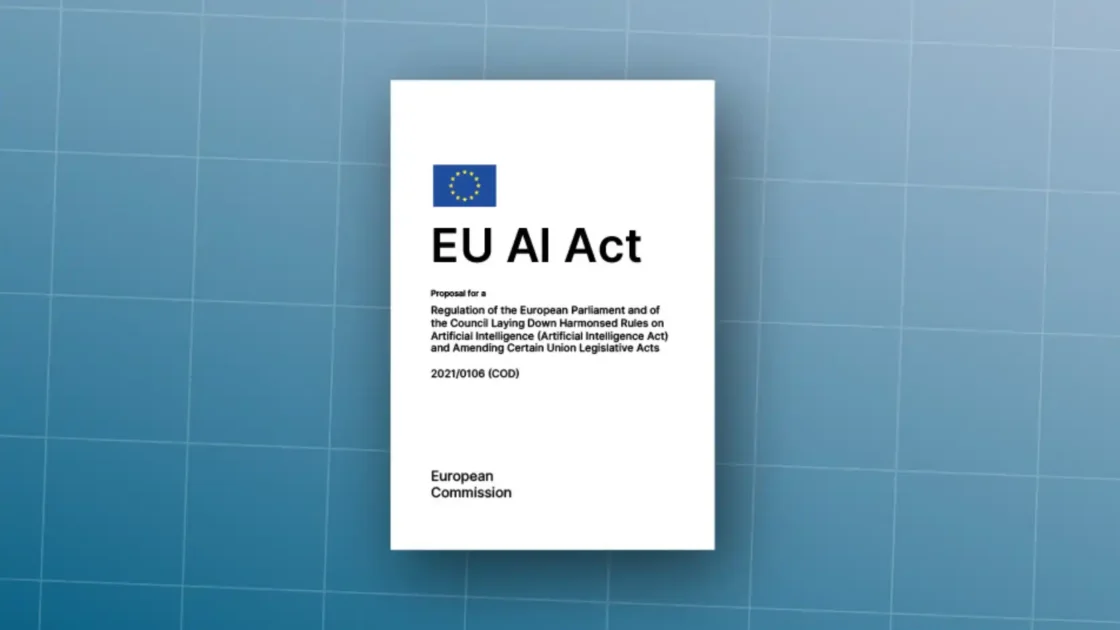
Regulation is no longer a distant concern for AI users in Europe. The EU AI Act entered into force on 1 August 2024. The European Commission says the Act becomes fully applicable two years later, with exceptions including prohibited AI practices and AI literacy obligations applying from 2 February 2025, and governance rules and obligations for general-purpose AI models applying from 2 August 2025. The Commission also lists later timelines for high-risk systems under agreed simplification changes.
For IT and marketing leaders, the legal details matter because AI is already embedded in everyday tools. A company may use AI in recruitment, customer service, profiling, personalization, content generation, analytics, sales scoring, fraud detection, cybersecurity, coding, and internal productivity. Some uses are low risk. Some may touch transparency duties, data protection, consumer law, discrimination risk, employment law, or sector rules.
The first regulatory lesson is that AI use is not only a vendor issue. A company deploying AI inside its own process may have obligations even if it did not build the model. It may need to inform users, train staff, assess risks, manage data, document decisions, or keep human oversight. Buying a tool does not buy away responsibility.
The second lesson is that transparency will matter more. Marketing teams that use synthetic images, AI-generated text, deepfake-style media, chatbots, or automated personalization may face disclosure questions. IT teams building or integrating AI systems will need to understand when users should know they are interacting with a machine, when generated content should be marked, and when records must be retained.
The third lesson is that employment uses deserve caution. AI tools for hiring, performance evaluation, workforce planning, productivity scoring, or employee monitoring can create legal and ethical risk. Companies rushing to automate HR or management decisions may enter high-risk territory. This is relevant to IT vendors selling such tools and to marketing teams promoting them.
The fourth lesson is that regulation will interact with brand trust. A company that handles AI openly and responsibly can use that as a trust signal. A company caught using AI deceptively or carelessly may face reputational damage even before formal penalties. Customers, employees, and partners are becoming more sensitive to automated decisions.
The fifth lesson is that regulatory compliance depends on internal architecture. You cannot document what you cannot see. You cannot audit a workflow that leaves no trace. You cannot explain a decision if the system has no record of inputs, logic, or human review. Compliance is becoming a design requirement.
This affects software development directly. Teams building AI features need documentation, risk assessment, testing, monitoring, incident response, data governance, and user communication. Teams integrating third-party models need vendor records, contractual protections, and technical controls. Teams using AI for code need policies around intellectual property, licensing, security, and data exposure.
Marketing teams need similar discipline. Claims about AI products must be accurate. Generated content should be reviewed. Personalization should respect consent and fairness. Chatbots should not mislead customers. Synthetic media should not create deception. Campaign speed cannot be an excuse for weak control.
The EU is not the only regulatory force. NIST, ISO, CISA, national regulators, consumer protection agencies, privacy authorities, and industry bodies are building expectations. Even where rules are voluntary, they shape procurement and liability. Enterprise buyers will ask vendors for AI governance evidence. Agencies and software firms that cannot answer will lose deals.
The practical response is to build a lightweight but real AI governance system now. Waiting for perfect legal certainty is risky. Companies should inventory AI use, classify risk, approve tools, train staff, review vendors, document high-risk workflows, define disclosure rules, and create escalation paths. Regulation turns AI from a tool choice into an operating discipline.
Security risk enters the creative workflow
Security used to feel like an IT concern, while marketing worried about messaging, channels, and creative. AI breaks that separation. A marketer using a public AI tool may paste confidential campaign data, customer segments, contracts, or unreleased product details. A creative tool may process brand assets. A chatbot may expose internal knowledge. An AI-generated landing page may include unsafe scripts. A model-generated email may produce a false claim. Security now sits inside everyday creative and operational work.
OWASP’s Top 10 for Large Language Model Applications lists risks such as prompt injection, insecure output handling, training data poisoning, model denial of service, and supply chain vulnerabilities. These are not abstract technical issues. Prompt injection can affect customer-facing bots. Insecure output handling can affect systems that execute model output. Supply chain vulnerabilities can affect the models, plugins, datasets, and tools companies rely on.
The marketing use case is especially exposed because it deals with public input and public output. A website chatbot can be manipulated by users. A content generation workflow can ingest poisoned source material. A review summarization tool can be gamed by fake reviews. A social listening system can be skewed by coordinated posts. A personalization engine can use sensitive attributes in ways the company did not intend. The public web becomes both input and attack surface.
IT teams must therefore support marketing with safer tooling. Approved AI environments, data loss prevention, access control, logging, vendor review, and prompt security guidance are now marketing enablers. The answer cannot be only “do not use AI.” Employees will use it because the productivity pressure is real. The safer answer is to provide approved paths that match the work.
AI coding also introduces security risks. Generated code may include outdated libraries, insecure patterns, weak authentication logic, injection vulnerabilities, improper error handling, or license issues. Developers may trust outputs too quickly. Security teams need code scanning, dependency checks, secure coding standards, and AI-specific review practices. The risk is not that AI writes bad code every time. The risk is that it writes plausible code at high volume.
Agentic systems raise the stakes again. If an agent can call APIs, update records, trigger campaigns, deploy code, or move files, its permissions become a security boundary. Least privilege becomes critical. So do sandboxing, approval gates, action logs, and anomaly detection. A compromised or manipulated agent can create damage faster than a misled chatbot.
Security training must reach non-technical teams. Marketers need to know what data cannot be pasted into tools, how to verify generated claims, why plugins and browser extensions matter, what synthetic media risks look like, and when to escalate. Sales teams need similar guidance for proposal tools and CRM assistants. HR needs it for hiring tools. Finance needs it for document and invoice automation.
There is also a reputational security layer. Deepfakes, synthetic reviews, impersonation, fake customer support accounts, cloned websites, and AI-generated phishing can damage brands. Marketing, communications, legal, and security teams need joint playbooks. A brand crisis may begin as an AI-enabled security incident.
The cost of not integrating security into AI workflows will rise. Enterprise buyers will ask vendors about AI security practices. Insurance providers may ask about controls. Regulators may ask about documentation. Customers may ask how their data is used. Security is becoming part of the product promise and the brand promise.
A practical rule is simple: if an AI system can access private data, generate public output, affect customers, change systems, or influence decisions, it needs a security review. Not a six-month blockade. A real review matched to risk. The companies that make this routine will move faster than those that discover security after something breaks.
Infrastructure costs expose the physical side of AI
AI often feels weightless to users. A prompt goes in, an answer comes back. Behind that simple interface is a massive physical buildout of chips, data centers, electricity, cooling, networking, land, and capital. This matters for IT and marketing because AI is not only a software feature. It is a cost structure.
NVIDIA reported fiscal 2025 revenue of $130.5 billion, up 114 percent from the prior year, with record quarterly data center revenue in its fourth quarter. Microsoft’s 2025 annual report said the company operated more than 400 datacenters in 70 regions, opened new datacenters across six continents, and added more than two gigawatts of new capacity during the year. IDC projected the global AI market would rise from nearly $235 billion to more than $631 billion by 2028.
The physical footprint changes the economics of digital work. Every generated image, code suggestion, video model, search summary, chatbot response, and agentic workflow consumes compute. Some use cases are cheap. Others are expensive. As usage scales from experimentation to daily operations, costs move from novelty line items to budget pressure.
The International Energy Agency estimated data centre electricity consumption at around 415 TWh in 2024, about 1.5 percent of global electricity consumption, and projected it to double to around 945 TWh by 2030 in its Base Case. The IEA also projected electricity generation to supply data centres rising from 460 TWh in 2024 to more than 1,000 TWh in 2030 in its Base Case.
This creates a new constraint for CIOs and CFOs. AI usage must be managed like cloud usage. Unchecked experimentation can create cost surprises. Teams may run large models where smaller models would work, generate too many variants, store unnecessary outputs, or automate tasks that do not justify inference cost. AI cost governance will become a normal part of technology management.
Marketing teams will feel this through vendor pricing. Generative creative tools, personalization engines, AI search platforms, analytics assistants, and campaign agents will build compute costs into subscriptions. As content production scales, the marginal cost may be low for users but not zero for vendors. Pricing models may shift toward usage, credits, seats, output volume, or premium model access. Budget planning must account for this.
The environmental and infrastructure dimension may also affect brand perception. Companies making public commitments on sustainability will need to explain AI use, vendor choices, data center energy, and efficiency. This will not stop AI adoption, but it will make careless use harder to defend. The IEA notes uncertainty and scenario differences, but the direction is clear enough: data centers are becoming more important actors in the energy system.
There is also a geopolitical layer. Chips, cloud regions, export controls, energy supply, and data center locations influence who can build and deploy advanced AI. IT strategy becomes tied to industrial capacity. Marketing teams may not think about semiconductor supply, but their AI tools depend on it. Agencies selling AI-heavy services depend on it too.
The physical side of AI should make leaders more disciplined. Use AI where it creates real value. Use smaller models where possible. Cache outputs where sensible. Avoid generating thousands of variants when ten well-designed tests would do. Build workflows that reduce waste. AI abundance should not become operational laziness.
The next decade of IT will involve more attention to inference cost, model routing, hardware availability, cloud contracts, energy sourcing, data center geography, and efficiency. The next decade of marketing will depend on those choices more than marketers may expect. The creative layer sits on an industrial base.
Cloud providers turn AI into capital-intensive industrial policy
Cloud computing made infrastructure feel elastic. AI is making it feel scarce again. The largest providers are investing extraordinary sums in data centers, chips, power, networking, and cooling. This is not a small procurement cycle. It is an industrial race.
Microsoft’s annual report makes the scale visible through its data center footprint and new capacity. NVIDIA’s revenue growth shows how central accelerator demand has become to the AI economy. The IEA’s projections show that the compute race is tied to electricity demand and regional grid planning.
For enterprises, this creates dependency. AI capability is increasingly tied to a small set of cloud and model providers with the capital to build and run frontier infrastructure. That gives customers powerful tools, but also creates lock-in risks, pricing risk, data governance concerns, and concentration risk. The enterprise AI strategy is partly a vendor strategy.
IT leaders need to ask sharper questions. Which workloads require frontier models? Which can run on smaller hosted models? Which can run privately? Which data can leave the organization? Which region should process it? Which vendor terms allow model training on customer data? Which workflows need portability? Which systems need fallback if a provider changes price, policy, or availability?
Marketing leaders should care because many AI marketing tools are built on top of these providers. A campaign platform may rely on one model family. A content tool may store prompts and outputs in a specific region. A personalization engine may route sensitive data through third-party infrastructure. A brand safety workflow may depend on a vendor’s moderation model. The marketing stack inherits cloud risk.
The capital intensity may also favor incumbents. Large platform vendors can bundle AI into existing suites, absorb costs, and use distribution to win adoption. Smaller vendors must specialize, differentiate, or build on top of the same infrastructure. Some will be acquired. Some will fail when inference costs exceed revenue. Buyers should examine vendor economics, not only demos.
There is a policy angle too. Governments want domestic AI capacity, secure cloud services, sovereign data options, and resilient energy systems. The EU AI Act, AI infrastructure plans, national AI strategies, and data center regulation all sit in this broader context. AI is becoming part of economic competitiveness. The technology stack is now tied to national capacity and regulatory confidence.
For companies in smaller markets, including Central Europe, this creates both risk and opportunity. They may not build frontier infrastructure, but they can build applied AI systems, domain-specific data assets, specialized services, and multilingual content authority. They can also compete through speed and practical integration. The challenge is avoiding dependency without pretending full independence is realistic.
Cloud cost management becomes a board issue. Many companies learned FinOps during the cloud era. AI will require a similar discipline: usage monitoring, model selection, cost allocation, value measurement, and architecture review. If every department buys AI tools separately, the CFO will eventually see scattered spend without clear return.
The cloud providers will continue to market AI as an easy layer. The internal reality will be harder. AI workloads need data preparation, security, governance, integration, training, workflow redesign, and cost control. Cloud access is not capability. Capability is what the organization builds around it.
Job disruption is uneven and skill-specific
The labor market impact of AI will not look like one clean wave. It will vary by task, sector, country, company size, worker skill, data access, regulation, and management quality. Predictions of mass replacement and predictions of painless augmentation both miss the unevenness. IT and marketing sit near the center because they contain many cognitive, digital, text-heavy, code-heavy, and data-heavy tasks.
The IMF estimated that almost 40 percent of global employment is exposed to AI, with about 60 percent of jobs in advanced economies potentially affected. It also said roughly half of exposed jobs in advanced economies may benefit from AI integration, while the other half may face lower labor demand, reduced wages, or reduced hiring. The ILO’s 2025 work refines occupational exposure to generative AI using task-level data, expert input, and AI model predictions. The World Economic Forum’s 2025 Future of Jobs Report draws on more than 1,000 major employers representing over 14 million workers to examine job and skill change through 2030.
The most exposed tasks in IT and marketing include drafting, summarizing, coding support, documentation, reporting, data classification, translation, image generation, test creation, keyword research, ad variant generation, email drafting, meeting notes, customer support answers, and internal knowledge retrieval. Exposure does not mean disappearance. It means the task can be changed.
The jobs most at risk are those built mostly from repeatable digital outputs with weak accountability. A role that only produces basic SEO articles, simple banners, generic social posts, routine reports, or straightforward scripts faces pressure. A role that combines domain judgment, client trust, strategy, data interpretation, creative taste, systems thinking, and accountability is more defensible.
This changes hiring. Companies will ask fewer people to do low-level production and more people to manage AI-enabled workflows. Job descriptions will include AI fluency, data literacy, automation experience, content governance, prompt design, model evaluation, CRM operations, analytics, or secure AI use. Some titles will be inflated. The underlying demand is real: people who can work across human and machine systems.
Skill demand may shift toward higher-order capabilities. Research using job postings from U.S. public firms found that roles advertising generative AI tool requirements were more likely to demand cognitive skills, and that generative AI adoption may alter upskilling paths. The exact labor effects will keep changing, but the direction is sensible: as routine digital output becomes easier, judgment, learning ability, and cross-functional communication gain value.
Wage effects may become polarized. Strong AI-literate professionals may command premiums because they can redesign workflows and raise output quality. Workers stuck in narrow production roles may face lower rates or fewer openings. Entry-level roles may be squeezed, especially in agencies and software teams under cost pressure. The middle of the market may be forced to reskill quickly.
This is not only an employee problem. It is a management problem. If companies use AI only to cut roles, they may lose institutional knowledge and future talent. If they use AI only as a perk, they may miss productivity gains. The better strategy is task redesign: remove low-value work, retrain people toward higher-value work, and preserve mentoring paths.
Governments and educators also have a role. Digital skills, AI literacy, data skills, media literacy, cybersecurity, and lifelong learning will matter more. But training cannot be generic. A marketer needs different AI competence from a backend engineer. A designer needs different competence from a compliance officer. A small business owner needs practical applied skills, not theory alone.
The hardest part is timing. Companies may move faster than schools. Tools may move faster than training programs. Workers may be asked to adapt while doing full-time jobs. The AI labor shock is not a single event. It is a rolling redesign of tasks, teams, and expectations.
Europe faces an adoption gap inside the same shock
Europe is not outside the AI shift. European companies, agencies, developers, and marketers are using the same tools and facing the same search, software, and content disruption. But Europe has its own adoption pattern, regulatory environment, language complexity, SME structure, and data governance concerns. This creates a different path from the U.S. platform-led model.
A 2026 arXiv study of generative AI in European workplaces across 35 countries found adoption ranging from under 3 percent to 25 percent, with skills, abstract task content, worker influence inside organizations, national digitalization, and workplace training shaping adoption. It also found no detectable early effect on worker-reported task restructuring, consistent with an initial integration phase.
That finding fits what many European firms experience. AI is visible, but full workflow redesign is slower. Companies test tools, translate policies, worry about data protection, review vendors, and wait for clearer compliance standards. Some move quickly. Others stay cautious. The shock is global, but organizational absorption is local.
Europe’s regulatory stance can be read two ways. Critics see it as friction. Supporters see it as trust infrastructure. Both views contain truth. Rules can slow reckless deployment. They can also make responsible adoption easier when companies know the standards. The EU AI Act’s staged timeline forces organizations to move from informal experimentation toward documented practice.
For marketing, Europe’s multilingual reality makes AI unusually useful and unusually risky. Localization, translation, regional content adaptation, customer support, and market research can all benefit from generative tools. But language nuance, legal differences, cultural context, and local search behavior still matter. A translated AI draft is not a local strategy.
For IT, Europe’s opportunity may sit in applied AI, governance, secure integration, industry-specific tools, and domain knowledge. Not every company needs to build frontier models. Many need reliable systems for manufacturing, finance, healthcare, logistics, public services, tourism, education, and B2B operations. Applied AI requires data understanding, workflow redesign, and trust. European firms can compete there.
Central and Eastern Europe have a special angle. The region has strong technical talent, competitive development costs, and proximity to EU markets. But it also has many SMEs with limited digital maturity. AI could help smaller firms access capabilities that once required larger teams. It could also widen the gap between firms that modernize and firms that postpone the work.
The marketing opportunity is similar. A Slovak, Czech, Polish, Hungarian, or Austrian business can use AI to research, produce, translate, analyze, and test faster. But if it publishes generic AI material without a point of view, it will blend into global noise. Local expertise, customer proximity, language quality, and trust may become stronger advantages than ever.
Europe’s challenge is not only building AI capability. It is building confidence. Employees need training. Managers need governance. SMEs need practical playbooks. Agencies need to stop selling AI as a buzzword and start building operational value. Regulators need to give usable guidance. Vendors need transparent terms. Buyers need to know what questions to ask.
The adoption gap may close quickly once tools are embedded inside software people already use. IBM’s 2026 commentary around CEO studies noted a gap between executive expectations and regular employee AI use, reinforcing the need to make AI part of normal tools rather than optional experimentation. That principle applies strongly in Europe, where adoption will rise when AI fits existing work, language needs, and compliance expectations.
SEO becomes retrieval strategy
SEO is not dead. The claim is lazy. But SEO is no longer only SEO. The discipline is expanding into retrieval strategy: making a brand, page, person, product, or source understandable to systems that retrieve, rank, summarize, compare, and cite information. That includes search engines, AI answer engines, assistants, knowledge graphs, social search, marketplaces, and internal enterprise search.
Traditional SEO focused on crawlability, indexation, page relevance, backlinks, keyword intent, technical performance, internal linking, and content quality. Those remain important. Retrieval strategy adds entity consistency, structured facts, source credibility, topical completeness, authorship, freshness, off-site mentions, community evidence, documentation, and answer extraction.
Gartner’s search forecast and Google’s AI Mode growth show why the expansion is necessary. HubSpot’s data on AI-powered search adoption among marketers suggests that the industry is already shifting language and priorities. The underlying reason is simple: the user’s question may be answered before a website visit, but the answer still comes from somewhere.
Retrieval strategy begins with entity clarity. A company should be easy to identify: name, legal name, products, services, locations, founders, leadership, industries, certifications, partners, pricing logic, documentation, and differentiators. Ambiguity weakens machine understanding. If a brand uses inconsistent service names, vague category labels, or outdated pages, retrieval systems may struggle to represent it.
The second layer is content architecture. Pages should answer distinct questions without cannibalizing each other. Category pages should define scope. Comparison pages should be fair and specific. Service pages should explain process, outputs, limits, and proof. Blog posts should connect to topic clusters. Documentation should be current. Case studies should include real context and outcomes where possible.
The third layer is evidence. Claims need support. First-party data, methodology notes, expert commentary, customer examples, certifications, and citations matter. A machine may cite a page because it contains clear, supported information. A human may trust it for the same reason. The future of SEO is less about pleasing algorithms and more about becoming a source worth using.
The fourth layer is off-site authority. AI systems do not only read a company’s own claims. They may draw from media, review sites, forums, social platforms, public databases, partner pages, GitHub repositories, app stores, YouTube, podcasts, and knowledge panels. That makes digital PR, community work, review management, and partner consistency part of retrieval strategy.
The fifth layer is format. Information should be easy to parse. Tables, FAQs, definitions, schema markup, concise summaries, clear headings, and updated dates all help. But format cannot replace substance. A shallow page with schema remains shallow. A strong page with poor structure may underperform. The best work combines both.
The sixth layer is monitoring. Brands need to test how they appear in search engines, AI tools, comparison prompts, local search, review summaries, and social search. They need to identify inaccuracies and missing evidence. They should track not only rankings and clicks, but also citations, brand mentions, answer inclusion, sentiment, and query coverage. Measurement is imperfect, but ignoring the surface is worse.
This expanded discipline requires collaboration. SEO teams need brand teams, PR teams, product experts, developers, analysts, and legal reviewers. Developers need to support technical structure. Content teams need expert access. Executives need to approve clearer claims. Sales teams need to share buyer questions. Retrieval strategy is cross-functional because brand understanding is cross-functional.
The companies that keep treating SEO as a content production channel will lose ground. The companies that treat it as public knowledge management will gain. The new SEO question is not only “Can we rank?” It is “Can machines and people understand why we deserve to be considered?”
Measurement breaks when the journey leaves the click
Marketing measurement has always been imperfect. Attribution models made it look cleaner than it was. AI search, dark social, private communities, creator influence, chat interfaces, and longer self-guided research journeys make the problem harder. A buyer may be influenced by an AI answer, a LinkedIn discussion, a podcast, a comparison page, a colleague, and a review summary before ever touching the website. The analytics platform sees only the final step.
This matters because budgets follow measurement. If a channel loses visible clicks but still shapes demand, it may be cut wrongly. If AI-generated content produces more sessions but weak leads, it may be overfunded. If paid campaigns capture demand created elsewhere, they may receive too much credit. The AI era punishes lazy attribution.
Gartner’s CMO budget data shows why this is risky. When budgets are flat, CMOs need proof. But the proof is getting harder to capture through old models. AI answers may create brand familiarity without referral data. Zero-click search may inform users without a session. A user may ask an assistant for recommendations and later arrive through direct traffic. Standard dashboards may call that “direct” when the real source was distributed influence.
The response is not to abandon measurement. It is to use a portfolio of evidence. That can include brand search trends, direct traffic quality, assisted conversions, self-reported attribution, customer interviews, sales call analysis, share of search, share of voice, AI answer monitoring, content influence on pipeline, incrementality tests, geo experiments, and cohort analysis. No single metric solves the problem.
B2B companies should pay special attention to qualitative evidence. Sales calls reveal what buyers already believe. Win-loss interviews reveal which sources influenced trust. Customer onboarding reveals which expectations marketing created. Support tickets reveal content gaps. AI can help analyze this material, but humans must interpret it.
Performance marketing teams will need to defend spend with stronger testing. Platform-reported conversions are not enough. Incrementality matters. If AI and organic sources create more upper-funnel influence, paid channels may shift toward capture, retargeting, and proof. If search traffic fragments, paid strategy must adapt to new surfaces and query patterns. Measurement must move from last-click control to decision confidence.
Content measurement also needs repair. Pageviews alone are weaker when AI summaries reduce visits and when content supports sales indirectly. Stronger indicators include qualified engagement, scroll depth, return visits, assisted pipeline, downloads by account quality, citations, backlinks, sales usage, answer inclusion, and customer feedback. Some of these are imperfect, but they show more than raw traffic.
For IT teams, measurement applies to AI productivity too. A company should not rely only on surveys saying employees feel faster. It should track delivery outcomes, defect rates, cycle time, support volume, incident rates, review burden, cost, employee satisfaction, and business outcomes. DORA’s findings about AI’s mixed effects show why system-level measures matter.
AI tools may also improve measurement if used carefully. They can summarize call transcripts, classify feedback, detect content gaps, cluster search queries, analyze support logs, and identify patterns across unstructured data. But this requires clean inputs and human validation. The tool that helps measurement can also create false confidence if outputs are accepted without checks.
The deeper change is philosophical. Marketing leaders need to accept uncertainty without surrendering discipline. Not everything valuable will be perfectly attributable. Not everything measurable is valuable. The goal is not perfect attribution. The goal is better decisions under partial visibility.
The new winners build systems, not campaigns
Campaigns will not disappear. Companies will still launch products, run promotions, publish content, buy media, build landing pages, send email, create events, and use social channels. But campaigns alone are weaker in an AI-shaped market. The winning organizations will build systems that learn, adapt, and compound.
A campaign ends. A system accumulates knowledge. A campaign produces assets. A system improves positioning, data, content architecture, segmentation, testing, customer understanding, and brand authority. A campaign may create a spike. A system raises the baseline. AI rewards systems because it draws value from connected context.
In IT, the system includes code quality, documentation, test infrastructure, deployment discipline, observability, internal knowledge, secure tooling, and AI governance. A developer assistant is much more useful when the codebase is well-structured and documented. An agent is safer when permissions and logs are clear. AI does not remove the need for engineering foundations; it raises their value.
In marketing, the system includes brand strategy, content architecture, CRM data, customer research, analytics, review management, PR, search visibility, creative testing, sales feedback, and martech operations. AI can generate assets, but the assets need to fit a coherent system. Without that, output increases while meaning fragments.
This is the hardest shift for many organizations because campaigns are easier to buy and easier to present. A new campaign has visuals, slogans, deadlines, and launch energy. A system has taxonomy, governance, dashboards, templates, workflows, and meetings. It feels less glamorous. It is also where compounding value lives.
The system view changes leadership questions. Instead of asking “What campaign should we run next month?” a CMO asks: Which customer questions are unanswered? Which pages need proof? Which segments are poorly understood? Which data fields are unreliable? Which sales objections keep appearing? Which AI answers misrepresent us? Which content assets are used by sales? Which channels drive qualified demand? Which messages build memory?
Instead of asking “Which AI coding tool should we buy?” a CTO asks: Which parts of the lifecycle benefit most? Which repositories are safe for AI assistance? Which tests must be improved before generation increases? Which security controls are missing? Which documentation gaps reduce assistant quality? Which metrics prove delivery is better? Which skills do developers need?
The system view also changes budgeting. Money should not flow only to visible production. It should fund data cleanup, training, workflow redesign, tooling consolidation, governance, research, and measurement. Those investments may not look exciting, but they make AI useful. Many companies will buy shiny tools and skip foundations. Their competitors will quietly build systems.
Systems also create defensibility. A competitor can copy a campaign concept. It is harder to copy a decade of customer knowledge, clean data, strong documentation, authoritative content, skilled people, trusted reviews, workflow discipline, and integrated measurement. AI lowers the barrier to output, which raises the value of assets that cannot be generated instantly.
This is where small companies can compete. They may not have huge budgets, but they can build clear systems faster than large firms if leadership is disciplined. A small agency, SaaS company, manufacturer, or local service business can document expertise, structure content, clean CRM data, use AI for research and drafting, and publish stronger proof than larger but slower competitors.
The system mindset also reduces panic. AI tools will keep changing. Models will improve. Vendors will rise and fall. Search formats will shift. A company with strong foundations can adapt. A company chasing every tool will burn energy. The durable work is building a better organization around the technology, not worshipping the technology itself.
Small businesses gain power but lose excuses
AI gives small businesses access to capabilities that once belonged mostly to larger firms: research, writing support, translation, design drafts, code help, automation, analytics summaries, customer service scripts, presentation creation, video editing, and campaign testing. A small company can now look more professional, move faster, and learn more quickly. That is a major opportunity.
But the same tools are available to competitors. The advantage is not access. It is execution. AI removes many excuses, but it does not remove the need for taste, consistency, customer understanding, and operational discipline.
A small IT services firm can use AI to draft documentation, build internal tools, create onboarding materials, summarize tickets, write test cases, research vendors, and support sales proposals. A small marketing agency can use AI to analyze competitors, plan content, draft variants, localize campaigns, generate reporting summaries, and produce first drafts. A local business can create better FAQ pages, email campaigns, social posts, and customer follow-up workflows.
The danger is that small firms may flood their own channels with weak AI content because it feels productive. A restaurant posting generic captions, a consultant publishing generic business advice, a developer studio writing generic AI blogs, or an agency producing generic SEO pages will not stand out. The tool makes output easier. It does not make positioning clearer.
Small businesses should focus on tasks where AI supports real knowledge. Record customer questions and turn them into useful pages. Summarize sales calls to identify objections. Translate genuine expertise into content. Create service documentation. Build checklists. Improve proposals. Analyze reviews. Draft follow-up emails with human edits. Build simple automations that reduce admin work. These uses turn internal reality into public trust.
There is also a local search opportunity. Many small businesses have incomplete Google Business Profiles, inconsistent NAP data, weak service pages, poor reviews strategy, missing schema, and thin local content. AI can help create better drafts, but the facts must be accurate. Local trust comes from real service, real photos, real reviews, real location data, and clear offers.
For small agencies, the opportunity is to become AI-native without becoming AI-generic. They can build faster workflows, lower production waste, and serve clients with sharper strategy. But they must be transparent about where human expertise sits. A small agency that uses AI to reduce cost and invests the saved time into research, client communication, and quality can outperform bigger, slower firms.
Small businesses also need basic governance. They should not paste client contracts, personal data, private financials, passwords, source code, or confidential strategies into unknown tools. They need approved tools, simple rules, and backups. They should understand vendor terms. They should protect customer trust. Security mistakes do not spare small companies.
Training matters here too. Many owners feel overwhelmed because AI advice online is noisy. They do not need a 100-tool stack. They need a few repeatable workflows tied to sales, service, operations, and marketing. For example: weekly customer question review, monthly content update, proposal drafting workflow, CRM cleanup, review response assistance, and reporting summary. A small set of habits beats a large set of tools.
AI may reduce the gap between small and large firms in production. It may widen the gap in discipline. The small business that uses AI with a clear voice and strong customer knowledge can gain. The one that uses it to imitate everyone else disappears into the noise.
The next decade belongs to translators
The most valuable people in the AI reset may not be pure technologists or pure creatives. They may be translators: professionals who can move between business needs, technical systems, customer behavior, data, compliance, and human communication. IT and marketing both need them.
A translator is not merely a project manager. The role requires enough technical understanding to know what systems can do, enough business understanding to know what matters, enough communication skill to align teams, and enough judgment to spot risk. In a marketing context, that might be a strategist who understands CRM data, search intent, brand positioning, AI content workflows, and analytics. In an IT context, it might be an engineer who understands product strategy, security, user needs, and AI model limits.
AI increases the need for translators because it gives teams more capability than they can coordinate. A marketer can generate campaign ideas without knowing data constraints. A developer can generate code without knowing the customer promise. A sales team can use AI for outreach without knowing brand risk. A CEO can demand agents without knowing integration complexity. Translators connect intent to reality.
The translator also protects against vendor distortion. AI vendors sell possibility. Someone inside the company must ask: What data does this require? What workflow changes? What risk? What metric proves value? What happens when the model is wrong? Who approves output? How does it integrate? How do we leave if it fails? These questions prevent expensive confusion.
This is a career opportunity. People who can combine marketing and systems knowledge will be scarce. People who can combine software and business process knowledge will be scarce. People who can explain AI risks to executives without fearmongering will be scarce. People who can turn vague goals into controlled workflows will be scarce.
The translator role also matters in agencies and consultancies. Clients often know they need AI but cannot define the use case. They may ask for “AI content,” “AI automation,” “AI search,” or “AI agents” without knowing what problem they are solving. The agency that can translate vague demand into a practical roadmap will win trust. The agency that simply sells a tool will be replaced.
Education should adapt. Marketing students need data literacy, analytics, automation, AI literacy, privacy basics, and editorial judgment. Computer science students need product thinking, ethics, communication, security, and user research. Business students need enough technical understanding to avoid magical thinking. The future specialist will still matter, but the best specialists will speak more than one professional language.
Translators also help with change management. AI adoption fails when employees feel threatened, confused, or unsupported. A translator can show how a workflow changes, which tasks remain human, where quality controls sit, and how success will be measured. This reduces fear and reduces reckless use.
The role should not become a new layer of bureaucracy. It should speed decisions by making complexity visible. A good translator does not make everyone attend more meetings. They clarify choices, remove ambiguity, and align the right people before mistakes become expensive.
The title may vary: marketing technologist, product operations lead, AI program manager, solutions architect, revenue operations strategist, data product manager, editorial systems lead, or AI governance lead. The common skill is the same. They turn AI from scattered capability into usable organizational practice.
The reset is already priced into strategy
The market has moved past the stage where AI could be treated as optional research. Investors, vendors, executives, employees, customers, and regulators are all acting as if AI will reshape work. The exact path remains uncertain, but the strategic direction is already priced into decisions. Companies are raising AI budgets, vendors are rebuilding products, workers are reskilling, search engines are changing interfaces, and agencies are adjusting offers.
McKinsey’s data shows adoption moving rapidly across functions, especially IT, marketing and sales, software engineering, and service operations. IBM’s CEO study shows executive intent to expand AI investment and adopt agents. Gartner’s CMO budget data shows marketers trying to find productivity gains under spending pressure. The IEA’s data center projections show the infrastructure side of the same shift.
The strategic question is no longer whether AI matters. It is which assumptions must be retired. Software teams must retire the assumption that code production is the main bottleneck. Marketing teams must retire the assumption that traffic equals influence. Agencies must retire the assumption that clients will keep paying high margins for manual production. Leaders must retire the assumption that AI adoption is the same as AI value.
The new assumptions are harsher. Output will be abundant. Trust will be scarce. Data quality will limit personalization. Search visibility will be partly machine-mediated. Software speed will require stronger quality gates. Junior roles will need redesign. Governance will be operational, not decorative. Infrastructure cost will matter. Brand authority will need proof. Measurement will be less clean.
This does not make the future bleak. It makes it more demanding. The companies that adapt well may gain speed, quality, insight, and reach. Small teams may perform work that once required large departments. Developers may spend less time on repetitive tasks and more time on architecture and product value. Marketers may spend less time assembling drafts and more time understanding customers. Agencies may become more strategic and less production-bound.
But the gains will not arrive evenly. Companies with poor data, weak leadership, unclear positioning, fragile systems, and shallow expertise may get worse faster. AI can accelerate dysfunction as easily as competence. That is the uncomfortable truth behind the current excitement.
The practical path starts with a sober inventory. Which tasks are repetitive and safe to automate? Which workflows suffer from bad data? Which public claims need proof? Which AI tools are already used without approval? Which roles need training? Which customer journeys are changing because of AI search? Which software metrics prove quality? Which agency services are still defensible? Which vendor dependencies create risk?
From there, leaders can set priorities. Do not attempt everything. Build a few high-value workflows. Measure them. Train people. Add governance. Improve data. Publish better evidence. Consolidate tools. Protect human judgment. Repeat. The reset is too large for panic and too fast for denial.
IT and marketing are entering a period where every organization will reveal what it is made of. The technology is public. The difference will be discipline, clarity, expertise, and trust.
Decision-making must move closer to real work
AI adoption often begins at the top and succeeds or fails in the middle. CEOs announce ambition. Boards approve budgets. Vendors run demos. Transformation teams set targets. Then the work lands on developers, marketers, analysts, designers, support agents, sales teams, security teams, and operations staff. If decision-making stays too far from the people doing the work, the program becomes theater.
The reason is simple. The people closest to the workflow know the hidden constraints. A developer knows which part of the codebase is fragile. A marketer knows which customer segment rejects generic messaging. A support agent knows which questions expose product confusion. A sales manager knows which claims fail in procurement. A security engineer knows which integration creates risk. AI strategy without frontline feedback becomes an executive story, not an operating model.
McKinsey’s survey found that fewer than one-third of respondents said their organizations followed most of the adoption and scaling practices McKinsey examined, and fewer than one in five said their organizations tracked KPIs for generative AI solutions. That finding explains why so many AI efforts feel busy but thin. Tools are deployed before the organization knows how to judge success.
The fix is not endless bottom-up experimentation. Uncontrolled experimentation creates duplication, security risk, and vendor sprawl. The fix is a stronger loop between leadership and practice. Leaders define business priorities, risk appetite, and investment. Teams identify workflows, constraints, and failure modes. Governance sets safe boundaries. Measurement tracks outcomes. The loop repeats.
For IT, this means AI coding policies should be written with developers, security, architecture, and legal, not imposed only by procurement. Teams should define which repositories are approved, how generated code is reviewed, what data cannot be shared, which metrics matter, and which tasks benefit most. If developers feel the policy is unrealistic, they will route around it.
For marketing, this means AI content and campaign policies should be written with strategists, editors, designers, performance teams, legal, analytics, and sales. Teams should define which content may be drafted with AI, which claims need sourcing, which creative assets require human approval, how brand voice is protected, and how AI search visibility is monitored. If the policy is only a legal warning, it will not guide daily work.
Decision-making also needs faster correction. AI workflows will fail. A generated report will mislead. A chatbot will answer poorly. A content workflow will publish weak material. A code assistant will introduce a defect. The organization needs a learning mechanism: capture the failure, adjust the workflow, retrain people, update controls, and share the lesson. Blame-driven cultures will hide AI failures, which makes them more dangerous.
The best AI programs will look less like grand launches and more like disciplined operations. They will have approved tools, use-case owners, feedback channels, measurement, review standards, and change logs. They will also have people empowered to stop unsafe workflows. Speed and restraint must coexist.
This is where middle managers become critical. They translate strategy into routines. They decide whether AI is used to reduce meaningless work or to pressure teams into unrealistic output. They protect review time or sacrifice it. They encourage learning or punish mistakes. The manager is the point where AI ambition meets human work.
The companies that handle this well will gain trust from employees. Workers are more likely to adopt AI when they understand the purpose, receive training, see fair expectations, and have a voice in workflow design. Workers are less likely to cooperate when AI is introduced as surveillance, headcount threat, or vague executive fashion.
Customer expectations are changing faster than brand processes
Customers now encounter AI in search, support, recommendations, writing tools, shopping, productivity software, and social platforms. Their expectations are changing. They expect faster answers, clearer information, more relevant messages, and less friction. But they also distrust poor automation, false personalization, and synthetic communication that feels careless. Brands must satisfy both demands at once.
This creates tension for marketing and IT. The customer wants speed, but not sloppiness. Personalization, but not creepiness. Automation, but not abandonment. AI support, but not a dead end. Clear answers, but not hallucinated certainty. The quality bar rises because customers see both what AI can do and what bad AI breaks.
Salesforce’s report frames the shift toward personalized two-way messaging, with marketers still struggling to use data well enough to support those moments. Adobe’s report page points to fragmented data as a block to real-time personalization. Those two observations explain many weak customer experiences. The ambition is personal. The data is not ready.
For customer support, AI can shorten response times, summarize tickets, suggest answers, and route issues. But bad support automation is intensely damaging. Customers do not forgive a bot that blocks access to a human during a serious problem. AI support should be designed around escalation, not containment. The purpose is to solve the issue, not hide the queue.
For ecommerce and lead generation, AI can improve recommendations, product discovery, and guided selling. But recommendations based on thin data or aggressive sales goals can feel manipulative. Good AI selling asks better questions, narrows choices, and explains trade-offs. Bad AI selling pushes whatever the company wants to move.
For B2B services, AI can help buyers understand complex offers. A consulting firm, software vendor, or agency can publish better explainers, comparison pages, calculators, and decision guides. But buyers will detect generic material. The more complex the purchase, the more they value evidence, clarity, and expert access.
For IT product teams, user expectations will influence software design. Users will expect natural-language interfaces, smarter search, faster onboarding, self-service help, and automation. But adding a chatbot to a weak product will not fix the product. AI interfaces must be connected to real product logic and user needs.
Customer trust also depends on disclosure. If users think they are speaking with a person and later discover they were speaking with a bot, trust may suffer. If a generated image suggests something false about a product, trust may suffer. If personalization reveals unexpected data use, trust may suffer. Transparency should be practical and plain.
The biggest process gap is approval speed. Customer expectations move quickly. Brand, legal, IT, and compliance processes often move slowly. AI increases the gap by making production faster than review. Companies need risk-tiered approval. Low-risk updates should move quickly. High-risk claims should receive expert review. Without tiering, either everything slows down or risky material slips through.
The customer experience will become a shared responsibility between IT and marketing. Marketing shapes expectations. IT shapes systems. Product shapes behavior. Support handles failure. Legal shapes boundaries. Data teams shape context. No single department owns the AI-mediated customer journey.
Enterprise software buyers will demand AI proof
The B2B software market is filling with AI claims. Almost every vendor now says it uses AI, embeds AI, supports AI workflows, or prepares customers for AI. Buyers are becoming skeptical. The next stage will be proof. Enterprise customers will ask what the AI does, what data it uses, how it is governed, how outputs are reviewed, how it integrates, and whether it improves measurable outcomes.
This changes marketing for software vendors. A product page saying “AI-powered” is weak. Buyers need use cases, screenshots, architecture notes, data handling explanations, security documentation, compliance posture, model options, evaluation results, limitations, and pricing clarity. AI claims must move from slogans to evidence.
It also changes sales. Sales teams need to explain AI features accurately. Overpromising is risky. A seller who claims the agent can automate a workflow end-to-end may create legal, security, and customer success problems if the reality is narrower. Product marketing must train sales carefully and update materials as capabilities change.
Procurement will become tougher. Enterprise buyers will ask whether customer data is used for model training, where data is processed, whether prompts are logged, how long data is retained, which subprocessors are involved, whether the system supports role-based access, whether output can be audited, and how incidents are handled. These are IT and legal questions, but marketing must make them understandable.
NIST and ISO frameworks will influence buyer expectations even when not mandatory. A vendor that can show alignment with recognized practices will have an advantage. A vendor that cannot answer basic governance questions will look immature.
Software demos will also change. Buyers will not be impressed by a chatbot that answers a staged question. They will want to see workflow integration: how the AI uses customer context, respects permissions, cites sources, handles uncertainty, escalates, logs actions, and avoids unsafe output. The demo must show not only capability but control.
For agencies and IT consultancies, the same proof demand applies. Clients will ask how AI is used in delivery. They will ask whether client data enters public tools. They will ask whether outputs are checked. They will ask how productivity savings affect pricing. Transparent firms can turn these questions into trust. Vague firms will struggle.
The buyer’s skepticism is healthy. The AI market has too much noise. Many features are wrappers around general models. Some are useful. Some are shallow. Some are risky. The distinction will matter more as budgets tighten and failures accumulate.
This proof demand will also reshape content strategy for IT vendors. Technical documentation, trust centers, model cards, security pages, AI governance pages, implementation guides, and customer case studies will become more important. Buyers will not rely only on ads or sales decks. They will research deeply, often with AI assistance.
The product itself must also deliver. AI features that look impressive but fail in real workflows will create churn. Customer success teams will need to help clients redesign processes, not merely activate features. That may become a new service layer inside SaaS companies.
The era of AI as a label is ending quickly. The era of AI as accountable product capability is beginning.
Creative work is moving from production to direction
Designers, writers, videographers, editors, strategists, and creative directors are not facing the same future as before. AI can draft visuals, produce copy variants, storyboard concepts, resize assets, edit video, translate campaigns, and generate moodboards. The craft is not disappearing, but the center of gravity is moving. Creative value shifts from producing every element manually to directing systems toward work that has taste, relevance, and truth.
This is not the first time creative work has changed because of tools. Desktop publishing changed design. Digital cameras changed photography. Nonlinear editing changed video. Templates changed presentation design. Social platforms changed format. AI is more disruptive because it can imitate output itself. A client can see an image or headline in seconds and wonder why the agency needs days.
The answer is that raw output is not the work. The work is deciding what the brand should say, what should be left unsaid, what the audience already believes, which emotion is right, which proof matters, which channel changes the format, which cultural cues are unsafe, and which idea has a chance of being remembered. AI produces options. Creative direction gives them meaning.
Marketers using AI for content and media production at high rates, as HubSpot reports, will need stronger creative standards. Otherwise, teams will create larger piles of average work. The problem will not be shortage. It will be selection.
Creative leaders should build AI workflows around exploration, not replacement. AI can help generate territories, language options, visual references, localization drafts, audience questions, and testing variants. Humans should own strategy, taste, final selection, ethical review, brand coherence, and cultural judgment. This division is practical. It also protects the brand.
There are rights and provenance issues. AI-generated images, training data debates, likeness concerns, music rights, synthetic voice, and brand safety all require careful policy. Agencies and brands should document tool use, asset origins, approvals, and restrictions. Creative speed must not outrun rights management.
Creative roles may become more senior earlier. A junior designer or copywriter who only executes briefs may face pressure. But a junior who learns to think critically, direct AI tools, critique outputs, understand brand systems, and explain choices can grow faster. The apprenticeship model needs redesign, just as in software.
Clients also need education. If they see AI output as final work, they may undervalue strategy and direction. Agencies must show the process: research, brief, constraints, concept development, review, iteration, testing, rights checks, and implementation. The value is not the first image or first headline. It is the disciplined path to work that fits.
The brand voice issue is especially important. AI tools often drift toward smooth generic language. A brand with no defined voice will become bland faster. A brand with strong voice guidelines, examples, banned patterns, editorial principles, and human editors can use AI without losing identity. The stronger the creative system, the safer the acceleration.
The future creative team may produce fewer final assets from scratch but more creative systems: templates, prompts, style rules, asset libraries, review methods, testing logic, and channel adaptation workflows. This sounds technical, but it is still creative. Direction becomes infrastructure.
Knowledge management becomes a growth function
Every organization has hidden knowledge: sales objections, customer questions, implementation lessons, support tickets, product decisions, code comments, internal documents, training notes, research, proposals, and expert conversations. Most of it is poorly organized. AI makes this waste more visible because retrieval systems can only answer from what they can access and understand.
In IT, knowledge management affects developer productivity. A coding assistant is more useful when architecture decisions, API contracts, deployment guides, error patterns, and domain rules are documented. In marketing, knowledge management affects content quality, sales alignment, and AI search. A content team is stronger when it can access customer questions, case details, expert notes, product facts, and competitive intelligence.
McKinsey found organizations using generative AI in marketing and sales, product and service development, service operations, software engineering, and IT. These use cases all depend on knowledge quality. A model that retrieves weak knowledge produces weak output. A model that retrieves strong knowledge can support better work.
The first step is capture. Companies should systematically capture customer language from sales calls, support tickets, reviews, surveys, chat logs, and community discussions. They should capture internal expertise through interviews, decision records, project retrospectives, and documentation. AI can help summarize this material, but teams must validate and structure it.
The second step is organization. Knowledge needs owners, tags, update cycles, permissions, and quality standards. A folder full of outdated PDFs is not a knowledge base. A CRM note field full of inconsistent shorthand is not a strategy asset. Knowledge becomes useful when it is structured enough to retrieve and fresh enough to trust.
The third step is activation. Knowledge should feed content, sales enablement, product decisions, onboarding, support, SEO, AI assistants, and training. A repeated sales objection should become a better comparison page. A support issue should become documentation. A product insight should become onboarding. A customer phrase should inform messaging. AI can speed these conversions.
The fourth step is feedback. Content performance, sales usage, support deflection, search visibility, and customer response should feed back into the knowledge base. If a guide helps close deals, it should be updated and expanded. If an AI answer misrepresents a feature, the source material should be fixed. Knowledge management is not storage. It is a loop.
This is why knowledge work becomes a growth function. Better knowledge improves marketing, sales, support, product, and AI performance. It reduces repeated questions. It makes expertise visible. It helps machines cite the company accurately. It gives new employees context. It turns scattered experience into compounding assets.
Many companies will fail here because knowledge management has no natural owner. IT owns systems. Marketing owns content. Sales owns conversations. Support owns tickets. Product owns roadmap details. Legal owns approved claims. Leadership owns strategy. The organization needs a cross-functional owner or council that treats knowledge as infrastructure.
AI may also create knowledge pollution. If teams generate documents quickly, the knowledge base can fill with unreviewed drafts, duplicated pages, outdated summaries, and invented claims. Retrieval systems may then cite low-quality internal material. Governance must include content quality controls, not only access controls.
The opportunity is large. A company that turns internal expertise into structured public and private knowledge will improve AI outputs, search visibility, employee onboarding, and customer trust. In the AI era, the organization that knows what it knows has an advantage.
The economics of software products are changing
Software companies historically scaled well because marginal distribution costs were low. Build once, sell many times. AI complicates that model. AI features can raise usage-based costs, require expensive infrastructure, increase support complexity, and demand ongoing evaluation. A feature that looks like pure software may behave like a variable-cost service.
This matters for SaaS pricing. Vendors must decide whether to include AI in existing plans, charge per seat, charge per credit, charge per workflow, limit premium models, or create enterprise tiers. Customers must decide whether AI features deliver enough value to justify higher prices. The SaaS business model is moving closer to a hybrid of software, compute, and service.
For product teams, AI changes roadmaps. Users will expect smarter interfaces, natural-language help, automation, summaries, and recommendations. But AI features can distract from core product quality. A weak product with an AI wrapper remains weak. The best AI features solve real workflow pain: finding information, reducing repetitive steps, making decisions easier, and connecting systems.
AI also changes onboarding. Users may expect products to explain themselves, configure workflows, generate templates, import data, and guide setup. This can reduce friction, but only if the product’s underlying model is clear. An AI onboarding assistant cannot compensate for confusing product architecture.
Support costs may shift. AI can reduce simple tickets by answering questions and summarizing issues. But it may create new tickets when users misunderstand AI output, trust it too much, or encounter edge cases. Customer success teams may need to train clients in responsible AI use inside the product.
Product liability and trust become more important. If AI output influences business decisions, customers will ask who is responsible for errors. Vendors will need disclaimers, controls, review paths, confidence indicators, citations, and logs. “The model said so” will not satisfy enterprise buyers.
Software differentiation may also shift toward proprietary data and workflow depth. General AI capabilities will be copied quickly. A vendor with unique domain data, deep integrations, workflow context, and trusted user experience has a stronger position. A thin wrapper around a public model has a weaker one.
For IT buyers, this means vendor evaluation must become more rigorous. Ask what model is used, whether it can be changed, what data is processed, how outputs are grounded, how hallucinations are reduced, what logs exist, how costs scale, and what happens if the vendor’s model provider changes terms. AI procurement cannot be handled like a normal feature checkbox.
For startups, AI lowers prototype costs but may raise scaling costs. A small team can build impressive demos quickly. Serving production customers reliably is harder. Unit economics, latency, model quality, security, compliance, and support become serious constraints. Investors and buyers will become more skeptical of demo-driven companies.
For established software firms, AI can defend or weaken moats. Deeply embedded vendors can add AI across workflows and increase lock-in. But if they move slowly, startups can attack with better interfaces. The market will reward products that make work easier without creating new risk.
The key commercial shift is that AI makes software feel more alive. It answers, suggests, drafts, and acts. That raises expectations. It also raises responsibility. Software vendors are no longer only shipping tools; they are shipping judgment-adjacent systems.
Internal communications become a hidden risk
AI adoption depends on what employees believe. If leadership communicates poorly, people fill the gaps with fear, rumors, or cynicism. Some will think AI is only a layoff tool. Some will think it is optional. Some will use unapproved tools secretly. Some will overtrust outputs. Some will refuse to engage. Internal communication becomes a serious part of AI strategy.
IBM’s CEO study showed executives pushing AI investment while also reporting disconnected technology. That tension is exactly what employees experience. They hear ambition, but the tools, data, and workflows may feel messy. If leaders promise dramatic change without explaining the practical path, trust erodes.
Good communication starts with honesty. Leaders should explain why AI is being adopted, which problems it targets, which risks exist, which roles may change, how training will work, and how decisions will be made. They should avoid vague motivational language. Employees can detect empty enthusiasm quickly.
The message should be role-specific. Developers need different guidance from marketers. Support teams need different guidance from finance. Managers need different guidance from individual contributors. A general AI memo is not enough. People need to know how their work changes next month.
The company should also define boundaries. Which tools are approved? What data is forbidden? Which outputs require review? Who answers questions? What happens if someone makes a good-faith mistake? Without clear boundaries, employees either freeze or improvise.
Internal communication should include examples. Show a safe workflow. Show an unsafe workflow. Show before-and-after task redesign. Show how a marketer checks sources. Show how a developer reviews generated code. Show how a support agent escalates an AI answer. Specific examples beat policy language.
Leaders also need to address job anxiety directly. Not every company can promise no role changes. But silence is worse. If AI is expected to reduce certain tasks, say so. If the company plans to retrain people, show the plan. If performance expectations will change, explain how. Trust grows when employees believe leadership is telling the truth, even when the truth is difficult.
Managers should be trained before teams are asked to change. A manager who does not understand AI workflows cannot coach employees. They may either block useful adoption or pressure teams into unsafe use. Middle management training is one of the most overlooked parts of AI implementation.
Internal communications also shape culture around mistakes. AI adoption involves learning. People will encounter bad outputs, confusing results, and workflow failures. If the culture punishes every failure, employees will hide problems. If the culture treats failures as learning without accountability, risk grows. The balance is open reporting with serious correction.
Marketing and IT teams can help internal communications. Marketing understands messaging and behavior. IT understands tools and risk. HR understands training and change. Legal understands boundaries. The AI program needs all of them. Internal adoption is itself a campaign and a systems project.
The hidden risk is that employees experience AI as something done to them. The better path is involving them in redesign. Ask where work is wasteful. Ask which tools help. Ask where outputs fail. Ask what training is missing. Employees closest to the work often know the best use cases. AI strategy improves when internal communication becomes a two-way system, not a broadcast.
Trust will separate useful AI from cheap automation
The next phase of AI adoption will create many disappointing experiences. Customers will meet bots that cannot solve problems. Employees will receive generated reports with errors. Developers will debug AI-created code. Marketers will publish bland material. Executives will see dashboards claiming productivity gains without real business impact. The market will respond by becoming more selective.
Trust will become the separating line. Useful AI will be grounded, constrained, transparent, reviewed, and connected to real workflows. Cheap automation will be noisy, evasive, generic, and hard to audit. The difference will show up in customer satisfaction, employee adoption, software quality, brand strength, and legal exposure.
Trust has several layers. Technical trust means the system works reliably enough for its purpose. Data trust means inputs are accurate, current, and permitted. Process trust means humans know where review and escalation happen. Brand trust means the experience feels consistent with the company’s promise. Legal trust means obligations are understood. Economic trust means the system creates value greater than its cost.
No single tool provides all of this. It must be designed. NIST’s AI RMF profile and ISO/IEC 42001 exist because trust requires management practices, not slogans. OWASP’s LLM risks show that technical trust includes security design.
In marketing, trust means claims are sourced, content is useful, personalization is respectful, AI disclosure is clear when needed, and customer data is handled carefully. A brand that uses AI to produce more low-quality content will lose trust. A brand that uses AI to answer real questions and improve service can gain trust.
In IT, trust means AI-generated code is tested, reviewed, secure, and maintainable. It means agents have permissions and logs. It means AI tools do not leak data. It means productivity gains are measured against quality. A team that uses AI to move faster without controls may lose trust inside the business.
Trust also affects adoption. Employees are more likely to use AI when outputs are reliable, policies are clear, and tools fit workflows. They are less likely to use AI when the tool creates extra checking burden without clear benefit. Stack Overflow’s data shows wide adoption among developers, but also cautious behavior around agents. That caution is rational.
Companies should treat trust as a product feature. AI systems should cite sources where possible, show uncertainty, allow easy correction, provide logs, support human review, and avoid pretending confidence where none exists. Customer-facing AI should make escalation easy. Internal AI should make verification easy.
The same applies to content. Articles, landing pages, product descriptions, and reports should show dates, authorship, evidence, and clear claims. The reader should not have to wonder whether the brand knows what it is talking about. In a market full of generated material, visible accountability becomes a competitive asset.
The cheap automation phase will be noisy. Many companies will chase savings and publish more. Some will damage themselves. The correction will favor those that treated AI as a trust-sensitive system from the start. Trust is slow to build and fast to automate away.
Leadership must choose between acceleration and accumulation
AI gives organizations the ability to accelerate work. It also gives them the ability to accumulate more junk: more code, more content, more dashboards, more tools, more variants, more meetings, more documentation, more workflows, more vendors, and more half-finished pilots. Acceleration without deletion becomes accumulation.
This is a leadership problem. Teams rarely stop doing old work just because new tools arrive. They add AI on top. The marketer still produces the old reports, plus AI summaries. The developer still attends the old meetings, plus reviews generated code. The manager still tracks old metrics, plus AI adoption dashboards. The company gets busier without becoming better.
Leaders must decide what AI allows the company to stop doing. Stop producing reports nobody reads. Stop creating generic content. Stop manually moving data between systems. Stop writing repetitive support responses from scratch. Stop forcing developers to search scattered documentation. Stop making sales teams rewrite the same proposal sections. The productivity gain appears when AI removes waste, not when it decorates waste.
This requires courage because stopping work creates internal politics. Someone owns the old report. Someone approved the old campaign calendar. Someone bought the old tool. Someone built the old process. AI exposes whether these things still deserve resources.
A practical method is workflow mapping. Choose a high-volume process and map every step: input, owner, tool, time, risk, output, reviewer, handoff, and decision. Identify steps that AI can assist, steps that should be automated without AI, steps that need human review, and steps that should be deleted. This is less glamorous than a demo but far more useful.
Marketing workflows are full of candidates: campaign reporting, content briefing, asset repurposing, lead routing, keyword clustering, sales enablement updates, review responses, event follow-up, social listening, and customer research summaries. IT workflows include documentation, ticket triage, code explanation, test generation, incident summaries, access requests, migration support, and internal knowledge retrieval.
The decision should be value-based. Automating a rare task may not matter. Automating a high-volume but low-risk task may free real time. Assisting a high-value expert task may create quality gains. Automating a high-risk task without review may create expensive failure. Leaders need to rank use cases by frequency, pain, risk, data readiness, and measurable value.
Accumulation also appears in vendor sprawl. Every department may buy its own AI tools. Soon the company has duplicated functions, unclear data flows, security exposure, and confusing costs. Tool consolidation is part of AI leadership. The goal is not to forbid experimentation, but to prevent scattered purchases from becoming permanent architecture.
Content accumulation is another danger. AI makes it easy to create pages, posts, emails, and documents. But old content needs pruning. Outdated pages can mislead AI systems and customers. Weak pages dilute authority. Internal knowledge bases can fill with stale drafts. Content governance must include deletion and updating.
Code accumulation may be worse. AI can generate more code than teams can maintain. More code means more tests, more dependencies, more vulnerabilities, and more cognitive load. Engineering leaders should value simplicity even more in the AI era. The best code is sometimes the code not written.
The leadership choice is clear: use AI to simplify the organization or use AI to make the mess faster. Many will choose the second without realizing it.
The practical roadmap starts with five hard questions
The AI reset is too large for vague ambition, but it can be approached with disciplined questions. The same questions work for IT teams, marketing teams, agencies, and executive boards. They force leaders to connect AI adoption to real work.
AI pressure points across IT and marketing
| Pressure point | Old assumption | New reality | Better response |
|---|---|---|---|
| Software delivery | More code means more progress | More generated code can raise review and stability risk | Measure quality, security, recovery, and maintainability |
| Search visibility | Ranking and clicks show influence | AI answers may shape decisions without visits | Track entities, citations, answer inclusion, and proof |
| Content production | Volume builds authority | Generic volume becomes noise | Publish evidence-led work with clear authorship |
| Martech | Tools create personalization | Data quality sets the ceiling | Fix identity, consent, taxonomy, and integration |
| Governance | Policy can sit outside delivery | AI risk lives inside daily workflows | Build review, logging, permissions, and training |
| Agency value | Clients pay for production labor | Clients can generate drafts internally | Sell strategy, systems, proof, and accountability |
This table compresses the central shift. The old assumptions do not disappear overnight, but they no longer hold by themselves. Every function needs to ask where AI changes the bottleneck, not only where it speeds a task.
The first hard question is: which workflows matter enough to redesign? Do not begin with tools. Begin with work. Which processes are high-volume, slow, costly, risky, or strategically important? Which ones affect customers, revenue, delivery quality, or employee time? Choose a few. Redesign them properly. Avoid the trap of scattered pilots.
The second question is: what data does the workflow need? AI quality depends on context. If the data is missing, stale, inaccessible, or legally restricted, the workflow may fail. For marketing, this may include customer segments, product data, content metadata, consent, CRM fields, and performance history. For IT, it may include codebase context, documentation, logs, tickets, architecture records, and security rules.
The third question is: what must remain human? Decide this before deployment. Human review should not be improvised after mistakes happen. Define which outputs require review, which decisions require approval, and which actions agents may not take. Tie this to risk and reversibility.
The fourth question is: how will success be measured? Do not accept “people feel faster” as the only proof. Marketing may measure lead quality, pipeline influence, conversion, search visibility, content usefulness, and sales feedback. IT may measure cycle time, defect rates, stability, incident response, developer satisfaction, and security findings. Cost must also be measured.
The fifth question is: what will we stop doing? This is the discipline that unlocks value. If AI only adds new work, the company becomes busier. If it removes low-value work, people can focus on judgment, customer understanding, and quality.
These questions should be revisited quarterly because tools and workflows change. The company should keep a living AI roadmap: use cases, owners, tools, risks, data needs, metrics, status, and lessons. This does not need to be bureaucratic. It needs to be real.
The roadmap should also include training. People need role-based practice. A marketer should learn source checking, brand voice review, AI search monitoring, and privacy-safe prompting. A developer should learn secure AI coding, test generation, review discipline, and context management. A manager should learn workflow redesign and fair performance expectations.
The companies that ask these questions early will avoid expensive detours. The ones that do not will buy tools, generate noise, and later call it transformation failure. AI adoption fails when it is treated as software procurement instead of work redesign.
The durable advantage will be disciplined originality
The IT and marketing sectors are entering a phase where sameness becomes easier and originality becomes more valuable. AI can imitate patterns across code, content, design, reporting, and strategy. It can reproduce the average. It can make weak work look polished. It can help skilled people move faster. But it cannot give a company a real point of view, a strong product, a trusted service culture, or a clean operating system by itself.
That is why disciplined originality becomes the durable advantage. Originality without discipline becomes chaos. Discipline without originality becomes bureaucracy. The winners need both. They need enough structure to use AI safely and enough judgment to produce work that is worth caring about.
In software, disciplined originality means building products that solve real problems, not adding AI features because competitors do. It means using AI to reduce friction while protecting architecture. It means writing less unnecessary code, not more. It means designing systems that users trust.
In marketing, disciplined originality means publishing work with evidence, voice, and usefulness. It means resisting the flood of generic AI content. It means building brand memory, not only campaign output. It means treating search, AI answers, social proof, and customer experience as one connected trust system.
In agencies, disciplined originality means redesigning the offer. The agency must know what it believes, what it does better than tools, where AI improves delivery, and where human expertise is non-negotiable. It must stop hiding behind production volume and start proving strategic value.
In leadership, disciplined originality means choosing a path. Not every AI trend deserves adoption. Not every workflow should be automated. Not every content gap should be filled. Not every agent should act. Strategy is selection under constraint. AI does not remove that. It makes weak selection more visible.
The next decade will be uncomfortable because the change is not only technical. It attacks identity. Developers may ask what coding means when machines draft code. Writers may ask what writing means when machines draft text. Marketers may ask what creativity means when machines generate variants. Agencies may ask what value means when production is cheap. Leaders may ask what management means when work can be delegated to systems.
The answer is not nostalgia. Manual effort is not automatically noble. Repetitive work is not sacred. Many tasks should become easier. Many workflows should be improved. Many people should be freed from low-value labor. But the answer is also not surrender to automation. The human role becomes more demanding, not less: define the problem, set the standard, protect trust, interpret context, and own the outcome.
The old rules of IT and marketing are breaking because AI changes both production and distribution. The new rules will be written by organizations that combine technical fluency, human judgment, clean data, strong governance, and credible brand authority.
The change is unstoppable in the practical sense: the tools are here, the investment is real, search is shifting, software work is changing, and customers are adapting. But the outcome is not predetermined. Companies still choose whether AI makes them clearer or noisier, faster or more fragile, more trusted or more generic. That choice is where strategy now lives.
Practical questions for leaders, teams and clients
AI is changing production, distribution, decision support, software development, search visibility, content economics, personalization, and customer support at the same time. The change is not one new tool. It is a shift in how digital work is created, reviewed, found, and trusted.
Earlier shifts usually changed one layer first: the web changed distribution, cloud changed infrastructure, mobile changed access, and social changed attention. AI changes production, interfaces, knowledge retrieval, automation, and analysis together.
AI will replace or shrink some tasks, especially routine digital production, but it will also create demand for architecture, security, governance, workflow design, model evaluation, and integration skills. The impact will be uneven by role, company, and skill level.
AI will reduce demand for some low-level production work, including generic content drafts, routine reports, and basic variants. It will raise demand for strategy, brand judgment, customer insight, data literacy, editorial quality, marketing operations, and AI search visibility.
Code drafting, documentation, test generation, debugging help, code explanation, migration support, ticket triage, incident summaries, and internal knowledge retrieval are highly exposed. Production architecture, security decisions, system design, and accountability remain human-led.
Content drafts, email variants, keyword clustering, reporting summaries, translation, social captions, creative concepts, audience research summaries, and campaign variants are highly exposed. Positioning, proof, brand voice, customer understanding, and strategic decisions still need human judgment.
It can, especially on bounded tasks where outputs are easy to verify. Evidence is mixed in complex settings because review burden, codebase context, security, and stability matter. The best measure is system performance, not only coding speed.
It can reduce production time and reporting work, but productivity gains depend on data quality, workflow design, review standards, and strategy. Producing more content is not the same as creating more demand.
No. SEO is expanding into retrieval strategy. Brands still need technical accessibility, authority, useful content, and structured information, but they must also become understandable to AI answer engines and other retrieval systems.
GEO usually refers to generative engine optimization, the practice of making a brand or source more likely to be understood, represented, and cited by AI answer systems. It overlaps with SEO, digital PR, content quality, entity strategy, and brand authority.
They should allow AI to assist research, drafting, repurposing, and localization, but require human review for claims, brand voice, originality, legal risk, and factual accuracy. Generic AI content should not be published simply because it is cheap.
Because content volume becomes easier for everyone. Brand trust, proof, expertise, consistency, and distinctiveness become the signals that separate useful companies from generic noise.
The biggest risk is publishing or automating faster than the team can verify claims, protect customer data, preserve brand quality, and measure business value. Poor AI use can damage trust quickly.
The biggest risk is allowing AI-generated code, agents, or integrations to enter workflows without enough testing, security review, permissions, monitoring, and accountability. Speed can create hidden fragility.
Agencies should move away from selling manual production volume and toward strategy, systems, research, authority building, technical integration, measurement, and accountable execution. Transparency about AI use will become a trust signal.
Companies should measure quality, cost, speed, risk, adoption, employee experience, customer impact, and business outcomes. IT should track delivery and stability. Marketing should track lead quality, search visibility, pipeline influence, trust, and content usefulness.
Data quality sets the ceiling. AI personalization, reporting, agents, and customer journeys fail when identity data, consent, taxonomy, product records, CRM fields, or internal knowledge are messy.
The EU AI Act creates staged obligations around prohibited practices, AI literacy, general-purpose AI models, transparency, and high-risk AI systems. Companies operating in or serving the EU need AI inventories, risk classification, staff training, documentation, and governance.
Small businesses should begin with practical workflows: answering customer questions, improving service pages, drafting but reviewing content, summarizing calls, cleaning CRM data, creating proposals, and automating admin tasks. They should avoid flooding channels with generic AI content.
The most valuable professionals will combine domain expertise, AI fluency, data literacy, communication, judgment, and accountability. People who can translate between business needs, technical systems, customer behavior, and risk will be hard to replace.
Author:
Jan Bielik
CEO & Founder of Webiano Digital & Marketing Agency

This article is an original analysis supported by the sources cited below
The State of AI: Global survey
McKinsey’s 2025 global survey on AI adoption, generative AI use, value capture, risk management, and organizational scaling practices.
The 2025 AI Index Report
Stanford HAI’s annual report tracking AI investment, adoption, technical progress, governance, and economic indicators.
Gartner Predicts Search Engine Volume Will Drop 25% by 2026, Due to AI Chatbots and Other Virtual Agents
Gartner press release on AI chatbots, answer engines, and the expected effect on traditional search and search marketing.
Google Search’s I/O 2026 updates: AI agents and more
Google’s official update on AI Mode, AI-powered search behavior, and the scale of monthly AI Mode usage.
AI Act
European Commission page explaining the EU AI Act, its governance structure, and staged implementation timeline.
AI | 2025 Stack Overflow Developer Survey
Stack Overflow’s survey data on developer use of AI tools, frequency of use, adoption plans, and trust patterns.
2025 Stack Overflow Developer Survey
Stack Overflow’s broader 2025 developer survey, including AI agent adoption and developer attitudes.
Octoverse: A new developer joins GitHub every second as AI leads TypeScript to #1
GitHub’s Octoverse 2025 analysis of developer growth, AI, agents, and language shifts across GitHub.
DORA | Accelerate State of DevOps Report 2024
DORA research on software delivery, AI adoption, productivity, stability, throughput, and developer experience.
2025 DORA State of AI Assisted Software Development
Google Cloud’s DORA report page introducing focused research on AI-assisted software development.
The Impact of AI on Developer Productivity: Evidence from GitHub Copilot
Research paper measuring GitHub Copilot’s effect on a controlled software development task.
Gartner 2025 CMO Spend Survey Reveals Marketing Budgets Have Flatlined at 7.7% of Overall Company Revenue
Gartner press release on 2025 CMO budget levels, marketing spending pressure, and productivity demands.
State of Marketing Report: Tenth Edition
Salesforce research on AI, data, personalization, agentic marketing, and marketing leader priorities.
The 2026 State of Marketing Report
HubSpot report page covering AI adoption, brand point of view, trust, and marketing workflow changes.
2026 Marketing Statistics, Trends, & Data
HubSpot’s marketing statistics page with data on AI content use, AI-powered search, traffic effects, channels, and automation.
2025 AI and Digital Trends: Data and Insights
Adobe report page focused on fragmented data, personalization, generative AI, and customer engagement.
AI Will Transform the Global Economy. Let’s Make Sure It Benefits Humanity
IMF analysis of global employment exposure to AI, with detail on advanced economies and labor-market risks.
Generative AI and Jobs: A Refined Global Index of Occupational Exposure
ILO working paper page on task-level exposure to generative AI across occupations, countries, and sectors.
The Future of Jobs Report 2025
World Economic Forum report page on macrotrends, jobs, skills, and workforce change through 2030.
Microsoft 2025 Annual Report
Microsoft’s annual report with information on AI infrastructure, data center capacity, cloud regions, and capital investment.
NVIDIA Announces Financial Results for Fourth Quarter and Fiscal 2025
NVIDIA newsroom release covering fiscal 2025 revenue, data center demand, and AI infrastructure momentum.
Energy demand from AI
International Energy Agency analysis of data center electricity consumption, AI demand, and 2030 scenarios.
Energy supply for AI
International Energy Agency analysis of electricity generation needed for data centers, energy mix, and emissions scenarios.
IBM Study: CEOs Double Down on AI While Navigating Enterprise Hurdles
IBM newsroom release on CEO AI investment expectations, AI agents, enterprise data architecture, and disconnected technology.
IDC’s Worldwide AI and Generative AI Spending – Industry Outlook
IDC blog on global AI and generative AI spending projections across industries through 2028.
Artificial Intelligence Risk Management Framework: Generative Artificial Intelligence Profile
NIST publication page for the Generative AI Profile supporting AI risk management practices.
OWASP Top 10 for Large Language Model Applications
OWASP project page listing major security risks for large language model applications, including prompt injection and insecure output handling.
ISO/IEC 42001:2023 – AI management systems
ISO page describing the AI management system standard for organizations developing or using AI.
| Citing this article? Brief excerpts are welcome. Please credit Webiano.digital, name the author where stated, and include a link to https://webiano.digital and to this original article. Full or substantial republication requires prior written permission. Read our Copyright and Content Use Policy. |
This article was prepared with the assistance of artificial intelligence tools. The content underwent expert human review, and Webiano Digital & Marketing Agency assumes editorial responsibility for its final version and publication.