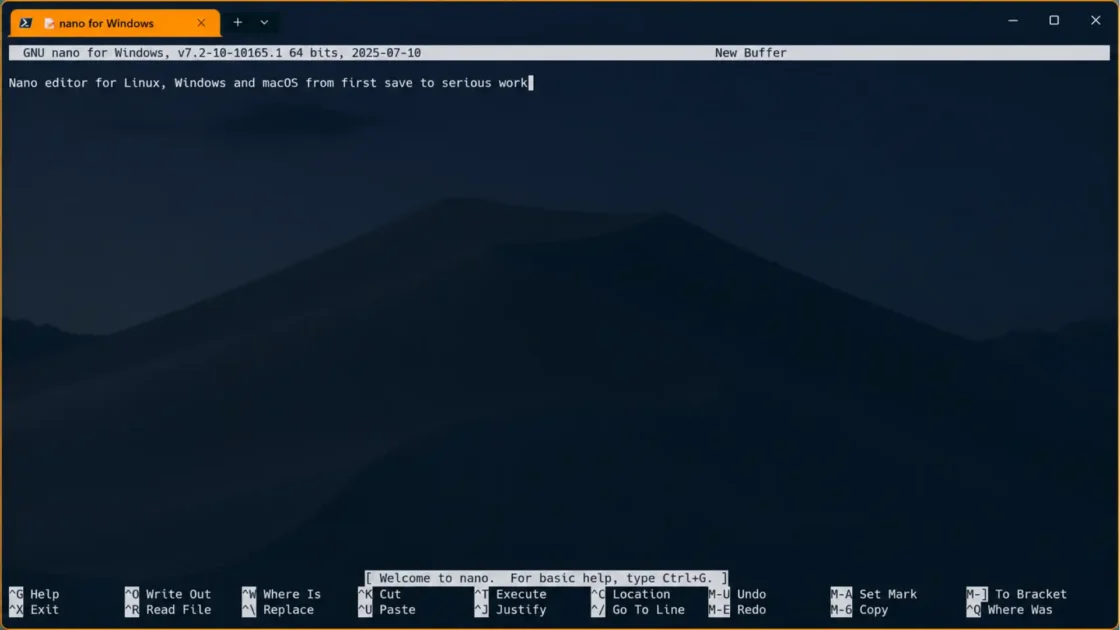
A 12-minute Fireship video from July 2024 still teaches the parts of Linux that matter to a developer: the kernel boundary, glibc wrappers, permissions and process signals. Its opening statistics, its compressed licence history and several filesystem details have since moved, and the difference shows which half of any crash course deserves a second check.
The layer of Linux that a newcomer has to learn changes slowly. A kernel sits behind the system-call boundary, a C library wraps those calls for ordinary programs, files carry permissions for an owner, a group and everyone else, and processes are asked to stop before they are forced to. The numbers and defaults people attach to Linux change much faster. Concepts age in decades, statistics in months, and a useful primer is one a reader can split along that line.
The case in point is “100+ Linux Things you Need to Know” from the Fireship channel, published on 6 July 2024 and past 3 million views by November 2026. Narrated by Jeff Delaney, it runs just over 12 minutes and closes with a pitch for a paid Linux course on Fireship’s own platform, so it is partly an advertisement for its maker. Checked against kernel documentation, project records and current usage data, its technical spine is sound. Its first sentence, one piece of history and a few filesystem claims need updating.
A 4% desktop and a server room that is not all Linux
The video opens by saying Linux holds about 4% of the PC market while dominating servers. Both halves were defensible in 2024. StatCounter’s October 2026 table puts Linux at 5.63% of desktop page views against 76.65% for Windows. That figure is not a stable trend line: a March 2026 snapshot of the same tracker, reported by the hosting provider xTom, showed Linux at 3.16% with almost a fifth of traffic classed as unknown. Web-based trackers move with detection methods, so a single month proves little.
On servers the claim holds but needs a denominator. W3Techs reported on 7 November 2026 that Linux runs 63.3% of websites whose operating system it can identify, while the wider Unix family covers 92.2%. Dominant, yes; universal, no, and a large share of servers can only be classified as Unix in general.
The developer angle the video stresses is stronger than its 4% line suggests. The 2025 Stack Overflow survey, as summarised by xTom, found 16.7% of professional respondents on native Linux and another 16.8% on the Windows Subsystem for Linux. For many developers, Linux arrives inside Windows.
The syscall boundary, checked against the manual
The video’s best segment explains that a C call to write is not itself the system call but a wrapper supplied by glibc, which switches the processor from user mode to kernel mode. The Linux man-pages project says the same: system calls are normally reached through glibc wrappers that copy arguments into registers, invoke the call and set errno from the result. The video also gets the framing right that Linux, strictly, is a kernel and the rest of a usable system comes from GNU and other projects.
One line slips. The narration says a shell is called a shell because it provides a layer of protection between user space and the kernel. The protection in the video’s own diagram comes from the processor’s privilege rings and the system-call interface; the shell is an ordinary user-space program that sits outside the kernel like any other.
That same boundary has a legal side the video does not mention. The kernel’s licensing rules state that the syscall interface is a clear boundary that does not extend GPL obligations to programs using it. A developer shipping closed-source software on Linux is relying on exactly the line the video draws in code.
Licence history compressed into one sentence
The narration places Linux in 1991, licensed under GPL 2.0, free “as in freedom” and free to sell. Today that is accurate: kernel documentation states the kernel is distributed under GPL version 2 only, with an explicit syscall exception. It was not true at the start. Torvalds first released the kernel under his own terms, which barred distribution for a fee, and switched to the GPL with version 0.12 in January 1992, according to Christopher Tozzi’s licensing history in Channel Futures.
The GNU dates also deserve care. The video says GNU began in 1983, which matches the project’s own archive: Richard Stallman posted the announcement on 27 September 1983, and work started in January 1984. The same Channel Futures piece dates the announcement to November 1983, which conflicts with the original message preserved on gnu.org; the primary record wins. Stallman’s footnote on that archive admits his first wording about “free” was careless, which is the same distinction the video jokes about.
C is no longer the only kernel language
The video describes the kernel as written in C. That remains true of nearly all of it, but the status of a second language changed after the video appeared. At the Kernel Maintainers Summit in December 2025, LWN reported a consensus that Rust in the kernel is no longer experimental and that the label would be removed. Until then, Rust code in the kernel carried an experimental tag, which kept removal on the table; that tag is what the maintainers agreed to retire.
Scale explains why this is gradual rather than a rewrite. TechRadar, marking the 35th anniversary of Torvalds’ first announcement, put the kernel above 40 million lines of code by January 2025 and noted that every machine on the TOP500 supercomputer list runs Linux. A beginner still needs C to read most of that code. A beginner who wants to write new drivers now has a second route.
Filesystem tour on a merged /usr
The tour of the root directory treats /bin and /sbin as homes for binaries and system binaries, with more binaries under /usr. On many current distributions those top-level directories are symbolic links. The systemd project’s explanation of the /usr merge, first implemented in Fedora 17, states that /bin points to /usr/bin and /sbin to /usr/sbin, so both paths run the same file. The split the video describes is mostly historical on Fedora and the other distributions that adopted the merge, though the PATH lookup it explains works the same either way.
The claim that ext4 is the most common default filesystem is plausible but too broad. Fedora’s steering committee approved Btrfs as the default for desktop editions on 15 July 2020, Phoronix reported, joining openSUSE, while Red Hat, having deprecated Btrfs in its enterprise distribution, built its Stratis storage on XFS. Ubuntu stayed with ext4. A reader setting up a new machine should check which filesystem the installer chose before following any tutorial that assumes one.
A 12-minute map, not a reference
The video’s density is its strength and its limit. It names man, pipes, permissions in symbolic and octal form, the principle of least privilege, cron, kill with SIGTERM before SIGKILL, and the main distribution families, each in a sentence or two. That is enough to recognise terms in a job ticket or a server log. It is not enough to administer a production machine, and the closing course pitch is the creator’s answer to that gap.
For a developer, the practical reading is simple. Trust the conceptual skeleton, because the system-call model, the GPL boundary and the permission model have not changed. Treat every number and default as perishable: re-check desktop share, server share, the default filesystem and the directory layout on the system actually in front of you. The one development that would change this verdict is a kernel or distribution change to the basics themselves, such as a different permission model or the end of glibc as the common C library, and nothing in the current record points that way.
Author:
Jan Bielik
CEO & Founder of Webiano Digital & Marketing Agency
This article is an original analysis supported by the sources cited below
100+ Linux Things you Need to Know
The Fireship video examined here, published on 6 July 2024, covering 101 Linux concepts and ending with a pitch for a paid course.
100+ Linux Things you Need to Know — Fireship — Rosetta
Caption-based transcript archive giving the video’s publication date, length, view count and the exact claims tested in this article.
Linux kernel licensing rules
Kernel documentation stating the GPL-2.0-only licence, the syscall exception and the boundary it draws for user-space programs.
syscalls(2) manual page
Linux man-pages entry confirming that system calls are normally invoked through thin glibc wrapper functions.
Initial Announcement
The GNU Project’s archived original post dated 27 September 1983, with the note that work began in January 1984 and Stallman’s footnote on the word free.
The Case for the /usr Merge
The systemd project’s explanation that /bin and /sbin become symlinks into /usr, first implemented in Fedora 17.
The (successful) end of the kernel Rust experiment
LWN’s December 2025 report that kernel maintainers agreed Rust is no longer experimental.
Desktop Operating System Market Share Worldwide
StatCounter table for October 2026 showing Linux at 5.63% of desktop page views and Windows at 76.65%.
Usage Statistics and Market Share of Linux for Websites
W3Techs data from 7 November 2026 putting Linux at 63.3% of websites with a known operating system and Unix at 92.2%.
Approved: Fedora 33 Desktop Variants Defaulting To Btrfs File-System
Phoronix report of the 15 July 2020 approval of Btrfs as Fedora’s desktop default, with context on openSUSE, Ubuntu and Red Hat.
It’s 35 years since Linus Torvalds first revealed Linux
TechRadar anniversary piece giving the 1991 announcement dates, a kernel size above 40 million lines and Linux on all TOP500 systems.
A Brief History of Free and Open Source Software Licensing
Christopher Tozzi’s history documenting the original no-fee Linux licence and the switch to the GPL with version 0.12.
Linux Market Share Statistics [March 2026 Report]
Hosting provider’s roundup showing StatCounter’s March 2026 figure of 3.16% and Stack Overflow 2025 developer usage of Linux and WSL.
| Citing this article? Brief excerpts are welcome. Please credit Webiano.digital, name the author where stated, and include a link to https://webiano.digital and to this original article. Full or substantial republication requires prior written permission. Read our Copyright and Content Use Policy. |
This article was prepared with the assistance of artificial intelligence tools. The content underwent expert human review, and Webiano Digital & Marketing Agency assumes editorial responsibility for its final version and publication.