Kling AI 3 has turned a familiar AI-video promise into a harder technical claim: the model is not merely making short videos that look convincing in a social feed; it is being positioned as a native 4K generator for professional output. That distinction matters. A 4K file produced by upscaling a softer clip is not the same thing as a model that renders detail, motion, texture, edges, lighting, and text at delivery resolution. If the claim holds up in real workflows, Kling AI 3 becomes more than another model release. It becomes a test of whether generative video is ready to leave the preview window.
Table of Contents
The resolution claim that moved Kling AI 3 into a different category
Kuaishou launched the Kling AI 3.0 model series on February 5, 2026, with Video 3.0, Video 3.0 Omni, Image 3.0, and Image 3.0 Omni. The official release framed the series around stronger consistency, photorealistic output, video duration of up to 15 seconds, native audio, multilingual generation, and a unified multimodal architecture spanning text, image, audio, and video.
The native 4K video claim appears in the later product and API ecosystem around Kling Video 3.0. fal.ai describes Kling’s Native 4K as a model that directly outputs professional-grade 4K video in one step without post-production upscaling, and calls it the world’s first AI video model with native 4K output. Picsart’s April 27, 2026 write-up says Kling native 4K is 3840×2160 generation built into Kling Video 3.0, with rollout on the Kling API on April 23, 2026.
That timeline is worth separating from the marketing phrase. Kling AI 3.0 was announced in February; native 4K video availability appears to have reached API and partner surfaces in April. The difference is not a small editorial detail. Model families often launch with staged access, partial feature rollout, early tiers, partner endpoints, and different feature flags. For buyers, developers, agencies, and filmmakers, the real question is not whether a press release used the words “4K.” The real question is whether a paid production workflow can ask the model to produce a 3840×2160 master directly and receive a file that survives normal review.
The word “first” also needs care. Several companies have made strong claims around video quality, HDR, upscaling, 1080p generation, synchronized audio, world modeling, and cinematic fidelity. Google’s Veo page frames Veo 3.1 around video with native audio, stronger realism, prompt adherence, and creative control, while Google AI Studio surfaces Veo as capable of creating cinematic 4K videos. Luma’s Ray3 materials emphasize native HDR and professional finishing, with Adobe noting Ray3 outputs at 1080p with 4K upscaling.
So the sober formulation is this: Kling AI’s ecosystem now makes one of the strongest public claims that a commercial AI video model can generate native 4K output directly rather than relying on an external upscaler. Whether it is the absolute first across every internal, closed, regional, or research model is harder to prove from public evidence. What is easier to assess is why this claim matters and what it changes.
Native 4K is not just a bigger export setting
A 4K video frame contains 3840×2160 pixels, roughly four times the pixel count of 1080p. In conventional production, that difference affects cameras, lenses, lighting, focus, compression, color finishing, visual effects, storage, review systems, and delivery standards. In AI video, it affects something deeper: the model must sustain spatial detail and temporal consistency across far more visual information per frame.
Upscaling is a post-process. A generator produces a lower-resolution video, then an upscaler increases the file size and invents additional pixel detail. Modern upscalers are often useful. They sharpen edges, restore texture, and make clips passable in larger formats. They do not, however, give the model a chance to reason about the 4K frame from the beginning. They usually work after the model has already made its decisions about object boundaries, fine patterns, face structure, small text, reflections, cloth texture, product labels, and background geometry.
Native generation changes that relationship. If the model renders in 4K, the fine detail is part of the generation process rather than a repair job applied after generation. That means the model has to decide what the label on a bottle looks like while the bottle turns, what happens to the stitching on a jacket as a person moves, how specular highlights travel across metal, and whether a sign remains legible when the camera pans.
This is why Kling’s native 4K positioning matters for advertising and commercial production. Many brand clients are not judging AI video on the same scale as a viewer scrolling a phone. They review on large monitors. They pause frames. They check logos. They ask why a product cap changed shape between seconds three and five. They compare the output against brand guidelines. They care whether a hero product can appear on a connected TV screen without softness, shimmering, or invented text.
The biggest shift is not visual vanity. It is workflow compression. A native 4K clip reduces the number of separate finishing steps between generation and review. A creator no longer needs to generate at 720p or 1080p, upscale, denoise, sharpen, interpolate, clean artifacts, check text again, and repeat the loop. That does not remove post-production. It changes where post-production begins.
Kling AI 3 is a model family, not one feature
The public conversation often collapses Kling AI 3 into a single object. Kuaishou’s official release describes a model series: Video 3.0, Video 3.0 Omni, Image 3.0, and Image 3.0 Omni. The series is built around an “All-in-One” product framework with multimodal input and output across text, images, audio, and video, and includes video understanding, generation, and editing in one workflow.
The model-family structure matters because different buyers will feel the upgrade in different places. A solo creator may care about text-to-video. A product marketer may care about image-to-video and preserved typography. An agency may care about storyboard controls. A production team may care about multi-shot structure, character consistency, and voice continuity. A developer may care about API reliability and cost per second.
Kling Video 3.0’s guide says the model builds on Video O1 and Video 2.6, uses a deeply integrated unified training framework, merges native audio with element consistency control, and supports generation up to 15 seconds. The same guide lists new capabilities over Video 2.6, including multi-shot output, start-frame plus element reference, multi-character coreference with three or more characters, multilingual support, dialects and accents, flexible duration, and 15-second output.
Video 3.0 Omni moves further into reference-based generation. Its guide says Omni supports video element references, voice control for elements, up to 15 seconds of duration, and reference handling across images, videos, elements, and text. It also lets users create video-character elements from 3–8 second clips, with visual and voice traits bound into reusable character assets.
The native 4K claim sits inside this larger product stack. Resolution alone does not make an AI video system production-ready; it becomes useful when paired with controllability, repeatability, audio, reference handling, and predictable access. Kling’s strategic move is to bundle these pieces into a creator and developer workflow rather than treating 4K as an isolated export preset.
The most interesting part is not the pixels but the pipeline
A 4K AI video model is not useful just because it makes sharper clips. It is useful if it shortens the path from idea to usable asset. That is why the practical story around Kling AI 3 is less about “better-looking AI video” and more about pipeline substitution.
A conventional short commercial or product video can require ideation, mood boarding, script work, casting, location planning, props, filming, lighting, direction, post-production, color, audio, revision, and format delivery. AI video does not replace that entire chain at professional quality in every case. But it does attack early-stage visualization, variant creation, product motion, social ad testing, localized campaign assets, placeholder shots, speculative storyboards, and synthetic scenes where physical production would be too slow or too expensive.
The jump from 1080p to native 4K matters because it moves generated clips closer to the format in which professional teams evaluate finished work. A low-resolution generation is easy to dismiss as previsualization. A native 4K generation demands a more serious review. Teams can ask whether the clip works as a master, not only whether the idea works as a sketch.
This does not mean the model always produces client-ready output. AI video still breaks hands, faces, shadows, text, object permanence, and physical causality. It still needs human judgment. But a native 4K output changes the type of failure. Instead of asking whether resolution is acceptable, reviewers can focus on direction, continuity, brand accuracy, motion, and legal risk. That is a more advanced stage of review.
The same logic applies to developers. API platforms selling video generation need predictable parameters. They need to know duration, resolution, mode, cost, latency, queue behavior, supported inputs, and failure rates. Kling’s API ecosystem now exposes 4K mode through partners, while the official Kling Video 3.0 guide separately details credit costs for 1080p and 720p native-audio and no-audio modes.
That split tells us the commercial rollout is still layered. Some features live in user-facing guides. Some live in API endpoints. Some appear first through partner platforms. The production market will judge the product by the path that is actually available, not only by the architecture Kuaishou describes.
The February launch established the creative architecture
The February 2026 Kling AI 3.0 announcement was not primarily a 4K announcement. It was about narrative control. Kuaishou said the model series integrates tasks such as text-to-video, image-to-video, reference-to-video, and in-video editing into a native multimodal architecture. It also emphasized complex narrative logic, shot control, prompt adherence, and element consistency.
That framing is important because video generation has moved beyond isolated spectacle clips. The early public fascination with AI video came from surreal one-shot prompts: animals doing human things, impossible camera moves, painterly animation, fantasy scenes, photorealistic landscapes. Those outputs were impressive, but they were hard to use in structured production because each generation was effectively a separate gamble.
Kling Video 3.0’s multi-shot mode addresses that problem directly. The official guide says the model can automatically plan shot transitions, framing, and camera-angle changes based on prompts. Custom Multi-Shot lets users specify shot details and durations, including framing, angle, narrative content, and camera movement.
For professional users, this is a bigger shift than it may first appear. Film grammar is not one shot. Advertising grammar is not one shot. Product storytelling is not one shot. A 15-second ad often contains a hook, product reveal, feature moment, lifestyle proof, and end frame. Without multi-shot control, a model has to compress all of that into a single continuous camera movement or force the user to stitch separate generations in an editor.
Kling AI 3’s creative bet is that short-form video will be generated as structured scenes, not as disconnected clips. Native 4K then raises the ceiling on where those structured scenes can be used.
Native audio turns short video into a complete media object
Video without audio is not really finished video. It is footage. It still needs voice, sound design, room tone, ambience, music, and lip sync. Kling AI 3’s February launch put native audio at the center of the model series, with support for English, Chinese, Japanese, Korean, Spanish, English accents, and Chinese dialects. Kuaishou said Video 3.0 can create multi-character dialogue scenes where different characters speak different languages, with control over content, delivery, and speaking order.
The official Video 3.0 guide expands that point. It says the model supports dialogue in five languages, mixed-language performances, dialect and accent generation, and character-specific dialogue matching in multi-character scenes.
This is not a side feature. Native audio makes the model compete with production workflows rather than image-animation tools. A product ad with no sound still needs a sound pass. A dialogue scene with separate AI voice has to be lip-synced or manually edited. A multilingual localization test requires voice selection, timing, pacing, and subtitle or text handling. If a model generates video and audio together, the first review file is much closer to a finished asset.
Google’s Veo 3 and Veo 3.1 have also made native audio central to their positioning. Google DeepMind says Veo 3 lets users add sound effects, ambient noise, and dialogue, generating all audio natively, while also emphasizing realism, physics, and prompt adherence.
OpenAI made a similar move with Sora 2 in September 2025. Its official announcement described Sora 2 as a flagship video and audio generation model with synchronized dialogue and sound effects, improved physical realism, and stronger control over multi-shot instructions.
The competitive direction is clear. AI video is no longer a silent-image-animation category. The market is moving toward full audiovisual generation, where motion, speech, sound, and scene logic are generated together. Kling AI 3’s native 4K story therefore sits inside a broader race to produce complete short-form media objects.
Consistency is the feature that commercial buyers actually buy
Resolution draws attention. Consistency wins budgets. In professional production, the most expensive failures are not always ugly frames. They are continuity failures. A product label changes. A person’s face shifts. A mascot loses its shape. A shirt logo bends into nonsense. A prop appears and disappears. A character’s voice no longer matches the previous scene.
Kuaishou’s launch release repeatedly emphasizes element consistency. Video 3.0 lets creators upload reference videos and multiple image references to keep characters, objects, and scenes visually coherent. Video 3.0 Omni goes further by allowing reference video uploads that extract visual traits and voice characteristics of a character for reuse across scenes.
The Omni guide gives this capability its clearest production meaning. It says users can upload or record a 3–8 second video of a single character, extract core traits and the original voice, and preserve appearance and likeness. It also says multi-image subjects can have a voice recording bound to them.
That is close to an asset model. A character is no longer a prompt description that must be rewritten every time. It becomes a reusable reference object. The same is true for products, scenes, props, and brand elements. Generative video becomes more commercially useful when it treats characters and products as persistent assets, not one-off hallucinations.
Runway’s Gen-4 release made a similar argument from a different angle. Runway described Gen-4 as a model that can generate consistent characters, locations, and objects across scenes from visual references and instructions, without fine-tuning or training.
This is the real competitive axis: not just who makes the prettiest five seconds, but who keeps the subject stable across revisions, cuts, formats, and client notes. Native 4K increases the demand for consistency because high resolution exposes small failures. A warped product label that might pass in 720p becomes obvious in 4K. A face drift that looks acceptable in a tiny player becomes distracting on a large monitor.
Text rendering makes or breaks e-commerce and advertising use
Kuaishou singled out better text preservation and generation in the February release, saying Video 3.0 can retain or generate signage, captions, branded elements, and readable logos, with special relevance for e-commerce advertising.
The Video 3.0 guide repeats the point: the model can preserve details such as signs, captions, and logos from original images, and it is meant to avoid text displacement or blurring.
This detail is easy to overlook because text rendering is not as visually glamorous as photorealistic faces or sweeping camera moves. But for commerce, it is central. A bottle label, shirt logo, sale sign, package name, price card, storefront sign, or app interface cannot mutate across frames. A brand does not want a generated ad in which its product name becomes almost-readable gibberish.
Text legibility is where the fantasy of AI video meets the strictness of brand review. The higher the resolution, the more pressure the model faces. Native 4K does not hide broken letters. It displays them. This is why Kling’s text-capability claim belongs in the same conversation as its 4K claim.
E-commerce use also explains why Kuaishou is a natural owner of this technology. The company is not only a model developer. It operates a large content, short-video, live-streaming, advertising, and e-commerce ecosystem. In Q1 2026, Kuaishou said AI-generated short-video marketing materials contributed 10% of total short-video online marketing spending on its platform as of March 2026, and it described end-to-end AI tools across pre-placement, in-placement, and post-placement advertising workflows.
That creates an internal demand loop. Better AI video can feed ads. Better ads can feed commerce. Commerce data can reveal which formats work. Those lessons can shape product features. Kling AI is not being developed in a vacuum; it is tied to a platform that already monetizes short video at scale.
Kuaishou is turning Kling AI into a second growth curve
The business context is unusually concrete. Kuaishou’s Q1 2026 unaudited results said total revenue reached RMB33.7 billion, average daily active users on the Kuaishou app reached 412.7 million, and Kling AI generated more than RMB650 million in revenue during the quarter, up more than 300% year over year. The company also said Kling AI’s annualized revenue run rate was about USD500 million in March 2026.
Those numbers change how the market should read the native 4K rollout. This is not a research demo from a lab with no immediate route to customers. It is a commercial product connected to subscriptions, API services, team plans, enterprise clients, advertising workflows, and platform content.
Kuaishou’s February 2026 launch release said Kling AI had served more than 60 million creators worldwide, produced more than 600 million videos, and built partnerships with more than 30,000 enterprise clients since its June 2024 launch.
Those figures show why Kling’s 4K claim travels quickly through the creator economy. A model with a large user base and API access does not need to win every filmmaker immediately. It can spread through creators, agencies, small businesses, social marketers, e-commerce sellers, template platforms, and multi-model apps. The first wave of native 4K usage will probably be messy, uneven, and highly commercial rather than cinematic in the old Hollywood sense.
The business risk is also clear. AI video is expensive to train and serve. Higher resolution raises inference cost. Native audio adds more complexity. Professional users expect reliability. Consumer creators expect speed. If Kling pushes native 4K too far ahead of cost control, usage may concentrate among high-paying tiers and enterprise customers. If it prices too low, compute costs can pressure margins.
Kuaishou’s Q1 report shows both ambition and strain. Gross profit margin fell to 51.2% from 54.6% a year earlier, and adjusted net profit declined to RMB3.4 billion from RMB4.6 billion. The company still called Kling AI a second growth curve.
That is the commercial tension behind the product story. Native 4K is a selling point, but it is also a compute bill.
The Chinese AI video race is no longer a side story
Kling AI 3 should not be read as an isolated Chinese competitor chasing Western models. By early 2026, Chinese companies were driving many of the most aggressive AI video launches. ByteDance’s Seedance 2.0, Kuaishou’s Kling AI 3, Alibaba-linked HappyHorse, Tencent-related and open model projects, and a growing API marketplace have put Chinese video models near the center of global rankings and creator adoption.
Artificial Analysis’ text-to-video leaderboard currently places HappyHorse-1.0 and Dreamina Seedance 2.0 720p ahead of Kling 3.0 1080p Pro in the no-audio category, while Kling 3.0 Pro and Kling 3.0 Omni Pro appear in the top five. In the audio category, HappyHorse-1.0 and Dreamina Seedance 2.0 lead, while Kling 3.0 Pro and Kling 3.0 Omni Pro also rank highly. The leaderboard is based on blind user votes in a Video Arena using Elo ratings.
ByteDance officially launched Seedance 2.0 in February 2026 as a next-generation video creation model built with a unified multimodal audio-video joint generation architecture, supporting text, image, audio, and video inputs.
The Seedance 2.0 research paper frames it as a native multimodal audio-video generation model released in China in early February 2026, with direct audio-video generation from 4 to 15 seconds and native output resolutions of 480p and 720p on the open platform described by the paper.
The competitive message is blunt: China’s AI video companies are no longer competing only on access or cost. They are competing on model capability, product integration, and workflow design. Kling’s native 4K claim raises that competition into the delivery-quality layer of the stack.
The same race also brings legal and geopolitical friction. Reuters reported in March 2026 that ByteDance had suspended the global launch of Seedance 2.0 after legal tensions over alleged copyright violations, citing The Information and major studio concerns.
Kling has its own trust questions, including safety, censorship, training-data transparency, licensing, and content moderation across regions. Native 4K makes those questions more serious because higher-quality outputs are more useful for both legitimate production and misuse.
The race with Sora, Veo, Runway, Firefly, Luma, and Seedance
The AI video market is not converging around one idea of quality. Each major model family is trying to own a different part of the workflow.
OpenAI’s Sora 2 emphasizes physical realism, controllability, world-state persistence across multiple shots, synchronized dialogue, sound effects, and a social creation app. OpenAI’s API documentation says Sora 2 Pro is used for 1080p exports in 1920×1080 or 1080×1920, and both Sora 2 and Sora 2 Pro support 16- and 20-second generations.
Google’s Veo 3.1 emphasizes native audio, realism, prompt adherence, physics, and creative control. DeepMind’s page says Veo 3 can add sound effects, ambient noise, and dialogue natively.
Runway’s Gen-4 is positioned around world consistency, references, and consistent characters, locations, and objects across scenes. Runway’s help page says Gen-4 creates 5- or 10-second clips from an input image and text prompt, with listed output resolutions such as 1280×720 for 16:9 and 720×1280 for vertical video.
Adobe’s Firefly Video Model is positioned less as the wildest generator and more as the commercially safe option. Adobe said in February 2025 that Firefly Video Model was available in public beta, powered Generate Video in Firefly and Generative Extend in Premiere Pro, supported 1080p to start, and had a 4K model for pro-level production coming soon.
Luma’s Ray3 focuses on reasoning, HDR, and creative control. Adobe’s Luma partner page says Ray3 can plan coherent scenes, maintain character consistency, produce natural motion, and output 1080p with 4K upscaling.
Kling AI 3’s sharpest differentiation is the combination of native 4K positioning, 15-second generation, native audio, multi-shot storyboarding, and reference-based consistency. Not every one of those features is unique by itself. The package is what gives Kling its market force.
Published capability signals across major AI video systems
| Model family | Publicly emphasized strength | Public output signal | Production meaning |
|---|---|---|---|
| Kling AI 3 | Native 4K, 15-second video, audio, multi-shot, references | 4K mode through API and partners | Strong fit for short ads and product masters |
| Sora 2 | Physics, audio, world-state control | 1080p Pro API exports and 20-second clips | Strong fit for narrative and physical action tests |
| Veo 3.1 | Native audio, realism, prompt adherence | Google ecosystem and Flow access | Strong fit for audiovisual scene generation |
| Runway Gen-4 | Character and world consistency | 5- or 10-second clips, 720p-class listed outputs | Strong fit for controlled visual references |
| Firefly Video | Commercial safety and Creative Cloud integration | 1080p beta, 4K model announced as coming | Strong fit for enterprise-safe creative workflows |
The table shows why Kling’s native 4K claim lands so strongly. Competitors may lead on physics, ecosystem trust, safety, editing, HDR, or social distribution. Kling is using delivery resolution as a spear point.
Native 4K makes the output harder to fake in demos
AI video demos often hide weakness through motion, compression, small playback windows, selective prompts, stylized scenes, and short duration. A high-speed social clip watched once on a phone can feel impressive even when it contains broken details. Native 4K raises the bar because reviewers can inspect frames.
This is both good and bad for Kling. It is good because strong generations will look more convincing and less like AI previews. It is bad because failures become more visible. A 4K model cannot rely on softness. It has to render coherent details at scale.
The cruel test for native 4K is not a dragon flying through mist. It is a product bottle, a readable label, a human hand, a shirt logo, a reflective surface, and a slow camera move. These are the scenes clients actually need. They are also the scenes that expose whether a model understands object permanence, material continuity, typography, and physical motion.
Kling’s own documentation leans into this type of use case. The Video 3.0 guide specifically discusses preserving text in signs, captions, and logos, and uses examples involving product-style shots and branded lettering.
This is why agencies will test Kling 4K with boring prompts before trusting it with ambitious ones. They will not start with a sci-fi battle. They will start with a shoe rotating on a platform, a watch close-up, a product label, a human holding a box, a car interior, a dining table, a retail shelf, or a talking spokesperson.
If those scenes hold up, native 4K becomes commercially meaningful. If they do not, it remains a spec line.
The compute problem behind native 4K is brutal
Native 4K video generation is hard because every extra pixel increases the spatial burden, and every extra frame increases the temporal burden. Video models do not only generate images. They generate changing images that must stay coherent through time.
The research literature reflects the scale of the problem. A 2025 paper on T3-Video states that native 4K video generation is challenging because full attention faces a quadratic computational explosion as spatiotemporal resolution increases. The paper proposes a transformer retrofit strategy and reports more than 10× acceleration on native 4K video generation in its setting.
Another research direction, UltraGen, frames native high-resolution video synthesis as constrained by attention complexity, saying many diffusion-transformer video models are limited to low-resolution outputs because attention cost grows with output width and height. UltraGen proposes hierarchical attention to scale pretrained low-resolution models to 1080p and 4K.
FrescoDiffusion, a 2026 paper on 4K image-to-video, describes another failure mode: tiled high-resolution denoising preserves local detail but can break global layout consistency. It uses a low-resolution latent trajectory as a global reference to keep large-format output coherent.
These papers are not proof of Kling’s internal architecture. Kuaishou has not publicly disclosed the full technical design of Kling AI 3 in the same depth. They do show why the native 4K claim is substantial. Producing 4K is not just a matter of switching a width and height parameter. It forces architectural choices about memory, attention, latent space, tiling, denoising, temporal coherence, and inference cost.
This is also why pricing and latency will matter. A native 4K model that takes too long, costs too much, or fails too often will remain a specialist tool. The commercial winner will be the system that balances quality, speed, cost, availability, and controllability.
Benchmarking still lags behind the product race
Video generation quality is notoriously hard to measure. A single score rarely captures motion plausibility, subject consistency, camera control, text rendering, audio sync, physical reasoning, prompt adherence, style, anatomy, and temporal stability. Two videos can have the same resolution and duration but very different production value.
VBench was created to break video quality into more specific dimensions, including subject identity inconsistency, motion smoothness, temporal flickering, and spatial relationships. Its project page argues that existing metrics do not fully align with human perception and that a useful evaluation system should reveal model strengths and weaknesses.
VBench-2.0 pushes the problem further. It argues that video models must move beyond superficial faithfulness toward intrinsic faithfulness: physical laws, commonsense reasoning, anatomical correctness, and compositional integrity. It evaluates human fidelity, controllability, creativity, physics, and commonsense, and notes that recent models still struggle with complex plots, dynamic object changes, and unstable commonsense reasoning.
Blind preference leaderboards are useful, but they also have limits. Artificial Analysis uses user votes in blind video comparisons and Elo ratings. That method captures human preference, not necessarily production reliability. A visually exciting generation may beat a dull but accurate one. A benchmark prompt may not reflect a brand’s actual production constraints.
Kling AI 3’s native 4K claim therefore needs two types of evaluation: aesthetic preference and production QA. The first asks which video people like. The second asks whether the asset can survive a professional checklist. Those are not the same test.
A production QA benchmark would ask whether the same logo remains readable through motion, whether the same character holds identity across cuts, whether audio remains synchronized across languages, whether small objects persist, whether camera instructions are followed, and whether the output maintains quality after compression to ad-platform formats.
That is where the next serious comparison will happen.
Professional use will start with short, controlled, expensive-looking shots
Kling AI 3 will not replace an entire film shoot. It does not need to. The early professional market is more likely to use native 4K for short, controlled, expensive-looking shots that are hard to justify under traditional production budgets.
The obvious targets are product reveal shots, beauty passes, fashion details, branded atmospherics, location variants, set extensions, social ad hooks, background plates, concept trailers, pitch decks, speculative campaign boards, and localized versions of existing creative. These assets often need polish, speed, and variation more than full narrative complexity.
Kuaishou’s own Q1 2026 report says Kling AI focuses on professional creators across film and television, advertising, e-commerce, and gaming, and claims involvement in virtual scenes and visual effects shots for the Chinese historical drama Swords Into Plowshares and hundreds of shots for the Hollywood TV series House of David.
Those claims should be read carefully because “supported the generation” can mean many levels of creative use: ideation, temp shots, background material, final elements, visual reference, or production shots. Still, they show where Kuaishou wants Kling AI to sit. The target is not only creator novelty. It is industrial preproduction and visual asset creation.
Native 4K strengthens that positioning because professional teams can test generated shots closer to final delivery. A storyboard image is not enough. A 720p moving concept is better. A 4K clip with native audio and reference consistency is closer to something a creative director can show in a client meeting.
The highest-value use may be decision-making. When a team can see three possible campaign directions in 4K video before booking a shoot, the model changes planning economics even if the final ad is still filmed traditionally.
Advertising teams will treat 4K as a versioning advantage
The most immediate business impact of Kling native 4K is likely in advertising. The ad market values speed, variations, audience testing, and format reuse. A 4K master can be cropped into 16:9, 9:16, 1:1, and other placements with less quality loss than a 1080p master. That matters for campaigns spanning connected TV, YouTube, TikTok, Instagram Reels, retail screens, landing pages, and marketplace videos.
Native 4K gives teams more room to reframe. A product centered in a 4K horizontal master can be cropped vertically. A close-up can be punched in. A background can be softened. A shot can be adapted for multiple deliverables. This does not mean every crop will work. Composition still matters. But more pixels give editors more room.
The second ad use is versioning. An agency can generate multiple variations of a product scene: different lighting, different locations, different seasonal backgrounds, different languages, different on-screen text, different camera moves. Native audio and multilingual dialogue make that more useful for international testing.
The third use is speed. Many campaigns do not need a perfect cinematic scene. They need ten plausible hooks by morning. AI video already serves that need at lower resolutions. Native 4K raises the chance that a winning variation can go from test asset to production asset with less rebuilding.
Production use cases most affected by native 4K AI video
| Use case | Native 4K advantage | Main risk to check |
|---|---|---|
| Product reveal shots | Sharper labels, textures, reflections, and crops | Logo drift and material inconsistency |
| Connected TV ads | Delivery-resolution files without separate upscaling | Motion artifacts on large screens |
| E-commerce videos | Faster product variants and localized visuals | Text accuracy and product fidelity |
| Pitch and previsualization | Higher-confidence client review assets | Overtrust in a model-generated mockup |
| Social ad scaling | One master can feed many aspect ratios | Weak composition after cropping |
The practical lesson is simple: native 4K is most useful where the asset must travel across formats, survive review, and preserve commercial detail. It is less relevant when the output is only a throwaway meme watched once on a phone.
Film and television will use it unevenly
Film and television adoption will be slower, more selective, and more politically sensitive than advertising adoption. Professional productions have unions, rights holders, actors, studios, insurance, copyright review, chain-of-title requirements, and pipeline standards. A visually impressive AI clip does not automatically become usable footage.
Still, native 4K can matter in previsualization, concept design, pitch materials, VFX planning, temp shots, set exploration, animated storyboards, creature motion references, and low-risk background elements. The model can also support small productions that cannot afford large VFX teams.
The biggest difference from advertising is tolerance for continuity. A 15-second ad can survive with one strong scene. A scripted show needs continuity across minutes, episodes, characters, locations, and editorial rhythm. Kling AI 3’s multi-shot storyboard and reference assets address part of that challenge, but they do not solve long-form narrative production by themselves.
A native 4K model makes short shots more usable; it does not automatically create long-form cinema. The film workflow still needs editing, performance direction, art direction, shot matching, legal review, color management, and human taste.
Luma’s Ray3 Modify points toward another possible direction: hybrid workflows that begin with real footage and then use AI to modify settings, costumes, lighting, or visual elements. Reports describe Ray3 Modify as using real performances while reimagining the scene with AI, a method meant to preserve motion and acting where text-only generation struggles.
That hybrid path may be more attractive to serious productions than fully synthetic generation. A real actor performance provides timing, emotion, eye line, and blocking. AI then changes the world around it. Kling’s reference and consistency tools could move in that direction, but the native 4K claim mainly strengthens generated and image-to-video output.
E-commerce is Kling AI’s most natural commercial home
E-commerce video needs are vast and repetitive. Sellers need product explainers, lifestyle scenes, seasonal ads, marketplace clips, short demos, unboxing-style visuals, discount videos, live-commerce supporting material, and localized product presentations. Many sellers cannot afford custom shoots for every SKU, every region, and every campaign cycle.
Kuaishou already operates a major e-commerce and live-commerce platform. Its Q1 2026 report says Kuaishou’s e-commerce search, recommendation, marketing placement, live streaming rooms, AI private messaging, digital avatars, and AI-generated marketing materials were all being infused with AI.
Kling AI fits naturally into that stack. A seller can use product images as references, generate a motion clip, preserve product text, add localized voice, and test multiple ad formats. The output may not replace premium product photography for major brands, but it can fill the huge middle layer of commerce content.
The e-commerce value of native 4K is not just sharpness. It is asset reuse. A seller can create one high-resolution product master and cut it into marketplace formats, ad variants, live-stream inserts, and social clips. Higher resolution also supports zooming into product details without rebuilding the scene.
The risk is product truth. If AI changes the size, material, color, feature, packaging, or label of a product, the video can mislead buyers. For regulated categories, the risk is higher. A model that makes a product look better than reality can create compliance and refund problems. Brand and merchant workflows will need human review and product-reference locks.
Kling’s text preservation and element-reference tools are therefore not nice extras. They are e-commerce safety controls.
Native 4K will expose hidden weaknesses in prompt culture
Prompting culture often rewards adjectives: cinematic, photorealistic, premium, dramatic, ultra-realistic. Production culture rewards specificity: lens, shot size, blocking, movement, duration, lighting source, product orientation, frame-safe area, negative space, end card, color restrictions, compliance notes, and revision constraints.
Kling AI 3’s multi-shot and custom storyboard features push users toward production language. The official guide examples specify shot numbers, shot duration, camera angle, camera movement, dialogue, character action, and timing.
That is a healthy shift. Native 4K rewards production literacy. A vague prompt may still produce a beautiful clip, but a usable 4K asset needs more than beauty. It needs planned composition, controlled movement, correct subject hierarchy, safe areas for cropping, and enough restraint to avoid artifact-prone chaos.
Creators who understand film grammar will get more from Kling AI 3 than creators who only stack style words. Agencies will likely build internal prompt templates that resemble shot briefs rather than casual prompts. They will define the start frame, subject lock, camera move, audio tone, end state, and review criteria.
This shift also changes staffing. The best AI video operator is not necessarily a traditional editor or a pure prompt hobbyist. It may be someone who can translate a creative brief into shot logic and knows how to test model behavior. The emerging role is part director, part art director, part prompt engineer, part editor, part QA reviewer.
The model’s 15-second limit is both constraint and advantage
Kling Video 3.0 supports up to 15 seconds of continuous video, with flexible duration from 3 to 15 seconds according to the official guide.
Fifteen seconds is short for film but long for many commercial contexts. It matches common social ad rhythms and gives enough time for a hook, movement, reveal, and simple narrative beat. A 15-second generation also keeps the model’s task bounded. Long videos compound errors. Faces drift. Objects disappear. Physics breaks. Audio slips. Prompt intent weakens.
Short duration is not only a limitation; it is a quality-control strategy. The market may discover that strong 10–15 second clips are more useful than weaker 60-second generations. Most commercial video is built from shots anyway. Production teams can generate segments, review them, and assemble the final edit.
OpenAI’s Sora 2 API supports 16- and 20-second generations, while Runway Gen-4 supports 5- and 10-second durations in its documented interface.
Duration alone does not decide the winner. A longer clip with drift can be less useful than a shorter clip with strong control. Kling’s bet appears to be a 15-second window with stronger storyboard and consistency tools. Native 4K then gives each short generation more finishing value.
For advertisers, 15 seconds is not a compromise. It is a standard unit. For narrative filmmakers, it is a shot or beat, not a scene. Those markets will judge the model differently.
API access will decide whether native 4K becomes infrastructure
Creator apps generate attention. APIs generate infrastructure. A native 4K video model becomes more powerful when other platforms can route requests to it, combine it with editing tools, build templates around it, automate asset generation, and sell it inside broader workflows.
fal.ai’s Kling 4K endpoint describes image-to-video 4K generation, commercial use, and an API surface. Picsart says Kling native 4K is live across Flow, the AI Video Generator, and AI Playground, with mode selection inside existing creative tools.
That distribution matters. A creator may never visit Kling’s official app if they can access Kling through Picsart, Leonardo, Artlist, fal, or another platform. Developers may treat Kling as one model in a routing stack, choosing it when 4K output is more important than a competing model’s strength.
This multi-model reality weakens brand loyalty but strengthens usage. A platform may call Kling for product video, Veo for dialogue-heavy clips, Runway for reference consistency, Luma for HDR-style work, and Firefly for commercial-safety-sensitive enterprise assets. The winner may be the routing layer, not the model brand.
Still, model providers benefit when they become default infrastructure. If Kling’s 4K mode becomes the preferred endpoint for short native 4K ads, Kuaishou can earn from creators far outside its own consumer platform.
The API race will measure latency, cost, rate limits, moderation behavior, failure recovery, documentation, and rights terms as much as raw output quality.
The cost of 4K will shape who gets to use it
Native 4K inference is expensive. Even if users do not see the GPU bill, the platform sees it. That cost will appear in credits, subscription tiers, queue priority, duration limits, watermark policy, API pricing, or enterprise contracts.
Kling’s official Video 3.0 guide lists pricing for 1080p and 720p modes, with native-audio 1080p at 12 credits per second and no-native-audio 1080p at 8 credits per second. It also lists 720p rates and extra credit cost for voice tone control.
The 4K pricing picture varies by platform and endpoint, which is typical during staged rollouts. The practical effect is that creators may use lower-resolution modes for iteration and reserve 4K for selected final generations. That mirrors traditional production: draft low, finish high.
A mature AI video workflow will not generate every experiment in native 4K. It will use quick drafts, choose the best candidates, then spend more on high-resolution final runs. Luma’s Ray3 messaging around draft mode and higher-fidelity finishing shows a similar workflow pattern, even though its public resolution story differs from Kling’s.
This matters for the economics of creative testing. If native 4K costs too much, teams will use it only after a lower-resolution version passes creative review. If it becomes cheap enough, 4K generation could become default for professional accounts. The market is not there yet.
The cost curve will depend on model architecture, hardware supply, inference scaling, demand peaks, compression choices, and whether providers can recycle intermediate representations across drafts. The next breakthrough may be less visible than 4K itself: lower cost per usable 4K second.
Copyright risk grows with realism and resolution
Higher-quality AI video raises familiar legal concerns: training data, likeness rights, character rights, brand marks, copyrighted styles, derivative works, and unauthorized commercial use. Native 4K makes those concerns more serious because the output is more usable.
Adobe has tried to differentiate Firefly Video on commercial safety, saying its Firefly Video Model is IP-friendly and commercially safe, trained for production use, and integrated into Creative Cloud workflows.
That positioning exists because enterprises worry about output risk. A marketing department does not only ask whether a clip looks good. It asks whether the clip is legal to use, whether the model was trained on licensed material, whether the platform indemnifies customers, whether a generated actor resembles a real person, and whether branded material appears unintentionally.
The Seedance 2.0 controversy shows the stakes. Reuters reported that ByteDance suspended the model’s global launch after legal tensions over alleged copyright violations, including concerns from major studios.
Kling’s native 4K push will draw similar scrutiny if users generate realistic approximations of celebrities, copyrighted characters, branded worlds, or studio-style scenes. Even if the model provider blocks some prompts, users will test boundaries.
The more production-ready a model becomes, the less plausible it is to treat output as harmless experimentation. A 4K video can become an ad, a fake endorsement, a misleading product demo, or a synthetic news clip. Professional capability brings professional liability.
Provenance and labeling become production requirements
Synthetic video creates a trust problem. Viewers need ways to know whether media is generated, edited, staged, or captured. Platforms need signals. Regulators are beginning to require transparency. Brands need audit trails.
C2PA provides an open technical standard for content provenance and authenticity, describing Content Credentials as a way to show origin and edit history for digital content.
OpenAI says every Sora-generated video includes visible and invisible provenance signals and embeds C2PA metadata, while many outputs carry visible moving watermarks.
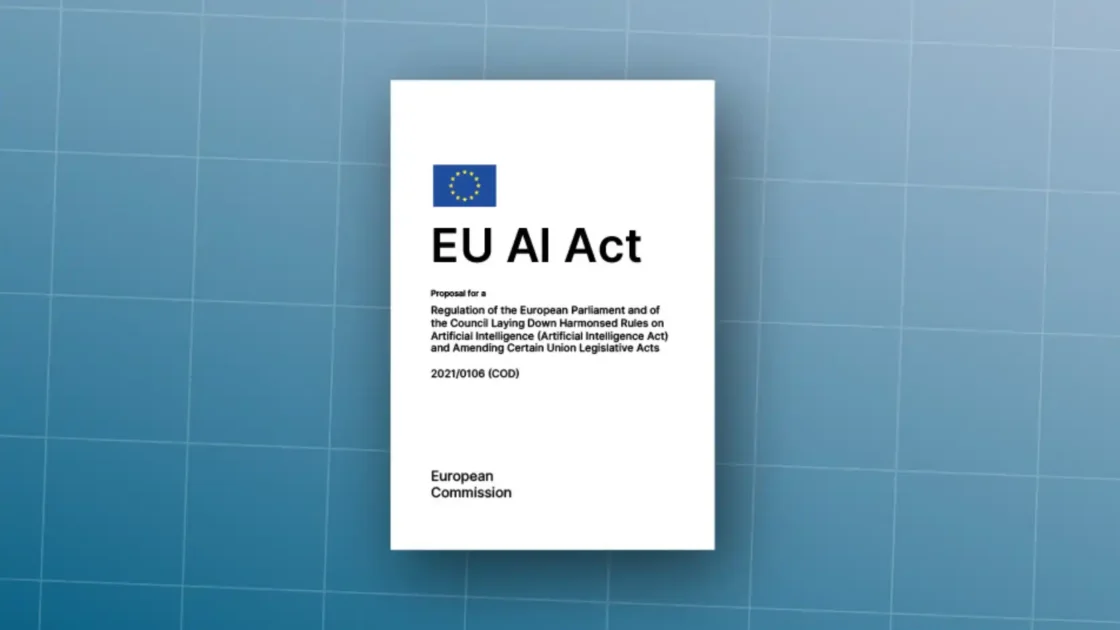
The EU AI Act’s transparency obligations are moving toward practical enforcement. The European Commission says Article 50 obligations cover marking and detection of AI-generated content and labeling of deep fakes, while draft guidelines published for feedback in May 2026 say rules become applicable on August 2, 2026, requiring providers to implement machine-readable marks in generative AI systems and deployers to inform people when exposed to deep fakes or AI-generated publications on matters of public interest.
These obligations matter for Kling and every comparable model. A native 4K generator used in Europe will not only be judged by output quality. It will be judged by marking, disclosure, detection, documentation, and platform compliance.
Provenance is not solved. A 2026 independent security analysis of C2PA argues that current specifications fail to meet all claimed security goals and should not be relied on prematurely for high-stakes uses such as journalism, legal evidence, or financial disclosures.
That critique does not make provenance useless. It means provenance must be treated as one layer in a trust system, not a magic seal. For commercial production, teams should preserve generation records, prompts, references, licenses, edit histories, and approval notes. The higher the resolution and realism, the stronger the paper trail needs to be.
Misinformation risk rises when quality reaches delivery standard
AI video misinformation risk is not only about politics. It includes fake product demonstrations, fabricated accidents, fake customer testimonials, synthetic celebrity endorsements, counterfeit evidence, staged disasters, fake local news, and manipulated corporate communications.
Native 4K makes synthetic clips easier to reuse in contexts where viewers expect quality. A low-resolution fake can be dismissed quickly. A high-resolution fake with synchronized audio, plausible lighting, and realistic motion demands more attention.
The Washington Post reported in 2025 that it uploaded an AI-generated video with Content Credentials metadata to eight social apps, and only YouTube labeled it as synthetic, with most platforms failing to preserve or surface the metadata.
This is a warning for Kling, Sora, Veo, Runway, Luma, Seedance, and every platform distributing AI video. Model-level marking does not protect viewers if platform-level systems strip, hide, or ignore the signal.
For brands, the misinformation risk also cuts inward. Competitors, scammers, or counterfeit sellers can use AI video to imitate products. Fraudsters can create fake ads with familiar packaging. Malicious actors can use model names in phishing campaigns. As AI video tools become popular, fake tool websites and scam ads also become more likely.
The governance question is not whether AI video should exist. It already exists. The question is whether the commercial ecosystem can make provenance, rights, moderation, and user education catch up with output quality.
The production-ready label needs a stricter definition
“Production-ready” is one of the most abused phrases in AI video. It can mean anything from “looks nice on a phone” to “can pass a studio’s legal, technical, and creative review.” Kling’s native 4K claim makes the term more tempting, but also more dangerous.
A production-ready AI video asset should meet at least six tests.
It should match the required resolution, aspect ratio, frame rate, duration, color needs, compression tolerance, and audio format. It should preserve the subject, product, character, typography, and scene identity. It should follow the brief. It should avoid misleading claims. It should have clear usage rights. It should carry appropriate provenance and disclosure where required.
Native 4K satisfies only one part of this standard. It addresses delivery resolution. It does not guarantee factual accuracy, legal clearance, brand safety, physical plausibility, or editorial taste.
This is where human review remains central. Professional teams will need checklists, not just prompts. A model may generate twenty visually pleasing clips, but only two may be safe to use. A product manager may love the lighting while the legal team rejects the likeness. A creative director may approve the composition while the brand team rejects a changed logo.
The best users will build review systems around the model. They will not treat the model as a final authority.
Native 4K changes the value of post-production, not the need for it
Some AI video marketing implies that post-production disappears. Real production will not work that way. Editors, colorists, sound designers, motion designers, VFX artists, and finishing teams will still matter. Their work shifts.
Instead of fixing only camera footage, they will review generated assets, select outputs, clean artifacts, match color, conform formats, edit variants, mix audio, remove unusable frames, rebuild text, and combine generated shots with filmed or designed material. A native 4K source gives them more to work with.
Better AI output raises the value of skilled finishing because the asset is closer to usable. A poor low-resolution generation may not be worth fixing. A strong 4K generation with one artifact may be worth a cleanup pass. A near-final product shot may need only text repair and color matching.
This is similar to photography. A good raw image does not eliminate retouching. It makes retouching more productive. Native 4K AI video could do the same for motion workflows.
The danger is overproduction. Teams may spend hours trying to rescue a flawed generation because it seems close. Sometimes the right answer will be to rerun the model with a better prompt, a better reference, or a shorter shot. Skill will include knowing when to fix and when to regenerate.
The best workflows will separate ideation, selection, and finishing
A practical Kling AI 3 workflow should not begin with 4K final output on every prompt. It should begin with cheap exploration, then move to structured selection, then finish in high resolution.
A professional team might work this way. First, write a shot brief rather than a loose prompt. Define the subject, action, camera, duration, audio, reference assets, and rejection criteria. Generate low-resolution or standard versions to test motion and composition. Select the strongest candidate. Tighten the prompt. Bind references for products or characters. Generate in higher quality or native 4K. Review frame-by-frame for artifacts, text, continuity, and legal issues. Finish in an editor. Export platform versions. Archive prompts, references, licenses, and approvals.
The model does not replace the workflow; it becomes one step inside a more compressed workflow. This is the difference between amateur novelty and professional use.
Kling’s multi-shot tools fit well into this structure. A 15-second product ad can be planned as five or six beats. Each shot can have duration and action defined. Audio can be built in. References can lock the product. Native 4K can be reserved for the selected version.
This workflow also protects budget. 4K generations that fail are costly. Drafting at lower resolution reduces waste. Agencies and developers will likely build tools that automate this escalation: draft, score, refine, upscale or regenerate natively, review, deliver.
The strategic fight is moving from model demos to creative operating systems
Kling AI 3 is part of a larger shift in creative AI. The model is not enough. The winning product needs an operating layer: asset libraries, references, team collaboration, prompt transformation, API access, templates, rights management, review tools, editing, storage, billing, and distribution.
Kuaishou’s Q1 report says Kling AI launched a Team Plan supporting real-time collaborative creation for up to 15 members.
That detail matters because professional work is collaborative. One person prompts. Another approves. A third checks brand accuracy. A legal reviewer may need access. A media buyer may need multiple formats. A developer may connect API outputs to a campaign system.
Native 4K is a model capability; team workflows turn it into a business product. Without collaboration and governance, a powerful generator remains a creative toy.
This is why Adobe remains relevant even if another company’s model looks more impressive in a demo. Adobe owns production surfaces. Firefly sits near Photoshop, Premiere Pro, Express, Creative Cloud, and enterprise relationships. Runway owns filmmaker and creator workflows. Google has Gemini, Flow, Vertex AI, and YouTube gravity. OpenAI had Sora’s social experiment and now retains API and model influence. Kuaishou has short video, live commerce, advertising, and Kling’s creator base.
The battle will be fought across these ecosystems, not only in model leaderboards.
Kling’s advantage is clearest in commercial short-form video
Kling AI 3’s native 4K positioning is most convincing in commercial short-form video: ads, product visuals, social campaign masters, e-commerce clips, and pitch assets. These formats benefit from 15-second duration, high resolution, reference control, audio, and multi-shot structure.
The advantage is less clear in long-form drama, documentary, news, regulated product claims, and evidence-sensitive media. Those areas need deeper continuity, stronger factual controls, clearer rights, and trusted provenance.
Kling AI 3 is not the universal answer to video generation. It is a strong answer to a specific commercial problem: making short, controlled, polished audiovisual assets faster. That is already a large market.
The first native 4K AI videos that matter commercially may not look like films. They may look like perfume ads, sneaker reveals, holiday retail spots, app promos, car detail shots, real-estate atmospherics, food close-ups, cosmetic swatches, game trailers, and localized marketplace clips.
Those are not minor uses. They represent a large amount of visual production spending. If AI video captures even a portion of that market, the revenue opportunity is real.
The limitations remain visible and costly
Kling AI 3 still faces the core limits of generative video. It may produce physical errors, identity drift, inconsistent hands, mismatched reflections, broken typography, unnatural speech, strange pacing, and prompt failures. The more complex the scene, the more likely the problem.
VBench-2.0’s broader argument applies here: video generation is moving beyond surface quality toward physics, commonsense, human fidelity, controllability, and structured coherence. Recent models show progress but still struggle with complex plots, object dynamics, and commonsense reasoning.
Native 4K does not solve those weaknesses. It can even make them easier to see. A wrong reflection rendered sharply is still wrong. A mutated logo in 4K is still unusable. A beautifully lit product that no longer matches the real SKU is a liability.
The next phase of AI video will be judged by fewer spectacular demos and more failed production tests. Buyers will ask: How many generations did it take to get one usable shot? Did the result pass legal review? Was the output cheaper than a shoot after revisions? Did it preserve the product? Did the platform allow commercial use? Could the team reproduce the style next week?
Those questions are less exciting than “first native 4K.” They are also the questions that decide budgets.
The regulatory clock is running faster than many creators realize
The EU transparency rules becoming applicable on August 2, 2026 will land in the same period that AI video quality becomes more convincing. The European Commission’s May 2026 consultation page says providers must implement machine-readable marks in generative AI systems to enable detection of synthetic content, while deployers must inform people when they are exposed to deep fakes and certain AI-generated public-interest publications.
For creative teams, this means disclosure cannot be an afterthought. If a brand uses Kling AI 3 to create a realistic spokesperson, product scene, or public-facing campaign in Europe, it must consider labeling and disclosure obligations. If a publisher uses AI-generated video in news or commentary, the stakes are higher.
A safe workflow should track whether content is synthetic, whether it depicts real people, whether it resembles real places or events, whether it informs the public on a matter of public interest, whether it uses licensed assets, and whether the final platform preserves provenance data.
The compliance burden will not fall only on model providers. Deployers will also carry responsibility. Agencies, brands, publishers, marketplaces, and creators may all need internal rules.
This is one reason enterprise buyers may prefer platforms that provide clearer rights, audit logs, and provenance support even if another model produces prettier output. Trust features can become product features.
The “first” claim will matter less than repeatable reliability
The AI industry loves firsts: first 4K, first audio, first world model, first reasoning video, first commercial-safe model, first multimodal editor. These claims generate attention, but production markets reward repeatability.
Kling AI 3 has earned attention because native 4K is a meaningful threshold. Yet the durable advantage will come from repeatable results. A user must be able to create not one great clip, but ten usable clips under deadline. A developer must be able to call the API and predict cost, latency, and failure behavior. A brand must be able to preserve products and claims. A studio must be able to document rights.
The model that wins professional use may not always win the demo. It will win the revision cycle. That is where Kling’s combination of multi-shot control, references, native audio, and 4K will be tested.
The claim also puts pressure on competitors. If native 4K becomes expected, Sora, Veo, Runway, Luma, Adobe, ByteDance, Alibaba, and open models will need clearer answers about true render resolution versus upscaling. Users will ask whether 4K is native, upscaled, HDR, interpolated, or only available through a finishing pass.
That pressure is healthy. It makes the market more precise.
A practical buying checklist for teams testing Kling AI 3
Teams considering Kling AI 3 should test it with their own production cases, not only public examples. The right test set should include a product label, a human subject, a multi-shot scene, a camera move, a multilingual audio line, a scene with small objects, a reflective material, and a required end frame.
They should measure the number of attempts needed for a usable result, the failure types, the cost per accepted second, the time to review, the cleanup effort, the legal status, and the output’s performance after compression.
A native 4K AI model should be judged by accepted output, not generated output. If a team generates 100 seconds and accepts 10, the real cost is the cost of 100 seconds plus review time. If another model generates lower resolution but has a higher acceptance rate for a certain use case, it may be better for that job.
Teams should also clarify rights. Does the plan allow commercial use? Are uploaded references used for training? Are outputs watermarked? Is there indemnity? How are likeness rights handled? How long are assets stored? Can prompts and references be exported for audit?
For regulated industries, the checklist should be stricter. Healthcare, finance, automotive safety, legal services, political communication, and public-interest publishing need stronger review than fashion, beauty, or concept art.
Native 4K pushes AI video into procurement conversations
A low-resolution creative tool is bought by creators. A native 4K production tool enters procurement. That means security reviews, legal terms, vendor risk, compliance, usage controls, team seats, budgets, invoices, and enterprise support.
Kuaishou’s claim that Kling AI has more than 30,000 enterprise clients shows it understands this market.
But enterprise adoption is not only about big logos. It depends on trust. Companies will ask where data is processed, how references are handled, what moderation rules apply, whether outputs can be used globally, how service levels work, and what happens when a model update changes output behavior.
The native 4K feature gets Kling AI invited to the meeting. Governance determines whether it gets approved.
Western enterprises may also weigh geopolitical and data-residency questions when using Chinese AI platforms. Some may prefer accessing Kling through intermediary platforms with their own contractual wrapper. Others may use it only for low-risk creative work. Some will avoid it. This will vary by region, industry, and risk tolerance.
The model’s technical strength does not erase procurement reality.
The user experience has to hide complexity without removing control
Most creators do not want to manage model parameters. Professionals do want control. Kling AI 3 has to serve both. The product challenge is to make native 4K feel simple for casual users while exposing enough settings for serious teams.
Kling’s documentation shows controls for multi-shot, custom multi-shot, subject binding, element references, native audio, language, dialect, and flexible duration.
That is a lot of power, but it can become cognitive overload. A creator making a single social clip may not know when to use Video 3.0, Video 3.0 Omni, native audio, no native audio, 4K mode, reference video, element binding, or custom shot timing. Platform partners may simplify those decisions through presets.
The best interface will ask for creative intent, then expose detail only where it matters. A product ad preset might request the product image, brand-safe words, target format, language, and desired shot structure. A filmmaker mode might expose lens, blocking, references, and shot timing. A developer API might expose precise parameters.
This is one place where partner platforms such as Picsart, fal, Leonardo, Artlist, and others can add value. They translate model capability into task-specific workflows.
The biggest creative change is faster optionality
The promise of Kling AI 3 is not that every generated video will be perfect. The promise is optionality. A small team can explore more directions before committing. A brand can test more product treatments. A filmmaker can show a tone reel earlier. An e-commerce seller can create motion assets for products that would never get a shoot.
Native 4K makes that optionality less disposable. A direction that works can move closer to use. A draft can become a master. A pitch can become a campaign asset. A test can become a deliverable.
The creative value is not only speed; it is the ability to compare more possible futures at higher fidelity. That changes decision-making. It may also change taste. When teams can generate many polished options, the bottleneck becomes judgment. Which one should exist? Which one is true to the brand? Which one says something specific instead of looking like generic AI gloss?
AI video will flood the market with decent-looking motion. The scarce skill will be choosing, directing, and refining the right motion.
The market will split between high-trust and high-velocity tools
Kling AI 3 sits closer to the high-velocity side: fast creation, strong model capability, broad creator adoption, API access, commercial short-form use. Adobe Firefly sits closer to high-trust enterprise positioning. Runway sits in a creator-filmmaker middle. Google and OpenAI occupy model-platform ecosystems with massive reach but different product histories. ByteDance brings deep short-video instincts and legal friction. Luma pushes creative pro finishing and HDR-style language.
This split will shape buying. A risk-tolerant growth team may pick the model that produces the strongest ad variations fastest. A global brand may pick the tool with clearer rights. A filmmaker may pick the tool with the best motion. A developer may pick based on API pricing and latency. A marketplace seller may pick whichever platform is already integrated into their workflow.
Native 4K gives Kling a clear message in this crowded field: use us when delivery resolution matters now. That is strong positioning, but it is not the whole market.
The next year will likely bring more native high-resolution claims, more audio-video models, more editing models, more watermarking debates, more lawsuits, and more platform routing. Kling has pushed the category forward, but it has also invited tougher scrutiny.
The real test begins after the announcement cycle
The announcement of native 4K is the beginning, not the result. The real test will happen in ordinary work: a client asks for a revision, a product label must remain exact, a scene must be localized, a legal team asks for provenance, an API job fails, a 4K output looks sharp but wrong, a competitor ships cheaper native 4K, a platform changes pricing, a regulator asks for labels.
Kling AI 3 has a credible claim to being one of the most consequential AI video releases of 2026 because it ties together resolution, audio, storyboarding, references, and commercial scale. Its strongest contribution is forcing the industry to define what “4K AI video” really means.
Native 4K should mean the model renders the video at delivery resolution, not that a lower-resolution clip was enlarged later. If that definition becomes standard, buyers win. They can ask sharper questions. They can compare tools honestly. They can stop accepting vague output claims.
Kling AI 3 may be remembered less for being first and more for making native 4K a threshold every serious AI video model has to answer.
Questions creators and businesses are asking about Kling AI 3 and native 4K
Kling AI 3 is Kuaishou’s 2026 model series for AI video and image generation. It includes Video 3.0, Video 3.0 Omni, Image 3.0, and Image 3.0 Omni, with features such as native audio, multi-shot storytelling, reference-based consistency, and up to 15 seconds of video generation.
Kling’s partner and API ecosystem describes Kling native 4K as direct 3840×2160 video generation rather than post-production upscaling. The claim is strongest in partner/API descriptions, while the original February launch focused more broadly on Video 3.0’s multimodal, audio, duration, and consistency upgrades.
Native 4K means the model generates the video at 3840×2160 resolution directly. It differs from upscaled 4K, where a lower-resolution generation is enlarged after the fact by a separate process.
Native 4K matters because commercial teams need sharper detail, better cropping flexibility, clearer product textures, readable text, and delivery-resolution masters for large screens, connected TV, retail displays, and premium digital campaigns.
Not by itself. Native 4K solves the resolution part of production readiness, but teams still need to check continuity, product accuracy, text, motion, legal rights, audio, provenance, and brand safety.
Kuaishou announced the Kling AI 3.0 model series on February 5, 2026. Native 4K availability appears to have rolled out later through API and partner surfaces, with Picsart citing a Kling API rollout on April 23, 2026.
Kling Video 3.0 supports flexible generation from 3 to 15 seconds, according to Kling’s official user guide.
Kling Video 3.0 Omni is the reference-heavy version of Kling’s video model. It supports multimodal inputs, video-character references, voice binding, stronger consistency, and custom storyboard control.
Yes. Kling Video 3.0 supports native audio, including dialogue in Chinese, English, Japanese, Korean, and Spanish, with dialect and accent handling described in Kling’s guide.
Multi-shot generation lets the model produce a structured video with multiple camera angles or scene beats in one generation. Custom Multi-Shot lets users define shot duration, framing, angle, camera movement, and narrative content.
Text rendering matters for ads and e-commerce because logos, signs, labels, packaging, captions, and branded elements must remain readable and stable across frames.
Sora 2 emphasizes physics, synchronized audio, world-state persistence, and 1080p Pro API exports up to 20 seconds. Kling AI 3’s strongest differentiation is native 4K positioning, 15-second generation, multi-shot control, native audio, and reference consistency.
Google Veo 3.1 emphasizes native audio, realism, prompt adherence, and creative control inside Google’s ecosystem. Kling’s sharper public differentiation is native 4K output through its Video 3.0 ecosystem and commercial short-form workflow.
Runway Gen-4 is known for consistent characters, locations, and objects from references. Kling AI 3 competes on consistency too, but adds stronger public positioning around native 4K and native audio in its 3.0 series.
Yes, especially for product reveals, social ads, localized campaign variants, pitch assets, connected TV tests, and e-commerce clips. Human review is still needed for product accuracy and legal clearance.
It is useful for previsualization, concept shots, pitch videos, short inserts, VFX planning, and controlled synthetic shots. It is not a full replacement for long-form production.
The main risks include copyright uncertainty, likeness misuse, product inaccuracies, misleading synthetic media, inconsistent outputs, hidden artifacts, and unclear provenance depending on the platform and workflow used.
Not fully. Upscaling will still be used for drafts, older clips, and lower-cost workflows. Native 4K becomes more attractive when final delivery quality and detail preservation matter.
They should test product fidelity, logo preservation, text clarity, character consistency, audio sync, cost per accepted second, API reliability, commercial rights, data handling, and disclosure requirements.
The next fight will center on cheaper high-resolution generation, better physics, stronger rights controls, reliable provenance, longer coherent scenes, editable outputs, and production systems that combine generation with review and finishing.
Author:
Jan Bielik
CEO & Founder of Webiano Digital & Marketing Agency
This article is an original analysis supported by the sources cited below
Kling AI launches 3.0 model, ushering in an era where everyone can be a director
Official Kuaishou release used for the February 2026 launch date, model lineup, native audio, 15-second duration, consistency claims, and creator and enterprise adoption figures.
Kuaishou Technology announces first quarter 2026 unaudited financial results
Official Kuaishou financial release used for Q1 2026 revenue, DAU, Kling AI revenue, ARR, and business-context analysis.
Kling AI creative studio homepage
Official Kling product page used for the public positioning of Kling AI 3.0 as an all-in-one multimodal creative system.
Kling VIDEO 3.0 model user guide
Official Kling guide used for Video 3.0 features, 15-second generation, multi-shot mode, language support, native audio, text rendering, and pricing signals.
Kling VIDEO 3.0 Omni model user guide
Official Kling guide used for Omni reference handling, video-character elements, voice binding, multi-shot storyboards, and input-material limits.
Kling image-to-video API reference
Official Kling API reference used for 4K mode signals in the image-to-video API context.
Kling text-to-video API reference
Official Kling API reference used for API-mode context around text-to-video generation and 4K mode.
Kling API update announcement
Official Kling API update page used for the platform update context around Kling Native 4K.
fal.ai Kling Video V3 4K image-to-video endpoint
Partner API page used for the public native 4K wording and direct-output claim.
Picsart Kling AI now generates native 4K video in one click
Partner product article used for the April 2026 rollout timing, 3840×2160 wording, model-mode framing, and Picsart workflow context.
Artificial Analysis text to video leaderboard
Benchmark source used for current public leaderboard context, Kling ranking signals, and blind-vote Elo methodology.
VBench comprehensive benchmark suite for video generative models
Benchmark project used for analysis of video evaluation dimensions and the difficulty of measuring generative video quality.
VBench 2.0 advancing video generation benchmark suite for intrinsic faithfulness
Research paper used for limitations around physics, commonsense, controllability, human fidelity, and intrinsic faithfulness.
Transform Trained Transformer accelerating native 4K video generation over 10×
Research paper used for the compute challenge of native 4K video generation and attention complexity.
UltraGen high-resolution video generation with hierarchical attention
Research paper used for high-resolution video generation constraints and hierarchical attention approaches.
FrescoDiffusion 4K image-to-video with prior-regularized tiled diffusion
Research paper used for 4K image-to-video coherence challenges and tiled diffusion limitations.
Google DeepMind Veo
Official Google DeepMind page used for Veo 3.1 positioning, native audio, realism, prompt adherence, and creative-control comparison.
Sora 2 is here
Official OpenAI release used for Sora 2 positioning, synchronized dialogue, physics, controllability, and product availability context.
OpenAI video generation with Sora API documentation
Official OpenAI API documentation used for Sora 2 Pro resolution and duration comparison.
Creating with Sora safely
Official OpenAI safety page used for provenance, C2PA metadata, visible and invisible signals, and watermarking context.
Runway Gen-4 research announcement
Official Runway page used for Gen-4 consistency, reference-based character and world control, and competitive comparison.
Runway creating with Gen-4 video
Official Runway help page used for Gen-4 durations, prompt inputs, and listed output resolutions.
Adobe Firefly commercially safe video model announcement
Official Adobe release used for Firefly Video Model positioning, commercial-safety claims, 1080p beta, and 4K roadmap context.
Luma AI Ray3
Official Luma page used for Ray3 positioning in the AI video market and creative workflow comparison.
Create and modify AI video with Luma AI in Adobe Firefly
Adobe partner page used for Ray3 1080p output, 4K upscaling, coherent scene planning, and character consistency comparison.
Luma AI launches Ray3, the world’s first reasoning video model
Luma announcement distributed through Business Wire used for Ray3 launch context, HDR positioning, and professional-production framing.
Seedance 2.0 official launch
Official ByteDance Seed page used for Seedance 2.0 launch, multimodal audio-video architecture, and competitive context.
Seedance 2.0
Official ByteDance Seed model page used for Seedance 2.0 positioning around audio-video generation, motion stability, and director-level controls.
Seedance 2.0 advancing video generation for world complexity
Research paper used for Seedance 2.0 technical context, input modalities, duration, and native output resolutions.
ByteDance suspends launch of video AI model after copyright disputes, The Information reports
Reuters report used for copyright-risk context in the AI video market.
Meta Movie Gen
Official Meta AI page used for broader AI video market context around text-to-video, video editing, personalization, and audio generation.
Movie Gen, a cast of media foundation models
Meta research paper used for historical context on 1080p video generation, synchronized audio, personalization, and media foundation models.
C2PA verifying media content sources
Official C2PA page used for provenance and Content Credentials context.
European Commission code of practice on marking and labelling of AI-generated content
European Commission page used for AI Act Article 50 transparency-obligation context and marking requirements.
European Commission consultation on draft guidelines on transparency obligations under the AI Act
European Commission consultation page used for August 2, 2026 applicability and provider/deployer transparency duties.
Verifying provenance of digital media, why the C2PA specifications fall short
Research paper used for cautionary analysis of provenance-system limitations and high-stakes trust risks.
| Citing this article? Brief excerpts are welcome. Please credit Webiano.digital, name the author where stated, and include a link to https://webiano.digital and to this original article. Full or substantial republication requires prior written permission. Read our Copyright and Content Use Policy. |
This article was prepared with the assistance of artificial intelligence tools. The content underwent expert human review, and Webiano Digital & Marketing Agency assumes editorial responsibility for its final version and publication.