The world is not waiting for the first AI video clip that looks expensive. That moment has already passed. The harder threshold is a feature-length AI movie that can survive at 4K, hold character identity, carry story pressure, pass legal review, satisfy festival programmers, respect labor rules, and still feel worth watching after the novelty fades. The industry now has enough proof that generative video can make striking shots. It does not yet have settled proof that generative video can make cinema.
Table of Contents
The 4K promise has become a finishing test
The phrase “first AI 4K movie” sounds technical, but it is really a test of trust. A 4K output file can be created in many ways: generated natively, upscaled from lower resolution, assembled from short clips, finished through a conventional post-production pipeline, or wrapped as a digital cinema package for screening. None of those paths automatically produces a serious movie. 4K is only the visible surface of the problem. The deeper question is whether AI can sustain cinematic intention across time.
The current AI video race is shaped by the gap between spectacle and duration. Eight seconds of photorealistic rain on a neon street can impress a feed. A ninety-minute film must manage motivation, geography, pacing, continuity, sound, editing, performance, and audience belief. The difference is not just length. It is structure. A movie is a memory system. Viewers remember where characters stood, how they moved, what they wanted, what they feared, what changed, and what the image has already taught them about the world.
That is why 4K matters. High resolution is not kind to weak images. At 4K, the viewer sees skin texture, hair edges, background logic, hand movement, eye direction, lighting mismatches, fake depth, broken reflections, and temporal artifacts. A low-resolution clip can hide uncertainty in compression. A 4K theatrical image has fewer hiding places. The first widely respected AI 4K movie will need to show that generative video is not only a machine for images, but a working part of a film grammar.
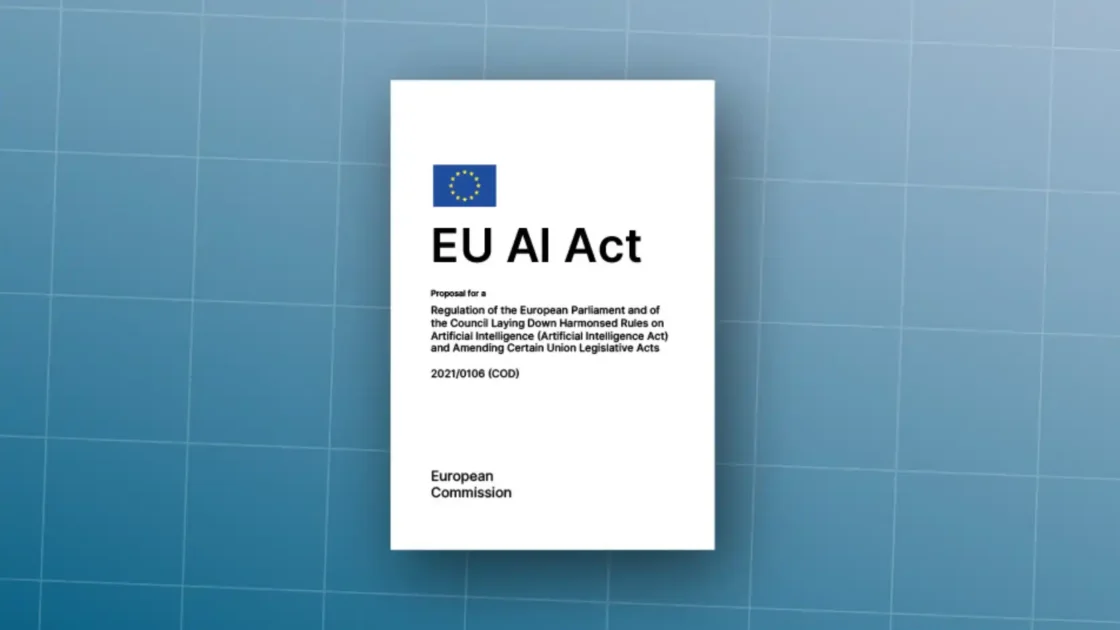
The cinema industry is now close enough to this point for the question to feel practical. OpenAI’s Sora made the public version of high-end text-to-video harder to dismiss when it launched with support for 1080p clips up to 20 seconds, after the earlier research preview showed the model creating video up to one minute long. Google’s Veo line has pushed AI video toward native audio, cinematic controls, and 4K generation in API documentation for Veo 3.1. Runway’s Gen-4 has centered its pitch on consistency across characters, locations, and objects. Adobe has aimed Firefly Video at commercial safety and production workflows rather than only prompt spectacle.
The market is now asking a sharper question: which film will become the first AI-made feature that audiences discuss as a film before they discuss it as a technical stunt? That question explains the current tension around Tribeca, Cannes-adjacent AI screenings, studio partnerships, labor contracts, copyright guidance, content provenance, and the mounting pressure on video models to act less like clip engines and more like production systems.
Tribeca has moved the debate from demos to program notes
The clearest current anchor is Dreams of Violets, directed and written by Ash Koosha and produced by Pooya Koosha. Tribeca’s own 2026 festival page lists it as a 75-minute docudrama feature, scheduled for June 10 at AMC 19th St. East 6, with the description placing it in Tehran in January 2026 and framing it as inspired by real events from Iranian civilian resistance. The official listing puts the film in Special Events and names Ash Koosha as director and writer.
That listing matters because festivals turn private experiments into public cultural claims. A project can circulate online, call itself a first, and gather views without entering the film world’s systems of programming, press, criticism, sales, and audience debate. A festival slot forces a different test. Viewers sit in a room. Programmers defend the decision. Journalists ask who made the work, what was generated, which human choices remained, how rights were cleared, and whether the result belongs in a cinema.
Recent reporting describes Dreams of Violets as fully AI-generated visually, with AI-created people and images, based on journalistic reports, photographs, eyewitness accounts, and footage. The Verge reported that the film was made for about $2,000 by Ash and Pooya Koosha’s Fountain 0, while The Guardian reported that Koosha said the script was not AI-generated, that he voiced the characters and altered voices with AI, and that he composed and edited the film himself.
That mix is revealing. The project is not a machine pressing “make movie.” It is closer to a compressed one-person or tiny-team production pipeline in which AI replaces or simulates many visual production steps. The machine generates faces, bodies, locations, footage-like scenes, and possibly production value that would otherwise require sets, actors, cameras, extras, locations, visual effects teams, and insurance. The human still frames the subject, writes, edits, chooses, rejects, voices, scores, and decides what the film is about.
This is the uncomfortable middle ground. The public phrase “fully AI-generated” is useful for headlines, but production reality is layered. A film can be AI-generated in image creation while human-authored in writing. It can use AI voices but human vocal performance as a base. It can dramatize real events while avoiding real likenesses for safety. It can claim radical cost reduction while spending enormous hidden time on curation, iteration, and correction. The first AI 4K movie will not be born from a single prompt. It will come from a pipeline that hides thousands of decisions behind a finished file.
First is an argument, not a certificate
The race for the “first” AI movie is already crowded because the word “first” changes with category. First AI-animated feature. First fully AI live-action feature accepted by a major festival. First AI feature shown near a major market. First AI feature with 4K trailer. First AI feature with real distribution. First AI feature made by a studio. First AI feature that qualifies for awards. First AI feature that viewers actually like. Each claim can be partly true and still fail to settle the larger question.
Where the Robots Grow was promoted in 2024 as an AI feature milestone in animation. Other AI-animated projects have also claimed early status, and even coverage around those films has had to correct or narrow “first” language. Hell Grind, a 95-minute AI action-fantasy project from Higgsfield, attracted headlines around Cannes in May 2026, but reporting from CineD and Futurism stressed a crucial distinction: the film was presented in Cannes during the market orbit, not as part of the official Festival de Cannes program.
That distinction is not pedantry. Film culture is built on gates. Cannes Official Selection, Cannes market screenings, private industry showcases, online releases, festival side events, and platform premieres all carry different meanings. A film shown in a rented theater in the city of Cannes does not receive the same endorsement as a film selected by the festival. A feature uploaded to a streaming platform does not carry the same cultural weight as a film reviewed out of a major festival. A 4K trailer does not prove that a full-length 4K master works.
Current claims in the AI feature race
| Project or category | Reported status | Main caveat |
|---|---|---|
| Dreams of Violets | 75-minute AI-generated docudrama listed by Tribeca for June 10, 2026 | Festival visibility does not automatically prove theatrical or 4K readiness |
| Hell Grind | 95-minute generative AI project presented in Cannes market orbit | Not part of the official Cannes program |
| AI-animated features from 2024 | Early proof that AI tools can support feature-length animation | “Fully AI” claims differ by workflow and definition |
| OpenAI-linked Critterz reporting | Feature-length AI-assisted animation project discussed in media reports | Still framed as an experiment rather than proof of a mature category |
| Studio AI workflows | Lionsgate, Netflix, Adobe, Runway and others have moved AI into production discussions | Studio adoption often begins with pre-production, VFX, fixing shots, and workflow support |
The useful way to read these claims is not to crown one winner too early. The better reading is that AI cinema is moving from proof-of-shot to proof-of-feature, and every project exposes a different failure point.
The eventual “first AI 4K movie” that matters may not be the first chronologically. It may be the first that passes several filters at once: native or credible 4K finish, feature length, clear human authorship, legal chain of title, transparent AI disclosure, emotionally coherent performances, festival or distributor validation, and audience response beyond curiosity. That is a much tougher title than “first uploaded AI film.”
The meaning of 4K in cinema is stricter than internet resolution
The public uses “4K” loosely. Online, it often means 3840 × 2160 UHD, especially for 16:9 video. In digital cinema, 4K usually points to DCI containers such as 3996 × 2160 for Flat or 4096 × 1716 for Scope in a DCP, with the larger 4096 × 2160 container sitting behind cinema standards and workflows. Netflix’s DCP specifications require DCI 4K container resolution for DCP compositions, either 3996 × 2160 Flat or 4096 × 1716 Scope, unless prior approval allows 2K.
That difference matters for AI. A prompt engine may output a 4K file, but a cinema release requires color management, audio specs, subtitles if needed, QC, encryption for some theatrical workflows, composition playlists, and playback compatibility. Digital Cinema Initiatives, which has developed widely adopted specifications since 2002, frames digital cinema around interoperability, performance, security, and quality rather than only pixel count.
AI filmmakers also face a capture-language problem. Traditional 4K production is not merely a sensor size. It is a chain of lenses, color science, dynamic range, bit depth, compression, lighting, art direction, camera movement, and post-production choices. Netflix’s camera requirements page says its approved camera system exists to support strong visual experiences and requires 90% of final runtime on approved cameras for many programs, with attention to more than resolution alone.
Generated video must simulate all of that. It must simulate lens behavior without a lens. It must simulate exposure without a sensor. It must simulate light without a set. It must simulate production design without objects. When it fails, the result may still have 4K pixels, but it lacks photographic authority. A real AI 4K movie must not only be high resolution. It must be visually accountable.
The most interesting AI film work, then, is not the work that says “4K” most loudly. It is the work that understands 4K as a finishing discipline. A theatrical audience does not care which model produced a shot if the image breaks under scrutiny. Viewers notice the face that changes between angles, the jacket that redesigns itself, the background actor who melts into the wall, the impossible shadow, the eye line that never quite lands, the door that has no stable position, and the close-up that feels glossy but dead. Resolution makes those errors public.
Short clips are not the same as film grammar
AI video models have grown by solving the clip problem first. That makes sense. A clip is the smallest unit of demonstration. It is shareable, cheap enough to generate repeatedly, and easy to judge. Does the shot look real? Does the camera move? Does the prompt show up? Does the subject stay recognizable for a few seconds? Does the motion feel plausible? These are real advances, but a movie does not live at the clip level alone.
Film grammar depends on relationships between shots. A character looks left. The cut reveals what they see. A room’s layout remains understandable across angles. A close-up arrives because pressure has built in the scene, not because the model likes close-ups. A wide shot gives geography. A cutaway carries information. A sound bridge prepares a transition. A repeated object gathers meaning. Editing turns images into thought.
Generative video can mimic many of these pieces. It can produce a dramatic close-up, a dolly move, an aerial shot, a handheld street image, a dreamlike dissolve, a violent action beat, or a synthetic documentary reconstruction. But cinema is not a gallery of impressive shots. Cinema is controlled attention over time. The first AI 4K movie worth remembering will prove that the director can control attention through AI, not merely collect outputs from it.
Academic work has started to map this difficulty. The 2025 FilMaster paper argues that AI-driven film systems struggle with cinematic principles, professional camera language, and cinematic rhythm, then proposes an end-to-end system that learns from film clips and uses staged generation and post-production processes. Its existence is useful because it treats film generation as a structural problem rather than a prompt-writing trick.
The consistency problem is similar. Research on character-stable AI video stories describes long, cohesive generation with consistent characters as a major challenge, then proposes a multistage pipeline with scripts, visual anchors, and scene-by-scene generation. The paper’s reported consistency drop when removing visual anchoring is a reminder that long-form AI film needs production discipline.
This is where the first credible AI feature will probably look less magical than the marketing suggests. It will involve storyboards, references, seed management, model selection, frame selection, rejected generations, manual edits, compositing, upscaling, sound design, color correction, and legal documentation. It may feel new to audiences, but to filmmakers it will look strangely familiar: a production pipeline with different machines, different bottlenecks, and the same need for taste.
Consistency is the real bottleneck
Character consistency is the central obstacle between impressive AI shots and feature-length AI cinema. A viewer will forgive stylization. A viewer will not forgive a protagonist whose face subtly changes every time the camera angle changes, unless the film turns that instability into part of the art. Human beings are ruthless face-recognition machines. We notice identity drift before we can name it.
Runway’s Gen-4 announcement directly targets this weakness, promising consistent characters, locations, and objects across scenes while preserving style, mood, and cinematographic elements. Google’s Veo materials point toward creative controls, native audio, extended videos, and 4K support in current developer documentation. OpenAI’s Sora system card frames the model around text, image, and video inputs, remixing, blending, and output generation. These product messages reveal what the companies know filmmakers need: not only prettier frames, but control across shots.
Consistency has several layers. Face consistency is only the easiest to describe. Costume continuity matters. Age matters. Body proportions matter. Hair length matters. Scars, jewelry, eye color, tattoos, posture, gait, and physical mannerisms matter. Location consistency matters too: the window cannot shift walls, the hallway cannot double in length, the chair cannot vanish between cuts, and the sun cannot move without narrative reason. Props matter because stories often depend on objects. A letter, weapon, phone, photograph, necklace, key, cup, or door handle must remain itself.
The harder layer is behavioral consistency. A human actor carries a character through micro-decisions: hesitation, breath, rhythm, muscular tension, eye focus, fatigue, shame, confidence, grief. AI video can produce the surface of emotion, but long-form acting is not a set of expressive masks. It is continuity of inner life. The first AI 4K movie with synthetic performers will be judged less by whether the faces are beautiful than by whether the performances remember themselves.
This is why hybrid approaches may advance faster than fully generated performance. A real actor’s motion, voice, timing, or facial reference can anchor a generated scene. A human storyboard can lock composition. A human editor can protect rhythm. A human colorist can unify the look. A human sound designer can give synthetic images physical weight. The “AI movie” label may hide the fact that the strongest work will use humans as stabilizers at every stage.
Prompting has become production management
The public often imagines AI filmmaking as prompt writing. That is too small. In a long-form project, prompting becomes production management: casting, location scouting, cinematography, art direction, continuity, camera blocking, lighting design, wardrobe, lens choice, scene coverage, emotional intent, and editorial planning all get translated into instructions, references, parameters, and corrective iterations.
The reported production of Hell Grind shows this clearly. CineD reported that the first 25-minute segment required 16,181 generations to land 253 final shots, roughly a 64-to-1 generation-to-final ratio, with prompts around 3,000 words and about 15 seconds of footage per attempt. The publication also stressed that the film was not in the official Cannes program.
Those numbers cut through the fantasy of effortless production. If the reported ratio is close to the working reality for long-form AI video, then the “cheap” AI film is cheap in one budget line and expensive in another. Instead of a crew day with cameras, lights, actors, makeup, transport, location fees, and catering, the team spends time and money on compute, retries, prompt engineering, selection, continuity repair, edit decisions, and post-processing. Labor changes shape. It does not vanish.
A strong AI filmmaker will need a new kind of literacy. The skill is not only writing descriptive prompts. It is knowing which details belong in a prompt and which details should be handled by reference images, editing, masks, model choice, compositing, or manual correction. It is knowing when a generated mistake is acceptable because it adds texture, and when it destroys the scene. It is knowing when to stop iterating because the shot is good enough for its role in the cut. That last skill is very old. It is called directing.
Prompting also changes hierarchy. The person who writes the prompt may make decisions that used to belong to several departments. A prompt can decide lens, lighting, wardrobe, blocking, production design, period detail, weather, color palette, and performance tone. That compression creates power and risk. AI film workflows collapse departments into language, but cinema still needs the judgment those departments carried.
AI video models have crossed the demo line
The strongest reason the AI 4K movie question now feels urgent is that the tools have plainly improved. The early novelty of surreal morphing has given way to models that can produce plausible camera movement, recognizable shot styles, stronger temporal coherence, and images that can fool casual viewers at feed speed. The industry can no longer dismiss AI video as a toy without ignoring what many creators are already making.
OpenAI’s Sora page describes a model that generates video from text and can create videos up to a minute long in the research presentation, while the public Sora release supported 1080p clips up to 20 seconds. The Sora technical materials describe a diffusion approach that begins from noise and refines toward video, with work on maintaining subjects across time.
Google’s Veo line has moved fast on the production-facing side. Google’s 2025 post introducing Veo 3 described native audio generation, including environmental sound and dialogue. Google’s developer documentation for Veo 3.1 describes high-fidelity 8-second video generation at 720p, 1080p, or 4K with native audio through the Gemini API.
Runway’s Gen-3 Alpha was positioned in 2024 as a new base model trained jointly on videos and images, powering text-to-video, image-to-video, text-to-image, and control modes. Gen-4 then shifted attention to consistent characters, locations, and objects. Adobe’s Firefly Video Model entered public beta with a different emphasis: IP-friendly and commercially safe generation connected to Firefly and Premiere Pro workflows.
The clip frontier has therefore moved from “can it make something that looks like video?” to “can it produce controlled, useful, legally usable footage in a professional workflow?” That is a large change. It turns AI video from a curiosity into infrastructure. It also raises the standard. Once tools are sold to filmmakers, ad agencies, studios, and platforms, they are judged by reliability, rights, delivery, and support. A creator making experimental internet clips can forgive chaos. A distributor cannot.
Audio changes the stakes
Silent AI video is easier to admire because it leaves gaps for the viewer’s imagination. Native audio makes the illusion stronger and the mistakes more damaging. A voice must sync with a mouth. Footsteps must fit space. Cloth must move with bodies. Doors must sound like doors of the correct weight. A city must have atmosphere. Dialogue must carry intention. Music must not cover weak performance unless the director wants it to.
Google’s Veo 3 announcement placed audio at the center of its claim, saying the model could generate videos with traffic noises, birdsong, and dialogue between characters. That was not a decorative feature. It moved AI video closer to the complete audiovisual unit of cinema.
For long-form film, audio may become the stabilizing force. Viewers tolerate visual stylization when sound grounds the world. A synthetic street can feel more real if the air has depth, traffic has direction, voices have distance, and silence has texture. Bad audio has the reverse effect. It reveals fakery even when the image is polished. Many low-budget films have learned this the hard way: audiences will forgive imperfect images before they forgive unusable sound.
AI voice raises a separate issue. If a filmmaker generates every character voice from scratch, the film may feel weightless. If a human performs the base voices and AI alters them, as reported for Dreams of Violets, the workflow sits between human acting and synthetic masking. That approach can protect identities, solve budget limits, or allow one performer to build many characters. It also raises questions of disclosure and authorship.
The first serious AI 4K movie will need a clear sonic identity. It cannot rely on the claim that the images are new. It will need performance rhythm, scene tone, and a mix that holds up in a cinema. AI cinema will not become cinema until it sounds like a world, not a rendered file.
The tools are merging into pipelines
The most important shift in AI video is the movement from single tools to pipelines. A filmmaker does not want to jump between disconnected systems forever. They need asset management, references, version control, character memory, scene memory, prompt history, editorial tools, provenance records, rights tracking, upscaling, color, sound, delivery, and collaboration. The company that solves the pipeline problem may matter more than the company with the flashiest clip demo.
Adobe’s strategy is built around this reality. Firefly Video is marketed as commercially safe and connected to Firefly applications and Premiere Pro features such as Generative Extend. Adobe also automatically applies Content Credentials to Firefly outputs and its APIs, according to Adobe’s Content Credentials overview. That does not answer every rights question, but it gives studios and brands a workflow story they can understand.
Runway has taken another path: filmmaker-facing generative tools, model releases, AI film festivals, and studio partnerships. Its Lionsgate collaboration, announced in September 2024, signaled a studio-facing future in which a model could be trained or adapted around a film and television library, with uses in pre-production and post-production.
Google’s path runs through Gemini, Flow, Vertex AI, YouTube, and developer APIs. OpenAI’s path runs through Sora, ChatGPT, API access, and safety systems. Kuaishou’s Kling and other Chinese video models show that the race is global, not only Hollywood-centered. Kuaishou’s 2026 Kling AI 3.0 announcement describes text-to-video, image-to-video, reference-to-video, and in-video editing within a multimodal architecture.
Current AI video systems and the cinema gap
| Company or tool | Publicly stated strength | Feature-film gap |
|---|---|---|
| OpenAI Sora | Text, image, and video inputs with high-end short video generation | Public constraints still point toward short clips, not direct feature generation |
| Google Veo 3.1 | Native audio and documented 4K video generation through Gemini API | Eight-second outputs still need long-form assembly and continuity control |
| Runway Gen-4 | Consistent characters, locations, objects, and controllable media | Long-form story reliability depends on pipeline discipline and curation |
| Adobe Firefly Video | Commercially safe positioning and Creative Cloud workflow links | Short clip generation and studio-grade AI finishing are not the same |
| Kling AI 3.0 | Multimodal video workflows and narrative control claims | Public-facing claims still need independent long-form validation |
This table shows the real state of the race: the leading tools are no longer isolated toys, but none of them removes the need for filmmaking. The first AI 4K movie will likely be made by combining several systems, not by trusting one model to carry the whole burden.
The budget story is sharper than the technology story
The reason Hollywood is watching AI video is not only image quality. It is budget pressure. A feature film budget is not a single number. It is a dense chain of costs: development, writers, actors, directors, producers, locations, sets, art department, wardrobe, makeup, stunts, insurance, camera, lighting, grips, sound, visual effects, post-production, music, legal, delivery, marketing, residuals, and overhead. AI touches several of those lines at once.
The $2,000 figure reported for Dreams of Violets is therefore explosive, even if it does not describe what a full commercial release would cost. It tells independent filmmakers that a story previously blocked by production cost might be attempted. It tells studios that some expensive visual problems may become cheaper. It tells unions that replacement pressure is not theoretical. It tells festivals that new work will arrive from places and budgets they are not used to judging.
The reported Hell Grind numbers cut in the opposite direction. If a 95-minute generative AI feature costs about $500,000 and most of that goes to compute, as reported around the Cannes-market episode, then AI is not merely reducing cost. It is transferring cost from physical production to computational production.
Both lessons are true. A politically urgent docudrama that needs no real actors on screen, no dangerous locations, and no conventional shoot may become possible at tiny cost. A polished action-fantasy feature with thousands of shots, character consistency, style control, and heavy iteration may spend large sums on generation. AI does not make filmmaking free. It changes which constraints dominate.
For independent cinema, that is still a major shift. A filmmaker who cannot raise $2 million may be able to raise or personally absorb $20,000, $50,000, or $100,000. A proof-of-concept feature can be made without waiting for permission. That changes bargaining power. It also floods the field with weak work. Lower barriers create more voices and more noise at the same time.
Compute is replacing some production expense, not deleting cost
AI video has a hidden meter: generation cost. A traditional film burns money in crew time, location time, rentals, and post-production. An AI film burns money in compute, storage, model access, generation attempts, upscaling, and human review. The cost curve behaves differently. Shooting one more take with a human crew may require a reset, overtime, location permission, and actor availability. Generating one more AI variation may require credits, GPU time, and patience. Both can become expensive.
The Hollywood dream is that AI turns impossible shots into cheap shots. Sometimes it will. A collapsing building, a vast historical crowd, a dangerous location, a fantasy creature, a weather event, or a stylized reconstruction may cost less when generated. Netflix has already published guidance for generative AI in content production, saying such tools are being used across creative workflows and should be used transparently and responsibly.
But the cost story depends on quality thresholds. A social media ad can accept visual strangeness if it stops the scroll. A feature film must hold attention for far longer. A streaming drama shot must intercut with live-action material. A theatrical image must pass QC. A prestige project must survive critics. Every step up in expectation increases retries, supervision, and finishing work.
This is why AI may first dominate previsualization, concept art, storyboarding, temp VFX, background plates, localization, marketing assets, restoration, and shot repair before it dominates full feature generation. Those uses have clear value even when the output is not final cinema. They reduce uncertainty. They help pitch a scene. They test a mood. They fill an editorial gap. They give directors options.
A full AI 4K feature asks the tool to become the production, not merely support it. That is a higher bar. It may be reached by small teams first because small teams accept risk that studios avoid. Studios will likely adopt AI where it reduces cost without threatening chain of title, union compliance, brand reputation, or award eligibility. The first wave of AI cinema may therefore split into two tracks: radical indie generation and cautious studio integration.
Indie cinema gets the loudest promise
Independent filmmakers hear a specific promise in AI video: access. The promise is not that machines will write better stories. It is that people without money may finally show the scale of what they imagine. A filmmaker in exile, a disabled creator, a writer without industry contacts, an artist outside a production hub, or a small collective with a politically dangerous subject can build images that previously demanded institutional backing.
That is the strongest argument for AI cinema. It is also the argument that deserves the most protection from hype. If AI tools become subscription gates controlled by a few companies, access may remain unequal. If training data disputes lead to legal uncertainty, indie filmmakers may inherit risks they cannot afford. If platforms flood with synthetic features, discovery may become harder. If the strongest models are expensive, a new hierarchy appears: those who can afford high-end compute and those stuck with lower-grade output.
Dreams of Violets sits directly inside this tension. Its reported use of AI to create characters and protect identities gives the project an ethical argument that differs from a cost-saving studio fantasy. A real-person dramatization about political violence creates risks for anyone whose likeness might be recognized. Synthetic characters can reduce that danger, at least in principle.
The same method can be abused. A filmmaker can hide behind synthetic faces while exploiting real trauma. A docudrama can blur evidence and invention. A political film can create images that viewers mistake for footage. AI does not remove ethical responsibility; it multiplies the number of places where responsibility must be declared. The indie promise is real only when transparency grows with access.
For small filmmakers, the most practical near-term use may be not “make the whole film with AI,” but “make the impossible parts with AI.” A microbudget drama might use generated flashbacks, dream sequences, crowd extensions, historical environments, stylized memories, or dangerous reconstructions. That hybrid model keeps human performance at the center while expanding visual reach.
Hollywood is treating AI as infrastructure first
Major studios rarely adopt production technology because it is philosophically exciting. They adopt it when it solves a cost, speed, control, marketing, or supply problem. AI video now touches all five. It can shorten previsualization, generate early concepts, support VFX, localize assets, repair shots, test trailers, build pitch materials, and create promotional content. Full AI features are the public spectacle; workflow integration is the quieter business.
The Runway-Lionsgate deal is important for that reason. The companies announced a collaboration in September 2024 to use generative AI in connection with Lionsgate’s film and television library and creative workflows. The strategic point was not that Lionsgate would immediately release a fully AI feature. It was that a studio saw value in a custom AI model or toolchain shaped around its own assets.
Netflix’s public production guidance shows another part of the same shift. Its generative AI policy for content production frames GenAI tools as creative aids that must be used transparently and responsibly. That kind of language is not a manifesto. It is governance. Platforms need policies before AI use becomes routine, because every production using AI raises questions about consent, rights, security, credits, and disclosure.
Adobe’s Firefly Video approach speaks to the studio need for rights confidence. By marketing the Firefly Video Model as commercially safe and IP-friendly, Adobe is addressing a fear that matters more in corporate production than raw novelty: a studio cannot build a release campaign around footage whose legal status may collapse later.
The first AI 4K movie from a major studio may therefore be less radical than the first AI 4K movie from an independent creator. It may be animated, stylized, hybrid, heavily supervised, lawyered, credited carefully, and framed as AI-assisted rather than AI-made. A studio has more to lose from a rights dispute, a labor backlash, or an award rejection. A small creator has more to gain by being first.
The labor fight did not end with the strikes
Generative AI entered Hollywood’s labor debate because it threatens both work and identity. For writers, the fear is that AI-generated text could be treated as source material or used to weaken credit and compensation. The WGA’s 2023 contract summary says AI cannot write or rewrite literary material, AI-generated material will not be considered source material under the agreement, and writers cannot be forced to use AI software when performing writing services.
For actors, the fear is digital replication: the creation or use of a performer’s likeness or voice without meaningful consent and compensation. SAG-AFTRA’s AI resource page says the 2023 TV/Theatrical/Streaming strike ended with an agreement that included digital replica terms and AI protections. Its digital replica materials frame the issue around consent, use, and authorization.
These protections matter for AI movies because the feature-film question is not only “can the images be generated?” It is “whose work is being replaced, simulated, trained on, credited, or paid?” A synthetic actor may not be legally recognizable as a specific performer, yet still be trained from or shaped by patterns drawn from real human labor. A generated crowd may replace background actors. A generated rewrite may weaken writers’ bargaining position. A generated voice may reduce voice work. A generated storyboard may replace artists.
The strongest pro-AI argument says the technology gives creators power, not studios. The strongest anti-AI argument says studios will use the same tools to cut labor and concentrate control. Both can happen. A low-budget filmmaker can use AI to make a film no studio would fund. A studio can use AI to reduce jobs. The technology has no built-in politics. Its politics emerge from contracts, ownership, pricing, law, and production norms.
A serious AI 4K movie will need a labor position, even if it has no union cast. Was the script human-written? Were voices performed by consenting humans? Were likenesses licensed? Were generated characters trained from living performers? Did artists contribute references? Were any workers replaced without credit? The first AI movie that matters will not only be watched. It will be audited.
Copyright law rewards human authorship
The legal status of AI-generated film is not settled by the word “movie.” In the United States, the Copyright Office has been clear that human authorship remains central. Its AI reports address digital replicas, copyrightability, and later training questions. Part 2 on copyrightability, released in January 2025, focuses on when outputs created with generative AI can qualify for copyright protection.
The practical issue is chain of title. A distributor needs to know who owns the film. A sales agent needs to know whether rights can be transferred. A streamer needs indemnities. A festival may ask about AI use. A bond company, insurer, or E&O policy may ask how material was created and cleared. If a film is largely generated from prompts, the producer must document the human creative contribution: writing, selection, arrangement, editing, modification, performance, sound, music, design, and final authorship.
This favors AI-assisted films over fully autonomous ones. A film with a human-written script, human-edited structure, human-designed characters, licensed voices, original music, and documented creative selection has a stronger authorship story than a film generated from prompts with minimal intervention. Human work does not need to be traditional to matter, but it must be traceable.
Copyright uncertainty also affects training data. Even if the final output does not copy a specific frame, lawsuits and policy fights over training sources can influence which tools studios trust. Adobe’s commercially safe positioning is a direct response. So are licensing deals and private models trained on authorized libraries. The studio market wants a clean answer to a boring question: “Can we release this worldwide without inheriting unknown claims?”
The first AI 4K movie to reach broad distribution will probably arrive with a thick paper trail. It will list human authors, AI tools, licensed assets, model terms, performer permissions, voice rights, music rights, visual references, output review, provenance, and delivery specs. The romance of one person making a film from a laptop will meet the paperwork of international distribution.
Performers need a consent economy
A synthetic performer can be invented, licensed, copied, adapted, localized, aged, de-aged, dubbed, and inserted into scenes. That is a powerful production asset. It is also a moral hazard. If a digital character resembles a real actor without permission, the audience may not know, but the industry will. If a performer sells a face scan without future limits, they may lose control of their own image. If a deceased actor is recreated, estates, families, unions, fans, and filmmakers may disagree about what counts as respect.
The consent economy must cover more than famous actors. Background performers, voice actors, stunt performers, dancers, extras, motion-capture actors, influencers, and ordinary people in training data all matter. A future AI feature could be built from licensed scans of unknown performers who share revenue. It could also be built from untraceable scraped material and synthetic approximations. Those two films might look similar on screen but have very different ethical foundations.
SAG-AFTRA’s digital replica protections are one attempt to define this territory for covered productions. The Academy’s 2026 rule changes go further in awards terms: for the 99th Oscars, the Academy said screenplays must be human-authored and performances must be demonstrably performed by humans with consent for acting eligibility, while it can request more information about AI use and human authorship.
Awards rules will shape behavior even beyond awards campaigns. A filmmaker who wants Oscar eligibility cannot treat AI performers and AI writing as interchangeable with human work. A distributor seeking prestige will ask about human authorship before release. A festival trying to avoid controversy may demand disclosure. These gates create pressure for documentation.
The first AI 4K movie with synthetic characters may become a test case for credited performance. Does the credit go to a voice actor, a model creator, a prompt artist, an animation director, a motion reference performer, or no performer at all? If an AI character is assembled from licensed human references, do those people share revenue? If a character becomes famous, who controls sequels, merchandise, dubbing, and interactive appearances? The legal answers may arrive after the cultural event, but the cultural event will force the questions.
Festivals are becoming gatekeepers
Festivals now face a problem they did not ask for. If they reject AI films outright, they may miss new forms of cinema and exclude independent creators using the only tools they can afford. If they accept AI films too casually, they may alienate artists, unions, critics, and audiences who see generative AI as extraction or replacement. If they create separate AI sections, they risk ghettoizing the work. If they place AI films in normal programs, they endorse them as cinema.
Tribeca’s listing of Dreams of Violets places the question inside a major U.S. festival context. The event does not solve the debate, but it makes avoidance harder. A programmed AI docudrama about political violence asks programmers and critics to evaluate subject, method, craft, ethics, and authorship together.
Cannes-adjacent confusion around Hell Grind shows the reputational sensitivity. The difference between “screened at Cannes” and “screened in Cannes during the market orbit” became a story because festival names are credibility machines. AI companies understand that. So do journalists. So do filmmakers.
Festivals may need AI disclosure fields in submissions. They may ask which tools were used, whether outputs are final or assisted, whether likenesses were licensed, whether AI wrote or rewrote the script, whether voices are synthetic, whether training data was authorized where known, whether real events are reconstructed, and whether provenance metadata is attached. That sounds bureaucratic, but it is better than a scandal after selection.
The best festivals will not ask “AI or not AI?” as the only question. They will ask whether the work has authorship, craft, ethical clarity, and reason to exist. A shallow AI gimmick should not get a pass because it is new. A powerful AI-assisted film should not be dismissed because it uses tools that make the industry uncomfortable. Festival gatekeeping must become more exact, not more fearful.
Distribution will decide faster than taste
Taste moves slowly. Distribution moves when there is supply, demand, or margin. AI features will test all three. If a streamer can buy or produce visually ambitious films at a fraction of the usual cost, it will at least examine the option. If niche audiences watch AI fantasy, horror, anime, children’s content, music films, or political reconstructions, platforms will notice. If AI films perform badly, the market will retreat or confine them to low-cost categories.
The first wave may not begin with prestige drama. It may begin with genres that tolerate artificiality: animation, science fiction, fantasy, horror, experimental film, music video features, children’s adventure, documentary reconstruction, true-crime visualization, or branded entertainment. These areas already accept stylized worlds and visual invention. The uncanny can be an asset in horror. Synthetic environments can fit fantasy. Animation already separates voice from image. Documentary reconstruction can use artificial images if it is transparent.
The risk is content pollution. If thousands of low-cost AI features appear, platforms may bury human-made independent films under synthetic volume. Recommendation systems may reward cheap novelty. Bad actors may produce imitation films around trending titles. Distributors may use AI to create localized variants that weaken a filmmaker’s control. The same tools that give small creators access can overwhelm the channels where access matters.
Traditional theatrical distribution is harder. Exhibitors need films that sell tickets. A theater audience pays for a larger image, shared attention, and a promise of event value. The first AI 4K film to succeed theatrically will need more than “made by AI.” It will need genre appeal, marketing clarity, critical debate, or controversy strong enough to pull people into seats. The novelty window will be brief. After the first few AI features, the label will stop being enough.
A likely path is festival premiere, online debate, limited theatrical event screenings, streaming sale, and heavy press. Another path is direct-to-platform genre release with AI as a marketing hook. A third path is a hybrid studio film where AI is heavily used but not advertised as the central identity. The third may become the most common because audiences often care less about tools than industry insiders do.
Audiences will not judge by the tool alone
The audience is often treated as a single moral body. It is not. Some viewers will reject AI films on principle. Some will be fascinated. Some will not care if the film works. Some will watch for the same reason people watch early technology demos: to see the future arrive awkwardly. Some will seek out AI films because they like synthetic worlds. Some will avoid them because they feel spiritually empty.
The first respected AI 4K movie will need to satisfy several audiences at once. It must give the tech audience enough evidence of progress. It must give film critics something to discuss beyond novelty. It must give general viewers characters, stakes, rhythm, and emotion. It must give distributors a rights story. It must give festivals an artistic reason. It must give labor groups fewer reasons to attack it. That is a difficult coalition.
Viewers are also good at detecting cynicism. If an AI film exists only because it is cheap, the cheapness will show. If it uses AI because the story demands synthetic reconstruction, impossible imagery, identity protection, or a new visual language, the method may feel earned. The tool must become part of the film’s necessity.
The history of cinema supports this. Sound, color, widescreen, computer animation, digital cameras, CGI, motion capture, virtual production, and de-aging all faced skepticism. None won acceptance by existing. They won acceptance when artists made work that justified them. Bad CGI still looks bad. Good CGI disappears or becomes expressive. Digital cinematography did not kill film; it became one language among many. AI video will need the same passage from gimmick to grammar.
The audience will not ask whether every frame was generated. It will ask whether the film made time pass differently. Did it create suspense? Did it produce awe? Did it make a character matter? Did it show something that could not otherwise be shown? Did it respect the subject? Did it feel lazy? Did it feel alive? The first AI 4K movie that answers those questions well will matter more than the first one to claim the label.
4K exposes weak images
AI video often looks strongest in compressed social feeds, small windows, and short bursts. 4K cinema is a harsher room. It exposes texture repetition, soft detail, fake grain, warped edges, unstable backgrounds, odd focus behavior, and faces that seem polished without being photographed. The closer AI video gets to realism, the less tolerance viewers have for errors.
Upscaling can make this worse. A 1080p or 720p generation upscaled to 4K may look crisp in still frames but artificial in motion. Fine detail can become synthetic decoration rather than information. Skin can turn waxy. Hair can shimmer. Backgrounds can appear detailed but meaningless. A native 4K output is better in principle, but it still depends on temporal stability and model understanding.
Google’s Veo 3.1 documentation says the model can generate 8-second videos at 720p, 1080p, or 4K with native audio. That is a major technical marker, but it also highlights the assembly challenge. An eight-second 4K shot is not a feature. It is a building block.
The first AI 4K movie will need a finishing philosophy. Some creators will chase photorealism. Others will choose stylization to avoid the uncanny valley. Stylization may be wiser. Animation, painterly realism, graphic novel aesthetics, surreal memory, archive-dream hybrids, or theatrical artificiality can let AI’s instability become part of the look. Full photorealism is the most punishing target because every error competes with the real world.
A director using AI at 4K must think like a cinematographer and a visual effects supervisor at once. Which shots can be close-ups? Which shots should stay wide? Which textures hold up? Which faces survive projection? Which movements produce artifacts? Which lighting schemes hide weakness without looking evasive? Which model handles smoke, rain, crowds, vehicles, hands, animals, or reflective surfaces? Resolution is not a badge. It is a stress test.
Watermarks and provenance are necessary but not enough
AI video needs trust signals. Content Credentials, C2PA metadata, visible labels, invisible watermarks, platform disclosures, and production documentation all help viewers and distributors know how media was made. The Coalition for Content Provenance and Authenticity describes C2PA as an open technical standard for publishers, creators, and consumers to establish the origin and edits of digital content. Google’s SynthID is designed to watermark and identify AI-generated content.
These systems matter for AI cinema because the same tools that make films can make fake footage. A filmmaker may use AI to reconstruct events responsibly. A propagandist may use similar tools to fabricate evidence. A 4K AI movie about real conflict must avoid confusing dramatization with documentation. Provenance can help mark the boundary, but it cannot replace editorial ethics.
There are also limits. Recent academic work has criticized C2PA’s current security properties, warning that provenance systems should not be relied on prematurely for high-stakes uses such as legal evidence, journalism, or financial disclosures. Another line of research has explored conflicts between provenance metadata and watermarking, where different verification layers can point in contradictory directions.
The right conclusion is not to abandon provenance. It is to treat provenance as one layer. An AI film should disclose its methods in press notes, credits, festival submissions, distributor documents, and, where possible, embedded metadata. Viewers should not need forensic tools to know whether a political scene is reconstructed. Critics should not have to guess whether a performance is human. Festivals should not discover synthetic likeness disputes after programming.
The first credible AI 4K movie will likely carry a transparency package: tool list, human author list, AI-use statement, performer consent statement, rights summary, and provenance approach. That may sound unromantic. Cinema has always depended on boring infrastructure. The audience sees light. The industry checks contracts.
Misinformation pressure shapes acceptance
AI video does not enter culture as a neutral film tool. It enters after years of concern about deepfakes, fake news, synthetic pornography, election manipulation, and fabricated crisis footage. That history changes how people receive AI cinema. A synthetic feature about fantasy creatures does not raise the same alarm as a synthetic docudrama about political violence, but both exist in the same media environment.
Google and other companies have presented watermarking and detection as responses to the difficulty of distinguishing AI-generated media from non-AI media. Google’s May 2026 post said SynthID had been integrated into generative media models and products and had watermarked over 100 billion images and videos and 60,000 years of audio.
The scale of those numbers shows why the public mood is tense. AI media is no longer rare. A theatrical AI movie may be artistically ambitious, but the viewer also lives in a feed where synthetic media can be deceptive, hateful, pornographic, political, or fraudulent. The burden of trust is heavier for AI filmmakers because their toolset is shared with bad actors.
This is especially relevant for films inspired by real events. A generated reconstruction can give visibility to suppressed stories. It can also create images that later circulate without context. A clip from an AI docudrama could be posted as real footage. A still could be used as propaganda. A face created for safety could be mistaken for a real victim or perpetrator. The filmmaker must plan for the afterlife of images.
A serious AI film about reality should label generated scenes, avoid presenting synthetic reconstructions as original evidence, and make source boundaries clear. It should not rely on the audience to infer the difference. The more realistic AI cinema becomes, the more explicit its ethics must be.
Documentary ethics are the hardest test
AI docudrama is the most difficult category because it sits between testimony and invention. Documentary traditions already contain reenactments, animation, archival reconstruction, voiceover, stylized memory, blurred identities, and composite characters. AI adds a new tool for all of those practices. It also adds a new risk: the reconstruction can look too much like footage.
The Tribeca description of Dreams of Violets says it is a docudrama feature inspired by real events from Iranian civilian resistance, bringing protest footage to life through five strangers. Reporting says the film uses AI-generated visuals and characters and is based on reports, photographs, footage, and eyewitness accounts.
That creates a pressing editorial question. If AI protects real people by avoiding identifiable likenesses, it can be a responsible shield. If AI dramatizes events with emotional force, it can carry memory where cameras could not safely go. But if the images become too authoritative, viewers may treat them as evidence. The film must tell the audience what kind of truth it is offering.
The strongest docudrama tradition is honest about reconstruction. It does not pretend to be raw footage. It uses form to approach events that cannot be filmed directly. AI can fit that tradition if creators declare their methods and resist fake evidence. A generated image can be emotionally truthful without being evidentiary. The distinction is not optional.
For political subjects, the stakes are high. A regime can dismiss real footage as AI. Activists can use AI to recreate what was hidden. Bad actors can forge atrocities. Families can feel seen or exploited. Journalists can be helped or undermined. AI cinema enters that battlefield with unusual power. It can make the unseen visible, but visibility is not automatically justice.
Animation offers a softer path
The first broadly accepted AI feature may come from animation, not photorealistic live action. Animation already accepts invented bodies, stylized motion, synthetic worlds, and voice-image separation. The audience does not expect a cartoon character to obey photographic reality. That gives AI more room to breathe.
AI animation also avoids some performer-replica issues if characters are original and voices are licensed. It still raises labor and training questions, especially for artists whose styles may be imitated, but it does not force the same uncanny face test as live-action realism. A generated animated feature can turn AI’s visual instability into style more easily than a political live-action docudrama can.
This is why early AI feature claims often cluster around animation. The gap between AI output and acceptable animated image is narrower than the gap between AI output and human performance in photorealistic cinema. A stylized robot, creature, fantasy animal, or surreal city can change slightly without breaking belief. A human face cannot.
OpenAI-linked reporting around Critterz also points toward animation as a testbed, with media reports describing an AI-assisted feature-length expansion of an earlier short. Even when such projects remain experimental, they indicate where the industry expects AI production methods to meet less resistance.
Animation also has a brutal labor history. Outsourcing, low wages, crunch, and automation pressure long predate generative AI. AI tools could support small teams, but they could also intensify pressure on storyboard artists, background painters, animators, layout artists, lighters, compositors, and voice performers. A beautiful AI-animated film made ethically would need to show not only what was generated, but who was paid and credited.
The first good AI feature may be hybrid
The cleanest marketing phrase is “fully AI-generated.” The strongest film may not be fully AI-generated. Hybrid cinema has better odds because it lets each element do what it does best. Human actors can carry performance. AI can create impossible environments. Human cinematography can anchor reality. AI can extend sets. Human editing can shape rhythm. AI can provide coverage, transitions, or stylized memories. Human writing can protect meaning. AI can test visual alternatives.
This hybrid direction is already visible in production policy and tool design. Netflix’s production guidance does not frame generative AI as a replacement for all filmmaking; it frames it as a set of tools used across creative workflows. Adobe’s Firefly Video is tied to Premiere Pro features such as extending footage, not only generating entire films from prompts. Runway and Google both emphasize control, references, and editing alongside generation.
A hybrid AI 4K movie may be more commercially viable than a fully AI one because it reduces the most visible risks. It can meet union rules if actors and writers are properly employed. It can protect copyright through human authorship. It can use AI for shots that would be too expensive or dangerous. It can disclose the method without asking the audience to accept synthetic everything. It can enter festivals as a film that uses AI rather than a film that exists as an AI stunt.
Purists on both sides may dislike that. AI evangelists may want the all-machine feature as proof of destiny. Traditionalists may reject any generated image as contamination. Audiences will probably be less ideological. They have accepted digital intermediates, CGI crowds, virtual sets, de-aging, face replacement, synthetic voices in limited contexts, and animated doubles when the work feels justified.
The first AI 4K movie people love may be one where AI is everywhere in the pipeline but nowhere advertised as the main character. It may not call itself “the first.” It may simply be a film that could not have been made otherwise.
The 4K AI movie has to pass the boring tests
Every new medium dreams in manifestos and then meets delivery specs. A 4K AI movie must pass the boring tests: files open, audio syncs, subtitles work, colors map correctly, blacks do not crush, highlights do not clip, compression does not reveal artifacts, legal names match contracts, music is cleared, likenesses are cleared, credits are accurate, E&O insurance is possible, marketing claims are defensible, and festival declarations are truthful.
The boring tests decide whether a film travels. A viral AI trailer can ignore them. A feature cannot. If a distributor asks for documentation and the filmmaker cannot explain which tools created which shots under which terms, the deal may stall. If a festival asks about AI authorship and the answers are vague, programming becomes risky. If a platform requires provenance or disclosure, the production must comply.
This is another reason Adobe’s commercially safe messaging matters. It is not necessarily because Firefly Video will produce the most cinematic shots in every case. It is because professional users care about permission, indemnification, content credentials, and predictable workflow.
Open models and smaller tools may drive creativity faster, but professional release channels reward paperwork. The first legendary AI film could be made with messy tools. The first widely distributed AI film may be made with safer tools. Those may not be the same film.
A serious AI filmmaker should therefore think like a producer from the start. Keep records. Save prompts. Save model versions where possible. Track references. Track voice permissions. Track image sources. Track edits. Track upscaling. Track music generation or licensing. Track who touched each scene. The romantic myth of invisible creation will not survive the distribution process. A film cannot become a market object without a chain of responsibility.
The Oscar line is moving toward human authorship
The Academy’s AI rules are a sign that institutions are trying to draw lines before the first major controversy forces them to. The 99th Oscars rules, announced in 2026, state that a feature film needs a qualifying theatrical release in 2026, and reporting on the AI-related changes says acting and writing eligibility require human performance and human authorship. Reuters reported that AI-generated actors and writers will be ineligible for Oscars, while filmmakers may still use AI tools.
This matters because awards shape prestige financing. A producer developing an AI film for a streamer might not care about Oscars. A filmmaker seeking festival legitimacy probably does. A studio making a serious drama cares deeply. If an AI-generated performance cannot qualify for acting awards, the film’s prestige path changes. If an AI-generated screenplay cannot qualify, credits and documentation matter even more.
The Academy’s earlier 2025 language was less prohibitive, saying generative AI tools neither help nor harm nomination chances and that branches would consider the degree to which human authorship was at the heart of the creative achievement. The 2026 rules sharpened category-specific boundaries.
The industry lesson is clear: AI use is not banned, but human authorship is becoming the prestige anchor. A film can use AI for images, effects, ideation, editing support, or workflow. But if it wants recognition in writing and acting, it needs humans. That creates incentives for hybrid production and transparent credits.
The first AI 4K movie to become an awards conversation will likely emphasize human direction, human writing, human performance, and AI as a visual production method. A fully synthetic cast and AI-generated script may still find an audience, but the awards path will be narrower.
The newsroom problem will follow the cinema problem
AI film and AI news share a trust problem. When realistic synthetic video becomes common, genuine footage becomes easier to dismiss and fake footage becomes easier to believe. This is sometimes called the liar’s dividend: the existence of deepfakes gives powerful people a reason to claim real evidence is fake. Cinema is not journalism, but AI cinema can affect how viewers read images outside the theater.
A film like Dreams of Violets sits close to that line because it dramatizes political events through generated images. Its ethical success depends on viewers understanding the boundary between journalism, testimony, reconstruction, and fiction. Tribeca’s synopsis describes it as docudrama, not raw documentary footage. That label is important.
Newsrooms may eventually review AI films with the same questions they use for visual evidence: What is the source? What was generated? What was witnessed? What was reconstructed? Who verified the underlying claims? Were images based on real footage? Were identities changed? Are viewers told clearly?
The entertainment press has its own responsibility. Headlines that overstate “first ever,” “Cannes premiere,” or “fully AI” claims can distort the record. The Hell Grind coverage confusion shows how quickly marketing language can outrun institutional fact.
The first AI 4K movie will attract global coverage. If it is about real events, the coverage must be precise. It should not treat generated reconstructions as footage. It should not treat a market screening as an official festival selection. It should not treat a 4K trailer as a 4K feature master. The press will shape whether the public sees AI cinema as a new art form or another branch of hype.
4K will not save weak taste
AI models can generate visual abundance. Taste remains scarce. The danger of AI cinema is not only technical failure. It is too much imagery without enough selection. A filmmaker can generate castles, armies, sunsets, explosions, storms, monsters, dream cities, alien worlds, period streets, and impossible camera moves. None of that guarantees a good cut.
Taste decides what belongs. It decides when not to show the most expensive-looking image. It decides when a plain shot is stronger than a spectacular one. It decides when silence beats music. It decides when a generated artifact has expressive value and when it is merely broken. It decides whether a scene needs another angle or should end earlier. AI can multiply options faster than humans can judge them, but judgment remains the film.
This is where the “world is waiting” phrase has emotional truth. People are not waiting for more AI videos. They are waiting for proof that AI can be placed under artistic pressure. They are waiting for a film that does not apologize for the tool and does not hide behind it. They are waiting for the first time a viewer leaves an AI movie arguing about the ending rather than the model.
4K makes that harder. A polished image can seduce the creator. It can make weak drama feel temporarily important. It can disguise empty scenes during production because every frame looks “cinematic.” But cinema history is full of beautiful failures. AI will produce many more.
The first strong AI 4K movie may be visually restrained. It may avoid the temptation to prove every capability. It may use fewer locations, fewer characters, more controlled scenes, and a style that fits the tool. That would be a sign of maturity. A director who knows what not to generate is closer to cinema than one who shows everything the machine can do.
A new craft class is forming
AI cinema will create new roles even as it threatens old ones. Prompt artists already exist, but the film version will be more specialized. There will be AI cinematography supervisors, continuity wranglers, model producers, synthetic casting directors, dataset clearance specialists, provenance editors, AI performance directors, generation producers, style bible designers, synthetic location managers, and post-production auditors.
Some of those titles may sound absurd now. Film history is full of once-new jobs. Colorist, digital imaging technician, virtual production supervisor, motion-capture director, previs artist, VFX producer, intimacy coordinator, and data wrangler all emerged from changing tools and norms. AI will do the same.
The risk is that new roles may not replace the number, pay, or dignity of old ones. A studio may cut ten jobs and add one AI supervisor. A small filmmaker may do five jobs alone. A new craft class can grow while total labor shrinks. The employment effect will vary by budget level, genre, country, union coverage, and business model.
Education will need to change. Film schools cannot ignore AI video, but they should not replace film grammar with prompt tricks. Students need to learn editing, cinematography, sound, writing, acting, ethics, copyright, production management, and AI workflows together. A filmmaker who only knows prompts will make shallow work. A filmmaker who knows cinema can make AI behave as one instrument among others.
The most serious AI film artists may come from editing and visual effects rather than screenwriting alone. Editors understand selection from abundance. VFX artists understand layers, artifacts, and shot repair. Cinematographers understand light and lens language. Animators understand motion and performance frame by frame. Directors understand pressure across the whole. AI cinema will reward people who can translate old craft into new control systems.
Training data remains the unresolved shadow
Every AI movie carries an invisible question: what was the model trained on? Some tools disclose licensed or public-domain strategies. Some do not disclose enough for producers to feel secure. Some rely on broad web-scale training whose legality and ethics remain contested. The output may be new, but the model’s knowledge comes from existing images, videos, styles, performances, and cinematic language.
This matters because cinema is not only content. It is labor history embedded in form. A model that understands a “1970s New York thriller,” a “Studio Ghibli-like background,” a “Roger Deakins-style interior,” or a “Marvel-style battle” has learned from human work. Even when prompts avoid direct names, models carry patterns from cultural memory. The law may draw one boundary; ethics may draw another.
Adobe’s Firefly pitch tries to solve this through training on licensed content, Adobe Stock, and public-domain material where copyright has expired, according to its product materials. That gives Firefly a rights story. Other models may offer stronger visuals but less clarity.
For a major studio, training clarity matters. For an independent filmmaker, it may matter later, when a distributor asks questions. A film can become impossible to sell if its production stack looks legally risky. AI creators who treat tool terms casually may discover that a festival laurel is easier to get than a global distribution deal.
A mature AI film market may split tools into categories: experimental tools for art and testing, commercially safe tools for brands and studios, licensed private models for major rights holders, open models for independent creators, and regional models shaped by local laws. The first AI 4K movie may be judged not only by what appears on screen, but by which tool category made it possible.
The global race will not be centered only in Hollywood
AI video development is global. China’s Kuaishou, ByteDance-related tools, Shengshu, and other companies have pushed text-to-video and image-to-video systems into consumer and creator markets. Kuaishou’s Kling AI has been widely discussed as part of the global race, with Reuters reporting in 2024 that Chinese firms rapidly launched text-to-video tools after OpenAI introduced Sora.
That matters because the first AI 4K movie that gains mass viewership may not come from Los Angeles, London, or New York. It could come from China, India, South Korea, Japan, Nigeria, Brazil, Iran’s diaspora, Eastern Europe, or an online creator network. AI reduces some location advantages. It does not remove distribution advantages, but it lets creators outside production hubs make more ambitious visual work.
Local film cultures may use AI differently. A country with strong animation culture may embrace AI stylization. A country with political censorship may use synthetic reconstruction to protect identities or evade production limits. A country with a massive short-video ecosystem may treat AI features as extensions of creator culture. A market with expensive labor may use AI for cost reduction. A market with limited production infrastructure may use AI for access.
This global spread will complicate legal and festival norms. Copyright rules differ. Performer protections differ. Disclosure expectations differ. Training data rules differ. A film made legally in one jurisdiction may face questions in another. A global platform will need standards stricter than the weakest local rule.
The first widely discussed AI 4K movie may therefore become a conflict between national film systems. Which festivals accept it? Which awards reject it? Which distributors demand edits? Which unions protest it? Which audiences embrace it? AI cinema is not only a technology story. It is a cross-border cultural policy story.
The studio library is becoming a strategic asset
A studio archive has always been valuable for remakes, sequels, licensing, restoration, and streaming. AI makes the archive valuable in another way: as a training, reference, and workflow base. A studio with a large rights-cleared library can build or license tools that understand its genres, brands, visual signatures, and production needs without relying entirely on unlicensed web data.
The Runway-Lionsgate collaboration pointed directly at this idea. A custom model trained or adapted with permissioned studio material could help with storyboarding, visual effects, background generation, concept development, or other production tasks.
This may reshape studio competition. Companies with deep libraries have more than nostalgia. They have data assets. They can generate previsualizations in the style of their own franchises, test marketing concepts, build synthetic environments based on past assets, localize promotional material, or assist restoration. The legal advantage is that they own or control more of the underlying material.
There is a risk here too. If studios use their own libraries to generate endless franchise-like content, cinema may become even more self-referential. AI trained on a studio’s past may lock that studio into imitation of itself. The strongest artists will need to use archives as raw material, not as a cage.
For independent filmmakers, the archive advantage is weaker. They may need public-domain material, licensed references, original artwork, or smaller custom datasets. That can still produce distinctive work. A tiny model trained on a filmmaker’s own drawings, locations, and character designs may create more original cinema than a huge model trained on everything.
The platform era favors volume, but cinema favors memory
Streaming platforms need volume, personalization, retention, and global reach. AI video serves those needs well. It can create more variants, localized assets, cheaper genre experiments, and faster production cycles. Cinema, as an art, needs memory. A film must remain in the mind. The tension between platform volume and cinematic memory will define AI’s reception.
If AI becomes a machine for endless content, viewers may tire quickly. Synthetic abundance can make every image feel disposable. The more spectacular images become, the less spectacle alone matters. That has already happened with CGI-heavy blockbusters. AI may accelerate the fatigue.
The counterargument is that AI can support stranger, more personal, more local, more politically urgent films. It can help creators make work that would never pass a studio budget committee. That is the hopeful version. The pessimistic version is a flood of cheap derivative content optimized for thumbnails and watch-time.
The first AI 4K movie that earns respect will probably resist the platform logic of endlessness. It will feel authored. It will have limits. It will choose a shape. It will not try to prove that anything can happen. It will prove that this particular thing had to happen.
That is why the waiting is not passive. Critics, festivals, unions, lawyers, technologists, artists, and audiences are all building the conditions under which AI cinema will be judged. The first film to break through will not do so in a vacuum. It will arrive inside a debate that has been prepared for it.
A sober timeline for AI 4K cinema
The technical ability to produce 4K AI shots is here in limited, tool-specific, short-duration forms. The ability to assemble feature-length AI movies is emerging through heavy curation and pipeline work. The ability to make a great AI 4K feature is still unproven. These three stages are often confused.
In the near term, expect more AI-generated shorts, music videos, fake trailers, festival experiments, animated features, docudrama reconstructions, and genre tests. Expect more claims of “first.” Expect more backlash from artists. Expect more disclosure rules from festivals. Expect more studio pilots that are not announced as full AI movies.
In the medium term, expect hybrid films to normalize AI in specific departments. A streaming series may use AI-generated VFX shots. A feature may use AI for fantasy sequences. A documentary may use labeled AI reconstruction. An animated film may use AI backgrounds under human art direction. A studio may use private models for previsualization. These uses will become ordinary before fully generated features become prestigious.
The first broadly accepted AI 4K feature could arrive sooner than many skeptics expect, but not because a model suddenly makes a film alone. It will arrive because a team builds a workflow around the model’s limits. It will use references, constraints, human authorship, legal documentation, and careful finishing. It may be called AI-generated, but it will be directed in the old sense: chosen.
A truly mainstream AI 4K feature with synthetic actors, global distribution, award debate, and mass audience acceptance may take longer. The technology must improve, but so must trust. Trust is slower than resolution.
The first real test is not whether AI can imitate cinema
Imitation is easy to mistake for arrival. AI can imitate lens language, lighting styles, genre imagery, actorly expressions, production design, and trailer rhythms. The first AI 4K movie that matters will not be the one that best imitates existing cinema. It will be the one that finds a reason for AI to be there.
That reason could be political safety, as with synthetic faces protecting real people. It could be impossible scale for a tiny budget. It could be a story about memory where unstable images fit the subject. It could be animation with a new visual rhythm. It could be a fantasy world too strange for conventional production. It could be a film made by someone who never had access to a crew, actors, or capital. It should not be merely that AI is cheaper.
The greatest danger is derivative perfection. A model trained on the history of cinema can generate images that feel familiar before they feel true. It can reproduce the average of taste. It can make everything look like a movie and nothing feel like one. Human filmmakers must fight that average. They must bring subject, restraint, anger, humor, grief, politics, memory, and form.
The first AI 4K movie that does not feel like a demo will probably be imperfect. It may show artifacts. It may have strange performances. It may divide critics. But it will have a pulse. It will make the tool answer to the film, not the film answer to the tool.
The waiting is really for a film people remember
The world is waiting for the first AI 4K movie because the pieces are now visible. The models can make images. The APIs can produce high-resolution clips. The festivals are starting to program AI work. The studios are testing workflows. The unions have written AI protections. The Copyright Office has clarified the human authorship problem. The Academy has drawn lines around human writing and performance. Provenance groups are building trust systems. Critics are watching for hype. Viewers are curious and suspicious at the same time.
The missing piece is not a file format. It is not a model name. It is not a press release. It is a film.
A real film creates its own standard. After it arrives, the debate changes. People stop asking whether the tool is possible and start arguing about the choices. They quote scenes. They attack the ending. They defend the performance. They compare it with other films. They ask whether the method served the subject. They remember an image because of what it meant, not because a machine produced it.
That is the threshold. The first AI 4K movie that matters will be the first one whose AI origin becomes part of its history, not the whole of its meaning.
Reader questions about AI 4K cinema
A credible claim would need more than a 4K export. It would need feature length, a finished 4K or DCI 4K master, clear AI use across the visual production, documented human authorship, rights clearance, and some public release or festival screening.
Several projects have claimed early status in different categories, especially animation and AI-generated live-action-style work. The dispute is not only chronology. It depends on whether the film was fully generated, AI-assisted, animated, live-action-style, festival-selected, theatrically screened, or released in 4K.
Tribeca lists Dreams of Violets as a 75-minute docudrama feature screening on June 10, 2026, and reporting describes it as fully AI-generated visually. Publicly available festival information does not by itself prove that it is a 4K theatrical AI feature, so it is safer to call it a major AI-feature milestone rather than the settled first AI 4K movie.
4K reveals flaws in faces, hands, textures, shadows, motion, reflections, and background continuity. A clip that looks convincing in a compressed social feed may fail on a cinema screen.
Some current tools and documentation describe 4K generation. Google’s Veo 3.1 developer documentation, for example, describes 4K output for short videos. Feature-length 4K cinema still requires assembly, continuity control, finishing, and delivery.
A short clip only needs to hold visual belief for a few seconds. A movie must sustain characters, locations, story logic, pacing, sound, and emotional continuity for roughly 75 to 120 minutes.
AI will create synthetic characters and digital replicas, but labor agreements, consent rules, audience taste, and awards eligibility make full replacement more complicated than the technology alone suggests.
For WGA-covered projects, the 2023 agreement says AI cannot write or rewrite literary material and cannot be used to reduce a writer’s credit. Outside covered work, AI can still be used, but copyright and authorship questions remain.
Under the Academy’s 2026 rules for the 99th Oscars, screenplays must be human-authored for eligibility in screenplay categories.
The Academy’s 2026 rules require eligible acting performances to be demonstrably performed by humans with consent. A synthetic actor would not qualify for acting awards under those rules.
Ownership depends on human authorship, contracts, tool terms, licensed assets, and creative contribution. In the U.S., copyright protection still centers on human authorship.
They can be, but distributors will need clear rights documentation. The producer must address model terms, music, voices, likenesses, source material, script authorship, and any generated assets.
Studios are more likely to adopt AI first in pre-production, VFX, shot repair, localization, marketing, and hybrid workflows. Fully AI-generated studio features may follow once rights, labor, and quality risks become easier to manage.
Small creators may gain the most early access because AI can reduce the need for large crews, locations, sets, and VFX budgets. They also face the greatest risk if legal, platform, or model-access costs rise.
Festivals give AI films cultural legitimacy, press attention, criticism, and industry scrutiny. A festival slot also forces questions about authorship, ethics, rights, and artistic merit.
Yes, if it is mastered and delivered in accepted theatrical formats, passes quality control, and has distribution. A cinema-ready DCP is a stricter standard than an online 4K video file.
They should disclose AI use clearly, especially when they depict real events or synthetic people. Watermarks and Content Credentials can help, but they do not replace transparent credits and ethical communication.
Some will care deeply. Others will judge the film by story, emotion, and craft. The novelty of AI will fade quickly if the work itself is weak.
It will matter when viewers remember the film, not only the production method. The real threshold is a movie whose AI origin supports the work instead of replacing its meaning.
Author:
Jan Bielik
CEO & Founder of Webiano Digital & Marketing Agency
This article is an original analysis supported by the sources cited below
Dreams of Violets | 2026 Tribeca Festival
Official Tribeca listing for Dreams of Violets, including its synopsis, runtime context, screening date, venue, and principal credits.
The CGI would have cost millions. I spent $2,000. Is Dreams of Violets AI slop or the future of film-making?
Guardian interview and report on Ash Koosha’s AI-generated feature, its production method, cost claim, and ethical framing.
A $2,000 AI-generated film will make its debut at Tribeca
The Verge report on Dreams of Violets, its Tribeca premiere, AI-generated visuals, production cost, and Fountain 0 context.
Sora: Creating video from text
OpenAI’s research introduction to Sora, describing text-to-video generation and the model’s early long-video capability claims.
Sora is here
OpenAI’s public release announcement for Sora, including 1080p and 20-second generation details for users.
Sora System Card
OpenAI’s system card describing Sora’s inputs, outputs, limitations, safety work, and release context.
Video generation with Sora | OpenAI API
OpenAI developer documentation for video generation workflows and model output settings.
Veo 3.1 | Google DeepMind
Google DeepMind product page for Veo, including current positioning around video generation, controls, and creative use.
Generate videos with Veo 3.1 in Gemini API
Google developer documentation describing Veo 3.1 generation, including 720p, 1080p, 4K, and native audio references.
Fuel your creativity with new generative media models and tools
Google’s 2025 announcement describing Veo 3 and native audio generation for video.
Build with Veo 3, now available in the Gemini API
Google Developers Blog post on Veo 3 availability through the Gemini API and its text-to-video and audio capabilities.
Runway Gen-4: AI video generation with world consistency
Runway’s Gen-4 announcement focused on consistent characters, locations, objects, and controllable media generation.
Introducing Gen-3 Alpha
Runway’s Gen-3 Alpha announcement describing multimodal training, text-to-video, image-to-video, and planned safeguards.
Runway partners with Lionsgate in first-of-its-kind AI collaboration
Official Lionsgate investor release announcing the Runway collaboration for generative AI use in film and television workflows.
Adobe expands generative AI offerings delivering new Firefly app and Firefly Video Model
Adobe announcement introducing the Firefly Video Model, public beta tools, and commercially safe positioning.
Meet Firefly Video Model
Adobe blog post explaining the Firefly Video Model, its production intent, and IP-friendly positioning.
Content Credentials overview | Adobe Creative Cloud
Adobe help documentation explaining Content Credentials and automatic application to Firefly-generated content.
C2PA | Verifying media content sources
Coalition for Content Provenance and Authenticity home page describing the open technical standard for media provenance.
SynthID | Google DeepMind
Google DeepMind page describing SynthID watermarking and identification for AI-generated content.
Artificial Intelligence | SAG-AFTRA
SAG-AFTRA resource page on AI protections, digital replicas, and the union’s contract context.
Summary of the 2023 WGA MBA
Writers Guild of America summary of the 2023 MBA, including AI rules for covered writing work.
Copyright and Artificial Intelligence | U.S. Copyright Office
U.S. Copyright Office page collecting its AI and copyright reports, including copyrightability and digital replica issues.
Awards rules and campaign promotional regulations approved for 99th Oscars
Academy press release announcing the 99th Oscars rules and submission framework, including AI-related rule changes.
Using generative AI in content production | Netflix Studios
Netflix Studios partner guidance on responsible and transparent generative AI use in production workflows.
Digital Cinema Package specifications and requirements | Netflix Studios
Netflix Studios technical guidance for DCP delivery, including DCI 4K container resolution requirements.
Cameras and image capture requirements | Netflix Studios
Netflix Studios guidance on image capture requirements and the approved camera framework for many productions.
Digital Cinema System Specification | DCI
Digital Cinema Initiatives specification hub for digital cinema system requirements and industry-adopted standards.
FilMaster: Bridging cinematic principles and generative AI for automated film generation
Research paper examining automated film generation, cinematic rhythm, camera language, and AI film evaluation.
Lights, Camera, Consistency: A multistage pipeline for character-stable AI video stories
Research paper on character consistency, visual anchoring, and long-form AI video story generation.
Skyra: AI-generated video detection via grounded artifact reasoning
Research paper on detecting AI-generated videos through visible artifact reasoning and benchmark evaluation.
Verifying provenance of digital media: Why the C2PA specifications fall short
Independent academic analysis of C2PA security limits and risks in high-stakes media authentication.
Hell Grind: The 95-minute AI feature Cannes 2026 says it never screened
CineD report separating Hell Grind’s Cannes-market presentation from the official Festival de Cannes program and detailing its AI production pipeline.
| Citing this article? Brief excerpts are welcome. Please credit Webiano.digital, name the author where stated, and include a link to https://webiano.digital and to this original article. Full or substantial republication requires prior written permission. Read our Copyright and Content Use Policy. |
This article was prepared with the assistance of artificial intelligence tools. The content underwent expert human review, and Webiano Digital & Marketing Agency assumes editorial responsibility for its final version and publication.