Steven Spielberg’s Minority Report still works because its future is not built around one magic device. The precogs are fiction, and the film never asks the audience to believe that psychic policing is a plausible research program. Its lasting power sits elsewhere. The streets, stores, police rooms and homes of 2054 are filled with systems that recognize people, sort them, anticipate them and act before they have had a chance to explain themselves. That part no longer feels distant. It feels like a stylized version of the administrative and commercial logic now surrounding artificial intelligence.
Table of Contents
The film landed because its surveillance felt ordinary
The 2002 film, based on Philip K. Dick’s 1956 story, imagines a Washington, D.C. where a police unit called Precrime arrests people before murders happen. The official premise is neat enough for a thriller: murder has supposedly been eliminated, the system is celebrated as a public triumph, and Tom Cruise’s John Anderton believes in it until the machinery names him as a future killer. The film’s drama begins when prediction turns inward. A tool sold as certainty becomes an accusation, and the person who built his life around it learns how little room the system leaves for doubt.
That is the bridge to AI now. Current AI does not see the future. It estimates probabilities from past and present data, then pushes those estimates into decisions about policing, finance, hiring, insurance, content, advertising, border control, health triage and workplace supervision. The dangerous point is not a claim that algorithms are psychic. The dangerous point is that institutions may treat their outputs as if they were cleaner than judgment, less political than policy and more neutral than the data that trained them.
The film understood that prediction becomes powerful once it becomes operational. A forecast on a screen is only information. A forecast tied to police deployment, biometric identification, detention, denial of services or personalized manipulation becomes governance. AI has moved quickly because it fits directly into existing processes: case management tools, ad exchanges, customer scoring systems, fraud controls, surveillance networks, call centers and enterprise software. The future did not arrive as a single Precrime temple. It arrived as dashboards, APIs, model cards, risk scores, mobile cameras and procurement contracts.
The comparison also needs restraint. The world has not copied Minority Report scene for scene. There are no state-certified precogs floating in a pool, no national murder-prevention bureau with televised arrests of future criminals, no legally accepted doctrine that a vision equals proof. Yet the film remains a useful lens because it compresses four live questions into a story people remember: who gets watched, who gets scored, who gets to contest the score, and who benefits when uncertainty is converted into action.
The timing also matters. The film arrived after the first web advertising boom, before smartphones rewired daily life, before social media feeds became identity systems, before cloud AI reached ordinary offices. That position gave it a peculiar advantage. It was close enough to early digital culture to notice the direction of travel, yet far enough from today’s platforms that it could make the familiar strange. The result is a film that feels less like a prediction checklist than an early map of social permissions.
Precrime was the wrong technology and the right warning
The film’s central invention is impossible, but its social logic is painfully recognizable. Precrime does not only predict. It grants an institution permission to intervene before harm occurs. That is the feature that links the film to real AI systems. Governments and companies rarely describe their systems as precrime, but they often describe them as risk management, fraud prevention, anomaly detection, threat assessment, safety scoring, workforce quality control or customer personalization. The vocabulary is cooler than Spielberg’s, yet the mechanism is close: collect signals, rank people or situations, and act earlier than older systems would have allowed.
The fantasy in the film is perfect foresight. The reality in AI is statistical approximation. This difference matters because statistical systems carry error as a normal condition. A model can be useful while still being wrong in individual cases. It can show high accuracy in a controlled benchmark and still fail when moved into a city, a school, a hospital or a police department. It can reflect patterns in data without understanding why those patterns exist. It can detect correlation without grasping law, context, intent or fairness.
Precrime is also presented as a moral bargain. Citizens tolerate an extreme system because the headline result is dramatic: murder has disappeared. Modern AI tools use a similar bargain, though usually in smaller pieces. A city wants fewer shootings. A bank wants less fraud. A platform wants less abuse. A company wants lower support costs. A border agency wants faster triage. Each goal is real enough to deserve attention. The problem begins when the goal is used to excuse weak evidence, hidden thresholds, unequal errors or the removal of appeal.
The film’s most useful warning is not that prediction should never be used. Forecasts have public value. Weather warnings, disease surveillance, credit risk checks, traffic prediction and fraud controls all rely on probability. The warning is that prediction becomes abusive when the institution forgets that it is prediction. Once a forecast is treated as proof, the person being scored becomes a managed object rather than a citizen, worker, customer or patient with rights.
That is where the title’s “minority report” still matters. In the film, the minority report is the suppressed alternative vision that shows a different possible future. AI systems have their own suppressed alternatives: error rates by subgroup, data gaps, false positives, missed context, rejected model versions, human objections, appeals and audit findings. A serious AI governance culture makes those alternatives visible. A weak one hides them behind a clean interface.
The machinery behind today’s prediction is not mystical
Modern AI prediction is built from data, model design, training choices, evaluation, deployment controls and institutional incentives. None of those elements is mystical. Each one involves human decisions. Data scientists choose targets. Product teams choose labels. Executives choose what counts as success. Public agencies choose procurement terms. Vendors choose what to disclose. Operators choose thresholds. Reviewers choose whether a human check is real or ceremonial. The system may feel autonomous at the moment of output, but its authority is assembled long before the output appears.
Large language models add a new layer to this machinery. Earlier predictive systems often returned scores: risk of default, risk of churn, risk of fraud, likely crime hotspot, probability of a match. Current general-purpose models produce language, code, images, audio and plans. They can read case files, summarize interviews, draft reports, classify messages, generate search queries, call external tools and coordinate multi-step workflows. The move from scoring to acting is the shift that makes the Minority Report comparison sharper in 2026 than it was during the first wave of predictive policing debates.
AI agents are the practical expression of that shift. An agentic system does not merely answer a question. It may decide which database to query, which form to fill, which message to send, which customer to contact, which employee to escalate, which transaction to freeze or which software task to execute. Vendors describe these systems as assistants, copilots, agents or workflow automation. The names differ, but the direction is plain: AI is moving closer to operational authority.
This does not mean all AI agents are dangerous. A well-bounded agent that schedules meetings, drafts code under review or searches a company knowledge base has a different risk profile from an agent that touches benefits, policing, credit, hiring, health, immigration or security operations. The lesson from Minority Report is to examine the point at which prediction enters coercive or consequential action. The system becomes socially serious when it changes someone’s options.
The technical fact that matters most is also the least cinematic: models do not carry their context with them. A model trained on broad data may perform impressively in conversation and fail under institutional pressure. A crime analyst, claims manager or recruiter may ask the model a question framed by organizational habit. The model may return a fluent answer. Fluency is not accountability. A neatly written explanation can hide weak data, flawed assumptions and missing rights.
This is why technical literacy should not be reserved for engineers. Judges, journalists, procurement officers, regulators, managers and civil society groups need enough understanding to challenge claims about AI. They do not need to train models. They need to know the difference between a benchmark and a deployment, between correlation and cause, between a confidence score and proof, between a chatbot answer and a verified record. Power now hides in those distinctions.
Personal identity became a persistent data layer
One of the film’s most remembered scenes follows Anderton through a shopping mall where ads call him by name after scanning his eyes. The scene is funny for a second, then hostile. It captures a feeling that has become common online and increasingly present offline: the person is no longer merely present in a place; the person is recognized, linked to a profile and addressed through a commercial system that already knows too much.
The real world did not adopt iris-scanning billboards as the main route to personalization. It built something more flexible. Cookies, device identifiers, location signals, account logins, payment data, loyalty programs, mobile apps, data brokers, retail media networks, connected TVs and platform accounts became the connective tissue of personalization. The biometric scan in the film is a clean dramatic image. The real identity layer is messier and harder to see. People are recognized through fragments, not always through faces.
AI intensifies this identity layer because it improves classification, inference and content generation. A platform can place a user into interest categories, infer life events, predict churn, draft personalized copy and test which message drives a click or purchase. A retailer can connect online browsing to store purchases. A bank can profile fraud patterns across channels. A workplace system can connect productivity signals, messages and task histories. None of this requires a talking billboard. The billboard moved into every screen.
Biometric identification still matters because it moves identity into public and semi-public space. A face, iris, voice or gait can become a credential, a search key or an investigative lead. A system may misidentify someone. The larger risk is that biometric infrastructure changes the meaning of anonymity. People can leave a cookie-controlled browser or clear an account history. They cannot replace their face in daily life, and they cannot give real consent to every camera they pass.
The film’s eye-surgery subplot looks melodramatic until viewed as a metaphor. Anderton has to alter his body to escape the identity system. Real societies should not require that level of evasion. Privacy should not depend on technical self-defense by ordinary people. It should be built into rules, architecture, procurement standards and limits on use.
Table one, what Minority Report imagined and what exists now
| Film element | Current AI or digital counterpart | Main risk |
| Precrime visions | Risk scores, predictive analytics and automated triage | Forecasts treated as proof |
| Iris-based recognition | Face recognition, device IDs, biometrics and account graphs | Persistent identification without real consent |
| Personalized mall ads | Programmatic advertising, retail media and AI-generated creative | Recognition converted into persuasion |
| Gesture police interface | Multimodal AI, spatial computing and case dashboards | Clean interfaces hiding uncertainty |
| Suppressed minority report | Audit findings, appeals, subgroup errors and dissenting reviews | Alternative evidence buried by institutional momentum |
The table shows why the film remains useful without being literal. Its strongest predictions were not gadgets. They were patterns of power: recognition, scoring, persuasion, automation and the suppression of doubt.
Advertising learned the wrong lesson from the mall scene
The mall scene is often remembered as a prediction of targeted advertising. The sharper reading is that it predicted the emotional texture of targeted advertising: the collapse of distance between observation and persuasion. The ad does not wait for Anderton to express interest. It recognizes him, speaks to him and folds his identity into a sales pitch. The scene feels invasive because it treats recognition as permission.
That logic now sits at the center of digital advertising. Commercial surveillance collects signals about people, analyzes them and sells access to attention. The Federal Trade Commission has used the phrase commercial surveillance to describe the business of collecting, analyzing and profiting from information about people. That definition matters because it makes clear that surveillance is not only a state activity. The commercial version is large, profitable and deeply woven into the funding model of the web.
Generative AI adds a second stage. Ad systems have long selected audiences and placements. AI systems now write creative variants, summarize customer segments, generate product images, score leads and support real-time sales interactions. The result is not only better targeting. It is cheaper mass variation. A campaign can produce thousands of slightly different messages aimed at narrow behavioral cues. The old concern was that people were being tracked. The new concern is that tracking feeds automated persuasion at a scale human copywriters never had.
This creates a quiet asymmetry. The company sees patterns across millions of users. The user sees one message at one moment and may not know why that message appeared. The company can test emotional framing, timing, price sensitivity and churn risk. The user usually cannot inspect the profile behind the message or challenge the inference. The system is not Precrime, but it is pre-persuasion. It acts before the person has formed a decision.
Regulators have started to treat this as a consumer protection issue, not only a privacy issue. Biometric policy statements, data security actions and commercial surveillance debates all point to the same conclusion: the mere ability to identify, infer and target does not settle whether a practice is fair. The film’s ads were unsettling because they were personal in public. Today’s ads are often personal in private, which makes them easier to ignore and harder to govern.
Gesture interfaces were the small prediction and ambient computing was the larger one
The famous glove-controlled police interface helped define the film’s visual memory. Anderton waves his hands through floating images, sorting evidence with an elegance that made ordinary keyboards look old. Technology culture spent years treating that interface as the film’s greatest prediction. Touchscreens, motion sensors, VR controllers, large interactive displays and spatial computing did move interface design in that direction. Yet the glove scene was only the surface.
The deeper prediction was ambient computing. In the film, computation is not confined to a desktop. It is in walls, vehicles, stores, police rooms, transit systems, homes and public identification networks. Today’s AI is following that path. It is being placed inside office suites, browsers, phones, cameras, cars, customer service systems, development tools, marketing platforms and security products. The interface is less dramatic than a wall of floating crime images, but it is more pervasive.
Voice and multimodal models pushed this further. Systems that handle text, audio, images and video can turn the surrounding world into input. A phone can interpret a photo. A meeting assistant can summarize speech. A security tool can flag video. A model can reason across documents and screenshots. A customer service assistant can speak in real time. The experience feels less like operating a computer and more like being inside a computational environment that listens, sees and responds.
This is useful in many settings. A doctor may search notes faster. A maintenance worker may ask a visual model about equipment. A developer may inspect code with an assistant. A person with a disability may gain better access to information. The same ambient layer also raises harder questions: who records, who processes, who stores, who audits and who decides when ambient assistance becomes ambient surveillance?
The film’s interface was designed to look cool. The real interface problem is power. A system can be pleasant to use while still being invasive. A voice assistant can sound friendly while routing personal data through opaque infrastructure. A dashboard can make an officer or manager feel informed while hiding uncertainty. Good interface design reduces friction. Governance must decide which friction deserves to stay.
Predictive policing moved from science fiction into administrative reality
Predictive policing is the most direct real-world cousin of Precrime, though the differences are large. Real tools do not predict specific murders with certainty. They usually forecast places, times, people, vehicles or networks that deserve more attention according to past data and selected risk factors. RAND’s work on predictive policing defines it as the use of analytical techniques to identify targets for police intervention, with the goal of preventing crime, solving past crimes or identifying possible offenders and victims. That wording is sober. It is also broad enough to cover many forms of intervention.
Place-based prediction often begins with historical crime reports. If burglary, theft or shootings cluster in certain areas, a model may recommend patrol allocation. Person-based systems may use arrest histories, associations, victimization records, social networks or other variables to rank people as at risk of offending or being harmed. Investigative systems may match faces, license plates, phones or patterns of movement. Each method claims to place scarce resources where they matter most. Each method also risks laundering old patterns into new authority.
The feedback problem is central. Police data is not the same as crime data. It is a record of reported crime, police presence, enforcement priorities, community trust, officer discretion and legal categories. If police patrol one neighborhood more heavily, they may record more offenses there. A model trained on those records may recommend more patrols there. The loop can reinforce itself while appearing empirical. The model is not inventing bias from nowhere. It is formalizing a social history.
The film avoids this data problem by making the precogs supernatural. Their visions bypass reporting practices, arrest histories and city politics. Real systems cannot bypass any of those things. They inherit them. That inheritance is why algorithmic fairness cannot be reduced to mathematics alone. Fairness depends on what the system is for, which data enters it, which harms count, which communities are affected and which legal protections exist.
A realistic public debate should not pretend police forecasting is one thing. A burglary hotspot map, a gunshot detection integration, a person-based risk list and a real-time facial recognition search carry different dangers. The common issue is institutional trust. People asked to live under predictive systems need more than reassurance that the vendor’s model works. They need transparent rules, independent evaluation, limits on use and a right to challenge consequences.
Biometrics made suspicion portable
Facial recognition is where Minority Report feels least metaphorical. The film’s world treats the eye as a universal identifier. The real world has made the face, voice and other biometric traits into keys for opening phones, boarding planes, verifying identity, finding suspects, tagging photos and controlling access. Some uses are consensual and low risk. Others carry public power and serious civil liberties concerns.
The technical difference between verification and identification matters. Verification asks whether a person is who they claim to be, usually in a one-to-one comparison. Identification asks who a person might be from a gallery, often through a one-to-many search. The second form is more dangerous in policing because it can turn an unclear image into a suspect lead. If officers treat the lead as evidence, the system has moved from assistance to accusation.
Public reports have documented this danger. The Government Accountability Office found that several federal law enforcement agencies used facial recognition to support investigations, and that many did not fully track employee use of non-federal systems. NIST’s demographic work showed that face recognition performance can vary across demographic groups and across algorithms. Civil liberties organizations have documented wrongful arrests linked to false facial recognition matches. These are not speculative harms.
The problem is not only technical bias. Even a highly accurate face recognition system produces false matches when used at scale, especially when image quality is poor or search galleries are large. A small false positive rate can become many wrong leads when a system processes large populations. Human operators may then suffer automation bias, giving more weight to the machine’s suggestion than the evidence deserves. The person named by the system enters the legal process already burdened by a supposedly objective match.
This is the film’s nightmare in ordinary form. Anderton is named by a trusted system and must prove that the system’s certainty is not the whole truth. Wrongful facial recognition arrests follow a similar moral structure. The system points, the institution believes, and the individual bears the cost of explaining reality after the machinery has moved.
Face recognition also changes the tempo of policing. A lead that once required witnesses, tips or slow investigation may appear within minutes from a database search. Speed is not always a virtue. Fast suspicion can narrow an investigation too early, especially when officers search for evidence that confirms the machine’s lead rather than evidence that tests it. A reliable process must force investigators to treat biometric matches as leads, not conclusions.
Generative AI changed prediction from ranking to action
The first decade of the Minority Report comparison focused on surveillance, advertising and predictive policing. Generative AI adds a sharper element: production. Models now generate the text, image, audio, code and plans through which institutions act. That matters because a generated memo, report, message or risk explanation can move through an organization as if it were human work product. Prediction becomes paperwork. Paperwork becomes action.
A police analyst might ask a model to summarize an investigative file. A claims team might ask a model to draft a denial letter. A recruiter might use AI to screen applications. A school might use software to flag student risk. A hospital might use a model to prioritize outreach. A platform might generate enforcement notices. The model output is not merely a number; it is a persuasive artifact that can justify a decision.
This change raises the stakes of hallucination, omission and misplaced confidence. A model that invents a citation in a casual answer wastes time. A model that invents or distorts facts in a legal, medical, financial or disciplinary workflow can harm a person. The institution may blame the model, but the person affected faces the consequence through the institution. Accountability cannot stop at the vendor’s terms of service.
Generative systems also weaken the old boundary between internal analysis and external communication. A risk score used to sit inside a system. Now AI can turn that score into a custom message, an action plan, a script for an agent or a notice to a customer. This means governance must examine not only model selection but workflow design. Who reviews outputs? Which decisions require human approval? What evidence must be attached? Which uses are banned?
The best AI deployments treat generation as a draft under supervision, not as an authority. The worst ones treat generated fluency as a substitute for expertise. Minority Report dramatized a society that mistook a vision for proof. The generative version is a society that mistakes coherent language for verified reasoning.
The risk grows when generated text enters official records. A summary may omit uncertainty from the original file. A draft may phrase weak evidence as settled fact. A translation may flatten tone or context. A generated chronology may place events in a misleading order. Once saved into a record system, that output may be read by later workers who assume it has already been checked. Small errors acquire institutional memory.
AI agents move the story closer to enforcement workflows
Agentic AI is the part of the current AI wave that most closely approaches the operational role of Precrime. An agent can plan steps, call tools, retrieve records, update systems and continue working until a goal is reached or blocked. In harmless settings, that may mean booking a meeting or organizing files. In consequential settings, it may mean escalating a customer, changing a risk flag, sending a compliance notice, freezing a transaction or shaping a case file.
This shift creates a new governance problem: the system’s action chain may be longer than any single human prompt. A person may give a broad instruction, such as reviewing suspicious accounts or preparing enforcement actions, and the agent may decide which evidence to gather and how to prioritize it. If the chain is poorly logged, the organization may struggle to reconstruct why an outcome happened. If the agent has excessive permissions, one error can propagate through connected systems.
The industry’s own forecasts are mixed. Some analyst firms predict agentic AI will enter many enterprise applications and automate a portion of day-to-day decisions. The same forecasts also warn that many projects will be canceled because of cost, weak value and mislabeling of ordinary automation as agents. This tension is healthy. It suggests agentic AI is neither a toy nor a guaranteed revolution. It is a risky automation pattern whose value depends on narrow scope, strong controls and measurable outcomes.
The Minority Report comparison is helpful because it forces a question many enterprise AI projects avoid: which actions should never be delegated to an autonomous system? Some work can be safely automated with clear rollback. Other work touches rights, livelihoods, liberty, health or safety. In those settings, the question is not whether an AI agent is impressive. The question is whether the organization can prove that the system remains subordinate to accountable human authority.
Good agent governance looks less glamorous than the product demos. It requires identity management for agents, permission limits, audit logs, sandbox testing, adversarial testing, human approval gates, incident reporting, procurement records and shutdown procedures. Without these controls, agentic AI becomes a quiet version of Precrime: a system that moves first and explains later.
The weakest point is the handoff from model output to human action
The common phrase human in the loop hides a lot of weakness. A person may be technically present while having too little time, training, authority or information to challenge the machine. A reviewer who sees a green risk score, a short model explanation and a queue of hundreds of cases may approve outputs by habit. The loop exists on paper. The judgment has already been shaped.
This is one of the oldest lessons from automation. People often over-trust systems that appear technical, especially when the institution rewards speed and punishes delay. A model does not need to be legally binding to become practically binding. If workers are judged by throughput, if managers value automation savings, and if appeals are rare or costly, AI recommendations become decisions by default.
The film captures this perfectly through ritual. Precrime has procedures, temples, polished interfaces and solemn officers. The system’s ceremony creates legitimacy. Modern AI systems have their own ceremonies: accuracy dashboards, vendor certifications, model cards, confidence intervals, compliance forms and executive presentations. Some of these are useful. None of them guarantees that the handoff to human action is sound.
Real review requires enough evidence to disagree. A reviewer must know the source data, model limits, uncertainty, alternative explanations and consequences of action. The reviewer must also have permission to slow down or reject the recommendation. If rejecting the model is treated as an exception that needs extra justification, the human role becomes decorative.
The right test is blunt: after a harmful AI-assisted decision, can the organization identify who had authority to stop it? If the answer is unclear, the system is not governed. It is only documented.
Bias enters before the model sees the data
Bias in AI is often discussed as if it were a defect inside the algorithm. That framing is too narrow. Bias can enter when an institution chooses a goal, defines success, collects data, labels outcomes, excludes variables, sets thresholds, buys a vendor system, trains staff, evaluates performance or responds to complaints. By the time a model is trained, many value judgments have already hardened into technical form.
Predictive policing shows this clearly. If arrest data is used as a proxy for crime, the model inherits enforcement patterns. If reported crime is used, the model inherits differences in reporting and trust. If social network connections are used, the model may penalize association. If location data is used, the system may punish neighborhoods for visibility rather than harm. The model’s mathematics may be sophisticated while the target remains politically loaded.
Advertising and employment systems show a different version. A platform may maximize engagement because engagement is easy to measure, even if the social value of engagement is mixed. A hiring model may learn from past employee profiles, reflecting earlier exclusion. A workplace productivity system may reward visible digital activity over quiet thought, mentoring or problem solving. AI does not merely discover value; it often inherits whatever the organization decided to count.
This is why audits must start before deployment. A fairness audit after harm occurs is useful, but late. Strong governance asks early questions. Which outcome is being predicted? Who benefits from the prediction? Who may be harmed by false positives and false negatives? Which groups are missing from the data? Which human decisions created the labels? Which alternatives were rejected?
The film’s precogs appear to see murder directly. Real AI never sees social reality directly. It sees data produced by social systems. That difference should make institutions humbler, not bolder.
Accuracy is not the same as justice
AI debates often get trapped in a single metric: accuracy. Accuracy matters, but it cannot answer the whole question. A highly accurate system may still be unjust if its errors fall unevenly, if it is used for a task that should not be automated, if affected people cannot appeal, or if the system changes behavior in ways the metric does not capture. Justice is not an aggregate score.
Consider a policing model with strong average performance. If false positives concentrate in a community already subject to heavy surveillance, the model may increase police contact and legal exposure for that community. Consider a fraud model that catches many bad transactions but wrongly freezes benefits for vulnerable people. Consider a hiring system that screens quickly but disadvantages applicants whose career paths differ from historical patterns. Each system may look good in a dashboard while causing serious harm.
The film dramatizes this gap through the minority report itself. The system can be accurate in the official account while suppressing a path that matters for one person. The alternative future is not a rounding error. It is the difference between freedom and punishment. That is the ethical force of the story.
Real AI systems need mechanisms for individual correction. Group-level evaluation is necessary, yet individuals experience the system one case at a time. A person denied a loan, flagged by police, rejected for a job, misidentified by a face recognition tool or targeted by a manipulative ad needs a way to know, contest and repair the decision. Without that path, accuracy becomes a shield for institutional convenience.
A mature AI policy treats accuracy as the beginning of evaluation. It then asks about calibration, subgroup performance, resilience, privacy, security, explainability, proportionality, contestability and institutional purpose. If a system cannot survive those questions, it should not be used in consequential settings.
Regulation now treats precrime-like use as a political risk
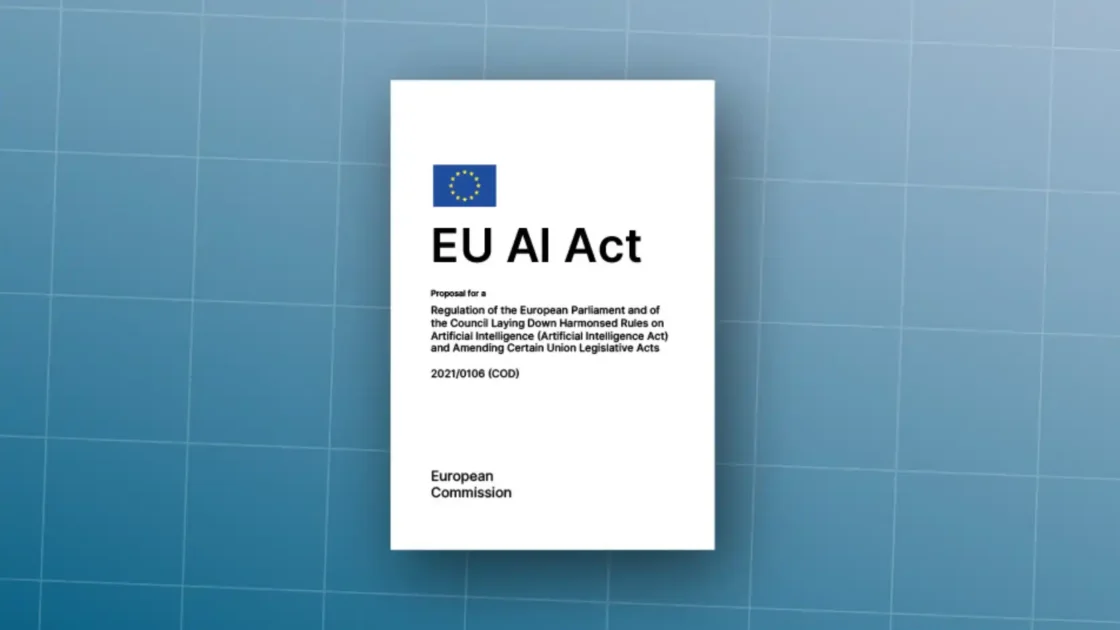
The strongest evidence that Minority Report remains relevant is not cultural commentary. It is the direction of law. The European Union’s AI Act uses a risk-based structure that treats certain AI practices as unacceptable and others as high-risk. The law does not ban prediction. It draws lines around manipulation, social scoring, certain biometric practices and some law enforcement risk assessments. The political message is clear: some forms of automated anticipation threaten rights even when they promise efficiency or safety.
The AI Act’s treatment of law enforcement and biometrics is especially relevant. It restricts real-time remote biometric identification in publicly accessible spaces for law enforcement, with limited exceptions. It also addresses risk assessment systems that assess or predict the risk of a natural person committing a criminal offense based solely on profiling or personality traits, with narrow conditions around objective and verifiable facts. The rule is not a simple ban on all police analytics. It is a warning against turning personal traits and profiles into preemptive suspicion.
This is the legal version of the film’s core conflict. A system that acts before a crime happens may appear attractive to officials under pressure to prevent harm. A rights-based order asks whether prevention has crossed into punishment without evidence. The line is hard, but the difficulty does not make it optional.
NIST’s AI Risk Management Framework takes a different route. It is not a law, but it gives organizations a vocabulary for managing AI risks through governance, mapping, measurement and management. Its trustworthy AI characteristics include validity, reliability, safety, security, accountability, transparency, explainability, privacy and fairness. That framework is useful because it forces organizations to treat AI risk as an operating discipline rather than a branding exercise.
International AI safety work adds a broader view. General-purpose AI risks include misuse, loss of control in agentic settings, cyber assistance, synthetic media, reliability failures and unequal social effects. These issues do not map perfectly onto Minority Report, but they share one theme: AI systems become dangerous when power moves faster than understanding.
Europe drew a line around biometric and predictive policing uses
European law has become the clearest formal answer to the Minority Report problem. The AI Act does not assume that every AI use is equal. It separates unacceptable risk, high risk, transparency obligations and lower-risk uses. That structure reflects a simple point often missing from technology debates: a chatbot for travel planning and a system used in law enforcement do not deserve the same level of scrutiny.
The law’s focus on biometric identification, biometric categorization, emotion recognition, law enforcement, migration, employment, education, credit and core public and private services shows where automated power is most sensitive. These are not random categories. They are the places where a model output can alter life chances or state treatment. They are also the areas where affected people may have little ability to opt out.
Europe’s approach also recognizes that transparency alone is not enough. Telling people that AI is being used does not solve a harmful use. A person cannot meaningfully protect themselves from real-time biometric surveillance in a public square merely by being informed. A job applicant cannot negotiate equally with a screening system they do not see. A suspect cannot inspect every model used across an investigation. Some uses need disclosure, some need obligations, and some need limits.
The practical burden will be implementation. Rules on paper must become procurement checks, technical standards, market surveillance, documentation, incident reporting and enforcement. Public bodies and companies will need inventories of AI systems, classification processes and evidence that high-risk systems meet requirements. The hardest cases will involve hybrid workflows where AI supplies a recommendation but humans claim final responsibility.
Europe has not solved the problem of predictive power. No legal text can do that by itself. It has, however, rejected the idea that prediction earns legitimacy merely by being technical. That rejection is the beginning of a serious public answer to the Precrime fantasy.
The AI Act also matters beyond Europe because global firms rarely build every product from scratch for each jurisdiction. European requirements can shape documentation, risk classification and deployment habits elsewhere. This is not guaranteed, and firms may localize compliance narrowly. Still, the Brussels effect is real enough to make European AI governance part of the global conversation about predictive power.
The United States still governs through a patchwork
The United States does not have a single AI law comparable to the EU AI Act. Its governance remains a patchwork of federal agency actions, state laws, sector rules, civil rights law, consumer protection, procurement policies, litigation and voluntary frameworks. This patchwork has strengths. It allows agencies with domain expertise to act within their authority. It also leaves gaps, especially for biometric surveillance, ad tech, workplace monitoring and law enforcement tools.
The FTC has become one of the main federal actors on consumer-facing AI and data practices. Its biometric policy statement warns about privacy, data security, bias and discrimination. Its commercial surveillance work frames data extraction as a consumer protection issue. These tools matter because many AI harms arise not from dramatic criminal justice settings but from ordinary market relationships: apps, platforms, employers, retailers, brokers and vendors.
Civil rights law also matters. AI systems used in housing, credit, employment, education or public services can reproduce discrimination even if the system does not use protected traits directly. Proxy variables and historical patterns may carry the signal. Enforcement does not require proving that a model hates anyone. It requires examining whether the system produces unlawful unequal treatment or impact.
State and local rules add another layer. Some cities and states have restrictions or reporting requirements for facial recognition, automated employment decision tools, data privacy or government AI use. These rules vary widely. A person’s protection may depend on where they live, which agency is involved and which sector uses the system. That fragmentation is risky when AI vendors sell across jurisdictions.
The patchwork approach leaves organizations with a choice. They can comply narrowly with whatever rule applies today, or they can build AI governance that anticipates higher standards. The second path is wiser. A system that cannot explain its data, purpose, validation, human oversight and appeal process is a liability even before a regulator arrives.
The business version of Precrime is already mature
The most advanced form of preemptive AI may not be policing. It may be business analytics. Companies have spent years predicting churn, fraud, credit risk, lifetime value, worker performance, purchasing intent, delivery delays, customer sentiment, equipment failure and sales opportunity. These systems are not called Precrime because they are aimed at markets, not murder. Yet they share the same structural move: act on a prediction before the person or event fully reveals itself.
Some of this is useful and ordinary. Fraud detection protects customers and companies. Predictive maintenance reduces downtime. Demand forecasting keeps shelves stocked. Customer support routing can reduce frustration. The problem is not anticipation itself. The problem is asymmetric anticipation. Companies often know far more about the predicted person than the person knows about the prediction.
Generative AI and agents make business prediction more active. A model may identify an account likely to cancel, draft a retention offer, trigger a sales task and personalize the message. Another system may flag an employee as disengaged, recommend manager intervention and generate talking points. A lender may combine risk signals with automated communication. In each case, prediction becomes a script for action.
The business risk is not only legal. It is strategic. Companies that over-automate sensitive judgments may lose trust, damage brands and create brittle processes. A customer who feels manipulated may leave. A worker who feels constantly scored may disengage. A manager who relies on AI summaries may miss reality. Automation can reduce costs while hollowing out judgment.
The strongest businesses will not be the ones that automate the most. They will be the ones that know which predictions deserve restraint. That is a harder discipline than buying AI software.
Workplaces are becoming smaller precrime systems
The workplace is a central site for AI prediction because employers already control many data streams. Messages, tickets, calendar activity, code commits, calls, location data, keystrokes, sales records, performance reviews, learning systems and access logs can all feed analysis. AI turns that material into summaries, rankings, alerts and forecasts. The worker becomes legible in new ways.
Some workplace AI is benign. Search tools reduce time spent hunting for information. Meeting summaries spare people from bad notes. Coding assistants remove repetitive work. Safety systems can flag hazards. Yet worker scoring, productivity prediction and automated discipline raise deep concerns. A model may misread caregiving constraints, disability, language style, teamwork, creative work or quiet problem solving. It may reward visible busyness over actual contribution.
The Precrime analogy appears when employers try to anticipate future behavior: who may quit, who may underperform, who may unionize, who may create risk, who deserves promotion, who should be watched. These predictions are seductive because they promise control. They are also dangerous because work is full of context. A dip in activity may reflect illness, poor management, unclear priorities or system outages. A model may see only a metric.
AI also changes managerial responsibility. A manager may prefer an automated recommendation because it feels defensible. The decision can be framed as objective or data-backed. Yet the moral and legal responsibility remains human and institutional. A model cannot explain to an employee why their career stalled. A model cannot repair a culture of mistrust. A model cannot know what kind of workplace the company wants to be.
Workers need notice, limits and contestability when AI affects employment. Employers need proof that systems measure something real, not merely something available. The easiest data to collect is often the least faithful to human work.
Platforms built the live experiment that Hollywood assigned to the state
Minority Report imagines a state-centered surveillance future. The government system is the main danger. Current AI power is more distributed. States matter, but platforms, cloud providers, device makers, ad networks, data brokers, enterprise software firms and model developers shape daily prediction. The public square is partly privately owned, the identity layer is partly commercial, and the tools used by public agencies are often vendor-built.
This distribution complicates accountability. If a police department uses a vendor’s facial recognition tool, a cloud service, a data broker and an internal case system, responsibility is shared but can also become diluted. If an advertiser uses a platform’s targeting product and AI creative tool, the user sees the final message but not the chain behind it. If an employer deploys a productivity product with embedded AI, workers may not know which model processed which signals.
Hollywood gave us a clean villain because stories need focus. Real AI governance deals with supply chains. A system may combine foundation models, fine-tuning data, third-party APIs, user prompts, retrieval databases, plugins and human review. Each layer may be controlled by a different actor. Each actor may deny full responsibility for the whole outcome.
This is why procurement and documentation matter. Public agencies and companies should not buy consequential AI systems without knowing the model’s purpose, training limits, validation evidence, data flows, update process, human oversight design, audit rights and incident procedures. Vendor promises are not enough. A vendor that cannot document a system should not be trusted with rights-affecting uses.
The film’s Precrime center is visible and symbolic. Today’s AI centers are contracts, cloud regions, dashboards and application logs. The architecture is less cinematic. The power is real.
Deepfakes and synthetic evidence complicate the old surveillance bargain
The film assumes that recorded images, once interpreted by the system, carry evidentiary force. Current AI undermines that assumption. Synthetic media makes it easier to generate fake images, voices and video. Editing tools make manipulation cheaper. Voice cloning can imitate people. Image generation can create scenes that never happened. The surveillance state and the surveillance market now face a new problem: the world is watched more than before, yet evidence is easier to fake.
This cuts both ways. People may be falsely accused by synthetic evidence. Real evidence may be dismissed as fake. Political actors may use generated media to confuse voters. Criminals may use voice clones for fraud. Abusers may create non-consensual sexual images. Companies may face fake executive calls, forged documents or synthetic customer identities. The AI safety literature treats synthetic media as a live risk because it attacks trust in records, not only privacy.
For law enforcement, synthetic media raises procedural questions. How should agencies authenticate media? Which tools are reliable? How should courts handle AI-generated or AI-altered evidence? What disclosure duties apply when AI tools process evidence? A case built from AI-processed images, facial recognition leads and generated summaries could become difficult for defense teams to examine.
For platforms, the problem is scale. Moderation systems must detect manipulated media while protecting satire, art, journalism and legitimate editing. Generative AI increases volume. Detection tools will improve, but detection is an arms race. Watermarking, provenance standards, cryptographic signatures and platform policies may reduce harm, yet none will remove it.
This creates an inversion of the Minority Report world. The film feared a system that saw too much and believed too strongly. Our world faces systems that see too much while reality itself becomes easier to counterfeit. Trust will depend on provenance, audit trails and institutional honesty.
Human oversight needs teeth
Oversight is a weak word unless it includes power. A human who cannot stop a system is not overseeing it. A committee that meets after deployment but lacks access to logs, data and contracts is not overseeing it. A policy that says humans remain responsible while workers are punished for slowing automation is not oversight. It is theater.
Strong oversight begins with system inventory. An organization cannot govern AI tools it cannot name. Shadow AI, embedded vendor AI and informal employee use all create exposure. Once systems are identified, the organization needs risk classification. A grammar assistant, a marketing draft tool and a model used in eligibility decisions do not belong in the same risk tier.
The next layer is evidence. Models need validation in the setting where they will be used. A benchmark from the vendor does not prove performance in a public agency, hospital, bank or workplace. Data quality must be tested. Subgroup impacts must be measured where relevant. Security must be examined. Failure modes must be rehearsed. Human reviewers must receive enough information to challenge outputs.
Appeal is part of oversight. If a person is harmed by an AI-assisted decision, there must be a practical way to contest it. The appeal cannot be a generic support form that returns another automated response. It must reach someone with authority and access to the reasons for the decision. The process must also feed back into system improvement. A pile of individual complaints is evidence.
Oversight also requires endings. Systems should have review dates, sunset clauses and withdrawal criteria. A tool that fails validation, produces unequal harms or loses public trust should be removed. Institutions often know how to buy technology. They are worse at retiring it.
Table two, controls that separate AI assistance from automated authority
| Control | Purpose | Failure it prevents |
| System inventory | Name every AI system and owner | Hidden or unmanaged deployment |
| Data provenance | Track sources, labels and updates | Unexamined bias or stale evidence |
| Independent validation | Test claims in the actual use setting | Vendor accuracy treated as local proof |
| Human authority gates | Give reviewers power to stop action | Rubber-stamp oversight |
| Audit logs and appeals | Reconstruct decisions and repair harm | People trapped by opaque outcomes |
These controls are not abstract ethics language. They are operating requirements. Without them, AI oversight becomes paperwork rather than a working limit on institutional power.
The useful lesson for companies and governments
The practical lesson from Minority Report is not to reject prediction. It is to separate useful anticipation from unjust preemption. A hospital predicting readmission risk is not the same as a police system assigning criminal suspicion from a profile. A bank detecting account takeover is not the same as a lender denying credit through opaque proxies. A customer service agent resolving routine issues is not the same as an agent deciding benefits eligibility.
Organizations should begin by defining prohibited uses. Some AI uses should be off the table because the harm is too high, the evidence too weak or the power imbalance too severe. Real-time biometric identification in public spaces, emotion recognition for coercive decisions, automated criminal risk profiling from personal traits and hidden workplace surveillance deserve hard limits. Not every problem needs an AI pilot.
For allowed uses, the first discipline is purpose. A system should have a clear task, defined users, known affected groups and stated consequences. Vague AI deployments drift. A model bought for support may be used for discipline. A fraud tool may become a customer scoring system. A search assistant may become an investigative recommender. Boundaries must be written before the system goes live.
The second discipline is proof. Vendors and internal teams should supply validation evidence, limitations, data sources, update procedures, monitoring plans and incident processes. Claims of accuracy should specify the test setting, population and metric. Claims of fairness should specify the groups, harms and trade-offs measured. Claims of human oversight should name the human role and authority.
The third discipline is dignity. People subject to consequential AI systems need notice, explanation, appeal and redress. They should not have to discover through harm that a model shaped their treatment. The right to contest is not an obstacle to innovation. It is the price of using prediction on human lives.
The old evidence chain is being rebuilt by AI
Police, courts, insurers, employers and platforms all depend on chains of evidence. Someone observes, records, verifies, stores, interprets and acts. AI changes that chain by inserting automated interpretation into earlier stages. A camera image may be improved by software before a human sees it. A case file may be summarized before a supervisor reads it. A complaint may be triaged before a reviewer decides whether it matters. A worker’s record may be scored before a manager considers a conversation.
This does not automatically corrupt evidence. Good tools can reduce backlog, find missing links and improve consistency. The danger is that the chain becomes harder to inspect. If an AI system cleans an image, generates a summary or ranks a file, the downstream human may never see the raw uncertainty. The output becomes the version of reality that travels. Later reviewers may debate a polished derivative rather than the messy source.
The film’s Precrime system turns visions into wooden balls bearing names. That is a brilliant symbol of administrative compression. A chaotic future image becomes a name, a time and a legal action. Current AI does the same kind of compression in less theatrical form. It turns messy records into a score, a category, a recommended action, a summary or a generated notice. Compression is useful. It is also where context disappears.
Evidence governance in AI systems therefore needs provenance. Organizations should know which records fed an output, which model processed them, which prompt or workflow was used, which confidence signals existed, which human reviewed the output and which later action followed. Without that chain, an AI-assisted decision becomes a fog. People may see the consequence but not the path that led there.
The right standard is not perfect transparency into every model weight. The right standard is practical traceability. A person affected by a serious decision should not be told that the system is too complex to explain. Complexity is not a license to govern without reasons.
Model cards and system cards are useful but incomplete
Major AI developers now publish system cards, model cards or safety documents for leading models. These documents describe capabilities, limitations, evaluation methods and deployment choices. They are a step toward public accountability, especially for general-purpose systems used across many sectors. They also have limits. A model card cannot know every downstream use, every organizational incentive or every local dataset that will shape deployment.
This distinction matters for Minority Report comparisons because the harm in the film does not come only from the predictive source. It comes from the institution built around it. The precogs produce visions, but police leaders, legal authorities and political actors decide what those visions mean. Modern AI follows the same pattern. A general-purpose model may be evaluated by its developer, but a bank, city, school or employer decides how it enters a workflow.
System documentation is strongest when it forces downstream users to ask harder questions. Does the model handle the relevant language, dialect, image quality or domain? Does it perform differently across groups? Does it hallucinate under pressure? Does it follow instructions too eagerly? Does it expose sensitive data? Does it encourage over-trust through fluent explanations? These questions cannot be answered once for all uses.
A weak organization may treat a model card as a permission slip. A strong organization treats it as a starting record and adds local testing, monitoring and incident review. This is especially true for AI agents. A base model’s safety profile does not fully describe an agent connected to email, databases, payment tools, case files or customer accounts. Tools change risk.
Public policy should encourage standard documentation while resisting documentation theater. Paper can become another ritual of trust, like the polished screens inside Precrime. The test is whether documentation changes deployment decisions. If no risky use is ever rejected, no threshold ever adjusted and no system ever withdrawn, the documentation is decoration.
Public safety arguments need proportionality
Public safety is the strongest argument for predictive systems. It is also the argument most likely to overwhelm scrutiny. No official wants to ignore tools that might prevent violence, fraud, terrorism, child exploitation, cyberattacks or medical harm. The pressure is real. The problem is that public safety can be used to justify systems whose evidence is thin or whose harms fall on people with little political power.
Proportionality is the missing discipline. The more intrusive the system, the stronger the evidence should be. A statistical patrol map used for broad resource planning demands one level of proof. A real-time biometric search of everyone passing through a public space demands a much higher level. A model that helps analysts prioritize files is different from one that labels people as likely offenders. A tool that detects malware is different from one that predicts human criminality from traits or associations.
The film removes proportionality because the system is supposedly perfect. If murder prevention is certain, every intrusion becomes easier to defend. Real AI never earns that exemption. Its outputs are probabilistic, its data is partial and its institutional uses are contestable. The more serious the consequence, the more room the system must leave for uncertainty.
Public safety systems also need democratic visibility. Secret tools may have a place in narrow investigations, but broad population-level surveillance or risk scoring should not be adopted through quiet procurement. Communities affected by these systems deserve notice before deployment, not after scandal. Legislators and courts need enough technical literacy to ask whether the promise matches the evidence.
Prevention is a legitimate public goal. Preventive power without proportionality becomes suspicion as infrastructure. That is the line Minority Report keeps forcing back into view.
Proportionality also asks about less intrusive alternatives. Before deploying a powerful predictive system, an agency should ask whether staffing, lighting, housing support, mental health response, ordinary investigation, community trust or faster processing of existing evidence would address the harm with fewer rights costs. Technology can be attractive because it looks decisive. Sometimes the less dramatic intervention is more lawful, cheaper and more humane.
The false comfort of neutral tools
AI systems are often described as tools, and the word sounds harmless. A hammer does not decide what to build. A calculator does not choose a policy. A model, though, is not a neutral object once embedded in an institution. It carries a target, a training history, a threshold, a user interface, a procurement story and a set of incentives. Calling it a tool can hide the social choices inside it.
The neutral-tool story is attractive to organizations because it spreads responsibility thinly. If the output is wrong, the vendor may blame data. The agency may blame the vendor. The operator may blame procedure. The manager may blame the model. The person harmed meets a wall of partial responsibility. The tool did not act alone, yet no one feels like the author.
Minority Report gives the system a mythic authority, which makes the moral evasion visible. Officials do not say they chose to arrest someone early. They say the future has spoken. Current AI systems produce a softer version of that evasion. People say the data shows, the model flagged, the system recommended, the dashboard indicated. Passive grammar becomes a hiding place for power.
Responsible AI language often tries to correct this by insisting on accountability. The word is necessary, but it must be tied to named duties. Who approved the system? Who validated it? Who monitors errors? Who explains decisions? Who compensates people harmed by failure? Who can suspend use? Without names and powers, accountability remains a slogan.
The strongest antidote to neutral-tool thinking is authorship. Every consequential AI system should have owners, reviewers and decision rules. The organization should be able to say: we chose this purpose, we accepted these limits, we rejected these uses, and these people are answerable for the consequences.
Technical safeguards deserve less hype and more use
Several safeguards are already known. They are not as exciting as new model demos, but they matter more for public trust. Data minimization reduces exposure. Access controls limit who can use a system. Logging records what happened. Independent validation checks whether claims hold. Red-team testing probes failure. Human review catches edge cases. Appeal processes repair harm. Monitoring detects drift. Sunset reviews prevent permanent experiments.
The reason these safeguards are often weak is not mystery. They cost time, money and power. A product team may want launch speed. A police agency may want operational flexibility. A manager may want automation savings. A vendor may not want disclosure. A safeguard that works often slows someone down or reveals that a tool is less reliable than advertised.
The film shows a system without visible external safeguards. Precrime has internal rituals, but little democratic challenge. The priests of the system judge themselves. Current AI governance can fall into the same trap when companies rely only on internal reviews or when public agencies accept vendor assurances. External scrutiny is not a luxury for high-risk systems. It is part of legitimacy.
Technical safeguards also need social design. A log is useless if no one reviews it. An audit is weak if auditors lack access. A human approval gate fails if reviewers lack authority. A bias test is incomplete if the harmed group was not considered. A model evaluation is thin if it tests clean examples but deployment uses messy data. Safeguards work only when linked to actual decisions.
The most realistic AI future is not safe because every model becomes perfect. It is safer because failures are expected, contained, corrected and disclosed. That is a less glamorous vision than a flawless predictive system, and far more credible.
Consent collapses under pervasive prediction
Consent is a fragile answer to AI surveillance. It works best when people understand the choice, face no penalty for refusing and can change their mind later. Many AI systems fail that test. People cannot negotiate with every camera, platform, employer, broker, app, public agency and vendor in their lives. They cannot read every privacy notice. They cannot opt out of public space.
The film’s personalized mall ads are unsettling partly because Anderton is being addressed in a place where ordinary consent feels absent. He did not ask the billboard to recognize him. The system treats his presence as enough. Many current digital systems make the same move. A person visits a site, opens an app, walks through a store, applies for a job, contacts support or enters a workplace. The act of participation becomes the basis for extensive inference.
Consent also weakens when refusal carries a cost. A worker may technically agree to monitoring because employment depends on it. A traveler may accept biometric processing to move faster through an airport. A customer may accept tracking because the service has become socially necessary. A citizen may be subject to agency systems without any choice at all. Calling these arrangements consent stretches the word beyond recognition.
Rights-based AI governance must therefore use more than consent. It needs purpose limits, data minimization, bans on certain uses, duties of explanation, access rights, impact assessments, appeal and enforcement. Consent remains useful in some settings, but it cannot carry the weight of a predicted society.
The point is not to deny personal agency. It is to admit that agency needs structure. People are not free in relation to AI systems merely because a checkbox exists.
The same logic applies to children and teenagers. They grow up inside learning platforms, cameras, phones, social apps and recommendation systems before they can understand the long-term meaning of data trails. A future-facing AI policy should treat minors as more than small consumers. It should limit profiling, manipulation and biometric processing in settings where young people cannot give mature consent or resist institutional pressure.
The search era made Minority Report a living reference
A film becomes politically useful when people use it as shorthand. Minority Report has become shorthand for predictive policing, biometric advertising, gesture interfaces and surveillance capitalism. That shorthand is sometimes lazy. It can turn every AI concern into a movie reference. Yet it endures because the film gives language to a complicated fear: being known by systems that do not understand you and judged by predictions you cannot see.
Search engines and answer engines have extended that cultural life. People ask whether the movie predicted the future, which technologies came true, whether precrime exists, whether AI can predict crime and whether personalized ads resemble the mall scene. These questions matter because they show public intuition. People sense that the film is not merely about gadgets. It is about power moving upstream.
For publishers and analysts, the challenge is to use the reference without flattening reality. The film should open the analysis, not replace it. Real AI systems differ across sectors. A consumer recommender, a foundation model, a predictive policing tool, a biometric access system and an autonomous agent do not share the same risk. The cultural metaphor should lead readers toward distinctions, evidence and law.
The film also reminds technology writers not to confuse prediction with prophecy. Sci-fi often appears prophetic because it exaggerates existing tendencies. Minority Report worked with early internet advertising, biometrics research, crime analysis and interface speculation. The movie did not see the future by magic. It paid attention to pressures already present.
That is still the best method for reading AI now. The future of AI will not be decided only by new breakthroughs. It will be shaped by incentives already visible: the desire to reduce labor costs, sell more precisely, police earlier, verify identity faster, automate paperwork and convert uncertainty into decision.
The democratic cost is paid in ordinary moments
The harms associated with AI prediction are often discussed through extreme examples: wrongful arrest, mass surveillance, deepfake fraud, automated denial of benefits. Those examples deserve attention. Yet the democratic cost also appears in ordinary moments that never reach court. A person changes behavior because they assume they are being watched. A worker avoids a difficult conversation because messages may be scored. A customer accepts a price because the system appears fixed. A citizen gives up on appeal because the process is opaque.
This is the quieter world Minority Report gestures toward. The film includes chases and conspiracies, but its most disturbing quality is the normalization of monitoring. People move through a city that constantly reads them. The extraordinary power has become background. That is how democratic habits erode: not only through spectacular abuse, but through repeated lessons that systems know best and resistance is futile.
AI can also shift responsibility onto individuals. If a system predicts risk, the person may be expected to prove they are not risky. If a model predicts disengagement, the worker may need to perform enthusiasm. If a fraud system flags a payment, the customer may need to prove legitimacy. If a platform predicts harmful intent, the user may need to decode an enforcement notice. Prediction reverses the burden.
Rights should prevent that reversal from becoming routine. The institution using AI should carry the burden of justification, especially in consequential decisions. It should explain the rule, show the evidence, provide a real appeal and correct errors. A person should not need technical expertise to defend themselves against an automated process.
A society can adopt AI widely and still preserve democratic habits. It must refuse the idea that friction is failure. Some friction is due process. Some delay is care. Some uncertainty is freedom.
The film’s blind spot was corporate dependency
The film imagines corporations as advertisers inside a state-dominated future. It does not fully imagine the degree to which public power would depend on private infrastructure. Current AI is built on cloud platforms, chips, model developers, data brokers, software vendors and consulting firms. Public agencies often lack the technical capacity to build and evaluate systems alone. That dependency changes governance.
A city may buy an AI tool without access to the training data or model details. A police department may rely on a vendor’s match thresholds. A school may use a platform’s risk score. A hospital may integrate a model through a cloud provider. A company may add AI features bundled into software it already uses. In each case, the buyer may not fully control the system shaping decisions.
This creates a procurement problem. Public and private buyers need contracts that preserve audit rights, data rights, security obligations, performance disclosures, incident reporting and exit options. A system that cannot be audited should not be used for high-risk decisions. A vendor should not be able to hide material limits behind trade secret claims when liberty, benefits, employment or health are at stake.
Corporate dependency also affects democratic debate. If critical AI infrastructure is controlled by a small group of firms, public policy must account for concentration. Model access, cloud pricing, chip supply, platform distribution and data control all shape who can build and govern AI. The future of prediction is not only an ethics issue. It is an industrial and competition issue.
Minority Report gave us a single central system. The real system is distributed across markets. That makes it more adaptable, more useful and harder to hold in view.
Science fiction remains useful when it sharpens policy
The best use of science fiction in technology policy is not prediction scoring. It is not a game of counting which gadgets came true. Science fiction matters when it gives policy a moral shape. Minority Report does that because it turns abstractions into scenes: the named suspect, the personalized ad, the eye scan, the clean interface, the suppressed dissenting record, the official who benefits from certainty.
Policy needs that kind of imagination because AI harm is often procedural. A risk score, a data pipeline or a procurement clause rarely moves public emotion. A story shows what procedure feels like from inside. It reminds lawmakers and executives that people experience systems as encounters, not architectures. The person wrongly flagged does not care that the model performed well on average. They care that the system had power over them.
At the same time, fiction must not replace evidence. The film is a lens, not a source of law. Real rules need technical standards, empirical research, economic analysis, civil rights doctrine, security practice and sector expertise. A serious article about Minority Report and AI should honor the film by moving beyond the easy claim that “the movie came true.” The more useful claim is narrower and stronger: some of the film’s governing anxieties became real design problems.
Those design problems are now practical. Should a city permit face recognition in public? Should an employer score workers through communication metadata? Should a lender use opaque model features? Should an AI agent send legal notices? Should a platform generate personalized political messages? Should police use risk assessments based on associations? Each question asks where anticipation should stop.
Science fiction cannot answer those questions. It can make evasion harder. Once a society has seen the Precrime story, it has fewer excuses for building preemptive systems without rights.
The economics of certainty favor automation
Precrime is attractive inside the film because it appears to remove uncertainty from public safety. Current AI is attractive inside organizations because it appears to remove uncertainty from management. It promises earlier signals, faster action, lower labor costs and a cleaner explanation for decisions. Those promises are powerful because uncertainty is expensive. Human review takes time. Investigation takes time. Customer support takes time. Due process takes time. A model that ranks, drafts or acts appears to turn messy judgment into a managed queue.
This economic pressure explains why AI often enters through back offices before public debate catches up. A system that sorts support tickets, flags fraud, triages applications or drafts internal summaries may look operational rather than political. Yet these back-office systems shape outcomes. They decide which case gets read first, which customer receives friction, which applicant disappears from view and which complaint becomes a priority. The moral action is hidden inside workflow design.
The economics also explain why weak AI can spread. A system does not need to be excellent to be adopted if it is cheap, fast and good enough for the buyer’s internal metric. The people who bear the error may be outside the purchasing decision. A customer spends hours resolving a false fraud flag. A job applicant never learns why they were screened out. A tenant faces extra documentation. A citizen waits longer for services. The cost is externalized.
This is why governance cannot rely on market correction alone. People harmed by opaque predictions may not know which system acted, cannot compare alternatives and may lack power to leave. A public agency has captive users. A dominant platform has network effects. An employer controls access to income. A bank or insurer may be one of few available providers. In these settings, the market does not reliably punish bad automation.
The business case for AI should therefore include the cost of errors, appeals, audits, security, staff training and public trust. A tool that looks cheap because it omits those costs is not cheap. It is borrowing against future harm. Minority Report shows a society dazzled by the headline success of prevention. Serious AI evaluation must count the people crushed by the exceptions.
Executives should also separate automation value from AI novelty. If the real gain comes from fixing data quality, simplifying a form or removing a needless approval step, an AI layer may add cost and risk without solving the root problem. Many organizations reach for prediction because prediction sounds advanced. The better question is often operational: which uncertainty truly needs a model, and which uncertainty exists because the institution is poorly designed?
The line between assistance and authority must stay visible
AI is most defensible when it assists people who remain responsible and informed. It is most dangerous when assistance quietly becomes authority. The transition can be subtle. A model that summarizes evidence starts influencing which evidence matters. A recommender that prioritizes cases starts determining attention. A chatbot that drafts a denial starts shaping the reason. An agent that prepares actions starts deciding the path of least resistance.
Organizations need visible boundaries between suggestion, recommendation and decision. A suggestion offers material for human thought. A recommendation carries a preferred action. A decision changes the world. Each level deserves different controls. Many AI deployments blur these levels because the interface makes outputs look similar. A generated paragraph, a confidence score and a button may sit together on one screen. The user feels in control while the system narrows the available choices.
The boundary should be documented in policy and designed into software. The interface should show uncertainty, source records and alternative explanations. It should require stronger confirmation for higher-stakes actions. It should make disagreement easy, not burdensome. It should record when a human overrides the model and when the human follows it. It should prevent silent escalation from low-risk support to high-risk decision-making.
This boundary is also cultural. Leaders must reward careful disagreement with AI outputs. If workers learn that questioning the system slows performance metrics or irritates managers, they will stop questioning. A governance program that praises human judgment in training but measures only speed in production will fail. The human role must be protected by incentives.
The line between assistance and authority is the line Minority Report erases. The precogs assist in theory, but their visions rule in practice. The same failure can occur in any modern institution that says a human makes the final decision while designing the workflow so the human almost never does.
The real question the film still asks
The most haunting part of Minority Report is not whether technology can predict. It is whether people will prefer the comfort of prediction to the burden of judgment. Prediction feels clean. Judgment is slow, accountable and exposed to disagreement. Institutions often prefer systems that promise speed and consistency. Citizens, customers and workers pay the price when consistency becomes automated indifference.
AI now sits at that crossroads. It can support better decisions when used with limits, expertise and humility. It can also make weak institutions more confident, unequal systems faster and surveillance more intimate. The difference will not be decided by model capability alone. It will be decided by law, procurement, design, organizational incentives, public pressure and the willingness to keep humans genuinely answerable.
The film was wrong about the source of foresight. The future did not require precogs. It required data extraction, pattern recognition, cheap storage, mobile devices, cloud infrastructure, cameras, ad auctions, foundation models and organizations hungry for earlier intervention. The fiction placed three strange bodies at the center of the system. Reality distributed the precogs into software.
That distribution makes resistance harder. There is no single pool to drain. There are policies to write, contracts to audit, models to test, cameras to limit, data flows to map, appeals to build, and uses to refuse. The work is less dramatic than Anderton running through a city of sensors. It is also more democratic, because it can happen before the system becomes sacred.
A mature society does not ask AI to abolish uncertainty. It builds institutions capable of living with uncertainty without punishing people for possibilities. That is the real minority report for the present: the future is not one path predicted by a machine. It is a set of choices still open to law, design and public judgment.
The minority report we need now is not a secret prediction hidden in a machine. It is the dissenting file that says a system should not be used, a community hearing that slows procurement, an auditor who finds unequal errors, a worker who refuses to rubber-stamp a model, a court that demands reasons, and a regulator willing to treat technical certainty as a claim that must be proved.
Questions readers ask about Minority Report and AI
It did not predict AI in a literal technical sense. Its strongest prediction was social: institutions would use identification, profiles and forecasts to act earlier, often before people could see or challenge the logic behind the action.
No. Real AI systems do not see the future. They estimate probabilities from data, then those estimates may influence policing, marketing, hiring, credit, insurance, workplace management or public services.
The closest elements are biometric identification, personalized advertising, predictive policing, ambient computing and institutional trust in automated forecasts. The psychic precogs remain fiction.
Predictive policing uses data analysis to forecast places, people or patterns that police may treat as higher risk. The comparison comes from the shared idea of intervention before harm occurs, although real systems work through statistics rather than prophecy.
The biggest risk is that probabilistic outputs may be treated as evidence. Facial recognition leads, hotspot forecasts or risk scores can push investigators toward suspicion before enough independent proof exists.
It can move in that direction when used in public space or law enforcement without strict limits. The risk is not only misidentification; it is the loss of practical anonymity and the conversion of a face into an investigative key.
Yes, but the real system usually works through online profiles, device identifiers, account data, location signals and data brokers rather than iris-scanning billboards. The emotional effect is similar: recognition becomes persuasion.
It helped popularize the image of gesture interfaces, but its deeper forecast was computing embedded everywhere. Today’s AI is less about waving at screens and more about systems that read, listen, classify and act across daily environments.
Generative AI moved automated systems beyond ranking and scoring. Models now draft messages, summarize evidence, generate images, write code, produce reports and support multi-step workflows, which makes governance harder.
AI agents can take actions across connected tools. If they are used in consequential workflows, they may turn prediction into operational steps such as escalation, denial, investigation, account restriction or case preparation.
The EU AI Act restricts or prohibits certain high-risk and unacceptable AI uses, including some biometric and law-enforcement risk assessment practices. It does not ban all prediction, but it draws lines around uses that threaten rights.
Only if the human reviewer has time, training, evidence and authority to disagree. A human rubber-stamp does not provide real oversight.
Average accuracy can hide unequal errors, weak data, bad targets, lack of appeal and harmful uses. A system can perform well in aggregate while harming specific people or groups.
It is the dissenting evidence: error analysis, subgroup performance, data gaps, appeals, audit findings, rejected model outputs and human objections that challenge the official automated answer.
No. Many predictive systems are useful in fraud prevention, maintenance, logistics and service planning. The issue is whether the system affects rights, opportunities, dignity or liberty, and whether it has limits and appeal.
They should ask what the system predicts, whose data it uses, who may be harmed, what evidence supports it, which human can stop it, how errors are appealed and which uses are forbidden.
AI can turn workplace data into scores, forecasts and alerts about performance, disengagement or risk. Without limits, it may reward visible activity over real contribution and weaken trust between workers and management.
Consent fails when people cannot understand the system, cannot refuse without penalty or cannot avoid the environment where data is collected. Public cameras, employment systems and dominant platforms often create that problem.
Regulation will never move as fast as product releases, but it can set durable boundaries around rights, biometric use, automated decisions, documentation, audits and appeal.
The lesson is that prediction must remain subordinate to accountable judgment. A society should use AI to support decisions, not to punish people for probabilities they cannot see or contest.
Author:
Jan Bielik
CEO & Founder of Webiano Digital & Marketing Agency

This article is an original analysis supported by the sources cited below
Official Amblin film page used for the film premise, creative credits and core story framing.
Minority Report production notes
Production notes used for the Precrime setup and the film’s presentation of murder prevention in Washington, D.C.
Inside Minority Report’s idea summit, visionaries saw the future
Wired account of Spielberg’s future-focused expert workshop, used for context on the film’s design process.
Minority Report has ad-ded value
Wired reporting on the film’s personalized advertising concepts and branded future environments.
Why Minority Report was spot on
Guardian analysis used for the long-running public comparison between the film’s technologies and real digital systems.
Official EU AI Act text used for risk categories, biometric restrictions and rules on certain predictive law-enforcement uses.
Artificial Intelligence Risk Management Framework
NIST AI RMF material used for governance, mapping, measurement and management of AI risk.
International AI Safety Report 2026
International report used for current evidence on general-purpose AI capabilities, risks and safety management.
Stanford HAI report used for current AI trend context across capability, adoption, policy and social impact.
OECD principles used for international framing around trustworthy AI, human rights and democratic values.
OpenAI system card used for multimodal model capabilities, limitations and safety-evaluation context.
System Card Claude Opus 4 and Claude Sonnet 4
Anthropic system card used for current reasoning, coding, agent workflow and safety-evaluation context.
Google Gemini API model documentation used for current model availability and multimodal model context.
Gartner predicts over 40 percent of agentic AI projects will be canceled by end of 2027
Gartner forecast used for the enterprise-agentic AI adoption and failure-risk discussion.
The State of AI Global Survey 2025
McKinsey survey used for business adoption, scaling difficulty and management practices around AI value.
Policy statement of the Federal Trade Commission on biometric information
FTC policy statement used for biometric privacy, security, bias and discrimination risk framing.
Trade regulation rule on commercial surveillance and data security
Federal Register notice used for commercial surveillance and data-security context in digital advertising and tracking.
Face Recognition Vendor Test Part 3 Demographic Effects
NIST face recognition evaluation used for demographic performance and biometric accuracy discussion.
Facial Recognition Technology Federal Agencies’ Use and Related Privacy Protections
GAO report used for federal law-enforcement use of facial recognition and tracking gaps.
More than a dozen wrongful arrests due to police reliance on facial recognition technology
ACLU analysis used for documented wrongful arrest concerns linked to facial recognition matches.
ACLU case page used for the Robert Williams wrongful-arrest example and accountability discussion.
Predictive Policing The Role of Crime Forecasting in Law Enforcement Operations
RAND report used for a formal definition of predictive policing and its practical limits.
National Institute of Justice material used for place-based crime forecasting and data-science context.
Brennan Center explainer used for civil liberties risks and public accountability concerns around predictive policing.
Automated decision-making and profiling
European Data Protection Board guidance used for automated decision-making, profiling and data protection context.
Europol report used for current law-enforcement AI applications, benefits, risks and compliance context.
| Citing this article? Brief excerpts are welcome. Please credit Webiano.digital, name the author where stated, and include a link to https://webiano.digital and to this original article. Full or substantial republication requires prior written permission. Read our Copyright and Content Use Policy. |
This article was prepared with the assistance of artificial intelligence tools. The content underwent expert human review, and Webiano Digital & Marketing Agency assumes editorial responsibility for its final version and publication.