The search result is no longer just a ranked list
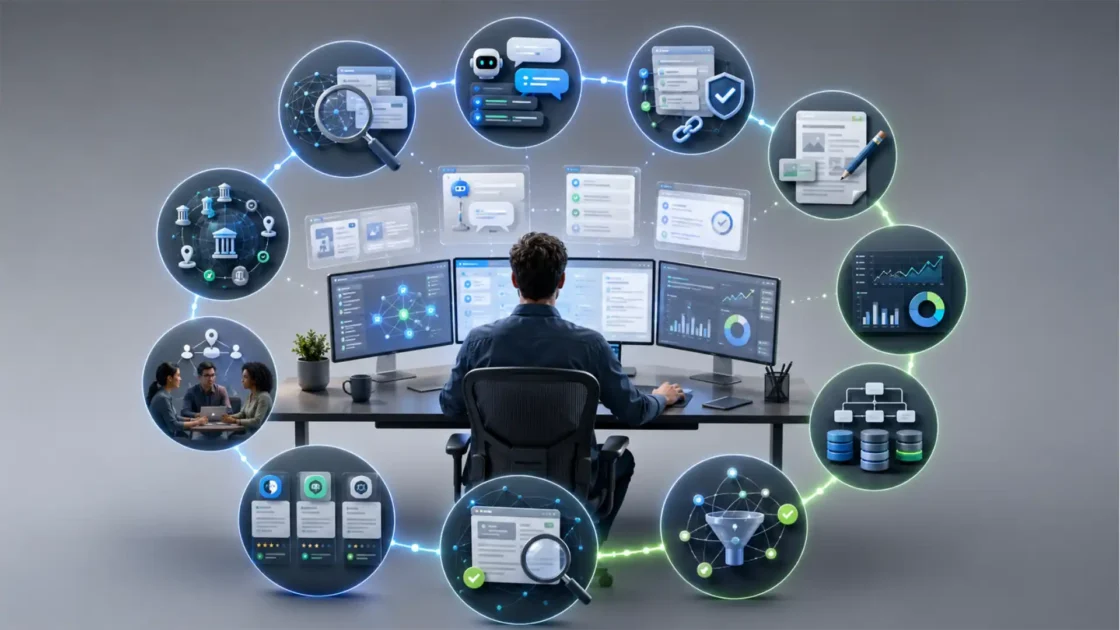
YouTube’s new Gemini-powered search experience, called Ask YouTube, changes the basic shape of video discovery. The surprising part is not that a chatbot sits near the search bar. Google has already been moving Search, Gemini, Maps, Gmail, Android, Workspace, and shopping toward conversational interfaces. The sharper change is that YouTube search now tries to assemble an answer from videos, clips, Shorts, written summaries, channel signals, and follow-up prompts. It is not only looking for a video that matches a query. It is trying to decide which video evidence answers the user’s intent.
Table of Contents
Google introduced Ask YouTube at Google I/O 2026 as a conversational search experience that lets users ask complex prompts, receive structured responses, and refine the search with follow-up questions. YouTube says the feature compiles relevant videos across its catalogue, including long-form videos and Shorts, and gives users an interactive response rather than a plain results page. The official rollout is still limited: YouTube’s help page says the experiment is available in English in the United States to eligible YouTube Premium users who opt in, with availability expanding gradually.
The keyword here is compiles. Classic YouTube search already used titles, descriptions, tags, video content, engagement signals, quality signals, and personalization. Ask YouTube sits on top of that older discovery logic and changes the output layer. Instead of making users scan thumbnails, pick one video, scrub the timeline, back out, revise the query, and repeat, Ask YouTube tries to do the first pass itself. It reads the question as a task. It searches for material. It highlights relevant clips. It gives text next to video. It lets the user stay in a thread.
That is a larger shift than the interface suggests. YouTube has spent many years training creators to think in terms of searchable topics, clickable titles, persuasive thumbnails, watch time, viewer satisfaction, retention, and upload rhythm. Ask YouTube adds a new layer: semantic answerability. A video may be found not only because the title contains the right phrase, but because a section inside the video appears to answer a detailed natural-language prompt. That may reward creators who structure their videos clearly, speak in extractable claims, use accurate captions, organize chapters, and make the promised answer easy to locate.
The change also exposes a tension. Generative AI search can feel useful because it compresses a messy search journey into a single response. Yet Google’s own documentation warns that AI-generated responses may vary in quality, may make things up, may miss nuance, and should not be used as the only source for medical, legal, financial, or other professional advice. YouTube tells users to double-check important information in more than one place.
Ask YouTube therefore has two stories. The consumer story is that finding videos may become faster and more conversational. The creator story is that discovery may become less dependent on exact-match metadata and more dependent on whether the machine can understand, segment, cite, and summarize what happens inside a video. The platform story is even bigger: YouTube is becoming an AI search surface inside Google’s wider Gemini system.
A small button with platform-level consequences
Ask YouTube looks like a small product test because the entry point is modest. The user clicks the search bar, chooses Ask YouTube, enters a natural-language prompt, reviews a response, watches clips, and asks follow-up questions. YouTube’s help page says videos may play on hover from the timestamp most relevant to the question, with channel name and video title shown in the response.
That interface matters because it makes the moment inside the video a search result. A standard YouTube result points mostly to a video object. Ask YouTube can point to a passage, a clip, a section, a Short, or a cluster of videos under a generated heading. This pulls video closer to how AI search treats webpages: as sources from which answer fragments can be extracted, compared, and presented. A user who asks “best way to teach a child to ride a bike after using a balance bike” is not looking for the most popular “bike riding tips” upload. The user wants the exact step where someone explains the transition from balance to pedals.
That changes user expectations. The old search habit was often tactical: pick words likely to appear in a title, then judge thumbnails. The new habit is conversational: describe the task, constraint, person, context, or desired outcome. YouTube’s own launch examples point in that direction, including teaching a child to ride a bike and finding creator reviews of cozy games to play before bedtime.
The business consequence is clear. YouTube owns one of the world’s largest video libraries and a huge creator economy. Alphabet’s 2025 annual report listed YouTube ads revenue at $40.367 billion for 2025, up from $36.147 billion in 2024, while Alphabet’s Q4 2025 earnings release said YouTube revenue across ads and subscriptions exceeded $60 billion for the full year 2025. Any change to video search is not a side project. It touches entertainment, learning, product research, reviews, local decisions, news consumption, shopping intent, creator monetization, and advertising inventory.
The discovery layer is also where YouTube’s creator economy becomes visible or invisible. YouTube CEO Neal Mohan said in his 2026 letter that YouTube paid more than $100 billion to creators, artists, and media companies across the previous four years, and that YouTube’s U.S. ecosystem contributed $55 billion to GDP in 2024 while supporting more than 490,000 full-time jobs. If Ask YouTube changes which videos are cited, which clips are surfaced, and which channels appear as evidence, it may influence a large economic system.
The feature sits beside another Gemini-powered YouTube move: Gemini Omni in Shorts Remix and the YouTube Create app. YouTube said Gemini Omni makes it easier to remix eligible Shorts by adding prompts and images while keeping the context of the original video. Google says Gemini Omni Flash is part of a wider model family that starts with video outputs and is built around multimodal generation from multiple input types. Search and creation are being upgraded at the same time. That is the real product signal. YouTube is not merely adding AI features. It is rebuilding discovery and creation around Gemini.
The unexpected part is semantic retrieval
The surprise in Ask YouTube is not that Gemini can answer a prompt. The surprise is that YouTube’s search result can feel less like search and more like retrieval from a living video archive. A user does not need to know a creator’s title language. They can describe the need, and the system tries to find matching evidence inside videos. That sounds obvious until you compare it with the way video search has worked for most users.
Traditional YouTube search has always had a semantic layer. YouTube says its ranking system considers how well a video’s title, tags, description, and content match a query, then uses engagement and quality signals to rank results. It also says search results may differ by user because search and watch history can shape personal relevance. Ask YouTube changes the user-facing unit of retrieval. It does not only say, “Here are videos that might fit.” It says, “Here is a structured answer, and here are the video sources and clips behind it.”
That is a major distinction for creators. Metadata still matters, but metadata becomes less like a billboard and more like one set of clues among many. The transcript, captions, spoken claims, on-screen text, chapters, comments, engagement patterns, and channel trust may all become part of the evidence trail. Google has not published a full ranking formula for Ask YouTube, and it probably will not. Still, YouTube’s existing public guidance makes one thing plain: relevance, engagement, quality, personalization, and viewer satisfaction already shape discovery. Ask YouTube adds a generative layer that has to decide which source material supports a synthesized answer.
This means a video can be discoverable for a query it did not explicitly target. A cooking video titled “weeknight pasta” may answer “how do I stop cream sauce from splitting after adding lemon?” A camera review may answer “which compact camera handles indoor autofocus best for pets?” A travel vlog may answer “where is the quietest viewpoint in Santa Barbara after sunset?” In the old interface, those answers may be buried at minute 12. In Ask YouTube, the system may jump the viewer close to the useful moment.
The opposite risk also appears. A video can be ignored if the answer is present but poorly expressed. A creator may know the subject well, yet speak in vague references, skip steps, bury caveats, or rely on visual context that captions do not capture. If the AI cannot confidently map the content to the user’s prompt, the video may lose to a cleaner but less original video. The creator who explains well for humans may still need to explain in a way that machines can parse.
Search professionals will recognize the pattern from web search’s move toward AI Overviews and AI Mode. Google says AI Mode has surpassed one billion monthly users, and the company is making the search box more conversational, multimodal, and capable of follow-up context. Google also says users will continue to see a range of results from Search, but the interface is plainly changing from query-and-list to query-and-synthesis. Ask YouTube is that same idea applied to video.
Gemini makes the query longer and the result smaller
A strange thing happens when search becomes conversational: users type more, but they may click less. A prompt grows from two keywords to a full situation. The result shrinks from pages of thumbnails to a few clips and a generated answer. Ask YouTube is built for that trade. YouTube says users can ask more complex questions and follow up to refine what they are looking for.
That shift changes the economics of attention. In the old model, a user might open four videos to compare advice. In the new model, YouTube may compare them first and give a synthesized path. That may reduce wasted viewing, but it may also concentrate exposure into fewer clips. A video that becomes the cited answer gains authority. A video that remains outside the generated response may still rank in normal search, but it loses the privileged position inside the AI answer.
The longer query also means a stronger expression of intent. A search for “bike child pedals” is weak. A prompt asking for “tips for teaching a 3-year-old to ride a pedal bike after a balance bike” carries age, skill stage, goal, and method. The system can map that to highly specific sections, but it also has to understand safety, context, and practical constraints. That is harder than keyword matching. It is closer to answer assembly.
The reduced result set raises fairness questions. YouTube already says its organic search results do not accept payment for better placement and do not favor Google-owned content. But generative search creates a different kind of placement. Being cited inside the answer is not the same as ranking first in a list. It is closer to being used as evidence. The criteria for that use are harder for creators to see from the outside.
Academic work on generative search suggests that source selection can differ sharply from traditional search ranking. One 2026 study comparing Google Search, AI Overviews, and Gemini Flash 2.5 found low overlap in retrieved sources across systems and reported that generative search engines were more likely to retrieve Google-owned content in the tested setup. Another 2026 study of AI Overviews reported that nearly 30% of cited domains did not appear in co-displayed first-page organic results, suggesting a source selection mechanism distinct from standard ranking. These studies are not Ask YouTube audits, but they matter because Ask YouTube belongs to the same family of retrieval-and-synthesis interfaces.
The cleanest way to understand the product is this: Gemini makes the query richer, then tries to make the result more compact. That is convenient for users. It is unsettling for creators whose growth depends on the many small chances a results page gives them to earn a click.
The answer engine sits on top of the old algorithm
Ask YouTube does not replace the old YouTube discovery system overnight. It sits above it. The older layers still matter because the AI needs candidate videos, quality signals, engagement data, user context, and platform knowledge before it can assemble an answer.
YouTube says its search ranking system prioritizes relevance, engagement, and quality. Relevance includes title, tags, description, and video content. Engagement includes signals such as watch time for a video on a given query. Quality includes signals that help determine expertise, authoritativeness, and trustworthiness on a topic. Personalization may use search and watch history when the user has it enabled.
The recommendation system has its own logic. YouTube says recommendations aim to help each viewer find videos they want to watch and maximize long-term viewer satisfaction. It analyzes a viewer’s profile in real time, including device, time of day, and past habits, and uses both viewer personalization and content performance. The platform’s creator guidance says systems look at whether a viewer watches, ignores, or marks a video as not interested, then use signals such as average view duration, average percentage viewed, likes, dislikes, and survey responses.
Ask YouTube adds synthesis. That creates a layered system:
Discovery layers behind Ask YouTube
| Layer | Older role in YouTube discovery | New role inside Ask YouTube |
|---|---|---|
| Metadata | Helps match titles, tags, descriptions, and topics to search queries | Helps Gemini understand the likely subject and context of candidate videos |
| Video content | Provides spoken, visual, captioned, and chaptered evidence | Gives the system answer fragments, clip targets, and topic segments |
| Engagement | Indicates whether users found a result useful for a query | May influence which videos are trusted as answer candidates |
| Quality signals | Helps rank credible or authoritative content, especially for sensitive topics | May affect whether a video is safe and reliable enough to cite |
| Personalization | Adapts results to search history, watch history, and inferred preferences | May shape which answer paths and video sources appear for a user |
This layered view is not a ranking formula. It is a practical map for understanding the change. The old algorithm decides what is likely relevant and satisfying; the new Gemini layer decides how to package that material as an answer.
That packaging layer could become the new battleground. The user may never see every candidate video. They see the clips Gemini chose, the categories it generated, the summary it wrote, and the follow-up prompts it proposes. The wording of those follow-up prompts matters because they can steer a user into new paths. The Verge’s hands-on test found that Ask YouTube could produce an AI Mode-like page with text, timestamped videos, themed galleries, and suggested follow-ups; the same test also found a factual error in a generated explanation about the old Steam Controller.
That example captures the promise and the risk. The system may reduce search friction, but it also creates a new interpretive layer between creator and viewer. A video no longer speaks only through its own title, thumbnail, intro, and comments. It may speak through Gemini’s summary.
Video moments become search assets
For creators, the most useful mental shift is to treat video moments as search assets. A video is not a single object in AI search. It is a sequence of answerable segments. A 16-minute tutorial may contain 30 searchable micro-answers. A podcast may contain several topic shifts. A product review may contain a real-world test, a pricing caveat, a durability complaint, a comparison, and a recommendation for a specific use case. Ask YouTube’s promise is to find the relevant part faster.
YouTube’s help page says responses can include relevant clips from videos, with video title and channel details, and users can jump into the most useful content. It also says videos in the response may start at the timestamp most relevant to the question. That is a direct incentive for better internal structure.
Creators have long used chapters for human navigation. Ask YouTube could make chapter logic more valuable because chapters label meaning. A chapter called “Battery test” is useful. A chapter called “My thoughts” is weaker. A chapter called “Indoor autofocus test with moving pets” is better because it expresses a real search intent. The same applies to spoken signposting. “I tested this in a low-light kitchen with a running dog” is easier to retrieve than “Now let’s see what happens.”
This does not mean creators should turn every video into a sterile answer sheet. Viewers still respond to personality, pacing, humor, editing, taste, and trust. But discoverability may increasingly reward content that contains clear, citable statements. The old advice “make the title match the search” is not enough. The new advice is make the useful moment legible.
A legible moment has five traits. It names the problem. It states the context. It gives the answer. It shows or explains evidence. It includes caveats. For example, “The Rode mic sounds cleaner indoors at six inches, but outside with wind noise the DJI clip performed better after turning on low-cut mode” is more retrievable than “This one sounds better.” Gemini search needs semantic hooks.
Video chapters, pinned comments, accurate captions, description summaries, product names, location names, dates, version numbers, measurements, and clean spoken comparisons all become part of that hook system. This is not keyword stuffing. It is clarity. YouTube’s own search guidance still names titles, tags, descriptions, and video content as relevance signals. Ask YouTube raises the reward for aligning those signals with the actual answer inside the video.
The strongest creators will not write for the machine first. They will write for the human viewer in a way that also leaves a clean trail for the machine.
Shorts and long-form now compete inside the same answer
Ask YouTube compiles both long-form videos and Shorts. That sounds practical, but it changes the internal competition between formats. Shorts used to live in a more feed-driven mode for many users, while long-form content dominated deep tutorials, reviews, explainers, and creator trust. Ask YouTube can place both formats into one structured response.
This blending may be useful for quick discovery. A Short can show the one visual step a user needs. A long-form video can give the full explanation. A generated answer can sit above both. For a query such as “show me how to fold a fitted sheet without a table,” a Short may beat a 12-minute tutorial. For “compare induction and gas cooking for renters with cheap pans,” long-form may carry more context. Ask YouTube’s job is to decide which format answers the prompt best.
Creators should expect the format boundary to matter less in search. A Short that states a precise answer may be cited for a narrow query. A long-form video with unclear structure may be skipped for a cleaner Short. A long-form video with strong chapters may become the source for the detailed answer while Shorts fill quick examples.
There is also a monetization angle. Shorts and long-form videos do not behave the same economically for creators. Long-form often carries richer ad inventory, deeper sponsorship integration, affiliate links, and stronger viewer relationship. Shorts often bring reach, sampling, fast format testing, and trend participation. If Ask YouTube inserts Shorts inside high-intent search journeys, short-form content may capture more informational demand than before. That could be good for discovery but not always equal for revenue.
YouTube’s broader AI creation push makes the format issue sharper. Google is adding Gemini Omni to Shorts Remix and YouTube Create, letting users transform eligible Shorts with prompts and images while preserving context from the original video. If the same platform is using AI to generate, remix, retrieve, summarize, and cite video, the difference between “content” and “search material” gets thinner. A Short may become a promptable object, a search result, a remix source, and a clip inside an answer.
The practical conclusion for creators is not “make more Shorts.” It is design each format for a job. Shorts should answer or demonstrate one thing clearly. Long-form should provide depth, proof, comparison, and trust. Ask YouTube may reward the creator who builds a chain between the two: a Short that captures a specific question and a longer video that resolves the full task.
The feature borrows from AI Mode without becoming Google Search
Ask YouTube resembles Google’s AI Mode, but it is not just Google Search pasted into YouTube. It has a different source base, a different media type, a different engagement economy, and a different user expectation. Search users often want a direct answer or a website. YouTube users often want to watch, learn, compare, relax, or decide whether a creator is credible.
Google’s Search team says AI Mode has surpassed one billion monthly users and that the company is rolling out an intelligent AI-powered search box that can handle text, images, files, videos, and Chrome tabs as inputs. Google also says users can ask follow-up questions from AI Overviews and flow into AI Mode with context preserved. Ask YouTube adopts the conversational pattern: ask, receive, refine.
The source unit differs. In web search, AI Overviews synthesize from pages and links. In YouTube, the unit is audiovisual evidence. That evidence can be harder to quote, harder to verify, and harder to judge. A webpage usually has paragraphs, headings, tables, author names, publication dates, citations, and visible structure. A video may have speech, visuals, cuts, edits, music, captions, diagrams, comments, product demos, and affiliate context. The AI has to decide what counts as support.
Research on multimodal generative search underlines the risk. A 2026 audit of Gemini 2.5 Pro’s video-grounded claims across medical, economic, and general domains found that, depending on judge strictness, between 3.7% and 18.7% of video-grounded claims were not supported by cited sources. The dominant failures were not direct contradictions, but unverifiable specific details and overstated claims. That matters for Ask YouTube because video citation can make an answer feel grounded even when the generated wording goes beyond the source.
YouTube’s own warnings are blunt. Search with Ask YouTube draws from real-time web information and YouTube content, but it uses large language models to synthesize responses. YouTube says LLMs may invent facts or generate information not present in source videos. It also warns that the system may miss sarcasm, irony, and nuance.
The best way to view Ask YouTube is not as a replacement for judgment. It is a faster retrieval layer with a fallible narrator. The clips are the evidence; the generated answer is an interpretation. Users should watch the cited moments when the answer matters. Creators should make sure their cited moments carry the nuance they need.
The user gains speed but loses some search visibility
Ask YouTube may save time. A user who wants a very specific answer no longer needs to perform five searches, open many tabs, watch intros, skip sponsor reads, and compare conflicting claims from scratch. The interface promises to search the archive, surface relevant clips, and let follow-up questions narrow the path. That is the convenience case.
The cost is visibility. A traditional results page shows many thumbnails at once. Even if the user clicks only one or two, the page exposes titles, channels, formats, durations, and topic angles. Ask YouTube may replace that scan with a generated framing. The user sees what the system decided to show. The result becomes more curated, more compact, and less transparent.
This is not automatically bad. Every search system filters. YouTube’s existing ranking already filters through relevance, engagement, quality, and personalization. Recommendations filter even more aggressively, and YouTube has said recommendations drive a large share of overall viewership, more than channel subscriptions or search. But generative search changes the way filtering is experienced. It feels less like ranking and more like an answer.
That feeling affects trust. If a generated summary says “most reviewers prefer X,” the user may accept it without checking the cited videos. If a generated table compares products, the user may treat the table as researched editorial work, even if it was synthesized from a small or uneven set of clips. The Verge’s Steam Controller example, where the generated answer included a factual mistake, shows how small errors can sneak into an otherwise useful result.
The loss of visibility also affects minority viewpoints, small creators, and niche expertise. A normal results page gives many creators a chance to appear somewhere. A generated answer may cite only a few. If the system favors clean, popular, recent, high-engagement, or easily extractable videos, it may miss a quieter but more expert source. YouTube says its quality systems look for expertise, authoritativeness, and trustworthiness, but creators outside established patterns may still struggle to be selected.
For users, the practical habit is simple: treat Ask YouTube as a starting point. For low-stakes searches, the speed may be enough. For health, money, law, safety, repairs, political claims, or anything with real consequences, watch the cited segments, compare sources, and check dates.
The creator’s transcript becomes a ranking surface
Captions and transcripts were once seen mainly as accessibility, viewer convenience, and translation infrastructure. In AI video search, they become a central retrieval surface. Gemini cannot rely only on thumbnails and titles if it is asked to find the exact answer to a detailed question. It needs machine-readable structure. Accurate captions are the cleanest path.
YouTube has not said that transcript quality is a direct Ask YouTube ranking factor. It has said that search relevance uses title, tags, description, and video content. For a system that pulls relevant clips and synthesizes responses, “video content” becomes much more than a broad category. Speech-to-text accuracy, chapter labels, on-screen text, named entities, and clear wording may all affect whether the system understands the content.
Creators often lose meaning in casual phrasing. A host may say “this one,” “that setting,” or “it works better here” while pointing at an object on screen. Humans watching the full video can follow. A retrieval system may struggle unless captions, visuals, and context align. If the product name was only shown on screen for a second and never spoken, the AI may miss it. If the video compares five devices but uses pronouns throughout, the transcript may be too ambiguous for confident citation.
The answer is not robotic speech. It is better signposting. Say the product or concept name. State the test condition. Repeat the comparison at the moment where the evidence appears. Use chapters that match real user questions. Fix caption errors on names, brands, technical terms, and locations. Put concise summaries in the description. These practices already help viewers; Ask YouTube raises their strategic value.
There is a second layer: multilingual reach. YouTube’s conversational AI tool on the watch page supports many languages and is available on Android, iOS, and web browsers for select videos, while Ask YouTube is currently limited to English in the U.S. for eligible Premium users. As AI search expands, translated captions and multilingual metadata may become more important for cross-language discovery. A creator in English may be found by a non-English user through translated systems, and a non-English creator may be surfaced for English queries if the platform can map meaning across languages.
The transcript is therefore not back-office metadata. It is the machine-readable version of the creator’s expertise.
Viewer satisfaction still has a vote
AI search may sound like it replaces engagement with pure meaning. It does not. YouTube’s existing systems still care about whether people click, watch, stick around, enjoy, dismiss, like, dislike, share, comment, or respond positively in surveys. Ask YouTube may add a semantic answer layer, but a video that disappoints viewers after being surfaced will likely send poor signals.
This is where creators should resist the temptation to write for AI at the expense of the audience. A video that is easy to parse but boring, thin, misleading, or unsatisfying may win a first test and then lose through viewer behavior. YouTube has spent years moving beyond clicks toward watch time, viewer satisfaction, and long-term value. Its recommendation explainer says the platform added watch time after learning that clicks alone did not mean viewers found videos useful, then developed valued watch time through surveys.
Ask YouTube may create new engagement signals. YouTube has not publicly detailed them, but the interface makes new behaviors possible: users can hover-play clips, choose cited videos, ask follow-ups, ignore generated categories, click into full videos, or send feedback. Those actions could become evidence of whether an AI answer met the user’s need.
A cited clip that leads to a satisfying full watch may strengthen the source’s role. A cited clip that users abandon could weaken it. A generated answer that users frequently refine may signal that the first answer was incomplete. A video that appears in answers but gets poor post-click behavior may lose future placement. These are reasonable inferences from YouTube’s known reliance on engagement and satisfaction, not confirmed Ask YouTube ranking rules.
Creators should think beyond “How do I get cited?” The better question is: If Ask YouTube drops a viewer into minute 8 of my video, will that moment make them trust me enough to keep watching? If the answer is no, the clip may not produce lasting growth.
This also changes video openings. The first 30 seconds still matter for normal browsing and recommendations. But Ask YouTube may land viewers in the middle. Every major segment should stand on its own. A viewer arriving at a timestamp needs enough context to understand the claim. That favors clean segment intros, on-screen labels, and concise recaps before demonstrations.
The winner is not always the biggest channel
Ask YouTube could favor big creators, but it does not have to. The system’s stated job is to answer a complex prompt with relevant material from across YouTube. A small channel with a clear, credible, well-structured answer to a precise question may beat a large creator whose video is entertaining but vague.
YouTube’s own search guidance says relevance, engagement, and quality all matter, and that the weight of these elements may vary by search type. That phrase matters. A query seeking a current product review may reward freshness and hands-on evidence. A query seeking a medical answer should require higher authority and caution. A query seeking a funny baby elephant clip may lean toward visual match and entertainment value. Ask YouTube adds task interpretation to that mix.
Small creators have three openings. First, niche expertise often answers long-tail questions better than generalist channels. A repair technician may have a clearer answer than a lifestyle creator. Second, precise structure can beat broad popularity when the prompt is specific. Third, Ask YouTube may surface clips from videos users would never discover through normal browsing because the title and thumbnail were not built for mass appeal.
The risk is that AI systems often lean toward already visible material because it has stronger engagement data, clearer trust signals, and more references. The creator with years of audience signals may look safer. YouTube’s recommendation system learns from what viewers watch and enjoy, and a new or small channel has less performance history.
This makes creator strategy more exact. A small channel should not chase giant broad queries. It should answer specific prompts better than anyone else. Instead of “best camera 2026,” the winning prompt might be “best used camera for indoor dog photography under $700 with reliable autofocus.” Instead of “how to study,” the query might be “how to revise biology diagrams two days before an exam when I keep forgetting labels.” AI search is built for these detailed needs.
That is where the “unexpected” feeling comes from. A search engine that understands full situations can route users to niche content. But it will only do so when the content makes its expertise legible.
Ask YouTube puts creator trust into machine-readable form
Trust on YouTube has always been social and behavioral. Viewers judge a creator’s face, voice, editing, past uploads, comments, subscriber count, sponsorship disclosures, and confidence. YouTube’s systems also use quality signals, especially for topics where accuracy matters. Ask YouTube has to translate trust into machine-readable evidence.
YouTube says its search quality systems are designed to identify signals that help determine which channels demonstrate expertise, authoritativeness, and trustworthiness on a given topic. The challenge is that expertise looks different across topics. A doctor explaining a health condition, a mechanic diagnosing an engine sound, a gamer reviewing controller latency, and a parent explaining balance-bike progression use different proof styles.
For Ask YouTube, trust may involve more than channel authority. It may involve whether the video shows the test, names the method, avoids overclaiming, cites sources, updates old advice, and aligns the conclusion with the evidence. A video saying “this supplement fixed my sleep” is weaker than a video explaining personal experience, uncertainty, dosage, side effects, and the need for professional guidance. A product review with affiliate links but no disclosure may be less trustworthy than one with transparent context.
The machine-readable trust layer is hard because YouTube videos often mix fact, opinion, entertainment, personal experience, and sponsorship. Ask YouTube may be asked for a direct answer when the sources are not direct. It must decide whether “best,” “safe,” “worth it,” “easy,” “reliable,” or “cheap” means the same thing across creators. It often will not.
Research on AI-generated search shows why this matters. The 2026 multimodal generative search audit found that unsupported claims often came from over-specific or overstated details rather than obvious contradictions. For creators, that means precision matters. If a creator says “this worked for me in these conditions,” Gemini should not summarize it as “this works.” If the system does, the error may harm both the viewer and the creator’s credibility.
Creators can reduce that risk by making boundaries explicit. Say when evidence is anecdotal. Say when a test is limited. Say when a claim depends on region, model, date, firmware, age, price, or skill level. Clear caveats are not weakness in AI search; they are trust infrastructure.
The product review economy will feel this first
Product reviews are a natural early pressure point for Ask YouTube. Many viewers already use YouTube as a review engine before buying phones, cameras, tools, appliances, games, toys, cars, software, and household gear. A conversational search interface makes that behavior more direct: “Which budget microphone sounds best in an untreated room for Zoom calls?” is more useful than “best budget mic.”
A normal YouTube search for product reviews rewards broad terms, strong thumbnails, recent uploads, and creator reputation. Ask YouTube may reward specific test segments. A 90-second clip comparing audio samples may be more relevant than a 20-minute review intro. A Short showing a durability failure may appear next to long-form reviews. A generated answer may pull together pros, cons, and use cases across channels.
That changes sponsorship dynamics. Brands do not only want their product reviewed; they want it to be the cited answer for high-intent prompts. If Ask YouTube becomes a shopping research layer, the commercial value of appearing inside AI answers could be high. YouTube has already integrated Gemini into advertiser-side creator discovery: YouTube Creator Partnerships uses Gemini to help advertisers find creators, with access to more than 3 million creators in the YouTube Partner Program. YouTube said creators who opted to share channel insights were surfaced 60% more in search results in that brand tool.
That is not the same product as Ask YouTube, but it shows a pattern: Gemini is being used to match intent to creators on both the viewer side and advertiser side. The platform is building AI-mediated discovery for audiences and brands.
The risk is subtle advertising influence. If a product review is sponsored, affiliate-supported, seeded, or based on pre-release access, the AI answer needs to preserve that context. A human viewer may notice disclosure at the start of the video. Ask YouTube may jump to a later timestamp where the disclosure is not visible. Creators should repeat sponsorship context in descriptions and, when needed, in relevant segments. YouTube’s policies already require certain disclosures, but AI clipping makes the location of disclosure more important.
For review creators, the practical response is to build repeatable test frameworks. State the test. Show the conditions. Compare the baseline. Mark the date and firmware. Separate opinion from measurement. Put caveats in speech, captions, and description. That makes the video more useful for viewers and harder for AI to misstate.
Education videos gain new reach and new risk
Ask YouTube has obvious appeal for learning. A student can ask for a concept, a parent can ask for a step-by-step explanation, a hobbyist can ask for a repair method, and the system can combine written summaries with videos. YouTube has long been a learning platform by accident and design. Ask YouTube could make that role more direct.
The benefit is faster route-finding. A student confused by one explanation can ask a follow-up. A user can move from “explain photosynthesis” to “show the part about the Calvin cycle with a diagram” without restarting. A cooking learner can ask for “knife skills for left-handed beginners” and get a clip rather than a broad cooking playlist. This is the kind of retrieval AI handles well when the source material is clear.
The risk is false confidence. Education requires sequence, prerequisites, and correction. A generated answer may skip the hard part, flatten disagreement, or cite a video that explains one piece well but not the full concept. YouTube’s own Help page warns that generated responses may invent facts, miss nuance, and vary in accuracy.
Health, finance, legal, and safety education need extra care. YouTube says users should not rely on Ask YouTube responses for professional advice and should consult professionals when needed. Google’s broader generative AI help page gives similar warnings about hallucinations and encourages users to check information presented as fact.
Educational creators can prepare by making the learning path visible. Label the level. Define terms. State prerequisites. Use chapters for concepts. Distinguish demonstration from rule. Include dates for changing topics. Link to sources in descriptions. Answer common misconceptions directly. These choices make a video easier for both humans and AI systems to evaluate.
The best educational videos may become more discoverable because Ask YouTube can surface a specific explanation inside them. But weak educational content may also gain reach if it is cleanly packaged and confidently phrased. That is why quality signals and user verification remain central.
News and current events create harder editorial questions
Ask YouTube for news is more complicated than Ask YouTube for cooking or hobbies. A current-events query requires freshness, source quality, context, and caution about developing facts. YouTube contains official news channels, eyewitness clips, commentary, satire, misinformation, archival footage, and recycled clips with misleading titles. A conversational answer engine has to sort all of that under time pressure.
Google’s AI Search strategy is already under regulatory scrutiny because AI summaries can use publisher material while reducing clicks to original sources. The UK Competition and Markets Authority ordered Google to give publishers tools to opt out of content use for AI Overviews and other AI search features for British users, and to cite publisher content clearly. AP reported that the requirements also apply to major AI Search changes Google announced in May 2026.
Ask YouTube is not the same as AI Overviews for news publishers, but the principle is related. If AI systems summarize content and keep users inside a platform, source visibility and compensation become harder questions. On YouTube, the source is often a creator or media channel already monetized inside YouTube, but the generated answer may still reduce full-video views or redirect attention toward short clips.
For breaking news, Ask YouTube must also handle uncertainty. A clip may be real but old. A channel may be authoritative on one topic and speculative on another. A video may use dramatic thumbnail language that does not match the facts. A generated summary may combine verified reporting with commentary. YouTube’s existing search systems have measures for sensitive content, including blurring thumbnails and turning off inline playback for queries identified as seeking potentially sensitive or graphic content. Ask YouTube will need similar care in answer generation.
For news creators, the strategic lesson is not only to publish fast. It is to publish with clear sourcing, dates, location context, corrections, and update notes. AI search needs to know which version of a story is current. A video published six hours ago may be stale if officials changed the casualty count or legal status. A title should not overstate what is known. The transcript should say “as of” when facts may change.
For viewers, Ask YouTube can be useful for background and explainer content, but breaking news should still be checked against primary sources and reputable reporting.
Search intent becomes richer than keywords
Classic search marketing often talks about informational, navigational, commercial, and transactional intent. Ask YouTube makes intent more textured. A user can express skill level, emotional state, constraints, budget, device, location, age, time limit, taste, and format preference in a single prompt. That gives Gemini more context than a keyword ever could.
A query such as “beginner guitar songs” becomes “songs I can learn on acoustic guitar in one weekend with only four chords and no barre chords.” A query like “cozy game reviews” becomes “creator reviews of cozy games to play before bed that are low stress and not too text-heavy.” YouTube used a similar cozy-games example in its launch description.
This richer intent may change which videos are useful. A popular video may answer the broad topic but not the constraint. A small creator may have exactly the constrained answer. A product review may mention the needed use case only once, but that moment may be enough. A tutorial may be too advanced for the user’s stated level, so the system may choose another.
Creators should map content to constraints. Instead of only thinking “my video is about cameras,” think: who is this for, under which budget, in which environment, with which trade-offs? State those constraints in the video. The more precisely the content names its use case, the more likely it can match a detailed prompt.
This also affects thumbnails and titles. A title still has to earn human clicks. But the description and opening sections can carry richer semantic details without making the title unwieldy. A description that includes “tested indoors at night, compared against phone audio, includes untreated room sample” gives search systems context. A chapter called “Best settings for small rooms” helps both viewers and AI.
The creator’s job is shifting from keyword targeting to intent coverage. That does not mean making dozens of near-duplicate videos. It means making one good video that contains clear answers for the real situations viewers bring to search.
AI summaries may change click behavior
A generated answer can satisfy the user without a full video click. That is both the feature’s appeal and the creator’s fear. If Ask YouTube tells a user the three steps for a simple task, the user may never open the full video. If it shows a short clip on hover, the user may get enough information without contributing much watch time.
The same debate has played out around AI Overviews in web search. Publishers worry that AI summaries answer queries without sending traffic. Academic work on AI Overviews has reported mixed effects depending on content type and interface design, with one 2026 study finding that AI Overviews increased engagement in certain Reddit communities but that AI Mode’s conversational interface largely removed those gains for experience-based content. Another 2026 study reported unsupported claims and publisher impact concerns in AI Overviews.
On YouTube, the economics differ because the content and viewing surface are inside the same platform. If Ask YouTube keeps a user on YouTube longer, the platform may benefit even if some creators receive shorter visits. But individual creators care about impressions, click-through rate, watch time, ad revenue, subscribers, affiliate conversions, sponsorship value, and brand recall. A clip citation may or may not help those metrics.
The effect may depend on query type. For simple how-to tasks, a summary may replace a view. For complex decisions, a summary may drive a higher-quality click. A user comparing expensive cameras may watch the cited reviews more deeply after seeing the answer. A user seeking “what did this creator say about the new game’s ending” may click into the exact moment and stay. A user seeking “how many tablespoons in a cup” probably never needed a full video.
Creators should design for the second-click moment. If the AI surfaces a clip, what makes the viewer want the full context? The answer may be original testing, personality, deeper comparison, downloadable resources, related videos, or a clear next step. Thin videos are easier to replace with summaries. Rich videos are harder to compress.
The creator economy will not collapse because an AI answer cites clips. But the value of low-depth, search-chasing videos may decline if Ask YouTube gives users the answer directly. Videos need to offer more than the sentence that can be summarized.
Gemini Omni connects search to remix culture
Ask YouTube is about discovery. Gemini Omni is about creation and remixing. They are separate features, but they belong to the same strategic arc. Google wants Gemini to understand, generate, edit, search, and route audiovisual content across its products.
Google describes Gemini Omni as a model that can create from any input, starting with video. DeepMind’s Gemini Omni page says it supports conversational video editing, uses real-world knowledge, and can reference image, text, video, or audio to produce a cohesive output. At I/O 2026, Google said Gemini Omni Flash would be available in the Gemini app, Google Flow, and YouTube Shorts, with developer and enterprise APIs coming later.
YouTube’s implementation brings Omni into Shorts Remix and YouTube Create. The company says users can remix eligible Shorts with prompts and images, change scenes, insert themselves alongside creators, and preserve the context of the original video. This is not only a creator tool. It changes the supply side of YouTube. AI may make it easier to produce variations, reaction-like edits, visual transformations, and trend participation.
That supply increase matters for search. If generative tools flood YouTube with more clips, discovery systems need stronger ways to distinguish useful, original, accurate, and satisfying content. Ask YouTube may become one of those filters. It can route users toward the most answerable or relevant material, while recommendation systems continue to personalize entertainment.
Watermarking and provenance become more important here. Google said at I/O 2026 that SynthID had watermarked more than 100 billion images and videos and 60,000 years of audio assets, and that Content Credentials verification would expand across products to show whether content came from AI or a camera and whether it was edited with generative tools. In a world where AI creates more video, AI search also needs to tell users what kind of evidence they are seeing.
For creators, Gemini Omni is both tool and threat. It can lower editing barriers and speed creative experimentation. It can also make derivative content easier to produce, increasing competition. The creators who survive that pressure will be the ones whose trust, expertise, taste, and audience relationship cannot be cloned by a prompt.
Reliability is the unresolved center
Every AI search product lives or dies on reliability. A conversational interface invites users to trust it because it speaks with confidence. YouTube’s own documentation tries to blunt that confidence with warnings: Ask YouTube can make mistakes, invent facts, misunderstand language, miss sarcasm, and produce answers that vary in quality.
The hard problem is not only hallucination. It is claim-source fidelity. A model may cite a real video but say something slightly stronger than the video supports. It may combine two clips into a conclusion neither creator made. It may miss a caveat. It may use outdated information. It may interpret humor as advice. It may treat an opinion as consensus.
The 2026 multimodal generative search audit is directly relevant here because it studied video-grounded claims. The authors found unsupported claims in Gemini 2.5 Pro outputs, with failure modes tied to unverifiable specific details and overstated claims. That is the kind of error users may not notice when a video citation appears next to the generated answer. The source creates a feeling of safety.
Ask YouTube’s design may reduce some risks by giving users clips and channel details. A user can watch the evidence. The problem is that many users will not. The faster the AI answer feels, the less likely the average user is to audit it. That is true for web search and video search.
The feature also faces audiovisual nuance. A creator may compare two products sarcastically. A news clip may contain quoted false claims. A satire video may mimic authority. A cooking video may show a texture change that is not fully described in speech. A video review may have a pinned correction after launch. Search systems that depend on transcripts can miss these signals unless they combine audio, visual, text, metadata, and community context well.
Google’s wider Gemini work is moving toward multimodal understanding. A 2026 arXiv paper on Gemini Embedding 2 describes a native multimodal embedding model that embeds video, audio, image, and text in a unified representation space for retrieval and search-related tasks. That kind of work points toward better audiovisual retrieval. It does not remove the need for verification.
The safest query is not always the best query
Ask YouTube encourages natural-language prompts. Many users will treat that as permission to ask broad questions: “What should I buy?” “Which diet works?” “Is this investment safe?” “What really happened?” The broader the prompt, the more room the system has to make editorial choices. A precise prompt can produce a better answer, but only if the user knows what to specify.
YouTube’s help page suggests asking multiple versions of a question, trying different opinions, and asking for more details when double-checking responses. That advice is useful because AI search can be sensitive to prompt wording. A small change in constraint may produce different cited videos.
Users should think of Ask YouTube prompts as search briefs. Include context. Include constraints. Ask for comparison. Ask for dated material when freshness matters. Ask for source diversity. Ask for trade-offs rather than a single verdict. Ask the system to show clips where creators explain their evidence. The feature is not a magic answer box; it is a retrieval interface that performs better when the request is framed well.
For creators, the prompt lesson works backward. If users will ask “best camera for indoor kids sports under $1,000,” then videos should contain that phrase’s meaning even if not that exact string. A creator can say, “This section is for parents filming indoor basketball or gymnastics under poor lighting, with a budget under $1,000.” That gives Gemini a clean match.
The search habit also changes user education. People who used to learn keyword operators may now need to learn constraint writing. That is a softer skill: describe the situation, ask for comparisons, request caveats, and check sources. The platform can guide users through suggested prompts, but the user still has responsibility when the stakes are high.
Ask YouTube is therefore not only a product test. It is a new literacy test. The users who ask better questions will get better video retrieval.
The interface may shift authority from creators to YouTube
A creator’s authority used to sit mostly inside the video page. The viewer chose a video, entered the creator’s space, saw the channel, watched the intro, read comments, and judged the relationship. Ask YouTube moves some authority to the platform layer. The generated answer frames the topic before the user meets the creator.
This can be good. It may reduce clickbait, surface relevant segments, and compare sources. It can also weaken the creator’s direct voice. A creator’s caveat may be shortened. Their test may be summarized without the setup. Their personality may be stripped away. Their video may become one citation among many.
This is not unique to YouTube. Google’s AI Overviews raised similar questions for publishers because summaries sit above links and can satisfy users before they click. The CMA’s UK action shows that regulators are paying attention to source control, attribution, and publisher choice in AI search. YouTube creators may face a different version of the same issue inside a platform where they already rely on algorithmic distribution.
The authority shift also affects brand building. A creator cited by Ask YouTube may gain credibility if the channel name is visible and the clip drives views. But if the user only consumes the generated summary, the creator’s brand may not register. A creator becomes raw material for the answer rather than the destination.
YouTube can reduce that tension through design. Clear channel names, visible video titles, strong source links, timestamped playback, easy full-video entry, and transparent feedback controls all matter. YouTube’s help page says clips show title and channel details to help users choose what to watch in full. The depth of that source visibility will shape creator trust in the feature.
Creators can respond by making the cited moment branded in a natural way. Use consistent on-screen labels. Put channel identity in educational graphics. Build a recognizable testing format. Say the series name when relevant. A clip lifted from the middle should still feel like it belongs to a person or publication, not an anonymous answer bank.
The platform gains a new advertising surface
Ask YouTube is not being sold as an ad product in the official Help documentation. But any major change to YouTube discovery eventually touches advertising. YouTube is a huge ad business, and Alphabet’s filings show YouTube ads revenue reached $40.367 billion in 2025.
Conversational search creates high-intent moments. A user asking “best trail shoes for wet rocks and wide feet under $150” is deep in purchase research. A user asking “which meal kit has the least prep for a vegetarian family of four” is close to subscription consideration. A user asking “how do I fix a leaking dishwasher valve” may need tools, parts, or professional service. These prompts are commercially rich.
Google’s wider Search strategy is already moving toward agentic shopping, booking, and task completion. At I/O 2026, Google described Search agents for monitoring information, booking local services, and shopping-related tasks. YouTube is a natural place for product research because viewers trust demonstrations and creators. The combination of conversational intent and video evidence could become powerful for advertisers.
The open question is ad placement. Will ads appear inside Ask YouTube responses? Will sponsored creators be eligible for citation in the same way? Will product cards and shopping links appear next to AI-generated review summaries? Will YouTube distinguish organic video evidence from paid placements with enough clarity? Google and YouTube will need to handle these questions carefully because perceived bias would damage trust in AI search.
Creators should assume that commercial intent will become more visible. Videos that answer buying questions may become more valuable. Transparent disclosure will matter more. So will independent testing. A creator who clearly separates sponsorship from evaluation may gain trust in AI-mediated discovery.
For brands, the playbook also changes. Paying for a mention is not enough if Ask YouTube ranks evidence quality. Brands may need creators to run tests, answer specific use cases, and produce clips that stand as credible evidence. The future commercial unit may be the trustworthy product moment, not the generic sponsored segment.
SEO for YouTube becomes GEO for video
Search engine optimization for YouTube has often focused on titles, descriptions, thumbnails, tags, watch time, audience retention, keyword research, and upload consistency. Ask YouTube adds a generative engine optimization layer for video. The goal is no longer only to rank in YouTube search. The goal is to be selected, cited, and represented correctly inside AI-generated video answers.
This does not mean gaming the system with unnatural phrasing. It means producing content that is clear enough for retrieval and trustworthy enough for synthesis. Search professionals have already seen this shift on the web: answer engines favor clear entities, structured context, source-backed claims, freshness, definitions, and extractable passages. YouTube now needs the same thinking in audiovisual form.
A video built for Ask YouTube readiness should have clear entity names, accurate captions, chapters aligned with real questions, concise descriptions, proof points, test conditions, and caveats. A review should state model numbers, dates, versions, prices at time of review, and comparison baselines. A tutorial should state prerequisites, tools, safety warnings, steps, and failure cases. A news explainer should state date, sources, confirmed facts, and unresolved questions.
The biggest mistake will be keyword-stuffed transcripts. Repeating “best budget microphone” twenty times will not build trust. Ask YouTube’s value is semantic matching, not crude repetition. YouTube’s existing systems already account for engagement and quality, not just metadata. If the content annoys viewers, the strategy fails.
A better approach is answer architecture. Build sections around real user prompts. Make each section deliver a complete answer. Use on-screen text to label tests. Put the full context in the description. Add pinned clarifications when facts change. Correct old videos with updates. Create playlists that connect Shorts to long-form explanations.
The term “GEO” is still messy and overused in marketing circles, but the underlying practice is real. For YouTube, generative engine visibility will depend on whether video content can be retrieved as trustworthy evidence for a specific natural-language need.
The long tail gets more interesting
Ask YouTube may make the long tail of video more useful. YouTube has an overwhelming amount of content; its Help page says more than 500 hours are uploaded every minute. The problem is not shortage. The problem is finding the right moment inside the pile.
The long tail is where traditional keyword search often struggles. A creator may have answered a specific question in a video whose title targets a broader topic. A user may not know the vocabulary needed to find it. The answer may be in a long podcast, a workshop recording, a local vlog, or a niche tutorial. Ask YouTube can, in theory, bridge that gap by matching intent to segment meaning.
This could be good for niche creators. A plumbing channel, a sewing repair channel, a local hiking channel, or a historical archive may gain discovery from prompts that normal titles never captured. A user asking a detailed question may find a small creator because the content is exactly right.
The long tail also creates quality problems. There is more noise, less moderation by public attention, less external validation, and fewer engagement signals. A niche video may be brilliant or wrong. Ask YouTube needs to evaluate it without relying only on popularity. That is hard.
The long tail will be shaped by topic sensitivity. For hobbies and entertainment, surfacing obscure videos may be a pure gain. For medicine, financial advice, legal interpretation, emergency repairs, or political claims, obscure sources need stronger vetting. YouTube’s quality signals and safety systems will carry more weight.
For creators, this means long-tail opportunity is strongest where practical evidence is visible. Show the repair. Show the test. Show the mistake. Show before and after. State conditions. Do not rely only on claims. The more the system can tie the answer to observable evidence, the safer the citation feels.
The long tail is not dead. Ask YouTube may make it more searchable than it has ever been. But the winners will be the creators who turn niche knowledge into clear evidence.
The answer can be right and still incomplete
A common AI search problem is partial correctness. The answer may be factually accurate but incomplete enough to mislead. Ask YouTube can say “use a lower heat” for a cooking problem, but omit pan material. It can recommend stretching for back pain, but omit medical warning signs. It can summarize a product review, but omit that the reviewer tested a preproduction unit. It can cite a clip, but miss the creator’s later correction.
YouTube’s Help page acknowledges that Ask YouTube may miss nuance and that users should check important information in more than one place. This warning is not legal decoration. It describes the core limitation of synthesis. When a system compresses many sources into a brief answer, omissions are inevitable.
The risk grows when users ask for recommendations. “Best” is never neutral. Best for whom? Best under which budget? Best by speed, safety, price, durability, taste, comfort, or ethics? A human reviewer often frames these trade-offs. An AI summary may choose one framing silently.
Creators can protect their work by stating the boundaries of recommendations. “This is best for small apartments, not for families.” “This advice applies to firmware version 2.1.” “This technique is safe only if the power is off.” “This is my experience after two weeks, not a long-term durability test.” Those statements may reduce the chance that Ask YouTube turns a narrow claim into a general one.
Users should ask follow-ups that expose missing context: “What are the caveats?” “Which videos disagree?” “Show me the clip where the creator explains the test conditions.” “Is this advice current for 2026?” “Are there safety warnings?” Ask YouTube supports follow-up questions, so users should use them.
The platform should make disagreement visible. A good answer engine should not always collapse debate into consensus. In product reviews, science education, policy analysis, and complex topics, competing views are part of the answer. The best Ask YouTube result may be one that says, “Creators disagree, and here are the reasons.”
The watch page chatbot and Ask YouTube are different tools
YouTube already has a conversational AI tool on the watch page for select videos. That tool lets users ask questions about the video they are watching, choose suggested prompts, and request related content. YouTube says it is different from Gemini Apps, even though both use Gemini large language models, and that responses can vary because the experiences and features differ.
Ask YouTube works at a different stage. The watch-page tool deepens interaction with a chosen video. Ask YouTube searches across YouTube to find videos and clips that answer a prompt. One is a companion inside the viewing experience; the other is a conversational discovery surface.
This distinction matters because creators may benefit from both. A well-structured video can be discovered through Ask YouTube, then explored through the watch-page conversational tool. A viewer might land on a clip, open the full video, then ask the watch-page AI to explain a section or recommend related content. The result is a layered AI journey: search, clip, watch, ask, continue.
It also creates consistency challenges. YouTube says the conversational AI tool and Gemini Apps are different experiences, and Ask YouTube is yet another surface. A user may ask similar questions in Gemini Apps, Ask YouTube, and the watch-page tool and receive different answers. That is not necessarily a bug; each tool has different access, context, and purpose. But users may not understand those boundaries.
Gemini Apps can find YouTube videos, playlists, and channels on a topic, and can answer questions about YouTube content using public information. It cannot, for now, show a complete list from watch history, liked videos, saved playlists, or subscribed channels, and it cannot take actions such as saving a video or commenting. Ask YouTube is more native to the YouTube search flow.
The bigger pattern is clear: YouTube is becoming searchable from multiple AI doors. A user can come through Google Search, Gemini Apps, Ask YouTube, the YouTube watch page, or standard YouTube search. Creators need consistency across all of them.
Data, privacy, and review deserve attention
Conversational search collects different data than keyword search. A prompt may reveal a user’s plans, worries, family situation, health concerns, finances, tastes, or intent to buy. YouTube’s Ask YouTube help page includes a data section, and its watch-page conversational AI documentation says YouTube collects data around tool use, queries, and feedback; conversations connected with a Google Account are automatically deleted after 45 days, while conversations disconnected from the account and reviewed by humans may be kept separately for up to three years. It also tells users not to submit confidential information.
Ask YouTube’s support page similarly warns users to double-check responses and provide feedback when something looks wrong. The privacy issue is not unique to YouTube. Google’s broader generative AI Search help page says interactions and feedback may be used to develop and improve generative AI experiences, with precautions such as disconnecting reviewer data from accounts and using automated tools to remove identifying information.
Users should treat Ask YouTube prompts as logged interactions unless Google’s settings say otherwise. Do not paste confidential medical records, private financial information, unpublished business plans, personal addresses, or sensitive family details into a video search prompt. Ask the question in a less identifying way.
Creators also have a privacy concern, especially around AI remix tools. YouTube’s Gemini Omni remixing uses eligible Shorts and prompts. The availability of creator controls and provenance signals will matter, particularly for videos involving children, private people, sensitive locations, or personal identity. YouTube and Google have emphasized watermarking and verification through SynthID and Content Credentials for AI-generated or edited media.
The privacy story will become more complex if Ask YouTube expands beyond Premium users and into mobile, voice, TV, or personalized agent flows. A natural-language video search on a living-room TV may be shared by a household. Voice prompts may reveal more than typed keywords. Data controls will need to be visible, understandable, and easy to change.
The mobile rollout will matter more than the desktop test
Ask YouTube is currently an English-language U.S. experiment for eligible Premium users on a computer, according to YouTube’s Help page. That makes the early user base narrower than YouTube’s real audience. The feature’s full impact will depend on mobile, TV, global language support, non-Premium availability, and whether Ask YouTube becomes a default behavior or remains an optional button.
Desktop search is often more deliberate. Mobile search is more frequent, shorter, and more context-driven. TV search is lean-back and often voice-based. Ask YouTube may feel very different across each surface. On desktop, a structured answer with clips and follow-ups resembles research. On mobile, it may become a quick decision assistant. On TV, it may become a voice-driven content guide: “Find me a 20-minute travel vlog in Japan without loud music” or “Show me beginner yoga that does not require getting on the knees.”
The watch-page conversational AI tool is already available across Android, iOS, and web browsers for select videos, and YouTube says availability may change. It also supports voice input on some smart TVs and game consoles with microphone controls. That gives a clue about where conversational video interaction can go. Search will not stay trapped on desktop if users adopt it.
International rollout adds language and cultural challenges. A prompt in one language may need to retrieve videos in another. A creator’s captions may be translated. Cultural context may alter meaning. Recommendations around health, law, finance, and politics may require local source quality. YouTube’s global scale makes these problems hard.
Creators who depend on global audiences should not wait. Use accurate captions. Translate where it makes business sense. Avoid region-specific ambiguity when giving advice. Say which country, price, law, or product version applies. A prompt from outside the creator’s country may otherwise misread the content.
The desktop test is the preview. The real shift begins when Ask YouTube becomes part of everyday mobile and TV behavior.
Two discovery systems now shape one viewer journey
A YouTube viewer may start with a search, receive an Ask YouTube answer, watch a clip, open a full video, see Up Next recommendations, ask the watch-page AI a question, subscribe, then later see related recommendations on the homepage. That journey crosses search, generative answer, video playback, recommendation, channel relationship, and AI chat.
YouTube’s recommendation system is built around helping viewers find videos they want to watch and maximizing long-term viewer satisfaction. It learns from watch history, interest affinity, engagement, feedback, subscriptions, language, and routines. Ask YouTube is built around answering a stated prompt. These systems may reinforce or contradict each other.
A user’s Ask YouTube prompt may reveal a new interest before watch history does. If the user asks for “beginner sourdough troubleshooting,” watches two clips, and follows up about starter temperature, the recommendation system may soon infer a baking interest. Conversely, recommendations may influence Ask YouTube by giving context about the user’s preferences if personalization is allowed. YouTube already says standard search can consider search and watch history when enabled.
This creates new feedback loops. A user asks for a niche topic. Ask YouTube surfaces clips. The user watches. Recommendations adapt. The user gets more of that topic. If the original AI answer was good, the loop may be useful. If it was misleading or too narrow, the loop may trap the user in a distorted path. YouTube’s recommendation controls, watch history controls, and feedback buttons remain relevant. A study of YouTube recommendation controls found that “Not interested” worked best among tested methods for reducing unwanted homepage topic recommendations in the study setup, though it had less effect on videopage recommendations.
Ask YouTube may need its own feedback literacy. Users should not only dislike videos; they may need to rate answers, report unsafe or inaccurate summaries, and refine prompts. YouTube’s Ask YouTube page invites feedback when something does not look right.
The viewer journey is no longer only “search or recommendation.” It is prompt, answer, clip, watch, recommend, ask again.
Creator analytics need to catch up
Creators will need new analytics if Ask YouTube becomes a major discovery path. Current analytics can show traffic sources, search terms, impressions, click-through rate, retention, audience behavior, and video performance. But AI-mediated discovery raises new questions.
Creators will want to know whether their videos are being cited inside Ask YouTube responses. They will want to see which prompts surfaced their clips, which timestamps were used, how often users clicked through, whether the generated answer accurately represented the video, and whether citations drove subscribers or watch time. Without those insights, creators will be optimizing in the dark.
YouTube has a history of giving creators more audience and discovery tools through Studio. The company’s recommendation guidance points creators toward the Audience tab, which shows preferred formats and channels or content the audience also watches. Ask YouTube may require a new Studio layer: AI search appearances, cited moments, prompt clusters, clip performance, and correction tools.
A correction workflow may be especially valuable. If Ask YouTube repeatedly summarizes a video inaccurately, creators should have a way to flag the issue. If a video is outdated, creators should be able to mark an update or redirect viewers to a newer video. If a clip is taken out of context, a creator should be able to add clarifying metadata. These controls would reduce harm and build creator trust.
There is also a competitive intelligence angle. Creators may study which competing videos get cited for prompts in their niche. That could improve content quality, but it may also produce homogenization. If every creator structures videos to match visible prompt patterns, originality may suffer. YouTube should be careful not to turn creator analytics into a recipe for sameness.
The right analytics would help creators make clearer and more useful videos without encouraging manipulation. That balance will be hard, but necessary.
The best content strategy is evidence design
The old YouTube strategy stack still matters: topic selection, audience understanding, strong openings, watchable pacing, thumbnails, titles, retention, consistency, trust, community, and monetization fit. Ask YouTube adds a new discipline: evidence design.
Evidence design means shaping a video so that its claims, tests, demonstrations, and caveats are easy to find and hard to misrepresent. It is not about stripping out personality. It is about making the useful parts precise.
For a tutorial, evidence design means naming tools, showing steps, explaining failure points, and labeling the result. For a review, it means test conditions, comparison baselines, and trade-offs. For education, it means definitions, examples, misconceptions, and level markers. For news analysis, it means dates, sources, confirmed facts, and uncertainty. For travel, it means location, timing, cost, accessibility, and weather context.
Evidence design also includes update paths. Videos age. Prices change. Software interfaces move. Laws shift. Health guidance updates. If Ask YouTube continues to cite old videos without context, user trust suffers. Creators can put updated notes in descriptions, pinned comments, and new videos. Platforms can detect date sensitivity and favor fresher or updated sources where needed.
This mindset helps outside AI search too. Humans like evidence. Sponsors like evidence. Subscribers trust evidence. Journalists cite evidence. Search systems parse evidence. A creator who designs content around proof builds value across many surfaces.
The strongest Ask YouTube-ready video answers three questions: what is being claimed, what supports it, and where does it stop being true?
The risk of answer homogenization
Generative search tends to compress difference. If ten creators make slightly different points, the AI may produce a middle answer. That can be useful for consensus topics, but it can flatten originality. YouTube has thrived because creators have voices, disagreements, odd methods, niche tests, and personal judgment. Ask YouTube must not turn that into bland average advice.
Homogenization can happen through ranking and creator response. If Ask YouTube rewards clear structured answers, creators may copy the same format. If generated summaries favor consensus, minority insights may disappear. If users stop clicking through, they may miss the personality and reasoning behind conclusions.
The risk is highest in product reviews and advice content. A generated answer may say “most creators recommend X for beginners,” but the interesting material may be why one expert disagrees. A cooking query may produce a standard method while missing a regional technique. A fitness query may average out incompatible training philosophies. A travel query may favor popular spots and hide quieter local knowledge.
Ask YouTube should therefore make disagreement easy to explore. Suggested follow-ups could ask for opposing views, budget alternatives, creator tests, or clips with caveats. Source diversity should be visible. Users should be able to move from the compact answer to the messy evidence.
Creators can resist homogenization by making their distinct method explicit. Do not only say what everyone says. Explain why your test differs. Show the unusual condition. Name the trade-off. If a creator’s uniqueness is buried in style alone, the AI may miss it. If it is stated as evidence, the AI has a chance to surface it.
The future of YouTube search should not be the average of all videos. It should be a better route into the right video for the right question.
The competitive context is broader than YouTube
Ask YouTube is part of a larger fight over the interface to knowledge, entertainment, and decision-making. Google is pushing Gemini into Search, YouTube, Android, Workspace, Cloud, and creative tools. OpenAI, Anthropic, Meta, Microsoft, Perplexity, and others are also building answer engines, assistants, agents, and multimodal search systems. The old web-and-app model is being squeezed by conversational interfaces.
For Google, YouTube is a strategic advantage because it owns a massive video library, creator graph, engagement engine, ad system, subscription base, and AI infrastructure. Google’s I/O 2026 announcements tied together AI Search, Gemini 3.5 Flash, Gemini Omni, agents, SynthID, and product integrations. Ask YouTube is one piece of that product map.
The competition is not only with other video platforms. It is with every place users ask questions. A user can ask Gemini for YouTube videos, ask Google Search for an AI Overview, ask Perplexity for sources, ask ChatGPT for a product comparison, search TikTok, browse Reddit, or go straight to Amazon. YouTube wants to keep video research inside YouTube rather than letting external assistants mediate it.
Gemini Apps already let users discover YouTube videos and ask about them using public YouTube information. Ask YouTube makes that behavior native to the platform. The distinction matters because native integration can include clips, hover playback, channel context, follow-ups, and YouTube-specific discovery signals.
The long-term battle is over who frames the answer. If YouTube frames video evidence inside its own interface, creators remain closer to the platform economy. If third-party AI assistants summarize YouTube videos outside YouTube, creators and YouTube both lose some control over presentation, monetization, and attribution.
Ask YouTube is therefore defensive as well as inventive. It keeps conversational video search inside YouTube.
Regulation will follow the answer layer
AI search turns platforms into editors, even when they deny making editorial judgments in a traditional newsroom sense. The system chooses sources, writes summaries, ranks clips, decides what to omit, and proposes follow-ups. That is enough for regulators to care.
The UK action against Google over AI search summaries shows the direction. Regulators want publisher choice, clear citation, and limits on using content for generative AI features without workable controls. Similar questions may eventually reach video platforms. Creators may ask whether they can opt out of AI summaries, clip citations, training uses, remixing, or generative transformations. YouTube already has controls around Shorts remix eligibility, but discovery summaries are a different issue.
The regulatory questions will include attribution, monetization, transparency, data use, safety, child protection, election information, health misinformation, copyright, and AI-generated content labeling. Gemini Omni adds further pressure because AI can create or transform video from multimodal inputs. Google’s SynthID and Content Credentials work is a response to the provenance problem, but provenance does not solve ranking, summary accuracy, or creator consent.
For YouTube, the safer path is clear source visibility, user controls, creator controls, and feedback mechanisms. For users, the safer path is skepticism around AI summaries. For creators, the safer path is clear rights management and transparent disclosures.
Regulation may not block Ask YouTube. It may shape the rules around how answers are generated, attributed, corrected, and monetized. The companies that build clean controls early will have fewer problems later.
A practical playbook for creators
Creators do not need to panic, but they do need to adapt. Ask YouTube rewards the same underlying qualities that already make good videos useful: clarity, trust, structure, evidence, and audience fit. The difference is that these qualities now need to be legible to both viewers and AI retrieval systems.
Creator actions that matter for Ask YouTube
| Creator action | Search value | Viewer value |
|---|---|---|
| Use precise chapters | Helps systems map prompts to moments | Lets viewers jump to the right section |
| Fix captions for names and terms | Improves machine understanding | Improves accessibility and comprehension |
| State test conditions | Makes claims easier to verify | Builds trust in reviews and tutorials |
| Add dated caveats | Reduces outdated summaries | Helps viewers judge freshness |
| Link Shorts to long-form videos | Connects quick answers with depth | Gives viewers a path from sample to full context |
| Repeat sponsorship context where relevant | Preserves disclosure when clips start mid-video | Protects trust |
The table is not a trick list. It is a discipline. Ask YouTube is likely to reward content that can be understood, cited, and watched with confidence. It may punish confusing structure even when the creator knows the subject well.
A strong Ask YouTube-ready video starts before filming. Choose the real query the video answers. List the constraints. Decide which moments prove the claims. Write chapters around user intent. Record clean audio. Name objects and concepts clearly. Add captions. Put sources and caveats in the description. Create Shorts that answer narrow questions and point toward deeper context.
After publishing, watch analytics for search terms, retention spikes, and comments that reveal missed questions. If viewers keep asking the same thing, make a follow-up video or add a pinned note. If facts change, update the description or publish a dated correction. If a segment is being misunderstood, clarify it.
The creator who wins AI video search will not be the one who chases every keyword. It will be the one who becomes the clearest source for a real problem.
A practical playbook for viewers
Viewers should use Ask YouTube differently from normal search. It is not only a search box; it is a conversation with a fallible synthesis layer. The best results will come from prompts that include context, constraints, and desired evidence.
Ask for the task, not only the topic. “Teach me how to sharpen a chef’s knife with a whetstone as a beginner” is better than “knife sharpening.” Add constraints: budget, skill level, device, location, age, time, safety concerns, or format. Ask for clips where creators show the proof. Ask for disagreement when the topic is subjective. Ask for recent videos when the topic changes quickly.
Use follow-ups aggressively. YouTube built Ask YouTube around refinement, and its Help page says users can select suggestions or type a follow-up at the bottom of the response. If the first answer is too broad, narrow it. If it feels too confident, ask for caveats. If the source set looks thin, ask for more sources or a different angle.
Verify high-stakes answers. YouTube says generated responses should not be relied on for professional advice and that users should check important information in more than one place. That warning applies even when the answer includes a video citation. A cited clip is not a guarantee that the summary is complete or correct.
Look at dates. Many YouTube videos rank for years after the facts change. Ask YouTube may surface old clips if they are popular or semantically relevant. For software, law, health, prices, travel rules, product firmware, and current events, freshness matters.
Report errors. YouTube’s AI tools include feedback paths, and feedback is one way the system improves. A user who notices a bad summary should not treat it as harmless if the topic matters.
The best viewer habit is simple: let Ask YouTube find the door, then inspect the room.
The real meaning of the surprise
The surprising part of YouTube’s new Gemini search is that it makes video feel searchable at the level of meaning. It can treat a long video as a set of answerable moments. It can blend Shorts and long-form. It can write a response and cite clips. It can keep context across follow-up questions. That is a real change in how people may use YouTube.
The feature is still early, limited, and fallible. It is not available to everyone. It can make mistakes. It can miss nuance. It may alter creator exposure in ways that are not yet visible. It raises questions about attribution, monetization, privacy, source fidelity, and regulation. YouTube’s own documentation is careful about these limits.
But the direction is clear. Video search is moving from “which upload matches these words?” to “which moments answer this need?” That shift favors creators who are clear, specific, evidence-led, and structured. It favors viewers who know how to ask precise questions and verify answers. It favors platforms that can combine retrieval, ranking, summarization, and playback without breaking trust.
Ask YouTube may not feel dramatic as a button. It feels dramatic as a philosophy. YouTube is teaching its search engine to look for answers inside videos, not just videos around answers. That is why the feature feels different from a normal AI add-on. It changes the unit of discovery.
Search is becoming an editorial layer
Every search product has always had an editorial effect, even when it was described as ranking. The first result gets attention. The thumbnail shapes expectations. The query suggestions guide behavior. Ask YouTube makes that editorial effect more visible because the system writes.
A written answer has tone. It selects facts. It decides order. It labels categories. It frames clips. It suggests follow-ups. That is a form of editorial mediation. YouTube is not becoming a newsroom, but it is creating a machine-written layer that interprets creator content for users.
This is where trust will be earned or lost. If Ask YouTube cites well, shows sources clearly, preserves nuance, admits uncertainty, handles sensitive topics carefully, and drives users into original videos when needed, it may become one of YouTube’s most useful upgrades. If it overstates, hides source diversity, reduces creator visibility, or mixes weak evidence with confident prose, it will face backlash from users, creators, publishers, and regulators.
The feature’s limited rollout may be wise because the design details matter. Which videos appear? Which clips are chosen? How are follow-up prompts generated? How visible are sources? How does the system handle old videos? How does it treat sponsored content? How does it correct errors? How does it protect minors and private people? These are not minor product details. They are the governance of AI video search.
The next stage of YouTube discovery will be judged by whether it sends people to better evidence, not whether it merely answers faster. Speed is easy to sell. Trust is harder.
The creator economy now depends on being answerable
YouTube’s creator economy was built around attention. Ask YouTube adds answerability. A creator still needs people to care, click, watch, subscribe, and return. But a creator also needs videos that can be understood as sources.
This will not affect all categories equally. Comedy, music, personality entertainment, gaming streams, live culture, and fandom may still be driven heavily by recommendation, subscriptions, and community. Search-led categories will feel it first: tutorials, reviews, education, travel, repairs, recipes, software, health-adjacent information, finance-adjacent information, and current-events explainers.
The creators in those categories should build libraries, not isolated uploads. Ask YouTube may retrieve across a channel’s catalogue if videos are structured. A creator with many clear answers can become a recurring source. A creator with scattered, vague, personality-only content may still entertain but lose search utility.
Being answerable also supports business models beyond ads. Sponsors want credible demonstrations. Affiliates need buyer intent. Courses need proof of teaching skill. Consulting leads need trust. Products need clear use cases. Ask YouTube may route high-intent viewers to creators who can prove competence quickly.
The creator economy has always rewarded charisma and consistency. The next discovery layer may reward evidence and structure just as much. The best creators will not choose between personality and precision. They will combine them.
YouTube’s AI search future will be decided by behavior
The next year of Ask YouTube will depend less on launch messaging and more on behavior. Do users choose the Ask YouTube button when it appears? Do they trust the answers? Do they click full videos? Do creators see new discovery? Do errors stay rare enough? Do regulators accept the attribution model? Do advertisers see commercial value without harming trust?
Google has strong incentives to push forward. AI Mode is central to its Search strategy, Gemini is being integrated across major products, and YouTube is one of Alphabet’s strongest growth and media assets. YouTube also has a practical reason to solve video search: the catalogue is too large for manual browsing, and user intent is becoming too specific for keyword search alone.
The feature may begin as an optional Premium experiment and become a normal search mode. It may remain a research-oriented tool for complex queries. It may merge with standard search results. It may appear in Gemini Apps, Google Search, TV interfaces, and mobile flows in different forms. The design could change many times before it settles.
Creators should not wait for final certainty. The habits that prepare for Ask YouTube are good habits anyway: accurate captions, clear chapters, evidence, caveats, source links, dated context, and audience-focused structure. Viewers should not wait either. The habits that protect against AI error are useful across every answer engine: ask precise questions, inspect sources, compare claims, and report mistakes.
Ask YouTube is not the end of YouTube search. It is the start of a search layer where the video is no longer the only result; the answer inside the video is the result.
Questions readers are asking about Ask YouTube and Gemini video search
Ask YouTube is YouTube’s Gemini-powered conversational search experience. It lets eligible users ask natural-language questions, receive structured responses with text and video clips, and refine results with follow-up prompts.
YouTube says the experiment is currently available in English in the United States to eligible YouTube Premium users who have opted in, with availability expanding gradually.
No. It currently complements standard YouTube search. Users can still use the normal search results page, while Ask YouTube offers a conversational answer-style experience.
Yes. YouTube says Ask YouTube uses Gemini-powered AI to support conversational search and structured video discovery.
Ask YouTube lets users describe a full need or situation. It can return text, clips, Shorts, long-form videos, and follow-up options rather than only a ranked list of videos.
It can surface relevant clips and start videos at timestamps that match the question, which means it is working at the level of specific video moments, not only full uploads.
It could help small creators whose videos contain clear, specific, trustworthy answers to detailed questions. It may also favor channels with stronger trust and engagement signals, so clarity alone is not enough.
Creators should still write clear human titles, but they should also improve chapters, captions, descriptions, spoken signposting, and evidence inside the video.
They may matter more because chapter labels help both viewers and AI systems understand where specific topics appear inside a video.
Yes. YouTube says Ask YouTube can compile relevant content from across YouTube’s catalogue, including long-form videos and Shorts.
It could for simple questions answered by a short summary or clip. For complex decisions, it may drive more qualified viewers into full videos.
Yes. YouTube warns that generative AI can make things up, misunderstand language, miss nuance, and produce responses that vary in quality.
No. YouTube says users should not rely on generated responses for professional advice and should consult qualified professionals for high-stakes topics.
Users should include context, constraints, dates, skill level, budget, and desired format. Follow-up questions can refine the answer.
It may surface specific review clips that answer detailed buying questions. Review creators should state test conditions, dates, trade-offs, and sponsorship context clearly.
Gemini Omni is used for AI-powered creation and remixing in YouTube Shorts Remix and YouTube Create, separate from Ask YouTube’s search function.
No. The watch-page conversational tool helps users ask questions about a video they are already watching. Ask YouTube searches across YouTube to find relevant videos and clips.
Yes. Gemini Apps can discover YouTube videos, playlists, and channels and answer questions about YouTube content using public YouTube information.
Creators should fix captions, use precise chapters, state evidence clearly, add dated caveats, organize descriptions, and make each major section understandable on its own.
Yes. It adds a generative search layer where videos need to be not only clickable and watchable, but also answerable, citable, and semantically clear.
Author:
Jan Bielik
CEO & Founder of Webiano Digital & Marketing Agency
This article is an original analysis supported by the sources cited below
All the YouTube news from Google I/O 2026
YouTube’s official announcement of Ask YouTube, Gemini Omni in Shorts Remix, and YouTube Create updates.
Search with Ask YouTube
YouTube Help documentation explaining Ask YouTube eligibility, usage, response format, follow-up prompts, and AI reliability warnings.
Find and ask about YouTube content in Gemini Apps
Gemini Apps Help page describing how Gemini can find YouTube videos, playlists, and channels and answer questions about YouTube content.
Learn more about the conversational AI tool when watching videos
YouTube Help page explaining the separate watch-page conversational AI tool, supported platforms, data handling, and differences from Gemini Apps.
How YouTube search works
YouTube Help documentation on relevance, engagement, quality, personalization, and sensitive search result handling.
YouTube’s recommendation system
YouTube Help documentation describing recommendation goals, personalization, content performance, audience signals, and creator strategy implications.
Search and discovery tips
YouTube creator guidance on how the platform matches viewers to videos and how performance, viewer behavior, and external factors shape discovery.
On YouTube’s recommendation system
YouTube’s official long-form explanation of recommendations, watch time, viewer satisfaction, surveys, and responsible recommendation systems.
I/O 2026 welcome to the agentic Gemini era
Google’s I/O 2026 keynote transcript covering Gemini Omni, Gemini 3.5 Flash, SynthID, AI infrastructure, and Google’s broader Gemini strategy.
Gemini Omni
Google DeepMind’s product page describing Gemini Omni’s multimodal creation, conversational video editing, reference inputs, and world-knowledge framing.
A new era for AI Search
Google’s official Search announcement from I/O 2026 detailing AI Mode growth, the intelligent Search box, follow-up questions, and search agents.
Learn about generative AI
Google Search Help documentation explaining generative AI, large language models, hallucinations, evaluation advice, and data controls.
Alphabet 2025 Form 10-K
Alphabet’s annual report with YouTube advertising revenue, Google Services revenue, cost information, and business performance details.
Alphabet announces fourth quarter and fiscal year 2025 results
Alphabet’s official earnings release stating that YouTube revenue across ads and subscriptions exceeded $60 billion in 2025.
YouTube CEO Neal Mohan’s 2026 letter
YouTube CEO Neal Mohan’s annual letter discussing creator payouts, YouTube’s creator economy, AI tools, and platform priorities.
YouTube Partner Program eligibility, benefits and application
YouTube’s official Partner Program page outlining monetization options, creator support, and payout claims for creators, artists, and media companies.
YouTube Creator Partnerships a new era for brand and creator collaborations
YouTube’s announcement of Gemini-powered creator discovery for advertisers and its use of creator insights in brand search.
Ask YouTube brings AI-powered conversational search to video and adds Gemini Omni to Shorts
TechCrunch reporting on Ask YouTube’s I/O 2026 launch, U.S. Premium availability, and Gemini Omni integration in Shorts.
Google is testing AI chatbot search for YouTube
The Verge hands-on report describing Ask YouTube’s generated pages, timestamped video results, suggested prompts, and an observed factual error.
Google tests Ask YouTube conversational search experiment
Search Engine Journal reporting on the YouTube Labs experiment, AI summaries, cited videos, persistent follow-ups, and desktop eligibility.
YouTube tests AI-powered Ask YouTube conversational search feature
MacRumors coverage of YouTube’s early Ask YouTube test, including natural-language prompts, video-plus-text results, and YouTube Labs access.
Google just turned YouTube into an AI chatbot with Ask YouTube
TechRadar report explaining Ask YouTube’s Gemini-powered conversational video search and direct jumps to relevant video sections.
UK orders Google to allow publishers to opt out of AI scraping for search summaries
Associated Press reporting on the UK Competition and Markets Authority decision affecting Google AI search summaries, publisher choice, and citation requirements.
How generative AI disrupts search
Academic study comparing Google Search, Gemini, and AI Overviews, including differences in source retrieval and implications for generative search visibility.
Auditing the reliability of multimodal generative search
Academic audit of Gemini video-grounded claims, unsupported claim rates, and failure modes in multimodal generative search.
Measuring Google AI Overviews
Academic measurement study on AI Overview activation, source quality, claim fidelity, and publisher impact.
The impact of AI Search on the online content ecosystem
Academic study examining how AI Overviews and AI Mode affected Reddit engagement and how interface design changes content ecosystem effects.
Gemini Embedding 2
Academic paper describing a native multimodal embedding model for video, audio, image, and text retrieval and search-related applications.
| Citing this article? Brief excerpts are welcome. Please credit Webiano.digital, name the author where stated, and include a link to https://webiano.digital and to this original article. Full or substantial republication requires prior written permission. Read our Copyright and Content Use Policy. |
This article was prepared with the assistance of artificial intelligence tools. The content underwent expert human review, and Webiano Digital & Marketing Agency assumes editorial responsibility for its final version and publication.