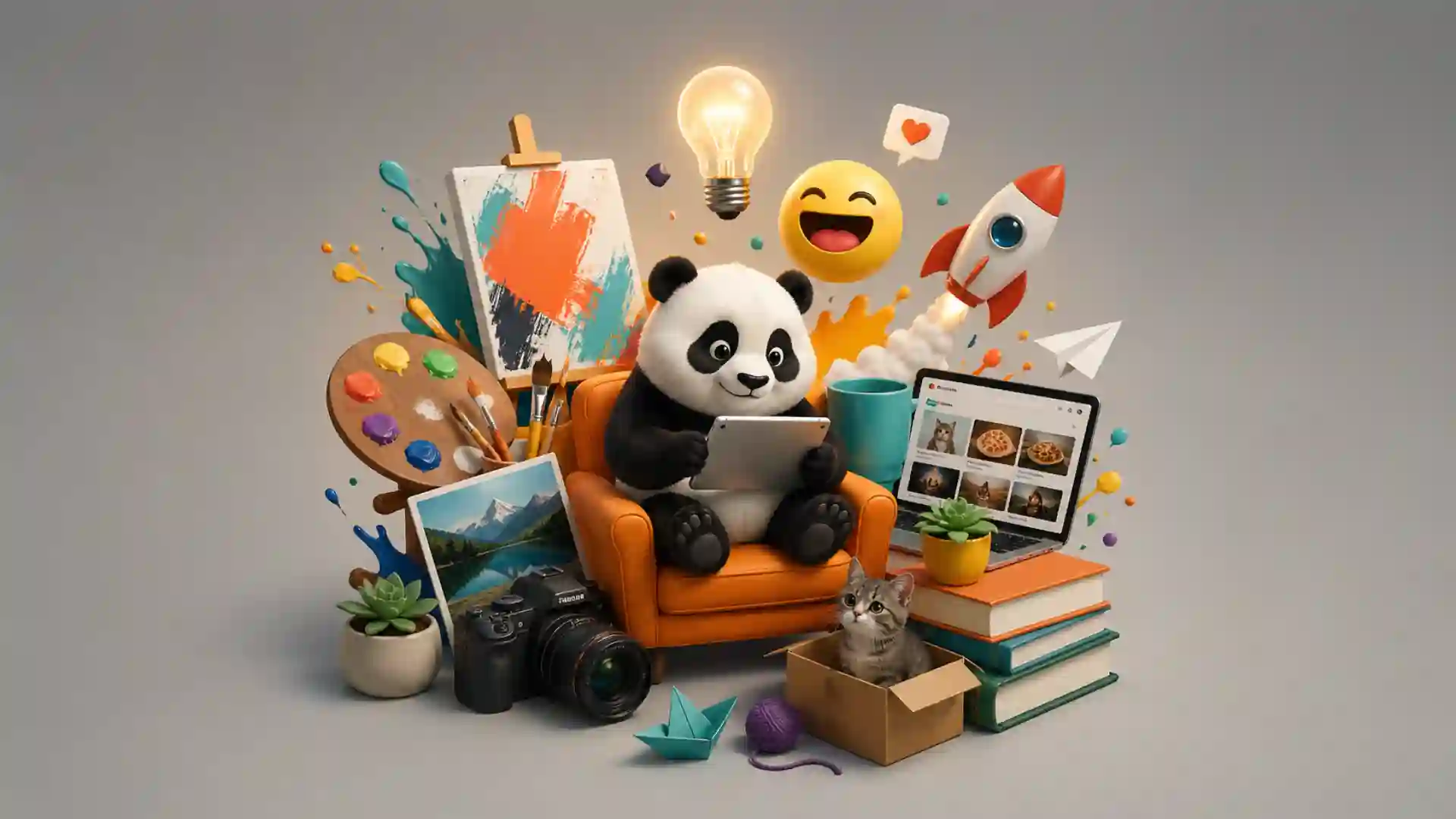
Bored Panda understands one of the web’s oldest truths: people do not always go online with a noble purpose. Sometimes they open a browser because the kettle is boiling, a meeting ended early, the train is late, or the day has become a grey block of tabs and tiny obligations. Bored Panda exists for that specific gap. It is not pretending to be the public square, the front page of politics, or the place where productivity goes to bulk up. It is a large, busy, visual entertainment site built around viral stories, art, humor, animals, DIY ideas, community posts, odd finds, and the kind of images that make people say, “Send this to someone.” Its own about page says it was founded in 2009 and frames the mission plainly as fighting boredom through entertainment news, lifestyle content, inspiring stories, and pop-culture material.
Table of Contents
A site built for the exact moment your attention slips
The reason Bored Panda still feels worth opening is not that every post is a masterpiece. It is that the site has preserved an older, more open-ended mode of browsing. You arrive for one funny animal gallery and somehow end up inside a porcelain tattoo feature, a thread of awful workplace stories, a set of historical cat photos, a batch of comics about science, or a list of strange design choices that someone, somewhere, truly approved. The homepage now carries categories such as Funny, Relationships, Curiosities, Animals, Art & Design, Entertainment, Society, Lifestyle, Entertainment News, Community, and Shopping, with extra surfaces like Quizzes, Face-Off, Top Users, Top Posts, newsletters, apps, and Premium.
That spread could easily become mush, but Bored Panda has a recognizable editorial texture. It likes images, lists, creator backstories, social media artifacts, wholesome chaos, petty drama, and low-stakes amazement. It is happy to put a handmade object next to a relationship complaint, a photography award next to a cartoon, and a community confession next to a cat. That mix is the point. Bored Panda is not a narrow magazine with a strict cultural thesis. It is closer to a well-stocked internet flea market where the editor has decided that emotional range matters less than clickability, visual pull, and the faint pleasure of surprise.
The site works especially well because it does not ask readers to commit. A post can be skimmed, shared, abandoned, resumed, or used as social fuel. That may sound minor, but it is a large part of its durability. Plenty of modern platforms demand full immersion, identity, argument, or allegiance. Bored Panda asks for less. It offers a scrollable object, a hook, an image, a comment section, and a quick route to the next odd thing. In the current internet, where entertainment often arrives wrapped in conflict, that low-pressure quality feels almost retro.
There is also a practical reason the format travels. A Bored Panda story often contains its own reason to exist before the reader has reached the first full paragraph. A headline promises a batch of images, a social thread, a creator’s work, a funny mistake, or a tiny human drama. The visual payload is close to the top. The reader does not need to decode a complicated premise. The site’s older viral logic is still present: find a thing with a strong emotional handle, package it clearly, and let the reader move fast.
The strange skill of making internet leftovers feel curated
Bored Panda’s real talent is packaging the loose material of the internet into something browseable. A great deal of online culture now lives in fragments: Reddit posts, Instagram art accounts, X jokes, TikTok screenshots, Facebook comments, photographer portfolios, niche memes, craft videos, confession threads, and images rescued from corners most readers never visit. Bored Panda’s format takes those fragments and gives them a second life as a gallery, article, interview, or community post. It is curation with a populist accent.
That is not a small editorial move. The open web is messy, and social platforms are bad archives. A funny thread disappears under the next outrage cycle. A clever artist may be loved by a small circle but invisible to casual readers. A DIY project might be admired on one platform and missed everywhere else. Bored Panda turns scattered things into a readable shape. The site gives them a headline, a page, a sequence, a little context, and sometimes a short interview. The best posts feel less like scraped content and more like someone saying, “You probably missed this, but it has a pulse.”
The community section makes that mechanic visible. Bored Panda describes it as a place for comics, photos, stories, and art submitted by creators and readers from around the world. Its current community surface includes lanes such as Ask Pandas, Challenge, and Community AITA, then mixes creator posts, comics, photography, tattoos, animal images, social stories, and comment-driven pieces. That matters because the site is not only pulling from the outside web; it also wants readers to behave like contributors, judges, voters, and repeat visitors.
The voting and comment signals are part of the entertainment. On Bored Panda, a post is rarely just a post. It comes with reactions, rankings, comments, share buttons, “top” surfaces, and visible signs of reader movement. The site understands that people like content, but they also like watching other people respond to content. A joke becomes more fun when hundreds of strangers have agreed that it lands. A weird design failure becomes more satisfying when the crowd gets to collectively wince. That social proof is not decoration. It is part of the machine.
The risk, of course, is sameness. Any platform built on viral material can start to feel like a hall of mirrors: the same outrage-adjacent work stories, the same relationship verdicts, the same “people shared” framing, the same animal cuteness, the same wholesome recovery arc. Bored Panda is not immune to that. Some posts feel assembled around a familiar internet rhythm rather than a fresh discovery. Still, the site’s better material cuts through because it keeps finding small visual worlds: an artist’s recurring character, a photographer’s obsession, a niche craft, a strange historical archive, a community challenge that produces better answers than expected.
What stands out on Bored Panda
| Area | What it feels like | Best for |
|---|---|---|
| Viral stories | Fast, emotional, social | Passing time without thinking too hard |
| Art and design | Visual, creator-led, often charming | Finding illustrators, makers, and odd projects |
| Community posts | Messy, participatory, comment-heavy | Reading what strangers are debating |
| Animals and humor | Light, shareable, instantly readable | A quick mood reset |
| DIY and craft | Practical mixed with spectacle | Creative prompts and weekend ideas |
The table shows why Bored Panda is hard to reduce to one category. It is part entertainment site, part creator showcase, part meme recycler, part community board, and part visual scrapbook. That blend is exactly why it can feel chaotic, but it is also why a reader can open it with no plan and still find a reason to stay.
From cute animals to serious distribution muscle
Bored Panda looks casual, but the company behind it is not tiny internet folklore anymore. Its LinkedIn profile describes it as a media and entertainment company based in Vilnius, founded in 2009, with a company size listed as 501 to 1,000 employees. The same profile says Bored Panda runs more than 200 social media channels in 16 languages and claims 62 billion views per year across its broader operation, which includes Crafty Panda. Those numbers belong to a serious distribution business, not a hobby blog with a cute mascot.
That scale changes how the site should be read. Bored Panda is not only a place where bored people click through funny pictures. It is also a case study in how internet media learned to survive by turning attention into repeatable formats. Its strengths are not mysterious: strong thumbnails, emotionally legible headlines, list structures, creator-friendly framing, broad social appeal, and constant movement across channels. The site is good at taking material that already wants to travel and giving it a cleaner vehicle.
WIRED’s 2017 profile remains useful because it caught Bored Panda at a revealing moment. At the time, many Facebook-era viral publishers were being punished by algorithm shifts and by reader fatigue with cheap curiosity-gap headlines. WIRED reported that Bored Panda, then a roughly 40-person site, had reached 116 million unique visitors in October 2017 and was thriving with photos, animal stories, funny lists, and visually appealing material rather than the harsher outrage tactics that came to dominate social distribution. The article also traced the site to founder Tomas Banišauskas, a Lithuanian photographer who started Bored Panda from Vilnius in 2009.
The interesting lesson from that profile is not simply “positive content works.” Plenty of positive content fails. Bored Panda’s sharper move was understanding that feel-good material still needs structure, pacing, and delivery. A cute dog is not enough. A reader needs a headline that frames the dog, a sequence that rewards scrolling, a page that encourages sharing, and a platform network that pushes the piece into the right feeds. The soft content had hard mechanics behind it.
The site’s old anti-clickbait stance also deserves a careful read. WIRED reported Banišauskas saying that Bored Panda chose not to copy viral publishers whose headlines promised more than they delivered, and that the team believed readers would accept a strong hook if the article actually paid it off. That is still a useful distinction. Bored Panda absolutely uses irresistible framing. It is not shy about big numbers, emotional setup, or “look what happened” energy. The difference, at its best, is that the page usually does contain the visual or social payoff it promised.
The business story also explains the site’s stubborn presence. WIRED reported in 2017 that Bored Panda had avoided outside investment and expected tens of millions of dollars in revenue that year from ads, content recommendations, and branded-content deals. That old snapshot matters because it shows a media company that did not need to behave like a venture-backed rocket. It could be repetitive, profitable, visual, and operationally focused. In online publishing, boring economics often beat glamorous strategy.
Still, the media environment around Bored Panda has become rougher. Search traffic, social referrals, ad markets, AI summaries, platform fatigue, and reader habits have all changed since the Facebook-heavy viral era. Bored Panda’s current site reveals some of that pressure: Premium, newsletter prompts, app nudges, shopping content, social channels, and community surfaces all sit near the core feed. The site is no longer just chasing a share. It is trying to keep the reader inside its own loop.
Why it is still worth opening
Bored Panda is worth opening when you want the web to feel a little less instrumental. Not every visit needs to make you smarter, richer, fitter, or more informed. Some browsing is valuable because it is playful, visual, and pleasantly unnecessary. Bored Panda gives permission for that kind of internet use. You can look at craft ideas you will never make, animals you will never meet, homes you will never live in, complaints you are glad are not yours, and artworks you did not know you wanted to see.
The art and design material is still one of the site’s strongest reasons to visit. Bored Panda began with a strong visual bias, and that heritage shows whenever it features illustrators, photographers, tattoo artists, ceramicists, comic makers, costume designers, miniature builders, or people turning unlikely materials into objects with personality. These posts are not always deep art criticism, and they do not need to be. Their job is to surface a creator quickly and make the work easy to enjoy. For many readers, that is enough. For some creators, that exposure can matter.
The humor works because it is often observational rather than polished. Bored Panda is full of posts built from real annoyances, screenshots, awkward signs, strange family behavior, retail nightmares, petty office logic, bad design, and animals interrupting human seriousness. The jokes are rarely elegant in the literary sense. They are internet-native: fast, situational, visual, and communal. You laugh partly because the thing is funny and partly because the crowd has already gathered around it.
The DIY and craft side gives the site another useful texture. Bored Panda can switch from passive amusement to “I might try that” without becoming a tutorial platform. A reader might leave with a costume idea, a home decor thought, a drawing prompt, a cake concept, or a reminder that ordinary people make strange, delightful things with their hands. That matters because the web often separates entertainment from creation. Bored Panda lets them sit near each other.
The animal content is exactly as powerful as anyone who has used the internet would expect. Cats, dogs, rescue stories, strange wildlife images, pet behavior, animal memes, and sentimental transformations remain some of the most durable share formats ever invented. Bored Panda does not overthink this. It gives the reader the creature, the setup, and the emotional reaction. There is no shame in that. A well-timed animal post has saved more lunch breaks than most productivity apps.
The relationship and workplace stories add a sharper edge. These posts often run on judgment: who was wrong, who overreacted, who behaved badly, who set a boundary, who made a ridiculous demand. They borrow energy from forums where strangers adjudicate other people’s lives. Bored Panda’s version is usually lighter than the raw source communities, but the appeal is similar. People like moral puzzles when the stakes are low and the comment section is ready.
The best way to use Bored Panda is not to treat it as a destination for one exact need. It is better as an internet snack shelf. Open it when you want to drift. Open it when you need a visual reset. Open it when you want a creator rabbit hole, a funny thread, a batch of strange images, or something to send to a group chat. It is not built for completion. It is built for interruption.
The bargain behind the fun
Bored Panda’s main weakness is the same thing that makes it work: it is engineered for easy attention. The site can feel crowded, ad-heavy, repetitive, and eager to keep the scroll alive. Prompts for apps, newsletters, Premium, sharing, and related content sit around the experience. The homepage itself exposes the modern publisher’s survival kit: social links, app links, newsletters, Premium, Top Users, Top Posts, Shopping, and many category routes. The reader gets entertainment; the site gets time, clicks, data signals, ad inventory, and perhaps a subscription.
That bargain is not hidden, but it is worth noticing. Bored Panda feels lighter than many social feeds because the content is often cute, creative, or funny. Yet it still belongs to the attention economy. It wants another pageview. It wants another reaction. It wants another share. The difference is flavor, not innocence. A website can be cheerful and still be a machine.
The editorial standards page shows that Bored Panda knows trust matters more than it once did. The page says the site expects accurate and responsibly sourced stories, discloses sources and conflicts, separates editorial decisions from advertisers, credits creators, moderates community submissions, and says its core editorial articles are written, edited, and fact-checked by human writers and editors rather than generated as primary text by AI. Those claims are especially relevant for a site that often works with material found across social platforms, where ownership, context, and consent can become messy fast.
The copyright and creator-credit question is central to a site like this. When a publisher builds attention from other people’s art, posts, jokes, images, and stories, the difference between discovery and extraction can get thin. Bored Panda’s stated standards say it respects intellectual property, credits creators, and uses content with permission, under fair use, or in the public domain. Readers may not audit every post, but the promise matters because creator-led internet culture depends on attribution. A feature should send attention back to the person who made the thing, not merely absorb it.
The AI statement is also revealing. In a web flooded with synthetic summaries and auto-written filler, Bored Panda’s standards say its main editorial writing is human-made, with AI reserved for supporting uses such as concept art, visual mock-ups, preliminary analysis, or translation assistance, and with transparency when AI affects supplementary elements. For a site built on voice, captions, judgment, and the handling of other people’s creativity, that line is not cosmetic. Readers come for a human sense of “this is worth your minute.”
The site’s weaker posts remind you why that human judgment matters. A list without taste is just a pile. A viral thread without context can feel thin. A social screenshot without care can flatten real people into disposable characters. Bored Panda is strongest when it behaves like a curious editor and weakest when it behaves like a conveyor belt. The difference is easy to feel after a few pages.
There is a second bargain around mood. Bored Panda became known partly by sidestepping the outrage-heavy viral model, but modern entertainment still loves irritation. Posts about rude customers, awful bosses, bad neighbors, absurd partners, and tone-deaf family members are fun because they create safe annoyance. That is not the same as political rage, but it works on a related nerve. The site is at its best when it balances that irritation with craft, animals, art, and genuine delight.
Small questions before opening it
Yes, and that is not a flaw. Its own positioning centers on fighting boredom through pop culture, entertainment news, lifestyle content, inspiring stories, and uplifting discovery. The site is strongest when approached as a place for quick pleasure, visual browsing, and social sharing rather than as a strict news source.
Yes, especially for visual ideas. The Art & Design and Community areas are useful for discovering artists, tattoo work, comics, photography, craft projects, odd design choices, and people who make objects with personality. The experience is less like visiting a museum and more like walking through an online cabinet of curiosities.
Usually, but the site is built to pull you forward. A single post can become five tabs because the adjacent story always looks just harmless enough to open. Bored Panda is safe in the emotional sense, but not safe for your schedule if you are prone to rabbit holes.
Bored Panda is best for readers who like visual lists, funny social stories, pets, handmade objects, internet drama without heavy stakes, and creators who make niche work. It is less suited to readers who dislike ads, list formats, recycled social content, or headlines that lean hard into curiosity.
Bored Panda adds packaging. Instead of seeing one disconnected post, you get a themed collection, a gallery, a short frame, a community response, and sometimes creator context. That editorial layer is the difference between stumbling across one interesting thing and browsing a shelf of related interesting things.
A cheerful relic that learned to survive
Bored Panda feels like a cheerful relic because it still believes the web is good for looking at strange things together. That sounds almost quaint now. So much online life has hardened into argument, performance, commerce, or algorithmic sameness. Bored Panda still returns to a simpler gesture: here is a thing someone made, saw, suffered, photographed, rescued, confessed, or laughed at. Look for a minute.
The site’s durability comes from treating boredom as a real use case. Boredom is not merely an absence of activity. It is a state where the mind wants a small spark but does not want work. Bored Panda supplies sparks in bulk. Some are silly. Some are sweet. Some are thin. Some are surprisingly memorable. The volume is part of the experience, but so is the feeling that one more click might reveal something better.
Its best posts preserve the human weirdness that platforms often flatten. A tiny ceramic creature, a badly translated sign, a rescued animal, a comic about social anxiety, a family secret, a handmade costume, a workplace disaster, a photo series about strangers and their favorite films: these things are not culturally grand, but they are alive. Bored Panda’s editorial gift is recognizing that the web’s small curiosities are often more clickable than its grand declarations.
The site also reveals an old lesson about media taste. Taste does not always mean being rarefied. Sometimes taste means knowing which low-stakes thing will make a stranger pause, smile, argue, or send a link. Bored Panda’s taste is broad, sentimental, visual, and crowd-aware. It will never satisfy readers who want every recommendation to feel refined. It will satisfy readers who still enjoy the internet as a cabinet of oddities.
The most honest way to describe Bored Panda is this: it is a highly developed boredom engine with a surprisingly human face. It has the metrics, prompts, categories, subscriptions, social channels, and commercial machinery of a modern media company. Yet the surface still feels powered by small human reactions: “that is cute,” “that is unfair,” “that is clever,” “that is beautiful,” “that is ridiculous,” “I need to show someone this.” Those reactions are not sophisticated, but they are real.
Open Bored Panda when you want the internet to stop demanding so much from you. Do not expect purity. Do not expect every post to be fresh. Do not expect a quiet reading room. Expect a colorful, noisy, sometimes messy discovery site that knows exactly what it is selling: a few minutes of relief from blank attention. For a website with such a silly name, that is a remarkably durable promise.
Author:
Jan Bielik
CEO & Founder of Webiano Digital & Marketing Agency
This article is an original analysis supported by the sources cited below
Bored Panda
Official homepage used to verify the current site structure, navigation, categories, app prompts, newsletter positioning, Premium links, Top Users, Top Posts, and live publishing surface.
About Bored Panda
Official about page used for the site’s founding year, current self-description, mission to fight boredom, and editorial focus on pop culture, entertainment news, lifestyle content, inspiring stories, and uplifting discovery.
Bored Panda Community
Official community page used to verify reader and creator submissions, current community lanes, post formats, voting signals, comments, and the mix of comics, photos, stories, art, and social discussion.
BoredPanda Editorial Standards And Ethics
Official editorial standards page used for claims about sourcing, fact-checking, transparency, human authorship, AI use, corrections, copyright, community moderation, privacy, accessibility, and monetization disclosures.
Bored Panda on LinkedIn
Company profile used for current business positioning, headquarters, founding year, company size, social-channel scale, language reach, and the broader Bored Panda and Crafty Panda network description.
How Bored Panda Survived Facebook’s Clickbait Purge
WIRED profile used for historical context on Bored Panda’s growth, founder Tomas Banišauskas, its visual and positive-content strategy, Facebook-era performance, traffic claims from 2017, and revenue model at that time.
| Citing this article? Brief excerpts are welcome. Please credit Webiano.digital, name the author where stated, and include a link to https://webiano.digital and to this original article. Full or substantial republication requires prior written permission. Read our Copyright and Content Use Policy. |
This article was prepared with the assistance of artificial intelligence tools. The content underwent expert human review, and Webiano Digital & Marketing Agency assumes editorial responsibility for its final version and publication.