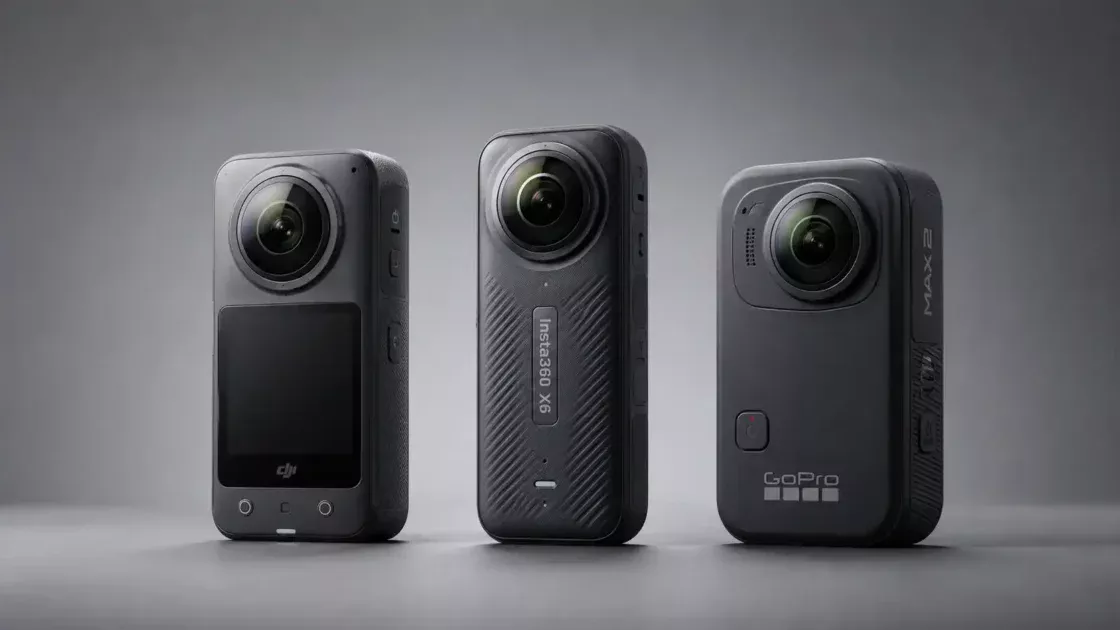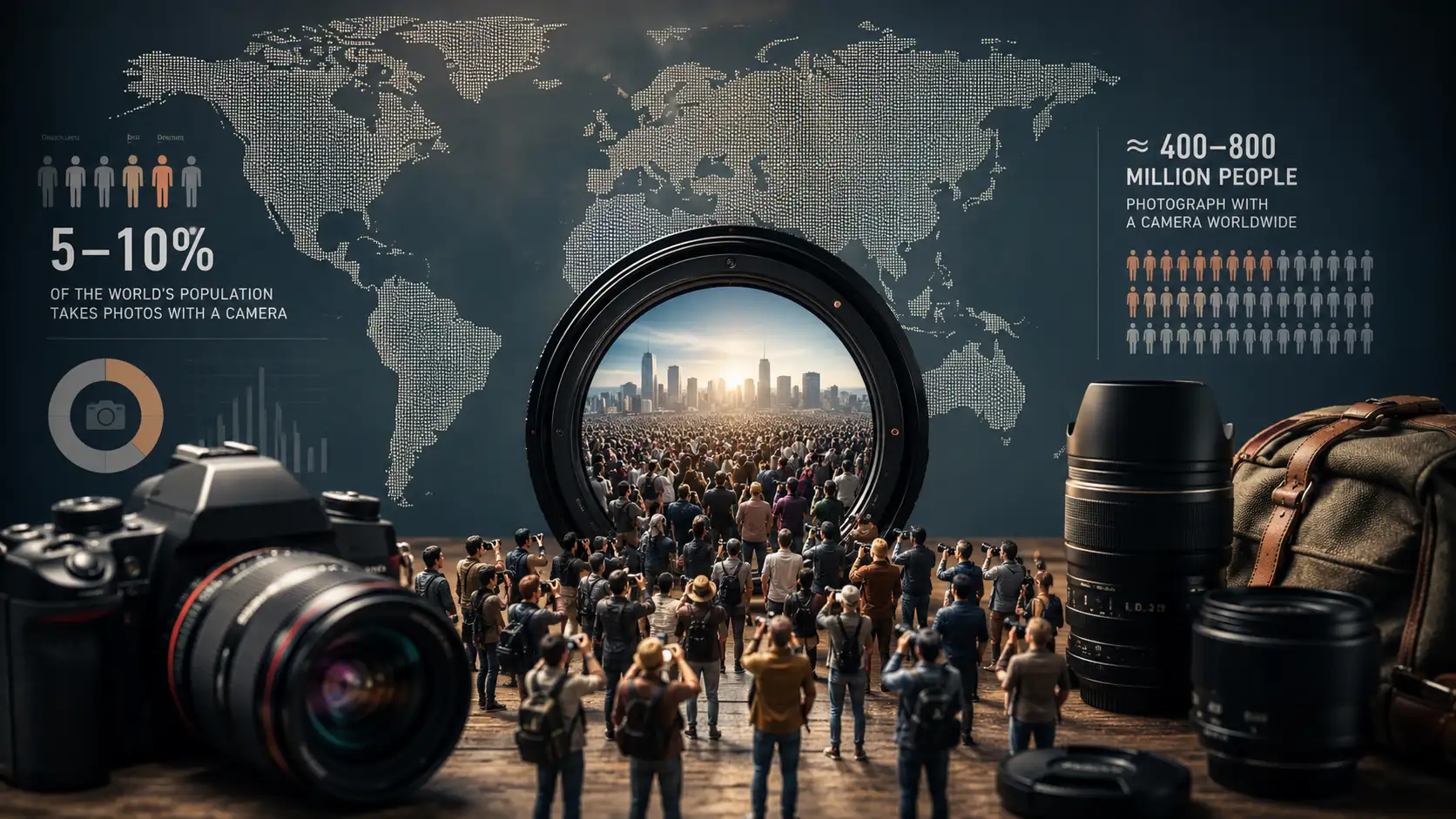
The closest honest answer is this: about 4.5 billion to 5.5 billion people worldwide probably take photos with some kind of camera, once smartphones are included; only about 100 million to 250 million people likely use a dedicated digital camera at least occasionally. Against a world population of roughly 8.3 billion, that means around 55% to 66% of humanity are practical camera users in the smartphone sense, while only about 1% to 3% are active users of standalone cameras.
Table of Contents
No international agency publishes a clean headcount of “people who take photos with a camera.” The number has to be inferred from population, internet use, mobile ownership, smartphone adoption, photo-volume forecasts, and dedicated camera shipments. That creates a range, not a census. The phrase “with a camera” now has two meanings. A phone camera is a camera in technical and daily use. A mirrorless body, compact camera, DSLR, action camera, or film camera is a dedicated camera. The answer changes by billions depending on which definition is used.
The world’s population baseline is about 8.3 billion people in 2026, according to UN population estimates and live population trackers based on UN data. The UN’s World Population Prospects remains the core reference for global population estimates and projections.
The participation baseline is digital access. ITU’s Facts and Figures 2025 estimates that 6 billion people, about three-quarters of the world’s population, used the internet in 2025, while 2.2 billion remained offline. ITU also reported that four out of five people aged 10 and above owned a mobile phone in its 2024 connectivity data. Those two numbers matter because most photography now happens through connected mobile devices, not through camera shops.
The hardware baseline points in the opposite direction for dedicated cameras. CIPA, the Camera & Imaging Products Association, reported 9.44 million worldwide digital still camera shipments in 2025 from participating member companies. That included 2.44 million cameras with built-in lenses, 7.00 million interchangeable-lens cameras, 690,911 DSLRs, and 6.31 million mirrorless cameras.
The photo-volume baseline shows the scale of behavior. Phototrend, summarizing Photutorial estimates, reported that the world would take about 2.1 trillion photos in 2025, with smartphones accounting for about 94% of all photography and traditional digital cameras about 4.7%. Rise Above Research separately says annual photo capture will keep rising through 2030, with smartphones accounting for the vast majority of images.
The best estimate, then, is not a single number. If “camera” means any image-taking device, the active global photo-taking population is probably around five billion people. If “camera” means a dedicated camera, the number is probably closer to a few hundred million at most. The dedicated-camera group is tiny beside the smartphone group, but it is still large enough to sustain a premium imaging market, a creator economy, professional services, camera clubs, education, second-hand trading, and specialist repair.
The most honest number is a range
The global count of people who take photos cannot be measured like the global population or the number of mobile subscriptions. People share phones. Some people own cameras but rarely use them. Some teenagers shoot hundreds of photos a week without owning the device they use. Some professionals own multiple cameras. Some households keep a decade-old DSLR in a drawer and bring it out for one holiday. A shipment is not a user, and a user is not always an owner.
That is why the answer has to be built from several indicators. The first is device access. A person needs access to a phone, camera, tablet, webcam, action camera, or shared family device. The second is actual behavior. Owning a phone does not prove that a person takes photos, but the camera app is now one of the default functions of smartphone life. The third is frequency. A person who takes one document scan per year and a person who shoots 20,000 RAW files per year both appear inside the broad category of “camera user,” yet their meaning for the camera industry is entirely different.
A useful estimate must separate three groups. The largest group is smartphone photo-takers. This group includes people who use their phone camera for family pictures, messaging, work documentation, travel, school, shopping, identity forms, screenshots, product listings, social media, and memory. The second group is dedicated-camera users, meaning people who use a compact camera, mirrorless camera, DSLR, action camera, instant camera, film camera, or similar device. The third group is serious photographers, a narrower group that uses cameras with intent, skill, repeat practice, editing, archiving, printing, paid work, or creative projects.
The most defensible global range for smartphone photo-takers is 4.5 billion to 5.5 billion people. That range sits below the global internet-user count of 6 billion and broadly matches the scale of smartphone ownership estimates from market research, mobile-industry data, and digital-behavior reports. It also recognizes that children, older people, low-income users, feature-phone users, and people with shared access do not all behave the same way. ITU’s 2025 internet figure gives the upper digital participation boundary, while its mobile ownership work shows that mobile access is more common than internet use, especially in some regions.
The defensible range for dedicated-camera users is much smaller. CIPA’s 2025 shipment figure of 9.44 million units does not count the installed base, second-hand purchases, cameras from non-member companies, film cameras, action cameras outside the reporting category, or people using older equipment. Yet it shows how small the annual flow of new dedicated cameras has become beside smartphones. Smartphone shipments are measured in roughly 1.25 billion units a year, while digital still camera shipments are measured in millions. Reuters reported IDC’s forecast that smartphone shipments would reach 1.25 billion units in 2025, while CIPA’s digital still camera total was under 10 million.
A reasonable active dedicated-camera estimate is 100 million to 250 million people worldwide. That is not an official count; it is an editorial estimate from shipment flow, product life, second-hand circulation, ownership surveys, and the share of photos made on dedicated cameras. If conventional cameras account for roughly 5% to 8% of global photo volume, and annual photo capture exceeds two trillion images, then dedicated-camera use cannot be dismissed as trivial. It is small in headcount compared with smartphones, but it remains large in output, spending, skill, and cultural influence.
A camera now means two different things
The word “camera” used to mean a separate object. It had a lens, a body, a shutter button, a roll of film or memory card, and a user who had decided to bring it along. That definition no longer matches daily life. A smartphone camera is not a camera accessory. It is the world’s default image-capture device.
The split matters because people often ask the camera question from two different angles. A technology analyst may ask how many people use cameras, meaning all image sensors in consumer hands. A camera-industry analyst may mean how many people still buy or actively use dedicated cameras. A photographer may mean how many people practice photography as a craft. A platform analyst may mean how many people create visual content for social media, messaging, resale, reviews, or work. The same phrase produces four separate markets.
If the question is “How many people take photos?” the answer is billions. If the question is “How many people use a standalone camera?” the answer is probably a few hundred million or less. The smartphone turned photography into a built-in social, commercial, and documentary habit. The dedicated camera kept its place as a tool for quality, control, reliability, lens choice, ergonomics, long-term projects, professional work, and pleasure.
There is no clean dividing line between casual and serious use. A parent using a phone at a school event is using a camera. A seller photographing second-hand shoes for a marketplace is using a camera. A courier photographing a delivery proof is using a camera. A child recording a pet is using a camera. A tourist using a mirrorless camera is using a camera. A photojournalist, wedding shooter, forensic technician, real-estate agent, researcher, birdwatcher, and fashion creator are all using cameras for different reasons. Counting them together is easy only if the category is broad enough to become almost meaningless.
Smartphones also changed the action itself. Taking a photo used to be a deliberate decision because film, batteries, processing, prints, and storage had costs. A phone image has almost no visible marginal cost at the moment of capture. It may have cloud, energy, privacy, attention, and organization costs later, but the shutter press feels free. That shift explains why the number of photos exploded faster than the number of people.
Google Photos gives a useful sign of scale. Google said in May 2025 that more than 1.5 billion people use Google Photos each month and more than 9 trillion photos and videos are stored in the service. That does not count Apple Photos, local galleries, WhatsApp folders, WeChat, cloud backups, NAS drives, memory cards, hard drives, enterprise archives, or private platforms. It does show that photo-taking is no longer a specialist activity; it is infrastructure.
A smartphone is also not a single-purpose camera. It is a scanner, notebook, receipt recorder, translator input, visual search tool, identity-verification device, QR reader, workplace evidence tool, and social signal. That is one reason the broad photo-taking count can be so high. Some people who would never call themselves photographers still use cameras every week because modern services ask for images.
The denominator is about 8.3 billion people
The denominator matters because the question asks for a share of all people on Earth, not only adults, consumers, internet users, or smartphone owners. The global population is roughly 8.3 billion in 2026, with the exact live count changing every minute. UN World Population Prospects is the authoritative long-run reference, while real-time counters such as Worldometer render UN-derived estimates into a current clock.
A world-population denominator includes infants, small children, the very old, people without electricity, people in conflict zones, people living under severe poverty, people without mobile coverage, people with feature phones, people with disabilities that affect camera use, and people who are online but do not actively take photos. That makes the percentage lower than it would be for adults, urban residents, internet users, or people aged 15 to 64.
Using the full population denominator, five billion camera users equals about 60% of humanity. That is the simplest broad estimate. It fits between the lower bound of active smartphone photo-takers and the upper bound suggested by global internet and mobile access. It also leaves room for non-users: children too young to take photos, adults without devices, people using feature phones without practical camera use, people who avoid photography, and people who use shared devices only passively.
Using the same denominator, 150 million dedicated-camera users equals about 1.8% of humanity. A 250 million estimate equals about 3%. Even if the true number were 300 million, dedicated-camera users would still be under 4% of the world population. That is the central market story: the dedicated camera did not disappear, but it stopped being a mass household device.
The denominator also explains why ownership surveys can mislead. A country-level survey showing that 25%, 35%, or 45% of respondents own a digital camera does not scale cleanly to the world. High-income countries have older camera stock, higher incomes, legacy purchases, camera enthusiasts, family devices, and second-hand markets. Low-income countries may have many phone cameras but far fewer standalone cameras. Household ownership is not the same as individual active use. A family of five may own one camera used mostly by one person.
Population structure also changes the estimate. Children may be avid photo-takers where phones are accessible, but not all children have a personal device. Older adults may own phones but use cameras less often. People in low-income economies may share devices or use older phones with limited storage. Urban workers may use cameras for documentation even when they do not post images online. A single global percentage hides those differences.
The safest editorial phrasing is this: roughly three in five humans probably take photos with some kind of camera, while roughly one or two in every hundred humans actively use a dedicated camera. That sentence captures the scale without pretending to own unavailable census data.
Smartphones changed the counting problem
Before smartphones, camera counting could lean on camera sales, film sales, processing volume, and household ownership. The modern count is harder because the camera is embedded in a device bought for communication, payments, maps, work, entertainment, search, shopping, transport, and identity. A person may buy a smartphone for messaging and still become a daily camera user.
The smartphone also hides the “purchase decision” that once separated photographers from non-photographers. Buying a camera used to signal intent. Buying a phone does not. Yet the phone makes photo-taking so available that millions of people slide into the behavior without choosing photography as a hobby. A person photographs a bus schedule, a damaged parcel, a child’s drawing, a meal, a sunset, a wound for a doctor, a parking spot, a product label, a classroom board, or a government form. That is photography in the behavioral sense, even if not in the artistic sense.
Market data shows the scale gap. IDC’s forecast cited by Reuters put 2025 smartphone shipments at 1.25 billion units. CIPA’s 2025 digital still camera shipments were 9.44 million units. That is roughly 132 smartphones shipped for every digital still camera in the same year. The ratio is not a perfect comparison because phones replace faster, cameras last longer, and CIPA excludes some categories, but the order of magnitude is decisive.
The installed base gap is likely even larger. Smartphones are replaced every few years and circulate through households, resale, refurbishing, and secondary users. Dedicated cameras also circulate, but fewer enter the market each year. A ten-year-old DSLR may still function well; a ten-year-old phone may not be useful as a primary connected device. That means dedicated-camera users may rely on long-lived gear, while smartphone-camera access refreshes constantly.
Smartphone photography also benefits from automatic backup and social use. A phone image can be captured, edited, shared, searched, printed, translated, or sent to a workplace system within seconds. That creates more reasons to take images. Dedicated cameras often require transfer, selection, editing, storage, and time. For professionals and enthusiasts, that is a feature. For casual users, it is friction.
This friction explains why dedicated cameras lost the casual market. The camera companies did not merely lose to better phone cameras; they lost to phones that solved capture, communication, storage, and sharing as one loop. Image quality mattered, but convenience mattered more. The casual compact camera did one job. The phone camera became the front door to many jobs.
The remaining dedicated-camera audience is therefore self-selecting. It includes people who care enough about image quality, lenses, ergonomics, low-light performance, optical zoom, sports, wildlife, events, travel, studio work, video production, durability, or the joy of a physical tool to carry an extra device. That audience is smaller, but it is more valuable per user.
Dedicated cameras are a small active minority
Dedicated cameras now serve a concentrated audience rather than a universal one. That audience is large in human terms but small in population terms. It includes hobbyists, professionals, students, creators, parents who prefer optical zoom, travelers, wildlife watchers, sports shooters, journalists, artists, wedding and portrait photographers, real-estate media workers, filmmakers, YouTubers, product photographers, collectors, and people drawn to retro compact cameras.
CIPA’s 2025 data shows a dedicated camera market that is no longer collapsing every year, but it remains much smaller than its old peak. CIPA reported 9.44 million digital still camera shipments worldwide in 2025, up 11.2% year over year. PetaPixel’s analysis of CIPA data notes that global digital camera shipments peaked around 121.46 million in 2010 and fell to 9.44 million in 2025. That is a fall of more than 90% in annual unit volume from the high point.
The 2025 rebound is still meaningful. Built-in-lens cameras shipped 2.44 million units, up 29.6% year over year. Mirrorless cameras shipped 6.31 million units, up 12.5%. DSLRs shipped 690,911 units, down 30.7%. The dedicated market is not dead; it has shifted away from mass point-and-shoot ownership toward mirrorless systems, premium compact cameras, retro cameras, creator tools, and niche demand.
An active user count must account for years of accumulated cameras. A camera sold in 2018 may still be used in 2026. A lens system can last decades. A photographer may buy used equipment. A family may keep a compact camera. A film camera may return to use after years in storage. CIPA shipments measure new supply from member companies, not active use. That is why the active dedicated-camera population is much larger than annual shipments.
The wide estimate of 100 million to 250 million active dedicated-camera users rests on three facts. First, the installed base built over decades is large. Second, the share of total global images made by conventional cameras is small but not zero. Third, camera ownership surveys in selected countries show that digital camera ownership is still present, even if declining. PetaPixel’s discussion of Statista Consumer Insights data noted that none of eight surveyed countries reached 50% digital camera ownership, and ownership had declined from five years earlier.
The word “active” matters. A person who owns a camera but has not charged it in three years should not count the same as a person who shoots monthly. A tighter active-use definition could push the global number toward the lower end, perhaps near 100 million. A looser definition, including occasional holiday or family use, could push it toward 250 million or beyond. The public data cannot resolve that distinction.
The dedicated camera is now a minority tool with majority cultural influence. Many of the images that shape journalism, advertising, wedding memory, fashion, cinema, sports, wildlife culture, product commerce, science communication, and art still come from dedicated cameras or camera-like professional systems. Population share is small; visual authority is much larger.
Camera shipments show the size of the committed market
Camera shipments are the clearest hard number for dedicated hardware. They do not answer the people question directly, but they reveal how many new dedicated still cameras enter retail channels each year. In 2025, the global total from CIPA member companies was 9,438,876 units. That number is tiny beside smartphones, but it is not tiny as a specialist market. It represents millions of buyers, upgrades, replacements, and first-time purchases.
CIPA’s breakdown matters more than the headline. Built-in-lens cameras, often called compact cameras or point-and-shoots, shipped 2,436,911 units in 2025. Interchangeable-lens cameras shipped 7,001,965 units. Inside the interchangeable-lens group, DSLRs were down to 690,911 units, while mirrorless cameras reached 6,311,054 units. Mirrorless now defines the dedicated camera market.
This tells us something about the people behind the devices. Interchangeable-lens buyers are more likely to be enthusiasts, semi-professionals, professionals, students, or serious creators than casual users. They are buying into a system of lenses, accessories, batteries, bags, editing software, and storage. Compact camera buyers are more mixed: some want simplicity, some want retro aesthetics, some want pocketable quality, some want zoom, some want a device that feels less distracting than a phone.
The 2025 compact-camera rebound became one of the more interesting signals in consumer imaging. PetaPixel reported that CIPA’s built-in-lens camera shipments rose roughly 30% year over year, with manufacturers even drawing on inventory to meet demand. The trend has been linked by many camera-market observers to travel, nostalgia, social-media aesthetics, premium compacts, and younger users who want images that look different from smartphone output.
Still, shipment flow cannot justify a mass-market claim. Even if every 2025 digital still camera went to a new user, the number would equal about 0.11% of the world population. Of course, not every camera went to a new user; many were upgrades or replacements. The annual new-user addition is probably smaller. The installed base is the source of the larger active-user estimate.
Camera shipments also miss adjacent categories. Action cameras, cinema cameras, drones, instant cameras, film cameras, webcams, industrial cameras, surveillance cameras, dashcams, body cameras, medical imaging devices, and scientific imaging tools may not sit neatly inside CIPA’s digital still camera table. Many of those are cameras, but not all are used for personal photography. The user’s question appears to ask about people taking photos, so the relevant universe is consumer and creative capture rather than every image sensor on Earth.
The annual flow points to a committed, not universal, market. A few million new dedicated cameras each year can sustain camera companies, lens makers, repair businesses, retailers, software tools, presets, education, workshops, and communities, but it cannot represent everyday global photo behavior. Everyday photo behavior belongs to the phone.
Phone ownership sets the upper boundary for casual photography
Mobile phone ownership is the first serious boundary for global casual photo-taking. ITU reported in its 2024 Facts and Figures that four out of five individuals aged 10 or older owned a mobile phone. It also cautioned that phone ownership is not the same as internet use because some phones are shared, some are feature phones, some are calls-only devices, and some people own more than one phone.
That caution is central to the camera estimate. A person may own a mobile phone without owning a smartphone. A person may own a smartphone but rarely take photos. A person may use a relative’s phone to take photos. A person may have a work phone used mostly for documentation. A person may use a damaged phone with a poor camera. The device-access count is higher than the active-photo count in some groups and lower in shared-device contexts.
Global internet use offers another boundary. ITU’s 2025 release says 6 billion people are online, while 2.2 billion remain offline. DataReportal’s Digital 2026 report also highlights more than 6 billion internet users and states that more than two-thirds of people use social media monthly. Those figures do not prove photo-taking, but they show how large the connected audience has become.
The smartphone estimate has to sit inside this digital reality. If about 6 billion people are online, and if most online users access digital services through mobile devices in many markets, then the number of people with access to a phone camera is very large. Yet the photo-taking estimate should not simply equal the internet-user estimate. Some internet users rely on shared devices, desktops, feature phones, or basic access. Some people online are children or older adults with limited independent camera use. Some people use cameras rarely.
A broad active photo-taking range of 4.5 billion to 5.5 billion people is therefore more plausible than claiming all 6 billion internet users are photo-takers. It also avoids treating every mobile phone owner as a smartphone photographer. It captures the practical truth: most connected people with smartphones use the camera at least sometimes, but not every connected person belongs in the count.
Mobile access is also uneven by income and geography. ITU’s 2025 release says 94% of people in high-income countries use the internet, compared with 23% in low-income countries. It also says 85% of urban residents are online versus 58% of rural residents. Since phone-camera use is tied to device quality, data access, charging, storage, app ecosystems, and digital literacy, those gaps matter.
The upper boundary for “people who can take photos with a camera” is close to the mobile-connected population. The lower boundary for “people who do take photos” is set by actual device use, culture, income, age, and need. That is why a range is more honest than a single count.
Internet use explains why photo-taking is uneven
Photography is now linked to connectivity. A phone camera can work offline, but modern photo behavior is shaped by messaging, social media, backup, maps, visual search, cloud galleries, delivery apps, insurance portals, school systems, marketplace listings, identity checks, and workplace tools. A person without reliable internet may still take photos, but the incentives and feedback loops are weaker.
ITU’s 2025 data shows the scale of the divide. About 6 billion people were online in 2025; about 2.2 billion were offline. The offline population is not evenly distributed. ITU says 96% of offline people live in low- and middle-income countries, and internet use remains much lower in low-income economies than high-income economies.
Those same divides affect camera quality. A low-end smartphone may have a camera, but poor storage, weak battery life, cracked screens, limited data, and low light performance can reduce use. A high-income user may have a recent multi-camera smartphone with cloud backup, unlimited messaging, and photo-editing apps. Both count as smartphone owners, but the intensity of photo-taking can be entirely different.
Rural gaps matter as well. ITU reports that 85% of urban residents are online versus 58% of rural residents. Rural users may take photos for agriculture, family, local commerce, or documentation, but connectivity limits can reduce sharing, backup, and app-based uses. The camera count is not simply a question of hardware; it is a question of how often images become useful.
DataReportal’s Digital 2026 report underlines the same split through digital behavior. It says more than 6 billion people use the internet, but more than 2 billion remain offline, with rural and gender gaps still visible. It also says more than two-thirds of humanity uses social media monthly, which means photo-based communication now reaches a majority of the world but not all of it.
The photo-taking estimate should therefore be thought of as a gradient. In high-income urban markets, smartphone photo-taking may be near-universal among teenagers and adults. In lower-income rural areas, it may be far less common or more shared. In households with one phone, the device may be used by several people, making ownership lower than access. In some regions, messaging apps turn every phone camera into a family and commerce tool. In others, data prices or device cost suppress daily photo behavior.
The global average hides a simple split: photo-taking is common where smartphones, data, storage, and social apps are common; it is less common where devices are scarce, shared, old, or disconnected. That is why a five-billion broad estimate is more realistic than a claim that almost every human takes photos.
Annual photo volume points to billions of participants
The annual number of photos taken worldwide is the strongest behavioral clue. Phototrend reported Photutorial’s estimate that about 2.1 trillion photos would be taken in 2025, up from 1.94 trillion in 2024 and 1.81 trillion in 2023. The same analysis said smartphones accounted for about 94% of photography.
Two trillion photos cannot be produced by a tiny group alone. Professionals, influencers, and enthusiasts shoot heavily, but the volume is too large to be explained by them. It points to billions of casual contributors who take a few photos on ordinary days and more during events, travel, school, family moments, food, work, shopping, and social communication.
A rough calculation helps. If 2.1 trillion photos were spread across 5 billion active photo-takers, the average would be 420 photos per person per year, or about 1.15 per day. That feels plausible for the broad global population because it includes light users, heavy users, children, family documenters, office workers, social-media users, and creators. If the same total were spread across only 1 billion people, the average would be 2,100 photos per person per year, or nearly six per day. That is plausible for many active smartphone users but too high as a global average.
The smartphone share creates a more precise frame. If 94% of 2.1 trillion images are taken on smartphones, that equals about 1.97 trillion smartphone photos. Spread across 4.5 billion smartphone photo-takers, that equals about 438 photos per person per year. Spread across 5.5 billion, it equals about 359. Both results are credible as broad averages. They allow for people who take very few photos and people who take thousands.
The conventional camera share is smaller but still large. If dedicated digital cameras account for 4.7% of 2.1 trillion photos, that equals about 98.7 billion photos. If the broader “conventional cameras” share is 7.5%, as some mobile photography summaries report, the number is about 157.5 billion. A dedicated-camera user base of 100 million would average roughly 987 to 1,575 photos per year, depending on which share is used. A user base of 250 million would average roughly 395 to 630 photos per year. Those ranges fit a mix of hobbyists, professionals, travelers, students, and occasional family users.
That back-of-the-envelope test supports the active dedicated-camera range. A tiny base of 20 million users would have to produce thousands of images each per year, which professionals and enthusiasts can do, but it would undercount occasional users. A base above 500 million would imply too little use per camera user relative to shipment data and ownership trends. A 100 million to 250 million active dedicated-camera user range is broad, but it is consistent with photo-volume math.
Annual photo volume also reinforces the broad smartphone estimate. The world is not just equipped with cameras; it is using them constantly. The exact number of people remains uncertain, but the scale of output makes a multi-billion user base unavoidable.
The 2.1 trillion photo estimate cannot be read as people
Photo totals are not person totals. One person can take 50,000 photos in a year. Another can take ten. A wedding photographer, bird photographer, sports shooter, real-estate photographer, parent of a toddler, online seller, influencer, or event organizer may generate thousands of images. A person with a smartphone but little storage may take almost none.
That means annual photo volume can prove scale, but not headcount. The 2.1 trillion figure shows that image capture is a mass behavior, not how many humans participate. It has to be interpreted with average-use assumptions. A small change in average photos per user changes the user estimate by hundreds of millions.
There is also duplication. Burst mode, screenshots, Live Photos, auto-backed videos, duplicates from messaging apps, edited copies, RAW plus JPEG files, thumbnails, and synced versions complicate any estimate of “photos taken.” Different studies may count captures, saved files, uploaded images, or unique images differently. A person pressing the shutter once may create several related files. A messaging app may compress and store copies. A cloud service may count videos and photos together. Google Photos’ 2025 figure of more than 9 trillion stored photos and videos shows the archival scale, but it does not directly map to annual unique photos taken.
The estimates also depend on source methodology. Rise Above Research sells image-capture forecasts and says its report includes shares by smartphones, cameras, and tablets, regional activity, and cumulative saved photos. Photutorial-style public estimates combine public market data, surveys, and extrapolations. These are useful, but they are not UN-style census counts. They should be treated as informed market estimates.
The distinction matters for the user’s question. If someone asks “how many photos are taken,” two trillion is the relevant answer. If someone asks “how many people take photos,” the answer must infer participation. If someone asks “how many people use dedicated cameras,” shipments, ownership, and photo share matter more than total images.
A second problem is the meaning of “take photos.” Some people take photos every day. Some only use the camera for utility: documents, receipts, damaged goods, school notes, ID verification, or medical consultation. Others take photos only at weddings or holidays. In a broad behavioral count, all of them count. In a photography-market count, most do not.
The cleanest reading is this: annual photo volume proves that billions of people use cameras, while hardware and ownership data prove that standalone camera use is a small subset of that behavior. The user question sits exactly between those two truths.
Dedicated camera users are concentrated by skill and intent
Dedicated camera users are not distributed evenly across the population. They cluster around motivation. People carry a separate camera when they see value in doing so. That value can be technical, creative, professional, emotional, or social.
Technical motivation includes optical zoom, larger sensors, better low-light performance, faster autofocus, long lenses, RAW files, dynamic range, reliable continuous shooting, flash systems, viewfinders, weather sealing, microphone inputs, heat management, and lens choice. Creative motivation includes depth of field, manual control, color rendering, the discipline of a viewfinder, and the tactile experience of a tool. Professional motivation includes reliability, client expectations, redundancy, image rights, file control, and repeatable workflows.
The CIPA mix shows the serious-user tilt. In 2025, interchangeable-lens cameras accounted for about 7.00 million of 9.44 million digital still camera shipments. Mirrorless alone accounted for 6.31 million. That means the majority of new dedicated still-camera shipments are not basic point-and-shoot devices; they are system cameras.
That affects the people count. A mass household camera market might imply large numbers of casual owners. A system-camera market implies fewer people with higher commitment. Camera companies can earn more revenue per unit, sell lenses and accessories, and target enthusiasts. They no longer need every family to own a compact camera. They need enough committed users to buy bodies, lenses, software, services, education, printing, and upgrades.
Dedicated-camera users also overproduce images relative to their population share. A sports photographer may shoot thousands of frames in a weekend. A wildlife hobbyist may return from a trip with several thousand files. A wedding photographer may capture several thousand images per event. A serious parent with a mirrorless camera may shoot more in a month than a light smartphone user shoots in a year. That is why a small user base can account for a meaningful share of photo volume.
At the same time, many dedicated-camera owners use them rarely. The drawer-camera problem is real. Households that bought a DSLR or compact camera years ago may still own it, but the phone now handles daily use. A strict “active” definition should exclude dormant devices. An occasional-use definition should include them if they still come out for holidays, graduations, travel, or special family moments.
The active dedicated-camera estimate should therefore be tiered. A tight estimate for monthly or more frequent standalone-camera users may be closer to 50 million to 100 million. A broader estimate for people who use one at least occasionally may be closer to 100 million to 250 million. The broader range is the better answer to the user’s wording because “fotí fotoaparátom” suggests taking photos with a camera, not necessarily being a frequent photographer.
Compact cameras returned but not mass ownership
The compact camera’s return is real, but it should not be mistaken for a return to the 2010 market. CIPA reported 2.44 million built-in-lens camera shipments in 2025, up 29.6% from 2024. PetaPixel described compact cameras as a major driver of the annual shipment increase.
The cultural signal is bigger than the unit count. Young users have shown renewed interest in small digital cameras, retro color, direct flash, optical imperfections, and devices that separate photography from notifications. Some want images that look less computational. Some want a camera that makes social occasions feel less like phone time. Some want the Y2K look. Some want a small travel camera with zoom. Some are reacting against the polished sameness of phone images.
Yet 2.44 million units globally is tiny beside the old point-and-shoot era. PetaPixel’s CIPA-based chart puts the digital camera peak at more than 121 million units in 2010. A few million compact cameras can create scarcity, waitlists, resale buzz, and social-media attention, but they cannot make compact cameras common again across the world population.
The compact rebound may, however, increase the active dedicated-camera user count among younger people. A person who buys a compact camera for social use may use it more often than a household DSLR bought years ago and rarely touched. The device is not always technically superior to a flagship phone, but it changes behavior. It creates a ritual. It reduces distractions. It produces a different look. It makes photography feel like a chosen act again.
This is one reason camera-market signals can feel stronger than their population share. A trend can be culturally visible while numerically small. A few million active compact-camera users on social platforms can influence aesthetics, resale prices, product launches, and brand strategy. They can also make “real camera” photography feel alive to a generation that grew up with phones.
The compact rebound also complicates the estimate. If many compact buyers are new or returning users, the dedicated-camera user base may be expanding at the margins. If many are enthusiasts adding a second device, the user count changes less than the shipment count. Public shipment data cannot separate those groups.
Compact cameras are not replacing smartphone cameras. They are becoming an intentional alternative for moments when people want the camera to feel separate from the phone. That supports a modest rise in dedicated-camera use, not a mass-market reversal.
Mirrorless dominates the dedicated camera economy
Mirrorless cameras are now the center of dedicated still photography. CIPA reported 6.31 million mirrorless shipments in 2025, compared with 690,911 DSLRs. Mirrorless was more than nine times the DSLR shipment volume in that category.
This shift matters for user counting because mirrorless buyers are usually more invested than casual phone users. They often buy lenses, memory cards, bags, batteries, straps, cages, microphones, lights, software, monitors, and storage. A mirrorless camera is not just a device; it is the start of a system. That makes each user more economically valuable.
The DSLR decline also tells us that the dedicated-camera base is aging and renewing at the same time. Many people still own DSLRs, but new shipments are low. Some existing DSLR users continue happily with older gear. Others switch to mirrorless. Some beginners skip DSLRs entirely. Camera companies have shifted research, lenses, marketing, and product roadmaps toward mirrorless systems.
For the global people estimate, mirrorless dominance suggests that many new dedicated-camera buyers are either serious new entrants or upgraders. If a large share of shipments goes to existing photographers upgrading systems, annual new-user growth is limited. If a share goes to creators moving up from phones, the active user base expands. The true balance differs by region, age group, and brand.
The sensor-size mix gives another clue. CIPA reported 2.54 million shipments of 35mm-or-larger interchangeable-lens cameras and 4.46 million shipments of smaller-than-35mm interchangeable-lens cameras in 2025. Smaller sensor systems remain important because they reduce cost, size, and lens weight.
That matters for access. Full-frame cameras are often expensive. APS-C and Micro Four Thirds systems can be more reachable for students, beginners, travelers, and hobbyists. A dedicated-camera market built only on full-frame professional gear would be smaller. A market with crop-sensor options can support more users.
Mirrorless also crosses stills and video. Many buyers now choose a camera for hybrid work: photos, short videos, streaming, product reels, interviews, weddings, documentaries, education, and social content. A person may buy a mirrorless camera as a video tool and still take photos with it. Counting “photo camera users” becomes harder when devices are hybrid.
Mirrorless cameras show that dedicated photography did not vanish; it became more selective, more system-based, and more tied to creators and enthusiasts. That supports a dedicated-camera user count in the hundreds of millions at most, not billions.
Regional gaps distort any single global percentage
A global percentage hides huge regional variation. In wealthy urban markets, nearly every adult may have a smartphone camera and many households may still have an older digital camera. In lower-income rural areas, device sharing, affordability, electricity, repair access, storage, and data costs can reduce photo-taking. In tourism-heavy countries, camera use can be visible even if residents rely mostly on phones. In creator-heavy cities, dedicated cameras may be common in subcultures while still rare in the general population.
CIPA’s 2025 destination data also shows that dedicated camera shipments vary by region. Its table lists shipments to China, Asia excluding Japan and China, Europe, the Americas, and other areas. The Americas received 2.35 million digital still camera shipments in 2025, China 2.27 million, Europe 2.12 million, Asia excluding Japan and China 1.31 million, and other areas 403,375.
Those shipment flows show where new dedicated cameras are being sold, but they do not track population share. The Americas have far fewer people than Asia, yet received more digital still camera shipments than the Asia-excluding-Japan-and-China category in CIPA’s table. That points to income, retail channels, creator markets, enthusiast culture, and tourism patterns.
Smartphone photography varies in a different way. Asia-Pacific may produce enormous photo volume because of population scale, mobile payments, messaging, social platforms, family networks, ecommerce, and dense urban smartphone use. High-income countries may have high device ownership and cloud use. Africa’s young population and mobile growth make it a major future photo-taking region, but ITU’s data still shows lower internet use and device-quality gaps in low-income economies.
Platform ecosystems matter too. WhatsApp, WeChat, Instagram, Snapchat, Facebook, TikTok, Telegram, LINE, KakaoTalk, and regional marketplaces create different incentives to photograph. Some cultures use photos heavily in daily messaging. Some rely more on voice notes or text. Some use cameras for work documentation. Some use them for family status, education, or religious events. The global count cannot capture these differences well.
The age structure of regions also changes the estimate. Younger societies may have more future camera users, but not all young people have personal devices. Older high-income societies may have more device ownership but lower daily photo intensity. Urbanization, literacy, local language interfaces, app availability, and payment systems all influence practical camera use.
A single global percentage is useful only as a headline. The real map would show near-universal smartphone photo-taking among connected urban youth, moderate use among shared-device households, and much lower use among the offline population. Dedicated cameras would cluster in wealthier regions, creator economies, tourism zones, and specialist communities.
Age matters because young people treat photos as speech
Age changes what a camera is for. Older generations may treat photos as records of special moments. Younger users often treat photos as everyday communication. A picture can mean “I am here,” “look at this,” “is this the right product,” “what do you think,” “proof,” “mood,” “joke,” “memory,” “status,” or “identity.” The image is not always meant to last.
That shift increases the broad camera-user count because it makes photo-taking part of conversation. A teenager using a phone camera for messaging may take photos without thinking of photography as a hobby. A young worker may document shifts, deliveries, school notes, receipts, events, outfits, places, and friends. A student may use the camera as a scanner, memory aid, and social tool. This kind of use is frequent, informal, and hard to measure.
DataReportal’s Digital 2026 report says more than two-thirds of people on Earth now use social media monthly, and GWI data cited by DataReportal suggests that most internet users aged 16 and above use at least one social platform each month. That matters because social platforms are visual environments even when users do not post public photos every day.
Younger users also influence dedicated-camera trends. The compact camera revival, film camera interest, disposable camera nostalgia, instant photography, and retro color aesthetics are tied partly to younger audiences looking for a break from the phone-image look. The numbers remain small, but the cultural effect is visible.
Age also complicates the denominator. The world population includes many children who may appear in photos far more often than they take photos. Children in connected households may begin taking photos young, while children without personal devices may not. Teenagers may be active photo-takers even when they do not own the device. Older adults may own smartphones but use cameras mainly for family events or practical tasks.
A clean adult-only estimate would likely produce a higher percentage than the full-population estimate. If the denominator were people aged 15 and older, the smartphone photo-taking share would rise. The user asked about the total number of people in the world, so the full denominator should be used, but editors should recognize that age pulls the percentage down.
The younger the connected population, the less “taking a photo” looks like a special act. It becomes a form of speech, proof, play, and self-recording. That is why the broad camera-user count now belongs in billions.
Households and shared devices complicate ownership data
Ownership is easier to measure than access, but access is what matters for taking photos. A household may own one smartphone used by several people. A child may take photos on a parent’s phone. A spouse may use a shared tablet. A shop worker may use a business phone. A school may lend devices. A community worker may photograph documents with an organizational phone. None of these cases fit neatly into “personal ownership.”
ITU itself warns that mobile phone ownership and internet use do not map one-to-one. Some people use phones owned by others, some phones are feature phones or calls-only devices, and some people own multiple phones.
The same applies to cameras. A family camera may be owned by a household but used by one person. A professional may own five camera bodies. A rental house may serve thousands of users with a smaller stock of devices. A school photography class may have shared cameras. A studio may own cameras used by multiple assistants. A second-hand camera may pass through several users over its life.
This is why shipment-to-user conversion is unreliable. Ten million shipped cameras do not equal ten million new photographers. Some buyers are existing users replacing gear. Some cameras go into inventory. Some are bought as gifts. Some are returned, resold, or rarely used. Some households buy one camera for several people. Some professionals buy multiple bodies. The user count could be lower or higher than the unit count depending on behavior.
The same issue exists with smartphones, but at larger scale. Smartphone shipments do not equal smartphone users because of replacement cycles, multiple devices, inactive devices, refurbished phones, enterprise phones, and resale. A one-year shipment total is a flow, not a stock. The active smartphone user base is several times larger than annual shipments.
For the broad camera estimate, shared access pushes the count up. A person without personal ownership may still take photos. For the dedicated-camera estimate, multiple ownership by professionals and enthusiasts pushes the user count down relative to device stock. A professional with three bodies is one user, not three.
The best people estimate must count access and behavior, not devices alone. That is why the broad smartphone-camera number is in the billions while the dedicated-camera number remains an inference from several imperfect measures.
The difference between taking a photo and being a photographer
Most people who take photos are not photographers in the craft or professional sense. They are camera users. That distinction matters because the user’s wording asks who takes photos with a camera, not who identifies as a photographer.
A camera user may take images for utility: parking spots, notes, receipts, documents, product labels, broken appliances, medical symptoms, damaged packages, menus, homework, ID checks, and maps. A social camera user may photograph meals, pets, outfits, friends, jokes, travel, events, and daily life. A memory camera user may capture birthdays, holidays, children, parents, weddings, and places. A photographer uses the camera with more sustained intent, craft, editing, selection, and sometimes public or paid output.
The broad estimate of 4.5 billion to 5.5 billion belongs to camera users. The narrow estimate of serious photographers would be much lower than the dedicated-camera estimate. Many serious photographers now use phones for some work, and many dedicated-camera owners are occasional users. The categories overlap but do not match.
This difference affects interpretation of photo volume. A trillion casual phone images are not the same thing as a trillion finished photographs. Many are ephemeral, practical, duplicated, low-value, or never reviewed. TechRadar and other outlets have discussed the problem of billions of photos taken daily and rarely organized, a pattern also implied by the huge storage totals reported by Google Photos. Google says 440 million people share memories and 210 million edit photos monthly inside Google Photos, showing that capture, storage, searching, sharing, and editing are now platform-scale behaviors.
The dedicated camera remains important because it often marks intentionality. A person carrying a camera has chosen to make images. That does not guarantee quality, but it changes posture. It slows the act, adds constraints, and often improves attention. This is why dedicated cameras keep appeal even as phones improve technically.
The phone camera, by contrast, wins through presence. The best camera for global counting is the one already in the pocket, on the table, in the bag, or in the hand. For most people, that is the phone.
The world has billions of camera users, hundreds of millions of occasional dedicated-camera users at most, and a much smaller core of photographers. Mixing those categories creates confusion.
Social platforms turned cameras into communication tools
Social platforms did not create photography, but they changed its frequency. A phone camera feeds messaging apps, social networks, short-video platforms, marketplaces, review sites, dating apps, workplace chat, community groups, school platforms, and family threads. A photo is often less a finished object than a message.
DataReportal’s Digital 2026 report says more than two-thirds of people on Earth use social media monthly. It also says social media user identities have grown by about 3.4 billion since 2015. That growth aligns with the rise of camera-first communication, even though not every social-media user posts photos and not every photo is posted publicly.
The platform loop is simple. A user takes a picture, sends it, receives a response, and learns that images are useful. That feedback increases future use. The same loop powers marketplace listings, food delivery disputes, travel sharing, family updates, school groups, and workplace evidence. The camera becomes part of the interface.
This explains why smartphone cameras dominate photo volume. Dedicated cameras produce better files in many conditions, but they are not native to the platform loop. A photo from a mirrorless camera often needs transfer before it reaches the chat, feed, cloud album, or client portal. That transfer step is minor for professionals but too much for casual communication.
The social function also broadens who counts as a camera user. A person may not care about photography but may still take photos because others expect visual updates. Grandparents receive pictures. Friends ask for proof. Buyers request product images. Teachers ask for homework uploads. Employers ask for site photos. Families coordinate by sharing images. Visual communication has become embedded in ordinary tasks.
This does not mean every social-media user takes photos regularly. Some mostly watch, read, comment, or share existing content. Some use video more than still images. Some use avatars, memes, or screenshots. Yet the scale of social media makes it almost impossible for global photo-taking to be a niche behavior.
The phone camera became a social input device. That is the main reason the active global camera-user count now reaches into billions.
Cloud storage makes photo-taking visible at scale
The camera count also shows up in storage. A century ago, physical prints, negatives, albums, shoeboxes, and archives made photo accumulation visible. Now the evidence sits in phones, cloud platforms, local galleries, backups, drives, message folders, and apps. Google Photos is one of the few platforms that gives public scale figures.
Google said in 2025 that Google Photos had more than 1.5 billion monthly users and stored more than 9 trillion photos and videos. Two years earlier, Google Cloud described Google Photos as serving more than one billion users with more than four trillion photos and videos, showing the rapid growth of stored visual data.
Those figures are not a global total. They exclude Apple Photos and iCloud Photos, local Android galleries, Samsung Gallery, Xiaomi and Huawei cloud services, WhatsApp media folders, WeChat, private storage, external hard drives, NAS systems, enterprise archives, camera memory cards, Lightroom catalogs, and social platforms. They also combine photos and videos. Still, they prove that photo capture is not just occasional; it creates massive persistent archives.
Cloud storage changes behavior because it reduces the fear of running out of space, at least for users who can pay or manage storage. Automatic backup makes it easier to keep taking photos without sorting them. Search and AI organization make huge libraries usable enough that people tolerate clutter. Editing tools encourage more capture because mistakes are less costly.
There is a burden too. Billions of people now have photo libraries too large to review. Duplicates, screenshots, sensitive documents, accidental images, and low-value captures accumulate. The storage cost shifts from film processing to cloud subscriptions, device upgrades, server infrastructure, energy, data management, and privacy risk.
The existence of trillion-scale photo libraries supports the broad user estimate. If one service alone has more than 1.5 billion monthly users, and if global internet users number about 6 billion, then a five-billion broad camera-user estimate is not excessive. It may even be conservative if shared-device and offline photo-taking are included. But the same data also shows why “photo-taker” is not the same as “photographer.” Much of the visual archive is messy, private, duplicated, and rarely curated.
Cloud platforms turned personal photography into a global data layer. That makes camera use easier to see at scale, even if it still does not give a clean headcount.
AI makes the camera count less stable
Artificial intelligence is changing photography in two directions. It makes image capture more automatic, and it makes image creation less dependent on capture. Both shifts complicate future counts.
On phones, AI already shapes exposure, HDR, portrait mode, night mode, sharpening, noise reduction, face detection, object recognition, semantic segmentation, and editing suggestions. A smartphone photo is often a computational product built from multiple frames and software decisions. The user taps once, but the device captures and blends data invisibly. The person is still taking a photo, but the camera is doing more of the work.
On dedicated cameras, AI appears in subject detection, autofocus tracking, culling, editing, upscaling, denoising, masking, color tools, and workflow automation. This makes serious photography faster and may lower skill barriers. A beginner can get usable focus on eyes, birds, vehicles, or animals more easily than in older systems. AI does not remove craft, but it changes the route to acceptable output.
At the same time, generative AI creates images without cameras. That does not replace most personal photography because families, news, evidence, identity, ecommerce, travel, and memory require real capture. Yet it does change the broader image economy. Some advertising, concept art, thumbnails, and illustrative visuals may no longer need a camera. This could reduce some professional demand while increasing the need to prove authenticity in other fields.
DataReportal says more than 1 billion people use generative AI or LLM platforms monthly, based on its analysis of multiple sources. That figure is not a photography statistic, but it matters because image creation and photo editing are becoming part of the same digital behavior stack.
AI may also increase photo-taking. Better search makes old images easier to find. Better editing makes poor captures worth saving. Better camera apps make low-light, motion, and portrait shots more successful. Visual search encourages people to photograph products, plants, landmarks, homework, documents, and symptoms. Translation tools use the camera as an input. Authentication tools ask for selfies and documents. The camera becomes a sensor for AI services, not just a memory tool.
For counting, this means the broad “camera user” category may grow even if traditional photography interest does not. People may use cameras more often for machine interpretation: scanning, translating, identifying, verifying, measuring, and searching. Dedicated cameras may keep their role where authenticity, quality, lens choice, or professional control matter.
AI makes the phone camera even more useful as a general sensor. It may reduce some image-making work, but it increases camera use as an interface. That pushes the broad user count upward while leaving the dedicated-camera count niche.
Professional photography is too small to anchor the estimate
Professional photographers are visible, but they cannot anchor the global camera-user estimate. The number of professionals is tiny compared with the number of people who take photos. Even if every paid photographer used dedicated cameras, the count would be only a small fraction of dedicated-camera users and a microscopic fraction of smartphone photo-takers.
The professional category includes wedding photographers, portrait studios, product photographers, real-estate media specialists, news photographers, sports shooters, event photographers, school photographers, fashion and commercial teams, documentary photographers, medical and scientific imaging specialists, forensic photographers, and many part-time creators. It also includes people who earn money from images without identifying as traditional photographers.
Professionals matter because they drive high-end gear demand, lens ecosystems, support services, rentals, insurance, education, presets, software, and standards. They influence what serious amateurs buy. They also produce many images per person. A professional may shoot more in a week than a casual user shoots in years. But they are too few to explain global photo volume.
The dedicated-camera user base is much broader than professionals. Hobbyists may outnumber professionals many times over. Students, travelers, parents, birders, car enthusiasts, street photographers, cosplayers, club photographers, church media volunteers, and local sports parents all contribute. Some spend heavily, some buy used, some borrow gear, and some use older cameras.
Professional use also overlaps with smartphones. Journalists use phones for quick capture. Real-estate agents use phones for simple listings. Small-business owners photograph products on phones. Influencers may use phones as primary tools. Some professionals deliver phone images when speed matters. The dedicated camera is no longer the only professional image-making tool.
This overlap reinforces the need for three estimates: billions of phone-camera users, hundreds of millions or less dedicated-camera users, and far fewer serious or paid photographers. The professional number cannot answer the user’s question, but it explains why dedicated cameras remain technologically and culturally important.
A world of five billion camera users does not mean a world of five billion photographers. It means that camera access has become a normal human interface.
Travel, events and family rituals drive occasional camera use
Occasional use matters because many people take photos only around events. Holidays, weddings, graduations, births, birthdays, religious ceremonies, funerals, reunions, travel, school performances, sports tournaments, concerts, and family visits produce bursts of photography. A person who rarely photographs daily life may take dozens or hundreds of pictures during an event.
These bursts support both smartphone and dedicated-camera counts. Smartphones handle most event photography because they are present, connected, and easy to share. Dedicated cameras still appear where people want better zoom, better low light, formal portraits, printed results, or a sense that the event deserves a “real camera.”
This is one reason active-user definitions matter. A person who uses a compact camera only on two trips a year is still a dedicated-camera user under a broad definition. A person who uses a DSLR only for children’s sports is still active if the camera serves a real purpose. A monthly-use threshold would exclude some of these users; an annual-use threshold would include them.
Event photography also explains why camera ownership can remain emotionally sticky. People may keep an old camera because it captured a child’s early years, a family trip, or a wedding. The device may not be used often, but it carries trust. Some users prefer not to depend solely on a phone for once-in-a-lifetime moments.
Phone cameras have reduced that need for many households. A modern high-end smartphone performs well enough for most family events, and sharing is instant. The convenience advantage is enormous. Yet phones can struggle with long-distance sports, stage lighting, battery drain, overheating during long video, and file control. Dedicated cameras survive in those gaps.
The event pattern also shapes photo volume unevenly across the year. Holidays and festivals generate spikes. School calendars generate spikes. Travel seasons generate spikes. Professional seasons such as weddings and sports generate spikes. A global annual average hides this rhythm.
Occasional camera users are easy to undercount because they do not look active in monthly behavior data, but they still matter for the broad dedicated-camera estimate. They are the difference between a narrow core of serious users and a wider public that still sometimes reaches for a standalone device.
Low-income access keeps billions outside daily photo culture
The broad camera-user count should not erase exclusion. Billions of people are still outside daily digital life, or inside it with limited access. ITU’s 2025 release estimates 2.2 billion people remain offline. It also reports sharp differences by income, gender, and location.
A person can take photos offline, but low income affects nearly every layer of photo behavior: device ownership, camera quality, repair, storage, electricity, data, cloud backup, app access, and digital skills. A phone with a camera may exist in the household, yet use may be rationed. Storage may be full. The camera may be poor. The user may delete images quickly to save space. Sharing may be expensive. Charging may be difficult. A cracked lens or screen may make photo-taking frustrating.
This means the global photo-taking share is lower than it looks from wealthy-market experience. In high-income cities, it can feel as if everyone takes pictures. On a full-population basis, that is not true. Children, offline households, displaced people, very poor communities, and elderly non-users remain part of the denominator.
ITU’s mobile ownership data shows phone ownership is widespread, but not universal. It says four out of five people aged 10 and over own a mobile phone globally, and ownership is 56% in low-income economies. That is a large base, but the remaining gap is still vast in human terms.
The smartphone divide also affects who is represented visually. Regions and groups with less access produce fewer personal images, fewer local business visuals, fewer online records, fewer platform signals, and fewer datasets. That can feed back into visibility in search, maps, commerce, AI training, journalism, and cultural memory. Camera access is not only a consumer statistic; it shapes who gets documented and who documents themselves.
Dedicated cameras are even more unequal. Prices, import duties, repair availability, lens cost, batteries, memory cards, education, and resale markets make standalone camera use heavily skewed toward people with disposable income or institutional access. A used DSLR may be affordable in some markets, but not in others. A new mirrorless system can cost months of income in low-income economies.
Any global estimate should be read with this inequality in mind: billions take photos, but billions still do not participate in camera culture in the same way. The camera is common, not universal.
The privacy and storage burden of mass photography
A five-billion-person camera world creates costs beyond the camera industry. People photograph IDs, passports, children, homes, workplaces, medical conditions, private conversations, bank details, license plates, classrooms, screens, and documents. Many of those images remain in cloud accounts, backups, message threads, and forgotten folders. The convenience of capture produces privacy exposure.
Google Photos’ storage scale gives one signal: more than 9 trillion photos and videos stored by 2025. That scale creates enormous utility—search, memory, sharing, backup—but also risk. Personal archives contain sensitive information that users may not remember capturing.
The storage burden has a personal side. Users struggle to find images, delete duplicates, manage cloud limits, preserve family archives, and separate meaningful pictures from clutter. A photo library can become too large to feel like memory. Search and AI help, but they also encourage keeping everything.
There is also an environmental and infrastructure side. Trillions of stored images require data centers, networks, devices, backups, cooling, electricity, and hardware replacement. A single photo feels weightless, but the global archive is not. The cost is distributed across platforms, users, cloud subscriptions, and energy systems.
For dedicated-camera users, storage costs can be larger per person. RAW files are big. Video files are bigger. Professionals and enthusiasts manage multiple drives, backups, catalogs, and archives. A wedding photographer, wildlife shooter, or video creator can generate terabytes. The user base is smaller, but the per-user data footprint is high.
Privacy also affects authenticity. As AI images grow, camera-captured images may need provenance, metadata, chain of custody, and verification in journalism, law, insurance, science, and public records. Phones and dedicated cameras may both be used, but trusted capture workflows will matter more.
The world’s camera-user count is not only a consumer milestone. It is a privacy, memory, storage, verification, and infrastructure issue. A majority of humanity carrying cameras means a majority of humanity is creating personal visual data.
The business stakes for camera companies
For camera companies, the key question is not whether billions take photos. They do. The question is how many people will pay for a dedicated device when a capable camera is already inside the phone. The answer is much smaller, but still attractive if served correctly.
CIPA’s 2025 data gives camera makers a mixed message. Unit shipments rose, compact cameras rebounded, mirrorless grew, and DSLRs kept falling. The market is no longer the collapsing point-and-shoot market of the 2010s, but it is not a return to mass ownership.
This changes strategy. Camera companies need to sell to people who feel phone limitations: creators, enthusiasts, professionals, travelers, parents with sports needs, birders, streamers, filmmakers, students, and style-conscious compact-camera buyers. They need clearer entry paths, better connectivity, simpler transfer, reliable apps, strong autofocus, appealing color, compact bodies, and lens systems that do not intimidate new users.
The industry also needs to respect the phone. The phone is not just a competitor; it is the sharing, editing, and publishing hub. A dedicated camera that cannot connect smoothly to a phone feels outdated to many users. The camera may win on image quality, but the phone wins on workflow. Better mobile transfer is not a side feature; it is central to keeping dedicated cameras relevant.
Premium compact demand shows one route. People may buy a dedicated camera not because the phone is unusable, but because the camera offers a different experience. That experience can be aesthetic, tactile, social, or identity-based. The product does not need to replace the phone; it needs to justify being carried.
Mirrorless systems show another route. Serious users will pay for capabilities phones cannot match: long lenses, real flash systems, controlled depth of field, high-speed action, professional video, rugged bodies, and file flexibility. This is the core economic base.
The user-count estimate matters commercially. If only 1% to 3% of humanity uses dedicated cameras, camera companies should not market as if the whole world is coming back. But 100 million to 250 million occasional or active users is still a major global audience if products, pricing, education, and distribution match real needs.
The camera industry is no longer chasing everyone. It is chasing the people for whom a separate camera still changes the result or the experience.
The business stakes for phones and platforms
For smartphone makers, the camera is one of the main reasons people upgrade. Better sensors, lenses, zoom, night mode, stabilization, portrait effects, video quality, AI editing, and storage integration all push replacement cycles. A phone is a communication device, but the camera is one of its most emotionally visible features.
IDC’s 2025 smartphone forecast cited by Reuters shows a market of roughly 1.25 billion annual smartphone shipments. Even small camera-related preferences can affect tens of millions of purchases.
Smartphone vendors compete over camera quality because it is easy for consumers to compare in daily life. A better photo of a child, meal, concert, document, or trip feels immediate. AI tools add another layer: erase distractions, improve portraits, search galleries, generate albums, fix blur, translate text, scan receipts, and identify objects. The camera becomes both a selling point and a gateway to services.
Platforms benefit from camera use because images drive engagement, storage, messaging, commerce, and identity. Google Photos, iCloud, Instagram, WhatsApp, TikTok, Facebook Marketplace, Snapchat, Pinterest, and countless local apps depend on visual capture. Cloud subscriptions monetize storage. Social platforms monetize attention. Marketplaces monetize listings. Messaging apps become stickier because users send images.
Google Photos’ 1.5 billion monthly user figure shows the platform value of photo management. The photo is no longer just a file; it is a relationship with a service that stores, sorts, searches, shares, edits, and resurfaces memory.
This platform power also explains why dedicated camera makers struggle to win casual users back. A standalone camera without cloud, messaging, and social integration feels disconnected from where photos now live. For casual users, the image is not complete until it is shareable or findable.
Business models therefore diverge. Camera companies sell hardware, lenses, and specialist ecosystems. Phone companies sell upgrade cycles and integrated imaging. Platforms sell storage, services, ads, engagement, and data management. All rely on the same behavior: billions of people taking pictures.
The broad camera-user count is a phone-and-platform story more than a camera-company story. The dedicated-camera count is where camera manufacturers compete; the five-billion user count is where smartphones and cloud services dominate.
A practical estimate needs clear definitions
Readers need a number, but editors should give it with definitions. The question “How many people in the world take photos with a camera?” should be answered in three layers:
First, with smartphones included, about 4.5 billion to 5.5 billion people likely take photos at least occasionally. This is the broad practical definition of camera use.
Second, for standalone digital cameras, the likely active global user base is about 100 million to 250 million people, depending on whether occasional users are counted. This is the dedicated-camera definition.
Third, for serious photographers who practice photography as a craft or income source, the number is much lower and cannot be reliably inferred from public global data.
Estimate by definition
| Definition of “camera user” | Best global estimate | Share of 8.3 billion people | Confidence |
|---|---|---|---|
| Takes photos with any camera, including a smartphone | 4.5B–5.5B people | 55%–66% | Medium |
| Uses a dedicated camera at least occasionally | 100M–250M people | 1%–3% | Low to medium |
| Uses a dedicated camera monthly or more | 50M–100M people | 0.6%–1.2% | Low |
| Serious hobbyist or professional photographer | Tens of millions | Under 1% | Low |
This table separates behavior from identity. The broad number is much more certain because it aligns with mobile, internet, social, cloud, and photo-volume data. The dedicated-camera number is less certain because public data measures shipments and selected ownership surveys, not active individual use.
The safest public-facing sentence is: “Roughly five billion people worldwide take photos with some kind of camera, but probably only around 100 million to 250 million still use a standalone camera at least occasionally.” That sentence is clear, useful, and honest about the uncertainty.
The confidence levels differ. The broad smartphone-camera estimate is supported by the scale of internet use, mobile ownership, smartphone shipments, social media, cloud storage, and annual photo volume. The dedicated-camera estimate depends more on inference: annual shipments, product lifespan, second-hand markets, photo share, and declining ownership.
The dedicated-camera number could move outside the range if definitions change. Include every old camera owner, and the number rises. Require monthly use, and it falls. Include action cameras, drones, film cameras, instant cameras, and shared school or work cameras, and it rises. Restrict the definition to privately owned digital still cameras, and it falls.
The number is not a fact waiting in a database. It is an estimate shaped by the definition of camera, active use, ownership, and frequency.
The numbers behind the estimate
The estimate rests on a handful of hard numbers. These figures do not answer the people question alone, but they set the boundaries.
Key public figures used in the estimate
| Indicator | Latest cited figure | Meaning for the camera-user estimate |
|---|---|---|
| World population | About 8.3B people | Full denominator |
| Internet users | 6.0B in 2025 | Upper boundary for connected photo behavior |
| Offline population | 2.2B in 2025 | Large non-user or low-use boundary |
| Mobile phone ownership | 4 in 5 people aged 10+ in 2024 | Broad access signal |
| Smartphone shipments | About 1.25B in 2025 forecast | Annual flow of phone-camera hardware |
| Digital still camera shipments | 9.44M in 2025 | Annual flow of dedicated still cameras |
| Photos taken worldwide | About 2.1T in 2025 estimate | Behavior scale |
| Smartphone share of photos | About 94% in one 2025 estimate | Dominance of phone photography |
The table shows why the broad and narrow answers are so different. The world has billions of connected mobile users, but only millions of new dedicated digital still cameras ship each year. The practical camera is the phone; the intentional camera is the standalone device.
Each figure has limits. World population is estimated. Internet users are estimated and revised. Phone ownership does not equal smartphone camera use. Smartphone shipments do not equal users. Camera shipments do not equal active photographers. Photo totals are forecast estimates, not census counts. The table is a scaffold, not a proof.
Still, the direction is strong. All major signals point to the same conclusion: camera use is widespread because phones are widespread; dedicated camera use is niche because standalone camera buying is now small and intentional.
This also explains why people perceive the market differently. A person inside a photography community may see cameras everywhere. A camera retailer may see strong mirrorless demand. A teenager may see compact cameras trending. A parent may see every event filled with phones. All are true within their own field of view. The global data reconciles them: phones dominate total participation, while dedicated cameras remain meaningful inside smaller communities.
The strongest estimate for 2026
The strongest estimate for 2026 is:
Around 5 billion people worldwide take photos with some kind of camera, mostly smartphones. Around 100 million to 250 million people likely use a dedicated camera at least occasionally.
Expressed as a share of humanity:
About 60% of the world’s population are practical camera users if smartphones count. About 1% to 3% use standalone cameras.
This estimate is deliberately conservative. It does not count every internet user as a photo-taker. It does not count every mobile phone owner as a smartphone photographer. It does not count every old camera owner as active. It allows for shared devices, low-income access gaps, feature phones, children, older non-users, and people who avoid taking photos.
A more aggressive estimate might say six billion people have access to camera-equipped devices and therefore can take photos. That is not the same as saying they do. A stricter estimate might count only monthly smartphone photo-takers and land below five billion. The midpoint around five billion is the best practical answer.
For dedicated cameras, the midpoint around 150 million to 200 million occasional users is plausible. Monthly active standalone-camera users may be closer to 50 million to 100 million. The broad occasional range reaches higher because of holidays, family events, travel, school, and shared devices. The professional and serious-hobbyist count is lower.
The estimate also fits photo-volume math. If 4.5 billion to 5.5 billion people produce roughly 2.1 trillion annual photos, the average output is hundreds of photos per user per year, which is plausible for a world of uneven smartphone use. If 100 million to 250 million dedicated-camera users produce around 100 billion to 160 billion dedicated-camera photos, the average is also plausible for a mix of enthusiasts, professionals, and occasional users.
The number may rise as smartphone access expands, but dedicated-camera use may not rise much in population share. Camera shipments can grow even if user share stays small, because existing users upgrade, compact cameras trend, and creators buy more devices. Smartphone camera use will grow where affordability, coverage, and digital skills improve.
For a reader who wants one sentence: roughly five out of every eight people on Earth take photos with a camera if phones count; only about one or two out of every hundred use a standalone camera.
The cultural meaning behind the percentage
The camera-user count says more than “people take pictures.” It shows a shift in human memory, communication, commerce, and evidence. A majority of humanity now has some ability to record the visible world. That changes family life, news, policing, education, medicine, shopping, travel, migration, disaster response, and personal identity.
Smartphone photography made image capture ordinary. The act no longer requires planning. That creates beauty and clutter. It preserves moments that would have vanished. It also produces endless low-value images. It gives ordinary people documentary power. It also creates surveillance, consent problems, and misuses. It helps small businesses sell products. It also feeds platform dependence. It lets families across borders share life. It also moves private life into corporate storage systems.
Dedicated cameras now represent a different cultural choice. They slow the act down. They signal intention. They can produce better files, but their deeper value is not only technical. They separate photography from the phone’s distractions. They create a tool-based relationship with seeing. That is why a small dedicated-camera audience can remain culturally important even as phones dominate the count.
The number also changes how we define photography. If billions take photos, photography is no longer a specialist practice. Yet serious photography still exists. The difference lies in selection, purpose, craft, editing, ethics, distribution, and memory. A world of camera users does not flatten the distinction; it makes the distinction more necessary.
The dedicated-camera revival stories—compact cameras, film looks, retro bodies, mirrorless creator kits—are reactions to phone abundance. When every phone photo looks polished, some users want imperfection, friction, flash, grain, optical quirks, or a device that marks the moment as separate. The phone made photography universal; the standalone camera now offers intentional difference.
The answer to the user’s question is therefore both numerical and historical: billions of people take photos because the camera disappeared into the phone, while a much smaller group keeps using cameras because the separate tool still means something.
The measurement gap that still needs closing
The world lacks a strong global dataset on active photo-taking by device type. We have population estimates, internet estimates, phone ownership, smartphone shipments, camera shipments, cloud storage figures, social-media user counts, and photo-volume forecasts. None directly answers: “How many individual people took at least one photo in the last month, and with what device?”
A better global survey would ask: Did you take a photo in the last seven days? What device did you use? Was it your own device or someone else’s? Was the photo for memory, messaging, work, commerce, school, identity, or social media? Did you use a smartphone, compact camera, mirrorless camera, DSLR, film camera, action camera, drone, tablet, or shared device? How often? In what country, age group, income group, and urban or rural setting?
Such a survey would separate access, ownership, and behavior. It would also reveal hidden uses. Work documentation may be huge. Marketplace photos may be huge. Family messaging may dwarf public posting. Utility photos may outnumber artistic photos. Dedicated cameras may be rare by headcount but strong in certain use cases.
Camera companies, phone makers, cloud platforms, and social networks each see part of the picture, but no one sees the full public count. Platforms know user behavior but not always device context in a shareable way. Camera makers know shipments but not long-term active use. Telecom bodies know access but not camera behavior. Researchers know selected markets but not the whole world.
Until that dataset exists, estimates must remain ranges. The ranges here are useful because they triangulate from strong indicators. They should not be treated as audited counts.
The most needed metric is not camera ownership. It is active image capture by device, frequency, and purpose. That would tell us how humanity actually uses cameras now.
The final answer in plain terms
Here is the answer without the industry language.
Out of about 8.3 billion people on Earth, roughly 4.5 billion to 5.5 billion probably take photos with some kind of camera, mostly a smartphone. That equals about 55% to 66% of the global population.
If you mean a separate photo camera, such as a compact camera, mirrorless camera, DSLR, film camera, or similar dedicated device, the likely number is much smaller: around 100 million to 250 million people worldwide, or about 1% to 3% of humanity.
That is the best estimate because no official global census counts photo-takers. The public data supports a range built from UN population estimates, ITU connectivity data, smartphone shipment forecasts, CIPA camera shipments, Google Photos scale figures, and global photo-capture forecasts.
The smartphone answer is much higher because the camera is now built into the main digital device billions of people use. The dedicated-camera answer is much lower because standalone cameras are now bought mainly by enthusiasts, professionals, creators, travelers, students, and people who want a separate imaging tool.
The world did not stop using cameras. It started using phones as cameras.
Answers to common questions about global camera use
About 4.5 billion to 5.5 billion people likely take photos with some kind of camera, mostly smartphones. That is around 55% to 66% of the world population.
A reasonable estimate is 100 million to 250 million people worldwide who use a dedicated camera at least occasionally. Monthly active standalone-camera users may be closer to 50 million to 100 million.
Yes. A smartphone camera is a real camera for practical counting. It captures images and is now the dominant camera used worldwide.
There is no official global count, but the vast majority of photo-takers now use phones as their main or only camera. Smartphone photography accounts for about 90% or more of global photo volume in major public estimates.
A practical estimate is about 60% of humanity, if smartphones are included. The percentage is far lower for standalone cameras, probably 1% to 3%.
Public market estimates place global photo capture at roughly 2.1 trillion photos in 2025, with smartphones producing the vast majority.
A 2.1 trillion annual estimate equals about 5.75 billion photos per day. The exact number depends on the methodology used by the estimate.
No global agency counts individual photo-taking behavior. Available data measures population, internet use, phone ownership, shipments, stored photos, and estimated photo volume, not every person who takes photos.
CIPA reported 9.44 million digital still camera shipments worldwide in 2025 from participating member companies.
No, but they are no longer mass-market household devices. Shipments remain tiny compared with smartphones, yet mirrorless and premium compact cameras still attract enthusiasts, professionals, creators, and some younger users.
Smartphones won because they combine capture, editing, storage, messaging, social sharing, and cloud backup in one device. Compact cameras usually require more steps before an image can be shared.
Dedicated cameras are used by professionals, hobbyists, creators, students, travelers, wildlife watchers, sports shooters, parents, journalists, filmmakers, artists, and people who want better control or a separate tool.
Yes. CIPA’s 2025 shipment data shows mirrorless cameras far ahead of DSLRs. DSLRs are still used, but new DSLR shipments are much smaller.
Compact cameras saw a shipment rebound in 2025, especially compared with 2024, but they remain far below their old mass-market peak.
Google said in May 2025 that more than 1.5 billion people use Google Photos each month, with more than 9 trillion photos and videos stored.
No. Billions of people take photos, but only a small share practice photography as a craft, hobby, or profession.
There is no single official global ranking by individual photo-taking. Photo activity tends to be higher where smartphone ownership, internet use, social platforms, travel, and disposable income are higher.
The broad number may rise as smartphone access expands and camera-based tools such as scanning, translation, visual search, and identity verification become more common.
It may grow modestly in some segments, such as mirrorless systems and premium compact cameras, but it is unlikely to return to the old point-and-shoot mass market.
About five billion people take photos with cameras if smartphones count. Only about 100 million to 250 million people use standalone cameras at least occasionally.
Author:
Jan Bielik
CEO & Founder of Webiano Digital & Marketing Agency
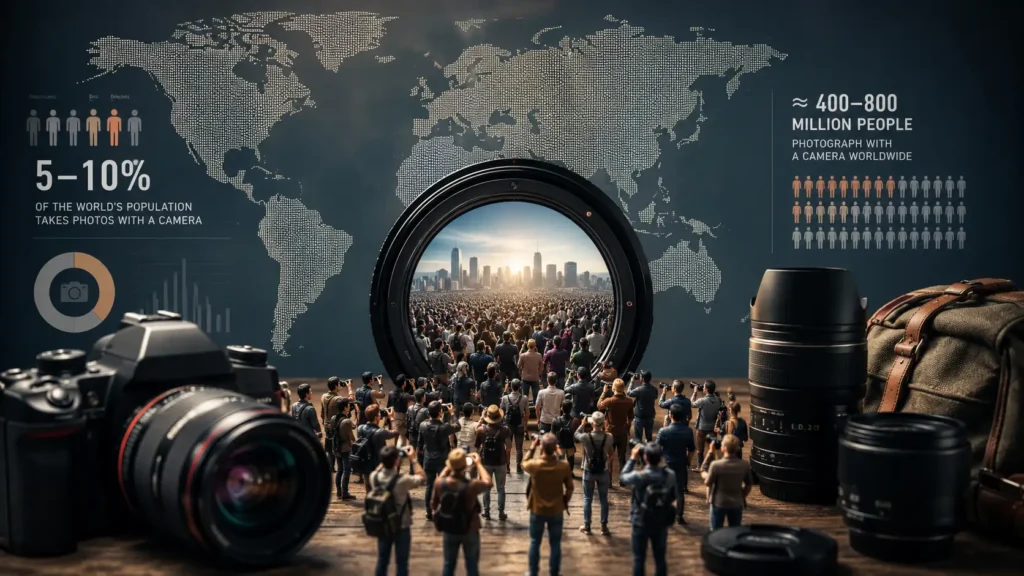
This article is an original analysis supported by the sources cited below
World Population Prospects 2024
United Nations population estimates and projections used as the global population baseline.
Worldometer world population clock
Live population counter based on United Nations estimates, used for the approximate current world-population frame.
ITU Facts and Figures 2025 press release
Official ITU release reporting 6 billion internet users in 2025, 2.2 billion offline people, and major connectivity gaps.
ITU Facts and Figures 2025
Official ITU report page for the annual global connectivity statistics used in the article.
ITU Facts and Figures 2024 mobile phone ownership
Official ITU page reporting that four out of five people aged 10 and above owned a mobile phone globally.
CIPA digital camera statistics
Camera & Imaging Products Association statistics hub for digital camera production and shipment data.
CIPA production and shipment of digital still camera January to December 2025
Official CIPA 2025 table showing worldwide digital still camera shipments by type and destination.
Reuters report on IDC smartphone shipment forecast
Reuters coverage citing IDC’s 2025 smartphone shipment forecast of 1.25 billion units and the expected 2026 slowdown.
Counterpoint Research global smartphone shipments grew 2% in 2025
Market research note on 2025 global smartphone shipment growth and brand leadership.
GSMA Mobile Economy 2025
Mobile-industry report page used for broader context on global mobile adoption and economic scale.
GSMA Mobile Economy 2026
GSMA report page used for current mobile-industry context and unique mobile subscriber framing.
DataReportal Digital 2026 Global Overview Report
Global digital behavior report used for internet, social media, and digital participation context.
Ericsson Mobility Report November 2025
Telecom industry report used for mobile subscription and 5G context.
World Bank mobile cellular subscriptions indicator
World Bank indicator page drawing on ITU data for mobile cellular subscriptions per 100 people.
Rise Above Research global photos captured forecast
Image-capture market forecast source used for long-term growth in global photo capture and stored images.
Rise Above Research 2026 Worldwide Image Capture Forecast
Report page describing forecast coverage for photos taken, device shares, regional activity, and saved photos through 2030.
Phototrend report on more than 2 trillion photos in 2025
Public summary of Photutorial estimates used for 2025 photo-volume and smartphone-share figures.
Google Photos 10-year update
Official Google post reporting more than 1.5 billion monthly Google Photos users and more than 9 trillion stored photos and videos.
Google Cloud on Google Photos and Spanner
Google Cloud article describing Google Photos infrastructure scale, including over one billion users and trillions of stored photos and videos.
PetaPixel on 2025 camera shipments
Camera-industry analysis of CIPA 2025 shipment data, including compact-camera growth, mirrorless strength, and DSLR decline.
PetaPixel on the rise and crash of the camera industry
Analysis of the long-term decline in dedicated digital camera ownership and shipments after the smartphone boom.
PhotoAid mobile photography statistics
Mobile photography statistics compilation used as a secondary reference for smartphone versus conventional camera photo-share estimates.
| Citing this article? Brief excerpts are welcome. Please credit Webiano.digital, name the author where stated, and include a link to https://webiano.digital and to this original article. Full or substantial republication requires prior written permission. Read our Copyright and Content Use Policy. |
This article was prepared with the assistance of artificial intelligence tools. The content underwent expert human review, and Webiano Digital & Marketing Agency assumes editorial responsibility for its final version and publication.