Mirrorless cameras are no longer the challenger. They are the center of the interchangeable-lens camera market. CIPA’s 2025 worldwide shipment data shows 6,311,054 mirrorless cameras shipped against 690,911 DSLRs, while total interchangeable-lens camera shipments reached 7,001,965 units. The DSLR is not dead, but it has become a smaller, older, more specialized part of the business.
Table of Contents
The argument has changed. For a decade, photographers asked whether mirrorless cameras could match DSLR reliability, autofocus, lens choice and battery life. In 2026, the harder question is different: who still gains enough from a DSLR to ignore the momentum, investment and technical direction of mirrorless systems? The answer is not a slogan. It depends on lenses, budget, subject matter, eyesight, working pace, service life, video needs and the photographer’s tolerance for electronic interfaces.
Mirrorless is now the market, not the alternative
The strongest evidence in the DSLR versus mirrorless debate is no longer found in forum arguments or brand loyalties. It is in shipment tables. In 2024, CIPA reported 5,612,205 mirrorless camera shipments and 997,608 SLR shipments, with mirrorless already accounting for 85% of interchangeable-lens digital cameras. In 2025, the split widened again: mirrorless shipments rose to 6,311,054 units, while DSLR shipments fell to 690,911.
That matters because the camera industry is not large enough to maintain two parallel high-end development tracks forever. Brands build where buyers go. Lens designers, sensor suppliers, autofocus engineers, app developers, accessory makers, repair departments and retailers follow the same flow of money. Mirrorless has won the investment cycle, which is more important than winning an online preference poll.
DSLRs still sell. They still produce professional-grade files. They still have a loyal base, especially among people with deep Canon EF, Nikon F or Pentax K-mount investments. But new product energy sits elsewhere. Canon’s 2024 annual report pointed to the EOS R5 Mark II and EOS R1 as new mirrorless cameras that supported mirrorless sales growth, while Nikon’s 2024 report described strong sales of Z 8 and Z f models and framed the Z system as part of its mid- and high-end imaging strategy.
The DSLR is now closer to a mature tool category than a growth platform. That does not make it useless. A well-kept Nikon D850, Canon EOS 5D Mark IV, Canon EOS-1D X Mark III, Nikon D6 or Pentax K-1 Mark II remains a serious photographic instrument. The issue is not whether those cameras can make strong pictures. They can. The issue is whether a new buyer should enter a system where most future lens, firmware, autofocus and video development is happening outside that system.
That is why the comparison needs a cooler tone than the usual “which is better” framing. Mirrorless is better for many current buyers because the market has moved there. DSLRs remain better for some users because the used market, optical viewfinder experience, long battery life and existing lens ownership still carry real weight. The best answer is not “buy mirrorless.” The best answer is “do not buy a DSLR without knowing exactly why.”
Global digital camera shipments in 2025
| Camera category | 2025 worldwide shipments | Year-on-year change | Market signal |
|---|---|---|---|
| Digital still cameras total | 9,438,876 | 111.2% | The market grew after years of contraction |
| Cameras with built-in lens | 2,436,911 | 129.6% | Premium and creator compact demand returned |
| Interchangeable-lens cameras | 7,001,965 | 105.9% | System cameras remained the core enthusiast category |
| Mirrorless cameras | 6,311,054 | 112.5% | Mirrorless carried the system-camera market |
| DSLR cameras | 690,911 | 69.3% | DSLR became a shrinking specialist segment |
The table shows the central story: the camera market grew in 2025, but the growth did not rescue DSLRs. Mirrorless and compact cameras benefited from demand, while DSLRs kept shrinking inside the same recovery.
The mirror changed the camera, then became the bottleneck
A DSLR is built around a reflex mirror. Light passes through the lens, strikes a mirror, and is redirected upward into an optical viewfinder through a pentaprism or pentamirror. When the photographer presses the shutter, the mirror moves out of the way so light reaches the image sensor. Canon’s own explainer describes the “reflex” part of DSLR as the mirror that reflects light into the viewfinder assembly and notes that the mirror must move before light reaches the sensor.
That design solved a historic problem. Film photographers needed to see through the actual taking lens. The single-lens reflex system gave them that. It ended the mismatch between a separate viewfinder and the lens, made long lenses easier to frame, supported accurate macro work, and gave professionals a direct optical view of the scene. The DSLR inherited that architecture from film SLRs and added a digital sensor behind the shutter.
For decades, the mirror was a strength. It gave DSLR users a view with no electronic refresh rate, no display lag, no sensor feed noise, no battery drain from a viewfinder screen, and no interpretation of the scene by camera electronics. Looking through a good optical finder remains one of the least mediated experiences in digital photography. The camera feels like a mechanical window.
The same mirror also became a limitation once sensors and processors became fast enough to do more of the work directly. A mirror box adds depth to the body. It complicates lens design because the rear of the lens must sit far enough from the sensor to leave room for the mirror. It creates blackout during exposure. It requires mechanical accuracy. It needs a separate autofocus module for viewfinder shooting, which must remain aligned with the imaging path. It makes silent shooting harder. It limits continuous live-view capabilities through the eye-level finder.
Mirrorless removed that entire assembly. Light reaches the sensor all the time, and the camera builds the viewfinder image from the sensor feed. That sounds like a simple deletion, but it changes the whole camera. The sensor stops being only the recording surface and becomes the viewing surface, autofocus surface, metering surface and video surface. The camera’s brain sees what the photographer sees, and the photographer sees a processed preview of what the sensor is reading.
That shift explains why mirrorless did not merely make cameras smaller. It changed autofocus placement, viewfinder information, lens mount geometry, video capture, electronic shutters, subject recognition and exposure preview. Removing the mirror made the camera less like a film-era machine with a digital back and more like a sensor-led imaging computer.
The trade is real. Some photographers still prefer the directness of the DSLR. But the market moved because the mirrorless design gives engineers more room to solve current problems: tracking eyes across the frame, shooting silently, previewing exposure, capturing high-bit-depth video, reducing rolling shutter, designing shorter-flange lens mounts and merging stills and motion into one workflow.
The optical viewfinder still has a stubborn human advantage
The DSLR’s optical viewfinder is not just nostalgia. It changes the way a photographer works. A good OVF shows the scene without display refresh, digital sharpening, exposure simulation, white-balance preview or low-light gain. It does not turn night into a boosted electronic feed. It does not flicker under some lighting. It does not ask the eye to stare into a small screen for hours. For long sessions, especially sports, wildlife and events, an optical finder can feel calmer.
Canon’s viewfinder explainer states that a DSLR optical viewfinder reflects light through a pentaprism or pentamirror and shows an unprocessed view through the lens, while a mirrorless EVF uses sensor information displayed on a small LCD or OLED screen. Canon also notes that an OVF works at the speed of light, while EVF lag has become shorter as technology has improved.
That matters in practice. A bird photographer waiting for a raptor to lift from a branch may spend long stretches with an eye pressed to the viewfinder. A football photographer may track a run across a crowded field. A wedding photographer may watch faces in a dim church for minutes at a time. In those situations, a high-quality optical finder still has virtues: no display fatigue, no battery cost, no exposure preview making the scene look brighter or darker than the actual room, and no dependence on refresh settings.
The optical view also creates trust for photographers trained on SLRs. The scene looks like the scene. The camera is not trying to predict the final image. Some photographers want that. They prefer to meter, expose, and judge light independently instead of looking at a preview shaped by picture profile, white balance, dynamic range display and EVF brightness. For them, the DSLR is not backward. It is a cleaner separation between seeing and recording.
The disadvantage is equally practical. An OVF cannot show the final exposure in the way an EVF can. It cannot show a live histogram in the same integrated way. It cannot magnify manual focus inside the finder. It cannot show focus peaking across the live sensor image. It cannot turn a dark reception into a bright preview. It cannot display a finished black-and-white rendering before capture. It also cannot show the exact video crop, frame rate behavior, log profile or exposure simulation that hybrid creators now expect.
That is the core viewfinder divide. The DSLR optical finder is better at showing the world. The mirrorless electronic finder is better at showing the camera’s interpretation of the world. Which one matters more depends on the work.
A beginner often benefits from the EVF because exposure mistakes become visible before the shutter is pressed. A studio photographer may prefer an EVF with exposure simulation off when using flash, but still gain from magnification and overlays. A sports photographer may value the OVF feel but choose mirrorless anyway because subject tracking and blackout-free shooting outweigh viewfinder preference. The viewfinder argument is not emotional fluff. It is one of the few remaining areas where a DSLR still offers a distinct working feel that mirrorless has not fully replaced for every eye.
The electronic viewfinder turned the sensor into the camera’s main interface
Mirrorless cameras changed the viewfinder from a window into an instrument panel. An EVF can preview exposure, white balance, monochrome modes, picture styles, focus peaking, zebras, histograms, electronic levels, magnified focus, subject tracking boxes, video framing and low-light gain. Canon’s viewfinder guide notes that EVFs can show exposure, white balance and Picture Style effects before capture, while optical finders show the scene unprocessed.
That ability changed learning. A beginner using a DSLR often discovers exposure errors after reviewing the photo. A beginner using a mirrorless camera often sees the exposure shift before taking it. Turn the exposure-compensation dial and the view changes. Switch to monochrome and the finder turns monochrome. Stop down and depth-of-field preview becomes more readable. Manual focus becomes less of a guess when focus peaking or magnification is available directly through the viewfinder.
The EVF also changed professional habits. A wedding photographer in a dim reception can see faces more clearly than with an optical finder. A landscape photographer can place a histogram in the finder while balancing highlights. A macro photographer can magnify a detail without taking the eye away. A video shooter can monitor exposure tools without adding an external monitor in every setup. For social media creators, the EVF and rear screen become two parts of the same live imaging system.
This does not mean EVFs are perfect. Brightness settings can mislead exposure judgment if the photographer trusts screen brightness instead of the histogram. Some users dislike the way EVFs render contrast. Fast panning can reveal refresh-rate limits or rolling-shutter behavior in the display path. Long sessions may cause eye fatigue. Battery drain is higher because the sensor and display are working before the shot, not only during capture.
Manufacturers know the criticism. Canon developed OVF simulation view assist to make an EVF look more like a natural optical view for photographers who prefer that style. Canon’s own technical story describes the feature as a response to photographers who felt EVFs could exaggerate contrast and color or strain the eye; it also says the feature lets users toggle between a more natural view and a capture-preview view.
That detail is revealing. Mirrorless makers are not pretending the optical viewfinder had no merit. They are trying to absorb its strengths into an electronic system. The EVF is winning because it is programmable. An optical finder does one thing beautifully. An EVF can be tuned, updated, overlaid, brightened, simplified or made to mimic the older experience. It may not satisfy every OVF loyalist, but it gives engineers room to keep adapting.
For working photographers, the best EVF settings are often conservative. Too much overlay clutter slows composition. Over-bright finder settings can create exposure mistakes. Continuous high-refresh modes burn battery. A well-set mirrorless viewfinder should show what matters for the job, not every available symbol. The camera may be electronic, but the discipline is still photographic: see the subject first, tools second.
Autofocus moved from a separate module to the imaging sensor
Autofocus is one of the deepest technical reasons mirrorless overtook DSLRs. Traditional DSLR viewfinder autofocus uses a separate phase-detection module. Light is diverted to that module by the mirror and sub-mirror system. When everything is aligned, the system is fast, especially with central AF points and long lenses. When alignment is off, front-focus or back-focus can appear because the autofocus sensor and imaging sensor are not the same surface.
Mirrorless cameras focus using data from the imaging sensor itself. That changes the error model. The camera is not asking a separate module to predict focus for another plane; it is reading focus from the plane that records the image. Modern mirrorless systems combine on-sensor phase detection, contrast detection, subject recognition, eye detection and processor-driven tracking. The result is not merely faster autofocus. It is broader autofocus coverage and more intelligent subject placement.
Canon’s viewfinder guide notes that when a DSLR is in Live View mode, it uses the imaging sensor for information in a way similar to mirrorless, while viewfinder shooting relies on separate autofocus, metering and white-balance sensors. That explains why late DSLRs could feel like two cameras in one: a traditional OVF camera through the finder and a mirrorless-like camera on the rear screen.
The mirrorless advantage becomes clear when subjects move across the frame. A DSLR’s strongest AF performance often clusters around dedicated AF points, with coverage more limited than the full sensor area. A mirrorless camera can track a face, eye, animal, bird, vehicle or selected subject over much of the frame, depending on the model. The photographer is freer to compose off-center without focus-and-recompose habits or AF-point constraints.
This is why many sports, wildlife and wedding photographers switched even when they liked DSLRs. Eye AF changed portrait work. Animal and bird detection changed wildlife hit rates. Vehicle and helmet detection changed motorsport coverage. Real-time tracking changed candid photography. The biggest autofocus gain is not that mirrorless focuses in situations where DSLRs cannot. It is that mirrorless reduces the amount of attention the photographer must spend fighting the focus system.
There are limits. Subject recognition is not magic. It can grab the wrong face, jump to a referee, prefer a foreground branch, misread an animal’s eye, or hesitate in low contrast. Professional users still need AF-area discipline, custom buttons and knowledge of when to override automation. DSLR users often had to master AF modes and point placement; mirrorless users must master subject detection behavior and tracking settings.
A DSLR in expert hands can still produce elite action work. A Nikon D6 or Canon EOS-1D X Mark III remains fast, tough and predictable. But the direction of improvement is clear. New autofocus algorithms ship on mirrorless bodies. New processors are tuned for sensor-based tracking. New lenses are designed to support fast, quiet, precise focus motors for stills and video. Autofocus development now belongs to mirrorless.
Speed became a sensor-readout contest
DSLR speed was once mechanical: mirror movement, shutter durability, AF module performance, buffer depth and card write speed. Mirrorless moved much of the contest to sensor readout. A fast sensor can support electronic shutters, blackout-free viewfinders, high frame rates, pre-capture, lower rolling shutter, faster AF calculations and better video modes.
Sony’s Alpha 9 III is the clearest example. Sony says its global shutter full-frame sensor exposes and reads all pixels simultaneously, enabling up to 120 fps shooting without rolling-shutter distortion or camera blackout. That camera is not the normal buyer’s tool, but it shows where the top end is going: speed is tied to the sensor’s ability to read data cleanly and quickly.
Canon’s 2024 EOS R1 and EOS R5 Mark II launch also shows the same direction. Canon described the EOS R1 as using a back-illuminated stacked 24.2-megapixel full-frame sensor and a new processing system for fast reading, reduced rolling-shutter distortion, and up to 40 fps still-image shooting. Nikon’s Z6III announcement made a related point from another price tier, calling it the first full-frame mirrorless camera with a partially stacked CMOS sensor and pairing it with the EXPEED 7 processor used in higher-end Nikon bodies.
This is the new hierarchy. Mechanical shutters still matter. Flash sync, banding control, motion rendering and sensor protection remain part of the conversation. But the premium camera race is about readout. The faster the sensor reads, the more the camera can behave as if the mechanical shutter is optional.
DSLRs cannot compete in the same way because the optical viewfinder path and mirror cycle define part of the shooting rhythm. High-end DSLRs reached remarkable frame rates, but mirror blackout and mechanical movement remain inherent. Mirrorless cameras can shoot silently, pre-buffer frames before the shutter press, track through electronic display pipelines and remove the mirror’s interruption from the sequence.
The catch is that electronic shutters are not universally better. Rolling shutter can bend fast-moving subjects or distort panning. LED lighting can cause banding. Some cameras reduce bit depth or dynamic range in fast modes. Flash compatibility may be limited. Global shutter solves much of this, but it brings its own cost and image-quality trade-offs, including base ISO and dynamic-range considerations depending on implementation.
For most buyers, the practical lesson is not to chase the largest frame-rate number. A camera that shoots 40 fps is not automatically better than one that shoots 10 fps if the buffer, autofocus behavior, file handling and editing workflow cannot support the work. Speed is useful when the subject demands it: birds in flight, ball contact, sprint finishes, dance peaks, wildlife behavior, photojournalism, motorsport. For portraits, landscapes, studio product, architecture and travel, sensor quality, lens choice and handling may matter more.
Mirrorless owns the future of high-speed capture because the sensor is now the shutter, finder, AF surface and video source. DSLRs still deliver enough speed for many photographers, but their speed ceiling is tied to a mechanical architecture that the rest of the industry has stopped pushing.
Image quality is no longer the dividing line
Many buyers still ask whether DSLR or mirrorless cameras take better photos. The honest answer is that camera type alone does not decide image quality. Sensor size, sensor generation, lens quality, exposure, stabilization, focus accuracy, processing, lighting and the photographer’s decisions matter more than whether the camera has a mirror.
A full-frame DSLR from a strong generation can outperform an entry-level mirrorless camera in dynamic range, high ISO, color depth or lens rendering. A newer mirrorless body can outperform an older DSLR because sensor design, image processors and autofocus accuracy improved. A crop-sensor mirrorless camera can beat a full-frame DSLR for wildlife reach and portability in a specific kit. A DSLR with a great lens can beat a mirrorless camera with a weak kit zoom. The mount architecture does not turn poor light into good light.
Where mirrorless gained is not raw image quality by category. It gained through consistency. On-sensor autofocus reduces calibration errors. EVF preview reduces exposure mistakes. In-body image stabilization appears across many systems and is especially helpful with adapted or unstabilized lenses. Silent shooting gets pictures in places where shutter noise matters. Better video modes mean the same body records both stills and motion at a higher standard.
DSLRs retain no inherent image-quality penalty. In fact, some DSLRs became classics because their sensors and files still hold up. The Nikon D850 remains admired because its 45.7-megapixel full-frame sensor, robust body and optical finder combined in a camera that still satisfies many landscape, studio and portrait users. Canon’s EOS 5D line shaped professional digital photography for years. Pentax DSLRs earned loyalty through weather sealing, in-body stabilization and compatibility with long-running K-mount lenses.
The problem for DSLR buyers is not that DSLR files became bad. The problem is that the newest sensor, processor and lens combinations now arrive mainly in mirrorless systems. Canon’s newest professional EOS R bodies, Nikon’s Z bodies, Sony’s Alpha bodies, Fujifilm’s X and GFX bodies, Panasonic’s Lumix S bodies and OM System’s Micro Four Thirds bodies represent the direction of investment. Canon’s annual report points to mirrorless camera sales growth and high-value-added cameras as part of its imaging business story.
A photographer choosing between a used DSLR and a new mirrorless camera should compare actual cameras, not categories. A used Canon EOS 5D Mark IV with a strong EF lens is a different proposition from a low-end mirrorless kit. A Nikon Z8 is a different proposition from a Nikon D750. A Fujifilm X-T50 is not meant to replace a full-frame studio DSLR in every respect; it answers a different need, with a compact APS-C system and modern interface. Fujifilm priced the X-T50 body at $1,399.95 in the United States at launch, placing it in a serious enthusiast tier rather than a bargain-bin category.
The current image-quality debate is really a system debate. Mirrorless bodies often give access to newer lenses with shorter flange distances, faster communication and designs tuned for high-resolution sensors. DSLRs give access to large used lens catalogs at lower prices. A photographer on a fixed budget may get better images from used DSLR glass than from a cheap mirrorless kit, while a photographer investing for the next decade will usually find better future options in mirrorless.
Battery life and endurance still favor DSLRs in specific work
Battery life is one of the DSLR’s most practical advantages. A DSLR optical viewfinder does not require the sensor and display to run continuously while the photographer composes. That simple fact matters during long days. A DSLR can often sit at the eye, ready, with little battery drain until metering, autofocus and capture are engaged.
Mirrorless cameras have improved. New batteries are larger. Processors are more efficient. Viewfinder refresh rates can be lowered. USB-C charging and power delivery make field charging easier. But the physics remain: a mirrorless camera must power the sensor feed and display system for the photographer to see through the EVF. Canon’s viewfinder guide notes that rear-screen use affects battery life, and the same display-driven logic applies to EVF-heavy shooting.
For many users, mirrorless battery life is no longer a serious barrier. A wedding photographer carries multiple batteries anyway. A studio photographer powers down between sets. A travel photographer charges from a power bank. A video shooter already plans around battery swaps. The problem shows up in work where the camera stays awake for long stretches: wildlife hides, sports sidelines, long ceremonies, cold-weather assignments, documentary work, or remote travel without reliable charging.
DSLR endurance is also psychological. The camera feels ready without being “on” in the same way. You lift it, see optically, shoot, lower it. A mirrorless body asks the photographer to manage wake times, finder activation, standby behavior and battery reserves. This is not hard, but it is another layer.
The DSLR advantage narrows when mirrorless features reduce wasted shooting. A mirrorless camera that nails eye focus may produce fewer missed frames. A camera with accurate exposure preview may avoid reshoots. Silent electronic shooting may capture moments that a DSLR shutter would disturb. If a mirrorless photographer uses two extra batteries but delivers more usable images, the battery weakness may not matter.
Still, buyers should not dismiss endurance. Battery life is a workflow feature, not a spec-sheet footnote. A camera that dies during a ceremony, a wildlife encounter or a mountain walk has failed, even if its autofocus is brilliant. DSLR shooters who move to mirrorless need new habits: carry more batteries, turn off unnecessary display modes, learn power-save settings, use airplane mode when wireless functions are not needed, avoid maximum EVF refresh when not required, and test cold-weather performance before an important assignment.
For photographers who value simplicity and long standby readiness above modern aids, a DSLR remains attractive. It is one reason some professionals kept DSLR backups long after buying mirrorless bodies. The backup DSLR may not have the newest autofocus, but it will sit in the bag for days and wake with confidence.
Video made the mirrorless shift harder to resist
Video did more to weaken the DSLR than many still photographers admit. DSLRs helped start the hybrid camera era, especially through the Canon EOS 5D Mark II and later models, but the DSLR mirror box was never a natural fit for continuous video. To shoot video, a DSLR must raise the mirror and operate in Live View. At that point, it behaves more like a mirrorless camera but without the full design benefits of a mirrorless system.
Mirrorless cameras were built for continuous sensor readout. That makes them better suited for video framing, autofocus, exposure tools, heat management planning, electronic stabilization, log profiles, internal high-bit-depth recording, waveform-style tools in some models, and compact rigging. Not every mirrorless camera is a great video camera, but the architecture fits the task.
Panasonic pushed the hybrid market hard, and the Lumix S5II shows how the category matured. Panasonic describes the S5II as a full-frame mirrorless camera with phase hybrid autofocus, Active I.S., a 24.2-megapixel sensor and video-oriented processing. Nikon’s acquisition of RED in 2024 made the business direction even clearer: still-camera companies now want stronger positions in cinema and creator markets, not only traditional photography. Nikon said the RED acquisition was intended to accelerate expansion in the professional digital cinema camera market.
Canon’s EOS R1 and EOS R5 Mark II launch framed both cameras for stills and video creators, with Canon describing the R1 as a camera for professional still photographers and video creators in sports, news reporting and high-end video production. That wording would have sounded odd in the peak DSLR era, when stills and video users often bought different tools. It is now normal.
The hybrid shift affects even photographers who rarely shoot video. Manufacturers allocate engineering resources toward cameras that serve both markets. That means mirrorless bodies receive better displays, faster readout, quieter lenses, improved stabilization, stronger heat paths, better ports, tally lights on creator models, log profiles, LUT workflows and subject tracking for motion. DSLR development did not follow that path at the same pace because the platform was not designed for it.
For a stills-only photographer, this can feel like paying for unwanted features. Some buyers would prefer a simple, rugged DSLR-style still camera with an OVF, strong sensor and no video emphasis. The market offers fewer such options because the economics do not favor them. Brands need bodies that appeal to wedding shooters, creators, YouTubers, corporate content teams, journalists and hybrid freelancers.
The practical result is blunt: anyone who expects to shoot serious video should start with mirrorless unless there is a very specific reason not to. DSLR video can still be useful. It can teach exposure, composition and lens choice. Older DSLR video has a look some creators like. But modern autofocus, monitoring and recording needs point strongly toward mirrorless.
The only caution is heat and ergonomics. A mirrorless spec sheet promising high-resolution video does not guarantee unlimited recording under real conditions. Small bodies heat up. Codecs create storage demands. Rolling shutter varies. Audio inputs matter. A photographer buying mirrorless for video should research the exact body, not assume every mirrorless camera is a cinema tool.
Lens ecosystems decide more than camera bodies
Camera bodies come and go. Lenses last longer. The DSLR versus mirrorless decision is often less about the body in front of you and more about the glass already owned, the glass you need, and the glass you can afford.
DSLR systems have enormous used lens inventories. Canon EF, Nikon F and Pentax K lenses cover decades of focal lengths, prices and specialties. A photographer can build a serious DSLR kit from used lenses at prices that would be difficult in some mirrorless mounts. Fast primes, macro lenses, tilt-shift lenses, telephoto zooms and professional f/2.8 zooms are widely available. Third-party DSLR lenses from Sigma, Tamron and Tokina add more choices.
Mirrorless systems have a different advantage: future development. RF, Z, E, X, L, Micro Four Thirds and GFX ecosystems are where new designs now appear. Shorter flange distances give lens designers more freedom, especially for wide-angle lenses and compact high-performance primes. Faster communication between lens and body supports advanced stabilization, focus breathing correction in some systems, silent aperture control, and video-friendly autofocus behavior.
Adapters complicate the choice. Canon EF lenses work well on Canon RF bodies through adapters. Nikon F lenses can work on Nikon Z bodies through FTZ adapters, with compatibility depending on lens type and autofocus motor. Sony E-mount has long third-party support. L-mount has Panasonic, Leica and Sigma participation. Micro Four Thirds remains one of the most mature mirrorless ecosystems because Panasonic and Olympus built it as a shared system from the beginning; Panasonic’s own history page describes the DMC-G1 as the world’s first DSLM camera unveiled in 2008 and says the Micro Four Thirds standard was developed with Olympus.
The hidden issue is directionality. DSLR lenses often adapt to mirrorless bodies. Mirrorless lenses do not adapt back to DSLRs in any practical mainstream way because flange distance and electronic control work against it. A DSLR lens collection can be a bridge into mirrorless. A mirrorless lens collection is usually a commitment away from DSLRs.
That makes used DSLR gear attractive for budget buyers but risky for long-term system building. If you buy into Canon EF today, you can use those lenses on Canon DSLRs and adapt them to RF. If you buy Nikon F, you can use many lenses on Nikon DSLRs and adapt some to Z. If you buy Pentax K, you are buying into the remaining DSLR-centered major mount. But if you want the newest autofocus motors, compact mirrorless designs, body-lens stabilization coordination and future firmware attention, native mirrorless lenses are the safer long-term path.
Lens economics can override body preference. A wildlife beginner might choose a used DSLR and a used 300mm or 400mm lens because the mirrorless equivalent costs too much. A wedding professional may switch to mirrorless because eye AF with native fast primes saves missed shots. A landscape photographer may move slowly because adapted DSLR wide lenses are already good enough. A video shooter may prefer native mirrorless lenses with quieter focus and less breathing.
The smartest buyers choose the lens path first. Bodies are tempting because they carry headline features. Lenses decide the images you can make.
Used DSLR gear is the most serious counterargument to upgrading
The most convincing argument for DSLRs in 2026 is not tradition. It is price. As mirrorless becomes the main new-camera category, used DSLR bodies and lenses offer remarkable photographic capability for less money. For students, hobbyists, schools, small studios, families and photographers in markets where new mirrorless gear is expensive, this matters.
A used full-frame DSLR may cost less than a new entry mirrorless body. A used professional DSLR lens may cost far less than its new mirrorless counterpart. A photographer who does not need advanced video, eye AF or silent shooting can build a strong stills kit for portraits, landscapes, product work or events. The used DSLR market is the pressure valve for camera affordability.
This is especially true because image quality did not collapse. A ten-year-old professional DSLR can still produce publishable images. Many clients cannot tell whether a portrait came from a DSLR or mirrorless body if focus, light, lens rendering and editing are strong. For controlled work, the autofocus gains of mirrorless may be less decisive. A studio portrait subject is not a bird in flight. A tripod-mounted landscape is not a football match.
The risk is buying old technology without understanding its limits. Some used DSLRs have worn shutters, aging rubber, old batteries, dust, sensor marks, mirror alignment issues or limited service support. Some lenses have decentered elements, fungus, sticky aperture blades or worn focus motors. Bargains require inspection. A cheap system becomes expensive if repair is difficult or parts are unavailable.
The used DSLR buyer should also think about learning. DSLR exposure feedback is less immediate through the optical finder. Autofocus systems may require more skill with AF points and calibration. Video may be weak. Wireless transfer may be clumsy. Live View may be slow on older bodies. Silent shooting may be unavailable. These are not deal-breakers, but they shape the experience.
Used mirrorless gear is growing too. Early Sony Alpha, Fujifilm X, Micro Four Thirds, Canon EOS R and Nikon Z bodies now circulate at lower prices. Some are better learning tools than old DSLRs because they offer EVF exposure preview and modern focusing aids. But used mirrorless lenses can still be expensive, and early bodies may have weaker batteries, laggier EVFs or less mature autofocus.
The best budget decision is often system-specific. A beginner with access to family Canon EF lenses should consider a used Canon DSLR or an entry Canon RF body with an EF adapter. A Nikon F owner should compare a used Nikon DSLR with a Z body and FTZ adapter. A student with no lenses should compare total kit cost, not body price. A creator who wants video should avoid buying a DSLR only because it is cheap.
DSLR value is real. It is also conditional. A cheap DSLR is a smart buy when it matches the job. It is a bad buy when it delays the purchase of the tools the photographer actually needs.
Professional sports and wildlife crossed the line first
Sports and wildlife photographers were once among the strongest DSLR defenders. They needed fast autofocus, long battery life, rugged bodies, dependable lenses and viewfinders that worked without lag. Early mirrorless cameras struggled to convince them. EVFs lagged. Batteries drained. Lens lineups lacked long professional telephotos. Autofocus tracking was not mature enough for chaotic action.
That period is over at the high end. Mirrorless sports bodies now offer stacked sensors, blackout-free shooting, subject recognition, eye tracking, pre-capture, silent operation and high frame rates. Canon’s EOS R1, Sony’s Alpha 9 III, Nikon’s Z9 and Z8, and OM System’s OM-1 Mark II show different ways the market answered action photography. OM System lists 120 fps S-AF RAW, 50 fps C-AF RAW, AI subject detection for birds, humans, pets, cars, aircraft and trains, and blackout-free sequential shooting for the OM-1 Mark II.
Wildlife work shows the shift clearly. A DSLR photographer tracking a bird in flight must keep the subject under an AF point or group, manage background interference and time bursts carefully. A modern mirrorless camera can recognize birds or eyes, track across a larger frame area, and shoot silently when noise would disturb wildlife. The photographer still needs skill, but the machine takes over more of the focus burden.
Sports work has similar gains. Electronic shutters reduce mechanical noise. Pre-capture records frames before the shutter is fully pressed, useful for unpredictable peak action. High frame rates catch ball contact, expressions and body positions that 10 fps might miss. Eye or helmet detection can support composition when subjects move erratically. Blackout-free viewing keeps the photographer connected during bursts.
DSLRs still work in these fields. Many iconic sports and wildlife images were made with DSLRs, and working professionals still use them. A Canon EOS-1D X Mark III or Nikon D6 is not suddenly incapable. Long DSLR telephoto lenses remain superb. The used market gives action photographers access to serious glass at lower prices.
The direction is still clear. New professional sports features now arrive in mirrorless bodies. Canon’s flagship development moved to the EOS R1. Nikon’s top technology moved into Z bodies. Sony never had a DSLR legacy in the same way and pushed mirrorless action hard. Lens makers are redesigning long telephotos for mirrorless mounts. Agencies and freelancers increasingly expect silent shooting and fast file transmission from modern bodies.
The DSLR advantage in sports and wildlife has narrowed to endurance, optical finder preference, familiar handling and used lens economics. The mirrorless advantage includes subject tracking, frame coverage, silent speed and future development. For new professional action investment, mirrorless is the safer answer. For photographers already equipped with DSLR super-telephotos, staying put can still be rational until the gear stops paying for itself.
Weddings and events explain the practical middle ground
Wedding and event photography sits between controlled portraiture and chaotic action. The photographer needs speed, low-light reliability, quiet operation, dual card slots, accurate skin tones, dependable flash behavior, strong autofocus and good ergonomics over long days. Both DSLRs and mirrorless cameras can do the work, but mirrorless has changed the expectations.
The strongest mirrorless advantage at weddings is eye detection. During portraits, ceremonies, speeches and dance floors, eye AF reduces the number of slightly missed frames. Silent shooting is useful during vows, religious services and intimate moments. EVF exposure preview helps in mixed light. In-body stabilization supports slower shutter speeds for ambient-light work. Video features support hybrid packages, which many clients now expect.
DSLRs retain strengths. Battery life during a 12-hour wedding day is excellent. Optical finders feel natural in dark venues. DSLR flash ecosystems are mature. Many photographers have full EF or F-mount wedding kits with fast zooms and primes. The files from a professional DSLR remain more than good enough for albums, prints, websites and social delivery.
The transition cost is high. A wedding photographer with two DSLR bodies, a 24-70mm f/2.8, 70-200mm f/2.8, 35mm, 85mm, macro lens, flashes and backups faces a large bill to move fully into native mirrorless. Adapters soften the blow, but they do not eliminate the question. If the DSLR kit is reliable and paid off, switching must earn its way.
Mirrorless often earns that money through hit rate and hybrid work. A photographer who delivers video clips, reels, behind-the-scenes material or fast social previews gains from mirrorless. A photographer who struggles with focus misses at wide apertures may recover time in editing. A shooter working in quiet ceremonies may value silent capture. In wedding work, mirrorless is less about image quality and more about reducing avoidable failure.
There are still reasons to keep a DSLR in the bag. A DSLR backup can save a job if mirrorless batteries are depleted or a firmware issue appears. A DSLR may pair better with older flash habits. Some photographers prefer DSLR handling with large lenses. Others keep a DSLR for harsh reception environments where they do not want to risk a newer body.
The best wedding kit in 2026 is usually mirrorless-led, but not necessarily mirrorless-only. The sensible question is whether the camera improves delivery, not whether it wins an argument. If mirrorless eye AF, silent shooting and video features reduce stress and increase usable frames, the case is strong. If a DSLR kit is already producing paid work with low failure rates, replacement can wait until a body, lens or business need forces the issue.
Travel and street photography reward smaller systems, but not always
Travel and street photographers were expected to move quickly to mirrorless because smaller bodies and lenses fit the genre. In many cases, that happened. A compact mirrorless camera with a small prime is easier to carry all day than a full-frame DSLR and f/2.8 zoom. EVF exposure preview helps in changing light. Silent shooting is useful in museums, cafes, markets and streets. Tilting screens support waist-level work.
The story is not as simple as “mirrorless is smaller.” A full-frame mirrorless body with a fast professional zoom can be close to a DSLR kit in weight. Some mirrorless lenses are large because high-resolution sensors demand strong optics and because fast apertures still require glass. A small DSLR with a compact prime may be easier to carry than a full-frame mirrorless body with a premium f/1.2 lens.
Sensor size cuts across the debate. APS-C, Micro Four Thirds and fixed-lens compact cameras often make more sense for travel than full-frame bodies. Fujifilm’s X100VI is a fixed-lens compact rather than a DSLR or mirrorless system camera, but its popularity reflects a real shift: many people want a dedicated photographic device that is tactile, portable and distinct from a phone. Fujifilm describes the X100VI as a sixth-generation X100 Series camera with a hybrid viewfinder and up to 6.0 stops of in-body image stabilization.
CIPA’s 2025 data also shows cameras with built-in lenses growing sharply, with 2,436,911 shipments and a 129.6% year-on-year figure. That does not directly answer DSLR versus mirrorless, but it changes the market mood. The dedicated-camera revival is not only about interchangeable-lens systems. Some buyers want a camera experience, not a giant kit.
Street photographers may value discretion. A quiet mirrorless camera or compact camera is less obtrusive than a DSLR mirror slap. The EVF can preview black-and-white, exposure compensation and film simulations. A tilting rear screen allows framing without raising the camera to the face. On the other side, an optical finder can feel more immediate, and some street photographers prefer the deliberate rhythm of an older DSLR or rangefinder-style tool.
Travel also raises durability and charging questions. A DSLR battery may last longer between charges. A mirrorless kit may charge by USB-C from a power bank, depending on the model. Weather sealing varies by camera and lens, not by category. Dust risk depends on lens changes and sensor exposure habits. Mirrorless sensors are more exposed during lens changes on some bodies, though shutter-close options and careful technique reduce the problem.
The travel buyer should avoid category thinking. The right question is: will I carry this camera every day? A technically superior kit left in a hotel room loses to a smaller camera in hand. Mirrorless often wins because smaller native systems exist, but not every mirrorless kit is small, and not every DSLR kit is burdensome.
Students, beginners and families face a price trap
Beginners are often told to buy mirrorless because it is the future. That advice is usually sound, but it can hide a trap. New mirrorless bodies and lenses cost more than many beginners expect. Entry-level kits may be affordable, but fast lenses, telephotos, macro lenses, external flashes, spare batteries and bags raise the real price. A beginner who spends the whole budget on a new mirrorless body may end up with one slow kit zoom and little room to explore.
A used DSLR can be a better learning tool if it allows the buyer to add lenses, flash and a tripod. A student can learn aperture, shutter speed, ISO, depth of field, focal length, flash and raw editing on an older DSLR. The fundamentals do not require an EVF. Many photography schools built courses around DSLRs for years because they are durable, affordable and direct.
Yet mirrorless has teaching advantages. Exposure preview shortens the feedback loop. Focus peaking helps manual-focus learning. Eye AF allows beginners to get sharp portraits sooner. Video features support school projects and social work. Smaller bodies may encourage everyday carry. Wireless transfer may be easier for families who want images on phones quickly.
Families face another issue: the smartphone. A parent buying a dedicated camera wants better images than a phone, but also wants convenience. A DSLR may produce better files than a phone, but if it is large, loud and slow to share from, it may stay unused. A small mirrorless camera or premium compact may be a better family tool because it fits real habits.
The beginner market also suffers from confusing brand paths. Canon’s low-cost DSLR bundles still circulate in some regions, but Canon’s future is EOS R. Nikon’s affordable DSLR used market is strong, but Nikon’s development energy is Z. Sony’s E-mount offers many bodies and lenses, but menus and ergonomics vary by generation. Fujifilm’s APS-C system is attractive for learners who like tactile dials, but prices can be higher than expected. Micro Four Thirds offers small lenses and strong stabilization, but sensor-size myths may confuse buyers.
The worst beginner purchase is not a DSLR. It is an expensive camera system that the buyer cannot afford to expand. A beginner should budget for at least one additional lens or a flash, spare battery, memory cards and basic support gear. A $500 used DSLR kit with a 50mm prime and a flash may teach more than a $1,400 body with no money left for lenses. A $900 used mirrorless kit may be better still if it fits the learner’s needs.
The best advice is modest: buy the camera that makes practice easy. Learning comes from shooting, reviewing, adjusting and repeating. The camera should remove barriers, not create debt or intimidation.
The smartphone changed the buying logic for real cameras
Smartphones destroyed the old mass-market compact camera business, then changed the reason people buy dedicated cameras at all. A camera is no longer needed for casual snapshots. The phone is always there, edits instantly, shares instantly, and uses computational photography to solve many problems automatically. A dedicated camera must now justify itself through experience, control, image character, lenses, speed, ergonomics, print quality, low-light work, professional delivery or creative identity.
That change affects both DSLR and mirrorless systems. DSLRs feel more clearly different from phones because they are optical, mechanical and lens-centered. Mirrorless cameras feel more connected to the phone era because they use live screens, face detection, touch interfaces, video modes and electronic previews. Both can appeal, but to different instincts.
The 2025 rise in built-in-lens camera shipments suggests that some buyers want a camera separate from their phone but not necessarily a full system. CIPA recorded 2,436,911 shipments of cameras with built-in lenses in 2025, up 129.6% year on year. The success of cameras like Fujifilm’s X100VI points to desire for a tactile device with a distinctive photographic feel, not only interchangeable-lens flexibility.
This matters for DSLRs because the old entry-level DSLR pitch has weakened. A decade ago, a beginner might buy a DSLR to get better family photos than a compact or phone. Now the phone is good enough for many casual uses. The dedicated-camera buyer is more intentional. They may want portraits with real lens rendering, wildlife reach, event reliability, raw files, flash control, street photography feel, or video quality. Mirrorless systems answer more of those modern needs in a smaller and more connected package.
The phone also reset expectations for autofocus. People expect cameras to find faces and eyes. They expect touch tracking. They expect fast review. They expect quiet operation. They expect video competence. DSLRs can do some of this in Live View, but mirrorless makes it central.
DSLRs may appeal to people who want to escape phone-like photography. Some photographers actively want fewer automated overlays, fewer menus, fewer creator features and less screen dependence. A DSLR gives them a physical, optical process. That is not irrational. It is a taste and workflow choice.
But the commercial center is elsewhere. Camera makers are chasing people who grew up with screens and want more image quality, better lenses and a dedicated device without giving up electronic assistance. Mirrorless is the camera industry’s answer to the smartphone era. DSLRs are the digital continuation of the film-era SLR. Both have value, but one matches the growth audience more closely.
Mirrorless has made cameras more like computers
Mirrorless cameras are imaging computers with lenses. That is both their strength and their irritation. They use sensors, processors, firmware, subject-detection models, electronic shutters, displays, heat controls, wireless systems and computational features. The best models feel almost uncanny when they track a subject. The worst moments feel like using a device that needs configuration before it becomes a camera.
DSLRs are not free of software. They have processors, menus, autofocus algorithms, metering systems and firmware. But the optical shooting path makes them feel less computer-like. With a DSLR, the camera can be off and still show nothing; once on, the optical finder is direct. With mirrorless, the act of seeing through the camera is mediated by power, sensor readout and display settings.
This difference affects trust. A DSLR user trusts a mechanical sequence: mirror, shutter, sensor. A mirrorless user trusts a data pipeline: sensor feed, processor, display, autofocus recognition, exposure simulation, shutter mode, file writing. When the pipeline works, it is faster and smarter. When it confuses the user, it can feel opaque.
Firmware has become part of camera ownership. Mirrorless bodies may receive autofocus improvements, bug fixes, lens corrections, video features or compatibility updates. This is good because cameras can improve after purchase. It also means buyers must pay attention to firmware versions and update discipline. A professional cannot treat a camera update casually before a job.
Menus matter more than ever. Mirrorless cameras often contain many AF modes, subject types, shutter settings, stabilization options, video codecs and display setups. The camera may be capable, but the user must build a working configuration. A poorly configured mirrorless body can underperform an older DSLR in real work because it distracts the photographer or chooses the wrong subject.
This is why experience still matters. Modern mirrorless cameras reduce some technical burdens but add configuration burdens. They make certain images easier while making setup more complex. A beginner may get sharp eyes with less effort, yet become lost in menus. A professional may create custom button maps that make the camera vanish in use. The difference is preparation.
DSLRs, by contrast, often impose older disciplines. The photographer learns AF point selection, exposure compensation without live preview, focus calibration awareness, and the limits of the optical finder. Those lessons still have value. But they do not match every modern output need, especially where video and fast sharing are part of the job.
The computerization of cameras is not reversible. Even cameras designed to look retro rely on modern processors and electronic systems. The real question is whether a photographer wants those systems visible and active in the shooting process. Mirrorless says yes. DSLR says no, or at least not through the optical finder.
Reliability means different things in the DSLR and mirrorless eras
Reliability used to mean mechanical toughness, shutter life, weather sealing, battery endurance, card redundancy and autofocus consistency. Those still matter. But mirrorless added new reliability questions: EVF visibility, heat, firmware stability, electronic shutter artifacts, sensor dust exposure, USB-C power behavior, video recording limits, battery drain and subject-recognition trust.
DSLRs have their own failure points: mirror mechanisms, separate AF alignment, shutter wear, older batteries, aging rubber seals, lens motor wear, compact flash card doors, and service parts for discontinued models. The idea that DSLRs are purely mechanical and mirrorless cameras are fragile electronics is too simple. Both are electronic cameras with different stress points.
A DSLR’s reliability feels tangible. You can hear the shutter and mirror. You can see optically. If the autofocus is calibrated and the lens is sound, the camera behaves consistently. The battery lasts. The body may survive years of rough work. Professional DSLRs were built for agencies, war zones, sidelines and daily punishment.
A mirrorless camera’s reliability is often measured by whether its electronics keep promises under pressure. Does eye AF stay on the bride’s eye when guests cross the frame? Does the EVF remain clear in bright sun? Does the camera overheat during a long interview? Does the electronic shutter band under LED light? Does the subject-recognition mode choose the bird or the branch? Does the battery survive the cold? Does the firmware update break a workflow?
None of this makes mirrorless unreliable. High-end mirrorless bodies are professional tools. Canon, Nikon, Sony, Fujifilm, Panasonic and OM System all sell bodies designed for demanding work. But photographers moving from DSLR must redefine reliability as more than build quality. A mirrorless camera is reliable when its settings, power plan, heat behavior, shutter mode and autofocus logic are proven before the job.
This is why professionals test. They do not take a new mirrorless body to a paid assignment without learning its failure modes. They test silent shutter under venue lights. They test face detection in crowds. They test flash sync. They test battery drain. They test video heat. They test card write speeds. The camera may be more advanced, but trust is still earned by repetition.
DSLR reliability also needs realism. A used DSLR from 2014 may be tough, but its service status matters. Shutter counts matter. Batteries may be third-party or tired. Rubber grips may peel. Some repairs may not be worth the cost. A newer mirrorless body with warranty may be a safer professional purchase than an old flagship DSLR with unknown history.
Reliability is no longer a category victory. It is a match between tool, age, service support and work type.
The sensor-size argument cuts across the DSLR debate
Many DSLR versus mirrorless arguments are really full-frame versus crop-sensor arguments in disguise. Full-frame DSLRs helped define professional digital photography, but mirrorless systems now cover full frame, APS-C, Micro Four Thirds and medium format. DSLRs also exist across full frame and APS-C. The mirror does not determine sensor size.
CIPA’s 2025 data separates interchangeable-lens cameras by sensor size, showing 2,543,269 shipments for 35mm-or-larger cameras and 4,458,696 for smaller-than-35mm cameras. That means smaller-sensor interchangeable-lens cameras shipped in greater numbers than full-frame-and-larger bodies in 2025.
This matters because the internet often treats full frame as the natural destination. The market is more mixed. APS-C and Micro Four Thirds systems offer lower cost, smaller lenses and useful telephoto reach. Full frame offers stronger depth-of-field control, high ISO headroom and lens rendering options. Medium format offers a different image style and resolution tier. Sensor size is a creative and economic choice, not a moral ranking.
DSLR buyers often encounter APS-C bodies at low prices. Canon Rebel and Nikon D3xxx/D5xxx lines brought many people into photography. Used APS-C DSLRs remain cheap and capable. But APS-C DSLR lens ecosystems can be uneven, especially for fast wide and normal primes designed specifically for crop bodies. Many users eventually buy full-frame lenses, which can make the kit larger and more costly than expected.
Mirrorless APS-C systems vary. Fujifilm built its X system around APS-C from the start, with dedicated lenses across many needs. Sony’s APS-C E-mount has improved but still shares attention with full frame. Canon RF-S is younger and still building. Nikon DX Z is developing. Micro Four Thirds offers the most compact telephoto reach and deep lens history through Panasonic and OM System, but some buyers worry about low-light limits versus larger sensors.
The DSLR versus mirrorless decision should come after the sensor-size decision, not before it. A bird photographer with a modest budget may prefer APS-C or Micro Four Thirds mirrorless for reach and subject detection. A portrait photographer may prefer full-frame mirrorless for eye AF and lens rendering. A landscape photographer may buy a used full-frame DSLR for resolution and dynamic range at a low price. A travel photographer may choose an APS-C compact or Micro Four Thirds kit because full frame is too heavy.
The right sensor size is the one that makes the complete kit workable. A full-frame body with lenses left at home loses to a smaller kit used every day. A crop-sensor body that cannot deliver the low-light files a professional needs may cost more in missed work. The mirror is only one part of that decision.
Hybrid cameras erased the old stills-video boundary
The DSLR era treated many photographers as stills-first users. Video existed, but it was often secondary or awkward. Mirrorless bodies helped erase that boundary. A modern camera may shoot a wedding ceremony, record short social clips, capture vertical video, produce thumbnails, film interviews, and deliver still galleries from the same kit.
This shift changed product design. Screens flip or tilt for self-recording and low-angle work. Autofocus systems track faces in stills and video. Stabilization supports handheld clips. Lenses are judged for focus breathing and motor noise, not only sharpness. Ports, codecs, heat paths and audio options matter. A camera body that ignores video risks losing a large part of the market.
Nikon’s RED acquisition is a marker. Nikon described the move as aimed at professional digital cinema expansion. Panasonic’s S series and GH series have long leaned into hybrid and video production. Canon’s EOS R system spans stills cameras, hybrid bodies and cinema-oriented models. Sony’s Alpha and FX lines share technology across still and cinema use. Fujifilm’s X-H and X-T lines speak to both photographers and creators.
DSLRs can still record video, but they are rarely the best modern choice for hybrid work. Their optical finder is irrelevant during video. Their phase-detect viewfinder AF does not apply while filming. Older models may have weak codecs, limited autofocus, crop penalties, poor monitoring tools or no modern log options. Some late DSLRs improved, but they were fighting the architecture.
Hybrid work is not only for influencers. Newsrooms ask photographers for video clips. Wedding clients want short films or reels. Real estate photographers may shoot stills and walkthrough video. Product photographers may make social ads. Nonprofits may need event coverage and interviews. A camera that handles both stills and video reduces gear friction.
This is one of the clearest reasons a new buyer should hesitate before choosing a DSLR. Even if they are stills-focused today, their needs may change. A mirrorless system keeps that door open. A DSLR can teach photography and produce strong stills, but it may require a second camera when video becomes serious.
The counterargument is specialization. A stills-only photographer may not want to pay for video features or accept heat-focused design choices. A dedicated cinema camera may outperform a hybrid mirrorless body for professional motion work. A DSLR may remain a satisfying stills tool for someone who never records video. But the market has judged the average buyer differently. Hybrid capability is now a default expectation, and mirrorless fits that expectation far better.
Canon and Nikon reveal the business story
Canon and Nikon define the emotional weight of the DSLR debate because they built the DSLR era for millions of photographers. Their lens mounts, professional bodies and entry-level kits shaped the market. Their shift to mirrorless carries symbolic force.
Canon’s public financial reporting now frames camera growth around mirrorless bodies and RF lenses. Its 2024 annual report mentions the EOS R5 Mark II and EOS R1 launches and says mirrorless camera sales grew, with unit sales exceeding the prior term. Canon still has DSLR users and EF lenses everywhere, but the company’s new high-end energy is clearly EOS R.
Nikon’s report tells a related story. Nikon described strong sales of Z 8 and Z f models and said sales volumes of interchangeable-lens digital cameras and lenses increased. It also connected future video equipment growth to RED technology. Nikon’s Z9 and Z8 were decisive because they showed Nikon could compete in high-end mirrorless without simply following Sony and Canon.
Nikon’s 2022 statement about SLR development rumors is still useful as a reminder to separate confirmed facts from market interpretation. Nikon said at that time that a media report about withdrawal from SLR development was speculation and that Nikon was continuing production, sales and service of digital SLR cameras. The statement did not change the larger market direction; it showed why careful wording matters. Companies may keep selling and servicing DSLRs even while most new development shifts to mirrorless.
Canon’s DSLR base remains large because EF lenses are everywhere and entry-level DSLR bundles still meet some price points. Nikon’s DSLR base remains serious because F-mount history is deep and bodies like the D850 still have loyal users. But both brands now compete for future buyers through mirrorless systems. The business logic is straightforward: every new RF or Z lens strengthens the mirrorless ecosystem, and every flagship mirrorless body tells professionals where the long-term support will be.
This creates a difficult emotional moment for long-time users. A Canon EF or Nikon F kit may represent 15 years of work, muscle memory and money. Switching is not a clean upgrade. It is a negotiation with sunk cost, adapter performance, resale prices and professional risk. Brands know this, which is why adapters exist and why handling continuity matters. Canon and Nikon built mirrorless bodies that often echo DSLR ergonomics because they needed DSLR users to feel at home.
Canon and Nikon did not abandon DSLR photographers overnight. They redirected the road ahead. That distinction matters. Existing DSLR users can keep working. New buyers should understand that the main road is now mirrorless.
Sony, Fujifilm, Panasonic and OM System changed the competitive pressure
Canon and Nikon moved partly because other brands changed expectations. Sony’s full-frame mirrorless Alpha system pushed autofocus, sensor performance and compact professional bodies before Canon and Nikon fully committed. Fujifilm built a strong APS-C identity around tactile controls, color science and dedicated lenses. Panasonic made video central to mirrorless legitimacy. Olympus, now OM System, proved that Micro Four Thirds could offer small, weather-resistant systems with serious computational features and long-lens portability.
Sony’s Alpha 9 III global shutter announcement shows the kind of sensor-led competition that would be difficult to answer with DSLRs. Global shutter is not necessary for everyone, but it makes the camera a statement about readout, speed and electronic capture. Fujifilm’s X-T50 and X100VI show another path: photography as tactile design, compact carry and creator appeal rather than full-frame dominance.
Panasonic’s role is easy to understate. The Lumix DMC-G1 in 2008 helped start the modern mirrorless interchangeable-lens category. Panasonic’s own history page calls it the world’s first DSLM camera and ties it to the Micro Four Thirds standard. Panasonic later made hybrid video a core mirrorless identity, forcing stills-first brands to take video more seriously.
OM System competes by leaning into portability, stabilization, weather sealing and computational outdoor tools. The OM-1 Mark II’s listed features, including 8.5 EV stops of stabilization, AI subject detection, high-speed RAW bursts and IP53 weather sealing, show how smaller-sensor mirrorless systems can offer strengths that are not simply about full-frame image quality.
This competitive pressure widened the DSLR gap. DSLRs were strongest when Canon and Nikon controlled the professional mainstream and innovation moved through DSLR cycles. Mirrorless opened the field. Sony could become a full-frame leader without a DSLR legacy. Fujifilm could avoid full-frame entirely and still build a beloved system. Panasonic could compete through video. OM System could serve wildlife and outdoor photographers who value compact telephoto reach.
The result is a more diverse camera market. Mirrorless is not one thing. It includes compact APS-C bodies, full-frame flagships, Micro Four Thirds outdoor tools, medium-format studio systems, video-first boxes and retro-styled creator cameras. DSLR choices are narrower because fewer new DSLR bodies arrive.
This does not mean every mirrorless system is equally strong. Lens gaps, price, autofocus maturity, third-party support and service vary. But the energy across brands is mirrorless. The DSLR versus mirrorless debate is also a debate between a contracting set of legacy choices and an expanding set of current system strategies.
Pentax shows the DSLR’s niche future
Pentax is the clearest example of the DSLR as deliberate niche rather than abandoned leftover. Ricoh Imaging kept Pentax focused on DSLR users even as the rest of the market moved heavily into mirrorless. That choice appeals to photographers who want optical finders, rugged bodies, in-body stabilization, backward lens compatibility and a slower product rhythm.
The Pentax K-3 Mark III Monochrome shows how niche the future may become. Ricoh describes it as a DSLR with a monochrome-specific APS-C CMOS sensor of about 25.73 effective megapixels, designed to capture brightness data without color-filter interpolation. That is not a mass-market camera. It is a statement for photographers who want a specific experience: black-and-white capture, optical viewing, Pentax handling and DSLR identity.
This niche strategy has strengths. Pentax users know what they are buying. The brand is not trying to chase every vlogger, sports agency and hybrid creator. It serves people who like still photography, optical viewfinders, weather sealing and lens continuity. For some, that clarity is refreshing.
The risk is scale. A niche DSLR system needs enough buyers to sustain bodies, lenses, service and retail presence. As DSLR shipments fall, the economics become harder. Third-party lens makers have less incentive to support DSLR mounts with new designs. Retail shelf space shrinks. Younger buyers may not encounter the system. Used gear may remain active, but new development slows.
Pentax also shows that the DSLR is not a single category. A cheap entry DSLR, a high-resolution full-frame DSLR, a sports flagship and a monochrome APS-C DSLR answer different needs. The DSLR’s future is not likely to be broad consumer growth. It is likely to be specialty tools, legacy support, used-market value and photographers who actively prefer the optical experience.
The monochrome example is useful beyond Pentax. It shows that dedicated cameras can survive by being more specific, not more universal. Smartphones are universal. Hybrid mirrorless bodies are becoming universal. A niche DSLR can appeal by refusing universality. It can say: this is for still photographers who want this way of seeing.
That will not reverse the market. CIPA’s numbers are too clear. But it may keep DSLRs culturally alive. Film cameras survived after digital because some people valued the process. DSLRs may occupy a similar position for a smaller group: not obsolete junk, but a chosen method.
Pentax proves that the DSLR’s future is not mainstream dominance. It is identity, tactility and specialization.
The hidden cost of changing systems
Switching from DSLR to mirrorless is often presented as a body upgrade. It is rarely that simple. A real system switch can include bodies, adapters, lenses, batteries, chargers, cards, card readers, L-brackets, cages, flash triggers, remote releases, straps, bags, software updates, color-matching work and muscle memory.
Adapters reduce the cost but do not erase it. Canon EF lenses generally adapt well to Canon RF bodies, but adapted lenses may change balance and add length. Nikon F compatibility through FTZ adapters depends on lens generation and autofocus motor type. Some third-party DSLR lenses need firmware updates or behave inconsistently. Manual-focus lenses may adapt beautifully, especially with focus peaking and magnification, but autofocus lenses should be tested.
Professional switching also has opportunity cost. A wedding photographer cannot spend months missing shots while learning new AF modes. A sports photographer cannot discover electronic-shutter banding during a paid match. A studio photographer cannot break tethering workflow mid-campaign. The cost of transition includes testing time.
Color and editing matter too. Different camera generations and brands render files differently. A photographer with presets tuned for Canon DSLR files may need to rebuild profiles for Canon RF bodies. Nikon DSLR and Z files may not match exactly. Sony, Fujifilm, Panasonic and OM System each have different color behavior. This is manageable, but it is work.
Resale timing adds pressure. DSLR prices fall as demand shifts, though some beloved lenses hold value. Selling too late may reduce trade-in value. Selling too early may force a photographer into mirrorless before the chosen system has the lenses needed. Keeping both systems is useful but expensive.
The hidden cost also runs the other way. Staying with DSLR may save money now but cost more later if repair support shrinks or resale values drop further. A photographer who keeps buying DSLR lenses in 2026 should ask whether those lenses will adapt well to a future mirrorless body. If yes, the risk is lower. If no, the purchase may be a dead end.
The cheapest path is not always the lowest purchase price. It is the path with the least wasted gear over the next five years. For some, that means buying used DSLR equipment because it will be used hard and paid off quickly. For others, it means moving to mirrorless now before spending another dollar on lenses that do not fit the future.
A good system switch plan is staged. Start with one mirrorless body and adapter. Test current lenses. Replace only the lenses that gain clear benefits from native mirrorless versions. Keep a DSLR backup until the new system proves itself. Sell unused gear while it still has value. Learn the autofocus and power settings before paid work. This approach respects both the strength of DSLR gear and the direction of mirrorless.
The repair and service question is starting to matter
Camera buying is not only about features. It is also about service life. A DSLR body may work for years, but shutters wear, rubber seals age, batteries degrade and parts become harder to source. As brands reduce DSLR production, service priorities shift. That does not mean support disappears immediately. It means buyers should pay attention.
A new mirrorless body usually brings warranty coverage, current batteries, current accessories and ongoing firmware attention. A used DSLR may bring lower cost but uncertain history. Shutter count is only one measure. The camera may have been dropped, exposed to moisture, repaired poorly or stored badly. Lenses may have internal dust, fungus, haze, focus motor wear or decentering.
DSLR repair can also be more mechanical. Mirror boxes, shutters and AF alignment require specialized service. Mirrorless cameras have shutters too, unless used primarily electronic, but fewer moving viewing-path parts. Mirrorless bodies add other service issues: EVF failure, rear screen hinges, heat-related problems, ports and sensor damage. Neither category is immune.
The service question is sharper for professionals. A pro does not need the newest body as much as they need a body that can be repaired quickly. Loaner programs, professional service memberships, local repair access and parts availability matter. Canon, Nikon and Sony professional support networks influence buying decisions as much as sensor specs.
For amateurs, repair economics may be harsher. A used DSLR bought for $400 may not justify a $300 repair. A bargain lens with fungus may be a total loss. A mirrorless camera with a damaged EVF may cost more to fix than expected. The cheaper the used gear, the more the buyer should treat it as a finite-life purchase.
This does not weaken the used DSLR case. It sharpens it. Buy clean bodies from reputable sellers. Check shutter count where possible. Inspect sensors, mirrors, screens, ports and battery compartments. Test autofocus with real lenses. Avoid bodies with vague histories unless priced accordingly. Budget for failure.
Mirrorless buyers should do the same. Used mirrorless bodies may have high electronic shutter counts that are not reflected in mechanical shutter counts. Video-heavy use may mean heat cycles. USB-C ports may be worn. IBIS units may be damaged by impacts. EVFs may have display wear.
Service life is part of total cost. A DSLR that lasts three years and costs little can be a great purchase. A cheap DSLR that fails before a project is expensive. A mirrorless body with warranty may justify a higher price. Buyers should treat cameras as tools with maintenance risk, not as spec sheets with straps.
The best camera choice depends on work, not identity
The DSLR versus mirrorless debate often becomes identity theater. DSLR users are framed as traditionalists. Mirrorless users are framed as gadget chasers. Both caricatures are lazy. Serious photographers choose tools for work, budget and preference.
A landscape photographer who shoots from a tripod at ISO 64 or 100 may not gain much from cutting-edge subject recognition. They may care more about dynamic range, lens quality, weather sealing, battery life and careful composition. A used high-resolution DSLR can still serve that work. A newer mirrorless body may add focus magnification, lighter wide lenses, IBIS and better live exposure tools, but it is not automatically necessary.
A portrait photographer may gain a lot from eye AF, especially at wide apertures. A DSLR can make beautiful portraits, but mirrorless reduces focus misses and supports off-center composition. If the photographer also shoots short video clips, mirrorless becomes stronger.
A wildlife photographer faces a budget split. Mirrorless subject detection is powerful, but long native mirrorless lenses are expensive. Used DSLR super-telephotos may deliver better reach per dollar. A crop-sensor mirrorless body with a compact telephoto may offer a third route. The right answer depends on subjects, print size, travel distance and budget.
A street photographer may choose a Fujifilm X100VI, a small mirrorless body, a film camera, a rangefinder or an old DSLR. The best camera is the one they carry and use without hesitation. A bulky DSLR may be wrong for one street photographer and perfect for another who likes its presence and rhythm.
A video creator should usually choose mirrorless. A school learning still photography on a tight budget may choose used DSLRs. A professional agency replacing a full kit should choose mirrorless unless legacy lens economics dictate a slower transition. A hobbyist with a shelf of EF lenses can adapt them to RF and move gradually. A Pentax loyalist may stay because the experience matters more than market direction.
The camera should answer the assignment. The market answer is mirrorless. The personal answer may be DSLR, mirrorless, compact, medium format or even film. Confusing the market answer with the individual answer creates bad purchases.
This is also why reviews can mislead. A camera ranked “best” for the average buyer may be wrong for a photographer with existing lenses. A camera with lower lab scores may be better in the hand. A body with amazing video specs may be a waste for a stills-only user. A DSLR dismissed as old may be the most financially sensible path for a student.
The mature position is neither nostalgia nor hype. Mirrorless is the default recommendation for new long-term system investment. DSLR remains a rational choice for used value, optical finder preference, existing lens ownership and stills-focused work where modern tracking and video are not needed.
Practical DSLR and mirrorless trade-offs in 2026
| Buyer or use case | DSLR case | Mirrorless case |
|---|---|---|
| First camera on a tight budget | Lower used prices, cheap lenses, strong learning value | Easier exposure preview, better autofocus aids, stronger video |
| Existing Canon EF or Nikon F owner | Keep using paid-off lenses and familiar bodies | Adapt many lenses and move gradually into current systems |
| Wildlife and sports | Used long lenses, long battery life, optical tracking feel | Subject detection, silent bursts, pre-capture, wider AF coverage |
| Weddings and events | Endurance, familiar flash workflows, paid-off kits | Eye AF, silent ceremony shooting, hybrid stills and video |
| Travel and street | Cheap compact DSLR kits still work | Smaller native kits, silent shooting, tilting screens, EVF preview |
| Long-term new investment | Weak unless the buyer has a specific reason | Strong because development, lenses and firmware are moving there |
The trade-off is not equal across buyers. Mirrorless is the stronger default for the future, but DSLR can still be the better purchase when budget, lenses or workflow point clearly in that direction.
Market maturity will make mirrorless less exciting and more normal
Mirrorless has passed its proving phase. The next phase will be less dramatic. The big shift from DSLR to mirrorless created obvious gains: smaller bodies, EVF preview, on-sensor AF, silent shooting, video improvements, subject recognition. Now mirrorless itself is maturing. That changes expectations.
CIPA’s 2025 figures show growth, but not a return to the mass camera boom of the early smartphone transition years. Total digital still camera shipments were 9,438,876 in 2025, far below the industry’s historic peak. The market is healthier than it was during the worst contraction, but it is not a mass consumer market in the old sense. It is a premium, enthusiast, creator and professional market.
As mirrorless matures, upgrades will feel less urgent. A 2026 buyer does not need to replace a 2023 mirrorless body unless a specific feature matters. Autofocus will improve, sensors will read faster, EVFs will get better, and video specs will rise, but many cameras are already good enough for serious work. The used mirrorless market will grow, just as the used DSLR market did.
This may keep DSLRs alive longer. If mirrorless innovation slows in visible ways, some photographers will question the cost of switching. If a DSLR already meets their needs, a mature mirrorless market does not force immediate action. The upgrade pressure becomes more business-driven than technology-driven.
Prices also matter. Mirrorless bodies and native lenses can be expensive. Premium lenses are often optically excellent but costly. If manufacturers focus heavily on high-margin products, budget photographers will keep buying used DSLR gear or older mirrorless gear. The future may be mirrorless, but affordability will decide adoption speed.
The compact-camera resurgence also complicates the story. Some younger buyers may skip both DSLR and mirrorless systems and buy fixed-lens cameras for style, portability and social identity. Others may buy small mirrorless kits. The old path from beginner DSLR to enthusiast DSLR to pro DSLR is gone. The new paths are fragmented.
For camera makers, the strategic challenge is not defeating DSLRs. That already happened in shipments. The challenge is persuading phone-raised users to buy dedicated cameras and lenses at all. Mirrorless is the main answer, but it must be approachable, attractive and worth carrying.
Mirrorless will become less of a revolution and more of the normal camera category. When that happens, the DSLR will be judged less as a defeated rival and more as an older tool with specific strengths. That calmer view is overdue.
A practical buying framework for 2026
A buyer choosing between DSLR and mirrorless should begin with five questions.
First, do you already own lenses? Existing lenses can change the whole answer. Canon EF owners may move to RF with adapters. Nikon F owners need to check lens compatibility carefully. Pentax K owners may have the strongest reason to stay DSLR if they value the system. Buyers with no lenses should usually lean mirrorless unless budget strongly favors used DSLR gear.
Second, do you shoot video or expect to? If yes, mirrorless is the safer choice. Even casual hybrid work benefits from EVF framing, on-sensor AF, stabilization and modern codecs. A DSLR can be a learning video tool, but it is rarely a smart new video investment.
Third, do you shoot moving subjects? Sports, wildlife, children, pets, dance, weddings and documentary work benefit from mirrorless subject tracking. A DSLR can do the job, but mirrorless often raises the hit rate. For static subjects, the gap narrows.
Fourth, how much do you value the optical finder? Some photographers work better with an OVF. They find it calmer and more natural. That preference is valid. But it should be weighed against the features lost: exposure preview, live histograms, focus peaking, subject tracking display and video integration.
Fifth, what is the full system budget? Do not compare a $500 used DSLR body to a $1,500 mirrorless body without lenses. Compare full kits. Include lenses, batteries, cards, adapters, flash, repairs and resale. The best camera is often the best total system, not the best body.
A new buyer with a healthy budget should usually buy mirrorless. A new buyer with a very tight budget should compare used DSLR and used mirrorless kits, not assume new entry mirrorless is the only modern choice. A professional with paid-off DSLR gear should move when the new system solves real problems or when service risk rises. A hobbyist should choose the camera that makes them want to shoot.
There is no shame in either decision. The mistake is pretending the market has not changed. It has. Mirrorless is where new engineering lives. The DSLR is where a huge amount of proven, affordable, still-capable gear lives.
The framework becomes even clearer by genre:
Portraits: mirrorless eye AF is a major gain, but DSLR portrait kits remain strong.
Landscapes: both work; lenses, dynamic range, weather sealing and tripod habits matter more.
Wildlife: mirrorless tracking is powerful; used DSLR telephoto value remains persuasive.
Sports: high-end mirrorless is now the forward path; older pro DSLRs still deliver.
Video: mirrorless.
Street: carry size, finder preference and discretion decide.
Education: used DSLRs can still teach fundamentals cheaply; mirrorless teaches exposure feedback faster.
Professional replacement: mirrorless, staged carefully around lens and workflow costs.
The decision photographers need to make now
The DSLR versus mirrorless question has finally lost its suspense. Mirrorless has won the new-camera market, the engineering roadmap and the attention of major brands. The shipment numbers make that plain. The product launches make it plainer. Canon, Nikon, Sony, Fujifilm, Panasonic and OM System are building their futures around mirrorless systems, while DSLR shipments continue to fall.
Yet the DSLR still deserves respect. It is not a toy, not a relic in image-quality terms, and not automatically a bad purchase. It remains a strong still-photography tool when bought for the right reasons: price, existing lenses, optical viewfinder preference, long battery life, rugged familiarity and a workflow that does not need modern video or subject recognition.
The danger is buying a DSLR by accident. A beginner who buys one because it looks “professional” may discover that the system path is aging. A creator who buys one to save money may outgrow its video limits quickly. A parent may leave it at home because the phone is easier. A wildlife shooter may spend less on the body but more struggling without subject detection. A professional may save on gear but lose time to focus misses or service uncertainty.
The danger on the mirrorless side is buying hype. A mirrorless camera is not automatically light, cheap, simple or better for every job. Native lenses can be expensive. Battery management matters. Menus can distract. Electronic shutters have limits. The newest autofocus still needs a photographer who understands the subject.
The clearest 2026 advice is this: buy mirrorless for the future, buy DSLR for a reason. If that reason is strong, a DSLR remains a fine tool. If the reason is vague, mirrorless is the safer path.
Photography has never been only about the device. Cameras shape behavior, but pictures still depend on timing, light, access, patience, editing and taste. A DSLR can still teach those skills. A mirrorless camera can remove barriers that once stole attention from them. The winner for the market is mirrorless. The winner for an individual photographer is the camera that makes the work more consistent, more affordable and more likely to happen.
Practical questions about DSLR and mirrorless cameras
For most new buyers, yes. Mirrorless cameras have the stronger future path, better autofocus coverage, stronger video features and more active lens development. DSLRs can still be better for optical viewfinder preference, long battery life, used gear value and existing DSLR lens ownership.
No. DSLRs are no longer the center of new camera development, but many DSLR bodies still produce professional-quality images. They are best viewed as mature tools rather than growth systems.
No. Image quality depends more on sensor generation, lens quality, exposure, focus and lighting than on the presence of a mirror. A strong DSLR with a good lens can outperform a weak mirrorless kit.
Beginners with enough budget should usually start with mirrorless because exposure preview, autofocus aids and video features make learning easier. Beginners on a tight budget can still learn well with a used DSLR if it leaves money for lenses and practice.
Yes, if the price is right and the camera fits the work. Used DSLRs are strong for learning, portraits, landscapes, studio work and general still photography. Check shutter count, condition, batteries, service options and lens compatibility before buying.
Mirrorless is stronger for new wildlife investment because of subject detection, silent shooting, wide AF coverage and high-speed bursts. A DSLR can still be a smart wildlife choice if it gives access to affordable used telephoto lenses.
High-end mirrorless cameras now lead for sports because of fast sensor readout, subject tracking, silent bursts and blackout-free shooting. Older professional DSLRs remain capable, especially when paired with proven telephoto lenses.
Mirrorless has clear advantages for weddings because of eye AF, silent shooting and hybrid stills-video features. DSLRs still work well for photographers with paid-off systems, strong flash workflows and no need for video.
Usually, yes. Mirrorless cameras use power to run the sensor and EVF or rear screen while composing. DSLR optical viewfinders use much less power during viewing, which often gives DSLRs longer endurance.
It depends on the photographer. EVFs preview exposure, white balance and focus aids. Optical finders feel more natural, have no display lag and can be more comfortable during long sessions.
Many DSLR lenses can work on mirrorless cameras with adapters, especially Canon EF lenses on RF bodies and many Nikon F lenses on Z bodies. Compatibility varies by lens and system, so check autofocus, aperture control and stabilization behavior.
Usually no. Mirrorless lenses are designed for shorter flange distances and electronic systems that do not translate back to DSLR bodies in practical mainstream use.
No. Mirrorless bodies can be smaller, but full-frame mirrorless lenses can be large. APS-C and Micro Four Thirds mirrorless systems offer the biggest size advantage for many travel and everyday kits.
Full frame gives advantages in depth-of-field control and high ISO performance, but smaller sensors reduce kit size and cost and can give useful telephoto reach. The best sensor size depends on the work.
Yes. Some professionals still use DSLRs because their kits are reliable, paid off and familiar. New professional investment is moving strongly toward mirrorless.
Yes. Mirrorless cameras are better suited to video because they use continuous sensor readout, electronic viewing, modern autofocus and video-focused recording tools.
Not always. Existing DSLR lens owners should consider adapters, test current lenses on mirrorless bodies, and switch in stages if the current system still works.
Yes. Pentax remains the clearest DSLR-focused brand, serving photographers who prefer optical finders, rugged stills bodies and K-mount continuity. It is a niche path, not the mainstream market direction.
They may become rarer as new products, but they will remain active in the used market for years. Cameras, lenses and accessories already in circulation will keep DSLRs relevant for photographers who value them.
Mirrorless is the safest long-term system investment because new bodies, lenses, firmware and professional development are centered there. DSLR is safest only when the buyer has a clear reason tied to budget, existing lenses or personal workflow.
Author:
Jan Bielik
CEO & Founder of Webiano Digital & Marketing Agency
This article is an original analysis supported by the sources cited below
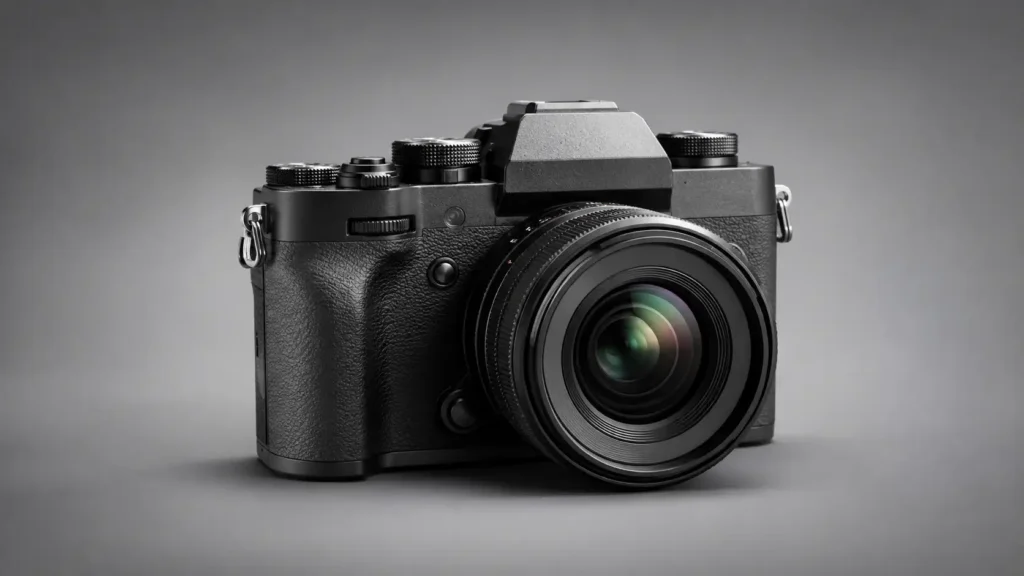
CIPA production and shipment of digital still cameras 2025
Official CIPA worldwide production and shipment data for digital still cameras in 2025, including DSLR, mirrorless, built-in-lens and sensor-size categories.
CIPA production and shipment of interchangeable lenses 2025
Official CIPA worldwide production and shipment data for interchangeable lenses in 2025.
CIPA 2025 outlook on shipment by product type
CIPA’s 2025 outlook release, including 2024 shipment results and forecasts for cameras and interchangeable lenses.
CIPA digital camera statistics
CIPA’s official statistics page for digital camera production and shipment data.
Canon annual report 2024
Canon’s official annual report with imaging business performance, mirrorless camera sales commentary and financial context.
Canon officially launches the EOS R1 and EOS R5 Mark II
Canon U.S.A.’s official launch announcement for the EOS R1 and EOS R5 Mark II full-frame mirrorless cameras.
Canon DSLR vs mirrorless cameras
Canon’s official explainer describing DSLR and mirrorless camera differences, including the reflex mirror mechanism.
Canon viewfinder vs LCD display
Canon Europe’s technical guide explaining optical and electronic viewfinders, Live View, exposure preview and display behavior.
Canon electronic viewfinder OVF simulation story
Canon’s technical story on OVF simulation view assist and the challenge of making EVFs feel more natural.
Nikon report 2024
Nikon’s official corporate report covering Z-series mirrorless performance, imaging strategy and RED-related growth plans.
Nikon releases the Z6III full-frame mirrorless camera
Nikon’s official Z6III announcement, including details on the partially stacked CMOS sensor and EXPEED 7 processor.
Nikon to acquire RED.com
Nikon’s official announcement of its agreement to acquire RED.com, LLC for expansion in professional digital cinema.
Nikon statement regarding SLR development report
Nikon’s official 2022 statement responding to media reports about SLR development and clarifying production, sales and service status at that time.
Nikon electronic viewfinders explained
Nikon’s educational guide explaining how electronic viewfinders differ from DSLR optical finder systems.
Sony Alpha 9 III global shutter announcement
Sony’s official Alpha Universe announcement explaining the Alpha 9 III global shutter system and high-speed shooting capability.
Fujifilm announces the X-T50 mirrorless digital camera
Fujifilm’s official U.S. announcement for the X-T50 mirrorless camera and XF16-50mm lens.
Fujifilm X100VI product page
Fujifilm’s official product page for the X100VI fixed-lens camera, including hybrid viewfinder and stabilization details.
Panasonic Lumix history 2008
Panasonic’s official Lumix history page describing the DMC-G1 and the start of the Micro Four Thirds mirrorless era.
Panasonic Lumix S5II product page
Panasonic’s official product page for the Lumix S5II full-frame mirrorless camera.
OM System OM-1 Mark II product page
OM System’s official product page for the OM-1 Mark II, including stabilization, subject detection and high-speed shooting details.
Ricoh Pentax K-3 Mark III Monochrome product page
Ricoh Imaging’s official product page for the Pentax K-3 Mark III Monochrome DSLR and its monochrome-specific sensor.
| Citing this article? Brief excerpts are welcome. Please credit Webiano.digital, name the author where stated, and include a link to https://webiano.digital and to this original article. Full or substantial republication requires prior written permission. Read our Copyright and Content Use Policy. |
This article was prepared with the assistance of artificial intelligence tools. The content underwent expert human review, and Webiano Digital & Marketing Agency assumes editorial responsibility for its final version and publication.