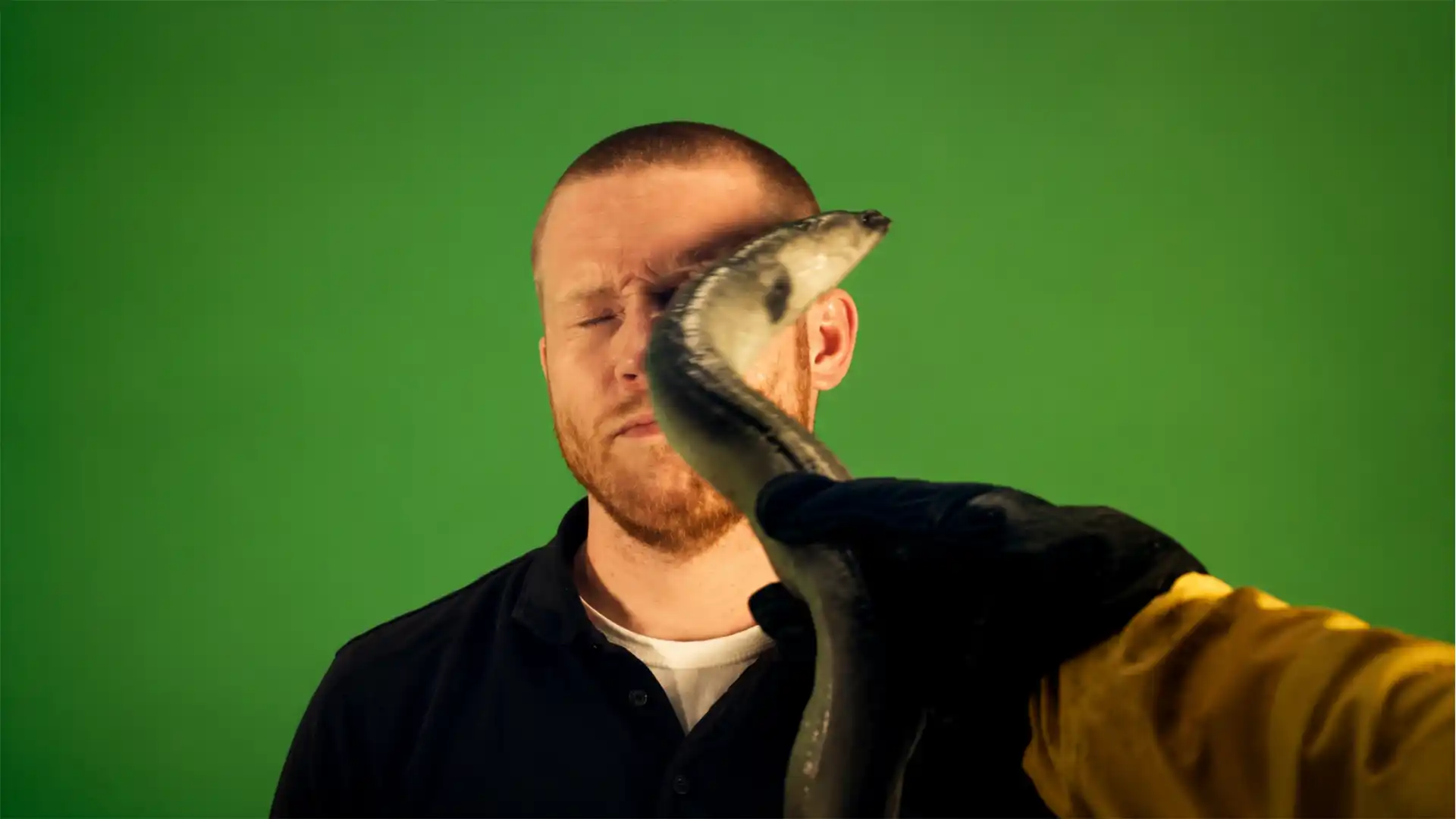
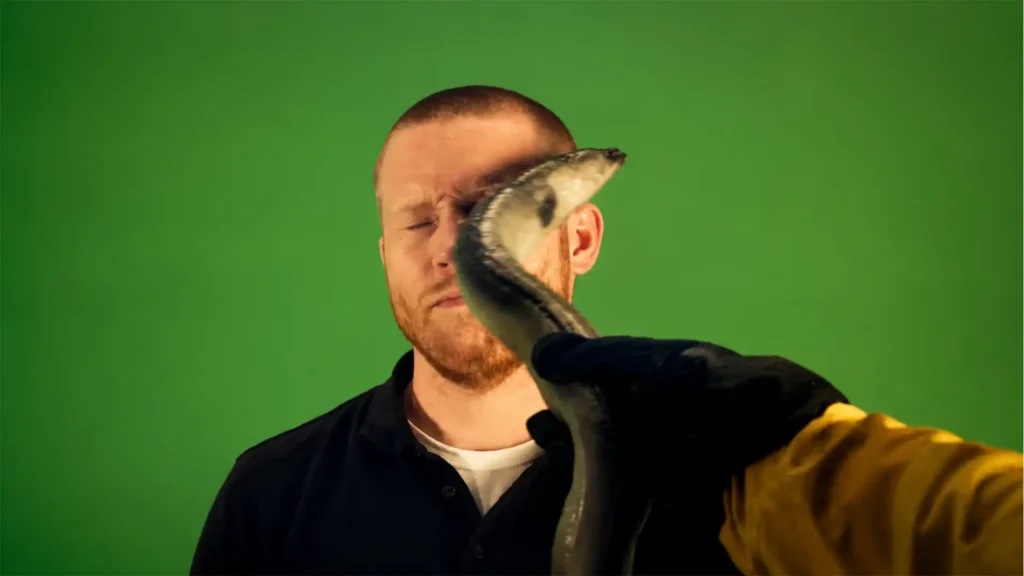
Eel Slap! does not warm you up, onboard you, charm you with a clever menu, or explain itself like a nervous startup founder. It gives you a man, an eel, and the physical feeling of dragging a joke across a screen until it smacks him in the face. The official site’s own description is almost insultingly direct: “Ever wanted to slap someone in the face with an eel? Well, today is your lucky day.” That is the whole pitch, and the pitch is better because it refuses to grow up.
Table of Contents
The first surprise is not that the site exists. The first surprise is that it is still exactly as committed to its one bad idea as memory suggests. Eelslap.com was registered on March 2, 2011, which makes it a survivor from a web era when a pointless interactive gag could become a destination without asking for an email address, app install, account, cookie banner, newsletter subscription, or permission to send notifications.
Its creator trail points to Per Stenius. The public metadata preserved in an Eel Slap derivative names “Per Stenius” as author, and Stenius’s own public profile describes him, with admirable economy, as “the Eel slap guy.” That tiny phrase is funny because it sounds less like a portfolio credit and more like a strange civic office. Some people become known for frameworks, agencies, platforms, books, or exits. Someone had to become the eel slap guy.
Eel Slap belongs to the stubborn family of websites that made The Useless Web feel less like a random button and more like a small museum of online impulse. The Useless Web describes its collection as “little corners of the internet,” and Eel Slap is one of the purest corners because it has almost no surface area. It is not content around a joke. It is not commentary on a joke. It is the joke itself, mounted in a browser window.
The joke lands before the page finishes explaining itself
Eel Slap is funny because it gives the browser a body. Your cursor stops feeling like a pointer and starts feeling like the handle of a damp slapstick weapon. The page is not asking you to read, scroll, compare, choose, build, customize, save, publish, or share. It only asks for one primitive action: move sideways. The moment you do, the eel obeys. The man’s face becomes the end of the sentence. The browser, which spends most of its life as a polite rectangle for errands, becomes a tiny stage for humiliation.
The site’s genius is not “randomness.” Randomness would be weaker. A purely random eel slap would become a screensaver. Eel Slap works because the user controls the timing. Drag slowly and the joke becomes creepy, as if you are testing the elasticity of the scene. Drag fast and it becomes a crisp physical gag. Reverse direction and the slap rewinds into an even stranger anti-slap, which is somehow just as satisfying. The control is simple enough for anyone, but precise enough to let the gag breathe.
A lot of web comedy dies because it explains the funny part too soon. Eel Slap refuses to narrate its own joke. It does not add a caption under the man saying “ouch.” It does not put a score counter on the corner. It does not congratulate you for achieving maximum eel velocity. It does not unlock a second fish. This restraint matters. The site trusts that a wet eel across a face does not need product copy. The comedy is in the impact, the repetition, and the deadpan refusal to justify either.
The page also has a rare kind of confidence. It is built around a single verb. Not “play,” not “explore,” not “discover,” not “express yourself,” but slap. The whole site can be described in one hand motion. That is harder than it looks. Many novelty websites are cluttered because their creators keep adding insurance: more jokes, more buttons, more reactions, more hidden Easter eggs, more excuses for the visitor to stay. Eel Slap does the opposite. It strips the idea down until the user is holding only the handle.
That handle is what separates Eel Slap from a GIF. A GIF would show you the absurdity, but Eel Slap lets you perform it. The difference is small technically and huge emotionally. Watching a man get slapped with an eel is ridiculous. Controlling the exact frame at which the eel connects is ridiculous in a more personal way. The slider-like movement turns a fixed gag into a toy. It lets you scrub through a moment that should never have been interactive, which is why it feels so illicitly pleasing.
There is also a small cruelty in the loop, and the site knows it. The man is not a character with a backstory; he is a surface for timing. That might sound harsh, but cartoon violence has always depended on this trick. The target must be specific enough to react and anonymous enough not to matter. Eel Slap finds that line. The face gives the eel somewhere to land. The lack of story keeps the whole thing weightless. Nobody has to win. Nobody has to recover. Nobody has to explain why an eel is available.
The green background helps more than it should. It gives the whole gag the cheapness of a studio setup that was used for exactly one purpose and then abandoned. There is no ornate environment, no beach, no fish market, no aquarium, no circus. The blankness is part of the joke. A man is simply standing in front of a flat field, available to be struck forever by a creature that does not belong in anyone’s hand. The scene is not surreal because it is complicated. It is surreal because it is so calmly underbuilt.
Eel Slap also understands a basic truth about online attention: a short joke becomes stronger when the user decides when it ends. The site does not chase retention with levels or achievements. It trusts compulsion. You slap once because it is absurd. You slap again because the timing could be better. You slap slowly because the physics of the eel look nasty and wonderful. You slap backwards because the page lets you. Then you send it to someone else, because the only sensible response to a site this stupidly exact is to make another person open it.
A slider that turns timing into comedy
The interaction feels like dragging a slider, even if the site is not built as a conventional form control. The horizontal movement gives the user frame-by-frame possession of a slap. That is the trick. Eel Slap is not a game in the usual sense, because there is no failure state, no target score, no countdown, and no skill curve worth naming. It is closer to an interactive film strip. You move, the footage advances or reverses, and the scene becomes a tiny instrument for impact.
A community thread about recreating Eel Slap in Snap! gets close to the underlying pleasure when users talk about mapping mouse movement to frames and treating the original image material like a spritesheet. That technical reading matters because the site’s comedy comes from scrubbing across prepared frames, not from complex simulation. The eel feels lively, but the deeper joy is that you can control the exact moment where a preposterous object meets a human face.
That old-school construction gives the site a tactility newer web toys often miss. It feels handmade because the motion has a visible grain. The eel does not glide with the sterile smoothness of a physics demo trying to impress a conference audience. It smears, bends, and snaps through the scene like something filmed and then repurposed by someone who understood that the scrub control was the funniest possible interface. You are not controlling an abstract eel model. You are dragging a captured slap through time.
This is why the joke is more durable than it has any right to be. The user is not merely clicking a punchline. A click is binary. Eel Slap is analog. You can be hesitant, violent, precise, lazy, petty, experimental, or ceremonial with the same action. The slider gives tone to the slap. One visitor performs it like a drum hit. Another makes it crawl across the face in slow, awful contact. Another reverses it until the eel appears to withdraw its insult. The page leaves just enough room for personality.
The best tiny web toys often work this way. They do not give you many options; they give one option a surprisingly wide emotional range. A button that says “make noise” might be funny once. A controllable noise becomes an instrument. A static fish slap might earn a laugh. A scrubbed eel slap becomes a ritual. Eel Slap’s interface feels almost too dumb to analyze, but that is exactly why the craft is visible. The creator found the smallest possible interaction that still lets the user feel agency.
Timing is the secret ingredient in almost every physical joke. Eel Slap turns timing into the whole product. There is no written setup, but your hand creates one. Pull the eel back and you create anticipation. Let it crawl toward the face and you create dread. Snap it forward and you create release. The browser becomes a crude editing suite for slapstick. The punchline does not happen on the page until your hand approves it. That makes the gag feel freshly delivered every time, even after you know exactly what will happen.
The site also benefits from refusing to clean up the motion. A perfectly polished eel would be less funny. The animal needs to look too long, too bendy, too wet, too inconvenient. It should feel like the wrong tool for the job, which is the whole point. Slapstick props are funniest when they extend the body in an ungainly way: a ladder, a plank, a pie, a fish. The eel is a prop with biological resentment. It does not look made for slapping, and that mismatch makes every drag across the screen feel wrong in the right way.
The man’s reaction is also timed for user control rather than narrative dignity. He exists in a permanent pre-slap and post-slap state, depending on where your cursor is. That strange reversible suffering is part of the charm. The slap can be undone, then redone, then paused mid-disaster. Most video gives time authority over the viewer. Eel Slap gives the viewer authority over time, but only for the most useless possible reason. It is a time machine for eel-based humiliation.
There is a lovely stupidity in using interaction design for this. The same browser mechanics that power dashboards, maps, editors, and visual tools are here serving a wet slap. That is why Eel Slap feels more internet-native than a conventional joke page. It is not just a funny image placed online. It is a funny use of the web’s affordances. The cursor is the setup, the scrub is the rhythm, the slap is the payoff. No app store could improve it. No explainer video could make it clearer.
This is also why the site does not need sound. Your brain supplies the noise. A squelch, a smack, a faint gasp, a rubbery whip through the air. The silence makes the action more personal because the sound effect happens in the visitor’s imagination. Many novelty sites hammer the user with audio and become unbearable after five seconds. Eel Slap stays weirdly elegant by letting the visual loop do the work. The missing sound is not a flaw; it is empty space for the joke to echo.
The beauty of doing almost nothing
The official Eel Slap page is tiny in ambition but not in effect. It is a reminder that a website does not have to become a product to earn a place in memory. Modern web projects are often introduced through a stack of promises: save time, manage tasks, organize thoughts, automate work, measure progress, make teams happier, make mornings calmer, make meetings shorter. Eel Slap makes no promise except impact. That lack of usefulness is not laziness. It is the entire artistic position.
A useful tool has to defend itself every day. A useless toy survives by being unforgettable. Eel Slap does not care about your workflow. It has no roadmap, no paid tier, no login wall, no pricing page, no testimonial carousel, no feature comparison, no changelog, no “coming soon.” It does not want to become your system of record. It wants to be the tab you open when language fails and only a man getting slapped by an eel feels like adequate punctuation.
The restraint is almost aggressive. Most creators would have ruined Eel Slap by asking, “What else can we add?” A second eel. A scoreboard. Different faces. Unlockable sea creatures. A share button that writes the joke for you. A mobile app. A leaderboard of “hardest slaps.” A holiday edition. A daily challenge. A shop. A newsletter. Each addition would make the site more legible as a product and less pure as a joke. Eel Slap stays excellent because it resists the temptation to become a franchise.
This is a useful lesson from a useless site. The web is full of projects that dilute their strongest idea by trying to look bigger than they are. Eel Slap accepts its own scale. It has the dignity of a perfect snack. Nobody needs a five-course tasting menu of eel slap variations. Nobody needs a dashboard showing slap analytics by geography. Nobody needs onboarding copy explaining that eel slapping is a new way to process emotion. The site trusts the user to understand nonsense without a tutorial.
The layout supports that trust. The page removes nearly every decision except the one that matters. There is no navigation drawing your eye away, no sidebar begging for attention, no decorative copy hovering near the scene. The man and the eel are central because they are the only meaningful objects. The absence of interface chrome turns the whole browser window into a slap surface. It is closer to a magic trick than a website: show the object, perform the motion, leave before the audience asks too many questions.
Eel Slap’s age also changes how it feels. A 2011 novelty site still running in 2026 carries a kind of accidental tenderness. So many small web things vanish. Domains expire. Flash breaks. JavaScript rots. Hosting lapses. Old links are bought by spam farms. Weird little pages lose their owners, their context, or their files. The Useless Web’s own archive of lost sites is a sad-funny reminder that internet ephemera often has a shorter life than a printed flyer. Eel Slap’s continued existence gives the joke a faint archival glow.
It is not nostalgia alone, though. The site still works because the joke does not rely on a dead reference. Many viral pages age badly because their humor is tied to a celebrity moment, a platform quirk, a meme format, or a pop-cultural reference that now needs footnotes. Eel Slap requires almost no context. Humans understand faces. Humans understand slapping. Humans understand that an eel is a wildly inappropriate slap device. The joke travels cleanly because its ingredients are dumb at a nearly prehistoric level.
The site also exposes how much friction we now treat as normal. Opening Eel Slap feels relaxing partly because nothing tries to capture you. There is no “accept all” button blocking the gag. There is no modal asking whether you want a better experience. There is no plea to turn off an ad blocker. The page does not pretend to be your companion. It does not personalize itself. It does not remember you. It simply loads, lets you slap, and remains indifferent to whether you leave.
That indifference is refreshing. A lot of the contemporary web behaves as if every visitor is a lead. Eel Slap treats the visitor as a hand attached to a sense of humor. That is a lower-friction and, in this case, more respectful relationship. It does not ask who you are before it lets you have the joke. It does not demand proof of engagement. It does not confuse attention with ownership. You arrive, perform the absurd motion, laugh or don’t, and move on.
Tiny websites like this also have a cleaner social function. They are easy to recommend because they do not require trust. When someone sends you Eel Slap, they are not asking you to read a long essay, install a tool, support a campaign, join a community, or buy into a worldview. They are sending a single browser-based gag that can be judged in three seconds. That makes it perfect link culture. The share is almost the whole point: “I cannot believe this exists” is the site’s natural distribution model.
What makes the site worth opening
| Element | What it does | Why it works |
|---|---|---|
| One action | Lets you drag the slap back and forth | Turns a fixed gag into a toy |
| No setup | Starts with the visual premise | Trusts the absurdity immediately |
| No progression | Offers no levels or goals | Keeps the joke pure |
| Physical timing | Lets the user control impact | Makes repetition feel personal |
| Empty context | Gives no story for the man or eel | Leaves the nonsense clean |
The table is small because the site is small. Eel Slap does not have hidden complexity; it has a cleanly protected premise. Every good choice points back to the same idea: let the visitor physically deliver the dumbest possible punchline without wrapping it in anything that might weaken the hit.
Why Eel Slap belongs to the useless web canon
The Useless Web is not just a list of bad sites. At its best, it is a taste filter for pages that understand their own absurdity. The button sends users to places that are silly, pretty, infuriating, or strange, and the official site describes those entries as little corners with stories behind them. That phrase fits Eel Slap because the page feels like it was cut from the web’s private imagination rather than designed for a market.
There is a difference between useless and worthless. Eel Slap is useless in the practical sense and useful in the emotional sense that jokes are useful. It creates a quick rupture in the day. It reminds the visitor that browsers are not only for obligation. It takes a polished device, a global network, display technology, scripting, hosting, registration, and human coordination, then spends all of it on an eel striking a face. That mismatch between infrastructure and purpose is part of the comedy.
The useless web canon includes many sites that behave like digital single-purpose objects. A page can be a bell, a scream, a dancing loop, a purple field, a pigeon, a cow to find, or a slap machine. These projects do not compete by depth. They compete by stickiness of concept. You remember them because the idea is small enough to fit inside a sentence and strange enough to survive retelling. Eel Slap has one of the cleanest sentences: drag and a man gets slapped by an eel.
The best useless sites also feel like resistance to professionalized taste. They reject the idea that every web page must justify itself through productivity, branding, information, or commerce. This does not make them anti-design. Eel Slap is deeply designed, just not in the polished portfolio sense. Its design problem is comic timing, not conversion. Its success metric is not a funnel. It is the moment someone says, out loud, “Why does this exist?” and then immediately slaps the man again.
That question is not a criticism. “Why does this exist?” is the doorway into much of the best internet culture. The web became culturally alive because people kept making things that were too specific, too dumb, too personal, too niche, or too pointless to pass a committee. Eel Slap feels like one of those objects. It does not seem focus-grouped. It does not seem brand-safe. It does not seem engineered to scale. It seems like someone had an absurd visual thought and took it too seriously in the best possible way.
Commitment is the real charm. A lazy version of Eel Slap would have been a looping video with a joke title. The actual site gives the visitor control, frames the action cleanly, and leaves the interaction exposed. It commits to the eel. It commits to the man. It commits to the slap as the only unit of meaning. This is why the user’s phrasing feels right: the internet at its most committed to a single joke. The point is not that the joke is sophisticated. The point is that nothing else is allowed to intrude.
Eel Slap also has a pleasing lack of ironic distance. It is not winking at the visitor with a long apology for being stupid. It does not say, “Haha, isn’t this random?” It does not stack memes on top of itself. It does not explain that it is absurdist. It just places the eel in your control. That straight face gives the visitor room to supply the laughter. The site is funnier because it does not laugh first.
The Awwwards listing of Eel Slap as an inspiration item is quietly perfect, because the site’s design value is easy to miss if you only judge surface polish. It is an interaction specimen disguised as an idiotic gag. You can laugh at it and still admire the clarity of the interface. You can call it useless and still see that the execution is tighter than many serious landing pages. Awwwards did not need to write a manifesto around it. The screenshot and the title are enough.
There is also a museum-like pleasure in seeing Eel Slap next to other remnants of the weird web. These sites are small artifacts of a time when a domain could be a punchline by itself. The Useless Web’s lost-sites page is full of things that have gone offline, been parked, been hijacked, or been replaced by unrelated businesses. That list makes Eel Slap feel lucky. It is not only a joke that survived; it is a joke still occupying its proper address.
The domain matters because jokes are spatial online. A bizarre page at its original URL feels different from a reposted clip on a feed. The URL gives the joke a home. You do not merely encounter Eel Slap as content; you visit it. The browser bar becomes part of the experience. Eelslap.com is short, literal, and slightly ugly in a memorable way. It sounds like something typed into a chat by a person who cannot stop grinning.
This is why clones and references never fully replace the original. A copied video can show what happens, but it cannot recreate the odd intimacy of opening the dedicated eel-slap chamber. The official page’s emptiness, domain, and directness form a single object. Remove any piece and it becomes weaker. A social clip might get more views, but the website gets the stranger memory. You remember not just the slap, but the fact that someone built a place for it.
What the tiny mechanics reveal about internet humor
Eel Slap is an example of a joke that becomes funnier through interface, not through writing. The punchline is not a sentence; it is a control scheme. This is easy to overlook because the surface is so stupid. But the site’s real contribution is showing how web interaction can carry comic timing. Dragging is not just navigation here. It is performance. The user supplies rhythm, force, hesitation, and repetition with a single motion.
The joke also works because it gives the visitor permission to be childish without demanding identity. There is no avatar, no profile, no public score, no performative cleverness. You are not trying to prove that you understand internet humor. You are just moving an eel into a face. The privacy of the action makes it funnier. It is the kind of thing people do alone, then send to a friend because they need someone else to share the guilt of enjoying it.
This private-to-social pathway is a classic shape for memorable web oddities. First the visitor laughs alone, then the link becomes a test of someone else’s tolerance for nonsense. Eel Slap is perfect for that exchange because it needs almost no setup. Sending it with the message “drag” is enough. The recipient opens it, performs the motion, and either accepts the premise or questions your judgment. Both outcomes are entertaining.
There is also a small rebellion against taste. Eel Slap is not refined, but it is exact. That combination is rare. Plenty of crude web jokes are sloppy. Plenty of refined web projects are boring. Eel Slap sits in the better middle: lowbrow concept, clean interaction, sharp restraint. It does not need to be beautiful in a conventional sense because the beauty is in the refusal to overbuild. It knows where the laugh is and protects that spot like a guard dog.
The word “eel” matters too. A fish slap would be funny, but an eel slap is nastier and more specific. Eels carry a certain uninvited texture in the imagination. They are slippery, elongated, ancient-looking, hard to hold, and too alive for comfort. The eel turns the slap into something more intimate and more grotesque than a simple prop gag. A pie to the face is messy. A rubber chicken is silly. An eel is a bad idea with muscle.
That specificity helps the site survive retelling. “A man gets slapped by an eel” is not a vague description; it is a perfect little mental image. The phrase carries the object, action, and victim in one breath. It also sounds like something from an old vaudeville bit translated into browser code. The comedy is not modern in its ingredients. It is modern in its delivery. The ancient slapstick impulse passes through a mouse-controlled timeline and becomes internet-native.
Eel Slap’s humor is also unusually nonverbal. That gives it a wider reach than a lot of meme-era writing. You do not need to understand a language, a platform drama, or a joke format. You need only recognize the absurd physical situation. This makes the site feel like a cousin of silent film gags, animated loops, and playground cruelty. It is base, direct, and immediate. The web part is the delivery mechanism, not the cultural barrier.
The site’s silence creates another odd effect. It lets the visitor become the sound designer. The mind adds a slap noise that probably differs from person to person. Some imagine a wet thwack. Some imagine a rubbery smack. Some imagine a fish-market splat. Because the page does not choose for you, the joke stays open. The missing audio keeps the gag from becoming annoying and lets the physicality remain imaginary enough to repeat.
Repetition is not an accident here. The site is built for the second slap more than the first. The first slap proves the premise. The second slap tests the timing. The third slap becomes indulgence. By the fourth, the visitor is no longer discovering the site; they are playing with the boundary between boredom and satisfaction. This is where Eel Slap becomes more than a one-off gag. It offers a tiny loop that reveals your own appetite for nonsense.
That appetite is not trivial. The internet has always needed pressure valves. People do not only go online to learn, shop, work, argue, watch, or organize. They go online to puncture seriousness. Eel Slap is a pressure valve with no ideology and no hidden lesson. It does not try to improve your mood through sentiment. It does not frame itself as self-care. It simply gives you a harmlessly stupid physical act and lets the absurdity drain a bit of static from the day.
The site also demonstrates how little narrative is needed when the action is strong. We never learn who the man is, why he is there, who owns the eel, whether consent was discussed, or what happens after the slap. This absence is part of the rhythm. A backstory would slow the impact. The page is one frozen incident with a draggable timeline. It is comedy as a specimen slide: a single bad moment preserved for examination and abuse.
That lack of explanation lets different visitors project different moods onto it. It can feel like stress relief, absurd art, lowbrow prank, design sketch, old internet relic, or pointless lunch-break nonsense. The site does not pin itself to one interpretation. It is too dumb to become precious and too well-timed to become disposable. That is a powerful combination for web culture. It invites both immediate use and affectionate analysis, even though the object being analyzed is a man receiving eel contact.
The strangest part is that analysis does not kill it. Some jokes collapse when examined, but Eel Slap keeps slapping. You can discuss timing, interface, domain history, web nostalgia, and the useless web canon, then open the site and still laugh at the wet stupidity of the motion. That resilience is a sign that the core gag is not dependent on surprise alone. It has tactile pleasure. It has rhythm. It has the dumb animal charm of a toy you know you should have outgrown.
The product lesson hiding inside the eel
Eel Slap is not a product lesson in the usual founder-thread sense, and that is a relief. Still, anyone who builds for the web can learn from its discipline. The site does one thing, names it plainly, makes the main action obvious, and removes nearly everything else. It does not confuse a simple premise with a shallow one. It knows that the experience lives in the first two seconds and makes those seconds count.
The most obvious lesson is focus. A page becomes memorable when every part serves the same idea. Eel Slap’s title, description, domain, interaction, imagery, and lack of navigation all point toward the slap. There is no competing message. Serious websites often fail this test. They want to be trusted, loved, shared, bookmarked, purchased, read, watched, and admired all at once. Eel Slap wants the eel to hit the face. That clarity is absurd, but it is also enviable.
The second lesson is restraint. Not every good interaction needs a reward system. It is tempting to add metrics because metrics make a project feel more built. How many slaps? How fast? How hard? How many visitors today? Which country slaps most? Those questions sound like features, but they would shift attention away from the action. Eel Slap leaves the slap unmeasured. The satisfaction is physical, not numerical. The user does not need a badge to know the eel landed.
The third lesson is that interface can be the joke. A button labeled “slap” would be worse because it would remove timing. A play button would turn the visitor into an audience. The drag action turns the visitor into the operator of a ridiculous mechanism. Many web projects treat interaction as a way to reveal content. Eel Slap treats interaction as the content. The page is not hiding a reward behind the motion. The motion is the reward.
The fourth lesson is about naming. Eelslap.com is blunt enough to become the explanation. No poetic brand name, no clever abstraction, no invented startup word with missing vowels. The name says what happens. That kind of naming would be too crude for many businesses, but for a joke page it is perfect. It makes the link inherently funny before it opens. When someone pastes eelslap.com into a chat, the recipient already understands enough to be suspicious.
The fifth lesson is about speed of comprehension. A visitor should understand the premise before their patience notices it is being spent. Eel Slap achieves that almost instantly. The image, the cursor movement, and the slap align faster than copy could explain. This is the kind of clarity many serious interactive projects miss. They bury the core interaction under labels, modals, options, and cleverness. Eel Slap gets to the body before the brain starts negotiating.
The sixth lesson is that smallness can be a design advantage. A tiny scope lets the creator polish the one moment that matters. When a project has dozens of states, flows, screens, and user types, the best moment often gets diluted. Eel Slap has nowhere to hide. If the slap does not feel funny, the whole site fails. That pressure produces precision. The gag has survived partly because the interface is not approximate. It lands.
The seventh lesson is that delight can be rude. Not all memorable web experiences are charming in a polished, friendly way. Some are baffling. Some are abrasive. Some are gross. Some are childish. Eel Slap is delightful because it is so stupidly specific, not because it flatters the visitor. The modern web often mistakes pleasantness for personality. Eel Slap has personality because it risks being dumb. It chooses a tone and refuses to sand it smooth.
The eighth lesson is that longevity does not always come from maintenance in the visible sense. Some web things last because they ask very little of the future. Eel Slap does not depend on live feeds, user accounts, social APIs, complex databases, payment systems, or external platform rules. Its small technical footprint gives it a better chance of survival than many more ambitious projects. A modest joke can outlive serious software if the serious software requires constant feeding.
The ninth lesson is that usefulness is not the only path to being remembered. People remember how a site made them feel in their hand. Eel Slap’s memory is kinetic. You remember dragging. You remember the face. You remember the slightly shameful pleasure of making the eel connect again. This kind of memory is rare because so much of the web is visually consumed rather than physically performed. Eel Slap sticks because it gives the user a gesture.
The final lesson, if one must be extracted from a man being repeatedly struck by an aquatic creature, is that constraints can protect taste. The site’s narrowness keeps it from becoming cute, bloated, or self-congratulatory. It never turns into a lecture about absurdity. It never becomes a platform for other slap media. It never tells you that you are part of a movement. It just keeps the eel ready. That is enough.
The strange endurance of a joke with no sequel
Eel Slap has been around long enough to become a reference point rather than a fresh novelty. That changes the texture of the joke. A new visitor can still experience it as an absurd discovery, but an older web user may feel a small jolt of recognition: yes, this thing, somehow still here. The joke becomes doubled. There is the original slap, and there is the comedy of its survival in an internet that has misplaced so much of its own weirdness.
A 2014 “Weird of the Web” article described the site in the same blunt spirit: a man in front of a green background, a cursor, an eel, fast or slow, even in reverse. That description could be written today with almost no update, which is exactly the point. Eel Slap has not needed to reinvent itself because reinvention would misunderstand the appeal. The joke is preserved by staying still while the rest of the web keeps changing costumes.
The web around it has become heavier. Pages now arrive loaded with measurement, personalization, monetization, compliance, and defensive design. Even simple articles can feel like obstacle courses. Eel Slap’s plainness now reads as almost luxurious. It is not luxurious in the visual sense; it is luxurious in the psychological sense of not being asked for anything. The site does not behave as if your attention is raw material to be extracted. It lets a stupid act remain a stupid act.
This makes Eel Slap feel older and cleaner at the same time. Its age gives it patina, but its premise has not grown stale in the same way interface trends have. Gradients age. Startup illustrations age. Social icons age. Navigation patterns age. But dragging an eel into a face has the terrifying advantage of never having been fashionable. It cannot fall out of fashion because it was never in fashion. It was always a small act of nonsense outside the main road.
The domain record adds to that sense of continuity. Seeing a 2011 registration date beside a still-working joke page gives the site the aura of a preserved specimen. It is not ancient in web history, but it is old enough to have crossed several eras of platform behavior. It predates the current shape of TikTok-style discovery, the full takeover of mobile-first social video, the present wave of AI-generated content, and many cycles of web design fashion. The eel stayed.
The lack of a sequel is part of the endurance. A sequel would make the original feel like episode one of a brand. Eel Slap does not need an extended universe. It is funnier as a single object. Many internet jokes become less charming when they become series because the repetition starts to feel strategic. Eel Slap repeats inside itself, not across a content calendar. The loop is internal. The site does not ask the creator to keep posting. The visitor creates the repetition by dragging.
There are derivative projects, remixes, references, and discussions around recreating it. That kind of afterlife proves the interaction is legible enough to be studied and copied. Scratch remixes, forum recreations, and code experiments show that people do not only remember the punchline; they remember the mechanism. The Snap! forum thread about how to rebuild it treats the site as something worth reverse-engineering, which is funny and oddly respectful.
Remixability is one of the quiet tests of a good web object. If people can copy the surface but still point back to the original, the original has a durable shape. Eel Slap’s shape is simple enough for students and hobbyists to imitate, but the original retains the authority of the first encounter. That authority is not based on complexity. It is based on exactness. The first version has the right degree of blankness, ugliness, timing, and restraint.
The social life of Eel Slap is also funny because it can appear in serious contexts by accident. A LinkedIn anecdote about a placeholder “Book Here” button accidentally linking to eelslap.com is almost too perfect as a parable. The site is so starkly unsuited to business communication that it becomes the perfect placeholder disaster. Imagine expecting a country club portal and receiving an eel slap. The joke escapes its little chamber and becomes workplace folklore.
That anecdote shows the site’s power as a link object. Eelslap.com is harmless, but it is socially disruptive in the right setting. It can puncture a polished email, a meeting chat, a design review, a test template, or a dull afternoon. The URL carries a payload of nonsense. This is different from sending a meme image because the recipient has to act. The prank is not only that they see something ridiculous. It is that they are invited to complete the ridicule with their own hand.
Eel Slap’s endurance also rests on its refusal to chase contemporary meme language. It does not need captions, reaction faces, ironic fonts, or platform-native editing. Those things would date it faster. The site speaks in physical comedy, which ages more slowly than verbal meme dialect. The browser interaction is old, but the human pleasure in controlling a slap remains annoyingly fresh. This is why the page still works on someone who has no nostalgia for 2011 internet culture.
It also works because it is not trying to be wholesome. So much contemporary internet whimsy is padded with softness: cute animals, gentle colors, cozy copy, little affirmations. Eel Slap has no interest in being cozy. It is not mean in a serious way, but it is rude. The eel’s wet indignity gives the site an edge that a cute random toy would lack. It is silly with a sting. That sting is why people remember it.
The site’s survival raises a small archival question. Who preserves the dumb parts of the web, and why do they matter? Museums and libraries tend to collect culturally recognized objects. Platforms preserve what remains profitable or legally convenient. Search engines remember only what they can index. But the web’s emotional history lives in jokes, toys, screensavers, broken Flash pages, strange domains, and tiny interactive moments people send to each other in boredom. Eel Slap matters because it is one of those moments still reachable.
Reachability is not glamorous, but it is precious. A working link is a kind of mercy. So much online memory is trapped in screenshots, dead URLs, reposts, and “does anyone remember” threads. Eel Slap does not have to be reconstructed from memory. You can open it. You can drag. You can test whether the joke still works on your own attention span. In an internet full of vanished corners, that direct access feels like a small gift wrapped in something slimy.
Opening it now feels like finding a clean fossil
The modern experience of opening Eel Slap is shaped by everything it does not do. It does not try to appear updated, and that restraint makes it feel more authentic. A refreshed Eel Slap with glossy shadows, adaptive branding, animated onboarding, and a legal footer would be worse. The site’s slight oldness is part of its authority. It feels like a fossil you can still poke, not a nostalgia product pretending to be old.
There is a difference between dated and stale. Eel Slap is dated in the way a simple arcade cabinet is dated: the age is visible, but the action still reads. You do not need the page to look contemporary because the interface premise remains clear. The lack of fashionable design makes it easier to focus on the act. Nothing is trying to charm you into thinking the site is modern. It simply remains available, with the confidence of an object that knows why it exists.
The page also gives a small shock of proportion. So much web culture has become gigantic, but some of its most memorable artifacts are tiny. A single-purpose site can live in memory beside platforms with millions of hours of content because memory is not allocated by server cost. It is allocated by shape. Eel Slap has a perfect shape. It is easy to say, easy to send, easy to understand, and weird enough to lodge.
The site does not compete with social feeds because it belongs to an older ritual. You leave the feed to visit a place. That distinction matters. Feeds collapse everything into one stream: politics, ads, grief, jokes, work updates, strangers, creators, brands, emergencies, recipes, dogs. Eel Slap is not a unit in a feed. It is a destination, however stupid. You go to the eel. The page waits in its own little room.
That room is important because it slows the joke down just enough. A reposted clip would be consumed and forgotten inside the feed’s rhythm. The website gives the gag a doorway. The user has to cross into it, even if crossing means tapping a link. Once inside, the world is reduced to the man and the eel. The focus is almost theatrical. A curtain rises, the prop appears, the slap occurs, and the audience is also the stagehand.
Eel Slap also benefits from being safe to waste. It asks for seconds, not an afternoon. Some web discoveries are wonderful but demanding. You need to read, configure, explore, compare, or invest attention before they return anything. Eel Slap returns the premise immediately. That makes it unusually easy to recommend in a Web Radar sense. It does not need a long argument before the click. The long argument is for after, when you start wondering why such a dumb site feels so complete.
The longer you sit with it, the more it feels like a critique by accident. Eel Slap makes many polished websites look insecure. They chase authority with badges, numbers, client logos, awards, case studies, and motion effects. Eel Slap has a man and an eel. It owns the screen because it is not negotiating. This does not mean every site should be minimal or ridiculous. It means confidence often looks like subtraction. The page knows what not to say.
The site’s humor also has a moral lightness that is easy to miss. Nobody is actually harmed, nothing is monetized, and the visitor leaves with no residue except a silly memory. That makes it cleaner than a lot of attention bait. It does not make people angry for engagement. It does not humiliate a real person in a social feed. It does not turn cruelty into discourse. It stages a fake, repeatable, eel-based impact so abstractly that the wrongness stays cartoonish.
This matters because online humor often drifts toward escalation. Eel Slap stays small enough to avoid becoming ugly. The target is anonymous, the action is absurd, and the interface is too artificial to feel like violence with stakes. The eel is not a weapon in any serious sense. It is a floppy punctuation mark. The site’s stupidity protects it from malice. It lets the visitor enjoy a rude gesture without attaching that gesture to a real conflict.
There is a reason the user’s description calls it “the internet at its most committed to a single joke.” Commitment is different from excess. Excess would add more absurdity until the original image lost force. Commitment holds the frame and refuses to flinch. Eel Slap is committed because it keeps presenting the same ridiculous premise as if no alternative has ever occurred to it. That deadpan sameness becomes funnier with time.
The page also has the useful quality of being immune to over-personalization. It does not care who you are, which is part of its charm. The man does not look more like your boss if you sign in. The eel does not change based on your mood. The background does not adapt to your location. The slap is not tuned to your interests. In an era of algorithmic catering, there is something relieving about a joke that is the same for everyone and belongs to no one.
This universality is crude but real. Eel Slap is one of those web objects that works across sophistication levels. A child can understand the action. A designer can admire the interaction. A developer can infer the frame-scrubbing mechanics. A bored office worker can use it as punctuation. A veteran internet user can feel the old-web charge. A person with no context can still drag and watch the eel land. That range comes from simplicity, not from trying to please everyone.
The result is a website that feels both disposable and permanent. You can exhaust it in ten seconds, then remember it for fifteen years. That is the strange math of internet ephemera. The experience itself is tiny. The memory is oversized. Eel Slap does not need hours of engagement because it creates a mental object. Once you know it exists, the phrase alone can bring back the motion. The site becomes a private joke between you and the browser.
Tiny doubts before you click
Eel Slap is a one-purpose interactive website where dragging across the page controls an eel slapping a man in the face. The official description says exactly what the site delivers, and that bluntness is part of the appeal. It is not a game with goals. It is not a video with passive playback. It is a tiny browser toy built around comic timing.
The creator trail points to Per Stenius. Publicly visible page metadata preserved in derivative code names Per Stenius as author, and Stenius’s own public profile uses the phrase “the Eel slap guy.” That pairing is strong enough to treat him as the name attached to the site, while still keeping the article focused on the website rather than turning it into a biography.
The eelslap.com domain record shows a March 2, 2011 registration date. That makes the site feel less like a passing joke and more like a small surviving artifact from the era of single-purpose novelty domains. The fact that it remains reachable matters because many comparable oddities have been lost, parked, hijacked, or broken by changing web technology.
It is worth opening because it still does the rarest thing a novelty site can do: explain itself through action faster than words. You understand it by dragging. The joke does not need a feed, a caption, a tutorial, or a creator monologue. It is immediate, physical, and stupid in a way that feels almost clean compared with the heavier modern web.
Eel Slap is closely associated with The Useless Web’s style of discovery, and community discussions have referred to it as part of that world. The Useless Web itself describes its collection as little internet corners with their own stories, which is exactly the context in which Eel Slap makes the most sense. It is useless by design, and that uselessness is the point.
No, and that is the mercy. Eel Slap does not hide a rich system under the surface. The action is the experience. The lack of unlocks, modes, and rewards protects the joke from becoming content management. You go there to perform one ridiculous motion, not to become invested in an eel-slapping ecosystem.
Because the idea is small, physical, and perfectly named. You can repeat it in one sentence. You can understand it in one gesture. You can send it to someone with almost no explanation. The site turns a browser into a slap machine, then refuses to become anything else. That kind of purity is rare online, especially now.
Not in subject matter, thankfully, but in discipline. The site knows its strongest idea and protects it. It names the premise clearly. It gives the user control at the exact point where control makes the joke funnier. It avoids feature creep. For a website about slapping a man with an eel, that is a surprisingly sharp model of editorial and interaction restraint.
The wet slap still knows what the web is for
The web does not need to be useful every second to justify itself. Sometimes it is enough for a site to make a tiny, committed, ridiculous thing possible. Eel Slap endures because it captures a version of the internet that felt less afraid of being pointless. It is not trying to become infrastructure. It is not trying to be a platform. It is not trying to organize human knowledge or rewire work. It is a wet slap in a browser window, held open for whoever still needs it.
That may sound like faint praise, but it is not. Doing one dumb thing perfectly is a real achievement online. The web is crowded with pages that do many sensible things forgettably. Eel Slap does one senseless thing with total clarity. Its stupidity is not sloppy. Its narrowness is not a flaw. Its refusal to add more is not a failure of imagination. It is the reason the site still feels fresh when so much louder web culture has aged into noise.
A good Web Radar discovery should make a reader want to click without needing to pretend the subject is grand. Eel Slap is worth opening because it is not grand at all. It is small, rude, tactile, and weirdly elegant. It reminds you that a website can be a place for a single human impulse, even an impulse as unreasonable as dragging an eel into a man’s face. It also reminds you that the browser is still a playground when someone bothers to build a toy instead of a funnel.
The lasting charm is that Eel Slap never asks to be respected before it works. It earns affection by being exactly what it says it is. The link is the premise. The motion is the joke. The man is the target. The eel is the instrument. The visitor supplies timing. Then the page loops back into readiness, calm and shameless, as if this was always one of the web’s normal duties.
That is why it belongs in the strange little canon of internet gems people keep passing around. Eel Slap is not merely a relic of weird web culture; it is a working example of why that culture mattered. It shows how little a site needs when the central gesture is strong. It shows how much personality can fit into an empty page. It shows that usefulness and memorability are not the same thing. It shows that a joke, if built with enough conviction, can still be waiting fifteen years later with an eel in hand.
Author:
Jan Bielik
CEO & Founder of Webiano Digital & Marketing Agency
This article is an original analysis supported by the sources cited below
Eel Slap
Official website and primary subject of the article, used to verify the premise, title, and direct one-line description.
WHOIS record for eelslap.com
Domain registration record used to verify the March 2, 2011 registration date and current domain continuity.
Per Stenius on X
Public profile used to support the creator attribution trail and the “Eel slap guy” self-description.
Slap-on-face index on GitHub
Public derivative code page preserving Eel Slap metadata, including Open Graph fields, description, keywords, and author metadata.
The Useless Web
Official discovery site used to frame Eel Slap within the culture of single-purpose, intentionally useless web experiences.
The Sites of The Useless Web
Official background page used for its description of the collection as little internet corners with stories behind them.
The Sites We Lost
Official archive page used to contextualize the fragility of old novelty websites and why Eel Slap’s survival matters.
Eelslap, how would it be re created
Community discussion used to support observations about the site’s frame-scrubbing mechanics, spritesheet interpretation, and association with The Useless Web.
Eel Slap on Awwwards
Design inspiration listing used to support the article’s reading of Eel Slap as a small but notable interaction object.
| Citing this article? Brief excerpts are welcome. Please credit Webiano.digital, name the author where stated, and include a link to https://webiano.digital and to this original article. Full or substantial republication requires prior written permission. Read our Copyright and Content Use Policy. |
This article was prepared with the assistance of artificial intelligence tools. The content underwent expert human review, and Webiano Digital & Marketing Agency assumes editorial responsibility for its final version and publication.