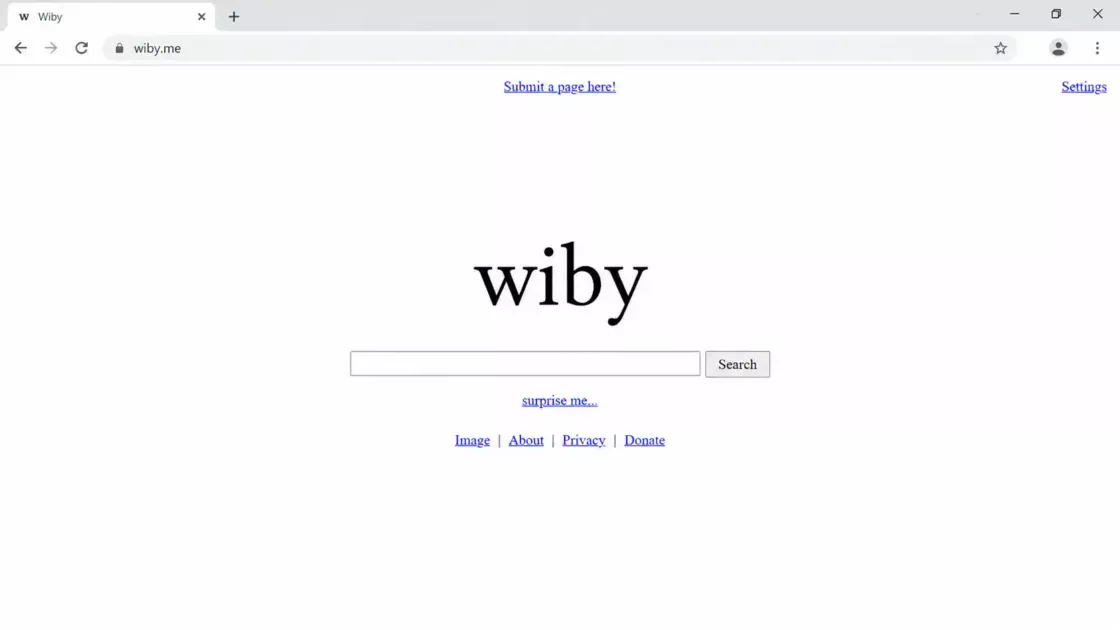
Open the first website and almost nothing greets you. No hero image. No cookie banner. No top navigation. No animation trying to prove the page is alive. The page begins with a heading, “World Wide Web,” and a blunt explanation of the project as a “wide-area hypermedia information retrieval initiative” meant to give “universal access” to a large universe of documents. That sentence is old-fashioned, slightly stiff, and still more direct than most modern landing pages.
Table of Contents
The oldest doorway on the web still opens
The strange part is not that this page once existed. The strange part is that you can still open it. The current CERN doorway at info.cern.ch calls itself the “home of the first website” and links visitors to the first website, a line-mode browser simulator, and CERN’s own story of the Web’s birth. The historical project page at the familiar address still loads as a readable document. It does not ask to be admired. It simply works.
That makes it a rare internet object. Most old web culture survives as screenshots, forum memories, dead links, broken Flash embeds, archived ZIP files, and nostalgia threads written by people who remember a slower network. The CERN page is different because it is not only a story about the web. It is a working piece of the web. You can click through it. You can see how the document points outward. You can feel the original idea in the structure rather than in a museum caption.
The page is not visually impressive, and that is its charm. It looks like a skeleton because the web was still explaining its bones. “What’s out there?” leads to pointers to online information. “Help” explains the browser. “Software Products” points to project components. “Technical” carries protocol and format details. “People” names the humans involved. “History” gives the project a memory. The page is half homepage, half operating manual, half invitation. That arithmetic does not add up cleanly, but the page does.
CERN’s own history is careful about what the page represents. The first website at CERN, and in the world, was dedicated to the World Wide Web project itself and was hosted on Tim Berners-Lee’s NeXT computer. In 2013, CERN launched a project to restore that first website at info.cern.ch. So the page you open today is not a magic portal into an untouched machine humming in a corner of 1990. It is a restored public doorway to the earliest web, kept alive by the institution where the web began.
That distinction makes the site more interesting, not less. A dead original preserved in glass would tell one kind of story. A restored, reachable, ordinary web page tells another. It says the web was built to be copied, linked, moved, read by different machines, and kept available after the first hardware was gone. The content matters, but the survival matters too. A page about universal access has become an example of durable access.
The first website also has a funny relationship with scale. It is famous because the web became enormous. Yet the page itself has no sense of future grandeur. It does not sell a revolution. It does not say it will remake publishing, commerce, culture, politics, software, work, dating, maps, music, banking, journalism, fraud, fandom, shopping, and loneliness. It says, in effect, here is a way to connect documents. That is almost all it needed to say.
A modern reader arrives with too much baggage. We know the web as feeds, search engines, tabs, apps, ads, subscriptions, scripts, tracking pixels, cloud platforms, moderation crises, newsletters, checkout flows, dashboards, and algorithmic timelines. The CERN page has none of that. It sits before the pile-up. It reminds you that the original product was not a platform in the current sense. It was a reading and linking machine.
The page feels small because the first web was small. CERN’s short history says that by late 1993 there were over 500 known web servers, and by the end of 1994 there were 10,000 servers and 10 million users. Those numbers now feel almost comically tiny. A single modern app can push more daily interactions than the entire early web. Yet the old page has a force that many giant platforms lack. It knows what it is for.
That is the real reason to open it. Not because it is old. Old alone is not interesting. Plenty of old web pages are dull, broken, or charming only because they look primitive. The CERN page is worth opening because it still contains the web’s original argument in working form. The web should let documents refer to other documents. The path between ideas should be clickable. The system should be open enough that other people can join without asking permission from a central owner.
There is also a clean editorial lesson hiding in the page. The page spends almost no energy on mood. It does not decorate the idea before showing it. It names the project, explains the purpose, links the next places, and gets out of the way. That directness matches the writing standard behind this article too: concrete wording, real meaning, and natural rhythm beat inflated phrasing every time.
The old CERN page is not a perfect model for present-day websites. Nobody should copy its visual design for a public product in 2026 unless the point is historical parody. Accessibility expectations, mobile reading, security, privacy, metadata, performance, localization, and editorial governance have all changed. Yet the page still beats many modern sites at one thing: it lets the reader understand the object quickly. It respects the click.
A page that explains itself while inventing itself
The first website has a wonderful loop built into it. It is a web page about the World Wide Web, published through the very system it is trying to describe. That sounds obvious now, but it was a sharp product move. The best way to explain a new medium is often to use the medium plainly enough that people understand it by touch. The CERN page does exactly that. It does not only define the web; it behaves like the web.
Its first paragraph is not friendly by current marketing standards. The phrase “wide-area hypermedia information retrieval initiative” would probably be cut from a modern homepage. A product marketer might soften it, rename it, shorten it, and add a graphic. Yet the sentence carries the whole ambition. Wide-area means not local. Hypermedia means linked materials, not isolated files. Information retrieval means finding things. Universal access means the dream is bigger than one lab, one machine, or one team.
The site’s links are the product demo. The “executive summary” link says there is a higher-level explanation. Mailing lists say there is a community. Policy says there are rules forming around the project. News says the project is moving. Frequently asked questions say confusion is expected and accepted. “What’s out there?” says the web already has a world beyond this page. “Software Products” says this is not vapor; there is code, state, and distribution.
The page has a peculiar confidence because it does not beg. It does not ask you to sign up. It does not ask you to follow CERN. It does not press a brand tone into every line. The invitation is structural: follow the links, read more, get the code, build a server, join the conversation. The reader is treated less like a lead and more like a participant. That is a very different relationship from the one many modern websites create.
The site’s roughness also reveals how early the conventions were. “WorldWideWeb” appears as a fused term. “W3” sits beside it as a shorthand. The page mixes project explanation, documentation, directory, and onboarding. It feels less like a polished release and more like a table of contents from a group still building the table. That makes it better as an artifact. You are seeing a system while its language is still soft.
CERN’s broader history fills in why this mattered. Tim Berners-Lee invented the World Wide Web in 1989 while working at CERN, where the need was automated information-sharing between scientists in universities and institutes around the world. This origin matters because the first web was not born as a consumer media machine. It was born from a coordination problem. Scientists had documents, machines, institutions, formats, and distance. The web was a way to connect knowledge without making everyone use the same local system.
That practical origin gives the page its tone. It is not a manifesto written for the public imagination. It is a working explanation for people who may want to use the thing, contribute to it, or understand its technical shape. The first website is editorially modest because the goal was not spectacle. The goal was shared access. That modesty now reads as taste.
The CERN page also reminds us that documentation used to sit closer to the center of software culture. Today many products separate the marketing site, the app, the developer docs, the status page, the changelog, the community forum, and the help center into distinct surfaces. The first web page collapses those roles. It tells you what the project is, where to learn more, where the code is, who is involved, and where the rest of the known web might be found.
That collapse makes the page dense without looking dense. A casual visitor sees a few lines and links. A builder sees an invitation to inspect the system. A historian sees a map of early priorities. A designer sees a layout with almost no layout. A publisher sees the origin of the clickable table of contents. A product person sees a launch page where every link has a job.
The best feature is still the absence of ceremony. The page does not pretend the reader needs emotional warming up before reaching the point. It starts with the project and links outward. This is not merely old-web charm. It is a serious product instinct: when the thing itself is new, the interface should not add extra mystery. The page uses plain structure to reduce the reader’s cognitive debt.
There is a small irony in its fame. The first website now attracts attention because it is historically loaded, but the page itself was built to reduce attention friction. It was not asking people to contemplate the aesthetics of a new medium. It was asking them to move through information. The current visitor cannot help seeing heritage. The original visitor was being shown paths.
That difference is part of the pleasure. You open the page with modern eyes and see a fossil. Then you click and realize the fossil still has working joints. The old links, headings, and plain text demonstrate a product grammar that still governs the web under layers of design fashion. The web did not become powerful because pages looked exciting. It became powerful because pages could point.
The design is almost nothing, and that is the point
The visual design of the first website is less a style than a refusal. It refuses layout drama. It refuses decoration. It refuses interface personality. The text and links do the work. On a modern display, that can feel naked, even comic, but the nakedness is clarifying. You are not reading a designed experience about the web. You are reading the web before design industries grew around it.
A page this plain forces a useful question. What remains when the usual signals of modern digital credibility disappear? No photography. No logo lockup. No testimonial row. No pricing tier. No animation. No carefully chosen illustration set. No newsletter form. No chat widget. What remains is address, text, structure, and links. The CERN page survives because those four things are enough for the job.
Modern websites often confuse trust with surface. They load visual proof before they earn comprehension. They pack the page with badges, partner logos, motion, gradient cards, and carefully staged screenshots. None of those things are wrong by default. Some products need them. Yet the first website shows a more basic form of trust: the user can see where the information leads. The page does not hide the system behind persuasion.
The site is especially good at showing hierarchy without ornament. The heading names the world. The first paragraph defines it. The links divide the next actions. Short descriptions explain why each link exists. That is the whole layout logic. It is primitive, but it is not random. The page has a shape because the information has a shape. Good interface design still starts there.
Even the page’s awkward language is useful. “Pointers to the world’s online information” sounds antique, but it captures the early web more honestly than a smoother phrase might. A pointer is not a feed. It is not a recommendation algorithm. It is not a ranking engine. It is a directed sign. The page tells you that the web is made of such signs, placed by people, leading to other documents.
The page’s lack of imagery also changes the pace. You do not scan it the way you scan a modern homepage. You read the heading, then the paragraph, then the links. The experience is slower, but not bloated. It feels closer to opening a technical note than entering a brand environment. That matters because the first website was not trying to compete for attention inside a crowded browser. It was trying to make a new behavior legible.
This is where the line-mode browser simulator becomes a useful companion. CERN’s line-mode browser project describes the 1992 line-mode browser as the first readily accessible browser for the web, one that could be installed on many kinds of computers and displayed only text. Links were followed through typed commands rather than mouse clicks. Try the first website through that lens and the design suddenly feels less empty. It feels portable.
Portability is the missing word in many modern readings of early web design. The page was not plain only because nobody had better taste or better screens. It was plain because the web needed to cross machines, systems, labs, and habits. Text traveled well. Links traveled well. HTML’s forgiving nature made it possible for old and new readers to keep understanding documents as the vocabulary grew. CERN’s line-mode browser page makes that backward compatibility point directly.
The first website therefore gives a quiet lesson in restraint. It does not mean every site should be stripped bare. It means every layer should earn its place. If an image clarifies, use it. If motion explains, use it. If a signup form matches the reader’s intent, use it. But if the goal is to explain a system, the first job is to make the system readable. The CERN page never forgets that.
The old page also exposes how much modern friction has become normalized. We accept slow scripts, consent overlays, sticky bars, location prompts, interstitials, auto-playing media, newsletter popups, and account walls because the current web trained us to expect them. Then the first website loads with almost theatrical politeness. It does not ask for anything except the next click.
There is a product ethics hidden inside that politeness. A site can treat attention as something to capture or as something to guide. The first website guides. It points. It assumes the user arrived with agency. It does not trap the visitor inside a funnel because the idea of the funnel had not yet swallowed so much of online design. The result feels oddly fresh.
The design also makes the page easy to quote, archive, print, translate, and reason about. That is not a minor advantage. A heavily scripted page may look richer but decay faster. A plain text-and-link document has a better chance of surviving beyond the tools that produced it. The first website is proof by existence. Its design choices, intentional and circumstantial, aged better than most digital polish.
What stands out at a glance
| Element | What you notice | Why it matters |
|---|---|---|
| Address | A readable historical URL still opens | It turns web history into a live visit, not only an archive search |
| Structure | Heading, short explanation, links | The page teaches through navigation rather than decoration |
| Tone | Dry, technical, unfussy | It shows the web before product language became theatrical |
| Links | Every link has a clear role | The page is a map of the early project, not a branded brochure |
| Survival | The page remains usable in modern browsers | It proves the strength of simple documents and stable linking |
The table matters because the page’s power is easy to miss. A modern visitor may see only a plain old document. The stronger reading is that the document contains a compact set of product decisions: readable address, direct explanation, purposeful links, and enough restraint to let the system speak for itself.
The tiny page is really a product strategy
The first website is often treated as a historical curiosity, but it also reads like a product strategy in miniature. It defines the product, gives the user a way to learn, points to the ecosystem, names the builders, explains how to contribute, and shares code. That is an unusually complete launch surface. Many modern products with far larger teams still scatter those jobs across five confusing pages.
The page’s strongest strategic move is that it gives away the map. “What’s out there?” is not a defensive link. It does not keep visitors locked inside CERN’s own materials. It points toward the world’s online information, subjects, servers, and other places. The early web page understands that the value of the web grows when people leave the page. This is the opposite of the platform instinct that tries to keep every action inside one controlled environment.
That outwardness is easy to romanticize, so it needs a sharper reading. The first web page did not emerge from a perfect commons. It came from institutions, researchers, funding, machines, and technical choices. It had politics, standards work, adoption problems, competing systems, and practical limits. Yet the page’s outward linking still matters because it made the product’s growth logic visible. The web was useful only if it connected beyond its origin.
The “Getting code” link is especially revealing. A product that invites people to get the code is operating by a different rule than a product that hides its machinery. CERN later put the World Wide Web software into the public domain on 30 April 1993, and then released later software under an open licence to protect free use and attribution. The first website sits before and inside that culture of spread.
That release decision was not a footnote. CERN’s licensing history says the three Web software components placed in the public domain were the basic line-mode client, the basic server, and the library of common code. The web’s early growth depended on more than a good idea. It depended on permission. Not emotional permission. Legal and technical permission. People needed to run it, copy it, modify it, and build on it without waiting for a gatekeeper.
This is why the first website feels less like a company homepage and more like a seed packet. It contains instructions, names, pathways, and genetic material for replication. A company homepage usually tries to convert. The first website tries to propagate. That difference is enormous. The page does not win by persuading a passive audience. It wins by allowing active users to become nodes.
The first website also shows that early product strategy did not require a polished narrative arc. The page is not optimized for a single conversion. It has multiple entry points because the user could be a scientist, developer, system administrator, manager, skeptic, or curious outsider. Each link handles a different role. That multiplicity would make some modern growth teams nervous. Yet for an emerging protocol and publishing system, it was exactly right.
The page treats documentation as distribution. When documentation is good enough, people do not need a sales conversation to begin. They can understand, test, adopt, and teach others. Early web adoption spread through people who could read the materials, run the software, and point others to it. That is a different kind of marketing: not hype, but transmissibility.
There is a lesson here for every tool that claims to be open. Openness is not a vibe. It is not a word on an about page. It requires usable paths for outsiders. Can they inspect it? Can they build with it? Can they cite it? Can they understand the rules? Can they run a small version without negotiating? The CERN page, in its rough way, answers those questions better than many modern “open” projects.
The product strategy also has a social layer. Mailing lists appear near the top. People appear in the structure. Help appears as a first-class destination. The first website knows that a technical system becomes real through use, support, discussion, and shared references. It does not pretend software alone is enough. It gives the project a public nervous system.
That public nervous system matters more when you remember the original audience. CERN’s history describes a research environment with scientists spread across universities and laboratories around the world. A tool for that environment had to survive partial attention, institutional distance, and uneven equipment. The first website’s plainness is not a lack of ambition. It is ambition shaped for messy collaboration.
The first website is also a reminder that great product ideas often begin as boring infrastructure. A linked document system for researchers does not sound glamorous next to later social networks, streaming platforms, app stores, or AI assistants. Yet infrastructure wins when it changes what people can build without asking. The web’s early page announces infrastructure in the plain voice of documentation.
Modern product teams often chase stickiness. The first website is anti-sticky in the best sense. It wants you to move. It wants you to follow links, get code, find other servers, read technical materials, contact people, and expand the network. Its success is measured by departure and replication. That is why it still feels morally different from the current web’s capture machines.
This does not mean the early web was innocent and the present web is fallen. That story is too neat. The early web had barriers of access, technical knowledge, language, hardware, and institutional privilege. The current web gives billions of people publishing tools that early users could barely imagine. The contrast is not innocence versus corruption. It is a contrast between a protocol-shaped mindset and a platform-shaped mindset.
The first website is worth revisiting because it makes that contrast visible without preaching. It simply behaves according to another set of assumptions. Links are exits. Code is shareable. Documentation is public. The reader is trusted. The network grows by letting other people make more of it. Those assumptions are not quaint. They remain some of the strongest ideas the web ever had.
The web’s first page has aged better than many newer ones
The oldest working web page carries an embarrassing message for newer sites: durability is a design choice. Most pages vanish because organizations change tools, rename sections, kill subdomains, break redirects, forget ownership, or decide that yesterday’s content no longer fits today’s brand. The first website survives because someone chose to keep a route open. That may be less glamorous than invention, but it is not less important.
Tim Berners-Lee’s old W3C note “Cool URIs don’t change” reads like a companion text to the CERN page. It says a cool URI is one that does not change, and bluntly argues that URIs do not change by themselves; people change them. The first website is the positive example. A historical address remains readable enough for a person to understand where they are and why the page matters.
Stable links are an underrated form of respect. A link is a promise made to a future reader. It says, come this way, the thing should be here. When organizations break links casually, they damage more than analytics. They damage citations, bookmarks, teaching materials, forum threads, legal records, search results, and memory. The web becomes less trustworthy one broken path at a time.
The first website turns link stability into a feeling. You do not need to read a standards essay to feel it. You type or click the address and the page appears. The effect is almost emotional because so much of the web has trained us to expect decay. The page is not alive because it is visually updated. It is alive because the route still works.
The current CERN situation also shows the difference between preservation and maintenance. The dedicated project site about restoring the first website now says it was archived on 12 December 2025 and no longer receives updates, while pointing users to CERN’s official homepage for current information. The first website itself still loads through info.cern.ch. That split is useful: preservation projects can freeze; historically important addresses can still be kept reachable.
This is how digital memory should behave more often. Not every old campaign page deserves eternal life. Not every obsolete microsite needs restoration. But culturally important URLs should be treated as civic infrastructure. They should be documented, redirected carefully, and protected from the routine churn of redesigns. The web is not only a publishing surface. It is also a public memory machine.
The first page is also durable because it is simple. The fewer moving parts a page has, the fewer things can fail. Plain HTML has a survival advantage. It does not depend on a particular JavaScript framework, API contract, build system, analytics vendor, icon library, carousel plugin, or personalization engine. A simple document may not impress a design awards jury, but it has a better chance of greeting a reader thirty years later.
This is not an argument against modern web applications. Some tasks need complex interfaces. Banking, design tools, collaborative documents, maps, medical portals, and data dashboards cannot all be reduced to early HTML. The mistake is using application complexity where a document would do. Much of the web is still text, reference, explanation, contact, evidence, and navigation. Those pages should be built to last.
The CERN page reminds publishers that backward compatibility is not nostalgia. It is a practical kindness. CERN’s line-mode browser page notes that modern browsers still understand old tags and that the line-mode browser ignores tags it does not recognize. That forgiveness is one reason the web could grow without snapping. Systems that allow old material to remain readable create deeper cultural memory.
The old page also exposes a modern weakness: too many sites are designed around the current owner rather than the future reader. Internal team structures leak into URLs. CMS migrations rewrite history. Campaign names replace durable topics. Personal names and department codes enter addresses. Then the organization changes and the web breaks. The first website, by contrast, has an address that still says what it is about.
Its path is almost comically plain. “hypertext/WWW/TheProject.html” is not perfect by every modern standard, but it is legible. It tells you the page belongs to a hypertext area, to the WWW project, and to the project document. There is no random ID, tracking slug, seasonal campaign name, or CMS artifact. Even the filename feels like a working note that became history.
That legibility is part of why the page is satisfying to open. You are not only seeing content; you are seeing a relationship between address and meaning. The URL is not a disposable wrapper. It is part of the artifact. In a web filled with opaque shortened links, redirect chains, and platform-controlled paths, that clarity feels almost luxurious.
The first website also makes the case for institutional humility. CERN did not keep the web as a proprietary crown jewel. It let the technology spread. Later, as W3C took shape and web development moved beyond CERN’s core mission, the center of gravity shifted. CERN’s short history says Berners-Lee left for MIT in 1994 and founded W3C, while CERN decided further web development was beyond the laboratory’s primary mission. The origin institution did not have to own the whole future to remain central to the story.
That humility is rare on the commercial web. Platforms often want to be the place, the identity layer, the payment rail, the content surface, the discovery engine, and the archive. The web began with a more distributed instinct. CERN’s surviving page still carries that instinct in its bones. It is a document that points away from itself and still gains meaning by doing so.
There is a useful warning here for brands and institutions. Your most durable digital asset may not be the one with the biggest launch. It may be the page that clearly explains what you made, why it exists, how to use it, who made it, and where to go next. If that page stays reachable, it can outlive campaigns, redesigns, and internal reorganizations. The first website did exactly that.
It feels ancient because the current web got noisy
The first website looks ancient partly because the current web got loud. The page is not only old; it is quiet in ways that now feel unfamiliar. There is no measuring of the visitor in the visible experience. No interstitial bargain. No demand to personalize. No attempt to turn the visit into an account. That quietness changes how you behave. You read instead of defending yourself from the interface.
A modern visit to many sites begins with negotiation. Accept cookies. Reject cookies. Manage preferences. Close the app banner. Decline notifications. Wait for ads. Stop the video. Find the real content. Scroll past the hero copy. Locate the documentation. Open the menu. Search because the navigation failed. These rituals are so common that we forget how much they charge for entry. The CERN page charges almost nothing.
The contrast is not only about performance. Yes, the page is light. Yes, it loads quickly because it has almost nothing to load. But the more interesting contrast is behavioral. The page does not try to convert every visitor into a measurable event. It assumes the reader came to learn or act. That assumption gives the page a kind of dignity.
The page also lacks the modern fear of letting readers leave. Externality was the web’s original strength. A good page could be a gateway to other good pages. Today, many sites treat outbound links as leaks. They bury citations, avoid exits, open everything in controlled flows, or prefer summaries that keep readers contained. The first website reminds us that a link away can be the most useful thing a page does.
That idea matters sharply in the age of AI answers and platform summaries. The pressure now is to extract, compress, and answer without sending the reader onward. The first website belongs to an older ethic: show the path. Let the reader inspect the source. Let the network carry authority through links. If AI search weakens that habit too much, the web becomes less like a library of connected documents and more like a fog of unattributed claims.
The first website is not a cure for that problem, but it is a clean reference point. It shows a web where citation and navigation are not decorative. They are the product. A page gains power by being linked and linking out. The reader’s movement is the experience. The document does not try to become the entire answer environment. It gives you enough to continue.
This is also why the old page is good for people who build websites today. It strips the question back to first principles. What is this? Who is it for? Where should the reader go next? What proof or context does the reader need? What can be removed without harming understanding? If a modern page cannot answer those questions before adding interface layers, the interface will probably become expensive fog.
Designers may enjoy the page because it breaks the false link between polish and clarity. The CERN page is unpolished by current standards, yet clear in purpose. Many polished pages are gorgeous and evasive. They look expensive while refusing to say anything specific. The first website has the opposite flaw: it says exactly what it is, in language that now feels dry. I would rather have that flaw.
Writers may enjoy the page for the same reason. It has no headline trick. No emotional hook. No invented urgency. No strategic vagueness. It does have a dense first sentence, but the sentence is trying to define something real. The surrounding links then carry the reader into detail. It is not elegant copywriting. It is honest orientation.
Developers may enjoy the page because it respects the material of the web. Text, links, paths, documents, and protocols are not treated as boring plumbing beneath the “experience.” They are the experience. The first website is not a layer placed on top of the web. It is the web speaking in its own grammar.
Archivists may enjoy it because it demonstrates how fragile and strong the web is at the same time. Fragile because pages disappear constantly. Strong because a simple document, maintained at a stable address, can outlast whole generations of tools. The web is not automatically permanent. It becomes durable when people care enough to preserve routes and keep documents readable.
Students may enjoy it because it corrects a common misunderstanding. The web was not the same thing as the internet. The internet existed as underlying network infrastructure. The web used that infrastructure to connect hypertext documents through browsers, servers, and addresses. The first website is a small front door into that difference. It shows the web as a layer of linked information, not as a synonym for being online.
The page also makes early web culture feel less abstract. Names like Tim Berners-Lee, Robert Cailliau, Nicola Pellow, NeXT, Mosaic, CERN, W3C, and line-mode browser often appear in timelines. Timelines are useful, but they flatten experience. Opening the first page lets you feel the object those names were orbiting. It turns chronology into contact.
There is pleasure in how little the page flatters the visitor. It assumes curiosity. It assumes the reader can follow links. It assumes the project does not need theatrical packaging. This may be the old academic tone speaking, but it also feels like trust. The visitor is not treated like a fragile consumer who needs every step softened. The visitor is treated as someone capable of navigating.
The current web could use more of that trust. Not everywhere. A tax form, hospital portal, or public service must guide people with care. But too much commercial design treats users as both impatient and manipulable. The first website treats the reader as a peer in a knowledge system. That may be the most nostalgic part of the whole experience.
The restoration is part of the story
The first website’s current life is not only an accident of old files. It is the result of preservation work and institutional memory. CERN’s page about the birth of the web says the first website was restored through a 2013 project at info.cern.ch. That matters because digital heritage rarely preserves itself. Someone has to decide that an address, a document, and a public path are worth keeping.
Restoration raises a useful tension. A restored site is never the same thing as the original moment. The hardware changes. The server environment changes. Browsers change. Security expectations change. The reader changes most of all. Yet restoration can still be truthful if it preserves the right relationships: document to address, link to link, purpose to structure, history to access. The CERN page succeeds because those relationships remain legible.
The 2019 WorldWideWeb rebuild adds another layer. CERN’s rebuild project recreated the original NeXT browser inside a contemporary browser so people could experience the early origins of the technology. This is a different kind of preservation from keeping the first page online. One preserves a document. The other simulates an interface. Together they let visitors see both the object and the way the object was once read.
The line-mode browser simulator does something similar from another angle. It lets visitors feel the text-only, command-driven access that made the web reachable beyond NeXT machines. CERN’s line-mode page says that the original WorldWideWeb browser was created in 1990 but worked only on NeXT, while the line-mode browser was cross-platform and helped show the power of the new medium. That detail changes the history from hero invention to adoption work.
Adoption work deserves more attention. Invention stories tend to over-focus on the first idea, the first machine, the first public page. The web became real because people made browsers, servers, libraries, lists, documentation, events, standards, and permissions. The first website is the front door, but the house needed many builders. CERN’s pages make that broader effort visible without drowning the reader in ceremony.
The restoration also shows how web history can be taught through use rather than nostalgia. A museum label can tell you the first website existed. A screenshot can show the page. A live version lets you navigate. A simulator lets you feel constraints. A licensing page lets you see the policy choices. A timeline lets you place events. Each format gives a different kind of understanding. The best digital heritage projects combine them.
This is where the first website becomes more than a curiosity for technologists. It belongs in conversations about publishing, education, memory, public infrastructure, design, and institutional responsibility. The web is where much of modern public life is documented. If we cannot preserve the first page of the web with care, what confidence should we have in preserving less famous but socially important pages?
The preservation question has become sharper because the web is now full of vanishing public record. Newsrooms close sections. Governments redesign portals. Companies delete old docs. Social platforms lock or remove archives. Search results drift. Link shorteners die. Hosting bills lapse. Content management systems rot. The first website is a bright exception, and exceptions reveal the rule.
There is also a quiet warning in the archived restoration-project page. It now says it no longer receives updates and provides content as-is. Even preservation projects have life cycles. A site about restoring the past can itself become archived. That is not failure. It is a reminder that preservation needs succession. Who owns the next decade? Who checks the links? Who updates the certificates? Who explains the artifact when the maintainers change?
The first website survives because it has an institution behind it. That is not a small privilege. Personal websites, independent projects, niche tools, fan archives, and small community pages often vanish when one person burns out, dies, loses access, or stops paying. The web’s memory is uneven because its maintenance capacity is uneven. CERN can keep a famous page alive. Many equally human pieces of web history get no such shelter.
That should make us value the page without mistaking it for the whole story. The first website is the canonical beginning, but the web’s culture was also made by countless ordinary pages: university directories, personal homepages, mailing list archives, early zines, FTP indexes, fan sites, tutorials, hand-coded project pages, and small tools. Many are gone. The CERN page stands in for them, but it cannot replace them.
A good Web Radar discovery should make the reader want to click. This one also makes the reader want to maintain something. Open the first page, then think about your own old URLs, your client’s forgotten docs, your organization’s archive, your personal website, your public PDFs, your project readme files, your redirects. The web does not remember because memory is automatic. It remembers because people keep paths open.
That is why the page feels quietly demanding. It asks nothing in the interface, but it asks something of anyone who publishes. Are your documents addressable? Are your links stable? Are your explanations clear? Would a reader understand your project without a meeting? Would anything still work after two redesigns? The first website is primitive, but it sets a high bar for durability.
The restoration story also gives the page a second life as a critique of digital excess. Not all excess is bad. Beauty matters. Rich media matters. Interactivity matters. But when a thirty-year-old document still works and last year’s campaign site is already broken, the problem is not technical progress. The problem is careless publishing. The CERN page makes that carelessness harder to excuse.
Small notes before opening it
CERN identifies info.cern.ch as the address of the world’s first website and Web server, running on a NeXT computer at CERN, and identifies the first web page address as the World Wide Web project page. The current public experience is a restored and maintained historical access point, not the untouched 1990 machine itself. That is the honest way to understand it.
Yes, the page is reachable, and CERN’s current info.cern.ch homepage still presents itself as the “home of the first website” with a direct link to browse it. Your browser may resolve the address through modern web infrastructure, but the historical page remains available as a live document.
Not by current expectations. It is mostly text and links. That is exactly why it is worth opening. The page shows the web before interface patterns hardened into menus, cards, cookie banners, engagement prompts, and design systems. The absence of modern furniture lets you see the frame.
Yes, if they are curious about the web as culture rather than only as technology. The page is short, readable, and strange enough to make the familiar unfamiliar. You do not need to understand protocols to feel what is happening. You only need to notice that the first website is already a network of next steps.
Absolutely. The simulator makes the first page feel less like a plain document and more like an early browsing experience shaped by keyboards, terminals, and text. It helps explain why the web’s simple document model mattered. The web could spread because it did not require the richest possible machine at every desk.
More than it seems. It teaches that a clear page can outlast a clever one. It teaches that links are not decoration. It teaches that documentation can be distribution. It teaches that open systems need public paths. It teaches that a stable URL is a form of institutional memory. Most of those lessons are still being ignored daily.
No. Copy the discipline, not the costume. The first website’s typography and bare layout belong to its moment. The deeper lesson is to remove what blocks understanding, keep important pages reachable, make next steps explicit, and respect the reader’s ability to move through information.
Designers should open it when they feel trapped by visual fashion. Writers should open it when their copy starts sounding too smooth and empty. Developers should open it when they want to remember the document-shaped web beneath the app-shaped web. Founders should open it when their homepage cannot explain the product without twelve sections. Teachers should open it when students confuse the web with whatever app they use most.
The best way to visit is slowly. Open the page. Read the first sentence. Click “What’s out there?” Click “Software Products.” Notice the names of browsers. Notice the small descriptions under each link. Then open the line-mode browser simulator and try to imagine discovering the web without tabs, touchscreens, search autosuggest, or a visual feed. The page gets better when you stop treating it as a screenshot and start treating it as a tool.
The page’s final trick is that it makes the web feel young again. Not young in the sentimental sense, but young in the unfinished sense. It reminds you that the web began as a proposal, a machine, a few documents, a few links, and a belief that information should move more freely between people. The current web is messier, richer, louder, and more compromised. The first page does not erase that. It gives us a cleaner reference point.
The first website is still online, but the bigger discovery is that it is still readable as an argument. A web page can be plain and radical. A link can be a social act. A URL can become memory. A document can become infrastructure. A small page can contain a large future without announcing it. That is why this old CERN page belongs in Web Radar: it is not only a monument to the web. It is one of the few monuments you can still use.
Author:
Jan Bielik
CEO & Founder of Webiano Digital & Marketing Agency

This article is an original analysis supported by the sources cited below
The World Wide Web project
The restored historical first web page dedicated to the World Wide Web project, used as the central subject of the article.
http://info.cern.ch
CERN’s current doorway for browsing the first website, using the line-mode browser simulator, and learning about the birth of the web.
The birth of the Web
CERN’s official overview of Tim Berners-Lee’s invention of the World Wide Web, the first website, the 2013 restoration, and the 1993 public-domain release.
A short history of the Web
CERN’s historical account of the web’s origin, early servers, first page address, growth through 1993 and 1994, and the move toward W3C.
Licensing the Web
CERN’s account of the public-domain and open-source licensing decisions that allowed the web software to spread.
Line Mode Browser 2013
CERN’s simulator and explanation of the first readily accessible web browser, useful for understanding how the early text-based web felt.
CERN 2019 WorldWideWeb Rebuild
CERN’s recreation of the original NeXT WorldWideWeb browser inside a contemporary browser, used as supporting context for the restoration story.
| Citing this article? Brief excerpts are welcome. Please credit Webiano.digital, name the author where stated, and include a link to https://webiano.digital and to this original article. Full or substantial republication requires prior written permission. Read our Copyright and Content Use Policy. |
This article was prepared with the assistance of artificial intelligence tools. The content underwent expert human review, and Webiano Digital & Marketing Agency assumes editorial responsibility for its final version and publication.