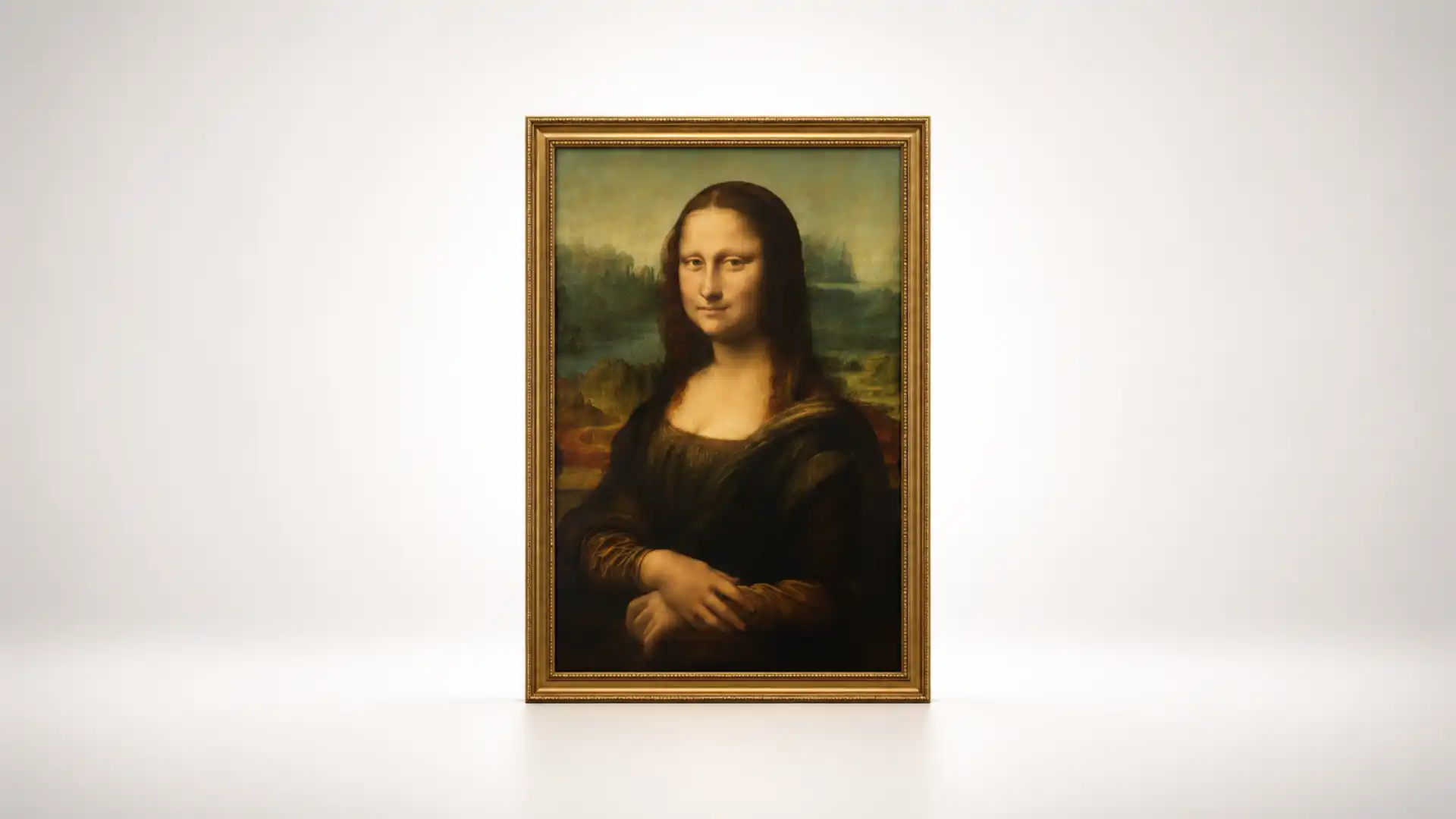
The phrase sounds like a joke from a network engineer with too much museum access: the Mona Lisa has its own IP address. It is a perfect internet sentence because it is half absurd, half believable, and just technical enough to make you click. A painting cannot chat with a router. Lisa Gherardini is not secretly pinging the outside world from behind protective glass in Paris. Yet the stranger truth is that the Mona Lisa does have something close to an official digital address: a permanent Louvre Collections record, an ARK identifier, and even a machine-readable JSON version of the entry. The internet did not give the painting a pulse. It gave it a passport.
Table of Contents
The literal claim appears in a short online fact list from the Dutch SEO agency Onder, which says the Mona Lisa was assigned its own IP address in a technology experiment. I could not verify that experiment from a primary technical source, and that matters. The claim is more useful as a doorway than as a fact to repeat blindly. Follow it, and you land on something better than trivia: the official Louvre Collections page where the world’s most famous painting is treated not as a celebrity, but as an object with identifiers, fields, locations, dates, dimensions, provenance notes, images, and a permanent web record.
The discovery is not that a masterpiece has become a gadget. The discovery is that the most photographed painting in the world is also an unusually good example of how museums now publish reality online. The Louvre Collections database has entries for more than 500,000 works from the Musée du Louvre and the Musée National Eugène-Delacroix, and the Louvre says it is updated daily by museum teams. That makes the Mona Lisa’s page part of a living catalogue rather than a frozen museum label copied to the web.
The address itself is plain enough to miss: ark:/53355/cl010062370. It looks like the sort of string a normal reader would ignore, but it is doing quiet work. It sits inside the official URL for the Louvre’s record of Portrait de Lisa Gherardini, épouse de Francesco del Giocondo, dit La Joconde ou Monna Lisa. The page identifies the painting as Leonardo da Vinci’s work, dates it to 1503–1519, gives the inventory number INV 779, says it is currently on display in Salle 711 in the Denon wing, and lists its poplar support and dimensions.
This is why the page is worth opening. It replaces the poster version of the Mona Lisa with the administrative Mona Lisa. Everyone knows the smile. Fewer people have seen the record that makes the painting legible to curators, search engines, databases, researchers, students, preservation systems, citation managers, and curious people who enjoy the hidden machinery behind cultural fame. The famous image becomes less mystical and more exact. It is not only “the Mona Lisa.” It is a work with a shelf life, a room, a route, a support material, a history of ownership, a conservation problem, and a stable address on the public web.
The better version of the rumor
The weakest version of this story is the neat viral line: the Mona Lisa has an IP address. It travels well because IP addresses already sound faintly magical to non-technical readers. They suggest that everything has a number somewhere, that the internet has filed the world into boxes, that even a painting might have a little numeric identity behind the scenes. The line is memorable, but it is also too smooth. It does what many web facts do: it trims away all the interesting parts so the sentence can survive on social media.
The better version is messier and more interesting: the Mona Lisa has a persistent identifier. That identifier is not a public IP address like a server endpoint. It is an ARK, short for Archival Resource Key. ARKs are used by archives, museums, libraries, publishers, data centers, government bodies, and other institutions to give digital, physical, or abstract things stable identifiers. The ARK Alliance describes ARKs as persistent identifiers and stable trusted references for information objects, and says they are meant to work as web addresses that do not break.
That difference matters because an IP address points to infrastructure, while an ARK points to identity. A server can move. Hosting can change. A museum can rebuild its website. A collection management system can be replaced. A persistent identifier is supposed to survive those changes by giving the object a name that can be resolved again later. It is less glamorous than saying “the painting is online,” but it is more durable. The Mona Lisa does not need a network card. It needs a way for its official record to remain findable after a redesign, a migration, or a decade of institutional housekeeping.
This is where the official Louvre page becomes quietly satisfying. The page is not only a visitor-friendly explainer. It is a structured catalogue entry with a persistent route. The URL contains the ARK path. The page also exposes a JSON record, which means the data can be read by software as well as by humans. The JSON record for the painting lists the ARK ID as cl010062370, the official URL, a modified date of 2026-05-25, the title, current location, creator, object numbers, collection, dimensions, and material.
The funny part is that the machine-readable version feels less mystical but more intimate. In the museum, the Mona Lisa is a crush of bodies and raised phones. Online, inside the data, she is a row of fields. Title. Date. Creator. Location. Inventory number. Material. Owner. Holder. Current room. That might sound cold, but it gives the painting a second form of closeness. You cannot stand alone in front of her at the Louvre for long. You can sit alone with the record for as long as you want.
There is a strong editorial reason to treat the IP-address line with suspicion. Good internet discovery should not turn folklore into filler. The Onder page is useful because it shows the rumor in circulation, but the real object worth recommending is the Louvre record and the infrastructure around it. Web Radar is at its best when it does not merely chase odd claims. It follows them until they reveal a better web object hiding underneath: a page, a database, a tool, a forgotten archive, a technical standard, a small corner of the internet with more texture than the slogan promised.
The Mona Lisa’s official record gives that texture immediately. It moves the painting away from the gift-shop aura and back into the discipline of cataloguing. There is a pleasure in seeing a world-famous icon reduced to “INV 779 ; MR 316” and “huile sur bois (peuplier).” Not because it makes the painting smaller, but because it returns some friction to a thing that has become too famous to see clearly. The record reminds us that global fame sits on top of paperwork.
It also reminds us that museums are not only buildings full of objects. They are naming systems, conservation systems, cataloguing systems, rights systems, photography systems, and publishing systems. A museum object does not enter the public web by magic. Someone has to decide what it is called, which dates to show, what uncertainty to preserve, which old labels to keep, how to handle images, which fields are public, and where the record should live. The Mona Lisa’s record is famous by association, but the same machinery serves thousands of less-clicked objects.
The Louvre database has an odd democratic energy because of that. The same interface that holds the Mona Lisa also holds fragments, minor works, copies, storage objects, recovered works, and things nobody is building a pilgrimage around. The database does not care that one painting is a pop-culture planet and another is a specialist record. It gives each object a page. That sameness is part of the charm. The web has always been good at flattening status, sometimes foolishly, sometimes beautifully. Here the flattening is productive.
The IP-address rumor points toward a bigger idea: the web wants every object to have an address. Not only products, companies, films, or profiles. Paintings. Fossils. Datasets. Manuscripts. Violins. Botanical specimens. Museum rooms. Exhibition histories. The world becomes more usable when cultural objects are not trapped in captions or PDF catalogues, but can be cited and opened directly. A good object record is not glamorous, but it is one of the basic civic units of the web.
A painting with a permanent web identity
The Mona Lisa’s Louvre record starts with the official title in French, and that already changes the tone. The page does not begin with myth; it begins with naming. “Portrait de Lisa Gherardini, épouse de Francesco del Giocondo, dit La Joconde ou Monna Lisa” is a title that carries identity, marriage, nickname, language, and museum practice in one breath. The familiar English name is there, but it is not the only name. The page’s title field makes room for the person behind the brand.
The record identifies the work as by Léonard de Vinci, dated 1503–1519, with the inventory number INV 779 and the alternative number MR 316. It says the painting belongs to the Department of Paintings, is currently on display at the Musée du Louvre, and is located in Salle 711, Denon wing, Level 1. These are small details with a grounding effect. The painting stops floating in the cultural ether and becomes findable in a room.
The physical details are even better. The Mona Lisa is listed as oil on wood, specifically poplar. The dimensions are 0.794 metres high by 0.534 metres wide, with larger accessory dimensions listed for the framed presentation. The painting is famous enough to feel enormous in the mind, but the record restores its actual scale. It is not a mural. It is a smallish portrait behind a huge amount of attention.
That contrast is a big part of the page’s appeal. The cultural footprint is absurdly larger than the object. The record’s calm measurements make that absurdity visible. A painting less than a metre tall has generated scholarship, queues, security architecture, press coverage, VR projects, souvenirs, memes, conspiracy theories, and crowd-control headaches. The page does not sermonize about any of this. It simply places the number next to the myth and lets the reader feel the gap.
The Louvre’s own room page gives the physical counterpart to the database entry. The Mona Lisa is housed in the Salle des États, Room 711, in the Denon wing, and the Louvre describes that space as its largest room. The room also holds major Venetian paintings, including Veronese’s The Wedding Feast at Cana, a work so large that it becomes almost invisible to many visitors because the crowd is turned the other way.
Since 2005, the painting has been shown in a temperature- and humidity-controlled protective glass case, partly for security and partly because Leonardo painted it on a poplar panel that has warped and cracked over time. The database and the glass case are two versions of the same duty. One protects the object physically. The other protects its identity, context, and retrievability online.
The ARK identifier is the smallest piece with the largest long-term ambition. ARKs are built for persistence rather than glamour. The ARK Alliance says they identify things that can be digital, physical, or abstract, and it gives museums as one of the kinds of institutions using them. In practical terms, that means the Mona Lisa’s web identity is meant to outlast ordinary URL churn. The point is not that the current page is eternal. The point is that the identifier gives the Louvre a structured way to keep the record resolvable.
There is something elegant about a famous painting receiving an opaque identifier. ARK:/53355/cl010062370 does not flatter the object. It does not say “masterpiece,” “icon,” “smile,” “Leonardo,” or “world-famous.” It does not care about marketing. It behaves like infrastructure. That makes it weirdly respectful. The identifier does not perform awe. It does a job.
This is a useful correction to the way we often talk about digitised culture. A digital museum is not only a gallery of pretty images. The serious part is the record layer: unique IDs, stable links, metadata, provenance, location, rights, bibliographies, versions, translations, and image references. Those parts are less shareable than a zoomable painting, but they determine whether the digital object remains usable after the first burst of attention fades.
The Louvre Collections database is built for both casual browsing and research. The database homepage says it contains entries for more than 500,000 works and is updated daily through ongoing documentation work by experts. This matters because museum knowledge changes. Attributions shift. Bibliographies grow. Locations move. Conservation notes are refined. New research may alter wording. A database entry is not a tombstone; it is a maintained object.
The Mona Lisa entry shows that maintenance directly. The JSON record lists a modified date of 2026-05-25, which makes the famous painting feel less like a fossilized cultural fact and more like a live institutional record. That date does not mean the painting changed. It means the record did. The web version of a museum object is its own thing, with its own updates and dependencies.
This is a small but useful mental shift. The Mona Lisa online is not identical to the Mona Lisa in the Louvre. The physical painting has wood grain, varnish, cracks, damage history, layered paint, room lighting, crowd pressure, and a controlled climate. The online record has fields, identifiers, photographs, metadata, routes, caches, and export formats. One is the object. The other is the public interface to the object. The web address is not a substitute for seeing the painting, but it gives the painting a second public life.
That second life has its own audience. A curator, a developer, a teacher, an art historian, a student, a journalist, a dataset builder, and a bored reader at midnight may all open the same record for different reasons. The page does not need to know their intentions. It is structured enough to serve all of them. That is the quiet strength of a good collection record: it does not shout, but it travels.
The official record also reveals how much of the Mona Lisa’s fame is administrative now. The painting is not only protected by guards; it is protected by systems of description. Its title is fixed enough to be searchable, but flexible enough to include variants. Its room is recorded. Its owner and holder are named. Its dimensions are written down. Its materials are specified. Its history is narrated. Its bibliography keeps accumulating. Fame becomes a matter of maintenance.
What stands out inside the record
| Feature | What it reveals | Why it is worth opening |
|---|---|---|
| ARK identifier | A persistent web identity | The painting has a stable institutional address |
| JSON record | Machine-readable museum data | Software can read the Mona Lisa too |
| Inventory number | INV 779 and MR 316 | The icon becomes a catalogue object |
| Current location | Salle 711, Denon wing | The web record maps back to a real room |
| Material | Oil on poplar wood | The myth becomes physically specific |
| Modified date | Record updated in 2026 | The page is maintained, not abandoned |
The table makes the page’s appeal clearer: the pleasure is not only looking at the famous image. The pleasure is seeing how an institution turns a fragile, overloaded cultural object into something that can be located, cited, parsed, updated, and trusted.
The strangely intimate pleasure of a museum database
A good museum database has a flavor that social platforms rarely achieve. It lets you wander without being chased. There are no reaction buttons demanding your mood. No autoplaying lecture. No feed trying to keep you irritated. The Louvre Collections site has search, categories, themed albums, object records, images, and room links. It behaves like a public tool, not a trap. That alone makes it feel refreshing.
Opening the Mona Lisa page is especially odd because the painting is so overexposed. You arrive expecting the world’s most famous face, but the page asks you to read. It is full of details that do not fit the tourist fantasy: inventory numbers, acquisition dates, owner labels, old scholarship, comments on identity, conservation notes, and historical uncertainty. The famous smile is still there, but it is no longer the only thing allowed to speak.
The record’s history section is dense, and that density is part of the appeal. The Louvre does not treat the painting as a single mythic moment. It discusses the likely commission, Francesco del Giocondo, the identification of Lisa Gherardini, the role of Vasari, the Agostino Vespucci note discovered in Heidelberg, the question of Leonardo’s later patrons, the acquisition by François I, and the painting’s fragile condition. The entry makes the Mona Lisa harder to flatten.
That is rare on the open web, where famous works are often reduced to a handful of recycled facts. The Louvre page resists the compression that made the Mona Lisa so memeable. It does not say only “mysterious smile.” It says poplar, varnish, crack, provenance, bibliography, room, object number, royal collection, current holder. It gives the reader material to think with, not just a cultural password.
The page is also a reminder that databases can be emotional without trying to be. A line about poplar wood can be more moving than a paragraph about timeless beauty. Wood moves. Wood cracks. Wood reacts to moisture. A portrait that feels immortal in reproduction is vulnerable as an object. The Louvre’s room page explains that the painting is kept in protective glass because of security needs and conservation requirements tied to the poplar panel. That makes the web record feel less like a dry filing card and more like a care document.
The crowd around the painting is part of its modern identity, but the database gives a different tempo. In the room, people compete for a view; online, the painting waits. You can move from image to details to history to bibliography without worrying about blocking someone’s photo. The page does not recreate the aura of the room, and that is fine. It offers a quieter kind of encounter: not presence, but access.
This quieter access is where the page becomes a proper Web Radar object. It is not hidden because the Louvre is obscure. It is hidden because most people do not think to open the database entry for something they already “know.” Familiarity becomes a blindfold. The Mona Lisa is so famous that the official record feels strangely undiscovered. The page proves that even the most over-known object can still have an under-clicked layer.
There is also a small design lesson here. The page works because it does not try to out-famous the painting. It does not build a cinematic shrine around the image. It gives the painting a functional record and lets the authority come from structure. That restraint is rare. Many cultural websites overproduce their star objects, wrapping them in animation, themed scrolling, dramatic copy, or classroomish narration. The Louvre record is plainer, and the plainness gives it credibility.
The page also gives you a way to see the Mona Lisa as part of a collection rather than a lone celebrity. The database format puts her back among other objects. You can search by department, browse themed albums, move through room context, or open related records. A superstar object becomes a node. That node has links to places, dates, creators, owners, and records. The painting remains singular, but it is no longer isolated.
This is one of the web’s best gifts to cultural heritage. A physical museum visit is bound by architecture and stamina, but a database lets relationships become paths. You may start with the Mona Lisa, then follow Leonardo, then the Department of Paintings, then Salle 711, then Venetian works in the same room, then records of copies, then recovered works. The database does not force a grand tour. It lets curiosity build its own route.
The official Louvre room page adds another layer: the painting’s display context is part of its story. The Salle des États was chosen for the Mona Lisa in 1966, and the Louvre says the painting has been in its protective glass case since 2005. The room’s walls were repainted a deep midnight blue in 2019 to heighten contrast with the Venetian works around it. Those details make the viewing environment feel designed, not accidental.
The display context matters because the web tends to detach images from rooms. A JPEG can make every artwork look equally homeless. The Louvre record and room page push against that. They tell you where the painting is, what shares the room, why the glass exists, and how the room has been shaped around crowds and conservation. The web address does not erase the museum. It points back to it.
There is also a nice irony in the painting’s public identity. The Mona Lisa became more famous after being stolen in 1911, and the Louvre’s room page summarizes that episode: the painting disappeared on 21 August 1911, remained gone for more than two years, and was recovered after Vincenzo Peruggia tried to sell it in Italy. The theft helped turn the painting into a global public obsession.
The database age gives that fame another turn. The same painting that once became famous by vanishing is now famous while being hyper-addressable. It has a room, a record, a persistent identifier, a JSON feed, image entries, and countless reproductions elsewhere. Its modern security is physical and informational. The painting is guarded from theft, but its identity is deliberately distributed.
That distribution is not the same as open reuse. Access and rights are separate questions. The Louvre database lets the public view the record and images, but that does not mean every image can be freely reused without conditions. This is one of the tensions of digital culture: we expect access to feel like permission. Museum databases often operate in a more careful zone, where public visibility, copyright status, photo credits, database rights, and reuse terms may not align neatly. The page is generous as a reference, but readers should still check terms before republishing images.
The appeal, then, is not “free Mona Lisa downloads.” The appeal is authoritative contact. You can open the official record rather than a repost. You can cite the Louvre page rather than a trivia article. You can check the inventory number, location, material, and dimensions without relying on memory. In a web full of copied summaries, the official object record feels like a clean tap of water.
The machine-readable Mona Lisa
The JSON record is where the story becomes properly internet-native. A human-readable page is expected; a structured data record feels like a backstage pass. The Louvre exposes the Mona Lisa record in JSON, a format used by software to exchange structured information. The JSON version is not romantic. It is blunt. It contains fields, arrays, escaped characters, URLs, titles, object numbers, dimensions, location data, creator labels, and image references.
This is the part that makes the “IP address” rumor feel outdated. The web has moved beyond merely giving things addresses. The more interesting question is whether a thing has an address that people can cite, a record that institutions maintain, a format that software can parse, and metadata that can travel across systems without losing meaning. The Mona Lisa’s JSON record points in that direction. It is not the painting online as decoration. It is the painting online as data.
That distinction shapes how cultural knowledge spreads now. Search engines, catalogues, classroom tools, research databases, digital exhibitions, accessibility systems, AI retrieval tools, and image viewers all depend on structured source material. A famous object with poor metadata is strangely weak online. A less famous object with a stable identifier and clear fields may be easier to cite, connect, and preserve. The Mona Lisa has both fame and structure, which makes the record a useful little case study in cultural data publishing.
The JSON record lists the title, “Portrait de Lisa Gherardini, épouse de Francesco del Giocondo, dit La Joconde ou Monna Lisa,” as well as the usage title “La Joconde.” That means the object carries both formal and familiar naming inside the data. Good metadata respects names as messy human things. People search differently. Languages differ. Titles evolve. Nicknames stick. A record that handles those names well becomes more findable without reducing the object to one label.
The object number field is just as satisfying. INV 779 is not a famous phrase, but it is a quiet anchor. It tells you that behind the celebrity image is an inventory system. The record also includes MR 316 as another inventory number. This kind of numbering is how institutions keep objects stable inside their own house, regardless of how the public talks about them. The internet address and the inventory number sit side by side: one for the web, one for the museum’s internal lineage.
The location field is another small marvel. The JSON says the painting is in Salle 711, Aile Denon, Niveau 1. Software can read that. A map could use it. A visitor guide could point to it. A research tool could group objects by room. An accessibility project could connect the record to navigation. The record turns physical placement into data, and that matters because museum rooms are not just containers. They shape interpretation.
The image fields are where many readers will instinctively pause. The record includes image URLs and copyright or credit information, which shows how the digital object is made of both representation and rights. A painting may be centuries old, but the photograph of it, the database entry, and the web delivery system still have institutional terms around them. The object is public history; the image pipeline is modern publishing.
This is where IIIF enters the wider story. IIIF, the International Image Interoperability Framework, defines image APIs used by cultural institutions to deliver images through standard web requests. Its Image API specification says a URI can request an image and specify region, size, rotation, quality, and format, or request technical information about the image. The Louvre page is not best understood only as a standalone webpage; it belongs to a broader museum-web culture where images and records can be served in structured ways.
Even if the average reader never touches an API, these standards shape what the reader gets to experience. Zoomable images, stable citations, reusable viewers, cross-collection tools, and long-lived object links all depend on boring agreements behind the curtain. The magic is not only the high-resolution image. The magic is that many institutions can publish different collections in ways that tools can understand without custom work for every single museum.
The Mona Lisa’s record is not a full tour of that ecosystem, but it is a friendly entry point. A famous object makes the technical layer less abstract. It is easier to care about persistent identifiers when the object is not a random dataset but the Mona Lisa. It is easier to understand machine-readable metadata when the data is not a dry example but the formal identity of a painting everyone recognizes. Fame becomes a teaching aid.
The ARK page and the JSON page also reveal a good design principle for cultural databases. Humans and machines should not be forced through the same doorway. The ordinary web page is readable, visual, and navigable. The JSON version is structured and terse. Both refer to the same object. That duality is how mature web publishing works: one surface for people, another for systems, tied together by a stable identity.
There is a reason this feels so different from most viral internet content. The Louvre record does not ask you to believe a claim; it lets you inspect a structure. You can see the title. You can see the inventory number. You can see the location. You can open the JSON. You can read the history. You can compare it with the room page. The page has a kind of procedural honesty. It is not persuasive because it is loud. It is persuasive because it is checkable.
That checkability matters in the age of AI summaries and recycled web facts. A model can say “Mona Lisa” in a thousand fluent sentences and still lose the object. A collection record pins the object down. It gives retrieval systems something better to quote than a generic description. It carries institutional authority, but also details that can be verified. If AI tools are going to talk about culture, they need sources like this more than they need thin fact lists.
The JSON record is not perfect as a reading experience, and it is not meant to be. It is useful because it refuses to entertain. A reader who opens it sees raw structure. That rawness has its own charm. It feels like looking at the plumbing of fame. The painting’s smile becomes a value in a field, surrounded by escaped accents and nested arrays. The contrast is delightful if you like the internet as a system rather than a stage.
This is also why the “IP address” framing sticks. People sense that objects now need network identities, even when they use the wrong technical phrase. The public vocabulary is fuzzy. IP address, URL, web address, handle, permalink, identifier, API endpoint, QR code: these get mixed together in casual speech. The Mona Lisa story is a chance to sharpen that vocabulary without killing the wonder. The wonder is not that a painting has a router number. The wonder is that a 16th-century poplar panel has a durable official identity in a 21st-century public database.
The page is a small antidote to link rot anxiety too. Ordinary URLs break constantly, especially when institutions redesign sites or migrate systems. ARKs were made to reduce that fragility by separating the object’s persistent name from the current machinery serving it. The ARK Alliance describes them as stable references that aim to work as URLs that do not return dead ends. That does not make any system immortal, but it shows the right ambition: cultural records should not vanish because a content management system changed.
The global resolver layer adds another useful idea. N2T, short for Name-to-Thing, is described by the ARK Alliance as a global ARK resolver that routes identifiers to things, alongside many other identifier types. The resolver exists because persistent identity needs maintenance and routing, not just good intentions. It is one more reminder that “permanent” on the web is not a magic property. It is a service someone keeps running.
That maintenance is the real story behind the Mona Lisa’s web address. Digital permanence is work. It requires identifiers, redirect patterns, metadata, institutional responsibility, and a willingness to keep old references meaningful after the shiny public website changes. The Mona Lisa will probably remain famous no matter what the Louvre’s URL structure does. Smaller objects do not have that protection. They need the infrastructure.
Why this tiny page says a lot about the web
The Mona Lisa’s official record is a good reminder that the internet is still at its best when it gives things stable public coordinates. Not feed placement. Not algorithmic luck. Coordinates. A page you can open. An identifier you can cite. A record that names its object. A source that can be checked. Much of the modern web has become slippery: posts disappear, platforms hide URLs, search results shift, AI answers paraphrase without trail. A museum object record pushes in the opposite direction.
That does not make it glamorous. The glamour sits in the painting; the usefulness sits in the record. A database entry is not trying to compete with a visit to Paris. It is trying to make knowledge about the object available outside that room. That distinction keeps the page honest. It does not promise transcendence. It gives access, context, and a route back to the institution.
The page also shows how public culture becomes discoverable. A painting without a good record is present but not fully findable. Search engines need text. Researchers need identifiers. Teachers need links. Developers need structured fields. Readers need confidence that the page is not scraped junk. Museums need a way to publish knowledge without surrendering all control over context and credit. The collection record sits at the intersection of those needs.
The Louvre’s 2021 launch of the online collection database gave the public a much wider route into its holdings. The official press release said the collection database brought together the museum’s artworks in one place and contained more than 482,000 entries at launch. It described the platform as intended for both researchers and curious art lovers, with simple and advanced search, department entries, themed albums, and an interactive map.
That launch matters because it changed the default distance between the public and the collection. Before databases like this became normal, many museum objects were visible mainly through visits, printed catalogues, specialist publications, or scattered image references. A public online catalogue does not solve every access issue, but it changes the baseline. It lets a reader begin with curiosity rather than institutional permission.
The phrase “the Mona Lisa has its own IP address” is funny because it imagines physical culture joining the internet of things. The Louvre record is funnier in a quieter way because it shows cultural heritage joining the internet of identifiers. The first version sounds like a stunt. The second version is a civilizational chore done properly. Stunts make headlines. Identifiers make records survive.
There is a hidden product lesson here for anyone who builds websites with serious information. Naming is part of design. The path, the identifier, the record fields, the update date, the export format, the relationship between human and machine pages: all of that is product thinking. The visible interface matters, but the underlying information architecture decides whether the site remains useful after the first visit.
The Mona Lisa page succeeds because it has layers. A casual visitor can see the image and basic facts. A student can read the history section. A researcher can inspect bibliography. A developer can open JSON. A museum nerd can compare room context with object metadata. A writer can use the record to avoid sloppy claims. One page serves many depths without forcing every reader into the deepest layer.
That layered quality is rare on commercial sites, where content is often flattened for conversion. Museum databases have a different rhythm because the object, not the funnel, is the center of gravity. The page exists because the painting exists. The user journey is not built around selling you a booking slot, even if the wider Louvre site naturally includes tickets and visit planning. The record itself is refreshingly object-centered.
The page also shows why old institutions should not be written off as digitally dull. A museum can be slow, bureaucratic, and still publish web infrastructure that many startups would envy. A persistent identifier for each object. A daily-updated database. A JSON record. A room map. Bibliographic structure. Images tied to credits. Those are not flashy features, but they create trust. Good institutional web work often looks boring until you need it.
The strongest web objects often have this quality. They are quiet until they become necessary. Nobody celebrates a stable permalink when they first see it. Years later, when the link still works and a citation still resolves, the design choice becomes visible. Persistent identifiers are a bet on future readers. The Mona Lisa does not need that bet as desperately as obscure works do, but its record makes the principle easy to notice.
There is also a public-memory argument here. The web is now one of the places where cultural memory is maintained. Museums remain physical stewards, but the public often encounters collections through screens first. That encounter should not be left to image search scraps, commercial posters, or AI summaries built from low-grade sources. Official records give the public a better starting point.
The database format also corrects the false idea that digitisation makes objects placeless. A good digital record keeps returning you to place. The Mona Lisa’s page says Salle 711, Denon wing, Level 1. The room page explains the Salle des États and its history. The object does not float as a detached image. It remains tied to the Louvre, to a room, to conservation constraints, to a display decision, to the museum’s own vocabulary.
This matters for AI and search because answers without place can become mush. “The Mona Lisa is in the Louvre” is not wrong, but it is a thin answer. A better source says which room, which wing, which level, which inventory number, which material, which dimensions, which acquisition line, which bibliography, which update date. The official record gives detail that resists generic summarization.
The page is also a quiet lesson in humility. The world’s most famous painting still needs metadata. Fame does not remove the need for description. If anything, fame increases the need for careful description because myths multiply around famous objects. The Louvre entry spends serious space on identity debates, provenance, condition, and interpretation because the obvious story is not enough.
That is why the page rewards people who already think they know the Mona Lisa. The record does not give a new conspiracy; it gives better ground. It lets you see the painting as an object with a complex documented life rather than a blank screen for speculation. For a reader trained by the web to expect “secrets,” the record’s restraint is almost radical. It says: here is what we know, here is how we name it, here is where it is, here is how to cite it.
The page also hints at the next phase of cultural publishing. The future of museum access will be less about posting images and more about maintaining interoperable, trusted object identities. Images matter, but without identifiers and metadata, they drift. A detached image can be copied endlessly and still lose its source. A record keeps the object in relation to authority, context, and history.
This is why the Mona Lisa’s web identity is more interesting than an IP address. An IP address would be a network curiosity; an ARK is a cultural promise. The promise is not absolute immortality. No web system deserves that much faith. The promise is that an institution has given the object a stable identity and accepted some responsibility for keeping that identity meaningful. That is more poetic than it sounds.
Small doubts before opening it
Is it really an IP address? Not in the public evidence I found. The claim appears in a short internet-facts article from Onder, but I did not find a primary technical source that proves the Louvre painting has a literal public IP address assigned to it as an object. The more defensible and more interesting claim is that the Mona Lisa has an official persistent ARK address in the Louvre Collections database and a JSON record that software can read.
What should I open first? Start with the official Louvre Collections record for the painting, because it gives the cleanest mix of image, title, inventory number, location, date, material, history, and bibliography. The record identifies the work as INV 779, dates it to 1503–1519, places it in Salle 711 in the Denon wing, and gives the material as oil on poplar wood.
Why does the ARK matter if the normal URL works? A normal URL is often tied to a current website structure, while an ARK is designed as a persistent identifier that can be routed over time. The ARK Alliance describes ARKs as stable trusted references for information objects, including digital, physical, and abstract things. For a museum, that means the object’s identity can survive better through redesigns and system changes.
Why bother with the JSON version? The JSON record shows the Mona Lisa as structured data rather than a designed page. It lists fields such as ARK ID, URL, modified date, title, location, creator, object numbers, collection, dimensions, material, and history. That format is not pleasant reading for everyone, but it is a clear sign that the record is part of a software-readable cultural data layer.
Is the page only for art historians? No. The page is good precisely because it works for several kinds of curiosity at once. A casual reader can confirm basic facts. A designer can study how cultural metadata is presented. A developer can inspect the JSON. A writer can cite the official record. A museum visitor can connect the online entry to the physical room. The page is specialist enough to trust and plain enough to browse.
What is the best surprise on the page? The best surprise is how small and physical the painting becomes again. The record gives the dimensions as 0.794 metres high by 0.534 metres wide and identifies the material as oil on poplar wood. After years of seeing the Mona Lisa as a giant cultural symbol, it is strangely pleasing to meet it again as a fragile wooden panel with measurements.
Does this replace seeing the painting in Paris? No, and it should not try. The physical encounter has crowd noise, scale, room design, glass, distance, and the peculiar social theatre of everyone trying to photograph the same object. The database gives a different reward: time, clarity, source quality, and structure. The room gives presence; the record gives patience.
Why is this a Web Radar pick? Because it turns a cheap-sounding fact into a better discovery. The page is not new in the hype sense, and the Mona Lisa is not obscure. Yet the official record feels under-opened because most people stop at the image. The hidden gem is not the painting; it is the web infrastructure wrapped around the painting.
The internet did not make the Mona Lisa famous, but it has changed how her fame is handled. The painting now exists as a public object, a museum attraction, a conservation challenge, a database entry, an ARK identifier, a JSON file, and a search result. Some of those forms are more graceful than others. The official Louvre record is one of the good ones because it gives the painting a digital body without pretending the digital body is the painting itself.
The best internet discoveries often work like this. They begin with a strange phrase and end with a better object. “The Mona Lisa has its own IP address” is the hook. The Louvre Collections record is the find. Open it not because the painting needs another viewer, but because the record shows a mature version of the web: one where a fragile object from the early 1500s can be named, cited, updated, parsed, located, and returned to, without being reduced to a motivational poster or a recycled trivia line.
Author:
Jan Bielik
CEO & Founder of Webiano Digital & Marketing Agency
This article is an original analysis supported by the sources cited below
Portrait de Lisa Gherardini, épouse de Francesco del Giocondo, dit La Joconde ou Monna Lisa
The official Louvre Collections record for the original Mona Lisa, used for the painting’s title, date, inventory numbers, room location, dimensions, material, history and institutional context.
Mona Lisa JSON record
The machine-readable Louvre Collections record used to verify the ARK ID, modified date, structured fields, location, creator data, object numbers, dimensions and material.
Louvre Collections
The Louvre’s official collections database homepage, used for the database scope, daily update claim and institutional framing of more than 500,000 collection entries.
From the Mona Lisa to The Wedding Feast at Cana
The Louvre’s official page on the Salle des États, used for the painting’s room context, protective glass case, display history, conservation explanation and 1911 theft summary.
The Musée du Louvre launches online collection database and new website
The Louvre press release announcing the online collection database, used for the launch context, initial scale of the database and the public purpose of the platform.
ARK Alliance
The official ARK Alliance homepage, used for the explanation of Archival Resource Keys as persistent identifiers for digital, physical and abstract objects.
Frequently asked questions and answers about ARKs
The ARK Alliance FAQ, used for the explanation of N2T as a global resolver and the routing logic behind persistent identifiers.
Image API 3.0
The official IIIF Image API specification, used for the explanation of image delivery through standardized HTTP or HTTPS requests and URI-based image parameters.
| Citing this article? Brief excerpts are welcome. Please credit Webiano.digital, name the author where stated, and include a link to https://webiano.digital and to this original article. Full or substantial republication requires prior written permission. Read our Copyright and Content Use Policy. |
This article was prepared with the assistance of artificial intelligence tools. The content underwent expert human review, and Webiano Digital & Marketing Agency assumes editorial responsibility for its final version and publication.