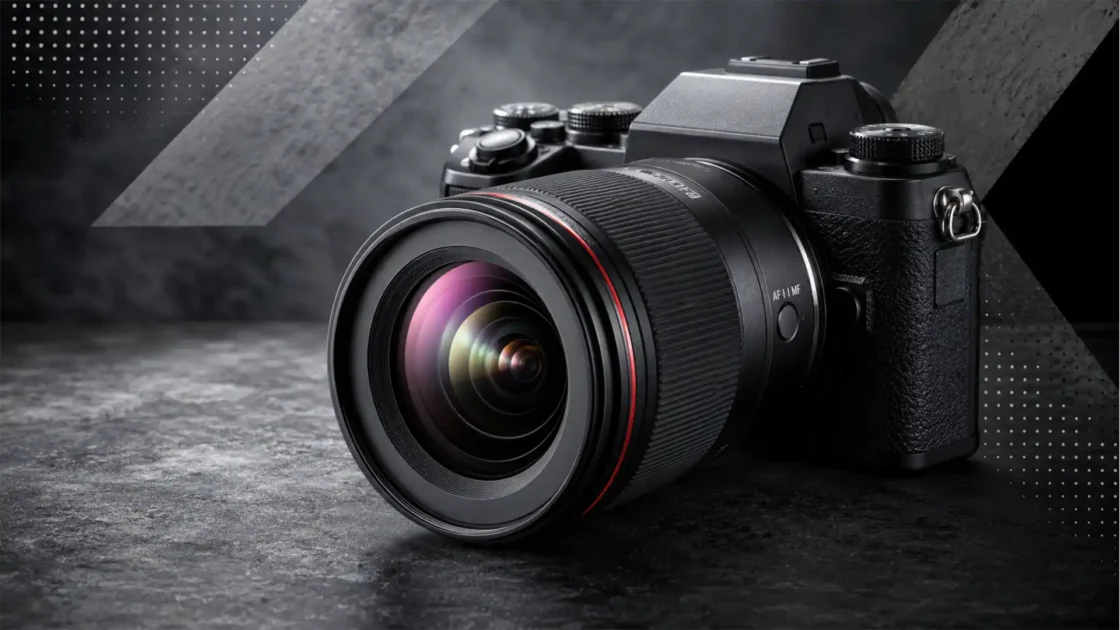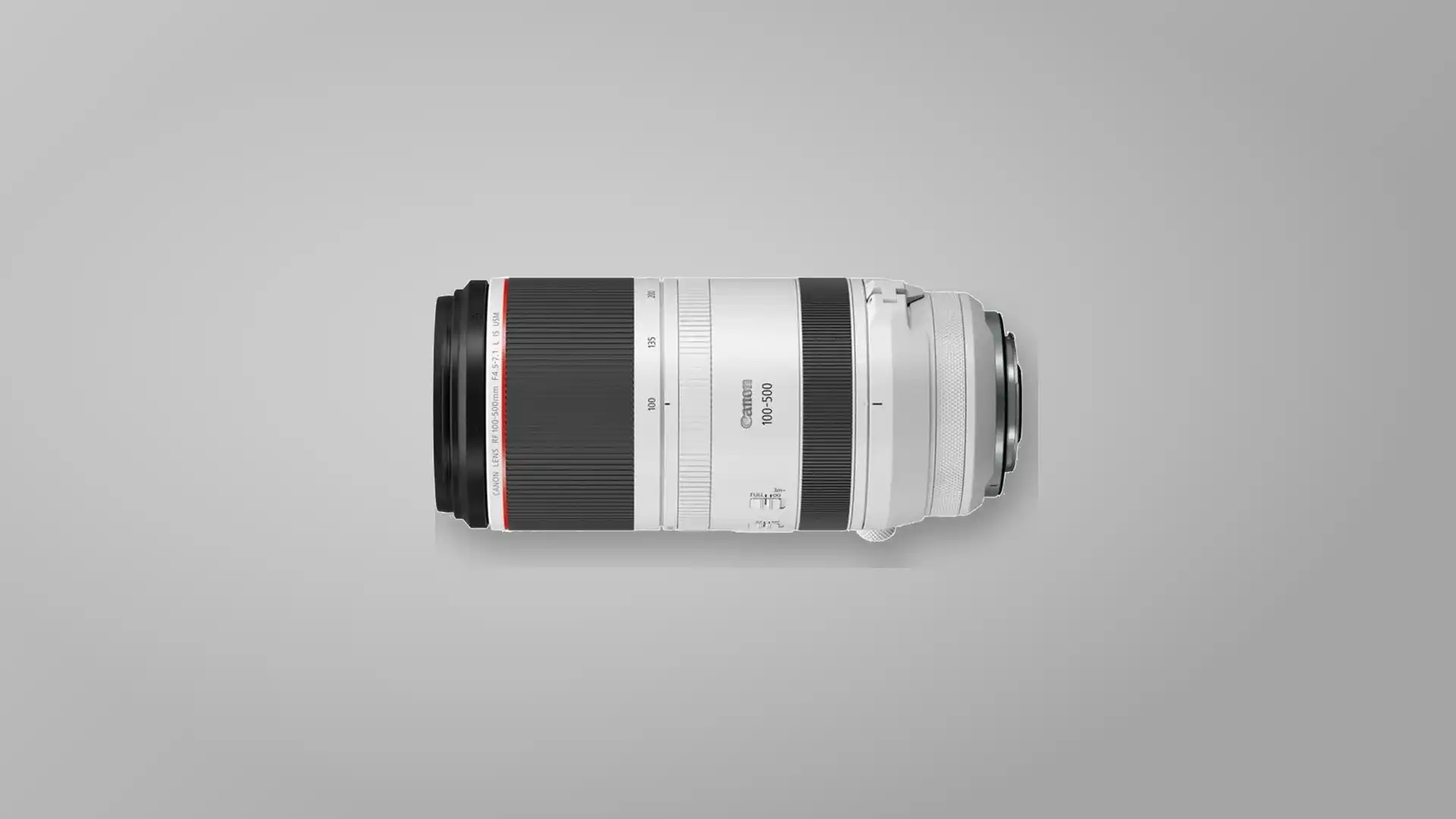
A camera body records the picture. A lens decides much of the picture before the sensor ever sees it. That difference matters more in 2026 because mirrorless bodies have become extremely capable, while many photographers still shoot through kit zooms, aging DSLR glass on adapters, or focal lengths that do not match the work they want to make. The next visible jump in image quality, subject separation, low-light confidence, and creative control is often not a new camera. It is the right lens.
Table of Contents
This is not an argument against new camera bodies. The latest bodies are remarkable machines. Sony’s Alpha 7R VI pushes the high-resolution full-frame class to roughly 66.8 effective megapixels with a stacked sensor, Canon’s EOS R5 Mark II combines a 45-megapixel stacked full-frame sensor with high-speed shooting and 8K RAW video, Nikon’s Z8 gives photographers a compact 45.7-megapixel flagship-class body, and Fujifilm’s X-T5 delivers 40.2 megapixels from an APS-C sensor. These are serious tools. The problem is that the body has become the more seductive upgrade, not always the more rational one.
A lens-first upgrade forces a sharper question. It asks what is actually limiting the photographs: reach, aperture, close focus, edge quality, autofocus drive, rendering, minimum focusing distance, focus breathing, stabilization behavior, weight, or the simple fact that the current lens does not create the field of view the image needs. Once that diagnosis is honest, the camera body often stops looking like the obvious answer.
The body is no longer the automatic bottleneck
The camera industry has spent the mirrorless era teaching buyers to think in bodies. Every launch promises a better sensor, faster recognition autofocus, cleaner high ISO, stronger stabilization, higher burst rates, deeper video formats, improved viewfinders, new menus, brighter screens, better heat handling, and more intelligent subject detection. Those improvements are real. They also stack on top of a baseline that is now extremely high.
A five-year-old mirrorless body in good condition is rarely the reason an image lacks character. It may not track a swallow in flight as well as a 2026 flagship. It may not shoot 8K RAW, pull deep shadows with the same grace, or deliver a blackout-free 30 fps burst. Yet for portraits, travel, food, documentary work, family photography, product images, interiors, local journalism, weddings, school sports, and most editorial assignments, the body is often already sharp enough, fast enough, and clean enough.
The lens, by contrast, remains brutally specific. A slow variable-aperture kit zoom still behaves like a slow variable-aperture kit zoom on a new body. A soft corner stays a soft corner. A lens with distracting longitudinal chromatic aberration does not become elegant because the camera gains a faster processor. A 24-70mm lens still cannot give a bird photographer 600mm. A 50mm lens still cannot produce an ultra-wide interior perspective. A body upgrade gives the same lens a better recorder. A lens upgrade changes the signal being recorded.
That is the center of the lens-first argument. When the body is competent, the lens is often the most direct route to a photograph that looks, feels, and behaves differently. The upgrade is not abstract. It changes where the photographer can stand, how the subject separates from the background, how much light reaches the sensor, how the corners hold together, and whether the frame can be made at all.
The market has moved toward capable bodies and expensive ecosystems
CIPA shipment data shows a camera market that is no longer the mass consumer electronics market it was during the compact-camera boom. Shipment volumes remain far below the 2010 peak, yet 2025 brought renewed strength after years of contraction. Interchangeable-lens mirrorless cameras now define the serious camera market, while DSLRs continue to fade as a production and shipment category. The market has not returned to the old world. It has settled into a smaller, more deliberate one.
That matters for buyers because the industry has adapted. Manufacturers now make fewer casual cameras and more high-margin bodies, specialized creator models, premium compacts, and lenses designed to keep owners inside a mount. The most visible marketing still goes to bodies because bodies launch in cycles and generate headlines. Lenses move slower, stay relevant longer, and shape system loyalty more quietly.
The renewed interest in cameras does not remove the cost problem. A new high-end body can consume the entire budget while leaving the photographer with the same optical limits. The 2026 Sony Alpha 7R VI illustrates the top of the modern body cycle: more resolution, faster readout, a new battery, better viewfinder performance, improved autofocus, and a launch price around the upper professional enthusiast tier. It is a technically impressive camera. It is also a reminder that a body purchase can quickly become a system purchase, especially when batteries, memory cards, grips, cages, and storage are added.
A lens purchase is usually narrower and more durable. A strong portrait prime, macro lens, stabilized telephoto, fast standard zoom, compact travel prime, tilt-shift lens, or ultra-wide zoom can serve several body generations. That longer useful life changes the economics. The body may be the product that gets announced. The lens is often the product that stays in the bag for a decade.
The lens writes the first draft of the image
Every digital photograph begins as an optical projection. The sensor does not receive the world; it receives the image formed by the lens. The body samples that image, converts it into data, processes it, stores it, displays it, and often corrects it. The lens decides the geometry, the field of view, the aperture, the plane of focus, the quality of out-of-focus areas, the shape of highlights, the pattern of distortion, the strength of flare, the amount of vignetting, and the way contrast survives from the center to the edges.
This is why the same body can feel completely different with two lenses. Put a compact 35mm f/1.8 on an APS-C body and it becomes a small, responsive everyday camera. Put a 70-200mm f/2.8 on the same mount and the system becomes a portrait, event, and indoor sports tool. Add a 100mm macro and the camera begins seeing texture, insects, product details, jewelry, documents, and flowers in a way the standard zoom never could. Nothing about the sensor changed. The camera’s practical world changed.
The lens-first approach is not built on romantic ideas about “glass.” It is grounded in the path light takes. The sensor can only record the image delivered to it. If that image is dim, distorted, poorly resolved, full of color fringing, unstable at the shutter speeds needed, or framed from the wrong distance, the body must compensate. Sometimes it can. Often it cannot. Better software may hide some defects, but hidden defects still shape the file.
A new body often improves the margin around the picture. A better lens changes the picture itself. The most useful upgrade is the one that solves the first physical problem, not the last digital one.
Resolution has made lens weaknesses easier to see
High-resolution bodies are less forgiving of lenses than older bodies were. A 12-megapixel camera could hide a great deal. A 45-megapixel, 61-megapixel, or 66.8-megapixel body does not. The same lens that looked sharp on an older sensor may reveal field curvature, smeared corners, astigmatism, sample variation, focus shift, or low microcontrast when mounted on a dense modern sensor.
That does not mean every photographer needs the newest optical design. It means body upgrades can expose optical debts. Buyers often learn this the expensive way. They replace a camera to get more pixels, then discover that the kit zoom, adapted DSLR zoom, bargain superzoom, or older wide-angle prime is the weaker half of the system. The files are larger, but the visible improvement is limited because the lens cannot deliver enough contrast at fine detail.
MTF language helps explain the mismatch. Lens manufacturers and testers use modulation transfer function to describe how well a lens carries contrast at different spatial frequencies from the center of the frame toward the edge. Nikon’s MTF explanation, Canon’s MTF guide, Tamron’s MTF discussion, Cambridge in Colour’s lens-quality tutorial, and Lensrentals’ optical-bench work all point to the same practical truth: “sharpness” is not one number. It is the combined perception of resolution, contrast, aperture behavior, focus accuracy, field position, and subject distance.
A body with more pixels gives the lens more opportunity to prove itself. It also gives the lens more opportunity to fail. Buying more resolution before buying a lens that can feed it is one of the most common upgrade traps in photography.
MTF is not romance, it is the language of contrast
Photographers often say a lens is sharp or soft as if sharpness were a single trait. It is not. A lens may be very crisp in the center and weak in the corners. It may be excellent at f/5.6 and nervous wide open. It may preserve broad contrast while losing fine detail. It may look good for portraits and poor for architecture because the subject, frame position, and viewing standard changed.
MTF charts are imperfect, but they discipline the conversation. They show the idea that a lens must transmit contrast at different scales. Coarse contrast affects the sense of clarity and punch. Fine contrast affects eyelashes, leaves, fabric, hair, distant buildings, stars, product textures, and print detail. A lens that carries both well across the frame gives the sensor better information to record. A lens that collapses fine contrast near the edges forces the photographer to crop, stop down, accept softness, or change composition.
Lensrentals’ bench testing is useful here because it treats the lens as a measurable optical instrument rather than a brand story. Copy variation, decentering, field behavior, and high-resolution testing reveal why two lenses with similar specifications can behave very differently. The number printed on the front ring is only the beginning. A 50mm f/1.2, 50mm f/1.4, and 50mm f/1.8 may all share a familiar angle of view, yet their wide-open contrast, autofocus behavior, bokeh, weight, flare resistance, and price can make them entirely different tools.
The point is not that every buyer must read MTF charts before spending money. The point is that image quality begins with optical contrast. The body cannot record detail the lens fails to draw with enough contrast to distinguish it.
Diffraction turns the megapixel race into an aperture decision
More pixels do not remove optical physics. Diffraction begins when light spreads as it passes through a small aperture. At moderate apertures it may be masked by the reduction of lens aberrations. At smaller apertures it gradually limits the total resolution of the image, no matter how strong the sensor is. Cambridge in Colour’s diffraction tutorial remains useful because it connects aperture, pixel size, and the visible softening that appears when photographers stop down too far in pursuit of depth of field.
This creates a practical tension for modern cameras. Dense sensors reward better lenses, steadier technique, accurate focus, and cleaner files. They also make diffraction and focus errors easier to notice at high magnification. A photographer who buys a high-resolution body but keeps shooting a weak lens at f/16 to clean up the corners may not gain the detail expected. The added pixels capture the compromise more faithfully.
A better lens changes that equation. It may be sharp enough at f/4 or f/5.6 to avoid stopping down as far. It may have a flatter field for landscape or product work. It may hold corners better at wider apertures. It may allow a lower ISO because its maximum aperture is wider. These are not abstract optical virtues. They are ways of escaping the forced tradeoffs that make files look worse than the camera’s specifications promise.
A body upgrade gives more sampling. A lens upgrade can improve the projected image enough that the sensor does not need to rescue it. The cleaner optical path often matters more than the larger file.
Aperture changes exposure, depth, autofocus and intent
A faster lens does not merely “let in more light.” It changes the range of decisions available while shooting. Moving from a variable-aperture kit zoom to an f/1.8 prime or f/2.8 zoom can mean lower ISO, faster shutter speeds, more reliable indoor work, less motion blur, cleaner viewfinder behavior in low light, and stronger subject separation. The body participates, but the lens opens the door.
Aperture also changes depth of field. Canon and Nikon’s educational materials describe the core relationship clearly: wider apertures reduce the zone that appears acceptably sharp, while smaller apertures increase it. Photographers sometimes treat shallow depth of field as a gimmick, but used well it is an editorial tool. It directs attention. It removes background clutter. It creates hierarchy in a frame. It separates a face from a room, a product from a tabletop, a bird from reeds, or a flower from a noisy garden.
The crucial point is control. A slow zoom at its long end may force f/5.6 or f/6.3. A 50mm f/1.8, 85mm f/1.8, 35mm f/1.4, 70-200mm f/2.8, or 28-70mm f/2 gives the photographer choices the body cannot create on its own. Computational blur can simulate some separation after capture. It cannot replace the focusing, lighting, shutter-speed, and viewing decisions created by a real aperture at the moment of exposure.
Fast lenses carry costs: price, size, weight, occasional softness wide open, and tighter focus demands. Yet when aperture is the actual limitation, a new body rarely solves the problem as directly. A camera with better high ISO can reduce noise. It cannot make a slow lens produce the same subject isolation or shutter speed as a faster optic.
Focal length is the upgrade that changes where the photograph is made
Focal length decides the relationship between the photographer, the subject, and the background. It is not only a matter of “zooming in.” A wide lens pulls the viewer into space, stretches near objects, opens interiors, exaggerates foregrounds, and includes context. A short telephoto compresses perspective when the photographer steps back, cleans backgrounds, flatters faces, and turns ordinary light into a quieter portrait. A super-telephoto reaches subjects that cannot be approached and narrows the world until distance becomes design.
This is why focal-length upgrades often feel more transformative than body upgrades. A camera body with better autofocus may increase the keeper rate. A new focal length may create photographs that were previously unavailable. The difference between 24mm and 35mm changes street photography. The difference between 50mm and 85mm changes portraits. The difference between 200mm and 500mm changes wildlife. The difference between a standard zoom and a true macro changes the scale of the world.
A lens-first purchase should begin with missed pictures. If the missing images are cramped interiors, the answer may be an ultra-wide lens. If the missing images are indoor children’s sports, the answer may be a faster telephoto zoom or a fast prime at the right distance. If the missing images are sharp product details, the answer may be a macro lens and lighting rather than a new body. If the missing images are environmental portraits with background separation, the answer may be a 35mm or 50mm fast prime.
A body upgrade improves the camera you already use. A focal-length upgrade often changes the photographs you even attempt.
The kit zoom ceiling is real
Kit zooms deserve more respect than they get. Modern kit lenses are lighter, sharper, and more corrected than many photographers remember from older DSLR bundles. They are useful because they cover the central range where most beginners learn framing. For travel, family documentation, daylight snapshots, and casual video, a compact kit zoom can be the right lens.
The ceiling arrives when the photographer asks for something specific. The lens becomes slow indoors. The background refuses to melt away. The corners look weak at the wide end. The long end is not long enough for field sports. The wide end is not wide enough for interiors. Close focus is not strong enough for small objects. Manual focus feels vague. Autofocus motors may be audible in video. Focus breathing may be distracting. The aperture changes during zooming and complicates exposure.
At that point, a new body may feel tempting because the body is the visible machine. The kit lens, however, is often the bottleneck. A fast prime immediately changes low-light portraits. A 70-300mm or 100-400mm lens changes outdoor sports and wildlife. A 10-20mm, 14-24mm, or 16-35mm changes architecture and travel interiors. A macro lens changes tabletop and nature work. A constant-aperture standard zoom changes event coverage and video exposure.
The kit zoom is the training lens. It is not a moral failure to outgrow it. The mistake is buying a more advanced body to keep using a lens that no longer matches the work.
Autofocus performance belongs to the whole camera-lens system
Autofocus marketing often centers on bodies: subject recognition, eye detection, animal detection, vehicle detection, AI processing units, and faster calculations per second. Those features matter. Yet autofocus is also a lens problem. The body may know where focus should go, but the lens must move its focusing group quickly, accurately, quietly, and repeatedly. A slow focusing motor, heavy optical group, weak communication protocol, or adapted lens can limit the system.
The difference becomes obvious in action, weddings, children, pets, sports, and video. A new body with better subject recognition may still feel disappointing if the lens hunts, pulses, chatters, or cannot keep up with fast changes in distance. Some older lenses were designed for a different autofocus era. Some adapted lenses work beautifully for stills but feel less polished for continuous video AF. Some inexpensive lenses are optically impressive but less consistent when asked to track fast movement.
Lens selection also affects autofocus through aperture. Wider maximum apertures give the system more light for focusing and give the photographer more ability to use faster shutter speeds. The margin is not magical, and modern cameras can focus in low light better than older ones, but a slow lens still makes the system work harder.
The right lens does not replace a competent body. It lets the body perform closer to its promise. A body with excellent autofocus deserves a lens that can physically execute the focus command. Otherwise the buyer pays for intelligence but leaves the mechanical half of the task behind.
Stabilization is stronger when the lens is part of the plan
In-body image stabilization has made handheld photography far more forgiving. The best current systems promise several stops of compensation, and camera makers increasingly combine sensor-shift stabilization with optical stabilization in compatible lenses. That combined approach matters because stabilization is not one generic function. Pitch, yaw, roll, vertical shift, horizontal shift, focal length, subject distance, and video movement all stress the system differently.
A stabilized lens can be especially valuable at longer focal lengths, where small angular movements become large framing movements. The viewfinder settles. Composition becomes easier. The autofocus system sees a steadier subject. The photographer can hold position longer. For still subjects, the shutter speed margin expands. For video, lens stabilization may reduce small telephoto jitters that IBIS alone cannot fully hide.
This does not mean every lens must be stabilized. Many fast primes are not, and body stabilization makes them usable at shutter speeds that once demanded a tripod. Wide lenses often need less stabilization for stills. Flash, tripods, monopods, gimbals, and shutter speed still matter. Yet when the real limitation is handheld telephoto work, a new body is not always the cleanest answer. The lens may need optical stabilization, better balance, a tripod collar, or a focal length that reduces cropping.
The stabilization question should be asked before the upgrade is chosen. If blur comes from camera shake, a stabilized lens may solve it. If blur comes from subject movement, a faster lens or higher shutter speed may solve it. If blur comes from missed focus, a different body-lens autofocus combination may solve it. The cause matters.
Video makes lens flaws harder to ignore
Hybrid cameras have turned lenses into video tools, whether photographers planned that or not. A lens that seems fine for stills may become frustrating once it is used for interviews, handheld walking shots, gimbal work, product reels, weddings, events, or documentary sequences. Video exposes focus noise, focus breathing, aperture stepping, inconsistent zoom exposure, poor manual focus feel, unstable balance, flare behavior, and stabilization artifacts.
The latest bodies add 4K/120p, 8K capture, internal RAW, log profiles, better cooling, waveform tools, stronger autofocus, and improved audio options. None of those features make a lens parfocal. None remove a noisy motor from the recording. None make a heavy front-extending zoom balance well on a small gimbal. None make a variable-aperture zoom maintain exposure during a zoom. Video users often discover that the lens upgrade is the workflow upgrade.
This explains the rise of hybrid lens design. Canon’s RF system now includes lenses with aperture control, power zoom options, and stabilization aimed at photographers who also shoot video. Sony’s recent G Master zooms emphasize lighter weight, fast linear motors, and video-friendly behavior. Third-party manufacturers now advertise firmware updates, quiet motors, low breathing, de-clickable aperture rings, and mount-specific communication because the market has changed.
A video-first body purchase makes sense when codec, heat, rolling shutter, autofocus recognition, or frame-rate limits are blocking paid work. For many creators, though, the lens is where the footage changes most visibly. The shot becomes steadier, quieter, easier to balance, easier to focus, and less compromised in low light.
Software correction is powerful, but it is not a free lens upgrade
Modern photography relies heavily on software correction. Adobe Camera Raw, Lightroom, Photoshop, DxO, Capture One, in-camera JPEG engines, and manufacturer profiles can correct distortion, vignetting, lateral chromatic aberration, color fringing, and perspective problems. Adobe’s lens-profile documentation shows how corrections are tied to Exif metadata and specific camera-lens combinations. This is now part of normal digital imaging, not a cheat.
The problem is treating correction as if it erases lens choice. Distortion correction stretches pixels, especially near the edges. Vignette correction lifts darker corners and may reveal noise. Chromatic-aberration correction can clean color fringes, but it cannot fully restore fine contrast that never reached the sensor. Focus breathing correction crops the frame. Digital stabilization crops and warps. Perspective correction throws away edges. Each tool solves one problem by spending another resource.
A lens designed with stronger native control gives the file more room. That does not mean the best lens is always the least distorted lens. Compact mirrorless lenses often use software as part of the design balance, and some excellent lenses are intentionally corrected in-camera or in raw software. The right standard is not optical purity. It is whether the lens produces files that hold up after the corrections required for the intended work.
A buyer who cares about architecture, product images, astrophotography, reproduction, or video should treat correction profiles as part of the lens evaluation. Software can polish the optical result. It should not be asked to rebuild the photograph from a weak projection.
Lens ecosystems now matter as much as camera specifications
A camera is bought once. A mount is joined. That distinction has become sharper in the mirrorless era because every major mount has a different lens economy. Canon RF and RF-S offer a broad first-party range and a growing but still controlled third-party story. Nikon Z has built a strong first-party S-Line and expanded licensed third-party options. Sony E has the deepest native third-party autofocus ecosystem among full-frame mirrorless systems. Fujifilm X has a mature APS-C lens range with both first-party and third-party depth. L-Mount offers multi-brand participation across Leica, Panasonic, Sigma, and other alliance partners.
This ecosystem question can outweigh small body differences. A photographer choosing between two bodies should ask which mount has the lens they will actually buy. A wildlife shooter needs long telephoto choices. A wedding shooter needs fast standard and telephoto zooms, reliable primes, and backup options. A travel photographer may value small weather-resistant primes. A video creator may need power zooms, low breathing, and de-clickable aperture control. A macro or product photographer may need reproduction ratios, flat fields, and working distance.
The wrong body in the right lens ecosystem may be easier to live with than the right body in the wrong lens ecosystem. Bodies iterate quickly. Lens gaps linger. The mount decides which used lenses appear in shops, which third-party brands compete on price, which firmware relationships are stable, and which lenses can be rented before a job.
Lens-first thinking is system thinking. It looks past the spec sheet and asks whether the mount can support the next five years of work.
Third-party lenses have changed the upgrade budget
The lens-first case has become stronger because third-party options are better, broader, and more serious than they were in the early mirrorless transition. Sigma, Tamron, Viltrox, Samyang, Laowa, Sirui, Tokina, and other brands now fill price and size gaps that first-party makers sometimes leave open. Some lenses chase professional performance. Some chase compactness. Some chase manual-focus character. Some make specialized focal lengths affordable enough for occasional use.
Sony E-mount users benefit most from this competitive depth because many third-party autofocus lenses are native, mature, and widely available. L-Mount users gain from the alliance model and Sigma’s deep participation. Fujifilm X users have benefited from third-party APS-C primes and zooms that make the system more flexible. Nikon Z users now see licensed Sigma and Tamron options alongside Nikon’s own range. Canon RF users are seeing more third-party movement, especially around APS-C and selected licensed designs, though the ecosystem remains more carefully controlled than Sony E.
The economic result is simple: the old choice between a cheap kit lens and an expensive first-party professional lens is gone in many mounts. A buyer may find a fast APS-C portrait prime, compact full-frame f/1.8, travel zoom, ultra-wide f/2.8, or stabilized telephoto at a price that changes the upgrade calculation. Instead of replacing a body, the budget may buy two lenses that open different kinds of work.
Third-party buying still requires care. Firmware support, autofocus behavior, weather sealing, service access, sample variation, and resale value vary. Yet competition has made lens upgrades more realistic. It has also made body-only upgrading harder to justify when the same money can buy focal lengths the photographer does not yet own.
A body upgrade makes sense only when it solves the actual failure
The lens-first rule is not absolute. A new body is the right purchase when the body is truly failing the work. Sports, wildlife, and news photographers may need faster readout, blackout-free shooting, pre-capture, deeper buffers, stronger tracking, or better electronic-shutter performance. Video professionals may need 10-bit internal recording, 4K/120p, 8K, RAW, lower rolling shutter, timecode, cooling, full-size HDMI, open gate, or better audio integration. Event photographers may need dual card slots, better low-light autofocus, improved battery life, or quieter shooting. Studio and commercial photographers may need resolution, tethering stability, flash sync options, or color workflow.
There are also comfort and reliability reasons. A body with a poor viewfinder, unreliable shutter, weak battery, slow card slots, bad ergonomics, missing weather sealing, damaged ports, or poor menu responsiveness may cost more in frustration than a lens upgrade saves. Photographers who have changed genres may genuinely need a different body class.
The point is diagnosis. A body upgrade should be tied to a named failure: missed focus in fast action, not enough resolution for large crops, overheating in paid video, no dual card backup for weddings, unusable high ISO for dim venues, or insufficient burst depth. Without that named failure, the purchase risks becoming a general hope that a newer camera will make the work better.
A lens upgrade should be tied to a named failure too: not enough reach, not enough width, not enough light, weak edges, poor close focus, bad video behavior, harsh bokeh, heavy travel kit, or inconsistent autofocus. Once the failure is named, the decision becomes clearer. Gear buying improves when it stops being emotional comparison and becomes problem solving.
The first test is not a spec sheet, it is the last hundred photographs
Before buying anything, the most revealing upgrade test is to review the last hundred photographs worth keeping and the last hundred photographs that failed. The successful images reveal what the photographer actually shoots, not what they imagine they shoot. The failed images reveal the constraint. Were subjects too far away? Was shutter speed too slow? Were backgrounds distracting? Were rooms too tight? Were corners soft? Were files noisy because the lens forced high ISO? Was focus missed? Was the lens too heavy to carry?
This review often exposes a mismatch between desire and gear. A photographer may think they need a full-frame body but discover that most failed images are indoor portraits at f/5.6 on a kit zoom. A faster prime would change the result more. Another may want a sharper sensor but discover that landscapes are soft because the tripod is weak, the lens is decentered, the aperture is too small, or focus is placed poorly. Another may want a professional body but discover that wildlife images are simply too heavily cropped because the longest lens is 200mm.
The same review can prevent the wrong lens purchase. A beautiful 85mm f/1.2 may be the wrong upgrade for someone who mostly photographs travel streets at midday. A 100-400mm may sit unused if the photographer hates carrying it. A 14mm ultra-wide may excite architecture work and frustrate casual family photography. A macro lens may be brilliant but slow for events.
A lens-first upgrade is strongest when it emerges from evidence. The camera bag should answer the photographs, not the other way around.
The upgrade problem and the lens-first answer
A compact decision table can clarify the logic. The point is not to force every problem toward a lens. It is to separate failures caused by optics, field of view, aperture, and working distance from failures caused by the body.
Upgrade symptoms and the lens-first diagnosis
| Repeated problem | Likely cause | Lens-first move | When the body matters more |
| Noisy indoor portraits | Slow maximum aperture forcing high ISO | Fast normal or short telephoto prime, or f/2.8 zoom | If autofocus fails even with enough light |
| Wildlife subject too small | Not enough focal length | Long telephoto zoom or prime before more megapixels | If tracking, buffer, or readout misses decisive action |
| Soft landscape corners | Lens edge performance, field curvature, diffraction | Sharper wide lens, better aperture choice, tripod discipline | If resolution is genuinely insufficient for output |
| Distracting portrait backgrounds | Field of view, distance, and aperture mismatch | 85mm, 50mm, or 70-200mm style portrait lens | If eye AF is unreliable at working aperture |
| Video focus pulsing or noise | Lens motor and breathing behavior | Quiet AF lens with low breathing and stable aperture | If codec, heat, or rolling shutter blocks delivery |
The table separates optical limits from body limits. The best answer is the one that fixes the failure seen repeatedly in real files.
Portraits reveal the lens upgrade faster than the sensor upgrade
Portrait photography is one of the clearest cases for buying a lens before a body. The visible qualities that make a portrait feel deliberate often come from focal length, aperture, working distance, rendering, and background behavior. A face photographed at the wrong distance with an unsuitable focal length can look uncomfortable no matter how many megapixels the sensor records. A distracting background stays distracting unless the lens, position, light, or location changes.
A short telephoto prime or fast standard prime gives the portrait photographer control that a kit zoom rarely provides. An 85mm f/1.8, 75mm APS-C portrait lens, 50mm f/1.4, 35mm f/1.4, or 70-200mm f/2.8 allows cleaner separation, more flattering distance, and stronger low-light performance. The body’s autofocus still matters, especially for eye detection at wide apertures, but the lens sets the portrait’s geometry.
This is also where rendering matters. Some lenses are clinically sharp but nervous in the background. Some have beautiful central sharpness and gentle falloff. Some produce onion-ring highlights, harsh edges, longitudinal chromatic aberration, or busy foliage. These traits become part of a photographer’s signature whether chosen or not. Sensor upgrades rarely change them.
A new body may improve portrait workflow through eye AF, tethering, resolution, color tools, and dynamic range. A better portrait lens changes the way faces, light, and backgrounds relate. The difference is visible to clients and viewers who know nothing about camera specifications.
Landscapes and architecture punish weak edges
Landscape and architecture photographers often think in bodies because resolution, dynamic range, and color depth matter for large prints and detailed files. They do matter. Yet these genres also punish lens weaknesses with unusual severity. Corners, edges, distortion, field curvature, flare resistance, filter compatibility, sunstars, focus distance, and aperture performance often determine whether the file holds together.
A high-resolution body with a mediocre wide-angle lens can produce large files with smeared corners and stretched detail. Stopping down may improve aberrations but introduce diffraction. Correcting distortion may stretch edge pixels. Cropping removes angle of view. The photographer ends up spending pixels to hide the lens problem they bought the new body to reveal.
Architecture adds stricter demands. Straight lines make distortion obvious. Interiors need width without chaos. Real-estate work may tolerate software correction, but professional architectural work often benefits from lenses with strong geometry, good edge performance, and, where the budget and mount allow, shift capability. For landscapes, flare behavior and field performance may matter more than maximum aperture. For night landscapes and astrophotography, coma and sagittal astigmatism become decisive.
A lens-first upgrade in these genres is not glamorous. It may be a better ultra-wide zoom, a tilt-shift lens, a sharper compact prime, or simply a lens known to hold the frame together at f/5.6. The payoff is a file that needs less rescue.
Wildlife and sports are usually reach problems before they are body problems
Wildlife and field sports create strong pressure to buy advanced bodies because action autofocus and burst speed are easy to understand. A faster body can matter enormously. Yet many disappointing wildlife and sports images fail before autofocus becomes the decisive issue. The subject is too small in the frame. The lens is too slow for the light. The viewfinder is unstable because the focal length is long and the lens lacks stabilization. The photographer is cropping so heavily that detail collapses.
Reach is not only magnification. A longer lens allows the photographer to maintain distance, avoid disturbing animals, isolate athletes, and compose through clutter. A 100-400mm, 150-600mm, 180-600mm, 200-600mm, 400mm prime, 500mm prime, or 600mm prime changes access. It also changes technique, support, shutter speeds, and carrying choices. No body can make a 200mm lens behave like a native 600mm lens without spending pixels.
A new body becomes the better purchase when the lens is already appropriate and the failure is tracking, readout, buffer depth, rolling shutter, or low-light performance. Until then, the first question should be whether the current focal length and aperture are suitable. Many beginners buy an action body before buying the lens that puts the action close enough to matter.
Crop sensors complicate the question in a useful way. APS-C and Micro Four Thirds bodies may give smaller, lighter, more affordable reach for wildlife and sports, especially when paired with lenses built for the format. Full frame is not automatically superior when the limiting factor is distance, weight, and budget.
Travel photography rewards the lens that actually gets carried
Travel photography is a harsh test of upgrade fantasies. The best lens on paper may be the lens left in the hotel room. Weight, size, weather, security, fatigue, airline rules, walking distance, and social comfort matter. A giant professional zoom may produce beautiful files and still be the wrong travel upgrade for someone who values speed and discretion.
A smaller lens can improve photography by increasing the number of moments photographed. Compact primes, light f/4 zooms, stabilized travel zooms, pancake lenses, and weather-resistant APS-C or Micro Four Thirds lenses may produce more useful work than a heavier full-frame kit. The camera becomes present rather than burdensome. The photographer reacts faster. Subjects behave more naturally.
This is where the body upgrade can become a trap. A larger body may pair poorly with the lenses the photographer enjoys carrying. A high-resolution full-frame body may demand lenses that make the kit too heavy. A smaller body with the right compact lens may produce better travel work because it matches the behavior of travel itself.
The lens-first travel question is brutally practical: what focal length was missed, and what weight will actually be carried? A 24-70mm f/2.8 may be perfect for paid travel editorial work. A 35mm f/2 or 27mm pancake may be better for a personal trip. A 24-105mm, 20-70mm, or 18-135mm may be the honest answer for someone who wants one lens and no lens changes in dust or rain.
Macro and close-focus lenses create an entirely new subject scale
Macro is one of the strongest arguments for lens-first upgrading because the body cannot invent working distance, magnification, or a flat close-focus field. A standard lens may focus close enough for flowers or food, but true macro work asks for more: higher reproduction ratios, edge-to-edge detail at close distances, comfortable distance from living subjects, and precise manual focus control.
A 90mm, 100mm, or 105mm macro lens turns an ordinary camera into a tool for insects, plants, jewelry, product details, documents, textures, cosmetics, watches, food, medical documentation, and fine-art studies of small objects. A shorter macro may be better for copy work or tabletop images. A longer macro gives more working distance. Some modern macro lenses offer unusual reproduction ratios beyond life-size, while others pair stabilization with close-focus usefulness.
A body upgrade may improve macro through focus bracketing, high-resolution files, better electronic shutter options, or a more flexible screen. Those features matter, but the lens creates the capability. Without the right close-focus lens, the photographer remains outside the scale they want to photograph.
Macro also teaches the larger lesson of lens upgrades. It is not always about better image quality in the same photographs. It is about new photographs. The same sensor becomes a different instrument because the lens changes the accessible world.
Full frame is not the cure for a weak lens plan
Full frame has real strengths: cleaner high ISO at equivalent output, stronger shallow-depth options, broad professional lens ranges, wide-angle flexibility, and high-resolution bodies with large files. It is also expensive, especially when the lenses needed to exploit it are included. A full-frame body used with slow budget lenses may deliver less visible improvement than an APS-C or Micro Four Thirds body paired with the right optics.
The format decision should follow the lens plan. A portrait photographer who values shallow depth may have a strong reason to choose full frame with fast primes. A wildlife photographer on a budget may be better served by a crop body and a lens that provides usable reach. A travel photographer may prefer a smaller format because the lenses are lighter. A studio product photographer may value resolution and tethering more than sensor size alone. A video creator may care more about rolling shutter, codecs, stabilization, and lens breathing.
CIPA’s newer tracking of sensor-size categories reflects a market where smaller-sensor interchangeable-lens cameras remain important rather than obsolete. APS-C and Micro Four Thirds survive because they solve real problems: cost, weight, reach, and system size. Full frame solves different problems. The best choice depends on the lens ecosystem and the work.
A lens-first plan prevents format mythology. It asks what lenses the photographer can buy, carry, and use. The body format then becomes a system decision, not a status decision.
The used market favors the patient lens buyer
The used camera market has become more organized, transparent, and liquid. Platforms such as MPB publish price indexes, quote tools, and large inventories across cameras and lenses. Local camera shops, rental houses, and peer-to-peer markets add more supply. This matters because lenses often remain useful across longer periods than bodies, especially when mounts are stable and service remains available.
A body’s value is exposed to faster technological pressure: new sensors, processors, autofocus systems, video formats, viewfinders, batteries, and market cycles. Lenses depreciate too, especially when mounts change, newer versions arrive, or third-party competition appears. Yet a strong lens with a desirable focal length and mount can remain relevant through several body generations. That longer relevance makes used buying attractive when the lens is inspected carefully.
Used lens buying requires discipline. Check optical condition, decentering, fungus, haze, scratches, aperture behavior, focus motor noise, stabilization, zoom creep, filter threads, weather seals, firmware, mount wear, and return policy. Buying from a reputable used dealer costs more than gambling on a private listing, but the inspection and warranty may be worth the difference for expensive glass.
The used market also supports experimentation. Renting or buying used, then reselling with limited loss, can teach more than reading reviews. A photographer may discover that 35mm fits their eye better than 50mm, or that a 70-200mm is too heavy, or that a small f/1.8 prime is used daily. The lens-first upgrade becomes less risky when the market gives the buyer an exit.
Genre should decide the next lens
A lens purchase is strongest when it is tied to a genre and a repeated problem. Buying “a better lens” is too vague. Buying a lens that fixes a named weakness is precise. Different genres create different optical priorities, and those priorities often conflict.
Genre-led lens choices before a body upgrade
| Main work | Lens trait to prioritize | Useful examples | Risk to avoid |
| Portraits | Focal length, aperture, bokeh, focus consistency | 50mm, 75mm, 85mm, 70-200mm f/2.8 | Buying resolution while keeping a slow kit zoom |
| Travel | Carry weight, range, weather resistance, discretion | Compact prime, 20-70mm, 24-105mm, light superzoom | Choosing a lens too heavy to carry all day |
| Landscape | Edge quality, flare control, filter use, field behavior | Ultra-wide zoom, compact wide prime, tilt-shift lens | Stopping down too far to hide weak corners |
| Wildlife and sports | Reach, stabilization, AF drive, handling | 100-400mm, 150-600mm, 180-600mm, 70-200mm | Cropping heavily from too short a lens |
| Macro and product | Magnification, flat field, working distance | 60mm, 90mm, 100mm or 105mm macro | Assuming a standard zoom close focus is enough |
Genre-led buying keeps the lens decision tied to real use. The same camera body can become a different tool when the lens matches the subject.
One excellent lens beats a bag of almost-right gear
Many photographers own too many compromise lenses and too few decisive ones. A slow telephoto used beyond its comfort zone, a kit zoom, an old manual prime, a superzoom, and a cheap ultra-wide may cover focal lengths without solving the actual work. Coverage is not the same as capability. A bag can look complete and still fail at the pictures that matter.
One excellent lens can bring order. A 35mm prime may become the daily documentary lens. A 24-70mm f/2.8 may become the paid-event workhorse. A 70-200mm f/2.8 may become the portrait and indoor sports lens. A 100-400mm may become the wildlife and field-sport lens. A 90mm macro may become the product and close-detail lens. A compact 27mm or 40mm may become the travel lens that is always present.
The discipline is to buy the lens that will be used, not the lens that completes a theoretical set. Photographers often imagine future assignments when buying gear. The stronger method is to buy for the work that is already happening or the work that will be deliberately pursued next. An expensive lens that sits unused is not an upgrade. A modest lens that solves a daily problem is.
This is why rental data and used-market behavior matter, but only to a point. Popular lenses are popular for reasons. They are not automatically the right lenses for every photographer. The right lens earns its place by changing the keeper rate, the look, the access, or the confidence of repeated work.
The emotional pull of a new body is stronger than the rational case
Camera bodies are easier to desire because they feel like the command center. They have menus, screens, buttons, shutters, processors, firmware, and headline specifications. They promise a clean break from frustration. They also allow the buyer to imagine that the next model will fix problems that may have little to do with the body.
Lenses are less theatrical. A lens does not usually promise to make the photographer faster, smarter, or more professional. It asks for a narrower commitment: this focal length, this aperture, this size, this rendering, this use case. That narrowness is precisely why it works. A lens upgrade makes the buyer choose what kind of photographs matter enough to spend money on.
The emotional difference matters because gear purchases are rarely purely rational. A new body may renew enthusiasm, and enthusiasm has value. If a camera is unpleasant to use, changing it can restore momentum. Yet enthusiasm fades quickly when the photographs remain similar. A lens that changes the way the camera sees often creates a longer creative effect because it changes habits, distances, locations, and subjects.
The better question is not which purchase feels more exciting on announcement day. It is which purchase will produce different decisions six months later.
A lens upgrade improves skill because it changes constraints
Good lenses do not replace skill, but they teach through constraint. A prime lens teaches distance, framing, anticipation, and perspective because the photographer must move. A macro lens teaches patience, plane of focus, light placement, and depth. A telephoto teaches backgrounds, atmosphere, shutter speed, and support. An ultra-wide teaches edges, foregrounds, distortion, and discipline. A fast lens teaches focus precision and subject separation.
A new body often keeps the photographer in the same habits. The files may be cleaner, the focus may hit more often, and the viewfinder may look better. The behavior can remain unchanged. A lens with a new field of view or aperture forces different behavior immediately. The photographer sees differently because the camera becomes awkward in old ways and capable in new ones.
This is why a first prime lens can be such a powerful upgrade for beginners. It is not because primes are morally superior to zooms. It is because a prime makes decisions visible. The photographer learns what 35mm feels like, what 50mm excludes, what 85mm does to distance, and what f/1.8 demands from focus. Those lessons carry back into zoom use.
The lens-first upgrade is partly an educational decision. It buys a new optical tool and a new set of constraints. Used honestly, those constraints sharpen taste.
Professional work often values reliability over novelty
Working photographers do not buy gear to win specification debates. They buy gear to reduce risk and deliver files. For paid work, a lens upgrade should be judged by repeatability: focus consistency, weather resistance, serviceability, color matching across a set, zoom direction familiarity, filter size, stabilization behavior, flare control, minimum focusing distance, repair availability, and whether the lens works with backup bodies.
A body upgrade may be necessary for professional risk management when dual card slots, shutter reliability, battery endurance, heat limits, or autofocus consistency become business issues. Yet lenses carry professional risk too. A wedding photographer with one slow standard zoom may struggle in dim receptions. A real-estate photographer with a weak wide-angle lens may spend too much time correcting files. A product photographer without macro capability may lose detail. A journalist with no compact fast lens may miss quiet available-light moments.
The professional lens-first argument is not about artistry alone. It is about job fit. The right lens reduces the number of excuses. It gives the photographer the needed angle, working distance, aperture, close focus, and behavior before the assignment begins.
Novel bodies arrive every year. Reliable lenses become part of a working method. The professional question is which purchase lowers failure risk on the next job, not which purchase sounds more advanced.
A mount change should begin with lenses, not a body sale
Switching camera brands or mounts is one of the most expensive decisions a photographer can make. It is often justified by body features: autofocus reputation, video tools, ergonomics, color, stabilization, or price. Those reasons may be valid. The mistake is treating the switch as a body trade rather than a lens ecosystem change.
Before changing mounts, list the lenses required to rebuild the current work and the lenses that motivated the switch. Include backups, filters, adapters, batteries, flashes, cages, plates, microphones, memory, and resale losses. Then ask whether the target mount offers those lenses at acceptable prices, weights, and availability. A camera that looks cheaper may become expensive when the needed lenses are added. A body that looks superior may be less useful if a critical lens is missing or unaffordable.
Adapters can soften the transition. EF lenses on Canon RF, F-mount lenses on Nikon Z, and many other combinations can work well, especially for stills. Yet adapters add length, sometimes weight, and sometimes behavioral limits. They should be considered tools, not magic bridges. A mount switch is complete only when the native or adapted lens plan supports the work without constant compromise.
The lens-first rule is even more important when switching systems. Do not buy the body and hope the lens plan makes sense later. The lens plan is the system.
The best first upgrades by common camera bag
For a beginner with a kit zoom, the strongest first upgrade is often a fast normal prime or a lens that extends the missing end of the range. On APS-C, a 23mm, 30mm, 33mm, or 35mm prime can become a natural everyday lens, while a 50mm or 56mm can become a portrait lens. On full frame, 35mm, 50mm, and 85mm primes remain classic for a reason. They are not exciting because they are old formulas. They are useful because they solve common photographic problems at manageable prices.
For someone with a standard zoom already, the next upgrade should be genre-led. A portrait shooter may need an 85mm or 70-200mm. A travel shooter may need a smaller lens rather than a bigger one. A landscape shooter may need a better wide-angle lens, filters, and support. A parent photographing sports may need reach and aperture before a new body. A creator shooting video may need a lens with quiet autofocus, low breathing, and a practical focal range.
For a photographer who owns several cheap lenses, consolidation may beat expansion. Sell the lenses that are rarely used and buy one reliable optic that solves a frequent problem. This is often psychologically difficult because a smaller kit feels like less value. In practice it may create more usable photographs.
For an advanced photographer with good lenses, the body question becomes stronger. Once the lens set fits the work, a body upgrade can improve speed, reliability, resolution, video, and comfort. Lens-first does not mean lens-only. It means optics should be addressed before spending heavily on a recorder.
Price should be measured against use, not prestige
Lens pricing can look irrational until it is measured against use. A professional 24-70mm f/2.8 used for paid assignments every week may be cheaper per frame than a bargain ultra-wide used twice a year. A compact f/2 prime that lives on the camera may be a better purchase than a prestigious f/1.2 lens that stays home because it is heavy. A used 70-300mm that gets a parent close to weekend sports may be better value than a flagship body bought for better autofocus with too little reach.
This does not mean cheap lenses are always smart or expensive lenses are always wasteful. It means the price should be attached to the problem solved and the number of times the lens will solve it. A lens that creates a new revenue stream, reduces editing time, improves client satisfaction, or makes personal work more consistent has a different value than a lens bought for occasional curiosity.
Prestige is the danger. Camera culture often treats flagship lenses as proof of seriousness. Some flagship lenses are extraordinary and worth their cost. Others are wrong for a specific person’s work. A smaller, slower, cheaper lens may match the camera, hand, travel style, and subject better. The best lens is the one that produces the needed photographs with the fewest avoidable compromises.
The lens-first upgrade is not a command to buy the most expensive glass. It is a command to spend where the photograph changes.
The strongest lens upgrade fixes one repeated failure
A useful upgrade has a sentence behind it. “I need a faster lens because my indoor portraits are at ISO 12800 and still too slow.” “I need a longer lens because my wildlife files are cropped to one quarter of the frame.” “I need a macro lens because my product details are not large enough and the field is not flat.” “I need a wider lens because interiors are cramped and stitched files are slowing the job.” “I need a quieter lens because my video AF is audible.”
Those sentences are stronger than brand loyalty, forum consensus, or launch excitement. They connect money to a constraint. They also protect against overbuying. The indoor portrait photographer may need a 50mm f/1.8, not a new flagship body. The wildlife beginner may need a used telephoto zoom, not a faster body. The video creator may need a stabilized, quiet, low-breathing zoom, not more megapixels. The architecture shooter may need a lens with better geometry, not a sensor with more resolution.
Once the repeated failure is fixed, the next failure becomes visible. That is how a camera system matures. It does not mature by buying every new body. It matures by matching tools to work, one constraint at a time.
The lens-first rule is a buying discipline, not a slogan. It asks the photographer to respect the optical image before chasing the digital recorder. In a market full of capable bodies, that discipline is more useful than ever.
Lens upgrade questions photographers ask before buying a new camera
Upgrade the lens first when your current body is already reliable and the problem is reach, aperture, sharpness, background separation, close focus, video behavior, or field of view. Upgrade the body first when the problem is autofocus tracking, burst speed, rolling shutter, overheating, file resolution, battery life, dual card slots, or professional reliability.
A better lens can improve apparent sharpness by delivering stronger contrast and finer detail to the sensor. Technique still matters. Focus accuracy, shutter speed, aperture choice, subject movement, and processing can waste the advantage of a strong lens.
More megapixels matter when the lens, focus, shutter speed, and aperture are already strong enough to support them. If the lens is weak, added pixels often reveal the weakness rather than solve it.
No. A prime lens often gives a wider aperture, smaller size, or strong optical performance for the price. A good zoom gives speed of framing and flexibility. The better choice depends on the work, not the category.
For many photographers, a fast normal prime is the best first step. On APS-C, that may be around 23mm to 35mm depending on the preferred field of view. On full frame, 35mm, 50mm, and 85mm are common first upgrades.
Beginners should buy lenses that solve specific problems. A modest fast prime or used telephoto may teach more and get more use than a professional lens bought before the photographer knows their preferred subjects.
No. Full frame often increases the need for better lenses because the format exposes corners, shallow-depth focus errors, and optical weaknesses clearly. A strong smaller-format kit may outperform a weak full-frame lens plan.
Software correction is useful for distortion, vignetting, and chromatic aberration. It cannot fully recover contrast, focus accuracy, pleasing rendering, or optical detail that was never recorded well.
Many third-party lenses are excellent, especially from established brands with mount-specific support. Buyers should check autofocus behavior, firmware support, warranty, service access, sample variation, and compatibility with their specific camera body.
Often, desirable lenses stay useful across more body generations than cameras. Resale still depends on mount health, condition, demand, newer versions, and third-party competition.
An f/1.2 lens may be worth it when the photographer needs its aperture, rendering, build, autofocus behavior, or low-light margin. An f/1.8 lens is often lighter, cheaper, easier to carry, and sharp enough for many uses.
Portrait shooters often benefit from 50mm, 75mm, 85mm, 105mm, or 70-200mm options depending on space, style, and format. The right lens gives comfortable working distance and clean background control.
A travel lens should match what you will carry. Compact primes, light standard zooms, weather-resistant lenses, and practical all-in-one zooms may beat heavier professional lenses on real trips.
Wildlife usually needs focal length first. A 100-400mm, 150-600mm, 180-600mm, 200-600mm, or long prime may matter more than a new body unless the current camera cannot track action reliably.
Video creators should care about quiet autofocus, low focus breathing, stabilization, aperture control, manual focus feel, gimbal balance, and zoom behavior. A great stills lens may not be a great video lens.
A body is the better upgrade when the current camera blocks the work through poor autofocus tracking, overheating, weak video formats, insufficient resolution, slow burst speed, no dual card slots, poor battery life, or unreliable operation.
Renting is wise for expensive, heavy, or specialized lenses. A few days of real use reveals whether the focal length, weight, autofocus, and rendering fit your work better than any spec sheet.
Yes. A wider-aperture lens allows faster shutter speeds or lower ISO at the same exposure. It also changes depth of field, so low-light gains come with focus and rendering tradeoffs.
A serious photographer needs enough lenses to cover their actual work, not every possible focal length. Many strong kits are built around two or three carefully chosen lenses.
Name the repeated failure. If the failure is optical, spatial, aperture-related, or focal-length-related, buy a lens. If the failure is speed, reliability, processing, or body capability, buy a camera body.
Author:
Jan Bielik
CEO & Founder of Webiano Digital & Marketing Agency
This article is an original analysis supported by the sources cited below
Camera & Imaging Products Association digital camera statistics
CIPA’s official statistics page for digital camera production and shipment data, used for market context on camera and interchangeable-lens categories.
Camera shipments increased for consecutive years for the first time in nearly 20 years
PetaPixel’s analysis of CIPA’s 2025 production and shipment data, used to frame the renewed but smaller camera market.
Sony Electronics accelerates high-resolution photography with the Alpha 7R VI
Sony’s Alpha Universe announcement for the Alpha 7R VI, used for current high-resolution body specifications and launch context.
Sony ups its new A7R VI to 66.8 megapixels and jumps the price to $4,500
The Verge’s report on the Sony Alpha 7R VI, used for independent context on the body’s resolution, price and system implications.
Canon EOS R5 Mark II specifications
Canon’s official specifications page for the EOS R5 Mark II, used as an example of current high-end hybrid camera capability.
Nikon’s official Z 8 product page, used for current full-frame mirrorless specifications and body capability context.
Fujifilm’s official X-T5 page, used for APS-C high-resolution context and format comparison.
Nikon’s explanation of MTF charts, used for the article’s discussion of contrast reproducibility and resolution.
Reading and understanding lens MTF charts
Canon’s educational guide to MTF charts, used to explain what lens charts can and cannot say about image quality.
More ultra high-resolution MTF experiments
Lensrentals’ optical-bench testing article, used for the connection between high-resolution sensors and lens resolving behavior.
Roger Cicala explains MTF testing
Lensrentals’ MTF testing explainer, used to clarify the role of contrast and resolution in perceived sharpness.
Camera lens quality, MTF, resolution and contrast
Cambridge in Colour’s technical tutorial, used for the discussion of lens resolution, MTF and contrast.
Diffraction limited photography
Cambridge in Colour’s diffraction tutorial, used for aperture, pixel density and diffraction analysis.
Canon’s aperture explainer, used for the relationship between aperture, low-light shooting and depth of field.
Canon’s depth-of-field guide, used for aperture and focus-zone explanations.
Nikon School’s depth-of-field guide, used for depth and aperture context.
Supported lenses for Photoshop, Lightroom and Camera Raw
Adobe’s supported lens profiles page, used for current software-correction context.
Correct lens distortions in Adobe Camera Raw
Adobe’s lens-correction documentation, used for distortion, vignetting and chromatic-aberration correction context.
Canon’s RF and RF-S lens range page, used for mirrorless lens ecosystem context.
Nikon’s official Z-mount lens lineup, used for system and mount analysis.
Fujifilm’s official X-mount roadmap page, used for APS-C system context.
Sigma’s official Sony E-mount lens page, used for third-party ecosystem analysis.
Tamron’s official Nikon Z-mount lens page, used for third-party Z-mount context.
Sigma’s official Canon RF-mount lens page, used for Canon RF third-party lens context.
The official L-Mount lens page, used for multi-brand mount ecosystem analysis.
MPB used camera gear price index
MPB’s used gear price index, used for discussion of second-hand camera and lens market behavior.
What is MTF? Introducing how to read and use MTF curves
Tamron’s official MTF article, used to explain contrast reproduction, resolution and limits of MTF charts.
| Citing this article? Brief excerpts are welcome. Please credit Webiano.digital, name the author where stated, and include a link to https://webiano.digital and to this original article. Full or substantial republication requires prior written permission. Read our Copyright and Content Use Policy. |
This article was prepared with the assistance of artificial intelligence tools. The content underwent expert human review, and Webiano Digital & Marketing Agency assumes editorial responsibility for its final version and publication.