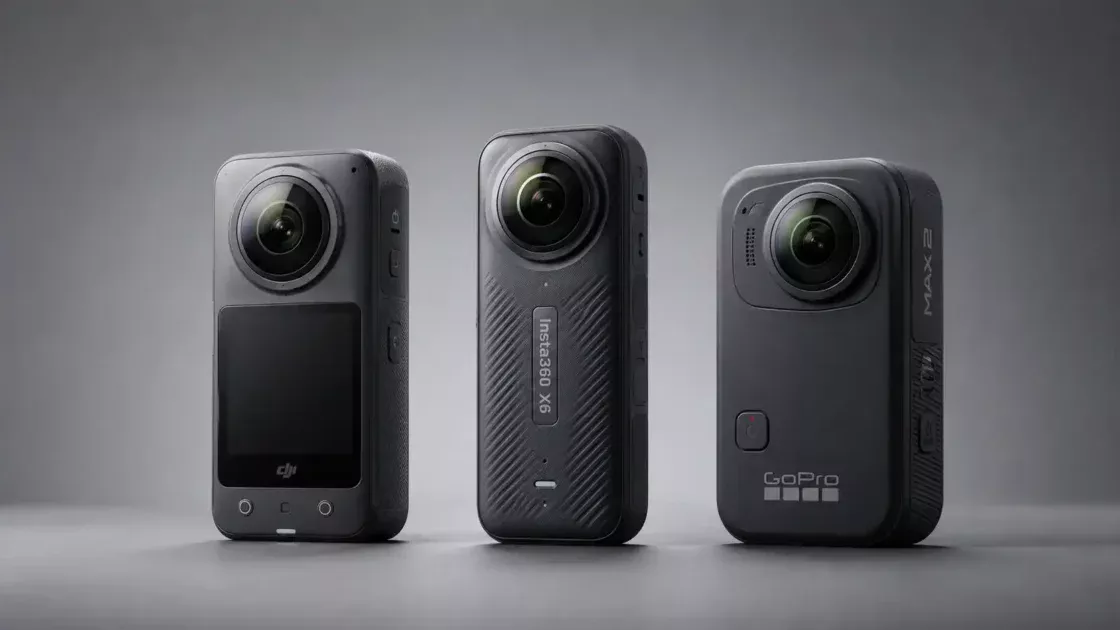
The best camera was once the device you saved for, carried carefully, protected from dust, and learned through deliberate practice. Now it is also the device on your desk, in your jacket, beside your bed, mounted to your bicycle, or sitting quietly in a bag waiting for a reason to matter. The strongest camera in 2026 is not always the newest or most expensive one. It is the camera already integrated into your reflexes, your workflow, your memory, your evidence, and your way of seeing.
Table of Contents
The phrase has become market reality
“The best camera is the one that’s with you” became a popular photography line because it compressed a hard truth into a sentence photographers could not ignore. Chase Jarvis turned that idea into a book, app, and community at a moment when mobile photography was moving from novelty to visual culture. His project framed the phone not as a toy camera but as a creative tool that made photography less dependent on ceremony and gear access.
The phrase now needs a sharper update. The best camera is yours because ownership no longer means only possession. It means fluency. It means speed. It means knowing where the exposure control sits, how the lens behaves in bad light, where the files go, how fast the battery drains, which focal length flatters a room, and whether the result will be trusted after it is shared.
That shift explains why the camera debate keeps returning even after smartphones appeared to settle it. A phone camera wins the moment of capture. A dedicated camera wins when the assignment asks for optical control, low-light depth, flash control, durability, lens choice, archival file quality, or professional handling. A tiny action camera wins when the scene needs mounting. A webcam wins when the meeting matters more than cinematic depth. A used mirrorless body wins when a student learns exposure without a subscription to the newest flagship phone. The device matters, but the relationship with the device often matters more.
Current market data backs up the split. The smartphone market is measured in billions or near-billions of annual units, while the digital camera market is measured in millions. IDC forecast worldwide smartphone shipments of 1.25 billion units in 2025, while Omdia later said global smartphone shipments grew 2 percent in 2025 to 1.25 billion units. CIPA, the camera industry association, reported 8.49 million digital camera shipments in 2024 and forecast 8.58 million for 2025.
Those numbers do not mean cameras are dead. They show a new hierarchy. Smartphones own ordinary image capture; dedicated cameras own harder, more intentional, and more identity-driven photography. The fight is no longer “phone versus camera.” It is “which camera is most yours for the job?”
The phone changed the definition of availability
The smartphone did not beat the compact camera only by becoming good enough. It beat it by being present when life happened. A compact camera in a drawer has better optics than a phone in some conditions, but the drawer loses every unplanned scene. The phone sits in the path of attention. It receives the message, shows the map, opens the banking app, scans the ticket, records the child’s first step, photographs the damaged parcel, captures the protest, documents the receipt, and uploads the clip before a dedicated camera user has chosen a lens.
Availability has two layers. The first is physical: the phone is carried. The second is behavioral: the user knows it without thinking. That second layer is the reason many people make better pictures with a phone than with a camera that is technically superior. They understand the delay, the preview, the tap-to-focus behavior, the look of the ultra-wide lens, the way night mode pauses, and the automatic processing that follows the shutter press.
Apple understood this early, then doubled down by treating the camera as a daily interface rather than an accessory. The iPhone 16 Pro added a 48MP Fusion camera and 4K120 fps Dolby Vision video recording, and Apple also introduced a Camera Control interface across the iPhone 16 line to make opening and operating the camera faster from the device body itself.
Google has taken a different route: it frames the camera as an AI-guided system that sits between the user and the image. Pixel 10 camera features include AI-driven tools such as Camera Coach, Auto Best Take, improved zoom, and editing assistance, while Google Photos added prompt-based editing and support for C2PA Content Credentials to improve transparency around AI edits.
A dedicated camera still starts faster in a trained hand. It still gives better tactile control. It still avoids the distractions of notifications and apps. Yet for many people, the phone camera is not just available; it is emotionally available. It does not ask the user to switch modes of life. It turns a glance into a file. The camera that asks for the least preparation often captures the most human evidence.
The dedicated camera has not disappeared
The smartphone did not destroy photography. It destroyed the old middle. Point-and-shoot cameras with no strong identity were absorbed by phones. Dedicated cameras that offered a real difference survived by becoming more serious, more specialized, more expensive, more desirable, or more culturally distinct.
CIPA’s 2024 data shows that digital camera shipments grew to 8,490,227 units, up 10 percent year on year. Interchangeable-lens cameras accounted for 6,609,813 units, and mirrorless models reached 5,612,205 units, or 85 percent of interchangeable-lens digital camera shipments. Interchangeable lenses reached 10,312,728 shipments in 2024, up 7 percent.
That recovery matters because it contradicts the lazy version of the smartphone story. Dedicated cameras are no longer universal consumer electronics. They have become tools for creators, professionals, hobbyists, students, collectors, documentarians, birders, parents who care about sports, and people who enjoy the act of making a photograph with intention. CIPA attributed part of the 2024 growth to demand for content on social media, rising interest in photo and video expression among young people and creators, and improved assisted photography with subject-recognition AI.
The camera industry has also changed its emotional pitch. Fujifilm’s X series, Leica’s rangefinder culture, Ricoh’s pocket street cameras, Sony’s autofocus systems, Canon and Nikon’s full-frame mirrorless ecosystems, OM System’s weather-sealed outdoor bodies, and Panasonic’s video-oriented cameras no longer compete only on megapixels. They sell a way of working.
The dedicated camera has also gained value because the phone became too good at flattening the process. Phone images can look impressive instantly, but they often arrive with baked-in taste: sharpening, tone mapping, face smoothing, sky recovery, color bias, and computational assumptions. A dedicated camera gives the photographer more resistance. That resistance is not always convenient, but it gives space for authorship.
The dedicated camera now wins by being less automatic, not more. It asks the photographer to choose aperture, focal length, distance, timing, raw development, and sometimes restraint. For people who care about photographs as authored objects rather than useful records, that friction is part of the value.
Gear culture is being forced to defend its claims
Camera culture has always contained a contradiction. Photographers say gear does not matter, then spend weeks arguing about sensor size, lens sharpness, color science, autofocus tracking, bit depth, raw compression, stabilization, and menu systems. Both impulses are honest. Gear does not create attention. Gear does change what attention can become.
The “best camera is yours” argument cuts through the worst version of gear culture. It refuses the idea that creativity must wait for an upgrade. It also refuses the opposite mistake: pretending all cameras are the same. A phone camera, a medium-format body, a cinema camera, a Micro Four Thirds travel kit, and a 15-year-old DSLR do not give the same files, ergonomics, or shooting experience. They ask different things from the user.
The trouble begins when buying becomes a substitute for learning. A person who does not understand light will not be saved by a full-frame sensor. A person who always stands in the wrong place will not be saved by a prime lens. A person who cannot anticipate a gesture will miss the frame at 120 frames per second. A person who never backs up files will lose work from the best camera system available.
Yet gear skepticism can become its own lazy pose. Sports photographers need reach and autofocus. Wedding photographers need redundancy and low-light reliability. Documentary filmmakers need audio, stabilization, codecs, power, and heat management. Product photographers need controlled lighting, close focusing, and files that hold up in retouching. Evidence gatherers need metadata, timestamps, and chain-of-custody discipline. The right camera is the one whose limits match the consequences of missing the shot.
The market is now making that distinction clearer. Casual photography has moved to the phone. Professional and enthusiast photography has concentrated around mirrorless systems, premium compacts, creator video rigs, and specialized cameras. The old fantasy of one “best” camera has fractured. The more useful question is whether the camera is yours in practice: carried, understood, trusted, and matched to the stakes.
A camera review can measure resolution and autofocus. It cannot measure whether the device belongs in your life. That is the editorial weakness of many buying guides. They treat cameras as isolated objects. Photographers experience them as habits.
Computational photography moved the fight from glass to math
Traditional photography treated the camera as a box that admitted light through glass onto film or a sensor. Digital photography turned the sensor into data. Smartphone photography turned the entire capture into computation. The image is no longer a single exposure in the old sense. It may be a stack of frames aligned, merged, denoised, sharpened, tone-mapped, depth-estimated, face-optimized, stabilized, and locally adjusted before the user sees it.
That processing is the hidden reason phone cameras look so good despite tiny sensors and lenses. The phone takes advantage of being a computer first. It knows motion from gyroscopes, distance from depth systems or focus behavior, scene type from machine learning, and user intent from the interface. It has the processing budget to combine exposures in a fraction of a second. It also knows that most images will be viewed on bright mobile screens, not printed at gallery size.
Research in mobile computational photography has moved toward representations that use more than raw pixels. One 2025 academic work on neural field representations described phones as pocket-sized computational imaging platforms that combine multi-focal camera arrays, depth sensing, split-pixel sensors, inertial sensors, and on-board processing.
The trade-off is control. A phone often decides what a “good” image should be. It lifts shadows, protects faces, sharpens textures, cleans noise, simulates shallow depth, and makes color choices that flatter immediate sharing. That is useful for many people. It becomes a problem when the user wants ambiguity, darkness, grain, blur, harshness, or the exact look of the moment.
A dedicated camera processes too, especially in JPEG and video modes, but raw capture still gives photographers more authority over the file. Raw is not magic; it is a data-rich starting point. It preserves room for judgment. The cost is time and knowledge.
The camera war has moved from sensor size alone to the quality of decisions made before the user touches the file. Phone makers compete on computational taste. Camera makers compete on optical systems, sensor performance, autofocus, color pipelines, raw files, and handling. Users live with the consequences.
AI makes the picture easier and harder to trust
AI now sits on both sides of photography. It guides capture and changes the image. Google’s Pixel 10 camera features make AI part of shooting through tools such as Camera Coach and Auto Best Take. Google Photos also lets users edit images by asking in text or voice, with C2PA Content Credentials support intended to show media history around AI edits.
That creates a useful but uncomfortable shift. A phone can make a bad photographer look more competent. It can correct exposure, suggest framing, merge group shots, remove distractions, reconstruct zoom detail, and perform edits that once required skill. It lowers the barrier to making pleasing images. It also makes the image less self-explanatory. A viewer must ask not only “who took this?” but “what did the camera infer, replace, merge, or invent?”
The danger is not that all AI-assisted photos are fake. Most are ordinary improvements. Noise reduction, HDR, portrait blur, and sharpening have long altered camera output. The danger is semantic change: a detail added to a zoomed image, a face chosen from another frame, a background object removed, a sky replaced, a crowd cleaned up, or a night scene brightened until it tells a different story.
Research published in 2026 framed this as a capture-time authenticity problem. The paper argued that deep-learning modules inside camera image pipelines may hallucinate content in direct camera output, especially with AI-based digital zoom or low-light enhancement, and proposed a way to recover an “unhallucinated” version of a camera image.
That is a profound change. Photography used to carry a weak but useful social assumption: the camera saw something in front of it. The assumption was never perfect; staging, cropping, darkroom manipulation, retouching, and selective timing always shaped truth. Yet AI shifts the burden. The viewer now needs to know whether the camera recorded, inferred, edited, or generated the contested part of the image.
This does not make phone photography illegitimate. It makes literacy non-negotiable. The best camera is yours only when you understand what it does on your behalf.
Capture speed now beats specification sheets
A technically weaker camera that gets the frame is often better than a technically stronger camera that misses it. That sentence sounds obvious until a buyer stands in front of a product page and forgets it. The best real-world camera is a timing machine before it is an image-quality machine.
Speed does not mean only frames per second. It means waking the device, seeing the scene, choosing the angle, focusing, exposing, shooting, reviewing, sending, and finding the file later. A phone is extremely fast for the whole chain because capture and distribution live in one object. A dedicated camera may be faster for burst shooting, autofocus tracking, flash use, lens control, or long-session handling, but slower in the social path from scene to recipient.
Apple’s Camera Control move on iPhone 16 is revealing because it borrows from dedicated cameras: a physical way to enter camera behavior quickly. The support documentation also shows that Camera Control can lock focus and exposure, which matters because tactile access reduces hesitation at the moment of capture.
Dedicated cameras already know this lesson. The reason photographers prize dials, buttons, viewfinders, grip shape, custom modes, and lens rings is not nostalgia. Physical controls allow adjustment while the eye stays on the scene. A phone screen is flexible but slippery. A camera body is limited but legible.
The rise of AI camera guidance complicates speed further. Google’s Camera Coach aims to assist composition. That may be valuable for people learning photography, but it also changes the tempo of seeing. A photographer who waits for guidance may lose spontaneity. A beginner who receives a useful prompt may avoid a weak frame. The result depends on whether assistance becomes training wheels or a second voice that interrupts attention.
A camera becomes yours when its operation disappears from conscious thought. That is why people keep older cameras they know well. It is why street photographers love predictable focal lengths. It is why photojournalists configure bodies obsessively. It is why parents often get better birthday pictures with a phone than with a camera they bought for “better photos” but never practiced using.
Social media made the camera a publishing device
The camera used to end at the negative, slide, print, or file. Now the camera often ends at publication. This is the smartphone’s deepest advantage. It is not merely a camera; it is a capture, editing, captioning, messaging, authentication, distribution, and archive device. The phone turns the image into communication immediately.
DataReportal’s Digital 2025 report estimated 5.24 billion global social media user identities, equal to 63.9 percent of the world’s population, while Pew reported that 91 percent of U.S. adults owned a smartphone in its 2025 survey data. Those figures explain why ordinary photography has moved toward mobile-first creation. The image is not only viewed on a phone; it is made for a phone-based social path.
This changed what people value in cameras. For a social creator, color straight out of camera, stabilization, skin rendering, audio sync, front-camera quality, editing speed, caption workflows, and platform compatibility may matter more than raw dynamic range. For a small business owner, the best camera might be the phone that lets them photograph inventory, record a reel, scan documents, make a testimonial clip, and answer customers without importing files.
Dedicated camera brands have tried to close the publishing gap through Wi-Fi transfer, mobile apps, cloud storage, USB-C workflows, webcam modes, direct streaming, and creator kits. The gap remains because phones are native to the platforms. A camera app is usually an accessory. A phone is the platform’s natural habitat.
The social path also pressures taste. Images are brighter, cleaner, sharper, faster, more vertical, and more face-aware because that is how feeds reward them. Dedicated camera users often export into the same feed, but the phone shaped the dominant visual grammar.
The modern camera is not judged only by the file it creates. It is judged by the distance between capture and use. That distance is where phones win.
Creators care about workflow before perfection
The creator economy has made cameras more public and less precious. A creator may need a talking-head video, a behind-the-scenes clip, a product close-up, a livestream segment, a thumbnail, a vertical short, a podcast excerpt, and a still photo before lunch. The camera that wins is often the one that reduces workflow drag.
This is why phones remain dominant for daily creator output. They handle capture, stabilization, editing, captions, publishing, and analytics inside the same ecosystem. They also allow creators to shoot alone. A phone on a small tripod with a wireless mic can produce work that would have required a crew and a camera bag not long ago.
Yet creator work also explains the dedicated camera recovery. When content becomes income, reliability and control become business needs. A creator who shoots weekly videos may care about clean HDMI, overheating, lens look, autofocus during talking-head shots, log profiles, audio inputs, battery systems, and file formats. A food creator may need close-focus lenses and controlled lighting. A fitness creator may need stabilized wide video and durable mounting. A course creator may need a consistent studio image across months.
Qualcomm’s Snapdragon 8 Elite Gen 5 announcement shows how smartphone silicon is leaning into creator video, including support for Advanced Professional Video codec recording and AI-powered camera technology. Samsung’s Galaxy S25 launch framed the phone around Galaxy AI as a companion, a sign that premium phones now compete as creative systems as much as communication devices.
The creator’s real question is not “Which camera has the best image?” It is “Which camera gets me from idea to published asset without breaking the chain?” Perfection that sits on a memory card is less useful than a good file that enters the workflow on time. For creators, the best camera is the one that matches the publishing rhythm, not the fantasy shoot.
This is also where “yours” becomes financial. A creator may own a cinema camera and still make most income-producing posts with a phone. Another may own a phone capable of impressive video but rent a camera for paid client work because client trust, lenses, audio, and lighting demand a different tool. The market is no longer binary. It is layered.
Professional cameras still protect work phones cannot
Phones are extraordinary, but professional cameras remain protective tools. They protect image quality under pressure. They protect redundancy. They protect handling. They protect client confidence. They protect the photographer’s attention from the same device that carries texts, calls, and distractions.
A wedding photographer needs dual-card recording or a disciplined backup path because a missing first kiss is not a minor inconvenience. A sports photographer needs long lenses, reliable tracking autofocus, high-speed bursts, and viewfinder stability. A wildlife photographer needs reach, weather sealing, silent shooting, and battery endurance. A news photographer needs durable bodies, fast file transfer, metadata discipline, and sometimes credentialed authenticity. A commercial photographer needs controlled lighting and files that survive editing.
Those needs explain why interchangeable-lens cameras and lenses still matter. CIPA’s 2024 data shows growth in mirrorless cameras and interchangeable lenses, while its 2025 outlook forecast modest further growth after the 2024 rebound. The dedicated camera market is smaller, but the users who remain are often more committed.
Phones also have professional uses. Photojournalists have used them in sensitive environments. Filmmakers have shot projects on phones. Social teams cover events with phones because speed matters. Real estate agents, inspectors, doctors, researchers, and field workers rely on phone cameras every day. A phone can be the professional camera when the job is documentation, speed, discretion, or mobile delivery.
The limit appears when repeatability matters. A phone often hides decisions. It may change processing across updates, switch lenses without obvious warning, smooth skin, alter color, or make low-light choices that vary from frame to frame. Professional workflows prefer predictability. A dedicated camera gives repeatable exposure, repeatable files, repeatable lens behavior, and repeatable ergonomics.
Professional camera choice is risk management disguised as image preference. A working photographer buys not only quality but control over failure.
Authenticity is becoming a camera feature
The AI image boom has pushed authenticity from a newsroom concern into product design. A camera used to prove little by itself. Metadata could be stripped or edited. A file could be copied, renamed, compressed, and detached from its origin. Now camera makers and standards groups are trying to make provenance part of capture.
C2PA describes Content Credentials as an open standard for establishing the origin and edits of digital content, and the C2PA technical specification defines authenticity as verifiable facts such as provenance data and hard bindings that have not been tampered with. Content Credentials presents this idea to users as a media transparency layer, often compared with a label that explains how a piece of digital content was made and changed.
Leica moved early with the M11-P, which it presents as the first camera to integrate Content Credentials according to CAI and C2PA standards. Nikon now offers an Authenticity Service for select cameras to add secure Content Credentials to captured photos. Sony’s Camera Authenticity Solution records C2PA signatures and, in some workflows, camera-derived information used to verify content authenticity. Canon announced in May 2026 a C2PA-compliant Authenticity Imaging System for news organizations, initially in EMEA and for supported models.
This is a major pivot. Camera makers once sold truth implicitly. Now they are building proof features because the file alone is no longer socially self-authenticating. The camera of the AI era must answer not only “How good does this look?” but “Can anyone verify where this came from?”
Provenance will not solve every problem. Metadata can be stripped. Platforms may fail to display labels. A signed image can still be misleading through framing or context. A real image of a staged scene is still real in capture and false in implication. Yet provenance gives honest photographers a stronger trail than ordinary metadata alone.
The best camera may soon be the one whose files survive a trust challenge.
The trust problem reaches beyond photographers
The authenticity debate is not just about professional pride. It affects courts, elections, schools, disaster response, insurance, human rights documentation, scientific observation, policing, celebrity culture, and private life. Images once spread faster than verification. AI made that gap wider.
The European Commission’s AI Act materials describe transparency rules that include marking AI-generated content and disclosing the artificial nature of images, audio, and deepfakes. NIST’s synthetic content report examined standards, tools, and practices for authenticating content, tracking provenance, labeling synthetic content, detecting synthetic content, and reducing harms from AI-generated abuse imagery.
The camera now sits inside a policy fight. Regulators want labels. Platforms want scalable systems. Standards groups want interoperability. Camera makers want trust without ruining usability. Newsrooms want speed without weakening verification. Users want images to look good and upload easily. Those goals collide.
A photographer using a signed camera may still upload to a platform that removes the credential. A viewer may see a label but not understand it. A bad actor may photograph an AI image displayed on a screen, creating a real camera capture of fake content. A newsroom may verify file origin but still need scene context. Provenance is a layer, not a verdict.
Recent technical critiques underline the limits. A 2026 arXiv paper argued that current C2PA specifications may fall short of claimed security goals and warned against relying on C2PA prematurely for high-stakes uses. Another 2026 paper proposed hardware-rooted photo authentication partly because existing metadata-based systems can be vulnerable to stripping and platform dependence.
Those critiques do not make provenance useless. They make it a developing infrastructure rather than a final answer. Trust in images will come from layered evidence: capture provenance, editorial workflow, source reputation, context, platform display, and human verification. The camera is one layer in that stack.
Ownership now includes habits, backups and permissions
A camera becomes yours through habits that are rarely discussed in reviews. Where do files go after capture? Are they backed up? Are they searchable? Are they private? Does the device sync to cloud storage by default? Are location tags embedded? Does the camera app share data with other apps? Does the phone compress originals? Does the dedicated camera’s mobile app rename or downsample files? Does the user know which copy is the original?
The answer changes the value of the camera. A brilliant photo lost in a broken phone backup is worse than a decent photo safely stored, labeled, and recoverable. A sensitive image automatically uploaded to the wrong account can create harm. A documentary image with stripped metadata may be harder to verify. A client shoot without redundant storage is a business risk.
Phone cameras are strong because they attach capture to backup and search. The user can find “receipt,” “dog,” “beach,” or “Paris” without building a folder system. That convenience is not neutral. It depends on cloud platforms, machine vision, account security, and storage subscriptions. The camera becomes part of a data relationship.
Dedicated cameras give more local control but often weaker default organization. Files sit on cards, hard drives, and editing catalogs. Professionals build disciplined systems because they have to: ingest, rename, rate, back up, edit, export, archive. Beginners often do not, which is why many dedicated camera photos vanish into neglected folders.
The best camera is yours only if the images remain yours after capture. That includes legal ownership, file access, privacy, backups, and the ability to prove origin when proof matters.
This is especially relevant for families and small businesses. A parent may care less about raw files and more about whether family photos survive phone upgrades. A shop owner may need product images organized by SKU. A journalist may need original files preserved. A creator may need searchable archives for future edits. A traveler may need offline backups when cloud sync is unreliable.
The camera choice is therefore also an archive choice. Buying a camera without planning storage is like buying a notebook and tearing out pages after writing.
Image quality is a chain, not a body
People talk about image quality as if it belongs to a camera body. It does not. Image quality is a chain. It begins with light, timing, distance, and subject. It moves through lens, sensor, stabilization, focus, exposure, processing, compression, display, print, and viewing conditions. A weak link changes the result.
A phone camera under soft window light can beat a full-frame camera under ugly overhead light. A cheap lens used well can beat an expensive lens used carelessly. A small sensor on a tripod at base ISO can beat a larger sensor handheld in bad settings. A 12MP image with strong timing can beat a 50MP image with no subject. The person who controls light often beats the person who buys resolution.
Smartphones improve image quality by controlling the processing side of the chain. They merge frames, correct shake, reduce noise, and brighten faces. Dedicated cameras improve image quality by giving more control over the capture side: focal length, aperture, sensor area, shutter behavior, flash, raw data, and optics. Both approaches are valid. They solve different problems.
The display side is often ignored. Many phone photos are optimized for phone screens. They may look punchy at social size and harsh when enlarged. Dedicated camera files may look flat before editing and beautiful after careful development. Viewers rarely know which pipeline they are judging.
Compression also matters. Social platforms recompress uploads. Messaging apps shrink files. Cloud services may store previews. A camera capable of rich files loses value when the final image is crushed by the delivery path. For many daily uses, this makes phone output good enough. For printing, commercial retouching, cropping, and archival work, starting with a stronger file still matters.
The best camera choice should begin with the final use. A family album, a news wire image, a billboard, a product listing, an Instagram story, a museum print, a passport scan, and a legal claim do not need the same file. The camera that is yours is the camera that fits your output without adding waste.
Lenses still change the result in ways software cannot
Software can simulate shallow depth of field, recover shadows, remove noise, sharpen edges, and imitate lens looks. It cannot fully replace the physical relationship between focal length, distance, aperture, perspective, subject movement, flare, rendering, and the photographer’s body position.
A lens changes where the photographer stands. A wide lens pulls the user close and makes space active. A normal lens feels observational. A short telephoto compresses distance and isolates. A long telephoto turns far subjects into reachable forms. A macro lens opens a world the phone may approximate but not always control. A tilt-shift lens changes geometry. Fast glass changes low-light shooting and depth.
Phones now carry multiple lenses or lens-like modules, but their focal range remains constrained by size. Periscope telephotos, computational zoom, and sensor cropping have improved reach, especially in flagship models, yet software zoom raises authenticity questions when detail is reconstructed rather than optically resolved. Google’s Pixel 10 line is a useful example because its AI zoom and camera assistance frame telephoto performance as computational as well as optical.
Dedicated cameras also invite a slower kind of seeing. A prime lens teaches constraint. A zoom teaches framing discipline. A long lens teaches patience. A macro lens teaches stability. These are not romantic claims; they are practical effects. The tool changes the photographer’s movement through the world.
CIPA’s lens data shows that interchangeable lenses remain a living market, with more than 10.31 million shipments in 2024 and expected growth in 2025. That demand signals more than accessory buying. It shows that optical choice remains central for people who want images that phones do not naturally make.
The lens is still the most direct way to change photographic behavior. Software changes the file. Glass changes the act.
Market data shows a split recovery
The camera market is not returning to the mass compact-camera era. It is recovering in a narrower, more serious shape. Smartphones remain the default camera for the world. Dedicated cameras are becoming specialist tools with cultural value and professional function.
Camera market snapshot from recent public data
| Market signal | Reported figure | Practical meaning |
|---|---|---|
| Worldwide smartphone shipments forecast for 2025 by IDC | 1.25 billion units | Phone cameras remain the dominant global capture tool |
| Worldwide smartphone shipments in 2025 reported by Omdia | 1.25 billion units | Mobile imaging scale dwarfs dedicated cameras |
| Digital camera shipments in 2024 reported by CIPA | 8.49 million units | Dedicated cameras are smaller but recovering |
| Mirrorless camera shipments in 2024 reported by CIPA | 5.61 million units | The surviving camera market is centered on mirrorless systems |
| Interchangeable lens shipments in 2024 reported by CIPA | 10.31 million units | Lens ecosystems remain a strong driver of dedicated-camera value |
The table shows the market’s new shape. Phones dominate by scale because almost everyone needs a phone and almost every phone is also a camera. Dedicated cameras survive where optical control, professional trust, tactile handling, and creative identity justify a separate device.
The interesting number is not only smartphone volume. It is the camera mix. Mirrorless cameras represent the core of dedicated-camera growth, while SLRs continue shrinking. CIPA reported that SLR shipments fell to 997,608 units in 2024, down 14.4 percent year on year, while mirrorless rose 16.1 percent.
This means the camera industry is no longer selling broadly to casual consumers at mass scale. It is selling to people who know why they want a camera or who are drawn to the practice of photography as a craft. That is a healthier identity, even if the unit numbers are smaller.
Flickr’s public Camera Finder also illustrates the blend. Its current camera trends page lists Apple iPhone 16 Pro, Canon EOS R6 Mark II, Sony A7 IV, Nikon Z 6 II, and Samsung Galaxy S23 Ultra among top camera models, which suggests that online photo communities now contain phones, full-frame mirrorless bodies, and older enthusiast gear side by side.
The market has stopped asking whether phones or cameras win. It is showing that both win different parts of image culture.
Smartphone companies have become camera companies
Apple, Google, Samsung, Xiaomi, Vivo, OPPO, Honor, and other phone makers now compete heavily on imaging because the camera is one of the few phone features users feel immediately. Processor benchmarks are abstract. Camera results are visible, emotional, and shareable. A better portrait of a child sells more convincingly than a faster database operation.
Apple’s iPhone 16 Pro camera claims focused on a 48MP Fusion camera, a faster quad-pixel sensor, a 48MP Ultra Wide camera, and 4K120 fps Dolby Vision video. Google’s Pixel 10 claims focused more on AI-assisted capture and editing, with Camera Coach, Auto Best Take, improved zoom, and Google Photos editing by prompt. Samsung’s Galaxy S25 launch positioned the device as an AI phone, showing that camera competition is now bound up with device-wide AI systems.
Silicon makers are part of the camera story too. Qualcomm’s Snapdragon 8 Elite Gen 5 announcement emphasized AI processing and professional-level video features, including Advanced Professional Video codec support. That matters because smartphone camera quality increasingly depends on image signal processors, neural processing, memory bandwidth, thermal management, and codec support.
Phone makers have also learned from traditional cameras. They add physical controls, pro modes, log video, raw capture, larger sensors, periscope lenses, variable tone styles, external recording support, and accessory ecosystems. They sell lens partnerships and camera language because users respond to photography heritage.
The reverse is also true. Camera makers have learned from phones, though unevenly. Subject detection autofocus, in-body stabilization, wireless transfer, compact creator bodies, webcam modes, real-time tracking, and touch interfaces all answer pressure from mobile imaging. The phone made cameras easier to criticize. Why is the app bad? Why is transfer slow? Why is charging not USB-C? Why is the menu obscure? Why does a $3,000 camera feel less connected than a phone?
The phone did not just become a camera. It raised user expectations for every camera.
Camera companies are becoming authenticity companies
The AI era gives dedicated camera makers a new argument. Phones are the world’s cameras, but dedicated cameras may become trusted capture instruments for high-stakes work. That is why Leica, Nikon, Sony, and Canon are investing in Content Credentials, C2PA workflows, signatures, and verification services.
Leica’s M11-P claim is culturally powerful because it links old photographic prestige to new provenance infrastructure. Nikon’s Authenticity Service shows the same direction for select cameras. Sony’s Camera Authenticity Solution adds a newsroom and broadcast angle, including verification for still images and video in certain workflows. Canon’s 2026 Authenticity Imaging System points directly at news organizations and supported professional models.
This does not mean phone makers will stay out. Google Photos support for C2PA Content Credentials shows that mobile platforms are moving into transparency too. The scale of phones means any mature authenticity system must work on mobile. A provenance world limited to expensive cameras would miss most images people see.
Still, dedicated camera makers have a credibility opening. A camera designed for capture, with controlled firmware, physical optics, and professional workflows, may be easier to integrate into trusted chains than a general-purpose phone loaded with apps, AI edits, cloud sync, screenshots, downloaded media, and platform transformations.
Reuters’ proof of concept with Canon and Starling Lab showed how news organizations could securely capture, store, and verify photographs using prototype camera and authentication workflows. That experiment matters because it treats authenticity as an editorial pipeline, not a sticker added at the end.
Camera companies that once sold image quality may increasingly sell evidentiary integrity. For journalism, law, insurance, and public records, that may become as valuable as dynamic range.
The casual photographer became the default visual reporter
The most consequential camera is often held by someone who does not identify as a photographer. A bystander records a flood, a crash, a police interaction, a concert, a wildfire, a school event, a shoplifting incident, a storm cloud, a medical symptom, a delivery problem, or a family moment. These images shape memory, claims, news cycles, and public accountability.
The phone made ordinary people into visual reporters. That is not always good. Clips can be misleading, invasive, poorly framed, wrongly captioned, or stripped of context. Yet the social importance is undeniable. Many events are first seen through phones because phones are already present.
This changes the meaning of “best.” A war photographer’s best camera may be a rugged professional body with signed files and fast transmission. A citizen witness’s best camera may be a phone held steady for 20 seconds, with location services on and the original file preserved. A parent’s best camera may be the device that captures a child’s voice as well as face. A doctor’s best camera may be the one integrated into secure clinical workflow.
The casual photographer also faces responsibility. Shooting an emergency is not the same as helping. Sharing a stranger’s image is not neutral. Posting a child’s face is not trivial. Using AI edits on documentary images can confuse truth. Cropping can mislead. Captioning can accuse.
The democratization of cameras created a duty of visual care. Owning the camera means owning the consequences of the image. The same phone that records evidence can spread harm.
This is where education matters more than gear. People need to know when to preserve originals, when not to edit, when not to post, when to blur identifying details, when to contact authorities or journalists, and when the ethical choice is to put the camera down. The best camera is yours, but not every moment is yours to publish.
AI editing turns snapshots into negotiations
The snapshot used to be a small claim: this was there, roughly like this, at a moment. Digital editing already weakened that simplicity. AI editing changes the default. A user can now ask software to brighten, remove, extend, reconstruct, combine, smooth, sharpen, replace, or stylize with little technical friction.
Google Photos’ “edit by asking” feature marks a turning point because it moves editing from tool operation to language. The user no longer needs to know masking, curves, healing brushes, or layers. They describe intent, and the software acts. Google also says it is adding support for C2PA Content Credentials to improve transparency around AI edits.
This turns images into negotiations between memory and preference. A parent may remove clutter from a birthday photo. A traveler may erase a stranger from a landmark. A seller may clean up a product image. A dating profile may adjust lighting and skin. A creator may extend a frame for a thumbnail. None of those acts is automatically malicious. But each moves the image away from simple record.
The cultural pressure is toward polish. People may feel that ordinary reality looks unfinished. Bad light, messy rooms, tired faces, crowded backgrounds, weather, noise, and motion blur become defects rather than texture. AI editing gives users power, but it also raises expectations that life should appear edited.
Professional photographers know this tension well. Retouching has always negotiated truth, beauty, commerce, and memory. The difference is that the negotiation has moved into everyone’s pocket. The ethical line now depends less on technical skill and more on disclosure, context, and use.
A family album can tolerate edits that a news image cannot. A product listing should not misrepresent the item. A dating profile should not become a synthetic person. A political image needs strict transparency. A legal evidence image should remain untouched, with originals preserved. The same edit has different meaning in different contexts.
The best camera is yours, but the edited result may require a caption.
Accessibility changes who gets to make pictures
The phone camera’s strongest democratic effect is access. A dedicated camera system costs money, requires learning, and often assumes time, mobility, and safety. A phone is still expensive, but it is a multi-purpose necessity for many people, and its camera arrives as part of that purchase. This means more people can photograph their lives without seeking permission from camera culture.
Smartphone ownership is not universal, and digital divides remain. Pew reported that 91 percent of U.S. adults owned a smartphone in its 2025 data, but ownership and broadband access still vary by income and other factors. GSMA and DataReportal data also show that global mobile and social access is broad but uneven, shaped by affordability, coverage, literacy, and device quality.
Still, mobile cameras have expanded participation. Teenagers learn composition through social apps. Small businesses photograph products without hiring studios for every update. Activists document local issues. Migrants keep visual ties with family. Students submit assignments. Patients share symptoms. Workers document job sites. Artists begin with whatever device they have.
Accessibility also includes physical and cognitive ease. A phone’s automatic modes help people who do not understand exposure. Voice-based editing may help users who struggle with complex software. Stabilization helps shaky hands. Translation and captioning tools expand reach. The same automation that annoys purists may make photography possible for someone else.
That does not make all access equal. Flagship phones produce better images than budget phones. Cloud storage costs money. Platform algorithms favor certain aesthetics. AI tools may be uneven across languages and regions. A person with a premium device, fast data, and editing subscriptions still has an advantage.
The phrase “the best camera is yours” should not become a way to ignore unequal access. It should remind the industry that the best camera for culture is often the one more people can actually use.
Business uses now start with the device in hand
For many businesses, photography is no longer a scheduled event. It is daily operations. Restaurants need menu images and short clips. Tradespeople document before-and-after work. Retailers photograph stock. Real estate agents record walkthroughs. Clinics document conditions. Schools communicate activities. Insurance claims begin with phone evidence. Customer service teams ask for pictures. Delivery disputes are settled with images.
The phone is often the default business camera because the person responsible already has it. The file moves directly into a message, form, listing, invoice, CRM, or social post. The result does not need gallery-level image quality. It needs clarity, speed, trust, and context.
Yet business photography also exposes phone limits. Product color must be accurate. A restaurant’s food cannot look dull or distorted. A contractor’s documentation may need scale. A real estate image must avoid misleading wide-angle exaggeration. A medical image may need secure handling. A brand campaign may need consistency across platforms. A legal claim may require original metadata.
The correct business camera may therefore be a hybrid system. Staff use phones for routine documentation. A dedicated camera, lighting kit, or hired photographer handles brand-critical work. A 360 camera captures spaces. A drone records site context where legal. A document scanner handles forms better than a camera. The best camera is not a status choice; it is a workflow decision.
Small businesses often waste money when they buy cameras without fixing light, process, and storage. A $3,000 camera under bad fluorescent light will not save a product page. A phone near a window, with a clean background and consistent framing, may do more.
The business lesson is practical: define the use before the purchase. If the image must persuade, invest in lighting and composition. If it must prove, preserve originals and metadata. If it must publish fast, build a phone workflow. If it must scale across teams, write a shooting guide. Ownership is process.
Travel photography rewards lightness and readiness
Travel photography reveals the conflict between desire and reality. People imagine themselves carrying a camera through streets, markets, mountains, museums, trains, beaches, and nights. Then heat, fatigue, theft concerns, luggage limits, family needs, weather, and long walks intervene. The camera that is technically best may spend the trip in the hotel room.
Phones win travel because they are always with the traveler, handle maps and translation, capture photos and video, geotag files, back up images, and share quickly. They are discreet in places where a larger camera draws attention. They also reduce the burden of changing lenses in dust, rain, or crowds.
Dedicated cameras win when the traveler cares about a slower visual record. A small mirrorless body with one prime lens can make a trip feel more intentional. A weather-sealed camera can handle rough conditions. A long lens opens wildlife and distant details. A dedicated camera avoids phone battery anxiety and gives files that print better.
The best travel camera is often the one that keeps the traveler present. A huge kit can turn a trip into logistics. A phone can turn a trip into constant sharing. Both can steal attention. The best travel camera is yours when it supports memory without replacing the experience.
Travel also raises privacy and cultural questions. Photographing strangers, religious sites, markets, children, ceremonies, and poverty requires judgment. A smaller camera does not remove responsibility. A phone can make intrusive photography feel casual, which may make it worse.
The practical travel test is simple: carry the camera for a full day before the trip. If it annoys you at home, it will become dead weight abroad. If you do not know how to transfer and back up files before leaving, you will not magically build that habit on the road. If the phone gives you the images you want, stop apologizing for using it. If a dedicated camera makes you see more attentively, bring it.
Newsrooms need both speed and proof
News photography now operates under two clocks. The first is the publishing clock: get the image fast. The second is the verification clock: prove the image is real, contextual, and not misleading. Phones are excellent for speed. Professional camera workflows are catching up on proof.
Reuters’ Canon and Starling Lab proof of concept showed that news organizations are experimenting with capture-to-verification systems rather than relying only on visual inspection. Canon’s 2026 Authenticity Imaging System and Sony’s camera authenticity work show that camera makers see newsrooms as early adopters for provenance tools.
This matters because newsrooms are flooded with images from witnesses, agencies, freelancers, officials, platforms, and synthetic sources. A photo may appear convincing but lack origin. A real photo may be old, cropped, or miscaptioned. A generated image may spread before correction. A signed camera file does not answer every question, but it gives the newsroom a stronger starting point.
Phones complicate this. The first image of an event may come from a phone, not a credentialed photographer. Rejecting phone images would blind newsrooms to reality. Accepting them without verification invites errors. The future likely involves stronger mobile provenance, better platform display of credentials, newsroom education, and public literacy about original files.
Newsrooms need cameras that move fast and leave a trail. In some cases that will be a phone. In some cases it will be a professional body with C2PA support. Often it will be both: phones for early witness material, dedicated systems for verified coverage, and forensic workflows for contested images.
The public also needs to understand the limits. A verified capture does not prove the caption. A real image from one location can be used to lie about another. A signed file can still show a staged event. Verification reduces uncertainty; it does not remove judgment.
The camera in your pocket also creates risk
The phone camera is a blessing and a liability. It records memories, evidence, creativity, and convenience. It also records people who did not consent, stores sensitive data, geotags private locations, syncs intimate images, captures children’s faces, enables harassment, and feeds platforms that reward exposure.
AI deepfake abuse has made that risk sharper. U.S. policy and enforcement have increasingly focused on nonconsensual intimate imagery, including AI-generated abuse. The FTC’s 2026 Take It Down Act enforcement page states that sharing intimate images without consent is a federal crime and directs people to reporting channels. The EU’s AI Act materials also focus on marking and labeling AI-generated content and deepfakes.
This belongs in a camera article because cameras create source material for misuse. A casual photo posted publicly can be scraped, manipulated, impersonated, or recontextualized. A child’s image can travel beyond the family. A location tag can reveal home, school, workplace, or travel patterns. A screenshot of a private message can become public evidence or public harm.
The best camera is yours only when you know when not to use it. That is a hard discipline in a culture where the camera is frictionless. People photograph meals, receipts, strangers, injuries, jokes, screens, documents, and children without pausing. Many images are harmless. Some are not.
Camera literacy now includes privacy literacy. Turn off location when needed. Preserve originals for evidence. Avoid posting sensitive documents. Ask before photographing people in private settings. Be cautious with children’s images. Do not use AI tools to sexualize, humiliate, impersonate, or deceive. Do not assume deletion removes copies.
The camera has become a daily power. Power needs boundaries.
Buying gear still makes sense under specific pressure
The phrase “the best camera is yours” should not become anti-gear moralizing. Buying a camera makes sense when a real pressure exists. The pressure might be technical, physical, professional, creative, ethical, or emotional.
Technical pressure appears when the phone cannot produce the required file. Low light, fast motion, long distance, controlled flash, shallow depth, high-resolution cropping, long recording sessions, heat, audio, raw workflow, and print size can all justify dedicated gear. Physical pressure appears when gloves, rain, dust, cold, or long battery life matter. Professional pressure appears when failure has consequences. Creative pressure appears when a different tool changes the way you see.
Emotional pressure is underrated. Some people enjoy cameras. They like the viewfinder, shutter sound, aperture ring, strap, lens rendering, and separation from the phone. That pleasure is not frivolous if it makes them photograph more attentively. A camera that encourages practice is valuable.
The purchase becomes weak when it is based on vague dissatisfaction. “My photos are bad” often means the light is bad, timing is weak, subjects are not considered, editing is inconsistent, or the user does not print or organize images. Gear may not fix any of that. A workshop, photo walk, lighting practice, book, editing routine, or backup system may improve results more than a new body.
A useful buying rule: name the failure you are solving. “I need better pictures” is too vague. “My phone cannot photograph indoor basketball from the stands” is specific. “I need clean product images for a catalog” is specific. “I want a small camera that makes me shoot without notifications” is specific. “I need verifiable image provenance for newsroom work” is specific.
Buy the tool when the problem is real, repeated, and costly enough to justify the burden. Otherwise, use the camera you already own and improve the way you use it.
The best camera yours is not an excuse for weak craft
The best reading of the phrase is liberating: start now, use what you have, stop waiting for permission. The worst reading is complacent: gear does not matter, craft does not matter, everything is good enough. That second reading produces lazy images.
Craft still matters. Light matters. Background matters. Timing matters. Distance matters. Edges matter. Gesture matters. Color matters. Editing matters. Captions matter. Sequencing matters. The camera may be yours, but the photograph still asks for attention.
Phone users can improve quickly by learning a few fundamentals. Clean the lens. Move toward better light. Avoid digital zoom unless necessary. Tap to set focus and exposure. Watch the background. Step closer. Hold steady. Shoot more than one frame. Keep originals. Learn the difference between a memory, a document, and a public image.
Dedicated camera users need their own discipline. Learn the autofocus modes. Practice exposure compensation. Understand shutter speed before blaming lenses. Use one focal length long enough to learn its behavior. Back up files. Stop buying lenses before mastering light. Print work. Edit ruthlessly. Carry the camera.
AI tools do not erase craft. They shift some craft from manual execution to judgment. The user must decide whether an edit is honest, whether a generated change belongs, whether a picture still represents the scene, and whether disclosure is needed. The craft of the AI era is not only making an image look good. It is knowing what kind of truth the image is allowed to claim.
This is where “yours” becomes ethical. A photographer should know the camera’s strengths and tricks. A phone that invents pleasing detail in zoom is not bad for vacation memories, but it may be wrong for evidence. A portrait mode halo may be fine for social use, but not for a product edge. A dramatic HDR sky may be beautiful, but misleading in a news context.
The camera is yours. The responsibility is yours too.
Practical rules for choosing the camera you already have
A good camera decision begins with use, not desire. Many people own more camera power than they use. A modern phone, an older DSLR, a compact camera, a webcam, an action camera, and a tablet camera may all be good enough for different jobs. The hidden skill is matching the camera to the task.
Decision matrix for the camera you already own
| Use case | Strongest everyday choice | Reason |
|---|---|---|
| Family moments and casual memory | Smartphone | It is present, fast, backed up, and easy to share |
| Sports, wildlife, stage, and distant subjects | Interchangeable-lens camera | Optical reach and autofocus control matter |
| Daily creator clips | Smartphone or compact creator camera | Workflow speed and stabilization often beat larger files |
| Client, wedding, commercial, or repeatable work | Dedicated camera system | Redundancy, lenses, lighting, and predictable files reduce risk |
| News, legal, insurance, or evidence capture | Device with preserved originals and provenance workflow | Trust depends on file history and context |
| Travel with minimal burden | Smartphone or small mirrorless kit | The best travel camera must be carried all day |
The matrix is not a rulebook. It is a way to identify friction. A camera that wins on paper may lose if it interrupts the task. A phone that wins on convenience may lose when proof, reach, or repeatability matters.
Three tests help. First, the carry test: will you bring it without resentment? Second, the fluency test: can you operate it under pressure without searching menus? Third, the output test: does the file meet the real use? If a camera passes all three, it is probably yours in the only sense that matters.
A fourth test is emerging: the trust test. Can the image’s origin be explained? For family memories, the answer may not matter. For journalism, legal claims, insurance, science, political communication, and high-stakes public evidence, it matters deeply. C2PA, Content Credentials, and camera authenticity systems are early attempts to answer that need.
The best camera is not the one with the longest specification sheet. It is the one that passes the carry, fluency, output, and trust tests for the job.
The next camera war will be about trust
The first digital camera wars were about resolution. Then sensor size. Then low-light performance. Then autofocus. Then video. Then computational photography. The next war is trust.
Trust has multiple meanings. Users must trust the camera to capture the moment. Professionals must trust it not to fail. Viewers must trust that the image is not synthetic or deceptively edited. Platforms must trust labels and provenance signals. Regulators must trust that disclosure systems work. Newsrooms must trust workflows under deadline pressure.
This is why C2PA, Content Credentials, Google Photos support for media history, Leica’s M11-P, Nikon’s Authenticity Service, Sony’s Camera Authenticity Solution, and Canon’s Authenticity Imaging System belong in the same conversation as smartphone camera specs. They are all responses to a world where images are abundant and credibility is scarce.
The trust war will not be won by labels alone. A label that users never see is weak. A credential that platforms strip is fragile. A standard that bad actors bypass is incomplete. A verified file with a false caption still misleads. Stronger systems will need capture signatures, editing histories, platform support, newsroom practices, legal incentives, public literacy, and technical audits.
The camera companies that handle this well will not make photography less creative. They will make categories clearer. A synthetic artwork can be labeled as synthetic. A retouched portrait can be labeled as edited. A news image can carry origin data. A phone snapshot can show whether AI tools were used. The goal is not purism. The goal is to avoid confusion when confusion causes harm.
The future camera will compete on beauty and proof at the same time. That is new. It is also necessary.
Young photographers are choosing fluency over purism
Many young photographers do not carry the old shame around phone photography. They grew up with phones as cameras, not as compromised substitutes. Their first photographic language was vertical video, front cameras, filters, screenshots, live photos, stories, memes, and fast edits. When they pick up dedicated cameras, they do so for difference, not legitimacy.
This explains the renewed interest in older digital cameras, film looks, compact cameras, and mirrorless bodies with tactile controls. The appeal is not always technical superiority. It is texture, slowness, imperfection, and separation from the phone. A 2010 compact camera may produce noisy files, but that noise can feel less algorithmic than a flagship phone’s polished output. A film camera may be expensive and inconvenient, but it creates scarcity and anticipation. A mirrorless camera may provide a viewfinder that makes photography feel like an activity rather than a phone function.
The industry should take that seriously. Young photographers are not simply moving from phone to “real camera.” They are collecting modes of seeing. The phone is for daily life. The compact is for social texture. The mirrorless camera is for projects. The film camera is for ritual. The action camera is for movement. The webcam is for presence. The camera identity is plural.
CIPA’s note that 2024 growth reflected interest in photo and video expression among young people and creators is revealing because it frames dedicated camera recovery as cultural, not only technical. The market is benefiting from people who already have good phone cameras and still want something else.
That “something else” is often authorship. A dedicated camera lets young photographers step outside the phone’s visual default. It gives them a different pace, different files, different constraints, and sometimes a different self-image. That matters.
Purists may complain that phone photography made standards worse. The better view is that phones made photography wider. A wider culture includes weak images, strong images, casual images, serious images, synthetic images, documentary images, and hybrid forms. The camera that is yours is the one that lets you place yourself honestly inside that mix.
The camera is also a way to pay attention
Photography is not only output. It is a form of attention. Different cameras shape attention differently. A phone encourages quick capture and quick sharing. A viewfinder encourages isolation. A waist-level screen encourages a different posture. A fixed lens encourages movement. A long lens encourages waiting. A film camera encourages selectivity. An action camera encourages participation. A webcam encourages performance.
This is why the same person may need multiple cameras without being a gear obsessive. Each device creates a different relationship with the world. The danger is thinking the device creates the relationship automatically. A camera invites attention; it does not guarantee it.
A phone can make people less present because every scene becomes potential content. It can also make them more attentive because they notice light and gesture in daily life. A dedicated camera can deepen seeing because it removes app distractions. It can also turn experience into hunting, where the photographer cares more about the trophy than the moment.
The best camera is yours when it supports the kind of attention you want. A parent may want quick memory. A street photographer may want alertness. A landscape photographer may want patience. A journalist may want disciplined witness. A creator may want repeatable production. A traveler may want lightness. An artist may want friction.
The act of choosing a camera is also the act of choosing a pace. This is why reviews cannot settle the question. A camera that feels perfect to one person may feel dead to another.
The phone’s greatest gift was making image-making habitual. Its greatest cost was making image-making reflexive. The dedicated camera’s greatest gift is intentionality. Its greatest cost is friction. The photographer’s job is not to declare one side superior. It is to decide which cost is worth paying.
The best camera for evidence is not always the best camera for beauty
Beauty and evidence are different goals. A beautiful image may be heavily edited, stylized, cropped, retouched, composited, or AI-assisted. An evidentiary image should preserve context, metadata, originals, continuity, and a clear chain from capture to review. Confusing those goals creates trouble.
A phone can be an excellent evidence camera because it records time, location, video, audio, and immediate context. It can also be risky because apps edit, compress, sync, strip, or alter files. A dedicated camera can produce stronger raw evidence, but only if the user preserves originals and records context. A signed provenance workflow is better still, but only if the verifying party can read and trust it.
The EU AI Act’s transparency direction and NIST’s synthetic content work show that regulators and standards bodies are treating digital media trust as infrastructure, not a niche photography issue. Camera makers’ authenticity systems fit that broader policy environment.
For ordinary users, the practical advice is clear. If a photo or video may become evidence, do not edit it. Preserve the original file. Keep related files before and after the moment. Record context separately. Avoid sending only through apps that compress heavily. Back up safely. Share copies, not the only original. Keep timestamps and location data when safe and lawful.
For beauty, the rules are different. Edit freely when the context allows it. Remove a distraction from a family photo. Stylize a travel image. Use portrait mode. Experiment with AI tools. But do not let a beautified image masquerade as unaltered evidence.
A trustworthy camera workflow begins by naming the image’s purpose. Memory, art, marketing, journalism, and evidence each carry a different truth contract.
The phone camera is a private archive with public consequences
Every phone contains a private visual archive: faces, homes, receipts, meals, injuries, documents, locations, pets, whiteboards, children, passwords accidentally captured in the background, screenshots, medical details, and memories. The user experiences it as a camera roll. In reality, it is a searchable database of life.
That makes the phone camera more powerful than a traditional camera ever was. It does not merely store images; it classifies them, syncs them, searches them, shares them, edits them, and sometimes surfaces them through memories or suggestions. The archive has intelligence.
The benefit is real. People recover dates, places, faces, purchases, and documents. They find old pictures through search. They share albums with family. They preserve memory across devices. For many people, the phone camera roll is the closest thing to a life log.
The risk is also real. Account compromise becomes visual exposure. Cloud settings matter. Shared albums can outlast relationships. Location metadata can reveal patterns. Face recognition can identify people who never chose to be cataloged. Screenshots can preserve private conversations. AI editing can create versions of memory that later feel original.
This is not a reason to abandon phone photography. It is a reason to manage it. Review cloud settings. Use device security. Think before shared albums. Separate sensitive documentation. Avoid storing identity documents casually. Back up family photos in more than one place. Export originals when changing platforms.
The camera you own is also the archive you maintain. A dedicated camera with offline files may be safer in some contexts and more vulnerable in others. A phone archive may be convenient and fragile. Ownership is not automatic; it is stewardship.
Dedicated cameras offer the luxury of separation
One underrated advantage of a dedicated camera is separation. It is not the phone. It does not show messages, news alerts, emails, bank notifications, social likes, or calendar anxiety while you photograph. That alone changes the act.
Many photographers describe this as focus. It is not only artistic focus. It is cognitive relief. A dedicated camera lets photography exist outside the attention economy for a while. The image may enter social platforms later, but capture itself can remain private, slow, and undistracted.
This is one reason older cameras remain appealing. They may have weaker sensors and slower autofocus, but they also have fewer temptations. A used DSLR with a prime lens cannot open a feed. A compact camera cannot interrupt you with work. A film camera cannot show you whether the image earned approval five seconds after capture.
Phone makers try to solve distraction with focus modes and camera shortcuts. Those features help, but the phone remains a general-purpose device. For some people, the best camera is a separate object because separation itself is the feature.
The cost is convenience. A dedicated camera adds charging, cards, straps, bags, transfers, editing, backups, and sometimes social awkwardness. It may be too much for daily life. The point is not that separation is always better. It is that separation has value for photographers who want to protect attention.
The dedicated camera is no longer necessary for most pictures. That is exactly why choosing one can feel meaningful.
The industry should stop selling shame
Camera marketing often sells dissatisfaction. Your phone is not enough. Your old camera is not enough. Your lens is not sharp enough. Your sensor is too small. Your autofocus is outdated. Your content will look amateur. Your memories deserve better. Some of this is normal advertising. Much of it is shame.
The “best camera is yours” argument is a defense against that pressure. It says the camera you already own has value if you learn it. It says better pictures may come from better light, closer attention, cleaner composition, and more practice. It says the newest device is not a substitute for seeing.
The industry can still sell cameras honestly. It can explain real differences: larger sensors, lens ecosystems, autofocus reliability, color pipelines, raw flexibility, video codecs, weather sealing, ergonomics, flash systems, repairability, provenance, and long-term ownership. Those are legitimate. The line is crossed when marketing implies that meaningful images are impossible without an upgrade.
Phone companies do this too. Each flagship launch suggests last year’s camera is suddenly inadequate. That is rarely true. A three-year-old premium phone remains enough for most daily photography. A decade-old DSLR can still make beautiful portraits. A used mirrorless camera can produce professional work. A compact camera can be more joyful than a flagship phone.
The healthiest camera market would sell capability without humiliating the camera already in a person’s hand. People buy better gear when they understand their needs. Shame produces churn. Understanding produces commitment.
This matters for sustainability as well. Cameras and phones are physical goods with supply chains, batteries, chips, rare materials, packaging, and waste. Buying less often and using devices longer is not only financially sensible; it respects the material cost of image culture.
The best camera for learning may be the least automatic one
Automatic cameras are wonderful for results. They are not always the best teachers. A phone hides exposure decisions. It may rescue mistakes before the user understands them. It can produce pleasing images while leaving the photographer ignorant of shutter speed, aperture, ISO, focal length, light direction, and depth.
A less automatic camera teaches cause and effect. Change shutter speed and motion changes. Change aperture and depth changes. Change ISO and noise changes. Change focal length and perspective habits change. Use manual focus and attention changes. Miss a shot and memory changes.
This does not mean beginners must start with full manual mode. That advice often frustrates people. But learners benefit from a camera that reveals decisions. Many dedicated cameras show exposure settings clearly and allow gradual control. Some phone apps also offer manual controls and raw capture, though the physical interface is less direct.
The best learning camera might be a used mirrorless body, an old DSLR, a phone with a manual app, a compact camera with aperture priority, or even a film camera. The device matters less than feedback. The learner needs to see what changed and why.
AI camera coaching may become part of learning. Google’s Camera Coach points toward a future where the camera suggests framing and technique. That could be useful if it teaches principles rather than producing dependency. A good teacher makes itself less necessary over time. A bad one turns judgment into prompts.
Learning photography means learning to notice before the camera decides. The best camera for that may be the one that slows the user down just enough.
The best camera for memory may be the one that disappears
Not every photograph needs craft. Some need tenderness, speed, and minimum disruption. Family memory often benefits from a camera that disappears. A phone does this well because people are used to it. Children may ignore it. Friends may not stiffen. A quick photo does not halt the moment.
Dedicated cameras can change behavior. Sometimes that is good; a formal portrait asks people to gather and look. Sometimes it kills the scene. A large camera at dinner can turn intimacy into performance. A flash can break atmosphere. A long lens at a family event can feel distant.
The phone’s weakness is overuse. Because it is frictionless, people may record too much and inhabit too little. The camera disappears physically but dominates mentally. Parents see performances through screens. Travelers watch sunsets through recording interfaces. Friends photograph food until it cools.
The memory camera should serve memory, not replace it. Use the phone for quick records. Put it down. Make a few deliberate pictures. Keep imperfect ones. Print some. Delete duplicates. Record short video when motion and voice matter. Do not convert every tender moment into content.
The best memory images are often technically ordinary and emotionally precise. A blurry laugh may matter more than a perfect portrait. A badly lit kitchen photo may carry more life than a staged scene. The camera that was yours in that moment earned its place.
This is a truth camera reviewers rarely address. The value of a family photo is not measured by edge sharpness. It is measured years later, when the room, voice, face, shirt, bad haircut, toy, wallpaper, and light become irreplaceable.
AI will make cameras more personal and less transparent
The next stage of camera development is personalization. Phones will learn user taste, preferred edits, frequent subjects, skin tone handling, framing habits, sharing patterns, and maybe social goals. Cameras may become more adaptive. They may suggest shots, select the best frame, edit in the background, generate missing edges, choose crops for platforms, and create multiple versions for different audiences.
This will feel magical when it works. It will also make images harder to interpret. A camera that knows your taste may quietly make the world look like your prior preferences. A phone that edits faces according to cultural defaults may narrow beauty. A device that chooses the “best” smile may alter memory. A system that generates extra detail may make fictional precision feel factual.
Google’s Pixel and Photos direction already shows this shift: AI assistance in capture, AI assistance in selection, and prompt-based editing after capture. Qualcomm’s silicon direction shows that device-level AI processing will keep expanding what can happen on the phone itself.
Personalization will also create business pressure. Brands may want cameras that automatically match visual identity. Creators may want presets that follow them across devices. Families may want automatic albums. Newsrooms may want AI that flags provenance gaps. Platforms may want automated labels.
The risk is invisible authorship. If the camera makes more decisions, the user may lose track of what was chosen. Content Credentials and media history tools are one answer, but they need clear presentation. A long technical manifest will not educate ordinary viewers. The interface must make meaningful changes understandable.
The more personal the camera becomes, the more transparent it must become. Otherwise the user will own the device but not the image-making process.
The phrase needs an ethical update
“The best camera is the one that’s with you” was right for the mobile photography revolution. It celebrated presence. It helped break the false wall between “real” cameras and phone cameras. It gave people permission to make pictures without waiting.
“The best camera is yours” adds responsibility. Yours means carried and understood. Yours means chosen for purpose. Yours means files managed and originals preserved. Yours means edits disclosed when needed. Yours means privacy respected. Yours means not blaming gear for weak attention. Yours means not using AI tools to deceive. Yours means knowing when the phone is enough and when a dedicated camera is justified.
This ethical update matters because photography is no longer only personal expression. Images move through feeds, search, AI training sets, newsrooms, evidence systems, marketing funnels, family archives, and political conflicts. A casual image can become public. A public image can become evidence. An edited image can become misinformation. A private image can become abuse.
The camera has become too powerful for a purely romantic slogan. The best camera is yours only when you accept the practical and ethical work that ownership now carries.
That does not make photography heavy all the time. Joy still matters. Play still matters. A camera should still be a way to notice light on a wall, a child’s expression, a dog’s absurd posture, a street reflection, a storm rolling in, a friend laughing, a meal shared, a place visited, a body moving, a season changing. The point is not to turn every snapshot into a legal document. The point is to know which kind of image you are making.
The durable lesson
The camera debate will not end because cameras are not only tools. They are identities, habits, anxieties, memories, businesses, and arguments about truth. Phone users will keep saying their cameras are enough. Dedicated camera users will keep seeing what phones miss. Both sides will be right in different rooms.
The market has already answered the broad question. Phones are the default cameras of humanity. Dedicated cameras are specialist tools with renewed value where craft, control, reach, identity, and trust matter. AI will make ordinary cameras more capable and more ambiguous. Provenance systems will become part of serious image workflows. Social platforms will keep compressing, rewarding, and distorting visual culture. Users will keep making the most meaningful pictures with whatever is in reach.
The best camera is yours now because the real advantage is not ownership on paper. It is readiness, fluency, purpose, and care. A phone in a steady hand can tell the truth. A mirrorless camera in a practiced hand can make art. A compact camera in a curious hand can restore joy. A signed professional body in a newsroom can preserve trust. An old DSLR in a student’s hand can teach light. A camera left at home does nothing.
The best camera is the one you know well enough to use honestly, fast enough to use when life happens, and carefully enough to trust after the moment has passed.
Questions readers ask about the best camera being yours
Often, yes. The camera you already own is best when it is available, familiar, and good enough for the intended use. A newer camera makes sense when your current one repeatedly fails at a specific task such as low-light work, long-distance subjects, professional reliability, or trusted evidence capture.
A smartphone replaces a dedicated camera for most casual photos and many creator workflows. It does not replace dedicated cameras for every job. Sports, wildlife, weddings, commercial shoots, controlled lighting, long sessions, and high-trust documentary work often still benefit from dedicated systems.
Phone photos look strong because smartphones use computational photography. They merge frames, reduce noise, balance exposure, sharpen detail, detect subjects, and apply tone and color decisions instantly. The result often looks polished without manual editing.
Not automatically. Many AI and computational features improve exposure, noise, focus, and editing. Authenticity becomes a concern when the camera or editing tool changes the meaning of the scene, adds details, merges moments, removes relevant objects, or creates an image that viewers may mistake for an unaltered record.
C2PA is an open technical standard for digital content provenance. It allows compatible files to carry verifiable information about origin and edits through Content Credentials. It is meant to improve transparency, especially as AI-generated and AI-edited media become common.
No. Content Credentials can provide verifiable information about how a file was created or edited, but they do not prove that the scene was not staged, miscaptioned, selectively framed, or used out of context. They are a trust layer, not a complete truth system.
For most families, a smartphone is the best camera because it is always present, quick, familiar, and easy to back up and share. A dedicated camera is useful when families want better sports photos, portraits, prints, or long-term creative control.
The best travel camera is the one you will carry all day. A smartphone is strongest for light travel and quick sharing. A small mirrorless camera or premium compact is better when you want more control, stronger files, optical zoom, or a more intentional shooting experience.
Creators should choose based on workflow. Phones are strong for fast vertical video, social posts, behind-the-scenes clips, and solo production. Dedicated cameras are better for repeatable studio setups, client work, longer recording, lens control, audio workflows, and a more distinct look.
Buying a new camera is worth it when you can name the specific problem it solves. A real reason might be autofocus, reach, low-light quality, video reliability, lens choice, ergonomics, or provenance. Buying because your photos feel weak may not help if the real issue is light, timing, composition, or editing.
Learn light, focus, exposure, composition, timing, file backup, and basic editing. Clean your lens, move your feet, watch backgrounds, and preserve originals. These habits improve photos on any camera.
Yes. Many older DSLRs, mirrorless bodies, and compact cameras still make strong images. They may lack modern autofocus, video features, wireless tools, or AI processing, but they can be excellent for learning, portraits, travel, and personal projects.
Light, lens quality, sensor size, stabilization, autofocus, dynamic range, processing, file format, handling, and the final use often matter more than megapixels. A well-timed lower-resolution image usually beats a high-resolution image with poor light and weak composition.
Yes. Software can imitate some lens effects, but optical lenses still change perspective, distance, depth, compression, flare, close focus, and the photographer’s behavior. Lenses remain central for serious camera systems.
The best camera for evidence is one that preserves original files, metadata, timestamps, context, and a clear chain of custody. A phone may be suitable if originals are preserved. High-stakes uses may need provenance tools such as Content Credentials or professional verification workflows.
Use strong device security, review cloud sync settings, back up important photos in more than one place, avoid storing sensitive documents casually, be careful with shared albums, and understand whether location data is attached to files.
AI editing is acceptable when the context allows it and the result is not misrepresented. Family, art, and marketing images may use AI edits with judgment. News, legal, scientific, insurance, and documentary images require stricter rules and disclosure.
Dedicated cameras are recovering because phones did not remove the need for craft, optics, control, lens choice, professional reliability, creator identity, and authenticity tools. The market is smaller than before, but many users now buy dedicated cameras for clearer reasons.
A camera is truly yours when you carry it, understand it, trust it, manage its files, know its limits, and use it with care. Ownership is not just having the device. It is fluency, purpose, and responsibility.
The lesson is to stop waiting for ideal gear and start using the camera you have with more intention. The updated lesson is also to use it honestly, preserve what matters, respect privacy, and choose a different tool when the stakes require it.
Author:
Jan Bielik
CEO & Founder of Webiano Digital & Marketing Agency
This article is an original analysis supported by the sources cited below
The Best Camera project
Chase Jarvis’s project page describing the mobile app, book, and community built around the idea that mobile photography was changing the industry.
The Best Camera Is The One That’s With You
O’Reilly listing for Chase Jarvis’s iPhone photography book, useful for the historical framing of the phrase and its mobile-photography context.
2025 Outlook on the Shipment by Product-Type Concerning Cameras and Related Goods
CIPA press release with 2024 digital camera and interchangeable lens shipment figures and the 2025 shipment outlook.
CIPA digital camera statistics
Official CIPA statistics page for digital camera production and shipment data.
Smartphone market share
IDC smartphone market page including its 2025 worldwide smartphone shipment forecast.
Worldwide smartphone market to grow 1.5 percent in 2025
IDC press release forecasting 2025 worldwide smartphone shipments and market growth.
Global smartphone market grew 2 percent in 2025
Omdia research release reporting 2025 global smartphone shipment growth and total units.
Mobile fact sheet
Pew Research Center fact sheet on U.S. cellphone and smartphone ownership.
Digital 2025 global overview report
DataReportal global report with figures on social media user identities and digital behavior.
Apple debuts iPhone 16 Pro and iPhone 16 Pro Max
Apple press release detailing the iPhone 16 Pro camera system, 48MP Fusion camera, and 4K120 fps Dolby Vision video.
Use the Camera Control on iPhone
Apple support documentation explaining Camera Control functions, including focus and exposure locking.
Pixel 10 camera features
Google product blog describing Pixel 10 camera features such as Camera Coach, Auto Best Take, zoom, and editing assistance.
Edit images in Google Photos by simply asking
Google Photos announcement describing prompt-based photo editing and C2PA Content Credentials support.
How Google Photos helps you identify how photos were made
Google support page explaining Content Credentials support in Google Photos.
Samsung Galaxy S25 series sets the standard of AI phone as a true AI companion
Samsung announcement positioning the Galaxy S25 series around Galaxy AI and AI-assisted mobile experiences.
Snapdragon 8 Elite Gen 5 announcement
Qualcomm release describing the Snapdragon 8 Elite Gen 5 platform, AI processing, and advanced video features.
C2PA
Coalition for Content Provenance and Authenticity homepage describing the open standard for digital content provenance and authenticity.
C2PA technical specification
Technical specification defining provenance data, authenticity, manifests, and verification concepts.
Content Credentials
Content Credentials site explaining media transparency, provenance display, and adoption.
Content Authenticity Initiative how it works
Content Authenticity Initiative explainer on how Content Credentials use C2PA standards and cryptographic methods.
Leica Content Credentials in the M11-P
Leica page presenting the M11-P as the first camera to integrate Content Credentials according to CAI and C2PA standards.
Nikon Authenticity Service
Nikon page describing C2PA and Content Credentials support for select cameras through Nikon’s authenticity service.
Sony Camera Authenticity Solution
Sony page describing its camera authenticity system and C2PA-compatible verification approach.
Sony video-compatible Camera Authenticity Solution
Sony professional press release describing verification for still images and video for news organizations and broadcasters.
Canon introduces C2PA-compliant Authenticity Imaging System
Canon global announcement of its C2PA-compliant Authenticity Imaging System for news organizations.
Reuters proof of concept employs authentication system
Reuters announcement on a proof of concept with Canon and Starling Lab for secure capture, storage, and verification of photographs.
AI Act regulatory framework
European Commission page summarizing the AI Act, including transparency duties for AI-generated content and deepfakes.
Code of Practice on marking and labelling of AI-generated content
European Commission page on marking and detection of AI-generated content and labeling of deepfakes under Article 50.
Reducing risks posed by synthetic content
NIST report examining provenance, labeling, detection, and risk reduction for synthetic content.
Flickr Camera Finder
Flickr camera trends page showing current camera models used across the platform.
| Citing this article? Brief excerpts are welcome. Please credit Webiano.digital, name the author where stated, and include a link to https://webiano.digital and to this original article. Full or substantial republication requires prior written permission. Read our Copyright and Content Use Policy. |
This article was prepared with the assistance of artificial intelligence tools. The content underwent expert human review, and Webiano Digital & Marketing Agency assumes editorial responsibility for its final version and publication.