The strange thing about Android app discovery is not that there are too few apps. It is that there are too many ways to find bad ones. Open the Play Store, type a plain need into the search box, and the results often feel less like discovery than negotiation. Which app is real? Which one is stuffed with ads? Which one is still maintained? Which one bought visibility? Which one has ten million downloads because it got there first, not because it is the one you actually want?
Table of Contents
Cabinet is a small answer to that tired ritual. It is an Android app that acts like a curated shelf of apps selected by Bloco, a small independent Android studio from Portugal. The pitch is simple enough to fit in one sentence: Cabinet helps you discover new Android apps and alternatives to everyday apps, without scrolling through rankings, and with selections tested by real Android-loving humans.
That sounds modest, but the modesty is the point. Cabinet is not trying to become another giant marketplace. It does not pretend to solve every possible app need, cover every category, or replace the Play Store as infrastructure. It behaves more like a recommendation notebook kept by people who build Android apps for a living. That gives it a different smell from the usual discovery surfaces. Less growth machine, more taste.
The strongest reason to open Cabinet is also the simplest: it removes volume from the decision. Google Play rankings are useful when you want to know what is popular, but popularity is a blunt instrument. Cabinet’s own site is unusually direct about this. It says Play rankings are based on downloads and ratings, and can be influenced by advertising and other factors unrelated to app quality; Cabinet, by contrast, says apps are tested and hand-picked by humans with no commercial intent or hidden agenda.
That phrase, “hand-picked by humans,” usually deserves suspicion. Plenty of websites use it as decoration. Cabinet earns more trust because of who made it. Bloco is not a content farm making top-ten lists for search traffic. It describes itself as a small independent studio specialized in designing and developing Android products, and its About page lists native Android development, UI/UX, visual design, usability testing, copywriting, app marketing, and product management among its skills.
So Cabinet is not just a directory. It is a directory made by practitioners. That matters. A person who builds Android products notices different things from a casual app reviewer. They notice onboarding, permissions, navigation, empty states, pricing choices, icon quality, maintenance clues, and whether the app respects the user’s attention. Cabinet turns that maker’s eye into a small discovery product.
The small rebellion inside an Android directory
Cabinet began with a frustration that will sound familiar to anyone who has searched for a decent Android app outside the obvious giants. In Bloco’s launch post, the team wrote that searching for a great Android app “is not easy or matches expectations,” which led them to design Cabinet as a directory without false marketing or rankings based on download counts. That is a more interesting origin story than a market opportunity slide.
The app started as an internship project at Bloco, then grew with help from the wider team. That detail gives Cabinet some of its charm. It feels like a product born inside a working studio, not a venture-backed attempt to “own discovery.” Bloco organized the hand-picked apps into categories, made them searchable, and wrote its own descriptions explaining why each app deserves attention.
Those descriptions matter more than they might seem. A directory without editorial writing is usually just a database. Cabinet’s site says every app comes with Bloco’s own personal description of why the app deserves to be highlighted. That gives the project a voice, even when the interface remains simple. Someone had to look at the app, decide it was worth including, and explain the decision.
The categories are also telling. Cabinet’s official site lists Utility, Better life, Design, Open Source, People & Planet, and Games. The Google Play listing uses close variations such as Utility, Better self, Design, Open Source, Better world, and Games. These are not store taxonomy categories in the usual sense. They are taste categories. They say something about what Bloco values: daily usefulness, personal growth, good design, public code, social usefulness, and games that are not predatory junk.
That last point is worth pausing on. “Well-built, ethical, and fun games” is a quietly opinionated phrase. The mobile games shelf is famously polluted by dark patterns, cloned mechanics, aggressive ads, and manipulative rewards. Cabinet does not need to write an essay about that. By using the word ethical in a category description, it signals that it is not treating every successful engagement loop as a good product.
The same applies to the Open Source category. A public source-code category is not a mainstream app-store instinct. It reflects a reader who cares about how software is made, not only how it looks in screenshots. For privacy-minded Android users, open-source apps can be more than a preference. They can be a way to inspect, trust, fork, learn from, or support software outside the usual commercial store economy.
Cabinet’s “People & Planet” or “Better world” category also gives the directory a slightly different moral center. It suggests the app shelf is allowed to care about purpose. Not every useful app has to be world-saving, and not every earnest app is good. Still, a curator who makes room for public-interest software will surface different things from a store chart optimized around retention and monetization.
The project also has a practical maker’s constraint built into it. Bloco says the team looks for Android apps as inspiration, and that Cabinet contains its best suggestions. That turns discovery into a shared studio habit. Cabinet is not only for users hunting for apps. It is also a record of what Android builders find worth studying.
There is a subtle honesty in that. Good app makers collect good apps. Designers keep screenshots. Developers inspect flows. Product people remember clever permission prompts, pricing screens, offline states, note editors, habit loops, and search behaviors. Cabinet packages that private habit into something normal users can use.
Why Cabinet feels different from a store chart
The Play Store is infrastructure. Cabinet is taste. That distinction explains almost everything about why this little app feels worth noticing. One is built to distribute software at planetary scale. The other is built to reduce the mental cost of finding something decent.
A store chart has a job, and that job is not the same as recommendation. Downloads tell you what many people installed, not what you should install. Ratings help, but they are uneven signals. A five-star average can hide aggressive review prompts, old praise from a previous version, regional differences, paid acquisition, user confusion, or the fact that the best alternatives serve smaller audiences.
Cabinet explicitly positions itself against that ranking logic. Its site says there is no need for endless scrolling through app rankings, and that Cabinet is free of ads. The absence of ads is not a cosmetic feature here. It removes a whole layer of doubt. When an app appears in Cabinet, the reader is not supposed to wonder whether it bought its way into the shelf.
The project’s FAQ sharpens the contrast. Cabinet says Play rankings can be influenced by advertising and other factors unrelated to app quality, while Cabinet apps are tested and hand-picked by humans with no commercial intent or hidden agenda. That is a strong claim because it defines the product’s moral contract. Cabinet is asking for trust, not because it has more data, but because it has a cleaner incentive.
This is the part that makes Cabinet feel like a web-era object rather than a platform-era object. It revives the old pleasure of someone showing you a good link. Before every discovery surface became algorithmic, the web had blogrolls, forum threads, recommendation newsletters, personal homepages, curated directories, link posts, and tiny lists maintained by people with obsessions. Cabinet brings that sensibility to Android apps.
That does not mean human curation is always better. A human shelf is narrower by design. It misses things. It has bias. It reflects the taste, habits, geography, language, devices, and values of the curators. But those limits can become the very reason to use it. A good small directory does not claim to be the whole map. It says, “Start here. These passed through someone’s hands.”
The Play Store cannot easily feel like that. At its scale, neutrality becomes a kind of fog. It has to serve children, power users, banks, global entertainment companies, local transport apps, flashlight clones, health apps, games, launchers, password managers, subscription products, and every app category that makes a phone a phone. Cabinet is relieved of that burden. It can be partial, and partiality gives it shape.
There is also a time difference between a chart and a curated shelf. A chart responds to momentum. A curated shelf responds to attention. Momentum favors already-visible apps, campaigns, big brands, and apps that fit mass behavior. Attention can favor a tiny tool that solves one problem beautifully, a quiet open-source project, or a game that respects the player.
That is why Cabinet’s scale is not a weakness. The Google Play listing currently shows Cabinet with 500+ downloads and an update date of July 18, 2025. It is itself a small app for finding small and good apps. There is something nicely recursive about that. A discovery tool does not need to be huge to be useful. It needs to have taste, freshness, and a reason to trust its shelf.
Cabinet is also intentionally low-drama. It does not turn app discovery into a feed to be consumed forever. The point is not to trap you in an endless scroll of “apps you might like.” The point is to help you find something useful, learn why it was picked, and move on. That is a healthier design stance than it first appears.
The taste layer that Google Play does not really have
The mobile app economy has trained users to treat apps as commodities. Cabinet pushes in the opposite direction by treating them as designed objects. That sounds small, but it changes the way you look. Instead of asking only “Does this app do the thing?” you start asking “How does it do the thing, and does it deserve a place on my phone?”
Phones are intimate software spaces. An app is not just a tool you visit; it is something you grant storage, notifications, location, camera access, contact with your routines, and sometimes permission to interrupt your day. Choosing apps badly has a cost. Bad apps clutter the launcher, nag you, leak attention, shove upgrades into your face, and make the device feel cheaper than it is.
Cabinet’s editorial categories quietly recognize that cost. Utility is for daily usefulness. Design is for beautifully designed apps. Open Source is for public source code. People & Planet is for apps with a wider social purpose. Games are framed around craft and ethics. The categories behave like filters for respect. Respect for time. Respect for design. Respect for openness. Respect for the user.
That makes Cabinet most interesting as a judgment layer. The app does not merely index what exists; it says what is worth considering. In a software market obsessed with feature lists, that judgment is refreshing. A compact app that does one thing well may be more Cabinet-like than a bloated app that does ten things loudly.
The design category is especially revealing because Android has long carried an unfair reputation for uglier apps than iOS. There are beautiful Android apps, but they are not always easy to find. Good Android design has its own language: Material patterns, adaptive layouts, dark-mode care, sensible navigation, fast transitions, useful widgets, homescreen respect, and performance across messy device ranges. A studio like Bloco is well placed to notice those details.
Open-source apps bring a different kind of taste. They are often discovered through GitHub, F-Droid, Reddit, developer circles, privacy communities, or word of mouth rather than mainstream store promotion. Cabinet gives them a more approachable doorway. A normal user does not have to know where open-source Android culture lives. They can meet some of it through a curated shelf.
The “People & Planet” category may sound broad, but it has a useful role in discovery. It makes room for apps whose value is not captured by virality. A volunteer app, accessibility tool, climate-related utility, civic project, donation tracker, or public-good service may never dominate charts. A human curator can still decide it matters.
Games are the trickiest category because mobile gaming is where quality and monetization often collide. A game can be well-made and still hostile to attention. Cabinet’s language about ethical games shows a willingness to look past polish and ask about the player’s experience. That is exactly the kind of judgment an algorithmic chart struggles to express.
The personal-growth category, called Better life on the site and Better self on Google Play, also benefits from curation. Wellness, habit, focus, journaling, meditation, and self-improvement apps are crowded with soft claims and subscription pressure. A human-curated directory cannot guarantee perfection, but it can reduce the odds of landing on something manipulative or badly made.
Cabinet’s value is not that every app inside will be unknown. The Google Play listing says Cabinet includes apps from a mix of creators, from known companies to lesser-known indie makers, with free apps, paid apps, and apps with in-app purchases. That mix is healthier than a directory that worships obscurity for its own sake. The real filter is not “indie only.” It is “worth your attention.”
That is an important editorial distinction. A good recommendation shelf should not punish popularity when the product is good. Some excellent apps are famous for a reason. Some obscure apps are obscure because they are unfinished. Cabinet’s promise is not anti-mainstream purity. It is a better reason for inclusion than raw scale.
What the app actually gives you
Cabinet’s actual feature set is pleasingly plain. You browse categories, search for something specific, read Bloco’s description, and discover apps the team thinks deserve attention. The site mentions exploring categories, searching for apps, learning more through personal descriptions, regular updates, and suggesting favorite apps to improve the directory.
That plainness is part of the product. Cabinet does not need to overbuild discovery. The more complicated an app recommendation product becomes, the more it starts to resemble the surfaces users are trying to escape. Cabinet works because it is closer to a shelf than a machine.
The Google Play listing describes Cabinet as “the place to find your new favourite apps,” built by Android app makers who handpicked apps with strong features, design, and trustworthiness. The trustworthiness claim is doing a lot of work. On Android, trust is not only about malware. It is about whether an app respects permissions, collects data reasonably, avoids sketchy monetization, and behaves like something you want near your daily life.
Cabinet’s own privacy posture supports that tone. The Cabinet privacy policy says the app does not track, transfer, or collect personal data, stores configuration preferences locally, and keeps private user data locally on the device. For an app whose job is discovery, that restraint matters. A recommendation app that tracks aggressively would undercut its own promise of clean judgment.
There is a nice symmetry here. Cabinet recommends apps, but it also models the kind of app behavior it seems to admire. It is small. It is focused. It avoids ads. It does not need personal-data machinery to function. It is built by people who care about Android craft. That makes the recommendation context feel more credible.
The app’s update promise is also central. Cabinet says Bloco’s team is always looking for great Android apps as inspiration, while the FAQ says the current aim is to add a new batch every month, though the rhythm may change. Freshness is what keeps a directory from becoming a museum. App discovery lists rot quickly. Apps change owners, add ads, get abandoned, switch subscription models, remove features, or become worse after acquisition.
That is why Cabinet’s regular maintenance matters more than a huge initial library. A smaller fresh shelf beats a giant stale one. Nobody wants a directory of “best Android apps” that still recommends tools last meaningfully updated four years ago. For Cabinet to stay useful, the curators must prune as well as add.
The Play Store listing’s “What’s new” note says a maintenance update helps users keep seeing the best Android apps. Maintenance updates are not glamorous, but they are a good sign for a directory. A discovery product is only as alive as its underlying list, links, descriptions, compatibility, and judgment.
Cabinet at a glance
| Part of Cabinet | What it means for the reader |
|---|---|
| Human selection | Apps are tested and chosen by Android-focused people, not surfaced only through store momentum. |
| No ads | The shelf feels cleaner because placement is not competing with paid visibility. |
| Six taste-led categories | The app frames discovery around usefulness, design, openness, public good, and ethical play. |
| Personal descriptions | Each pick gets a reason, which makes the directory feel edited rather than scraped. |
| Regular updates | The list is meant to stay alive instead of becoming an old “best apps” archive. |
| Local-first privacy policy | Cabinet says it does not collect, track, or transfer personal data. |
This compact view shows why Cabinet works best as an editorial layer. It does not win by having every app. It wins by giving each included app a reason to be there.
The app is likely most useful for people who enjoy discovering software but do not want to browse chaos. That includes Android enthusiasts, designers, developers, indie-app fans, privacy-minded users, and ordinary people who occasionally think, “There must be a better app for this.” Cabinet is not only for power users, though power users will probably appreciate it first.
For a casual user, the appeal is time saved. Instead of comparing ten nearly identical habit trackers or note apps, you start from a shorter list. For a designer, the appeal is pattern spotting. For a developer, it is inspiration. For a founder, it is a small window into what good indie Android software looks like. For an open-source fan, it is another door into public-code apps that may not dominate the Play Store.
The app also works as a gentle antidote to app fatigue. Many people do not want more apps; they want fewer, better apps. Cabinet is useful because it treats installation as a decision, not a reflex. It says: here are some candidates worthy of your attention. That is different from shouting: here are endless recommendations.
Why makers are good curators
A maker-curated directory has a built-in advantage because makers steal taste from reality. They know how hard small product decisions are. They know that a simple app can hide a thousand choices: how the first screen behaves, how search responds to no results, how preferences are stored, how empty states teach the user, how the app earns money, how it handles dark mode, and whether it feels alive after the first launch.
Bloco’s background makes this especially relevant. The studio says it builds products from scratch, can join teams, and can improve Android processes. Its About page lists native Android development, UI/UX, usability testing, copywriting, app marketing, and product management. That is the exact mix of skills needed to judge mobile apps beyond screenshots.
A normal “best apps” list often leans on surface signals. Cabinet’s edge is that its creators know what bad product choices feel like from the inside. They can look at an app and sense whether it is coherent, whether the design is intentional, whether the business model fights the user, and whether the app could teach them something.
This gives Cabinet a second audience: app creators. A curated shelf of good apps is a study library. Designers can examine flows. Developers can inspect interaction patterns. Product people can compare how different apps handle narrow use cases. Indie makers can see how peers communicate value without giant budgets.
The launch post even says Bloco looks for great Android apps to use as inspiration. That line makes Cabinet feel unusually honest. The studio is not pretending to stand above the ecosystem. It is inside the ecosystem, learning from it, admiring it, and packaging those findings for others.
That matters because Android’s best work can be scattered. The ecosystem is too large for one official surface to represent its craft fairly. A small open-source utility, a privacy-first tool, a regional app, a solo-maker project, or a beautifully minimal paid app may never receive the attention its quality deserves. Maker curation gives those apps a second route to being seen.
There is also a difference between a reviewer and a curator. A reviewer often reacts to a product. A curator builds a shelf. Cabinet is not primarily a criticism machine. It is a selection machine. The tone is closer to “this deserves a look” than “here is a verdict.” That makes the experience feel warmer and more useful.
The best curators have taste, but they also have restraint. Cabinet’s restraint is visible in its scope. It does not try to publish an encyclopedic Android database. It narrows. It groups. It describes. It accepts that some good things will be left out. That is how curation becomes readable.
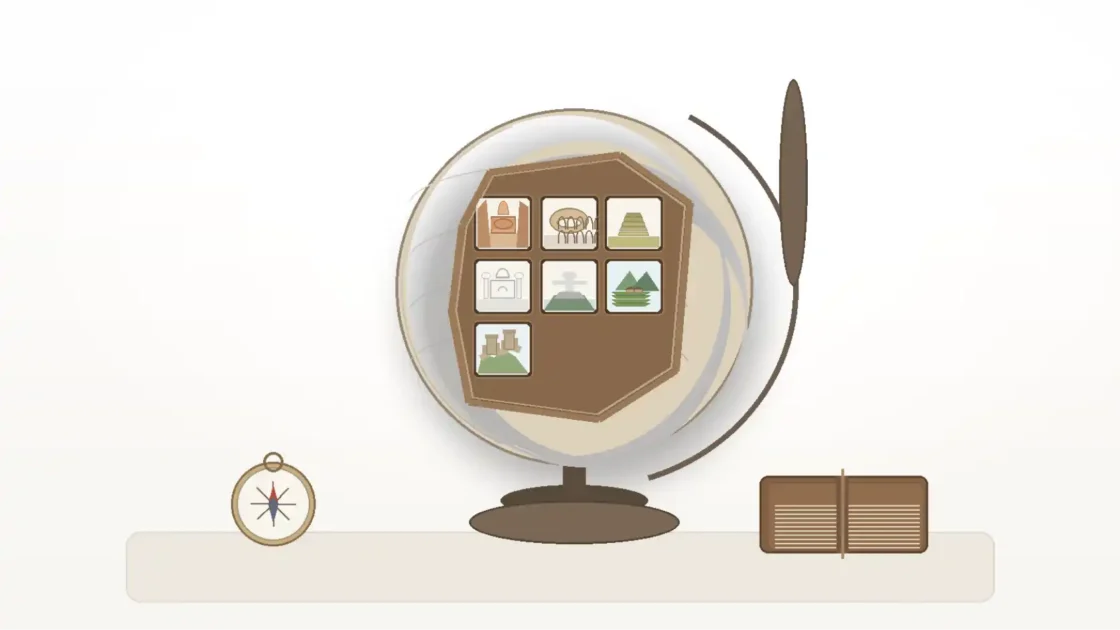
This is also why the app’s name works. A cabinet is not a warehouse. It is a limited place where someone puts objects they consider worth keeping. The metaphor suggests selection, order, access, and a little bit of personality. You open a cabinet expecting contents someone chose, not everything that exists.
The name also avoids the usual app-discovery clichés. It does not call itself “ultimate,” “top,” “pro,” or “best.” It is quieter than that. It almost undersells itself. In the current software market, quiet confidence is oddly memorable.
Cabinet’s maker perspective also helps with paid apps. Many app lists are weirdly afraid of paid software, even when a small upfront price is healthier than ads or surveillance. Bloco’s launch post says Cabinet was initially made as a paid app because the team wanted to learn more about app business models and because payment would push them to update the directory and improve the product. Whether the current distribution model changes or not, the reasoning is useful. Good software has to be paid for somehow.
The Google Play listing says Cabinet includes free apps, paid apps, and apps with in-app purchases, while promising that only proper deals show up. That is a sensible stance. The problem is not payment. The problem is bad payment design: manipulative trials, subscription traps, feature ransom, artificial scarcity, and ad clutter. A good directory should distinguish between fair pricing and ugly monetization.
A maker understands that distinction more clearly than a download chart. They know that an app charging a few euros can be more respectful than a free app monetized through annoyance. Cabinet is valuable partly because it gives paid, indie, open, useful, and ethical apps a place in the same conversation.
Small doubts before opening it
Cabinet is for Android users who still enjoy discovering good software but dislike the noise around app discovery. It is also for designers, developers, and product people who want a compact source of Android inspiration. The best user is probably someone with curiosity and taste, not someone who only installs the first result for every search.
No. Cabinet points you toward apps, but Google Play remains the main install and distribution layer. Think of Cabinet as the recommendation shelf before the store, not the store itself. Its value is in narrowing the field before you hit install.
No. The Play listing says Cabinet includes apps from known companies and lesser-known indie makers. That is the right call because quality is not tied to company size. Indie apps often bring personality and focus, while larger teams sometimes produce excellent work. Cabinet’s job is to judge the app, not the romance of its origin.
You can, and sometimes you should. Cabinet’s advantage is convenience and consistency. Reddit threads are rich but messy. Blog lists age. Search results are polluted. Cabinet gives you a repeatable, app-shaped place to browse.
No, and that is fine. Cabinet is useful because it is subjective with standards. A directory pretending to be objective about taste would be less honest. What matters is whether the curators’ choices feel careful, current, and aligned with your own sense of good software.
Scale. Cabinet will never cover Android as completely as Google Play, and it should not try. If you need an obscure regional banking app, a government service, a specific transit tool, or a niche enterprise utility, Cabinet may not help. It is best for discovering quality apps you did not know to search for.
More visible editorial signals would help: when an app was added, when it was last reviewed, why it was kept, what changed, and whether the recommendation has caveats. A curated directory becomes more trustworthy when its maintenance is visible. Cabinet already promises regular updates, but visible review dates would make the shelf feel even more alive.
Yes. Cabinet’s privacy policy says the app does not track, transfer, or collect personal data, and stores preferences locally. For a discovery app, that is a cleaner relationship. You should not need a behavioral profile just to find a better notes app.
Should Android users pay attention even if they rarely install new apps? Yes, because app quality changes the feel of the whole phone. A better calendar, scanner, notes app, launcher tool, reader, focus timer, or tiny utility can make the device feel calmer. Cabinet is useful even if you only find one keeper.
The quiet case for a more human app shelf
Cabinet is interesting because it refuses the usual idea that discovery must be bigger, faster, more personalized, and more automated. It suggests that a small group of people with taste can still make the internet feel better. That is a very old web idea, but it feels fresh inside mobile software.
The app also points to a broader fatigue. Users are tired of rankings that feel technically helpful and emotionally useless. A chart can show what is being installed. It cannot tell you which app was made with care. It cannot easily say which game respects your attention, which utility feels clean, which open-source project deserves support, or which small tool has the sort of polish that makes you smile.
Cabinet does not solve that fatigue completely, but it makes a better bargain. Instead of demanding that you browse everything, it offers a smaller room. Instead of asking you to trust anonymous momentum, it asks you to trust identifiable makers. Instead of burying apps under ads and rankings, it frames them with short reasons.
That is why the project feels more like a discovery object than a productivity tool. The joy is not only in finding apps. It is in being reminded that good Android software exists outside the obvious names. The ecosystem is richer than the charts make it look. Cabinet acts like a small lamp pointed at the better corners.
There is a version of Cabinet that could have been cynical: affiliate-heavy, SEO-stuffed, stuffed with “top apps” claims, padded by AI copy, and optimized for clicks. The real Cabinet is more restrained. It is made by a studio that builds Android products, says clearly what it is doing, keeps the categories compact, writes its own descriptions, and avoids ads.
That restraint gives it editorial credibility. A good curator does not need to shout. They need to choose well, explain enough, and keep the shelf current. Cabinet’s future depends on whether Bloco keeps doing those three things.
The most appealing use of Cabinet is not a marathon browsing session. It is opening it occasionally when your phone feels stale. Maybe you want a better utility. Maybe you want an app that respects your privacy. Maybe you want to see what Android makers admire. Maybe you just want the small pleasure of finding a tool you did not know existed.
That is enough. Not every useful web or app project has to be huge. Some of the best ones are small surfaces with a clear point of view. Cabinet belongs to that family: a human-made shelf for Android users who suspect the best app is not always the one at the top of the chart.
Its real promise is not that it will find every great Android app. Its promise is that someone with taste has already started looking.
Author:
Jan Bielik
CEO & Founder of Webiano Digital & Marketing Agency

This article is an original analysis supported by the sources cited below
Cabinet – Great hand-picked Android apps
Official Cabinet website describing the app’s purpose, human curation, ad-free positioning, categories, update rhythm, and difference from Google Play rankings. The writing standard for this article also follows the uploaded human-style editorial instructions.
Cabinet – Great apps selection on Google Play
Official Google Play listing for Cabinet, including the current app description, category details, update date, privacy declarations, developer information, and support links.
Presenting Cabinet to the World
Bloco’s launch article explaining why Cabinet was created, how the team organized the directory, the project’s origin inside Bloco, and the thinking behind its early paid-app model.
Bloco – Product development studio specialized in Android apps
Official Bloco homepage describing the studio as a small independent team focused on designing and developing Android products.
Learn more about the services and skills of Bloco
Official Bloco About page listing the studio’s Android development, UI/UX, usability testing, product, copywriting, app marketing, and team background.
Cabinet privacy policy
Official Cabinet privacy policy stating that the app does not track, transfer, or collect personal data and stores configuration preferences locally.
| Citing this article? Brief excerpts are welcome. Please credit Webiano.digital, name the author where stated, and include a link to https://webiano.digital and to this original article. Full or substantial republication requires prior written permission. Read our Copyright and Content Use Policy. |
This article was prepared with the assistance of artificial intelligence tools. The content underwent expert human review, and Webiano Digital & Marketing Agency assumes editorial responsibility for its final version and publication.