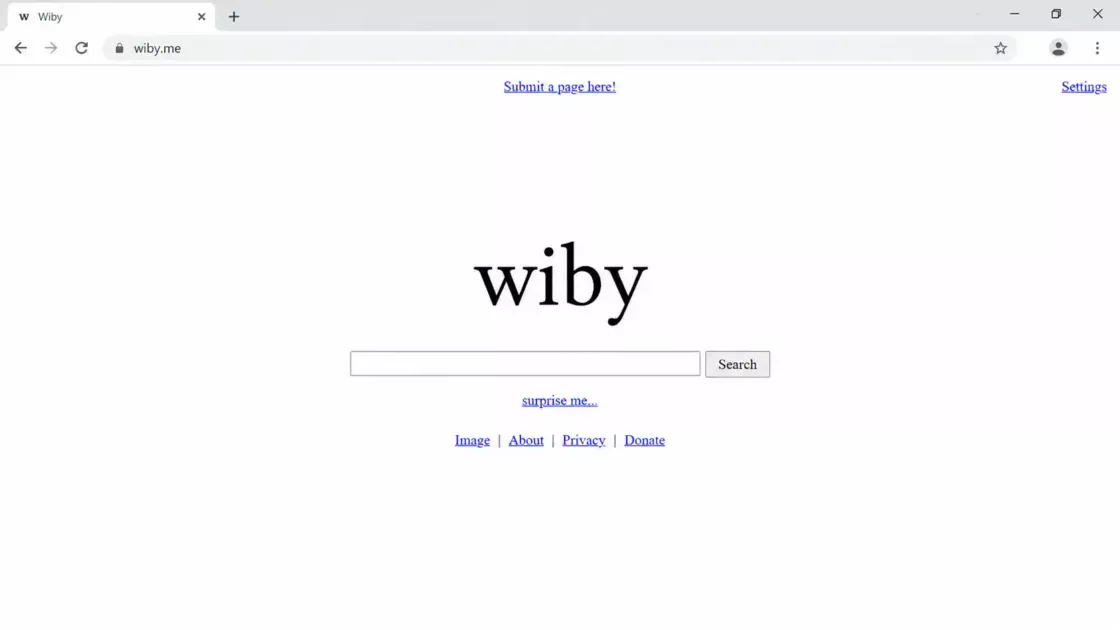
Web Radar begins with a small refusal: the web is not finished just because the big feeds feel tired. Open it and you do not land inside another social stream, growth-hacked directory, or noisy “best tools” database. You land inside a curated shelf of websites, tools, digital oddities, niche platforms, and strange little projects that still make the internet feel hand-built. The homepage says the project “tracks the internet that still rewards curiosity,” and that line is not decorative. It is the whole bet.
Table of Contents
The supplied writing standard for this piece also points toward the same editorial discipline: specific observation over empty polish, real judgment over generic summary. Web Radar works because it has that same instinct. It does not try to cover everything. It tries to notice things worth opening.
The index for the part of the web that slips past feeds
Web Radar is not trying to be the homepage of the internet. That would be a doomed, old-fashioned ambition. Its more interesting role is narrower: it acts like a daily editorial radar for the web’s overlooked corners. The site describes itself as a curated collection of “interesting websites, hidden internet gems, unusual digital projects and standout online experiences,” and the current homepage says it contains 102 discoveries. That number matters less than the shape of the collection. It feels selected, not scraped.
The web has no shortage of places that list links. Most link collections fail because they confuse accumulation with taste. They gather too much, explain too little, and age into digital compost. Web Radar feels different because each discovery points back to a full article on Webiano Digital & Marketing Agency, keeping the tiny support site light while preserving the editorial context elsewhere. The About page states this directly: Web Radar stores titles, excerpts, images, dates, and direct links while the full articles remain connected to Webiano.digital.
That architecture gives the project a useful split personality. WebRadar.org behaves like the fast browsing layer; Webiano.digital carries the deeper editorial work. The first is for scanning. The second is for reading. That is a smart product decision because discovery has two speeds. Sometimes you want to wander through names and thumbnails until something hooks you. Sometimes you want a full argument about why a small web tool deserves attention.
The homepage already shows what kind of editorial net is being cast. Hive Index, Kanboard, Monica, KTool, Traveler Map, Dub, Cabinet, RentRemote, Pole Clock, and WeTransfer all sit near each other without feeling random. They are not similar products. They are similar in spirit. Each one exposes a small design decision, cultural pattern, or under-discussed behavior on the internet. Web Radar is not saying, “Here are tools.” It is saying, “Here are places where the web still has texture.”
That distinction is the reason the format works. A normal product directory sorts the internet by category. Web Radar sorts it by curiosity. A kanban board can sit beside a personal CRM, a national parks map, a book recommendation project, and a global television explorer because the common thread is not the feature set. The common thread is the feeling of finding something that should not have been buried so easily.
There is a quiet nostalgia here, but the project is not trapped in retro worship. Web Radar is not asking readers to return to 2003. It is asking them to notice that the open web still produces useful, funny, strange, elegant, stubborn, and oddly specific projects. Some are old. Some are new. Some are commercial. Some are independent. Some look polished. Some survive on a single clever premise. The editorial pleasure comes from seeing them beside each other.
The strongest thing about the site is its refusal to make discovery feel like a productivity chore. It does not ask you to build a stack, start a trial, compare pricing tiers, or become more efficient by Friday. It asks you to click. That sounds almost too small until you remember how much of the web now treats clicking as a measurable funnel event. Web Radar treats clicking as attention.
A daily habit, not another giant platform
The phrase “handpicked daily” on the homepage is doing real work. Web Radar wants to become a habit, not a destination you exhaust once. A daily discovery format changes the reader’s relationship with the site. You are not meant to search only when you need a replacement for Notion, a file-transfer service, or a design tool. You are meant to check what someone with taste noticed today.
That cadence also changes the editorial pressure. A daily format has to find enough without lowering the bar. Too much selectivity turns it into a rare newsletter that disappears for weeks. Too much volume turns it into sludge. Web Radar’s current front page suggests a middle path: frequent enough to feel alive, selective enough to retain a voice. The entries are dated, and the Webiano Web Radar category page shows multiple articles published on June 2, 2026, with reading times ranging from short pieces to longer essays.
The support site also includes search, which sounds ordinary until you consider the collection. Search makes the archive useful without turning the project into a database-first experience. You can browse by latest discoveries, or you can search by keyword, product, topic, or idea. The homepage explicitly frames the archive this way, saying every result links back to the original article on Webiano Digital & Marketing Agency.
That matters because Web Radar is likely to become more interesting as it grows. A discovery archive becomes richer when the entries start forming accidental neighborhoods. One article about a small Android app discovery project is nice. Ten articles about alternative discovery systems start to say something about app stores, search decay, platform fatigue, and human curation. One article about a clock is a curiosity. Several articles about time, maps, global interfaces, and tiny utilities become a pattern.
The daily rhythm also creates a subtle editorial promise. Someone is looking so the reader does not have to scroll blindly. That promise sounds simple, but it is rare. Most discovery mechanisms online now make the user do the filtering work after the algorithm has already done the flooding. Web Radar reverses the mood. It says: here is one thing, already noticed, already framed, already worth your next click.
The format avoids the fake urgency that damages many recommendation sites. There is no loud countdown, no forced ranking, no panic that you are missing the “top 50” tools of the month. The articles read more like considered recommendations than trend reports. That gives the discoveries longer life. A tiny web toy, a stubborn open-source app, or a weird database does not need to be “breaking” to be worth finding.
Web Radar’s connection to Webiano also gives it a particular editorial smell. It comes from an agency that has lived with the web long enough to care about infrastructure, search, content, and digital behavior at the same time. Webiano’s About page says the agency’s roots go back to the late 1990s and that it has operated commercially since 2002 across websites, digital systems, strategy, infrastructure, performance, and growth. That background helps explain why Web Radar is interested in both charming oddities and serious tools.
The best discovery writing often comes from people who have built things. Builders notice different details. They care about the weirdness of a login flow, the restraint of a single-purpose interface, the politics of open-source maintenance, the hidden labor behind a tiny search box. Web Radar’s articles often seem to ask not only “What is this?” but “What kind of web thinking produced this?” That is where the project becomes more than a link feed.
The editorial signal is the product
Web Radar’s strongest feature is not technical. The product is the editorial signal. The site is simple: title, excerpt, image, date, link, search, archive. There is no need for a complicated interface because the interface is not the point. The point is whether the reader trusts the act of selection.
That trust is built through framing. A good Web Radar entry does not merely announce that a website exists. It gives the reader a reason to care before the click. “Kanboard is the anti-SaaS kanban board” says more than “Kanboard project management tool.” “Monica is a quiet CRM for people you care about” says more than “personal relationship manager.” “KTool turns internet reading into Kindle reading” says more than “send articles to Kindle.” These titles turn features into human situations.
That is hard to fake. The title has to know what is strange about the thing. A generic directory would flatten Monica into a contacts app, Kanboard into task management, and Traveler Map into travel planning. Web Radar’s editorial move is to find the tension: the anti-SaaS tool, the emotional CRM, the reading guilt, the browseable park map, the tiny URL that became powerful. The project is good when it names the itch behind the interface.
This matters because the modern web is full of technically correct descriptions that fail to create desire. “A platform for X” is rarely a reason to open anything. Readers need the human angle. What does the site let me feel, notice, avoid, remember, or try? Web Radar answers those questions quickly. The homepage excerpts often begin with a small observation rather than a category label, which makes the discoveries feel encountered rather than filed.
The site also has taste for the slightly unfashionable. Notepad++, Winamp, FreeTube, Diceware, MS-DOS emulation, and Keep Calm and Carry On all appear in the archive alongside newer tools. That is a good sign. Discovery culture gets dull when it only chases what launched yesterday. The web’s memory is part of its value. Old projects, revived tools, weird standards, and stubborn interfaces often reveal more about online culture than the newest app with the cleanest onboarding.
Web Radar seems especially interested in things that make the web feel browsable again. Maps, directories, clocks, generators, emulators, archives, lists, and tiny utilities all have a way of turning the browser back into an instrument of wandering. That is a relief in a period when many platforms try to trap attention inside one endless feed. A discovery site that sends people outward is quietly political in the old web sense: it believes links still matter.
The project is also careful not to make everything sound equally grand. Some entries are clearly practical, some are charming, some are culturally odd, and some are memorable because they are almost pointless in the best way. That range matters. A web made only of practical tools would be unbearable. A web made only of jokes would be thin. Web Radar understands that a good discovery archive needs both usefulness and useless beauty.
What Web Radar makes easier to notice
| Web Radar element | What it does | Why it works |
|---|---|---|
| Daily curation | Turns discovery into a repeatable habit | Readers get a fresh reason to return |
| Short excerpts | Gives each link a point of view | The click feels earned, not random |
| Webiano article links | Keeps deeper context attached | The support site stays clean while the essays stay rich |
| Search archive | Lets old discoveries resurface | The collection becomes more useful as it grows |
| Open submissions | Lets readers point toward overlooked sites | The net can widen without losing curation |
| Mixed categories | Places tools, oddities, archives, and experiments together | The web feels more varied than a product database |
The table shows the quiet strength of the format: Web Radar is not adding features for decoration. Each piece of the site supports a specific editorial behavior: notice, frame, browse, search, click, return.
Why this format matters now
The web’s discovery problem is not that nothing good exists. The problem is that good things are badly distributed. A clever independent project may have no ad budget. A useful open-source tool may live behind a plain homepage. A strange archive may be impossible to describe in a search query. A delightful browser toy may become famous for one afternoon on social media, then vanish under the next outrage cycle.
Search is still powerful, but it rewards asking the right question. Curiosity often begins before the question is clear. You cannot search for a website you do not know should exist. You cannot search for the exact phrase that would reveal a niche directory, a tiny clock interface, or a forgotten emulator unless someone has already given you the words. Web Radar’s editorial job is to provide those words.
Algorithmic feeds solve a different problem. They are good at detecting engagement, not at honoring quiet interest. A project can be deeply worth opening and still perform badly in a feed because it is too slow, too specific, too calm, too technical, or too difficult to summarize in one reaction. Web Radar gives those projects a more patient format. It lets the premise breathe.
There is also a cultural reason this matters. The internet feels smaller when discovery is controlled by a few giant surfaces. People begin to mistake their feed for the web itself. They see the same jokes, the same fights, the same tool launches, the same screenshots, the same arguments. A curated outbound project like Web Radar reminds readers that the browser still opens outward, not only downward.
The About page states the mission plainly: Web Radar explores corners of the web that are easy to miss in algorithmic feeds and mainstream search results. That is the strongest sentence on the site because it names the real enemy: not technology, but narrowing attention. The web is still huge. Our daily routes through it have become small.
Web Radar is also a counterweight to the “tool stack” mentality that turns every recommendation into work. The site is not only for founders, marketers, designers, developers, or productivity obsessives. It is for anyone who still enjoys the act of finding. Some discoveries may improve a workflow. Others may just make the reader say, “I did not know someone built that.” That sentence is enough.
The project’s submission page reinforces the same editorial taste. It asks for remarkable websites, useful tools, unusual platforms, independent digital projects, creative experiments, and hidden internet gems. It says the best submissions are specific, original, and easy to understand, and that a candidate may be practical, beautifully designed, technically clever, culturally interesting, entertaining, or memorable. That is a better filter than traffic, funding, or launch date.
That openness gives Web Radar a community-shaped edge without turning it into a community platform. Readers can suggest sites, but the editorial layer remains intact. That is the right balance. Fully open directories drown quickly. Closed editorial projects miss things. A submission door lets the radar hear from the outside while keeping the final selection human.
There is a deeper product lesson here for anyone building on the web. Curation is not a weak substitute for automation. Done well, it is a different kind of intelligence. It notices tone, timing, weirdness, restraint, cultural fit, and the small emotional charge of a good link. Those are hard signals to quantify. They are also the signals that make discovery feel alive.
Who will get the most from it
The obvious audience is people who like the web as a place, not only as a utility. Web Radar is for readers who still enjoy opening a tab with no immediate task attached. That group includes designers, writers, developers, marketers, founders, researchers, internet archivists, newsletter people, product thinkers, teachers, students, and anyone who collects links like other people collect records.
Designers will notice the interface decisions. Many Web Radar discoveries are interesting because they solve a small interaction problem with taste. A clock that makes global time visible, a background generator that avoids design sludge, a map that makes parks browseable, a note device that changes the feel of recording: these are not only tools. They are arguments about how interfaces should behave.
Writers will notice the framing. The archive is a lesson in turning a website into a story without inflating it. A weak writer says “this app helps users manage relationships.” A sharper one says “Monica is a quiet CRM for people you care about.” That difference is not cosmetic. It moves the reader from category to situation, from software to life.
Developers will find a different pleasure. Web Radar often notices projects that resist bloat. Kanboard, Notepad++, FreeTube, Diceware, and similar entries appeal because they seem built around conviction. They do not apologize for being plain, narrow, local-first, open-source, old-school, or technically opinionated. In a web full of products trying to become platforms, restraint starts to feel fresh.
Marketers should read it with humility. The site is a reminder that attention is earned through specificity, not volume. A project with one memorable premise can be more clickable than a polished campaign with no personality. Web Radar is especially good at spotting that premise. It can turn a small product into something legible without smothering it in marketing language.
Founders can use the archive as a taste calibration tool. What makes a tiny project worth discussing? Often it is not the number of features. It is the clarity of the promise. One sharp use case. One unusual audience. One interface decision that feels obvious after someone else has built it. One refusal to behave like every other SaaS product. Web Radar rewards those traits.
Researchers and journalists can treat it as a soft signal map. The archive shows what kinds of web behavior are recurring at the edges. People want better app discovery. People want quieter tools. People want maps, directories, and archives. People want local control, smaller rooms, simpler interfaces, better reading habits, and less feed dependency. No single Web Radar article proves a trend. The collection starts to reveal a mood.
Regular readers do not need any professional excuse. The site is worth opening because it restores a tiny pleasure many people lost: browsing without being harvested by a feed. You click because the premise is good. You leave for another site. You come back later. That is old web behavior, but not dead behavior.
Small questions before you open it
It is both, in a clean way. WebRadar.org is the lightweight discovery layer, while the full editorial articles live on Webiano.digital. The Web Radar About page says the support site keeps titles, excerpts, images, dates, and direct links, while every full article remains connected to its original source on Webiano.digital.
Not exactly. It includes tools, but calling it a tool directory makes it sound more mechanical than it is. Web Radar also covers strange services, memorable web experiences, digital experiments, niche platforms, archives, old software, maps, generators, and ideas that are hard to place in a normal category.
The discovery page gives a fast entry point, while Webiano carries the longer read. That is why the format feels lighter than a magazine but more considered than a bookmark list. The reader can scan the archive quickly, then open the full piece when a title catches.
Yes. The Add site page invites suggestions and says strong candidates are specific, original, and easy to understand. It names practical tools, beautiful design, technical cleverness, cultural interest, entertainment value, and memorability as acceptable reasons for a site to belong.
Web Radar does not seem obsessed with launch culture. It is more interested in the durable pleasure of discovery. A project does not need venture funding, a launch badge, or a growth story to belong. It needs a reason to be opened.
The open web still has side doors
The best thing about Web Radar is that it makes the web feel less exhausted. Not fixed, not pure, not magically restored, just less exhausted. It reminds the reader that the internet is still being built by people with odd interests, practical frustrations, beautiful obsessions, and enough stubbornness to publish something outside the main feed.
That reminder has value because the web’s dominant mood is often fatigue. People complain that search is worse, feeds are louder, social platforms are unstable, and every app wants a subscription. Much of that complaint is earned. But Web Radar points toward a more interesting response than complaint: go looking again, with better guides.
The project’s taste is strongest when it finds websites that make one small part of life more legible. A community map, a global time circle, a Kindle reading bridge, a tiny password ritual, a personal CRM for memory, a browser home screen with intention. None of these needs to change the internet. Each one changes the next ten minutes of someone’s attention.
That is enough for a discovery format. Web Radar does not need to become a giant platform to matter. Its value is in the editorial hand, the daily rhythm, the outbound link, and the belief that small sites deserve good introductions. The web does not only need better algorithms. It needs more people willing to point at something and say: this is strange, this is useful, this has taste, this deserves a click.
Web Radar is one of those projects that becomes clearer after you use it for a few minutes. At first it looks like a tidy archive. Then it starts to feel like a habit you did not know you missed. A place to find the internet’s side streets. A place where the next tab might still surprise you.
Author:
Jan Bielik
CEO & Founder of Webiano Digital & Marketing Agency
Sources
Web Radar
Official Web Radar homepage, used to verify the project’s positioning, daily handpicked framing, current discovery archive, search function, and the stated count of published discoveries.
About Web Radar
Official About page, used to confirm Web Radar’s purpose, editorial scope, relationship to Webiano.digital, and focus on overlooked corners of the web.
Add site
Official submission page, used to verify what kinds of websites Web Radar invites readers to suggest and what qualities make a strong candidate.
Web Radar category on Webiano Digital & Marketing Agency
Official Webiano category page, used to review the full editorial side of Web Radar, recent article titles, publication dates, and reading-time context.
About Us on Webiano Digital & Marketing Agency
Official Webiano agency page, used to verify the agency background, long-running digital practice, and connection between Web Radar’s editorial approach and Webiano’s broader digital work.
| Citing this article? Brief excerpts are welcome. Please credit Webiano.digital, name the author where stated, and include a link to https://webiano.digital and to this original article. Full or substantial republication requires prior written permission. Read our Copyright and Content Use Policy. |
This article was prepared with the assistance of artificial intelligence tools. The content underwent expert human review, and Webiano Digital & Marketing Agency assumes editorial responsibility for its final version and publication.