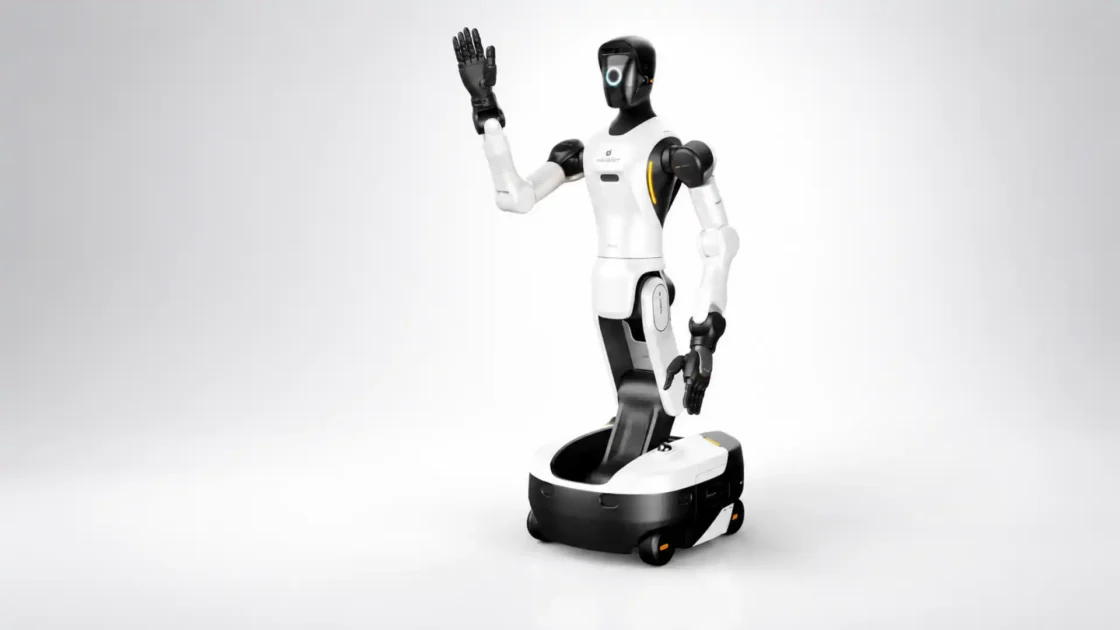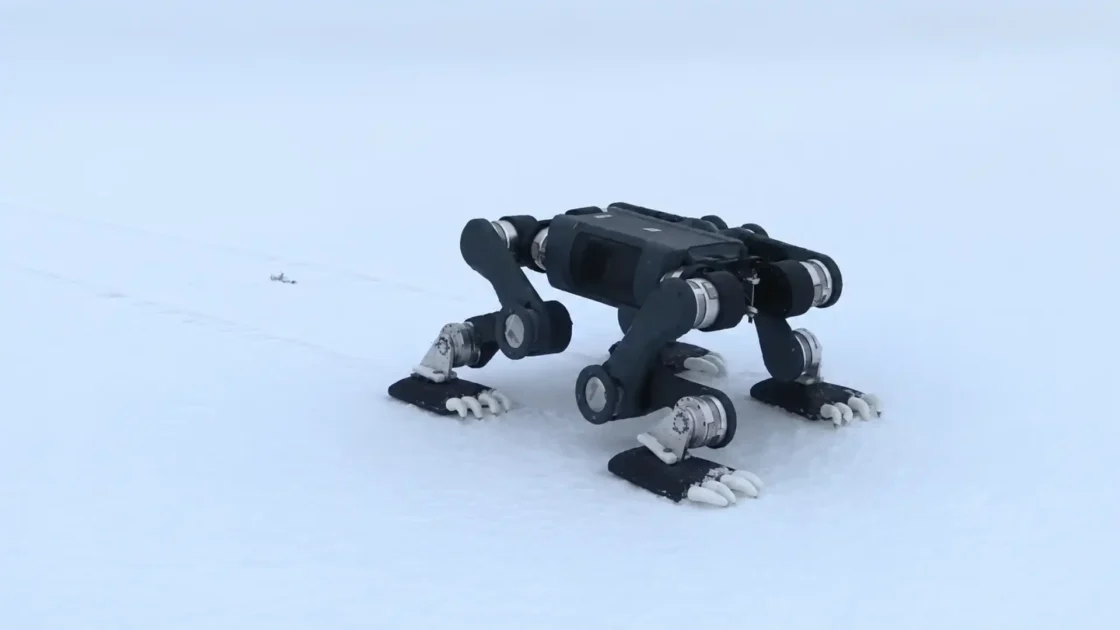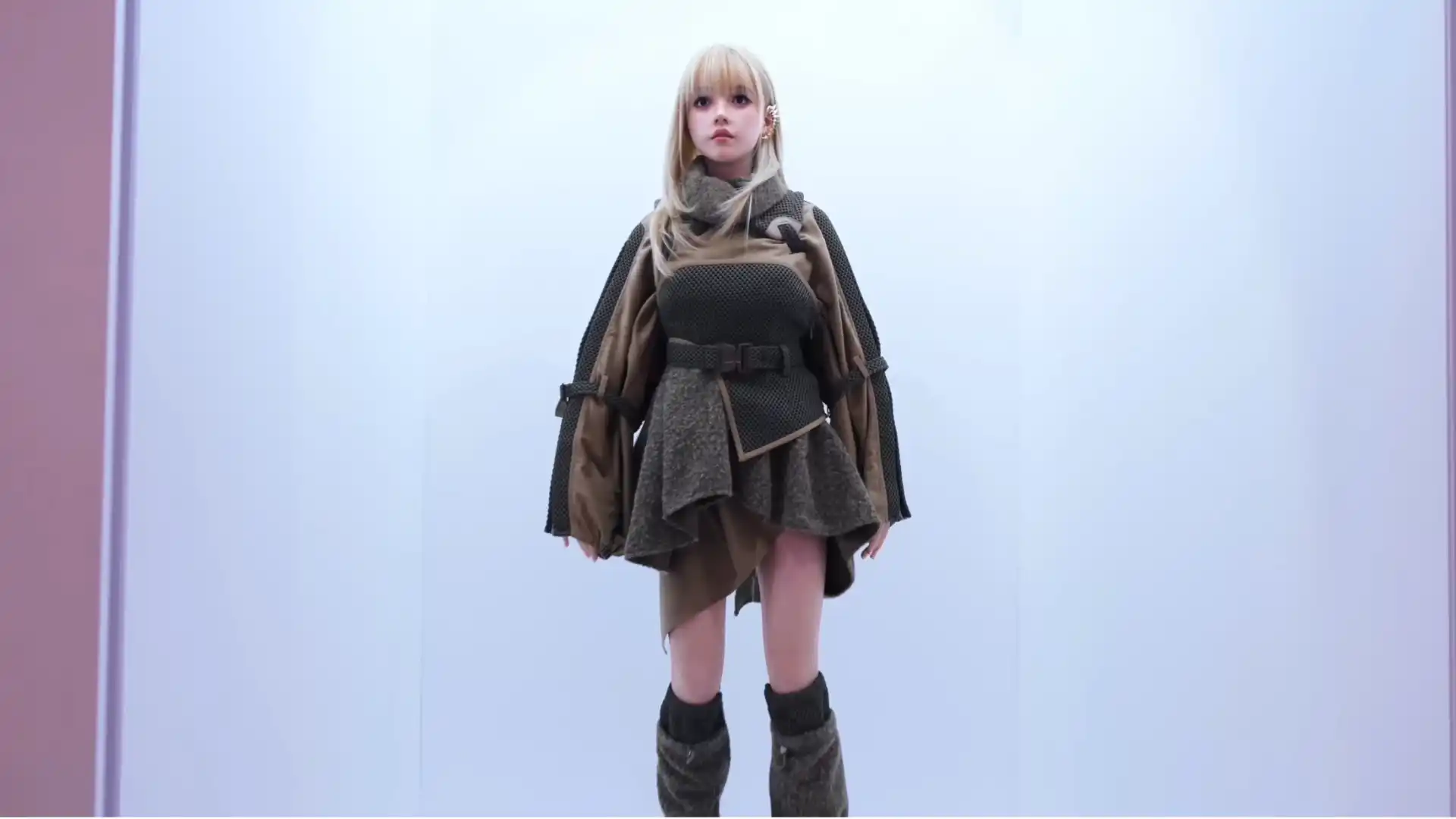
UBTech’s UWorld U1 launch matters because the company is not selling a robot arm, a warehouse mule, or a demo platform for engineers. It is selling a machine that asks to be treated as a domestic presence. Reuters reported that UBTech said it had received 13,361 orders for the U1 series and aimed to complete deliveries within the year, while the product line ranged from a 119,800 yuan torso to top-end full-size models priced at as much as 990,000 yuan. The order number is company-reported, not independent delivery data, but it still changes the question from whether lifelike companion robots can attract attention to whether a supplier can build, support, and govern them at scale.
Table of Contents
Orders turned companionship into a production problem
That distinction matters. A preorder is not a working household relationship, and a launch-day number is not a retention curve. The same point applies to the comparison with Unitree: Unitree clarified in January 2026 that its actual humanoid robot shipments in 2025 exceeded 5,500 units delivered to end customers, with output above 6,500 units, and warned against combining different robot forms too freely. Orders and shipped robots measure different business facts. Orders reveal willingness to reserve; shipments reveal manufacturing and logistics; sustained daily use reveals whether companionship survives boredom, errors, fatigue, and family scrutiny.
The U1 is therefore a stress test for a category that has spent years living between research lab, trade-show stage, and viral video. The machine is being marketed as a companion, not as a general household worker. That narrows the promise in one way and widens it in another. It does not need to fold every shirt or cook every meal to justify attention. It does need to speak naturally, read cues without becoming creepy, remember without feeling invasive, and remain physically safe around older adults, children, pets, visitors, and cluttered apartments. The product is entering the most emotionally sensitive room in robotics: the home.
China is a plausible place for that test because the commercial signal, demographic pressure, and supply chain are all present at once. Official data showed China’s population aged 60 and over at 323.38 million at the end of 2025, equal to 23.0 percent of the national population, while the population aged 65 and over reached 223.65 million. The National Bureau of Statistics also reported a fourth consecutive annual population decline, with births below deaths in 2025. Those figures do not prove that households want humanoids, but they explain why elder care, solo living, and companionship have moved from soft cultural concerns into economic planning.
The strongest reading of the U1 launch is not that humanoid companions have already become mass consumer electronics. The evidence does not support that. The stronger reading is that China’s robotics sector has found a demand story that industrial automation alone could not provide. Factory humanoids compete on uptime, payload, safety certification, and total cost of ownership. Companion humanoids compete on presence, responsiveness, memory, trust, and the buyer’s fear that nobody will be there when something goes wrong. Those are harder metrics to certify, yet they are easier for ordinary people to understand.
That is also why the order story feels larger than the U1 itself. Loneliness is not a niche use case. The World Health Organization says loneliness affects around 16 percent of people worldwide and is linked to serious effects on mental and physical health, quality of life, and longevity. Companion robots are being pulled into that space because phones and speakers already proved that people will talk to machines, while aging societies are showing that paid human care cannot expand quickly enough to meet every need. The first big market for domestic humanoids may be emotional labor, not chores.
The first delivery wave will also decide who the real customer is. A robot bought for an older parent may be paid for by an adult child, installed by a technician, used by the parent, monitored by relatives, and serviced by UBTech or a dealer. Those roles create different incentives. The payer may want reassurance, the user may want dignity, and the vendor may want recurring software revenue. If those incentives clash, early enthusiasm can turn into complaints. Companionship hardware succeeds only when the household accepts the relationship around it, not just the device itself. A companion robot is never just placed in a room; it is inserted into habits, anxieties, family politics, and expectations about care. The order book only starts that social negotiation; it does not settle it. Families will decide.
UBTech is selling a relationship interface, not a factory worker
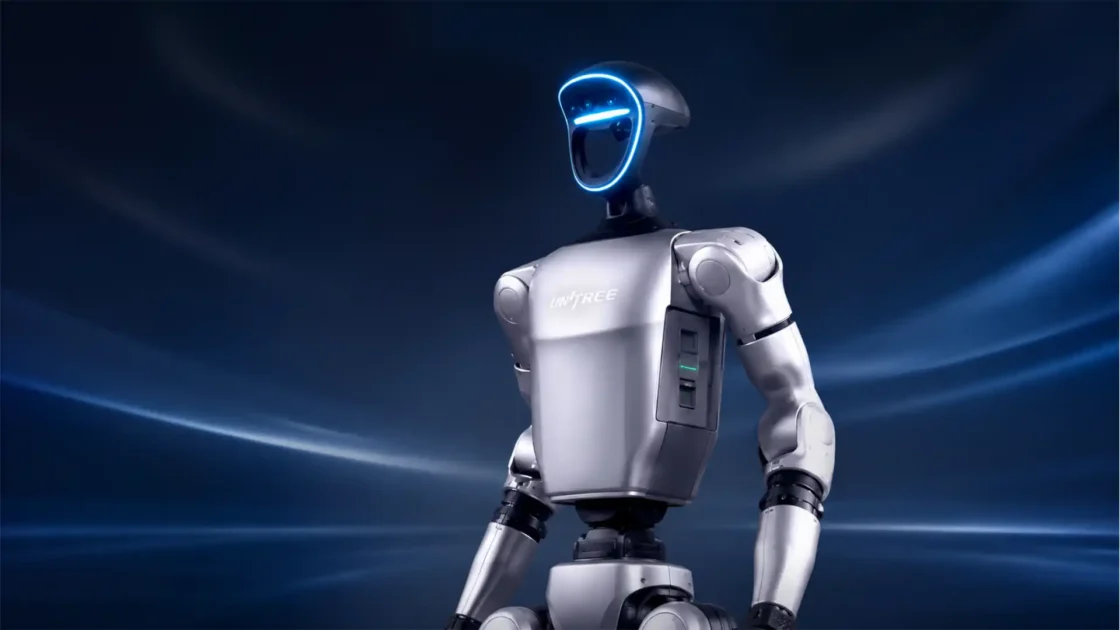
The U1’s stated specifications show a deliberate break from the language of industrial robotics. Reuters reported that the line includes robotic torsos and full-sized humanoid companions with highly realistic details such as visible pores, blood vessels, and fingerprints. UBTech said the robots use an emotional large language model designed for long-term companionship, can identify more than 20 human emotions with accuracy above 90 percent, and have expressive faces and lifelike digital skin for interaction. The product story begins with affect, not productivity. That makes the U1 closer to an embodied social interface than a labor-saving appliance.
TechNode reported that the U1 series has 88 high-degree-of-freedom joints and that UBTech founder Zhou Jian said orders had topped 11,000 across all channels before first deliveries. The same report said user interaction data would be encrypted and stored locally by default, with no mandatory cloud uploads. A Chinese Securities Times article added company claims about a dual-pivot biomimetic neck, coverage of 90 percent of basic human movements, recognition of more than 20 fine-grained emotions, a 500 millisecond intuitive-response layer, and speech-to-lip delay controlled within 20 milliseconds. Those are large claims, and several remain vendor assertions rather than independent test results.
The hardware matters because social presence is physical. A smart speaker can speak, but it cannot lean, turn its head, hold posture, or create the uneasy sense that somebody is in the room. A screen avatar can smile, but it does not change the geometry of a home. U1’s humanoid form is expensive precisely because companionship is being sold through body language: gaze, neck movement, lip sync, facial timing, skin texture, and the possibility of touch. Embodiment is the premium feature, even though it also brings the hardest safety and ethics questions.
The software matters for a different reason. A companion robot that forgets everything feels shallow; a robot that remembers too much feels unsafe. The useful zone lies between those extremes. It needs to remember medication preferences, favorite radio stations, wake-up habits, family names, routines, and topics a user enjoys. It should also forget, delete, or cordon off sensitive information when asked. That makes memory architecture a product feature and a governance problem at the same time. A factory robot can log faults without knowing a worker’s grief history. A companion robot may learn what a lonely person says at 2 a.m.
The U1 also exposes the gap between emotional recognition as marketing and emotional understanding as reality. A system can classify facial expressions, tone, speech content, and interaction history. It cannot prove that it knows what someone feels in the human sense. Its output is a probability, shaped by sensors, training data, cultural assumptions, context, lighting, speech clarity, and user behavior. The company-reported accuracy figure is therefore useful only if readers remember what it does and does not mean. Emotion AI estimates signals; it does not read souls.
That limit is not fatal to the product. People accept imperfect companionship from pets, media characters, social apps, and voice assistants. The commercial test is whether the robot’s behavior feels helpful enough, often enough, to earn repeated use. The danger is that customers may treat emotional labels as medical or psychological truth, especially when the robot is placed with older adults, children, bereaved people, or users with cognitive decline. A wrongly timed joke is annoying. A false reassurance, manipulative prompt, or missed distress signal could be more serious.
For UBTech, the bet is that a full-body social robot can create value before it becomes a true household worker. That is a practical bet, not just a futuristic one. Walking, manipulation, and domestic autonomy remain hard. Conversation, reminders, expressive presence, and routine memory are nearer. The U1 is therefore a bridge product: mechanically ambitious, emotionally marketed, and functionally narrower than science fiction. If it succeeds, it will prove that the first consumer humanoid category can be built around being with people rather than doing everything for them.
The strongest near-term use cases are therefore narrow and repeatable: greeting, conversation, reminders, guided calls, light entertainment, emergency prompts, and companionship during predictable periods of the day. Those functions sound modest next to the word humanoid, but modest functions may be exactly where trust begins. A robot that reliably notices confusion, says the right family name, and reminds a user about water or appointments may be more valuable than a robot that attempts dramatic autonomy and fails. Domestic robots earn credibility through boring reliability before theatrical intelligence.
Reported orders and delivered robots belong in separate columns
The U1 comparison with Unitree is compelling because the numbers appear to cross an invisible threshold. Reuters reported 13,361 U1 orders, while Unitree said its 2025 humanoid deliveries exceeded 5,500 units. Read too quickly, that suggests a companion robot line attracted more demand at launch than the largest humanoid suppliers delivered in a year. Read carefully, it says something narrower: UBTech reported a large reservation or order pipeline for a new consumer-facing line, while Unitree disclosed completed deliveries of its own humanoid products. The two figures should be compared as market signals, not treated as equivalent operational proof.
Unitree’s clarification is useful because it defines the trap. The company said its 2025 figure referred to actual humanoid robots sold and delivered to end customers, not order volume, and that order volume was higher. It also said the total output exceeded 6,500 units and that the figures covered pure humanoid robots, excluding dual-arm wheeled robots and other robot forms. That language is unusually important in robotics, where a “robot” can mean a quadruped, a wheeled service unit, a torso, a biped, a research kit, or a full commercial system.
A preorder can be cancelled, delayed, repriced, converted into a different model, or fulfilled through staged batches. A shipment can still fail commercially if customers stop using the product or if support costs destroy margins. A delivery number can also hide channel stuffing, demo units, or institutional pilots unless the company defines end customers clearly. Unitree at least specified delivered units. UBTech has stated orders and delivery intent; the next meaningful evidence will be production start, actual delivery volume, refunds, service calls, repair rates, and repeat engagement. The market needs shipment proof before declaring consumer humanoids mainstream.
The U1 order number is still valuable. It shows that buyers, institutions, or channel partners were willing to commit to a product whose emotional promise is unusual and whose top versions are expensive. In consumer technology, early order velocity often measures cultural appetite before it measures operational maturity. That was true for electric vehicles, home assistants, VR headsets, and folding phones. Early demand attracts capital, component suppliers, media attention, and developer interest. It also attracts unrealistic expectations, copycat products, and regulatory attention once failures appear in private homes.
UBTech’s delivery ambition is another variable. Reuters reported that the company aimed to complete deliveries within the year. City News Service, citing product information and Chinese media, reported that mass delivery was scheduled to begin in mid-September and that UBTech aimed to deliver more than 10,000 units by year-end. Those details, if met, would put unusual pressure on quality control because humanoid robots combine mechanics, batteries, sensors, software, skin materials, user accounts, privacy settings, packaging, on-site setup, and after-sales service.
The order-versus-shipment distinction also protects the article from hype. Humanoid robotics already suffers from videos that show perfect ten-second performances without showing setup time, failed takes, remote assistance, maintenance, and operating constraints. Companion robots add another risk: a buyer may overestimate how much emotional reliability a device can provide because the marketing surface is humanlike. A lifelike face raises the burden of honesty. Companies should disclose what is autonomous, what depends on cloud services, what is scripted, what is experimental, and what the robot will not do.
For investors and policymakers, the clean framework is simple. Orders test demand. Deliveries test manufacturing. Retention tests usefulness. Safety incidents test governance. Margins test whether the business can scale. In the U1 case, the first test produced a loud number. The remaining tests are still ahead. That does not make the launch unimportant. It makes it early. The right headline is not that China has solved household humanoids. The right headline is that a major Chinese robotics company has turned emotional companionship into a measurable product pipeline faster than many observers expected.
This framework also explains why the U1 order figure deserves attention without surrendering judgment. If deliveries arrive on time, the story becomes a manufacturing milestone. If customers use the robots for months, the story becomes a consumer-behavior milestone. If caregivers or families report measurable benefits, the story becomes a care-technology milestone. Each step is harder than the one before it. A launch can prove curiosity in one day, but companionship must prove itself in ordinary weeks, including days when the robot is tired, offline, misunderstood, or simply unwelcome. That is the difference between a reservation queue and a durable category. Still.
China’s loneliness market has hard demographic roots
The U1 launch landed in a society where solo living is no longer an edge case. China Daily reported in 2021 that the Ministry of Civil Affairs said 240 million people in China were single in 2018 and that more than 77 million of them were living alone; the ministry estimated the number of people living alone would rise to 92 million in 2021. Reuters later reported that China may have up to 200 million one-person households, citing Chinese state media, in coverage of the viral Sileme safety app for solo dwellers. The market signal is not only aging; it is household fragmentation.
Older adults are the most visible group in the U1 story, but they are not the only group. Solo workers, unmarried adults, people who moved to large cities, widowed residents, empty-nest couples, and families separated by work or study all create different forms of isolation. A single office worker may buy a companion for routine and reassurance. An adult child may buy one for a parent living far away. A care institution may use a robot for activities or reception. A hotel or tourism site may use a lifelike model for spectacle. Those markets overlap, yet the emotional promise changes in each setting.
China’s official elderly data makes the pressure concrete. A 2024 government-published report on a national senior living survey said empty nesters, meaning older people living alone or only with a spouse, accounted for 59.7 percent of older people in 2021, up 10.4 percentage points from 2010. The same report said rural empty nesters were nearly 62 percent of rural older people, and it named at-home medical services, meal assistance, cultural and entertainment activities, health education, and at-home cleaning among the top demands. Companion robots are being marketed into a real care gap, not into a fantasy created by vendors.
Still, loneliness should not be flattened into a sales category. The World Health Organization distinguishes social isolation, loneliness, and social connection, and says loneliness affects all ages, including older people. That matters because a robot may address some parts of isolation and not others. It can speak when nobody else is available. It can prompt a family call. It can notice routines and provide reminders. It cannot replace friends, kinship obligations, neighborhood trust, public elder services, trained care workers, or clinical support. A robot can reduce silence; it cannot rebuild a community by itself.
The viral success of Sileme shows the emotional texture of the same market. Reuters described the app as a lightweight safety tool for solo dwellers that sends notifications to an emergency contact if the user fails to check in for consecutive days. Its blunt Chinese name translates as “Are you dead?” and the developer introduced an 8 yuan payment scheme after downloads surged. That app has no humanoid body and no lifelike face, but it captured a fear that a companion robot also targets: the fear that an emergency could happen unnoticed.
This is why the U1 story should be read alongside basic care infrastructure, not only alongside robotics benchmarks. China had about 410,000 elder care facilities by June 2024, according to the government-published survey report, double the 2019 level, with most of them community-based. That expansion points to the same policy problem: families are smaller, older adults live longer, and community care must stretch farther. If a robot can extend care capacity by handling reminders, routine conversation, activity prompts, and check-ins, it may earn a place as support infrastructure. If it merely performs emotional theater, it will remain a luxury curiosity.
The demand curve will therefore be uneven. Wealthier urban households can test expensive devices first. Institutions can justify robots as service infrastructure or publicity. Rural older adults may need cheaper, simpler systems tied to community care, not million-yuan humanoids. Younger solo dwellers may prefer apps, pets, or screen-based companions. The U1’s early order count captures all of this ambiguity. It signals that loneliness is now investable, but it does not say which product form will win. The biggest market may belong to the company that treats companionship as care design, not just realistic skin.
The practical lesson is that loneliness technology must be routed through actual households, not abstract personas. Buyers will ask whether the robot works after the first week, whether relatives can configure it without frustration, whether elders feel watched, and whether the machine reduces or increases family guilt. Institutions will ask whether staff time is saved or merely shifted into maintenance. Demand becomes durable only when the robot makes ordinary care easier, not when it wins a launch-day argument online.
The silver economy gives the category policy cover
China’s companion robot push sits inside a national effort to turn aging from a fiscal burden into an industry policy problem. In January 2024, the State Council released measures to strengthen the silver economy, defining it as economic activity that provides products and services for senior citizens and prepares for the challenges of an aging population. The guideline called for expanding and standardizing the sector, cultivating industry clusters, improving branding, and developing smart health and elder care, including nursing and housekeeping robots. That policy language gives robots a clearer route into elder services.
Policy cover is not the same as market proof. Governments can encourage sectors that companies still struggle to monetize. The silver economy contains medical services, food, housing renovation, finance, mobility, insurance, tourism, education, and community care. Robots are one piece, and humanoid companions are a narrower piece. Their role depends on whether they can lower care burdens, improve emotional well-being, extend safe independent living, or create measurable value for institutions. If they cannot, public language around smart elder care will not rescue them from high costs and limited use.
UNDP’s 2025 report on financing China’s silver economy said China had 220 million people aged 65 and over by the end of 2024, equal to 15.6 percent of the population, and noted that China elevated the silver economy to a national strategic level in 2024. The report identified investment opportunity areas including smart devices and age-friendly housing, while stressing the need to expand benefits and strengthen economic security for older people. The investment thesis depends on inclusion, not only premium devices.
That point matters for U1 because its price range begins far above ordinary household spending. Reuters reported a 119,800 yuan entry model and top-end pricing at 990,000 yuan. For comparison, official 2025 data put national per capita disposable income at 43,377 yuan and per capita consumption expenditure at 29,476 yuan. Even the entry torso costs multiple years of average per capita consumption, while the top model is luxury territory. A high price does not invalidate the launch; early consumer electronics often begin as expensive objects. It does narrow who can realistically buy without institutional support.
The silver economy also changes the politics of companionship. A robot sold as entertainment invites one debate. A robot sold as elder support invites questions about standards, vulnerable users, procurement, data protection, medical boundaries, and whether families or public agencies use technology to avoid human care responsibilities. The State Council guideline emphasized well-being, food and health care services, elder care institutions, financial support, and new business models. That broad framing suggests robots will be judged against care outcomes, not only sales charts.
A companion robot may fit the policy agenda best when it links to human services. It can remind, observe, converse, and escalate. It can help an older person reach a community worker, family member, doctor, or emergency contact. It can make digital services easier for a person who struggles with apps. It can provide entertainment and daily structure. Yet a robot that merely keeps a user emotionally occupied while real support remains absent risks becoming a substitute for social responsibility. The policy-safe version of companionship is augmentation, not abandonment.
China’s manufacturing system may accelerate supply, but the silver economy will demand more than supply. It needs training for installers, interfaces for caregivers, privacy defaults suitable for vulnerable users, repair networks, rural service models, and financing mechanisms that do not reserve care technology for the wealthy. The U1 will attract attention because it looks like a person. The durable silver-economy opportunity may be less dramatic: smaller, cheaper, more reliable care robots linked to community infrastructure. UBTech’s launch is therefore both a product story and a signal of where Chinese industrial policy wants AI hardware to go next.
For companies, policy cover also creates scrutiny. Once a product is framed as elder support, complaints are not only consumer-service problems. They become questions about dignity, consent, safety, public procurement, and whether vulnerable people were promised more than the device can deliver. Regulators may accept experimentation, but they will expect records, risk controls, and truthful claims. Silver-economy language raises the moral and compliance bar because it places robots near health, family duty, and public welfare. That makes evidence, not spectacle, the safest commercial language for long-term growth. The companies that win will probably document benefits with care partners before they advertise emotional miracles. Procurement teams will notice. Quickly. And insurers. Too.
Empty nests hide different needs and risks
The phrase empty-nest senior sounds simple, but the category contains very different lives. A Renmin University population study using census data estimated that China’s empty-nest elderly population was about 150 million in 2020 and that about 7.7 million of the oldest-old lived alone. The study also found that the oldest-old and women were more likely to live alone; nearly 70 percent of older adults living alone were widowed, and almost 10 percent had never married. Those details matter because companionship needs are shaped by age, gender, grief, health, and family structure.
A healthy 63-year-old empty-nest couple does not need the same technology as an 86-year-old widower with impaired mobility. A rural widow living far from adult children faces different constraints than a retired urban professional with a pension, broadband, and nearby community services. Some older adults want entertainment and reminders. Some need fall-risk monitoring, medication support, and emergency escalation. Some may resent a robot purchased by children as a proxy for visits. Some may enjoy the machine but still need a human caregiver. A single order number cannot reveal which of those cases will dominate.
The fifth sample survey on the living conditions of urban and rural senior residents, summarized by the Chinese government’s English site, found that empty nesters made up 59.7 percent of older people in 2021 and that middle-old and very-old empty nesters face greater risks in daily life. The China National Aging Committee said the trend toward fewer children will diminish families’ care capacity and require stronger home-based and public elder care policies. The need is not simply conversation; it is resilience when family care thins out.
Companion robots can help only if product designers respect those differences. A robot for an active empty-nest couple might focus on social entertainment, exercise prompts, calendar coordination, and video calls. A robot for a frail person living alone may need conservative mobility, strong emergency routines, simple controls, reliable offline operation, and clear caregiver dashboards. A robot for a person with cognitive impairment needs stricter safeguards, less open-ended persuasion, and careful escalation paths. The more vulnerable the user, the less acceptable it is to rely on emotional charm as the main design principle.
Family dynamics will shape adoption as much as technology. Adult children may see a robot as reassurance. Parents may see it as a gift, surveillance device, status object, or evidence that the children are too busy to visit. A family could disagree about whether conversational logs should be visible, whether cameras should stay on, whether the robot should prompt medication, or whether it should report mood changes. Local storage, delete controls, and consent screens are useful, but they do not solve the social question of who gets authority inside the household.
The rural dimension is especially hard. Official survey coverage noted that rural empty-nesters made up nearly 62 percent of rural older people, slightly above the urban share, while rural seniors had more children on average than urban seniors. More children does not automatically mean more nearby care when migration separates households. Robots designed for urban apartments, good connectivity, easy maintenance, and high incomes may miss the communities with the deepest care gaps. A million-yuan humanoid is not a rural elder-care strategy.
Empty nests also complicate the emotional promise. Some users may welcome a robot that remembers routines and speaks with warmth. Others may find lifelike appearance unsettling, especially if the machine is customized to resemble a real person. Bereavement, dementia, and social isolation can heighten attachment and confusion. The ethical standard should not be whether a robot can produce an emotional response. It should be whether the response improves the user’s life without deception, dependency, or reduced human contact. That standard is harder to meet than a launch video suggests, and it is the standard companion robots will eventually face.
That is why segmentation matters before scale. A companion system for a wealthy urban household can fail privately as an expensive novelty. A system sold into elder care with public encouragement could fail vulnerable users and damage trust in the whole sector. Companies should publish model limits, supported scenarios, contraindications, and escalation rules in language families can understand. The empty-nest market is not one market; it is a map of risk levels. The more precisely vendors define those levels, the less likely early sales are to become public backlash. That discipline is boring, but it is protective. Families will too. So will regulators.
Humanlike robots shift automation from tasks to attachment
Industrial automation usually begins with a task: weld this seam, move this pallet, inspect this part, unload this tote. The value can be measured in throughput, yield, labor hours, safety incidents, or downtime. Companion humanoids begin somewhere less comfortable: stay with this person, respond to this mood, remember this routine, be present without becoming intrusive. The unit of value is no longer only work performed; it is a felt relationship. That shift is why the U1 launch has produced so much fascination and unease.
Social robots have existed for decades, but most successful products avoided full human realism. Pet-like robots, desktop companions, therapy seals, and voice assistants often work because users do not expect them to be human. The U1 pushes in the opposite direction. Reuters described full-sized models with highly realistic details, expressive faces, and lifelike digital skin. TechNode described the line as an AI companion for households. Once a company chooses that direction, the user’s expectations change. A plastic device that misunderstands a sentence is faulty. A humanlike device that misunderstands sadness can feel cold, manipulative, or grotesque.
Attachment is not automatically bad. People become attached to pets, homes, cars, fictional characters, online communities, and old tools. The issue is whether the attachment is honest, safe, and supportive. A robot that clearly identifies itself as a machine but offers routines, encouragement, and conversation may reduce loneliness for some users. A robot that imitates a person too closely, implies emotional reciprocity it cannot possess, or makes users dependent on a proprietary service crosses a different line. Companion design is emotional design with safety consequences.
Research gives cautious support for embodied social robots, not a blank check. A 2024 meta-analysis in the Journal of the American Medical Directors Association found that concrete social companion robots had positive effects on depression and loneliness among older residents in long-term care facilities, while advising caution because of limitations. A 2025 randomized controlled trial in Japan reported that digital social robots could reduce loneliness among community-dwelling older adults in a non-Western society. Those findings support experimentation, but they are not proof that any lifelike humanoid will improve life at home.
The distinction between institutional and private use is decisive. In a care facility, staff can supervise use, set session times, monitor distress, and intervene if residents become confused or overattached. At home, a robot may be alone with a vulnerable user for hours. The household may treat it as a companion, helper, surveillance device, toy, status symbol, or substitute caregiver. That variability makes domestic deployment harder to study and harder to regulate. A promising result in a supervised program cannot be pasted onto every living room.
A humanlike body also creates obligations around touch and space. The U1’s social value partly comes from being physically present, but that means it must move around fragile bodies, furniture, thresholds, pets, and unpredictable visitors. If it is too passive, buyers may wonder why it needed to be humanoid. If it is too active, the safety burden rises. Early battery limits may keep the robot’s role relatively staged, but even staged companionship still needs clear boundaries: where it can go, when it listens, what it records, and what it does in emergencies.
The deeper market shift is that AI is leaving the screen with a social role attached. The first wave of generative AI companions lived in chat windows. The U1 suggests that some buyers will pay far more for the same basic promise when the interface has a body, a face, a voice, and memory. The body turns software into a household relationship, and household relationships are sticky, sensitive, and difficult to reverse. That is the commercial opportunity, and it is also the reason the category deserves close scrutiny from the start.
Designers can lower that risk by keeping the robot’s social role legible. It should say when it is guessing, keep users in control of memory, offer simple ways to stop interaction, and avoid pretending to suffer, love, grieve, or need the user. The more human the robot looks, the more carefully it should disclose its limits.
The attachment shift also changes competition. A buyer choosing a warehouse robot compares reliability and cost. A family choosing a companion compares embarrassment, comfort, dignity, and whether the robot will make visits easier or easier to postpone. The U1’s humanlike body gives UBTech attention, but it also makes every failure feel more intimate. A missed movement is mechanical; a missed emotional cue feels relational.
Evidence map for the first consumer humanoid wave
The U1 story is built from several evidence layers. Some are strong: official demographic data, company statements reported by Reuters, and Unitree’s own clarification on shipments. Some are suggestive: preorder momentum, social-media discussion, and early reporting on product specifications. Some remain unproven: daily emotional benefit, safety in private homes, battery adequacy, and whether local data storage will satisfy users once they understand what a lifelike companion can learn. The category should be judged by evidence type, not by the emotional force of launch videos.
Key claims and their evidentiary status
| Claim area | Verified or reported evidence | Reason it matters |
|---|---|---|
| U1 demand | UBTech said it had 13,361 U1 orders and planned deliveries within the year | Shows early commercial appetite, not completed adoption |
| Price range | Reuters reported 119,800 yuan to 990,000 yuan | Places U1 between premium device and luxury companion |
| Unitree comparison | Unitree said 2025 humanoid deliveries exceeded 5,500 units | Gives context while separating orders from shipments |
| Aging pressure | Official data put China’s 60-plus population at 323.38 million in 2025 | Explains why elder care technology attracts policy and capital |
| Empty-nest share | Government-published survey said empty nesters were 59.7 percent of seniors in 2021 | Shows household separation is a structural care issue |
| Robot effects | Social-robot studies report loneliness reductions in selected settings | Supports trials, not universal claims |
The table separates claims that have different weights. It also shows why the U1 is important even before the evidence is complete: it links a measurable order book to a demographic and policy problem that China is already trying to solve.
Reuters’ U1 report gives the strongest public baseline for the product launch. It states the order figure, the price range, the emotion-recognition claim, and the company’s delivery aim. TechNode adds the report that orders had already surpassed 11,000 across channels before first deliveries, and says UBTech described local encrypted storage with no mandatory cloud uploads. Securities Times adds more detailed company claims about movement, emotion recognition, and speech-to-lip latency. Together, those sources define the public promise that UBTech will be judged against.
The demographic layer is also strong but often misused. China’s 323.38 million people aged 60 and over do not automatically become a robot market. The figure establishes need and policy urgency, not willingness to buy humanoids. The same caution applies to one-person households and empty-nest seniors. They identify addressable social conditions. They do not tell us whether people prefer a robot, a pet, a care worker, a check-in app, a community center, a cheaper smart speaker, or more visits from relatives. Need is not demand until the product fits the life.
The research layer is supportive but bounded. Meta-analyses and trials show that social robots can reduce loneliness or depression in selected older-adult settings, especially when interventions are structured. They also show that context matters. Long-term care, community settings, Japan, Sweden, China, and private apartments cannot be treated as interchangeable. A lifelike humanoid with memory and a high price may produce stronger engagement than a simple robot, or it may produce more discomfort. The evidence base does not yet decide that question.
The regulation and privacy layer is unsettled. China’s Personal Information Protection Law treats biometric identifiers, health, financial status, location tracking, and minors’ data as sensitive personal information requiring stricter handling. Generative AI rules apply to public services that generate text, images, audio, video, or other content. A companion robot that sees, hears, remembers, speaks, and perhaps recognizes emotion sits near several sensitive domains at once. The evidence map therefore includes law and governance, not only hardware and demand.
The final layer is the one nobody has yet measured in public: lived use. Do customers keep the robot powered? Do older adults like it after novelty fades? Does it increase family contact or replace it? Are errors funny, annoying, or harmful? Does local storage remain local under repairs, updates, and service diagnostics? Do owners understand delete controls? These questions will decide whether U1 is a landmark product or a spectacular early experiment. The launch gave the market a number. The home will give the number meaning.
Evidence discipline is especially important because the first consumer humanoid wave will attract both true innovation and imitation. A firm can publish a polished dance routine, claim emotional intelligence, and borrow the language of elder care without proving that its robot improves daily life. The more crowded the market becomes, the more readers should ask which claims are independently measured, which are company-reported, and which are editorial analysis. The strongest evidence will come from deliveries, longitudinal studies, safety records, and audited privacy practices, not from launch choreography.
The same discipline protects good companies. If UBTech meets delivery goals, supports early customers, documents actual use, and publishes limits clearly, it will have stronger credibility than rivals that rely on spectacle. If early robots show high repair rates, poor battery persistence, or uncomfortable social behavior, the preorder number will fade quickly. A lifelike companion adds more service burden than a vacuum robot because the customer may call support not only for motors and batteries, but for memory, personality, privacy, speech, updates, and emotional behavior.
For journalists, the evidence map offers a clean grammar. Say “reported orders” when the source is the company. Say “shipments” only when units are delivered. Say “claims” for vendor specifications that have not been independently tested. Say “research suggests” when trials are narrow. Say “analysis” when connecting demographic pressure to likely demand. Precise language is not skepticism for its own sake; it is the only way to cover embodied AI without amplifying fantasy.
Emotion recognition is the sales pitch and the weak point
UBTech’s most striking claim is not that U1 can move. It is that U1 can respond emotionally. Reuters reported that UBTech said the system can identify more than 20 human emotions with accuracy above 90 percent, and Securities Times reported the same “20-plus” fine-grained emotion-recognition claim along with a 500 millisecond intuitive response layer. Emotion recognition is the feature that turns a robot from appliance into companion, but it is also the feature most likely to be misunderstood by buyers.
A consumer hears “recognizes emotions” and may imagine understanding. A technical team usually means classification from signals: facial expression, voice tone, words, gaze, posture, interaction history, and perhaps touch or context. Those signals are incomplete. People mask feelings. Older adults may speak softly or show flat affect because of medication, illness, fatigue, culture, or personality. Lighting changes faces. Accents, dialects, hearing problems, and background noise alter speech. A grief-stricken person may laugh. An angry person may go silent. The robot’s output is an inference, not a diagnosis.
This distinction matters because companion robots are likely to be placed with users whose emotional states already concern families. An adult child may hope the robot notices loneliness, depression, confusion, or distress. A care institution may hope it helps staff monitor mood. A buyer may treat the emotional model as a safety layer. Those hopes are understandable, but they push the product toward quasi-clinical expectations. Unless the company clearly defines what the model detects, how accuracy was tested, and what the system does with uncertain states, emotional AI can become a source of false confidence.
A 2024 system called UGotMe, tested on the humanoid robot Ameca, focused on real-time emotion recognition in multiparty settings and had to address visual noise from distracting objects and inactive speakers. an embodied robot must perceive the right person, ignore irrelevant cues, process data fast enough, and respond without breaking the flow of interaction.
The market may still reward imperfect emotion recognition if the product behaves gracefully. People do not need perfect classification to feel acknowledged. They need responses that are respectful, cautious, and easy to correct. A robot that says “You seem quiet today; would you like music or a call with your daughter?” may be useful even if the detected mood is only a guess. A robot that says “You are depressed” or pushes a paid service after detecting sadness would be very different. The safest emotional AI should invite correction, not pronounce judgment.
Cultural variation adds another layer. A model trained or evaluated on one set of expressions may not work equally across regions, ages, dialects, or medical conditions. Even within China, urban and rural users, Mandarin and dialect speakers, younger solo dwellers and older widows may express emotion differently. The 90 percent accuracy claim is therefore incomplete without the test conditions. Was accuracy measured on posed expressions, real conversations, video clips, lab participants, or household users? What counts as an emotion category? Did the model handle mixed feelings? The public reports do not answer those questions.
Emotion recognition is the sales pitch because it promises warmth. It is the weak point because warmth can easily slide into overclaiming. U1 does not need to prove that machines understand human interior life. It needs to prove that its emotional responses are useful, non-deceptive, privacy-respecting, and safe in ordinary homes. If UBTech and its rivals frame emotion AI as probabilistic support, buyers may learn to use it well. If they frame it as reliable mind-reading, the backlash will be deserved.
Emotion recognition systems make claims about internal human states from external data. The European Commission says the EU AI Act uses a risk-based framework, and the regulation includes special concern around systems that infer emotions in sensitive contexts. the legal direction is plain: policymakers are wary of machines that classify feelings from biometric or behavioral data. Emotion data will not remain a soft design issue forever.
Good emotional design should therefore be humble. The robot can describe observable facts: “You have been quiet,” “You skipped breakfast,” “You did not answer your usual morning call,” or “Your voice sounds different from yesterday.” It can ask for confirmation and offer choices. It should avoid pretending certainty about grief, depression, love, or intention. Users forgive a machine that asks. They may reject a machine that labels them wrongly.
“Recognizes 20-plus emotions” is memorable. “Estimates selected affective signals under specified conditions and asks before acting” is safer but less marketable. The robot’s most important emotional skill may be knowing when not to act.
Memory makes the robot useful and more intrusive
A companion robot without memory is a novelty act. It can answer questions and perform gestures, but it cannot become part of a household rhythm. The U1’s commercial promise depends on remembering names, preferences, routines, topics, faces, emotional patterns, and recurring needs. TechNode reported that UBTech said user interaction data would be encrypted and stored locally by default, with no mandatory cloud uploads. Securities Times reported that UWorld emphasizes user control over data, including the ability to view, export, and delete information, with data processed locally first and cloud use avoided when unnecessary. Memory is both the reason the robot may help and the reason it may worry people.
The helpful side is easy to understand. A robot that remembers a user’s wake-up time, favorite breakfast, medication schedule, exercise habits, preferred music, family members, and conversational history can reduce friction. It can notice when a routine changes. It can make calls easier. It can avoid asking the same basic questions every day. It can adapt to hearing limits, speech pace, and mood cues. For an older adult who lives alone, those details may make the machine feel less like a gadget and more like a stable daily presence.
The intrusive side is just as obvious. A robot with cameras, microphones, motion sensors, touch sensors, memory, and conversational AI can learn intimate facts. It may hear arguments, health fears, bank details, family conflicts, political opinions, romantic conversations, religious habits, medication names, and signs of cognitive decline. A smart speaker hears much of that too, but a lifelike robot invites longer and more emotional disclosure. The more successful the companion, the more sensitive the data becomes. A bad companion collects little because nobody uses it. A good one becomes a diary with motors.
Local storage helps, but it does not end the problem. Data can leak during repairs, diagnostics, app synchronization, remote support, software updates, backup, resale, family account sharing, or law-enforcement demands. A user may not understand which memories are stored, which are used for personalization, which can be deleted, and which are needed for safety logs. If a robot recognizes family members or builds emotional profiles, it may process information about visitors who never consented. A household robot does not collect only the owner’s data; it collects the household’s social world.
China’s Personal Information Protection Law is relevant because it treats biometric identifiers, health, financial status, location tracking, and minors’ personal information as sensitive personal information. It requires specific purposes, necessity, strict protection measures, and independent consent for sensitive personal information. It also gives individuals rights to correction and transfer under conditions, and requires impact assessments for sensitive processing and automated decision-making. A companion humanoid sits close to several sensitive categories at once, especially if it recognizes faces, voices, locations, routines, and health-related cues.
Memory also affects emotional dependency. A machine that remembers a deceased spouse’s stories or a child’s voice message may feel comforting. It may also deepen attachment to a system that can be changed by updates, subscriptions, ownership transfer, or service shutdown. If the robot becomes part of a bereaved user’s coping routine, the company holds more than data; it holds emotional continuity. That power deserves careful limits. Vendors should make export, deletion, offline mode, account transfer, and service termination policies easy to understand before purchase, not buried after setup.
The design answer is not “forget everything.” A companion that forgets cannot provide real continuity. The answer is layered memory. Some data should be short-lived and disposable. Some should stay on device. Some should require explicit caregiver or user approval. Some should never be collected. Sensitive inferences should be reviewable and reversible. The best companion memory should be useful, inspectable, and humble. If U1 can make memory feel safe, it will have a stronger claim than many cloud-first AI companions. If it cannot, its most human feature will also become its biggest liability.
Memory governance will also affect after-sales economics. If each robot becomes a personalized archive, replacement and repair are not like swapping a toaster. A failed motherboard may carry months of routines and emotional history. A second-hand sale may require secure wiping and proof that no household data remains. A subscription lapse may change memory access. These are ordinary lifecycle events, but for companion robots they feel intimate. The memory system must be designed for breakage, inheritance, resale, and death, not only happy onboarding.
Local storage lowers one risk without ending the privacy problem
Local-first architecture is one of the most important U1 claims because companion robots generate unusually intimate data. TechNode reported that UBTech said U1 interaction data is encrypted and stored locally by default, with no mandatory cloud uploads. Securities Times reported that the system prioritizes local processing and avoids cloud upload when unnecessary, while allowing users to view, export, and delete data. Those are serious privacy promises if they are implemented plainly and audited well. They also need careful reading because “local by default” is not the same as “nothing ever leaves the home.”
A local-first design lowers several risks. It reduces the volume of raw conversations, images, and routine logs traveling to servers. It may make the robot more resilient when connectivity fails. It can limit centralized breach impact. It may also reassure users who fear that every intimate conversation will become training data. For older adults, a local device may be easier to explain: your routines are stored in the robot, not constantly sent elsewhere. That message is commercially powerful because companion robots ask for a level of trust that phones and speakers already strained.
The remaining questions are technical and contractual. Does local storage apply to audio recordings, transcripts, embeddings, facial templates, voiceprints, emotion labels, logs, video snippets, touch data, and derived profiles? Are software updates trained on aggregated interaction data? Does remote support require data upload? Can dealers access logs? What happens if the robot breaks and is returned for repair? Are memories encrypted with keys controlled by the user, the company, or both? Can family administrators override the older user? Privacy depends on the whole data lifecycle, not one storage slogan.
The issue becomes sharper if custom versions can replicate real people. Reuters reported standard price and emotion-recognition details but did not dwell on replicas. Other coverage of UBTech’s UWorld launch reported discussion of 3D facial reconstruction and voiceprint-based identity replication for customized units. Those technologies would make privacy about more than the buyer. If a robot is designed to resemble a child, spouse, celebrity, or deceased relative, the source person’s face, voice, and identity rights become part of the product. Consent, provenance, and misuse controls should be explicit, because imitation is not a minor personalization feature.
Local storage also does not solve state-access or legal-access questions. China’s data framework includes the Personal Information Protection Law, the Data Security Law, cybersecurity requirements, and generative AI rules. The PIPL contains rules on sensitive personal information, cross-border transfers, automated decision-making, retention periods, and impact assessments. Generative AI rules apply when public-facing services generate text, images, audio, video, or other content. A home companion robot can trigger overlapping obligations because it is sensor hardware, AI service, communication device, and personal-data system at once.
Users will judge privacy through experience, not legal architecture. They will ask whether the robot responds when told not to listen, whether lights show recording clearly, whether deleting a memory actually changes behavior, whether guest mode exists, and whether offline mode is usable rather than crippled. Older adults may need physical switches or simple spoken commands, not multi-layer app menus. Families may need separate permission levels so a caregiver can manage safety alerts without reading private conversations. These interface choices will decide whether local storage feels real.
The strongest privacy design would combine local-first processing, visible hardware controls, clear data categories, short retention for raw data, user-managed exports, consent prompts for visitors, and independent security audits. That is harder than promising encryption. It is also necessary because a companion robot’s success depends on long conversations and daily presence. If users hold back because they fear the machine, the companion fails. Privacy is not a compliance appendix for U1. It is part of the emotional product itself.
Users and institutions need audits, vulnerability disclosure programs, and plain-language privacy labels. Local processing is a good starting point because it limits unnecessary exposure, but the market will trust it only if the controls are visible and testable. Trust grows when privacy promises can be checked by people outside the company.
The most capable AI models often run in cloud environments because they need more compute, more frequent updates, and easier monitoring. Local-first design may limit some functions or require more expensive on-device hardware. If UBTech can preserve useful companionship under those constraints, it gains a defensible advantage. If premium features quietly require cloud dependence, customers will feel misled.
Replica robots cross from personalization into identity
Personalization is expected in consumer technology. A phone learns preferred routes, a streaming app learns taste, and a speaker learns voices. A lifelike robot that can be customized to look and sound like a real person is different. TechRadar’s coverage of the UWorld launch reported that UBTech planned customized units using 3D facial reconstruction and voiceprint-based identity replication technologies, alongside emotion-driven interaction models and long-term memory systems. That moves the product from personalization into identity simulation, a more sensitive zone.
The appeal is obvious. A family might want a robot that resembles an adult child who lives far away, a spouse who works long hours, a favorite entertainer, or a deceased loved one. identity replication offers a direct emotional hook: not just a companion, but a familiar companion. For some users, that may provide comfort, especially when framed as memory preservation rather than deception. Families already keep photos, voice messages, videos, clothing, and personal objects. A robot adds movement, speech, response, and imitation.
The risk is also obvious. A robot that resembles a real person can confuse consent boundaries. The person being replicated may not want it. A deceased person cannot consent to new conversations, new gestures, or scripted emotional responses. A living person may consent once and later regret it. A child’s likeness could be misused. A celebrity or influencer could become a template for unauthorized products. A bereaved user may become attached to a simulation that keeps changing through updates. Identity replication needs stronger consent than ordinary customization.
The problem is not merely legal. It is relational. If an older parent receives a robot that looks and sounds like a distant child, does that ease separation or make the absence more painful? If a widow talks daily with a device resembling a late spouse, does it support grieving or trap it? The answer may differ by person, timing, and clinical context. That is why replica robots should not be sold as universal comfort. They should come with careful defaults, warnings, opt-outs, and perhaps professional guidance when used after bereavement or cognitive decline.
The “Black Mirror” comparison is tempting because identity simulation feels like speculative fiction made physical. Yet the better analysis is more practical. The technology combines biometric capture, voice synthesis, generative dialogue, physical embodiment, and memory. Each component already raises governance questions; the combination raises them together. A face model can be copied. A voice model can say things the person never said. A memory system can drift. A body can make the simulation feel more socially present than a screen. Embodiment makes synthetic identity harder to dismiss as mere content.
Companies may argue that custom replicas are opt-in premium products. That helps, but only if opt-in is verifiable for every identity used. A buyer’s desire is not enough. The replicated person’s consent, or clear legal authority after death, should matter. The product should watermark or disclose synthetic identity, prevent unauthorized templates, and keep records of source material. It should also restrict use in contexts that could deceive outsiders, such as commercial reception, intimate companionship, or impersonation. A home robot that can imitate a real person is not a harmless avatar if visitors cannot tell what it is.
The commercial future may split. Some consumers will reject replicas as creepy. Some will embrace them as memory technology. Institutions may avoid them because of liability. Luxury buyers may pay heavily for high-fidelity customization. Regulators may focus first on fraud, biometrics, and vulnerable users. UBTech’s U1 launch puts that debate on the table earlier than many expected. The ethical line is not whether a robot looks human; it is whether it borrows a real human’s identity without clear, continuing permission.
Replica features also expose a market temptation: selling grief. Families under emotional strain may pay more for a machine that seems to restore presence. Vendors should avoid language that implies resurrection, replacement, or continuing consent from the absent person. A replica can be a memorial interface, but it should never be marketed as the person returning. That boundary protects users as much as it protects the copied identity.
The safest model may be limited resemblance rather than full impersonation. A robot could carry selected memories, family stories, or a preferred voice style while clearly remaining a machine. It could use symbolic design instead of exact replication. It could require periodic consent renewal from living subjects. A companion robot can provide structure, conversation, and comfort without copying the dead.
The price range makes U1 a luxury signal before it is a mass device
Reuters reported that U1 pricing begins at 119,800 yuan for robotic torsos and reaches 990,000 yuan for top-end full-sized humanoid companions. City News Service reported three versions: U1 Lite at 119,800 yuan, U1 Pro at 169,800 yuan, and U1 Ultra at 990,000 yuan for the male model and 880,000 yuan for the female model, with only the Ultra version cited as able to walk independently. Those prices place the first wave closer to luxury robotics than mass elder-care hardware.
That does not make the launch irrelevant. Expensive early products often test demand, fund manufacturing learning, and establish a premium category before cheaper models follow. Electric cars, foldable phones, medical wearables, and home automation all moved through phases where early adopters paid far more than later buyers. A 119,800 yuan torso can be a real product and still be out of reach for most families. A 990,000 yuan full-size model can be commercially meaningful as a status object, institutional attraction, or custom platform, even if it never becomes common in ordinary apartments.
Affordability matters because the deepest care gaps are not always where spending power is highest. Official 2025 data put national per capita disposable income at 43,377 yuan and per capita consumption expenditure at 29,476 yuan. Urban households had higher disposable income than rural households, but even urban averages make the entry U1 a large purchase. Rural empty-nest seniors, low-income widows, and disabled older adults are unlikely to be served first by premium humanoids. The first buyers will not represent the whole loneliness market.
The price also shapes expectations. A buyer paying six figures in yuan may expect more than conversation and reminders. They may expect credible walking, expressive presence, stable memory, privacy, service guarantees, and visible craftsmanship. A buyer paying nearly a million yuan may expect bespoke identity features, premium materials, and a social effect that justifies the spectacle. The risk for is that companionship is hard to price. A device can look extraordinary on delivery day and feel ordinary after a month. Premium hardware must keep earning its place.
Institutions may find the economics easier than households. A museum, hotel, reception hall, tourism site, medical lobby, or elder-care center can justify one robot as a service and publicity asset. The robot can greet visitors, lead structured interactions, run scheduled activities, and serve many people. Staff can supervise it, and the purchase can be depreciated or marketed. A private household pays for one user’s daily experience. That difference may explain why early humanoid deployments often start in commercial or institutional settings even when consumer language dominates the launch.
The price structure also suggests that “companion robot” will not be one market. It may split into premium lifelike humanoids, cheaper desktop companions, mobile service robots, pet-like therapeutic devices, app-based check-in systems, and care platforms that use sensors without a human face. U1 may prove that some buyers want lifelike embodiment. It does not prove that embodiment is the cheapest or best answer for most people. The mass market may be companion intelligence, not full humanoid bodies.
Costs may fall if production scales, components standardize, and competitors enter. China’s manufacturing base gives domestic firms an advantage in motors, batteries, sensors, plastics, assembly, and fast iteration. Yet lifelike humanoids also contain labor-intensive elements: skin, hair, facial detail, calibration, packaging, installation, and after-sales service. If custom appearance depends on handwork, costs may resist smartphone-style decline. The early price range therefore carries a message: is not yet selling a universal elder-care device. It is selling a premium proof that companionship can be embodied and ordered at scale.
The healthier interpretation is to treat U1 as a wedge product. It opens attention, tests willingness to pay, and forces competitors to answer whether emotional humanoids have customers. It also risks widening inequality if public language around elder care is attached to devices that ordinary seniors cannot access. A luxury launch can start a category, but care impact requires cheaper, simpler, service-linked versions. The market’s moral test will come when the first spectacle gives way to distribution.
The pricing question also affects software strategy. At premium prices, buyers may expect updates, new personalities, family dashboards, safety features, and long-term support without constant upselling. Vendors may prefer recurring revenue, but a companion robot that feels emotionally useful and then locks features behind subscriptions could provoke anger than a normal app. A household companion becomes part of trust budgets as well as money budgets. The higher the purchase price, the more carefully must explain what is included, what costs extra, and what happens if services end.
Battery life keeps the first generation close to staged companionship
Gasgoo reported that U1 pre-sale listings showed two full-size SKUs with WiFi connectivity, 88 degrees of freedom, and 2 to 4 hours of battery life per charge. City News Service also reported that only the Ultra version could walk independently, citing product information in Chinese media. Those limits matter because a companion robot is being sold for daily presence, yet its first-generation power budget appears closer to scheduled interaction than continuous household autonomy. A robot that needs frequent charging is not a 24-hour companion.
Battery life is not a trivial specification. It defines what the robot can realistically do between charges and how much of its day is spent waiting. A two-hour window may be enough for reception duties, demonstrations, scheduled elder activities, or evening companionship. It is less convincing for all-day home presence, emergency monitoring, or spontaneous help across a full daily routine. If the robot sits docked most of the time, its humanoid body becomes a social event rather than an always-available agent. That can still be useful, but the use case is narrower.
The reason is physical. Humanoid bodies are power-hungry because they must drive actuators, sensors, onboard computing, screens or facial systems, wireless communication, thermal management, and safety systems. Lifelike movement is especially costly because smooth posture, balance, gestures, neck motion, and facial expression require constant control. A wheeled robot or tabletop device can run longer with less mechanical burden. The U1’s humanoid form therefore creates the very constraint that buyers may not notice in launch videos. Embodiment raises emotional value and energy cost at the same time.
Short battery life also affects care reliability. If the robot is meant to remind an older user about medication, it must be charged or docked at the right time. If it is meant to notice a changed routine, it must be available when the change occurs. If it is meant to help with emergency contact, it cannot be powered down in another room. Families may need charging routines, dock placement, and fallback systems. A robot that fails because nobody charged it can create a false sense of security, which is worse than no safety claim at all.
There are ways to design around this. The robot can use a dock as its default home, conserve power by limiting motion, wake for scheduled interactions, and switch to lower-power voice or screen modes. It can separate always-on safety functions from high-power humanoid performance. It can notify caregivers when battery levels are low. It can make charging part of routine. Those choices make the product more honest. The user should understand whether they bought a mobile companion, an expressive docked companion, or a scheduled social robot.
Battery limits may also shape the first customer base. Commercial venues can plan sessions. Elder-care centers can run group activities and recharge between them. Wealthy households can tolerate setup help. Developers and enthusiasts may accept constraints. A frail person living alone should not be asked to manage a complex power routine unless the system is forgiving. The more vulnerable the user, the less acceptable battery fragility becomes. That is not a criticism of UBTech alone; it is a physics problem for the whole humanoid sector.
Future improvements may come from better batteries, lighter materials, more efficient actuators, smarter power management, and clearer task design. Yet the near-term lesson is that companion robots should not be marketed as constant guardians unless they can operate as such. A device that offers two to four hours of embodied interaction can still reduce loneliness during predictable periods. It can support calls, activities, reminders, and conversation. It cannot replace a full day of human care, nor can it be treated as the only safety layer.
The first generation should therefore be judged by realistic scenarios. Does the robot perform a morning routine and evening check-in reliably? Does it return to its dock? Does it alert users before power loss? Does it preserve memory and settings through outages? Does it behave safely when battery is low? Those questions matter more than whether a launch demo looks lifelike. Battery life is where companion fantasy meets household logistics, and logistics often decide whether new hardware stays in use.
The robot should make power status obvious through speech, lights, and caregiver alerts. Power management is a care feature when the buyer is an older household, not a minor engineering note.
A torso companion near a chair or table may deliver more consistent value than a full-body walker that spends much of the day charging.
Chinese suppliers give humanoids a cost and speed edge
China’s advantage in humanoid robotics is not only AI ambition. It is the depth of the manufacturing system around motors, batteries, sensors, metalwork, plastics, electronics, contract assembly, and fast supplier iteration. AP reported from Hong Kong robotics exhibitions in 2026 that official data showed China had more than 140 humanoid-robot manufacturers and more than 330 models in 2025. The same report said Omdia ranked AGIBOT, Unitree, and UBTech as first-tier vendors by shipment numbers, with all three shipping more than 1,000 general-purpose embodied intelligent robots in 2025. The U1 launch sits inside an unusually dense domestic robotics cluster.
Density changes speed. When suppliers, engineers, contract manufacturers, universities, investors, and local governments operate close together, iteration cycles shrink. A company can redesign joints, source skins, tune batteries, test assembly processes, and recruit specialized labor faster than a firm building a supply chain from scratch. That does not guarantee product quality. It does mean Chinese humanoid firms can move from prototype to batch production with unusual pace, especially in Shenzhen and other hardware regions where consumer electronics experience already exists.
The AP report also quoted industry participants describing Chinese advantages in low-cost engineering and knowledge sharing between companies, compared with more guarded practices in the United States and Europe. That observation should not be overgeneralized, but it fits the broader pattern of Chinese hardware sectors. Competitive imitation can be brutal. It can also compress learning. Once a product category becomes visible, suppliers learn what parts are in demand, component prices fall, and smaller firms enter with variants. Humanoid companions may follow the same fast-copy, fast-improve cycle seen in other Chinese electronics categories.
UBTech brings a particular advantage because it is not a pure startup chasing a viral consumer product. It is a Hong Kong-listed robotics company with experience across humanoid, service, education, logistics, and elder-care solutions. Its public website presents smart elderly care solutions across home care, community care, and residential care, as well as commercial service robots, logistics products, and consumer hardware. That breadth does not prove U1 will work at home, but it means the company has organizational memory in robot deployment, not only spectacle.
The supply chain edge is most visible in the order story. A company that reports 13,361 orders for a lifelike humanoid must believe it can source components, assemble units, manage quality, and support customers at a scale far beyond a research batch. Reuters reported that UBTech aimed to complete deliveries within the year. If the company meets that target, it will have shown manufacturing confidence that many Western humanoid firms have not yet demonstrated for consumer-facing full-size robots. If it misses, the order number will become evidence of demand outrunning operations.
China’s cost edge does not remove the hardest problems. Lifelike skin, hair, facial expression, balance, safe motion, emotional AI, local memory, and service support are not solved by cheap components alone. A humanoid companion must work in homes, not only in factories. Homes are varied, emotionally charged, and less controlled. The same speed that helps Chinese companies launch quickly can also increase quality risk if testing lags behind production. Fast manufacturing becomes an advantage only when paired with slow enough safety validation.
Competitors will watch U1 for clues. If early buyers accept the high price and limits, rivals may accelerate lifelike companion programs. If customers complain about battery, behavior, privacy, or discomfort, rivals may choose less human forms. China’s role is therefore not simply to produce more robots. It is to run the first large public experiment in whether consumers will pay for humanlike embodiment as companionship. The answer will shape product strategy far beyond China.
The biggest edge may be psychological as much as industrial. A dense market normalizes robots quickly. Humanoids appear at exhibitions, Spring Festival galas, public venues, factories, and online videos. AP reported that humanoids in Hong Kong demonstrated language interaction, teaching, dancing, martial arts, sand painting, and security patrol tasks. Exposure lowers surprise. If Chinese consumers see humanoids often enough in public, a home companion may feel less absurd. Cultural familiarity is part of market infrastructure, and China is building it faster than most countries.
Premium U1 models may remain expensive, while simpler competitors strip away lifelike skin or focus on seated interaction. China’s supplier base makes many experiments cheap enough to try, even when the most ambitious humanoids remain costly.
A company that can scale hardware quickly must avoid scaling mistakes. Speed is an advantage only when a company has the discipline to slow down where humans are exposed.
Factory robotics experience does not transfer cleanly to bedrooms
UBTech’s industrial and service robotics history gives it credibility, but domestic companionship is a different test environment. A factory robot operates inside mapped workflows, trained staff, maintenance routines, safety zones, and clear productivity goals. A bedroom, kitchen, hallway, or living room is full of loose rugs, pets, grandchildren, private conversations, medication bottles, emotional conflict, and unpredictable schedules. The home is not a softer factory; it is a harder social environment with fewer controls.
That difference matters for humanoids because their shape invites users to treat them as flexible. A wheeled delivery robot in a hotel has a defined route and task. A lifelike home robot may be asked to talk, stand, pose, follow, comfort, remind, entertain, and respond to visitors. It may be moved by users, dressed up, touched, blocked, hugged, ignored, or challenged. Children may test it. Older adults may lean on it even if it is not designed for support. A device built for companionship must anticipate misuse that is affectionate, not malicious.
Factory experience still helps. It teaches quality control, actuator reliability, fleet management, safety engineering, supply sourcing, and service processes. UBTech’s work in commercial service robots, logistics robots, and elderly-care solutions gives it more deployment context than a company coming only from software. The U1 line can borrow components, software practices, and manufacturing discipline from those domains. The challenge is translating reliability from controlled sites into emotionally messy households. That translation is where many consumer robot ideas fail.
Home support also differs from enterprise support. A factory customer can assign technicians, enforce operating procedures, and measure downtime. A household customer may call because the robot “feels different,” forgot a family story, failed to recognize a visitor, made an awkward comment, or frightened a parent. Those are not standard mechanical faults, yet they will define satisfaction. Support teams will need scripts for social behavior, privacy settings, memory repair, account permissions, charging routines, and escalation to human care when the user reports distress.
Physical safety must be conservative. A humanoid that moves near older adults should avoid sudden gestures, uncontrolled balance shifts, sharp edges, hot surfaces, and confusing commands. It should not invite users to lean on it unless rated for that purpose. It should fail safe when sensors are obscured, floors are wet, or battery is low. It should distinguish performance gestures from care assistance. Humanlike appearance can make people overtrust physical capability, especially if the robot looks strong or steady.
The domestic setting also creates reputational exposure. A factory accident may be documented through formal channels. A home incident may appear on social media within minutes, stripped of context and amplified by fear of AI. If a robot falls near a grandparent, misreads a child’s emotion, or repeats private information to a visitor, the issue becomes cultural as well as technical. The brand then faces not only warranty claims but a public debate about whether humanoids belong in homes at all.
Product boundaries should therefore be explicit. U1 should tell users what it can carry, whether it can walk independently, whether it can handle stairs, whether it can assist with falls, whether it can be touched, how it responds to emergencies, and what happens when it is uncertain. The more premium and lifelike the robot, the more buyers may assume hidden capability. Documentation and onboarding must puncture that assumption without killing delight. A trustworthy companion can be charming while still saying no.
The central lesson is that industrial robot makers should resist the urge to let humanoid form imply general competence. Domestic companionship is a narrow use case with broad emotional consequences. It may be commercially real before full household labor is real. That is acceptable if vendors sell it honestly. A companion robot should be judged by safe presence, clear limits, and repeat use, not by whether it resembles a future domestic worker from fiction.
In a factory, an error stops a task. In a home, an error can interrupt private life. The robot should know when silence is better than engagement and when to escalate rather than improvise. Domestic testing should include dull hours, low light, bad WiFi, hearing loss, and users who refuse interaction. The real home test is not the perfect demo; it is the awkward Tuesday night.
A user may grab its arm during dizziness, expect it to prevent falls, or ask it to carry objects it cannot safely handle. Early humanoids may be safest when they are socially present but mechanically cautious.
Elder care infrastructure still needs people at the center
Research on care technology keeps returning to the same warning: technology works best when it supports human care rather than replacing it. A 2025 ethnographic study on community-based older-adult care in China argued that aging in place depends on infrastructure that includes both human-led services and technology, and that technology should play a supportive, not substitutive, role. That principle is the clearest guardrail for companion robots in elder care. A U1 in a home or facility should connect people, routines, and services; it should not become an excuse for disappearing human contact.
The reason is simple. Loneliness is relational. A robot can provide conversation, reminders, entertainment, and monitoring cues, but it cannot carry moral responsibility for a family, neighborhood, care worker, doctor, or public agency. If the robot helps an older person call a daughter, reach a community nurse, join a group activity, or remember appointments, it strengthens care infrastructure. If it keeps the user quietly occupied while relatives visit less and services remain thin, it may reduce visible distress while leaving the underlying isolation untouched.
China’s government-published survey on elderly living conditions supports that broader view. Older adults’ top demands included at-home medical services, meal assistance, cultural and entertainment activities, health education, and at-home cleaning services. A companion robot may support some of those demands, but it cannot cook reliably, clean a home, provide medical care, or replace community services. It can be an interface, reminder, social prompt, or escalation tool. The robot is strongest as a connector to care, not as the care system itself.
Families need the same discipline. Buying a companion robot for a parent should come with a care plan: who sets it up, who checks alerts, who updates permissions, who visits, who handles repair, and who decides when the robot is no longer appropriate. Without that plan, the device can create false reassurance. An adult child may assume the parent is less alone because the robot is present. The parent may still feel abandoned, or may stop reporting problems because the machine appears to be “watching.” Presence is not the same as accountability.
Care workers may also have mixed reactions. A robot that reduces repetitive activity prompts or helps run group sessions could be welcomed. A robot marketed as replacing staff will be resisted, and rightly so. Labor shortages in elder care are real, but they should not lead to romantic claims about machines providing human warmth at scale. Staff may need training to use robots without infantilizing residents, overstimulating people with dementia, or turning care spaces into technology showcases for visitors and investors.
The best institutional deployments will be structured. A robot might lead a morning music session, help residents make video calls, tell stories, support language practice, or guide light exercise under staff supervision. Staff can observe who engages, who withdraws, and who becomes distressed. The robot’s data can inform human follow-up rather than replace it. Supervised companionship is easier to govern than unsupervised emotional outsourcing. That is why early evidence from care settings cannot be ignored, even if it does not prove home-market success.
The home version needs lighter but real structure. The robot should prompt human contact, not only robot contact. It should make family calls easy, suggest community activities, encourage outdoor routines when appropriate, and escalate concerns. It should avoid rewarding social withdrawal with endless machine conversation. Design choices can nudge users toward people or away from them. A companion robot that gently broadens social contact will be much easier to defend than one that becomes the user’s main relationship.
Policy should follow this principle. Subsidies, pilots, and procurement should measure whether robots improve care outcomes, caregiver burden, safety, and user dignity. They should not reward deployment counts alone. China’s silver-economy agenda creates room for smart elder-care devices, but public legitimacy will depend on evidence that older adults benefit. The proper question is not whether robots can keep elders company; it is whether robots help people care for elders better.
A daughter who buys a robot for her father still needs to call, visit, arrange meals, and check medication. The robot can make those acts easier; it cannot absorb the emotional duty behind them. If a device increases human contact by prompting calls and reducing coordination friction, it is valuable. If it lets relatives feel that loneliness has been “solved” by a purchase, it may deepen the problem. The measure should be more human connection, not merely more machine interaction.
Senior adoption will split by health, income, and trust
Older adults are not one consumer segment. Age, income, education, health, cognition, urban or rural residence, family contact, and previous digital experience will all shape whether a companion robot feels useful or alien. China’s 2025 national sample survey counted 321.22 million people aged 60 and over, but that single figure hides people who are newly retired, oldest-old, healthy, disabled, affluent, poor, urban, rural, digitally confident, or digitally excluded. A robot sold to “seniors” must actually serve many different senior lives.
Digital exclusion is a major barrier. A 2026 study using nationally representative Chinese surveys found that digital exclusion increased with age and remained higher for rural and western residents, people with multimorbidity, and people with cognitive risk. That research did not study U1, but it highlights a core adoption issue: the very users who might need support most may also find complex digital systems hardest to manage. A lifelike body does not automatically solve account setup, permissions, updates, charging, privacy, and troubleshooting.
Income will split the early market just as sharply. Premium U1 models are unlikely to reach low-income older adults without institutional purchase, subsidy, or family support. Urban retirees with pensions, adult children in high-paying jobs, and commercial buyers will be more visible. Rural seniors and low-income widows may face deeper isolation but have less purchasing power. That mismatch is common in health technology: early products reach those who can pay, not always those with greatest need. Commercial success and social impact will not automatically align.
Health status changes the value proposition. A healthy older adult may want conversation, entertainment, reminders, and novelty. A person with mobility limits may need safe navigation support and emergency escalation. A person with cognitive impairment may need simplified interaction, strict routines, and protection from confusion. A person with depression or grief may need human follow-up if the robot detects distress. The same companion behavior can be pleasant for one user and harmful for another. Personalization must include safeguards, not only preferences.
Trust may be the decisive factor. Some older adults may anthropomorphize the robot quickly and enjoy it. Others may reject it because it feels fake, expensive, intrusive, or insulting. Some may trust a device recommended by children; others may distrust it for the same reason. A companion robot with cameras and memory may be welcomed as protection or feared as surveillance. The family’s framing will matter. A gift presented as “so you are not alone” may feel loving. The same device presented as “so we do not need to worry” may feel like monitoring.
Designers should expect mixed adoption inside the same household. An adult child may want alerts; the parent may want privacy. A spouse may enjoy the robot; another may hate it. Grandchildren may treat it as entertainment; elders may treat it as furniture or company. Visitors may not know whether they are being recorded. These tensions require transparent modes: guest mode, private mode, caregiver mode, emergency mode, and easy mute or pause controls. Trust is not a checkbox; it is negotiated among everyone the robot encounters.
Research on Chinese retirees also points to adoption complexity. An exploratory study of robotic companionship with Chinese retirees found a mismatch between current companion robot value propositions and healthy older adults’ needs, with adoption shaped by self-disclosure tendencies, quality of companionship, differentiated value, and collaboration with aging-in-community infrastructure. That finding matters because not every older adult wants a machine friend. Some want practical help, some want connection to people, and some want no robot at all.
The U1’s early buyers will likely be atypical: wealthier, curious, institutional, or commercially motivated. Their experience will still be useful, but it should not be generalized too quickly. The harder adoption test will come when companion robots reach ordinary older adults who did not seek them out, did not follow robotics news, and may depend on relatives for setup. The second wave will reveal more, because it will test whether lifelike AI companionship can work beyond enthusiasts and showrooms.
The first hour should teach calling family, stopping recording, asking for help, charging, deleting a memory, and pausing interaction. A robot that overwhelms an older person with menus may fail before its strengths are discovered. Simplicity is not a reduced feature set; it is the path to trust.
Vendors should design backup, transfer, and reset flows with the user’s consent at the center. A broken companion should not become a hostage situation in which memories, subscriptions, or proprietary service terms pressure families into costly decisions.
Care settings offer cleaner use cases than private homes
The earliest serious companion-robot use may be easier to prove in care settings than in private homes. Long-term care facilities, community centers, hospitals, rehabilitation sites, and elder activity rooms have schedules, staff, shared activities, and defined responsibilities. A robot can lead a music session, greet residents, prompt simple exercises, help with video calls, or support memory activities under human supervision. Structured settings make benefits and harms easier to observe, which is why research evidence often comes from institutions before it reaches ordinary households.
Likely routes to market and proof points
| Route to market | Early buyer | Main proof point |
|---|---|---|
| Premium household companion | Wealthy families and enthusiasts | Daily retention, comfort, privacy trust |
| Elder-care facility activity robot | Care homes and community centers | Reduced loneliness scores, staff acceptance |
| Commercial reception humanoid | Hotels, museums, clinics, offices | Visitor engagement and operating uptime |
| Custom replica model | Luxury buyers and special programs | Consent integrity and emotional safety |
| Lower-cost companion platform | Mass households and public pilots | Affordability, simplicity, service linkage |
The table shows why “companion robot” should not be treated as one adoption path. Each buyer type has a different risk profile, budget, and evidence standard.
A care facility can set rules: the robot operates in common areas, staff supervise sessions, residents opt in, and distress is noticed by people. That is safer than leaving a robot alone with a vulnerable person for long periods. It also lets researchers collect outcome data with more discipline. The 2024 JAMDA meta-analysis found positive effects on depression and loneliness among older residents in long-term care facilities, but it also urged caution because of limitations. That is a useful benchmark: social robots can help in structured contexts, yet evidence should not be stretched beyond the conditions studied.
Community-dwelling evidence is growing but still limited. The 2025 JMIR Aging randomized controlled trial in Japan concluded that social robots could reduce loneliness among community-dwelling older adults in a non-Western society, and it noted that many earlier studies had been conducted in facilities. That trial supports the idea that home-adjacent and community settings deserve attention. It does not prove that a lifelike, expensive humanoid in a Chinese private home will work the same way. The evidence base is encouraging, but it is not a blank license for every form factor.
Commercial reception may be the easiest route financially. Hotels, clinics, tourist sites, and museums can treat lifelike humanoids as service infrastructure and spectacle. AP reported humanoids in Hong Kong exhibitions performing language interaction, dancing, martial arts, sand painting, and security demonstrations, while a Shenzhen company said it had sold more than 400 lifelike female-featured robots for venues such as museums and government sites. Those deployments prove that public-facing humanoids can draw attention; they do not prove elder-care companionship, but they create operational learning.
Private homes remain the hardest route because success is intimate and invisible. A robot might be loved by one user and rejected by another. Families may disagree about privacy. The robot may work well during visits and poorly during long quiet days. Customer support must handle emotional complaints. The product must fit furniture, connectivity, routines, and social norms. No facility staff are present to interpret confusing behavior. The home market offers the biggest emotional upside and the least controlled evidence environment.
UBTech’s U1 order number probably blends several routes. Some orders may come from households; others may come from institutions, channel partners, or commercial buyers. Without a breakdown, the number should be read as category demand, not proof that private elder companionship has already won. The next useful data would include delivery mix, return rates, daily active use, facility outcomes, customer segments, and safety incidents. Those measures are less dramatic than launch orders, but they decide whether the category becomes care infrastructure or a luxury curiosity.
The cleanest first use case may be supervised companionship that prompts human connection. A community center robot can start conversations, run activities, and help older adults call family while staff remain responsible. That model avoids the worst substitution risk and creates measurable outcomes. Companion robots should earn their way from supervised spaces into private homes, not assume the home is the easiest place because it is where loneliness is felt most sharply.
The table also exposes an uncomfortable point for the U1 order number. If orders are concentrated in commercial reception or institutional pilots, the product’s first success will be public interaction, not private companionship. If orders are concentrated in premium households, the first success will be luxury adoption, not broad elder care. If custom replicas drive interest, the ethical risk profile rises. UBTech has not publicly broken down the order book in the sources reviewed here, so demand should be read across possible channels. Channel mix will decide what the U1 launch actually proves.
Care settings also create better feedback loops. Staff can compare robot sessions with ordinary activities, note whether residents become calmer or more engaged, and report when behavior becomes confusing. Families can observe visits. Researchers can measure loneliness scales before and after interventions. Private homes can produce rich stories, but they are harder to standardize. It means home claims should be slower and more carefully evidenced.
Regulation will follow the data, not the robot shape
Companion robots look like a hardware category, but regulation will follow the data they collect and the decisions they influence. A lifelike humanoid may process faces, voices, locations, routines, health hints, emotional inferences, family contacts, and conversations. It may also generate speech, audio, images, or video. China’s Personal Information Protection Law and generative AI measures therefore matter more than the robot’s outer shell. The legal question is not only “what is the machine?” but “what does it perceive, infer, store, and do?”
The PIPL requires personal information handling to follow principles such as necessity and purpose limitation, and it places stricter rules on sensitive personal information. Sensitive categories include biometric identifiers, medical and health information, financial status, location tracking, and information about minors under 14. A companion robot can touch several of those categories through normal operation. Face recognition may create biometric templates. Voice recognition may identify household members. Conversation may reveal health and finances. Movement logs may infer location and habits. Children visiting a grandparent may be captured by default.
Automated decision-making is another issue. The PIPL gives individuals rights around decisions with major impacts and requires transparency and fairness in automated decision-making. A companion robot may not make credit or employment decisions, but it might prioritize alerts, infer distress, suggest products, recommend services, or decide when to notify caregivers. Those choices can affect dignity and autonomy, especially if families treat the robot’s outputs as authoritative. A mood label can become a decision when someone acts on it.
China’s generative AI interim measures apply to public-facing generative AI services that create text, images, audio, video, or other content. A companion robot that chats, synthesizes speech, creates stories, or generates media may fall near that framework depending on service design. The measures state that providers and users should comply with laws, respect ethics and morality, and combine innovation with governance. For a robot marketed to lonely or older users, that ethical language is not decorative. It points toward obligations around truthful output, safety, and protection of lawful rights.
Product liability and consumer protection will also matter. If a robot makes a false emergency judgment, discloses private information, falls, overheats, frightens a user, or misleads a vulnerable person, the complaint may not fit neatly into one legal box. It may involve hardware safety, software defects, privacy, advertising, elder protection, or service contracts. The more the robot is marketed as companionship or care support, the more users may reasonably expect protective behavior. Marketing claims can create legal expectations even when fine print narrows them.
Regulation will probably arrive through incidents, procurement rules, standards, and platform obligations rather than one companion-robot law. Care facilities may require documentation. Local pilots may set procurement criteria. App stores may scrutinize companion software. Data regulators may ask about biometric processing. Consumer authorities may examine advertising. Insurers may price risk. The first serious failure could define the compliance agenda faster than a policy white paper. Companies should act before that moment.
Practical compliance should start with data maps that ordinary buyers can understand. What sensors are active? What data is processed locally? What goes to the cloud? What is retained? Who can access it? What happens during repairs? How are guests handled? What choices does the older user control directly? What choices can family administrators make? What outputs are guesses? What outputs trigger alerts? These questions are not only legal. They are the basis for informed consent.
The U1’s local-storage claim is therefore valuable but incomplete until paired with transparent implementation. If UBTech can show that personal memories remain under user control, sensitive processing is minimized, and emotional inferences are handled carefully, it can turn compliance into a competitive advantage. If not, lifelike companionship will invite suspicion. The robot’s face may sell the product, but its data practices will decide whether institutions trust it.
If the robot recommends health products, elder-care packages, entertainment subscriptions, or premium personalities, its personal knowledge becomes commercial. A user who discloses vulnerability to a companion should not be treated as a sales lead without clear consent. The deepest risk is not data collection alone; it is data-driven influence inside a trusted relationship.
An older adult whose family controls the purchase, account, and caregiver dashboard may have less practical choice than the consent screen suggests. Care-facility residents may feel pressure to participate in robot activities. These power differences make ordinary consumer consent weaker. Companies should design refusal as seriously as engagement.
Emotion AI faces a harder global regulatory climate
The U1 may launch first in China, but emotion AI is already a global regulatory concern. The European Commission says the EU AI Act is a risk-based legal framework intended to protect safety and fundamental rights. The regulation’s approach is especially relevant to companion robots because it treats some uses of biometric and emotion-related AI as sensitive. A robot that infers feelings from faces, voices, or behavior will not be judged like an ordinary chatbot in many jurisdictions.
The EU AI Act includes restrictions and transparency obligations that signal where the policy debate is going. Public summaries of Article 5 note that AI systems used to infer emotions in workplaces or educational institutions are prohibited, with limited exceptions. That ban does not automatically apply to a private home companion robot, but it shows that lawmakers are skeptical of systems that claim to read internal states from external signals in contexts with power imbalances. Older adults, patients, and children create different but equally serious vulnerability questions.
Emotion recognition in elder care may face a softer path if it is framed as support rather than control. A robot that asks, “Would you like to talk?” after noticing a change in routine is different from a system that scores an employee’s attitude or a student’s attention. Yet the same technical ambiguity remains. Facial expression and voice tone do not equal inner truth. A person’s dignity can be harmed when a machine labels their feelings wrongly. The safer regulatory posture is to treat emotion outputs as uncertain prompts, not facts.
Transparency will be central. Users should know when emotion recognition is active, what signals it uses, what categories it estimates, how confidence is handled, whether outputs are stored, and who sees them. If a robot shares emotional summaries with family members, that is especially sensitive. An older user may not want children to receive mood reports. A caregiver may want alerts for safety. The product must balance autonomy and protection without making family surveillance the default. Regulation may eventually require explicit controls for those flows.
International expansion would raise additional complexity. A U1-like product sold in the European Union, United States, Japan, or other markets would face different privacy laws, consumer rules, medical-device boundaries, biometric restrictions, AI transparency norms, and product safety standards. Even if the hardware is identical, the compliance wrapper may need to change. The highest-risk features are likely to be emotion recognition, face and voice identity, health-related inferences, child data, remote monitoring, and replica customization.
The global debate also affects reputation inside China. Chinese companies selling premium AI hardware want export credibility, partnerships, and investor confidence. If companion robots are perceived internationally as surveillance devices with skin, that will hurt the category. If companies build local-first storage, consent controls, audit trails, and conservative emotion claims from the start, they can argue that embodiment does not have to mean exploitation. Privacy and emotion governance are export features, not only legal burdens.
Academic legal work on emotion data has warned that affective computing can create harms and tensions with data protection principles such as fairness and accuracy. Even where laws do not treat all emotion data as a special category, the sensitivity is practical: emotion inferences can reveal vulnerability, health concerns, stress, grief, or persuasion opportunities. Companion robots intensify that issue because they collect signals in private spaces and respond socially.
UBTech and its rivals should expect the regulatory climate to harden as deployments grow. The first wave may be governed mostly by existing privacy, AI, and consumer rules. The second wave may face companion-specific standards if incidents accumulate. Companies that prepare early will have cleaner answers for regulators, care institutions, and families. The winning emotion AI may be less about claiming deep empathy and more about proving restraint, transparency, and user control.
Hospitals, care chains, universities, and public agencies outside China may hesitate to deploy a companion robot unless data flows, model behavior, and security controls are clearly documented. A vague one can turn procurement into a debate about surveillance, biometrics, and foreign cloud infrastructure. For embodied AI, compliance documentation becomes part of the product package.
A frightening video, a leaked conversation log, or an unauthorized replica can shape public opinion in countries where the product is not yet sold. Companion robots are visually memorable, so controversies will not stay technical. The emotional surface of the robot will make every policy failure easier to understand and harder to forget.
Safety standards lag behind household humanoid marketing
Household humanoids combine risks that used to live in separate products. They are mobile machines, battery devices, camera systems, microphones, AI companions, data processors, and sometimes lifelike identity simulations. A vacuum robot can bump furniture. A smart speaker can mishandle audio. A chatbot can mislead. A humanoid companion can do all three while standing near a person who may be frail, lonely, or cognitively impaired. The safety question is physical, psychological, and informational.
Existing product rules can cover parts of the problem, but the combination is new. Battery safety, electrical safety, mechanical stability, wireless security, data protection, consumer advertising, and AI governance each matter. None alone captures the full situation of a robot that interprets sadness, remembers personal routines, moves through a home, and speaks with a humanlike face. This is why standards often lag behind robotics marketing. Companies can demonstrate features faster than regulators can define test protocols for daily companionship.
Physical safety should be the baseline. A home humanoid should be tested for balance, pinch points, impact forces, overheating, emergency stop, low-battery behavior, obstruction handling, and safe interaction with children and older adults. If the robot can walk, it should disclose floor limits, stair limits, load limits, and whether users may touch or lean on it. If only the highest model walks independently, buyers must understand that difference before purchase. A lifelike body should never imply capabilities the hardware does not safely have.
Psychological safety is harder to standardize but just as important. A companion robot may comfort, flatter, joke, persuade, or repeat emotionally loaded memories. It may interact with people who are grieving, depressed, confused, or socially isolated. It should not claim to love the user, threaten abandonment, encourage secrecy from family or clinicians, or exploit distress to sell services. It should avoid manipulative attachment loops, especially with children and older adults. These rules may sound unusual for hardware, but companion robots are not ordinary hardware.
Information safety ties the two together. A robot that misclassifies distress may fail to escalate. A robot that over-escalates may violate privacy and alarm families. A robot that exposes private details to visitors may damage trust. A robot that stores identity replicas poorly may enable impersonation. A robot compromised by attackers could become a surveillance device inside the home. Security research on humanoid robots has warned that robots can become physical-cyber attack surfaces because they contain sensors, connectivity, movement, and software complexity.
The safety challenge grows when robots are updated after sale. A companion bought for one behavior may change through software updates, model revisions, new personalities, or paid features. That raises questions about retesting. Does an update that changes emotional responses require new validation? Does a new memory function require new privacy review? Does a cloud feature change the risk class? A companion robot is not finished at delivery; it evolves inside the home, so safety governance must continue after shipping.
Certification may eventually require scenario testing rather than only component testing. Regulators or industry bodies could test how robots behave when a user says they are lonely, angry, suicidal, confused, or being abused. They could test visitor privacy, child presence, emergency commands, network loss, low battery, and misleading instructions. They could require logs for safety-critical actions and user-facing explanations for emotional inferences. The goal would not be to freeze innovation. It would be to stop companies from treating the home as a beta site.
UBTech’s U1 launch is too early to judge against standards that do not yet exist in full. Still, early leaders shape expectations. If UBTech publishes careful safety limits, supports independent testing, and avoids exaggerated care claims, it can help define responsible household humanoids. If the category races on realism alone, standards will likely arrive after harm. The safest path for companion robots is to make limits visible before incidents make them famous.
If a user says they feel unsafe or unable to cope, the response should be tested before deployment. Safety cannot stop at motors when the robot invites confession.
A compromised companion robot could expose conversations, track routines, impersonate trusted voices, or move at unsafe times. Vendors should run vulnerability programs, issue patches, and support devices long enough for older households. Abandoned software is not merely inconvenient in this category. It can leave a sensor-rich machine in private space without adequate protection.
Clear reporting of recalls, software faults, privacy incidents, and injury risks will build trust faster than silence. Early openness may hurt a launch cycle, but secrecy can poison the whole field.
The business model depends on retention after the novelty fades
The U1 order count proves attention, but companion robots become businesses only if people keep using them. Novelty is powerful with humanoids. A lifelike machine at home will draw visitors, photos, videos, and curiosity. That first week is not the hard part. The hard part comes after the robot’s movements become familiar, its jokes repeat, its limits appear, and the household decides whether charging, maintenance, privacy settings, updates are worth the benefit. Retention is the real companion-robot metric.
Consumer robotics has a harsh history because initial excitement often hides daily friction. A product can be impressive and still fail if it needs too much setup, too many resets, too much space, too much cleaning, or too many app permissions. Companion robots add emotional friction. Users may feel awkward talking to them. Family members may dislike them. Guests may worry about being recorded. Older adults may love the first few sessions and then ignore the device. A company cannot build a durable business from launch videos alone.
The revenue model will shape trust. UBTech may sell hardware, premium customization, service plans, software updates, personalities, care features, commercial deployments, or institutional packages. Recurring revenue is attractive because humanoids require support and software improvement. But companionship makes monetization sensitive. A paid upgrade that changes personality, memory, emotional responsiveness, or family alerts can feel like charging for intimacy. The more personal the robot becomes, the more carefully companies must handle subscriptions.
Hardware margins may also be strained. Lifelike humanoids involve expensive materials, assembly, sensors, actuators, batteries, and after-sales service. Returns can be costly. Repairs may require technicians. Custom replicas may be labor-intensive. If early devices have high support needs, gross margins can suffer even at premium prices. That is why institutional customers may be attractive: they buy fewer units with clearer use cases, trained operators, and measurable programs. Household buyers may pay more emotionally and complain more personally.
Retention will depend on improving without destabilizing. A companion robot should get better at speech, memory, personalization, and safety. Yet constant changes may unsettle users. An older adult may rely on predictable phrases, routines, and behavior. A software update that makes the robot more “engaging” could feel intrusive. A new model version might alter a familiar voice or memory style. For companion AI, consistency is a feature, not a lack of innovation. Vendors should let users choose stability over novelty.
Customer support will become part of the relationship. When a robot fails, the support experience affects emotional trust. A family may need help restoring memories, explaining an awkward response, changing caregiver permissions, or calming a user who feels abandoned by a malfunctioning device. Support staff will need training that blends technical troubleshooting with sensitivity. A cold ticketing system may be acceptable for a router. It is less acceptable when the product has been sold as a companion for a lonely parent.
Metrics should reflect that reality. Useful measures include daily active interaction, voluntary session length, feature retention, family-call frequency, user-reported loneliness, caregiver burden, repair incidents, privacy complaints, return rates, and post-update satisfaction. A company that shares some of those metrics, especially in pilots, will earn more trust than one that shares only order counts. A companion robot should be measured by lived continuity, not showroom applause.
The business risk is that the market splits between spectacle and service. Spectacle sells first. Service retains. A robot can win attention with lifelike skin and a stage dance, but it keeps customers by being reliable, respectful, useful, and easy to live with. The U1 launch suggests demand arrived faster than expected. Now UBTech has to prove that demand can survive ordinary life. If it does, companion robots may become a recurring platform. If not, the first order wave will be remembered as a luxury-tech flare.
A useful companion might become part of breakfast, medication reminders, afternoon exercise, evening calls, and sleep preparation. Those routines turn a machine from novelty into infrastructure. The product must attach to existing life rhythms, not demand that the household reorganize around the robot.
When a companion robot disappoints, users may describe feeling fooled, watched, embarrassed, or abandoned. The company that studies disengagement honestly will improve faster. It will learn which users need simpler robots, which need human care, and which never wanted a companion machine at all.
Investors should look for evidence beyond deposits. Repeat use, low return rates, high service satisfaction, and institutional renewals will say more than viral reservations. The first order number opens the narrative; the second-year cohort decides value.
Cultural symbolism will sell robots and scare families
The U1 is not entering a neutral culture. Humanoid robots carry symbols: care, replacement, status, surveillance, intimacy, filial duty, technology nationalism, and science fiction. In China, where aging, low birth rates, migration, and family separation are public concerns, a lifelike companion robot touches anxieties that go beyond gadgets. The machine asks a blunt question: who will be with people when families are smaller and busier?
That question can sell. A family may see the robot as modern filial care, a way to show concern when work or distance makes daily visits difficult. A commercial venue may see it as a sign of technological sophistication. A wealthy household may treat it as both companion and status object. A local pilot may use it to signal innovation in elder services. China’s policy language around smart elder care and the silver economy gives those meanings official legitimacy. Robots can become symbols of readiness for an aging society.
The same question can scare. A parent may wonder whether a robot is being offered instead of a visit. A spouse may dislike a humanlike machine in private space. Adult children may disagree over monitoring. Critics may see lifelike female or male robots as commodified companionship. Replica features may trigger fears of grief exploitation. A robot marketed for loneliness can easily be read as evidence that society has failed to provide human connection. A companion robot is never only a device; it is a comment on relationships.
The “Black Mirror” reference appears because the U1 story feels like fiction catching up with consumer markets. That comparison is understandable, especially around identity replication and emotional AI. It is also incomplete. Science-fiction shorthand can make the product seem either doomed or irresistible. The real questions are less cinematic: what exactly does it record, what does it infer, who controls memory, who consents to a replica, how safe is motion, how often do users keep interacting, and whether human contact increases or falls.
Cultural acceptance will also vary by form. A cute pet-like robot may be accepted where a near-human face is rejected. A torso companion may feel safer than a full walking body. A clearly artificial assistant may feel less deceptive than a realistic replica. Public reception robots may feel entertaining, while private bedroom robots feel invasive. Companies should not assume that realism is a universal good. In social robotics, the most humanlike form can create the strongest attachment and the strongest discomfort.
Gendered design will draw scrutiny. Reuters reported that U1 robots are available in male and female versions, and the launch sparked discussion about “cyber boyfriends” and “cyber girlfriends.” That debate may help marketing, but it also raises concerns about stereotypes, objectification, and whether loneliness is being monetized through romantic or quasi-romantic cues. If companion robots drift toward synthetic partners, ethics will become more urgent than elder-care branding suggests.
Families will be the first cultural regulators. They will decide whether a robot feels respectful, embarrassing, useful, creepy, or comforting. Their judgments will be shared in short videos, private chats, product reviews, and local media. A single touching story can help adoption. A single unsettling story can spread faster. The category is visually and emotionally easy to judge, even by people who know nothing about robotics. That makes cultural trust fragile.
UBTech’s opportunity is to frame the robot as assistance without pretending that assistance equals love. The company can emphasize routines, connection, safety prompts, and user control rather than emotional replacement. It can treat replica features cautiously. It can show older adults as agents, not passive recipients of synthetic care. The cultural win is making robot use feel humane. That is a harder message than “AI companion,” but it is the one the category needs.
A product called a companion may be welcomed, while a synthetic child, partner, or caregiver may trigger anger. A robot can be presented as a bridge to family connection, not a replacement for it. The right metaphor may be assistant-host, not synthetic relative.
AP reported humanoids at Hong Kong exhibitions teaching, dancing, fighting, talking, and showing artistic skills. Such exposure makes robots less strange, but it can blur spectacle and care. A machine that delights a crowd may still be unsuitable for a grieving widow’s apartment. Normalization should not become automatic domestic acceptance.
A robot that looks impressive to a policymaker or investor must also feel acceptable next to a parent’s bed. Cultural acceptance will be earned room by room, not declared from a launch stage.
Companion robots expose the limits of AI benchmarks
U1’s public claims include emotion recognition, fast reaction, memory, and lifelike expression. Those claims do not fit neatly into standard AI benchmarks. A language model can score well on tests and still be awkward in a kitchen. A robot can classify expressions in a lab and still misread an exhausted older adult. A motion system can perform on stage and still be unsafe near slippers, pets, and low furniture. Companion robotics needs benchmarks for lived interaction, not only model performance.
The obvious metrics are technical: speech recognition accuracy, response latency, facial-expression timing, uptime, charging reliability, navigation safety, fall risk, cybersecurity, and data-retention behavior. Those matter. A companion that cannot hear, answer, move, or stay charged will fail quickly. Yet the decisive metrics are social: whether users feel respected, whether family contact increases, whether loneliness decreases, whether caregivers trust alerts, whether privacy controls are understood, and whether the robot’s presence remains welcome after weeks or months.
Research on social robots shows this measurement problem. The 2024 JAMDA meta-analysis found positive effects on loneliness and depression in long-term care settings, while the 2025 Japanese randomized trial found loneliness reductions among community-dwelling older adults. Those studies use human outcomes, not just robot specs. They also show that context, population, intervention structure, and duration matter. The robot’s value is not inside the machine alone; it appears in the relationship between machine, user, caregiver, and setting.
Current product marketing often compresses that complexity into numbers: 20-plus emotions, 90 percent accuracy, 20 millisecond lip-sync delay, 88 degrees of freedom, 2 to 4 hours of battery life. Those numbers are useful but incomplete. They do not say whether older users feel patronized, whether families keep visiting, whether memory controls are used, or whether the robot improves routines. A device can meet every visible spec and still fail companionship if users do not want it in their lives.
Better benchmarks would include longitudinal studies in homes and care settings. Researchers could measure retention, changes in loneliness scales, activity levels, family-call frequency, caregiver burden, adverse emotional reactions, privacy comprehension, and support needs. They could compare lifelike humanoids with simpler robots, pets, apps, smart speakers, and human-led interventions. They could track whether robots replace or increase human contact. The right comparison is not robot versus nothing; it is robot versus other ways of spending time, money, and care attention.
Benchmarks should also measure failure gracefully. What does the robot do when it does not understand? Can it admit uncertainty? Does it stop when asked? Does it avoid overconfidence in emotional interpretation? Does it preserve dignity when the user repeats questions or becomes frustrated? Does it escalate safely when someone expresses distress? These scenarios reveal more about companion quality than a polished dialogue demo. A robot that fails humbly may be safer than one that performs confidence.
For U1, the next year should produce real-world signals. If deliveries proceed, observers should look for independent reviews that go beyond unboxing and stage footage. They should ask how often the robot is used after one month, what tasks are repeated, whether older adults initiate interaction, whether family members disable sensors, and whether support issues center on hardware, software, privacy, or emotional behavior. The evidence that matters will be slow, domestic, and unglamorous.
The broader lesson is that AI companionship cannot be evaluated with the same swagger as consumer gadget performance. It reaches into vulnerability, routine, and trust. A faster response is good only if the response is appropriate. A richer memory is good only if the user controls it. A more human face is good only if it does not mislead. U1’s launch is important because it forces the benchmark debate into public view. The sector now needs proof that humanlike machines can improve human lives without pretending to be human.
This benchmark gap matters for vendors, too. If companies optimize only for what is easy to advertise, they may build robots that are expressive but not helpful. A product can have smooth lip sync and still interrupt at the wrong moment. It can remember a favorite song and still fail to help a user reach a daughter. It can recognize a smile and miss loneliness behind polite conversation. The best benchmark may be whether the robot improves the next human interaction, not whether it wins lab score.
Labs, institutions, and insurers could help create that evidence. They can test devices across age groups, cognitive conditions, homes, and caregiving arrangements. They can compare claims with actual behavior. That will make marketing less dramatic and adoption safer.
International competitors will learn from China’s first wave
China’s U1 wave will be watched by humanoid companies worldwide because it tests a path many firms have avoided. Western humanoid startups often emphasize warehouses, manufacturing, logistics, or general labor. Those markets are difficult but measurable. UBTech is pushing a consumer and commercial companion line that treats emotional presence as the headline. If the first wave works, rivals will not only copy the hardware; they will copy the loneliness thesis.
The international field is divided. Some companies build humanoids for industrial work, where the body is justified by human-designed spaces and labor shortages. Others build social robots with less humanlike forms, avoiding the cost and unease of full realism. Still others build AI companions that live in apps or speakers. U1 combines pieces of all three: humanoid body, social AI, memory, and premium customization. That combination may become a reference point even for companies that decide to avoid it.
Chinese firms have a chance to define consumer humanoid expectations before global rivals have shipped at comparable volume. AP reported that AGIBOT, Unitree, and UBTech were ranked as first-tier vendors by Omdia in terms of shipments, and that all shipped more than 1,000 general-purpose embodied intelligent robots in 2025, with the first two above 5,000. Unitree clarified that its own 2025 humanoid deliveries exceeded 5,500. These numbers suggest Chinese companies are turning humanoids into shipments faster than many international observers expected.
That advantage may not transfer cleanly overseas. Companion robots carry cultural assumptions. A lifelike robot accepted in one market may feel unacceptable in another. Privacy expectations differ. Elder-care systems differ. Labor costs differ. Homes differ. Regulatory risk differs. A robot that works in Chinese reception halls or premium households may need redesign for European care homes, American senior living, Japanese apartments, or Middle Eastern hospitality. Embodied companionship is not a universal product with simple localization.
Still, international competitors will learn from the data China generates. Which models sell? Do buyers prefer torso or full-body robots? Do male or female versions raise more concern? Do institutions renew? Are custom replicas a serious revenue line or a controversy magnet? Do users value emotion recognition or simply conversation and presence? Are local-storage claims enough to build trust? Do high prices hold after competitors appear? These answers will shape product road maps globally.
The first wave will also influence investor appetite. If UBTech converts reported orders into deliveries and visible use, capital will flow toward companion robotics. If returns, support costs, or public discomfort dominate, investors may shift back toward industrial humanoids or less realistic companions. The category will not disappear either way. Loneliness and aging are durable pressures. The question is which body form, price point, and governance model best fits them.
Western regulators and care providers may be slower to accept lifelike companions, but they may welcome narrower versions: non-humanoid social robots, tablet-based companions, care-call assistants, or embodied devices with strong privacy guarantees. China’s experiment may therefore produce both imitation and rejection. A failed feature can be as instructive as a successful one, especially when it shows where realism, identity, or emotion AI goes too far.
UBTech’s opportunity is to become not only an early seller but a standard-setter. If it documents use cases, publishes safety limits, supports privacy audits, and shows care outcomes, it can influence how the world thinks about domestic humanoids. If it relies mainly on shock and novelty, competitors will learn to harvest attention without inheriting trust. The global market will watch the order number first. It will watch delivery, use, and controversy next.
The Chinese first wave may also pressure international firms to explain why their robots do not target companionship. Some will argue that industrial work is the better near-term market because tasks are clearer and buyers are professional. Others will argue that social robots should avoid human realism. Both positions may be sensible. U1 does not prove that every humanoid should become a companion. It proves that a major firm believes emotional presence is commercially ready enough to test in public. That alone changes the strategic conversation.
Export lessons will include failure modes. If customers reject realistic skin, rivals may choose stylized faces. If battery limits frustrate users, rivals may favor stationary bodies. If privacy becomes the central objection, local-first design will spread. If identity replicas cause backlash, companies may avoid them or require strict consent. The global value of China’s experiment lies in watching what ordinary users accept after the cameras leave.
Buyers need a care plan, not just a robot
A family considering a companion robot should begin with the problem, not product. Is the goal conversation, reminders, emergency reassurance, entertainment, family calls, dementia support, reception, or status? A U1-style humanoid may be suitable for some of those goals and excessive for others. The right purchase question is “which daily gap is it supposed to close?” Without that clarity, a premium companion can become an expensive symbol of concern rather than a working support tool.
The first practical test is user consent. The older adult who will live with the robot should want it, understand it, and have power to stop it. A device bought by relatives without genuine acceptance may feel like surveillance or abandonment. Consent should include data, cameras, microphones, memory, family alerts, guest privacy, and whether the robot can imitate real people. If the user has cognitive impairment, families should involve clinicians or care professionals before relying on a lifelike emotional system.
The second test is human backup. Who responds if the robot reports a missed check-in, distress cue, low battery, fall concern, or system error? A companion robot without a human response chain can create false safety. Families should define contacts, escalation order, repair responsibility, and visit schedules. The robot should make human care easier, not replace the care plan. No household should treat a companion robot as the sole safety layer for a vulnerable person.
The third test is privacy. Buyers should ask what data stays local, what goes to the cloud, whether raw audio or video is saved, how memories are deleted, whether visitors are recorded, and what happens during repairs or resale. They should test mute, pause, guest mode, data export, and account permissions before placing the robot in daily use. If those controls are hard to find, that is a warning sign. A companion that cannot explain its memory should not be trusted with intimate memory.
The fourth test is physical fit. Can the robot operate safely in the home’s floor plan? Are there stairs, rugs, pets, narrow halls, wet areas, or clutter? Does it need a dock? Can the user charge it safely? Does it move independently or remain mostly stationary? Can it be touched or leaned on? Does it have emergency stop controls? Battery life and mobility limits should be matched to real routines, not launch footage. A robot that looks capable may still be unsafe as physical support.
The fifth test is emotional fit. Some users will enjoy a lifelike companion. Others will prefer a simple speaker, tablet, pet-like robot, or human call service. Families should trial the device if possible and watch for discomfort, dependency, confusion, embarrassment, or reduced human contact. A robot that increases calls, activity, and confidence is promising. A robot that becomes the main relationship or causes family withdrawal needs reassessment. The goal is better life, not maximum attachment.
The sixth test is cost over time. The purchase price is only the start. Buyers should ask about service, repairs, battery replacement, software updates, premium features, subscriptions, warranty, data transfer, and what happens if the vendor stops supporting the model. A companion robot that becomes emotionally important but expensive to maintain can create a painful lock-in. The higher the price, the clearer the long-term terms should be.
For most households, a companion humanoid should be treated as a pilot. Set goals for the first month. Track whether the user initiates interaction, whether family contact improves, whether routines are easier, and whether concerns appear. Keep the option to return, disable, or scale back. The healthiest buyer posture is curious but not enchanted. U1 may be a meaningful product, but meaningful care still begins with people deciding what kind of help is actually needed.
A care plan should also include an exit plan. If the robot causes distress, collects too much data, becomes too expensive, or stops receiving updates, the family should know how to remove it without losing routines. That may mean exporting phone contacts, preserving selected memories, wiping data, and replacing functions with human visits or simpler devices. A companion should never become irreplaceable because a vendor made leaving painful.
Buyers should also be wary of replica features. A familiar face or voice may comfort at first, but it can raise consent and grief concerns. Families should ask whose identity is being used, who approved it, whether approval can be withdrawn, and whether the robot clearly discloses that it is a simulation. If those answers are unclear, the safer choice is a non-replica companion.
Investors should separate shipment proof from demand theater
Investors will be tempted to read the U1 order count as proof that domestic humanoids have crossed into mass adoption. That would be premature. The reported 13,361 orders are meaningful because they show interest, but they are not the same as delivered units, recurring revenue, low support cost, user retention, or care outcomes. Unitree’s clarification about more than 5,500 humanoid deliveries in 2025 is useful precisely because it separates shipped robots from order volume. A serious robotics investment case must keep orders, output, deliveries, and retained use in separate boxes.
The first box is demand. U1 appears to have generated unusually strong attention for a premium companion product. That matters because consumer robotics has often struggled to find emotionally compelling reasons to buy. Loneliness, aging, and solo living are durable themes, and China’s demographic numbers make them commercially visible. Demand, however, can be theatrical. Launches create scarcity, media coverage, channel excitement, and speculative orders. Investors should ask how many orders are deposits, how many are binding, how many are institutional, and how many convert into paid deliveries.
The second box is manufacturing. Humanoid robots are harder to build than most consumer electronics because they combine actuators, batteries, sensors, compute, surfaces, safety systems, software, and calibration. Lifelike humanoids add skin, hair, facial expression, and customization. A company that can deliver thousands of units will gain credibility. A company that delays, ships uneven quality, or spends heavily on rework will reveal that demand outran operations. Production is the bridge between a viral number and a real business.
The third box is support economics. Early buyers of expensive humanoids will expect service. A robot placed with an older parent cannot wait weeks for repair. Memory migration, privacy controls, battery replacement, software updates, and social behavior tuning may all create support tickets. Custom replicas could add identity-management disputes. If support costs are high, hardware margins may look better on paper than in practice. Investors should watch service structure, not just bill of materials.
The fourth box is software monetization. Recurring revenue can make the business attractive if customers value updates, care features, and personalization. It can also damage trust if essential companionship functions become subscription traps. A robot that says less, remembers less, or connects less because a family stops paying would be reputationally risky. Recurring revenue must be designed around dignity, especially for elder-care uses. The best model may combine stable core functions with optional premium services, not make emotional continuity fragile.
The fifth box is evidence. Companies should eventually show whether robots reduce loneliness, increase family contact, improve routines, reduce caregiver burden, or create measurable institutional value. Without outcome evidence, the market remains luxury hardware plus narrative. With evidence, companion robots can enter care procurement, insurance discussion, and public pilots more credibly. That transition is where valuations could become more durable. The silver-economy thesis needs proof that products improve lives, not only that aging creates anxiety.
Investors should also compare humanoid companions with cheaper substitutes. A tablet, smart speaker, check-in app, wearable, pet robot, community worker, or human call service may address parts of the same need at lower cost. U1’s advantage is embodied social presence. That advantage must justify price, support, privacy risk, and power limits. If buyers pay for realism but use only voice reminders, simpler devices may capture the mass market. If embodiment drives daily engagement that cheaper tools cannot match, humanoids gain a stronger moat.
The right investment posture is neither dismissal nor worship. U1 is a real signal from a serious company in a country with strong robotics supply chains and aging pressure. It is also an early, company-reported order story in a category where product-market fit remains unproven. The next evidence will be deliveries, returns, engagement, safety, and renewal, not another launch video. Investors who wait for those numbers may miss some hype, but they will understand the business more clearly.
Emotion recognition, biometric identity, local storage, replicas, and elder-care positioning may create compliance costs. A firm that builds controls early may win institutional trust later. A firm that treats privacy as marketing copy may enjoy faster buzz and then face expensive corrections. Governance quality is part of the investment thesis, because the product enters homes, not just warehouses.
Early orders can pull a company into scaling before field data is mature. If manufacturing expands faster than safety learning, quality problems multiply. If the company waits too long, rivals copy. The best operators will stage growth: deliver controlled batches, gather evidence, improve service, and then expand.
Deliveries, outcomes, and trust will decide the market
The U1 launch should be treated as a marker, not a verdict. UBTech has put a lifelike companion robot line into the public market with a reported order figure large enough to force attention. Reuters reported 13,361 orders and a price range from 119,800 yuan to 990,000 yuan. TechNode reported more than 11,000 orders before first deliveries and local encrypted storage by default. Those facts make the launch important. They do not yet prove that household humanoid companions are ready for broad daily life.
The first decisive test is delivery. Can UBTech build and deliver thousands of U1 units on schedule, with consistent quality and clear support? A humanoid companion has more failure points than a screen device. Motors, skin, batteries, sensors, memory, speech, privacy controls, and updates all have to work together. If deliveries slip or early units disappoint, the order number will look like overreach. If deliveries proceed smoothly, UBTech will have shown that consumer-facing humanoid production is moving from stagecraft toward operations.
The second test is use. Do customers keep the robots active after novelty fades? Do older adults initiate conversations? Do families use call and reminder features? Do institutions renew deployments? Do users understand privacy controls? Do robots prompt more human connection or replace it? A companion product lives or dies by ordinary repetition. The industry should measure weeks and months, not only first impressions. A robot that becomes part of breakfast and evening calls matters more than a robot that trends for a day.
The third test is outcome. Loneliness is not solved by a purchase receipt. Research suggests social robots can reduce loneliness in selected settings, but evidence varies by context and design. U1’s lifelike body, memory system, price, and home orientation create a new evidence question. It may produce stronger engagement. It may also produce discomfort, dependency, or privacy anxiety. Care facilities, universities, and public pilots should study results carefully. Claims about elder well-being should be earned through outcome data, not borrowed from demographic urgency.
The fourth test is trust. Trust will depend on local storage, data control, security, transparent emotion recognition, safe movement, honest advertising, and respectful handling of replica features. If users believe the robot is a surveillance device or emotional trick, the category will shrink to spectacle. If users believe it is bounded, controllable, and useful, the category can grow. Trust is the scarce resource in lifelike AI, more than motors or model size.
China’s loneliness and aging pressures are real. Official data show hundreds of millions of older adults, a shrinking population, and a rising share of empty-nest seniors. Solo living and safety anxiety are visible enough that even a blunt check-in app went viral. These conditions create room for new tools. They do not remove the need for human care, family contact, community services, and policy support. A robot can be part of that system only if it connects to it rather than pretending to replace it.
The U1 also changes the global conversation. It suggests that the first large consumer humanoid market may not be laundry, dishes, or factory substitution. It may be presence. That is commercially powerful because presence is emotionally valuable. It is ethically difficult because presence can be faked, monetized, and confused with care. Loneliness is becoming an AI market, but it should not become an excuse to cheapen human responsibility.
The honest forecast is conditional. If UBTech delivers, users stay engaged, privacy promises hold, and care outcomes improve, the U1 will be remembered as a turning point. If orders outpace quality, replica features provoke backlash, or users abandon the robots after novelty fades, it will be remembered as an early warning. Either way, the launch has already done one thing: it made companion humanoids measurable. The next numbers must show not only how many robots were ordered, but whether they made lonely lives better.
A lonely person may need company, but also privacy, silence, and the right not to perform. It should support relationships outside itself. It should make it easier to call, visit, and ask for help. The best outcome is not a user who only talks to the robot; it is a user whose life has more reliable connection.
China is building industries around aging while managing demographic decline and family change. A careless one could deepen suspicion that technology is replacing people where people are most needed. Its follow-through will shape how families, regulators, and competitors judge the category.
Practical questions about China’s AI companion robots
Reuters reported that UBTech said it had received 13,361 orders for the U1 series and aimed to complete deliveries within the year. The figure is company-reported order demand, not independently verified household use.
Unitree said its actual humanoid robot deliveries in 2025 exceeded 5,500 units, while U1’s 13,361 figure refers to reported orders. Those numbers are useful context, but they do not measure the same thing.
U1 is marketed as a companion humanoid for interaction, emotional support, reception, elder care, hospitality, education, and premium domestic settings, not as a factory robot.
Reuters reported a range from 119,800 yuan for robotic torso models to 990,000 yuan for top-end full-size models. That puts the first wave in premium and luxury territory.
UBTech says the system can identify more than 20 emotions with accuracy above 90 percent. That should be treated as a vendor claim about signal classification, not proof that the robot understands feelings.
Local encrypted storage lowers risk, but privacy still depends on the whole data lifecycle: repairs, updates, support, backups, visitor data, family access, and deletion controls.
China has hundreds of millions of older adults, a rising share of empty-nest seniors, and many solo dwellers. Those conditions make companionship, check-ins, and care support commercially visible.
No. Empty-nest seniors may live alone or only with a spouse. Their needs vary by health, age, income, widowhood, family contact, and local care services.
Studies suggest social robots can reduce loneliness in selected older-adult settings, especially structured settings, but results should not be generalized to every product or household.
No. A companion robot may support reminders, calls, activities, and check-ins, but it should connect users to people and services rather than replace care workers or family contact.
Replica features can imitate a real person’s face or voice. That raises consent, grief, identity, deception, and misuse questions, especially if the person is deceased, absent, or vulnerable.
Not always. A body can increase presence and attachment, but it also raises cost, safety burden, power use, privacy concerns, and discomfort for some users.
Reported limits include high price, 2 to 4 hours of battery life in pre-sale listings, unclear long-term household retention, and the need for strong after-sales support.
Early buyers are likely to be wealthy households, enthusiasts, institutions, hotels, clinics, museums, elder-care centers, and commercial venues that can justify spectacle or structured use.
Families should ask what daily gap the robot closes, who controls data, who responds to alerts, how charging works, whether the user wants it, and how to remove it safely.
Regulators are paying closer attention. The EU AI Act’s risk-based framework and restrictions on emotion inference in some contexts show that emotion AI faces a harder legal climate.
Deliveries, retention, return rates, safety records, privacy audits, institutional renewals, and measured loneliness or caregiver outcomes would prove more than launch-day orders.
UBTech’s launch shows that loneliness has become a real AI hardware market, but the winners will be decided by trust, care outcomes, and ordinary daily use, not by viral demos.
Author:
Jan Bielik
CEO & Founder of Webiano Digital & Marketing Agency
This article is an original analysis supported by the sources cited below
China’s UBTech launches AI-powered lifelike companion robots
Reuters report used for the U1 order figure, price range, emotion-recognition claim, male and female versions, and delivery target.
UBTECH unveils consumer humanoid robot U1, says orders secure 11,000 ahead of first deliveries
TechNode report used for preorder momentum, 88-joint description, local encrypted storage, and no mandatory cloud-upload claim.
优必选首款量产超仿生机器人订单突破13000台
Securities Times report used for UBTech’s detailed U1 claims on movement, emotion recognition, response timing, local processing, and user data controls.
Clarification Regarding Unitree’s 2025 Sales Data
Unitree statement used for the distinction between delivered humanoid units, output volume, order volume, and robot category boundaries.
Starting from 119,800 yuan, UBTECH UWORLD U1 full-channel orders exceed 10,000
Gasgoo report used for U1 pre-sale SKU details, height and weight figures, WiFi connectivity, battery-life range, and shipment timing.
UBTech’s US$137,000 Companion Robot Sparks Buzz And Backlash
City News Service report used for U1 model pricing, independent-walking distinction, order and delivery claims, and consumer reaction context.
UBTech launched its first full-size Ultra-Bionic humanoid robot, but what it really wants to do is make robot replicas of loved ones
TechRadar coverage used for reported custom-replica features involving 3D facial reconstruction, voiceprint-based identity replication, long-term memory systems, and ethical reaction.
UBTECH Humanoid Robot AI Education Robot Commercial Robot Solutions
UBTech company site used for the firm’s broader product positioning across humanoid, commercial service, logistics, consumer hardware, and smart elderly-care solutions.
China unveils measures to develop silver economy
State Council release used for China’s official silver-economy policy framing, smart elder-care emphasis, and references to nursing and housekeeping robots.
National economy pushed forward with innovation-led and high-quality development and expected targets achieved successfully in 2025
National Bureau of Statistics summary used for China’s 2025 population, age structure, disposable income, consumption expenditure, births, deaths, and demographic decline.
Communiqué of the 1% National Population Sample Survey in 2025
National population survey communiqué used for the 2025 count and share of people aged 60 and over and related demographic structure.
Official statistics show growing number of people in China are flying solo
China Daily Asia report used for Ministry of Civil Affairs figures on single adults, people living alone, and the estimate for solo living in 2021.
More elderly living alone, survey says
Chinese government English-site report used for empty-nest senior shares, rural and urban differences, care demands, and elder-care facility counts.
中国老年家庭空巢化态势与空巢老年群体基本特征
Renmin University population research used for estimates and characteristics of China’s empty-nest elderly population and oldest-old living alone.
Social Isolation and Loneliness
World Health Organization page used for definitions and global context on loneliness, social isolation, social connection, and health impacts.
The Effect of Social Robots on Depression and Loneliness for Older Residents in Long-Term Care Facilities
Journal of the American Medical Directors Association meta-analysis used for evidence on social robots, depression, loneliness, and limitations in long-term care settings.
Evaluating the Effectiveness of Digital Social Robots in Reducing Loneliness Among Community-Dwelling Older Adults in Japan
JMIR Aging randomized controlled trial used for evidence on digital social robots and loneliness among community-dwelling older adults in Japan.
Recommendations for designing conversational companion robots with older adults through foundation models
Frontiers in Robotics and AI article used for design context around conversational companion robots, older adults, and foundation-model-based interaction.
Investigating Elderly Individuals’ Acceptance of Artificial Intelligence-Powered Companion Robots
MDPI Behavioral Sciences study used for context on older adults’ acceptance of AI-powered companion robots and adoption factors.
Personal Information Protection Law
China Law Translate version used for analysis of sensitive personal information, biometric identifiers, automated decision-making, retention, consent, and data rights under China’s PIPL.
Interim Measures for the Management of Generative Artificial Intelligence Services
China Law Translate version used for China’s generative AI governance framework, public-facing services, ethics language, and provider obligations.
AI Act
European Commission page used for the EU AI Act’s risk-based regulatory framing and relevance to safety, fundamental rights, and AI governance.
Article 5 Prohibited AI Practices
EU Artificial Intelligence Act resource used for the text and summary of prohibited AI practices, including emotion inference in workplace and educational settings.
Are you dead? Chinese app for single living goes viral
Reuters report used for the Sileme solo-living safety app, one-person household context, and emergency check-in behavior among people living alone.
Financing the Silver Economy in China
UNDP China report used for silver-economy financing context, China’s older-adult population share, strategic policy framing, and inclusive investment needs.
More than 100 robots showcased in Hong Kong
AP News report used for China’s humanoid-robot manufacturer count, model count, first-tier vendor shipment context, exhibition examples, and public normalization of humanoids.
UGotMe An Embodied System for Affective Human-Robot Interaction
ArXiv paper used for technical context on embodied emotion recognition, multiparty interaction, and affective human-robot interaction challenges.
Rethinking Technological Solutions for Community-Based Older Adult Care
ArXiv ethnographic study used for the argument that technology should support rather than substitute human-led community-based older-adult care in China.
Digital exclusion among middle-aged and older adults in China
ArXiv study used for evidence on digital exclusion among older Chinese adults and its relationship with age, rural residence, multimorbidity, and cognitive risk.
Challenges in Adopting Companion Robots
ArXiv exploratory study used for evidence on robotic companionship adoption among Chinese retirees, perceived value, self-disclosure, and aging-in-community infrastructure.
Securing the Future Exploring Privacy Risks and Security Questions in Robotic Systems
ArXiv paper used for privacy and security risk context around robotic systems, sensors, connectivity, software complexity, and physical-cyber attack surfaces.
EU law and emotion data
ArXiv legal analysis used for global regulatory context on emotion data, affective computing, fairness, accuracy, and data-protection tensions.
Cover image: YouTube repro photo
| Citing this article? Brief excerpts are welcome. Please credit Webiano.digital, name the author where stated, and include a link to https://webiano.digital and to this original article. Full or substantial republication requires prior written permission. Read our Copyright and Content Use Policy. |
This article was prepared with the assistance of artificial intelligence tools. The content underwent expert human review, and Webiano Digital & Marketing Agency assumes editorial responsibility for its final version and publication.