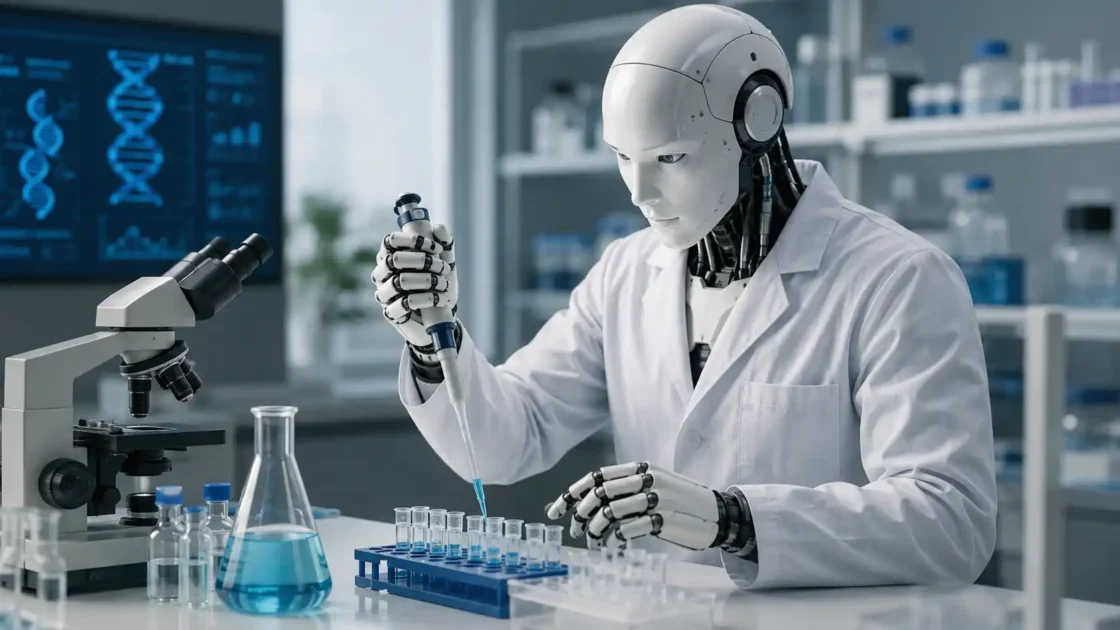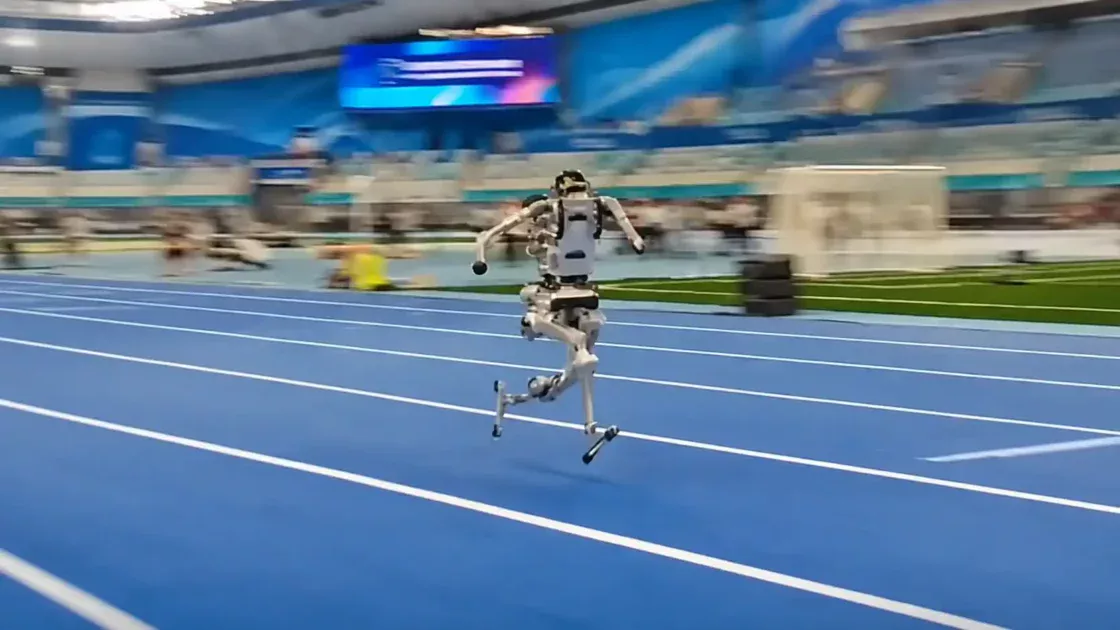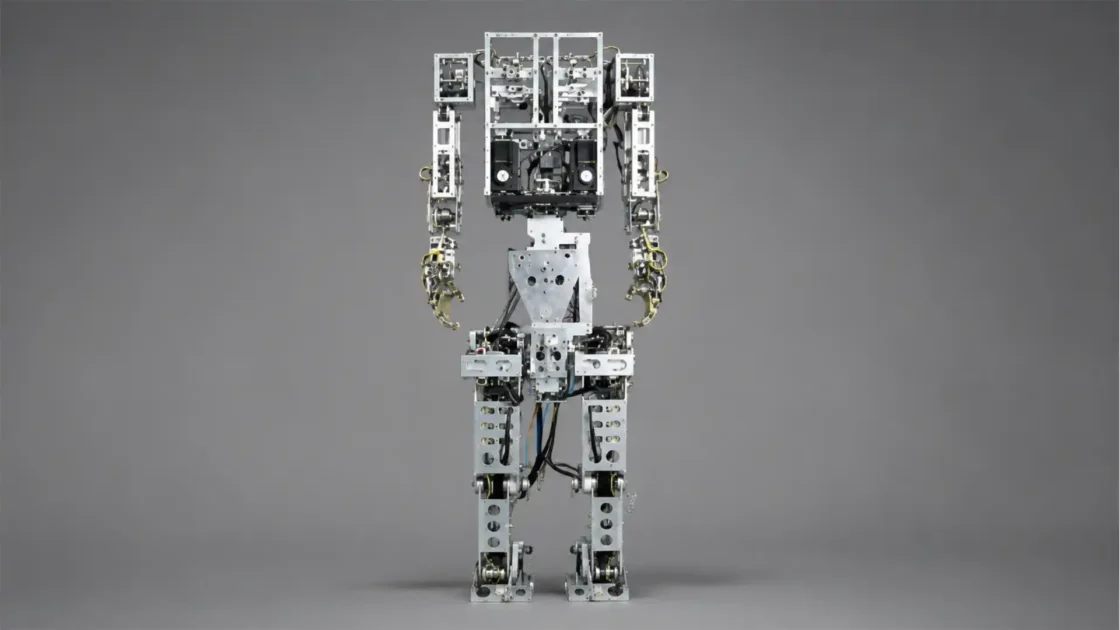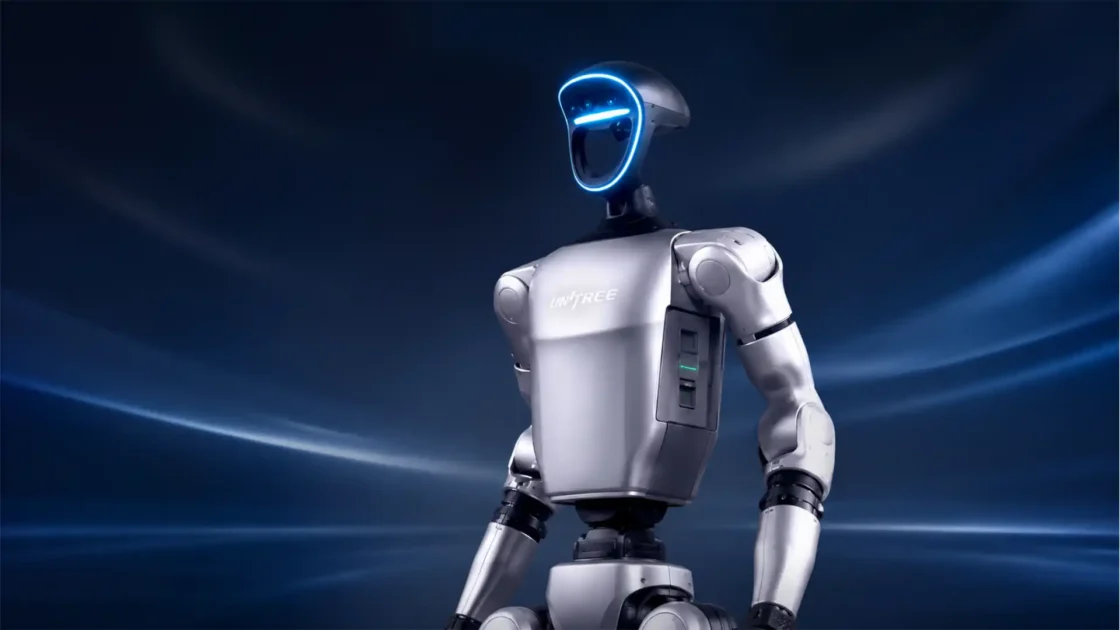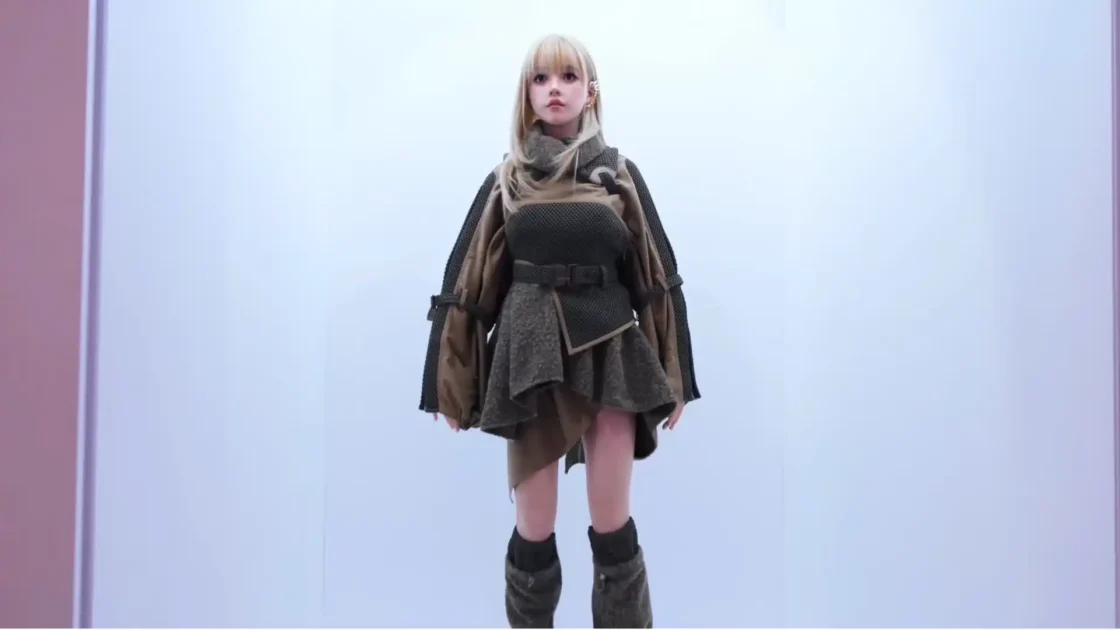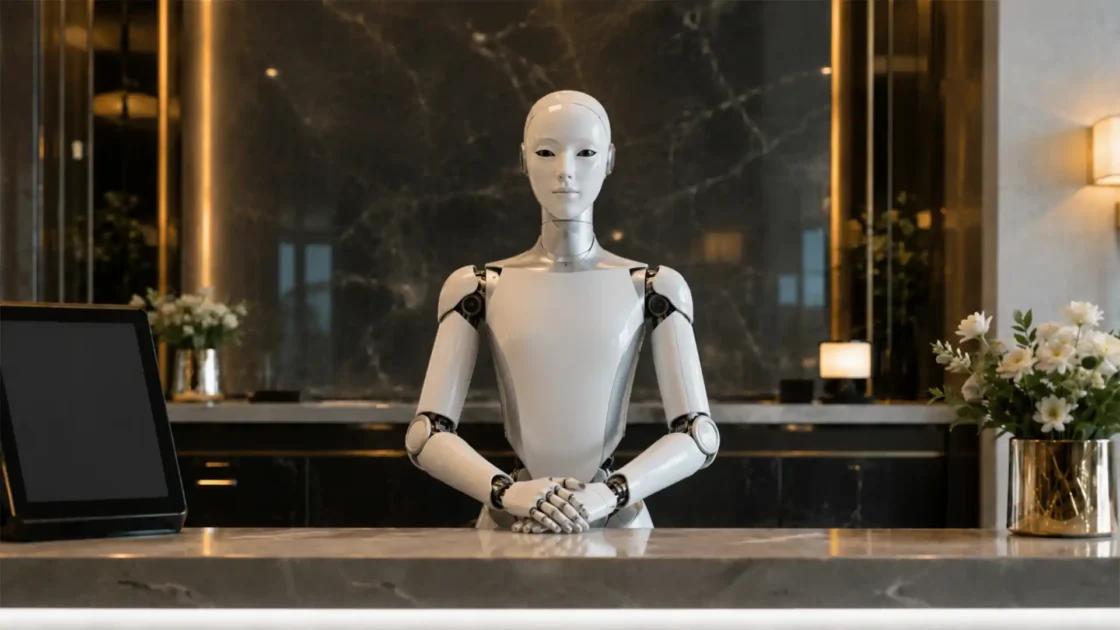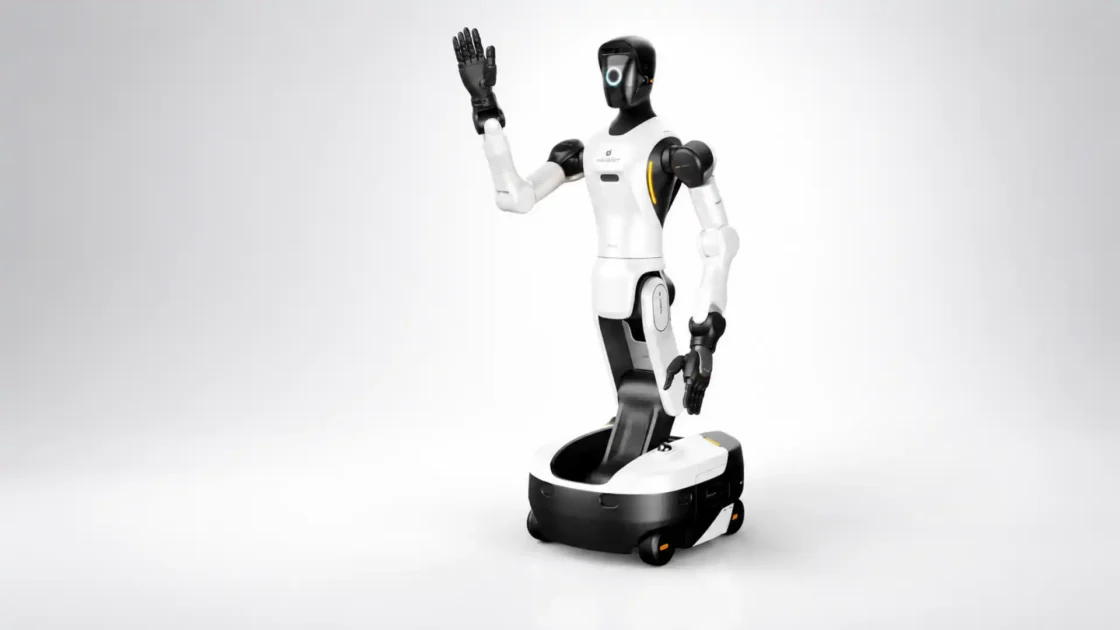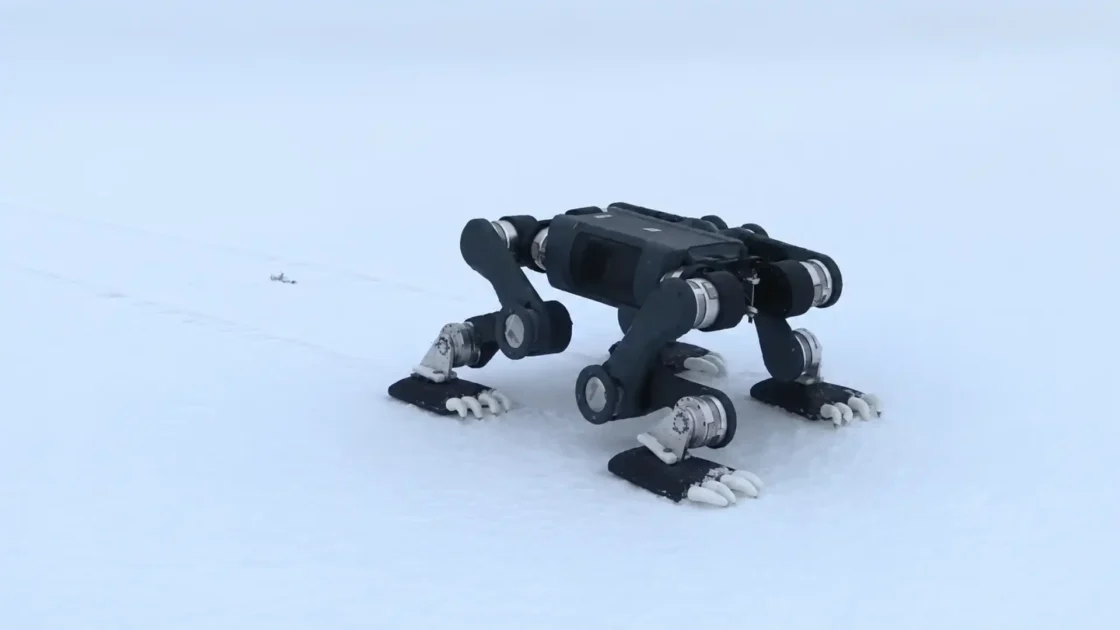
The robot from Better Than Us feels newly plausible because the real robotics industry has finally moved past stage tricks. Humanoid machines now walk through factories, pick up objects, respond to spoken instructions, learn from demonstrations and attract serious money from automakers, chipmakers, AI labs and national governments. The part that remains fictional is the leap from a useful machine to a socially fluent, household-safe, emotionally persuasive android. The next decade is likely to bring humanoid workers in controlled environments before it brings Arisa-like robots into ordinary homes.
Table of Contents
Netflix describes Better Than Us as a series about a family that becomes the owner of a cutting-edge robot being pursued by a corporation, homicide investigators and terrorists. That premise works because it joins three fears at once: the robot inside the family, the robot as corporate property, and the robot as a legal and security problem once it starts acting beyond its assigned role.
The fiction now feels close for the wrong reason
The serious answer is uncomfortable because it is both yes and no. Humanoid robots will work. Some already do, at least in limited, supervised, commercially meaningful tasks. They will not soon work like Arisa from Better Than Us. The body shape is arriving before the social mind. The factory pilot is arriving before the household companion. The useful worker is arriving before the synthetic family member.
This distinction matters because the public usually sees humanoid robots through edited videos. A robot folds a shirt, walks across a stage, loads a crate, makes coffee, waves at a camera or follows a voice command. Each clip is real enough to be impressive. None of those clips proves that a humanoid can live with a family, understand conflicting human motives, handle private spaces, stay safe near children, protect data, repair its own mistakes and remain affordable.
The word “humanoid” also hides a large difference between body plan and human equivalence. A humanoid robot can have two legs, two arms, a torso and a sensor head while still being a narrow machine. It may be built that way because the world is built around human reach, shelves, doors, stairs and tools. That does not mean it thinks like a person. It means the designer hopes a human-shaped tool can work in human-shaped spaces.
The real progress is still important. BMW tested Figure 02 at Plant Spartanburg, and Figure later said that generation contributed to production work on more than 30,000 BMW X3 vehicles before being retired. Boston Dynamics says it is moving Atlas toward industrial deployments, with product-version manufacturing and early deployments scheduled with Hyundai and Google DeepMind. Agility Robotics presents Digit as a humanoid already in production deployment, managed through its Arc cloud platform for facility floors.
That is not science fiction. It is the beginning of a new automation category. The mistake is to assume that a category beginning in factories will quickly become a lifelike domestic companion. Homes are not easier than factories. They are harder in almost every way that matters for a robot.
A factory can constrain the robot’s path, define the task, measure performance, train staff and stop production when something goes wrong. A family home has pets, children, clutter, wet floors, private conversations, fragile objects, food, guests, stairs, arguments, medicines and instructions that are often incomplete. For humans, that is ordinary life. For robots, it is a hostile test environment.
Arisa appears convincing because fiction gives her what real machines still lack: durable autonomy in open human spaces. The real humanoid race is not a race to build a television character. It is a race to make a machine that can do paid work for hours without expensive rescue.
The Better Than Us premise exposed the real social problem
Better Than Us is not only a story about a robot. It is a story about placement. A cutting-edge humanoid enters the family, but it remains valuable to a corporation, interesting to investigators and threatening to political extremists. That is the exact triangle that real embodied AI may create, even if the robot itself remains far less capable than the fictional one.
A humanoid robot in a home is not just a device. It is a moving camera, microphone, mapmaker, manipulator, software agent and physical actor. It can observe habits, infer routines, open doors, touch objects and become emotionally meaningful to people around it. A smart speaker listens from a counter. A humanoid moves through rooms. That mobility changes the privacy and trust problem.
The corporation angle is also realistic. A humanoid robot will not be valuable only because it performs work. It will be valuable because it generates data: object interactions, household layouts, factory workflows, human demonstrations, failure cases, maintenance logs and sensor streams. Robot-learning systems need this data because physical intelligence is not learned from text alone.
The investigator angle is realistic too. If a home robot records an incident, logs movement or maps a building, authorities may seek access. If an industrial robot causes an injury, investigators will want telemetry, video, commands and software-version records. A humanoid robot becomes evidence the moment something goes wrong.
The extremist angle is more dramatic, but the security risk is real. A hacked humanoid does not need consciousness to be dangerous. It only needs cameras, network access, location, actuators and trusted physical presence. Researchers have already warned that humanoids create a cyber-physical attack surface because they combine ordinary software vulnerabilities with motors and sensors in human spaces. A 2025 security assessment of a Unitree G1 humanoid described telemetry and vulnerability concerns on a production humanoid platform, showing that security cannot be treated as a late product add-on.
The social problem, then, is not whether a robot will secretly “wake up” like a fictional android. The nearer problem is whether people will overtrust machines that look human enough, talk smoothly enough and move independently enough to feel like social actors before they are safe, private or reliable enough to deserve that trust.
That is why the Better Than Us comparison remains useful. The show asks the right cultural question, even if it exaggerates the technical answer. When AI has a body, society reacts differently. Software becomes presence. Automation becomes companionship. Data collection becomes domestic observation. Liability becomes physical.
The first broad fights over humanoids may not be about consciousness. They may be about ownership, subscriptions, remote operators, workplace replacement, child safety, privacy consent and who controls the shutdown button.
Industrial pilots are the real starting line
The strongest evidence for humanoid progress comes from industrial pilots, not household demos. Factories and logistics sites are where robots can prove whether they create value. A humanoid has to survive shift work, repeat tasks, avoid humans, handle downtime, justify maintenance and produce measurable return on investment.
BMW’s work with Figure is important because it placed a humanoid robot in a real automotive production environment. Figure said Figure 02 logged more than 1,250 hours in BMW use and contributed to production work involving more than 30,000 BMW X3 vehicles before the company moved toward Figure 03. BMW’s earlier description framed Figure 02 as a humanoid being tested successfully at Plant Spartanburg.
Mercedes-Benz has tested Apptronik’s Apollo in manufacturing contexts. Apptronik announced a commercial agreement with Mercedes-Benz in 2024 to pilot Apollo in Mercedes-Benz manufacturing facilities, and Mercedes later described humanoid robot testing at its Digital Factory Campus in Berlin. The tasks are not glamorous: logistics, production support and parts movement. That is precisely why they matter.
Boston Dynamics is taking Atlas in the same direction. The company says product-version Atlas manufacturing has started, with 2026 deployments scheduled at Hyundai and Google DeepMind. Hyundai’s CES 2026 announcement also linked Boston Dynamics and Google DeepMind in an AI robotics strategy.
Agility Robotics is even more explicit about the commercial target. Its official site says Digit is “the first humanoid robot in production deployment” and that Arc is the cloud platform that runs it on facility floors. That framing is not about building a friend. It is about paid automation.
These deployments reveal the real adoption path. Humanoids will not first be judged by whether they pass as people. They will be judged by whether they can move parts, lift totes, serve assembly lines, load machines, inspect inventory, work safely near staff and keep doing those tasks without constant rescue.
The factory also gives the robot industry a way to learn without inviting chaos. A machine can be limited to a work cell. It can move at controlled speeds. The floor can be mapped. Workers can be trained. Emergency stops can be installed. Tasks can be logged. The site can collect failure data. That environment is still difficult, but it is vastly more structured than a family home.
If humanoids become common, the public may first encounter them indirectly. A consumer may buy a car, phone, parcel or appliance that was touched by a humanoid robot before ever seeing one in a living room.
The cultural imagination wants the domestic android. The business case wants a worker that can handle dull, repetitive and physically awkward tasks in a space already built for people. In robotics, the business case usually wins first.
The human shape is a workaround, not a magic formula
Humanoid robots are often described as general-purpose machines, but their shape is really a bet on infrastructure. The world is full of human-designed spaces: door handles, stairs, shelves, workbenches, sinks, tools, loading docks, hospital corridors, hotel rooms, kitchens and production lines. A robot that can use those spaces without rebuilding them may be cheaper than redesigning the world for automation.
That is the best argument for legs and arms. A wheeled robot is often simpler, cheaper and more stable, but wheels struggle with stairs and some terrain. A fixed industrial arm is fast and precise, but it stays where it is bolted. A humanoid can, in theory, move between stations, reach human-height surfaces and use existing tools.
The phrase “in theory” carries much of the burden. Two legs are expensive engineering. They require balance, power, control and recovery. Every fall is a safety event and a repair risk. Arms increase usefulness but add collision risk. Hands enable manipulation but make the system fragile. A humanoid body contains many ways to fail.
Purpose-built robots remain hard to beat. A dishwasher does dishes better than a humanoid. A conveyor moves goods more simply. A robotic arm in a cell repeats a task faster. A mobile robot on wheels is usually more energy-efficient. If a task can be solved by a cheaper specialized machine, the humanoid form loses.
Humanoids make sense where tasks are mixed, environments are human-shaped and redesign is costly. That is why automotive plants and warehouses appear first. They contain many physical flows that still depend on human flexibility because full fixed automation is too expensive or too rigid.
Tesla’s Optimus program reflects the same logic. Tesla describes Optimus as a bipedal autonomous humanoid for unsafe, repetitive or boring tasks, and its Q1 2026 update said first-generation production lines for Optimus were being installed in anticipation of volume production. The pitch is a general-purpose body that can eventually work in environments built around people.
The human shape also has marketing power. People understand it instantly. Investors can imagine scale. The press can compare it to science fiction. Workers and families can picture what it might do. That power is not neutral. It can create inflated expectations before the engineering is ready.
The safer view is practical: humanoid design is not evidence that the machine is human-like inside. It is evidence that the company wants one mobile platform to address tasks spread across environments that were not designed for robots.
Arisa is compelling because her form matches her social role. Real humanoids may be human-shaped for a much colder reason: they need to carry a box through a doorway built for a person.
The home is the hardest robotics environment pretending to be ordinary
A home looks simple because humans are adapted to it. For robots, it is a maze of changing objects, soft materials, vague rules and private meanings. A cup on a counter may be clean, dirty, precious, hot, reserved for a guest or placed there because someone wants to remember it. A child’s toy on the floor may be clutter, a favorite object, a choking hazard or a signal that a child is nearby. A robot has to act without knowing the story behind the object.
Domestic work is full of hidden knowledge. Humans do not merely identify objects. They understand context: which clothes can be washed together, which knife is sharp, which cup belongs to whom, which door should stay locked, which cabinet contains medicine, which room is private, which pet is skittish, which sound means danger and which argument should not be interrupted.
The problem is not one task. It is the unstable blend of many tasks. Cleaning a kitchen involves navigation, object recognition, grasping, liquid avoidance, food safety, fragile-object handling, heat awareness, hygiene and judgment. Laundry involves deformable fabric, pockets, stains, sorting, machine settings and household preferences. Childcare is not a chore at all; it is a moral and safety domain.
This is where Better Than Us makes the biggest leap. Arisa moves into family life as though domestic competence were a natural extension of body and speech. Real robots show that it is not. A machine that can place a part in a fixture may still fail with a towel, a spoon, a sock, a cable or a plastic bag.
1X’s NEO is one of the clearest signs that companies are beginning to target the home directly. 1X says NEO uses Redwood AI for learning and repeating tasks, arrives with basic autonomy for early owners and can use scheduled Expert Mode, where a human expert remotely supervises complex tasks the robot does not yet know.
That is an honest clue. Early home humanoids will not be fully autonomous servants. They will be learning systems with limits, supervision and staged capability. They may do some chores, but they will need restrictions. They may respond to voice commands, but they will have to refuse many of them. They may improve over time, but that improvement will depend on data, remote support and careful product boundaries.
Figure’s Figure 03 launch also points toward the same ambition. Figure says the robot is designed for Helix, the home and scale, with a goal of learning human-like tasks directly from people.
The home market will punish exaggeration. A robot that works 70% of the time in a factory pilot can still teach engineers. A robot that works 70% of the time in a kitchen becomes another unpaid job for the owner. Domestic robots must be reliable enough that people trust them when tired, distracted or away from home. That is a much higher bar than a demo video.
Dexterity is the gate between spectacle and usefulness
Walking gets attention because it looks alive. Hands create value because they change the world. A humanoid robot that walks but cannot reliably manipulate objects is a mobile sensor platform. A humanoid that can grasp, lift, twist, fold, push, pull, wipe, carry, open, close and recover from mistakes becomes useful.
Human hands are brutally difficult to match. They combine touch, compliance, force control, shape adaptation, temperature awareness, pain feedback, proprioception and years of experience. Humans can pick up a wine glass, peel tape, open a drawer, zip a bag, untangle a cable, test whether something is hot, fold fabric and stop when an object starts slipping. A robot has to sense and control all of that through hardware and learned policies.
This is why robotics researchers pay so much attention to manipulation data. Open X-Embodiment introduced a dataset with more than one million real robot trajectories across 22 robot embodiments, built to explore whether general robot policies can transfer across tasks, robots and environments.
Mobile ALOHA is another important signal. The project developed a low-cost whole-body teleoperation system for bimanual mobile manipulation, and its paper reported that co-training with existing datasets improved performance on tasks such as using cabinets, calling elevators, rinsing pans and serving food.
These projects matter because they show where the bottleneck sits. Robots need demonstrations of whole-body behaviour in real environments. They need failures and recoveries. They need data about hands, objects, motion and consequences. Text data is not enough to teach a robot how a wet sponge behaves when squeezed.
Figure’s Helix is aimed directly at this gap. Figure says Helix is a vision-language-action model that lets its robots pick up many household objects through natural-language prompts, including objects the robot has not seen before.
That is progress. It is not domestic mastery. Picking up objects is one slice of household work. The hard cases are deformable, slippery, transparent, reflective, fragile, sharp, hot, dirty or living. A robot also has to know when not to act. It must not pick up a sleeping cat, a medicine bottle without permission, a knife by the blade, a cup full of hot tea or a child’s fragile school project.
Dexterity is where science fiction hides the labour. Arisa does not fumble with a drawer handle because the story does not want to spend five minutes on contact mechanics. Real humanoids will spend years there.
The honest benchmark for a domestic humanoid is not dancing or waving. It is clearing a messy dinner table safely, without breaking glass, contaminating food, misplacing medicine, frightening a pet or needing a remote operator every few minutes.
Foundation models changed the software race
The humanoid boom would look weaker without the rise of large AI models. Robotics companies are now trying to connect vision, language, planning and action in one system. The goal is not merely to program a robot task by task. The goal is to let robots learn more like general physical agents.
NVIDIA’s Project GR00T announcement in 2024 framed this shift clearly. NVIDIA described GR00T as a general-purpose foundation model for humanoid robots and linked it to Jetson Thor, Isaac simulation and tools for training robot behaviour.
The later GR00T N1 paper described a vision-language-action model with a dual-system architecture: a vision-language module that interprets the scene and instructions, followed by a diffusion transformer module that generates motor actions. That architecture captures the current ambition. A robot needs something like interpretation and something like fast motor control, joined tightly enough to act in the real world.
Google DeepMind’s Gemini Robotics points in the same direction. DeepMind describes Gemini Robotics as a vision-language-action model that turns visual information and instructions into motor commands. Its Gemini Robotics On-Device work targets local operation on robotic devices, which matters for latency, reliability and privacy when network access is weak or sensitive.
The software shift is real, but robotics is not just language modelling with arms. A chatbot can generate a sentence even if it lacks grounding. A robot has to survive the consequences of being wrong. If a model misreads an object, the robot may drop it. If it misjudges a human’s path, it may collide. If it follows a vague instruction too literally, it may create a safety risk.
Robot foundation models also face a data problem. Text models train on vast digital corpora. Robot models need paired perception-action data, demonstrations, trajectories, simulations and physical outcomes. That data is harder, slower and more expensive to collect. It is also embodiment-specific: a policy trained for one hand, arm or body may not transfer cleanly to another.
That is why simulation, teleoperation and cross-embodiment datasets are becoming infrastructure. The field needs a way to scale physical learning without putting millions of unfinished robots into unsafe environments. NVIDIA Isaac Sim, Open X-Embodiment, Mobile ALOHA, GR00T and Gemini Robotics are all attempts, from different angles, to reduce the cost of teaching machines how to act.
The public will see the body. The competitive advantage may sit in the learning pipeline behind it.
Natural language control creates a false sense of autonomy
A humanoid that answers spoken instructions feels intelligent because language is how humans express intent. “Bring me the blue cup” sounds simple. The robot must identify the speaker, understand the request, find the cup, distinguish it from other cups, plan a route, grasp without spilling, avoid people, carry safely and place it where expected.
Natural language is the beginning of the task, not the task itself. Human instructions are full of omissions. “Clean this up” does not define what should be thrown away, what should be saved, what is dirty, what belongs where or which objects are dangerous. Humans fill those gaps through shared context. Robots have to infer them, ask questions or refuse to act.
VLA models improve the connection between words and actions. Gemini Robotics research describes models that handle open-vocabulary instructions, new objects, new positions and unseen environments while also discussing safety issues for robotics foundation models.
Yet a voice interface can create misplaced confidence. A robot that speaks fluently may still be physically clumsy. A robot that sounds calm may still be uncertain. A robot that says it understands may have only matched a command pattern. This mismatch is dangerous because people are likely to judge capability from language before they judge it from repeated physical performance.
The danger is sharper in homes. A child might give an unsafe command. A guest might ask the robot to enter a private room. An older person might rely on the robot during an emergency it is not certified to handle. A family member might assume the robot knows household rules that were never stated.
Factories also have language risk. Background speech, jokes, radio chatter, accents, noise and ambiguous commands can create confusion. Industrial humanoids may need constrained voice interfaces, physical confirmations, geofencing and task-specific language rather than open-ended conversational control.
An Arisa-like robot would need more than language understanding. It would need social judgment. It would need to know when obedience is wrong. Current systems can be given refusal rules and safety policies, but that is not the same as mature human judgment.
The most responsible humanoids will probably speak less confidently than the most impressive demos. They will ask for confirmation. They will explain limits. They will refuse tasks. They will expose uncertainty. In embodied AI, humility is not a personality trait. It is a safety feature.
Teleoperation is both bridge and warning sign
Teleoperation is one of the least understood parts of the humanoid boom. Many people see it as a sign that robots are fake. That is too harsh. Teleoperation is a legitimate way to collect data, supervise early deployments and keep systems useful while autonomy improves.
It is also a warning sign. If a humanoid needs a remote human for complex tasks, then the product is not the independent android people imagine. It is a hybrid service: hardware in one location, human judgment somewhere else, AI learning from both.
1X’s NEO makes this explicit. For tasks the robot does not know, 1X describes scheduled Expert Mode, where a human expert remotely supervises actions to help the robot learn and complete the work.
In factories, this model is practical. A remote operator can handle exceptions, reset a task, collect useful data and reduce downtime. The facility can define privacy rules and network controls. Workers can be told where robots operate and when remote access is active.
In homes, teleoperation is more sensitive. Remote assistance may mean a human operator can see through the robot’s cameras or receive data from private rooms. Even if access is scheduled, the household needs clear consent, visible indicators, room restrictions, audit logs and strong deletion rights. The issue is not only whether the vendor is trustworthy. It is whether the product architecture gives families real control.
Teleoperation also affects economics. If a humanoid requires frequent remote support, the cost of human labour has not disappeared. It has moved. A vendor may still save money if one expert supervises many robots, but the business case changes. The robot is not replacing labour entirely; it is reorganizing it.
Teleoperation can accelerate learning. The robot encounters real situations, a human helps, the system records the correction and future autonomy improves. This may be how early domestic robots grow useful. Yet that same learning loop creates a privacy bargain: the more the robot learns from your home, the more your home becomes training context.
The Better Than Us fantasy depends on a robot that is loyal to the family. Early real home humanoids may be loyal to a cloud account, a subscription contract and a remote operations centre. That difference will matter more than the shape of the robot’s face.
Battery life and maintenance keep robots grounded
Science fiction rarely shows charging schedules, actuator wear, firmware updates, sensor calibration, joint failure, dust, scratches, support tickets or insurance claims. Real humanoids live or die there.
A useful humanoid must work long enough to matter. If it runs for short bursts and spends too much time charging, it becomes a novelty. Batteries add weight. Weight increases actuator load. Stronger actuators consume energy. More sensors and onboard compute drain power. Designers have to balance endurance, safety, strength and cost.
Maintenance is just as important. A humanoid contains many moving parts. Knees, hips, ankles, shoulders, elbows, wrists, fingers, neck joints, covers, wiring, cooling systems and sensors all face wear. A warehouse robot may work in dust, heat or vibration. A home robot may face pet hair, spilled drinks, stairs and careless handling.
Factories can maintain machines. They have technicians, spare parts, inspection routines and maintenance windows. Consumers expect products to “just work.” That expectation is dangerous for humanoids. A robot with a failing joint or miscalibrated sensor may not merely stop; it may move badly.
The first home humanoids may therefore need service plans closer to cars than phones. Owners may need scheduled maintenance, diagnostics, replacement parts, software support and safety inspections. Insurance companies may require proof that critical updates were installed. Vendors may prefer leasing because it keeps maintenance under their control.
This has a direct effect on affordability. The sticker price is only part of the cost. A humanoid robot also has compute, batteries, repairs, software, connectivity, support and liability coverage. A cheap robot that breaks often is expensive. An expensive robot that works safely for years may be cheaper in practice.
Unitree’s lower-cost humanoid products show that hardware prices are falling. Unitree’s shop lists the G1 at $13,500, alongside lower and higher priced humanoid models. Lower prices will help researchers, developers and early adopters, but a purchasable robot is not the same as a safe domestic servant.
The home version of Arisa is therefore constrained by everyday ownership. The machine must be strong but not dangerous, complex but serviceable, smart but explainable, connected but private, cheap enough to buy and reliable enough not to terrify guests. That is a punishing product brief.
Safety engineering decides the deployment speed
A humanoid robot is a machine with AI inside it, not an AI system floating in software. It can collide, pinch, fall, block, lift, drop and startle. Safety must cover the body and the model, not one or the other.
Industrial safety has long treated robots as hazards when people enter their working envelope. OSHA notes that many robot accidents occur during non-routine conditions such as programming, maintenance, testing, setup or adjustment, when a worker may temporarily be inside the robot’s operating area.
Humanoids blur that old boundary. They are designed to move through spaces where people already are. They may not have a fixed cage. Their working envelope travels with them. That makes speed limits, force limits, collision detection, safe stops, route planning, human detection, task permissions and emergency controls central to design.
Personal care robots have their own safety context. ISO 13482 specifies requirements and guidelines for personal care robots, including mobile servant robots, physical assistant robots and person carrier robots. That standard is relevant for domestic and care humanoids because it focuses on robots intended to operate near people outside industrial cages.
A safe humanoid must fail well. If it loses network connection, it should not behave unpredictably. If its camera is obscured, it should slow or stop. If a child steps in front of it, it should yield. If it drops an object, it should not lunge blindly. If it is low on battery, it should not attempt a heavy carry. If a model is uncertain, the robot should ask or refuse.
Safety also includes the human tendency to overestimate human-like machines. A robot with a head that turns toward a speaker may seem aware. A robot with a warm voice may seem caring. A robot with arms may seem competent. Product design must counter this illusion with clear signals, limits and disclosures.
The first credible humanoid companies will likely win less by looking alive and more by proving disciplined restraint. The safest robot may move slower than the most viral robot. It may refuse more tasks. It may show more warning lights. It may be less charming. That is not weakness. It is product maturity.
Arisa is dramatic because her safety boundaries are unclear. Real humanoids can only scale if their boundaries are painfully clear.
Regulation will turn science fiction into paperwork
The law will not wait for humanoids to become conscious. It will regulate them as machines, AI systems, workplace equipment, consumer products, data collectors and potentially safety components.
The EU AI Act entered into force on 1 August 2024 and is scheduled to become fully applicable on 2 August 2026, with some exceptions. For humanoids, the key question is not whether the word “robot” appears in every rule. The question is whether the AI system is used in safety-relevant products, employment, education, biometric systems, critical infrastructure, healthcare or other high-risk contexts.
The European Commission also issued draft guidelines in May 2026 on classifying high-risk AI systems, including practical examples for stakeholder feedback. This matters because embodied AI may sit at the intersection of AI regulation and sector-specific product law.
Regulation will also arise through standards, insurance and workplace rules. A company buying humanoids may require certification, cybersecurity testing, safety documentation, incident logs and human-oversight procedures. A hospital or care facility will face even stricter expectations. A consumer product may need privacy controls and age-related protections.
The law will also confront remote operation. If a robot in a Slovak home is supervised by a human operator in another country, whose privacy rules apply? If the robot records data in a child’s bedroom, can that data train future models? If a household guest has not consented, what must the robot do? If the robot injures someone after an over-the-air update, who is liable?
These are not distant philosophical issues. They are deployment blockers. Vendors that ignore them may move fast in demos and slow down in real markets. Vendors that build compliance into architecture may look less exciting at first and scale more easily later.
Regulation may frustrate engineers, but for humanoids it could become a market enabler. People are more likely to accept robots in homes, factories and hospitals if there are clear rules for safety, accountability and data use.
Better Than Us dramatizes the robot as an object of institutional conflict. Real institutions will conflict too, but through product filings, audits, court cases, insurance clauses, labour negotiations and regulatory guidance.
Privacy becomes physical when a robot moves
A domestic humanoid does not merely collect data. It collects situated data. It knows where objects are, who is present, which rooms are used, when people sleep, where medicines are kept, what visitors arrive, how a child behaves and which routines repeat.
That is a richer privacy problem than ordinary smart-home devices. A smart thermostat infers occupancy. A smart speaker hears. A camera sees from one position. A humanoid can move, look, listen, map and act. Its data can reveal patterns that people may not knowingly share even with family members.
The privacy problem also appears in factories. A humanoid may record workers, production processes, proprietary layouts, quality issues and trade secrets. If the robot uses cloud services, remote support or third-party foundation models, sensitive industrial data may leave the site unless architecture prevents it.
NIST’s AI Risk Management Framework is not humanoid-specific, but its relevance is clear: AI systems need governance, mapping, measurement and risk management across the lifecycle, including privacy, safety, resilience and accountability.
A serious home humanoid should include visible privacy features. Recording indicators should be physical and obvious. Rooms should be restrictable. Guests should be considered. Local processing should be used where possible. Remote access should require clear consent. Video and audio retention should be limited. Children’s spaces should receive special protection. Household members should not all have the same permissions by default.
The robot should also be able to forget. That sounds strange, but domestic trust requires deletion. If a family sells the robot, returns it or changes service providers, maps and routines should not remain as hidden vendor assets. If a user deletes recordings, the deletion should be real enough to satisfy privacy law and user expectations.
The strongest privacy architecture may reduce the amount of data that leaves the home. Google DeepMind’s on-device Gemini Robotics work shows why local models matter: on-device operation can help when latency, reliability or connectivity are concerns, and privacy-sensitive robotics will need that direction even when cloud models remain more powerful.
The Better Than Us version of a family robot feels loyal because it appears personally bonded. Real loyalty in robotics will be architectural: local control, limited data flows, transparent logs and user power over access.
Cybersecurity becomes household safety
Cybersecurity for humanoids is not an IT department detail. It is part of physical safety. If a robot can move, sense and manipulate, then unauthorized access becomes a bodily risk.
Humanoids inherit familiar vulnerabilities: weak authentication, software bugs, insecure updates, exposed APIs, cloud compromise, telemetry leakage and supply-chain risk. They add robotics-specific risk: sensor spoofing, unsafe motion commands, remote-operation abuse, map theft, actuator misuse and manipulation of task policies.
A 2025 paper on the Unitree G1 argued that humanoid robots can act as surveillance nodes and cyber-operations platforms when security fails, reporting telemetry concerns and attack-surface issues. Another systematization paper described humanoid robots as cyber-physical systems dependent on networked software stacks, robot operating middleware and update channels, proposing layered security assessment across humanoid ecosystems.
Factories will demand strong controls. Robots may be kept on segmented networks. Remote access may need multi-factor authentication, role-based permissions, logs and approval workflows. Software updates may require validation. Cameras may be restricted. Vendor connections may be monitored.
Homes rarely have that discipline. A family may connect the robot to weak Wi-Fi, reuse passwords, ignore updates or grant app access casually. That makes consumer humanoids especially risky unless vendors design security that ordinary people cannot easily misconfigure.
A hacked humanoid does not need to throw someone down the stairs to cause harm. It could record private conversations, unlock a door through a smart-home integration, map valuables, harass a child, damage property, block a passage, sabotage a routine or create fear. The psychological effect of a compromised moving machine inside a home would be severe.
Security should therefore shape product permission. A robot should not be able to perform high-risk tasks through a cloud command alone. Local physical confirmation may be required for doors, medicine, sharp tools, heavy lifting or child-related tasks. Emergency stop should be hardware-based, not only app-based. Owners should be able to cut network access without making the robot unsafe.
The simplest rule is also the hardest for companies eager to scale: no autonomy without security, and no remote access without visible consent.
Labour shortages create demand, but not automatic acceptance
The economic case for humanoids begins with labour. Warehouses, factories, logistics operations, elder care and service sectors face physically demanding work, high turnover, aging populations and shortages in some roles. Robots that can fill repetitive or dangerous tasks may be attractive even if they are imperfect.
The International Federation of Robotics reported that professional service robot sales reached almost 200,000 units in 2024, a 9% increase, and linked demand partly to staff shortages and aging populations. Industrial robotics data also shows a large automation base: IFR reported 295,000 industrial robot installations in China in 2024, representing 54% of global deployments.
Humanoids enter this market as one possible response, not the only one. Companies can also use fixed automation, autonomous mobile robots, better scheduling, higher wages, redesigned workflows, exoskeletons or software planning. A humanoid has to beat those alternatives.
Workers will judge robots by consequences, not press releases. A company may say a humanoid handles unsafe or repetitive tasks. Workers will ask whether headcount falls, wages stagnate, surveillance rises or training improves. A robot introduced during layoffs will be seen differently from a robot introduced to fill an unstaffed night shift.
There may also be new roles. Facilities may need robot supervisors, teleoperators, maintenance technicians, integration engineers and safety coordinators. Some workers may move into better jobs. Others may lose hours. The distribution will not be automatic or fair unless companies and governments plan for it.
Labour unions will likely demand transparency: where robots are used, which tasks they replace, how productivity gains are shared, how workers are retrained and how safety incidents are reported. That debate will shape adoption as much as hardware performance.
The Better Than Us anxiety about robots replacing people is emotionally familiar, but real labour impact will be uneven. Humanoids are more likely to replace slices of tasks before they replace whole occupations. A warehouse worker’s job may change before it disappears. A care worker may receive robotic support for lifting or fetching, while human emotional labour remains central.
The social question is not whether robots should ever do human tasks. It is who benefits when they do.
Purpose-built robots will keep beating humanoids in many jobs
The strongest counterargument to humanoid hype is simple: most tasks do not need a humanoid. A purpose-built machine often wins on cost, reliability, speed and safety.
Robot vacuums clean floors because they are shaped for floors. Industrial arms weld, paint and assemble because they are shaped for precision. Conveyors move goods because they are shaped for transport. Autonomous mobile robots move bins because wheels are efficient. These machines do not need a torso, head, knees or human-like hands.
This is why the all-purpose robot butler remains elusive. Domestic automation has advanced fastest through specialized devices: vacuums, mops, lawn mowers, pool cleaners, security cameras, smart appliances and single-purpose kitchen machines. They solve narrow jobs well. Humanoids try to solve many jobs with one complex body.
The case for humanoids is strongest where flexibility beats specialization. A hotel may not want ten different robots for ten tasks. A factory may have legacy workflows built around people. A warehouse may need a robot that can handle existing totes, carts and shelves. A home may not have room for multiple single-purpose machines.
Still, humanoids must avoid becoming expensive generalists that underperform cheaper specialists. A robot that can fold laundry poorly, fetch objects slowly and clean surfaces unreliably may be less useful than three simple devices and a human helper.
The competitive future may combine both forms. A home humanoid may coordinate specialized machines rather than replace them. It may load the dishwasher, carry laundry to a washing machine, pick items off the floor before a robot vacuum runs, or connect smart appliances. The humanoid becomes the manipulator and coordinator, while specialized machines handle repetitive subtasks.
Factories may follow the same pattern. Humanoids may fill gaps between fixed automation systems, not replace those systems. They may move materials, handle exceptions and perform flexible work around established machinery.
The question is not whether humanoids are “better” than other robots. The question is whether they can justify their complexity in places where simpler automation fails.
Market forecasts reveal excitement and uncertainty
Humanoid robot forecasts are huge because the potential labour market is huge. They are also uncertain because the technology is not yet proven at scale.
Goldman Sachs Research projected that the humanoid robot market could reach $38 billion by 2035, raising its earlier estimate sharply and increasing its shipment forecast to 1.4 million units. Morgan Stanley projected a much larger long-term possibility, arguing that humanoids could become a $5 trillion market by 2050 and that robots resembling and acting like humans could approach one billion units.
Those numbers should be read as scenarios, not destiny. Forecasts depend on assumptions about cost decline, autonomy, reliability, labour economics, safety regulation, supply chains, public acceptance and service models. If robots remain expensive and fragile, the market stays small. If costs fall and robots perform many tasks safely, adoption can accelerate.
The market may also split into layers. The robot body may become lower margin as manufacturers compete. The value may move to AI models, fleet software, training data, service contracts, maintenance, insurance and integration. NVIDIA, Google DeepMind and other model/platform providers may capture value even when they do not sell the final robot.
Leasing may dominate early deployments. A factory may prefer paying per robot-hour or through a robotics-as-a-service contract rather than buying machines outright. That reduces upfront risk and keeps maintenance with the vendor. Consumers may also lease expensive home humanoids, but leasing increases dependence on subscriptions and vendor access.
The bubble risk is real. Many companies can produce impressive prototypes. Far fewer can deliver safe, reliable, supported machines at scale. The humanoid market may go through a correction when investors demand revenue instead of demos.
This does not mean the field is empty hype. It means the gap between a promising category and a trillion-dollar market is filled with boring constraints: uptime, spare parts, software updates, legal compliance, insurance, service networks and customer trust.
Arisa is a singular robot. The real market will be judged by fleets, margins and renewal contracts.
Current humanoid reality versus the Better Than Us fantasy
| Dimension | Real humanoids in 2026 | Arisa-style fiction |
|---|---|---|
| Main deployment | Factories, warehouses, labs, pilots | Family homes and social conflict |
| Autonomy | Narrow tasks, supervision, training data | Broad self-directed action |
| Manipulation | Improving but brittle | Human-like dexterity |
| Social presence | Voice prompts and limited interaction | Emotional centrality |
| Safety model | Certification, logs, force limits, emergency stops | Dramatic ambiguity |
| Business model | Leasing, pilots, fleet software, industrial ROI | Ownership and corporate pursuit |
The table shows the central gap. Real humanoids are becoming useful machines before they become believable social actors. Better Than Us reverses that order because drama needs intimacy.
China is accelerating hardware and raising bubble risk
China is one of the central forces in humanoid robotics because it combines manufacturing capacity, state support, automation demand, component supply and a large domestic market. The country already dominates industrial robot installations, and humanoids are now part of a broader embodied-AI strategy.
MERICS reported that China produced 12,800 humanoid robots in 2025, about 90% of the global total, while noting that this number remains tiny beside China’s industrial robot production and that replacing workers with humanoids remains difficult.
That contrast matters. China can scale hardware quickly. It does not mean humanoids are already broadly useful. A market can have many machines and still lack mature applications. Robots may go to research labs, training centres, demonstrations, logistics trials or public-sector showcases before they become profitable workers.
Reuters reported that China’s state planner warned more than 150 humanoid robot companies to avoid repetitive products and manage bubble risk. That warning is important because it came from inside the country’s own industrial push.
Lower-cost Chinese hardware may still reshape the field. Unitree’s humanoids make research and development more accessible. More developers can buy robots, test models, collect data and discover failure modes. Hardware abundance can accelerate software learning.
Geopolitics complicates the picture. Humanoid robots may operate in factories, hospitals, logistics sites and public spaces. Governments will care about where components come from, what chips are used, where data flows and whether robots in sensitive environments could become surveillance or sabotage risks.
A recent Wired report described NVIDIA work involving Unitree hardware and American AI technology, highlighting the tension between Chinese robotics manufacturing strength and US AI infrastructure.
The likely result is a divided market. Chinese companies may push cost and manufacturing speed. US and European firms may stress AI models, safety, enterprise integration and trust. Japan, South Korea and Europe will pursue their own industrial and care robotics niches.
The Better Than Us storyline included a robot imported from China into Russia through a corporation. The real world is not following that plot, but the geopolitical idea is not absurd. Humanoid robots will become part of industrial policy, supply-chain strategy and technology sovereignty.
Tesla’s Optimus is the most visible bet, not the whole field
Tesla gives humanoid robotics its loudest public story. Optimus benefits from Tesla’s manufacturing ambition, battery experience, actuator development, AI infrastructure and Elon Musk’s ability to direct attention. It also faces the burden of high expectations.
Tesla’s official AI page describes Optimus as a general-purpose, bipedal, autonomous humanoid robot intended for unsafe, repetitive or boring tasks. Tesla’s Q1 2026 investor update said first-generation production lines for Optimus were being installed in anticipation of volume production.
The opportunity is clear. If Tesla can build humanoids at automotive scale, reduce cost and use robots in its own factories first, it could learn faster than competitors. Tesla has internal demand, factory environments and experience with large-scale manufacturing.
The risk is also clear. Humanoids are not cars. A car moves in a constrained driving task compared with the mess of manipulation. A vehicle does not fold fabric, open cabinets, grasp irregular objects or work inside crowded interiors near workers. Tesla’s AI experience matters, but robotics adds contact-rich physical action.
Optimus may first prove itself inside Tesla facilities. That is a sensible route. The company can control tasks, collect data, iterate hardware and avoid selling unfinished machines to consumers. If Optimus cannot create value inside Tesla’s own operations, the broader household story becomes weaker.
Tesla’s visibility can distort public expectations. A single demo, good or bad, is often treated as a referendum on the whole field. That is unfair. Figure, Boston Dynamics, Agility, Apptronik, 1X, Unitree, Sanctuary AI and many Chinese firms are taking different routes. The field will not be decided by one company’s reveal.
Tesla may still matter because scale matters. If Optimus becomes cheap enough and durable enough, it could pressure every other company. If it fails to perform, it may cool investor enthusiasm for consumer humanoids while industrial specialists continue.
The Arisa comparison is especially dangerous for Tesla because the company’s language sometimes invites a general-purpose future. The real proof will not be a stage presentation. It will be months of task data, safety records, uptime, maintenance cost and customer retention.
Figure is trying to connect factory work to home ambition
Figure is one of the most interesting humanoid companies because it is trying to connect industrial deployment with general-purpose autonomy. Its BMW work gives it a practical foundation. Its Helix and Figure 03 announcements point toward a broader home and world-scale ambition.
BMW’s Plant Spartanburg pilot gave Figure a real manufacturing environment. Figure’s later account of Figure 02 contributing to more than 30,000 BMW X3 vehicles provides a stronger proof point than a lab video, though it still does not prove full autonomy or wide deployment.
Figure 03 is the next step in that story. Figure says the third-generation robot is designed for Helix, the home and scale, with a hardware and software redesign aimed at general-purpose tasks and learning directly from people.
The strategy is coherent. Factories provide structured tasks, customer feedback and revenue. Homes provide the larger cultural imagination and long-term market. The same learning stack may benefit both, but the home requires much deeper safety and privacy work.
Helix is central because it addresses the software gap. A humanoid that needs hand-coded routines for every object will not scale. A robot that can use vision-language-action models to handle new objects and instructions has a more plausible path. Figure claims Helix lets robots pick up many household objects through natural-language prompts.
The challenge is that household object pickup is only a foundation skill. A home robot must chain many skills over long tasks, track context, remember preferences, handle interruptions and recover from errors. Loading a dishwasher is not just picking up dishes. It is sorting, orienting, avoiding breakage, detecting residue, understanding machine layout and sometimes asking a human to start the wash.
Figure’s industrial-first evidence gives it credibility. Its home ambition keeps it close to the Better Than Us question. Whether those two worlds connect smoothly is still unproven.
A robot that can work in a BMW plant may not be welcome in a bedroom. The company that solves both will need not only better autonomy, but better privacy architecture, child safety, customer support and domestic trust design.
Boston Dynamics carries the movement advantage
Boston Dynamics has spent decades making robots move in ways that changed public expectations. Atlas became a symbol of humanoid locomotion long before commercial humanoids looked plausible. The new Atlas is now being turned toward industry.
Boston Dynamics says Atlas is designed for real-world applications and industrial work, and its January 2026 announcement said product-version manufacturing would begin with deployments scheduled at Hyundai and Google DeepMind.
This matters because locomotion is not solved just because a robot can walk on stage. A useful humanoid must move safely and repeatedly while carrying weight, changing posture, recovering from bumps, working near people and handling awkward body positions. Boston Dynamics has deep experience in dynamic movement, balance and mechanical resilience.
The company also appears more cautious than some competitors. It frames Atlas around enterprise work and customer deployments rather than promising immediate household transformation. That may make the story less viral, but it is closer to credible deployment.
The Google DeepMind link is important because hardware competence needs AI competence. A body that moves well still needs models that understand tasks, objects and instructions. Hyundai’s robotics strategy points toward combining Boston Dynamics’ physical robotics with DeepMind’s AI research.
Atlas may first tackle automotive logistics and manufacturing tasks. That is a good fit. Automakers understand automation, safety and repetitive physical work. They can test robots under controlled conditions and measure whether they create value.
The question for Boston Dynamics is cost and productization. Beautiful movement does not guarantee profitable deployment. Robots need manufacturing scale, maintainability, support and fleet software. A technically superior robot that is too expensive or hard to maintain can lose to a less elegant machine that works well enough.
In the Better Than Us comparison, Boston Dynamics is not chasing Arisa’s social presence. It is chasing a body that can move through human work environments. That may be the more serious route.
Agility and Apptronik are making the boring case
Agility Robotics and Apptronik show why boring tasks matter. They do not need a robot to look emotionally alive. They need it to perform work that facilities already pay humans to do.
Agility’s Digit is framed around production deployment and facility-floor automation. Its Arc cloud platform handles deployment and management of Digit fleets.
Digit’s form is not a human replica. It is humanoid enough to move through spaces designed around people and handle logistics tasks. That may be the right level of human likeness for early commercial adoption: functional body plan, low social confusion.
Apptronik’s Apollo follows a similar industrial route through its Mercedes-Benz agreement. The company and automaker described pilots around humanoid robotics in manufacturing facilities.
These companies are making a practical argument: there are tasks in logistics and manufacturing that are repetitive, physically demanding and not always worth building fixed automation for. A humanoid mobile manipulator might fill that gap.
The word “might” is important. Facility floors are unforgiving. A robot must integrate with warehouse systems, production schedules, safety rules and human workflows. It must handle exceptions without creating bottlenecks. It must prove ROI.
The advantage of the boring case is that success is measurable. How many totes moved? How many interventions? How much downtime? How much maintenance? How many safety incidents? How much labour bottleneck reduced? These questions cut through hype.
A humanoid that quietly moves bins for a year may do more to advance the category than a viral robot that performs a scripted dance. The public may remember the dance. Buyers remember uptime.
The Better Than Us question asks whether humanoids will function like synthetic people. Agility and Apptronik are answering a different question first: can humanoids earn wages as machines?
The companion robot is the most ethically sensitive version
Companionship is where humanoids become culturally explosive. A robot that moves boxes is judged by output. A robot that offers comfort is judged by trust, dependence and emotional truth.
The demand for assistance is real. Aging populations, loneliness, disability support, home care shortages and family caregiving burdens create a market for machines that can fetch objects, monitor safety, remind users, connect caregivers and support daily routines.
The risk is that practical support will be sold as affection. A robot can simulate warmth. It can remember birthdays, adjust its voice, respond to sadness, praise a user and create rituals. None of that proves feeling. People may still become attached.
This is especially sensitive with children, older adults and vulnerable users. A child may treat a robot as a friend. A person with cognitive decline may not understand what data is being collected. A lonely adult may come to rely on a machine that is also a subscription service.
The care sector needs robots that support human care, not replace human dignity. A robot can reduce physical burden by fetching objects, checking hazards or connecting staff. It should not be used to justify understaffing or emotional neglect.
ISO 13482’s focus on personal care robots is relevant here because the safety requirements for mobile servant robots and physical assistant robots are not abstract. They are the baseline for machines that operate near people’s bodies and routines.
The most responsible companion robots may be deliberately less human-like. They may avoid realistic faces. They may disclose that they are AI. They may limit emotional language. They may make recording status obvious. They may route serious distress to human caregivers rather than pretending to solve it.
Arisa is dramatically powerful because she appears to care. Real robots should not exploit that illusion. The ethical design goal should be assistance without deception.
Human-like faces are optional and risky
A humanoid robot does not need a human face to be useful. In many settings, a human-like face is a liability.
Faces invite projection. People read intention, mood and trust from eyes, mouth movement and expression. A robot with a realistic face may be treated as more aware than it is. A robot with no face or an abstract sensor head may be easier to understand as a machine.
Most serious industrial humanoids avoid lifelike faces. Atlas, Digit, Apollo, Figure robots and Optimus are human-shaped in broad mechanics but not designed to pass as people. That is a wise choice. A worker does not need a robot to smile while moving parts. A family does not need a machine to pretend it has human emotions.
The “uncanny valley” is only part of the issue. The larger concern is social deception. A realistic robot can make users feel watched by a person even when no person is present. It can also make users assume competence that the system lacks.
Children are especially vulnerable to this. A child may not understand the difference between simulated empathy and real concern. A robot that says “I’m proud of you” may be interpreted differently from a tablet giving the same phrase because the robot has a body in the room.
For industrial environments, an expressive face may distract workers or create wrong assumptions about intention. Clear status indicators may be safer: lights, sounds, simple displays, visible motion cues and predictable body language.
The Better Than Us aesthetic depends on a robot that can pass socially. Commercial humanoids do not need that. Many should avoid it.
The best design may be visibly artificial, mechanically honest and emotionally restrained. It should signal attention without pretending to be a person. It should communicate limits as clearly as capability.
The first home humanoids will be limited products
The first credible home humanoids will probably disappoint anyone expecting Arisa. That disappointment may be healthy.
A safe early domestic robot may only work in mapped areas. It may avoid stairs. It may carry light objects. It may refuse knives, hot liquids, medicines, babies and pets. It may require scheduled learning sessions. It may need remote expert support. It may ask many questions. It may perform a few chores well and many chores not at all.
This sounds modest, but modesty is the right starting point. A domestic humanoid that tries everything is more dangerous than one that refuses risky tasks. A refusal can build trust if users understand it. Silent overconfidence destroys trust.
1X’s NEO framing of basic autonomy plus scheduled expert support is closer to a realistic early product than a claim of total independence.
Home humanoids may also arrive through care and accessibility before mass convenience. A person with mobility limitations may benefit from a robot that fetches dropped objects, opens a door, carries a light bag or connects to a caregiver. A wealthy early adopter may tolerate glitches. A busy family may not.
The consumer market will also depend on integration with existing devices. A home humanoid may work best when it coordinates with robot vacuums, smart locks, appliances, cameras and home sensors. That raises both convenience and security concerns.
Support will be decisive. A failed robot in a factory creates a maintenance ticket. A failed robot in a home creates frustration, fear or embarrassment. Consumer humanoid companies will need service networks, insurance, replacement units, remote diagnostics and clear refund policies.
The first generation may teach the industry more than it satisfies buyers. That is common in technology, but humanoids have less room for error because they share physical space. A bad early product could create backlash across the category.
A real domestic robot revolution will probably start quietly: narrow tasks, limited rooms, high prices, careful users and many restrictions.
Robot learning needs data that society may not want to give
Robotics companies need data from the real world. The best training examples come from the messy places where robots will operate: factories, warehouses, kitchens, care homes and ordinary living spaces. That creates a conflict.
Robots learn from demonstrations, corrections and failures. A remote expert fixes a mistake. A human shows a task. A camera records a grasp. A model compares planned and actual motion. The system improves. This loop is powerful, but it depends on capturing human environments.
Open X-Embodiment shows one research path: pooling many robot datasets across embodiments and institutions to improve general robot learning.
Mobile ALOHA shows another: low-cost teleoperation systems can collect whole-body manipulation data for household-like tasks.
Commercial humanoid companies will want their own versions of these loops. Each deployed robot can become a data collector. Each home or factory can become a training environment. The economic pressure to collect more data will be strong.
Users may resist. Factories may not want proprietary processes recorded. Families may not want bedrooms, children or private routines in training pipelines. Regulators may limit collection. Insurers may require logs for safety. These demands conflict.
A responsible data model would separate safety logs, user data, training data and remote-support data. It would allow opt-outs. It would anonymize where possible. It would avoid collecting sensitive rooms. It would make data retention understandable. It would treat children’s data with special care.
The market may split between cloud-learning robots and privacy-first robots. Cloud systems may improve faster. Local systems may earn more trust. Hybrid designs will try to do both.
The Better Than Us robot feels like a singular being. Real humanoids may be collective learners. Every mistake in one home might improve the fleet. That could be powerful. It could also feel invasive.
Liability will matter before robot rights
Fiction often asks whether advanced robots deserve rights. Real deployment will first ask who pays when a robot causes harm.
If a humanoid injures a worker, who is liable? The manufacturer, employer, integrator, software provider, remote operator, maintenance contractor or user? If an AI model misinterprets an instruction, is that product defect, user error or unavoidable uncertainty? If a robot learns after deployment, how should responsibility be assigned?
These questions will become urgent long before humanoids approach consciousness. The legal system does not need to decide whether a robot has feelings before deciding whether a company sold an unsafe product.
Industrial deployments will require contracts that assign responsibility for updates, maintenance, task limits, remote access, training and incident reporting. Consumer deployments will face product liability, privacy law, warranty law and possibly landlord, insurance or caregiving rules.
A robot controlled partly by cloud AI complicates liability. If the body is built by one company, the model supplied by another, fleet software by a third and deployment by an integrator, blame can diffuse. Regulators and courts may resist that diffusion when physical injury occurs.
The EU AI Act and related product-safety law will shape this in Europe, while US rules will likely combine OSHA, state privacy law, product liability and sector-specific regulation. Standards such as ISO 13482 may influence what counts as reasonable design even when not directly mandatory.
Insurance may become the practical gatekeeper. If insurers refuse to cover home humanoids or demand strict safety certification, deployment slows. If insurance is affordable only under leasing and vendor maintenance, ownership models may be limited.
Robot rights may become a future philosophical debate. Liability is the present commercial debate. The first courtroom humanoid cases will probably involve injury, privacy, property damage, labour disputes or defective software updates, not machine personhood.
The security state will notice embodied AI
Humanoid robots will attract government attention because they combine AI, sensors, mobility and manipulation. In strategic sites, that is enough to make them security-relevant.
A humanoid in a factory may see production methods. A humanoid in a hospital may see patients. A humanoid in a warehouse may map supply chains. A humanoid in a public building may observe crowd flows. A humanoid in a home may record private life. If the robot is connected to foreign cloud services or built with foreign components, governments will ask questions.
The US-China technology rivalry already affects chips, AI models, drones, telecoms and industrial technology. Humanoids fit the same pattern because they can become both productivity tools and data platforms.
China’s large-scale robot production and state-backed embodied-AI strategy will push other regions to respond. MERICS’ reporting on China’s humanoid output and Reuters’ reporting on bubble concerns show a sector growing fast enough to become an industrial-policy issue.
Security concerns may shape procurement. Government agencies, defence contractors, power plants, ports, hospitals and critical manufacturers may require domestic hosting, audited firmware, secure components and strict data localization. Consumer markets may be looser until scandals force change.
This may create separate product lines: open research robots, consumer robots, enterprise robots and high-security robots. The high-security versions may cost more and improve more slowly because they cannot rely on open cloud learning. They may still be necessary.
The Better Than Us premise of corporations and investigators fighting over a robot is melodrama. The real version is procurement policy, export controls, cybersecurity audits and data-governance requirements.
A humanoid robot is not only a labour tool. It is a mobile node in the AI infrastructure of the physical world.
The care sector should move slowly
Elder care and disability support may be among the strongest social uses for humanoids. They may also be where mistakes cause the most harm.
A care robot could fetch objects, deliver supplies, detect falls, call a caregiver, remind users about routines, open doors, guide exercises, carry laundry or provide a physical presence during remote consultations. Those functions could reduce strain on human carers and support independence.
The robot should not replace human care relationships. A society that uses robots to hide understaffing in care homes will create a moral failure disguised as innovation. Physical assistance is not the same as human attention. Monitoring is not companionship. Reminders are not medical judgment.
Care robots also face difficult consent questions. Some users may have dementia or cognitive impairment. They may not understand recording, remote operation or AI limitations. Family members may consent on their behalf, but that does not remove the dignity issue.
A humanoid in care must have strict task boundaries. It should not lift people unless certified for that purpose. It should not make medical decisions beyond approved functions. It should not manipulate emotions to enforce compliance. It should not hide remote human involvement. It should not replace emergency services.
Professional care environments may adopt robots before private homes because they have staff, procedures and oversight. A robot could support nurses by carrying supplies or reducing non-clinical walking. Hospitals already use many forms of automation, but humanoids will need stronger safety evidence if they move near patients.
For home elder care, remote family access creates another privacy tension. Adult children may want monitoring. Older adults may want autonomy. A robot that constantly reports behaviour can become surveillance under the language of care.
The right model is assistive, transparent and human-supervised. The wrong model is emotionally manipulative, opaque and cost-cutting.
Children make domestic humanoids much harder
A robot in a home with children faces stricter design demands. Children are unpredictable, curious, physically small and more likely to anthropomorphize machines. They may stand in a robot’s path, pull on it, command it, hide objects inside it, test boundaries or treat it as a playmate.
A humanoid must recognize children and adjust behaviour. It should move slower. It should avoid carrying heavy or dangerous items near them. It should reject commands that conflict with adult permissions. It should not allow a child to unlock doors, order goods, access private data or override safety settings.
The emotional layer is just as important. A child may bond with a robot that uses a friendly voice, remembers preferences and responds patiently. The robot should not exploit that attachment through advertising, persuasion or data collection. It should not present itself as a real friend with feelings.
Educational uses may be positive if designed carefully. A robot could support learning routines, language practice, reminders or accessibility. Yet any child-facing humanoid should face stricter disclosure and privacy rules than an adult workplace robot.
Parents will also disagree about acceptable use. Some will welcome robotic help. Others will reject moving AI in the home. Guests and relatives may object to being recorded. A household robot must handle these social boundaries.
The Better Than Us story centres partly on a robot bonding with a child. That is exactly the scenario where real designers should be most cautious. A child’s trust is not a product feature to be exploited. It is a responsibility.
The safest early domestic humanoids may include child-lock modes, room restrictions, limited speech patterns, strong parental controls and obvious recording indicators. They should also have physical designs that reduce pinch points, impact forces and tipping hazards.
A robot that is safe for a warehouse is not automatically safe for a playroom.
Homes will require social permissions, not just technical permissions
A humanoid robot needs more than app settings. It needs a social permission system that maps real household relationships.
Not everyone in a home has the same authority. Parents, children, guests, carers, cleaners, tenants and landlords may all interact with the robot differently. A child may ask for a snack. A guest may ask for a charger. A caregiver may need medical access. A landlord should not be able to view robot recordings inside a tenant’s private space.
The robot must know whose commands count for which tasks. It must also know when to ask for confirmation. Moving a cup is low risk. Unlocking a door is high risk. Entering a bedroom may require permission. Handling medication may require a certified workflow.
These are product-design problems, but they are also social problems. The system must be understandable enough that ordinary people can set rules. If permissions are too complex, users will leave defaults. Bad defaults will create harm.
Domestic robots also need guest modes. A visitor should know whether a robot is recording. A guest should be able to ask the robot not to follow them. Children visiting a home should receive special protections. A cleaner or repair worker should not be secretly monitored beyond lawful and disclosed safety needs.
Factories have parallel issues. Contractors, visitors, union representatives, supervisors and floor workers may have different rights around robot data and control. A robot may be allowed to record equipment but not worker conversations. These boundaries must be enforced technically.
The Better Than Us robot behaves like an actor in a family system. Real robots will need rule systems that prevent them from becoming accidental participants in private conflict.
A household robot that repeats one family member’s private information to another could cause real harm without any physical injury. Social safety belongs inside the definition of robot safety.
The user interface may decide trust
A humanoid robot’s interface is not only an app. It is the robot’s body, voice, lights, movement, sounds, gestures and refusals. People will read intention from every one of those signals.
A robot that moves suddenly feels threatening. A robot that stands too close feels invasive. A robot that stares feels creepy. A robot that speaks too confidently feels manipulative. A robot that silently records feels hostile. These reactions are not irrational; they are part of sharing space with a moving machine.
Good interface design should make the robot’s state obvious. Is it listening? Recording? Navigating? Waiting? Confused? Under remote supervision? Low on battery? Restricted from a task? Connected to the cloud? The user should not need to open a developer menu to know.
Voice design should be restrained. The robot should speak clearly, not theatrically. It should not use emotional language that implies inner experience. It should say when it cannot do something. It should ask clarifying questions before acting in risky situations.
Movement design should be predictable. The robot should signal before moving, slow down near people, leave space, avoid blocking exits and choose routes that make sense to humans. A technically safe path may still feel unsafe if it surprises people.
The physical emergency stop should be visible. App-based controls are not enough. People trust machines more when they can stop them physically.
The best home humanoid may feel more like a careful appliance than a character. That may disappoint science-fiction fans, but it is better for trust.
Arisa’s appeal comes from her apparent inner life. Real humanoids should build trust through transparency, not mystery.
The workplace politics will be sharper than the home debate at first
Humanoids will reach many workers before they reach many homes. That means the first social conflicts will likely happen on factory floors, in warehouses and in logistics operations.
Employers will emphasize labour shortages, safety and repetitive tasks. Workers may hear surveillance, speedup and replacement. Both sides may have evidence. A robot can reduce injury in one role and reduce hours in another. It can take over undesirable tasks while also increasing monitoring of human performance.
The introduction process will matter. Workers should know what tasks robots will perform, what data robots collect, how safety is tested, how incidents are reported and what training is available. If robots arrive without transparency, suspicion will be rational.
Robots may also change pace. A facility that adds humanoids might expect humans to match robotic consistency. That can create ergonomic and psychological pressure. Automation does not only replace tasks; it changes the rhythm of work.
Workplace safety rules will need to cover mixed environments where mobile humanoids, forklifts, autonomous mobile robots, human workers and fixed arms operate together. The more robots move outside cages, the more safety depends on system-level design.
OSHA’s warning about non-routine robot work is relevant here. Maintenance, setup, testing and adjustment may become the highest-risk moments for humanoids too, especially when workers assume a robot is inactive or safe because it is standing still.
The labour debate should not be reduced to “robots good” or “robots bad.” The real questions are practical. Are injuries reduced? Are workers retrained? Are wages protected? Are productivity gains shared? Are robots used to fill vacant roles or eliminate decent jobs? Are safety incidents disclosed?
The Better Than Us fear of anti-robot backlash is not absurd. If companies deploy humanoids carelessly, public resistance will follow.
The robot economy will depend on service, not only hardware
A humanoid robot is not a one-time product in the way a chair is. It is closer to a vehicle, a cloud service, a software platform and an industrial machine combined. The ongoing service model may decide who wins.
Factories will need deployment planning, workflow integration, employee training, maintenance, spare parts, software updates, analytics, safety audits and incident support. Homes will need setup, repair, remote diagnostics, privacy controls, insurance and customer support.
This favours companies that can operate fleets, not merely build impressive prototypes. Agility’s Arc platform illustrates why fleet software matters. A robot on a facility floor must be managed as part of an automation system, not as an isolated gadget.
Data services may become another revenue layer. Vendors may charge for new skills, task packs, model upgrades, remote expert time or premium safety features. This could create a frustrating subscription economy around physical labour.
A family may buy a robot and later discover that useful skills require monthly fees. A factory may lease robots but become locked into a vendor’s software platform. A care facility may depend on a service provider for critical routines. Switching costs may become high.
The repair market will matter too. If only the vendor can service a humanoid, customers lose control and costs rise. If third-party repair is allowed, safety certification becomes more complex. A poorly repaired robot can become dangerous.
The industry may also need robot “app stores” for skills, but physical apps are riskier than phone apps. A third-party skill that makes a robot handle tools, doors or appliances could cause harm. Skill marketplaces would require certification, sandboxing and strict permissions.
The real robot business is therefore less like selling a fantasy companion and more like operating infrastructure. The body is only the visible part.
The home robot may arrive through wheels before legs
The public often imagines humanoid robots with legs because legs look human. But many home robots may use wheels, bases or hybrid designs before full bipedal machines become practical.
Wheels are stable, efficient and cheaper. A wheeled base with arms may do many home tasks without the difficulty of walking. It may not climb stairs, but many homes can still use a robot on one floor. A robot with a torso, arms and wheeled base may be less glamorous but more useful.
CES 2026 showed continued interest in household robots and specialized domestic machines, including systems that promise more than robot vacuums while still falling short of full humanoid butlers.
The household path may therefore be mixed. Some companies will pursue full humanoids. Others will build mobile manipulators with wheels. Some will make robot arms for kitchens or laundry. Others will improve specialized appliances. The consumer may not care whether the helper is technically humanoid if it solves real chores.
The legged humanoid has advantages in stairs and human-like reach. It also has risks: falls, balance failures, cost and energy use. For many homes, a wheeled helper may be safer and cheaper.
This matters for the Better Than Us comparison. The first useful domestic robot may not look like Arisa. It may look like a practical machine with a mobile base, two arms, visible sensors and no attempt at human realism.
Humanoid companies may still win if they can make legs cheap, safe and reliable. But the home market will not wait for perfect androids if other forms solve parts of the problem.
The future of domestic robotics may be less cinematic and more modular: appliances, arms, mobile bases, sensors and occasional humanoids working together.
Emotional realism may arrive before physical competence
A strange risk is that robots may become emotionally convincing before they become physically competent. Large language models already produce fluent, empathetic-sounding responses. Add a body that turns toward a speaker, gestures and remembers routines, and the result can feel socially present even if the robot still drops socks.
This mismatch can mislead users. People may assume that a robot that speaks well also understands well. They may assign intention where there is pattern generation. They may forgive errors because the robot apologizes. They may share private information because the robot feels trustworthy.
A social robot does not need consciousness to influence behaviour. It only needs timing, memory, personalization and a voice. A household robot that says the right thing at the right moment can become emotionally powerful.
This creates design responsibility. Robots should not pretend to feel. They should not claim love, fear, loneliness or loyalty. They should not use emotional dependence to sell upgrades. They should not make vulnerable users feel guilty for turning them off.
The AI companion market is already testing these boundaries in software. Humanoid robots would intensify the issue because embodiment makes interaction feel more real. A moving machine that waits by the door or follows a person into a room has social weight that a chatbot does not.
The Better Than Us scenario of a robot becoming central to family emotion may arrive in a weaker technical form sooner than people expect. The robot may not be physically capable enough to run a household, but it may be socially persuasive enough to affect relationships.
That is the danger zone. A charming but unreliable robot is not harmless. It can distort trust, privacy and dependence.
The best defence is clear disclosure and restrained design. A robot can be friendly without pretending to be human. It can be helpful without claiming emotional reciprocity.
The machine must know when not to act
A humanoid’s usefulness depends on action. Its safety depends on restraint. The robot must know when doing nothing is the correct choice.
This is harder than it sounds. A command may be unsafe, illegal, private, medically inappropriate, socially harmful or beyond the robot’s ability. The robot must detect that and refuse or escalate.
A child says, “Open the front door.” A guest says, “Show me the bedroom.” An older person says, “Bring all my pills.” A worker says, “Move that barrier.” A prankster says, “Run at him.” A tired owner says, “Clean up this broken glass.” Each case requires judgment beyond literal obedience.
Refusal rules can be engineered. The robot can have forbidden objects, restricted rooms, user permissions, speed limits, force limits and task categories. AI models can classify risk. Yet real life creates ambiguous cases.
A knife can be a cooking tool or a weapon. Medicine can be routine or dangerous. Entering a bedroom can be helpful or invasive. Moving a heavy object can be safe for one robot and unsafe for another depending on battery, surface and people nearby.
The robot should ask questions when uncertain. It should explain refusal briefly. It should route emergencies to humans. It should never treat user frustration as a reason to lower safety.
This is where natural language systems must be tied to physical policy. A chatbot can answer a risky question with a warning. A robot can act on a risky command with its body. The permission layer must sit between language and motion.
Arisa’s fictional autonomy includes moral action. Real robots need operational boundaries that simulate practical caution, not moral agency. The goal is not a robot that “decides like a person.” The goal is a robot that reliably stays within safe, lawful and consented behaviour.
Simulation will speed progress but not replace reality
Simulation is becoming central to robotics because real-world data is expensive. A simulated robot can practice millions of movements, fail without breaking hardware, generate synthetic data and test policies before deployment. For humanoids, this is essential.
NVIDIA’s robotics strategy links foundation models with simulation and training infrastructure. Project GR00T, Isaac and Jetson Thor are part of a stack for developing embodied AI, not only a single robot brain.
Simulation can teach locomotion, grasp planning, navigation and recovery strategies. It can expose robots to varied lighting, object positions, layouts and disturbances. It can reduce the number of dangerous real-world experiments.
But simulation has a reality gap. Real floors have dust, friction changes, loose cables and unexpected objects. Real objects deform, slip, break and behave differently from models. Real humans move unpredictably. Real pets are worse. A simulated kitchen is never fully a kitchen.
The best robotics pipelines will combine simulation, teleoperation, real-world demonstrations and controlled deployments. Each source covers gaps in the others. Simulation scales. Teleoperation adds human judgement. Real deployment reveals unexpected failures.
Factories help because they provide repeatability. A robot can learn in simulation, then be tested in a controlled production environment. Homes are harder because each home is different. A model trained in one kitchen may fail in another because cabinet handles, floor surfaces and object habits differ.
Simulation may speed the humanoid timeline, but it will not remove the need for cautious rollouts. The real world remains the final examiner.
The fiction skips this because it starts after the engineering miracle. The real story is the long, iterative process of making a robot fail less often.
Open-source and low-cost hardware will widen the field
Humanoid robotics used to be limited to wealthy labs and major companies. Lower-cost hardware, open datasets, shared models and research platforms are widening access. That can accelerate progress.
Unitree’s humanoids are one example of price compression. The company lists several humanoid models, including G1 at $13,500.
Open X-Embodiment and Mobile ALOHA show the value of shared research infrastructure. NVIDIA’s GR00T N1 paper and GitHub ecosystem also point toward more open robot foundation models.
This matters because robotics needs experimentation. More labs and developers can test policies, discover failures, create tools and train models when hardware is accessible. The field does not advance only through one company’s secret fleet.
Open development also creates risks. Cheap humanoids can be misused. Security may be uneven. Hobbyist modifications may bypass safety. Public demos may exaggerate readiness. A low-cost robot with poor controls can still injure someone or collect sensitive data.
Regulators may eventually distinguish between research robots, consumer robots and workplace-certified robots. A robot appropriate for a lab may be unacceptable in a home. A robot used for entertainment may not be certified for care.
The open-source path can improve transparency. Researchers can inspect models, test security and publish failures. Closed systems may hide problems until deployment. But open access also makes attack knowledge easier to spread.
The likely result is messy but productive. More robots will exist. More mistakes will be visible. More developers will build skills. Some unsafe products will appear. The category will mature through both progress and failure.
The Better Than Us fantasy imagines a rare prototype. The real world may produce a flood of imperfect machines before it produces a trusted companion.
The robot will not need consciousness to disrupt society
A humanoid robot does not need inner experience to create social disruption. It only needs to act in the world in ways people care about.
It can replace tasks. It can record rooms. It can carry goods. It can frighten workers. It can comfort an older person. It can be hacked. It can become evidence. It can be used by a corporation to collect data. It can be leased under terms that remove functions if payments stop. It can become emotionally meaningful to a child. None of that requires consciousness.
This is why the robot-rights debate is not the first-order issue. Consciousness may be philosophically fascinating, but the immediate issues are labour, safety, privacy, liability, security and manipulation.
People may still talk about rights because human-like form invites that conversation. If a robot pleads not to be turned off, some users will feel discomfort. If it appears distressed, people may hesitate. Designers should avoid creating false moral pressure.
A robot that simulates suffering for engagement would be unethical. A company should not use anthropomorphic distress to prevent cancellation, encourage upgrades or increase usage.
The near-term moral responsibility belongs to humans: designers, vendors, employers, regulators and users. They decide what the robot can do, what it records, how it fails, how it speaks and who it serves.
Better Than Us pushes the audience toward the question of whether a robot can become “better” than people. The practical question is whether people can design institutions good enough to handle machines that look and act partly like us without confusing them for us.
Household deployment will depend on trust more than novelty
Early adopters will buy almost anything that feels futuristic. Mass markets are different. Families will not keep humanoids because they are impressive. They will keep them if they are useful, safe, private and not exhausting.
Trust will be built through repeated ordinary success. The robot carries laundry without dropping it. It avoids the dog. It asks before entering a bedroom. It stops when a child approaches. It does not record guests without notice. It refuses dangerous commands. It works after updates. It can be repaired. It does not turn into a subscription trap.
A single dramatic failure can outweigh many successes. A robot falling near a child, recording private moments, locking a user out of features or being hacked could damage trust in the whole category.
The consumer market also has cultural variation. Some societies may accept home robots faster. Others may treat them as intrusive. Homes with older adults, people with disabilities or high labour costs may adopt earlier. Families with privacy concerns may wait.
Price will interact with trust. An expensive robot must be highly reliable. A cheaper robot may attract experimenters but also create more failures. If low-cost humanoids enter homes before safety norms mature, backlash may follow.
Home humanoids will also need graceful exit. Owners should be able to sell, return, disable or recycle robots without losing data control. A robot that becomes abandoned hardware with sensitive maps and memories will create new privacy problems.
Novelty fades. Burden remains. The humanoid that lasts in homes will be the one that becomes boring in the best sense: predictable, useful and respectful.
The first clear winners may be companies no one treats as robot makers
Robot bodies attract attention, but the winning economics may belong to chipmakers, model providers, sensor suppliers, actuator companies, simulation platforms, fleet software vendors and integrators.
NVIDIA is positioned as a supplier of compute and robotics infrastructure through Project GR00T, Jetson Thor and Isaac. Google DeepMind is pushing robotics models through Gemini Robotics. These companies may shape many robots without selling all of them.
Component suppliers matter too. Actuators, batteries, sensors, cameras, tactile skins, hands and embedded compute define what humanoids can do. A breakthrough in low-cost dexterous hands could matter as much as a new robot brand. A better battery could change duty cycles. A safer actuator could change home acceptance.
Integrators may capture value in factories. A robot alone does not solve a workflow. Someone must redesign tasks, connect software, train workers, define safety zones and maintain systems. Industrial buyers often pay for integration more than hardware.
In homes, platform companies may use humanoids to extend smart-home ecosystems. That raises competition issues. A robot that works best only with one company’s appliances or services may lock households into a platform.
The market may therefore resemble smartphones and cars more than appliances. Hardware brands will matter, but operating systems, chips, apps, services and data ecosystems may decide long-term power.
The Better Than Us corporation wants the robot as a rare object. Real corporations may want the platform behind millions of robots. The power sits not only in the body, but in the network that updates and directs it.
Timelines should be measured by tasks, not years
People ask whether humanoid robots will arrive by 2030, 2035 or 2050. The better timeline is task-based.
A humanoid that moves totes in a warehouse may be ready much earlier than one that cooks dinner. A robot that fetches light objects may arrive before one that folds laundry reliably. A factory robot that works in a mapped cell may precede a home robot that handles stairs. A care robot that carries supplies may precede one that physically assists a person.
The industry will not cross one threshold called “humanoid robots work.” It will cross many smaller thresholds: stable walking, safe stopping, useful grasping, task learning, fleet management, privacy controls, insurance approval, consumer support and cost reduction.
By the late 2020s, industrial and logistics deployments should become more common if pilots prove ROI. Boston Dynamics has discussed future deployment paths with Hyundai, and companies such as Figure, Agility and Apptronik are already in factory or logistics conversations.
Consumer home robots may appear in limited numbers during the same period, but they will be constrained. They will not be full domestic workers. They will be early systems for defined tasks, often with remote support and high prices.
By the mid-2030s, the market could look substantially different if costs fall and models improve. Goldman Sachs’ 2035 projection suggests one plausible scale scenario, but it depends on material-cost reduction and profitable applications.
The Arisa-like version remains beyond that. Human-level household autonomy, emotional realism, legal trust and mass affordability are not one engineering milestone. They are many social and technical milestones stacked together.
A practical forecast should avoid both mockery and hype. Humanoids are no longer a joke. Arisa is still not a product roadmap.
A realistic adoption path for humanoid robots
| Period | Likely adoption | Main barrier |
|---|---|---|
| 2026 to 2028 | Factory pilots, logistics trials, research fleets | Reliability, safety proof, task learning |
| 2028 to 2032 | Paid industrial deployments and supervised service roles | Uptime, cost, integration, worker acceptance |
| 2032 to 2035 | Narrow home helpers and care-support trials | Privacy, liability, support burden, trust |
| After 2035 | Wider domestic use if cost and safety mature | Social acceptance, regulation, failure recovery |
This path is slower than the television fantasy because physical AI must earn trust in shared space. A software feature can be patched quickly. A machine that walks through homes and factories has to prove itself through ordinary use.
Better Than Us got the anxiety right and the timeline wrong
The series understood something important: a humanoid robot in a family is not merely a convenience device. It changes power. It changes privacy. It changes emotional life. It changes who controls the home. It turns a product into a social actor, even if the machine itself is not conscious.
The show also understood that corporate ownership matters. A robot may live with a family while remaining dependent on a vendor. If software updates, remote operations, subscriptions and data access remain controlled elsewhere, ownership is partial. A household may possess the body without controlling the system.
The timeline is the fictional part. Real humanoids are not ready to become autonomous family protectors. They are still proving whether they can move parts, handle totes, learn manipulation tasks, operate safely and justify cost. The road from BMW pilots to domestic androids is long.
The most likely near future is mixed. Factories will test humanoids for repetitive physical tasks. Warehouses will use them where fixed automation is too rigid. AI labs will train better VLA models. China will push hardware scale. Regulators will define safety obligations. A small number of homes will try early robots and discover their limits.
The cultural shock may still be large. A robot does not need to be Arisa to raise hard questions. If it can work next to humans, record private spaces, respond emotionally, learn from demonstrations and act through cloud-connected models, society will have to decide where it belongs.
The honest answer to the original question is this: humanoid robots will function in selected real jobs, but not like the robots in Better Than Us for ordinary families anytime soon. The factory worker is arriving. The household android remains a distant, heavily regulated and ethically fraught possibility.
The practical test is not intelligence but dependability
People often ask whether robots will become smart enough. For real deployment, the better question is whether they become dependable enough.
Dependability includes intelligence, but also hardware reliability, predictable motion, serviceability, security, privacy, compliance, support and economics. A robot that is brilliant for two minutes and unreliable for a shift is not useful. A robot that can do many things but fails unpredictably is dangerous. A robot that works but sends sensitive data to unknown servers will be rejected.
Humans tolerate some errors from other humans because we understand human context. We know when a person is tired, distracted, joking, learning or upset. Robots do not receive the same forgiveness once they are sold as products. A robot error becomes a defect, an incident or a liability claim.
Dependability is built through boring engineering. Test logs. Failure analysis. Redundant sensors. Safe actuators. Conservative permissions. Clear interfaces. Maintenance routines. Documentation. Audit trails. Incident reporting. Security patches. User education. These are not glamorous, but they decide whether humanoids become infrastructure or novelty.
The Better Than Us robot is compelling because it seems beyond ordinary product constraints. Real humanoids will be defined by those constraints. The machine that wins may not be the one that looks most human. It may be the one that fails least dramatically.
This is why industrial adoption comes first. It offers a place to measure dependability under controlled conditions. If humanoids cannot prove themselves there, homes remain out of reach. If they can, the category earns the evidence needed for broader use.
The next decade will probably produce fewer android fantasies and more practical machines. That is not a failure of imagination. It is how robotics becomes real.
The public should watch evidence, not demos
Humanoid robot demos will keep getting better. Some will be remote-operated. Some will be autonomous. Some will mix both. Some will be edited. Some will be live. The public needs better questions.
Does the company say whether the demo was autonomous? How many takes were needed? What happens when the robot fails? Is the task repeatable over hours? Is the environment controlled? Can the robot handle unseen objects? Does it operate near people? What safety certification exists? What is the maintenance cost? What data is collected? Who can remotely access the robot?
Evidence beats spectacle. A published deployment with hours, tasks, intervention rates and safety records is more meaningful than a viral dance. A boring customer case can matter more than a glossy launch. A clear privacy policy can matter more than a human-like voice.
The media also has responsibility. Humanoid robots are visually compelling, which makes hype easy. Articles should distinguish between research, prototype, pilot, commercial deployment and mass production. They should identify teleoperation. They should separate company targets from achieved performance.
Buyers should do the same. A household should not buy a humanoid based on a demo alone. A factory should not deploy one without safety review and worker consultation. A care facility should not use one around vulnerable people without strict ethical oversight.
The Better Than Us comparison is useful because it gives readers a reference point. But the real measure is not resemblance to fiction. It is accountable performance in ordinary conditions.
A robot that looks less like Arisa but safely saves workers from repetitive strain may be the more important machine.
The most likely future is uneven
Humanoid robots will not arrive everywhere at once. They will spread unevenly across sectors, countries and income groups.
China may lead in hardware volume. The United States may lead in AI models, chips and venture-backed startups. South Korea and Japan may push industrial and service robotics. Europe may emphasize safety, regulation and specialised industrial use. Wealthy early adopters may try home robots while most households wait.
Factories with labour shortages and high automation maturity may adopt earlier. Small businesses may wait for cheaper leasing. Care facilities may test robots carefully. Hospitals may use them for logistics before patient interaction. Homes may adopt narrow helpers slowly.
Some companies will fail loudly. Some robots will become expensive dead ends. Some early customers will feel misled. Some deployments will quietly work. The field will advance through all of this.
The uneven future also means public opinion will be fragmented. A worker displaced by automation will view humanoids differently from a disabled person who gains independence. A parent worried about privacy will respond differently from a manufacturer facing labour shortages. A regulator will see risk. An investor will see scale. A child may see a friend.
That fragmentation is normal. Humanoid robots touch too many parts of life to produce one simple reaction.
Better Than Us imagined a society already saturated with androids. The real world will pass through a longer middle period: robots useful enough to matter, limited enough to frustrate, human-shaped enough to provoke emotion and machine-like enough to fail.
That middle period is where policy, design and public expectations matter most.
Arisa is not coming home, but the question will not go away
The safest forecast is not that humanoid robots are fake. It is that the first real ones will be less romantic, less capable and more constrained than fiction. They will work first where tasks can be bounded. They will be leased, logged, supervised, insured and updated. They will have safety limits. They will disappoint anyone expecting a human replacement.
Yet the question raised by Better Than Us will keep returning because the direction is clear. AI is becoming more embodied. Robots are becoming more general. Hardware is becoming cheaper. Factories are testing humanoids. AI labs are training models that connect perception, language and action. Governments are paying attention. Investors are placing large bets.
The real Arisa is not a single product waiting around the corner. It is a stack of technologies and social decisions: locomotion, hands, batteries, VLA models, simulation, teleoperation, data governance, cybersecurity, regulation, labour policy, care ethics and consumer trust.
Some parts of that stack are advancing quickly. Others remain stubborn. Dexterity, safe autonomy, domestic privacy and affordable reliability are still hard. The humanoid that can survive a factory shift is not the humanoid that can safely join a family.
So the answer is split. Humanoid robots will work as real machines in selected jobs. They will not soon work as lifelike domestic companions with Arisa’s autonomy, emotional role and social power. The near future belongs to industrial humanoids, supervised home helpers and careful experiments. The science-fiction version belongs to a later, more regulated and more morally complicated world.
The article could end there, but the public conversation should not. The question is no longer whether humanoid robots are technically interesting. They are. The question is where society allows them to stand, what they are allowed to see, who profits from their labour, who is responsible for their failures and how much human likeness is too much.
Questions readers are asking about humanoid robots and Better Than Us
No, not soon. Real humanoids are beginning to perform selected factory, logistics and research tasks, but they do not have Arisa’s broad autonomy, social intelligence, household reliability or human-level dexterity.
A limited home helper could exist by 2030, especially for early adopters, care support or supervised chores. A fully autonomous Arisa-like household android is unlikely by then.
Yes, but mainly in pilots and early deployments. BMW tested Figure 02 in production-related work, Mercedes-Benz has explored Apptronik’s Apollo, and Agility Robotics positions Digit for production deployment on facility floors.
The most visible companies include Tesla, Figure AI, Boston Dynamics, Agility Robotics, Apptronik, 1X, Sanctuary AI and Unitree. NVIDIA and Google DeepMind matter because they supply model, compute and robotics intelligence infrastructure.
Optimus is a real Tesla robotics program. Tesla says first-generation Optimus production lines are being installed, but the key test is not a demo; it is sustained, safe and useful work in real environments.
Factories have defined tasks, trained workers, mapped spaces, safety procedures and measurable output. Homes are private, cluttered, unpredictable and full of children, pets, fragile objects and vague instructions.
They may replace some tasks, especially repetitive and physically demanding ones. Full job replacement will depend on cost, reliability, labour policy, unions, retraining and whether companies share productivity gains.
The human shape lets robots use spaces, tools, shelves, doors and workflows designed for people. The form is useful only when flexibility is worth the extra cost and complexity.
Not usually. Specialized robots often beat humanoids on speed, reliability and cost. Humanoids make sense where environments are mixed, tasks vary and redesigning the space would be expensive.
Reliable manipulation is the hardest practical barrier. Hands, touch, object understanding, deformable materials, recovery from mistakes and safe motion around people remain difficult.
Not automatically. Children create special risks because they move unpredictably, give unsafe commands and may emotionally bond with robots. Domestic humanoids need strong child-specific safety and privacy controls.
Only if companies design them that way. A home humanoid needs cameras, microphones and mapping, so privacy depends on local processing, visible recording indicators, strict remote-access rules and user control over data.
Yes. Humanoids are networked machines with sensors and motors. A hack can become a physical, privacy and safety problem, not merely a software issue.
There is no evidence that current humanoid robots are conscious. They use sensors, models, control systems and learned behaviours, but that is not the same as subjective experience.
They can simulate companionship, and users may become attached. That creates ethical risk because simulated care is not real feeling and may be used to manipulate vulnerable people.
Regulation will slow unsafe or careless deployment, but it can also increase trust. AI law, machinery rules, robot safety standards, workplace safety and privacy rules will shape adoption.
Early useful home humanoids will likely be expensive because the cost includes hardware, batteries, software, support, maintenance, insurance and remote assistance. Prices may fall if production scales.
Early tasks may include fetching light objects, carrying laundry, tidying simple items, checking rooms, opening doors, supporting remote care and learning chores under supervision.
It captured the anxiety around humanoid robots well: corporate control, family intimacy, public fear and legal conflict. It exaggerated the speed and competence of domestic androids.
Humanoids will become more common in factories, warehouses, research labs and selected service settings. Home use will remain limited, supervised and expensive until reliability, safety, privacy and cost improve.
Author:
Jan Bielik
CEO & Founder of Webiano Digital & Marketing Agency

This article is an original analysis supported by the sources cited below
Watch Better Than Us
Netflix’s official page for the series, used for the premise and cultural framing of the fictional humanoid robot story.
AI & Robotics
Tesla’s official AI and robotics page, used for the company’s description of Optimus as a general-purpose bipedal humanoid robot.
Tesla Q1 2026 update
Tesla’s investor update, used for the company’s statement about Optimus production-line installation and future volume production plans.
Humanoid robots for BMW Group Plant Spartanburg
BMW Group’s official article on testing Figure 02 humanoid robots at Plant Spartanburg in a production environment.
F.02 contributed to the production of 30000 cars at BMW
Figure AI’s report on Figure 02’s BMW runtime, production contribution and transition toward later robot generations.
Introducing Figure 03
Figure AI’s official launch article for Figure 03, used for the company’s home, Helix and scale ambitions.
Atlas humanoid robot
Boston Dynamics’ official Atlas product page, used for the enterprise and industrial positioning of the new Atlas humanoid.
Boston Dynamics unveils new Atlas robot to revolutionize industry
Boston Dynamics’ company announcement on product-version Atlas manufacturing and planned deployments with Hyundai and Google DeepMind.
Hyundai Motor Group announces AI robotics strategy
Hyundai’s CES 2026 robotics strategy announcement, used for context on Boston Dynamics, Google DeepMind and AI robotics integration.
Industrial humanoid automation
Agility Robotics’ official site, used for Digit’s production-deployment positioning and the role of Arc in facility-floor automation.
Agility Robotics brings operational visibility to deployment of Digit fleets with the launch of Agility Arc
Agility Robotics’ announcement of Arc as a cloud platform for deploying and managing Digit fleets in logistics and manufacturing.
Apptronik and Mercedes-Benz enter commercial agreement
Apptronik’s official announcement of its Apollo humanoid robot pilot with Mercedes-Benz manufacturing facilities.
AI and humanoid robots
Mercedes-Benz’s official article on testing Apptronik’s Apollo humanoid robot at its Digital Factory Campus in Berlin.
NEO home robot
1X Technologies’ official NEO page, used for basic autonomy, Redwood AI and scheduled Expert Mode remote supervision.
Unitree humanoid robot shop
Unitree’s official shop page, used for current humanoid pricing and hardware availability context.
NVIDIA announces Project GR00T foundation model for humanoid robots
NVIDIA’s official Project GR00T announcement, used for foundation-model, Jetson Thor and Isaac robotics platform context.
GR00T N1
NVIDIA’s paper on GR00T N1, used for the technical explanation of vision-language-action architecture for generalist humanoid robots.
Gemini Robotics
Google DeepMind’s official Gemini Robotics page, used for the description of vision-language-action models that turn visual information and instructions into motor commands.
Gemini Robotics On-Device brings AI to local robotic devices
Google DeepMind’s article on local robotic AI, used for privacy, latency and offline operation context.
Gemini Robotics: Bringing AI into the physical world
Google DeepMind’s research paper on Gemini Robotics, used for technical context on robotics foundation models, open-vocabulary instructions and safety considerations.
Open X-Embodiment
The Open X-Embodiment project page, used for dataset context on more than one million real robot trajectories across 22 robot embodiments.
Open X-Embodiment: Robotic learning datasets and RT-X models
The Open X-Embodiment research paper, used for cross-embodiment robot learning, robot datasets and generalist policy context.
Mobile ALOHA
Mobile ALOHA’s project page, used for bimanual mobile manipulation, whole-body teleoperation and household-like task learning.
Mobile ALOHA: Learning bimanual mobile manipulation with low-cost whole-body teleoperation
The Mobile ALOHA research paper, used for data collection, imitation learning and mobile manipulation task evidence.
AI Act
European Commission information on the EU AI Act, used for the law’s entry into force, applicability timeline and high-risk AI context.
Draft Commission guidelines on the classification of high-risk AI systems
European Commission draft guidance, used for 2026 regulatory context around high-risk AI classification.
ISO 13482:2014
ISO’s page for safety requirements and guidelines for personal care robots, including mobile servant robots, physical assistant robots and person carrier robots.
Robotics overview
OSHA’s robotics safety overview, used for workplace robot hazard context and risk during programming, maintenance, testing, setup and adjustment.
AI Risk Management Framework
NIST’s AI Risk Management Framework page, used for governance, risk measurement, trust and lifecycle risk-management context.
The cybersecurity of a humanoid robot
A research paper on humanoid robot security assessment, used for cybersecurity and telemetry-risk discussion.
Cybersecurity AI: Humanoid robots as attack vectors
A research paper on Unitree G1 security concerns, used for cyber-physical attack-surface analysis.
SoK: Cybersecurity assessment of humanoid ecosystem
A systematization paper on humanoid cybersecurity, used for layered security and attack-defense context.
World Robotics 2025 report – industrial robots
International Federation of Robotics release on industrial robot installations, China’s deployment share and global automation context.
World Robotics 2025 report – service robots
International Federation of Robotics release on professional service robot sales, staff shortages and aging-population demand.
The global market for humanoid robots could reach $38 billion by 2035
Goldman Sachs Research analysis, used for humanoid robot market-size and shipment projections through 2035.
Humanoids: A $5 trillion market
Morgan Stanley’s humanoid robotics market analysis, used for long-range market projections and adoption scenarios.
China’s ambitious path to transform its robotics industry
MERICS report on China’s embodied-AI and humanoid robotics strategy, used for 2025 production figures and industrial-policy context.
China state planner asks humanoid robot firms to avoid repetitive products
Reuters report on China’s humanoid robotics bubble concerns, used for the discussion of more than 150 companies and official warnings about repetitive products.
Cover image: Reprophoto Youtube, upscaled
| Citing this article? Brief excerpts are welcome. Please credit Webiano.digital, name the author where stated, and include a link to https://webiano.digital and to this original article. Full or substantial republication requires prior written permission. Read our Copyright and Content Use Policy. |
This article was prepared with the assistance of artificial intelligence tools. The content underwent expert human review, and Webiano Digital & Marketing Agency assumes editorial responsibility for its final version and publication.